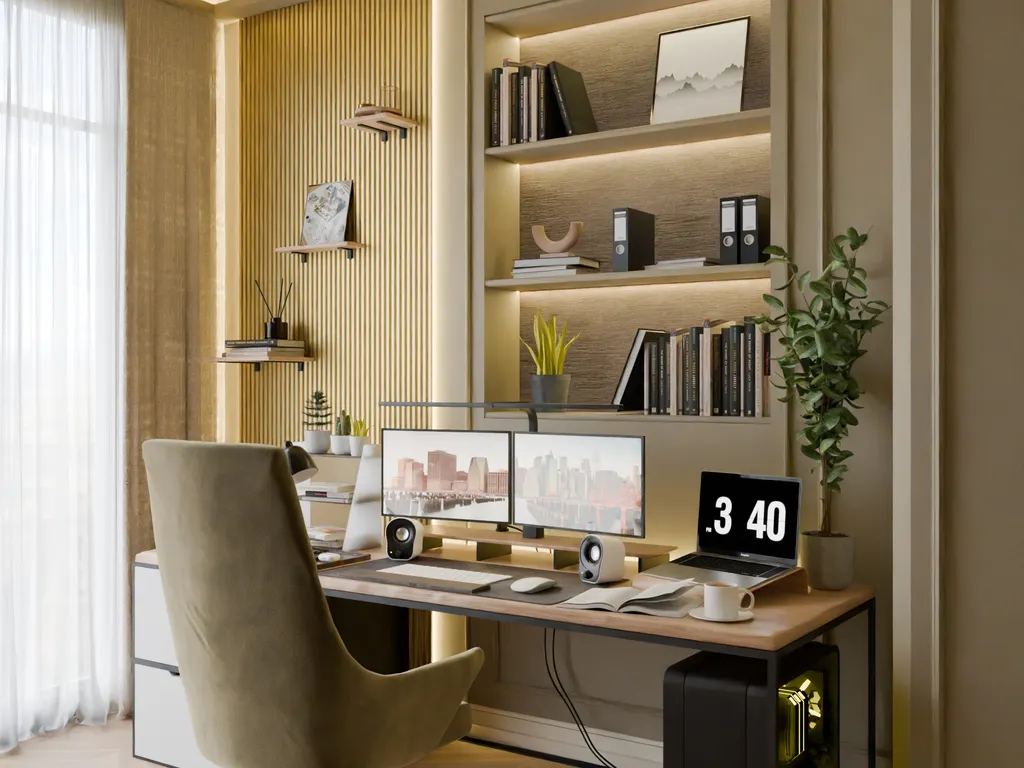
These home office ideas will help you build a workspace that works as hard as you do – whether you have a spare room or a single corner of your living room. From small desks that fit the tiniest nook to layered lighting, this list covers the details that turn a desk you avoid into one you love.
Quick answer: Home office ideas work best when you put the desk near natural light, pick a chair, and layer three kinds of light. Give everything a home with shelves or a pegboard, hide the cables, and keep the desk clear at the end of the day. A setup costs $200 to $500 with a budget desk and a chair.
The best home office design ideas are rarely the most expensive ones. A well-placed desk, a chair that supports your back, a shelf within reach and a background you are happy to show on video calls will do more for your day than a full room makeover.
Key points
- Place the desk near natural light, with the screen at right angles to the window to avoid glare.
- Choose a chair that supports your lower back and keeps your feet flat on the floor.
- Layer three kinds of light: daylight, a desk lamp and soft background light.
- Give everything a home with shelves, a pegboard or closed storage.
- Hide cables in a tray or trunking so the desk stays clear and safe.
- Pick a calm colour palette, add one or two plants, and keep the desk clear at the end of each day.
- Start with the change that fixes your biggest frustration – usually the desk, the chair or the light.
1. The Window-Facing Desk
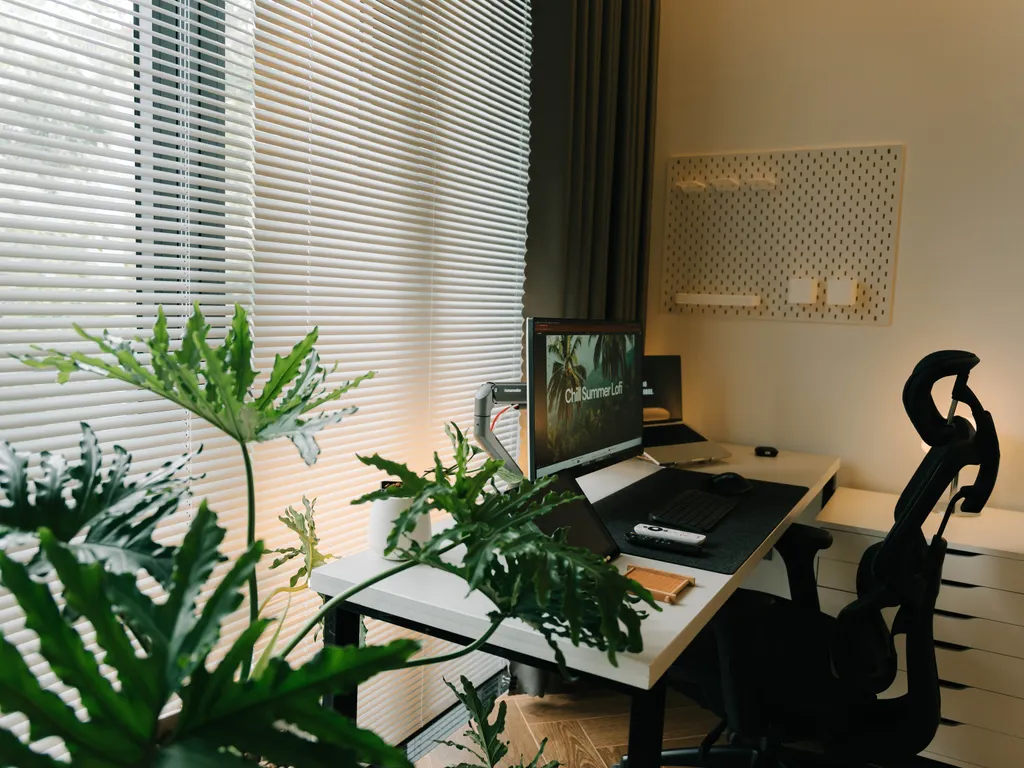
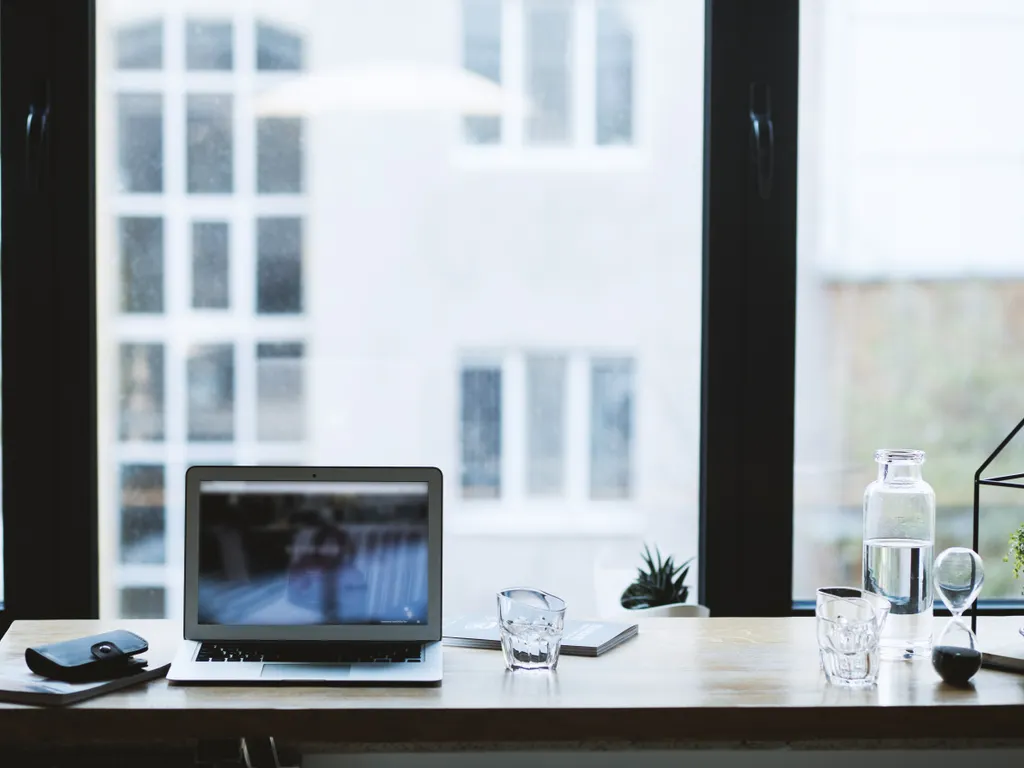
Putting your desk beside a window is the easiest upgrade in home office design. Daylight keeps you alert, lifts your mood and makes the room feel larger, and a view gives your eyes somewhere to rest. Choose a desk narrower than the window so the light wraps around you.
Set the screen at right angles to the window where you can. Facing the glass invites glare, while your back to it turns you into a silhouette on calls. A sheer blind or light linen curtain softens harsh midday sun without darkening the room.
2. A Compact Small Desk That Fits Anywhere
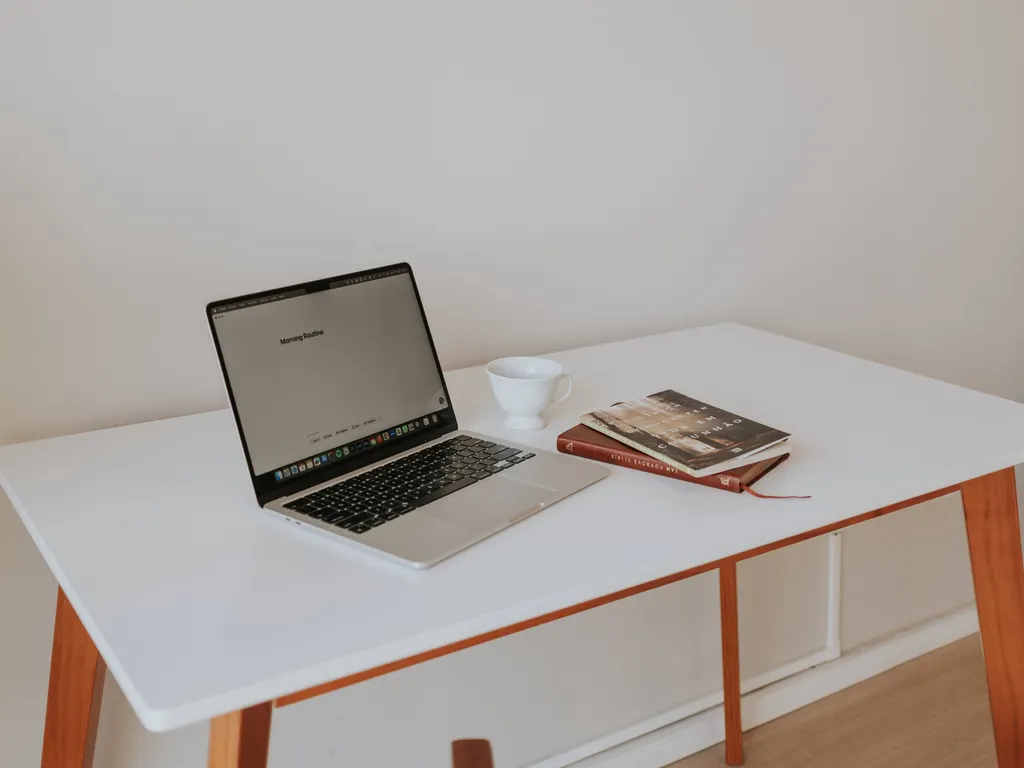
A small desk is the secret weapon of home office ideas for tight homes: a 90 to 110 cm desktop is enough for a laptop, a notebook and a mug, and it fits a hallway nook, a bedroom corner or the end of a living room. Look for a slim 45 to 55 cm depth.
Choose a desk with a drawer or shallow shelf underneath so pens, chargers and papers have a home and the surface stays clear. A small monitor arm keeps the screen at eye level, and a chair that slides fully underneath lets the whole setup disappear when work ends.
3. An Ergonomic Chair Worth the Investment
Choose the chair first, because it affects your body more than any other piece of furniture here. Look for adjustable seat height, lumbar support that meets the curve of your lower back, and armrests that let your shoulders drop. Your feet should rest flat on the floor, knees at a right angle.
Before you buy, read the ergonomics guidance from OSHA and think about how you actually work. If you perch or shift positions, a chair with a flexible back suits you better than a stiff, upright one. A secondhand quality chair often beats a brand-new cheap one.
4. Layered Lighting for Long Workdays
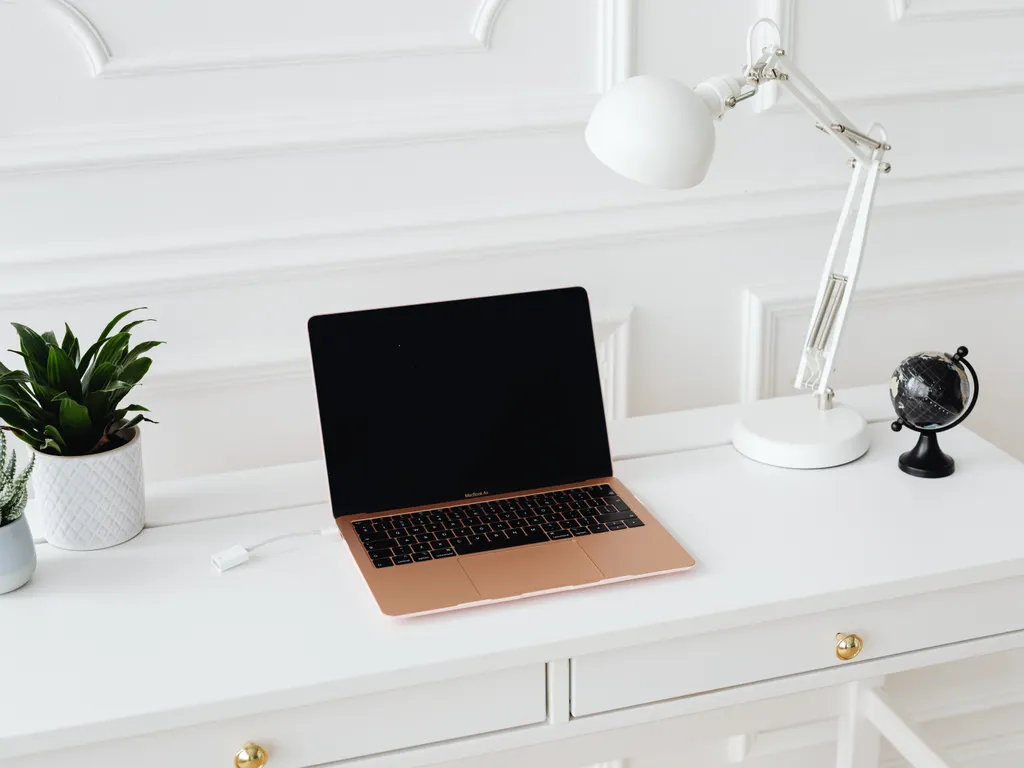
One ceiling light is never enough for a home office. Layer three sources instead: daylight from a window, a focused desk lamp for the work surface, and a soft background light to stop the far side of the room falling into gloom. The mix reduces eye strain and keeps your face evenly lit on calls.
Pick a desk lamp with an adjustable arm and a warm-white bulb around 2700 to 3000K, placed on the opposite side of your writing hand so it never casts a shadow across your work. For more inspiration, browse our apartment lighting ideas – many of the same tricks work in a dedicated office.
5. Floating Shelves Above the Desk
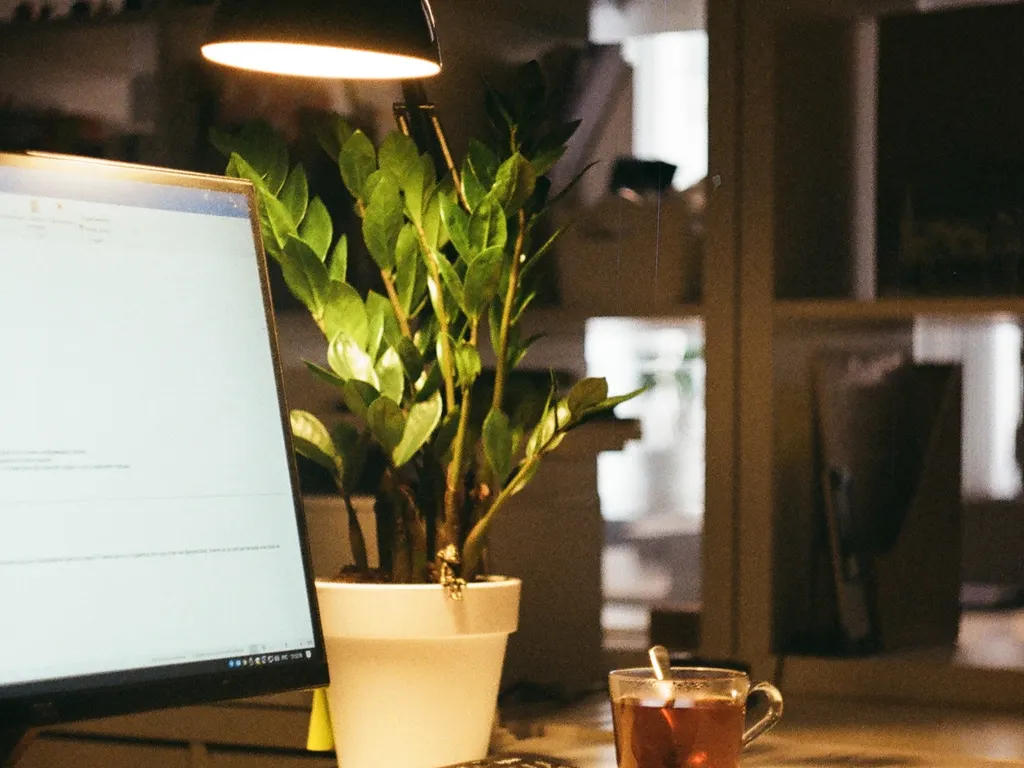
Floating shelves use the wall above your desk instead of the floor, which is exactly what a small home office needs. Two or three shelves at 30 to 40 cm deep hold books, binders, plants and personal objects without eating into your workspace. Mount the lowest shelf at least 45 cm above the desk.
Keep the most-used items on the lowest shelf and the prettiest things higher up. A row of matching boxes or baskets on the top shelf hides printer paper, cables and supplies that would otherwise pile up on the desk.
6. A Pegboard Command Wall
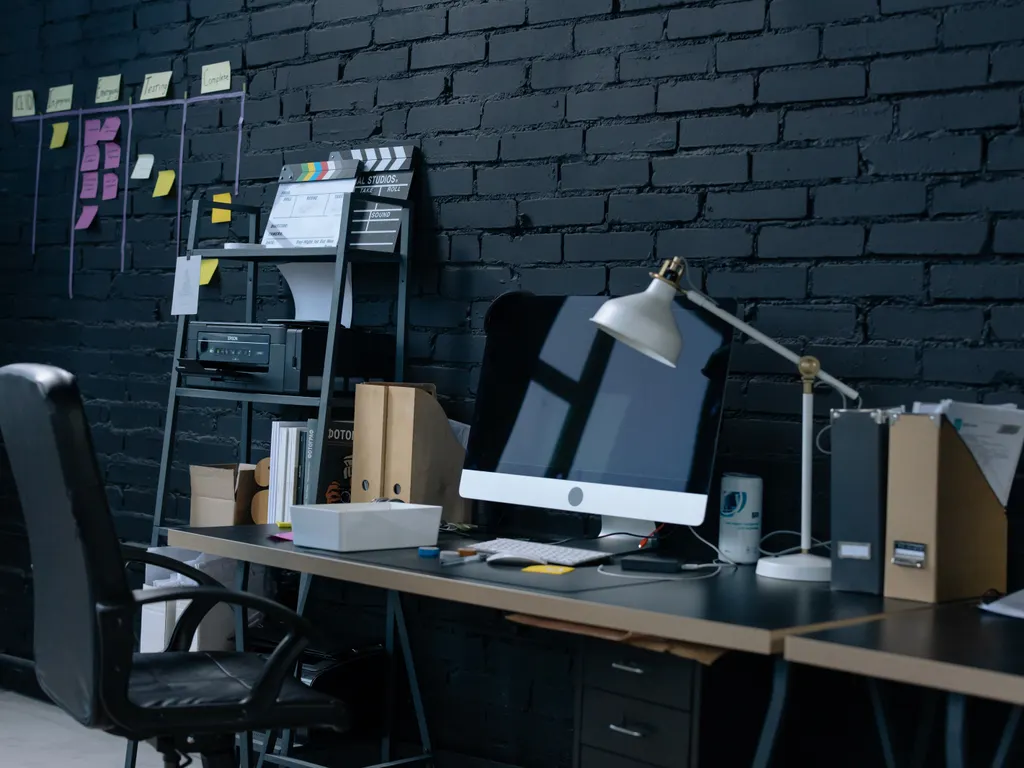
A pegboard turns a blank wall into flexible storage you can rearrange whenever your work changes. Hooks hold headphones, scissors and cables, small shelves carry notebooks and plants, and clips keep today’s to-do list, a calendar and reference notes at eye level.
Paint the board the same colour as the wall for a quiet, built-in feel, or make it a feature in warm wood or a bold accent shade. Start with a shelf, three hooks and a clip, then add pieces as you go.
7. A Calm, Focus-Friendly Colour Palette
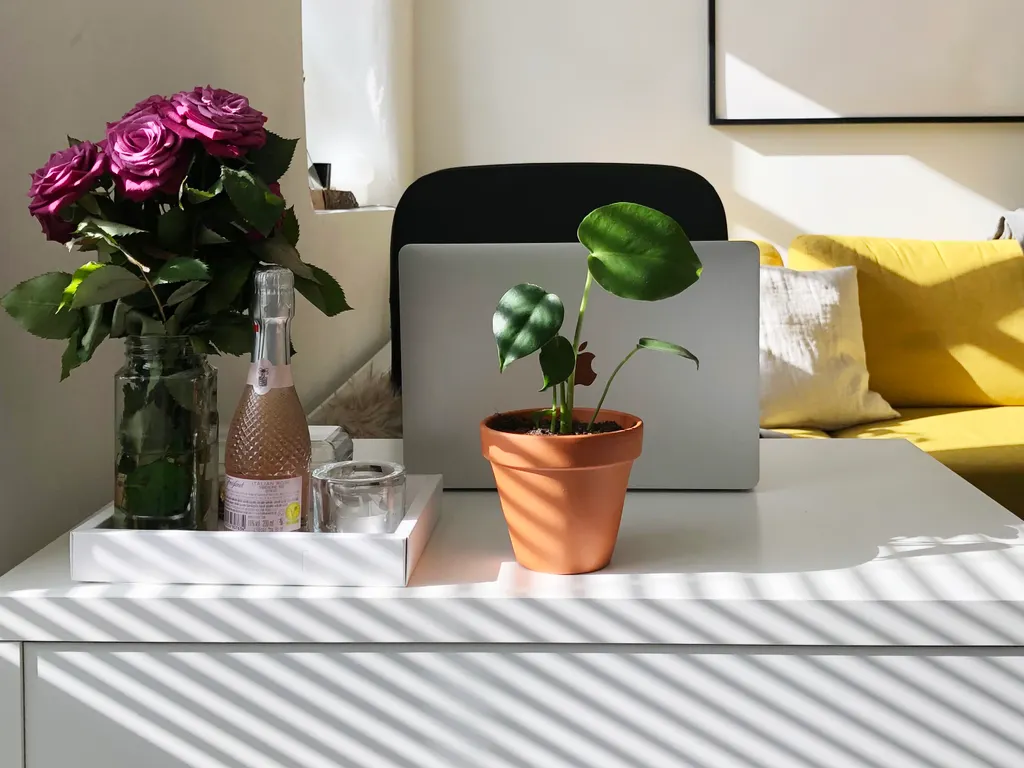
Colour sets the tone of your working day, so choose one that helps you concentrate. Soft whites and warm neutrals make a small room feel larger, while muted greens and blues are calm and restful on the eyes. A single darker accent adds depth without shrinking the space.
Paint is the cheapest way to transform a home office, and a sample pot lets you test a colour on one wall first. For ready-made combinations, see our home office colour palette ideas and pick a scheme that matches your light: cool greys suit sunny rooms, warm creams suit darker ones.
8. The Closet Office, or Cloffice
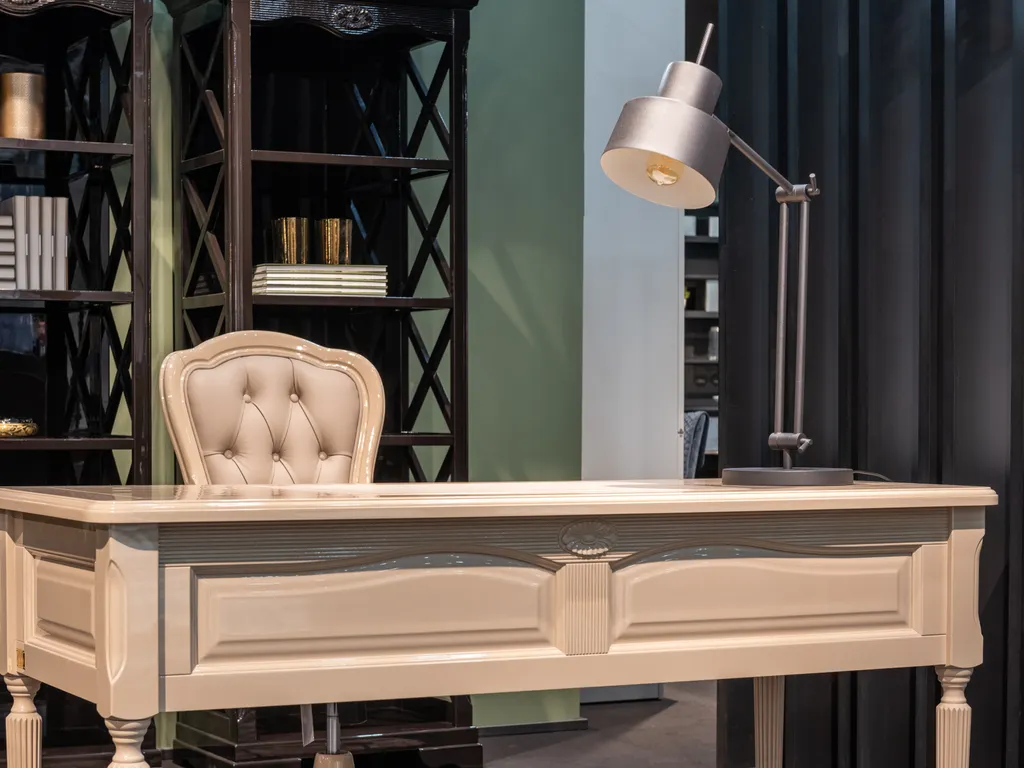
An unused closet is one of the smartest small-space home office ideas. Remove the doors, add a desktop at 74 cm high, a shelf or two above it, and a light inside the frame, and you have a proper office that closes away at the end of the day. A shallow closet suits a laptop; a deeper one holds a monitor too.
Paint the inside a bright, light colour – or a bold accent – and add a small desk lamp and a pinboard to the back wall. Leave a gap above the frame, or choose a louvred door, so the space does not feel stuffy.
9. A Guest Room That Doubles as an Office
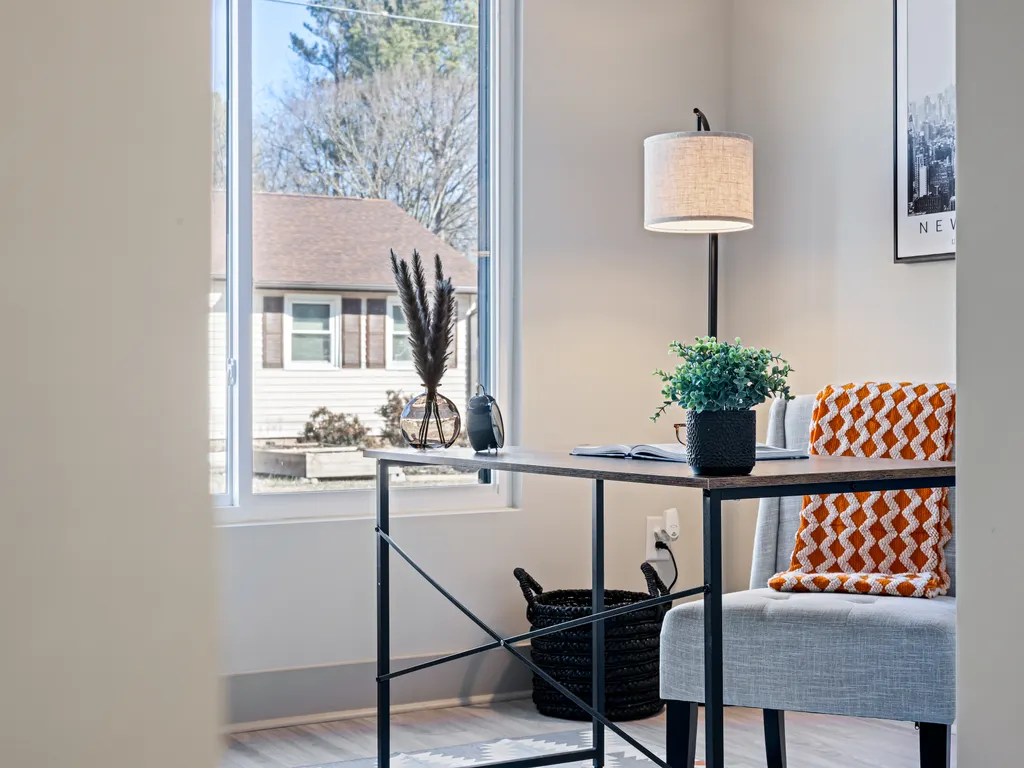
When a spare room has to be both a guest room and an office, let the desk work as part of the room. Place it against the long wall, choose a daybed or sofa bed that reads as seating by day, and keep office storage behind closed doors so guests never see the files and printer.
Put office supplies in one zone and guest supplies in another, so switching takes five minutes: a drawer for work things, a shelf with fresh towels and bedding, and a small tray for the room key. A folding screen or bookshelf divider can carve out privacy for both you and your visitors.
10. A Dedicated Video-Call Background
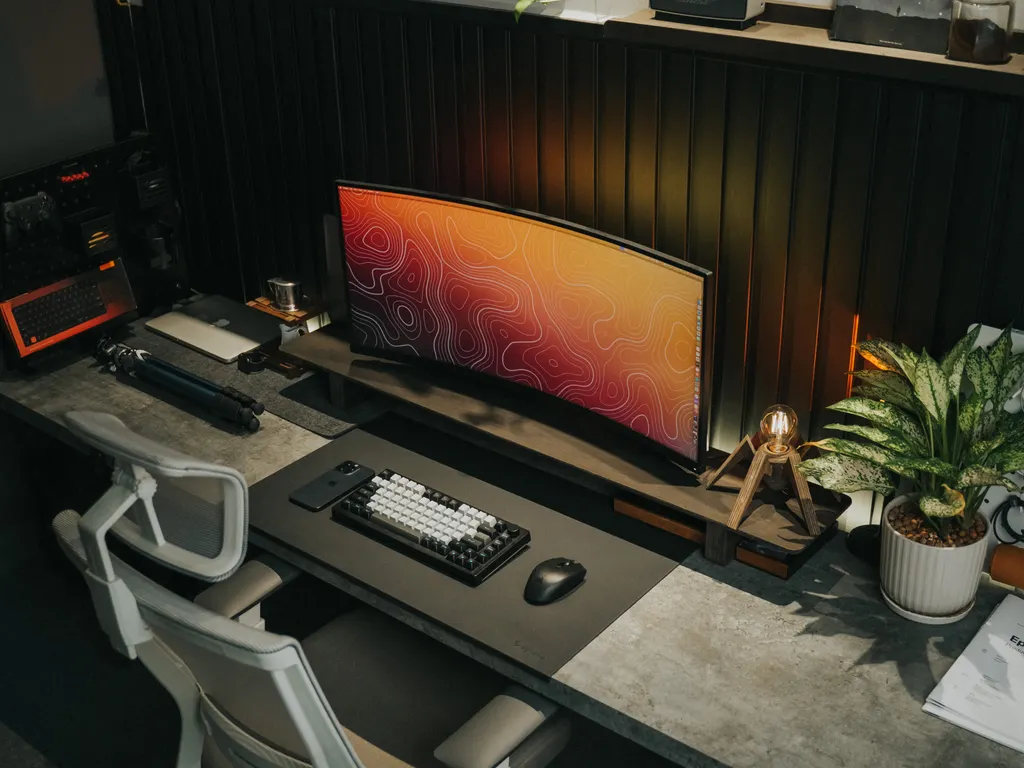
Your workspace is also your backdrop, so design the wall behind you on purpose. A tidy shelf, a framed print, a plant and a warm lamp read as calm and professional on camera, while a blank wall looks flat and a busy one is distracting. Sit so the camera sees the arranged wall, with light on your face.
Good lighting matters more here than anywhere else – our home office lighting ideas show how to keep your face lit without screen glare. Keep the background stable: a consistent backdrop looks more professional than a new virtual background each morning.
11. Plants That Make Work Feel Better
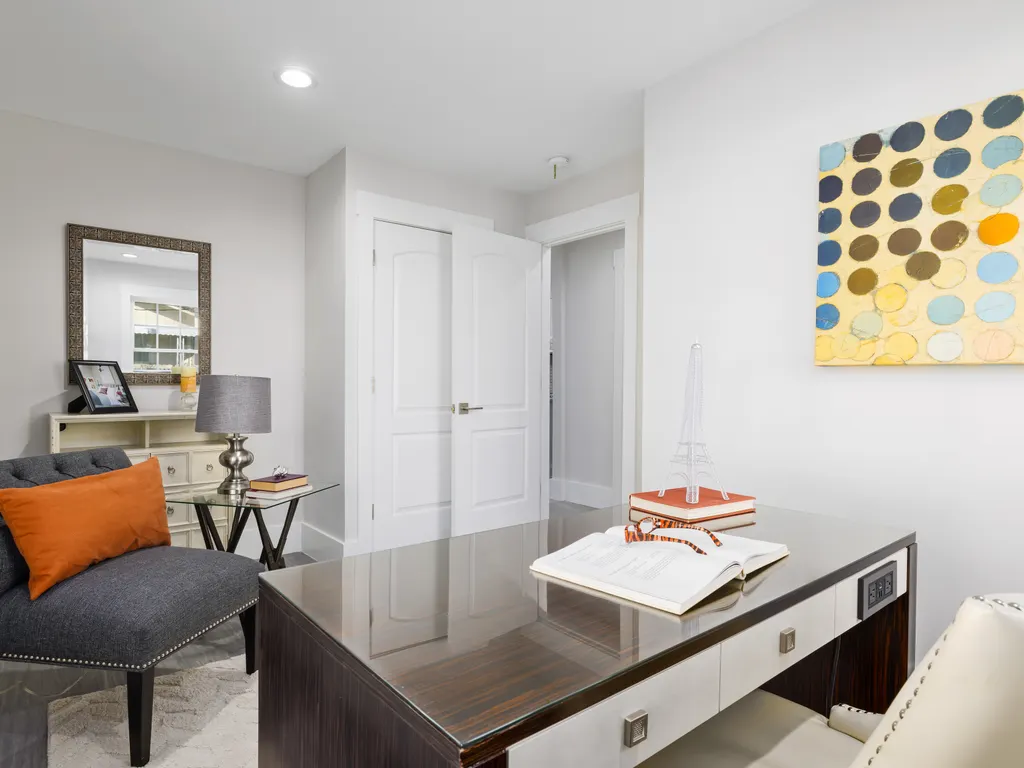
Put one or two plants on or near the desk to soften the hard edges of monitors and shelves. Greenery softens the hard edges of monitors and shelves, adds life to video-call backgrounds, and gives your eyes a natural focal point during breaks. Start with forgiving varieties – a pothos, a snake plant or a small monstera.
Keep plants off the work surface if space is tight: a hanging planter, a shelf-top pot or a floor plant beside the desk all work well. A trailing plant on the top shelf draws the eye upward and makes a small room feel taller. Choose pots that match the room’s palette.
12. Cable Management You Never See
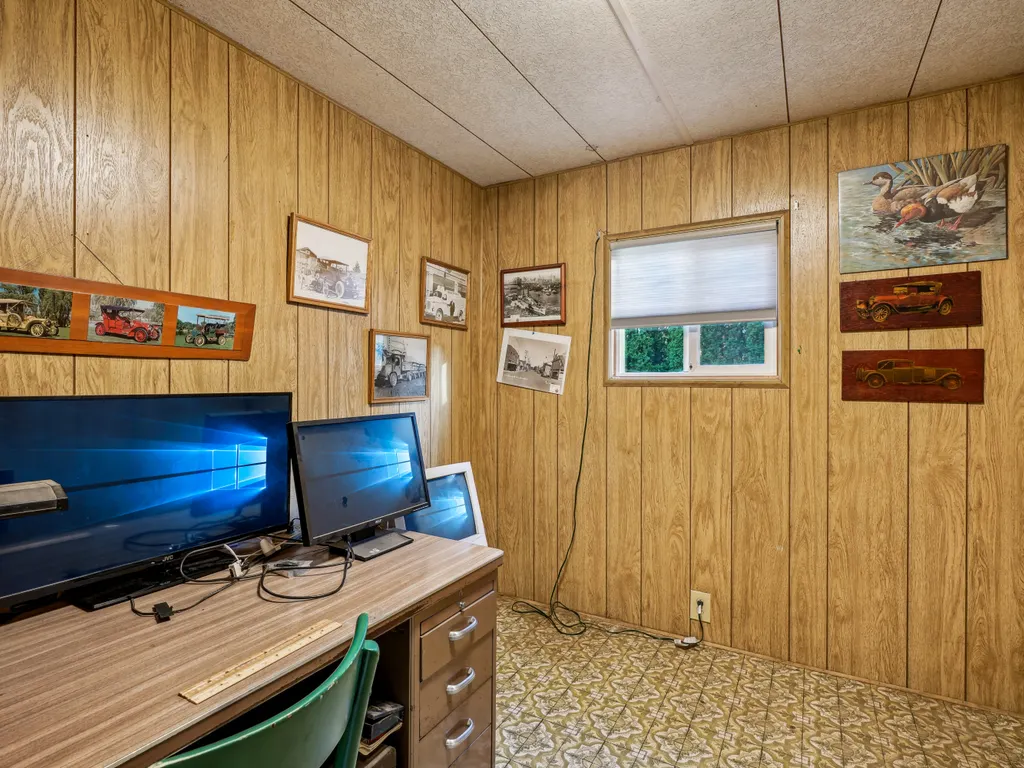
Gather all chargers and leads into a cable tray or trunking so the desk stays clear and safe. Gather all power bricks and chargers into a cable tray under the desk, then run each cable to its device in a short, labelled loop.
A power strip mounted under the desktop, a cable trunking strip down the desk leg, and a single desktop hole for the monitor cable cover almost everything. Go wireless where it makes sense – a wireless keyboard and mouse remove two cables at a stroke – and tidy cables make cleaning easier too.
13. A Standing Desk Converter
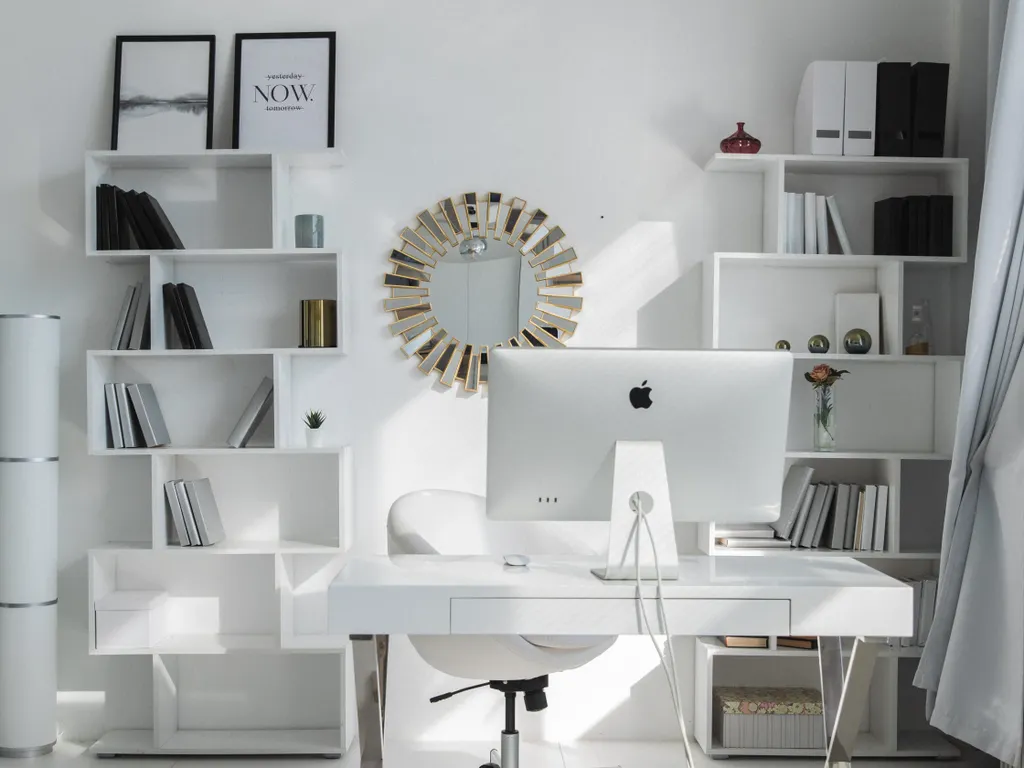
Use a converter that sits on your desk to lift the monitor and keyboard to standing height. The best ones lift smoothly with a gas spring, hold a monitor and a keyboard on separate levels, and fold flat when you sit again.
Set the monitor so the top of the screen is at eye level and your elbows rest at roughly a right angle. Wear supportive shoes or stand on a fatigue mat, and keep a small stool nearby. Alternating positions through the day eases the stiffness of eight hours in one chair.
14. A Wall-Mounted Fold-Down Desk
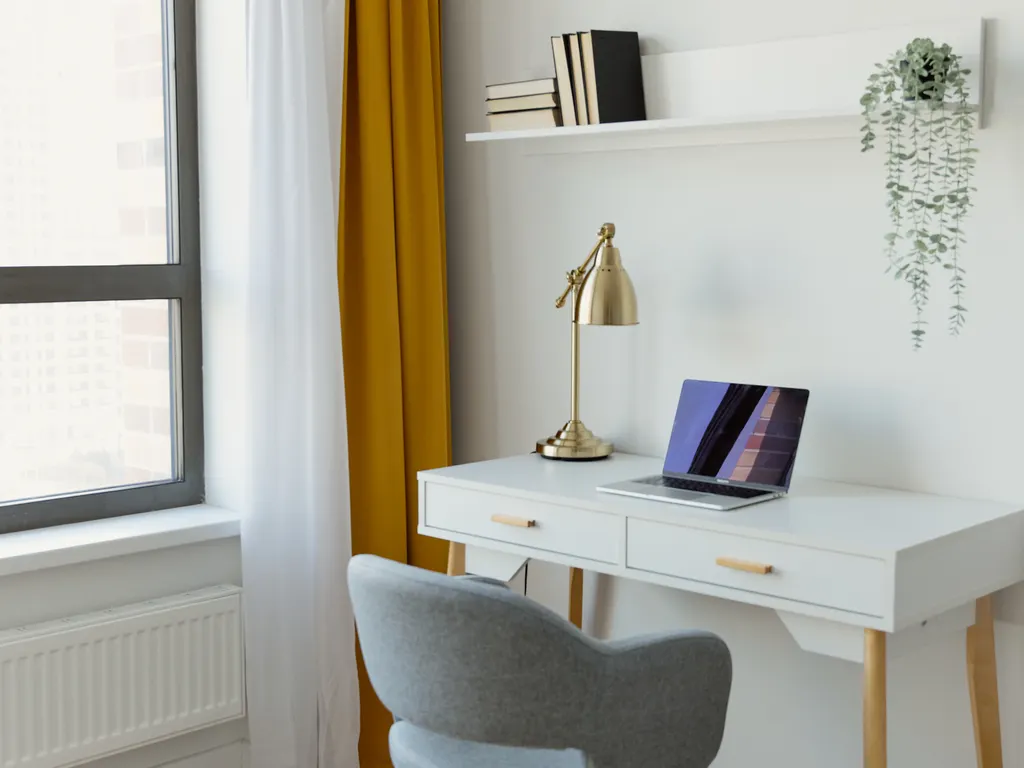
A fold-down desk is the ultimate small-space office: up, it is a slim cabinet on the wall; down, it is a full working surface. It suits hallway nooks, kitchen ends and box rooms where a permanent desk would block the route. Choose a model around 45 cm deep – enough for a laptop and a notebook.
Anchor it into studs or solid masonry with proper fixings, because it carries your laptop. For more small-space planning, see our small home office layout ideas and think through the chair too: a folding chair or a stool on a wall hook completes the setup.
15. Built-In Storage That Hides the Mess
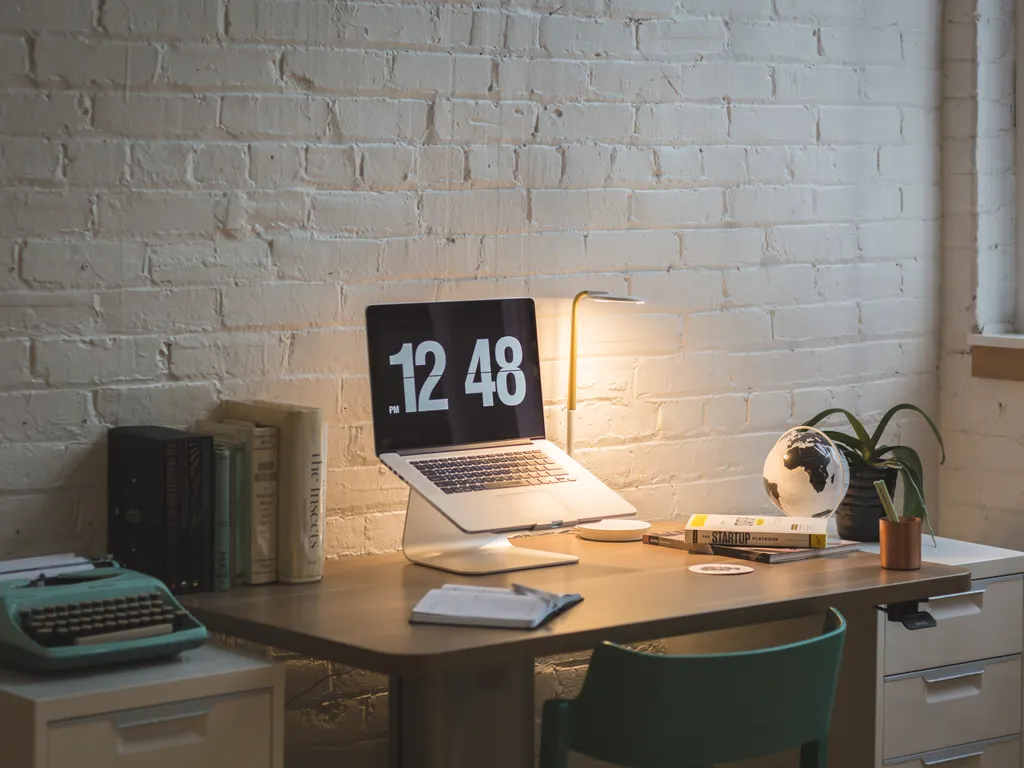
Closed storage is what separates an office that looks calm from one that always looks busy. A low cabinet, a credenza or a row of drawers under a window holds paper, printer supplies, files and tech you need weekly but not daily. Choose storage that matches the room’s furniture so the office reads as part of the home.
Label the inside of every drawer or box so you can find things without opening them all. Give the printer its own shelf with space for paper, keep a tray for incoming mail, and clear one drawer for cables and chargers. Then the desk holds only what you are working on right now.
16. A Slim Desk in the Bedroom Corner
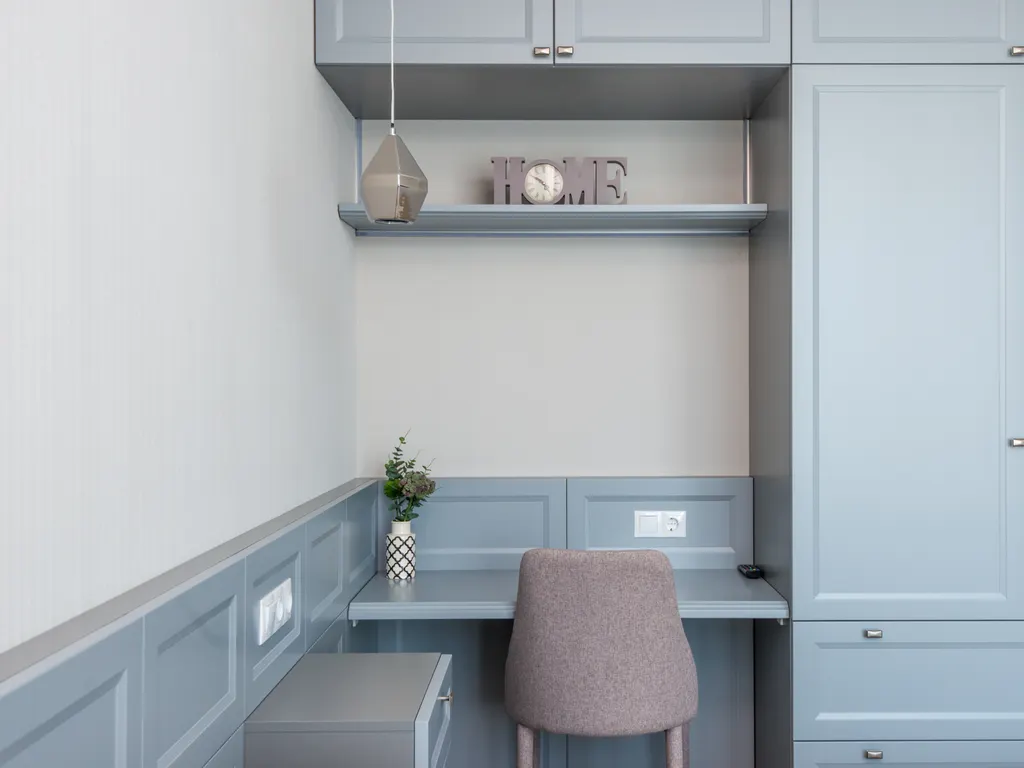
Make the bedroom office a clear, separate zone with the desk facing the room, not the bed. A slim writing desk of 100 cm or less tucks into an unused corner, and a rug underneath – even a small one – visually separates the workspace from the bed. Face the desk towards the room.
Use the wall for storage so the desk stays a work surface, not a dumping ground: one shelf for books, a wall light instead of a desk lamp, and a hook for your bag. Close the laptop and tidy the desk at the end of the day – the ritual tells your brain the working day is over.
17. A Second Screen Without the Clutter
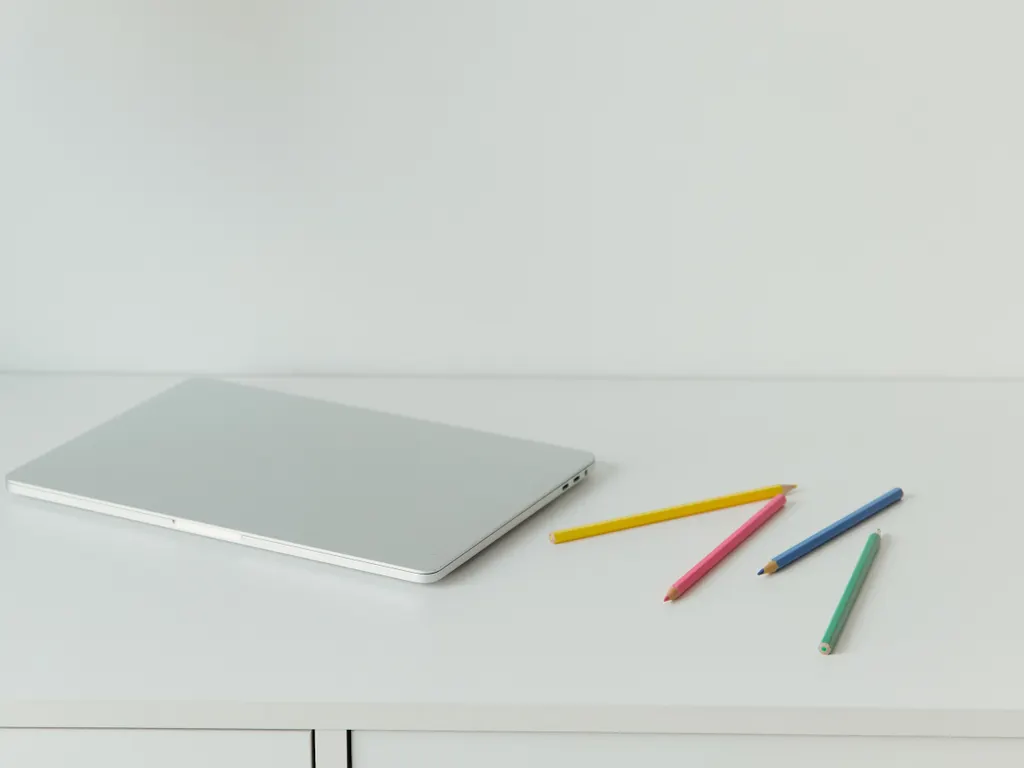
A second monitor is one of the biggest productivity gains in home office design, but it can also eat the desk. Mount both screens on a single dual monitor arm clamped to the back of the desk: the bases disappear, the screens sit at matching heights, and you gain the whole surface back for notes and coffee.
Angle the main screen straight ahead and the second slightly to the side. If a second full monitor is too much, a portable display in portrait mode is a neat alternative for email and reference documents. Check Cornell University’s ergonomics guidance for screen height and distance – about an arm’s length away.
18. A Pinboard or Gallery Wall for Inspiration
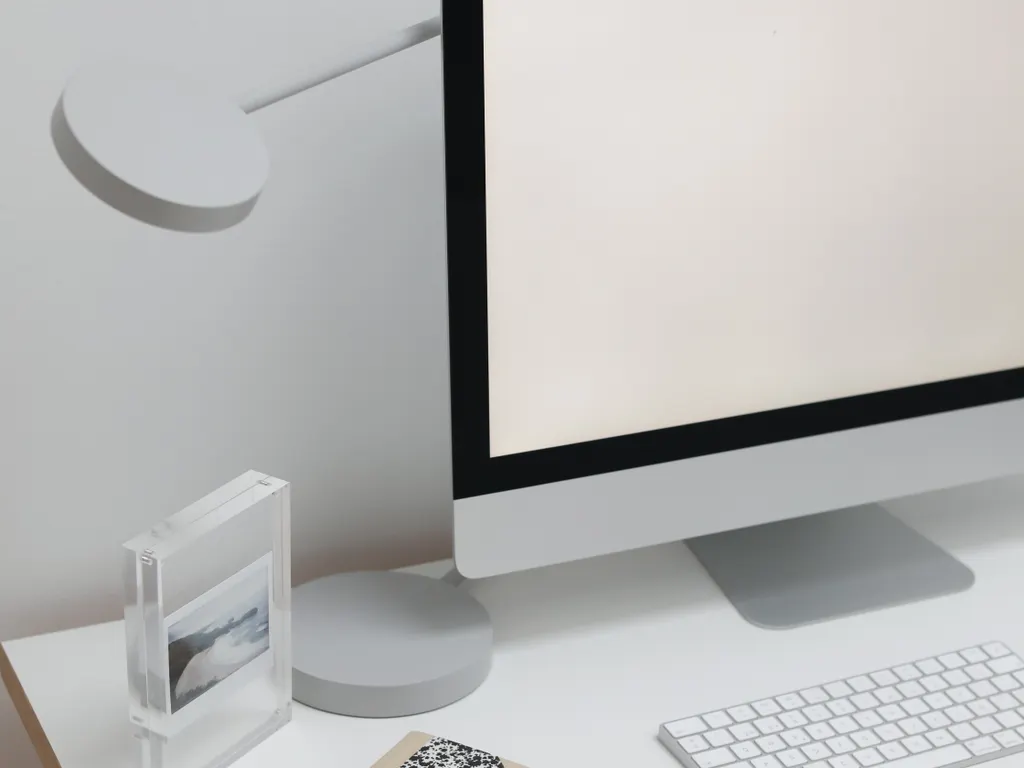
A wall of images, quotes and ideas above the desk keeps references visible and makes the workspace feel personal. A pinboard is the practical choice – swatch cards, torn-out pages, a calendar and photographs, all easy to swap – while a gallery wall of framed prints is prettier and doubles as your video-call backdrop.
Keep the display curated: more than a dozen items turns into visual noise. Use a consistent frame colour or a matching board, leave breathing room between pieces, and change one or two items each season.
19. Sound Control for Calls and Concentration
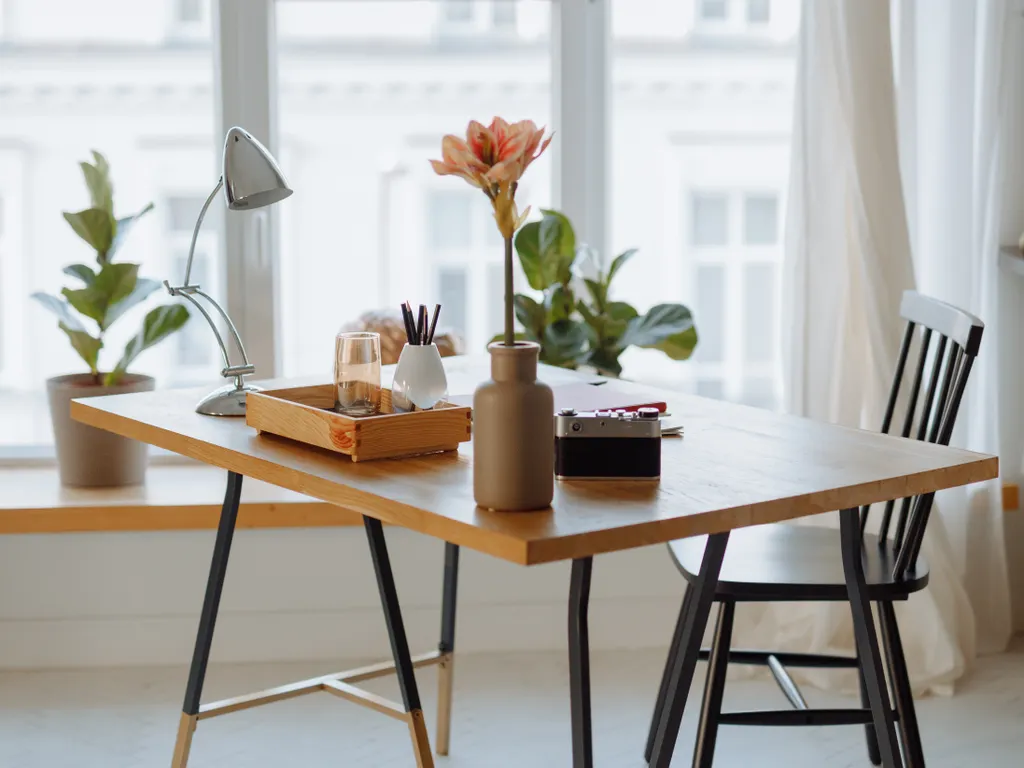
Soften the room with furnishings that absorb sound so calls stay clear and the room feels calm. Soft furnishings absorb sound better than hard surfaces: a thick rug, curtains over a bare window, a bookshelf against a shared wall, and a fabric noticeboard all cut echo and muffle household noise. For calls, noise-cancelling headphones with a decent microphone are worth their weight.
If the room echoes, add an upholstered chair or a couple of acoustic panels behind the desk – they look like modern wall art and genuinely change the sound of the room.
20. A Budget-Friendly DIY Desk Setup
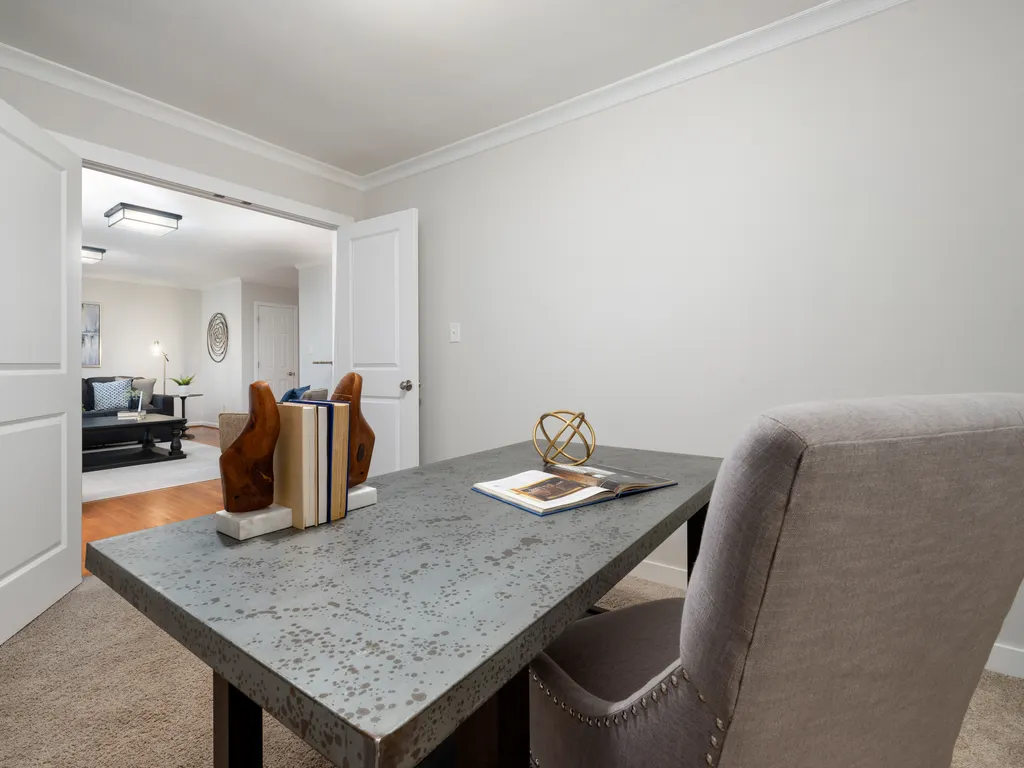
A great home office does not need a big budget. A solid-core door or a length of kitchen worktop on two trestles or a pair of drawer units makes a sturdy desk for a fraction of a branded one. Sand and oil the top and it looks like furniture rather than a workaround – add a secondhand chair, a plant and a lamp, and the room is ready.
Spend where it changes how your body feels – the chair and the lighting – and save where it does not: storage boxes, a monitor riser made from books, and a cork board from a charity shop. A coat of paint and matching storage tubs can make a budget setup look like a deliberate design choice.
21. A Shared Workspace That Actually Works
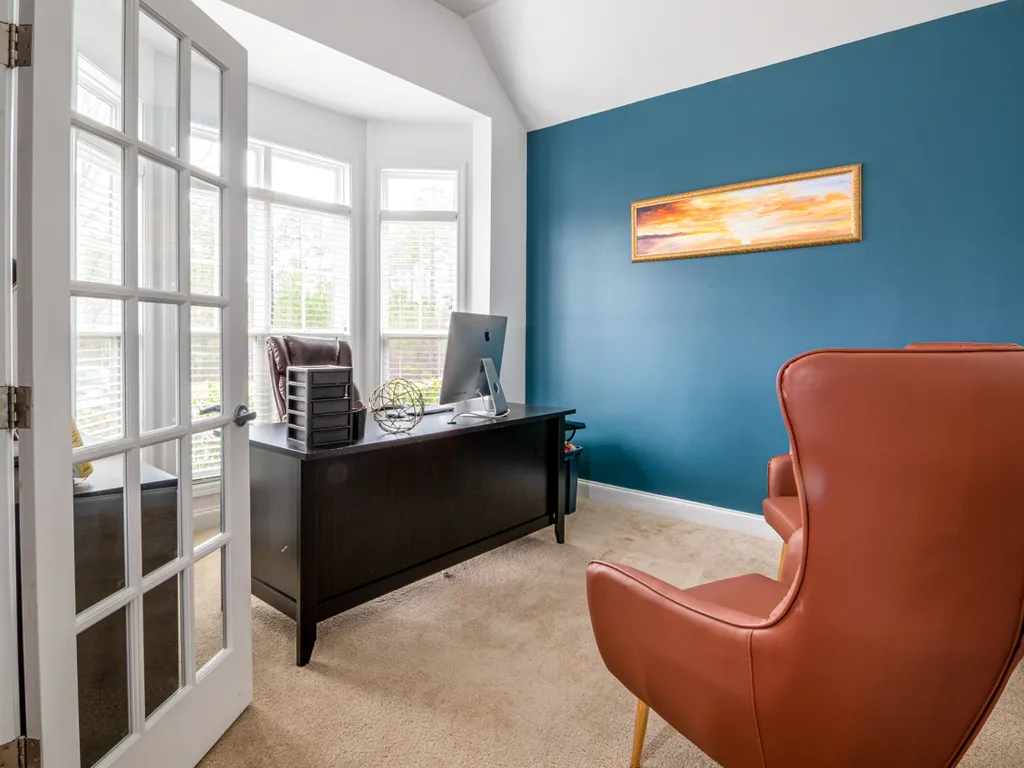
Two people sharing one office need rules as much as furniture. A long desk with a divider – even a row of plants or a low shelf – gives each person their own territory, while back-to-back desks or an L-shape keeps monitors out of each other’s sightline. Headphones are non-negotiable, and a shared calendar for calls stops two meetings clashing.
Agree the basics on day one: who takes the louder calls and where, what the tidy-desk standard is, and when quiet hours run. Duplicate the essentials – two lamps, two power strips, two charger stations – so nobody borrows from the other all day.
22. The Minimal Desk With Just the Essentials
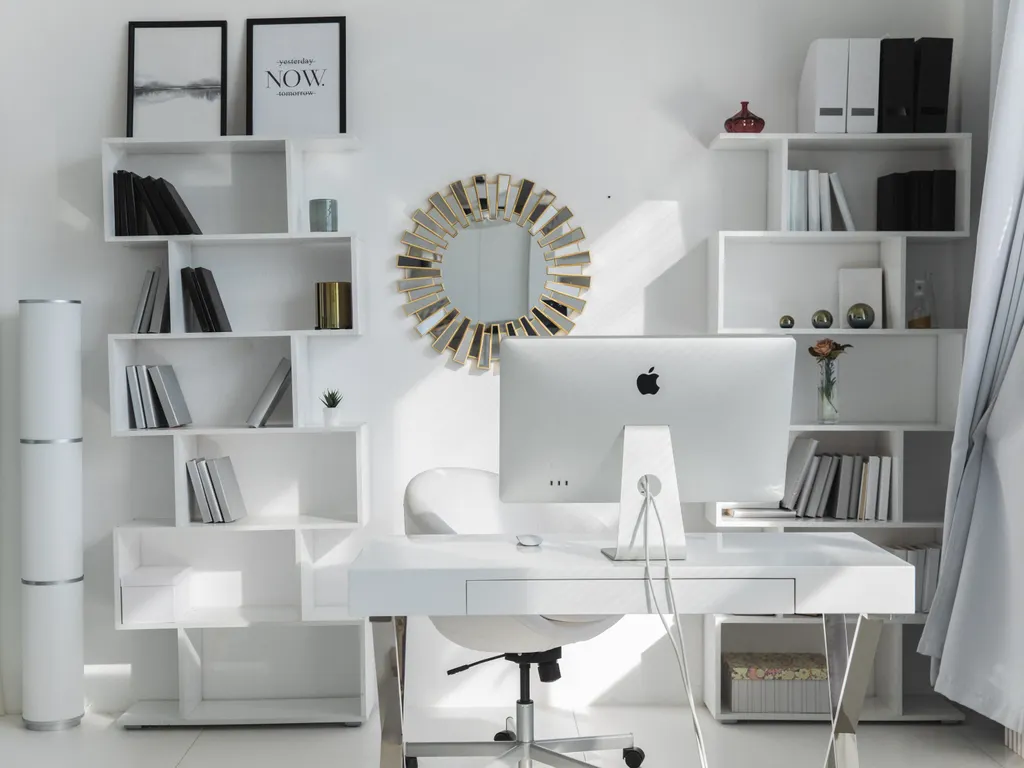
Some people do their best work with almost nothing on the desk: a laptop, a notebook, a pen and a glass of water. A minimal setup suits small rooms, keeps distractions down and takes seconds to clear. To make it work, the storage has to exist somewhere else – a drawer, a shelf or a small cabinet nearby.
Choose pieces you enjoy looking at, because there is nothing else to look at: a well-made lamp, a chair with good proportions and one object with a story. Use a cable tray under the desk and a wireless keyboard and mouse, and clean the desk at the end of each day.
23. A Reading Nook Next to the Desk
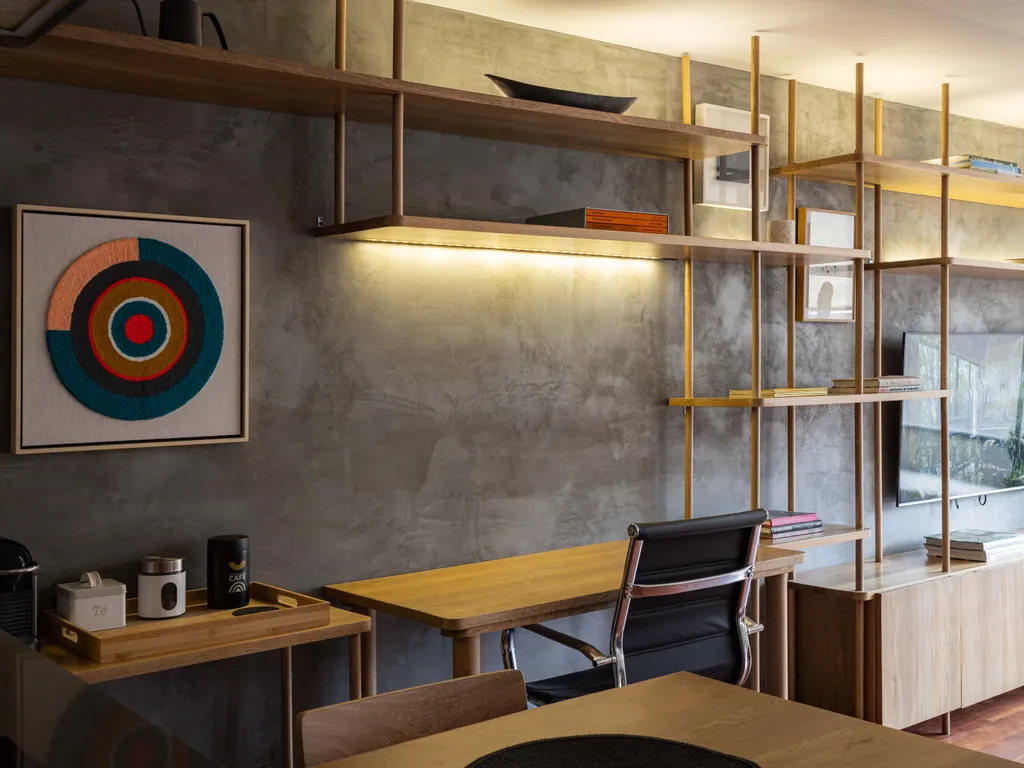
A comfortable chair, a small side table and a warm lamp a step away from the desk turns a workspace into a room you enjoy spending time in. A reading nook gives you somewhere to think, take a call, review a document or simply rest your eyes away from the screen – breaks are part of good work.
You do not need much space: a compact armchair, a 30 cm side table and a floor lamp behind the chair will do. Keep a book, a notepad and a charger in the nook so it becomes a real second station rather than a decorative corner. Position it near the window if you can.
24. A Portable Office You Can Pack Away
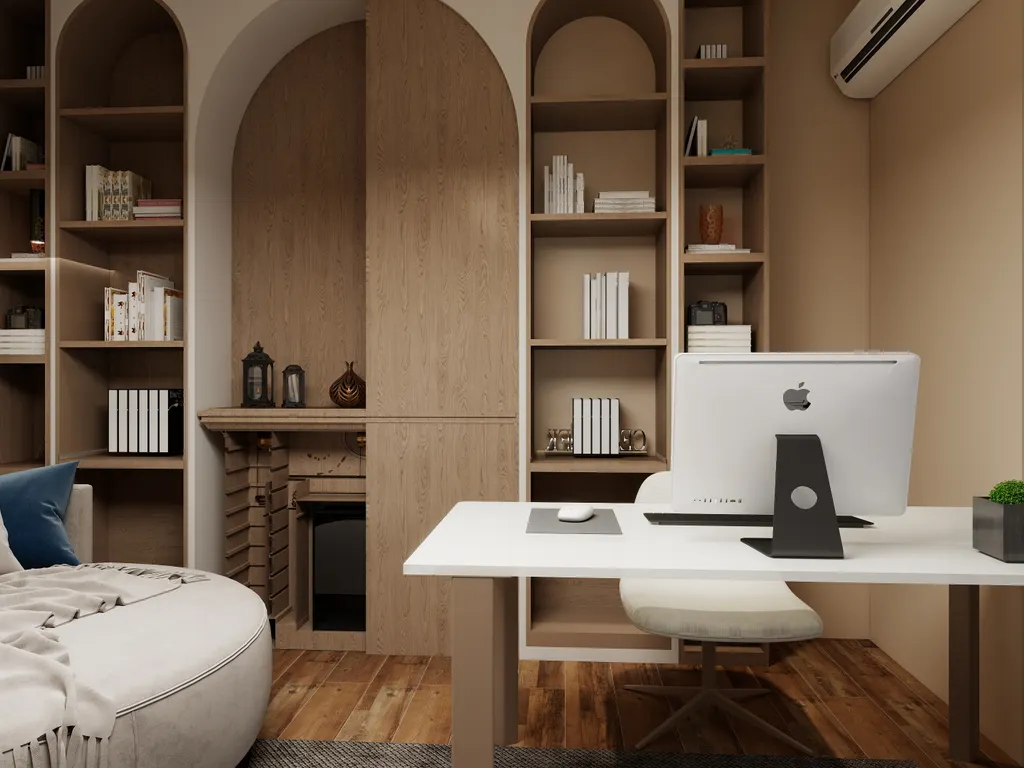
Pack a portable office into a basket, bag or trolley shelf so it sets up in minutes and packs away fast. A portable office – a laptop, a folding laptop stand, a wireless keyboard and a tote or rolling trolley that holds the lot – lets you work at the kitchen table, the sofa or the garden, then pack everything away in minutes. The trick is to make packing up effortless.
Keep a dedicated basket, bag or trolley shelf so the whole kit lives in one place and sets up in under two minutes. A small bag inside it holds cables, a charger and stationery so nothing is ever hunting for a home.
25. Personalised Finishing Touches You Love
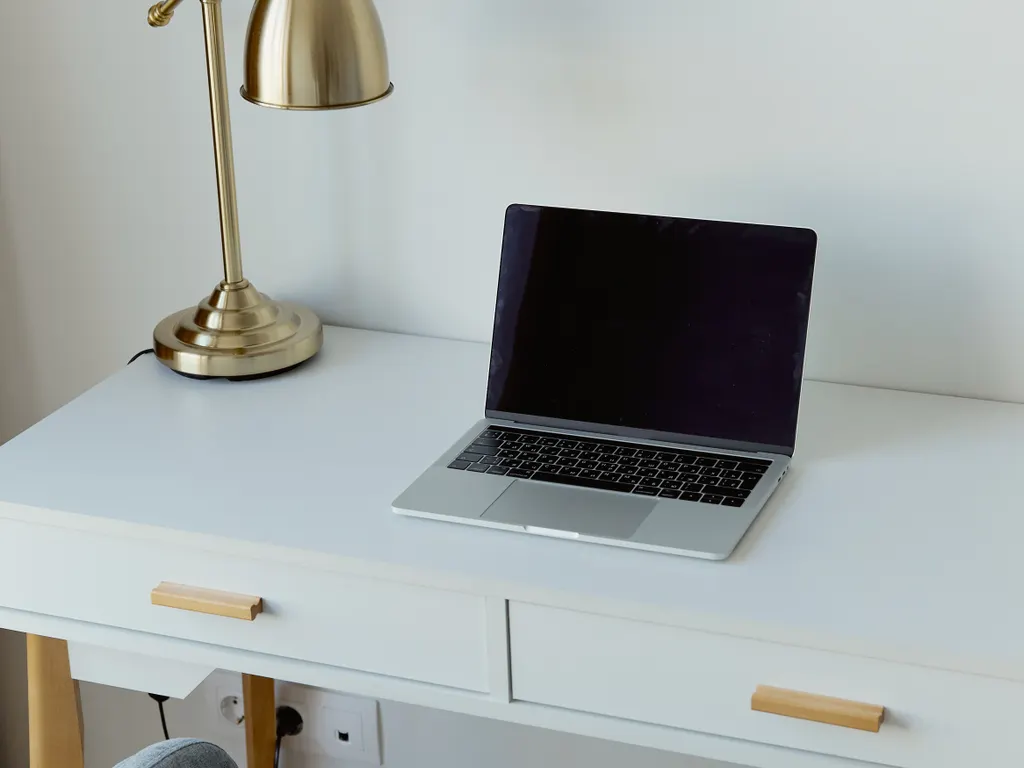
Once the desk, chair and light are sorted, the final step is making the room yours. One or two personal objects – a travel souvenir, a framed photograph, a handmade mug, a favourite colour on a single shelf – turn a workspace into a place you actively like sitting in. Personal does not mean cluttered.
Rotate small items with the seasons and keep the rest out of sight. A candle for the end of the day, a good pen in a heavy holder, a small stack of books you actually read: these little choices make an office feel like yours rather than a showroom.
Setting Up a Home Office in a Small Space
Small spaces reward planning. Measure the nook first, then choose the desk – never the other way around. A small desk between 90 and 110 cm wide, a wall-mounted fold-down desk, or a slim console used as a desk all fit spaces a standard desk cannot.
Home office ideas FAQ
What is the best home office setup for a small space?
A small desk of 90 to 110 cm with a chair that tucks fully underneath is the best starting point. Add one wall shelf for storage, a wall-mounted or clamp-on lamp to free the desk surface, and a cable tray underneath. Measure the nook before you buy anything.
Where should I put my desk in a home office?
Place it near a window with the screen at right angles to the glass. This gives you daylight without glare on the monitor and keeps your face lit for video calls. If a window is not an option, put the desk against the longest wall.
Which chair is best for working from home?
Look for an adjustable chair with lumbar support, adjustable seat height and armrests that let your shoulders relax. Your feet should rest flat on the floor and your knees should sit at roughly a right angle.
How can I make my home office look good on video calls?
Style the wall behind you with a tidy shelf, a framed print, a plant and a warm lamp, and sit so the light falls on your face rather than behind you. Keep the background consistent and uncluttered, and do a quick camera check before important calls.
How much should I spend on a home office?
You can set up a comfortable home office for very little by choosing a budget desk, a quality secondhand chair and good lighting. If you are buying new, put the biggest share of the budget into the chair, then lighting, then the desk – those are the items your body notices every day.
Conclusion
The best home office ideas are the practical ones: a desk that fits the room, a chair that looks after your back, light in layers, storage that keeps the surface clear, and a few personal touches that make you want to sit down each morning. You do not need to do all 25 at once. Pick the idea that fixes your biggest frustration – usually the desk, the chair or the light – and start there.
What a home office costs
A home office can start at $100 for a small desk, a lamp and a cable tray, or reach $2,000 to $4,000 for a standing desk, an ergonomic chair and built-in storage. The table below uses typical prices for the items in this post. Spend on the chair and the light, since they change how your body feels each day, and save on the desk and decor, which are easier to change later.
| Item | Typical cost | What changes the price |
|---|---|---|
| Small desk, 90 to 110 cm wide | $80 to $400 | Wood, drawers and depth |
| Standing desk, electric, 120 cm | $250 to $800 | Motor, weight limit and top size |
| Standing desk converter | $120 to $400 | Size, gas lift and keyboard tray |
| Ergonomic chair, adjustable | $150 to $600 | Lumbar support and armrests |
| Fold-down wall desk | $100 to $400 | Fixings, size and fold mechanism |
| Monitor arm, single | $30 to $120 | Weight limit and reach |
| Second monitor, 24 inches | $100 to $250 | Resolution and panel type |
| Desk lamp, adjustable arm | $30 to $120 | Bulb type and dimmer |
| Floating shelves, pair | $40 to $150 | Wood, length and brackets |
| Pegboard, 60 by 90 cm | $30 to $100 | Material and hooks |
| Cable tray and trunking | $15 to $50 | Length and clips |
| Acoustic panels, set of 4 | $40 to $150 | Thickness and fabric |
Allow $30 to $80 for a power strip, a surge protector and spare cable clips, since a tidy desk needs power in the right place. If you are fitting a fold-down desk, buy proper wall fixings for your wall type, and check the studs with a stud finder before you drill.
Sizes and ergonomics to get right first
Measure the space before you buy. A small desk should be 90 to 110 cm wide and 45 to 55 cm deep, and a full desk should be 120 to 140 cm wide and 60 to 75 cm deep. Leave at least 36 inches of clear space behind the chair, so you can push back and stand. The desk should sit 28 to 30 inches high for most adults, and the monitor top should sit at eye level, about 20 to 26 inches from your eyes. Your elbows should rest at a right angle, about 90 degrees, with your feet flat on the floor; a footrest helps if your feet do not reach. For a standing desk, set the desk height so your elbows rest at the same right angle when you stand. Shelves above the desk should sit 18 to 20 inches above the desktop, so the lowest shelf is easy to reach. For a cloffice, the desk should be 90 to 110 cm wide, and the chair should slide fully under it when you finish work.
How to plan the office in order
Start with the desk position, not the shopping. Put the desk near a window with the screen at right angles to the glass, and check for glare at 9 am and at 3 pm. Next, fit the chair and set its height, lumbar support and armrests, then set the monitor height. Then fit the shelves and pegboard, then the lighting in three layers: daylight, desk lamp and soft background light. Hide the cables last, with a tray under the desk and trunking down the leg. The most common mistake is buying a desk that is too small for the monitor, keyboard and notebook, so papers pile on the floor. A second mistake is a chair that is too high or too low, so your shoulders rise or your feet dangle. A third mistake is one ceiling light only, which leaves the desk in shadow. Test the light at night, not just in daylight, since most work happens after dark in winter.
More questions about home offices
How much does a home office cost to set up?
A basic setup with a small desk, a chair and a lamp costs $200 to $500. A full setup with a standing desk, an ergonomic chair, a second monitor and storage usually costs $1,000 to $2,500.
What size desk fits a small home office?
A desk 90 to 110 cm wide and 45 to 55 cm deep fits a laptop, a notebook and a mug, and it fits a hallway nook, a bedroom corner or the end of a living room. Add a monitor arm if the desk feels cramped.
How high should my monitor be?
The top of the screen should sit at eye level, about 20 to 26 inches from your eyes, with the screen tilted back slightly. Use a monitor arm or a stack of books to get the height right before you buy a stand.