
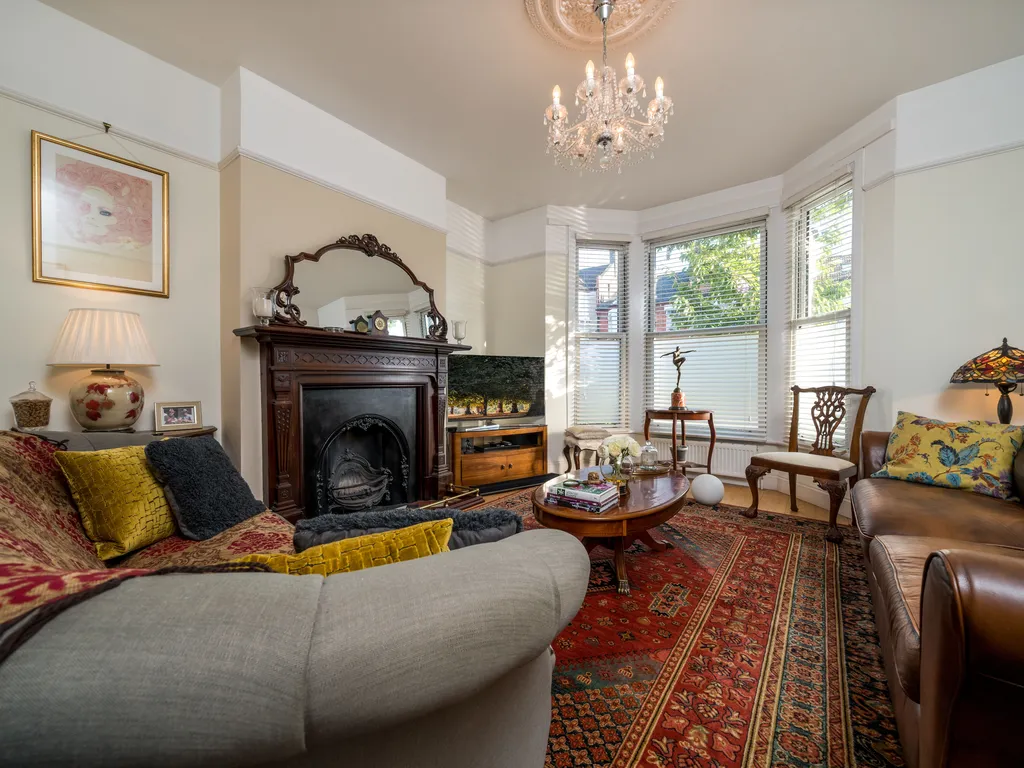
Traditional is the style people describe with relief: a room that looks finished, feels calm, and will still look right in twenty years. It is also the style people fear. One heavy chandelier too many and the living room turns into a 1980s hotel lobby — all polish, no life. The difference between timeless and stuffy is rarely the style itself. It is dosage: how much symmetry, pattern and shine, and what you leave relaxed.
Quick answer: The best traditional interior style ideas keep the classic bones, symmetry around a focal point, rolled-arm and wingback shapes, rich wood, layered pattern and textiles, and loosen the delivery so the room feels calm, not staged. Mix two wood tones, use one lead pattern, keep walls pale, and add one plainly modern piece per room.
These ten ideas keep the bones that make traditional rooms endure — balance, classic silhouettes, good wood, layered textiles, real architectural detail — and loosen the grip everywhere else. Work through them in order and you get a home with a memory, furnished for the life you actually live in it.
In this guide: Traditional Style at a Glance · Symmetry and Balance: Pairs Around a Focal Point · Classic Silhouettes: Rolled Arms, Wingbacks and Tufting · Rich Wood Tones That Warm the Room · A Warm Palette With Deep, Confident Accents · Pattern, Mixed the Traditional Way · Layered Textiles and Dressed Windows · Architectural Detail: Moulding, Panels and Built-Ins · Lighting With Presence: Chandeliers, Sconces and Pairs · Antiques, Art and Pieces With a Past · The Traditional Bedroom — and Keeping the Whole Look Fresh · Frequently Asked Questions About Traditional Interior Style · Conclusion
Traditional Style at a Glance
| Element | The classic move | The livable adjustment |
|---|---|---|
| Layout | Symmetry around a focal point | Balance the masses; let small pieces mismatch |
| Furniture | Rolled arms, wingbacks, tufting | One modern shape allowed per room |
| Wood | Cherry, walnut, mahogany | Mix two tones, never a matched suite |
| Colour | Warm neutrals, deep accents | Pale walls, colour on the furniture |
| Pattern | Damask, toile, plaid, stripe | One pattern leads, the rest support |
| Textiles | Drapes, rugs, cushions layered | Linen and cotton soften the silk |
| Architecture | Moulding, wainscoting, built-ins | Paint it all one colour for calm |
| Lighting | Chandeliers, sconces, lamp pairs | Warm bulbs on dimmers, no glare |
| Decor | Antiques, art, porcelain, books | Pieces with a story, not a theme |
| Bedroom | Upholstered or four-poster bed | Layered bedding does the dressing |
1. Symmetry and Balance: Pairs Around a Focal Point
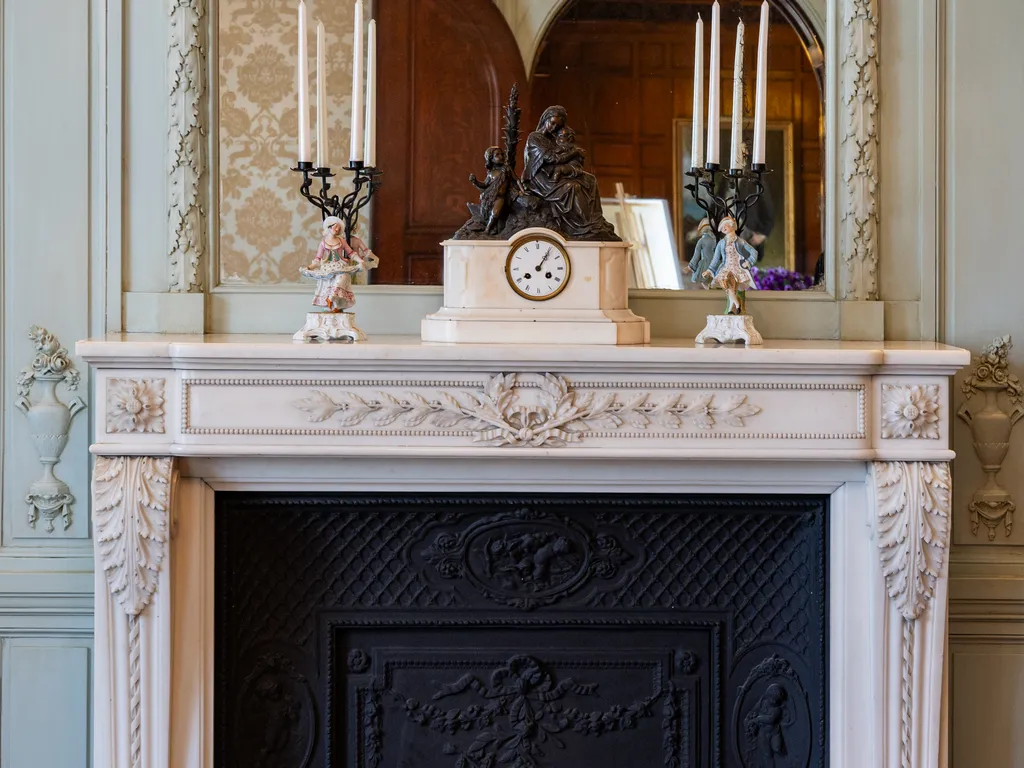
Traditional rooms are organised around a centre line. A fireplace, a tall window, a painting — something takes the middle, and the furniture arranges itself in conversation around it, roughly mirrored left to right. Drew and Jonathan’s guide to traditional interior design names symmetry the style’s biggest tell: matching lamps, paired chairs and balanced layouts are what make a room read calm at first glance. The fireplace is the classic anchor, and our fireplace mantel styling ideas show how the mantel itself becomes the arrangement everything else answers to.
The anti-stuffy rule is to balance masses, not objects. The two sides need equal visual weight, not identical contents: an armchair and a floor lamp can balance a chaise or a bookcase. Strict object-for-object mirroring is what makes rooms feel staged for a photograph. Balance the weight, vary the pieces, and the room keeps its order without the showroom stiffness.
2. Classic Silhouettes: Rolled Arms, Wingbacks and Tufting
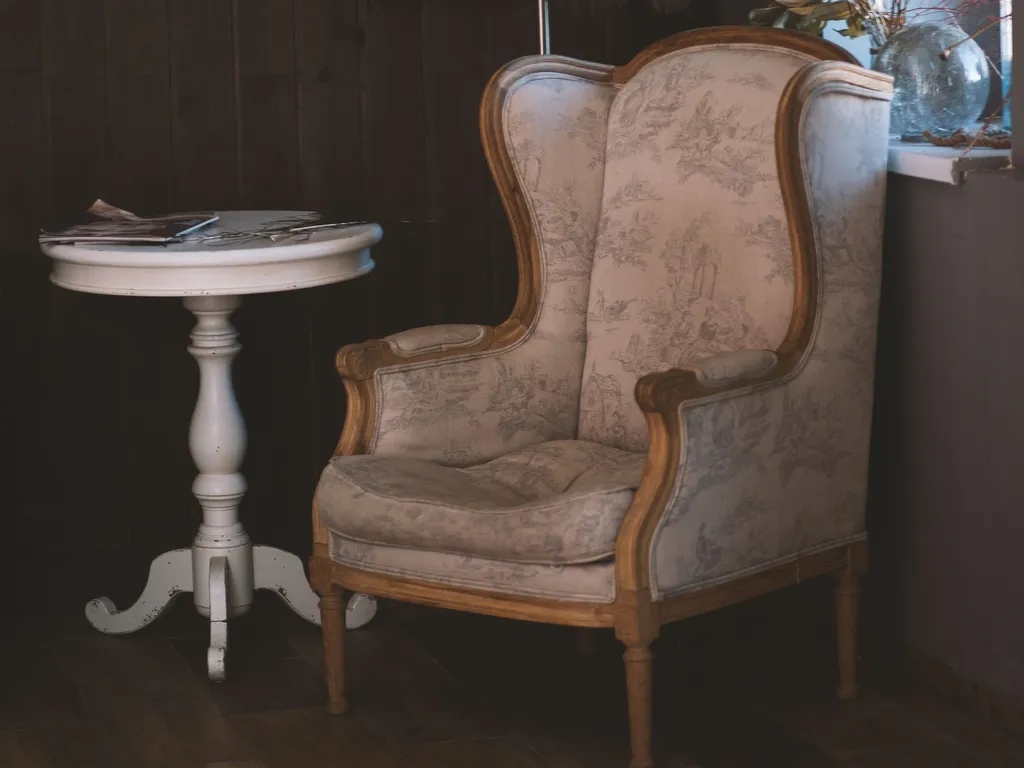
Traditional furniture is recognisable by shape before fabric: rolled arms, wingback chairs, camelback sofas, deep button tufting, cabriole and turned legs. These silhouettes have survived for centuries because they are genuinely comfortable — high backs that support your head, deep seats, arms at elbow height. In our round-up of the types of interior design styles, traditional is the reference point the other styles react against, because these shapes never fully leave.
Buy the silhouettes, skip the suite. A matched three-piece set in a single fabric is the fastest route to stuffy. One wingback in a plaid, a rolled-arm sofa in plain linen, a tufted ottoman in worn leather — the shapes agree while the materials converse. Then allow one honest modern piece per room: a clean-lined side table among the curves reads as confidence, not betrayal.
3. Rich Wood Tones That Warm the Room
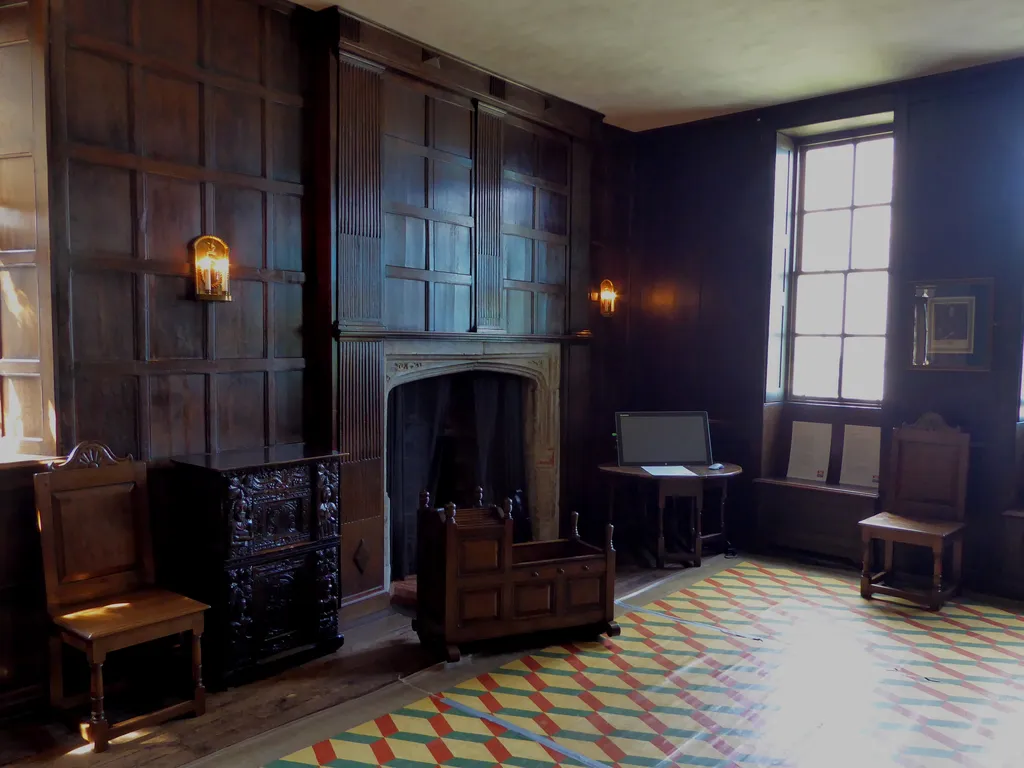
Wood is the style’s warmth supply. Cherry, walnut, mahogany and dark-stained oak appear on the pieces that anchor a room — the bookcase, the sideboard, the dining table, the bed frame — and their depth is what stops pale walls feeling cold. Traditional wood is polished rather than rustic: smooth finishes, visible grain, and carved or turned detail, catching light instead of soaking it up.
Two disciplines keep it livable. First, mix two wood tones rather than matching everything: a walnut table with cherry chairs looks collected, while a full suite looks purchased in one afternoon. Second, let textiles interrupt the wood — upholstered seats, a rug under the table, cushions against the chair backs. Wood on every surface is a boardroom. Wood in the anchor pieces, softened by fabric, is a home.
4. A Warm Palette With Deep, Confident Accents

The traditional palette is built like the furniture: a warm neutral ground — cream, beige, taupe, soft gold — with deep, saturated colour carried on the movable pieces. Burgundy, navy, forest green and rich brown appear on sofas, drapes, rugs and cushions, where they read as richness rather than darkness. The walls stay pale, so the room stays light; the colour lives at sitting height.
Ratios keep it calm: roughly two-thirds neutral to one-third deep colour, with brass or bronze as the glint on top. If a room starts to feel heavy, the fix is rarely a new colour. Move the depth downward — a darker rug under paler upholstery — or break it with one cream chair. Deep colour should pool in places, catching the eye in turn; it should never coat every surface at once.
5. Pattern, Mixed the Traditional Way

Traditional rooms are patterned rooms: damask, toile, florals, plaids, stripes and paisley, layered across drapes, upholstery, cushions and rugs. Birch Lane’s guide to traditional style lists exactly these motifs, and the rule that governs them: patterns layered in varying sizes, so the eye reads richness rather than argument. Scale is the whole game: one large pattern, one medium, one small, all inside a single colour family.
Give each pattern a job. The large pattern leads, usually on the drapes or the rug. The medium pattern supports, on an armchair or the cushions’ main fabric. The small pattern appears where it can be changed cheaply — cushion covers, a throw. And a solid must rest the eye between them: the plain linen sofa is not a gap in the scheme, it is what makes the scheme readable. When a room feels busy, two patterns are usually competing at the same scale.
6. Layered Textiles and Dressed Windows

Set the room’s temperature with textiles, because fabric is what makes a traditional room feel quiet and soft. A traditional room layers fabric at every level: a patterned rug over wood floors, upholstered furniture, cushions in two or three fabrics, a folded throw, and windows dressed properly — curtains to the floor, often layered over sheers or a blind. Each layer softens sound, light and hard edges, which is why these rooms feel quiet even when the floors are bare wood.
The livable update is fibre choice. Silk and brocade are the textbook fabrics, but linen, cotton velvet and wool give the same depth with a softer hand and far easier care. Keep the layering, relax the fibres, and keep window treatments full-length and simple in cut. It is the swags, jabots and tasselled tiebacks — not the layers themselves — where traditional tips over into costume.
7. Architectural Detail: Moulding, Panels and Built-Ins
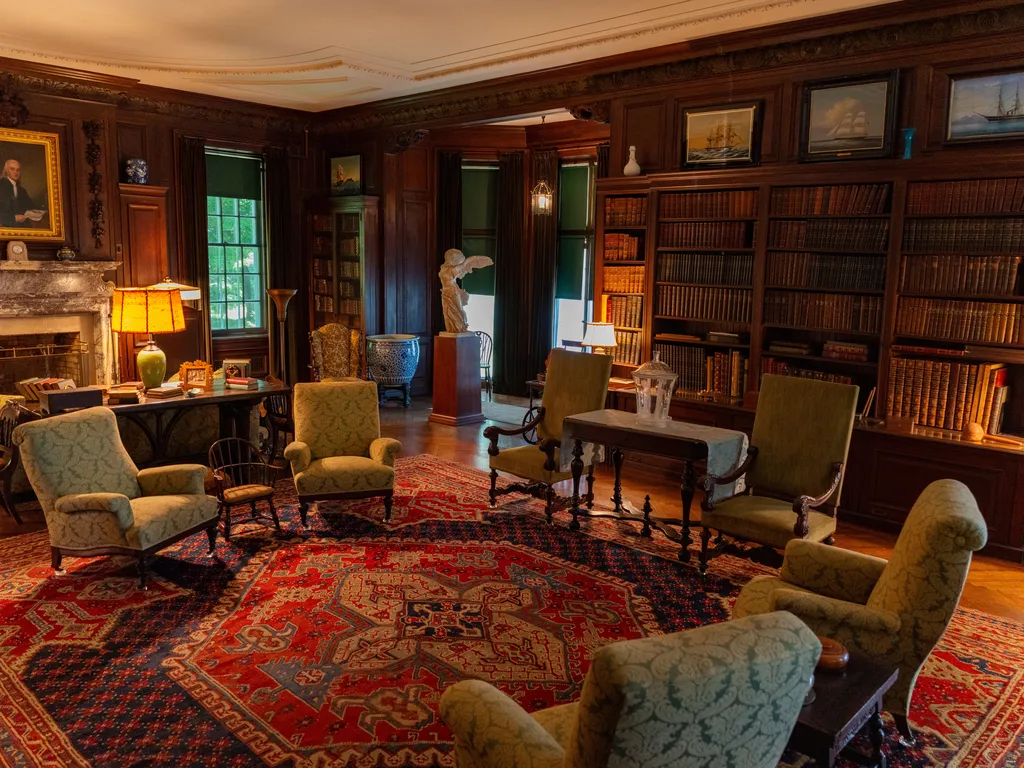
Traditional rooms have finished bones: crown moulding where wall meets ceiling, wainscoting or raised panels on the lower wall, trim around doors and windows, and built-in bookcases flanking the fireplace. This millwork is what makes an empty traditional room still look dressed — the architecture carries the style before a single chair arrives.
You do not need a period house to get it. Picture-frame moulding applied to a plain wall, a chair rail with panels below, or one run of bookcases are weekend-scale projects with outsized effect. The calm trick is colour: paint the millwork the same shade as the wall, or one step deeper in the same family. Detail in a single colour reads as texture and shadow; detail picked out in contrast reads as fuss.
8. Lighting With Presence: Chandeliers, Sconces and Pairs

Traditional lighting is decorative on purpose. A chandelier or lantern pendant takes the centre of the ceiling, sconces flank the mantel or the mirror, and table lamps arrive in pairs on the side tables. The fixtures are part of the furniture — brass, bronze, crystal, pleated fabric shades — and the light they give is warm, shaded and low-glare, never bare-bulb bright.
Run it at three heights: something overhead, something at eye level, something at table height, each on its own switch or dimmer. Dimmers are the modern traditionalist’s best tool — the same chandelier that blazes for a dinner party can glow for an ordinary Tuesday. And if the room starts to feel staged, replace one matched pair of lamps with two different lamps of equal height; the balance survives, the showroom feel does not.
9. Antiques, Art and Pieces With a Past
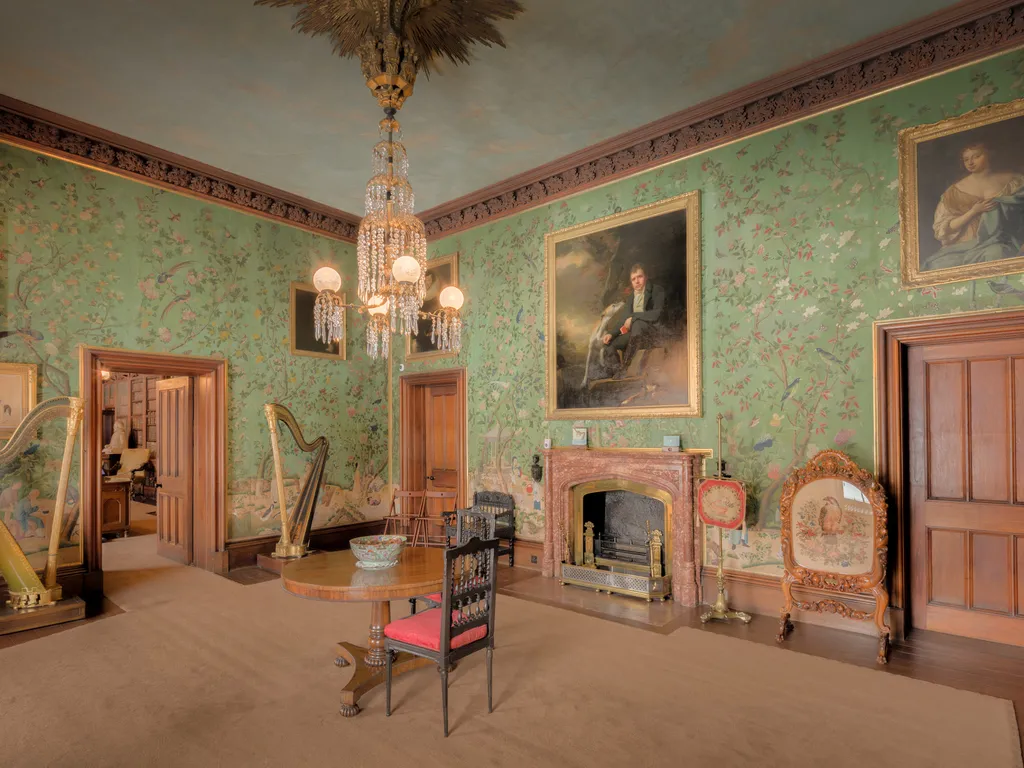
Decoration in a traditional room is curated, not themed: framed art in gilt or dark wood, porcelain and silver on the mantel, books in real stacks, an antique carriage clock, a side chair inherited rather than chosen. These objects carry history — the one ingredient a new room cannot buy. It is the same old-world warmth that runs through our Spanish style home design ideas — centuries of craft, worn in rather than styled on.
The discipline is editing. Group objects in odd numbers, leave some surfaces completely empty, and let every displayed piece earn its place by being beautiful, useful or loved. A room where everything is antique feels like a museum with a sofa in it. A room where a third of the pieces have a past, and the rest quietly support them, feels like a family that has lived well for a long time.
10. The Traditional Bedroom — and Keeping the Whole Look Fresh

The bedroom is where the style relaxes most happily: an upholstered or four-poster bed, a matched pair of nightstands with lamps, a bench at the foot, and bedding doing the decorative work. Our layered bedding ideas are the bedroom’s version of the living room’s textile layering — quilt, coverlet and cushions in the palette’s neutrals with one deep accent, so the bed reads dressed without a single fussy valance.
And the freshness rule for the whole house: every traditional room is allowed — required, even — one thing that is plainly of now. A contemporary painting over the mantel, a modern reading light beside the wingback, a clean-lined coffee table standing on the patterned rug. The style has survived three centuries by absorbing each era’s comforts. A room that refuses the present is not timeless; it is frozen at the year it was decorated.
Frequently Asked Questions About Traditional Interior Style
What defines traditional interior style?
Symmetry around a focal point, classic furniture silhouettes, rich wood tones, layered textiles and pattern, and architectural detail like moulding and built-ins — all arranged for comfort and order rather than display.
Is traditional style outdated?
No. The silhouettes and palettes predate trend cycles and outlast them. What dates a room is the delivery: matched furniture suites, strict object-for-object mirroring and heavy swagged curtains. Keep the bones, relax the delivery, and the style reads timeless rather than old.
What colours are used in traditional interiors?
Warm neutrals — cream, beige, taupe and soft gold — form the ground. Deep, saturated accents do the character work: burgundy, navy, forest green and rich brown, on upholstery, drapes and rugs, with brass or bronze as the metal glint.
Can traditional style work in a small room?
Yes, and symmetry helps: a clear focal point and balanced pairs make a small room feel ordered. Scale the furniture down, keep the walls pale, run one lead pattern instead of three, and choose leggy pieces so the floor stays visible.
What furniture shapes are traditional?
Wingback and club chairs, rolled-arm and camelback sofas, tufted upholstery and ottomans, pedestal and turned-leg tables, and upholstered or four-poster beds. The common thread is curve and comfort: high backs, deep seats and arms at elbow height.
How do I mix patterns without them clashing?
Stay inside one colour family and separate the scales: one large pattern to lead, one medium to support, one small for cushions and throws, with a solid fabric resting the eye between them. Clashes come from two patterns competing at the same scale, not from pattern itself.
What is the difference between traditional and transitional style?
Transitional is traditional’s lighter modern blend: fewer curves, plainer fabrics, little pattern and cleaner lines. Traditional keeps the full detail — tufting, millwork, layered pattern and pairs.
Do I need real antiques for a traditional room?
No. A few pieces with a past — an inherited chair, a market-find clock, old books — add a depth new furniture cannot fake, but new pieces in classic silhouettes carry the style perfectly well. Aim for roughly a third old, two-thirds quietly supportive.
What window treatments suit traditional style?
Full-length curtains are the standard, often layered over sheers or a simple blind for light control. Keep the cut simple — plain gathered or pleated panels in linen, cotton or velvet. Heavy swags and jabots are the part most homes can happily skip.
How do I stop a traditional room looking stuffy?
Balance masses instead of mirroring objects, mix wood tones and fabrics instead of buying suites, paint millwork one colour, keep patterns at three different scales, and give every room one plainly modern piece. Stuffy is a dosage problem, and dosage is entirely in your hands.
Conclusion
Traditional endures because it was never a fashion. Its rules — balance the room, buy shapes that flatter the body, let wood and fabric supply the warmth, finish the architecture, light it in layers — were worked out over centuries of people actually living in these rooms. Keep those bones and loosen everything else, and the style gives back what it has always given: rooms that look considered, feel comfortable, and ask nothing of the next trend cycle.
What a traditional room costs, piece by piece
A traditional look can start small. Paint, curtains and a pair of lamps change a room for a few hundred dollars, while a full living room with a new sofa, rug and chandelier runs into several thousand. The table below uses typical prices for good quality, not top-end, pieces. Buy the pieces you sit on and touch every day at the best quality you can afford, and save money on decor that is easy to swap later, such as cushions and small art.
| Item | Typical cost | What changes the price |
|---|---|---|
| Rolled-arm sofa, 84 inches | $1,200 to $3,500 | Frame wood, spring type and fabric grade |
| Wingback or club chair | $500 to $1,800 | Upholstery, nailhead trim and cushion fill |
| Wool rug, 8 by 10 feet | $600 to $2,500 | Wool, silk blend and knot count |
| Full-length lined curtains, one pair | $200 to $900 | Fabric, length and hand-pleated heading |
| Chandelier, 24 to 30 inches wide | $300 to $1,500 | Crystal, brass and the number of arms |
| Pair of table lamps | $120 to $600 | Base material and shade size |
| Picture-frame moulding, one room | $250 to $900 | Room size and whether it is painted |
| Antique or vintage side table | $150 to $800 | Age, wood and condition |
| Framed art, 30 by 40 inches | $150 to $700 | Original work costs more than a print |
| Cushions and throws, set of four | $80 to $300 | Linen, velvet and feather fill |
Allow $150 to $400 for delivery and, if needed, a handyman to hang the chandelier, fix curtain rods and fit moulding. A chandelier over 20 pounds needs a rated ceiling box, so ask an electrician to check the fixing before you buy, not after it arrives.
Sizes that keep a traditional room in balance
Measure the room before you shop. A sofa should leave at least 30 inches of walkway in front of it, and a coffee table should sit 14 to 18 inches from the sofa edge, close enough to reach a cup without standing up. The rug should run under the front legs of the sofa and chairs; in a living room that usually means 8 by 10 feet, or 9 by 12 feet in a large room. Curtains should hang from a rod 4 to 6 inches above the window frame and fall to the floor, with the rod 6 to 10 inches wider than the frame on each side so the panels clear the glass when open. A chandelier should be about half to two-thirds the width of the table below it, and hang 30 to 36 inches above a dining table, or at least 7 feet above the floor in a walk-through space. Sconces work best at 60 to 66 inches from the floor. For art above a sofa, pick a piece about two-thirds the sofa width and hang its centre at 57 to 60 inches from the floor.
How to build the look in order, without waste
Start with the layout, not the shopping. Mark the focal point, place the largest pieces first, and tape the rug size on the floor with painter’s tape so you can walk around it for a day. Next, fix the bones: paint, moulding and curtain rods. Then bring in the sofa and chairs, then the rug, then lighting. Add pattern last, one layer at a time, and live with each layer for a few days. The most common mistake is buying a matched suite and matching cushions in one trip. That saves time on the day and makes the room look like a showroom for years. A second common mistake is hanging curtains too short or too narrow, which makes even a good room look unfinished. A third is buying a rug that is too small, so the chairs sit half off it. Check each size on the list above before you order, and keep the receipts until the room is finished.
More questions about traditional style
How much does it cost to furnish a traditional living room?
A careful refresh with curtains, lamps, a rug and cushions costs $1,000 to $3,000. A full room with a new sofa, chairs, rug, chandelier and art usually costs $4,000 to $10,000, before any moulding or electrical work.
What size rug goes under a traditional sofa?
Use 8 by 10 feet for a standard three-seat sofa, and 9 by 12 feet for a large room. The front legs of all seating should sit on the rug, with at least 6 inches of rug showing past each side.
Can I mix traditional furniture with a modern sofa?
Yes. One clean-lined sofa in a plain fabric works well next to traditional chairs and a wood table, as long as the colours and wood tones are in the same warm family.
How do I keep dark wood from making the room feel heavy?
Limit dark wood to two or three large pieces, keep the walls pale, and add light fabric on the sofa and curtains. A large mirror opposite a window also lifts a dark-wood room.