
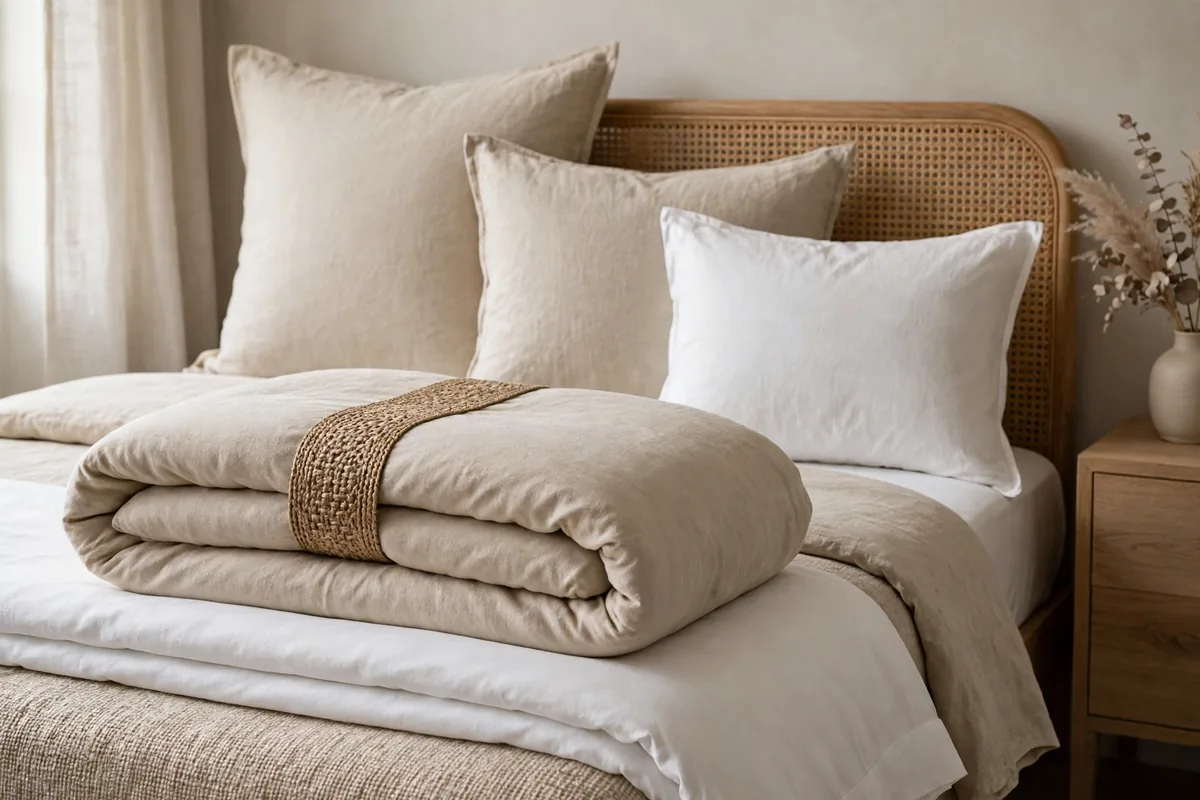
Two beds can hold exactly the same bedding and look completely different — one designed, one piled. The difference is never the budget; it is the order. Designers and hotel housekeepers build a bed in a strict sequence, bottom to top, and each layer is placed to be seen: a band of sheet, a stripe of quilt, the duvet’s folded third, pillows descending like steps. Learn the sequence once and your bed assembles itself every morning.
Ten ideas, in building order — with the shortcuts that tell you which layers you can skip.
In this guide: The Bed, Layer by Layer · 1. The Order Is the Whole Secret · 2. Sheets First: Fitted Taut, Flat Folded Back · 3. Colour: Three or Four Tones, Mostly Quiet · 4. The Quilt: Your Texture Stripe · 5. The Duvet, Folded in Thirds · 6. Texture at Every Layer, Never the Same Twice · 7. Pillow Architecture: Tall to Short, Odd Numbers · 8. The Crispness Tricks Hotels Actually Use · 9. Seasonal Layering: Add and Subtract, Never Redo · 10. Small Beds, Shared Beds: Scaling the Stack · The Method by Bed Size · The Morning Audit: Diagnose the Bed in Thirty Seconds · Frequently Asked Questions About Layered Bedding · Conclusion
The Bed, Layer by Layer
| Order | Layer | Its visible job |
|---|---|---|
| 1 | Fitted sheet (over protector) | The taut, ripple-free base |
| 2 | Flat sheet, folded back | The crisp band at the pillows |
| 3 | Quilt or coverlet | The texture stripe across the middle |
| 4 | Duvet, folded in thirds | The plush headline layer |
| 5 | Pillows, tall to short | The descending architecture |
| 6 | Throw at the foot | The finishing texture + colour note |
1. The Order Is the Whole Secret
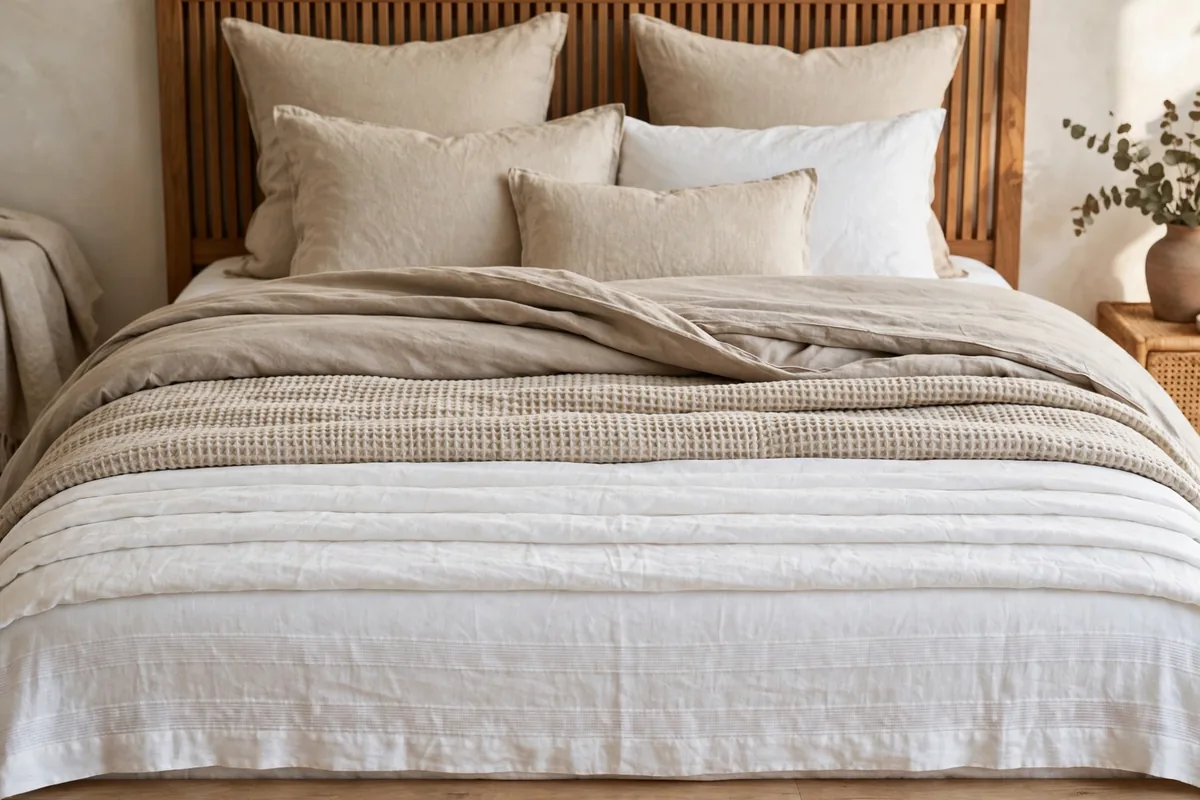
The designer method, as bedding specialists at Or & Zon set it out, is built bottom-up: fitted sheet, flat sheet, quilt or coverlet, duvet, pillows arranged tall-to-short, and a throw draped at the foot. Skipping around the order is what produces the “piled” look — a duvet dumped over a quilt hides both, and pillows placed before the folds are set get buried by them.
And the merciful footnote from the same method: you do not need every layer. A fitted sheet, a duvet, two pillows and a throw is a complete, styled bed — the full six layers are the deluxe version, not the entry fee.
2. Sheets First: Fitted Taut, Flat Folded Back
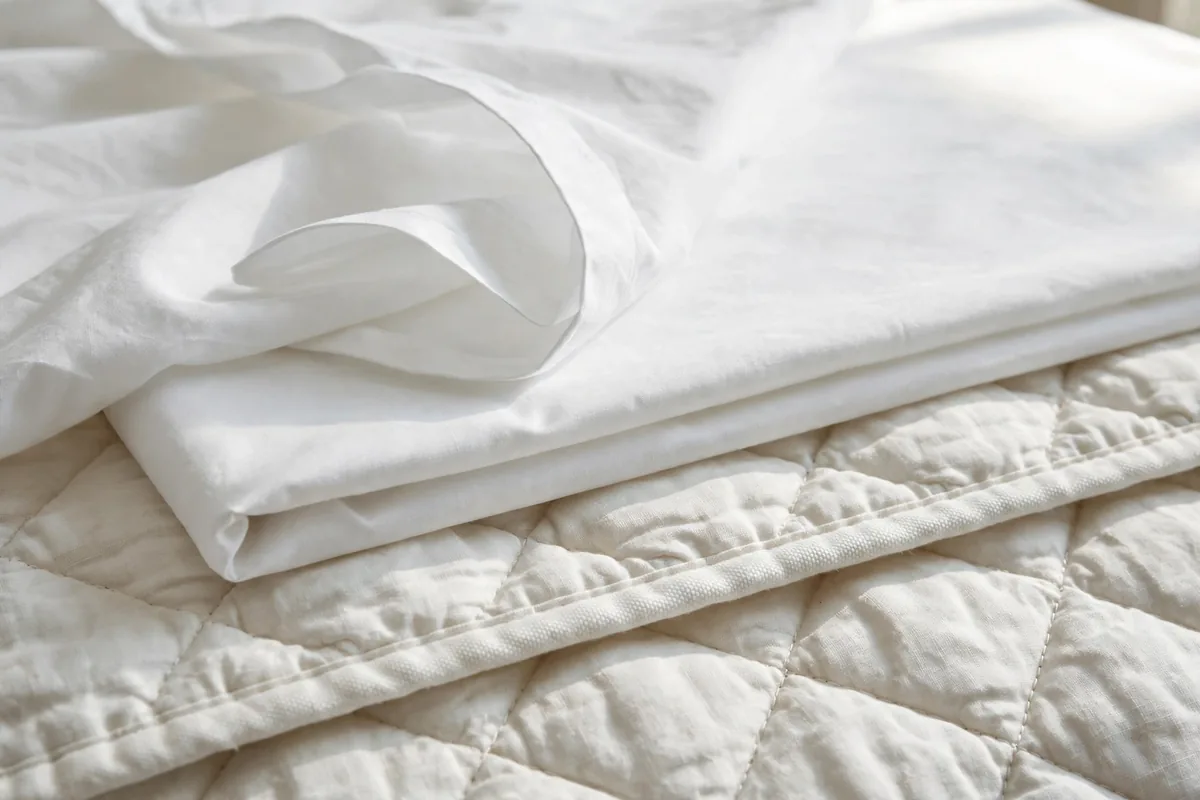
Layer one is invisible but structural: a fitted sheet pulled properly taut — hotels are blunt that a sheet which ripples ruins the effect entirely, and that deep pockets matter on deep mattresses. Smooth it corner to corner; this is the canvas every other layer sits on.
Layer two, the flat sheet, earns its place visually: laid over the fitted, its top edge folds back over the quilt and duvet to come — creating the crisp pale band at the pillow line that reads “hotel” from the doorway. If you skip the flat sheet (many do), the duvet cover’s own fold-back does the same job one layer up.
Layer zero: the protector. The fitted sheet in the table sits over a protector, and the protector is the system’s invisible foundation: it is what makes the wash cadence in the FAQs possible, because the layers above it can rotate through the laundry while the bed underneath stays protected. Choose it by household — quilted for comfort and quiet, waterproof where spills, allergies or small children argue for it. Nobody sees this layer; everybody sleeps on its decision.
Choosing the weave: Percale is the crisp, cool, matte weave — the hot sleeper’s sheet, and the hotel choice Section 8 builds on. Sateen is its warmer sibling: smoother, with a soft sheen, for sleepers who run cold. Linen is the relaxed one — breathable, temperature-regulating, and wrinkled with character rather than despite itself. The weave is a sleeper-type decision before it is a styling one; texture contrast (Section 6) can be built on any of the three.
3. Colour: Three or Four Tones, Mostly Quiet
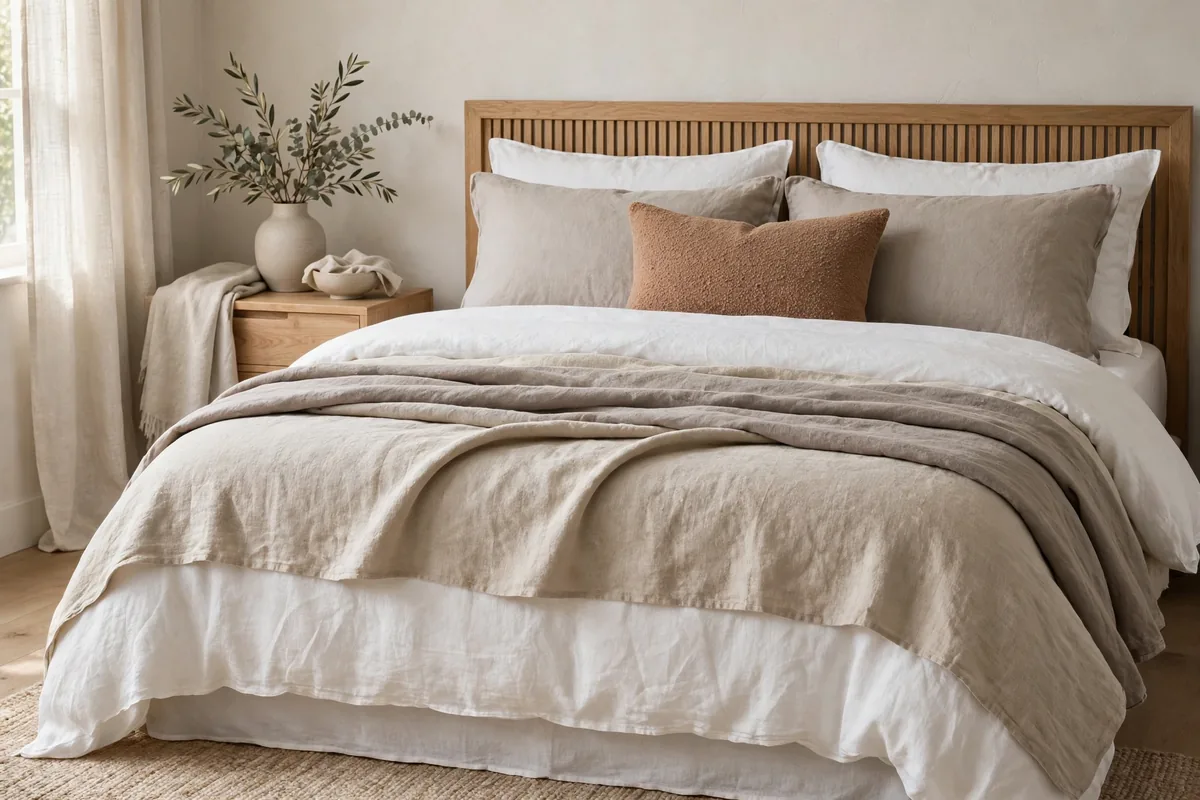
Layered beds hold together by palette discipline: three to four tones, mostly neutral, varied by tone and texture rather than by adding more colours. White or cream sheets, an oatmeal quilt, a stone duvet, one accent (clay, olive, ink) appearing exactly twice — a cushion and the throw, say. Each layer is distinguishable by shade or surface, never by a competing print.
This is the bedroom expression of the whole-home system in our year-round neutral base ideas: the bed’s big pieces stay quiet for years, and its smallest pieces carry the seasons.
4. The Quilt: Your Texture Stripe
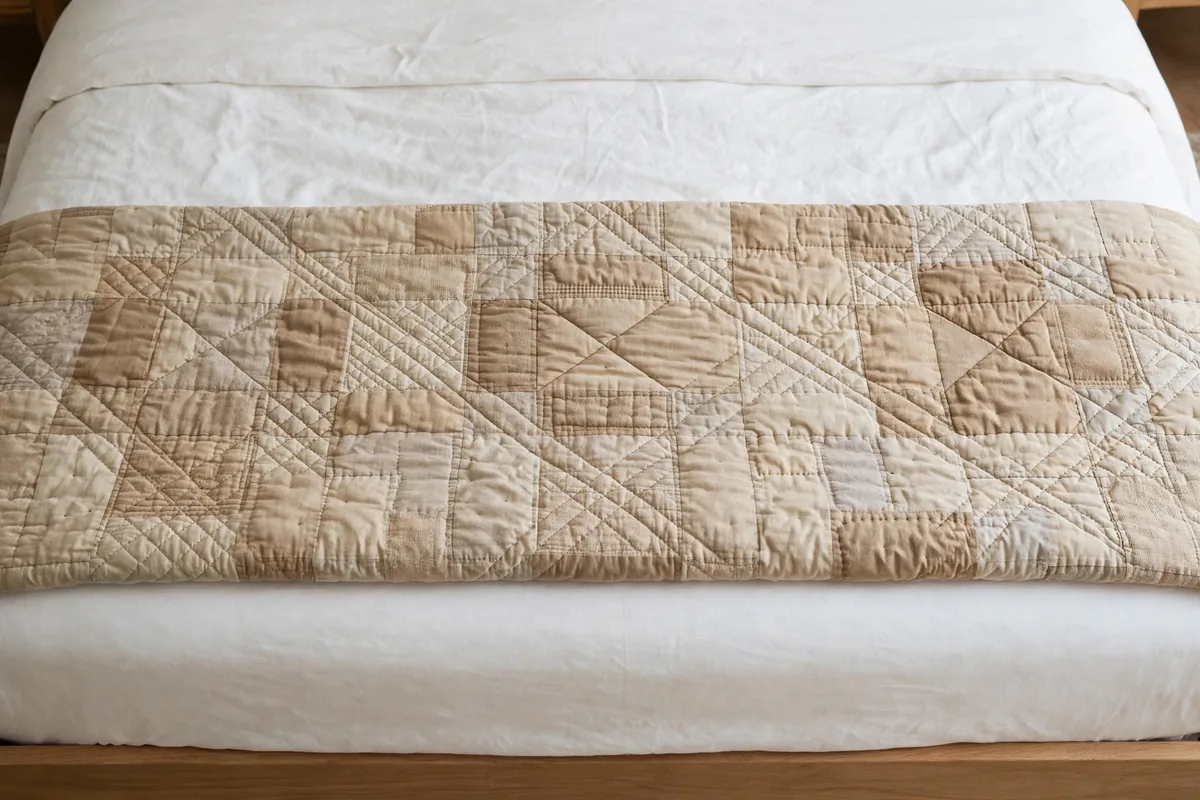
Between sheet and duvet sits the layer most home beds miss: a quilt or coverlet, spread over the lower two-thirds of the bed. Its job is texture at mid-bed — a woven, stitched or matelassé surface that contrasts with the smooth sheet above it and the lofty duvet folded over its top edge. From the doorway, it is the horizontal stripe that makes the bed look composed.
In summer the quilt often becomes the top layer outright (duvet stored, quilt over the flat sheet); in winter it is the extra warmth you pull up at 3 a.m. without remaking anything. One quilt, two careers.
5. The Duvet, Folded in Thirds
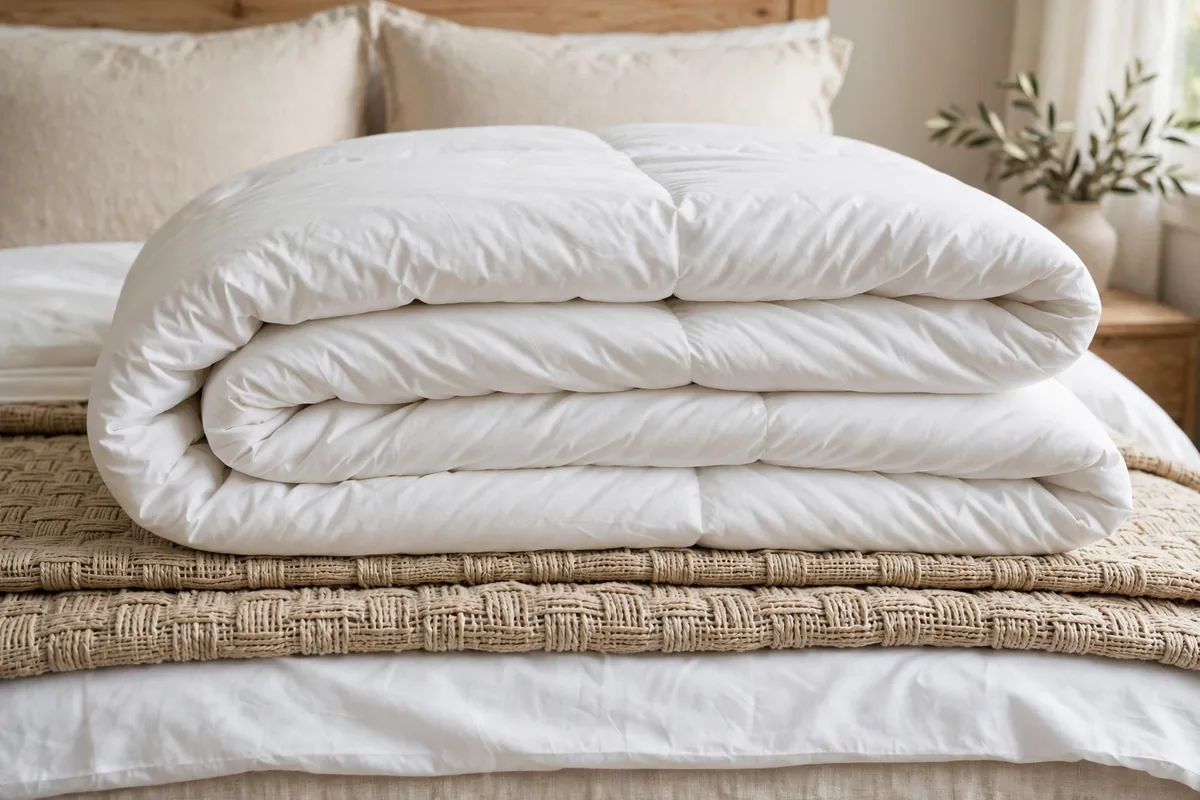
The duvet is the headline layer, and its styling move is the fold: lay it flat over the whole bed, then fold the top third down, and fold that band back on itself — the designer’s “duvet fold” that creates a thick, plush band across the top while revealing the sheet and quilt bands beneath it. An unfolded duvet hides the layers you paid for; the fold is what makes them a composition.
Tog is the seasonal dial underneath the styling: lighter fills for summer, heavier for winter — the same add-and-subtract logic as the rest of the room’s winter cozy textiles. Shake and plump the duvet before folding; loft is half the look.
6. Texture at Every Layer, Never the Same Twice
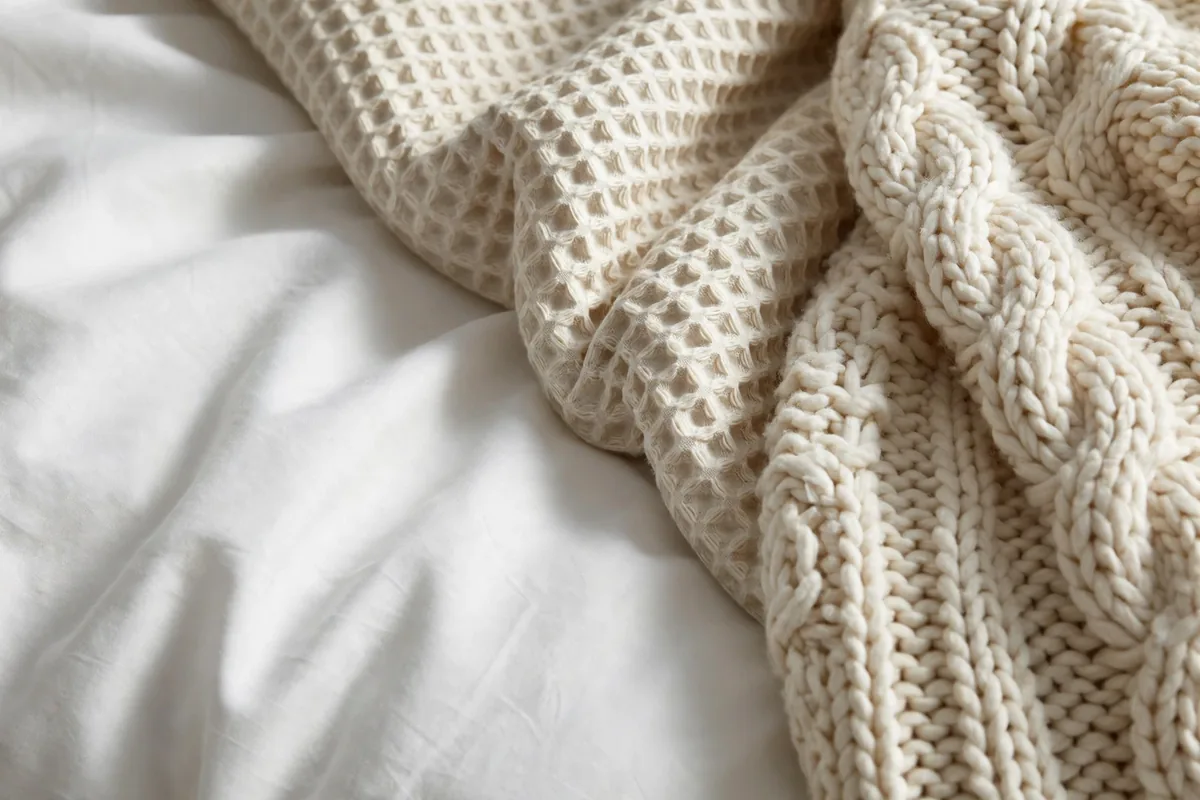
The principle that separates styled from piled, repeated by every layering guide: vary the texture at every layer. Smooth sheet against woven quilt against soft duvet against knit throw equals depth; the same brushed cotton four times equals a mound. Natural fibres help because they wrinkle and drape with character — the designer method explicitly lets linen and percale stay relaxed and lived-in rather than ironed flat.
Shop the bed by hand, not by eye: if two adjacent layers feel the same between your fingers, swap one. Your fingertips can audit a layered bed better than a photograph can.
7. Pillow Architecture: Tall to Short, Odd Numbers
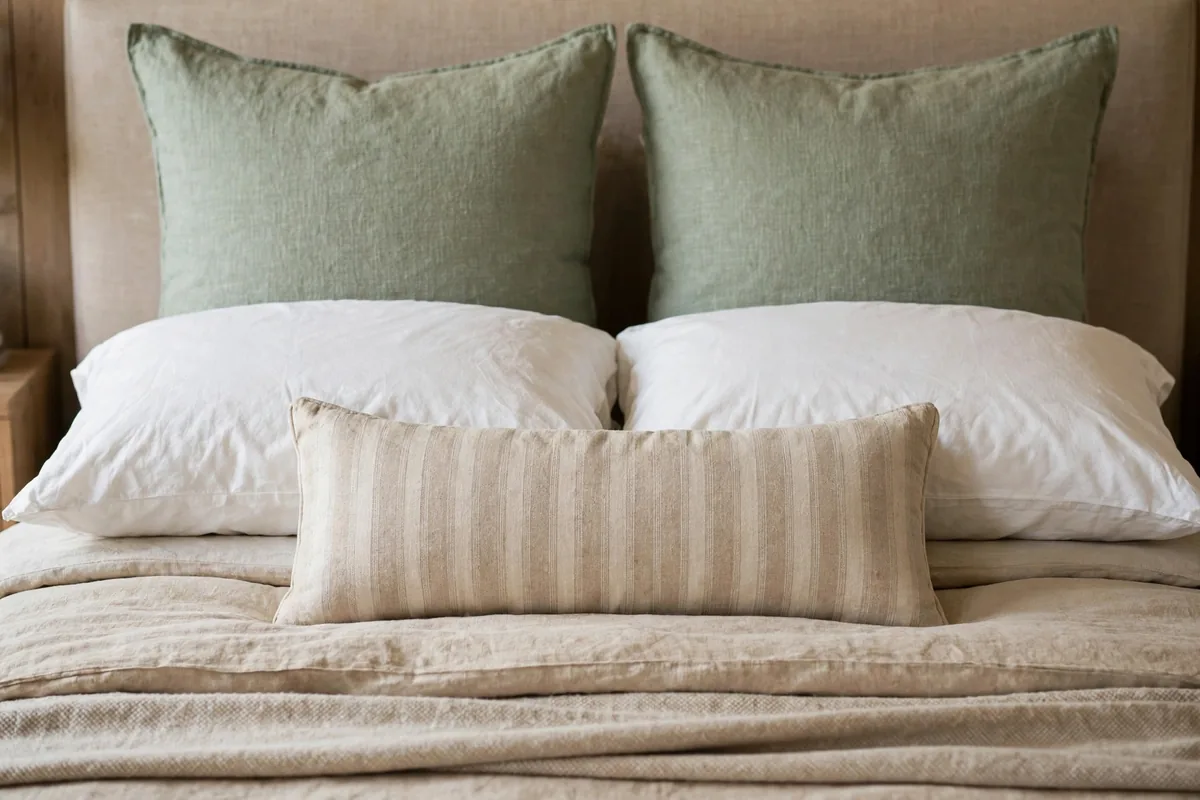
Pillows descend like steps, tallest at the headboard: two Euro shams (the big squares) standing as the backdrop, sleeping pillows in front of them, then the accent — one long lumbar or a single square — centred at the front. Odd counts and descending height are what the eye reads as “arranged.” Hotel formulas agree on the skeleton: sleepers upright at the back, a second row, a decorative cushion or bolster to finish.
Plump like the hotels: hold each pillow by its ends and compress inward a few times to square it off (never punch the middle), and give the front cushion the famous karate-chop dent along its top edge — contrived alone, correct in context.
8. The Crispness Tricks Hotels Actually Use
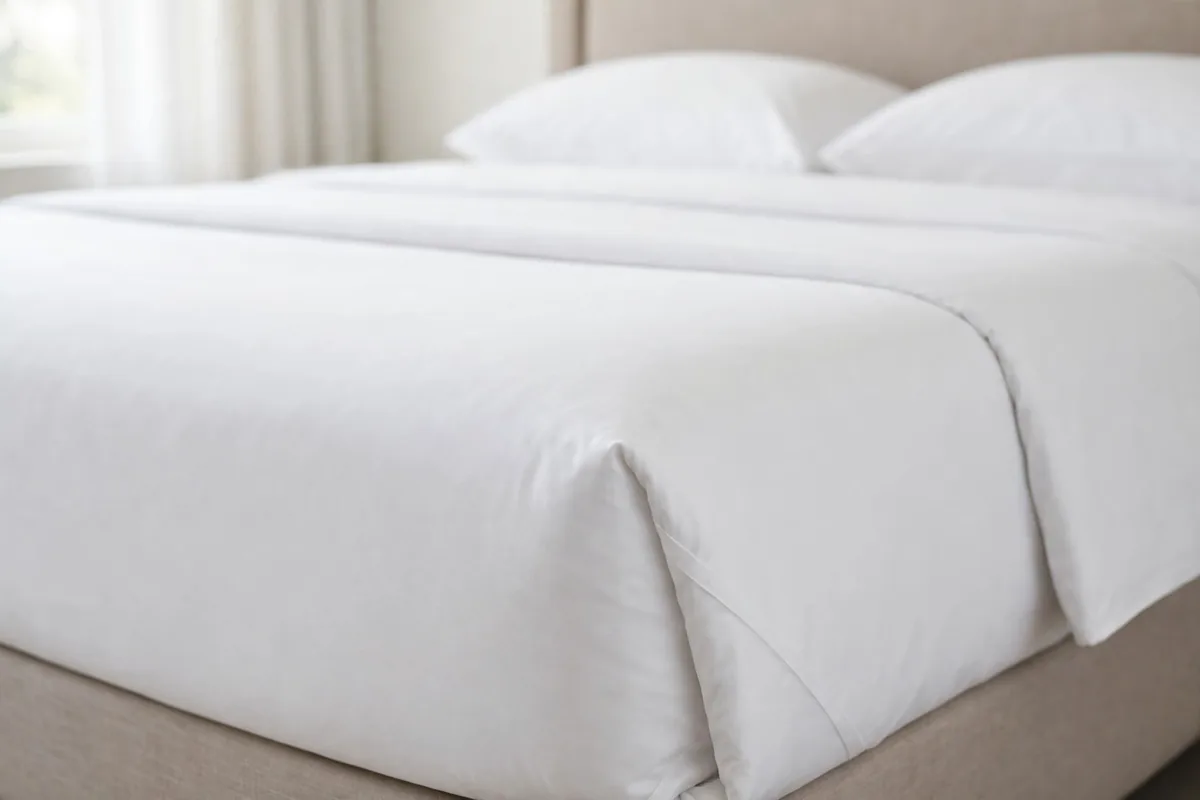
Hotel beds feel different before they look different. Simba’s breakdown of the five-star formula names the fabric first: percale — a plain, tight weave — gives the cool, matte crispness you notice climbing in, and sleeps cooler than sateen or brushed weaves. One fabric change moves a home bed most of the way to the hotel effect.
Then the tuck: hospital corners — the sheet folded at 45 degrees and tucked — stop bedding pulling loose through the night, and a uniform calm colour across the whole set buys most of the remaining effect, because uniformity, not colour, is what reads as “hotel.”
9. Seasonal Layering: Add and Subtract, Never Redo
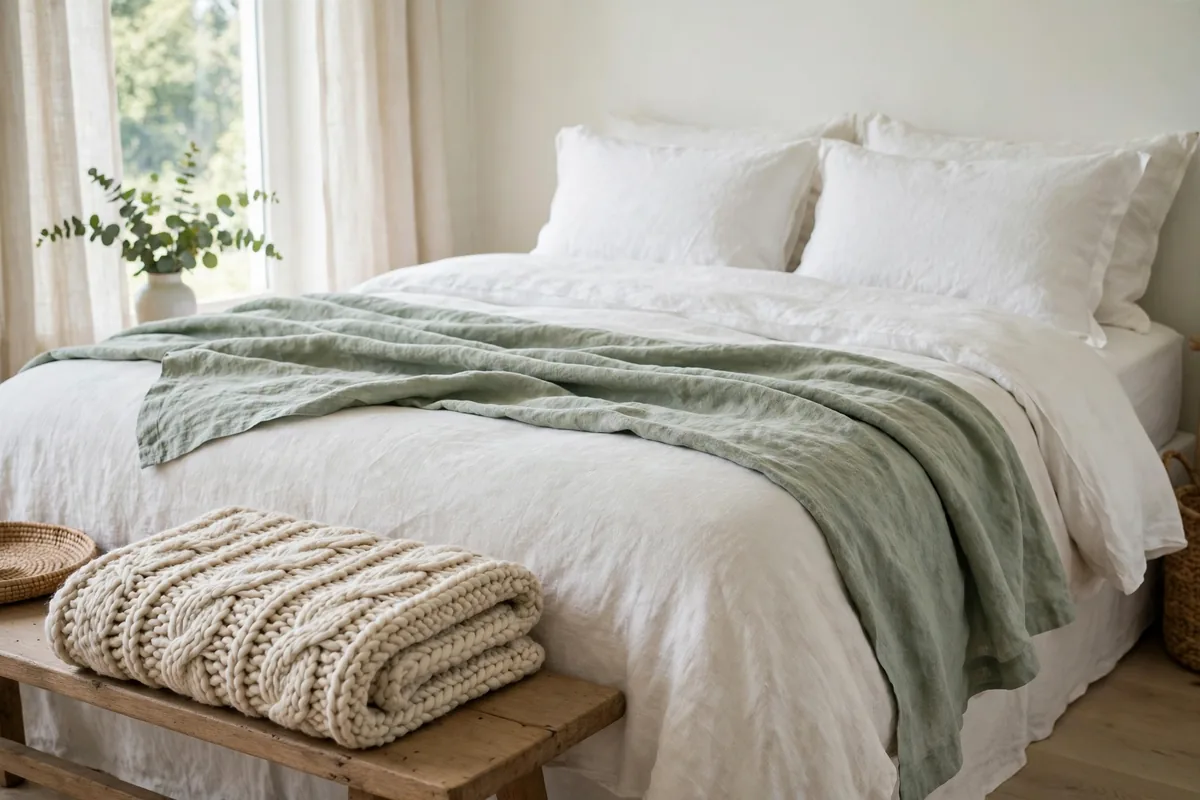
A layered bed is a thermostat with styling: summer runs sheet + quilt + throw, winter adds the duvet’s full tog, a second throw and flannel or sateen sheets for warmth; shoulder seasons mix — light duvet, velvet or knit throw, an experimental colour (rust, olive, navy, taupe). Nothing is remade; layers join and leave like guests.
| Season | Layers in play | Fabric focus |
|---|---|---|
| Summer | sheet + quilt + throw | linen lightness |
| Shoulder seasons | a light duvet joins, a velvet or knit throw | the season for one experimental colour |
| Winter | full-tog duvet, a second throw | flannel or sateen sheets |
The spring version of the full bedroom changeover — bedding included — is walked through in our spring bedroom refresh ideas; the point here is that a well-layered bed makes that refresh a ten-minute layer swap instead of a linen-cupboard excavation.
10. Small Beds, Shared Beds: Scaling the Stack
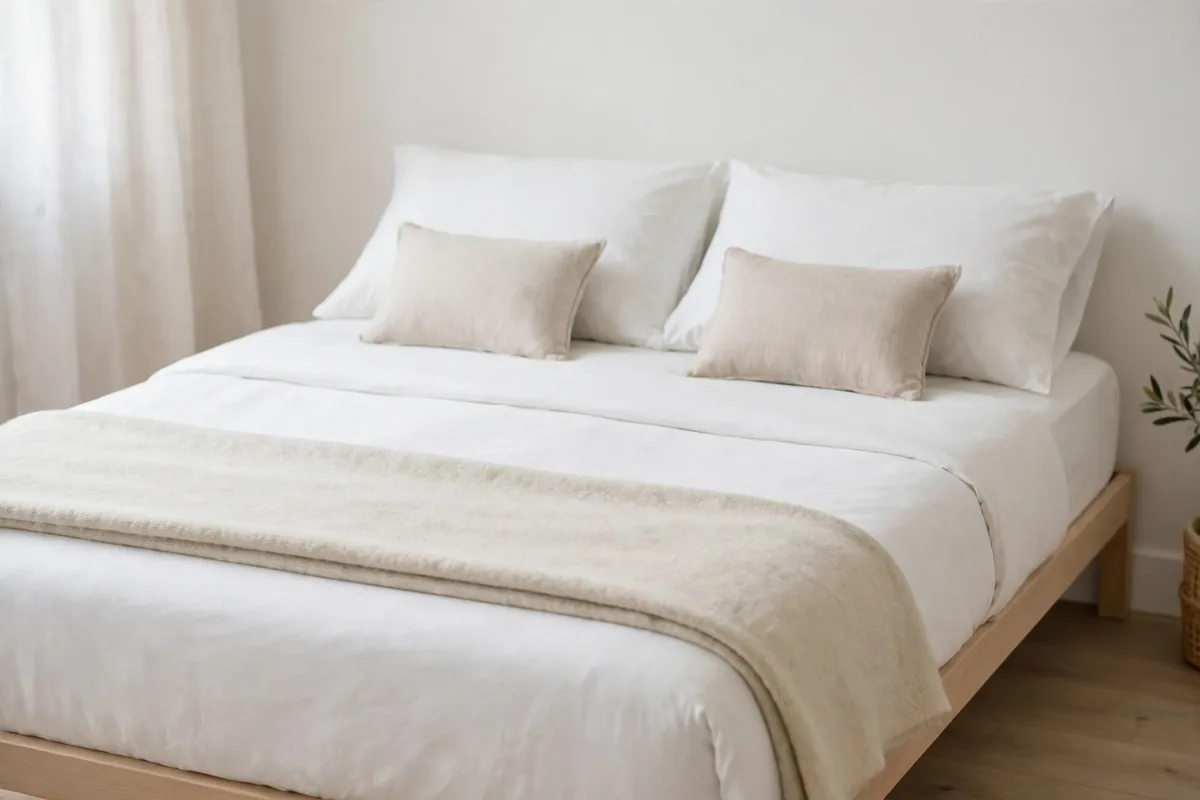
Small beds simplify rather than shrink: the hotel stylists’ compact formula is one sheet set, two sleeping pillows, two decorative cushions, one folded throw — and more of the sheet left visible, which makes a compact bed read cleaner and larger. Light colours do the same work. Our small bedroom design ideas apply the same restraint room-wide.
Shared beds add one rule: layer symmetrically (pillow stacks mirrored, throw centred or in matching halves) so the bed resets in seconds whoever makes it — and agree the tog by compromise (a mid-weight duvet plus an extra single throw on the colder sleeper’s side beats a nightly treaty negotiation).
The Method by Bed Size
| Bed | The build | Pillows |
|---|---|---|
| Single | the compact formula: sheet, quilt, duvet folded, throw | two (one sleeper, one Euro or second sleeper) |
| Double/Queen | the full six layers | five (two Euros, two sleepers, one lumbar or accent) |
| King | the full six layers, widened | six (three Euros, two sleepers, one lumbar or accent) |
The Morning Audit: Diagnose the Bed in Thirty Seconds
Run a hand down the finished bed — every layer should feel different from its neighbours, or one of them is decoration without a job; that is Section 6’s fingertip test, and it is the whole audit in one gesture. Then read the three morning failures the way the FAQ diagnoses them: a rippling fitted sheet is tension lost at the base; a duvet that has migrated by morning is an insert too small for its cover; a bed that still looks soft all over is too many soft layers without one crisp one. Fix the fitted sheet’s fit first, clip or tie the insert corners, and keep at least the sheet layer smooth percale. Thirty seconds, and the bed tells you exactly which layer to blame.
Frequently Asked Questions About Layered Bedding
What is the correct order for layering bedding?
Bottom-up: mattress protector, fitted sheet, flat sheet, quilt or coverlet over the lower two-thirds, duvet folded in thirds at the top, pillows tall-to-short, throw at the foot. The order matters because each layer is placed to remain partly visible.
Do I need a flat sheet if I have a duvet cover?
No — it is the optional layer. It adds the crisp fold-back band and a washable barrier that extends duvet-cover laundry intervals, but plenty of styled beds run fitted sheet + duvet alone. Keep it if you love the band; skip it without guilt.
How many pillows should a layered bed have?
For a double or queen: two Euros, two sleeping pillows and one accent (lumbar or square) is the classic five-piece architecture. Four pillows is the practical hotel baseline; six builds the fuller look. Beyond six, you are storing pillows on the floor nightly. Fuller hotel stacks exist, and they are a storage choice rather than a styling error — this guide’s cap is about the nightly floor pile, not about taste.
What’s the difference between a quilt, a coverlet and a throw?
Size and job. A quilt is a stitched, lightly padded bedcover; a coverlet is its thinner, woven cousin — both span the bed as the middle texture layer. A throw is a small blanket (roughly 50×60 inches) used as the finishing accent at the foot or over an arm.
How do hotels get bedding so crisp?
Percale weave (cool, matte, tight), taut fitted sheets with deep pockets, hospital corners, and uniformity of colour. The crispness is fabric plus tension, not starch and staff — all four are buyable or learnable at home.
What tog duvet do I need?
Roughly: 4.5 tog for summer, 9–10.5 for shoulder seasons, 13.5 for winter — or an all-season pairing that clips together. Layering helps because the quilt and throws let a mid-weight duvet cover more of the year than tog alone suggests.
Can a layered bed work with a partner who runs hot?
Yes — layer asymmetrically at the warmth level while keeping the look symmetrical: a shared light duvet, with the quilt folded only on the cooler sleeper’s half and a personal throw on their side. The fold lines hide the diplomacy.
How often should each layer be washed?
Sheets weekly; pillowcases weekly; duvet covers fortnightly; quilts and throws monthly or seasonally; the duvet and pillows themselves a few times a year. The flat sheet, if used, buys the duvet cover extra time between washes.
My layered bed looks messy by morning. What am I doing wrong?
Usually tension, not taste: a rippling fitted sheet, a duvet insert too small for its cover (it migrates), or too many soft layers without one crisp one. Fix the fitted sheet’s fit first, clip or tie the insert corners, and keep at least the sheet layer smooth percale.
Is the karate-chop pillow dent actually a thing?
Yes — stylists and hotels use it on the front decorative cushion: a firm downward chop along the top centre creates the relaxed V that signals “placed, not parked.” Use it on plump feather or feather-blend cushions; foam inserts just spring back.
Which sheet weave is best for hot sleepers?
Percale — cool, matte and crisp against the skin, and the weave hotels build their crispness on (Section 8). Linen runs a close second for breathability, with a relaxed texture percale never attempts. Sateen is the one to skip if you run hot: its smoothness comes with warmth. The weave decision is made by the sleeper, not the scheme (Section 2).
Conclusion
A designed bed is a sequence, not a shopping list: taut sheet, folded band, texture stripe, plush folded duvet, descending pillows, finishing throw — texture changing at every step, colours held to a quiet handful. Build it in order a few mornings running and it becomes muscle memory: five minutes between waking and a bed that looks like a boutique hotel’s, every single day.




Pingback: 10 Upholstered Headboard Ideas (Styles, Heights and Fabrics)
Pingback: 10 Guest Bedroom Setup Ideas for a Five-Star Welcome at Home
Pingback: Renter Friendly Bedroom Updates: No Trace, No Damage