
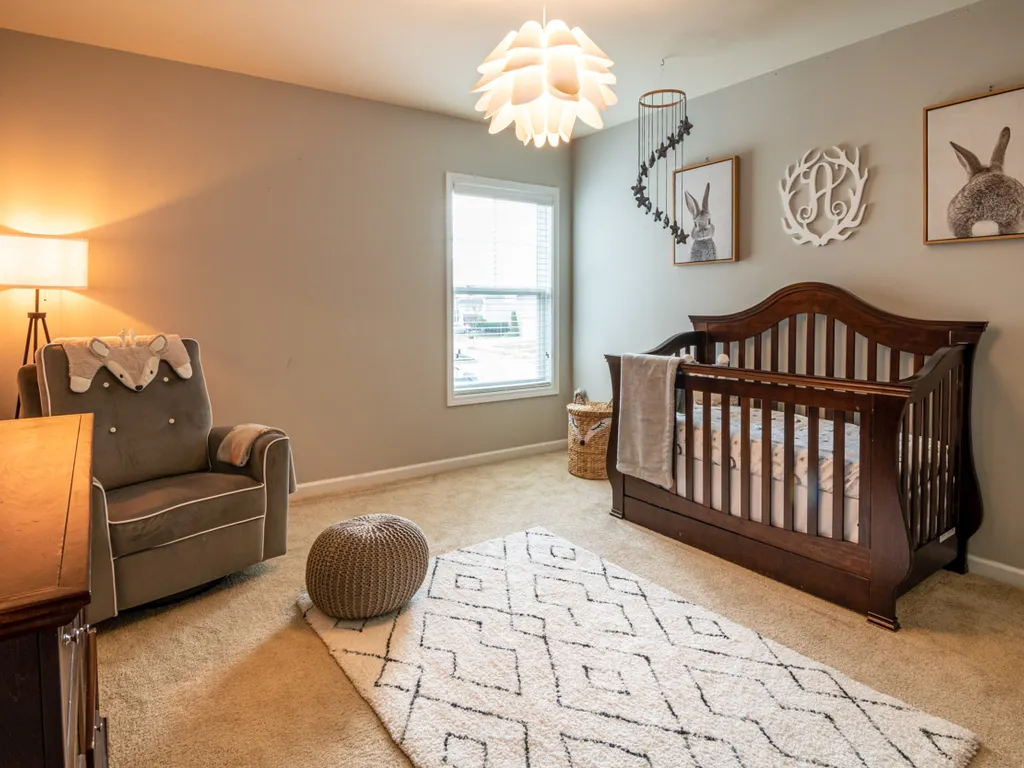
Designing your baby’s first room is one of the sweetest parts of getting ready for a new arrival, and these nursery ideas will help you create a calm, cosy space where your little one can sleep, feed and grow. A good nursery is not about buying everything at once. It is about a safe crib, soft light, sensible storage and a layout that makes night feeds easier at 3 a.m.
Quick answer: Nursery ideas work best when you start with a safe crib, soft dimmable light and low, open storage, then add a feeding chair and blackout curtains. Keep the base calm and neutral, anchor tall furniture, and keep cords out of reach. A basic set-up costs a few hundred dollars with a plain crib and second-hand storage.
Below you will find 25 baby nursery ideas that work in real homes, from small flats to shared rooms, and from woodland and neutral themes to clean modern nursery ideas. Every idea keeps safety first: a firm mattress, a bare crib, anchored furniture and cords kept out of reach, so the room looks beautiful and works hard from day one.
Start with the pieces that are hardest to change — the crib, the lighting and the storage — then add the soft, personal touches. Below, every idea is written for real family life: safety first, storage you can actually use, and furniture that lasts. Work through the list in order, and by the end you will have a nursery that is calm, cosy and ready for your baby’s first night home.
Key points:
- Start with the crib: a firm mattress, a fitted sheet only and a bare, clutter-free sleep space.
- Anchor tall furniture to the wall and keep cords, blinds and small items out of reach.
- Use blackout curtains and warm, dimmable light for better naps and calmer nights.
- Create a feeding corner with a comfortable chair, a small table and a soft light.
- Choose storage your baby will one day reach: low baskets, labelled bins and under-bed drawers.
- Keep the big pieces calm and neutral, and let colour and theme live in bedding, wall art and cushions.
1. Start with a calm, neutral base for your nursery
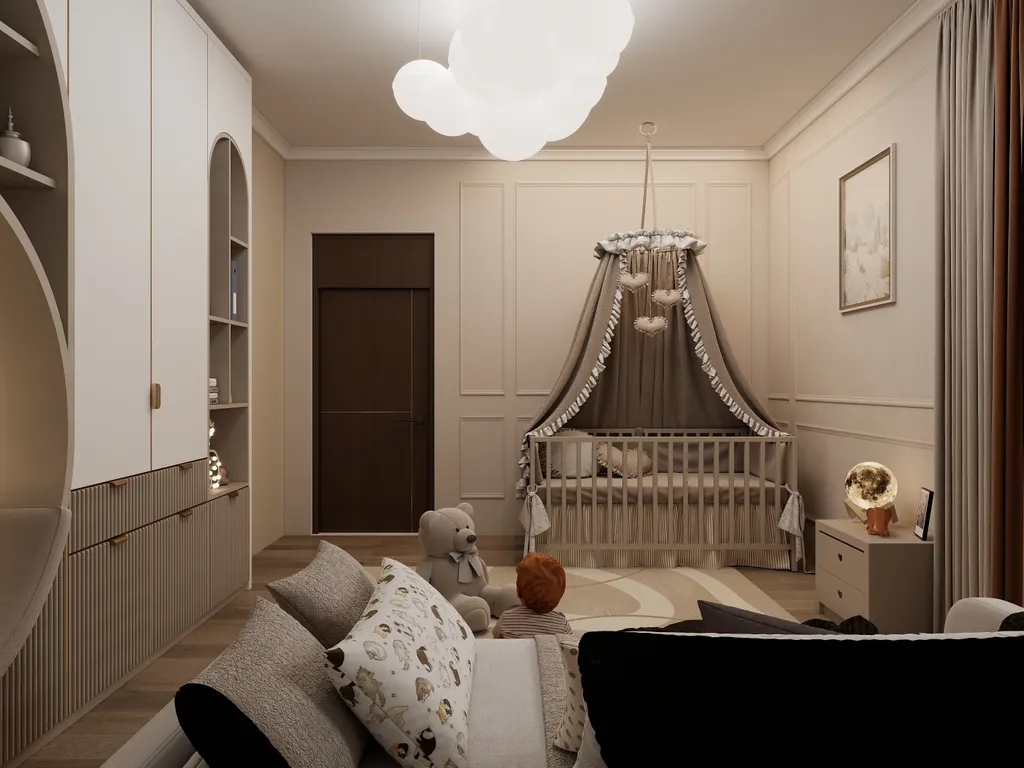
A calm neutral base is the easiest starting point for any baby nursery, and it suits every theme that follows. Warm white, soft cream, pale sage or gentle greige on the walls makes the room feel quiet and restful, and it makes a small room feel larger.
Keep strong colour for the things you can change cheaply: the bedding, a cushion, a wall print or a rug. That way you can move from a newborn look to a toddler look without repainting, and the focus stays where it belongs: on your baby.
2. Place the crib in the safest, calmest spot
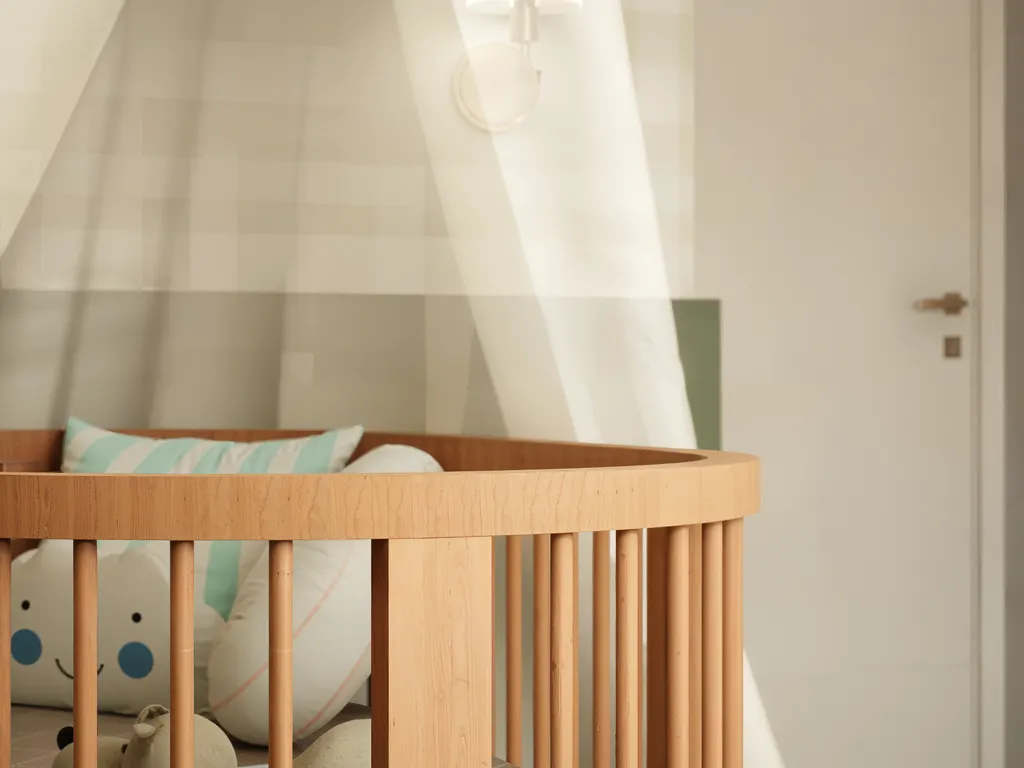
Where you put the crib matters more than which crib you buy. Choose the wall furthest from the window, the radiator and the door, so your baby is not woken by draughts, street light or hallway noise. Leave a hand’s width between the crib and the wall so air can move.
Keep the space above the crib completely clear of shelves, frames and hanging mobiles that could fall. Test the spot at night, too: look for light leaking around curtains and glowing plugs, and fix them before your baby arrives.
3. Keep the sleep space bare, firm and flat
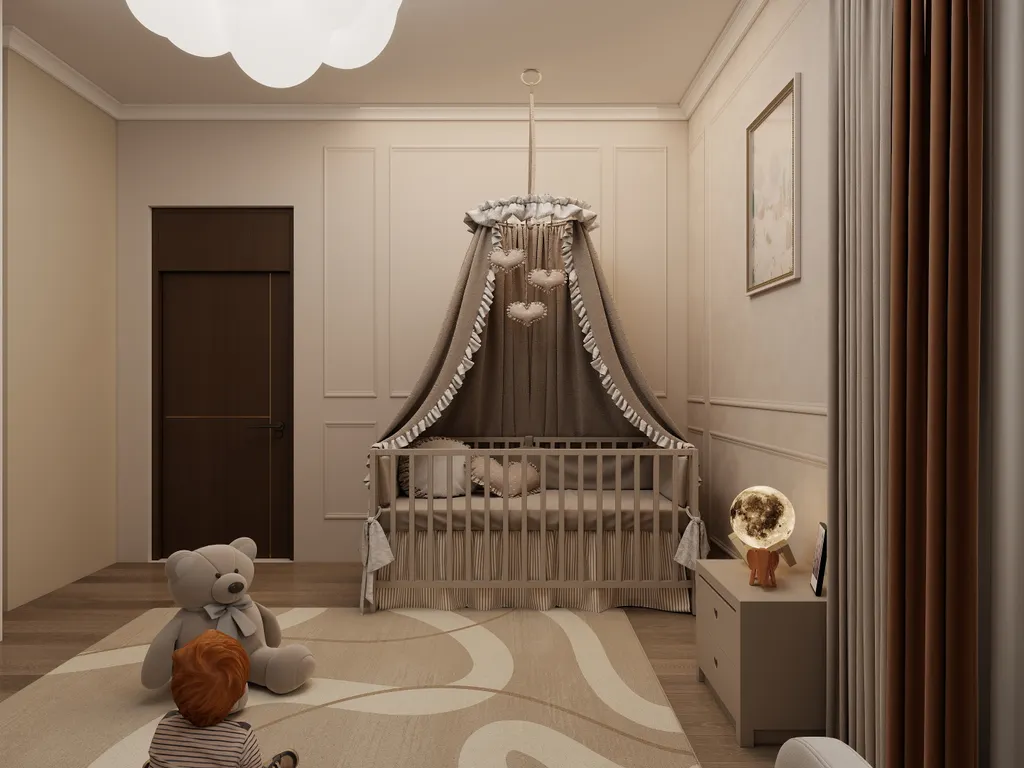
The safest sleep space for a baby is a firm, flat mattress with a fitted sheet and nothing else in the crib: no pillows, no blankets, no bumpers and no soft toys. Your baby should always sleep on their back, and the mattress should fit tightly with no gaps at the sides.
If you worry about your baby getting cold, dress them in one more layer than you would wear yourself, or use a baby sleep sack instead of a blanket. The American Academy of Pediatrics explains the full safe sleep guidance in its parents’ guide to safe sleep.
4. Fit blackout curtains for deeper naps
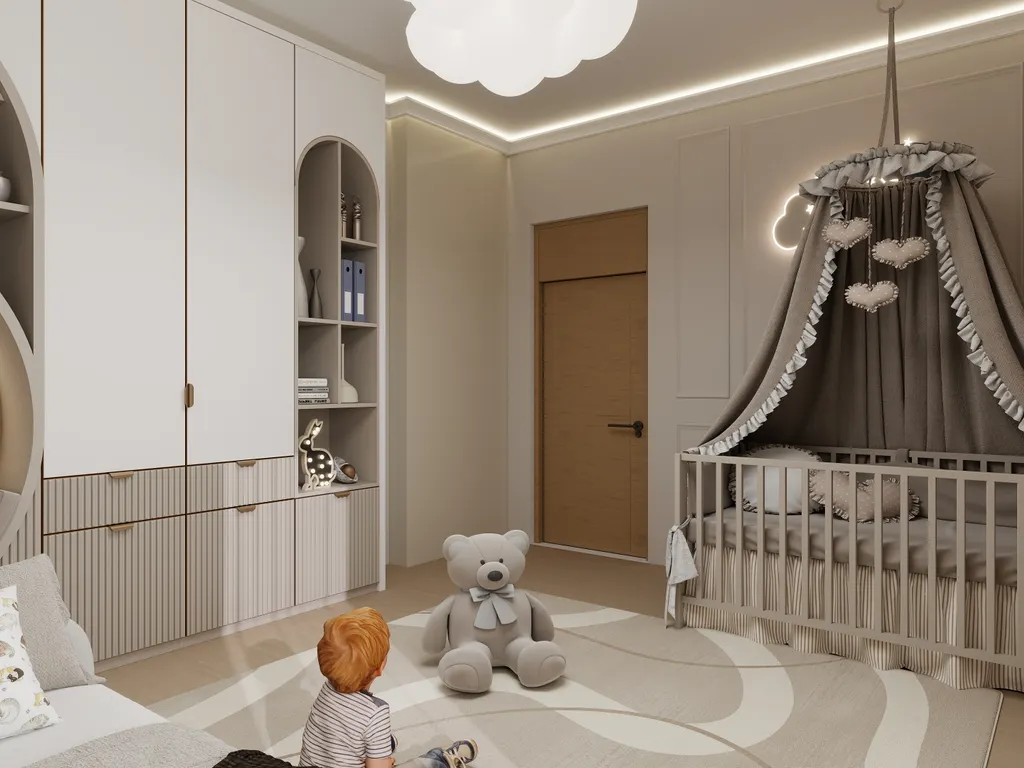
Good blackout curtains are one of the best buys for a nursery, especially in summer when the sun stays up long past bedtime. Choose a true blackout lining rather than a dark fabric, and hang the curtains wider and longer than the window frame so light cannot leak in at the edges.
Pick a cordless design or fit a cord cleat high on the wall, and keep every cord well out of reach of the crib. Soft, washable fabric in a calm colour works best, and a simple pattern can echo your chosen theme.
5. Layer soft, warm light you can dim
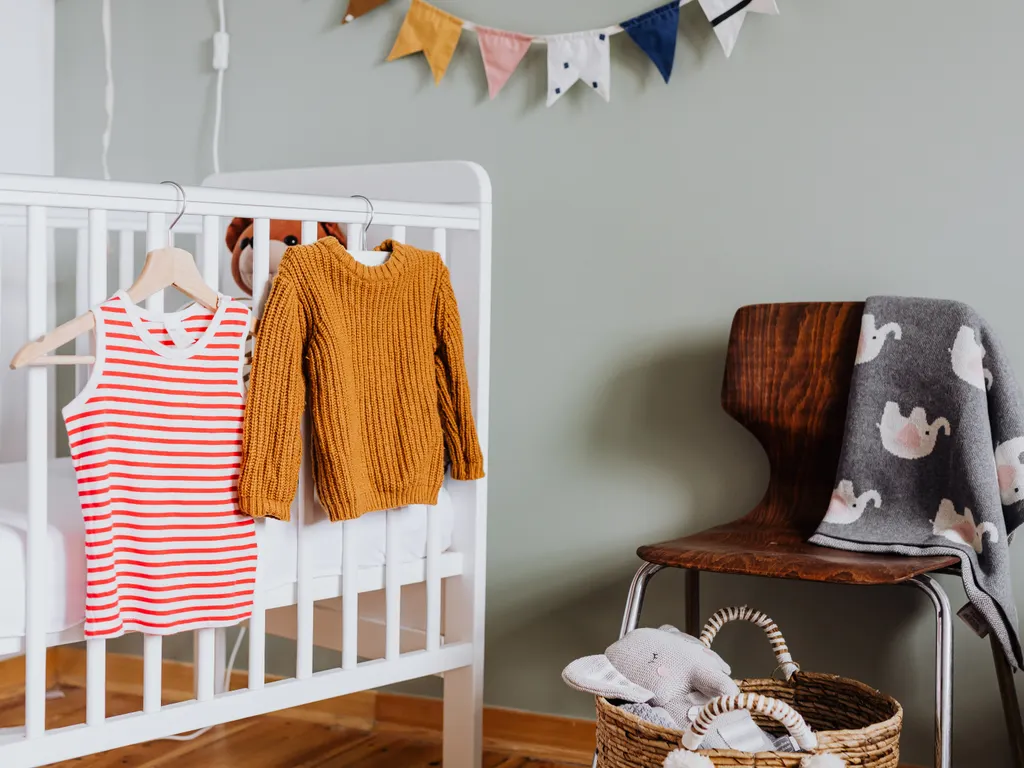
Babies sleep best in warm, dim light, so plan the nursery’s lighting in layers rather than one bright ceiling light. A dimmable ceiling light for nappy changes, a small warm lamp beside the feeding chair and a low night light for night feeds cover every job.
Put the main light on a dimmer if you can, and choose lamps with shades that soften the light rather than bare bulbs. Keep the bulbs warm white, around 2700 to 3000K, for a soft glow that feels cosy rather than clinical, and a lamp you can reach from the chair means you never have to stand up mid-feed.
6. Build a cosy feeding chair corner
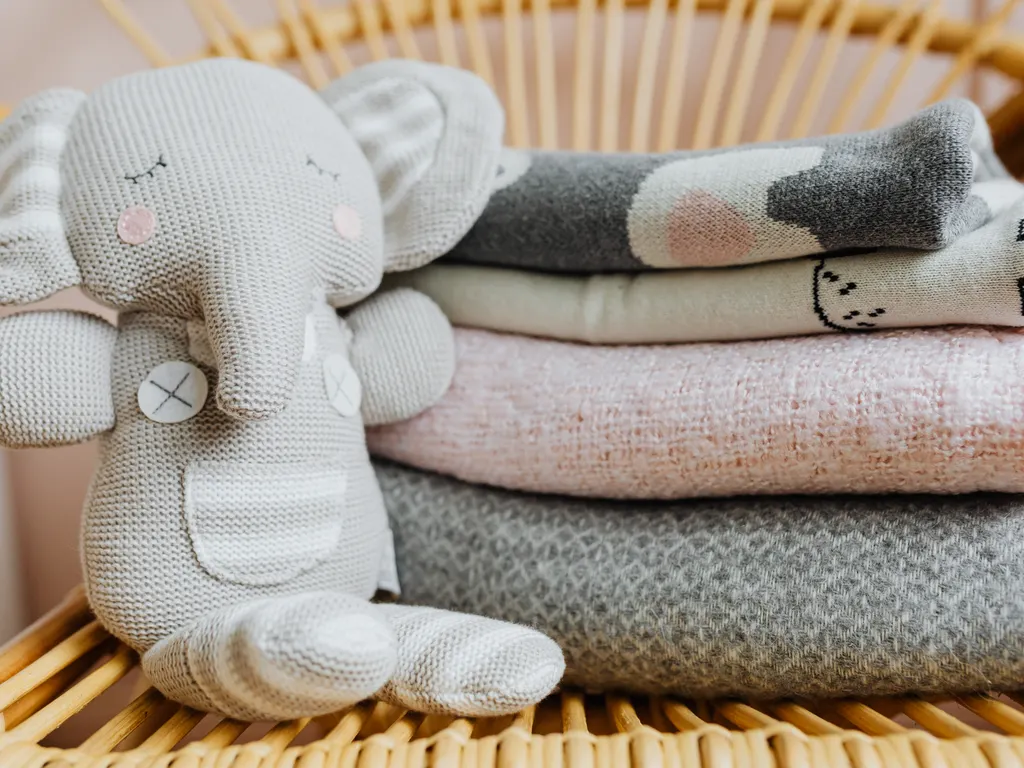
A comfortable chair is where you will spend more time than anywhere else in the nursery, so choose it like you mean it. Look for good back and arm support, a seat wide enough for you and a feeding pillow, and fabric you can wipe clean.
Place it near a window if you can, with a small side table inside arm’s reach for water, a book and your phone. Add a soft blanket over the arm and a footstool, and the corner will carry you through every night feed.
7. Set up a changing station within arm’s reach
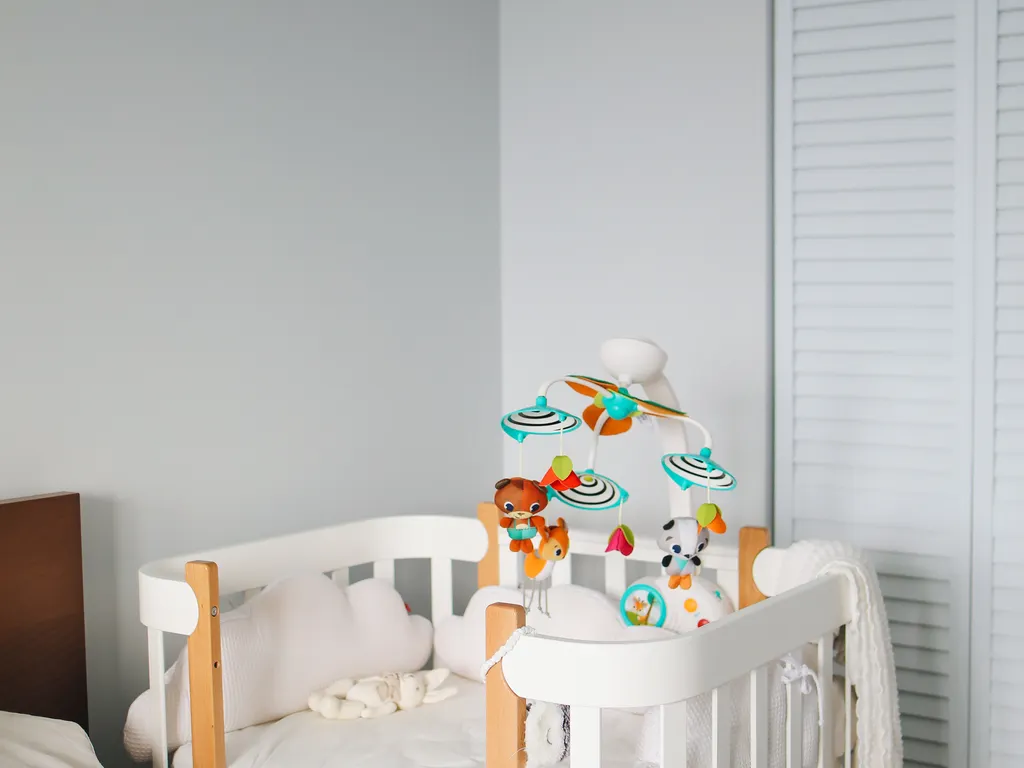
A changing station saves your back and your patience, and the best ones keep everything within arm’s reach of the mat. A chest of drawers with a changing top is the classic choice: nappies, wipes, cream and spare clothes live in the top drawer.
Keep the station at a height that lets you stand comfortably, and add a small basket for dirty clothes and a wipe-clean mat underneath. Every unit in the nursery should be anchored to the wall, and the changing table is no exception.
8. Use low baskets and labelled bins for easy storage
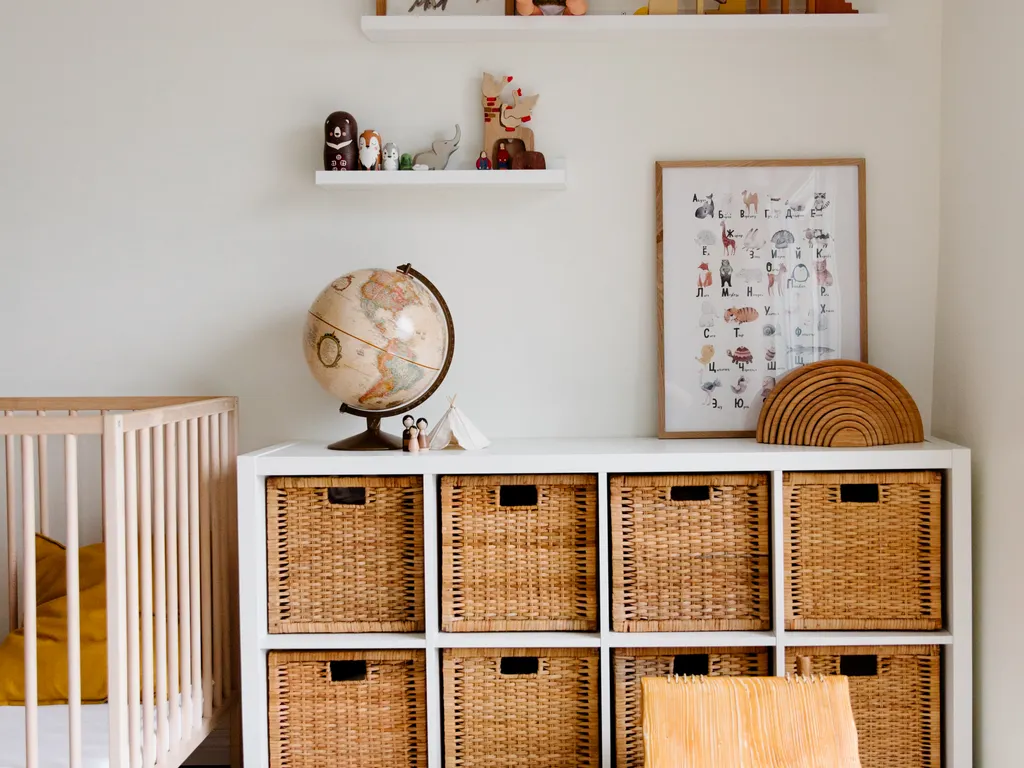
Nurseries need a surprising amount of storage, and the best baby nursery ideas keep it low, open and easy to use. Low baskets on a shelf, a cube unit with labelled bins and a basket by the changing table give everything a home.
Choose baskets with handles so you can carry a whole basket of clean clothes to the laundry, and pick washable fabric bins for anything that will be chewed on. Four to six bins is enough, with the everyday items at the front.
9. Try a woodland theme with soft greens and animals
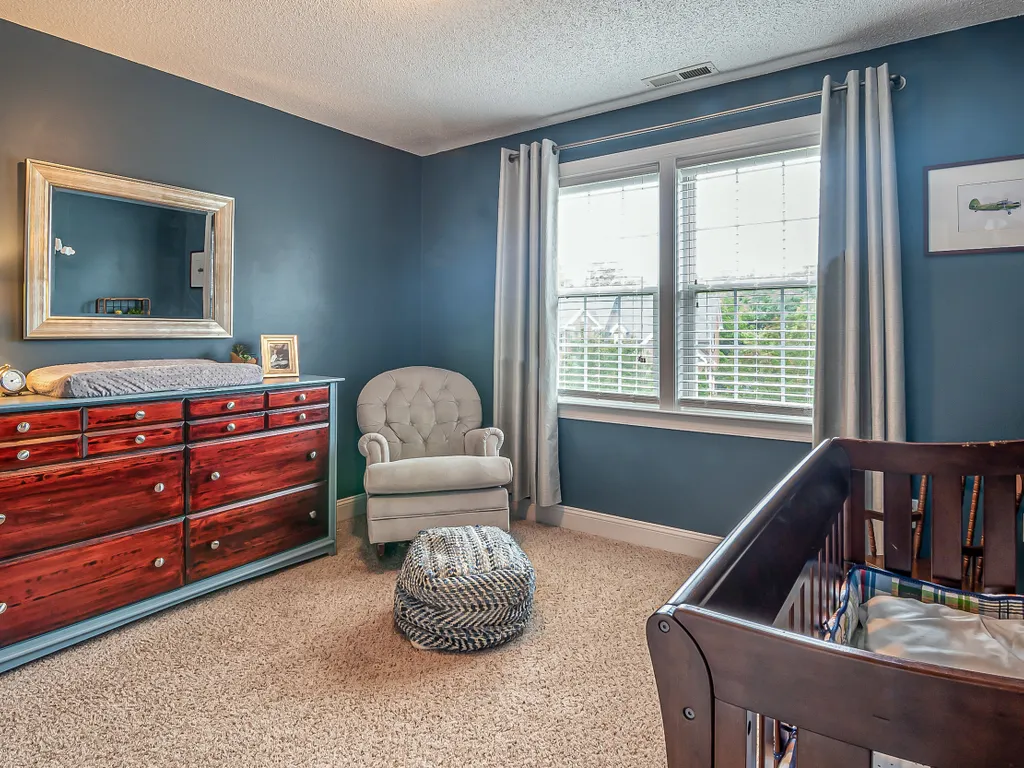
A woodland theme is one of the most loved baby nursery themes, and it is easy to get right. Think soft sage and moss green, warm wood, cream bedding and gentle animal prints: rabbits, foxes and bears on the wall, and a leaf or tree pattern on a cushion or rug.
Keep the theme to a few well-chosen pieces rather than a whole forest: a woodland wall print, a knitted animal toy and a leafy mobile are enough. Choose washable fabrics, because a woodland rug is exactly where a baby will crawl.
10. Keep a neutral nursery cosy with texture instead of colour
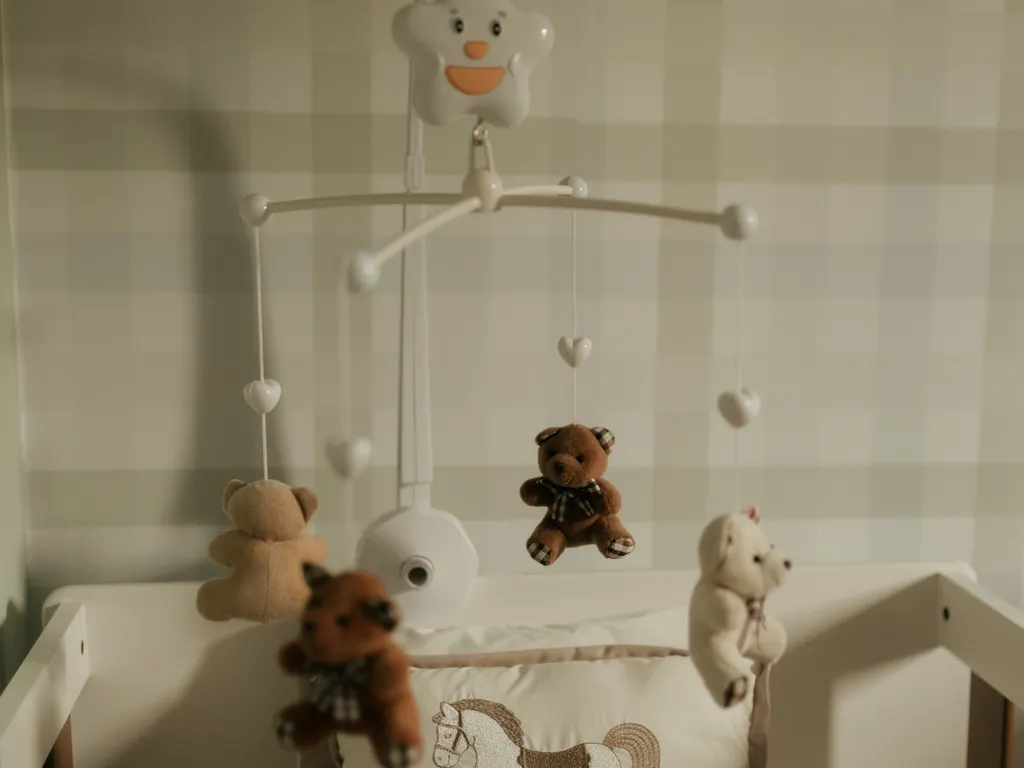
A neutral nursery can be the most sophisticated room in the house when you build it from texture rather than colour. Mix cream linen, a chunky knitted blanket, a woven wall hanging and a soft sheepskin-style rug, and the room feels layered and cosy.
Texture also gives your baby something to explore as they grow: soft, rough, smooth and fluffy fabrics on the blanket, the cushion and the play mat. Keep the big pieces neutral so the room can change with a few small swaps.
11. Go modern with clean lines and simple shapes
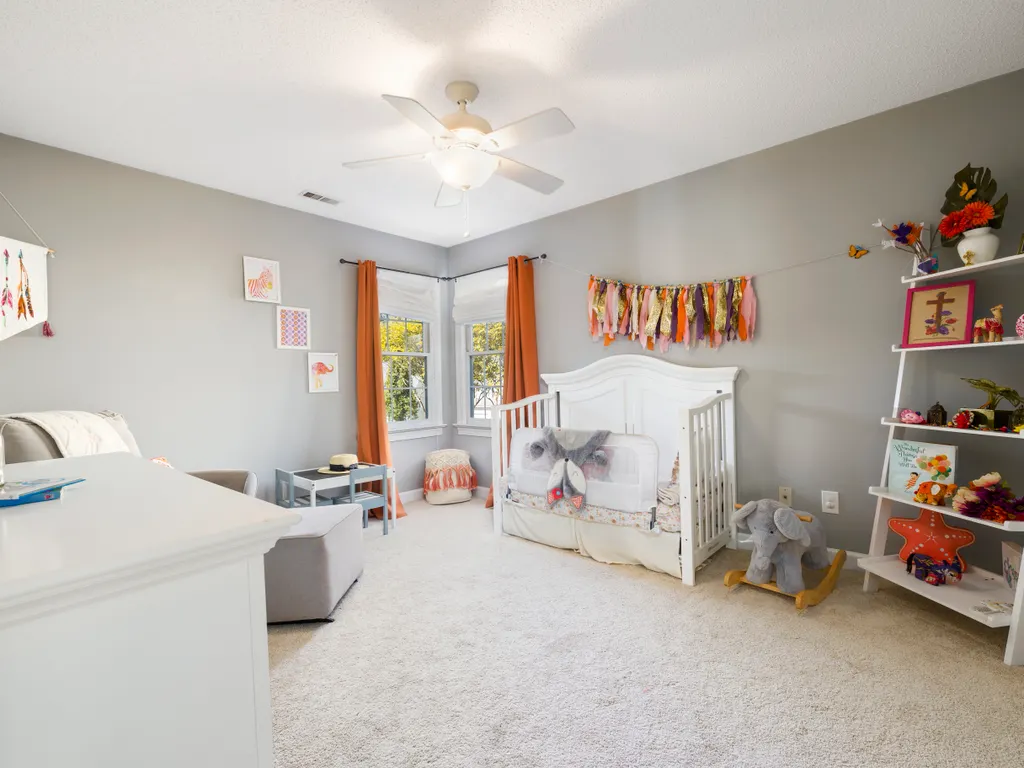
Modern nursery ideas favour clean lines, simple shapes and a limited palette, and they suit parents who like a calm, uncluttered room. A plain white or pale grey crib, a simple chest of drawers and one or two strong shapes give the room a designed feel without fuss.
Keep decoration to a minimum: one framed print, a beautiful mobile above the crib, and a single colour accent repeated in the bedding and a cushion. The look is easy to update later by swapping the print and the bedding.
12. Hang nursery wall decor that stays safe above a crib
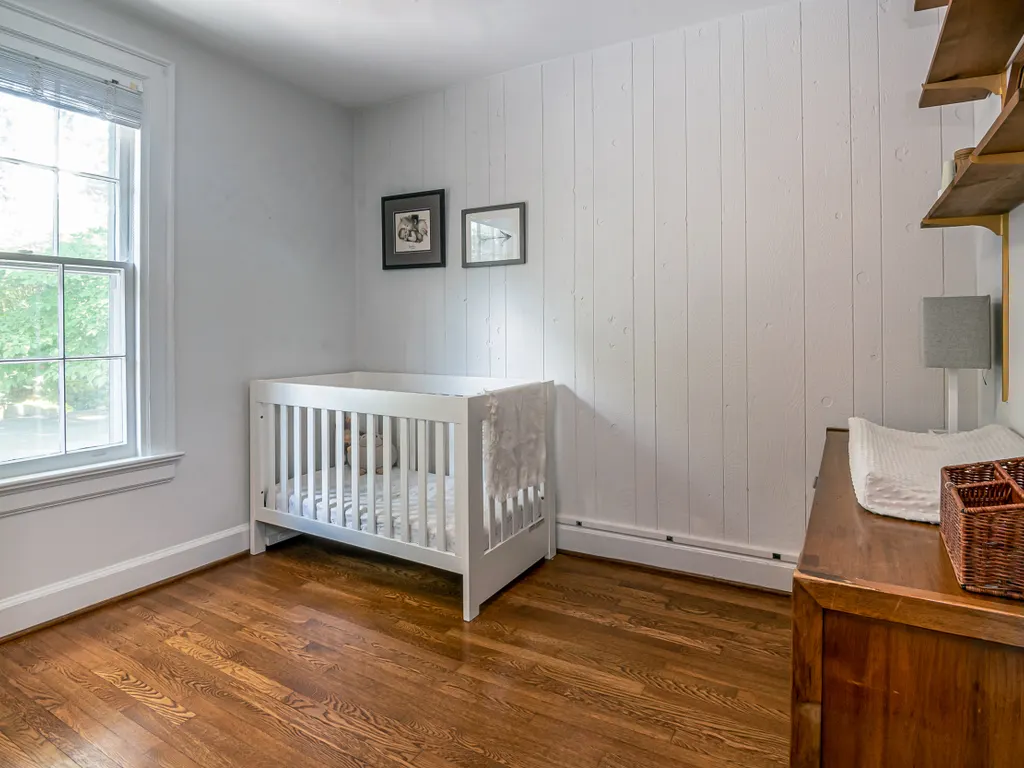
Wall decor makes a nursery feel personal, but anything hung above a crib has to be light, flat and fixed firmly to the wall. Framed prints with plastic glazing, fabric wall hangings and lightweight wooden letters are all good choices, fixed with a proper wall anchor, not just a sticky hook.
The safest option is to hang the prettiest pieces on the wall beside the crib rather than directly above it, and to keep the space above the mattress completely clear. A small gallery at your eye level adds warmth without risk.
13. Lay down a soft rug that defines the play zone
A soft rug does two jobs in a nursery: it marks out a play zone and it makes the floor kind to little knees. Choose a low-pile or flat-weave rug so toy wheels and building blocks sit flat, and pick one big enough for you and your baby to sit on together.
Place the rug away from the crib so the sleep area stays clear, and use a non-slip underlay so it cannot slide when your baby pulls up to stand. Washable rugs are worth the extra cost in a nursery, because spills happen on the floor.
14. Paint one wall for a budget-friendly update
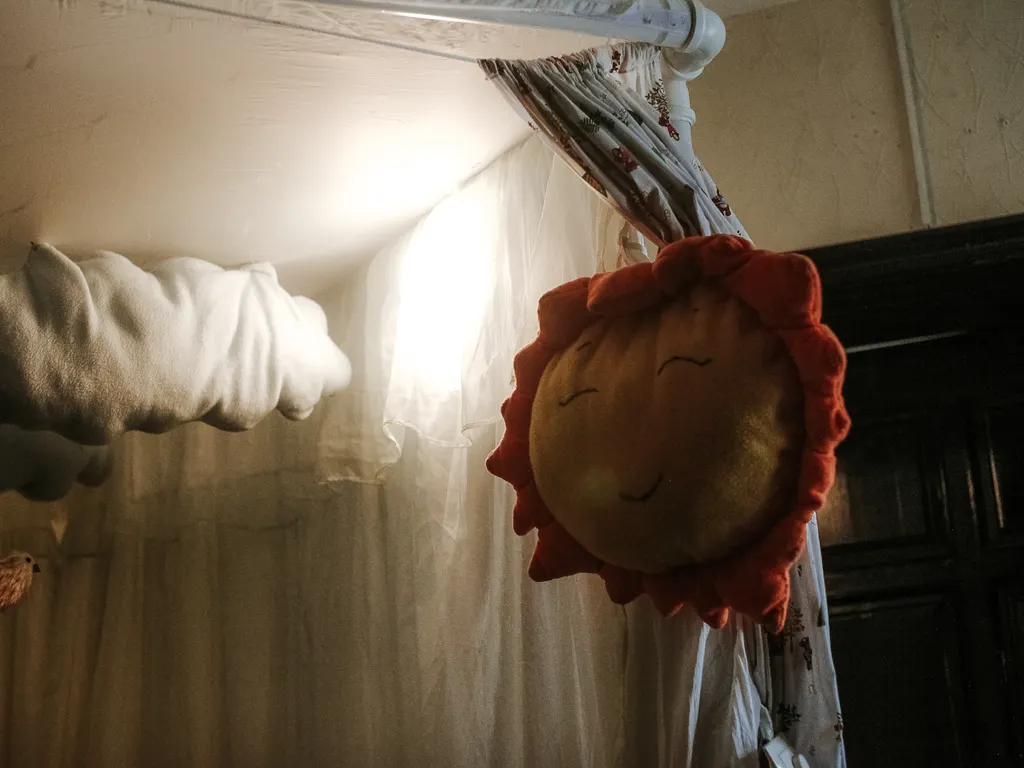
If you want a big change on a small budget, painting one wall is the cheapest of all the nursery ideas here. Choose a calm, baby-friendly colour — soft sage, warm sky blue, gentle peach or pale yellow — and keep the other walls warm white so the colour stays restful.
Use a washable, low-VOC paint made for bedrooms, and let it dry and air fully before your baby moves in. Add a matching cushion or throw, and the whole room will feel new for the price of one tin of paint.
15. Plan a small-room nursery that works hard
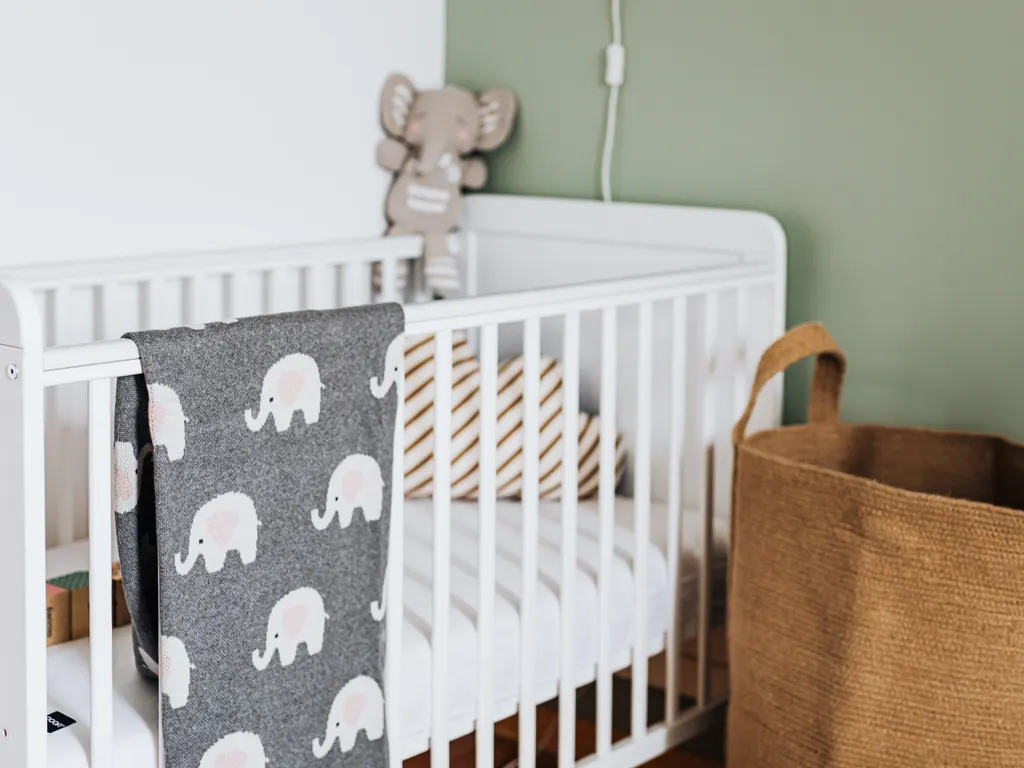
A small nursery can work beautifully if every piece earns its place. Choose a compact crib or a mini crib, a chest of drawers that doubles as a changing table, and a wall-mounted shelf instead of a bookcase, so the floor stays clear for crawling.
Use the walls and the door: hooks for bags and blankets, a door organiser for nappies and wipes, and a small shelf for books at your height. Pale walls and one light rug will make the room feel larger, and our apartment bedroom ideas have more small-space tricks that work just as well in a nursery.
16. Share a room with your baby in the early months
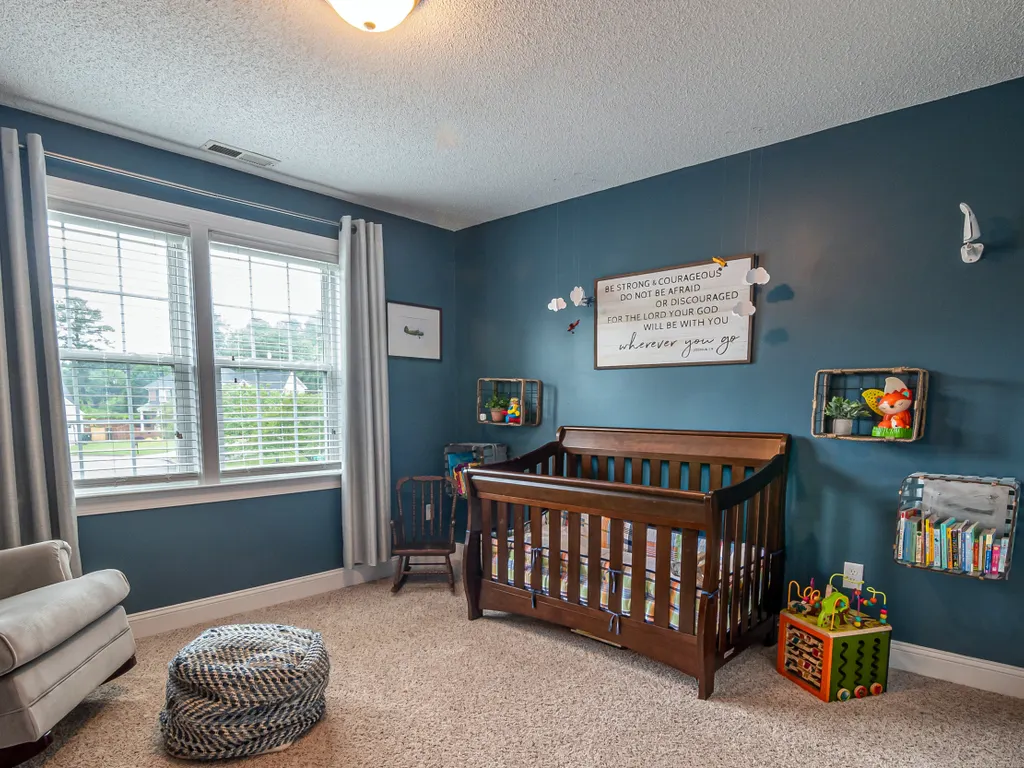
Many families keep their baby in the parents’ bedroom for the first six months, and a shared room can be a lovely, practical nursery. Put the crib or bassinet beside your bed, with a clear space around it and no soft bedding nearby, and keep a small basket of nappies and wipes within reach.
Keep the room calm and dark at night: blackout curtains, a warm night light and a white-noise machine all help your baby sleep, and they help you sleep too. A curtain or a tall piece of furniture can carve out a nursery corner that feels like your baby’s own.
17. Choose a convertible crib that grows with your baby
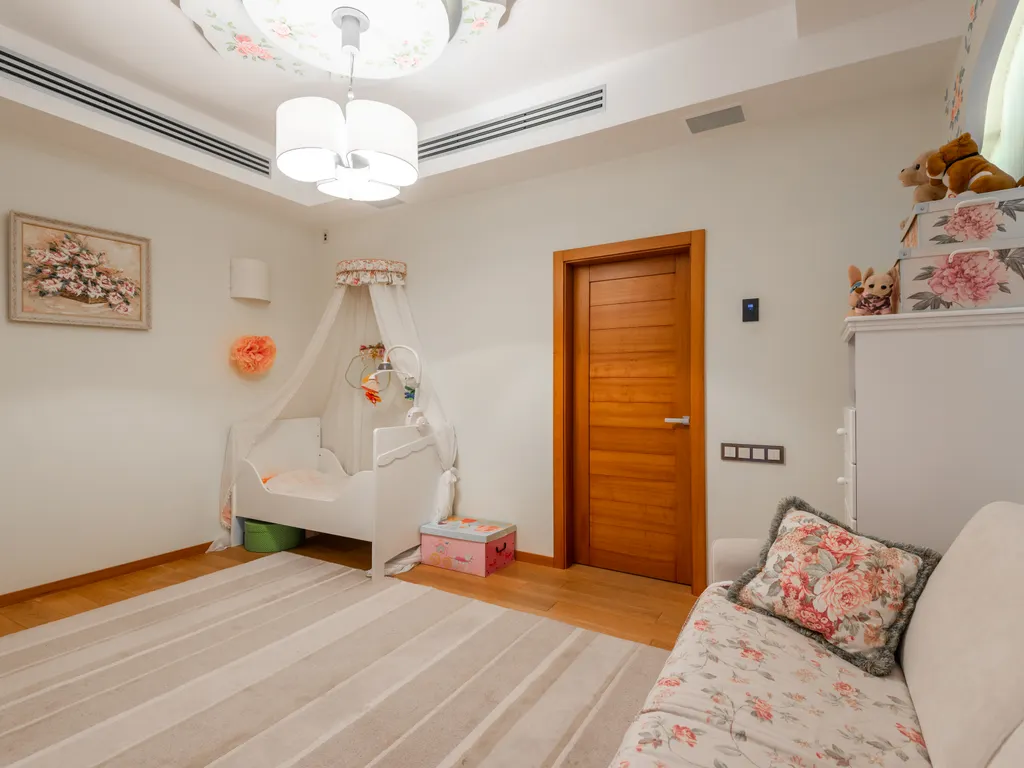
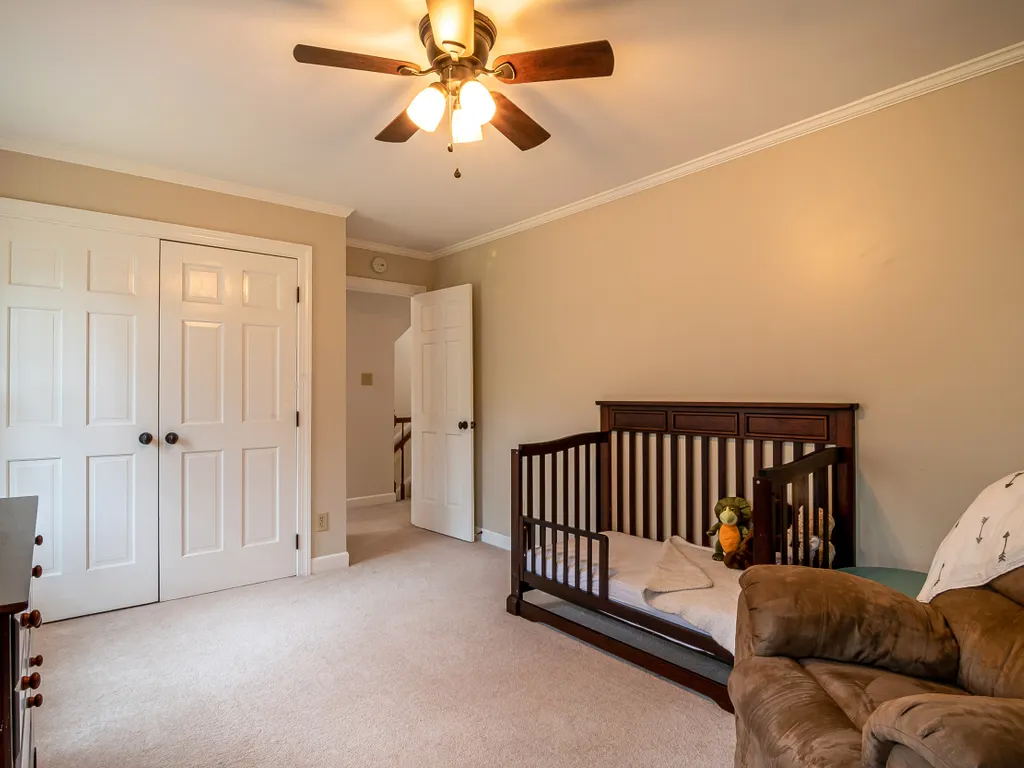
A convertible crib is one of the smartest nursery ideas if you want furniture that lasts. It starts as a crib, converts to a toddler bed with a safety rail, and often becomes a small day bed later, so one purchase can serve your child for years.
Look for solid construction, a firm mattress that fits tightly at every stage, and conversion rails that are easy to fit. Adjustable mattress heights let you lower the base as your baby learns to stand, and teething rails protect the wood.
18. Create a reading corner for story time
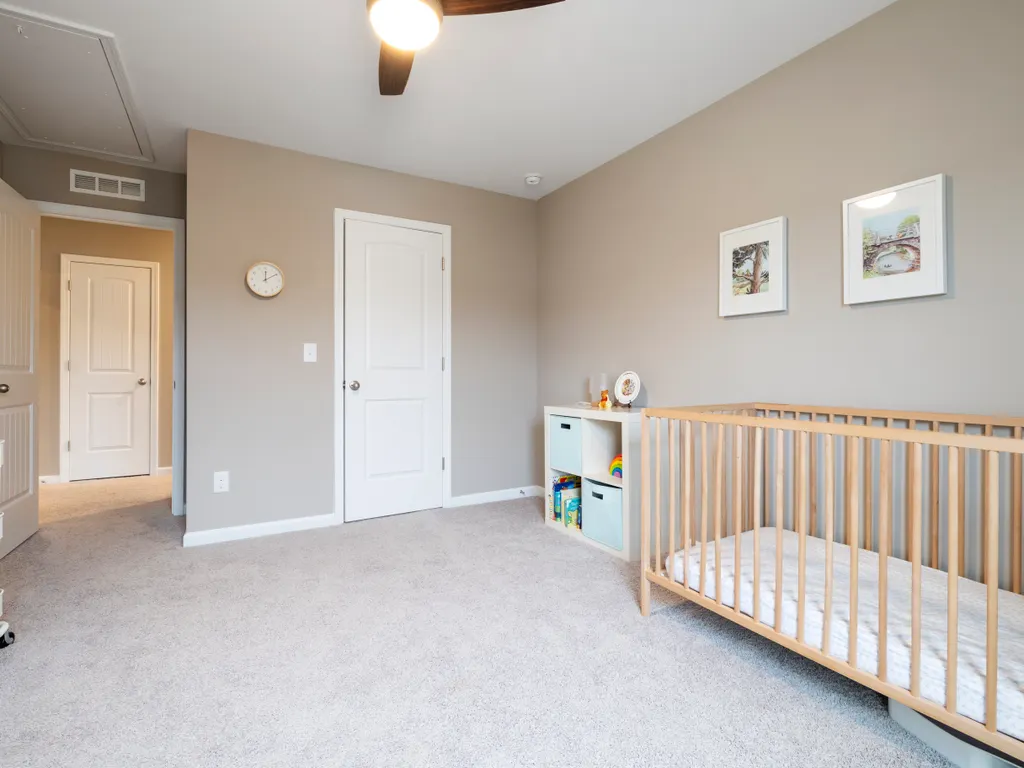
A reading corner turns an unused bit of the nursery into the most-loved spot in the room. All you need is a small bookshelf with the covers facing out, a soft cushion or a beanbag, and a warm lamp that makes picture books glow.
Place it near the window for natural light, and keep the books low enough that your baby can reach them as soon as they can crawl. Start with sturdy board books and rotate them every few weeks so the corner feels new again.
19. Add a white-noise machine to soften the house sounds
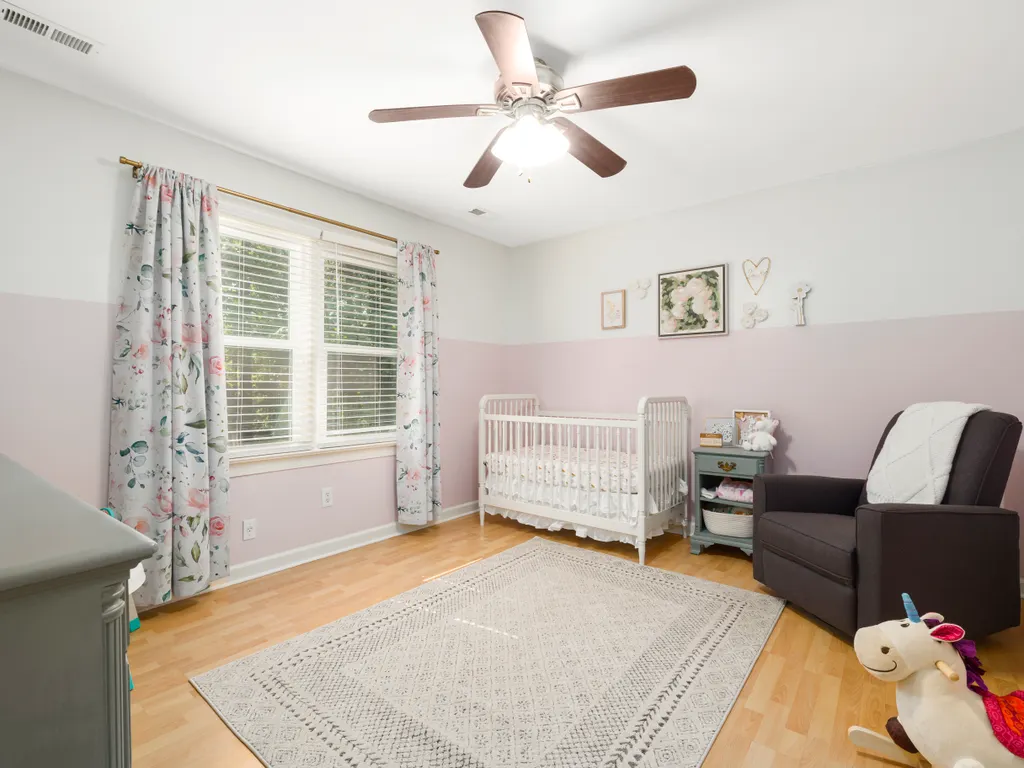
A white-noise machine is a small buy that makes a big difference in a nursery, especially if the room faces a street or sits near a busy kitchen. A steady, low sound masks passing cars, doors and voices, so your baby sleeps through the sounds of normal family life.
Choose a machine with a volume control and keep it at a low level, on the far side of the room from the crib, never inside it. Set it on a continuous setting rather than a timer, so it does not switch off and wake your baby mid-nap.
20. Use soft stripes and gentle prints for pattern
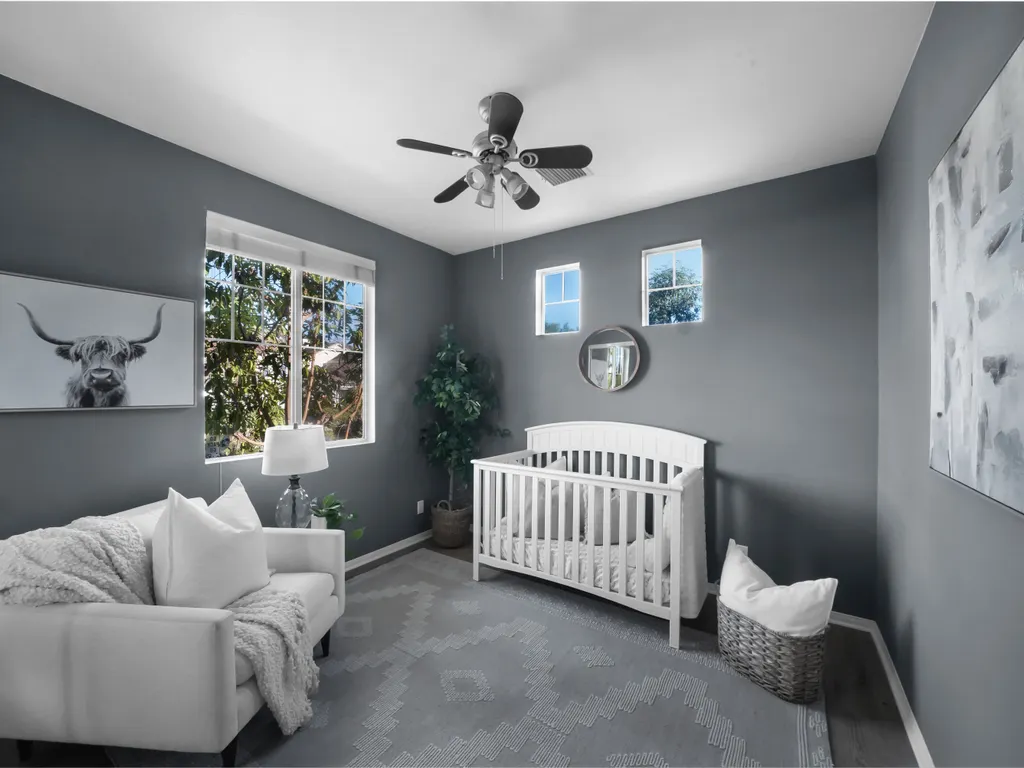
Pattern makes a nursery feel warm and personal, and soft stripes and gentle prints are the easiest way to add it. A striped cot sheet, a spotted muslin cloth, a gingham curtain or a cushion with a simple star or heart print all add interest without overwhelming the room.
Choose one pattern and repeat it twice — on the bedding and a cushion, or on the rug and a wall print — and keep everything else plain. Neutral patterns read as calm, while strong, high-contrast prints can feel busy in a sleep space.
21. Build a gallery wall of family photos
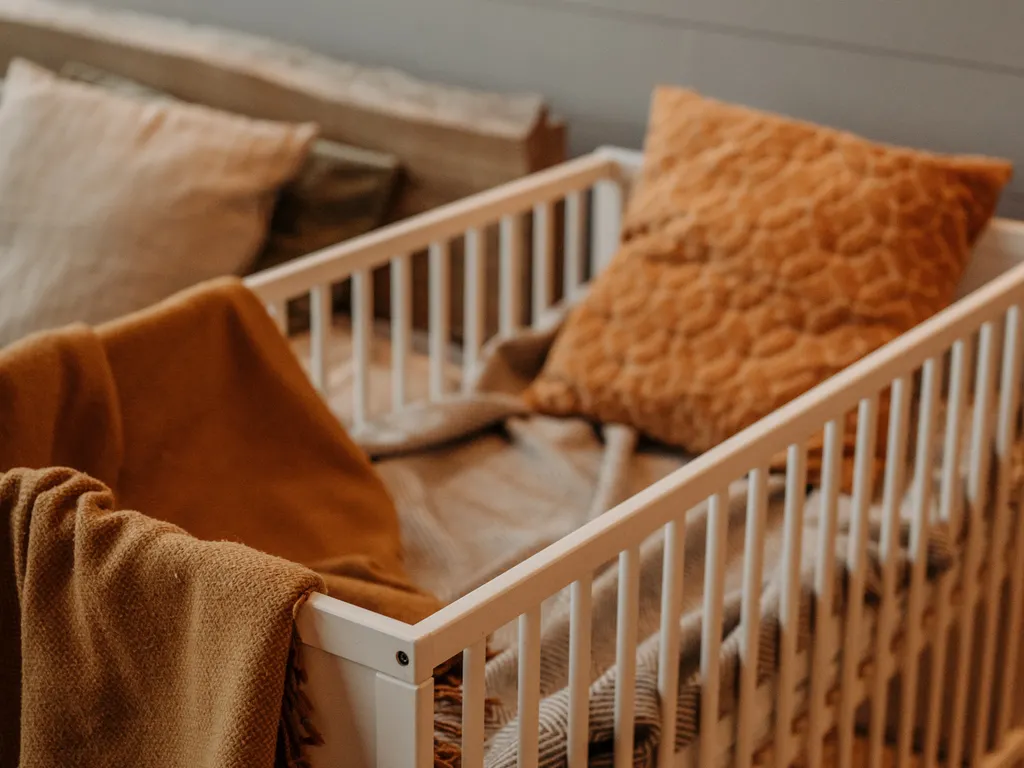
A gallery wall of family photos is the cheapest way to make a nursery feel like it belongs to your family, and it costs almost nothing. Choose four or five favourite photos, print them in the same size, and hang them in matching light frames with plastic fronts rather than glass.
Keep the frames at your eye level and away from the space above the crib. Add a scan photo in a small frame or a handprint keepsake, and leave room to add new photos as your baby grows.
22. Keep cords, plugs and small items out of reach
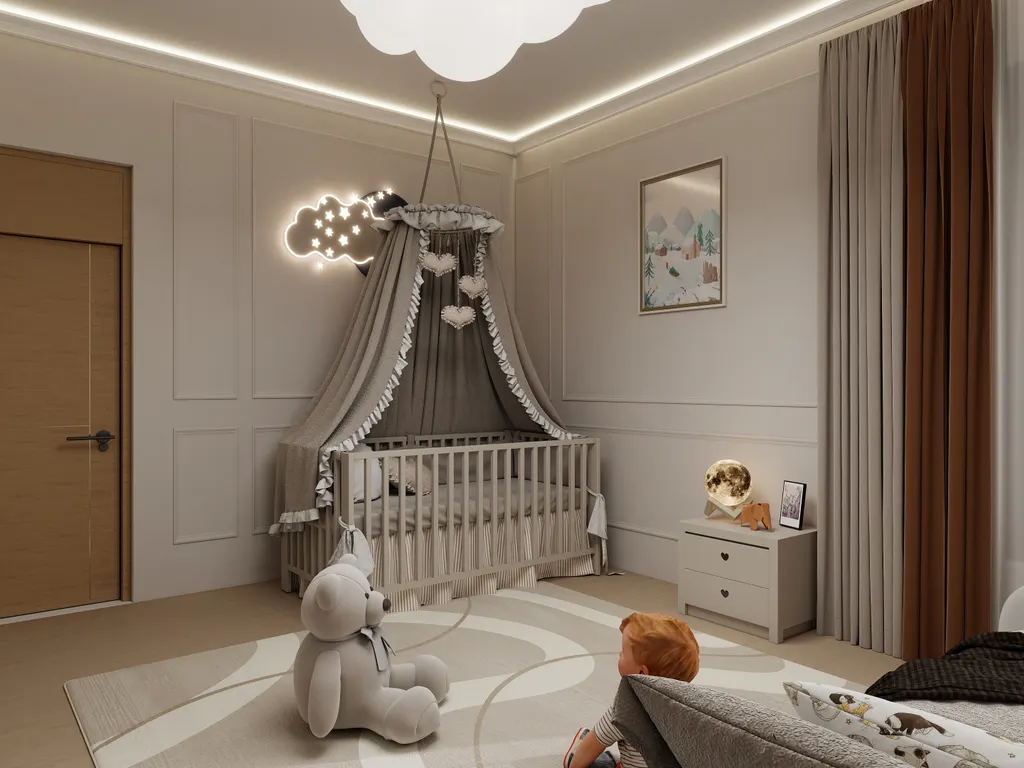
One of the most important nursery ideas for new parents is safety, and it is hard to believe how quickly a baby becomes a curious toddler. Keep monitor cables, lamp cords and charger leads behind furniture or in cord covers, and fit safety covers on every plug socket.
Tie every blind cord high out of reach or replace cords with cordless blinds, and keep small items — hair clips, coins, buttons and batteries — in closed boxes on a high shelf. The U.S. Consumer Product Safety Commission’s Anchor It! campaign shows how to anchor furniture properly.
23. Add a play mat and a tummy-time zone
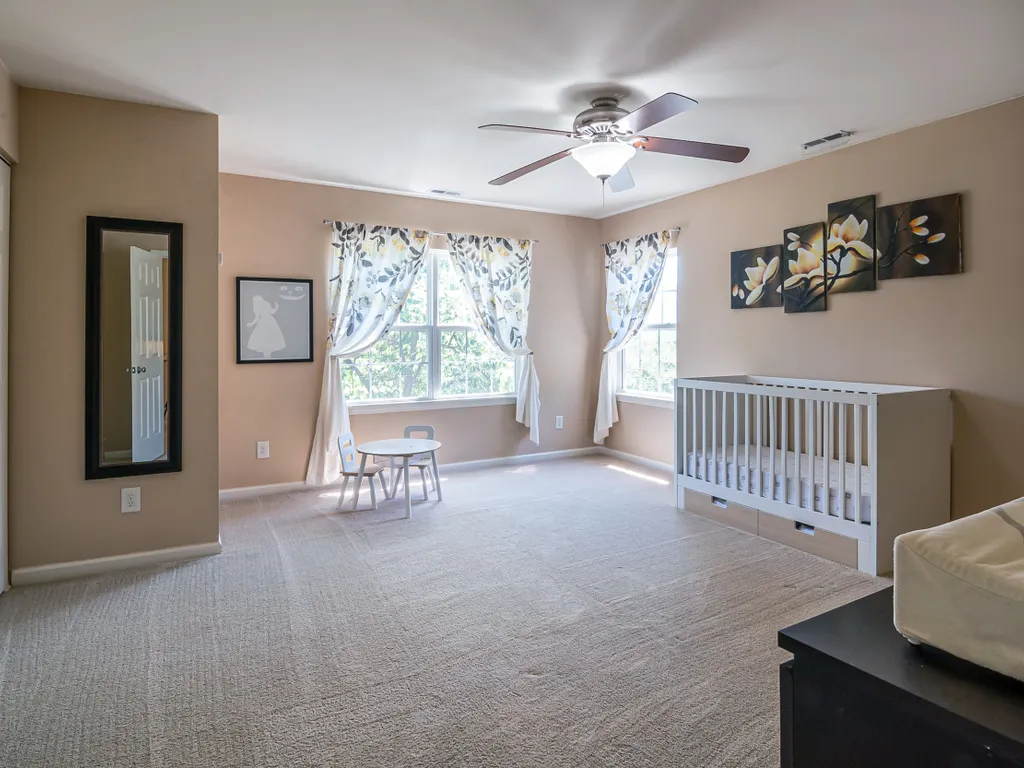
A soft play mat gives your baby a safe place to play, roll and practise tummy time, which is a daily recommendation for healthy development. Choose a thick, washable mat in a calm colour, and place it in the brightest part of the room, away from the crib so sleep and play stay separate.
Keep tummy time short and supervised at first, and build it up as your baby gets stronger. A mat is also useful when your baby starts to roll and crawl, since it softens the floor and marks out a space that is theirs.
24. Choose washable everything for real family life
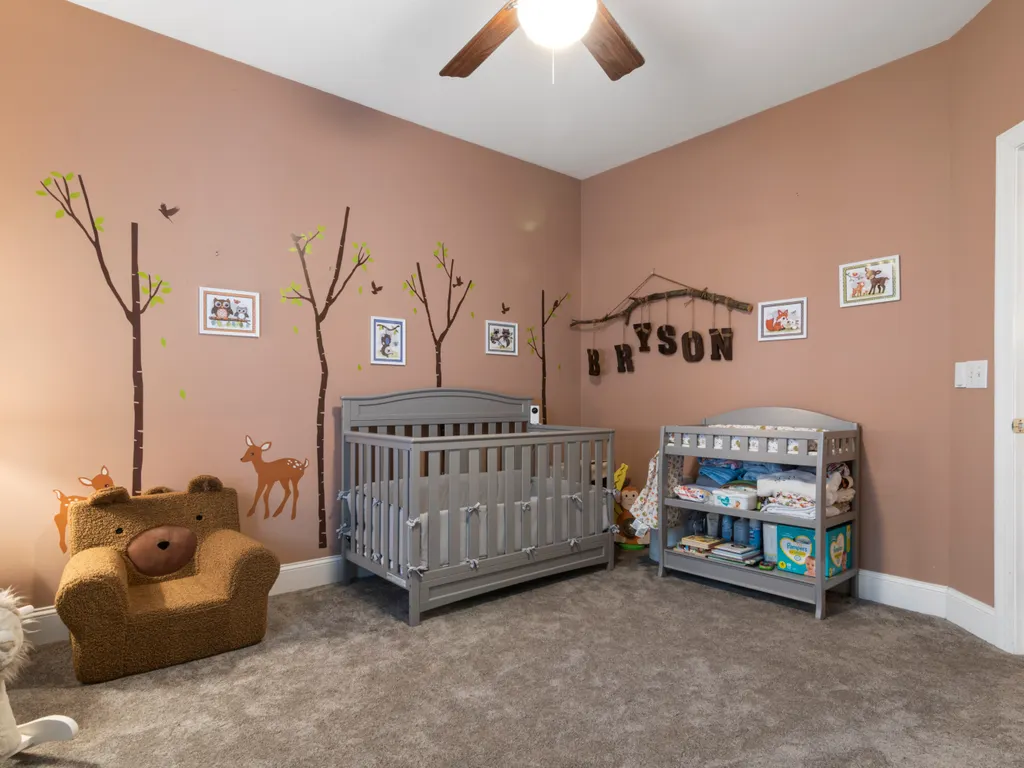
Everything in a nursery gets washed more than you expect, so choose fabrics and finishes that can take it. Washable paint on the walls, a wipe-clean changing mat, washable cushion covers, a machine-washable rug and bedding that survives a hot wash are all worth choosing on purpose.
Keep a small laundry basket in the nursery and a stain-treatment pen in the drawer, and the room will look after itself. Washable choices also make redecorating easy: change the cushion covers and the bedding, and the whole nursery looks new.
25. Design a nursery that grows from baby to toddler
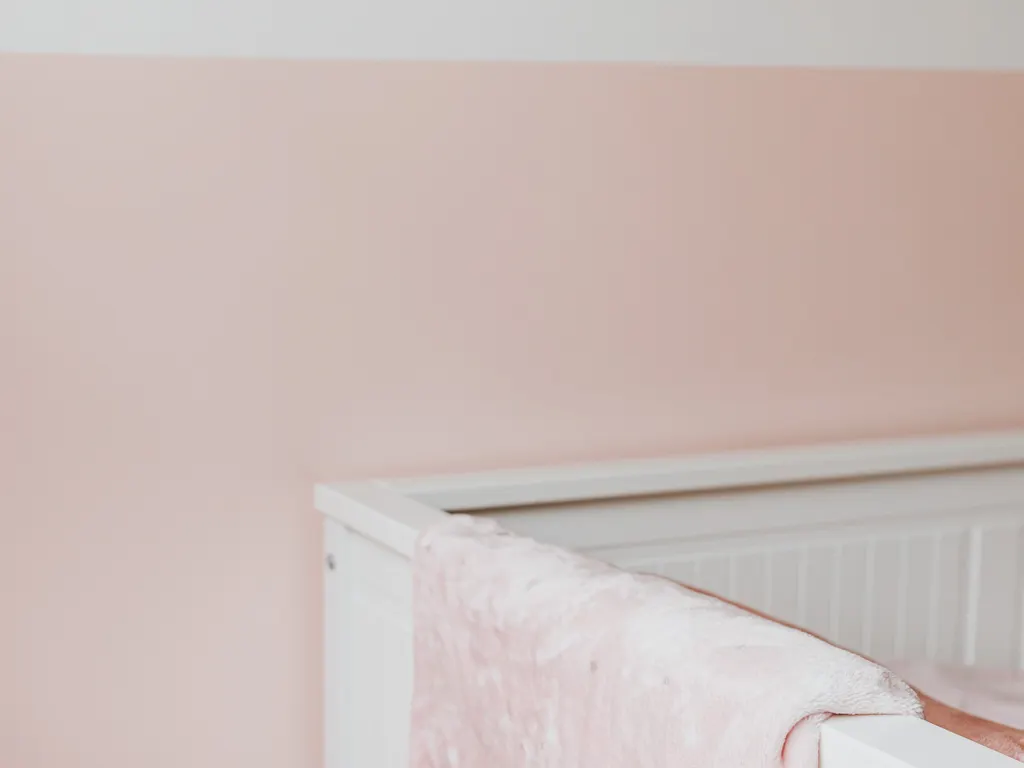
The best nursery ideas are the ones that still work when your baby becomes a toddler, and that takes a little planning now. Choose a convertible crib, a chest of drawers that can become a toy store, and a reading corner that will hold bigger books, then keep the walls calm and neutral.
Plan the layout with a toddler in mind: low shelves your child can reach, a rug big enough to play on, and a chair you will still love sitting in for bedtime stories. When the time comes to move on, our childrens bedroom ideas show how to carry the same calm, safe design into a big-kid room.
Frequently asked questions
When should I start setting up the nursery?
Most parents start in the second trimester, when there is time to choose furniture and paint without rushing. Aim to have the crib, the mattress and the blackout curtains in place by week 36, so the room is ready even if your baby arrives early.
What is the safest way to set up a crib?
Use a firm, flat mattress with a fitted sheet only, place your baby on their back to sleep, and keep the crib bare: no pillows, blankets, bumpers or soft toys. Check that the crib meets current safety standards and has not been recalled, and keep cords and wall decor away from the sleep space.
How can I make a small nursery work?
Choose a compact or convertible crib, a chest of drawers that doubles as a changing table, and wall-mounted shelves instead of a bookcase. Keep the palette pale, use one soft rug to define the play zone, and store out-of-season clothes elsewhere so the room stays clear.
What colours are best for a baby nursery?
Calm, soft colours work best: warm white, cream, pale sage, gentle peach, dusty blue or soft blush. Bright, high-contrast colours are fun in small doses, but a calm base helps your baby settle and makes the room easier to change as they grow.
Do I need a theme for my nursery?
No, a theme is optional. A calm colour palette with a few personal touches is enough, but if you love a theme, woodland, neutral and modern looks all work well. Keep the theme in the bedding, the art and the rug, so it can change cheaply later.
Conclusion
These nursery ideas all share one goal: a calm, cosy baby room that is safe, practical and easy to live in, from the first night home to the first day of toddlerhood. Start with a safe crib and a dark, quiet corner, add a comfortable chair and plenty of storage, then let your favourite theme and colours make the room yours.
Work through the list one idea at a time and do the safety checks first — anchor the furniture, clear the crib and fit the blackout curtains — then add the soft touches that make the room feel like home. A nursery that is calm for your baby will be calm for you too, and that is the best start any family can ask for.
What a Nursery Costs: Typical Price Ranges
A nursery can be set up for a few hundred dollars with a plain crib and second-hand storage, or it can pass $3,000 once you buy a convertible crib, a good chair and blackout curtains. The table below gives typical US price ranges so you can plan in stages and buy the safety pieces first.
| Item | Typical price range | Notes |
|---|---|---|
| Standard crib | $150 to $500 | Check that it meets current US safety standards |
| Convertible crib, crib to toddler bed to day bed | $300 to $900 | Add $50 to $150 for the conversion rail |
| Firm crib mattress | $80 to $250 | It should fit tight, with no gap wider than two fingers |
| Fitted crib sheets, set of 2 | $25 to $60 | Cotton is fine; buy two so one is always clean |
| Glider or nursing chair | $250 to $900 | Test the arm height and the recline before you buy |
| Changing table or dresser with topper | $180 to $600 | A dresser lasts longer than a changing-only table |
| Blackout curtains, one pair | $50 to $180 | Cordless is the safe choice |
| White-noise machine | $30 to $80 | Keep it low and across the room from the crib |
| Night light, warm and dimmable | $15 to $45 | Pick warm white, 2700K or lower |
| Rug, 5 by 7 feet, low pile | $100 to $350 | Low pile is easier to clean and safer for crawling |
| Storage baskets and bins, set of 4 | $40 to $120 | Low, open baskets work best for daily use |
| Furniture wall straps, pack of 4 | $12 to $30 | Fit them to every tall piece, with no exceptions |
A basic safe set-up — crib, mattress, sheets, blackout curtains, straps and a few baskets — often lands between $400 and $900. A full set-up with a convertible crib, a good chair, a dresser, a rug and lighting often lands between $1,200 and $2,800. Paint is extra: one gallon of low-VOC paint costs $40 to $80 and covers about 350 square feet.
Measurements That Make a Nursery Work
- Crib gap: leave at least a hand’s width, about 4 inches, between the crib and the wall so air can move. The mattress should sit tight in the frame with no gap wider than two fingers at any edge.
- Space above the crib: keep the wall above the crib clear. Hang art and shelves on the wall beside the crib, not over it.
- Changing height: a changing top should sit 36 to 38 inches high for most adults. If you are under 5 feet 4 inches, 34 to 36 inches is easier on your back.
- Chair and table: place the side table 18 to 22 inches from the chair arm, inside easy reach. Leave at least 30 inches of clear floor in front of the chair so you can stand with the baby.
- Rug size: in a 10 by 12 foot nursery, a 5 by 7 foot rug marks the play zone without crowding the crib. Keep the rug at least 12 inches from the crib legs.
- Curtain fit: blackout curtains should cover the whole window frame plus 3 to 6 inches on each side, and reach the floor or the sill with no light gap at the edges.
- Light level: use warm bulbs at 2700K or lower for night feeds. The white-noise machine should sit at least 7 feet from the baby’s head and stay at a low volume.
- Storage height: put daily items — nappies, wipes, creams — within 24 inches of the changing spot. Put anything small or sharp in a closed drawer, well above toddler reach.
Step-by-Step Planning for a Nursery
- Start with safety, not style. Pick the crib spot first: the wall furthest from the window, the radiator and the door. Check the mattress fit and order wall straps the same day.
- Measure the room on paper. Draw the room to scale, mark the door swing, the window and the plug sockets, then place the crib, chair and dresser on the plan before you buy.
- Buy the big pieces in this order: crib and mattress, chair, dresser or changing table, blackout curtains, rug. Small decor comes last and should fit the space left, not the other way round.
- Paint early. Paint at least 4 weeks before the due date if you can, use low-VOC paint, and air the room for 48 hours after the last coat.
- Set up the feeding corner. Chair, small table, water bottle spot, phone charger and a soft light, all within arm’s reach. Sit in the chair and test it at 3 a.m. light levels.
- Sort storage by use. Daily items by the changing table, spare clothes in the dresser, toys in low baskets on the floor. Label the bins so anyone can find things at night.
- Do a night test. Spend one evening in the room with only the night light on. Walk the route from the door to the crib to the chair in the dark and move anything you trip on or reach for blind.
Mistakes to Avoid
- Putting shelves or heavy frames above the crib: anything hung there can fall. Keep that wall bare.
- Buying a crib mattress that leaves a gap: a loose mattress is a safety risk. Measure the inside of the crib and buy the mattress to fit it.
- Using corded blinds or long curtain cords: cords are a strangling risk. Use cordless blinds and short, fixed cords.
- Choosing a rug with a deep pile: thick rugs trap dust and make crawling hard. Pick low pile with a non-slip underlay.
- Skipping the wall straps: a dresser can tip in seconds when a toddler climbs it. Strap every tall piece, even in a small room.
- Leaving the room too bright at night: one bright ceiling light wakes a baby fast. Use a dim, warm lamp for night feeds.
More Questions About Nursery Ideas
How much does a nursery cost in the first year?
Most families spend $800 to $2,500 on furniture and set-up, plus $300 to $800 a year on sheets, clothes, nappies and small replacements. Buying a convertible crib and a dresser that doubles as a changing table keeps the first-year cost down.
What size is a standard crib?
A standard US crib is about 52 by 28 inches inside, and takes a 52 by 28 inch mattress. A mini crib is about 38 by 24 inches and suits a small room or the first six months, but your baby will outgrow it fast.
When should the nursery be ready?
Aim to have the crib, mattress, curtains and straps in place by week 36 of pregnancy. Paint by week 32 if you can, so the room has time to air before the baby moves in.
Do I need a separate nursery if the baby sleeps with us at first?
No. Many babies sleep in the parents’ room for the first six months. You can set up a small corner with a bassinet, a changing basket and a night light, then move to the nursery when the baby is ready.
What is the best paint for a nursery?
A low-VOC or zero-VOC interior paint with a washable eggshell or satin finish. It wipes clean, dries with little smell, and is made for bedrooms. Let each coat dry fully and air the room for at least 48 hours.
How do I make a small nursery feel bigger?
Use a mini or compact crib, a dresser that doubles as a changing table, wall hooks instead of floor baskets, and a pale wall colour with one soft accent. Keep the floor clear: every item should have a set spot.