

Coastal style has an image problem: too many people decorate it as a theme. Out come the anchors, the rope-wrapped everything, the “Life is better at the beach” sign — and a room that should feel like a deep breath ends up feeling like a gift shop. Real coastal style is quieter than that. It borrows the shoreline’s light, its weathered textures and its calm colours, then stops before the souvenirs start.
Quick answer: Coastal interior style ideas bring the shore indoors with warm white walls, sea-glass blues, weathered wood, linen and rattan, and plenty of natural light. The look works when you suggest the beach with colour, texture and light, not with themed objects, and keep each room calm, pale and easy to live in.
Done well, it is one of the most liveable entries in our guide to the types of interior design styles: bright without being cold, relaxed without being scruffy, and just as convincing in a city apartment as in a house that can actually hear the waves. Ten ideas follow, each one taking a signature coastal element and keeping it on the right side of the cliché line.
In this guide: The Breezy Coastal Formula at a Glance · Start With the Shoreline Palette, Not the Souvenir Shop · Let Light Do the Decorating · Layer Natural Texture Until the Room Feels Touchable · Choose Weathered Wood and Pale Finishes · Furniture That Slouches a Little: Slipcovers and Low Lines · One Stripe, Sea-Glass Accents, Nothing With a Slogan · Art That Evokes the Coast Instead of Announcing It · Coastal Is Not Nautical: Draw the Line · A Coastal Bedroom That Breathes · Take It Outside: The Coastal Porch · Frequently Asked Questions About Coastal Interior Style · Conclusion
The Breezy Coastal Formula at a Glance
| Element | The breezy dose | Why it stays cliché-free |
|---|---|---|
| Palette | Warm white, sand, sea-glass, one deep note | Colour suggests the shore; nothing illustrates it |
| Light | Sheers or bare windows, pale floors | Brightness does the decorating for you |
| Texture | Jute, rattan, linen in layers | Touch replaces themed objects |
| Wood | Weathered, whitewashed, blond | Reads as driftwood without a single prop |
| Furniture | Slipcovered, low, on visible legs | Relaxed shapes, zero novelty pieces |
| Pattern | One stripe, used sparingly | A whisper of the marina, not the whole fleet |
| Art | Abstract seascapes, coastal photography | Evokes the horizon instead of labelling it |
| Accents | One found object, edited hard | A single shell is a sculpture; twenty are a shop |
| Bedroom | White bedding, layered linen | Sleep like a sea breeze, not a souvenir |
| Porch | Woven seating, outdoor linen, plants | The style finishes where the air starts |
1. Start With the Shoreline Palette, Not the Souvenir Shop
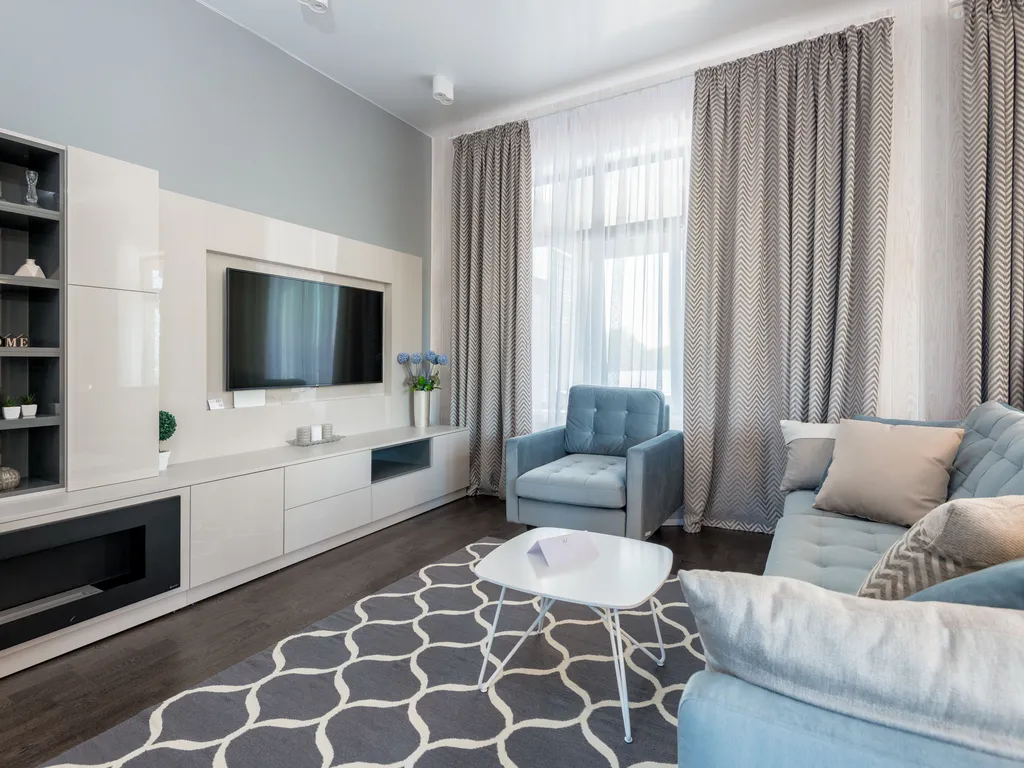 Every convincing coastal room begins with the colours the shoreline actually offers: warm white like sunlit shells, sandy beige, the grey-green of sea glass, and sky blue softened by haze. Houzz’s guide to coastal style builds the palette the same way — white as the crisp backdrop, then blues, sea greens and sand drawn from the landscape rather than from a theme catalogue. Keep the walls and largest pieces in the pale 80 percent, and let blue live in cushions, ceramics and art where it can be changed.
Two disciplines keep the palette grown-up. First, choose blue with grey in it — dusty, sea-glass, slate — because bright aqua and turquoise tip a room toward beach-bar novelty fast. Second, include one deep note, a navy chair or an inky cushion or two, so the pastels have something to lean against. The layering method in our small apartment color palette ideas works here too: one base, one support, one accent, repeated in every view.
2. Let Light Do the Decorating
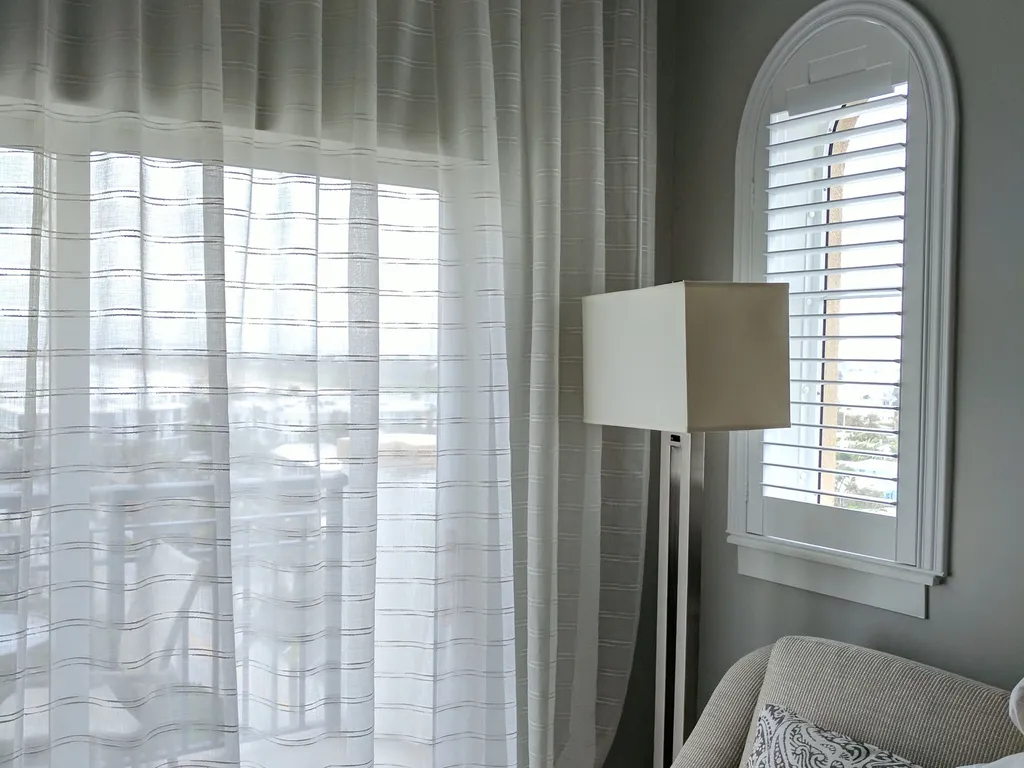 Coastal rooms are bright before they are anything else, and the brightness is a material in its own right. Dress windows with sheer linen or voile that filters glare but never blocks the day, or leave them bare where privacy allows. Pale floors — whitewashed boards, light oak, a flatweave rug in undyed wool — bounce that light around the room instead of swallowing it, and the whole space reads bigger and calmer.
Work with the light you have, not the light you wish for. A mirror placed to catch a window doubles the daylight exactly where a corner needs it, and glass or glossy ceramic accents act as small reflectors. After dark, keep the scheme honest: warm bulbs in woven or frosted shades, pools of light at reading height, and nothing that turns the room a different colour at night than it is at noon.
3. Layer Natural Texture Until the Room Feels Touchable
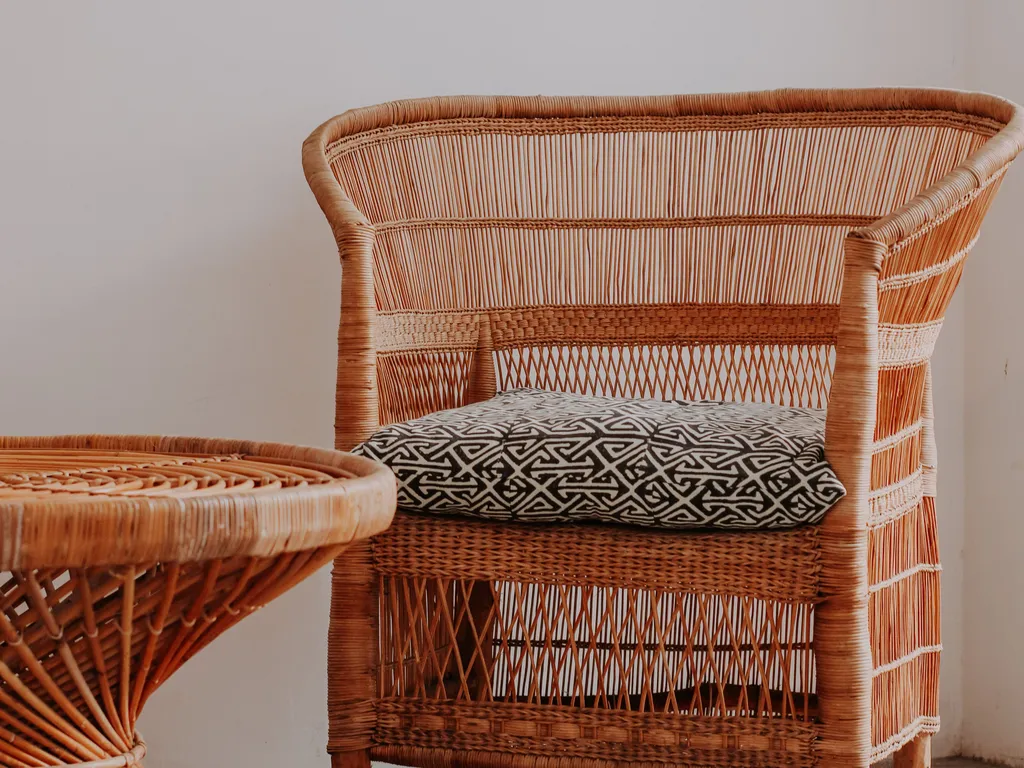 Texture is where coastal style earns its keep, because texture is what a shoreline actually feels like: rough rope, smooth pebble, nubby sand, salt-stiffened cloth. Build it in layers — a jute or sisal rug underfoot, a rattan or cane chair, linen cushions with a visible weave, seagrass baskets for the things every room needs to hide. Three distinct natural textures in one view is the working minimum; five is the sweet spot.
The discipline is contrast, not quantity. Pair each rough surface with a smooth one — jute against glazed ceramic, raw linen against polished shell or glass — so the eye keeps moving. And keep every texture in the palette: the moment a rattan chair arrives in a dark mahogany stain or a basket is dyed novelty-blue, the calm breaks. Natural materials in natural colours are nearly impossible to overdo.
4. Choose Weathered Wood and Pale Finishes
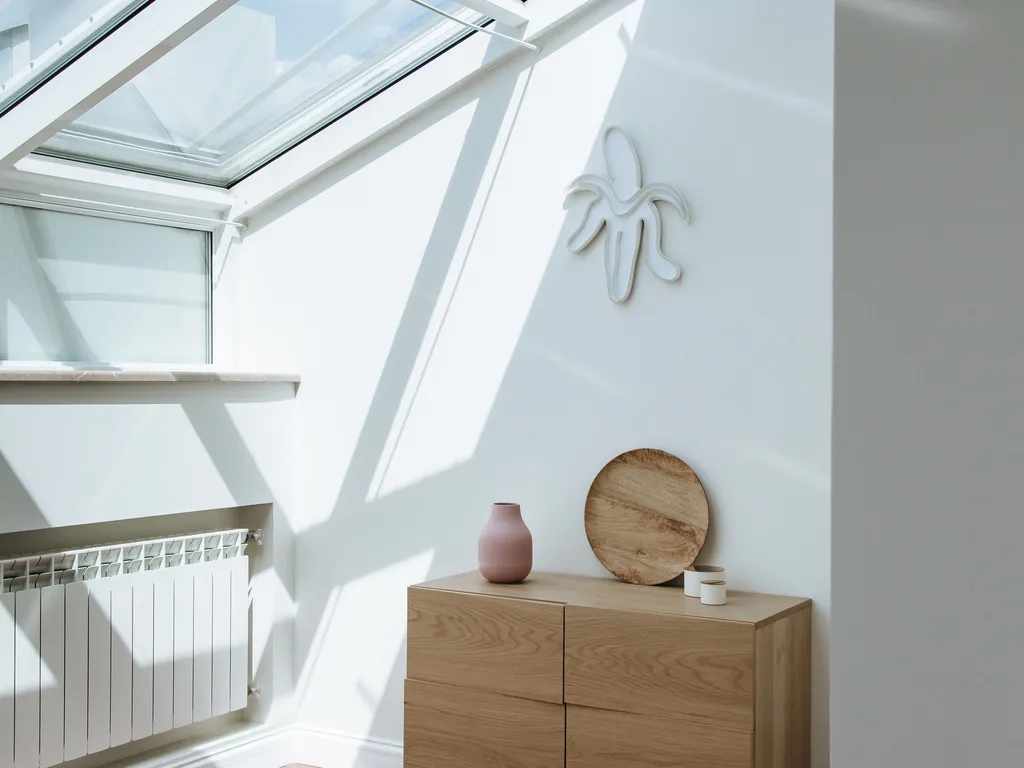 Wood is the style’s anchor furniture material, and its finish matters more than its shape. Driftwood grey, sun-bleached oak, whitewashed pine and blond maple all carry the same message: this wood has been outdoors and softened by weather. Dark, glossy, orange-toned timber argues with the palette and instantly reads as traditional furniture that wandered into the wrong room.
You rarely need to buy new to get there. A whitewash or lime-wax finish can pull an existing sideboard or table several shades paler in an afternoon, and mixing two or three pale wood tones looks collected rather than matched. Reserve actual driftwood for one sculptural moment — a branch in a tall vase, a weathered bench — where its gnarled texture can be read as art rather than inventory.
5. Furniture That Slouches a Little: Slipcovers and Low Lines
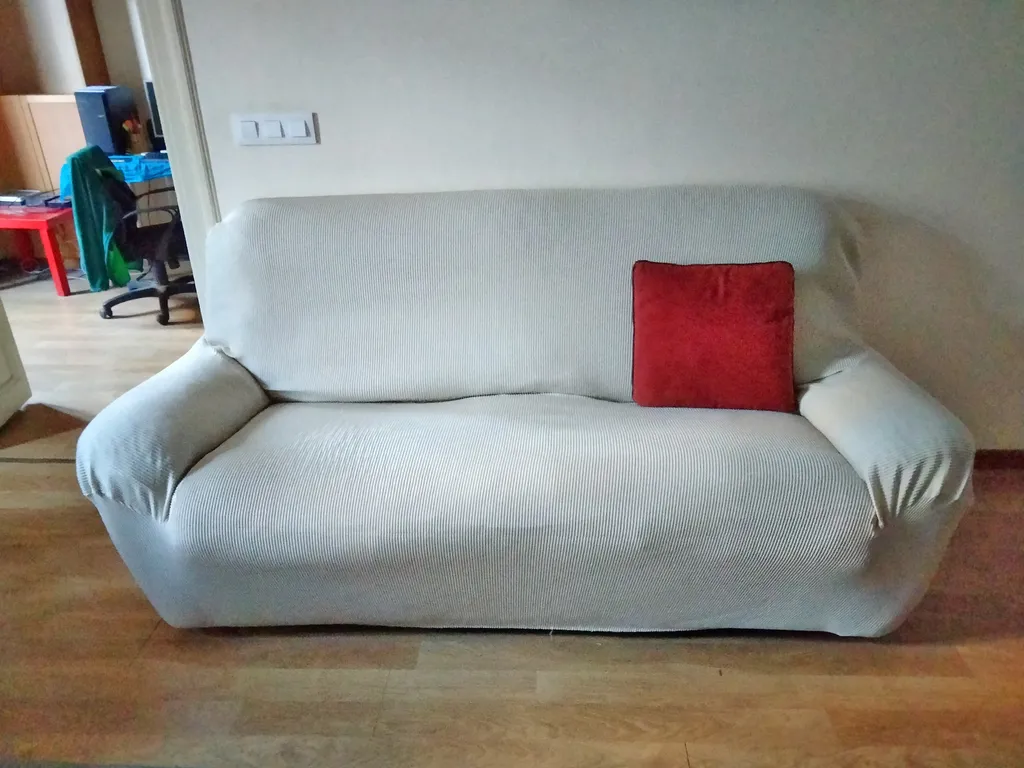 Coastal furniture is built for bare feet and long afternoons: deep seats, low backs, nothing with a hard shine or a formal silhouette. The slipcovered sofa in white or natural linen is the style’s signature piece for good reason — it looks softer every time it is washed, and it forgives sand, dogs and red wine in a way upholstery never will. Keep legs visible and pieces low so the room’s horizon line stays calm.
Use the same light moves as our summer living room refresh ideas: pale covers, edited surfaces and woven texture, with no new suite needed. What matters is restraint in number: coastal rooms feel breezy because they are slightly under-furnished, with air between the pieces and floor showing on every side.
6. One Stripe, Sea-Glass Accents, Nothing With a Slogan
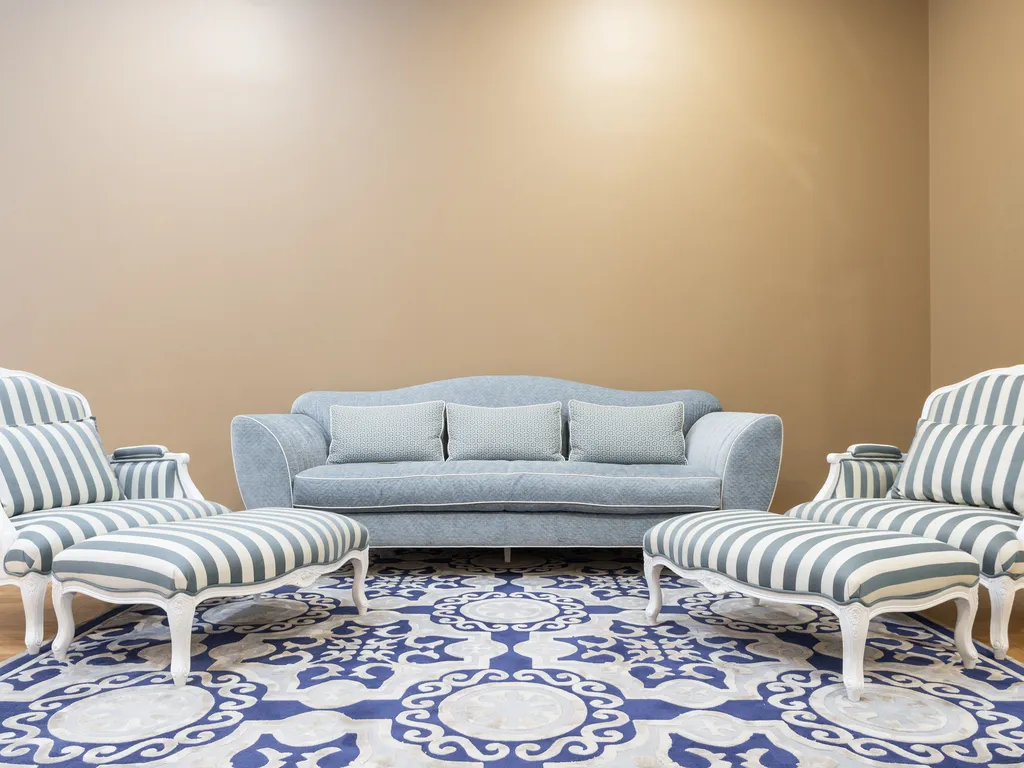 Pattern is where coastal rooms most often go wrong, so ration it like the strong seasoning it is. One ticking stripe — on cushions, a throw, a single upholstered chair — nods to deckchairs and sailcloth without dressing the whole room in them. Everything else stays plain: solid linen, solid cotton, the interest carried by weave and texture instead of print.
Sea glass is the accent equivalent: a few pieces in frosted green and blue, in a bowl or a row of simple bottles on a sill, catch light like water and cost almost nothing. The test for every patterned or themed object is subtraction — remove it and ask whether the room still reads coastal. If it does, the object was decoration on top of the style, and it can probably stay out.
7. Art That Evokes the Coast Instead of Announcing It
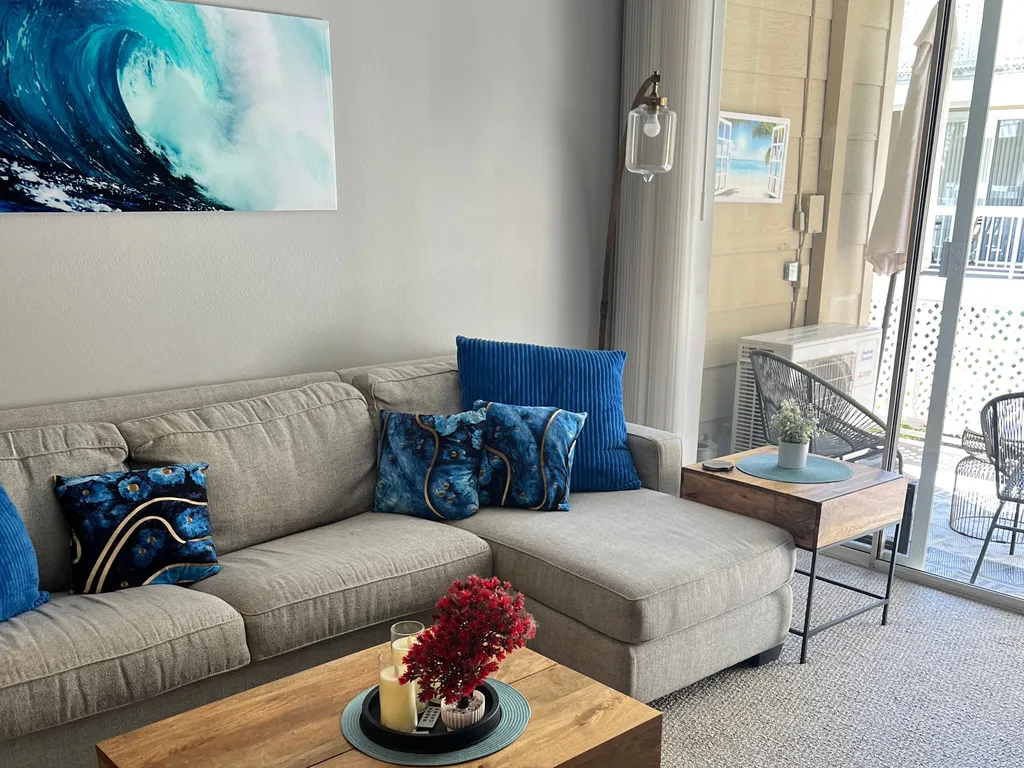 The horizon is the coast’s great artwork, and your walls should borrow its mood rather than spell it out. Large abstract pieces in washed blue, grey and sand — more weather than picture — hold a wall the way a sea view does. Coastal photography works too: an empty beach, marsh grass, a working harbour in morning fog, printed large and framed simply in pale wood or white.
Scale up and count down. One generous canvas says more than a gallery of small shell prints, and it avoids the postcard effect that instantly cheapens the style. Keep frames within the wood palette, mats wide and white, and leave real breathing room between pieces. If a wall needs more, add a woven hanging or a mirror — texture and light again, rather than another illustration of the theme.
8. Coastal Is Not Nautical: Draw the Line
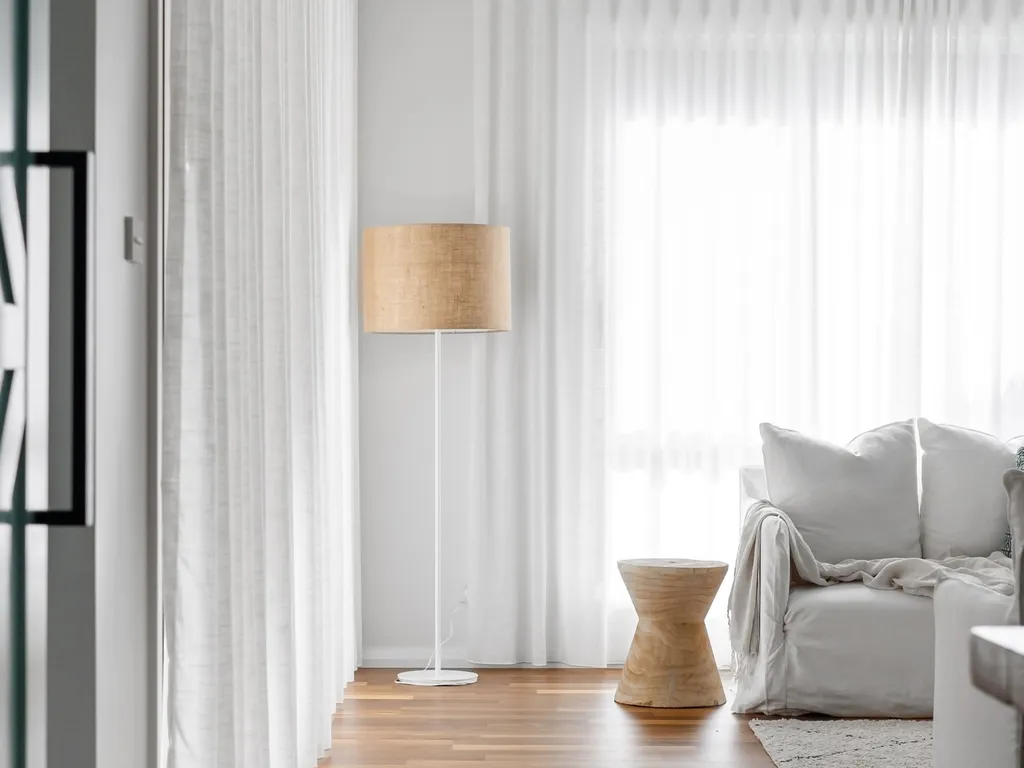 The fastest way to protect a coastal room is to know its neighbour. Nautical style is a different, bolder language — navy and white, brass, rope, anchors, ship references — drawn from boats rather than beaches. Decoist’s comparison of nautical and coastal styles draws the line clearly: coastal takes a relaxed, less literal interpretation of the seaside, while nautical leans on maritime symbols. Borrow the symbols and you have switched styles, not decorated yours.
So audit the room for literal objects. Anchors, ship’s wheels, rope knots as ornaments, life rings, and anything printed with a slogan or a coordinates stamp — these are the clichés, and one is enough to theme the whole room. A single genuinely found object, a piece of driftwood from a real walk or one beautiful shell, survives the audit, because it reads as a memory rather than a merchandise line.
9. A Coastal Bedroom That Breathes
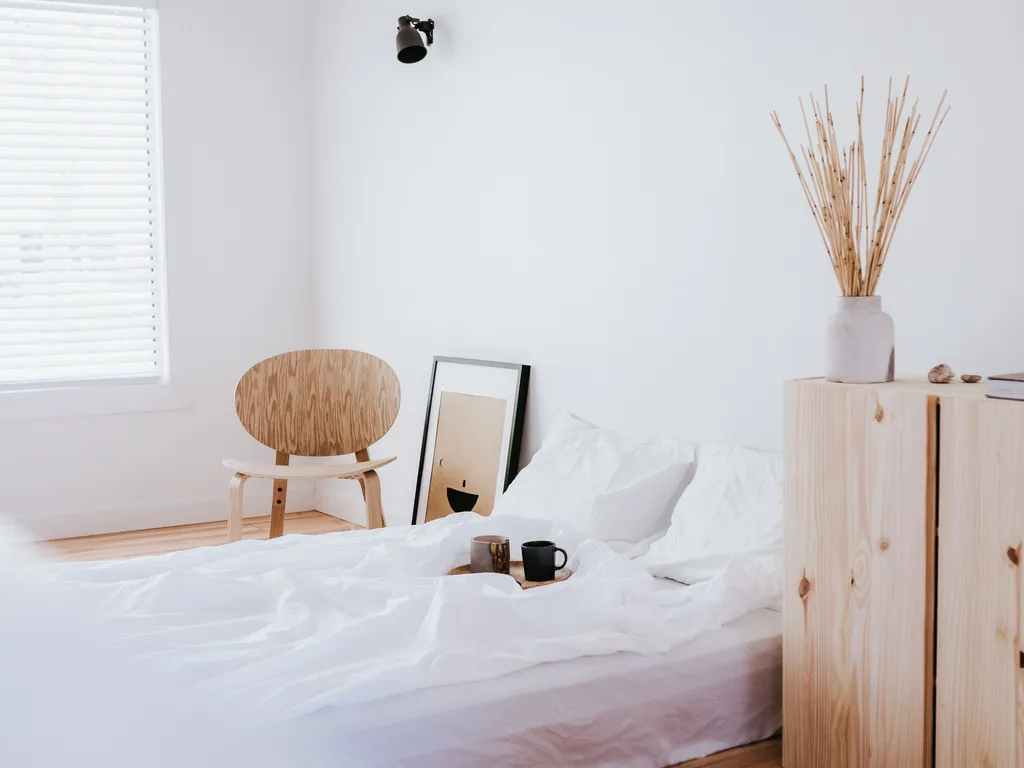 The bedroom is where the style’s calm pays its rent. Start with bedding in white and undyed linen — washed, rumpled, layered with a cotton throw in the palette’s softest blue — and a bed frame in pale wood or upholstered in natural fabric. A rattan or woven pendant overhead and simple ceramic lamps keep the light warm and low, and a jute or flatweave rug gives bare feet a shoreline to land on.
Hold the room to the same editing rules as the rest of the house. Nightstands carry a book, a carafe and one small object, not a driftwood collection; art stays abstract or photographic; the accent colour appears twice — throw and cushion, or cushion and a vase — and stops there. Waking up in a coastal bedroom should feel like the first morning of a holiday, every day, including the grey ones.
10. Take It Outside: The Coastal Porch
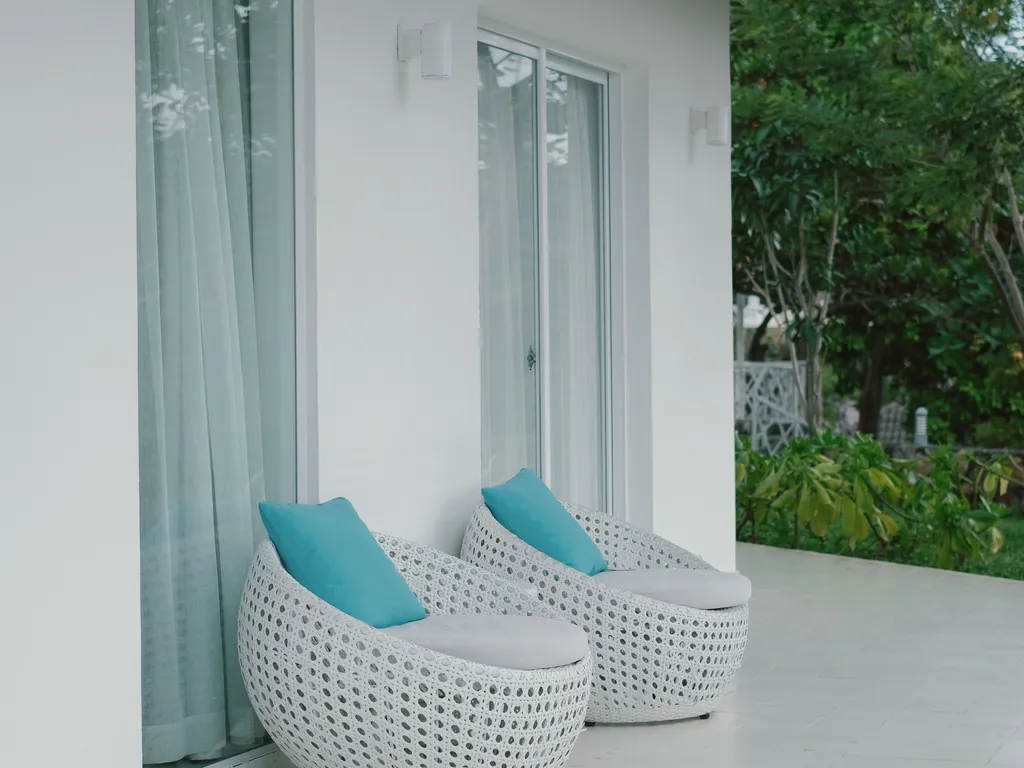 A coastal interior should not stop at the door. The porch, balcony or terrace is where the style proves it was about air and light all along: woven rattan or rope chairs with white outdoor cushions, a pale wood bench, a flatweave outdoor rug in sand tones, and grasses in simple pots doing the movement. Keep the palette identical to the rooms inside so the threshold disappears.
Refresh an existing porch in a weekend with lanterns, layered textiles and plants, as in our summer porch accents ideas. Choose lantern light over string lights shaped like anything, natural fibre over plastic wicker, and one deep blue cushion set to anchor the pale scheme. Then the last room of the house is also the breez
Frequently Asked Questions About Coastal Interior Style
What is the difference between coastal and nautical style?
Coastal borrows the shoreline’s light, colours and textures and stays abstract; nautical borrows the boat — navy, brass, rope and maritime symbols. Coastal is a mood, nautical is a theme, and mixing the two is how clichés happen.
Can coastal style work far from the sea?
Yes — the style trades in light, pale colour and natural texture, none of which needs a postcode. Some of the most convincing coastal rooms are in city apartments, where the calm matters even more.
What colours define a coastal palette?
Warm white and sand as the base, sea-glass green and dusty blue as the support, and one deep note — navy or ink — as the accent. Keep blues greyed and soft; bright aqua reads novelty.
How do I add coastal style without redecorating?
Change the textiles and the light first: white or natural cushion covers, a jute rug, sheer curtains, and one piece of abstract sea-toned art. Editing out dark, heavy objects does half the work.
Which materials suit coastal interiors best?
Linen, cotton, jute, sisal, rattan, cane and weathered or whitewashed wood. The rule is natural fibres in natural colours; synthetic shine is the one texture that never belongs.
How many beach-themed objects should a room have?
One, ideally found rather than bought — a piece of driftwood, a single shell, a bowl of sea glass. The style comes from palette and texture; objects are punctuation, and a room needs very little.
Does coastal style work in winter?
Yes, with weight added in the same palette: chunkier wool throws, deeper cushions in the navy accent, warmer lamplight. The calm stays; only the layers thicken, exactly as they do at the real shore.
What flooring works best for coastal rooms?
Pale and matte: whitewashed or light oak boards, or stone in warm grey. Existing dark floors can be calmed with a large undyed flatweave rug covering most of the visible surface.
Can coastal style feel warm rather than cold?
It should. Choose warm whites over blue-whites, natural wood over painted, and brass or aged metal over chrome. If a coastal room feels chilly, the whites are too blue and the textures too few.
Is coastal style the same as Hamptons style?
They are close cousins. Hamptons is coastal’s more polished, tailored branch — crisper symmetry, more navy, more formality — while everyday coastal is softer, more weathered and more relaxed in its shapes and fabrics.
Conclusion
Coastal style, kept honest, is a discipline of suggestion: shoreline colours instead of shell prints, weathered texture instead of rope props, light doing the work that souvenirs pretend to do. Choose the palette, layer the natural materials, edit the objects down to one honest piece — and the room breathes like the coast without ever naming it.
What a coastal room costs
Coastal is a light-touch style, so it can start at $150 for sheers, cushion covers and a jute rug. A full living room with a slipcovered sofa, rug and woven chairs usually costs $1,500 to $4,500. Spend on the sofa, the rug and the light, and save on the accents, which should be few and chosen slowly.
| Item | Typical cost | What changes the price |
|---|---|---|
| Slipcovered sofa, three seats, white | $900 to $2,800 | Fabric, washability and frame |
| Rattan armchair | $150 to $600 | Weave, size and cushion |
| Jute rug, 8 by 10 feet | $150 to $700 | Weave, backing and pile |
| Sheer linen curtains, one pair | $80 to $400 | Fabric weight and length |
| Weathered wood coffee table | $200 to $800 | Wood, finish and size |
| Large abstract seascape, 40 by 30 inches | $200 to $800 | Original work costs more than a print |
| Woven pendant light | $80 to $350 | Size, weave and bulb type |
| White bedding set, layered linen | $100 to $400 | Linen weight and pieces |
| Woven porch chairs, pair | $200 to $800 | Material and weather rating |
| Sea-glass accents, small group | $20 to $100 | Size and number of pieces |
| Warm white paint, one room | $50 to $150 | Coats needed and wall condition |
| Round mirror, 30 inches | $80 to $300 | Frame and glass quality |
Allow $100 to $250 for delivery, hanging and a spare slipcover, since white fabric in a family home needs a washable spare. If you live near the sea, pick metal with a powder-coated finish, since bare steel and brass can mark in salty air.
Sizes that keep a coastal room airy
Measure before you shop. A slipcovered sofa should leave at least 30 inches of walkway in front of it, and a coffee table should sit 14 to 18 inches from the sofa. The rug should run under the front legs of all seating, which usually means 8 by 10 feet, or 9 by 12 feet in a large room. Curtains should hang from a rod 4 to 6 inches above the window frame and fall to the floor, with the rod 6 to 10 inches wider on each side. A pendant over a dining table should hang 30 to 36 inches above the table and be about half to two-thirds the table width. A mirror should sit opposite or next to a window, with its centre at 57 to 60 inches from the floor, so it catches the light. For a coastal bedroom, leave 24 inches of clear space on each side of the bed, and keep nightstands low, no higher than the mattress top plus 6 inches.
How to build the look in order
Start with light, not shopping. Wash the windows, remove heavy curtains and paint the walls a warm white. Next, place the sofa and the rug, then the weathered wood pieces, then the woven lighting. Add pattern last, one stripe at a time, and stop before it reads as a theme. The most common mistake is buying five beach objects in one trip, so the room reads as a gift shop. A second mistake is picking a blue-white paint that looks cold at night; test warm white on the wall and check it after dark. A third mistake is a rug that is too small, which pulls the seating apart. Tape the rug size on the floor and walk around it for a day before you order.
More questions about coastal style
How much does a coastal living room cost?
A textile and light refresh costs $150 to $600. A full room with a slipcovered sofa, rug, chairs and art usually costs $1,500 to $4,500, before any paint or delivery.
What size rug goes under a coastal sofa?
Use 8 by 10 feet for a standard three-seat sofa, and 9 by 12 feet for a large room. The front legs of all seating should sit on the rug, with at least 6 inches of rug showing past each side.
Can coastal style work in a north-facing room?
Yes, if you keep the base warm white, not blue-white, and add light in three layers. A large mirror next to the window and a pale rug will do more than extra furniture.