

A summer living room is not redecorated — it is relieved. The furniture stays exactly where it is; what leaves is the weight: the wool throw, the velvet cushions, the deep-pile rug, the heavy curtains, the dark clutter of objects that made winter feel cosy and make July feel stuffy. What arrives is light — in fabric, in colour, and quite literally through the windows.
Work the ten steps in order over a single weekend and the room will feel measurably cooler and calmer, with almost every change reversible and most of them free.
In this guide: 1. Strip the Winter Weight First · 2. Swap Textiles to Linen and Cotton · 3. Change the Rug to a Flat-Weave or Natural Fibre · 4. Hang Sheers and Put the Light to Work · 5. Rearrange for Airflow and Summer Living · 6. Bring the Green In: Plants and Cut Stems · 7. Use a Coastal Palette Without the Theme-Park · 8. Clear and Restyle the Surfaces · 9. Set Up the Evenings: Lanterns and Low Light · 10. Finish With Scent and Air: The Invisible Layer · Frequently Asked Questions About Summer Living Room Refreshes · Conclusion
The refresh in four lines: Strip the winter weight back to the year-round base; swap to linen and cotton and flatten the rug; sheers up, surfaces halved, air given a path; and everything reversible — nothing bought, nothing permanent.
The Winter-to-Summer Swap Table
| Winter Layer | Summer Swap | Why It Works |
|---|---|---|
| Wool or faux-fur throw | Linen or cotton throw | Breathes; still there for air-conditioned evenings |
| Velvet and bouclé pillows | Linen, cotton or stripe covers | Pale fabric reflects light and feels cool to touch |
| Deep-pile rug | Jute, sisal or cotton flat-weave | Cool underfoot, visually lighter, easy to shake out |
| Heavy lined curtains | Linen or cotton sheers | Daylight floods in; privacy stays |
| Dark candles and accents | Greenery, glass, pale ceramics | Surfaces read fresh instead of moody |
| Full shelves and surfaces | Roughly half the objects | Air and sightlines are the summer luxury |
1. Strip the Winter Weight First

Before anything new enters the room, the winter layer leaves: heavy throws folded away, dark cushions stored, the thick rug rolled, spare objects boxed. Wash textiles before storing them together in one labelled bin — the autumn swap-back then takes an afternoon instead of a weekend of hunting.
Judge the room empty-ish before restyling. Most “summer refreshes” fail by addition; this one works by subtraction first, which is why it costs so little. If your sofa is a neutral one, you are already halfway there — a pale base is the canvas every summer scheme is painted on, as our neutral sofa styling ideas show season after season. This is the winter swap run in reverse — the same layers, lightened; the heavy direction lives in our winter cozy textiles guide.
2. Swap Textiles to Linen and Cotton

Covers, not cushions: the same inserts go into linen or cotton covers in white, sand, pale blue and soft stripe. One lightweight throw replaces the pile of blankets — draped over an arm, not folded across the whole sofa. The room’s temperature reading drops the moment the deep colours and heavy weaves leave it.
The material list is consistent across summer-refresh guides: Woodfurnist’s summer living room ideas build their swap table on exactly these fabrics — linen and cotton for throws and covers, jute or flat-weave underfoot — because natural fibres feel cool against skin and read relaxed rather than formal.
3. Change the Rug to a Flat-Weave or Natural Fibre
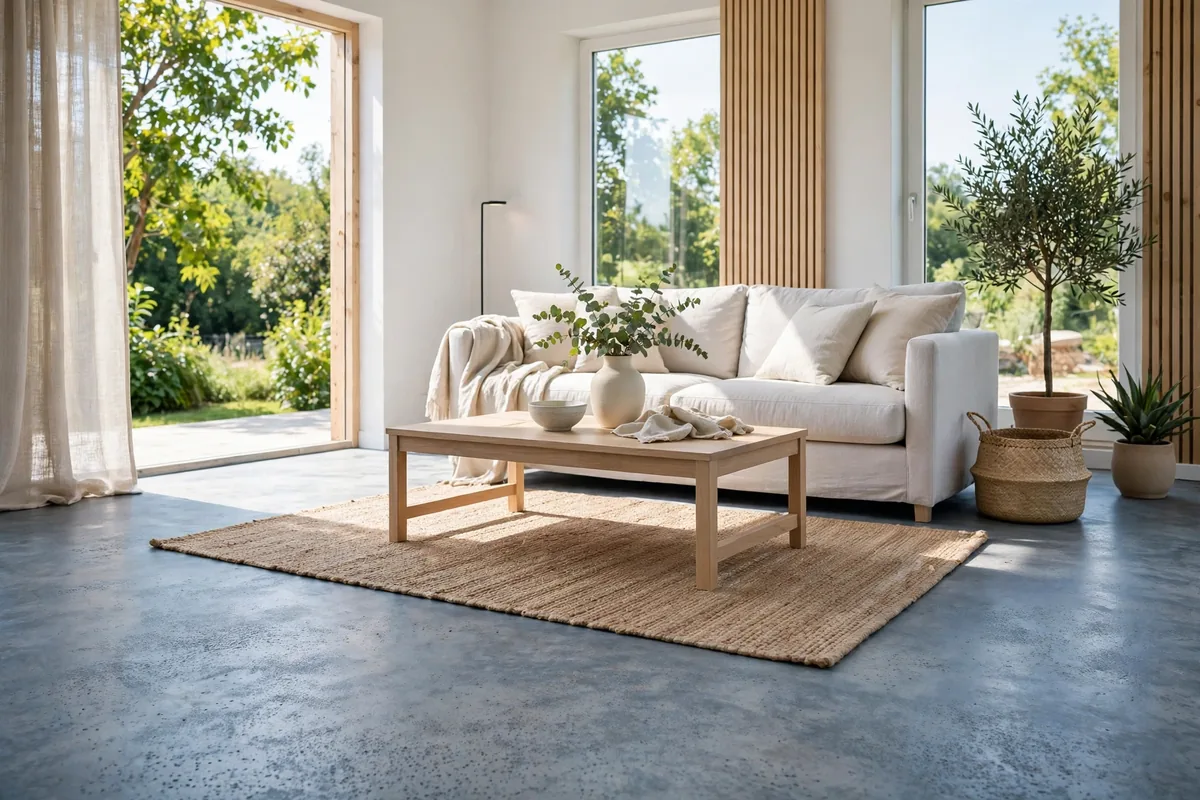
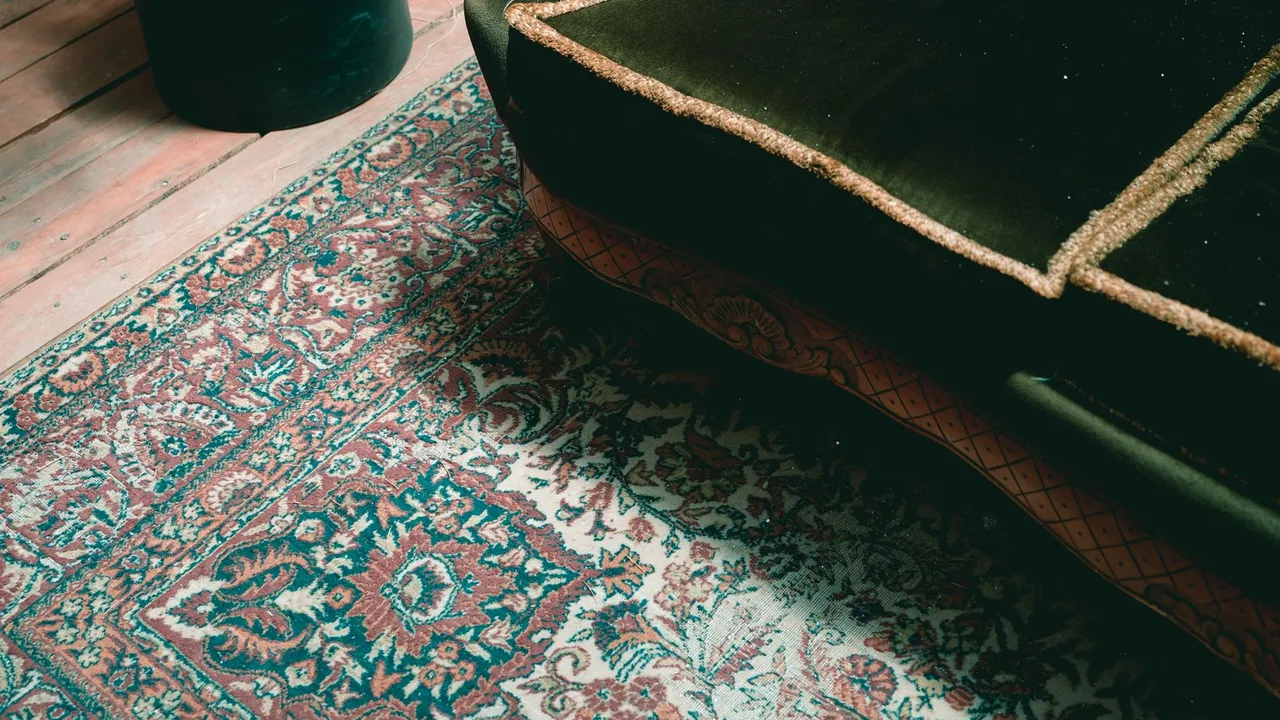
A deep-pile rug is a blanket for the floor. Rolling it up and laying a jute, sisal, seagrass or cotton flat-weave instead changes both the literal feel underfoot — cool, dry, textured — and the room’s visual weight more than any other single swap. Bare boards with a small cotton rug are a perfectly good summer answer in hot climates.
Store the winter rug cleaned and rolled, pile outward, so September’s swap-back is painless. If buying, size the summer rug the same as the winter one — summer is a texture change, not a layout change.
4. Hang Sheers and Put the Light to Work
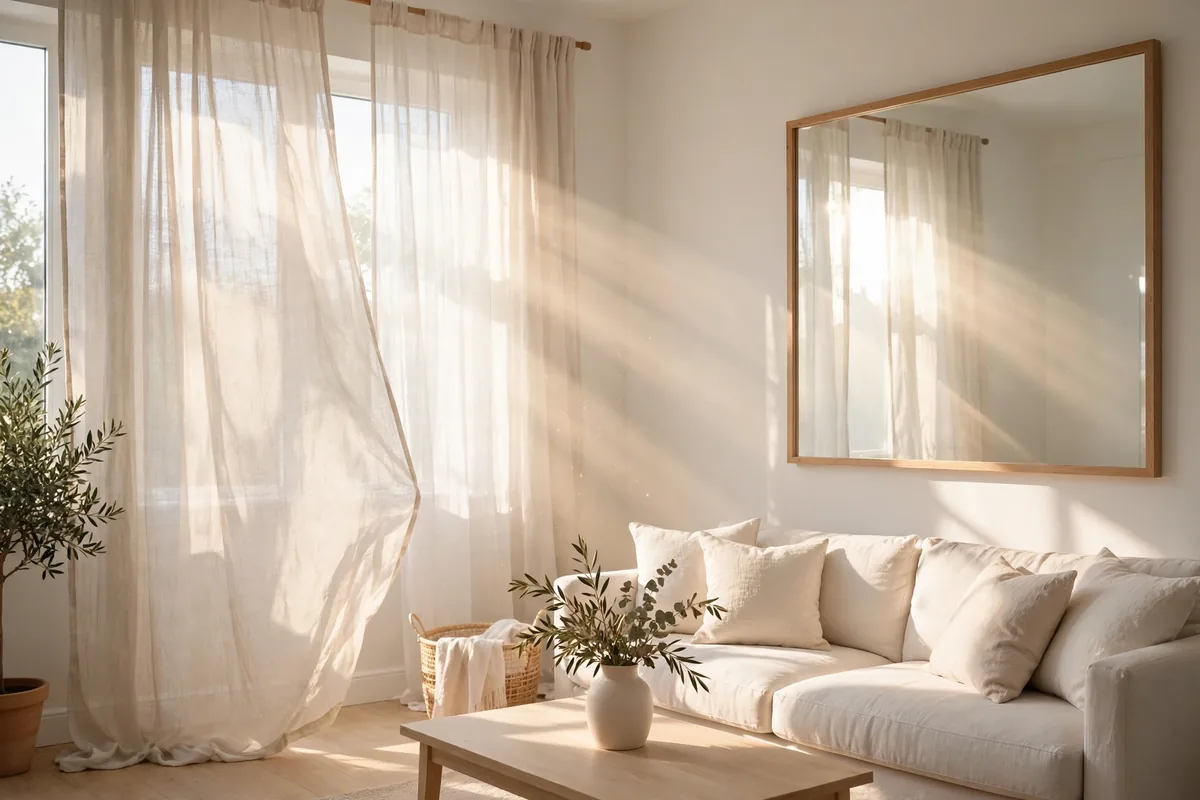
Swap lined curtains for linen or cotton sheers, or strip window treatments to the minimum the room’s privacy allows. Sheers filter glare while keeping the daylight — and daylight is the entire summer palette’s engine. Clean the windows inside and out; it is the least glamorous and most effective “decor purchase” of the season.
Then multiply what light you have: a mirror opposite or adjacent to the window, glass and pale glossy surfaces on the sun side of the room. Seasonal Home Magic’s summer living room guide makes the same sequence — light colours that reflect natural light, sheer curtains, mirrors to bounce sunshine through the space — the backbone of the whole refresh.
5. Rearrange for Airflow and Summer Living
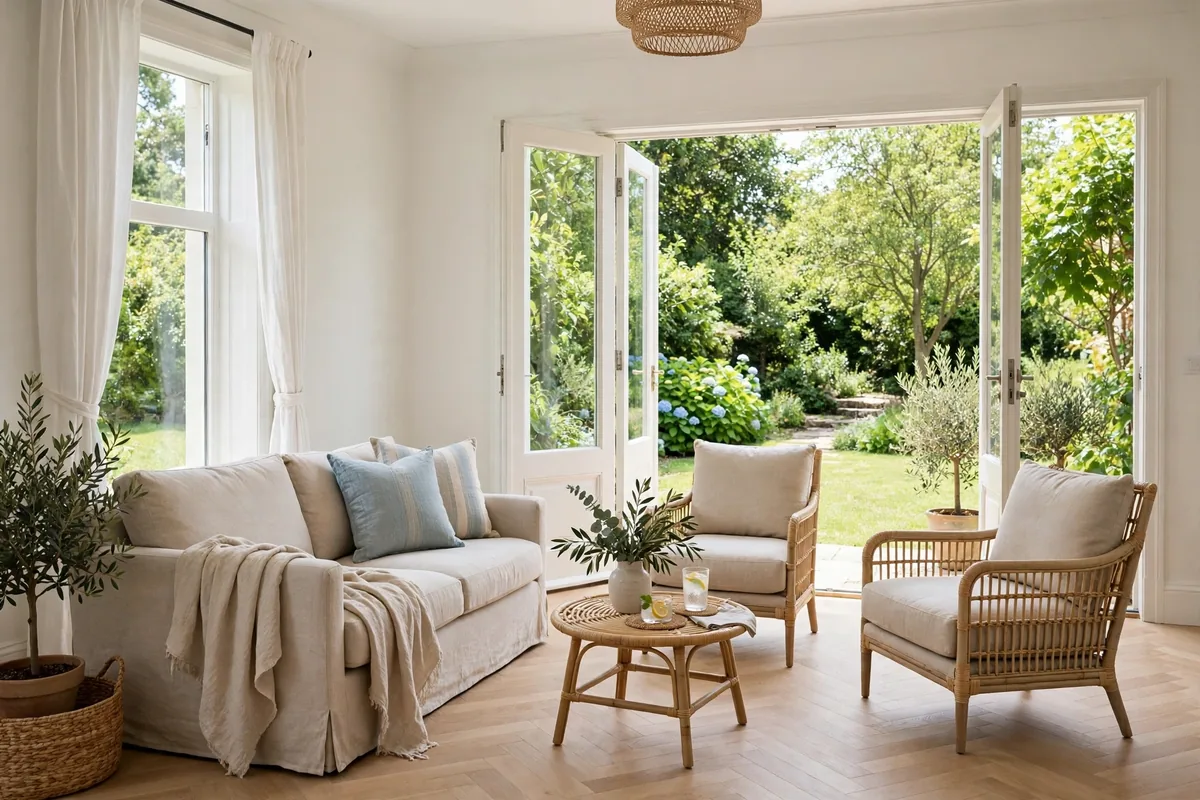
Winter layouts huddle around the fireplace or TV; summer layouts open toward the garden, the doors and the breeze. Pull seating slightly off the walls, angle chairs toward the view and the through-draft, and clear the path between door and window so air — and people — move freely. Even ten centimetres of breathing room around furniture reads as summer spaciousness.
The mantel follows the room: if yours is still wearing spring, carry its lightest version forward — the greenery-first approach in our spring mantel styling ideas needs only the flowers swapped for shells, glass and branches to become a summer mantel.
6. Bring the Green In: Plants and Cut Stems
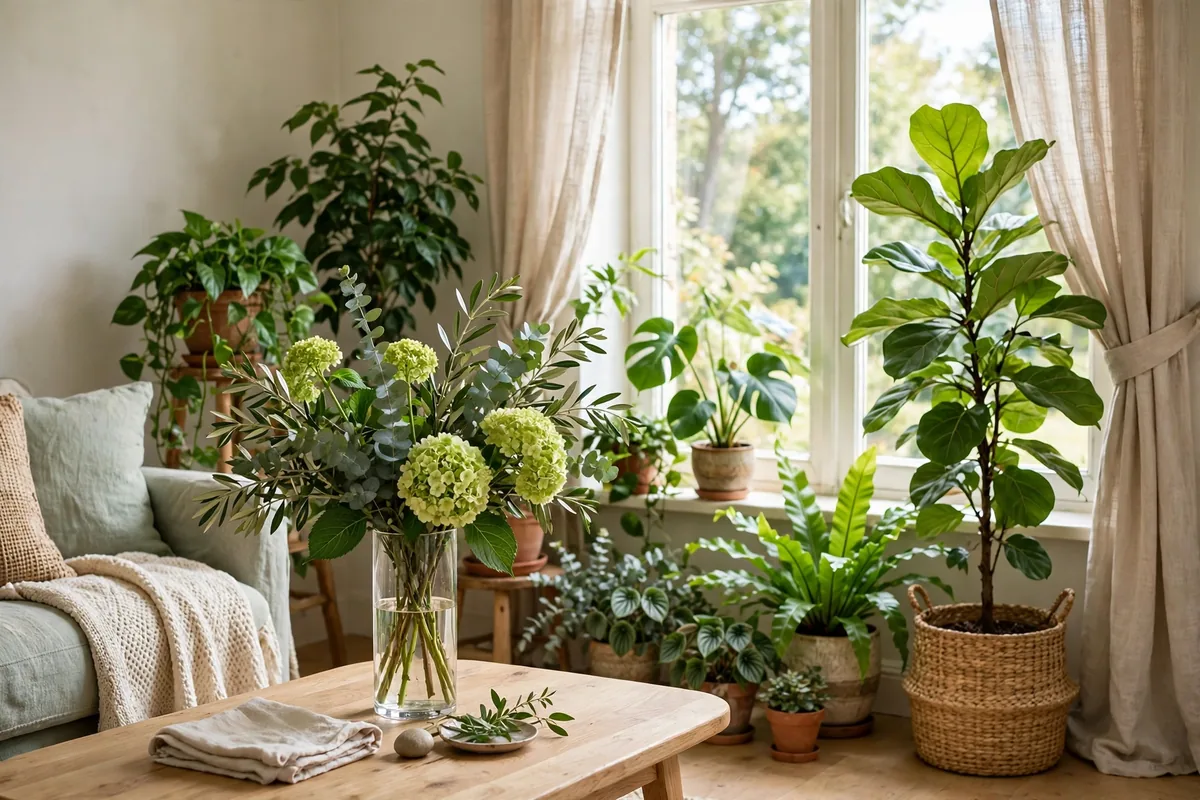
Summer is the one season where the garden does your decorating. Group houseplants where the light is — a leafy cluster by the window does more for the room than any accessory — and cut generously from the garden or buy long stems: branches, grasses, hydrangeas, sunflowers if your palette takes yellow. Big and green beats small and floral.
Plants also earn their place functionally: foliage softens hard light, and a room full of leaves simply feels fresher on a hot afternoon. Keep a watering rhythm — summer indoor plants dry fast near bright windows.
7. Use a Coastal Palette Without the Theme-Park
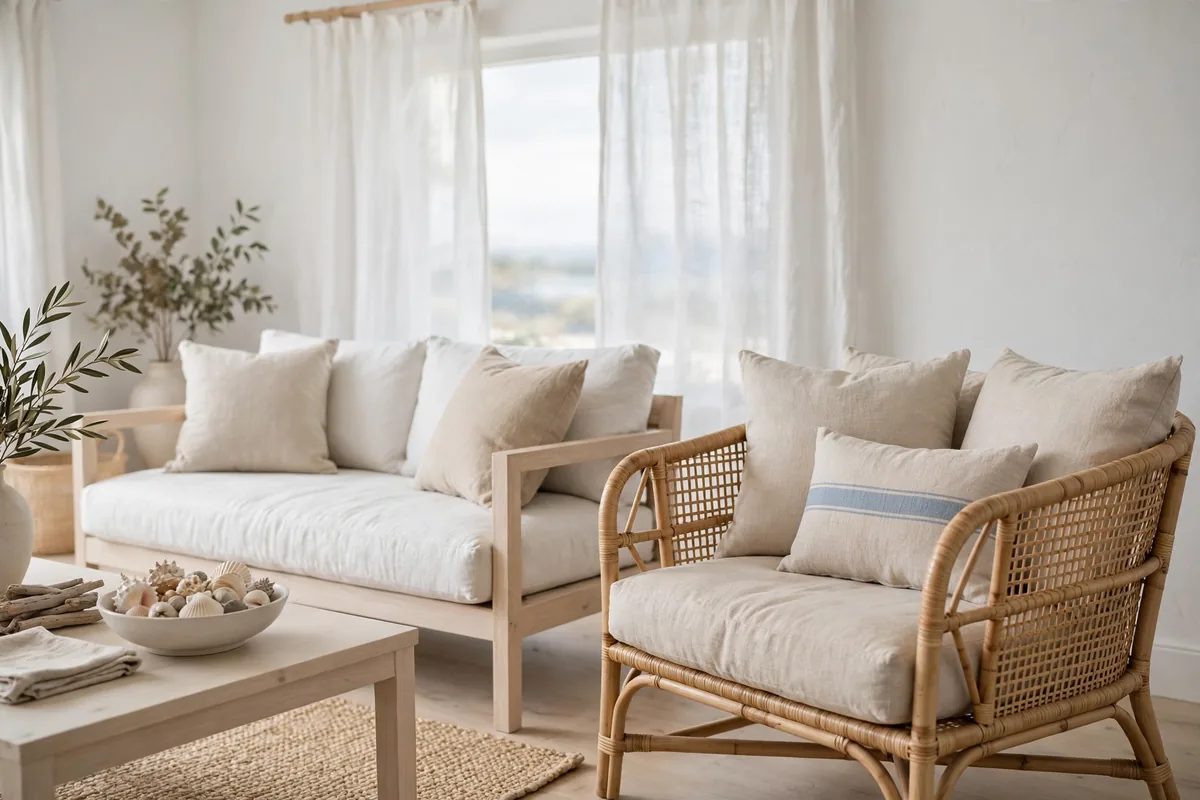
White, sand, driftwood and sea-blue is summer’s classic palette because it cools a room on sight. The trick is restraint: the palette comes from textiles and textures — linen, rattan, pale wood, a stripe or two — not from anchors, ropes and “beach house” signage. One bowl of shells you actually collected is coastal; a themed cushion set is a gift shop.
Build it in ratios: mostly white and sand, blue as the accent (cushions, a throw, one vase), natural texture everywhere. If the room still reads coastal with the shells removed, you have done it right.
The bold-colour case, answered: Other summer rooms run loud — citrus, ocean blue, a single saturated stretch of colour. This system does not forbid the volume; it assigns it an address. Bold colour is welcome exactly where it stays reversible: a cushion cover, one vase, a bowl of stems. The moment bold colour needs a paint tin or a new sofa, the refresh has stopped being a refresh and become a redecoration — a different project, with a different budget and a different weekend.
8. Clear and Restyle the Surfaces
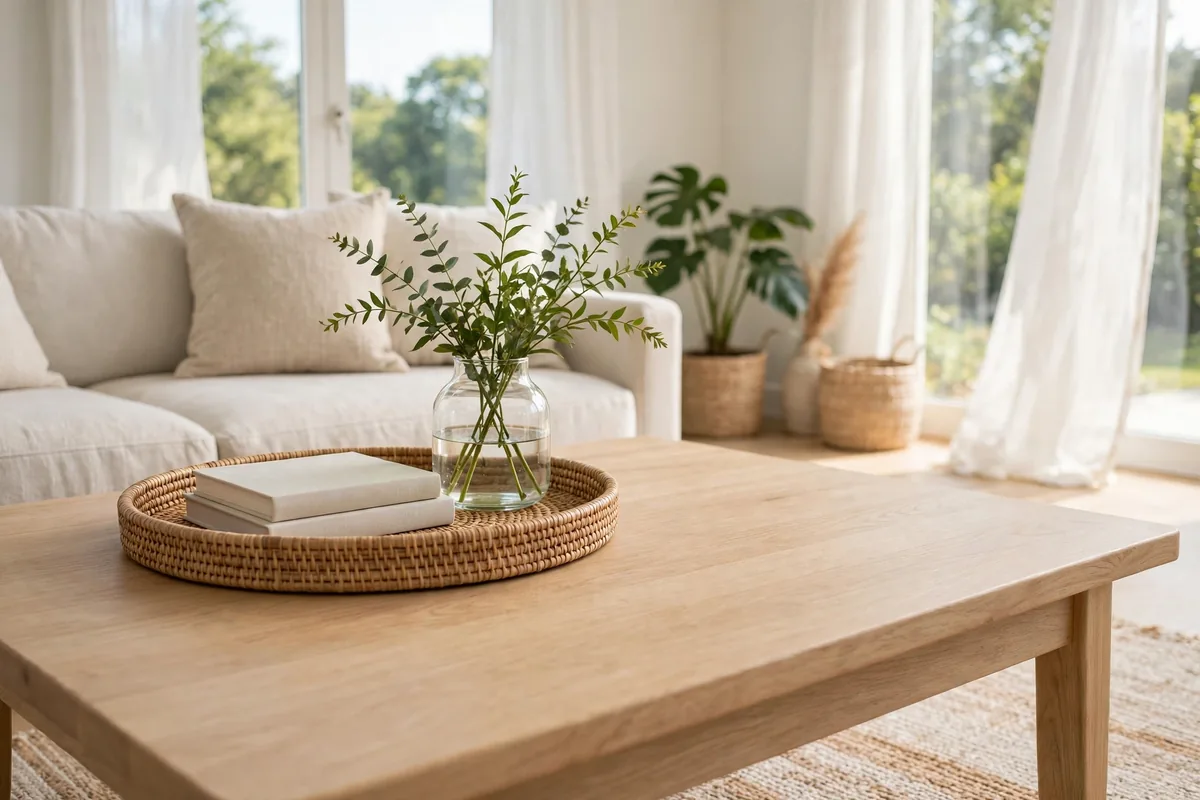
Halve what sits on the coffee table, shelves and side tables. What remains should be light in colour and material: glass, pale ceramic, woven trays, a couple of books in summer jackets or bare linen bindings. Empty surface is not unfinished — in summer it is the styling.
The coffee table especially wants a single strong gesture rather than a composition: one vase of stems or a woven tray holding the remotes and a book. Our coffee table decor ideas include summer-weight arrangements built on exactly this one-gesture rule.
9. Set Up the Evenings: Lanterns and Low Light
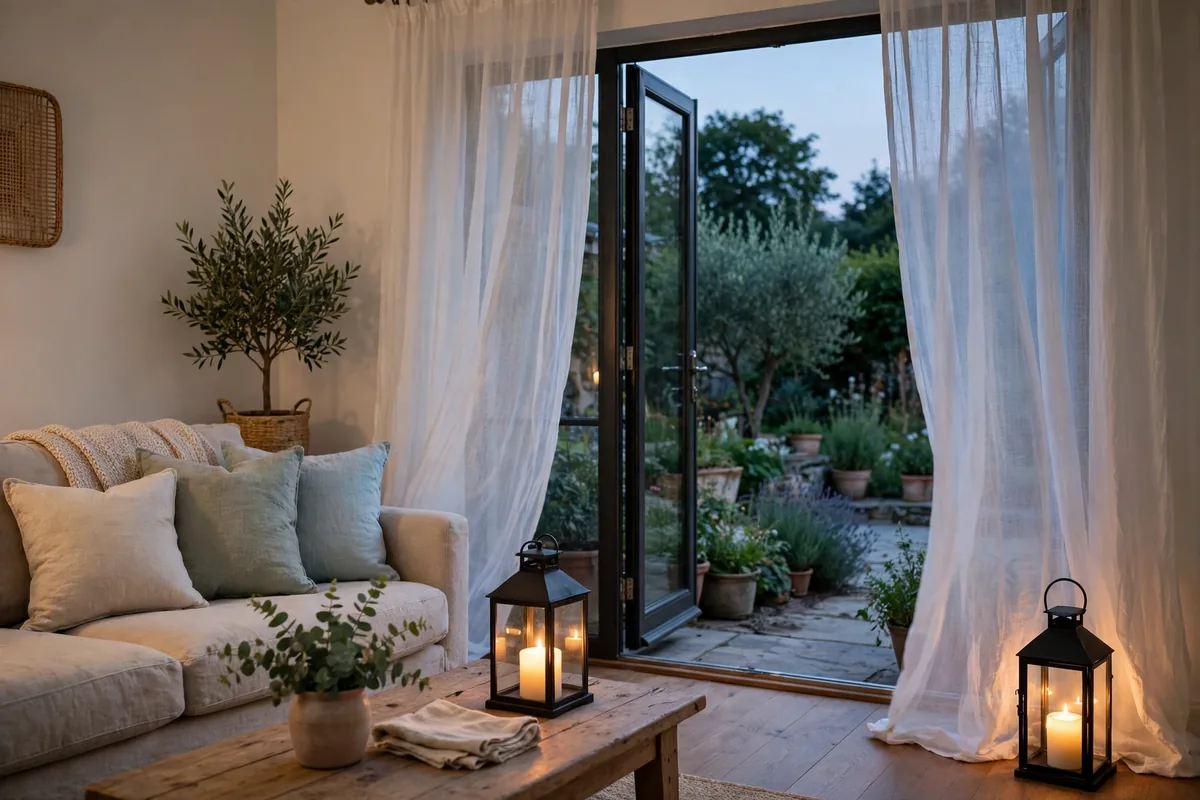
Summer evenings are the living room’s reward: windows open, light low and warm. Lanterns with flameless candles (real flames plus sheers plus a breeze is a poor mix), a dimmed lamp or two, and no overhead glare. Move one lantern to the floor by the garden door and the inside-outside boundary dissolves.
A dedicated corner earns its keep here — a chair by the open window with the evening light is the summer version of the fireside seat, and the layering in our cozy reading corner ideas translates directly: swap the wool throw for linen and the corner is already summer-ready.
10. Finish With Scent and Air: The Invisible Layer
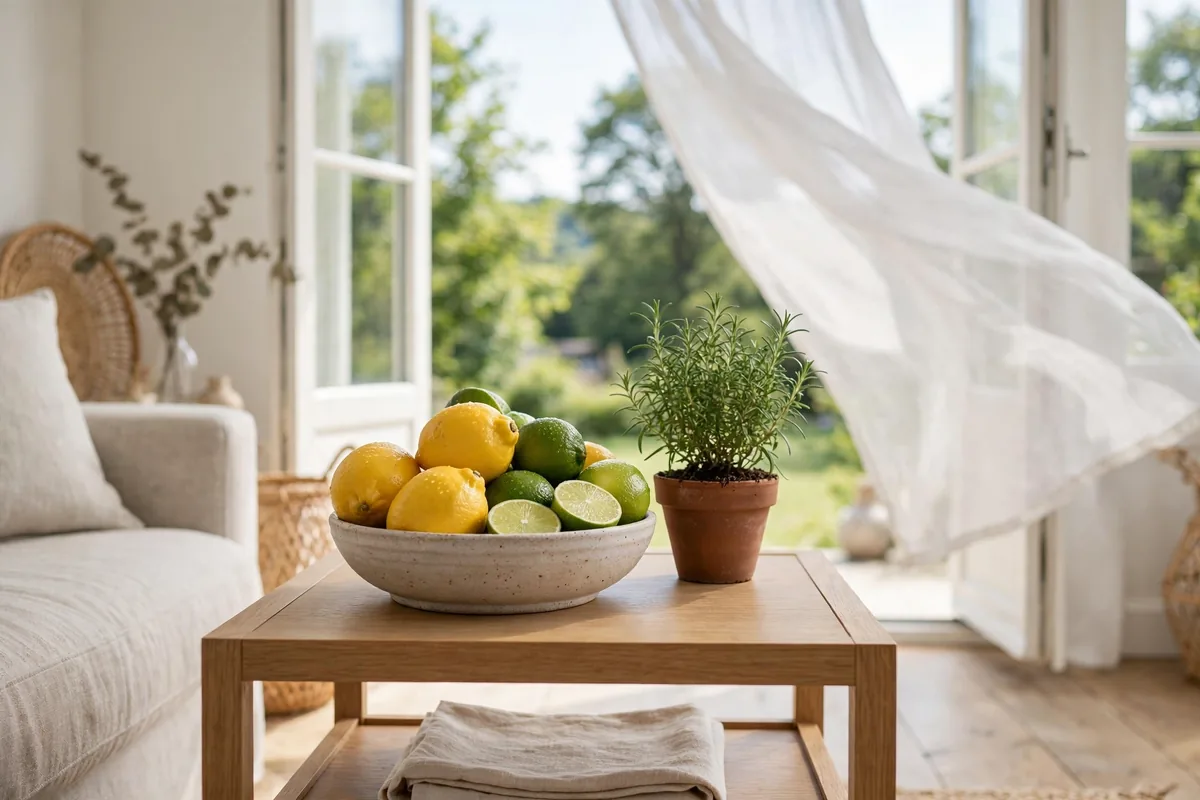
The last layer is invisible. A bowl of lemons or limes, a pot of basil or mint on the side table, a light citrus or sea-salt candle for evenings — summer scent is green and citrussy, never spiced or heavy. And air itself: open windows whenever the outside is cooler than the inside, curtains moving slightly, is the refresh no product can imitate.
When autumn comes, the system reverses in an afternoon — and the room’s talent for seasonal change is now built in. The same furniture will take a subtle Halloween living room layer in October with the same ease, because the base underneath never fights the season.
Frequently Asked Questions About Summer Living Room Refreshes
What is the single most effective summer refresh?
The textile swap: heavy throws, velvet cushions and the deep rug out; linen covers and a flat-weave in. It changes how the room feels to the skin, not just to the eye — and it is done in an hour.
Which colours make a living room feel cooler?
Whites, pale sand, soft blues and greens — colours that reflect light and read as water, sky and shade. Warm dark colours absorb light and read as heat, however beautiful they are in January.
Do I need to buy new furniture for a summer look?
No. Every step here assumes the furniture stays. If anything, summer argues for removing a piece — an extra chair to storage — to open the room’s airflow and sightlines.
What fabrics are best for summer cushions and throws?
Linen first, then cotton and cotton-linen blends: breathable, cool to the touch, and they wrinkle in a way that reads relaxed rather than messy. Outdoor fabrics are a smart pick for sunny rooms because they resist fading.
How do I keep a pale summer room practical with kids or pets?
Choose washable covers and slipcovers, keep the pale palette in the removable layers, and let the sofa’s own fabric be the forgiving mid-tone. Flat-weave rugs are far easier to shake out and spot-clean than pile.
Is it worth swapping rugs seasonally?
If you own a deep-pile winter rug, yes — the underfoot difference is the refresh people notice most, and flat-weaves are inexpensive and store flat. In mild climates, bare floors with a small cotton rug work just as well.
How can I add coastal style without it looking themed?
Palette and texture only: white, sand and blue in linen, rattan and pale wood, one stripe, one honest bowl of shells. Remove anything with a slogan, rope detail or anchor motif.
What should I do with the winter items I remove?
Wash or clean them first, then store them together in one labelled bin or under-bed box. The whole summer system depends on the swap-back being easy — jumbled storage is why most seasonal rotations die after one year.
How much should a summer refresh cost?
It can cost almost nothing: removal, rearrangement, garden stems and storage you own. A typical spend — a jute rug, a few linen covers, sheers — is modest, and every piece is reusable for many summers.
When should I do the summer refresh, and when do I swap back?
Late May or early June for most climates, whenever evenings turn reliably warm. Swap back in September or October, before the first cold snap rather than after it — the room should change with the season, not chase it.
Conclusion
A summer living room is the same room, lightened: winter layers stored, linen and cotton in their place, a flat-weave underfoot, sheers at the window, furniture breathing, surfaces half-empty, and green things everywhere the light lands. Do the subtraction honestly and summer does the rest.





Pingback: 10 Winter Cozy Textiles Ideas for a Warmer, Softer Home