
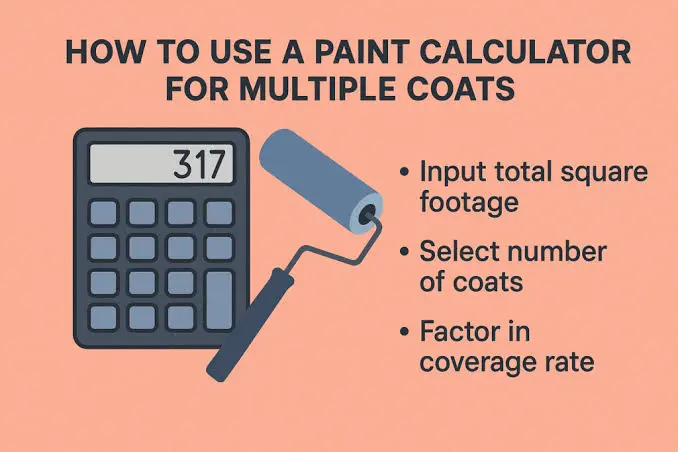
Paint Calculator
Estimate how much paint you need and calculate the total cost.
Pro Paint EstimatorPlanning to paint a bedroom, living room, kitchen, hallway, or an entire house? One of the first questions you need to answer is simple: How much paint do I need?
Buying too little paint can leave you with an unfinished wall and a second trip to the store. Buying too much can waste money and leave you with cans of paint you may never use.
Our free Paint Calculator and Paint Cost Calculator helps you estimate the amount of paint needed for your project and gives you an approximate material cost based on the price you enter.
You can calculate wall area, account for doors and windows, choose the number of coats, estimate gallons or liters of paint, and calculate an approximate paint cost.
The result is an estimate for planning purposes. Actual paint coverage can vary depending on the paint product, wall texture, surface condition, application method, and number of coats.
How to Use the Paint Calculator
Start by measuring the walls you want to paint.
For a simple rectangular room, measure:
- Room length
- Room width
- Ceiling height
- Number of doors
- Number of windows
- Number of paint coats
- Paint coverage
- Paint price per gallon or liter
Enter these measurements into the calculator above.
The calculator can then estimate the total wall area and the approximate amount of paint required.
For example, if a room has 10-foot-long walls and 8-foot ceilings, each 10-foot wall has:
10 × 8 = 80 square feet
You can calculate the other walls in the same way and then subtract doors and windows if you want a more precise estimate.
How Much Paint Do I Need?
The amount of paint you need depends primarily on the surface area and the paint’s coverage rate.
The basic formula is:
Paint Needed = Paintable Area ÷ Coverage per Gallon × Number of Coats
For example, if your paintable wall area is 1,200 square feet and your paint covers approximately 350 square feet per gallon for one coat:
1,200 ÷ 350 = 3.43 gallons
For two coats:
3.43 × 2 = 6.86 gallons
You would therefore plan for approximately 7 gallons, subject to the manufacturer’s actual coverage information.
Always check the paint can or manufacturer’s product information because coverage varies between products.
How to Calculate Wall Area for Painting
For a rectangular wall, multiply its width by its height.
Wall Area = Width × Height
For example:
A wall that is 14 feet wide and 8 feet high has:
14 × 8 = 112 square feet
If another wall is 12 feet wide and 8 feet high:
12 × 8 = 96 square feet
If the room has four walls, calculate each wall separately and add them together.
This method is especially useful when the walls are not all the same length.
How to Calculate Paintable Area
The total wall area is not always the same as the area you actually need to paint.
Doors and windows take up part of the wall surface.
The basic formula is:
Paintable Area = Total Wall Area − Doors − Windows
For example, suppose your total wall area is 1,200 square feet.
You have:
- 2 doors at 21 square feet each
- 3 windows at 15 square feet each
Door area:
2 × 21 = 42 square feet
Window area:
3 × 15 = 45 square feet
Total openings:
42 + 45 = 87 square feet
Paintable area:
1,200 − 87 = 1,113 square feet
This gives you a more useful estimate than simply using the total wall area.
How Many Coats of Paint Do I Need?
The number of coats depends on the surface, color, paint product, and desired finish.
One coat may sometimes be enough when the new color is similar to the existing color and the surface has good coverage.
Two coats are commonly used when you want more consistent color and coverage.
Additional coats may sometimes be needed when:
- Painting over a strong or dark color
- Changing from a dark color to a light color
- Painting a porous surface
- Covering repaired areas
- Working with certain paint colors
- The first coat does not provide adequate coverage
Do not automatically double the amount of paint without considering the product’s instructions and actual coverage.
Does Paint Coverage Affect the Calculator?
Yes.
Paint coverage is one of the most important numbers in a paint estimate.
Different products can have different coverage rates. Even paints from the same brand can have different recommended coverage depending on the product.
The coverage printed on the container is generally a useful starting point, but actual coverage can be affected by:
- Wall texture
- Porosity
- Application method
- Surface condition
- Primer
- Paint color
- Number of coats
- Painter technique
For the most accurate estimate, use the coverage information supplied with the exact paint product you plan to purchase.
How Much Paint for a 10 × 10 Room?
A 10 × 10-foot room with 8-foot ceilings has a wall perimeter of:
10 + 10 + 10 + 10 = 40 feet
Wall area:
40 × 8 = 320 square feet
This is the gross wall area before subtracting doors and windows.
If the room has one standard door and one or two windows, the actual paintable area will be lower.
If your paint covers approximately 350 square feet per gallon for one coat, the room may require around one gallon for one coat after deductions, but the exact amount depends on the openings and product coverage.
For two coats, you may need approximately two gallons.
Use the calculator above with your actual measurements for a more personalized estimate.
How Much Paint for a 10 × 12 Room?
A 10 × 12-foot room has a perimeter of:
10 + 12 + 10 + 12 = 44 feet
With 8-foot ceilings:
44 × 8 = 352 square feet
Again, this is the gross wall area.
Subtract doors and windows to estimate the actual paintable surface.
The final amount depends on the paint’s coverage and number of coats.
How Much Paint for a 12 × 12 Room?
A 12 × 12-foot room has a perimeter of:
12 + 12 + 12 + 12 = 48 feet
With an 8-foot ceiling:
48 × 8 = 384 square feet
After subtracting openings, the paintable area will be somewhat smaller.
For many standard interior paint products, one gallon may cover a portion or approximately one coat of a room this size, but always use the actual coverage rate of your selected paint.
How Much Paint for a 12 × 14 Room?
A 12 × 14-foot room has a perimeter of:
12 + 14 + 12 + 14 = 52 feet
With 8-foot walls:
52 × 8 = 416 square feet
Subtract the area of doors and windows to determine the approximate paintable wall area.
For two coats, multiply the required coverage by two before converting the result into gallons or liters.
How Much Paint for a 12 × 16 Room?
A 12 × 16-foot room has a perimeter of:
12 + 16 + 12 + 16 = 56 feet
At an 8-foot ceiling height:
56 × 8 = 448 square feet
This is the gross wall area.
If you have multiple doors and windows, subtract their areas before calculating paint requirements.
The exact number of gallons depends on your paint’s coverage rate and the number of coats.
Should I Subtract Doors and Windows?
Yes, if you want a more precise estimate.
Large doors and windows can represent a meaningful amount of wall area.
For a quick estimate, some homeowners may choose not to subtract small openings because the difference may be relatively minor.
For a larger project, however, measuring doors and windows can help reduce over-ordering.
Measure each opening:
Width × Height = Opening Area
Then add all door and window areas together and subtract them from the total wall area.
How to Calculate Ceiling Paint
Ceilings require a separate calculation because their surface area is based on the floor dimensions.
For a rectangular room:
Ceiling Area = Room Length × Room Width
For a 12 × 14-foot room:
12 × 14 = 168 square feet
If you are painting the ceiling, add this area to the other paintable surfaces when estimating total paint.
However, ceiling paint can have different coverage and application requirements from wall paint.
If you are using a dedicated ceiling product, use the coverage information provided for that product.
How Much Paint Do I Need for Trim?
Trim is different from large wall surfaces.
Baseboards, door frames, window trim, crown molding, and other details can require additional paint.
For long sections of simple trim, estimate the surface using length and average exposed width.
For example, a baseboard that is 50 feet long and approximately 5 inches high has an approximate surface area of:
50 × (5 ÷ 12) = 20.83 square feet
This is only one side of the calculation, and detailed trim profiles can be more complicated.
Because trim typically uses much less paint than walls, many homeowners purchase trim paint separately rather than trying to combine it with the wall estimate.
Do I Need Primer Before Painting?
Primer is not required for every painting project, but it can be useful in certain situations.
Primer may be helpful when:
- Painting new drywall
- Covering stains
- Painting porous surfaces
- Changing dramatically between colors
- Preparing certain repaired surfaces
- Improving adhesion on appropriate surfaces
The correct primer depends on the surface and the problem you are trying to solve.
If the existing surface is in good condition and the new paint is compatible, a quality paint-and-primer product may reduce the need for a separate primer in some situations.
Always follow the manufacturer’s instructions.
Paint Calculator for Exterior Walls
The same basic area calculations can be used for exterior painting, but exterior projects are usually more complicated.
You may need to account for:
- Multiple stories
- Gables
- Eaves
- Windows
- Doors
- Porches
- Garages
- Siding
- Brick
- Stucco
- Different surface textures
A simple rectangular exterior wall can be calculated using:
Width × Height
But complex exterior surfaces may require several separate measurements.
For larger exterior projects, professional measurements can provide a more reliable estimate.
How Much Paint Does a Gallon Cover?
There is no single coverage number that applies to every paint.
Coverage depends on the specific product.
Many interior paints provide coverage measured in hundreds of square feet per gallon, but you should use the coverage printed on the paint container or manufacturer’s technical information.
For example, if your selected product covers 400 square feet per gallon and you have 1,200 square feet to paint:
1,200 ÷ 400 = 3 gallons
For two coats:
3 × 2 = 6 gallons
This is why checking the product’s stated coverage is important.
How to Calculate Paint Cost
Once you know the estimated amount of paint, calculating material cost is straightforward.
The basic formula is:
Paint Cost = Number of Gallons × Price per Gallon
For example, if your project requires approximately 5 gallons and each gallon costs $45:
5 × $45 = $225
Your estimated paint cost would be $225.
This does not necessarily represent the complete project cost.
You may also need:
- Primer
- Brushes
- Rollers
- Roller covers
- Paint trays
- Painter’s tape
- Drop cloths
- Sandpaper
- Caulk
- Spackle
- Cleaning supplies
- Extension poles
- Ladders
Labor can also be a major part of the total cost if you hire a professional painter.
What Is Included in a Paint Cost Estimate?
The calculator can help estimate the cost of the paint itself when you provide the price per gallon or liter.
It should not be treated as a complete contractor quote.
Your total painting budget may include:
Paint + Primer + Supplies + Labor + Preparation + Other Materials
For a DIY project, labor may be your own time.
For a professional project, labor can depend on room size, wall condition, number of coats, ceilings, trim, preparation, and accessibility.
How to Reduce Paint Waste
Good planning can help you avoid buying significantly more paint than necessary.
Try these tips:
- Measure each room carefully.
- Use the exact paint coverage rate.
- Subtract large doors and windows.
- Calculate the number of coats realistically.
- Buy paint from the same batch when possible for large projects.
- Keep leftover paint properly sealed for future touch-ups.
- Do not add an unnecessarily large waste percentage.
- Follow the manufacturer’s coverage recommendations.
A small amount of extra paint can be useful for future repairs, but excessive leftovers simply increase your project cost.
Should I Buy Extra Paint?
Having a small amount of leftover paint can be useful.
Future touch-ups may be needed because of:
- Furniture marks
- Wall damage
- Small stains
- Nail holes
- Repairs
- Normal wear
However, buying several extra gallons without calculating your needs can create unnecessary expense.
A better approach is to calculate carefully and keep a reasonable amount for future touch-ups when practical.
Paint for Different Wall Types
The same amount of paint can produce different results on different surfaces.
Smooth, previously painted walls may require less paint than highly textured or porous surfaces.
Common wall surfaces include:
- Drywall
- Plaster
- Wood
- Brick
- Concrete
- Stucco
- Paneling
Porous surfaces may absorb more paint.
Textured surfaces can also have greater surface area than a smooth wall.
This is one reason calculator results should be treated as estimates rather than guaranteed quantities.
How Wall Condition Affects Paint Quantity
Surface preparation can be just as important as paint quantity.
A wall with cracks, holes, stains, peeling paint, or uneven areas may need preparation before painting.
Preparation can include:
- Cleaning
- Scraping
- Sanding
- Filling holes
- Repairing cracks
- Caulking gaps
- Priming problem areas
A well-prepared surface can help the new paint perform better and produce a more consistent finish.
Paint Calculator Quick Reference
| Measurement | Formula |
|---|---|
| Wall Area | Width × Height |
| Room Perimeter | 2 × (Length + Width) |
| Gross Wall Area | Perimeter × Ceiling Height |
| Ceiling Area | Length × Width |
| Paintable Wall Area | Wall Area − Doors − Windows |
| Paint Needed | Paintable Area ÷ Coverage |
| Multiple Coats | Paint Needed × Number of Coats |
| Paint Cost | Gallons × Price per Gallon |
Always keep your units consistent.
If your dimensions are in feet, convert inches into feet before calculating square footage.
Common Paint Calculation Mistakes
Forgetting the Ceiling
If you plan to paint the ceiling, calculate it separately.
Not Subtracting Large Openings
Large windows and doors can affect the final paint estimate.
Ignoring Paint Coverage
Do not assume every gallon covers the same amount.
Forgetting Multiple Coats
If you need two coats, your paint requirement will generally be higher than for one coat.
Ignoring Surface Texture
Textured or porous surfaces can affect actual coverage.
Mixing Measurement Units
Do not combine feet and inches incorrectly.
Convert all measurements into a consistent unit before calculating.
Confusing Paint Cost With Total Project Cost
Paint is only one part of a complete painting project.
Supplies, preparation, labor, and delivery may add to the final budget.
How Do I Calculate Paint for an Entire House?
For an entire house, calculate each room separately.
This is usually easier and more accurate than trying to estimate the entire house as one large rectangle.
Create a simple list:
- Bedroom 1
- Bedroom 2
- Living room
- Dining room
- Kitchen
- Hallway
- Bathroom
- Other spaces
Measure each room and calculate its paintable wall area.
Then add the totals together.
This approach also helps when different rooms use different paint colors.
How Much Paint Do I Need for a Bedroom?
Measure the bedroom’s length, width, and ceiling height.
Calculate the wall perimeter and multiply it by the ceiling height.
Then subtract doors and windows if desired.
Finally, divide the paintable area by the selected paint’s coverage rate and multiply by the number of coats.
For a small bedroom, the required amount may be relatively modest, while a large bedroom with high ceilings can require considerably more.
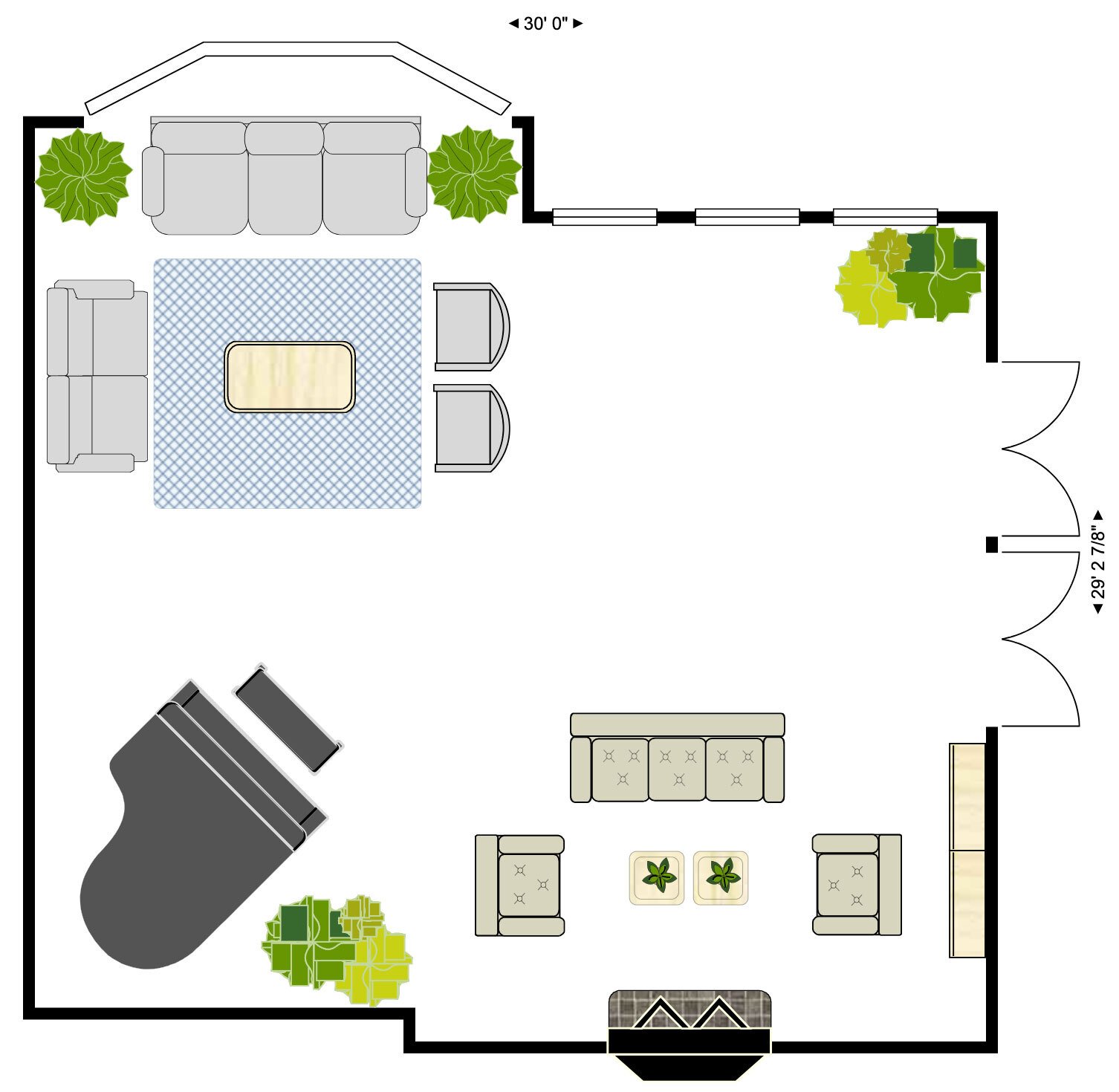
How Much Paint Do I Need for a Living Room?
Living rooms often have larger wall surfaces, windows, doors, fireplaces, built-ins, and open connections to other rooms.
Measure each wall individually when the layout is complicated.
Do not assume every living room requires the same number of gallons.
Room dimensions, ceiling height, openings, paint coverage, and number of coats all affect the estimate.
How Much Paint Do I Need for a Bathroom?
Bathrooms are usually smaller than living rooms, but they can have tile, cabinets, mirrors, doors, and other surfaces that reduce the actual paintable area.
Measure only the surfaces you plan to paint.
Also choose a paint product appropriate for the bathroom environment and follow the manufacturer’s recommendations for application and ventilation.
Can I Use the Paint Calculator for Exterior Projects?
Yes, the calculator can help with basic exterior surface estimates.
However, exterior homes can have complicated shapes and multiple surfaces.
For large projects involving several stories, steep areas, unusual architecture, or extensive preparation, a professional estimate may be more appropriate.
Can I Use the Calculator for Paint Cost?
Yes.
Enter the estimated quantity of paint and the price per gallon or liter to calculate an approximate material cost.
For example:
4 gallons × $42 = $168
Remember that this is a paint-material estimate.
It does not automatically include labor, primer, supplies, delivery, taxes, surface repairs, or other project costs.
Frequently Asked Questions
How do I calculate how much paint I need?
Calculate the total paintable surface area, divide it by the paint’s coverage per gallon, and multiply by the number of coats.
How many gallons of paint do I need for a 10 × 10 room?
The exact amount depends on ceiling height, doors, windows, paint coverage, and number of coats. An 8-foot ceiling gives approximately 320 square feet of gross wall area before subtracting openings.
How much paint do I need for a 12 × 12 room?
With an 8-foot ceiling, a 12 × 12 room has approximately 384 square feet of gross wall area before doors and windows are deducted.
Does one gallon of paint cover 400 square feet?
Some products may cover around that amount, but coverage varies by product. Always check the manufacturer’s stated coverage.
Should I calculate two coats of paint?
If you plan to apply two coats, include both coats in your calculation. The exact need depends on the product, surface, color change, and coverage.
Do I subtract windows and doors from the paint calculation?
You can subtract them for a more precise estimate, particularly when the openings are large or numerous.
Do I need primer?
Not always. Primer can be useful for new drywall, stains, porous surfaces, dramatic color changes, and certain problem surfaces. Follow the paint and primer manufacturer’s recommendations.
How do I calculate ceiling paint?
Multiply the room’s length by its width to calculate the ceiling area.
How do I calculate paint cost?
Multiply the estimated number of gallons by the price per gallon.
Does wall texture affect paint coverage?
Yes. Textured and porous surfaces can require more paint than smooth surfaces.
Is the paint calculator exact?
No. It provides a planning estimate. Actual paint usage depends on product coverage, surface condition, texture, application method, number of coats, and other factors.
How much extra paint should I buy?
Avoid automatically adding a large amount. Calculate carefully and consider keeping a reasonable quantity for future touch-ups.
Can I use this calculator for exterior paint?
Yes, for basic area estimates. Complex exterior projects may require professional measurements and additional calculations.
Final Thoughts
Calculating paint before starting a project can save both time and money.
The most important numbers are your wall dimensions, ceiling height, doors and windows, paint coverage, and number of coats.
Once you know the paintable area, you can estimate the number of gallons or liters required and use the Paint Cost Calculator to create a basic material budget.
Remember that paint coverage is not identical for every product. Wall texture, surface condition, application method, color changes, and other factors can affect actual usage.
Use our calculator as a planning tool, then compare the result with the coverage information on the exact paint product you plan to purchase.
For larger projects, especially whole-house exteriors or complicated surfaces, professional measurements can help produce a more reliable estimate.
Related Home Design Tools
If you are planning a home improvement project, these tools can also help:
- Room Size Calculator – Calculate room dimensions, square footage, and floor area.
- Rug Size Calculator – Find the right rug size for your room and furniture.
- Backyard Landscaping Calculator – Estimate landscaping materials and project costs.
Disclaimer: This Paint Calculator provides general planning estimates only. Actual paint requirements and costs can vary based on the paint product, coverage rate, surface condition, texture, application method, number of coats, color, waste, local pricing, taxes, labor, and other project-specific factors. Always verify coverage and application requirements with the paint manufacturer’s instructions before purchasing materials.


Pingback: Discover 15 brilliant small living room ideas on a budget for 2026. Transform your tiny space with smart furniture, colors, and decor tricks — all without spending a fortune!