An outdoor fireplace can completely change the feeling of a backyard. A simple patio can become a warm outdoor living room where you can sit with family, enjoy dinner, read a book, or talk with friends on cool evenings. Unlike a small decorative feature, a well-designed outdoor fireplace can become the main focal point of the space. It gives the eye a place to rest and helps organize the furniture around it.
Today, outdoor fireplaces come in many styles. You can choose a traditional brick fireplace, a natural stone design, a smooth modern concrete wall, a sleek black fireplace, or a Mediterranean-style stucco finish. The right choice depends on the size of your yard, the style of your home, your budget, the fuel you want to use, and how often you plan to use the fireplace. Designers also recommend thinking about the entire outdoor room, including seating, lighting, flooring, storage, and landscaping.
An outdoor fireplace should look beautiful, but it should also work well for everyday life. Before choosing a design, think about where people will sit, where smoke will travel, where firewood will be stored, and whether the fireplace will be exposed to rain or placed under a covered structure. Local building and fire rules are also important because requirements can vary by location. A beautiful design is much more useful when it is planned correctly from the beginning.
In this guide, you will find 10 stylish outdoor fireplace ideas for different homes and backyard styles. Each idea explains the design, materials, furniture, colors, layout, and practical details that can help you create a comfortable outdoor space.
1. Classic Natural Stone Outdoor Fireplace
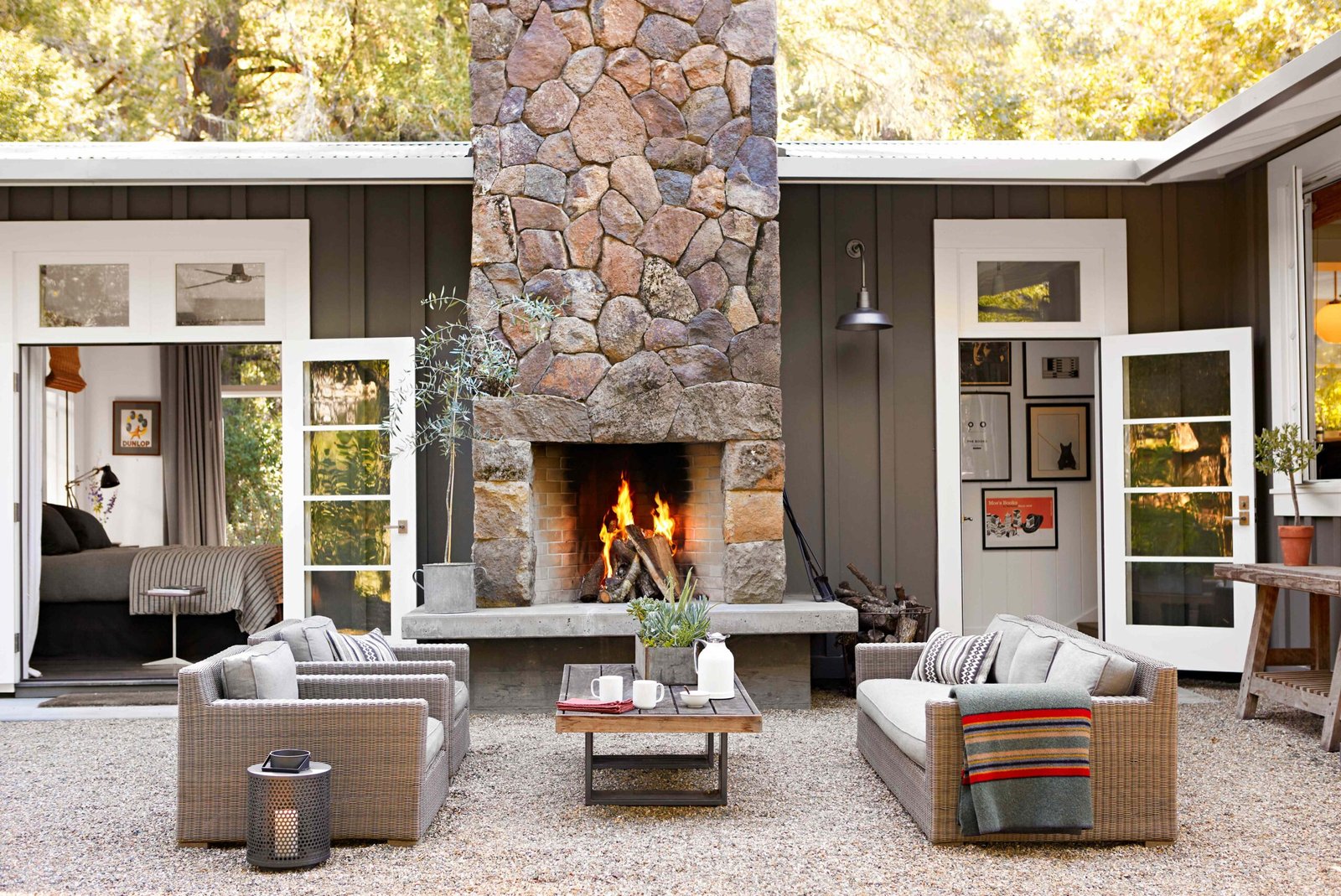
A natural stone outdoor fireplace is one of the easiest ways to create a warm and timeless backyard. Stone works especially well when you want the fireplace to feel like it has always belonged in the landscape. You can use large fieldstones for a rustic appearance, stacked stone for a more organized look, or lighter limestone for a softer and brighter design. The natural color changes in stone also give the fireplace texture, which can make a large outdoor wall feel more interesting. This style works especially well with homes that already use natural materials such as stone, wood, brick, or warm-colored siding. Current outdoor fireplace design guidance commonly features natural stone as a traditional material because it can create both a strong focal point and a connection to the surrounding landscape.
For furniture, keep the look comfortable and relaxed. Place two or three deep outdoor chairs facing the fireplace, or use a sofa with a pair of matching chairs to create a conversation area. A large outdoor rug can help define the seating zone if the surface allows it. Add cushions in cream, beige, olive, brown, or muted terracotta to complement the stone. A simple wood storage area beside the fireplace can also make the design more useful. If your yard has trees, shrubs, or garden beds nearby, allow some greenery to frame the fireplace without blocking ventilation or access. The goal is not to decorate every inch of the area. Let the stone remain the main feature and use furniture and plants to soften the edges.
| Feature | Natural Stone Fireplace |
|---|---|
| Style | Rustic, traditional, organic |
| Best for | Large and medium patios |
| Main materials | Natural stone, masonry |
| Color ideas | Beige, gray, brown, cream |
| Fuel | Wood or suitable gas system |
| Furniture | Deep chairs, sofa, wood seating |
| Best accessory | Outdoor rug and wood storage |
2. Modern Black Outdoor Fireplace
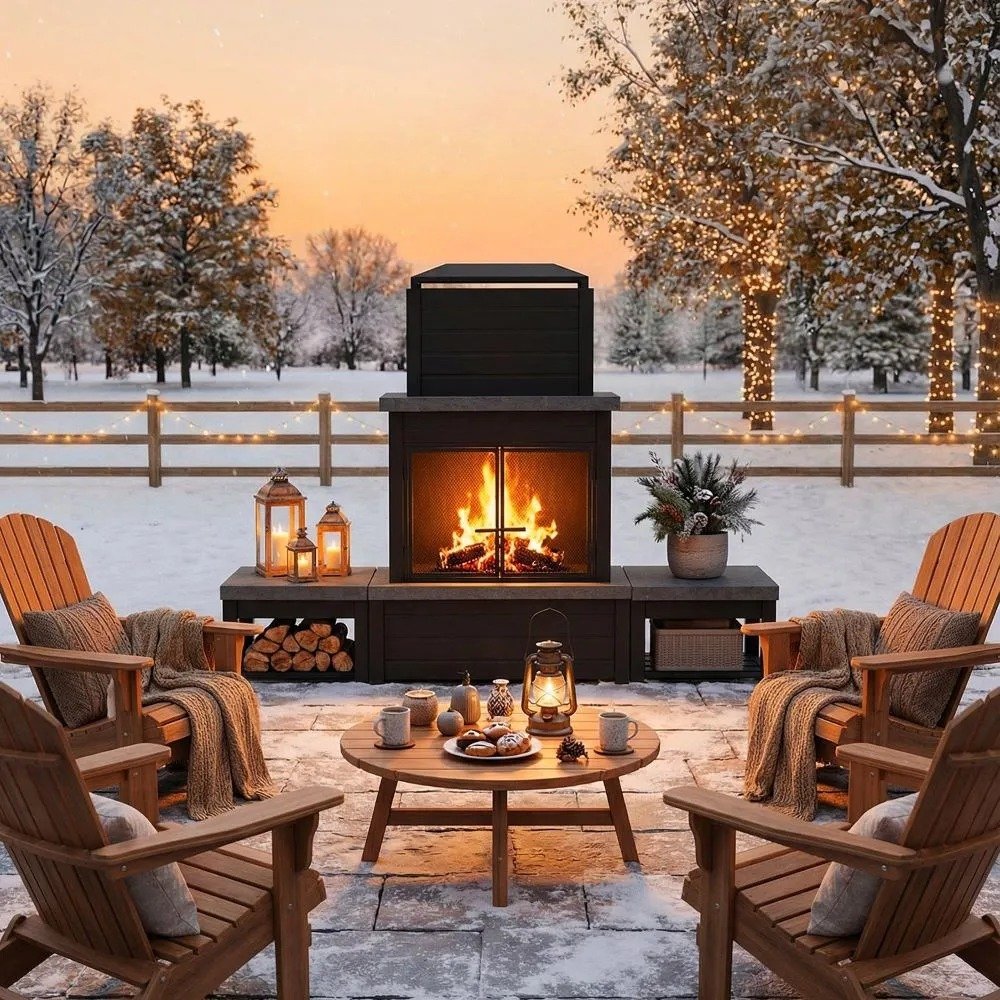
A modern black outdoor fireplace is a strong choice if you prefer clean lines and a simple color palette. Black creates contrast against green plants, pale concrete, light stone, and warm wood. Instead of using many decorative details, this style depends on shape, proportion, and texture. A smooth black fireplace wall can look especially attractive beside modern outdoor furniture. You can use a black steel unit, a dark masonry finish, or a fireplace wall painted or finished with an exterior-rated material suitable for the application. The design should be selected according to the fireplace manufacturer’s requirements and the materials used around the heat source.
The easiest way to make a black fireplace feel warm rather than cold is to mix it with natural materials. Add a wooden coffee table, woven chairs, beige cushions, or warm outdoor lighting. Green plants also look beautiful against a dark background. If your patio is small, avoid filling the space with too many large pieces of furniture. A simple fireplace wall with a compact sofa and two chairs can be enough. For a larger backyard, you can extend the fireplace wall into a longer architectural feature with storage or a countertop. Modern outdoor fireplaces are increasingly being used as architectural focal points that help define outdoor rooms rather than simply serving as sources of heat.
| Feature | Modern Black Fireplace |
|---|---|
| Style | Modern, minimalist |
| Main color | Black |
| Good materials | Steel, masonry, concrete |
| Best furniture | Modern outdoor sofa |
| Accent colors | Beige, white, wood tones |
| Best plants | Grasses, olive trees, shrubs |
| Lighting | Warm, soft lighting |
3. White Stucco Outdoor Fireplace
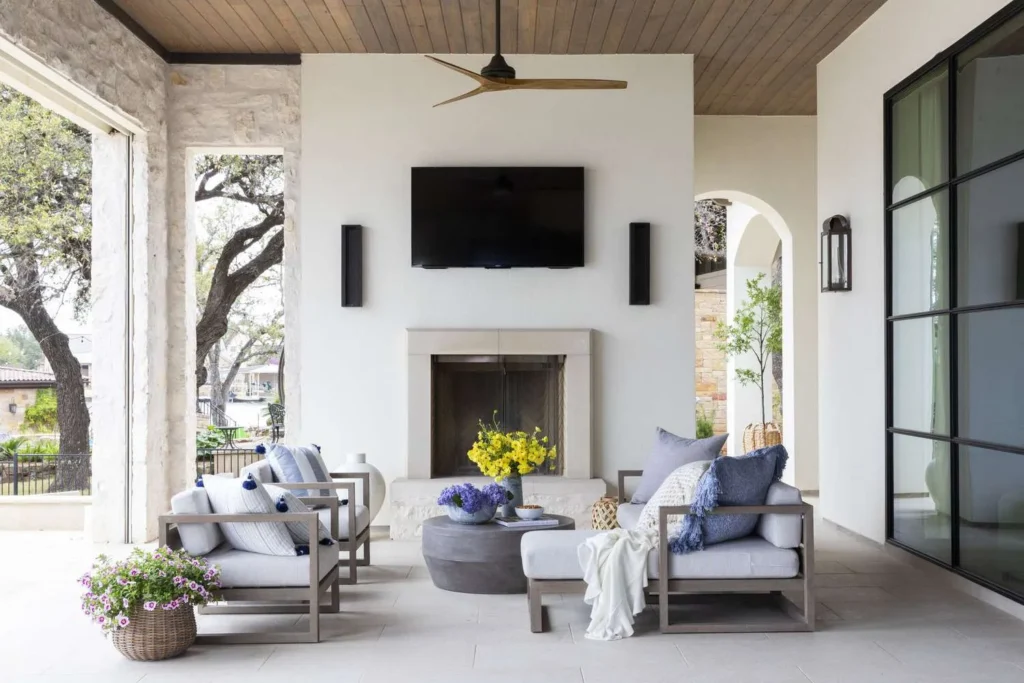
A white stucco fireplace can give your backyard a bright, relaxed, vacation-style feeling. It works especially well with Mediterranean, coastal, Spanish, Southwestern, and modern homes. The simple white surface reflects daylight and makes the outdoor fireplace look clean and architectural. You can create a full fireplace wall or a smaller structure with a chimney and simple mantel. To prevent the design from looking too plain, introduce texture through the flooring, furniture, plants, and accessories. Terracotta pots, natural wood, woven furniture, and greenery can add warmth without taking away from the white finish.
This style is particularly useful for homeowners who want an outdoor space that feels connected to a bright garden. Use large planters on both sides of the fireplace, but keep combustible materials and plants safely away from the fire area. A pair of outdoor lanterns can add a soft glow in the evening. For seating, choose natural-colored cushions, linen-look outdoor fabrics, or light brown wicker. If your climate is rainy, make sure all finishes and furniture are appropriate for outdoor exposure. The fireplace itself should be constructed with materials and systems designed for outdoor fire use rather than treating an ordinary interior fireplace finish as an outdoor solution.
| Feature | White Stucco Fireplace |
|---|---|
| Style | Mediterranean, coastal |
| Main color | White |
| Accent colors | Terracotta, tan, green |
| Furniture | Wicker, wood, light upholstery |
| Best plants | Olive, lavender, palms |
| Flooring | Stone, tile, concrete |
| Mood | Bright and relaxed |
4. Traditional Red Brick Fireplace
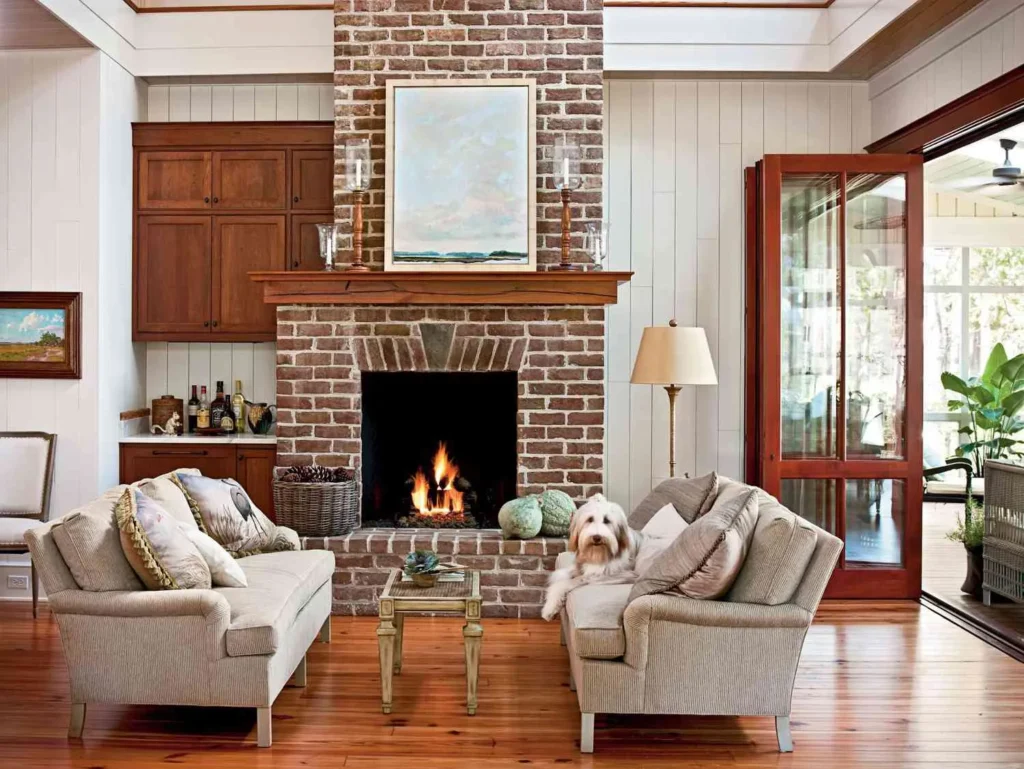
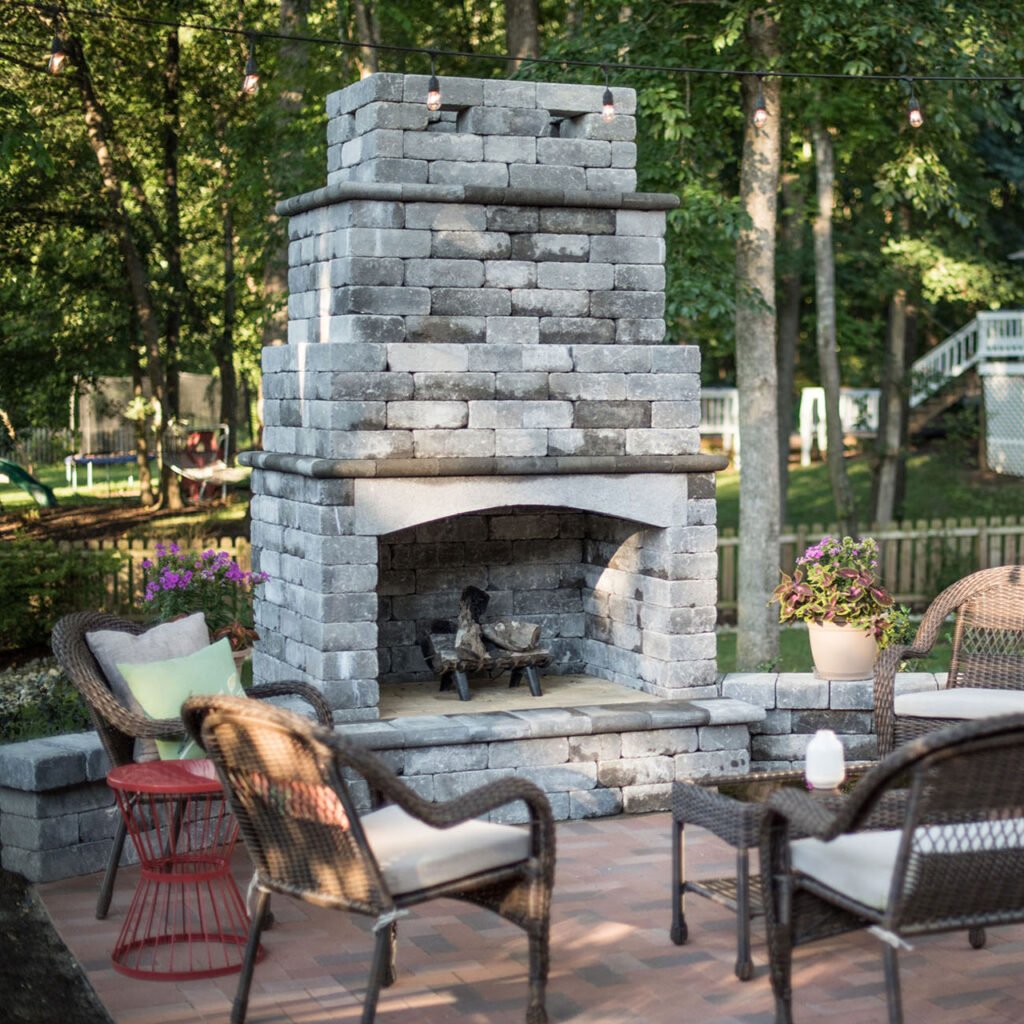
A red brick outdoor fireplace gives a backyard a classic and welcoming appearance. Brick is especially useful if your home already has brick walls, a brick chimney, or traditional architectural details. You can create a large fireplace with a chimney, a smaller patio fireplace, or a fireplace combined with a cooking area. Traditional brick does not have to look old-fashioned. Pair it with simple furniture and modern lighting to create a balanced design. The combination of traditional masonry and contemporary outdoor furniture can make the backyard feel both comfortable and updated.
One of the best features of brick is its natural color variation. Reds, browns, oranges, and darker tones can create visual depth without additional decoration. If you want a softer appearance, use light mortar and neutral furniture. If you prefer a more dramatic look, dark outdoor furniture can create contrast. A brick fireplace also looks attractive with a simple wooden mantel, although the exact design must be appropriate for the heat produced by the fireplace. When planning the seating area, make sure the fireplace is large enough for the space without making movement difficult. A large fireplace can dominate a small patio, so scale matters.
| Feature | Brick Fireplace |
|---|---|
| Style | Traditional |
| Main material | Brick |
| Color | Red, brown, mixed brick |
| Best for | Classic homes |
| Furniture | Wood, metal, wicker |
| Good accents | Lanterns, plants |
| Maintenance | Periodic cleaning and inspection |
5. Sleek Concrete Outdoor Fireplace
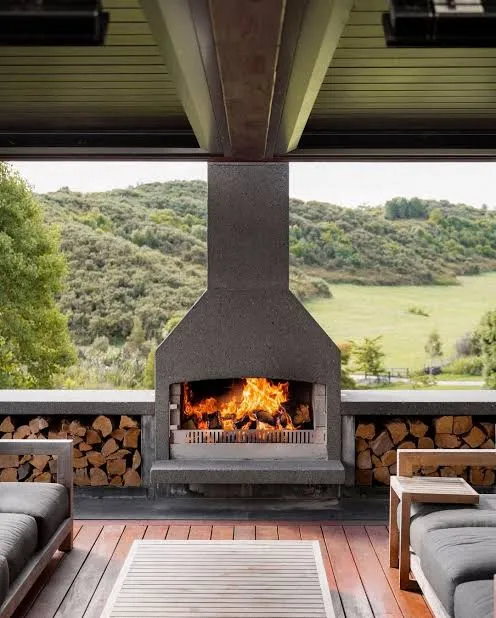
Concrete is a great material for homeowners who want a simple architectural fireplace. A smooth concrete fireplace wall can look clean and modern while providing a strong background for outdoor furniture and plants. You can choose light gray, warm gray, beige, or another suitable exterior finish. The fireplace can be designed as a single vertical wall, a wider feature wall, or part of a larger outdoor kitchen. Its simple appearance also allows you to experiment with furniture without making the space feel visually crowded.
A concrete fireplace works particularly well with large-format patio flooring, simple outdoor sofas, black metal chairs, and structured landscaping. Add soft cushions and warm lighting to prevent the space from feeling too industrial. You can also introduce wood through a ceiling, pergola, bench, or coffee table. When choosing concrete or a concrete-look finish, remember that outdoor surfaces are exposed to moisture, temperature changes, stains, and weather. The construction method and finish should be suitable for the climate. A good design is not only about how the concrete looks on the first day; it should also be able to handle normal outdoor conditions over time.
| Feature | Concrete Fireplace |
|---|---|
| Style | Contemporary |
| Main color | Gray or warm neutral |
| Best setting | Modern patio |
| Furniture | Metal, wood, modular seating |
| Accent material | Wood |
| Best lighting | Wall lights and floor lights |
| Design focus | Clean lines |
6. Outdoor Fireplace With Built-In Seating
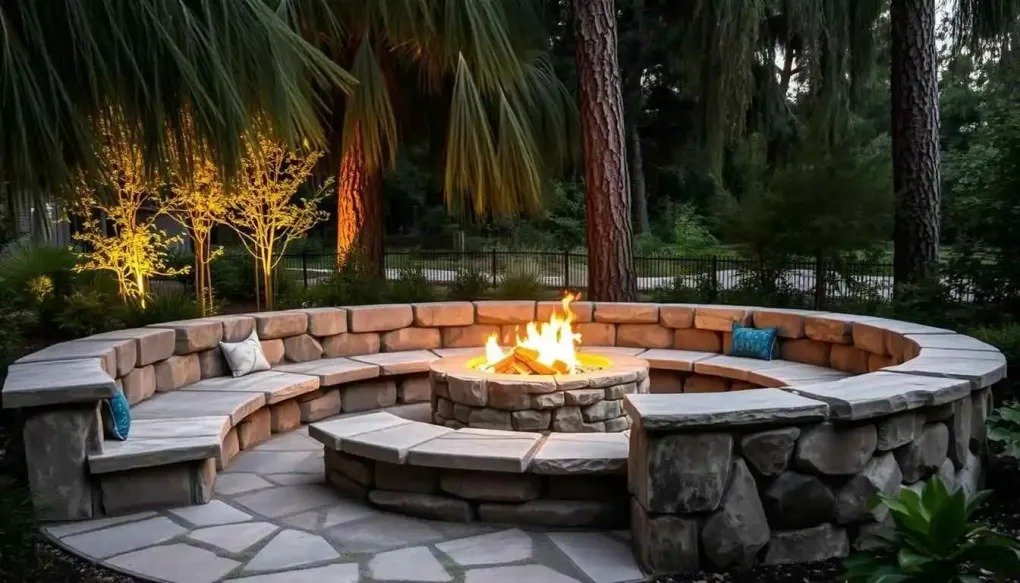
A fireplace with built-in seating can turn an ordinary patio into a complete outdoor room. Instead of placing chairs randomly around the fire, the seating can be designed as part of the fireplace structure. This creates a strong visual connection between the fire feature and the sitting area. Built-in benches can be made from masonry, concrete, stone, or another suitable material, then softened with outdoor cushions. A U-shaped or L-shaped arrangement can work well when you want people to face each other while still enjoying the fireplace.
The key to this design is comfort. A beautiful bench is not useful if people cannot sit comfortably for a long time. Add weather-resistant cushions with removable covers so they are easier to clean and store. Leave enough room for people to walk around the seating area without getting too close to the fire. You should also consider where cushions will be stored when the fireplace is being used and when rain is expected. A built-in seating design can make a backyard feel permanent and custom-made, but it should be planned carefully because changing the layout later can be difficult. Modern outdoor-room designs increasingly treat fireplaces, seating, flooring, and landscaping as one connected composition.
| Feature | Built-In Seating Fireplace |
|---|---|
| Style | Custom outdoor room |
| Seating | Bench, L-shape, U-shape |
| Materials | Stone, brick, concrete |
| Best for | Family gatherings |
| Main benefit | Saves loose furniture space |
| Add | Cushions and storage |
| Planning need | Comfortable circulation |
7. Outdoor Fireplace With Wood Storage
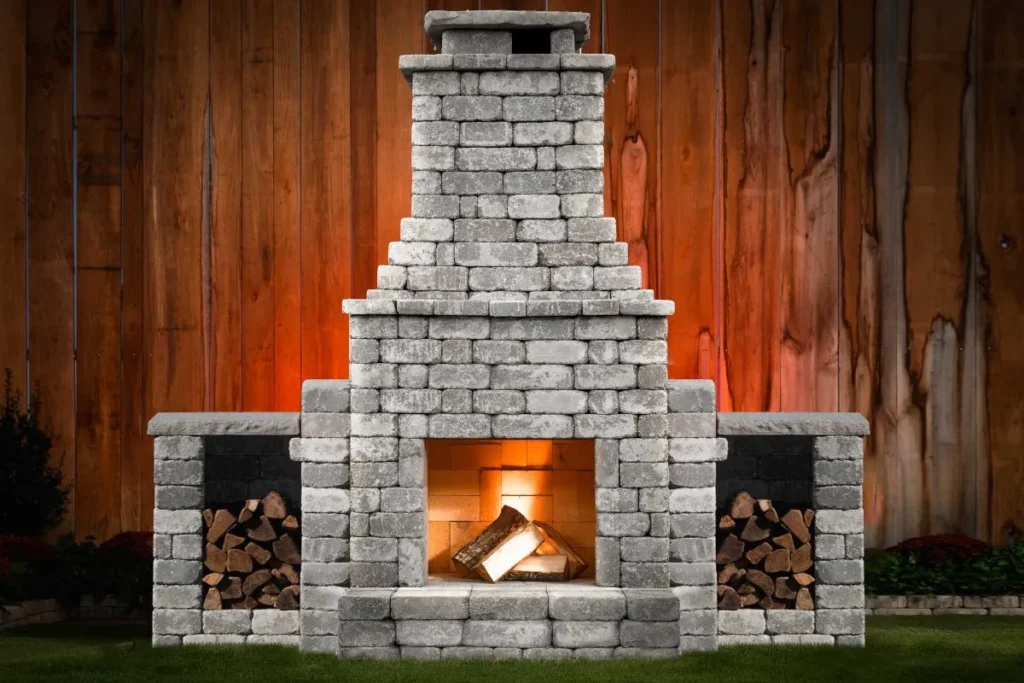
An outdoor fireplace with built-in wood storage is a smart option for people who plan to use a wood-burning fireplace often. Instead of keeping logs in a separate pile, you can design a storage opening beneath or beside the fireplace. This makes the fire area look more organized and keeps firewood close to where it is needed. The storage can be a simple rectangular opening, a series of niches, or a dedicated side compartment. It can also become an attractive design detail when the wood is stacked neatly.
The important point is to separate wood storage from the active firebox and follow the fireplace design and safety requirements. Firewood should not be placed where sparks or high heat can easily reach it. Keep the storage area dry and make sure rain does not turn it into a damp space. If you prefer a clean modern appearance, use matching masonry around the storage area. For a rustic look, stone and natural wood can create a more relaxed feeling. Built-in storage is also useful because it reduces clutter around the seating area. Some current freestanding outdoor fireplace designs include integrated log storage because it combines practical storage with the fireplace structure.
| Feature | Fireplace With Wood Storage |
|---|---|
| Main benefit | Keeps logs organized |
| Best fuel | Firewood |
| Style | Rustic or modern |
| Storage location | Beside or below fireplace |
| Important concern | Keep wood away from heat |
| Best material | Matching masonry |
| Good accessory | Covered wood basket |
8. Outdoor Fireplace With an Outdoor Kitchen
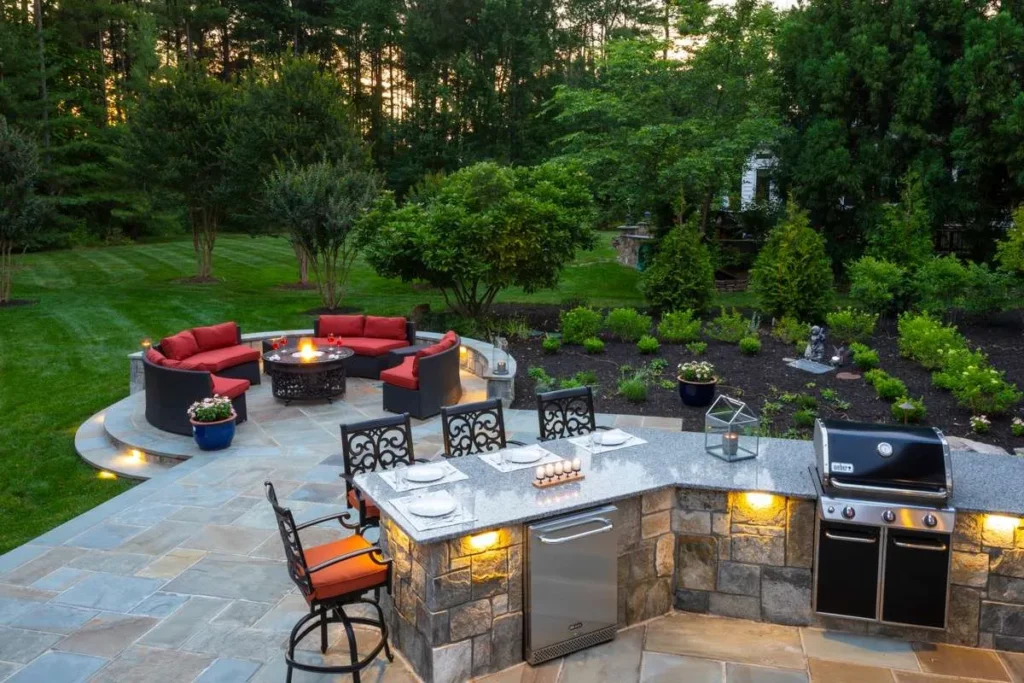
If you love outdoor cooking and entertaining, combine your fireplace with an outdoor kitchen. This creates a complete backyard entertainment area where cooking, dining, and relaxing can happen in one place. The fireplace can become the visual center while a grill, counter, refrigerator, sink, or storage cabinets sit nearby. You do not need a huge backyard for this idea. A small linear design can combine several functions while keeping the layout organized.
Planning is especially important when combining fire, cooking equipment, gas lines, electrical systems, countertops, and seating. The cooking area should not force people to walk through the seating zone every time someone needs to prepare food. Place frequently used items where they are easy to reach, and provide enough countertop space for preparation and serving. Materials should be selected for outdoor exposure and the heat generated by nearby appliances. Stone, brick, concrete, tile, and suitable outdoor-rated products can help create a cohesive appearance. An outdoor fireplace can also become part of a larger entertaining area rather than being treated as a separate decorative object.
| Feature | Fireplace + Outdoor Kitchen |
|---|---|
| Best for | Entertaining |
| Fireplace role | Focal point |
| Kitchen features | Grill, counter, storage |
| Popular materials | Stone, brick, concrete |
| Furniture | Dining table + lounge seating |
| Planning priority | Safe circulation |
| Extra benefit | Multi-use outdoor room |
9. Small Outdoor Fireplace for a Compact Patio
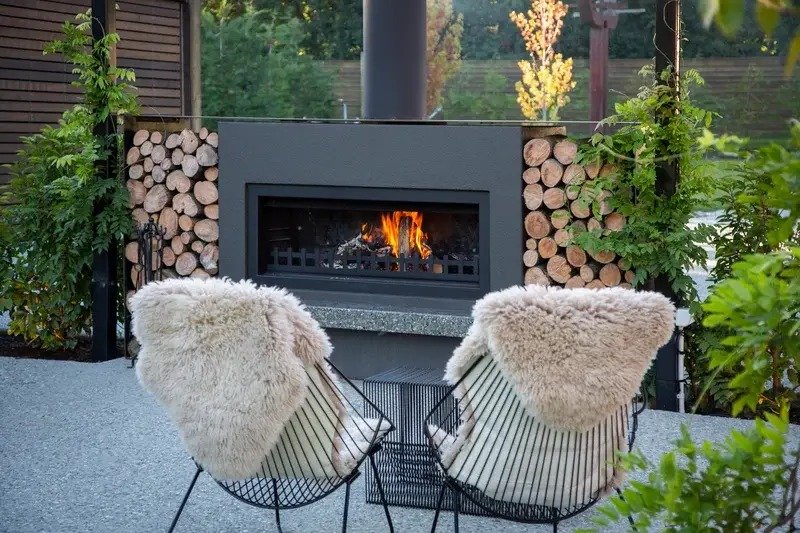
A small backyard does not mean you have to give up the idea of an outdoor fireplace. In a compact space, the main goal is to choose a fireplace that fits the scale of the patio. A narrow freestanding fireplace, compact masonry design, or appropriately sized gas fireplace can provide a focal point without taking over the entire yard. Before buying or building anything, measure the available area and mark where the seating, walking paths, doors, windows, and other structures are located.
Furniture should also be scaled down. Instead of a large sectional, use two comfortable chairs and a small table or a compact loveseat. Vertical design can help make the space feel larger. A tall but appropriately proportioned fireplace can draw the eye upward, while wall-mounted lighting and narrow planters add detail without using much floor space. Do not try to copy a large luxury backyard fireplace in a tiny patio. The best design is one that respects the size of the space. Home-improvement guidance also warns that an oversized fireplace can dominate a small yard and reduce usable outdoor living space.
| Feature | Small Patio Fireplace |
|---|---|
| Best for | Small yards and patios |
| Fireplace type | Compact or freestanding |
| Furniture | Two chairs or loveseat |
| Design goal | Save floor space |
| Colors | Light neutrals |
| Best accessory | Vertical plants |
| Key measurement | Safety clearances |
10. Luxury Outdoor Fireplace With a Feature Wall
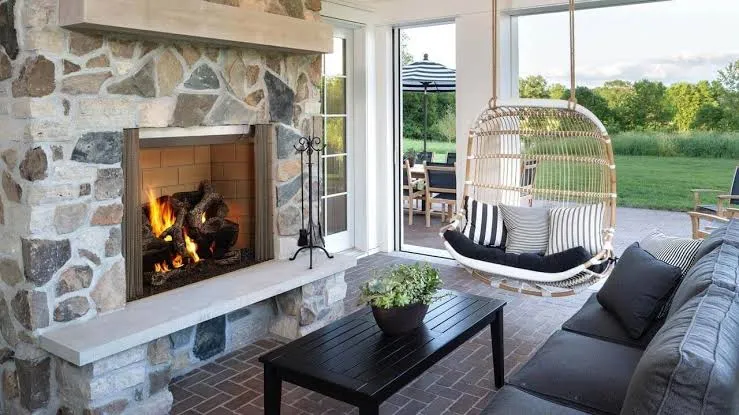
For a large backyard, a full feature wall can turn the fireplace into an architectural centerpiece. Instead of installing only a fireplace, create a complete wall that may include the firebox, chimney, television area where appropriate, shelving, storage, lighting, or a countertop. The feature wall can be finished in stone, brick, stucco, concrete, tile, or a combination of materials. This approach makes the outdoor fireplace feel like part of the architecture of the home.
The most successful luxury designs usually avoid adding too many unrelated materials. Choose one main material and one or two supporting materials. For example, a stone fireplace can be paired with wood and black metal. A smooth concrete wall can be combined with warm wood and greenery. Lighting should also be planned early because hidden LED lighting, wall lights, and landscape lights can change how the fireplace looks after sunset. Remember that luxury does not have to mean complicated. A large, carefully proportioned fireplace with comfortable seating and good lighting can feel more elegant than a wall covered with unnecessary decorations.
| Feature | Luxury Feature Wall |
|---|---|
| Style | High-end, architectural |
| Best for | Large patios |
| Main materials | Stone, concrete, brick |
| Add-ons | Storage, lighting, counter |
| Furniture | Large sectional |
| Lighting | Layered outdoor lighting |
| Design rule | Keep materials coordinated |
How to Choose the Right Outdoor Fireplace Style
The best outdoor fireplace is not simply the one that looks attractive in a photograph. It should match your home, yard, climate, budget, fuel preference, and daily habits. Start by deciding how you will use the space. If you mainly want a cozy place to sit on cool evenings, a simple fireplace with comfortable seating may be enough. If you entertain frequently, you may want a larger fireplace combined with an outdoor kitchen or dining area. If space is limited, choose a compact design instead of trying to create a large outdoor room. Permanent masonry fireplaces require more planning than portable units, while gas options can offer convenient ignition and controlled operation depending on the system and local requirements.
Next, look at your home’s architecture. A traditional brick house may look natural with a brick or stone fireplace. A modern home may work better with concrete, smooth stucco, or dark metal. You can match the fireplace to the house, or deliberately create contrast. Both approaches can work when the proportions and materials are carefully chosen. Think about maintenance as well. Stone, brick, stucco, steel, concrete, and tile all behave differently outdoors. Weather, moisture, sunlight, temperature changes, and smoke can affect the appearance of materials over time. Choosing durable, outdoor-appropriate materials from the beginning can save you work later.
| Question | What to Consider |
|---|---|
| How big is the yard? | Choose fireplace scale carefully |
| How often will you use it? | Select practical fuel and maintenance level |
| What is your home style? | Match or thoughtfully contrast materials |
| Wood or gas? | Consider convenience, smoke, installation and local rules |
| Is the patio covered? | Plan ventilation and manufacturer requirements |
| What is your budget? | Include installation and site preparation |
| Who will use it? | Plan seating and safe circulation |
Best Materials for Outdoor Fireplaces
Outdoor fireplaces are commonly designed with materials such as stone, brick, stucco, tile, concrete, and metal. The best choice depends on both appearance and performance. Natural stone can create a strong connection with the landscape, while brick offers a traditional look. Stucco can create a smooth Mediterranean or modern appearance. Concrete is useful for clean architectural designs, and metal can work well for modern freestanding fireplaces. Current design sources show a wide range of materials, including stone, stucco, tile, brick, and metal, so there is no single style that works for every backyard.
Do not select a material only because it looks good. The material must be appropriate for its exact location and exposure to heat. The firebox and chimney system have different requirements from the decorative exterior surface. A material that looks attractive on the outside may not be appropriate directly beside intense heat unless it is specifically rated or installed as part of an approved system. For permanent construction, professional design and installation can be important, especially where masonry, structural work, gas connections, or chimney systems are involved.
| Material | Appearance | Best Style | Maintenance |
|---|---|---|---|
| Natural stone | Organic | Rustic, classic | Medium |
| Brick | Traditional | Farmhouse, classic | Low to medium |
| Stucco | Smooth | Mediterranean | Medium |
| Concrete | Minimal | Modern | Low to medium |
| Metal | Sleek | Contemporary | Medium |
| Tile | Decorative | Mediterranean, modern | Medium |
Wood-Burning vs. Gas Outdoor Fireplaces
Wood-burning fireplaces are popular because they provide the traditional sound, smell, appearance, and experience of a real wood fire. They can create a strong gathering point and work beautifully with rustic stone or brick designs. However, wood requires storage, preparation, ash cleanup, and attention to smoke. Wind can also affect smoke movement. Before choosing wood, check your local rules because outdoor burning restrictions can vary by location and conditions. A wood-burning fireplace also needs an appropriate firebox and chimney or venting system.
Gas fireplaces can be convenient because they generally offer simple ignition and do not require a pile of firewood. They can also fit clean modern designs particularly well. However, gas installation must be planned correctly, and fuel connections should be installed according to applicable codes and manufacturer requirements. You should never assume that a fireplace designed for one fuel can safely be converted to another without an approved conversion system. The fuel type affects the fireplace design, installation, maintenance, and operating routine, so it should be considered before finalizing the appearance of the fireplace.
| Feature | Wood Burning | Gas |
|---|---|---|
| Atmosphere | Traditional fire experience | Clean and controlled |
| Smoke | Yes | Generally much less |
| Wood storage | Required | Not required |
| Cleaning | More frequent | Usually simpler |
| Installation | Chimney/firebox planning | Fuel-line planning |
| Best style | Rustic and traditional | Modern and traditional |
How to Arrange Furniture Around an Outdoor Fireplace
Furniture placement can make or break an outdoor fireplace area. The fireplace should usually act as a focal point, but people also need to feel comfortable while sitting there. Start by deciding how many people you want to seat. For a small family space, two chairs and a small table may be enough. For frequent entertaining, consider a sofa or sectional with additional chairs. Arrange seating so people can see the fire without having to twist their bodies or sit directly in the path of smoke.
Do not push every piece of furniture against the fireplace. Leave appropriate space according to the fireplace manufacturer, local requirements, and the materials involved. Create clear walking paths between the house, fireplace, dining area, and garden. If you use an outdoor rug, make sure its material and placement are suitable for the fireplace environment. Cushions, curtains, umbrellas, and other combustible items should be kept outside required clearances. A comfortable outdoor room needs both visual balance and practical movement.
Outdoor Fireplace Lighting Ideas
Good lighting can make an outdoor fireplace area useful after sunset without competing with the fire. Instead of using one very bright light, layer several softer sources. Wall lights can illuminate the fireplace structure, low landscape lights can define paths, and small table or floor lights can make the seating area comfortable. Warm lighting usually works well with the natural glow of fire, but the exact fixtures should be rated for outdoor use and installed correctly.
You can also use lighting to highlight architectural details. For example, lights can wash a stone wall, illuminate nearby plants, or emphasize the texture of brick. Avoid placing lights where they shine directly into people’s eyes while they are sitting. If you are building a new fireplace, plan electrical locations before construction begins. This is much easier than trying to add wiring after a masonry wall is finished.
Outdoor Fireplace Safety Tips
Safety should be part of the design from the beginning, not something added after the fireplace is finished. The exact clearance requirements depend on the fireplace type, fuel, construction, manufacturer instructions, and local rules. Keep furniture, cushions, umbrellas, curtains, dry leaves, firewood, and other combustible materials away from the required clearance area. Never assume that an outdoor fireplace is safe simply because it is outside. Fire, heat, sparks, and smoke still need to be managed carefully.
If you are building a permanent fireplace, check local building and fire requirements before construction. A professional may be needed for masonry, structural work, chimney design, or gas connections. Follow the manufacturer’s installation and operating instructions for purchased units. Keep children and pets away from active flames, and make sure the fire is completely extinguished when you are finished using it. Outdoor fire rules can also change because of drought, air-quality conditions, or local restrictions, so check current local requirements before burning wood.
| Safety Check | Why It Matters |
|---|---|
| Check local regulations | Rules vary by location |
| Follow manufacturer instructions | Protects safe operation |
| Maintain required clearances | Reduces fire risk |
| Store wood safely | Keeps fuel away from heat |
| Keep paths clear | Reduces accidents |
| Watch children and pets | Prevents contact with fire |
| Extinguish the fire | Reduces unattended-fire risk |
How to Make a Small Backyard Fireplace Look Expensive
You do not need a huge fireplace or an enormous budget to create a polished outdoor space. Start with proportion. A small fireplace that fits the patio can look much better than an oversized structure that leaves no room for comfortable furniture. Choose one strong material, such as stone, brick, stucco, or concrete, and repeat its color somewhere else in the space. This creates a visual connection between the fireplace, patio, and home.
Next, focus on a few details that people notice. Comfortable cushions, a simple outdoor rug, attractive lighting, healthy plants, and organized firewood can make a large difference. Keep clutter hidden and avoid filling the area with too many decorations. A simple fireplace with good landscaping can look more expensive than a complicated design with poor proportions. The goal is to make every item feel intentional.
Outdoor Fireplace Design Mistakes to Avoid
One common mistake is choosing the fireplace before thinking about the rest of the patio. The fireplace may look beautiful by itself, but it can become difficult to use if there is not enough room for seating or walking. Another mistake is choosing a fireplace that is too large for the yard. Scale is especially important in small patios because a large structure can make the whole space feel crowded. Current home-improvement guidance specifically recommends considering the overall scale of the yard before selecting an outdoor fireplace.
Another mistake is ignoring practical details such as fuel storage, smoke movement, maintenance, lighting, and weather exposure. Think about how the space will work on an ordinary evening, not only how it will look in a photograph. You should also avoid copying a design without checking whether its construction method, materials, and fuel system are appropriate for your own location. A professional-looking fireplace begins with good planning.
Frequently Asked Questions About Outdoor Fireplaces
What is the most stylish outdoor fireplace design?
There is no single style that works for every home. Natural stone works well for rustic and traditional spaces, while concrete, black metal, and smooth finishes can suit modern patios. Brick can provide a classic look, and white stucco can create a Mediterranean or coastal feeling. The most successful design usually connects the fireplace with the home’s architecture, patio materials, landscaping, and furniture.
Are outdoor fireplaces worth it?
An outdoor fireplace can be useful if you regularly spend time outside and want a focal point for seating and entertaining. It can make a patio feel more like an outdoor room and may allow you to enjoy the space during cooler evenings. However, the value depends on how often you use the area, the installation cost, maintenance needs, and local climate.
Which is better, a wood-burning or gas outdoor fireplace?
The right option depends on your priorities. Wood provides a traditional fire experience but requires wood storage, ash cleanup, and attention to smoke. Gas can offer convenient operation and a cleaner-looking installation but requires an appropriate fuel connection and professional installation where required. Local regulations and manufacturer requirements should be checked before making the decision.
What is the best material for an outdoor fireplace?
Natural stone, brick, stucco, concrete, tile, and metal can all be used in outdoor fireplace designs when they are appropriate for the application. The important point is that the materials around the firebox must be suitable for the heat and outdoor conditions. The best material also depends on your home’s style, climate, maintenance preferences, and budget.
Can I put an outdoor fireplace on a covered patio?
It may be possible, but the fireplace, chimney, roof structure, ventilation, clearances, and local requirements must all be considered. A covered patio changes how smoke and heat move, so you should never install a fireplace under a roof simply because there is enough physical space. Follow the fireplace manufacturer’s instructions and applicable building and fire requirements.
How far should outdoor furniture be from a fireplace?
There is no universal distance that is safe for every outdoor fireplace. The required clearance depends on the fireplace design, fuel, construction, manufacturer instructions, and local requirements. Always use the specific clearance information supplied for your fireplace and keep combustible furniture and decorations outside the required zone.
Can an outdoor fireplace increase the value of a home?
A well-designed outdoor living area can improve the function and appeal of a property, but the financial effect varies by home, location, buyer demand, quality of construction, and other factors. An outdoor fireplace should primarily be planned around how you want to use your outdoor space rather than assuming it will provide a specific return.
What should I put next to an outdoor fireplace?
Useful choices include comfortable outdoor seating, a small table, safe firewood storage for wood-burning units, planters placed at appropriate distances, and outdoor lighting. Avoid overcrowding the area. The fireplace should remain the main focal point, while furniture and accessories should make the space comfortable and practical.
Outdoor Fireplace Style Comparison
| Fireplace Style | Best For | Look | Space Needed | Maintenance |
|---|---|---|---|---|
| Natural stone | Rustic homes | Warm and organic | Medium to large | Medium |
| Brick | Traditional homes | Classic | Medium to large | Low to medium |
| Black modern | Contemporary homes | Clean and bold | Small to large | Medium |
| White stucco | Mediterranean homes | Bright and relaxed | Medium | Medium |
| Concrete | Modern homes | Minimal | Medium to large | Low to medium |
| Built-in seating | Family patios | Custom | Medium to large | Medium |
| Wood storage | Frequent wood users | Practical | Medium | Medium |
| Outdoor kitchen | Entertaining | Luxury | Large | Medium to high |
| Compact fireplace | Small patios | Simple | Small | Low to medium |
| Feature wall | Large yards | Architectural | Large | Medium |
Conclusion
An outdoor fireplace can be much more than a source of warmth. It can become the centerpiece that gives your backyard structure, personality, and a comfortable place to gather. The best designs combine the fireplace with seating, flooring, lighting, plants, storage, and other outdoor features so the entire space feels connected. Natural stone, brick, stucco, concrete, and black metal can each create a different mood, so start with the style that fits your home and lifestyle.
Before building or buying an outdoor fireplace, think carefully about size, fuel type, materials, maintenance, smoke, furniture placement, and safety. Check local regulations and follow the manufacturer’s requirements for any purchased fireplace. With thoughtful planning, even a small patio can become a beautiful outdoor room, while a large backyard can support a complete entertaining area with a fireplace, seating, kitchen, and lighting. The goal is not simply to create a fireplace that looks good. It is to create an outdoor space that you will actually enjoy using.