
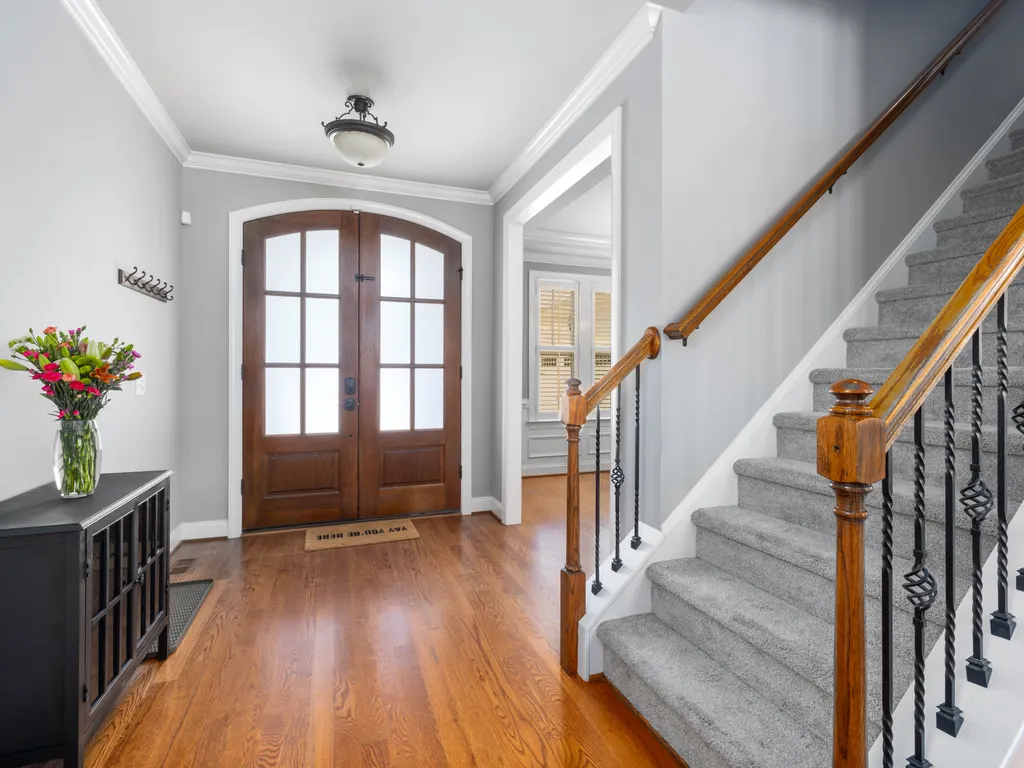
Hallway ideas are having a moment. Searches for “hallway decor” have jumped more than 70% as homeowners finally treat the corridor as a room in its own right rather than the space between rooms. It makes sense: the hallway is the first thing you see when you come home and the last thing guests notice on their way out, yet most of us leave it blank, beige and lit by a single bare bulb.
Quick answer: Hallway ideas work best when you start with a runner that sets the tone, add a big mirror and warm sconces, and keep the walkway clear. Repeat one colour through the hall, use slim furniture no deeper than 30 cm, and add hooks and a bench by the door. A refresh costs $150 to $400.
The good news is that a hallway is one of the cheapest rooms to transform. A runner, a mirror, a coat of paint or a row of sconces can change how the whole house feels, and none of it needs a contractor.
Below you will find ideas for long, narrow and dark hallways, plus small-budget and rental-friendly options, so whatever shape your corridor takes, there is something here that fits. Pick one idea, try it this weekend, and let the rest of the house catch up.
Key points
- Start with the floor: a runner instantly warms a hallway and sets its colour palette.
- Light is everything: mirrors and sconces fix dark hallways without knocking down walls.
- Keep walkways clear: furniture should be slim, with a depth of 25–30 cm plenty for a console.
- Use the walls: gallery walls, picture ledges and wainscoting add character without using floor space.
- Repeat one colour or finish through the hall to make it feel like a designed room.
- Think in layers: paint, texture, light and plants together beat one big statement piece.
- Renters can do most of this: removable hooks, leaning mirrors and washable runners leave no trace.
1. Lay a Runner That Sets the Tone
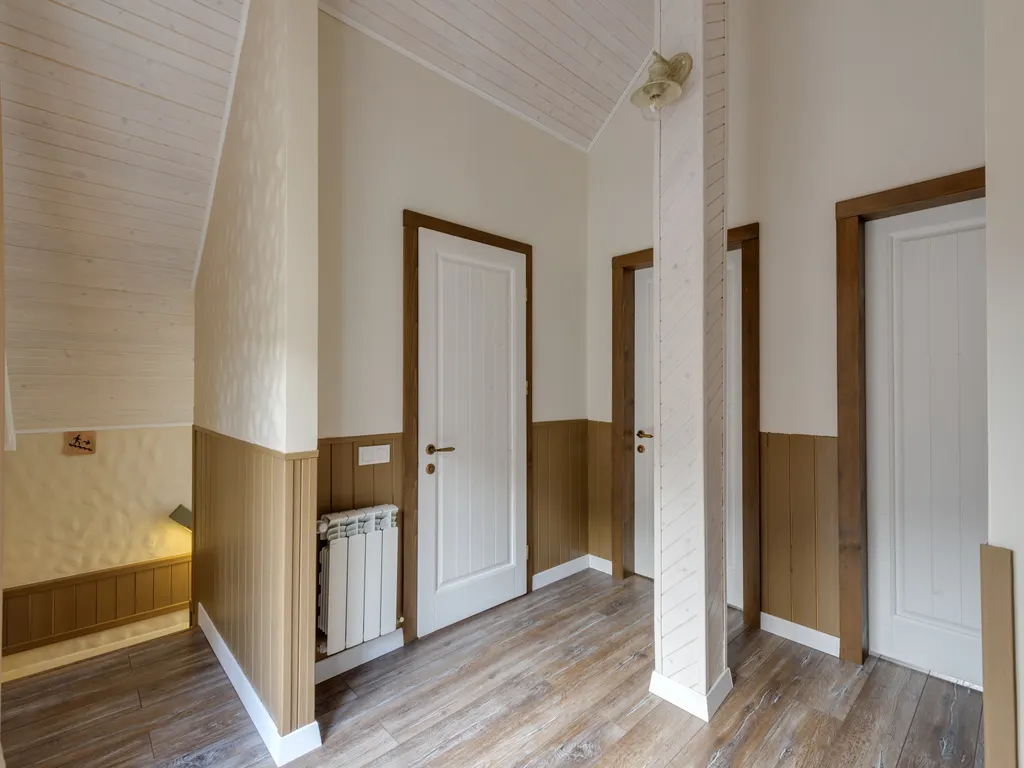
A runner does more for a hallway than any other single purchase. It softens hard floors, quiets footsteps, protects the floorboards and gives the eye a line to follow, which makes a long corridor feel intentional instead of empty.
Choose a width that leaves a few centimetres of floor showing on each side, and leave a hand’s width of bare floor at each end. Ruggable’s runner rug size guide is a handy reference, and a thin non-slip underlay stops the runner sliding — a real trip hazard in the dark. A washable or low-pile runner is best if kids or pets use the hall every day.
2. Layer Light With Wall Sconces
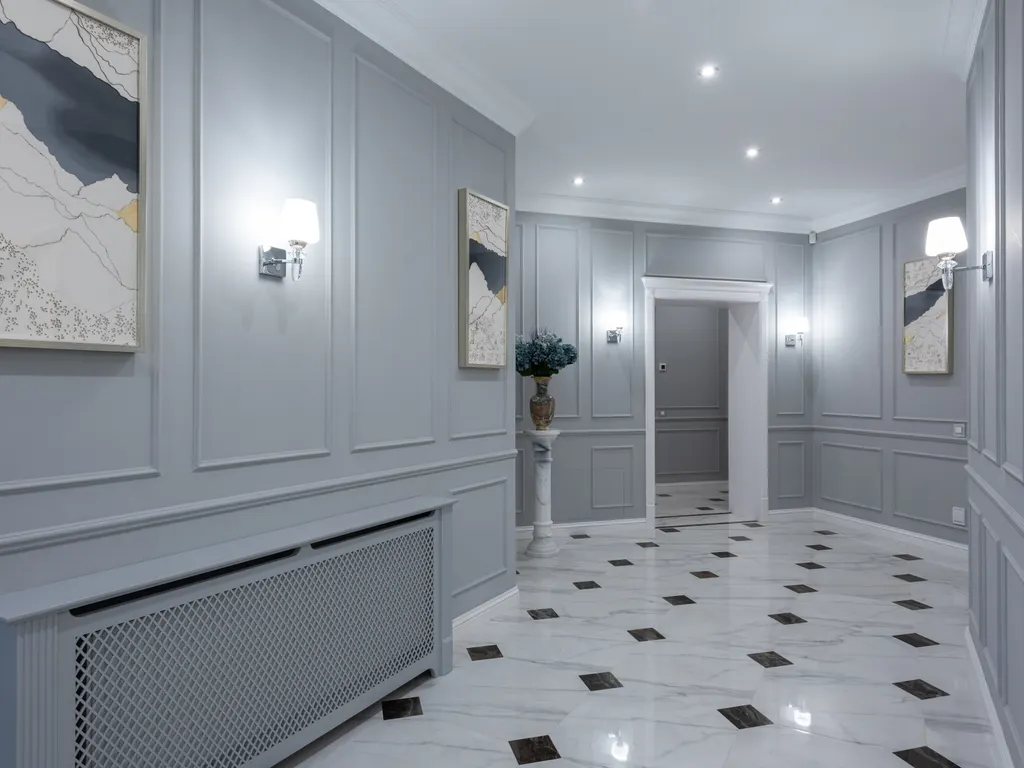
Most hallways fail on lighting before they fail on anything else. A single ceiling light casts shadows at the far end and leaves the corners gloomy, while a row of wall sconces spreads a warm, even glow at eye level and makes the whole space feel taller.
Fit them in pairs about 150–180 cm apart and keep the shades simple so the light, not the fitting, is the star. Warm white bulbs (around 2700K) flatter paint and skin tones; put the sconces on a dimmer and the hall can glow softly in the evening.
3. Hang One Big Mirror to Double the Light
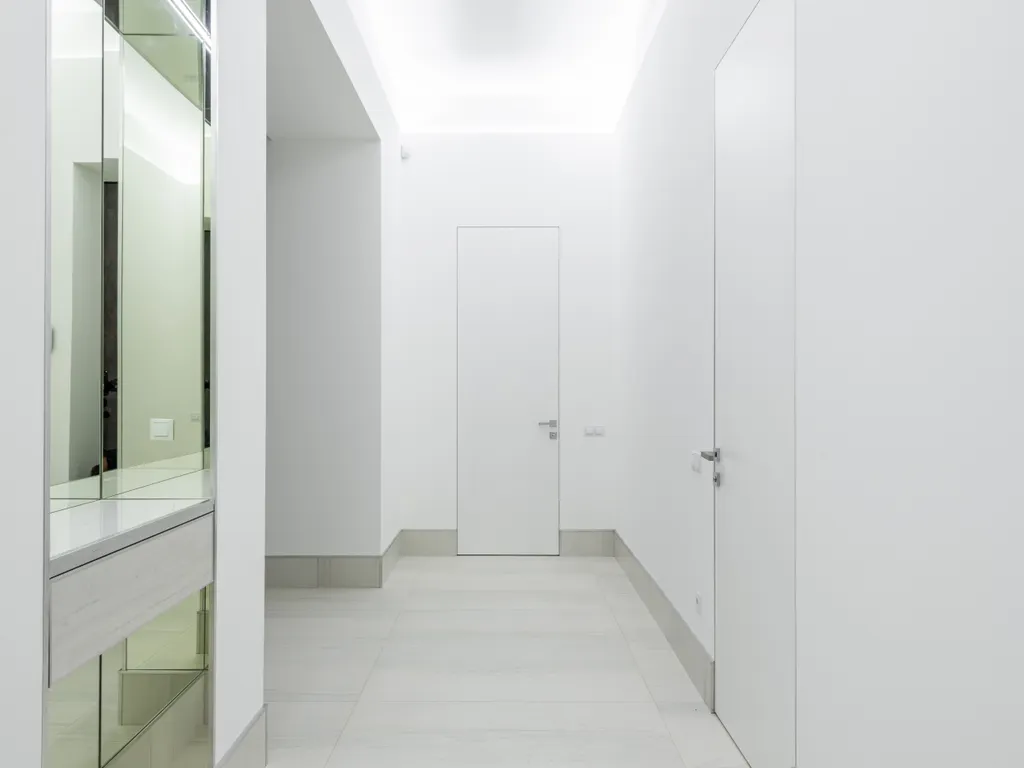
A mirror is the fastest fix for a dark hallway. One large mirror opposite a window, a glazed door or a light source bounces daylight deep into the corridor and makes the walls feel twice as far apart.
Hang it so its centre sits at eye level, roughly 145–150 cm from the floor, and keep the frame slim. An arched mirror softens a boxy hall; a full-length leaning mirror adds drama and a place for a last-minute outfit check. Fix the top to the wall with a discreet bracket if children or pets pass through often.
4. Build a Gallery Wall That Tells Your Story
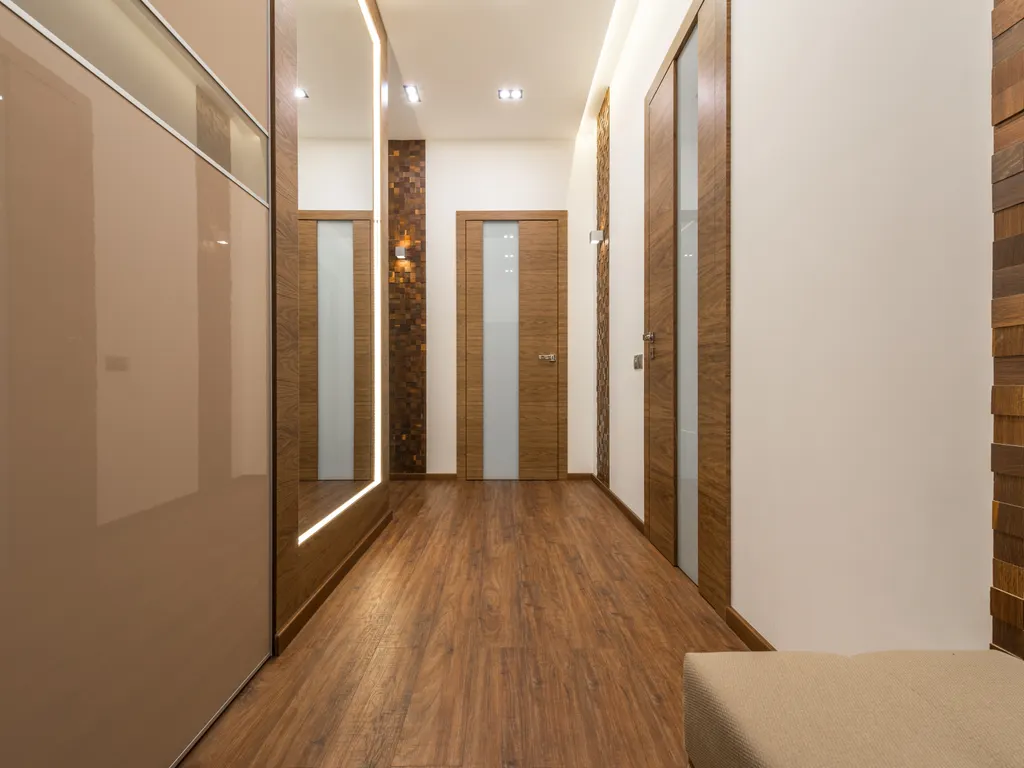
A hallway is the best place in the house for a gallery wall: you pass it every day, the viewing distance is short, and mixed frames look at home there. Lay the arrangement on the floor first, keep about 5–7 cm between frames, and hang the centre of the group at eye level.
Mix sizes but keep one thing consistent — the frame colour, the mat or the subject — so the wall feels collected rather than cluttered. Crate & Barrel’s gallery wall guide walks through layouts and spacing if you want a plan before you pick up a nail. A narrow hall suits a single row or a tight grid; sprawling salon-style arrangements need a wider wall to breathe.
5. Add a Slim Console Table
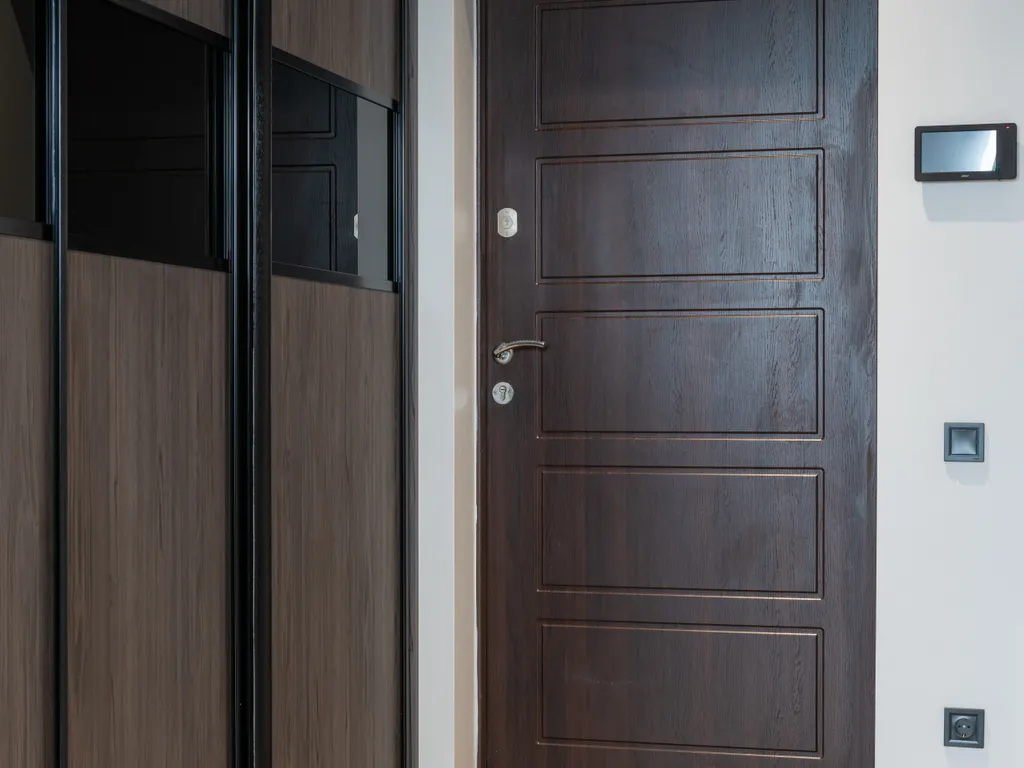
A console table gives a hallway a job: somewhere to set keys, post and a lamp, and a surface to style. The trick is depth — anything deeper than 30 cm will crowd a standard hallway, so look for a table 25–30 cm deep and at least 90 cm wide.
Style it in threes: something tall (a vase or a lamp), something flat (a tray or a stack of books) and something small (a candle or a photo frame). Keep the surface mostly clear, and hide the clutter in the drawer or a lidded box below.
6. Add Wainscoting for Instant Character
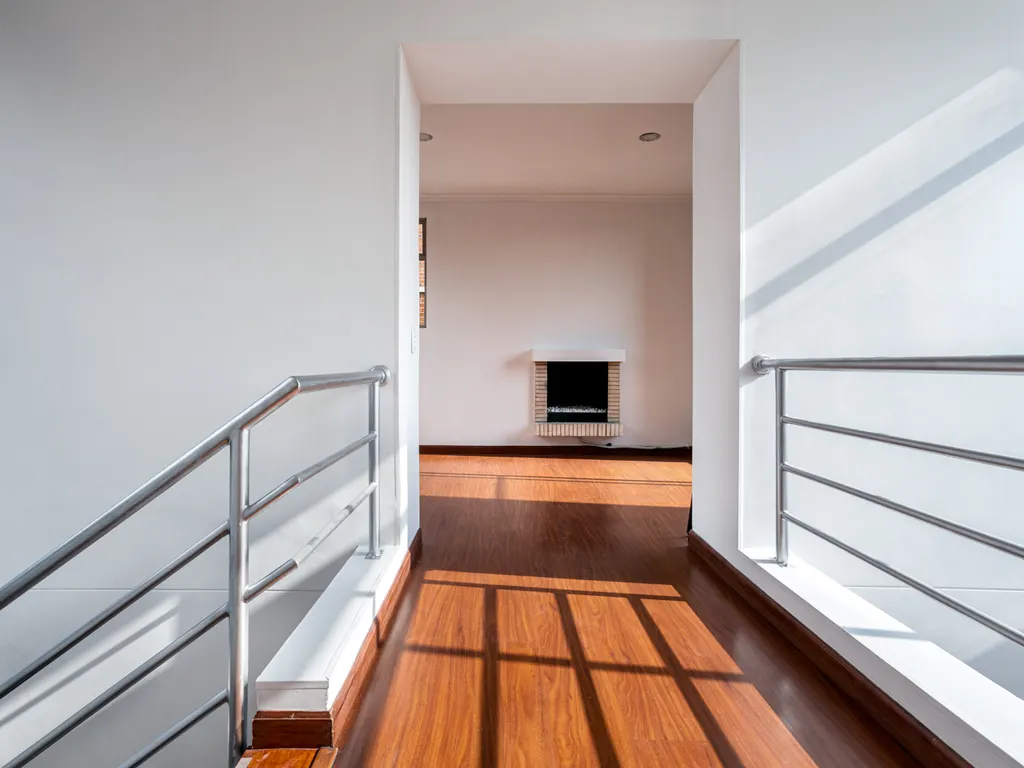
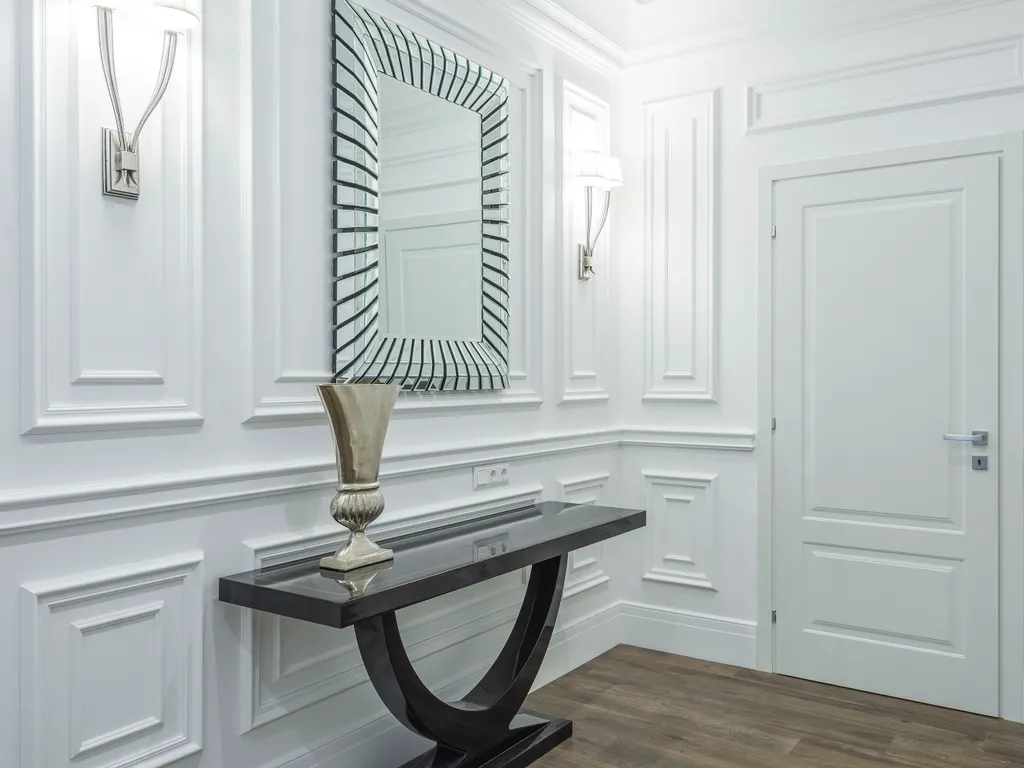
Wainscoting turns a flat, featureless corridor into a room with architecture. Simple shaker-style panels up to dado height (about 90 cm) read as classic and calm, while taller panelling that reaches two-thirds of the wall feels grander and suits period homes.
It is also practical: the lower wall is the part that takes scuffs from shoes, bags and vacuum cleaners, and painted panelling wipes clean far more easily than flat plaster. If you rent, self-adhesive moulding strips give a similar effect and peel away at the end of a tenancy.
7. Paint One Wall a Bold Colour
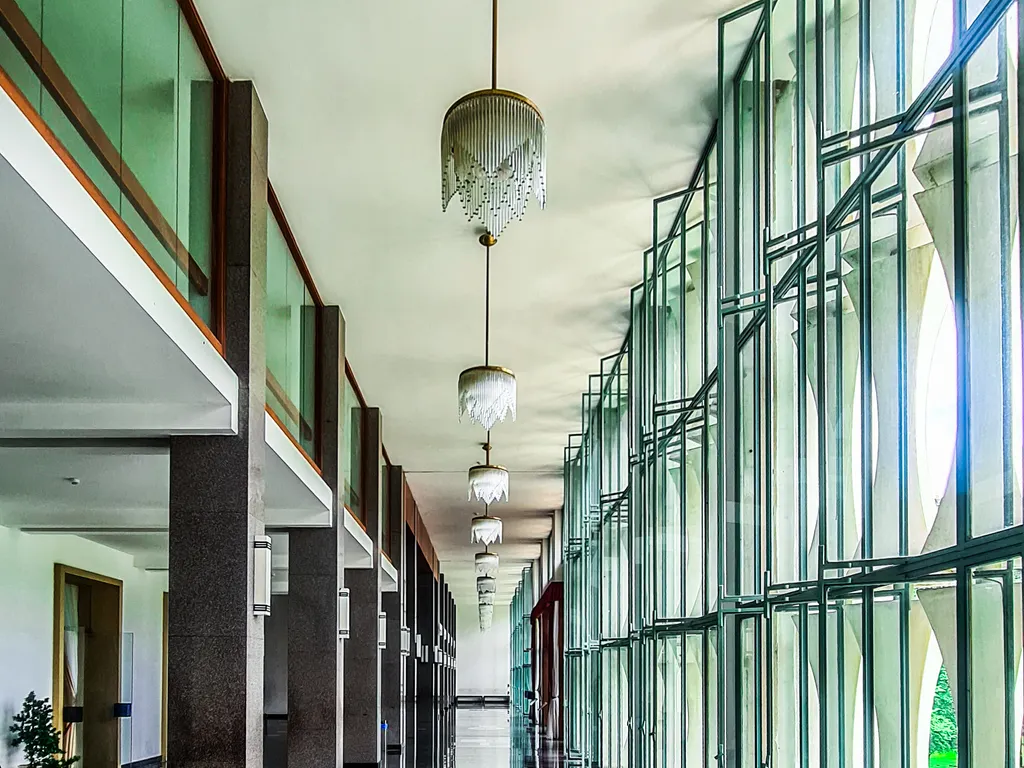
Paint is the cheapest way to make a hallway feel designed, and one bold wall is all it takes. Pick the longest wall or the wall at the far end, and paint it a deep green, inky blue or warm terracotta while the others stay pale.
The colour draws the eye down the hall and gives the corridor a destination, and because a hallway needs so little paint, a single litre often covers it. Choose a durable eggshell or satin finish so scuffs wipe off easily, and test the colour in the evening under your hallway lights.
8. For a Dark Hallway, Go Darker — Not Lighter
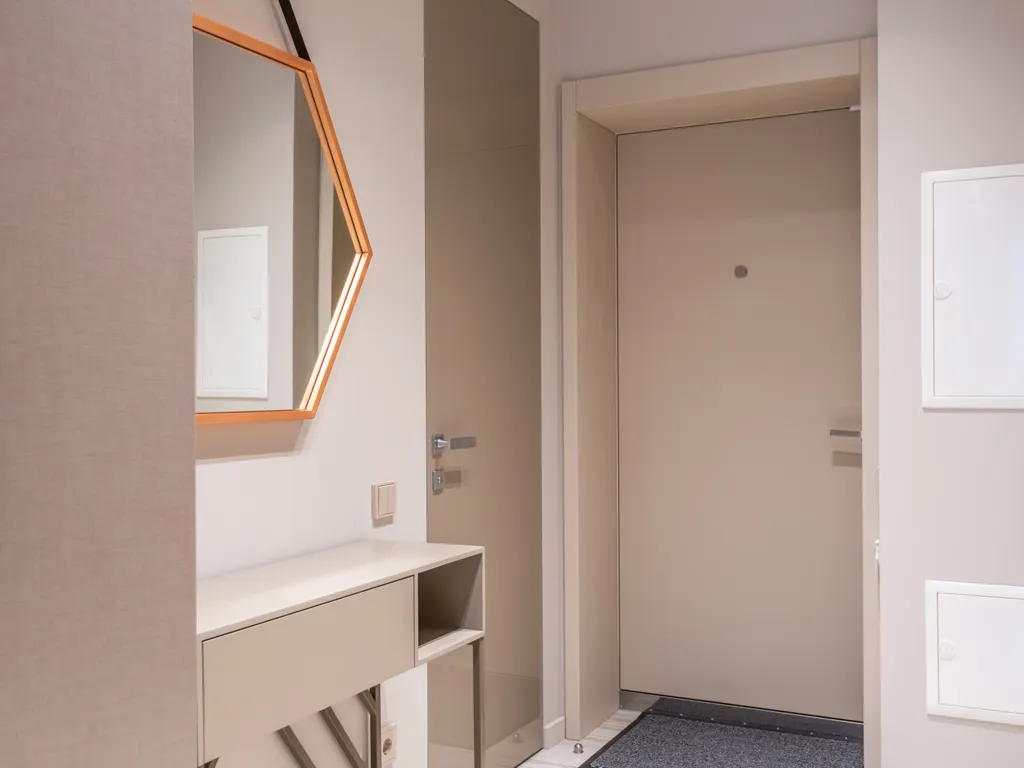
It sounds backwards, but painting a windowless hallway white rarely makes it brighter — it usually makes it grey. A deep, warm colour, like charcoal, forest green or a rich chocolate, turns the darkness into atmosphere instead, and pale skirting boards and door frames pop against it.
Add warm light to complete the trick: picture lights, sconces and a warm-white bulb keep the dark walls cosy rather than cave-like, and a light-coloured runner breaks the depth. Finish with brass or gold fittings, which glow against dark paint and stop the corridor from feeling cold.
9. Make a Narrow Hallway Feel Wider
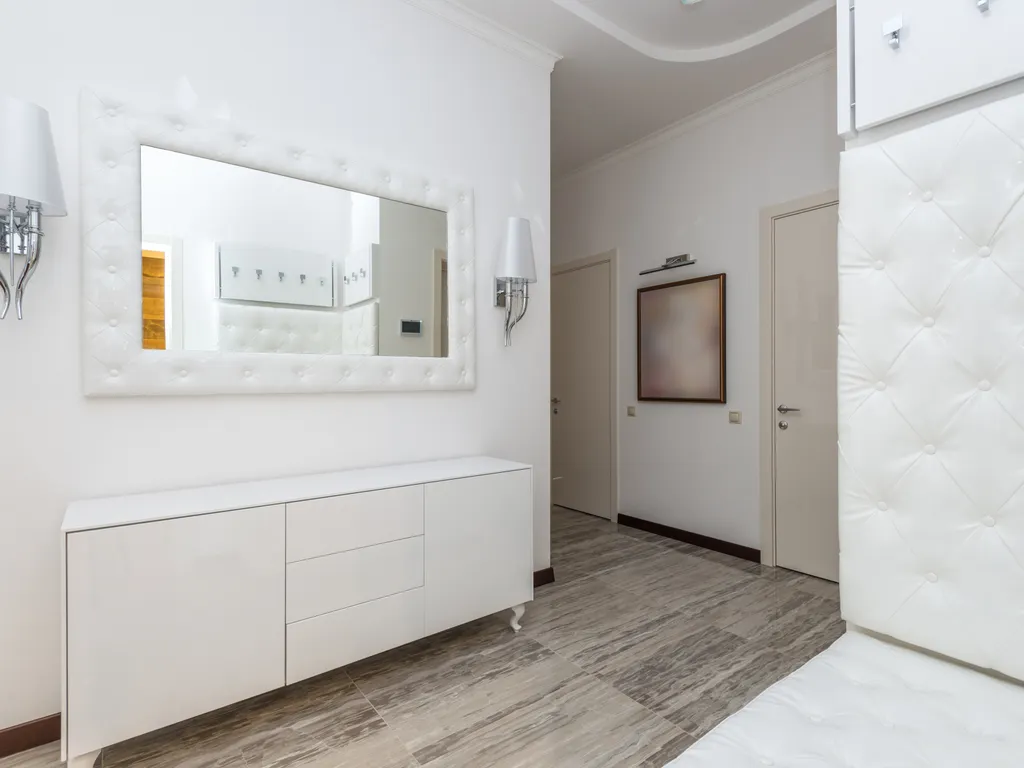
A narrow hallway needs light colours, low contrast and nothing sticking out. Paint the walls and skirting the same pale shade — the join disappears and the walls read as one continuous surface — and choose a runner no wider than two-thirds of the floor.
Hang art in a single straight line at eye level, which draws the eye along the hall instead of up and down, and avoid chunky furniture entirely. Our visual tricks for small rooms share more ways to borrow light and height from a tight space. A clutter-free, well-lit hall reads as generous whatever its width.
10. Choose a Storage Bench That Works Hard
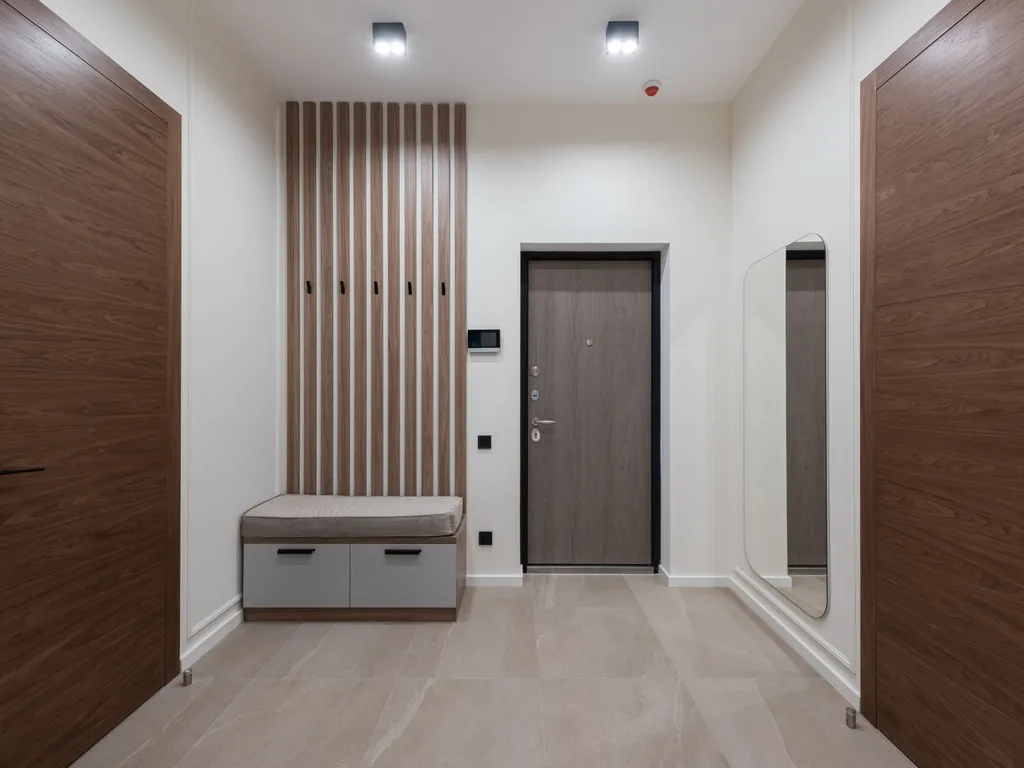
A storage bench is the hardest-working piece of furniture a hallway can hold. It is a seat for putting on shoes, a perch for bags and post, and a box for everything you need out of sight — shoes, gloves, scarves, dog leads.
Look for a bench with a lift-up lid or pull-out baskets rather than open shelves, because closed storage looks tidy even when it is full. A bench 35–40 cm deep and 90–120 cm long fits most halls, and a cushion on top makes it genuinely comfortable. Keep everyday shoes underneath and the rest inside, and the hallway stops being a shoe graveyard.
11. Paint the Door a Standout Colour
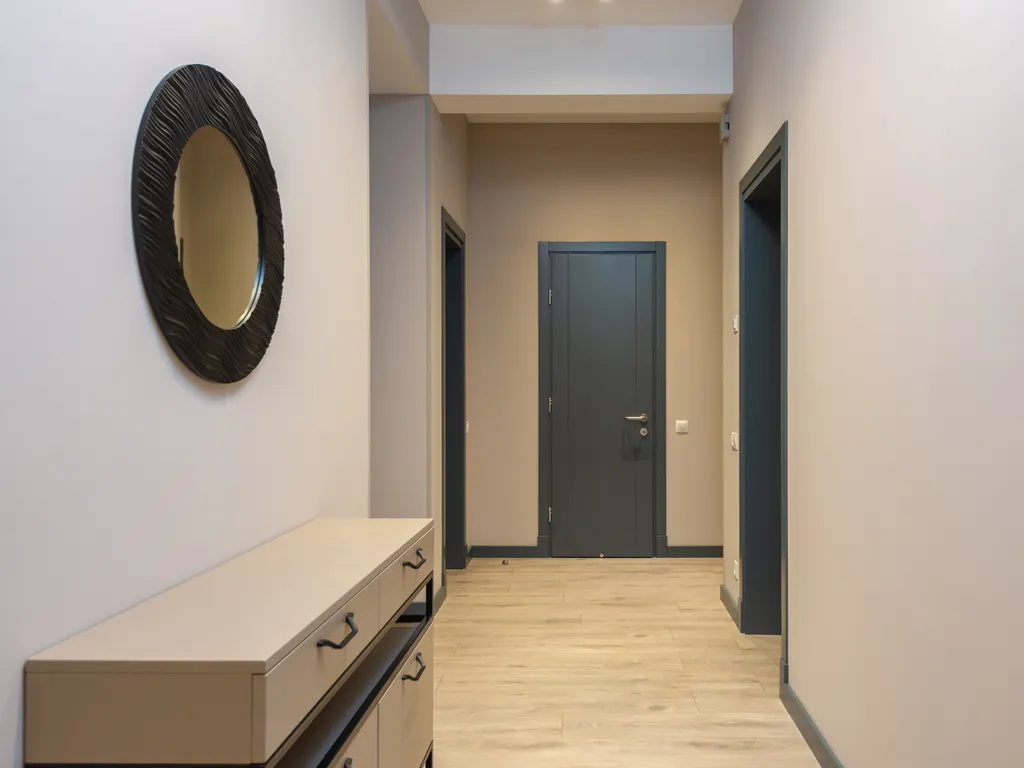
The front door seen from inside the hallway is the one piece of colour you cannot miss. Painting it a deep teal, sunny yellow or classic red costs one small pot of paint and an afternoon, yet it transforms the whole corridor.
Paint interior doors the same way, too: a soft sage or dusty pink turns a plain panel into a design feature. Use a durable satin or gloss finish so fingerprints wipe off, and take the door off its hinges if you can for the smoothest result.
12. Add an Arch to Soften the Space
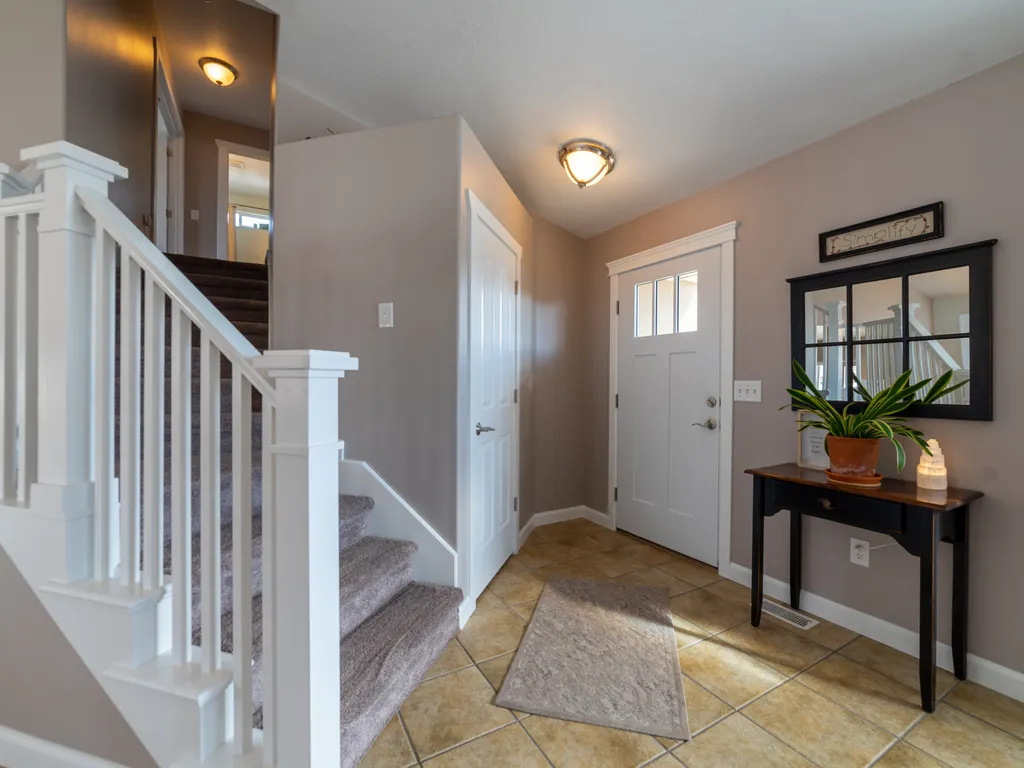
Hallways are full of hard rectangles — doors, frames, skirting — and an arch breaks that geometry in the loveliest way. A painted arch above a doorway, an arched mirror or even a trompe-l’oeil arch painted on the wall can turn a plain corridor into something with a sense of place.
Arches suit hallways because they add softness without taking up any floor. If your budget runs to joinery, an arched opening between the hall and the living room is a show-stopper. For a quick version, paint an arch shape on the wall behind a bench or console: it frames the furniture like a picture and costs almost nothing.
13. Add Plants That Like Low Light
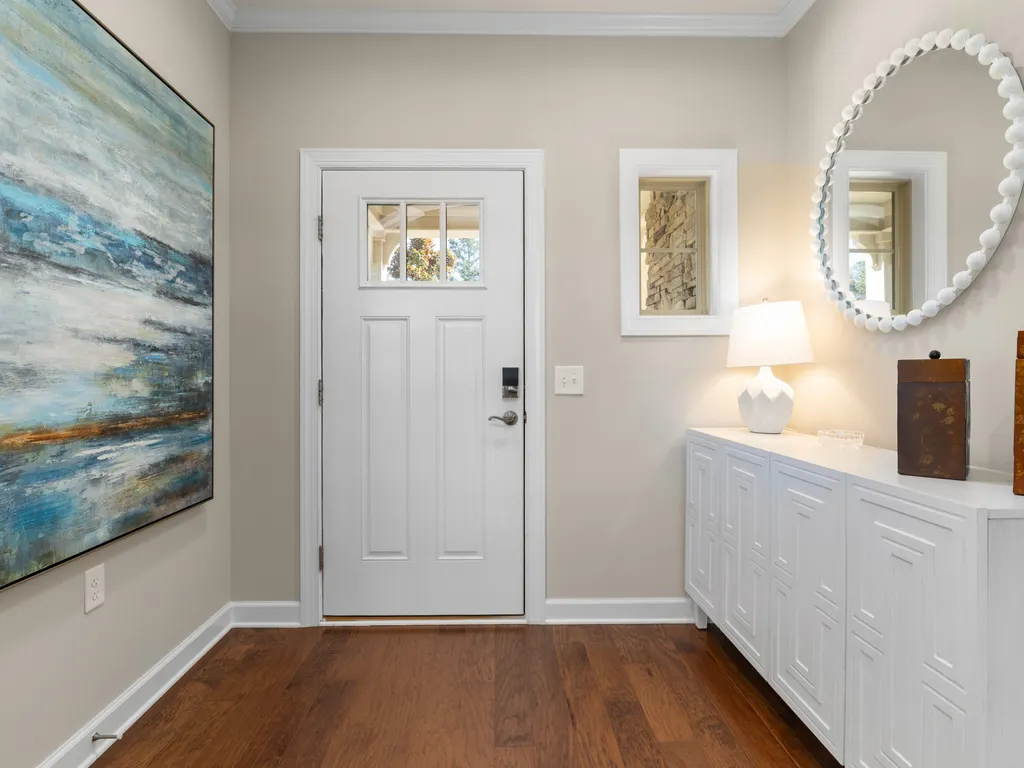
Plants are the finishing touch most hallways are missing, and the corridor’s still, draught-free air actually suits many houseplants. Snake plants, pothos and ZZ plants cope happily with low light and irregular watering, either in a tall pot on the floor or trailing from a shelf.
Keep it to two or three plants, and repeat the pot — the same terracotta or rattan basket — so the greenery reads as a deliberate choice and not a clutter of leftovers. If your hallway gets no natural light at all, a good faux trailing plant looks better than a dying real one.
14. Refresh the Hall for Under $100
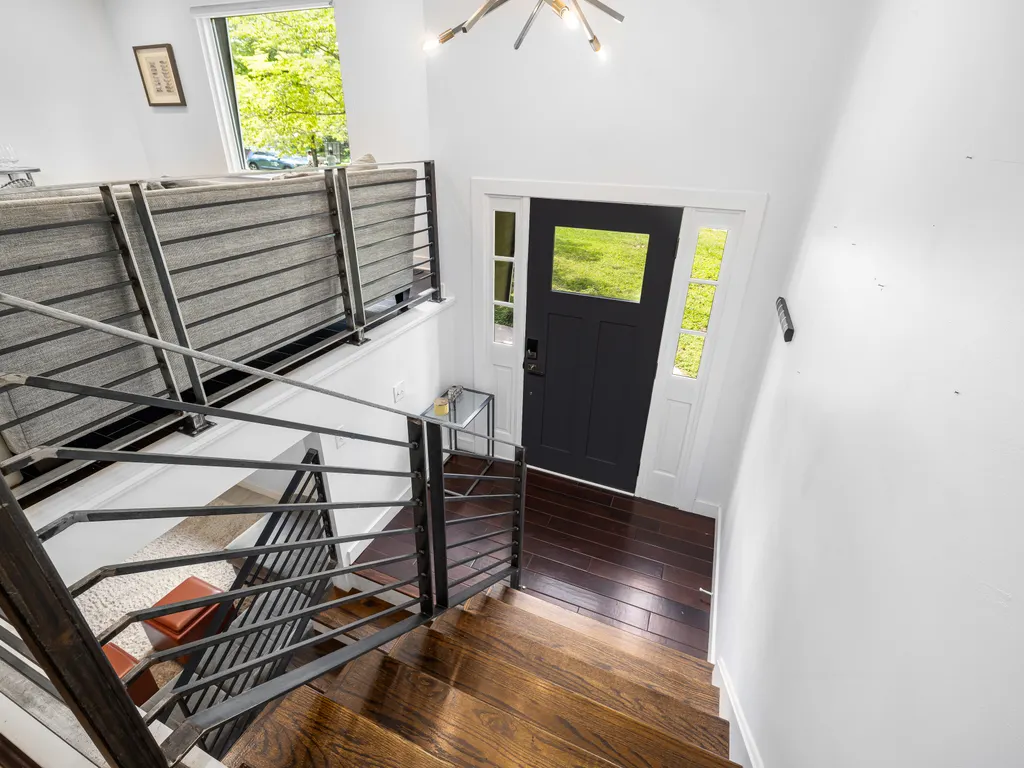
A hallway makeover does not need a big budget. A tester pot of paint on the far wall, a second-hand runner from a charity shop, a new lampshade and a thrifted mirror can come in well under $100 and change the corridor completely. Spend the money where you will see it every day — at eye level and underfoot.
Free wins count too: clear everything off the floor, wipe the skirting boards, move a console that is collecting junk, and swap the art for pieces from another room. You will be surprised how much of a hallway’s tired look is clutter, not decor.
15. Go Rental-Friendly With Zero Damage
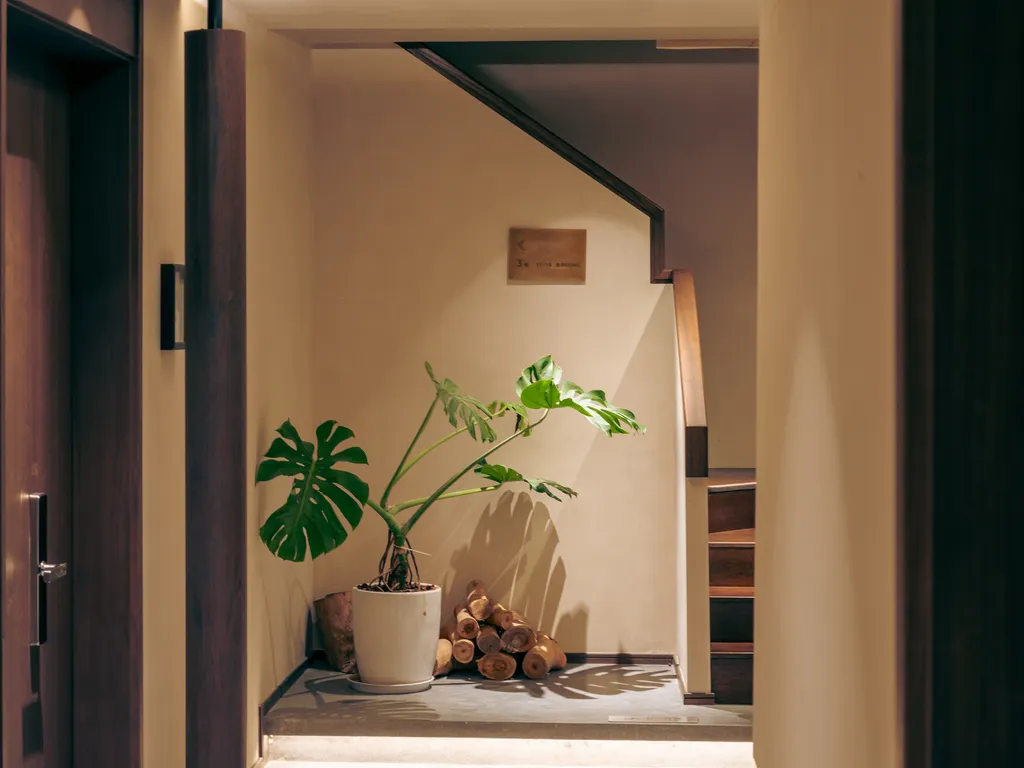
Renters can have a beautiful hallway without losing a deposit. Peel-and-stick wallpaper on one wall, removable hooks for coats and hats, a washable runner, leaning art and battery-powered sconces all come down cleanly at the end of a tenancy.
The rule is simple: nothing that drills, nothing that paints, nothing that glues. A tall leaning mirror, a bench you can take with you and a bright runner do most of the decorating work on their own.
16. Use Picture Ledges for Easy Swaps
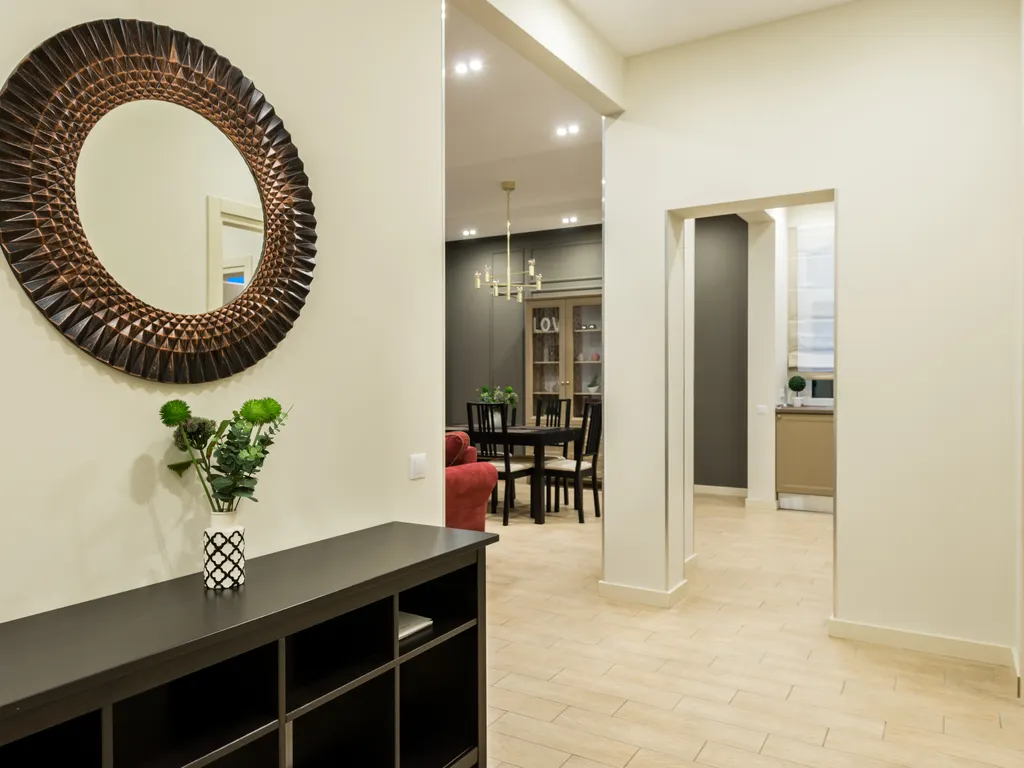
Picture ledges are the gallery wall’s lower-commitment cousin. A slim shelf with a lip holds a row of framed prints, and when you fancy a change you simply lift one out and drop another in — no new holes, no measuring, no patching.
Run two ledges in parallel, one at eye level and one a little higher, for a layered look that fills a long wall. Ledges are forgiving: frames can overlap slightly and lean at different angles, and the whole thing still looks intentional.
17. Hang a Statement Pendant
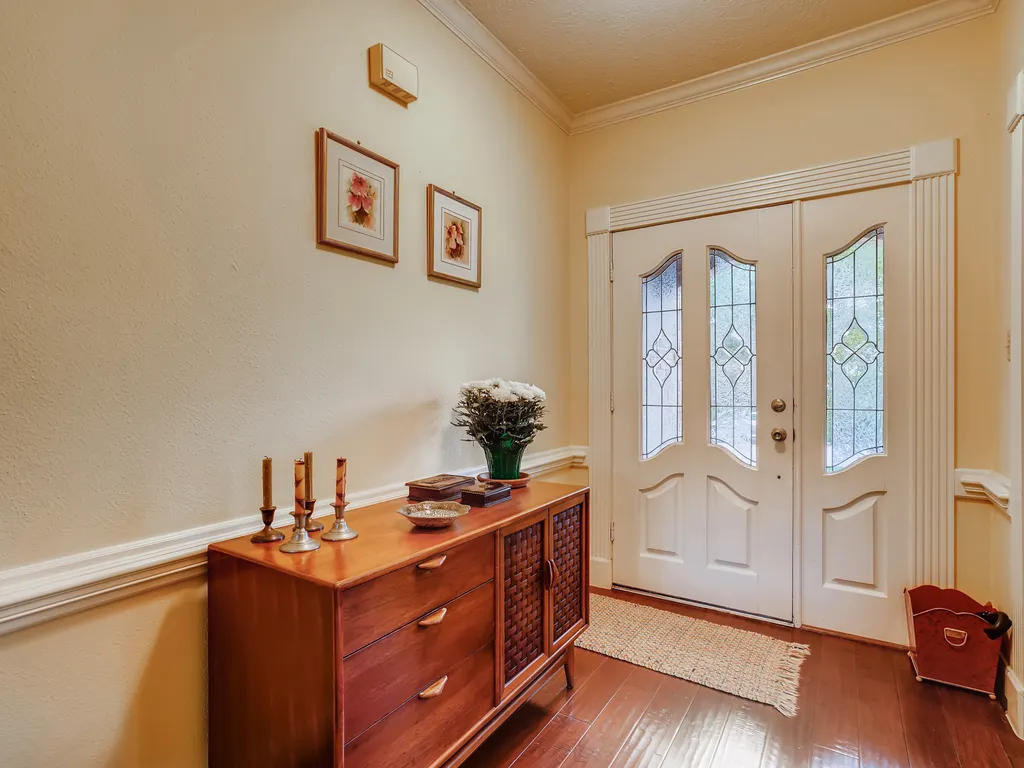
If the hallway has height, use it. A single statement pendant — a paper lantern, a woven rattan shade or a cluster of small glass globes — draws the eye up and makes a corridor feel far grander than its footprint.
In a long hall, repeat the same pendant two or three times down the length for rhythm, keeping them at the same height. Hang it so its base sits at least 210 cm above the floor, and choose a warm bulb so the shade glows rather than glares. Pair it with sconces if the hall is very long, and the far end will never be dark again.
18. Build a Landing Zone With Hooks
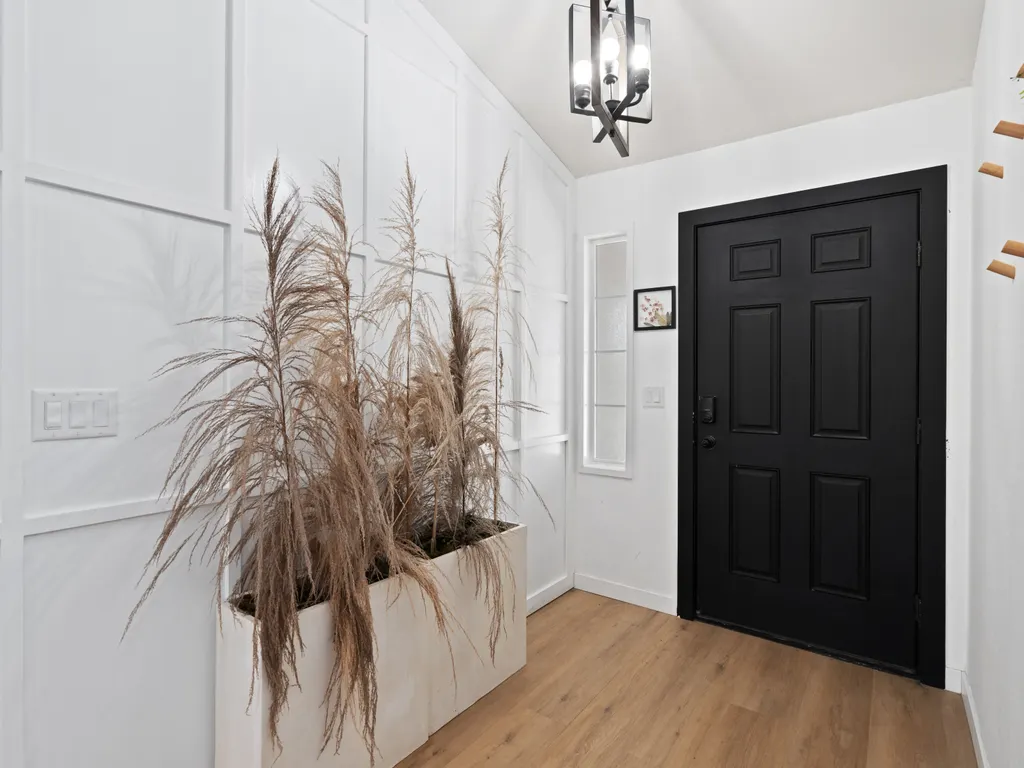
Every hallway needs a landing zone — one place where keys, coats, bags and shoes arrive and stay, instead of spreading through the house. A row of sturdy wall hooks at two heights, a small tray for keys and sunglasses, and a boot tray underneath turns the two metres by the front door into a small system.
If your hallway is the entryway too, our tiny entryway solutions show how to give a small hall a proper working system without blocking the walkway. The golden rule: one hook per person, a basket for the bits nobody owns, and nothing on the floor except shoes worn today.
19. Paper One Wall — or Even the Ceiling
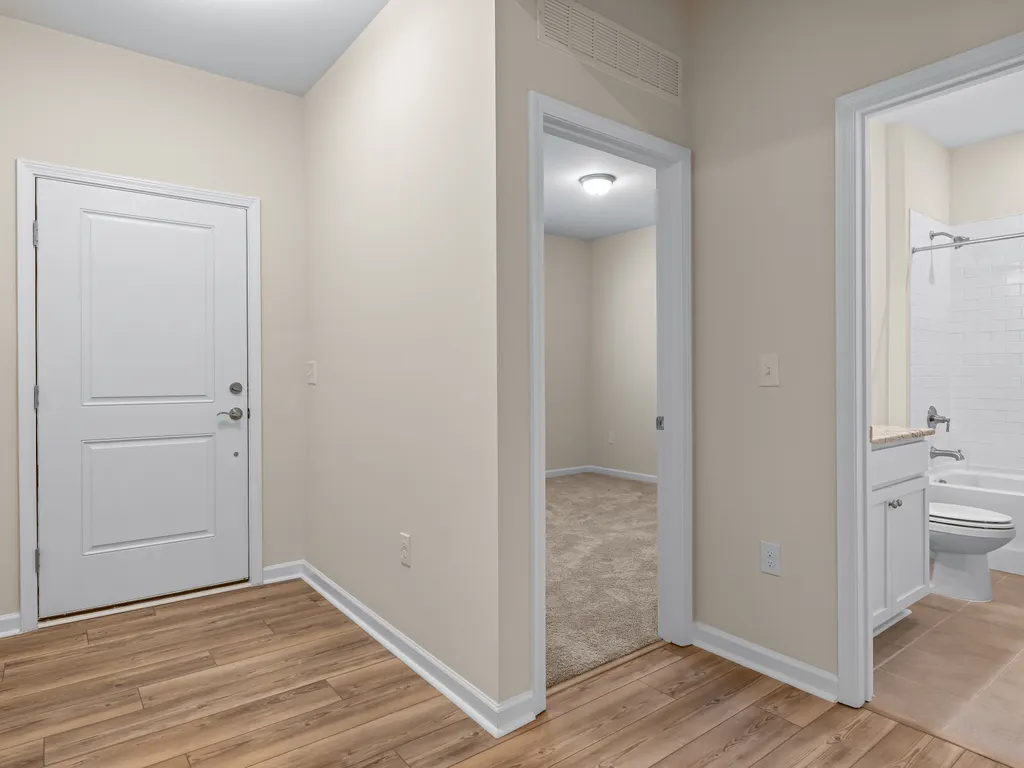
Wallpaper is the hallway’s secret weapon, because a corridor needs so little of it that a single roll can cover a feature wall. A bold botanical, a geometric or a soft stripe wakes up a space that paint alone cannot, and a pattern that would overwhelm a bedroom works beautifully here.
Do not forget the ceiling: papering the ceiling of a hallway in a soft pattern draws the eye up and makes a low corridor feel taller. Paste-the-wall papers go up quickly on flat plaster, and peel-and-stick versions give renters the same look for a season or two.
20. Tuck a Mini Desk Nook Into a Wide Hall
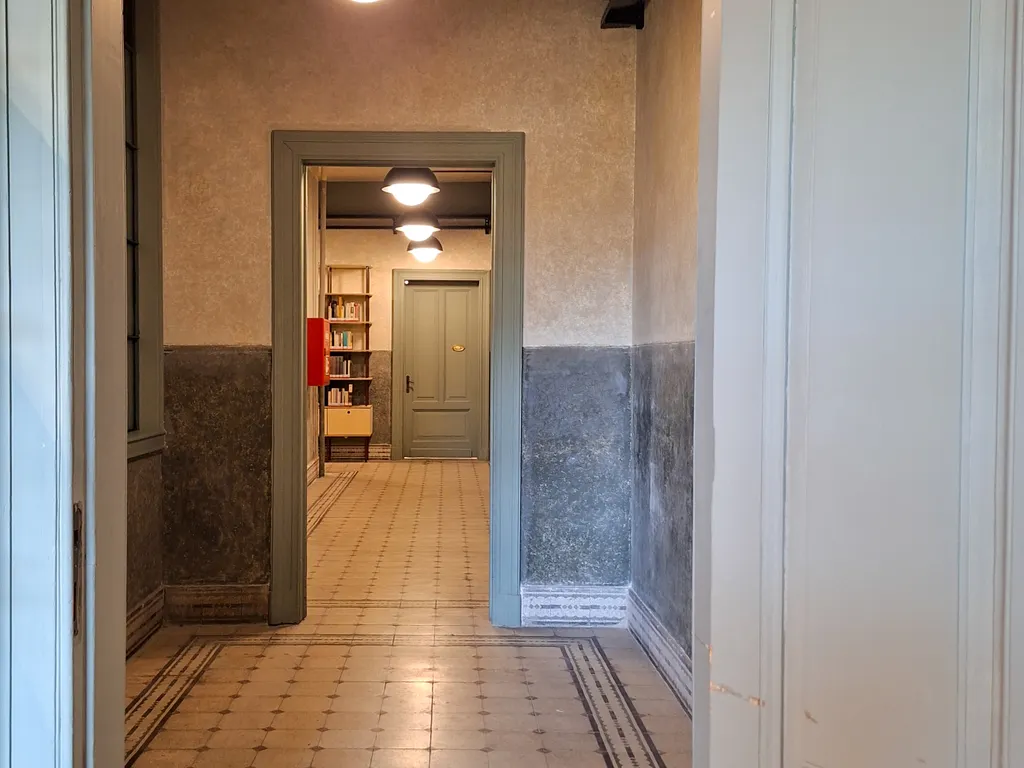
If your hallway is wide enough for a 45 cm deep desk, it can earn its keep as a tiny workspace. A wall-mounted fold-down desk or a slim writing table with a chair that tucks underneath turns a dead stretch of corridor into a place to answer emails and sort post.
Keep it deliberately small: one laptop, one lamp, one chair, and a rule that the desk never becomes a dumping ground. If the hall leads to your main workspace, our 25 productive home office ideas show how to make that room work just as hard. A hallway desk is best for quick tasks — deep work still belongs in a proper room.
21. Add Texture With Limewash or Panelling
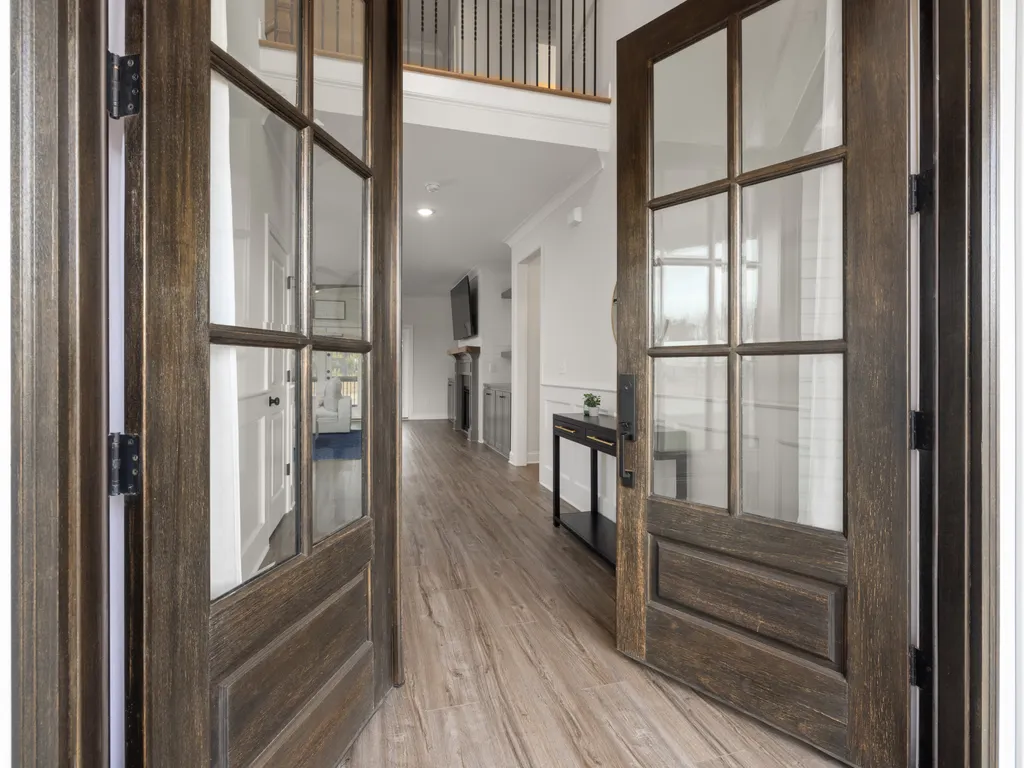
Flat matt paint can make a long corridor feel like a tunnel; texture fixes that. A limewash or mineral wash gives walls a soft, cloudy movement that changes with the light, and it suits hallways because the finish is forgiving of the knocks and scuffs that come with a well-used route.
Wood panelling or a slatted feature wall adds warmth the same way. Keep the texture on the walls and the rest of the hall simple, so the two balance: plain runner, plain mirror, quiet furniture.
22. Layer Rugs for a Wide Hall
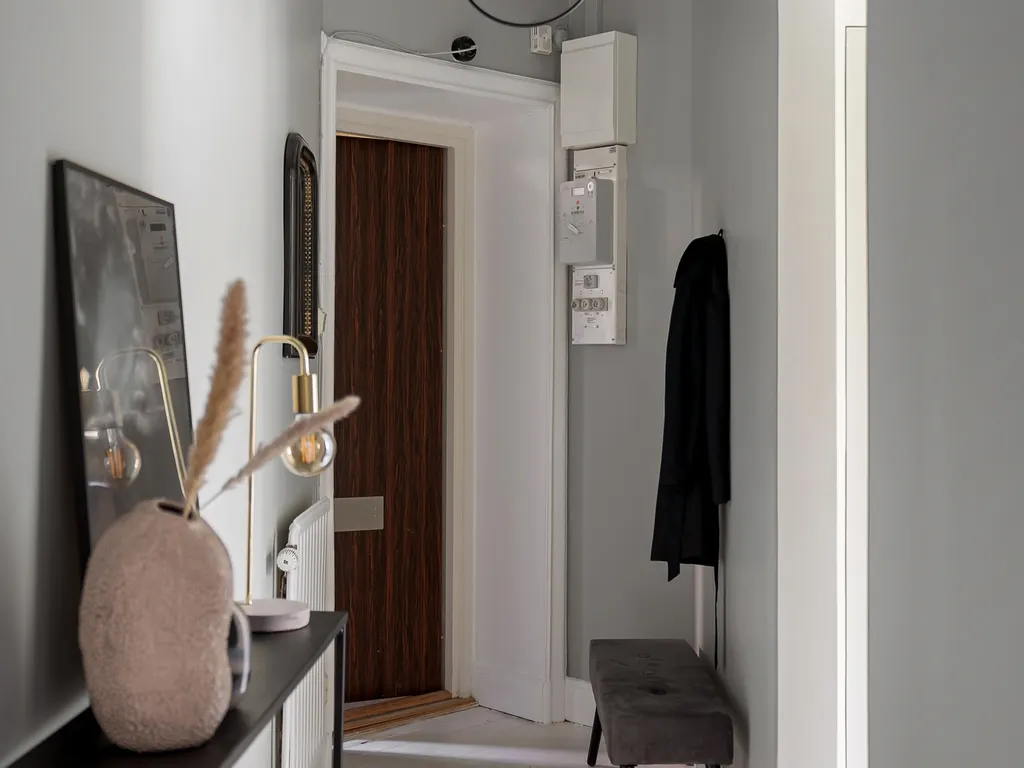
In a wide hallway, a single runner can look lost. Layering solves it: start with a larger flatweave or jute base that covers most of the floor, then lay a shorter patterned rug or a second runner on top, offset to one side.
Keep the two layers in the same colour family so they read as one thoughtful arrangement — a natural jute base with a faded red or indigo runner on top is a classic pairing. Use a non-slip pad underneath, and keep both rugs a few centimetres from the skirting.
23. Hang Family Photos Properly
A hallway is where family photos belong — you pass them every day, and the short viewing distance suits small prints. The difference between a wall that looks like a gallery and one that looks like a noticeboard is consistency: matching frames in one finish and prints in the same size or the same two sizes.
Print in black and white if the photos span decades and colour palettes clash; monochrome unifies everything instantly. Mix formal portraits with candid shots to keep the wall warm and real, and leave one empty frame for the next milestone.
24. Rotate Seasonal Swaps
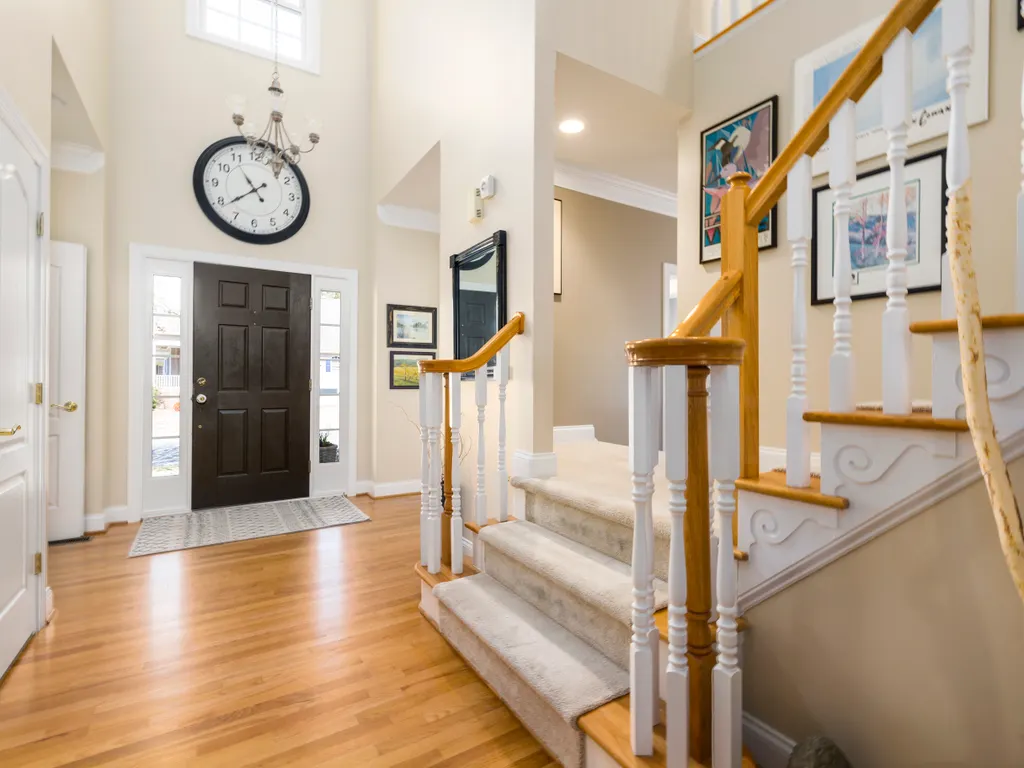
A hallway is the easiest room in the house to dress for the season, because a single surface carries the whole look. A vase of fresh stems on the console, a wreath on the inside of the front door and a seasonal runner swapped twice a year is all it takes.
Spring blossom, summer greenery, autumn branches, winter evergreens and fairy lights — one vase, one wreath, one set of stems, kept in a small box in a cupboard, so the swap takes ten minutes and never turns into a full redecoration.
25. Finish With Scent, Sound and Soft Details
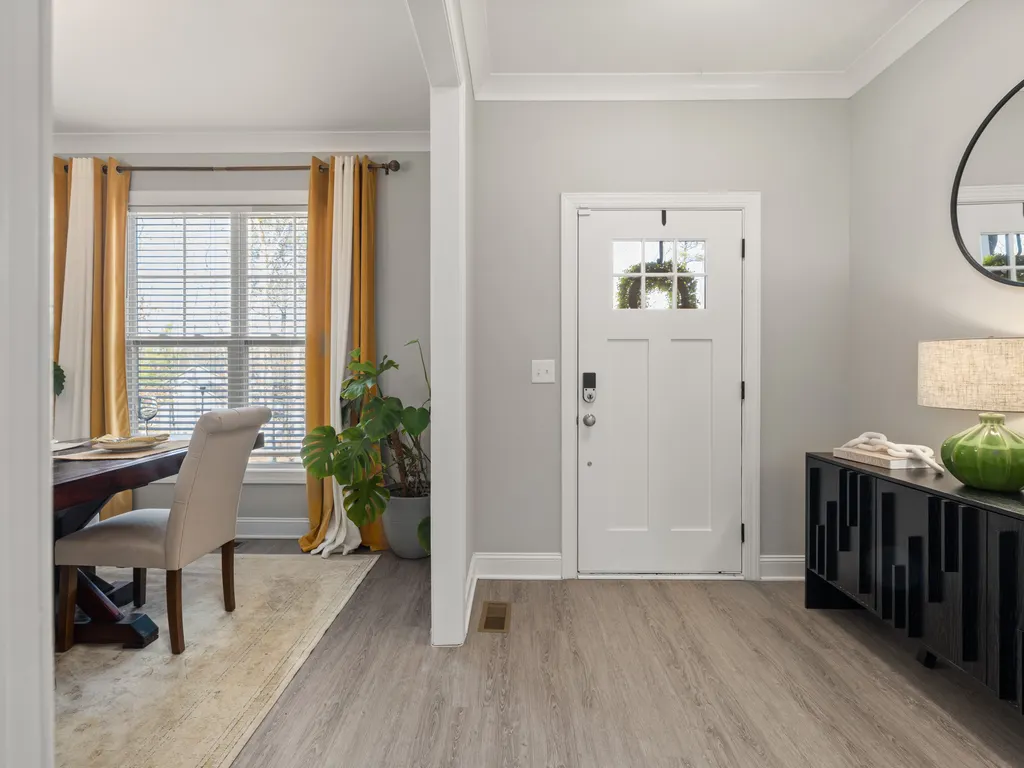
Finish the hallway with scent and soft details. A hallway is the first breath of your home, so scent matters: a reed diffuser or a scented candle near the door, set on a small tray away from coats, makes coming home feel like a welcome rather than a chore.
Add a soft, low-pile runner underfoot and a cushion on the bench, and the corridor stops feeling like a route and starts feeling like a room. Details are where hallway decorating ends: matching door hardware, a neat key hook, a full-length mirror wiped clean.
How to Plan Your Hallway Refresh in a Weekend
Do the work in this order and a hallway refresh fits neatly into one weekend. On Saturday morning, clear everything out and clean the walls, skirting boards and floor, then fix the light: swap bulbs, add sconces or hang the mirror. Saturday afternoon is for paint and the runner, which need a night to dry and settle.
On Sunday, bring in the furniture — bench, console, hooks — then hang the art and dress the surfaces. Live with it for a week before buying anything else: hallways are best decorated in two passes, and the second pass is almost always cheaper because you can see what the room actually needs.
Hallway ideas FAQ
What is the best colour for a hallway?
There is no single best colour. Pale warm neutrals suit narrow halls with little light, while deep greens, blues and charcoal work beautifully in dark or windowless halls. Pick the colour for the light you have, not the light you wish you had.
How wide should a hallway runner be?
Leave a few centimetres of floor showing on each side. Most halls suit a runner 60–75 cm wide; very wide halls can take 90 cm. The runner should also stop short of each end of the hall by about 15 cm.
How do I decorate a narrow hallway?
Keep the floor clear, paint walls and skirting the same pale colour, and hang one mirror and one slim console or shelf. A runner down the centre and a single line of art at eye level will make it feel wider without adding clutter.
Can I decorate a hallway if I rent?
Yes. Use a washable runner, a leaning mirror, peel-and-stick wallpaper, removable hooks and battery-powered sconces. All of it comes down without a mark, and the furniture and runner move with you to the next home.
What should I put at the end of a hallway?
Give the far end a destination: a bold paint colour, a mirror, a piece of art or a bench with a plant. A hallway that ends in something worth looking at feels like a designed room rather than a tunnel.
Conclusion
Hallways earn their keep quietly, every day, in every home — and they deserve more than a blank wall and a bare bulb. These 25 hallway ideas prove that the smallest room in the house can also be the easiest to transform: a runner underfoot, a mirror on the wall, a coat of paint and a few pieces that work hard will do it.
Start with the idea that solves your biggest frustration — light, storage, colour or clutter — and build from there. By next weekend, the corridor you rush through could be the part of the house you are proudest of.
What a hallway refresh costs
A hallway is one of the cheapest rooms to transform, because it needs so little of everything: one runner, one mirror and a coat of paint can change the whole house for under $300. A full hallway with a bench, console, wainscoting and sconces usually costs $800 to $2,500. Spend on the runner and the mirror, since they cover the most area and catch the most light, and save on art and plants, which you can add one at a time.
| Item | Typical cost | What changes the price |
|---|---|---|
| Washable runner, 2 by 8 feet | $60 to $200 | Washable backing and pile height |
| Large leaning mirror, 30 by 60 inches | $100 to $400 | Frame and glass quality |
| Slim console table, 12 inches deep | $100 to $500 | Wood, drawers and size |
| Storage bench, 36 inches | $100 to $400 | Wood, lid type and cushion |
| Wall sconces, pair | $60 to $300 | Metal finish and dimmer |
| Wainscoting, one wall | $200 to $700 | Wall size and paint finish |
| Peel-and-stick wallpaper, one wall | $40 to $150 | Rolls needed and pattern repeat |
| Picture ledges, pair, 36 inches | $40 to $150 | Wood and lip depth |
| Coat hooks and tray, one landing zone | $30 to $100 | Hooks, tray and fixings |
| Statement pendant, one | $60 to $300 | Size, material and bulb type |
| Low-light plants, set of 3, potted | $30 to $100 | Plant size and pot material |
| Warm white paint, one hall | $50 to $150 | Coats and wall condition |
Allow $30 to $80 for spare hooks, extra picture strips and a non-slip underlay, since runners slip on hard floors and art falls without proper fixings. If you are fitting wainscoting, buy one extra length for cuts, and check the skirting and door frames before you order.
Sizes that keep a hallway clear and bright
Measure the hall before you buy. A runner should be 60 to 75 cm wide in most halls, with a few centimetres of floor showing on each side, and it should stop a hand’s width short of each end. Leave at least 36 inches of clear walkway in the centre, and keep furniture slim: a console should be 25 to 30 cm deep, and a bench should be 35 to 40 cm deep. Hang a mirror with its centre at 145 to 150 cm from the floor, about eye level, and hang sconces in pairs 150 to 180 cm apart, with the light at 2700K. Art in a single line should sit with its centre at 57 to 60 inches from the floor. For a gallery wall, keep 2 to 3 inches between frames. For a pendant, hang it at least 7 feet above the floor, and repeat the same pendant two or three times down a long hall, spaced evenly.
How to plan the hallway in order
Start on Saturday morning. Clear the floor, wipe the skirting boards and move any console that blocks the walkway. Next, paint or paper the walls, then lay the runner and fit the non-slip underlay. Then bring in the bench and console, then hang the mirror and art, then fit the sconces and pendant. Add plants and scent last, when you can see the finished hall. The most common mistake is a runner that is too wide, so it covers the whole floor and the hall feels smaller. A second mistake is a console that is too deep, so coats and bags catch on it. A third mistake is one ceiling light only, which leaves the far end in shadow. Test the light at night, not just in daylight, since the hall is used most after dark in winter.
More questions about hallways
How much does a hallway refresh cost?
A paint, runner and mirror refresh costs $150 to $400. A full hall with a bench, console, wainscoting and sconces usually costs $800 to $2,500, before any electrical work.
What width runner fits a hallway?
Use a runner 60 to 75 cm wide in most halls, with a few centimetres of floor showing on each side. A runner wider than the hall minus 10 cm will look cramped and will be hard to clean at the edges.
How do I light a dark hallway?
Use a large mirror opposite a glazed door or window, sconces in pairs 150 to 180 cm apart, and warm bulbs at 2700K. A single ceiling light is not enough; the light needs to come from the sides at eye level.