
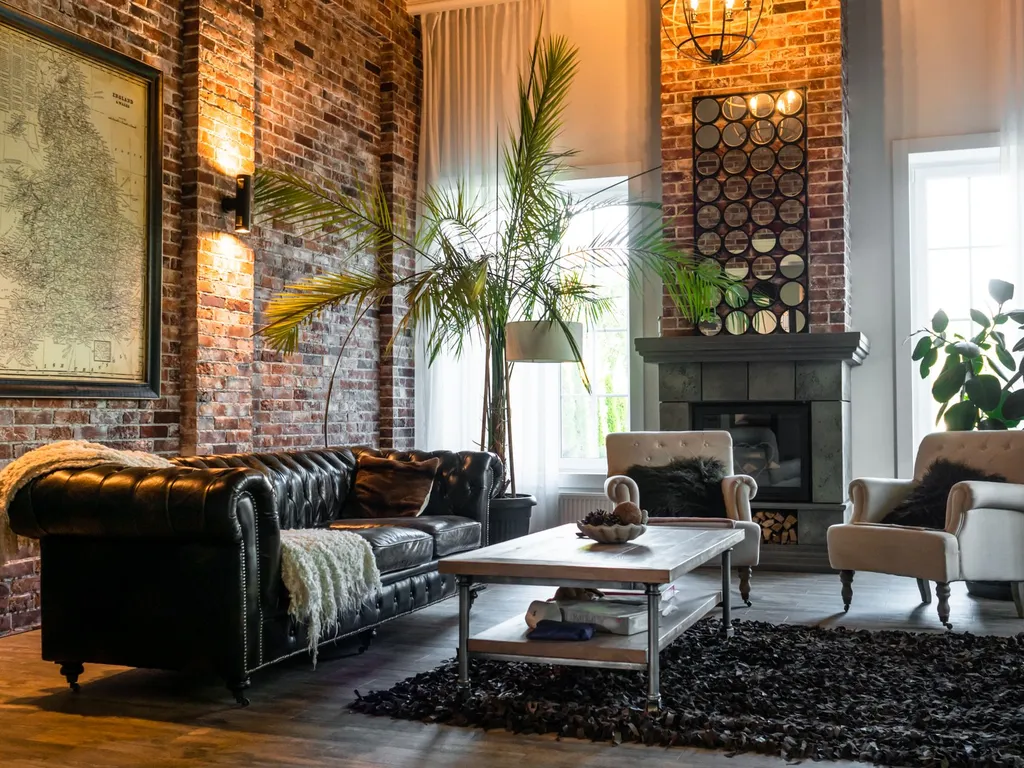
Industrial style was never designed — it was inherited. When factories and warehouses became lofts, the brick, steel and concrete came with the building, and residents discovered that honest materials have a character no applied finish can fake. The problem is the inheritance cuts both ways: the same raw surfaces that give a room its edge can make it feel like somewhere you work, not somewhere you live.
Quick answer: Industrial interior style ideas keep brick, black steel, concrete and reclaimed wood visible, then add warmth where the body meets the room with a wool rug, cognac leather and warm 2200–2700K light. Keep one raw wall as the backdrop, use one metal as the lead, and repeat wood tones so the room feels lived-in, not like a workspace.
The fix is not to soften the style into something else. It is a ratio: keep the hard materials structural and visible, then layer warmth exactly where the body meets the room — underfoot, at seat height, and in the light. Ten ideas below work through that ratio, room by room.
In this guide: Industrial Style at a Glance · Exposed Brick and Honest Surfaces · Blackened Steel and Iron Bones · Reclaimed Wood: The Warmth Engine · Edison Light and Warm Bulbs · Cognac Leather and Worn-In Comfort · Concrete Floors, Softened Underfoot · Open Shelving and Factory Storage · Crittall Glass and Big Factory Windows · The Utility Kitchen, Warmed Up · Rugs, Wool and Greenery: The Soft Layer · Frequently Asked Questions About Industrial Interior Style · Conclusion
Industrial Style at a Glance
| Element | Keep it raw | Where the warmth comes from |
|---|---|---|
| Walls | Exposed brick, concrete, plaster | Warm white or limewash on the remaining walls |
| Structure | Black steel, iron, visible ducts | Wood cladding on one beam or shelf run |
| Floors | Polished concrete, wide boards | A large wool or vintage-look rug |
| Lighting | Edison pendants, cage shades, conduit | Warm 2200–2700K bulbs, lamps at seat height |
| Furniture | Metal frames, factory shapes | Cognac leather, linen, worn wood tops |
| Storage | Open pipe shelving, lockers, crates | Baskets, books and ceramics on display |
1. Exposed Brick and Honest Surfaces
 Brick is the style’s signature because it does three things at once: texture, colour and history. Among the types of interior design styles, industrial is the one that treats the wall itself as the decoration — no wallpaper pattern competes with a century of kiln variation. If your brick is real, clean it, repoint where it crumbles, and seal it with a matte sealant so it stops shedding dust without turning glossy.
One brick wall is usually enough. Four raw walls box a room in; one gives it a backdrop while the other walls carry a warm white or soft plaster that bounces light back. No brick at all? Brick slips and quality veneer panels reproduce the surface honestly at a fraction of the depth. Today’s Homeowner’s industrial style guide lists exposed brick, ductwork and concrete among the style’s defining features — start with whichever one your building already offers.
2. Blackened Steel and Iron Bones
 Steel is the skeleton of the look: beams, columns, stair stringers, window frames. Blackened or powder-coated matte black steel reads as structure even when it is decorative, which is why a steel-framed bookcase or a faux beam earns its place. Keep the finish matte — gloss black reads as paint, matte black reads as metal.
Scale matters more than quantity. One strong steel moment — a staircase, a partition frame, a run of shelving uprights — anchors a room better than a dozen small metal accessories scattered around it. And let the steel touch wood somewhere: a timber tread on an iron stair, a wood shelf on steel brackets. That junction is the whole style in miniature: hard frame, warm surface.
3. Reclaimed Wood: The Warmth Engine
 Wood is where industrial warmth actually comes from — not from paint colours or cushions, but from the one material in the palette that was ever alive. Reclaimed timber carries saw marks, nail holes and a patina that new wood needs decades to earn. Use it where hands land: table tops, worktops, shelving boards, headboards.
Choose warm mid-tones and let them repeat. A single wood tone carried across two or three pieces per room ties the scheme together, while mixing five different stains fragments it. The kitchen proves the principle at full strength — our guide to warm wood kitchen finishes shows how far one consistent timber tone can carry an otherwise hard-surfaced room. Everywhere else, copy that discipline at smaller scale.
4. Edison Light and Warm Bulbs
 Swap in warm Edison bulbs at 2200–2700K and keep the steel fixtures.. Keep the fixtures, change the light. Exposed-filament Edison bulbs, cage pendants and enamel shades all belong; what makes them residential is colour temperature. Choose bulbs at 2200–2700K, the amber end of the scale, and the same steel fixture stops interrogating the room and starts flattering it.
Then lower the light. A room lit only from the ceiling reads as a workspace at any temperature, so add sources at seat height: a floor lamp by the sofa, a table lamp on a sideboard, a wall sconce washing the brick. Three heights of warm light will do more for an industrial room’s cosiness than any single furniture purchase.
5. Cognac Leather and Worn-In Comfort
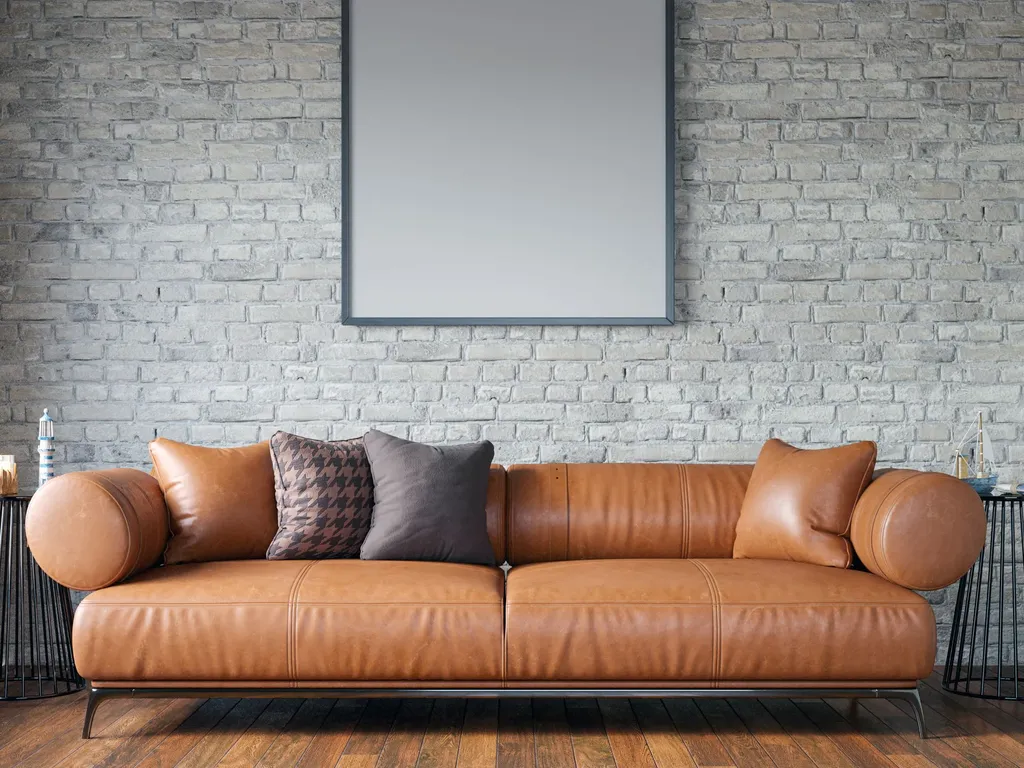 Every industrial room needs one material that improves with use, and leather is it. A cognac or chestnut sofa brings the palette’s warmest colour to its largest piece of furniture, and unlike fabric it creases, darkens and shines exactly where life happens. That worn-in quality is the point — pristine upholstery fights the room, aged leather agrees with it.
Leather also solves the acoustic coldness of hard rooms better than bare cushions do, especially paired with a wool throw over one arm. If a full leather sofa is out of budget, take the material down a size: two leather armchairs, leather cushions on a linen sofa, or a leather-topped bench. The colour and the patina matter more than the square footage.
6. Concrete Floors, Softened Underfoot
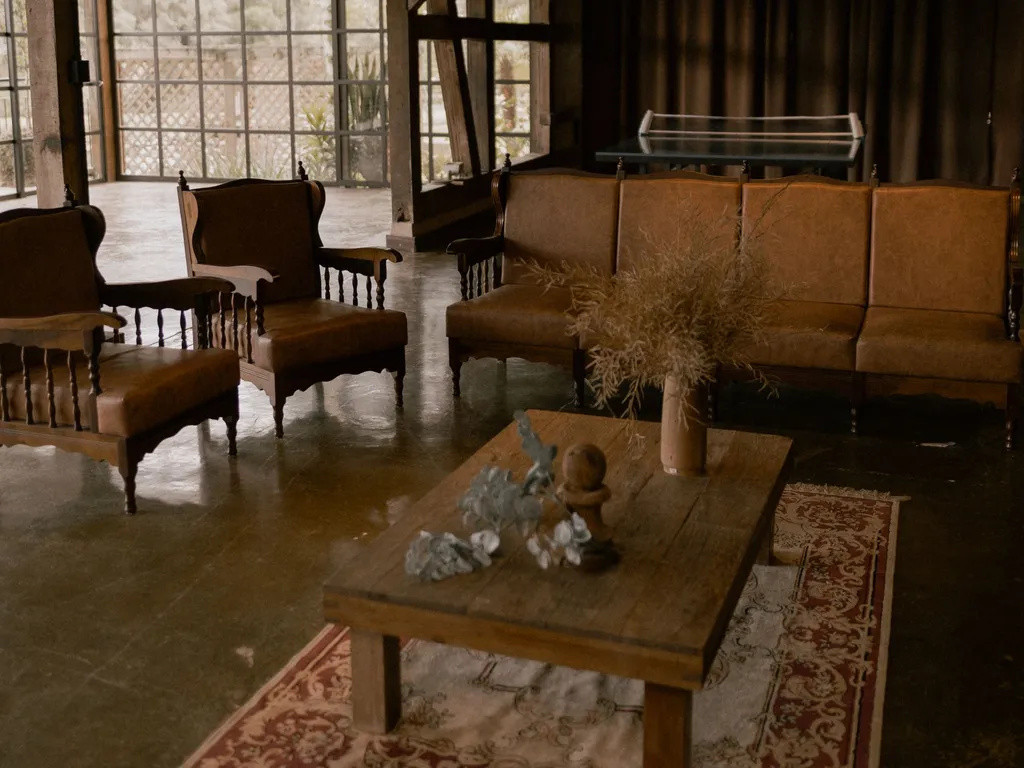 Polished concrete is the honest floor: cool in summer, indestructible, and continuous in a way boards never are. Sealed with a matte or satin finish it reflects just enough light to keep a room from feeling like a basement. If your slab is stained or cracked beyond rescue, microcement skim coats reproduce the surface over almost any sound base.
The warmth rule for concrete is coverage, not replacement: one large rug under the seating zone, sized so front legs sit on it, changes how the whole floor feels. Choose wool or a wool-look weave in a warm, variegated tone — flat grey on grey doubles the cold, while texture and a hint of rust or camel break it. Bare concrete can remain everywhere the feet do not linger.
7. Open Shelving and Factory Storage
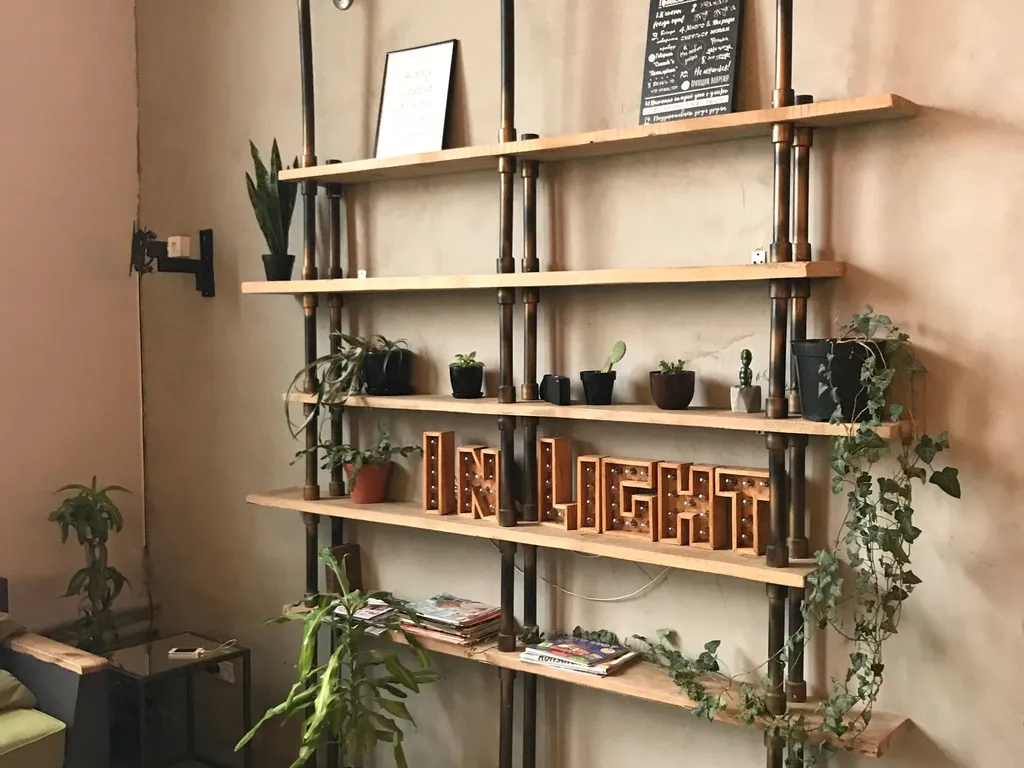 Open shelving keeps factory logic: store things where hands can reach them. Black iron pipe frames with solid wood boards are the classic build — strong, repairable, and honest about what they hold. The discipline is in the styling: group objects, leave breathing room, and keep everyday items at everyday heights.
Group objects, leave breathing room and keep everyday items at everyday heights — our guide to open shelving styling ideas works through the grouping and spacing rules in detail. The industrial twist is in the containers: galvanised bins, glass jars with metal lids, wire baskets and wooden crates store the unsightly fifty percent, so the displayed fifty percent can be ceramics, books and plants. Storage that hides nothing has to be edited — that editing is what makes it look intentional rather than unfinished.
8. Crittall Glass and Big Factory Windows
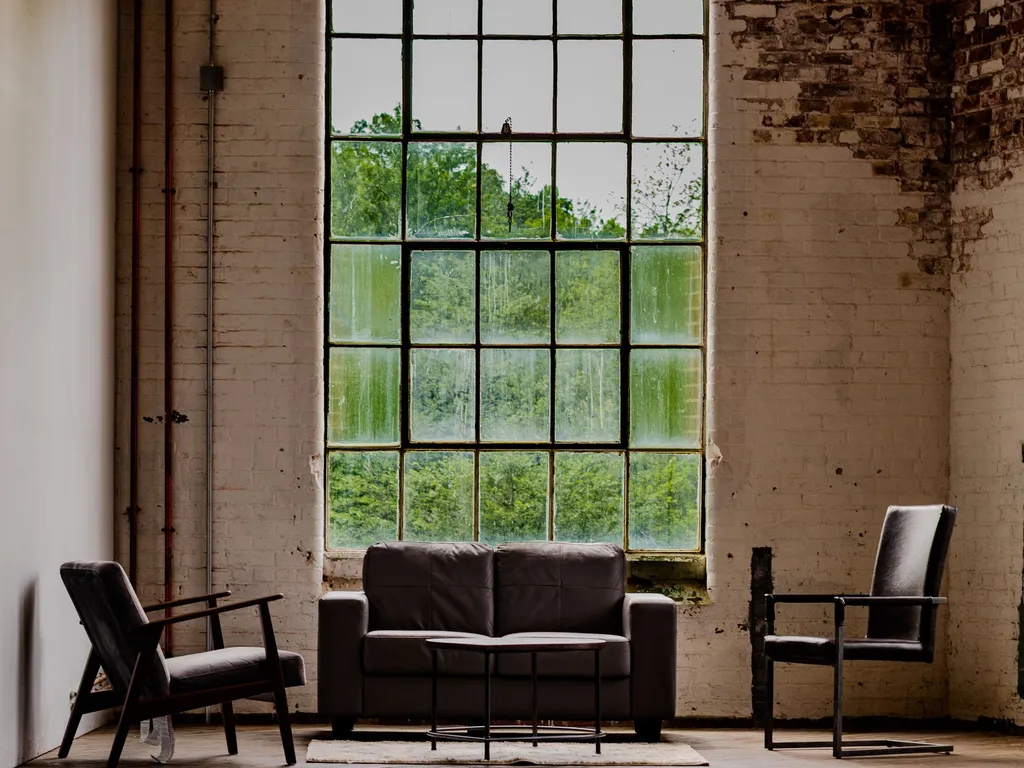 Steel-framed glazing is the style’s elegant move. A Crittall-style partition — slim black frames, small panes — divides a room into zones without stealing light or sight lines, which is why it has become the defining feature of modern industrial renovations. Internal windows between a hall and a living room, or a glazed screen around a home office, borrow daylight for rooms that have none.
The grid does the decorating. Keep frames uniformly black and slim, panes clear rather than frosted wherever privacy allows, and hardware minimal. Where a full partition is too much, the same language scales down: a steel-framed mirror, a glazed internal door, or black grid trim on an existing window all quote the factory window without rebuilding the wall.
9. The Utility Kitchen, Warmed Up
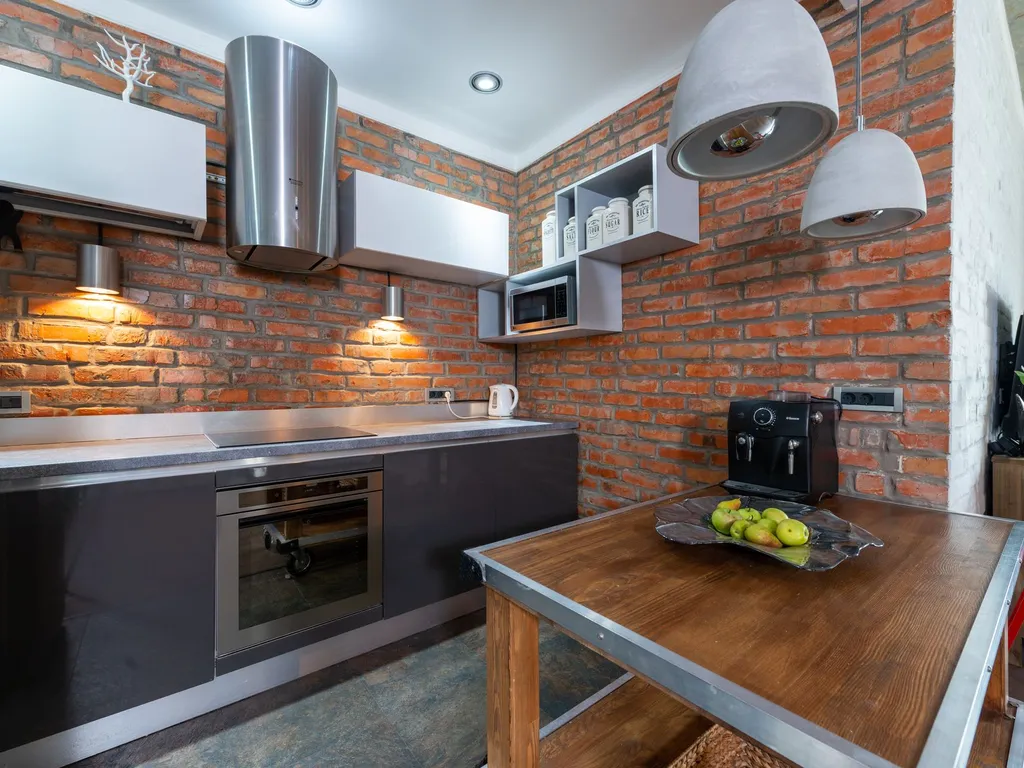 The industrial kitchen starts from utility: stainless or zinc worktops, a serious range, rails of hanging pans, nothing ornamental. Left there it cooks like a canteen. The warmth arrives through the same two channels as the rest of the home — timber and light. Wood cabinet fronts or a wood island end panel take the chill off the metal, and open shelves replace two wall cabinets so the room breathes.
Light the island like a workstation and a gathering place at once: a row of pendants at working height, on warm dimmable bulbs. Our guide to kitchen island lighting ideas covers pendant sizing and spacing in full. Finish with one soft thing in view — a linen runner, a bowl of fruit, herbs on the sill — so the first impression is kitchen, not kitchen factory.
10. Rugs, Wool and Greenery: The Soft Layer
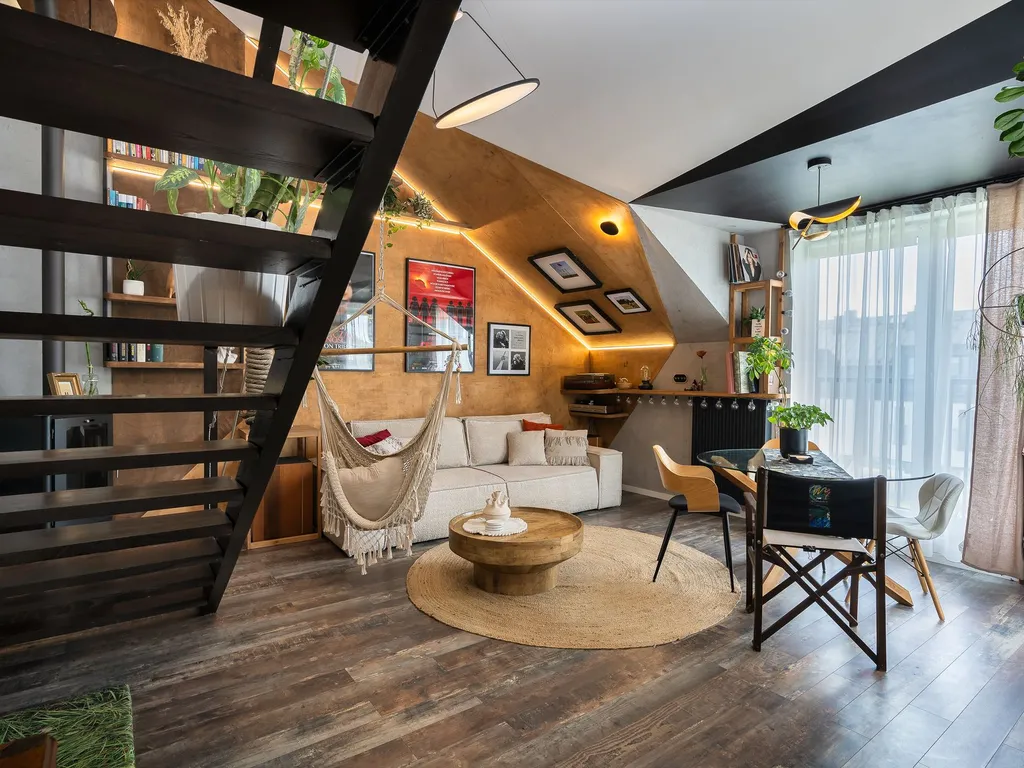 The last layer is the one you can change in an afternoon, and it carries the whole warmth brief: textiles and plants. Layer a flatweave rug under a softer pile one, put linen or washed cotton cushions on the leather, and keep a knitted throw where someone actually sits. These are not decorations on the style — they are the counterweight that makes the hard materials liveable.
Greenery does the final softening, because nothing about a plant is straight, grey or manufactured. One large plant in a galvanised or concrete planter beats five small pots: scale again. Temple & Webster’s guide to warming up industrial spaces makes the same case — rugs, warm light and oversized art are what turn the warehouse look into a home. Add the layers last, judge the room sitting down, and stop one layer before it turns rustic.
Frequently Asked Questions About Industrial Interior Style
What defines industrial interior style?
Raw, honest materials left visible: exposed brick, concrete, blackened steel, reclaimed wood and factory-style lighting, arranged in open plans with functional furniture. The building’s structure is the decoration.
How do I make an industrial room feel warm, not cold?
Keep hard materials structural, then warm the contact points: a large wool rug, cognac leather or warm wood at seat height, and bulbs at 2200–2700K from lamps as well as pendants. Warmth is a layer, not a repaint.
What colours work best with industrial style?
A neutral base of warm white, greige, charcoal and black, warmed by the materials themselves — brick red, timber browns, cognac. Add colour in small doses through cushions, art and plants rather than painted walls.
Can industrial style work in a small apartment?
Yes — scale it down rather than leaving it out. One brick or brick-slip wall, slim black shelving, a leather chair and two Edison pendants deliver the look in a studio. Skip oversized factory furniture, which is what actually overwhelms small rooms.
Is exposed brick necessary for industrial style?
No. Brick is the most famous surface, not a requirement. Concrete, limewash plaster, black steel and reclaimed wood can carry the style on their own — many original lofts had painted brick or none at all.
What flooring suits an industrial home?
Polished concrete is the classic, with wide-board timber and large-format stone-look tile as strong alternatives. Whatever you choose, keep the finish matte and add a generous rug in the seating zone.
How do I add industrial style as a renter?
Use the removable layer: black metal shelving units, Edison-bulb plug-in pendants, brick-effect panels, a leather chair and a large rug. Everything that defines the look exists in a version that leaves with you.
What is the difference between industrial and modern industrial?
Classic industrial copies the warehouse closely — rawer, darker, more literal. Modern industrial keeps the materials but cleans the lines, lightens the palette and adds more comfort layers. Most homes today suit the modern version.
Which metals belong in industrial interiors?
Blackened steel and iron first, then aged brass, copper and galvanised zinc as accents. Keep one metal dominant and finishes matte; mixing polished chrome with everything else breaks the illusion of age.
Can industrial style mix with other styles?
Well — it is a natural partner for Scandinavian (light wood, clean lines), mid-century (leather, tapered shapes) and rustic (more timber, more texture). Keep the industrial materials as the base and borrow softness from the partner style.
Conclusion
Industrial style keeps its edge when the hard materials stay honest — brick unpainted, steel matte, concrete sealed but visible. It gains its warmth from a deliberate counter-layer: wood where hands land, leather where bodies land, wool underfoot and amber light at sitting height. Hold that ratio in every room and the warehouse becomes what the first loft-dwellers knew it could be — a home with a past, not a factory with furniture.
What an industrial room costs
Industrial can start cheap, because the shell does much of the work: one brick wall, a black shelf and warm bulbs can change a room for $200 to $500. A full living room with a leather sofa, rug and steel shelving usually costs $2,500 to $7,000. Spend on the sofa, the rug and the light, and save on crates, baskets and plants, which can be added one at a time.
| Item | Typical cost | What changes the price |
|---|---|---|
| Cognac leather sofa, three seats | $1,200 to $3,500 | Leather grade, frame and fill |
| Reclaimed wood dining table | $600 to $2,000 | Wood age, length and finish |
| Brick-slip wall, one wall | $300 to $900 | Area, slip type and fixings |
| Black steel pipe shelving, one run | $150 to $600 | Length, pipe size and brackets |
| Edison pendants, set of three | $120 to $450 | Shade type and cord length |
| Polished concrete floor, sealed | $500 to $2,000 | Area and sealant coats |
| Large wool rug, 8 by 10 feet | $400 to $1,800 | Wool grade and backing |
| Crittall-style partition, one panel | $800 to $2,500 | Size, glass and frame |
| Metal locker cabinet | $200 to $800 | Size, condition and finish |
| Factory-style bar stools, pair | $150 to $500 | Height, seat and base |
| Warm white limewash, one room | $80 to $250 | Coats and wall condition |
| Large plant, potted | $40 to $150 | Plant size and pot material |
Allow $150 to $400 for delivery, hanging and an electrician if you are fitting pendants or a partition. If you are fitting brick slips, buy one extra box for cuts, and check the wall can take the weight: brick slips add about 20 to 30 pounds per square foot.
Sizes that keep an industrial room livable
Measure before you shop. A sofa should leave at least 30 inches of walkway in front of it, and a coffee table should sit 14 to 18 inches from the sofa. The rug should run under the front legs of all seating, which usually means 8 by 10 feet, or 9 by 12 feet in a large room. Edison pendants should hang 30 to 36 inches above a dining table, and at least 7 feet above the floor in a walk-through space. Pipe shelving should sit 12 to 14 inches deep, with the lowest shelf at least 18 inches above the sofa back. For a Crittall partition, leave at least 36 inches of clear walkway on the open side. A bar stool should sit 24 to 26 inches high for a 36-inch counter, and 30 inches high for a 42-inch bar, with 6 inches of foot space below the seat.
How to build the look in order
Start with the shell, not the shopping. Keep one raw wall, paint the rest warm white, and seal any concrete floor. Next, place the sofa and the rug, then the reclaimed wood table, then the steel shelving. Add lighting last, in three layers: pendants, table lamps and a floor lamp, all at 2200 to 2700K. Add plants and leather last, when you can see the finished room. The most common mistake is using four raw walls, so the room feels like a workspace. A second mistake is mixing three metals; pick black steel as the lead, add one accent metal, and repeat each at least twice. A third mistake is a rug that is too small, which leaves the seating on bare concrete. Tape the rug size on the floor and walk around it for a day before you order.
More questions about industrial style
How much does an industrial living room cost?
A wall, shelf and lighting refresh costs $200 to $500. A full room with a leather sofa, rug, table and shelving usually costs $2,500 to $7,000, before any partition or floor work.
Can industrial style work in a small flat?
Yes, if you scale it down. Use one brick-slip wall, slim black shelving and one pendant, and keep the rest light. A small flat needs the warm layer most, so do not skip the rug and the leather.
How do I warm up a concrete floor?
Use one large wool rug under the seating, plus a pair of leather chairs and warm light at seat height. A rug that covers the seating zone, not just the coffee table, makes the floor feel warm underfoot.