
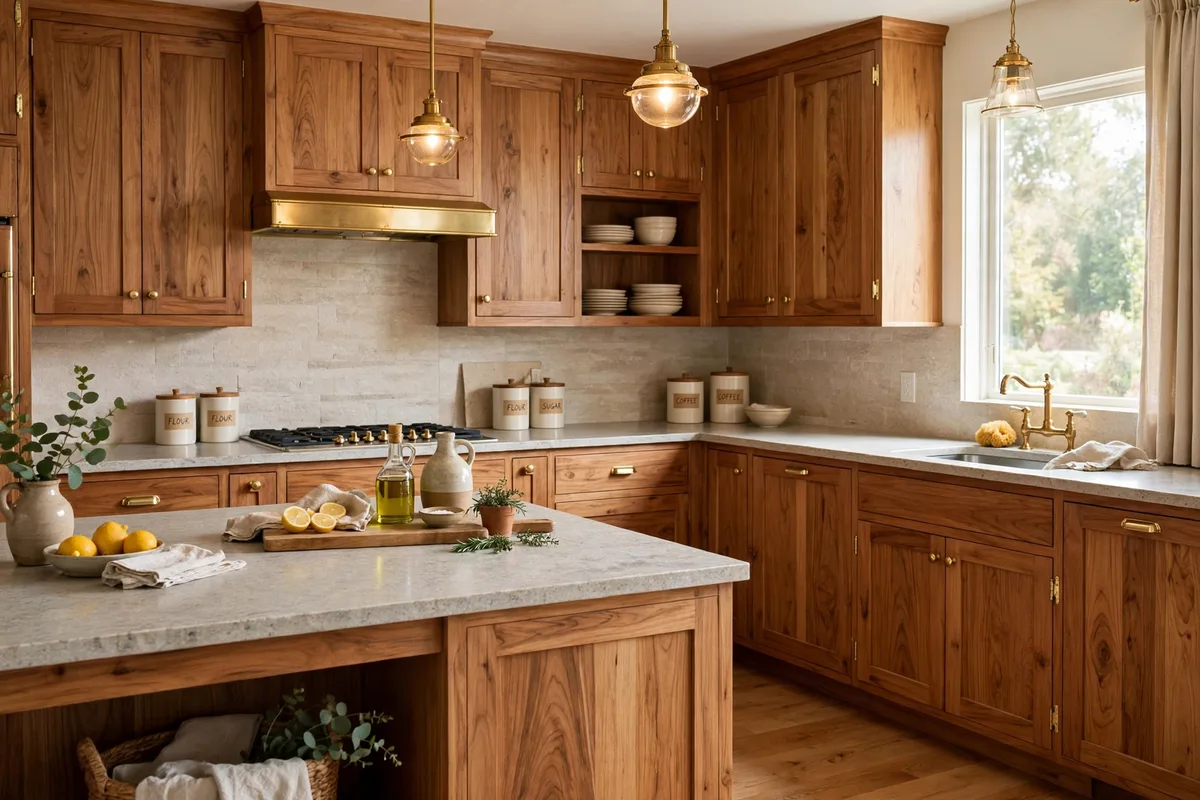
After a decade of painted-white everything, the kitchen’s centre of gravity has moved back to wood — not the orange oak of the 1990s, but warm, grain-visible finishes chosen the way designers actually choose them: species first, stain second, sheen third. A wood finish is a system, not a colour. The species sets the undertone and grain; the stain sets the depth; the sheen decides how it survives a working kitchen and how much light it gives back. Get the three in the right order and wood does what paint cannot — it makes the room feel warmer every year it ages, instead of tired.
Ten ideas, in decision order: the trend, the species, the stains, the sheen, and the care that keeps it all honest.
The Wood Finish System at a Glance
| Species | Natural character | Finish that flatters it |
|---|---|---|
| White oak (rift-sawn) | Straight quiet grain, warm neutral | Clear or light-medium stain |
| Walnut | Deep chocolate, smooth grain | Clear only — never paint, rarely stain |
| Cherry | Red-brown, deepens with light | Clear or the lightest stain |
| Maple | Pale, fine, even | Paint-grade smooth; stain with conditioner |
| Red oak / ash / hickory | Bold open grain | Stain — the grain is the show |
1. Why Warm Wood Is Back
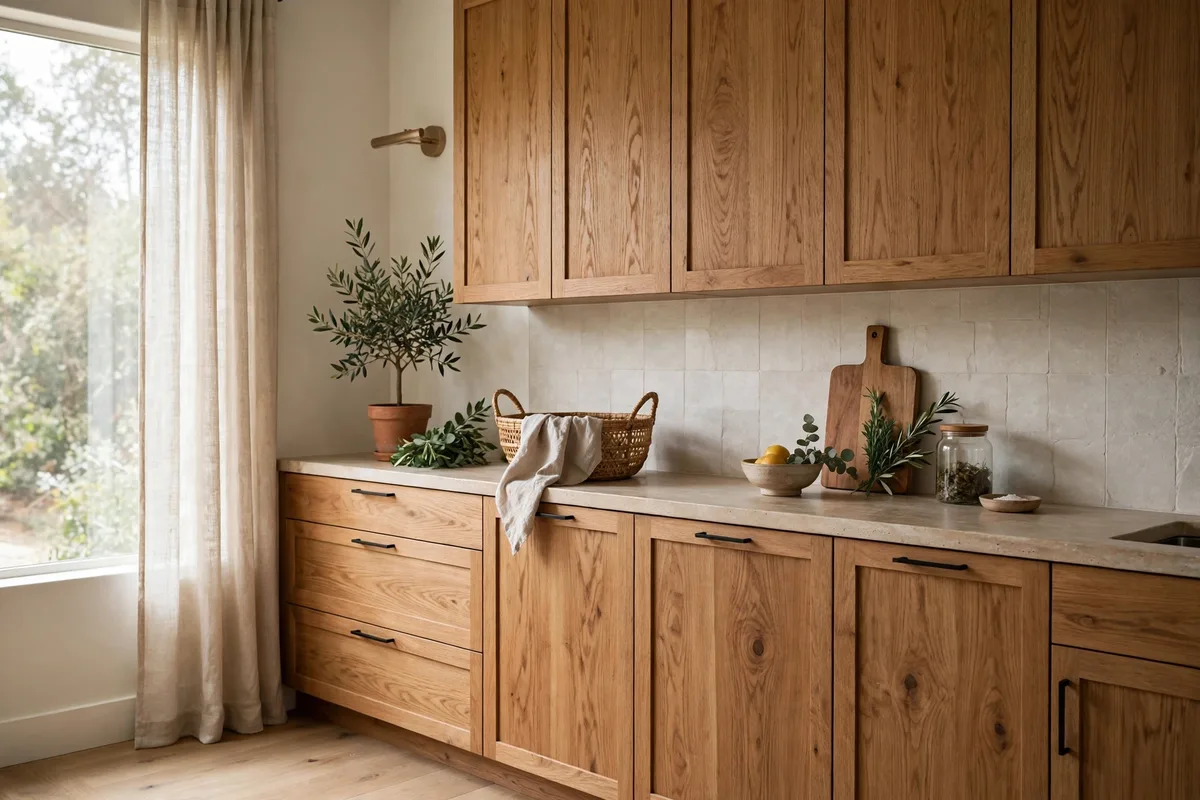
The shift is measurable. Better Homes & Gardens’ report on MasterBrand’s annual survey — over 2,000 kitchen design experts — found mid-toned stains among the top cabinet choices for the first time in 15 years: warm oak, light walnut, cedar. The driver is not nostalgia; it is fatigue. All-white kitchens photograph beautifully and live cold, and they show every mark a working kitchen makes. Warm wood hides the week better, pairs with the era’s stone and plaster textures, and brings the nature-indoors palette inside without a single houseplant.
The modern version differs from the last wood era in two ways: the stains are lighter and more matte (grain visible, orange gone), and the wood is dosed — an island, the lowers, one wall — rather than wall-to-wall. Warmth as an ingredient, not a takeover.
2. Species First: Undertone and Grain Decide the Mood
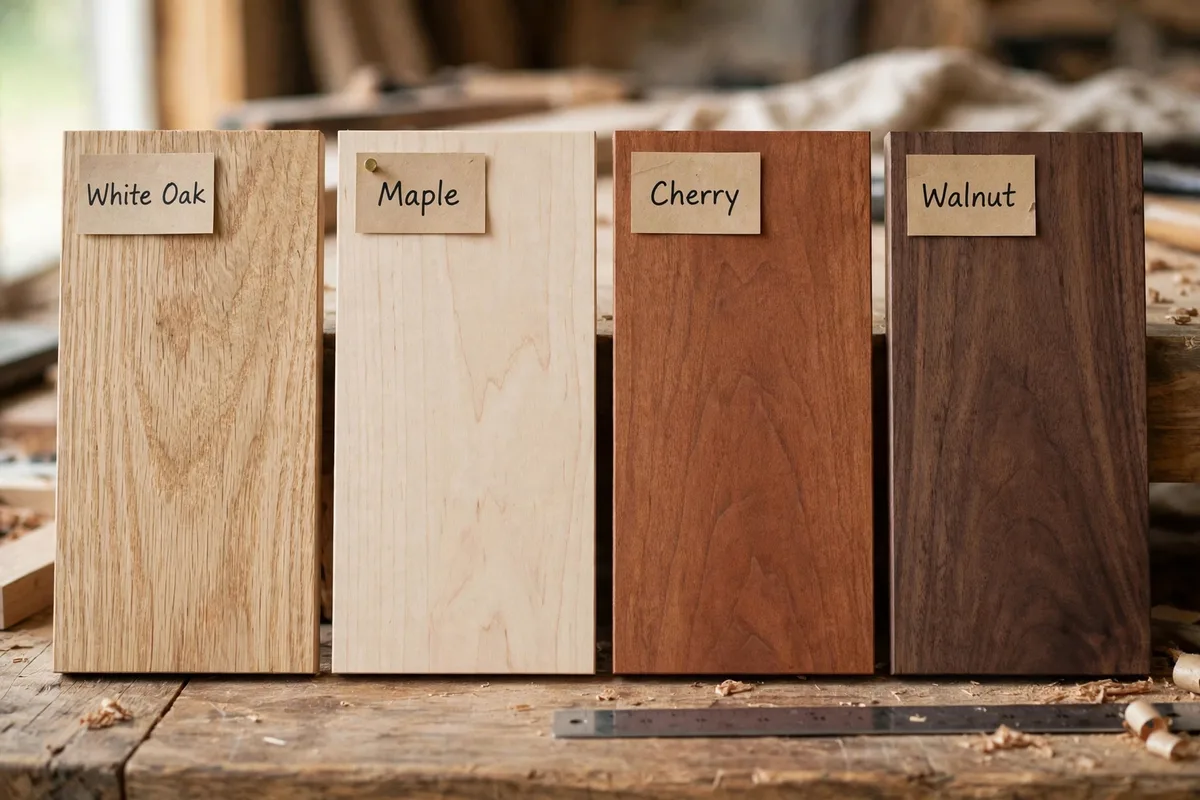
Every finish decision downstream is constrained by the species, because species fixes the two things stain cannot change: undertone and grain. White oak starts warm-neutral with a straight grain; red oak starts pinker with a bolder one; walnut starts chocolate; cherry starts red and deepens; maple starts pale and fine. Choose the species whose natural direction is already your destination — stain is a nudge, not a relocation, and fighting a species’ undertone is how kitchens end up the wrong kind of warm.
This is the same undertone discipline that governs whole-room palettes in our autumn color palette ideas, applied to a single material: the wood’s temperature must agree with the room’s floors, counters and light before its beauty is even discussed.
3. White Oak, Rift-Sawn: The Warm-Modern Default
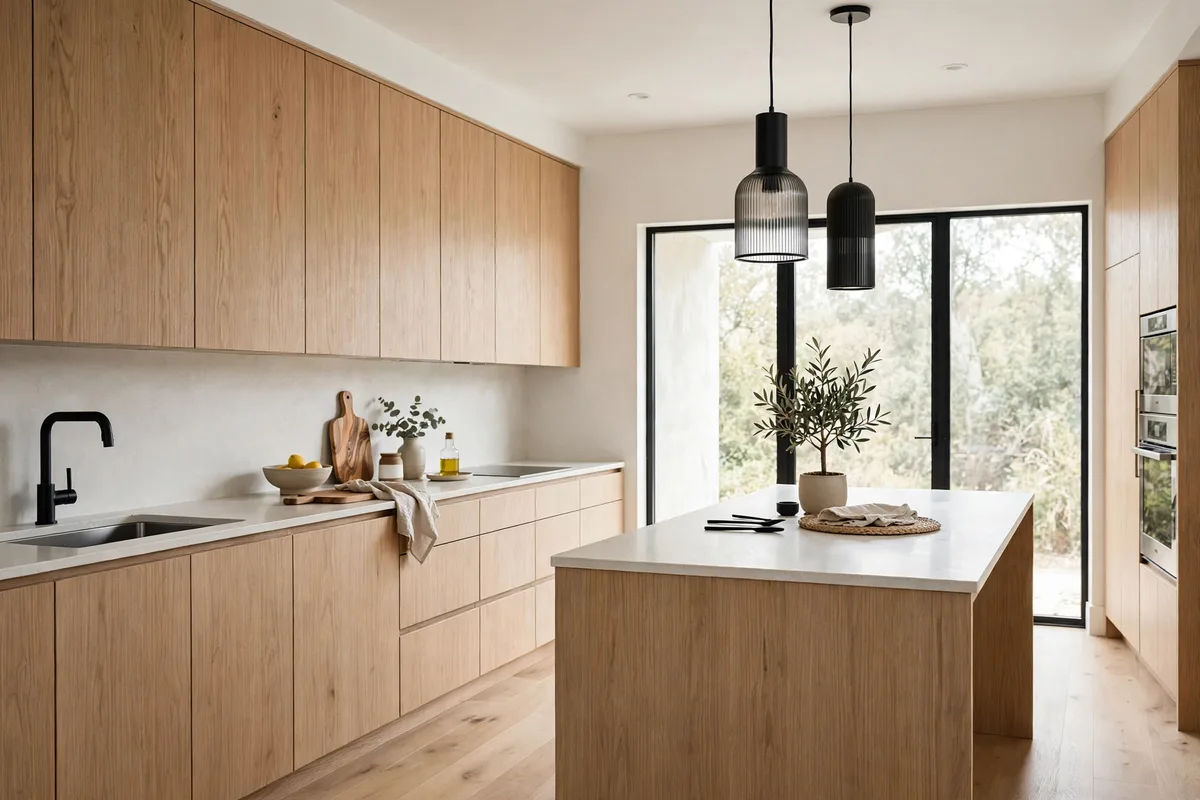
If one species owns the current moment it is white oak, preferably rift-sawn — cut so the grain runs straight and quiet, without the cathedral arches of plain-sawn boards. Shaker Cabinets’ species guide rates it the top stained-cabinet choice for modern kitchens on behaviour as much as looks: it absorbs stain evenly (no blotching), carries a neutral undertone that accepts light-to-dark stains, and its closed cellular structure makes it unusually water-resistant for a hardwood — a real virtue around sinks.
Finish it clear for the pale Scandinavian register, or with a light-to-medium warm stain for the survey’s favourite mid-tone. Either way, specify the full-size sample door in your own light before committing: oak’s warmth reads differently at breakfast and under evening LEDs, and a door is the smallest unit of truth.
4. Walnut, Clear Only: The Dark Anchor
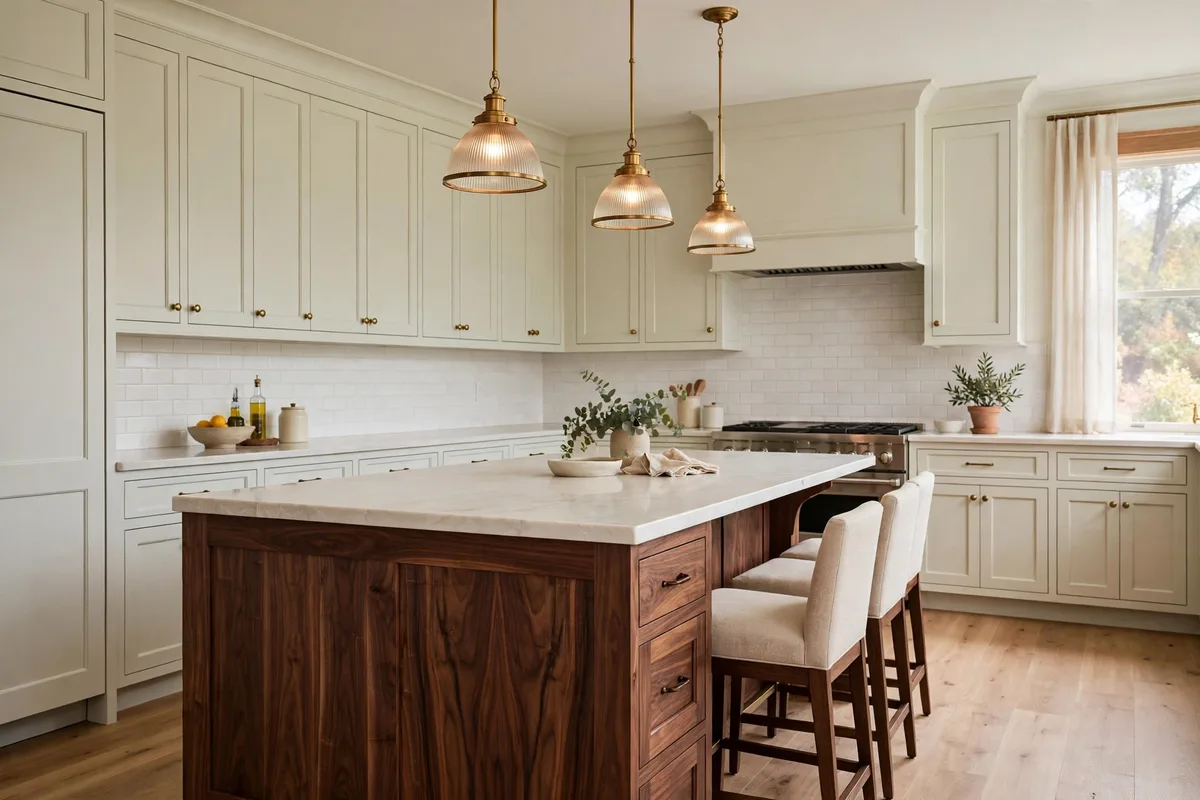
Walnut needs nothing done to it, and the guides agree: it is usually finished clear, because its heartwood — light brown to deep chocolate with darker streaks — is already the finished colour people pay stains to imitate. It is also the luxury tier on price, which dictates its dosing: walnut earns most as an anchor — the island, one tall wall, the lowers of a small kitchen — against a paler room, rather than as an all-over envelope that darkens everything it touches.
Two walnut disciplines: never paint it (the grain is the entire point, and its coarse pores telegraph through paint), and expect the sapwood contrast — pale streaks at board edges — unless you specify heartwood-only, which costs more and looks it.
5. Cherry: The Finish That Changes After You Choose It
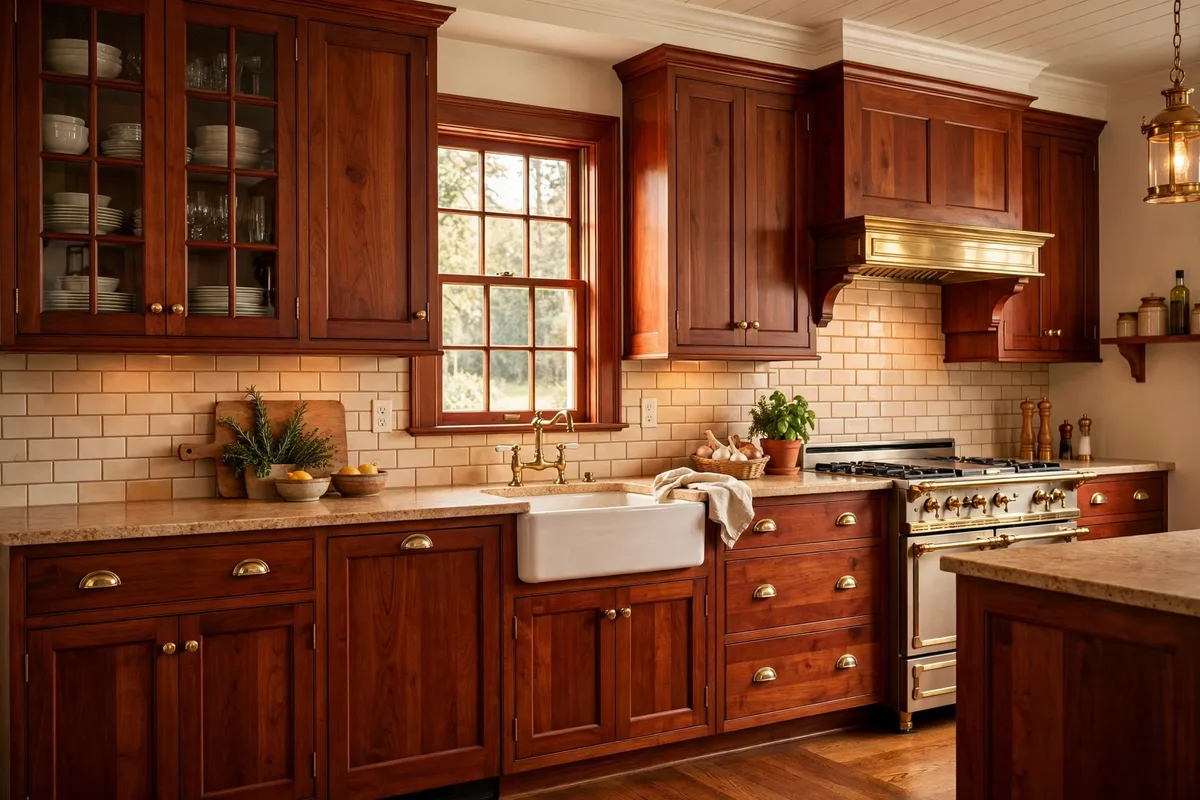
Cherry is the romantic of the cabinet woods — smooth, fine-grained, and finished clear or nearly so because its colour is the attraction. It is also the one species with a mandatory warning: cherry darkens significantly with light exposure, moving from a fresh salmon-brown toward a deep red-brown over its first years. Buyers who know this call it patina; buyers who do not call their installer. Judge cherry by an aged sample, not a fresh one, and expect gentle unevenness where rugs, fruit bowls and appliances shade the wood — the marks even out as the whole surface matures.
It suits formal and traditional rooms best, and pairs with the warm metals (brass, copper) that echo its red register. In a north-facing kitchen its warmth is compensation; in a sun-drenched one it will out-deepen your plan, so sample accordingly.
6. Maple and the Blotch Rule: Pale, Smooth, Demanding
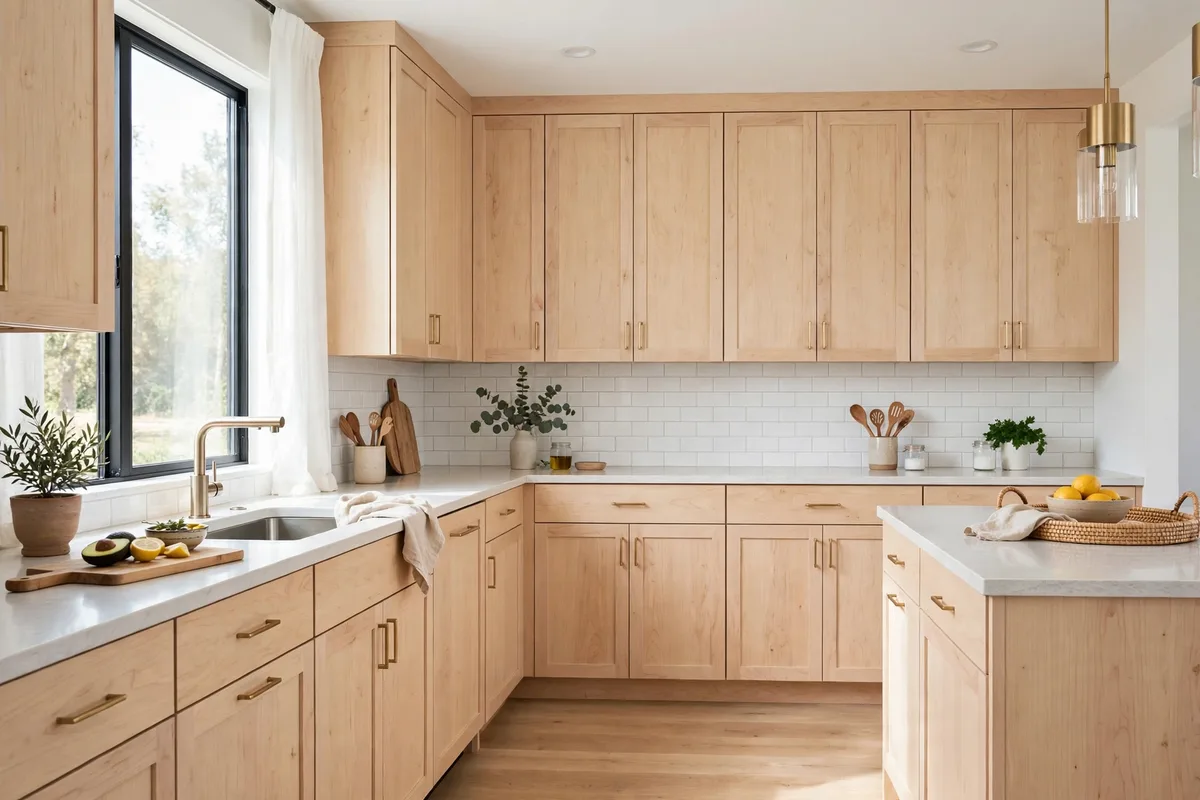
Maple is the pale quiet option — nearly white sapwood to pale gold, fine even grain, hard and durable. Its fame is as the paint-grade species (that smooth surface is why painted cabinets are usually maple underneath), but finished clear or lightly stained it gives the brightest true-wood kitchen available. The caution is in the staining: maple’s tight grain absorbs stain unevenly and blotches, which is why the species guides insist on a pre-stain conditioner and test boards — and why dark-stained maple is a specialist job, not a weekend one.
Its siblings behave similarly: birch (paler, cheaper, same blotch risk) and alder (softer, warmer-toned, dents more easily — a light-use or rustic choice). Pale-wood kitchens live or die on this section: species behaviour first, Pinterest second.
7. Stain Depth: Light Opens, Medium Grounds, Dark Anchors
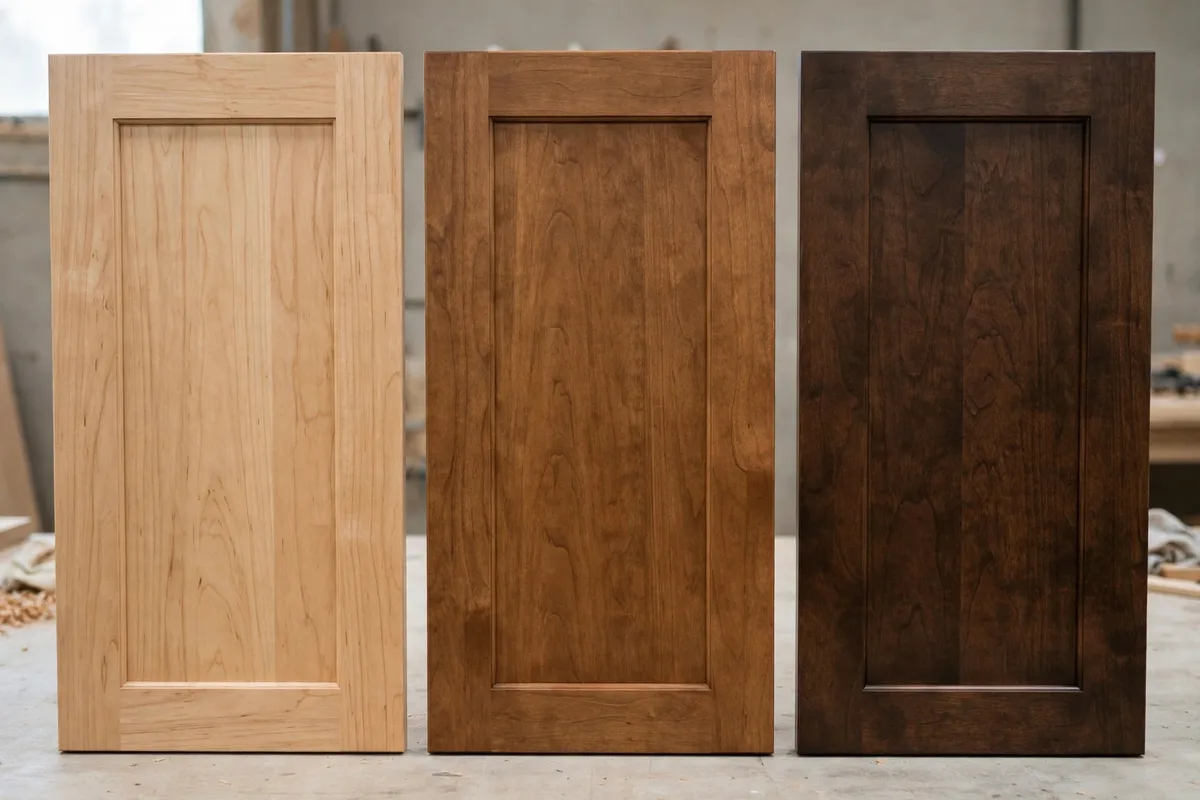
Within a species, stain depth is the room’s light budget. Light stains keep small and north-facing kitchens open and are the most forgiving of grain variation. Medium stains — the MasterBrand survey’s new top tier — are the warm middle: they ground a room, hide wear best, and pair with both pale counters and dark accents. Dark stains are anchors, dosed like walnut: an island or a lower run, in a room with the light to pay for them.
Two rules across all depths: stain looks darker and warmer on a full door than on a chip (test at door scale, in your light, at two times of day), and open-grained woods (the oaks, ash, hickory) take stain with depth and drama while tight-grained woods (maple, birch) take it reluctantly — §6’s conditioner rule. The stain does not fight the grain; it hires it.
8. Sheen: The Matte Look With Satin’s Armour
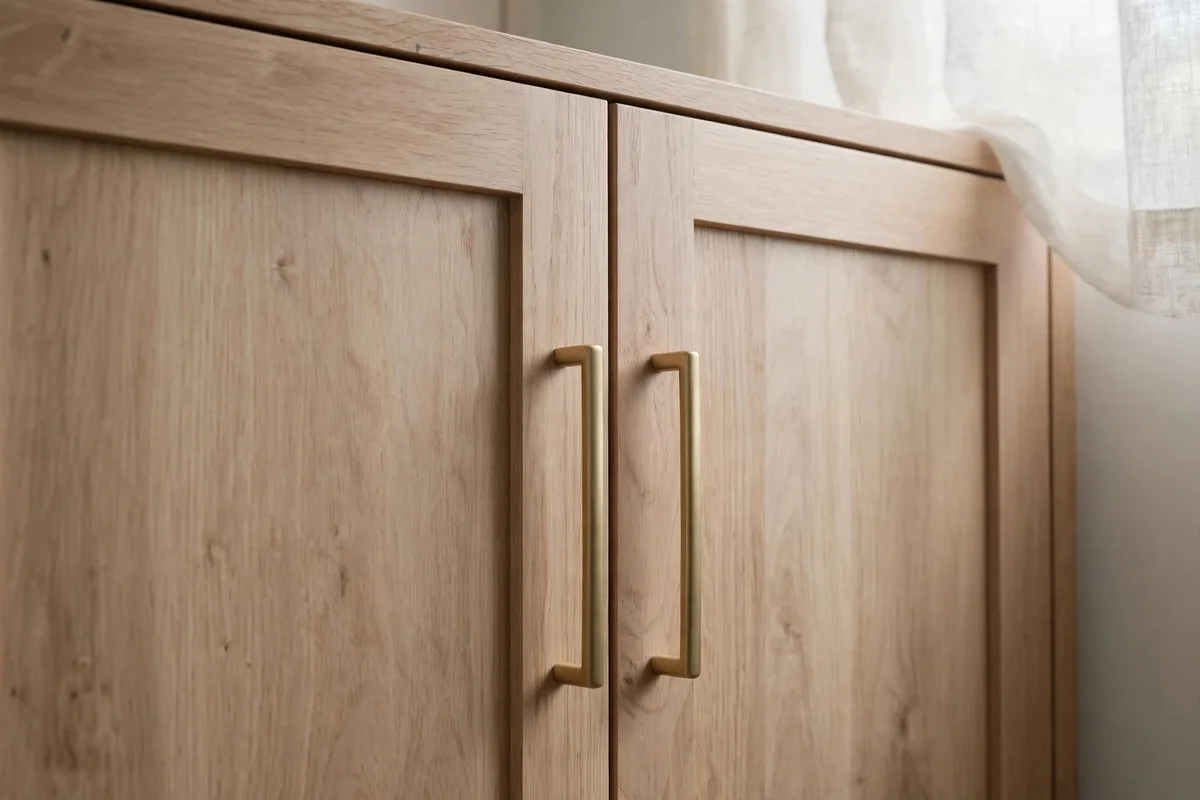
The current taste is matte-looking wood; the current wisdom is not to buy true matte for cabinets. Dead-flat finishes are porous: they absorb oils and grease, show fingerprints, and burnish into shiny patches when scrubbed. The professional compromise is a low-satin (or “matte-look” catalysed) finish — visually soft, diffusely reflective, but with the tighter, cross-linked film that wipes clean and resists moisture around sinks and stoves. Satin is the painters’ default for cabinets for exactly this trade: it hides minor dents and grain pores that a gloss would magnify, while still releasing grease instead of drinking it.
Reserve higher sheens for the spots that take daily splashing (the doors flanking the range and sink), if anywhere — and keep sheen consistent across a run, because a sheen change mid-wall reads as two kitchens under kitchen lighting.
9. Where the Wood Goes: The Two-Finish Kitchen
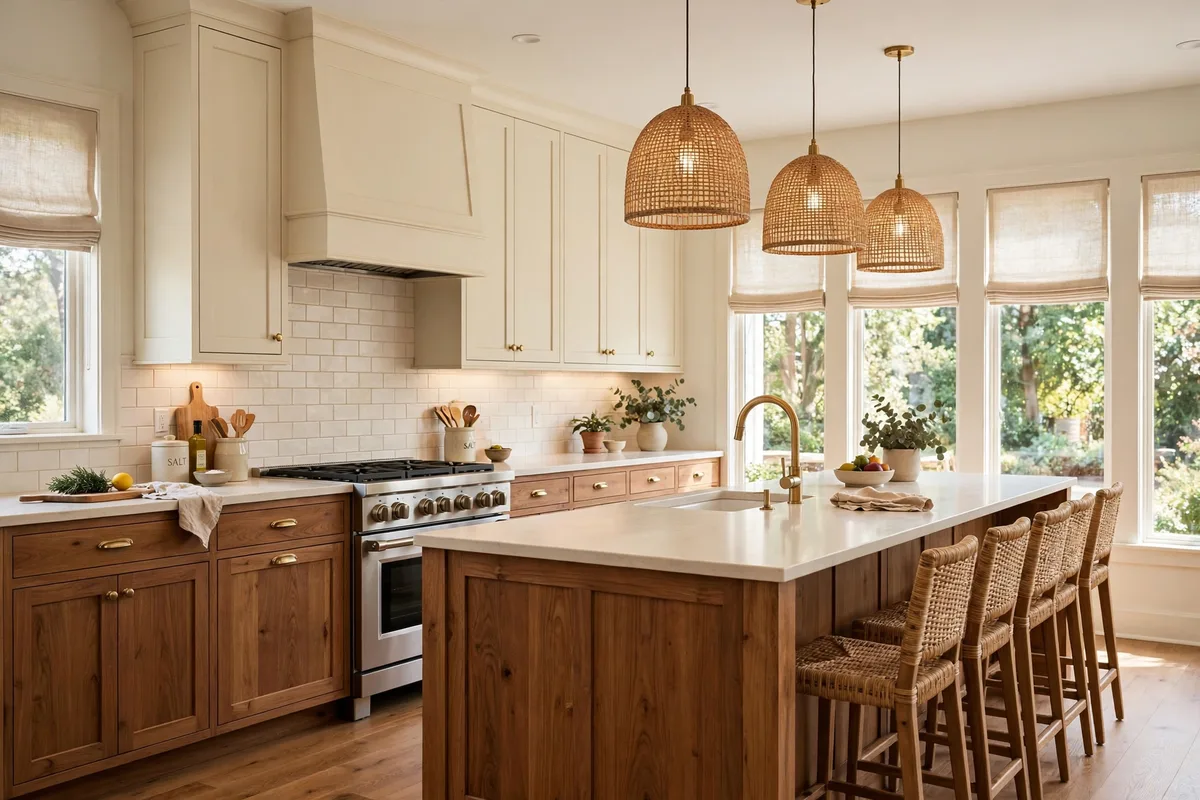
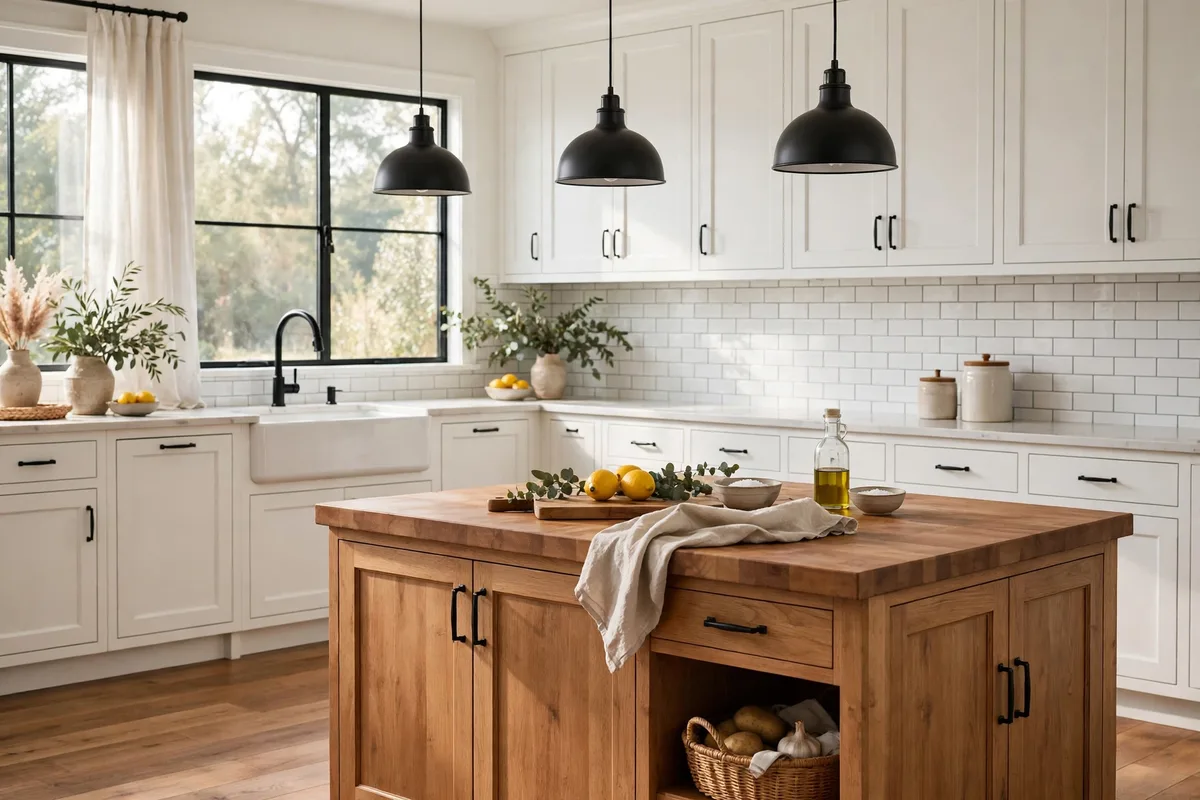
Most warm-wood kitchens are actually two-finish kitchens: wood where hands and eyes land low, paint above to keep the room bright. It is the wood dialect of the split in our two-tone kitchen cabinets ideas — wood lowers count as the “dark below” even at a medium stain, because grain reads heavier than flat colour. The pairing rules travel with it: change finish at a real break (island vs perimeter, base vs upper), never door-by-door; tie the two finishes together with one hardware and one counter.
The wall between them matters too: wood cabinets want the warm-neutral backsplash family — cream, travertine, warm white — from the pairing table in our kitchen backsplash colors ideas. Cool grey tile against warm wood is the undertone fight §2 warned about, staged at eye level.
10. Care: Wood Ages Well If You Let It
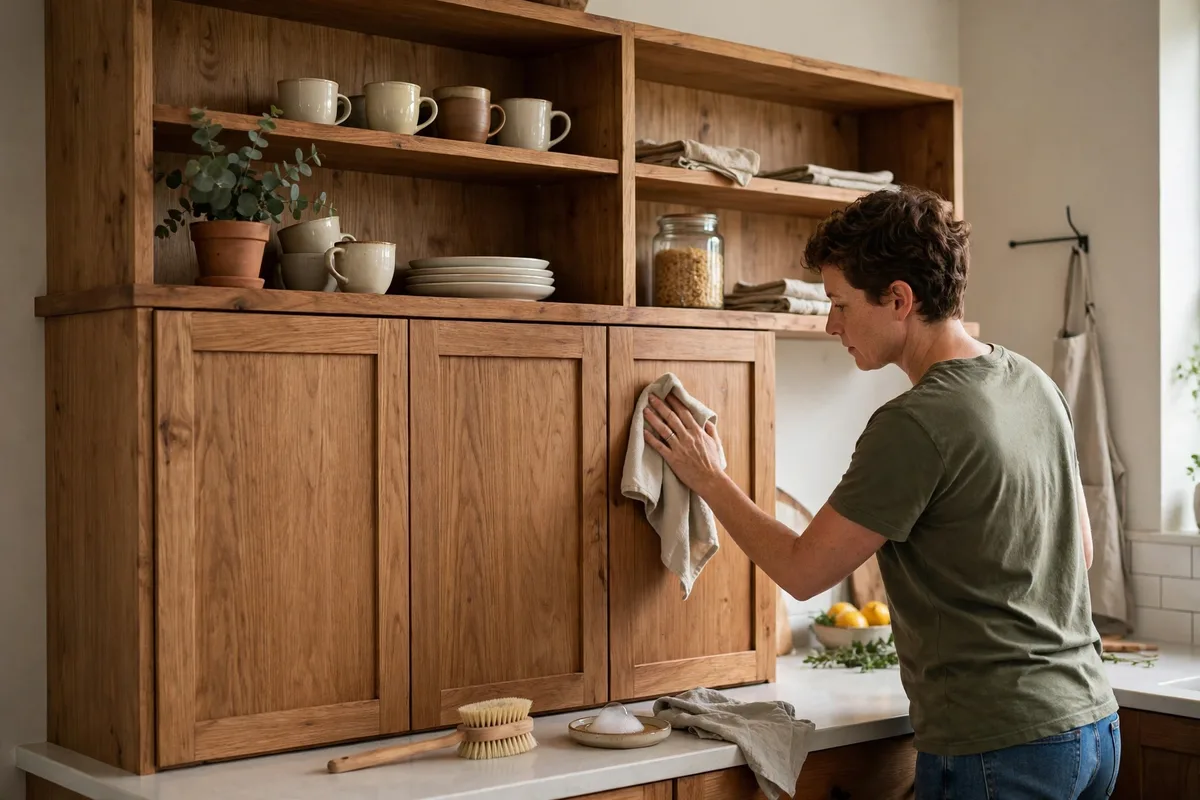
Wood cabinetry asks for less than its reputation suggests: a soft cloth, mild soap solution for grease, water dried rather than left standing (especially at sink doors and the dishwasher’s steam path), and no abrasive pads or ammonia/bleach cleaners, which dull the film. Touch-up follows the finish — stain pens and a matching topcoat for nicks; a door with a failed finish is a refinishing conversation, not a replacement one, which is wood’s long-game advantage over paint and laminate alike.
Echo the cabinet wood once more in the room — the open shelves from our open shelving styling ideas in the same species and sheen are the natural candidate — and rotate anything that shades the wood (bowls, boards, appliances) occasionally in the first years, so light-driven species like cherry deepen evenly. Wood is the rare kitchen finish whose ten-year photograph can beat its first-day one; the care is just letting it.
Frequently Asked Questions About Warm Wood Kitchen Finishes
What is the most popular warm wood for kitchens right now?
White oak — especially rift-sawn, in clear or mid-tone stains. Designer surveys put medium stains (warm oak, light walnut, cedar) among the top cabinet choices for the first time in 15 years. Walnut is the luxury anchor; cherry the traditional favourite.
Which wood takes stain best?
The open-grained species: white oak first (even absorption, neutral undertone), then red oak, ash and hickory. Tight-grained maple and birch blotch without a pre-stain conditioner, and walnut and cherry are usually finished clear because their natural colour is the point.
Should walnut cabinets be stained or clear-finished?
Clear, almost always. Walnut’s chocolate heartwood is the finished colour people imitate with stain on lesser woods. Specify heartwood-only if you want to avoid pale sapwood streaks — and never paint it; the grain is the value.
Does cherry wood really change colour?
Yes — it deepens from salmon-brown toward rich red-brown with light exposure over the first years. Judge it by an aged sample, rotate objects that shade it early on, and treat the change as patina: it is the species’ character, not a defect.
What sheen is best for wood kitchen cabinets?
Low-satin (matte-look) catalysed finishes: soft and modern to the eye, but with a tight film that wipes clean and resists moisture. True matte absorbs grease and burnishes; gloss magnifies every dent and pore. Keep one sheen across a run.
Are wood cabinets harder to maintain than painted?
Less than folklore says: soft cloth, mild soap, dry standing water, no abrasives or ammonia cleaners. Wood’s advantage is repairability — nicks take stain pens and spot topcoat, and a worn door can be refinished rather than replaced.
Can I mix wood cabinets with painted cabinets?
Yes — it is the most common warm-wood scheme: wood low (lowers, island), paint above. Change finish only at a real break, never door-by-door, and unify with one hardware finish and one countertop material.
What backsplash goes with warm wood cabinets?
Warm neutrals: cream, travertine, warm white, handmade-look tile with warm undertones. Avoid cool greys and blue-whites, which fight wood’s warmth. The grain is the pattern — keep the tile quiet and let the wood speak.
How do I test a wood finish properly?
On a full sample door (not a chip), finished exactly as specified, stood in your kitchen and judged in morning and evening light. Stain reads darker and warmer at scale, species like cherry must be judged aged, and showroom lighting lies in a warm direction.
Is warm wood a trend that will date?
The mid-tone, grain-visible version is closer to a correction than a fashion spike — wood cabinetry predates the white era and the current stains are the restrained end of the range. Insurance: keep the species classic (oak, walnut) and the fashionable notes in hardware and textiles, which are cheap to change.
Conclusion
Choose the species for its undertone and grain, the stain for the room’s light, the sheen for the kitchen’s workload, and the placement for the room’s balance — in that order, warm wood stops being a gamble and becomes the most forgiving finish in the house. It hides the week, warms the light, and improves with age: the rare upgrade that pays you back for keeping it.


Pingback: 10 White Kitchen Accents Ideas (Warm, Not Sterile)