
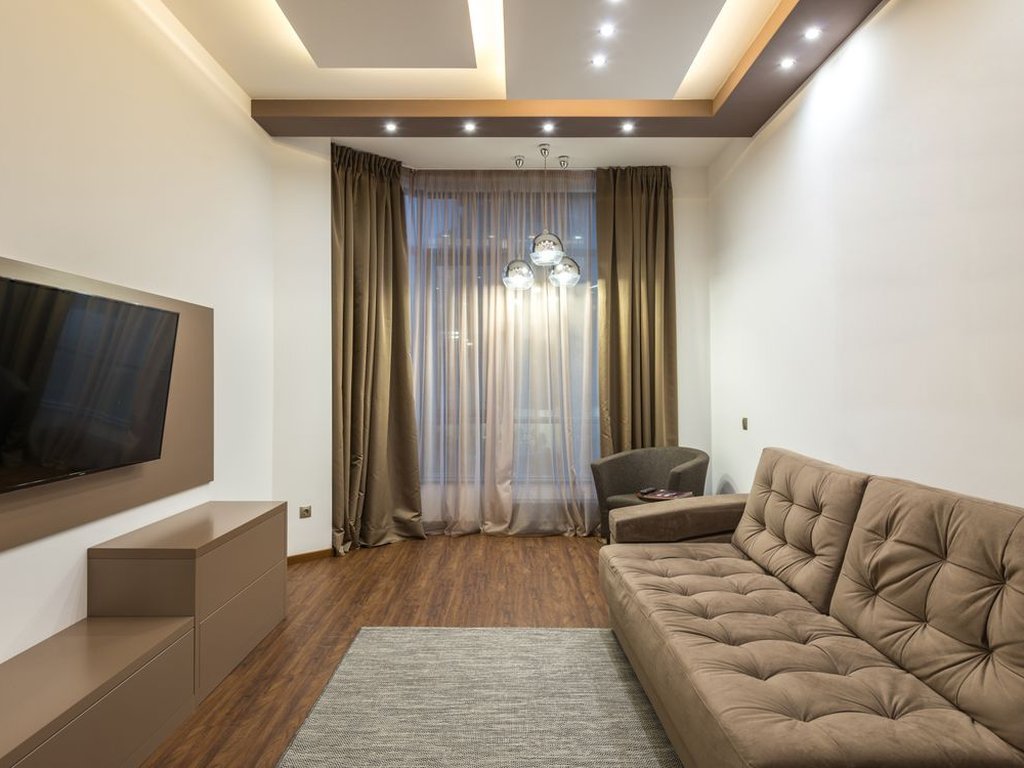
A living room TV wall is a designed wall that holds your television, hides its cables and turns the screen into a feature instead of a black box. The best TV walls mount the screen at eye level, add panels, shelves or a console below, and keep every wire out of sight. You can build one with paint and a floating console for under $200, or fit a full media wall with lighting and storage for a few thousand. The right choice depends on your room size, your budget and how you watch TV.
This guide gives you 20 living room TV wall ideas, from wood slat panels and dark paint to built-in shelves, stone panels and luxury media walls. Each idea tells you what to do, what it costs and how to make it work in your home. Pick the idea that fits your wall, then follow the steps to mount, style and finish it. Your TV wall can look built in, not bolted on.
Mount the TV at Eye Level
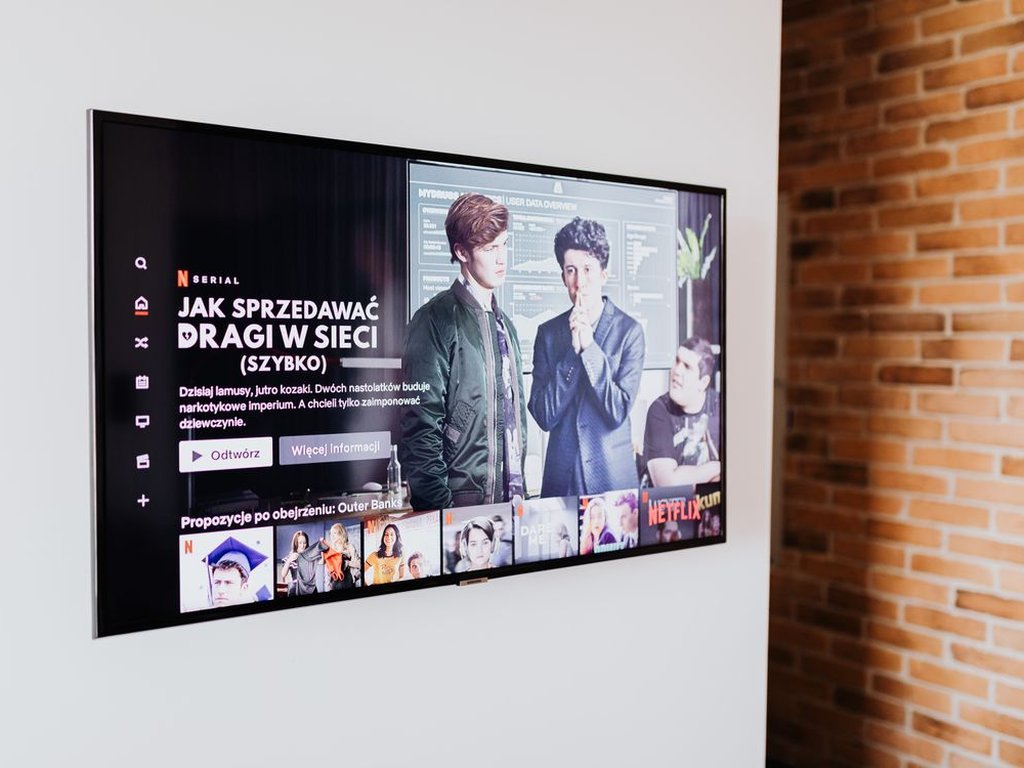
Mount your TV so the centre of the screen sits at eye level when you sit on the sofa, which is about 105 to 115 centimetres from the floor for most seats. A TV hung too high strains your neck, while one hung too low makes you slouch, so measure before you drill. A fixed wall mount costs $25 to $60, and a tilt mount costs $40 to $90. Mark the studs, check the height with painter’s tape, and sit down to test the view. This one change makes every film night more comfortable.
Add Vertical Wood Slats
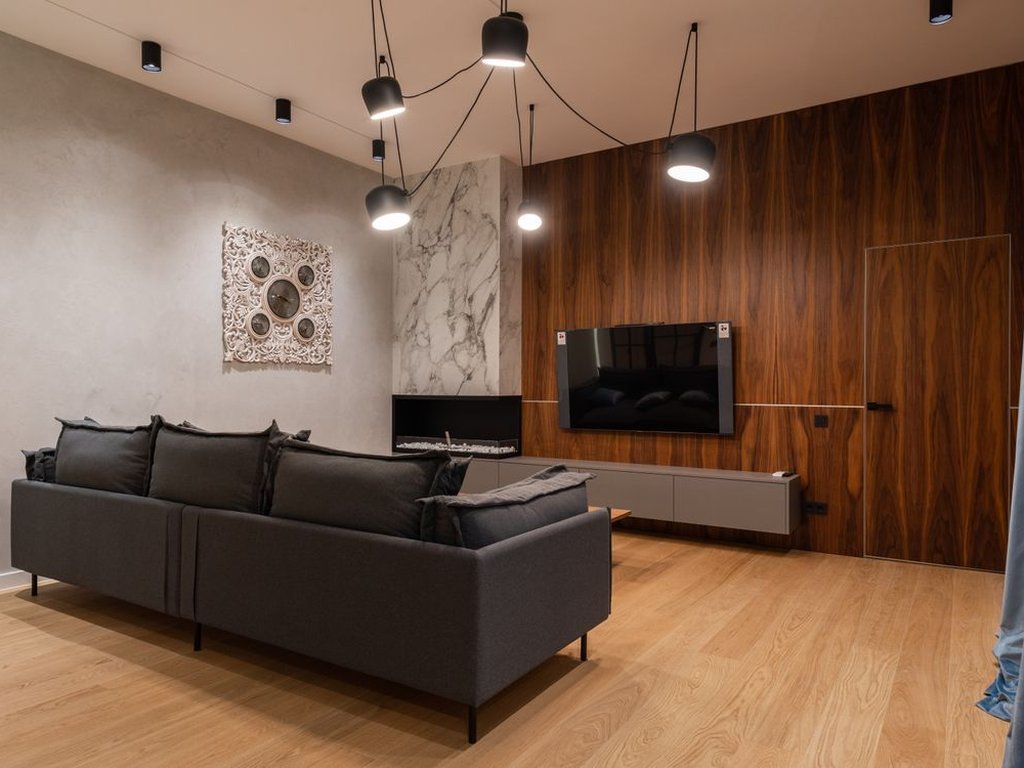
Vertical wood slats turn a plain TV wall into a warm feature wall that hides cables and adds texture behind the screen. Fit slim oak or walnut slats, about 4 centimetres wide with a 1-centimetre gap, across the full width of the TV wall. Ready-made slat panels cost $150 to $400 per wall, while loose timber battens cost less if you fit them yourself. Paint the wall behind the slats dark so the gaps read as shadow lines. The slats soften the black screen and make the whole wall feel designed, not just filled.
Mount the TV Above the Fireplace

Mounting the TV above the fireplace works best when the fire is electric or gas with a cool surround, since heat and screens do not mix. Keep at least 30 centimetres between the top of the firebox and the bottom of the TV, and fit a tilt mount so you can angle the screen down toward the sofa. A tilt mount costs $40 to $90, and a heat shield costs about $50. The Spruce’s TV above fireplace ideas explain how to check the mount, the wall material and the heat limit before you drill, so read that guide first.
Frame the TV with Built-In Shelves

Built-in shelves around the TV make the screen look like part of the furniture instead of a black box stuck on the wall. Fit matching shelves on both sides of the TV, about 30 centimetres deep, with closed cupboards below for boxes and cables. A carpenter-built unit costs $800 to $2,000, while flat-pack shelving costs $200 to $500. Leave one shelf in three empty so the display can breathe, and mix books with one plant and one vase. The shelves balance the screen and give the wall a finished, lived-in feel.
Float a Low Media Console
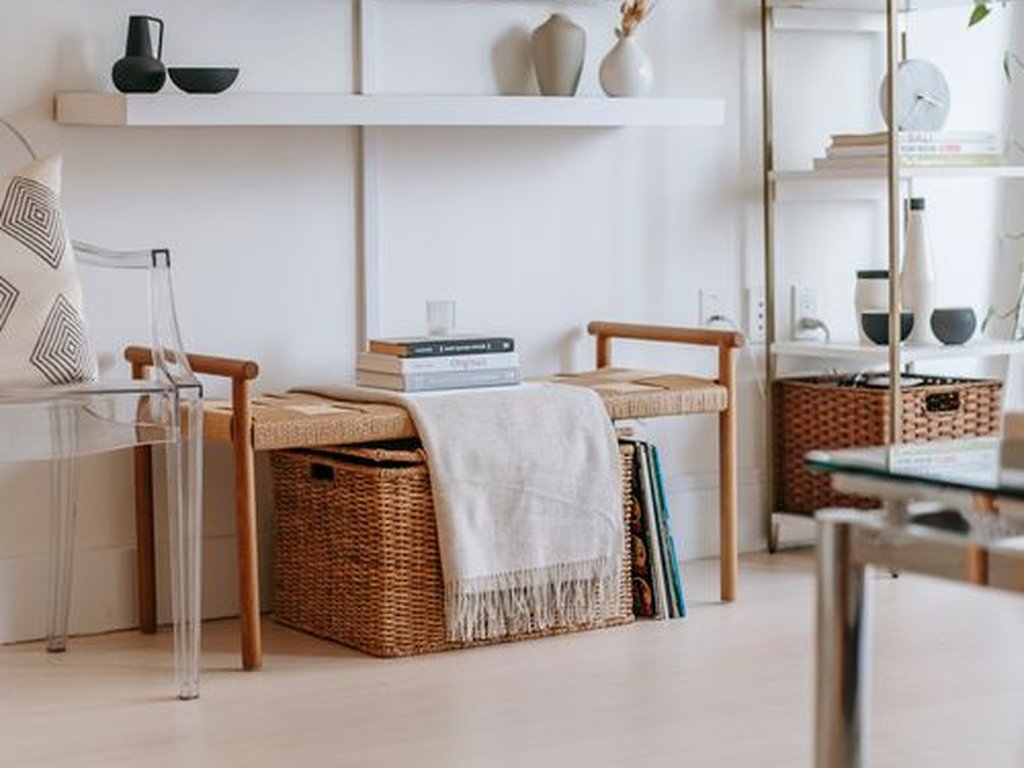
A floating media console works best under a wall-mounted TV because it holds your boxes and soundbar without touching the floor. Choose a console about 20 centimetres wider than the TV on each side, fixed 40 to 50 centimetres above the floor, in oak, walnut or matte white. A floating console costs $150 to $600, and a wall-mounted soundbar adds $100 to $300. Run the cables through the wall or a slim trunking strip behind the console. The clear floor below makes the room feel bigger and cleaning much easier.
Build a Gallery Wall Around the TV
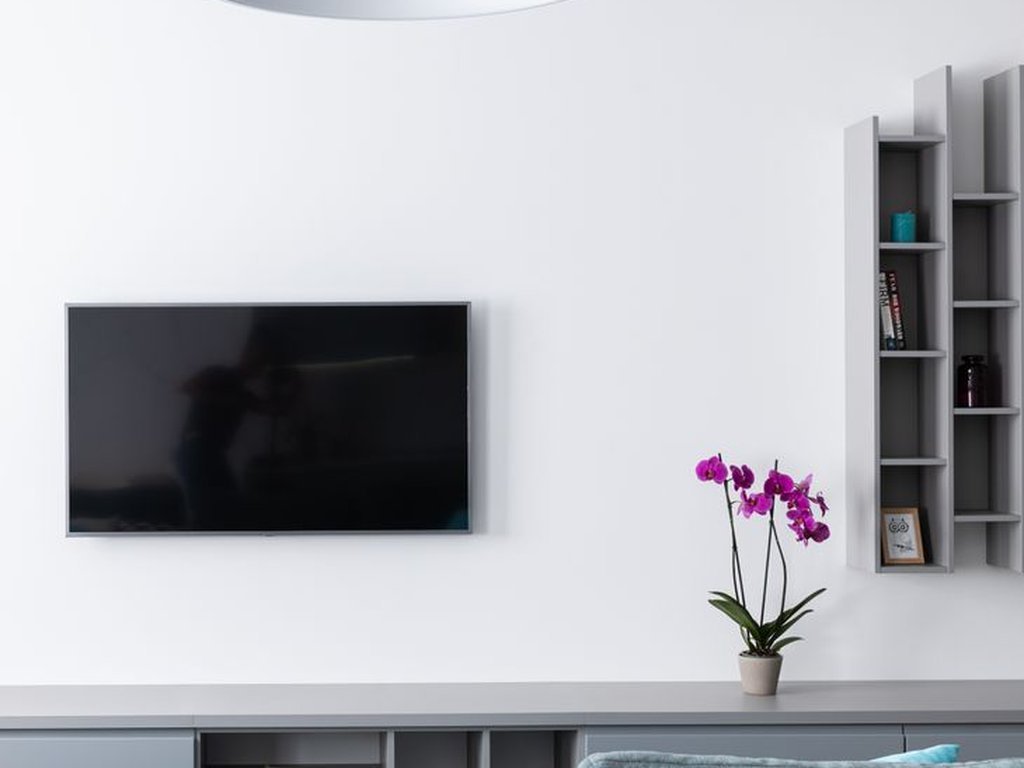
A gallery wall around the TV works because the frames pull your eye across the whole wall instead of leaving the black screen alone. Hang five to seven frames in mixed sizes around the TV, keeping a gap of 5 to 8 centimetres between each frame, and use one frame style so the mix looks planned. Frames cost $8 to $30 each, and a picture ledge costs $20 to $50. Start with the largest frame first, then fill the gaps. For a bolder backdrop, see our living room accent wall ideas before you hang the first frame.
Paint the TV Wall Dark
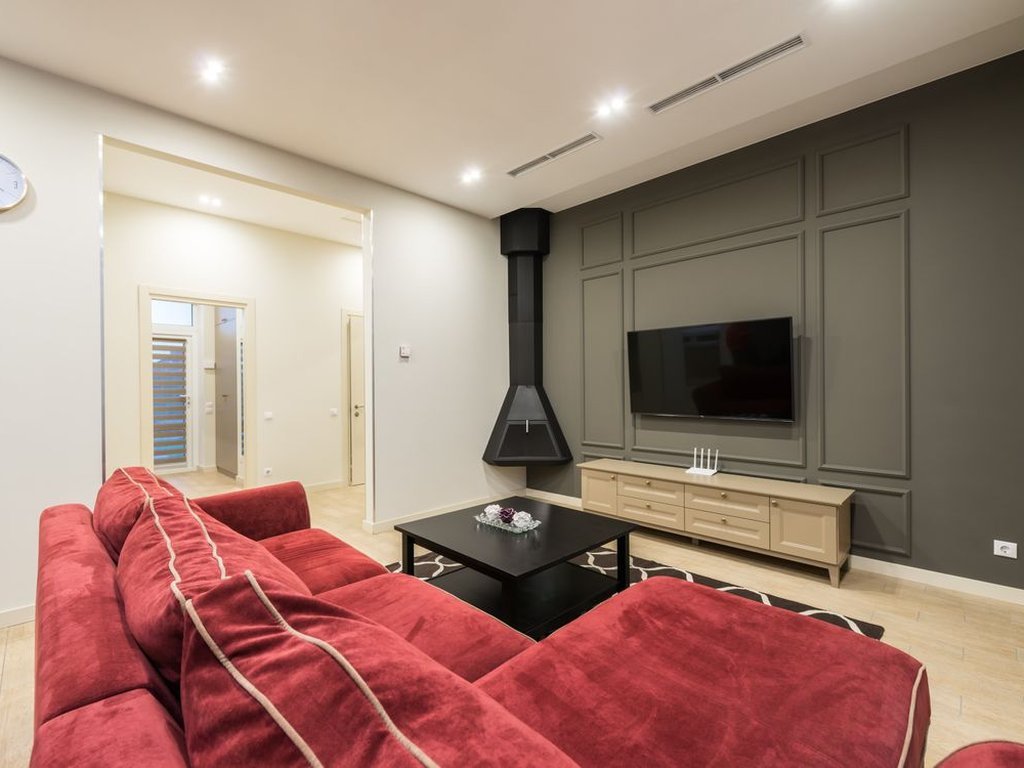
Painting the TV wall dark works because the black screen blends into the paint and stops shouting for attention when the TV is off. Choose a deep shade such as Farrow and Ball Hague Blue, Benjamin Moore Hale Navy or a charcoal grey, and paint the whole wall, not just a patch behind the TV. A litre of quality wall paint costs $25 to $45, and one wall needs about two litres. Keep the sofa and rug light so the room stays bright. The dark wall makes the screen vanish and the room feel calm.
Use a Stone or Marble Panel
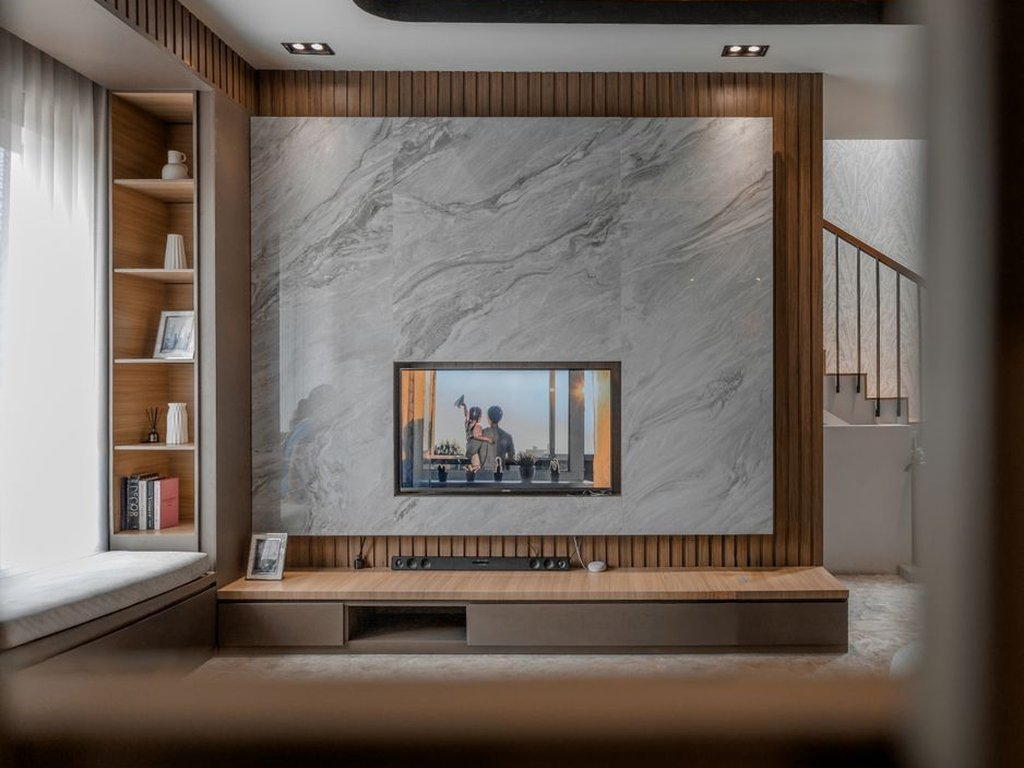
A stone or marble panel behind the TV works because the natural pattern turns a plain screen into a luxury feature wall. Choose a marble-look porcelain slab, real travertine or stacked stone, cut to the width of the TV plus 20 centimetres on each side. Porcelain slabs cost $200 to $600 per panel, while real marble starts near $800. Seal stone once a year to guard against marks, and mount the TV on a bracket fixed to the studs behind the panel. The stone gives the wall weight and makes the screen look expensive.
Fit the TV into a Corner
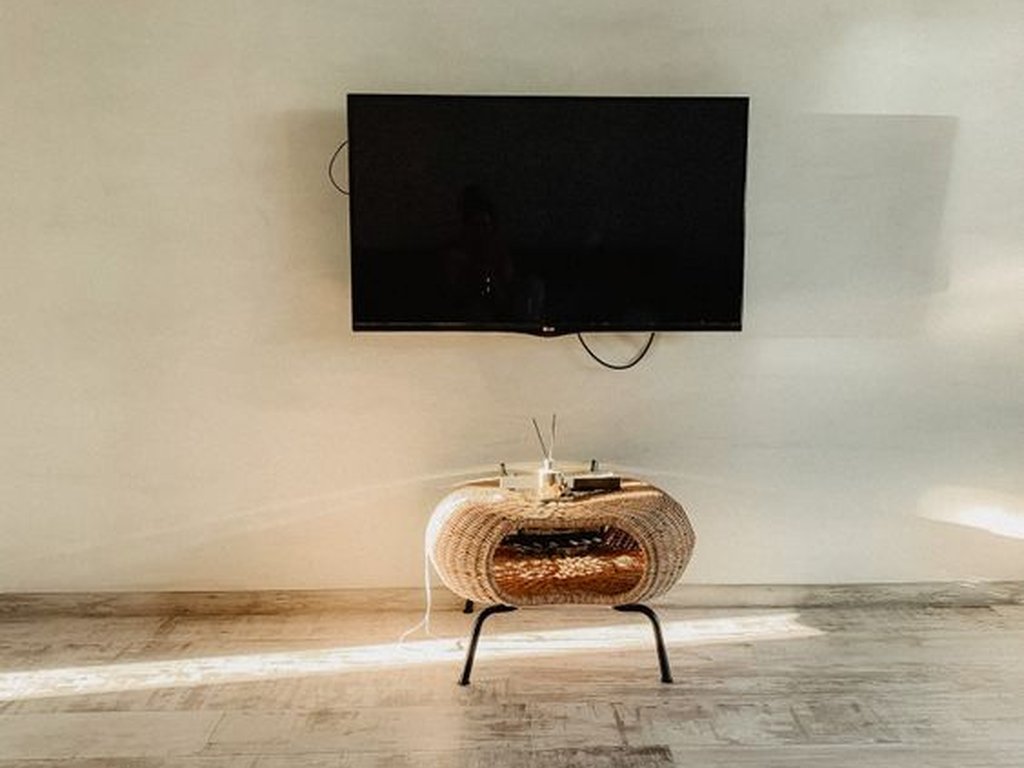
Putting the TV in a corner works best in a small or awkward room where no full wall is free for the screen. Use a corner wall mount that swivels, so you can angle the TV toward the sofa for films and push it flat when guests visit. A swivel corner mount costs $30 to $80, and a small corner console costs $100 to $250. Place the sofa at an angle facing the corner, with one armchair beside it. For more small-room plans, see our living room layout ideas for rectangular rooms before you fix the mount.
Hide the Cables Inside a Built-In Unit
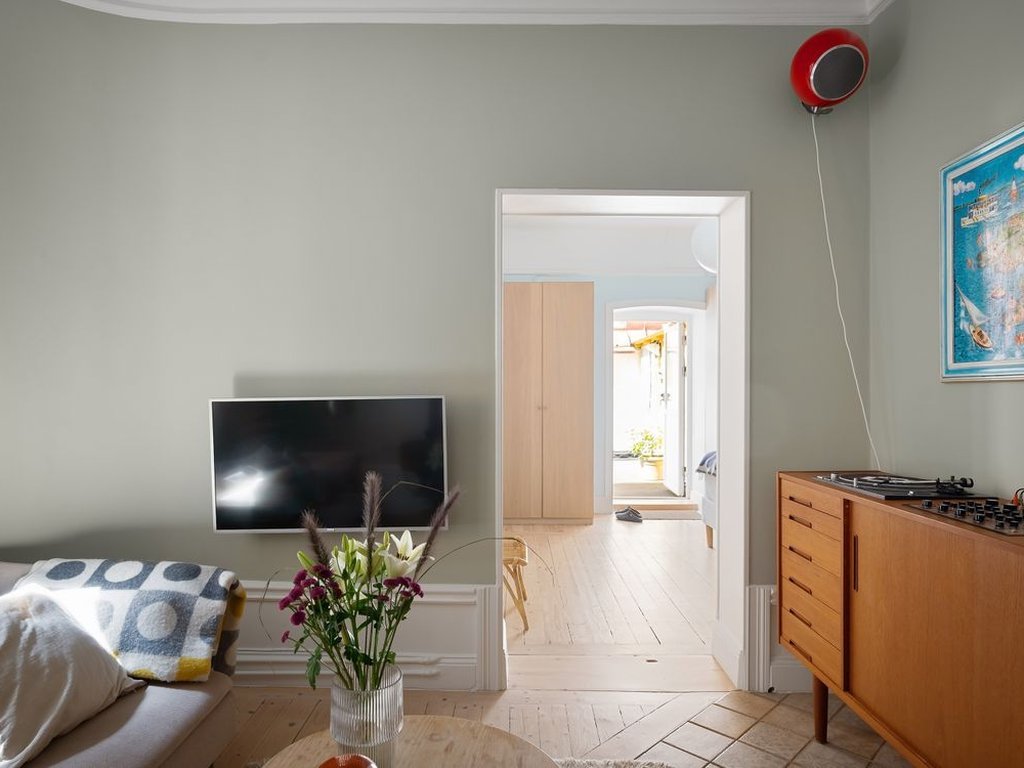
Hiding the cables inside a built-in unit works because loose wires are the one detail that makes even a smart TV wall look messy. Plan a cable channel behind the unit before you build it, with a power socket and a media box hidden in a cupboard below the TV. A cable trunking kit costs $10 to $25, and a recessed power socket costs $30 to $60 fitted. Drill the channel before you paint, and leave a spare conduit for future cables. The clean wall makes the TV look built in, and dusting takes half the time.
Choose a TV Size That Fits the Wall
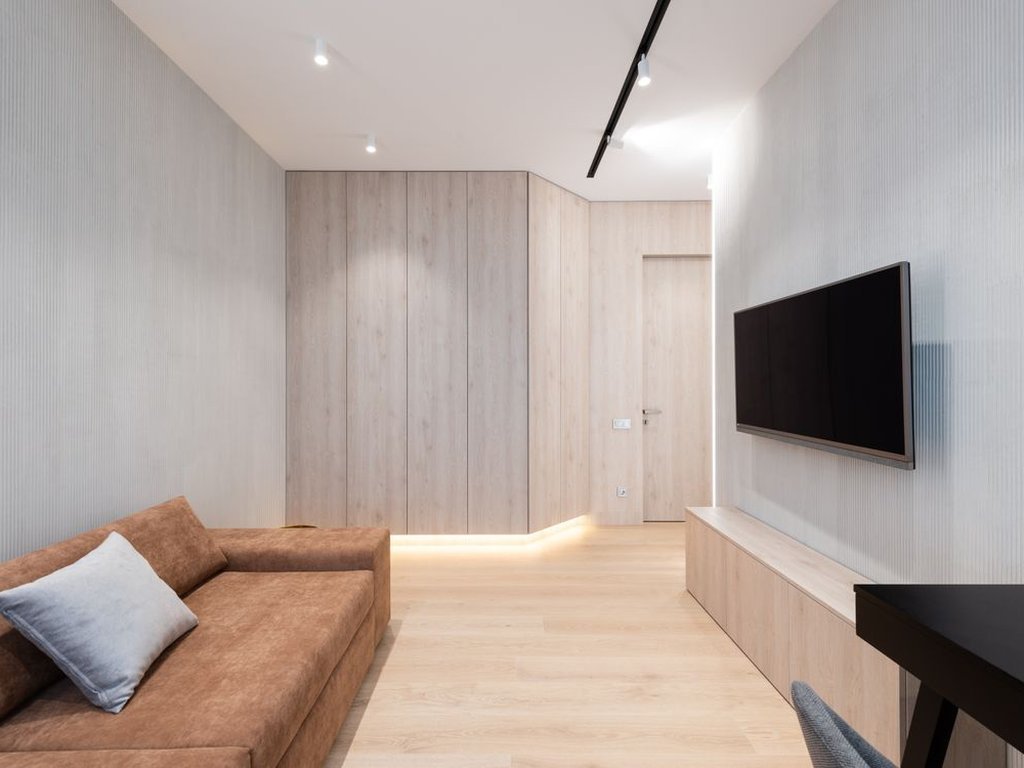
Choosing a TV size that fits the wall works because a screen that is too big crowds the room, while one that is too small looks lost. Pick a TV about two thirds the width of the wall or console below it, and sit 1.5 to 2.5 times the screen width away from it. A 55-inch TV suits most living rooms, and a 65-inch screen needs a wall at least 2.4 metres wide. Measure the wall first, then shop, not the other way round. The right size makes the wall feel balanced and the picture easy to watch.
Keep the Wall White and Minimal

A white, minimal TV wall works best when you want the room to feel calm and the screen to be the only dark shape in it. Paint the wall white, mount the TV flush, and keep the console low and clear, with just one vase or one stack of books on top. A slim white console costs $120 to $400, and a flush mount costs $25 to $50. Hide the remote and boxes in a drawer so nothing breaks the clean line. For the full look, see our minimalist living room ideas and keep every other wall just as plain.
Balance the TV with a Low Cabinet
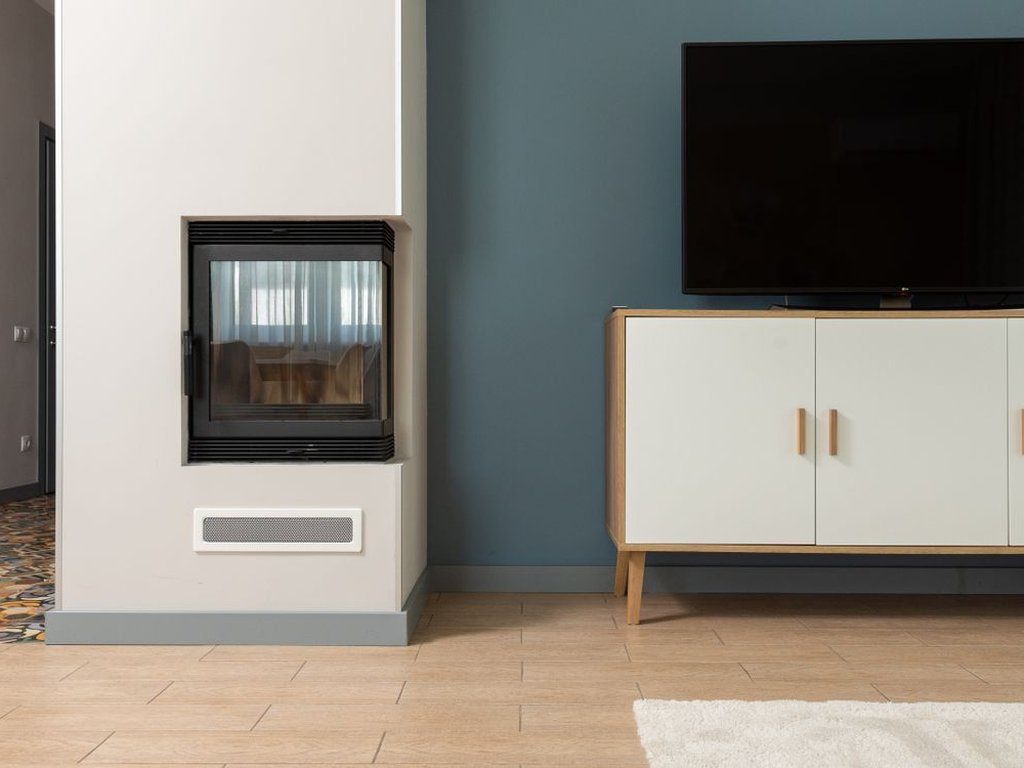
Balancing the TV with a low cabinet works because the cabinet grounds the screen and gives it a base, so the TV stops floating on the wall. Choose a cabinet about 20 centimetres wider than the TV on each side and 40 to 50 centimetres tall, in wood or matte black. A low media cabinet costs $150 to $500, and a pair of small plants on top costs $20 to $40. Keep the top clear except for one or two objects, so the cabinet stays tidy. The base makes the whole wall feel settled and complete.
Cover the Wall with Warm Wood Panels

Warm wood panels behind the TV work because the grain softens the black screen and brings a natural, cosy feel to the wall. Cover the full wall in oak, walnut or pine panels, fitted vertically or in wide planks, and match the tone to your floor. Wood wall panels cost $100 to $350 per wall in MDF with a wood veneer, while solid oak starts near $500. Add one warm light above or below the panel to show the grain at night. The wood makes the TV wall feel like furniture, not technology.
Mount the TV on a Brick Wall

A brick wall behind the TV works because the rough texture and warm red tones make the flat black screen feel at home. Leave real brick exposed if you have it, or fit brick slip tiles, about 20 centimetres long, over a flat wall with a matching mortar. Brick slips cost $30 to $60 per square metre, plus adhesive and grout. Seal the brick so dust does not shed onto the console below. Pair the brick with a wood console and a leather chair, and the TV wall gains a relaxed, loft-style character.
Add Plants and Shelves Beside the TV
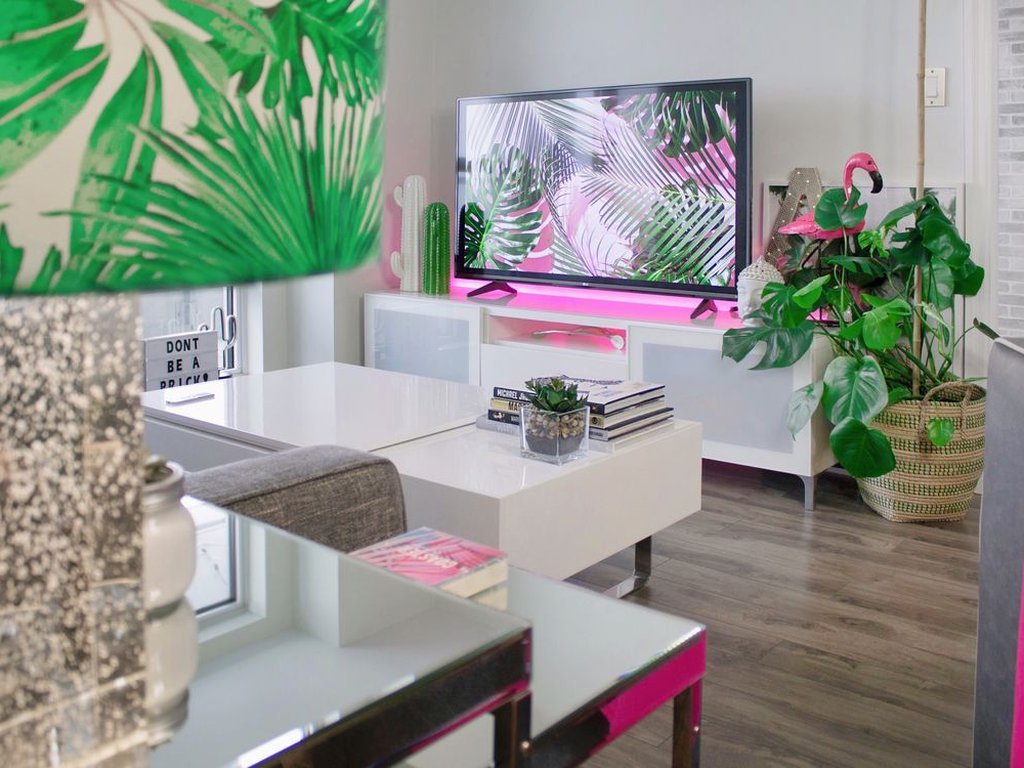
Plants and shelves beside the TV work because green leaves and small objects soften the hard edges of the screen. Put one tall plant, such as a fiddle leaf fig or a snake plant, on one side of the TV, and a small shelf with two or three books on the other. A large floor plant costs $40 to $100, and a floating shelf costs $20 to $50. Water the plant weekly and dust the leaves so they stay bright. The green beside the black screen makes the wall feel alive and welcoming.
Design a Luxury Media Wall

A luxury media wall works best when you treat the TV as one part of a full wall of panels, lighting and storage. Fit backlit panels behind the TV, add LED strips under the shelves, and use brass or black metal trims for a smart finish. A full media wall costs $1,500 to $4,000 fitted, while LED strips cost $15 to $40 per metre. Choose a warm 2700K light so the glow feels soft at night. The wall becomes the room’s best feature, and the TV looks like it was made for it.
Go Rustic with Stone and Timber
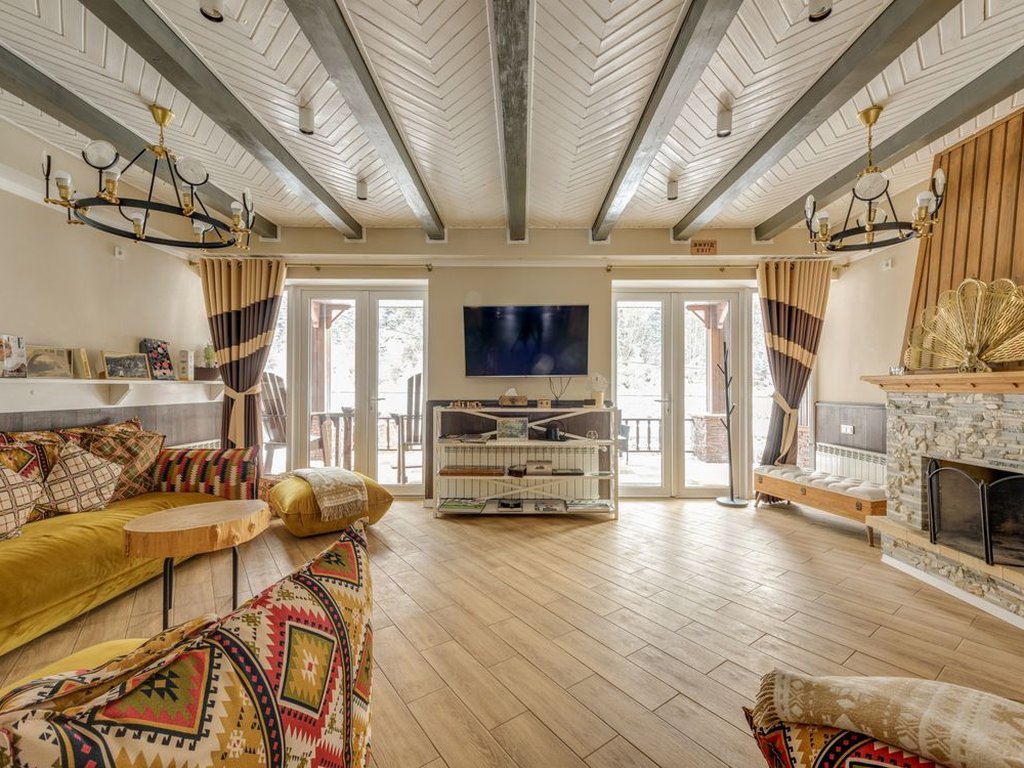
A rustic TV wall works because stone and timber bring warmth and texture that stop a big screen from feeling cold. Pair a stone chimney breast or stacked-stone panel with chunky timber shelves and a wood beam above the TV. Stacked stone costs $40 to $80 per square metre, and a reclaimed beam costs $80 to $200. Keep the sofa in leather or linen and the rug in a plain wool so the natural materials lead. The stone and timber make the TV wall feel like part of a country lodge.
Centre the TV on a Wide Blank Wall
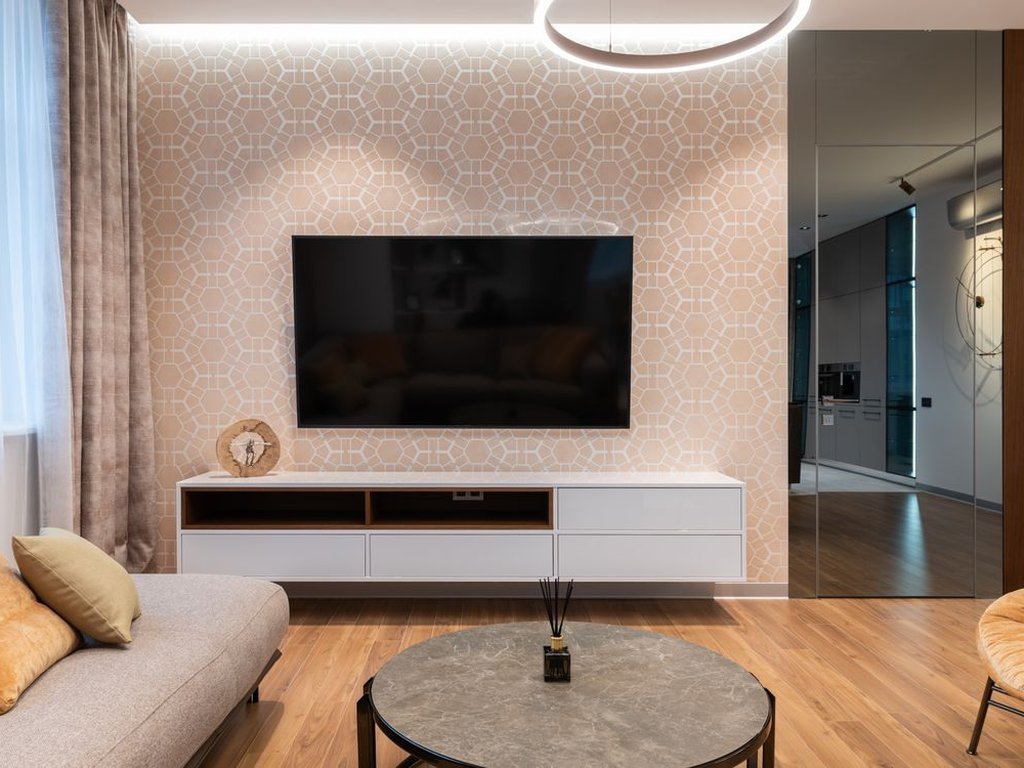
Centring the TV on a wide blank wall works because the empty space around the screen gives the room a calm, balanced look. Hang the TV dead centre, with the same gap on each side, and keep the wall free of small frames or clutter. A flush mount costs $25 to $50, and a cable cover strip costs $10 to $20. Place the sofa straight opposite the TV, with a rug that reaches both pieces. The bare wall makes the TV the clear focal point, and the room feels open and tidy.
Plan the TV Wall for an Open-Plan Room

Planning the TV wall for an open-plan room works best when you use the TV wall to mark where the living area ends and the dining area begins. Put the TV on the wall that faces the sofa, not the dining table, and use a rug and a console to draw the boundary. A room divider shelf costs $150 to $400, and a low console costs $120 to $300. Keep the sightline from the kitchen clear so you can watch while you cook. The Spruce’s living room TV ideas show how to place a screen without crowding an open space.
Frequently Asked Questions About Living Room TV Wall Ideas
What is a living room TV wall?
A living room TV wall is a wall designed around your television, with a mount, panels, shelves or a console that hides cables and frames the screen. It turns the TV from a black box into part of the room’s design. A simple version needs only a mount and a console, while a full media wall adds lighting and built-in storage.
How high should I mount my TV on the wall?
Mount your TV so the centre of the screen sits 105 to 115 centimetres from the floor, which is eye level from a seated sofa. Measure from your seat, not from standing height, and mark the spot with tape before you drill. A tilt mount helps if the screen must sit higher, such as above a fireplace.
Should the TV go above the fireplace?
A TV can go above the fireplace if the fire is electric or gas with a cool surround and the TV sits at least 30 centimetres above the firebox. Check your TV manual for its heat limit first, and use a tilt mount to angle the screen down. If the fireplace is tall or wood-burning, mount the TV on a side wall instead.
How do I hide TV cables on the wall?
Hide TV cables by running them through the wall in a conduit, behind a trunking strip, or inside a built-in unit with a hidden socket. Plan the cable route before you paint or build, and leave a spare conduit for future cables. A trunking kit costs $10 to $25 and is the easiest fix for a finished wall.
What colour should I paint a TV wall?
Paint a TV wall dark, such as charcoal, navy or deep green, so the black screen blends in when the TV is off. Dark paint makes the screen vanish and the wall feel calm, while light walls suit a bright, minimal room. Test a sample patch first, since dark colours change under evening light.
What size TV fits my living room wall?
Choose a TV about two thirds the width of the wall or console below it, and sit 1.5 to 2.5 times the screen width away. A 55-inch TV suits most living rooms, while a 65-inch screen needs a wall at least 2.4 metres wide. Measure the wall before you shop, so the screen never crowds the room.
Can I put a TV wall in a small living room?
Yes, you can put a TV wall in a small living room by mounting the screen flush, painting the wall dark, and using a floating console that leaves the floor clear. A corner mount also works when no full wall is free. Keep the wall simple, with one shelf or one plant, so the room stays open.
How much does a TV wall cost?
A TV wall costs $150 to $500 for a simple painted wall with a mount and a floating console, and $1,500 to $4,000 for a full fitted media wall with panels, lighting and storage. Wood slat panels cost $150 to $400 per wall, and built-in shelves cost $200 to $2,000. Start simple and add features later if your budget is tight.
Conclusion
A living room TV wall works when the screen sits at eye level, the cables stay hidden and the wall around it looks planned. Start with the mount height and a dark or panelled backdrop, then add a floating console or built-in shelves to ground the screen. You do not need a big budget: paint, a slim console and a cable cover can change the whole wall for under $300. Pick one idea from this guide, measure your wall, and build it this weekend. For more ways to style the room around your new TV wall, see our modern living room ideas and our dark moody living room ideas. Your TV can finally look like it belongs.
Related Articles
- 25 Minimalist Living Room Ideas for a Calm, Clutter-Free Space
- 25 Living Room Accent Wall Ideas to Make Your Room Stand Out
- 20 Modern Living Room Ideas for a Fresh, Stylish Home
- 30 Dark and Moody Living Room Ideas for a Cozy Home
- 20 Cozy Living Room Ideas for Small Spaces That Feel Big
- 15 Living Room Layout Ideas for Rectangular Rooms That Work
- 25 Cozy Apartment Ideas That Make Small Spaces Feel Like Home
- 25 Minimalist Decor Ideas for a Calm, Clutter-Free Home