The lotus flower is more than a beautiful flower. It is one of the most recognizable flowers in Asian art, gardens, architecture, and interior decoration. Its unusual growth makes it especially interesting: the plant grows from muddy water, develops large leaves above the surface, and produces an elegant flower that rises above the water. The sacred lotus is scientifically known as Nelumbo nucifera and is an aquatic perennial native to parts of Asia and northern Australia.
For home design, the lotus offers something that many decorative flowers do not. It can work as a wall-art motif, sculpture, centerpiece, textile pattern, garden plant, candle holder, vase design, lighting detail, or small decorative accent. Its rounded leaves and layered petals also create a naturally balanced shape that works well with modern, traditional, minimalist, and nature-inspired interiors.
The lotus is also connected with different cultural and religious traditions, so its symbolism should be understood with some care. Meanings vary by culture and context, but themes such as purity, renewal, resilience, beauty, and spiritual awakening appear frequently in discussions of the flower.
If you are looking for lotus flower decor ideas, this guide will help you go beyond simply putting a flower on a table. You will learn how to choose lotus colors, where to place lotus-inspired decorations, how to create a balanced lotus theme, how to use real lotus plants, and how to avoid making your room look overly themed.
What Is a Lotus Flower?
The lotus is an aquatic flowering plant that grows in ponds, lakes, and other shallow-water environments. One of the best-known species is Nelumbo nucifera, commonly called the sacred lotus or Indian lotus. Unlike many ordinary garden flowers, the lotus is built for life in water. Its roots and rhizomes grow in the soil beneath the water while its leaves and flowers rise toward the surface and sunlight. The Missouri Botanical Garden notes that lotus flowers can become very large, with individual blooms reaching about 12 inches across, while leaves can spread to several feet.
The growth pattern of the lotus is one reason it has become such a powerful design symbol. The contrast between muddy water and a clean, elevated bloom naturally creates a story about transformation. In home interiors, this makes the lotus especially useful when you want decoration to have meaning as well as visual appeal. A lotus painting, sculpture, or patterned cushion can act as a reminder of growth and renewal without requiring a large decorative installation.
The lotus is sometimes confused with the water lily, but they are not exactly the same plant. They belong to different botanical groups and have different growth characteristics. The sacred lotus commonly holds its leaves and flowers above the water, while many water lilies have floating leaves and flowers closer to the water surface. Understanding this difference is useful if you are planning a real water garden or shopping for botanical artwork.
For interior decoration, however, you do not need to use a real lotus. The flower’s recognizable shape makes it easy to reproduce in metal, ceramic, glass, wood, fabric, paper, stone, wallpaper, and artwork. This gives homeowners many ways to use the lotus while matching the existing style of their room.
Related: Top 10 Tacky Small Living Room Decor Mistakes – Designer Advice
What Does the Lotus Flower Symbolize?
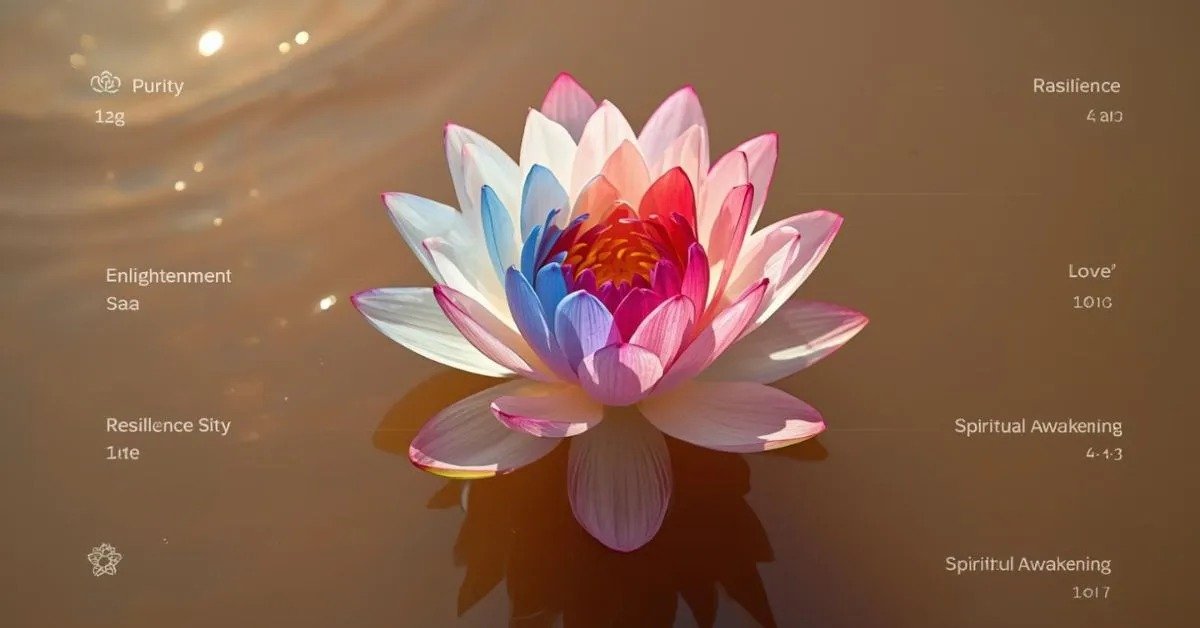
The lotus flower is commonly associated with purity, renewal, resilience, beauty, awakening, and spiritual growth, although its exact meaning changes across cultures and traditions. The natural life cycle of the flower is an important reason for these associations. The plant begins its growth underwater and eventually produces a flower above the surface. This visible movement from water and mud toward light has inspired symbolic interpretations for centuries.
In Buddhist traditions, the lotus is strongly associated with enlightenment and spiritual development. In Hindu traditions, the flower also has important religious associations and appears in traditional imagery. Because the lotus has different meanings in different cultures, it is better to describe its symbolism according to context rather than treating one interpretation as universal.
This symbolism can also influence the way you decorate a room. For example, a lotus artwork in a reading corner can represent calm and reflection, while a lotus motif in an entryway can simply provide a welcoming natural pattern. You do not need to make a room religious or spiritual just because you use lotus imagery. The flower can also be appreciated purely for its shape, color, and connection with nature.
A professional interior designer would normally consider meaning, proportion, color, material, and placement together. A large lotus sculpture may become a focal point, while a small lotus pattern can act as a secondary detail. The goal is to allow the flower to complement the room instead of making every object repeat the same theme.
Lotus Flower Colors and What They Can Add to Home Decor
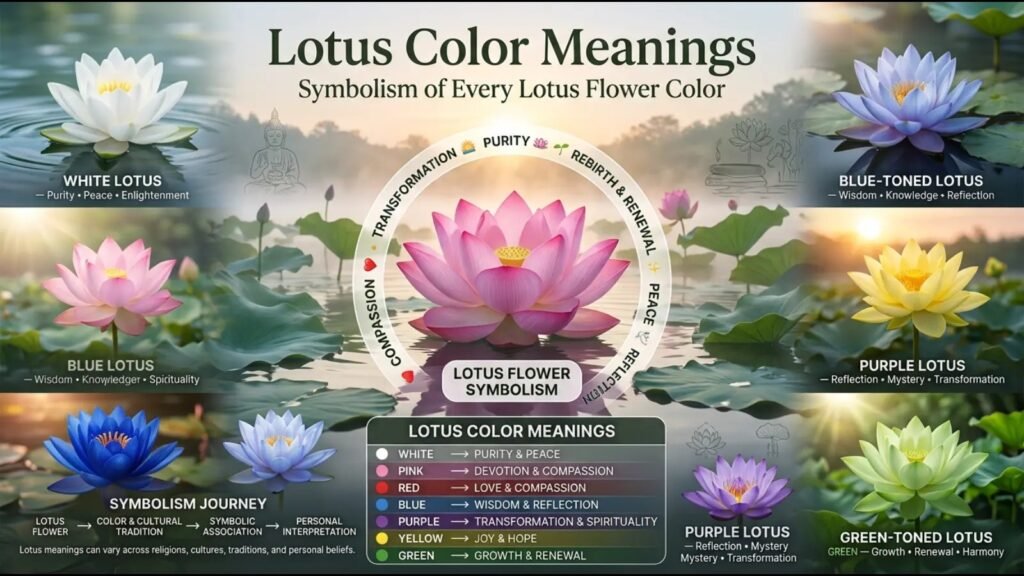
Color is one of the easiest ways to change the feeling of lotus flower decor. Lotus flowers are commonly seen in shades such as pink, white, red, and blue, while decorative versions can be produced in almost any color. Different traditions may also attach different symbolic meanings to colors, so color symbolism should be treated as cultural interpretation rather than a fixed design rule.
For home interiors, the practical question is often simpler: What color works with the room? White lotus designs are excellent for minimalist, coastal, Scandinavian, and contemporary interiors because they create a clean appearance. Pink lotus decor can soften neutral rooms and work especially well with cream, beige, blush, and warm white. Blue lotus artwork can complement cool gray, navy, white, and natural wood. Red lotus accents can provide stronger contrast and work well when used carefully against neutral walls.
| Lotus color | Interior design effect | Good color partners |
|---|---|---|
| White | Clean, calm, minimal | White, beige, gray, wood |
| Pink | Soft, warm, elegant | Cream, blush, sage, white |
| Blue | Cool and peaceful | Navy, gray, white, natural wood |
| Red | Bold focal point | Beige, charcoal, cream, black |
| Purple | Artistic and rich | Gray, lavender, cream |
| Green | Natural and fresh | White, tan, brown, sage |
The most important rule is not to choose a lotus color simply because it looks beautiful by itself. Look at the existing wall color, furniture, flooring, curtains, and lighting first. A decorative object should feel connected to the room. If the room already contains several strong colors, a white or neutral lotus may create better balance than another bright accent.
10 Beautiful Lotus Flower Home Decor Ideas
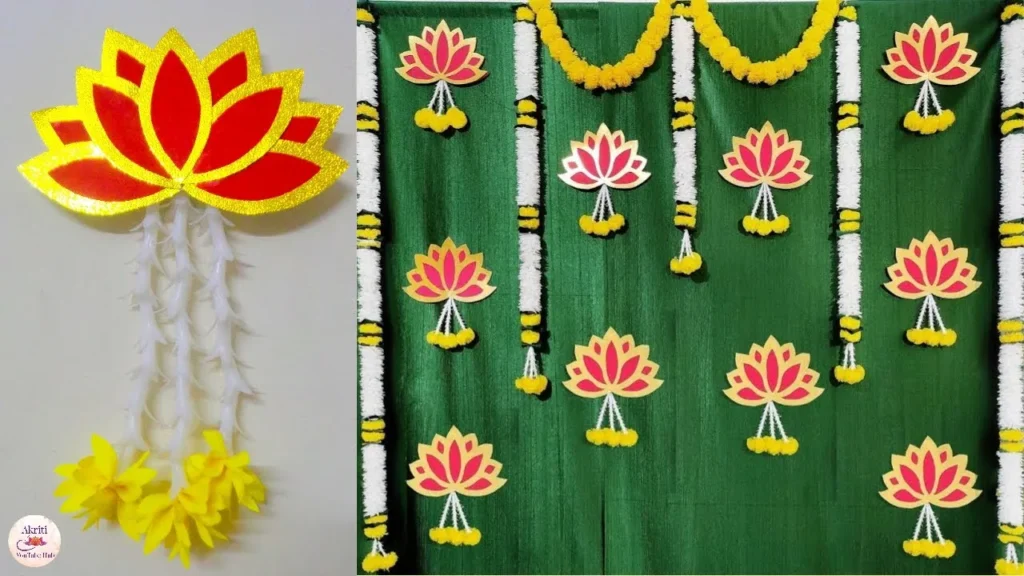
Lotus decor can be used in almost every room when it is scaled correctly. You can make it the focal point of a wall or use it as a tiny detail on a cushion, tray, lamp, or vase. Current home-decor guidance commonly recommends using lotus motifs through wall art, decorative objects, tableware, lighting, and carefully selected focal pieces rather than covering an entire room in the same pattern.
1. Lotus Wall Art
A large lotus painting can become the main artwork above a sofa, console table, or bed. Choose a design with enough empty space around the flower so it does not compete with other objects.
2. Lotus Sculptures
A metal, ceramic, stone, or wooden lotus sculpture can add texture. Sculptural decor works particularly well on a console, bookshelf, mantel, or open shelf.
3. Lotus Centerpiece
Use a lotus-inspired centerpiece on a dining table or coffee table. Keep the surrounding objects simple so the flower remains the visual focus.
4. Lotus Candle Holder
Lotus-shaped candle holders can create interesting shadows when used with suitable candles. Place them on a stable, heat-safe surface and keep open flames away from curtains and other flammable materials.
5. Lotus-Inspired Lighting
A pendant or table lamp with a petal-shaped design can bring the lotus form into the room without using an obvious floral print.
Related: 12 Designer-Approved Features That Make Your Living Room Look “Timeless”
6. Lotus Cushions
If you want something subtle, use lotus-patterned cushions. This is an easy option because cushions can be changed when you update your room.
7. Lotus Ceramic Pieces
Ceramic bowls, trays, vases, and decorative dishes can introduce the flower shape in a functional way.
8. Lotus Bedroom Decor
A small lotus print beside the bed or on a bedside table can add a gentle botanical element without overwhelming the bedroom.
9. Lotus Entryway Decor
A framed lotus print above a console table can create a simple focal point near the entrance of your home.
10. Lotus Garden Decor
If you have suitable outdoor space, a real lotus can become the centerpiece of a water garden. The plant requires appropriate growing conditions and sufficient sunlight, so it should be treated as a garden plant rather than an ordinary indoor potted flower.
How to Use Lotus Flower Decor in the Living Room
The living room is usually the easiest place to introduce lotus decor because it offers several natural focal points. A large wall above a sofa can hold a lotus painting, while a coffee table can support a smaller lotus sculpture or decorative bowl. If your furniture is neutral, a pink, blue, or red lotus can provide color. If your room already has colorful furniture, white or muted lotus decor may create a more controlled look.
Scale matters more than the number of decorations. A common mistake is placing a large lotus painting behind a sofa and then adding lotus cushions, lotus lamps, lotus sculptures, and lotus curtains in the same area. Instead, select one major lotus element and one or two smaller supporting details. This creates a design connection without making the room look like a themed showroom.
Try combining lotus decor with natural materials such as wood, linen, rattan, stone, and ceramic. These materials reinforce the botanical character of the flower. A wooden console with a ceramic lotus sculpture, neutral artwork, and a small green plant can feel more sophisticated than a collection of matching lotus objects.
Lighting should also be considered. During the day, natural light can emphasize the colors and texture of the artwork. In the evening, a warm table lamp can make metallic or ceramic lotus pieces more noticeable. If you use reflective materials, position them where they catch light without producing distracting glare.
For more practical room-design inspiration, you can also explore the home styling ideas available on Ideas Home Accessories.
Lotus Flower Decor for the Bedroom
A bedroom should feel comfortable first and decorative second. Lotus imagery works well here because its rounded petals and natural form can create a softer visual language than sharp geometric patterns. A framed lotus botanical print above a dresser, a small ceramic lotus on a nightstand, or a subtle floral cushion can introduce the theme without changing the whole bedroom.
For a modern bedroom, consider a simple line drawing of a lotus in a thin frame. Pair it with cream bedding, light wood, soft gray, or muted green. For a more traditional bedroom, you might use a detailed lotus painting with richer wood furniture. The important point is to match the lotus artwork to the room’s existing design rather than forcing the room to follow the flower.
Lotus-inspired textiles are another useful option. A duvet cover, throw pillow, curtain, or small upholstered bench can contain a lotus pattern while remaining practical. If you use a strong floral pattern on the bed, keep the walls and other textiles relatively quiet. This creates visual hierarchy and helps the bedroom feel restful.
You can also use lotus decor in a meditation or reading corner. A small framed flower, a simple sculpture, or a botanical print can visually separate the corner from the rest of the bedroom. The decoration does not need to make a promise about energy, healing, or sleep; its value can simply come from creating a visually calm and personal environment.
Lotus Flower Ideas for Small Spaces
Small rooms require a different approach because every decorative object takes up valuable visual and physical space. Instead of placing large lotus sculptures on the floor, use vertical wall decor, small shelves, narrow consoles, or multifunctional objects. A single lotus print can create a focal point without reducing floor space.
Floating shelves are particularly useful. Place a small lotus sculpture beside a book, ceramic vase, or small plant. Leave empty space between objects so each piece remains easy to see. The same idea works in apartments, hallways, dorm rooms, and compact bedrooms.
Mirrors can also help. Rather than placing a lotus object directly in front of a mirror, position it slightly to the side so the reflection adds another visual layer. This can make a small display feel richer without requiring more objects.
Color selection matters even more in small spaces. White lotus artwork against a light wall can create a quiet, almost built-in appearance. A darker lotus print can work as a focal point, but it should have enough surrounding space to avoid making the wall feel crowded.
A useful rule for small rooms is “one statement, several supporting details.” For example, choose one medium-sized lotus print as the statement piece, then add a small ceramic object and one plant nearby. This gives you a complete design story without filling every available surface.
How to Create a Modern Lotus Flower Interior
A modern lotus interior does not require traditional-looking decorations. The easiest approach is to focus on the shape of the lotus rather than copying an entire traditional style. Look for simple outlines, abstract petal forms, geometric interpretations, sculptural objects, or monochrome botanical prints.
For example, a contemporary living room with white walls, a beige sofa, black metal accents, and light oak furniture could use a large black-and-white lotus print as its main artwork. The flower becomes an artistic shape rather than a literal floral decoration. This approach is especially useful for homeowners who like modern minimalism but still want natural inspiration.
Materials also influence how modern the design feels. Polished metal, matte ceramic, glass, acrylic, and smooth stone tend to create a contemporary appearance. Rough wood, woven fibers, and handmade ceramics create a more organic or rustic feeling.
The strongest modern interiors usually contain contrast. If the lotus is soft and curved, pair it with some straight architectural lines. If the artwork is detailed, keep the surrounding furniture simple. If the lotus is colorful, use quieter colors elsewhere.
Do not feel that every lotus item has to match. A designer-style room often looks more natural when materials and forms are related but not identical. A ceramic lotus bowl, an abstract lotus painting, and a plain green plant can share a theme without looking like a matching set.
Lotus Flower Decor and Natural Design
Nature-inspired interiors work because they introduce familiar shapes, materials, colors, and textures into everyday spaces. A lotus is especially useful because it connects several natural elements at once: water, leaves, petals, organic curves, and seasonal growth. You can use these qualities even if you never grow a real lotus.
Start with a natural palette. Soft green, warm white, beige, clay, light brown, and muted blue can create a foundation for lotus-inspired decor. Then introduce one stronger lotus color as an accent. Natural wood furniture can help prevent floral decorations from feeling overly decorative.
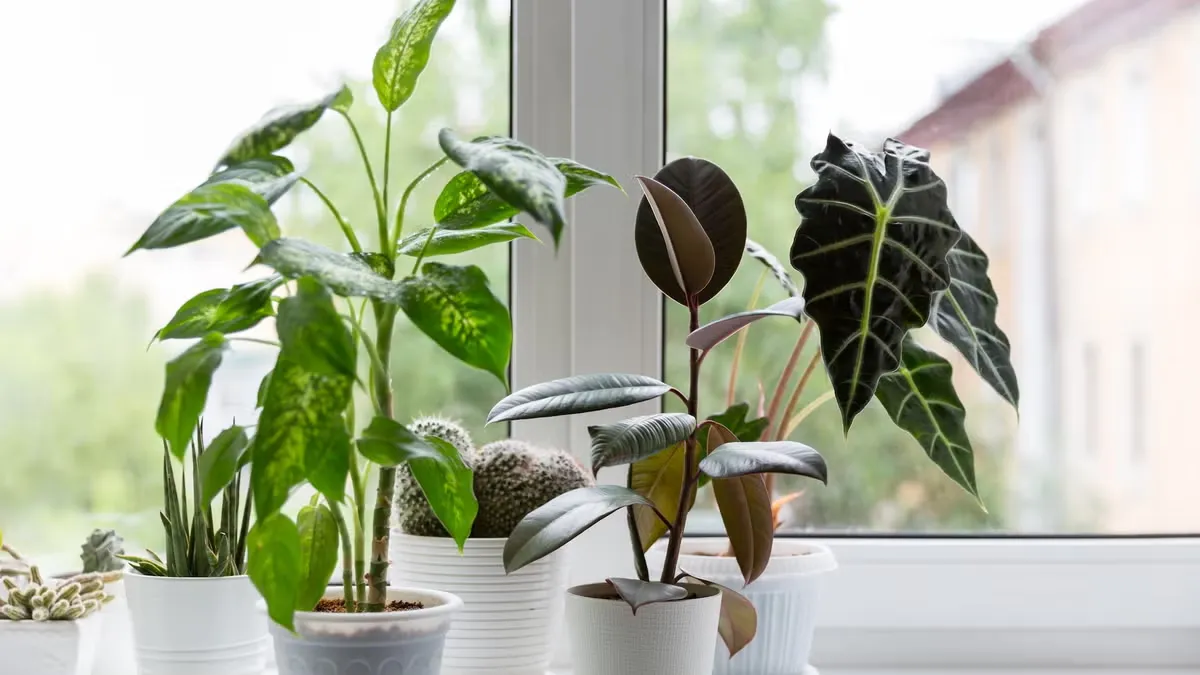
Plants are another easy companion. A lotus print can sit beside a leafy indoor plant, but avoid choosing several plants with competing shapes. One tall plant and one smaller botanical detail may be enough.
Water-inspired details can also work in moderation. Glass, reflective surfaces, blue ceramics, or a small water feature can reinforce the idea without making the room look like a pond-themed space.
For outdoor areas, the connection can be much more direct. If your climate and garden conditions are suitable, a real lotus can become part of a pond or water container. The RHS recommends growing Nelumbo nucifera in a large container with heavy loam, full sun, and appropriate water depth; smaller cultivars require shallower conditions.
Can You Grow a Lotus Flower at Home?
Yes, but a real lotus is not the same as an ordinary houseplant. Lotus plants are aquatic plants and need suitable water, soil, sunlight, temperature, and container conditions. The Royal Horticultural Society recommends growing sacred lotus outdoors in a large container with heavy loam and full sun, with water depth adjusted as the plant grows.
If you have a pond, water garden, or suitable outdoor container, a lotus can become a beautiful landscape feature. Before planting, check the mature size of the cultivar. Some lotus plants can produce leaves several feet across, and the flower stalks can rise significantly above the water.
Growing conditions are especially important. Lotus plants generally need strong light and adequate warmth during active growth. The RHS notes that smaller cultivars can be grown at shallower water depths and that plants in colder regions may need winter protection.
For someone who simply wants the appearance of a lotus indoors, artificial or decorative versions are usually easier. A high-quality ceramic flower, botanical print, metal sculpture, or fabric motif can provide the visual effect without the maintenance requirements of an aquatic plant.
If you decide to grow a real lotus, use reliable horticultural guidance rather than treating it like a normal indoor flower. This will help you choose an appropriate cultivar and container for your available space.
Lotus Flower Decor: Real vs Artificial vs Artwork
Choosing between a real lotus and decorative lotus depends on what you want from the space. A real lotus provides a living garden element and is ideal for an appropriate pond or water container. However, it requires suitable growing conditions and maintenance.
Artificial lotus flowers are easier for interior decorating. They do not require sunlight or water and can be used on dining tables, shelves, entryways, and event displays. The quality varies widely, so avoid versions with overly shiny plastic petals or unnatural colors if you want an authentic appearance.
Lotus artwork is often the most flexible choice. A framed print takes little physical space, requires almost no maintenance, and can be replaced when your decorating style changes. It is particularly useful for renters or people living in small apartments.
| Option | Best for | Maintenance | Space needed |
|---|---|---|---|
| Real lotus | Ponds and water gardens | High | High |
| Artificial lotus | Indoor decor | Low | Low–medium |
| Lotus artwork | Walls and bedrooms | Very low | Very low |
| Lotus sculpture | Shelves and tables | Very low | Low–medium |
| Lotus textile | Soft furnishings | Low | Low |
There is no single correct choice. The best option depends on your room, lifestyle, budget, and the amount of maintenance you want. For most indoor rooms, artwork and small decorative objects are easier to integrate than living aquatic plants.
Related: 10 Small Bedroom Design Ideas That Make a Small Room Feel Bigger
Common Lotus Flower Decor Mistakes to Avoid
One of the biggest mistakes is using too much of the same motif. If the wall art, curtains, cushions, rug, lamps, and accessories all feature lotus flowers, the design can quickly become visually heavy. Choose a clear focal point and let the other pieces support it.
Another mistake is ignoring scale. A tiny lotus print above a large sofa may disappear, while an oversized sculpture can overwhelm a small coffee table. Measure your space before buying decor. Consider the width of the furniture below the artwork and leave enough breathing room around the main piece.
Color is another common problem. A beautiful lotus decoration can look wrong if its color clashes with the room. Always compare the decoration with your existing paint, furniture, flooring, and textiles.
Avoid placing delicate decorations in areas where they will constantly be touched or knocked over. This is especially important with glass or ceramic pieces.
Finally, be careful with cultural symbolism. The lotus has genuine religious and cultural significance in several traditions. If you are using a sacred image or placing lotus imagery alongside religious objects, learn about the context and treat it respectfully. The flower can be used as a design element, but cultural meaning should not be reduced to unsupported claims about guaranteed luck, health, or supernatural effects.
Quick Lotus Flower Home Decor Guide
| Design goal | Lotus idea | Best location |
|---|---|---|
| Add a focal point | Large lotus artwork | Living room |
| Create a calm bedroom | Minimal lotus print | Bedroom |
| Decorate a small apartment | Small lotus sculpture | Floating shelf |
| Add color | Pink or blue lotus accent | Living room |
| Create an elegant table | Lotus centerpiece | Dining room |
| Add texture | Ceramic lotus | Console table |
| Improve an entryway | Framed lotus art | Entrance |
| Create outdoor interest | Real lotus | Pond/water garden |
| Add subtle pattern | Lotus cushions | Sofa or bed |
| Create modern style | Abstract lotus artwork | Feature wall |
Important Points to Remember
- The sacred lotus is an aquatic plant, not a normal indoor flowering plant.
- Lotus symbolism differs across cultures and traditions.
- White lotus decor works well with minimalist interiors.
- Pink lotus accents can soften neutral rooms.
- Blue lotus designs can complement cool, calm color schemes.
- Use one main lotus statement instead of filling a room with matching motifs.
- Consider scale before buying artwork or sculptures.
- Combine lotus decor with natural materials such as wood, linen, ceramic, and stone.
- Real lotus plants need suitable water, soil, light, and growing conditions.
- Artificial lotus flowers are easier for indoor decorating.
- Lotus artwork is one of the easiest options for renters and small homes.
- Keep religious or culturally significant lotus imagery respectful and context-aware.
- Avoid unsupported claims that lotus decor automatically creates health, wealth, luck, or supernatural benefits.
Frequently Asked Questions About Lotus Flowers
What does a lotus flower symbolize?
The lotus is commonly associated with purity, renewal, resilience, beauty, awakening, and spiritual growth. Its symbolism varies by culture and religious tradition.
What is the lotus flower good for in home decor?
A lotus can be used as wall art, a sculpture, centerpiece, textile pattern, candle holder, ceramic object, lighting motif, or garden feature. Its recognizable shape makes it adaptable to many interior styles.
Which lotus flower color is best for home decor?
There is no single best color. White works well with minimalist rooms, pink adds softness, blue creates a cooler look, and red can create a stronger focal point. Choose the color that works with your existing palette.
Is lotus flower good for the living room?
Yes. A lotus painting, sculpture, vase, or centerpiece can work well in a living room. For a balanced look, choose one primary lotus feature and use smaller supporting details sparingly.
Can I keep a real lotus flower indoors?
Growing a real lotus indoors is more complicated than keeping a normal houseplant because lotus is an aquatic plant. Suitable light, water depth, soil, container size, and temperature are important.
Is lotus the same as water lily?
No. Lotus and water lilies are different aquatic plants. They can look similar, but their botanical characteristics and growth habits differ.
How do I decorate a small room with lotus flowers?
Use vertical or compact decor such as a framed lotus print, small sculpture, decorative cushion, or floating-shelf accessory. Avoid large collections of lotus objects that can make the room feel crowded.
Can lotus decor work with modern interiors?
Yes. Abstract lotus artwork, simple line drawings, metal sculptures, matte ceramics, and monochrome designs can work particularly well with contemporary interiors.
Where should I put lotus wall art?
Good locations include above a sofa, console table, dresser, bed, or entryway. Choose a location where the artwork has enough surrounding space to act as a focal point.
How can I use lotus decor without making my home look themed?
Use the lotus as one design element rather than the entire theme. For example, combine one lotus artwork with neutral furniture, natural wood, plain textiles, and a few plants.
Conclusion
The lotus flower is a beautiful choice for home design because it combines natural form, color, cultural meaning, and strong visual character. You do not need to completely redesign a room to use it. A single framed print, ceramic sculpture, decorative bowl, cushion, or carefully chosen centerpiece can introduce the lotus in a subtle and sophisticated way.
The best lotus-inspired interiors are balanced. Instead of covering every surface with lotus patterns, choose one statement piece and support it with simple colors, natural materials, good lighting, and enough empty space. White lotus designs can create a clean modern feeling, pink can soften a room, blue can introduce a cool natural tone, and stronger colors can create a focal point when used carefully.
If you want a real lotus, remember that it is an aquatic plant requiring appropriate growing conditions. For indoor decorating, artwork and decorative versions are usually much easier to maintain. The RHS provides detailed growing guidance for Nelumbo nucifera, including container, sunlight, soil, and water requirements.
Most importantly, decorate according to your home and your lifestyle. A lotus does not need to make a dramatic statement to be beautiful. Sometimes a simple flower print, a small sculpture, or a single botanical detail is enough to make a room feel more personal, natural, and thoughtfully designed.