A small bedroom can still feel comfortable, stylish, and complete. You do not need a large room to create a beautiful bedroom. The key is to use the space carefully and choose furniture, colors, lighting, and storage that work with the size of the room instead of fighting against it. When every item has a purpose, even a very small bedroom can feel calm and inviting.
The biggest mistake people make with small bedrooms is trying to fit too much into them. A large bed, wide nightstands, bulky dresser, oversized chair, and many decorations can quickly make the room feel crowded. Good small-bedroom design is more about editing than adding. Interior designers often recommend using fewer functional pieces, keeping pathways open, and taking advantage of walls and vertical space.
If you are looking for small bedroom design ideas, this guide will help you make practical changes without making the room feel empty or boring. The ideas below work for master bedrooms, guest rooms, teen bedrooms, apartment bedrooms, and other compact spaces.
Best Small Bedroom Design Ideas
1. Choose a Space-Saving Bed
The bed is usually the largest piece of furniture in a bedroom, so it should be the first thing you consider when planning a small room. Start by measuring the bedroom and deciding where the bed can sit without blocking the door, closet, windows, or main walking path. In many small rooms, placing the bed against the longest wall gives you more usable floor space. However, the best position depends on doors, windows, heating vents, and the shape of the room. Do not automatically place the bed in the center simply because that is common in larger bedrooms. A small bedroom benefits from a layout that gives you enough clearance to move comfortably. If you are replacing the bed frame, consider a simple frame with a slim profile rather than a very thick upholstered base. A platform bed can provide a clean appearance without taking up unnecessary visual space. A storage bed can be even more useful because it gives you hidden storage without requiring another large cabinet. Under-bed storage is particularly useful for seasonal clothing, extra bedding, luggage, and items you do not use every day. Current small-bedroom storage guidance also recommends using shallow containers underneath the bed for less frequently used belongings.
The style of the bed matters as much as its size. A tall, heavy headboard can make a small bedroom feel visually crowded, while a simple headboard can keep the room feeling open. This does not mean you have to avoid a beautiful headboard. Instead, look for one with a narrow profile or use a wall-mounted upholstered panel to create a focal point without adding much depth. If the room is extremely narrow, avoid choosing a bed that leaves only a few inches between the mattress and the wall. You need enough space to make the bed and move around it comfortably. For a couple sharing a small bedroom, a storage bed can be especially useful because it reduces the need for additional storage furniture. If you already have a good bed, you may not need to replace it at all. Simply use the space underneath more effectively. Before buying anything new, measure the bed, door swings, closet opening, and walking areas. This simple step can prevent a common small-room problem: purchasing furniture that technically fits but makes the room difficult to use. A beautiful bedroom should not only look good in photographs; it should also be easy to live in every day.
2. Use Light Colors Without Making the Room Boring
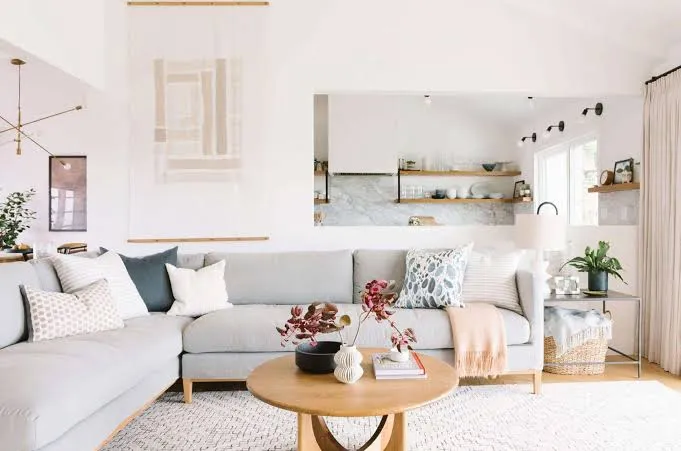
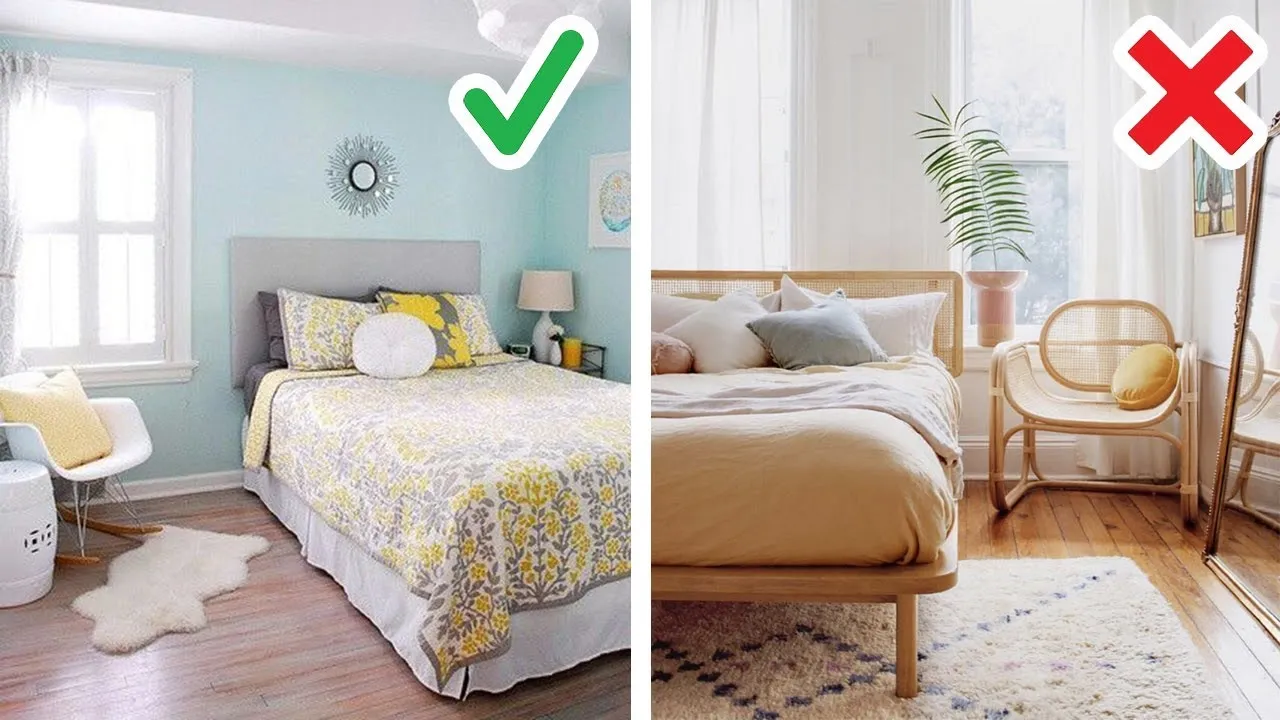
Light colors can help a small bedroom feel more open because they reflect more available light and create fewer strong visual breaks. White, warm white, soft beige, pale gray, light taupe, muted sage, dusty blue, and gentle cream can all work well. You do not have to paint every surface bright white. In fact, a slightly warm neutral can make a bedroom feel more comfortable and less clinical. The important point is to create a connected color palette rather than filling the room with many unrelated colors. For example, you could use warm white walls, light oak furniture, cream bedding, and soft beige curtains. This creates a quiet visual flow from one part of the room to another. If the room receives limited natural light, avoid choosing a very dark wall color unless you specifically want a cozy, dramatic effect. Dark colors can look beautiful in small rooms, but they should be used intentionally rather than because you are trying to hide the room’s size. Another useful approach is to use one color family in different shades. This gives the room depth while keeping the overall appearance calm. Current designer advice also points to light colors combined with layered textures as a way to make a small bedroom visually feel larger.
Light colors do not mean that your bedroom needs to look plain. Texture is one of the best ways to add interest without adding visual clutter. Instead of using five different colors, try combining linen bedding, a woven basket, a soft rug, a textured throw, and natural wood. You can also introduce one stronger accent color through pillows, artwork, a small lamp, or a blanket. If you love darker colors, consider using them in controlled areas. A deep green headboard, navy bedding, or charcoal accent chair can create character without making every surface dark. You can also use color to create visual height. Painting the walls and trim in similar tones can make the boundaries between surfaces less noticeable. For renters, removable wallpaper or fabric wall panels can provide color and texture without permanent changes. The goal is not simply to make the room look bigger. The goal is to make the room feel organized, peaceful, and intentional. A small bedroom can have personality, but each decorative choice should support the overall design rather than compete for attention.
3. Take Storage Up the Walls
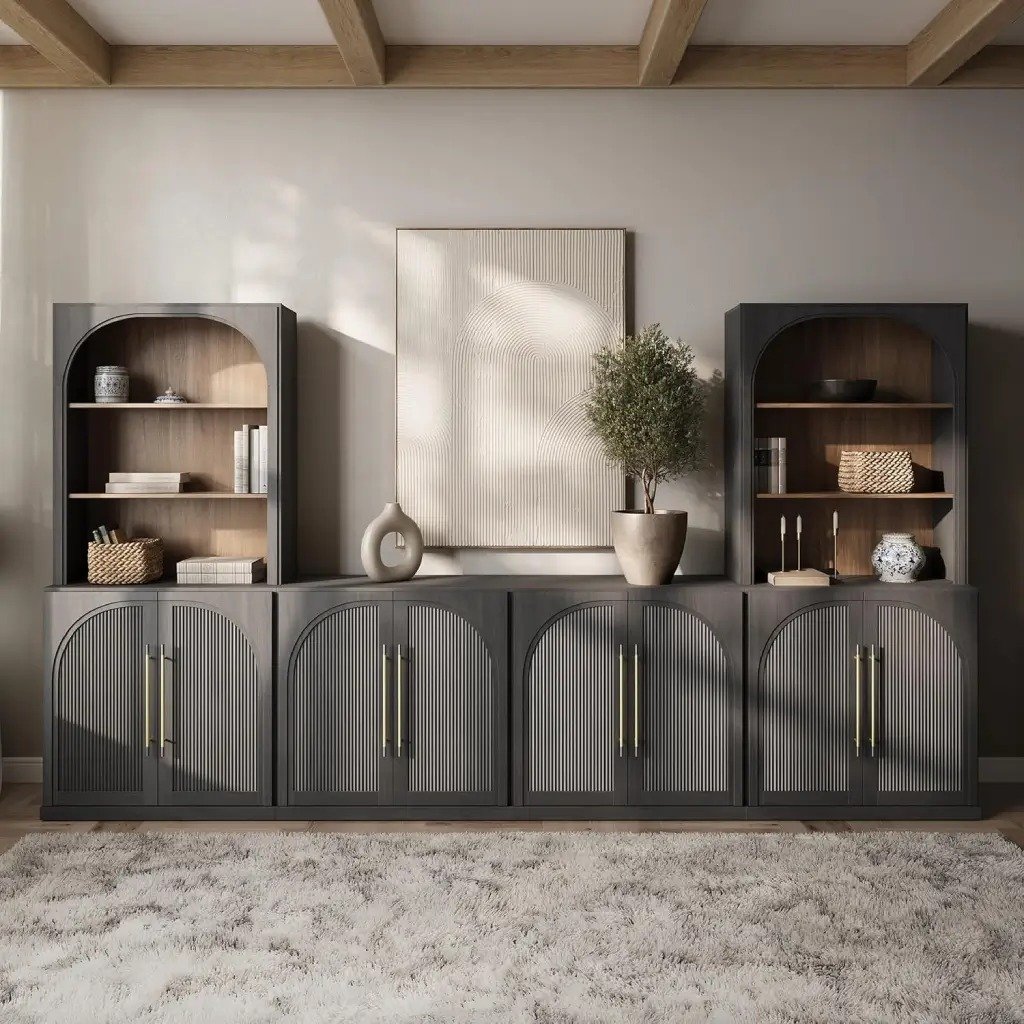
When floor space is limited, your walls become valuable real estate. Instead of adding another floor cabinet, look for opportunities to use vertical storage. Floating shelves above a desk, dresser, or bedside area can provide space for books, framed art, small plants, and everyday objects. Tall wardrobes can also provide considerably more storage than short, wide furniture while using a similar amount of floor space. If you have a high ceiling, use that height carefully. A tall bookcase or floor-to-ceiling wardrobe can make the room more functional without spreading furniture across the floor. Vertical storage also helps keep the walking area clear, which is important in a compact bedroom. Designers frequently recommend floating shelves, wall-mounted lighting, tall furniture, and other vertical solutions for small rooms.
Be selective about what you display on open shelves. Too many objects can make a small bedroom look messy even when everything is technically organized. Use closed storage for items that do not need to be seen and open shelves for a small collection of attractive or frequently used items. For example, one shelf could hold a few books, a small plant, and one framed photograph rather than ten decorative objects. Wall hooks can also help with hats, bags, robes, or lightweight accessories, but avoid covering every wall with storage. If you rent your home, removable hooks and freestanding shelving can provide flexible options. You can also use the area above the bedroom door for a high shelf if the ceiling height allows it, although items stored there should be things you rarely need. Another useful option is a tall narrow dresser instead of a wide low dresser. It uses vertical space and can provide several drawers without taking over the room. The basic rule is simple: when you cannot expand outward, think upward. Good vertical storage can give you more usable space while keeping the bedroom visually cleaner.
4. Use Wall-Mounted Lighting Instead of Bulky Lamps
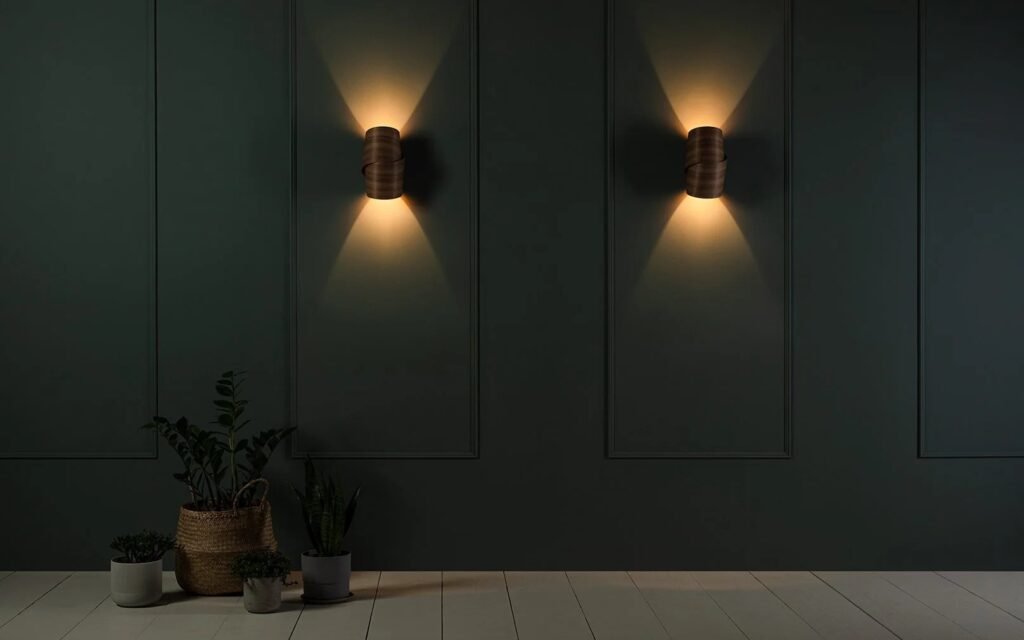
Lighting can completely change how a small bedroom feels. A single ceiling light may provide enough general illumination, but it often does not create the warm, layered feeling that makes a bedroom comfortable. At the same time, large table lamps can take up valuable space on small nightstands. Wall-mounted sconces are a practical alternative because they move the lighting fixture off the furniture surface. This leaves room for a phone, book, glass of water, or small decorative item. Plug-in sconces can be particularly useful for renters because they may not require electrical work. Current small-bedroom design guidance specifically highlights wall sconces as a way to save nightstand surface area.
Try to create at least three types of lighting: general light, task light, and soft accent light. General lighting can come from a ceiling fixture. Task lighting can come from bedside sconces or a small reading lamp. Accent lighting can come from a small table lamp, picture light, or warm LED lighting. A dimmer can make the main light more flexible because a bright light is useful when cleaning or getting dressed but may feel harsh at night. Avoid choosing an oversized chandelier simply because you want a statement piece. A compact pendant or flush-mount fixture may provide the same decorative effect without overwhelming the room. You can also draw attention upward with lighting. A simple pendant can make the ceiling feel more interesting, while a wall light placed slightly above eye level can create a vertical line. Lighting should also support your daily routine. If you read in bed, make sure your reading light is positioned so it illuminates your book without shining directly into your eyes. Good lighting is not just decoration; it improves how the room functions.
5. Use Mirrors to Reflect Light and Create Depth
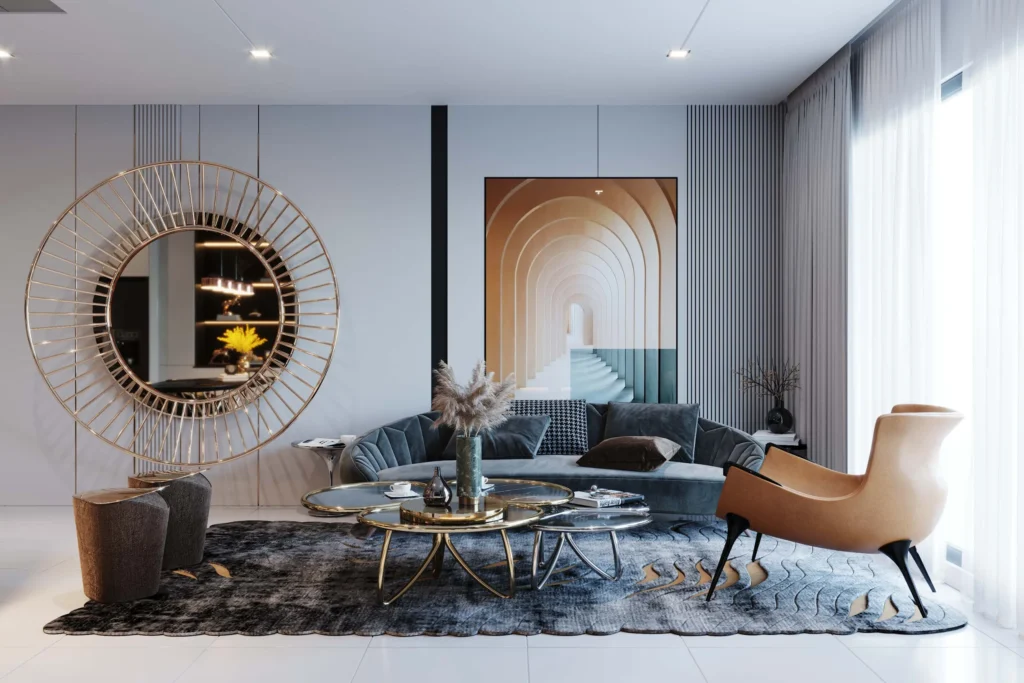
A mirror can be one of the easiest ways to make a small bedroom feel brighter and more open. Mirrors reflect light and can create the visual impression that the room continues beyond its actual wall. A large mirror placed opposite or near a window can reflect daylight into darker areas. A full-length mirror can also be useful because it provides a practical function while reducing the need for another decorative object. If floor space is limited, consider a wall-mounted mirror rather than a large leaning mirror. A mirror attached to a wardrobe door can also provide the same benefit without requiring additional floor space. The most important thing is placement. Do not place a mirror somewhere that reflects clutter, a messy desk, or an unattractive corner. Instead, position it to reflect a window, artwork, attractive bedding, or another visually pleasant part of the room.
The shape of the mirror can also influence the style of the bedroom. A tall rectangular mirror can emphasize height, while a round mirror can soften a room filled with straight furniture lines. An arched mirror can add architectural character without requiring a large piece of artwork. You do not need several mirrors in a small bedroom. One well-placed mirror is usually more effective than covering the walls with reflective surfaces. If the room has very little natural light, a mirror will not create light by itself, but it can help distribute existing light around the space. Pair it with light-colored walls, layered lighting, and uncluttered surfaces for a stronger effect. A mirrored wardrobe door can be especially practical in a small bedroom because it combines storage and reflection in one piece. Before hanging a mirror, stand in different positions around the room and check what it will reflect. This small planning step can make the difference between a mirror that improves the design and one that simply creates another distracting visual element.
6. Choose Furniture That Does More Than One Job
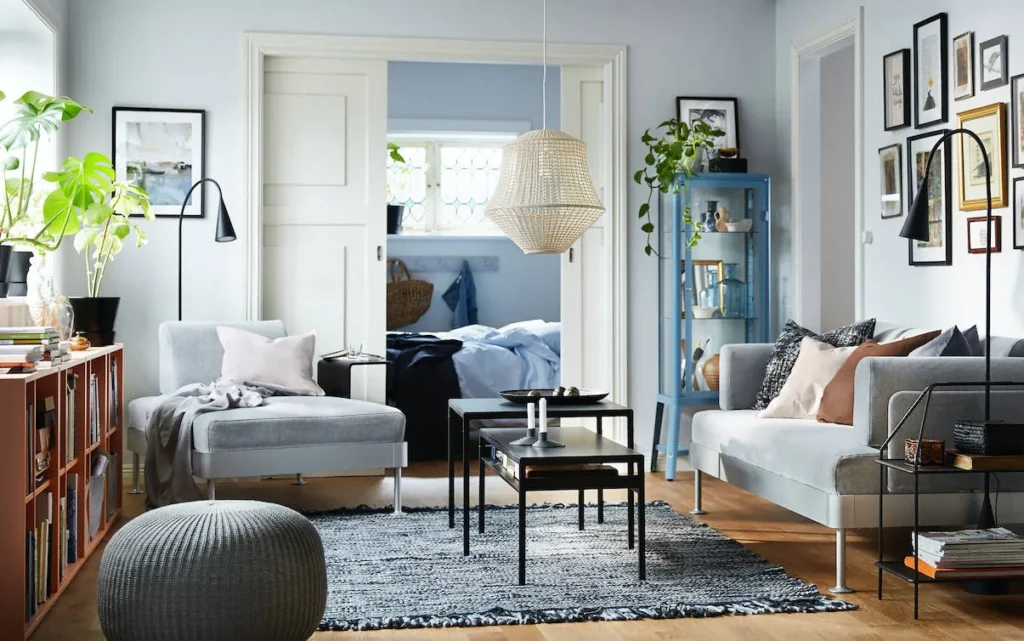
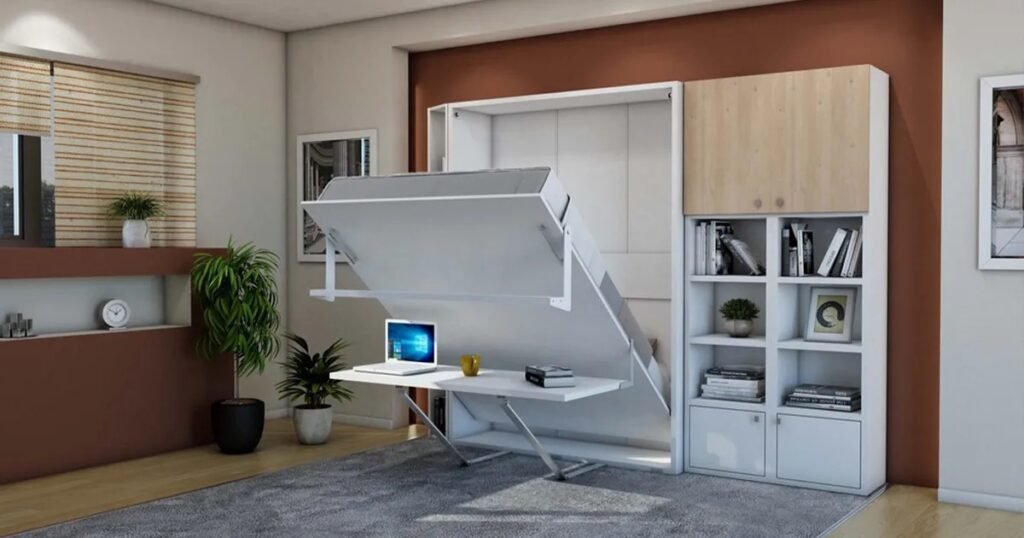
Multifunctional furniture is one of the most useful solutions for a small bedroom because every piece needs to earn its place. Instead of buying a separate bench, storage box, and chair, look for one piece that can perform two functions. A storage bench at the end of the bed can provide seating and hold blankets or pillows. A nightstand with drawers can replace a separate storage cabinet. A desk with shelves above it can combine a workspace and storage zone. A bed with built-in drawers can reduce the need for another dresser. These choices help you avoid filling the floor with furniture that has only one purpose. Current bedroom organization guidance emphasizes multifunctional, clean-lined pieces for small spaces.
Think about your own routine before buying multifunctional furniture. If you never sit at the end of the bed, a storage bench may not be worth the space. If you work from home, a compact desk could be extremely useful. If you only need a bedside surface for your phone and a lamp, you may not need a large nightstand with six drawers. The right furniture depends on how you actually use the room. This is also where furniture scale becomes important. A small bedroom does not necessarily need tiny furniture. Instead, it needs furniture with appropriate proportions and enough open space around it. A narrow nightstand may work better than a miniature one that provides no useful storage. A tall dresser can sometimes be better than a wide dresser because it uses height rather than spreading across the floor. Before purchasing anything, measure its width, depth, and height. Then mark those dimensions on the floor with painter’s tape. Walk around the marked area and open imaginary drawers or doors. This simple design test can reveal whether the furniture will make your bedroom easier or harder to use.
7. Keep the Floor Clear and Create Better Flow
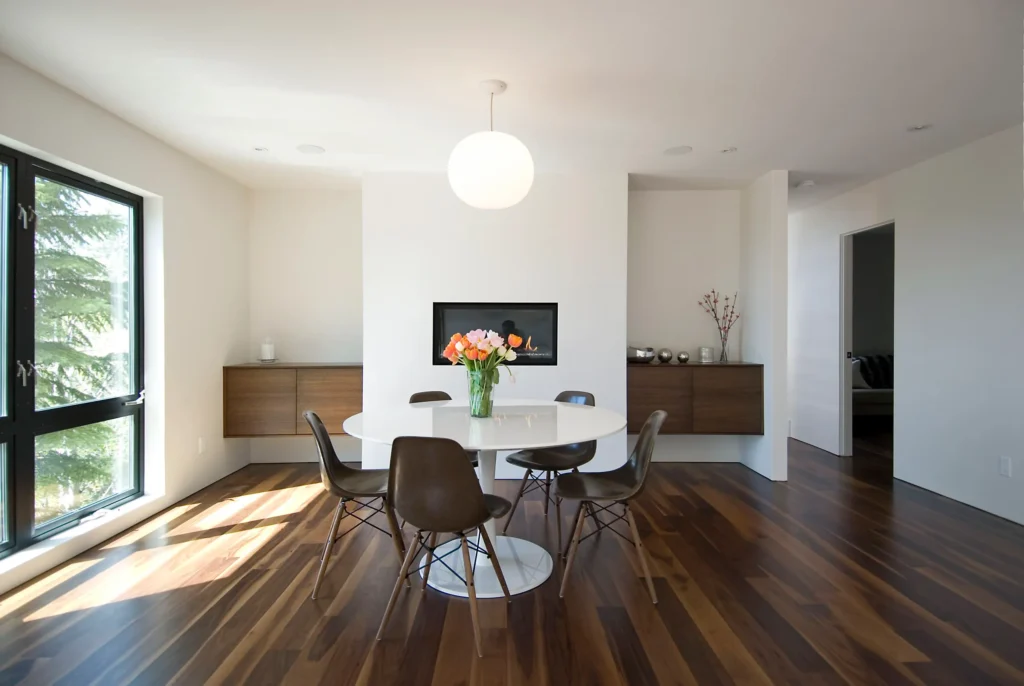
One of the fastest ways to make a small bedroom feel crowded is to cover the floor with furniture and accessories. Good bedroom design needs clear pathways. You should be able to walk from the door to the bed, closet, and other important areas without constantly turning sideways or stepping around objects. Start by identifying the main movement path through the room. Then place the largest pieces, such as the bed and wardrobe, before adding anything else. If a piece of furniture blocks a door or closet, the layout needs to change. This may sound obvious, but many small bedrooms become difficult to use because furniture is chosen individually rather than planned as a complete layout. A simple floor plan can help. Measure the room and furniture, draw them on paper, and test several arrangements before moving heavy pieces. You can also use a free online floor planner to visualize the layout before purchasing new furniture.
Keeping the floor clear does not mean the room needs to be minimalist. It means that your design should have breathing room. Avoid placing baskets, stools, decorative tables, and plants in every available corner. Choose a few items that provide real value. A slim floor lamp can replace a table lamp. A wall-mounted shelf can replace a small bookcase. A floating nightstand can create a bedside surface without visually filling the floor. If you have a very narrow room, a low-profile bed can help maintain a larger visual field above the furniture. Curtains can also be installed close to the ceiling and allowed to fall toward the floor, which draws the eye vertically. Recent designer guidance recommends using full-height curtains and appropriately scaled furniture to create a stronger sense of vertical space in small bedrooms. The goal is to create a room where your eye can travel easily from one area to another. Open floor space is not wasted space; it is part of the design.
Related: How to Decorate a Studio Apartment – A Complete Small-Space Guide
8. Use Curtains and Bedding to Make the Room Feel Taller
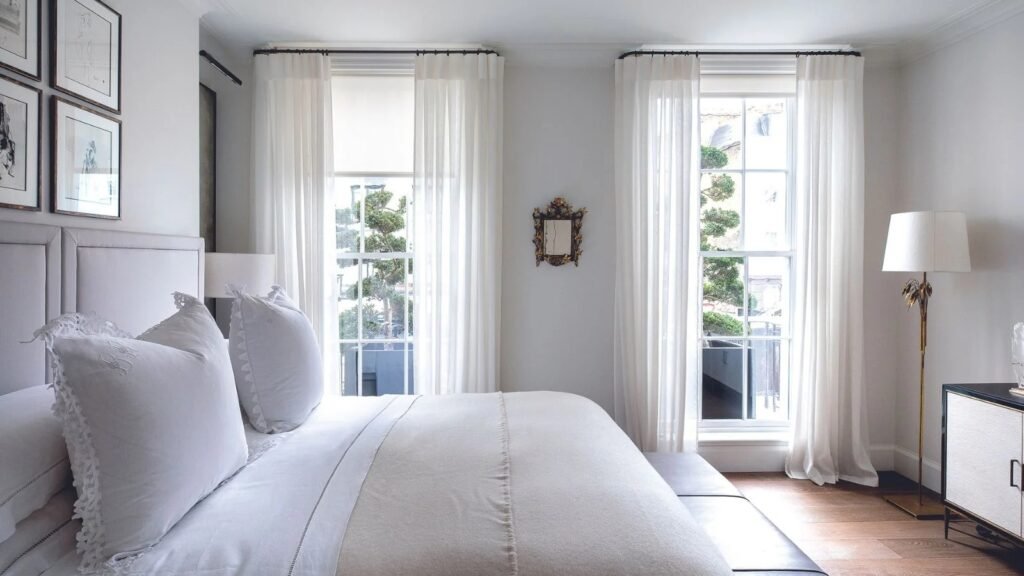
Window treatments have a major effect on a small bedroom because they occupy a large visual area. If your curtains are hung directly above the window frame, the window can appear shorter and the ceiling can feel lower. A better approach in many rooms is to mount the curtain rod higher, closer to the ceiling, and use curtains that reach the floor. This creates a long vertical line that can make the room feel taller. Choose a fabric that fits the room’s needs. Sheer curtains can maximize natural light, while lined curtains can provide privacy and better light control. If you need blackout curtains, choose a simple design rather than a heavy pattern that creates a strong horizontal or visual break. Full-height curtains are also useful because they make the window feel like a larger architectural feature. Designers interviewed by Architectural Digest have specifically recommended full-height curtains as a way to emphasize verticality.
Bedding can create the same sense of visual continuity. In a small bedroom, avoid using too many competing patterns. Instead, choose one main color and add texture through a quilt, duvet, blanket, pillows, or throw. For example, cream bedding with a textured beige blanket can feel richer than five different printed fabrics. If you want a pattern, use it in one controlled area, such as the throw pillows or bed runner. Keep the bedding proportional to the room and avoid excessively large piles of pillows that make the bed look wider than it is. A neatly made bed with layered textures can become the room’s main focal point without requiring additional artwork or furniture. You can also coordinate the bedding with curtains to create a connected color story. This does not mean everything needs to match exactly. Instead, repeat one or two colors across the room so the eye moves smoothly between surfaces. When the walls, curtains, bedding, and furniture feel related, the bedroom can appear more spacious and thoughtfully designed.
9. Create a Calm Bedroom With Less Visual Clutter
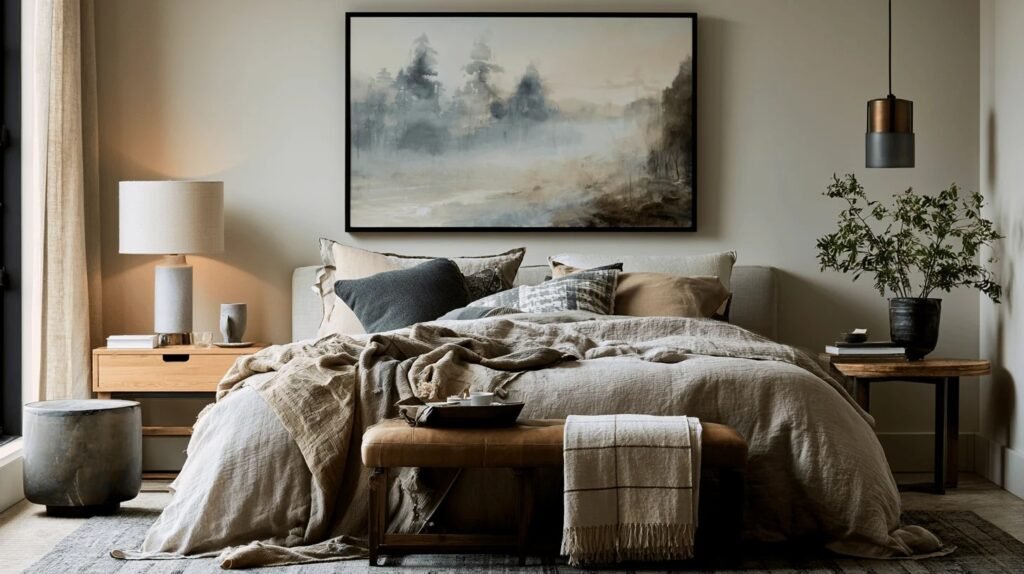
Small bedrooms become uncomfortable quickly when every surface is covered with objects. Clutter does not only take up physical space; it also creates visual noise. Start with your nightstand, dresser, and floor. Ask whether every object needs to stay visible. Keep everyday essentials nearby, but move rarely used items into drawers, baskets, closets, or under-bed storage. Closed storage can be especially useful because it allows you to keep necessary belongings without displaying everything at once. A simple basket can hold blankets, while a drawer organizer can control smaller items. If you have open shelves, limit the number of objects displayed on them. A few books, one framed photograph, and a small plant can look intentional. Dozens of small accessories can make the same shelf feel chaotic. Current organization advice also emphasizes editing belongings and maintaining storage systems rather than continually adding more containers.
A useful method is to divide bedroom belongings into three groups: things you use regularly, things you use occasionally, and things you rarely use. Everyday items should be easiest to reach. Occasional items can go into drawers, cabinets, or labeled boxes. Rarely used seasonal items can go under the bed or into high storage. This approach makes your bedroom easier to maintain because you are not searching through multiple boxes every morning. You can also follow a simple “one in, one out” rule for clothing and accessories. When you bring in something new, consider removing something you no longer use. This prevents storage problems from returning after a makeover. Do not feel that you need to remove every decorative object. A small bedroom should still feel personal. Family photographs, artwork, plants, books, and meaningful objects can make the space feel like home. The difference is intentional placement. Choose fewer items and give them room to be noticed. The best small-bedroom decor is not necessarily minimal; it is edited, useful, and connected to the people who live there.
10. Add Personality With One Strong Focal Point
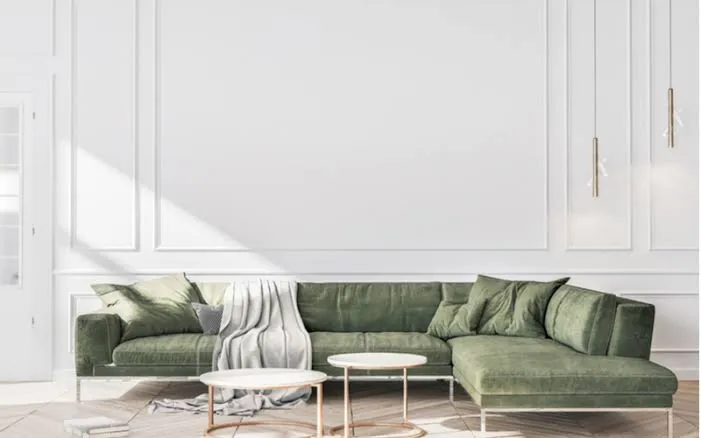
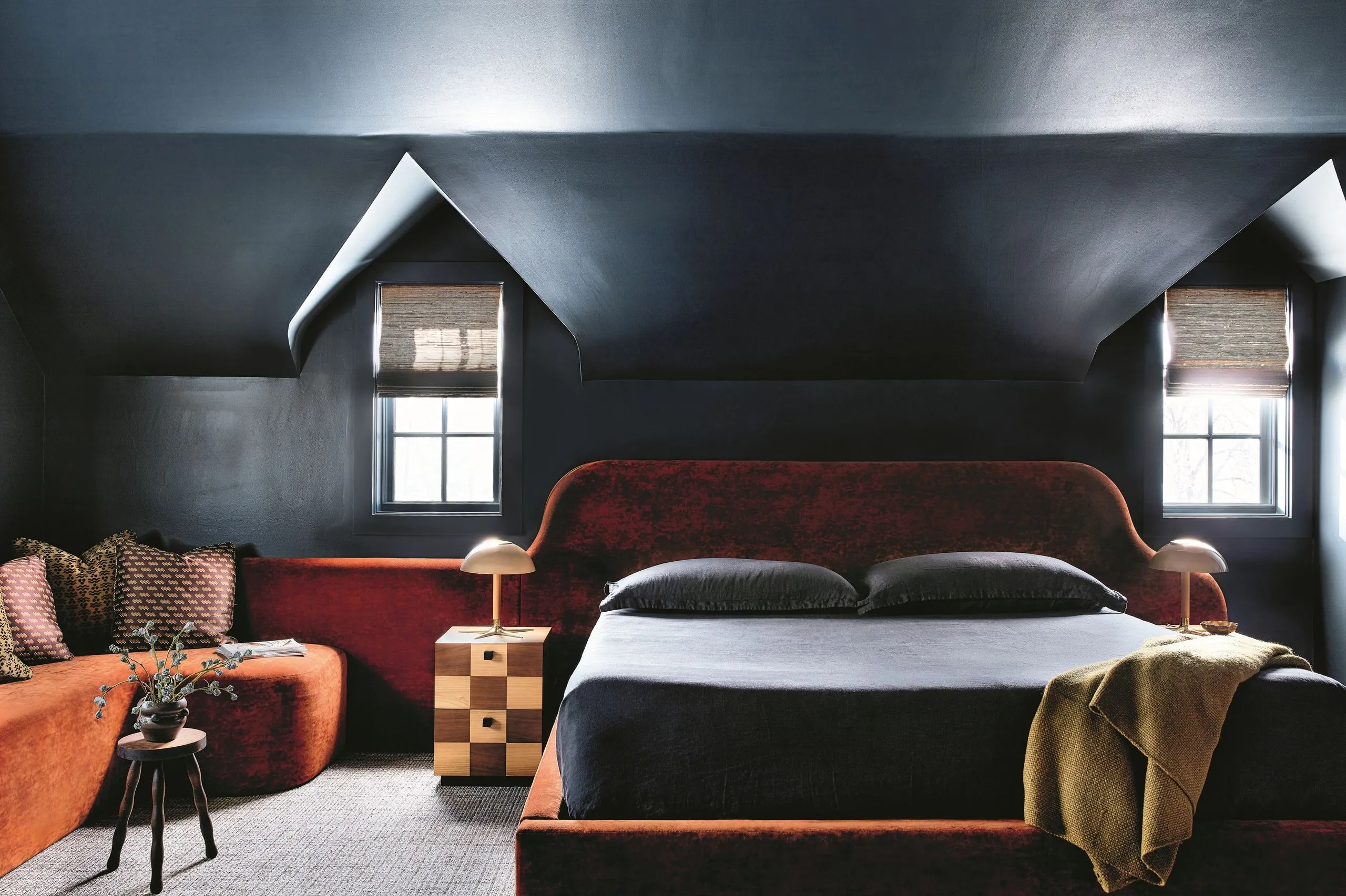
A small bedroom does not need to be completely plain. In fact, giving the eye one main focal point can make the room feel more intentional. The focal point could be a beautiful headboard, a piece of artwork, a patterned wallpaper wall, a special light fixture, or a carefully styled bed. Choose one area that you want people to notice first and allow the other parts of the room to support it. For example, if you use a patterned wallpaper behind the bed, keep the bedding relatively simple. If you have a beautiful statement headboard, avoid surrounding it with several large pieces of artwork. This creates hierarchy, which is important in a small room. Instead of every item competing for attention, one feature becomes the star. You can also use a bold color in one location. A deep blue wall behind the bed can create depth and personality while the remaining walls stay lighter. Color drenching can also work in small bedrooms when used intentionally because it can make the room feel cocoon-like rather than visually fragmented.
Your focal point should still fit the practical needs of the room. Do not place an enormous piece of furniture simply because you want a dramatic feature. Instead, use paint, wallpaper, textiles, artwork, or lighting to create impact without sacrificing floor space. A large piece of artwork can sometimes be more effective than several small frames because it creates one clear visual statement. Similarly, a textured headboard can provide warmth without requiring additional wall decor. If you enjoy decorating with plants, one larger plant in an appropriate corner may have more impact than several tiny plants scattered around the room. The same principle applies to accessories. Choose a few pieces that tell a story rather than filling every surface. A small bedroom can be stylish, colorful, traditional, modern, cozy, or dramatic. The goal is not to follow one strict design style. The goal is to make every choice work together. When storage is controlled, furniture is properly scaled, and one strong focal point gives the room direction, even a very small bedroom can feel finished and personal.
Small Bedroom Layout Ideas to Try
The best layout for a small bedroom depends on the room’s exact shape, but a few principles work in many homes. Start with the bed because it is normally the largest item. Next, identify the closet, bedroom door, windows, and heating or cooling vents. Keep those areas accessible. If possible, leave a clear path from the entrance to the bed and closet. In a narrow rectangular bedroom, placing the bed along the longest wall may leave a more usable walkway. In a square room, centering the bed on a wall may work if there is enough space on both sides. If one side of the bed has very little clearance, consider whether you actually need two nightstands. A single compact nightstand or floating shelf can provide the function without forcing the furniture arrangement to become symmetrical.
Do not be afraid to break traditional bedroom design rules when the room demands it. Small rooms often need customized solutions. You might place the bed slightly off-center to create space for a wardrobe. You might use one nightstand instead of two. You might replace a dresser with a tall wardrobe. You might use a wall-mounted desk instead of a traditional desk. These decisions are not design failures; they are responses to the available space. Interior designers frequently emphasize that small bedrooms benefit from fewer, multifunctional pieces and careful attention to flow. Before buying new furniture, try rearranging what you already own. Remove unnecessary pieces temporarily and see how the room feels. Sometimes the best small-bedroom makeover is not buying more furniture but removing one large item that is taking up valuable space.
Small Bedroom Storage Ideas That Actually Help
Storage should be planned around the things you actually own. Start with clothing because it usually takes up a large amount of bedroom storage. Use closet organizers, slim hangers, drawer dividers, and vertical shelves where appropriate. If your closet is small, consider whether some clothing can be stored in a tall wardrobe or under the bed. Seasonal clothing can be moved out of the main closet when it is not needed. Shoes should have a defined storage area instead of being left on the floor. A narrow shoe cabinet, closet shelf, or under-bed organizer may work better than a large shoe rack. Bags can be stored on hooks, inside a wardrobe, or on a dedicated shelf. The goal is to make storage easy enough that you will actually use it every day.
Think about hidden storage before adding visible storage. Under-bed boxes, storage ottomans, drawers, baskets, and wardrobes can hold many items without making the room look busy. If you need a nightstand, choose one with at least one useful drawer. If you need a bench, consider a storage version. If you need a mirror, consider one attached to a wardrobe. These combinations allow one piece to perform multiple functions. Architectural Digest’s recent storage guidance also highlights storage beds, under-bed containers, tall dressers, storage benches, and multifunctional pieces as practical options for compact bedrooms. You can explore additional professional small-space organization ideas in this small-bedroom storage guide for more examples. The most important lesson is to design storage before buying decorative accessories. A room that looks beautiful but has nowhere to put everyday belongings will quickly become cluttered again.
How to Make a Small Bedroom Feel Bigger
Making a small bedroom feel bigger is mostly about controlling visual breaks. Use a limited color palette, keep furniture proportional, allow some floor space to remain visible, and use lighting to eliminate dark corners. Mirrors can reflect light, while light-colored walls can create a brighter background. Curtains hung higher can draw the eye upward. Tall furniture can use vertical space without spreading across the floor. These techniques work together rather than independently. A white wall alone will not solve a crowded layout, and a mirror cannot compensate for furniture blocking the walking path. Think about the whole room instead of searching for one magic trick.
It is also helpful to avoid buying furniture simply because you have an empty corner. Empty space can be useful. A small area beside the bed may be more valuable as a clear pathway than as a place for a decorative chair. Similarly, an empty wall can make artwork more noticeable instead of needing to be filled with shelves. Current designer guidance recommends minimizing visual breaks, using carefully scaled furniture, and combining light colors with texture to create a stronger sense of openness. If you want more inspiration for creating a cohesive home, you can also explore the Design Ideas section on Ideas Home Accessories for related decorating concepts. The best small bedroom is not the one that contains the most clever products. It is the one where the layout, storage, lighting, and decoration work together.
Small Bedroom Color Ideas
For a peaceful small bedroom, start with a base color that you can live with every day. Warm white is a safe choice for many rooms because it can feel bright without looking too cold. Beige, cream, light taupe, soft gray, pale green, and muted blue are other useful choices. If your bedroom has plenty of natural light, you have more freedom to experiment with medium tones. If it is naturally dark, lighter colors may help the space feel more open. You can add stronger colors through bedding, artwork, curtains, or one accent wall. The key is repetition. If you choose sage green as an accent, repeat a small amount of that green in pillows, artwork, or a throw so it feels intentional.
Do not assume that small rooms must always be white. A darker bedroom can be beautiful when the goal is a cozy, intimate atmosphere. The important thing is to understand the effect of your choices. Dark walls, dark furniture, heavy curtains, and dark bedding together can make the room feel more enclosed. But a deep blue wall paired with warm white bedding, lighter flooring, and good lighting can create a sophisticated bedroom. You can also use a monochromatic design, where different shades of one color create depth. This can be particularly effective in a small room because there are fewer strong visual divisions. Texture becomes important here. Linen, wood, woven materials, cotton, wool, and soft upholstery can prevent a single-color room from feeling flat. A successful small bedroom does not have to follow a strict “light colors only” rule. It needs a controlled palette that supports the mood you want.
Small Bedroom Decor Mistakes to Avoid
One of the biggest mistakes is buying furniture before measuring the room. Online furniture can look compact in photographs but be surprisingly large in person. Always check width, depth, height, door clearance, drawer clearance, and walking space. Another mistake is filling every wall because the room feels empty after the large furniture is installed. Empty wall space can actually make the room feel calmer. A third mistake is using too many small decorative objects. Ten small accessories often create more visual noise than one large artwork or one meaningful decorative feature. Avoid buying storage containers without first deciding what you need to store. More containers do not automatically mean better organization.
Another common mistake is ignoring lighting. A bedroom can have excellent furniture and still feel uncomfortable if it has only one harsh overhead light. Add layers of light where possible. Also avoid blocking natural light with oversized furniture or heavy window treatments. Finally, do not copy a bedroom design exactly from a photograph without considering your own room. A design that works in a large bedroom may not work in a narrow apartment bedroom. Use inspiration as a starting point, then adapt it to your dimensions, lifestyle, budget, and storage needs. Professional small-bedroom design is not about following rules perfectly. It is about solving real problems while creating a room that feels personal and comfortable.
Frequently Asked Questions About Small Bedroom Design
How can I make my small bedroom look bigger?
Use a simple color palette, keep pathways clear, choose furniture with the correct scale, and use vertical space for storage. Mirrors can reflect natural light, while wall-mounted lighting can reduce furniture clutter. Full-height curtains can also emphasize the height of the room. The most important step is controlling how much furniture is placed on the floor.
What color is best for a small bedroom?
There is no single best color for every small bedroom. Warm white, cream, beige, pale gray, soft blue, and muted green are popular choices because they can create a light and calm atmosphere. However, darker colors can also work if you want a cozy bedroom. The amount of natural light and the rest of your furniture should guide the decision.
What type of bed is best for a small bedroom?
A simple platform bed, low-profile bed, or storage bed can work well. Storage beds are especially useful when closet space is limited because they can provide additional storage without requiring another piece of furniture. Always choose a bed that leaves enough room for comfortable movement around it.
How do I add storage to a very small bedroom?
Use the space under the bed, tall wardrobes, floating shelves, wall hooks, storage benches, and nightstands with drawers. Try to use vertical space before adding more furniture to the floor. Closed storage can also help reduce visual clutter.
Should I put a mirror in a small bedroom?
Yes, a well-placed mirror can be useful. It can reflect natural or artificial light and make the room feel more open. A full-length mirror attached to a wardrobe door is especially practical because it combines storage and a mirror without requiring additional floor space.
How do I arrange furniture in a tiny bedroom?
Start with the bed and make sure it does not block doors, windows, closets, or important walking paths. Then add the largest storage piece. After that, add only the furniture you actually need. Do not force symmetry if the room does not have enough space for it.
Can a small bedroom have dark walls?
Yes. Dark walls can create a cozy and dramatic feeling. To prevent the room from feeling too heavy, balance darker walls with good lighting, lighter bedding, reflective surfaces, and some lighter furniture or textiles.
What should I remove from a small bedroom?
Start with furniture you rarely use, duplicate storage pieces, unused decorations, clothing you no longer wear, and objects that block pathways. Removing one large unnecessary piece can sometimes create more usable space than adding several small storage products.
Conclusion
The best small-bedroom design ideas are not about making a tiny room look like a large bedroom. They are about making every part of the room work better. Start with the bed and layout, then consider storage, lighting, color, curtains, mirrors, and decoration. Choose furniture that performs more than one job whenever possible, use your walls for storage, and protect the open floor area that allows you to move comfortably.
Most importantly, do not try to use every available inch. A small bedroom needs breathing room. Keep the design edited, choose one or two strong focal points, and give everyday belongings a clear home. With the right layout and a thoughtful mix of function and style, even a very small bedroom can feel comfortable, organized, personal, and beautiful.