

Modern rooms often fail in one of two directions: sharp, white and cold, or soft, beige and bland. Modern organic style is the route between them. It keeps modern design’s clean lines and uncluttered layouts, then warms them with what nature supplies — wood grain, stone, linen, wool, clay, curves and living green. The result is a room that feels calm without feeling empty, and warm without feeling busy.
Quick answer: Modern organic style ideas start with a warm neutral base, then layer natural materials, curved low furniture, texture you can touch, and plants at architectural scale. Keep colours to warm whites and earth tones, and edit hard: fewer, larger, handmade pieces.
Of all the types of interior design styles a home can borrow, this one asks the least of your walls and the most of your materials. Ten ideas follow, in the order a room is actually built: base first, then materials, shapes, texture and light — and finally the restraint that holds it all together.
In this guide: Modern Organic Style at a Glance · Start With a Warm Neutral Base · Layer Natural Materials, Not Colours · Choose Curved, Low-Slung Furniture · Let Wood Grain Do the Decorating · Layer Texture You Can Touch · Stone and Plaster With Soft Edges · Treat Plants as Architecture · Light With Sculptural, Natural Fixtures · Fewer, Larger, Handmade Pieces · Earth-Tone Accents, in Small Doses · Frequently Asked Questions About Modern Organic Style · Conclusion
Modern Organic Style at a Glance
| Element | The modern organic choice | Why it works |
|---|---|---|
| Base colour | Warm white, oatmeal, mushroom | Warmth without darkness |
| Materials | Oak, walnut, stone, clay, linen | Interest comes from texture, not pattern |
| Furniture shape | Curved, low, softened edges | The eye moves slowly and rests |
| Textiles | Bouclé, wool, linen, jute | Layers you can feel, not just see |
| Decor | Fewer, larger, handmade | Each piece earns its space |
| Accents | Clay, olive, rust — in small doses | Colour stays earthy, never loud |
1. Start With a Warm Neutral Base
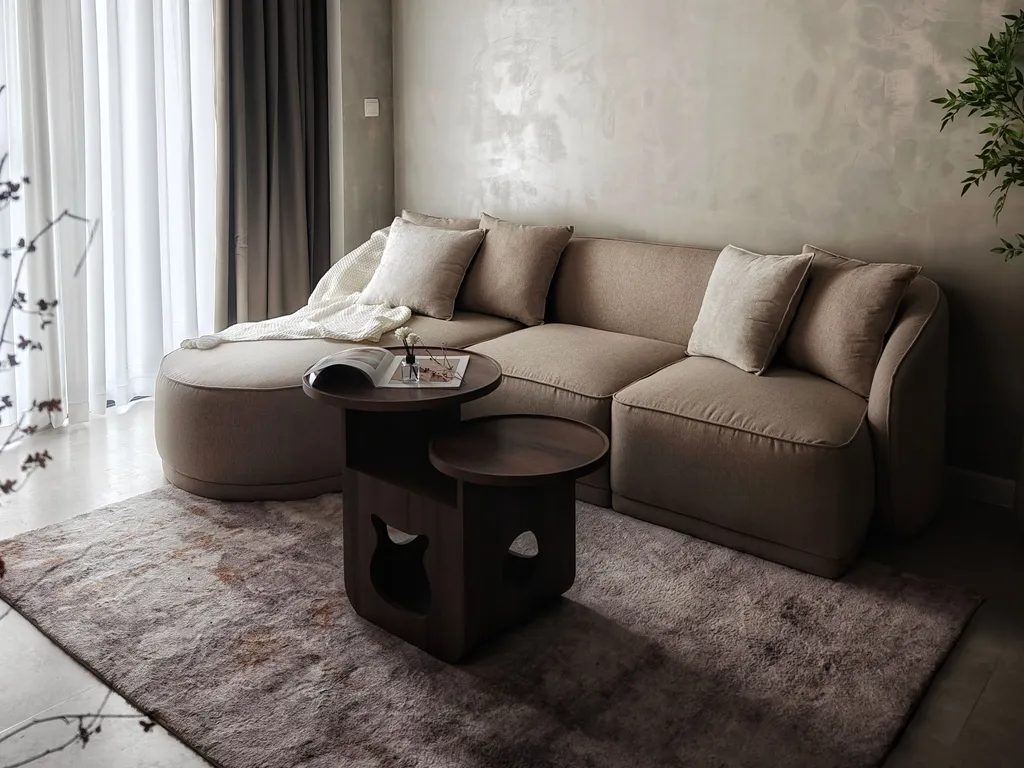
Start with warm neutrals on the largest surfaces: walls, sofa, rug and curtains in warm white, ivory, oatmeal, sand or mushroom, never stark blue-white. The warmth is in the undertone. A warm white carries a trace of yellow or pink that keeps daylight feeling like sunlight; a cool white turns the same room into a clinic. Choose the base for the largest surfaces first: walls, sofa, rug, curtains.
This is a foundation, not a finished room, and it pays to build it deliberately — our guide to a year-round neutral base shows how a warm neutral ground lets the layers above it change with the seasons. In modern organic rooms the base does roughly 70 percent of the visual work, so let it: everything added later — wood, stone, green — reads richer against a calm, warm field.
2. Layer Natural Materials, Not Colours
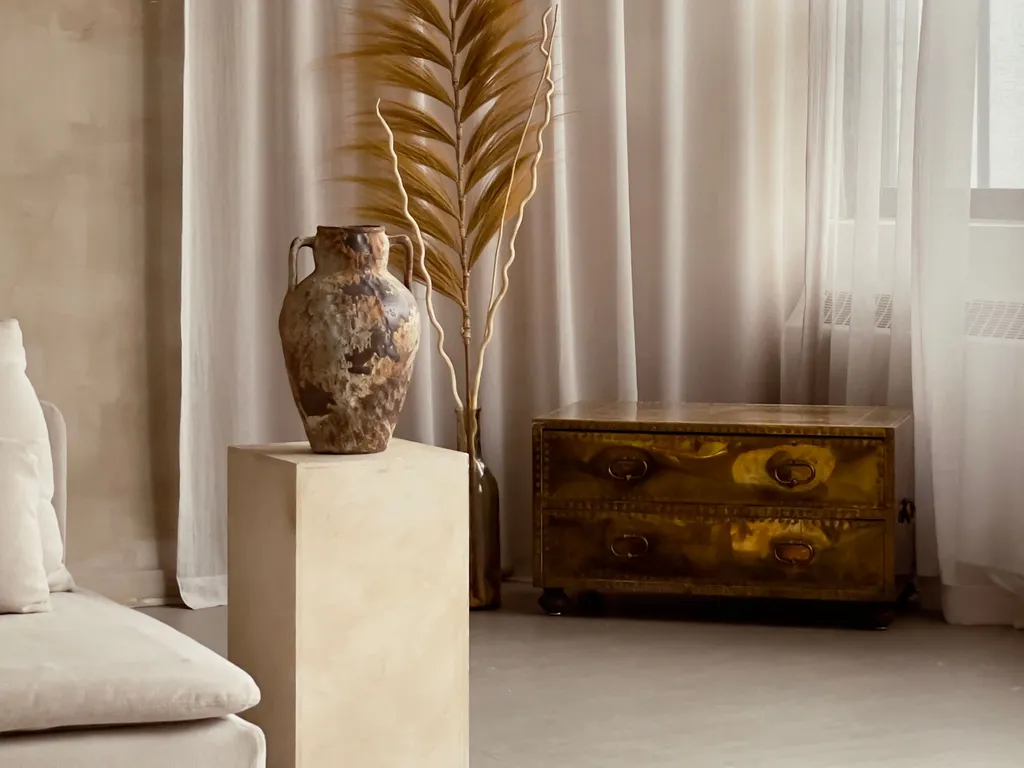
Where most styles add colour for interest, modern organic adds material. A room in five neutrals stays alive if those neutrals arrive in five different substances: the grain of oak, the pits of travertine, the weave of rattan, the matte skin of unglazed clay, the slub of linen. PureLuxy’s modern organic interior design guide lists the same cast — wood, stone, linen, wool, clay, rattan — and makes the key point: the style holds together through materials, not through matching.
Work to a simple census per room: one wood, one stone or ceramic, one woven fibre, one soft textile. Repeat each material at least twice so nothing feels accidental — the oak of the table returns in a stool, the clay of the vase in a bowl. Materials repeated, colours quiet: that is the formula.
3. Choose Curved, Low-Slung Furniture
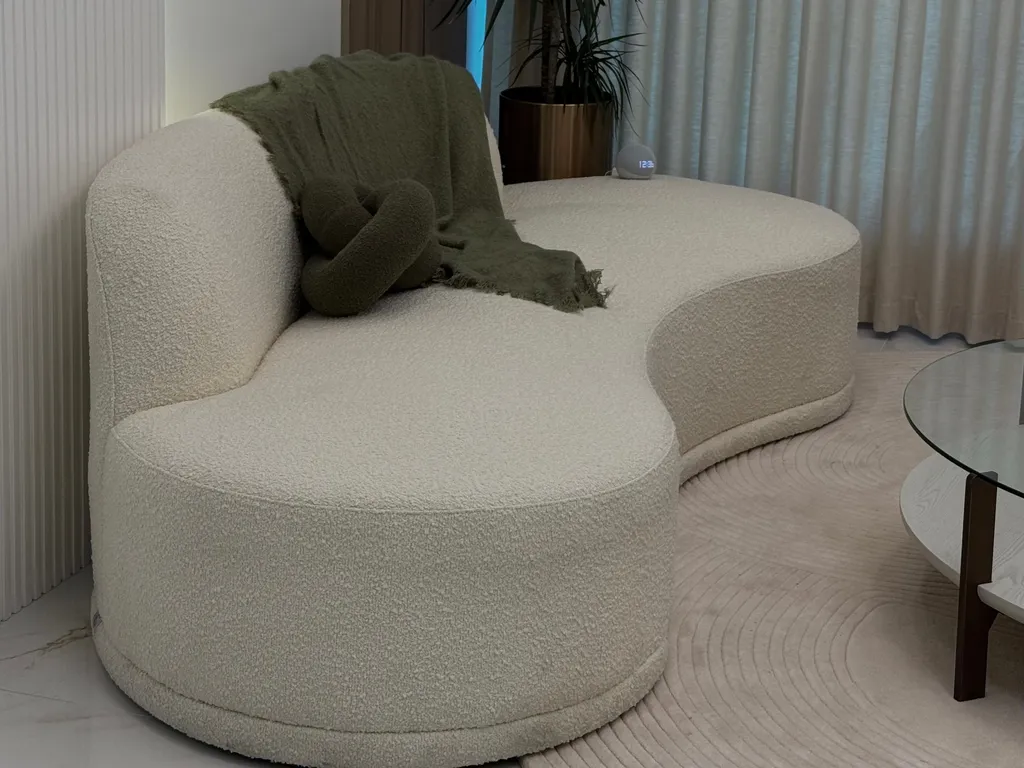
Choose curved, low furniture: a sofa whose back rolls into its arms, a kidney-shaped or round coffee table, an armchair with a barrel back, a headboard with softened corners. The signature pieces are curved and low: a sofa whose back rolls into its arms, a kidney-shaped or round coffee table, an armchair with a barrel back, a headboard with softened corners. Sampleboard’s organic modern style guide identifies curved edges and asymmetrical silhouettes as the style’s defining shapes — the modern frame, with every hard corner filed off.
Curves also change how a room is used. Rounded pieces leave no sharp point to route around, so circulation flows in arcs instead of lanes, and low profiles keep sight lines open to windows and art. You need not replace everything: one curved anchor — usually the sofa or the dining table — sets the geometry, and smaller pieces can stay straight as long as their edges are soft.
4. Let Wood Grain Do the Decorating
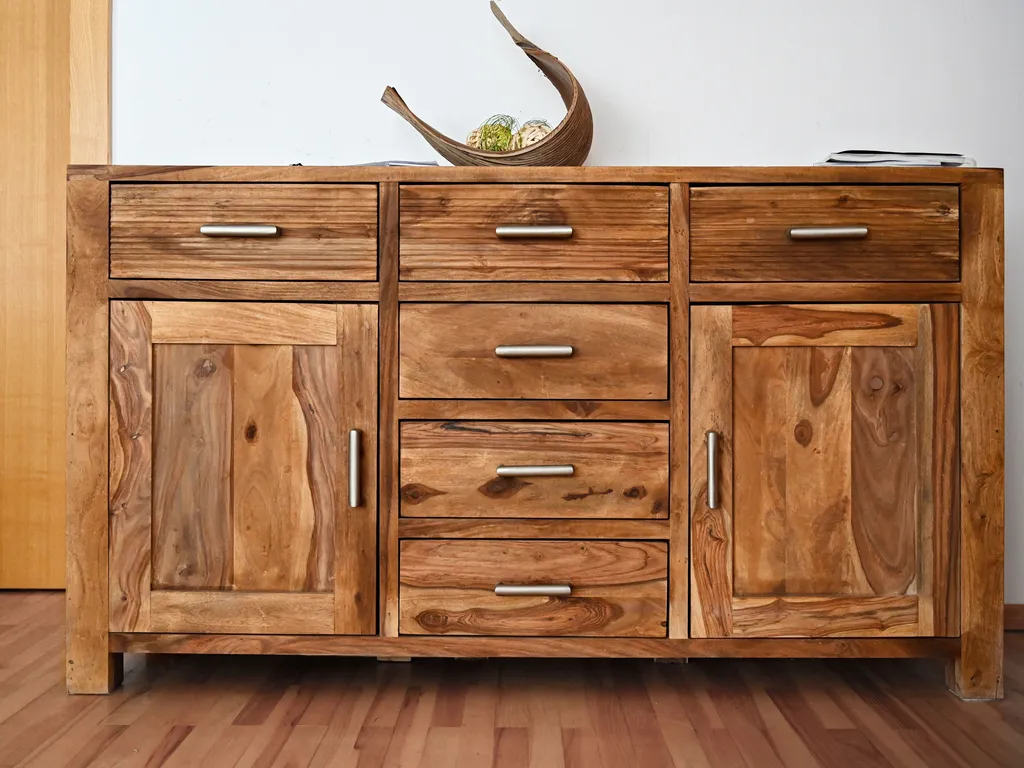
In a modern organic room, wood is not a background — it is the pattern. Finishes stay matte and honest so the grain shows: white oak left pale and natural, walnut left deep and figured, ash and reclaimed timber with their knots and saw marks intact. High-gloss lacquer and heavy stain hide exactly what this style wants on display. A single dramatic board — a live-edge bench, a console with a swirling grain — can carry a whole wall.
Keep the wood family small: two tones per room, one light and one dark, repeated across pieces so the room reads collected rather than matched. The same discipline works at kitchen scale — our warm wood kitchen finishes ideas pair pale oak cabinetry with deeper walnut accents so the grain, not the hardware, becomes the decoration. Where wood is painted, let it be the quietest colour in the room.
5. Layer Texture You Can Touch

With colour restrained, texture becomes the room’s second language — and it is spoken mostly in textiles. The modern organic palette of fabrics is short and tactile: nubby bouclé on chairs and sofas, a chunky hand-knitted wool throw, washed linen cushions and curtains with their natural creases left in, a flat-woven jute or wool rug underfoot. Each one catches light differently, so a cream-on-cream corner still has depth.
Layer by weight and scale, not just by item. A fine weave (linen) beside a coarse one (jute), a looped surface (bouclé) beside a smooth one (leather or stone) — contrast of touch within one colour family. Three textile layers per seat is a good working count: upholstery, cushion, throw. If a fabric looks perfect but feels like plastic, it fails the only test this style really sets.
6. Stone and Plaster With Soft Edges
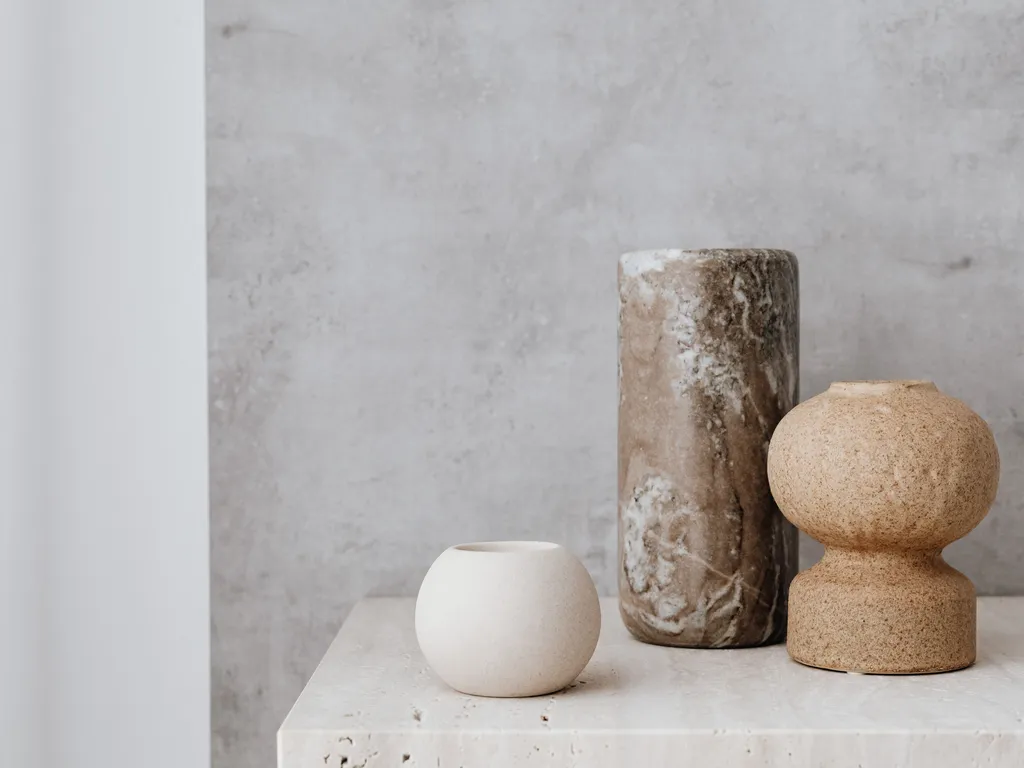
Stone in this style is honed, tumbled and matte — never polished to a shine. Travertine is the signature: warm, pitted and softly irregular, it turns a coffee table, a basin or a side table into the room’s quiet sculpture. Limestone, soapstone and unglazed terracotta play the same role at different budgets. Edges matter as much as material: a softened, eased edge keeps stone feeling geological rather than architectural.
On walls, limewash and clay plaster do what flat paint cannot — they move. Their cloudy, brushed finish shifts with the light through the day, so a plain wall gains the subtle variation of a natural surface. The bathroom is where the pairing proves itself: our spa-style bathroom palette ideas build a whole room from plaster tones, pale stone and oak, and it is the purest modern organic scheme in the house.
7. Treat Plants as Architecture
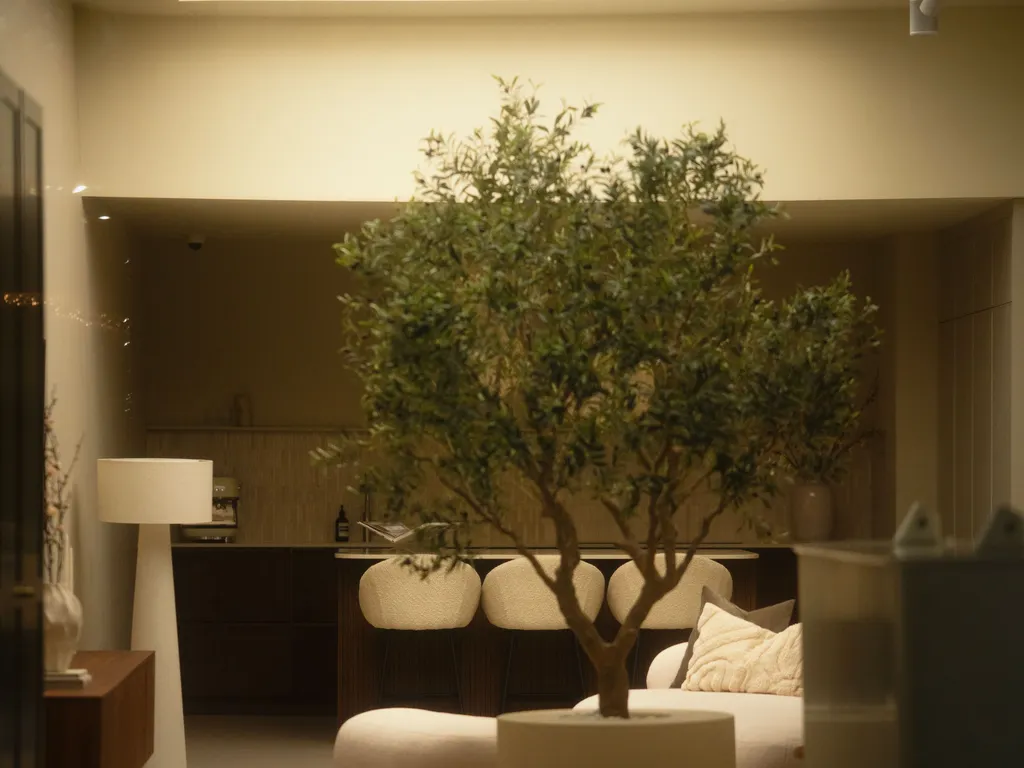
In modern organic rooms, plants are not accessories scattered on shelves — they are structural. One tall, tree-form plant does the work of a sculpture, a screen and a colour accent at once: a fiddle leaf fig filling a bare corner, an olive tree softening a window, a branchy dracaena behind a reading chair. Height is the point. A plant that reaches toward the ceiling changes the room’s proportions; a row of small pots changes only the dusting.
Choose few and large, in pots that belong to the material palette — terracotta, stoneware, woven seagrass. Then layer heights deliberately: one tree, one trailing plant from a shelf or mantel, one low cluster at floor or table level. Grouped like this, greenery reads as a landscape the room was built around, which is precisely the feeling the style is named for.
8. Light With Sculptural, Natural Fixtures
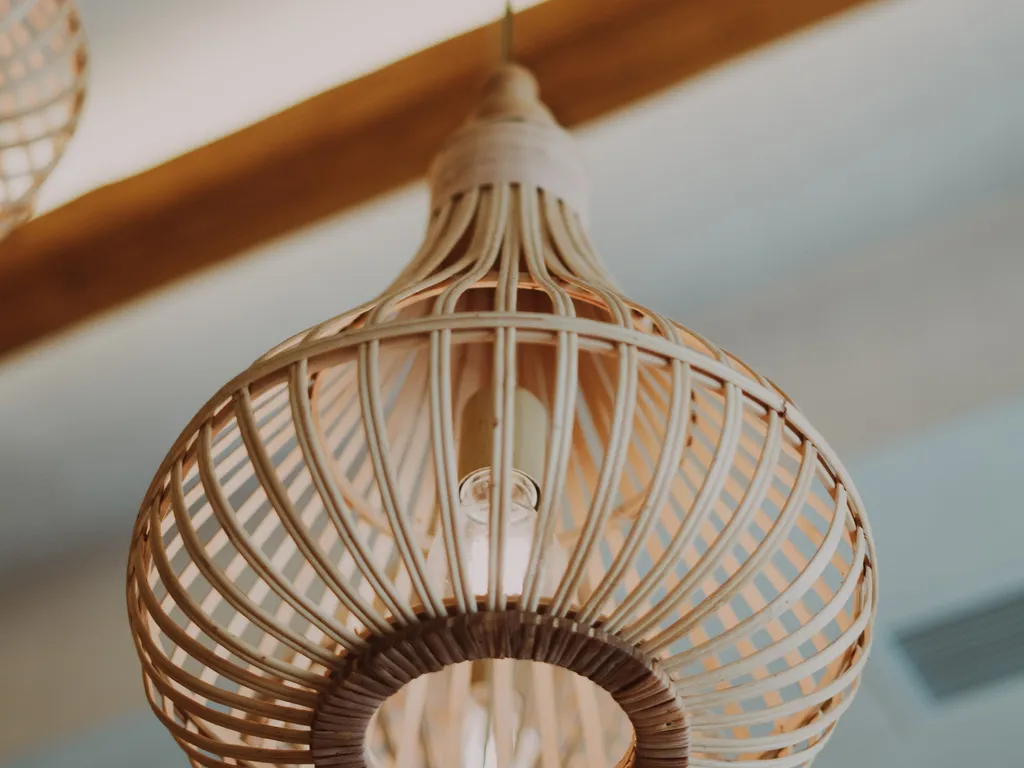
Lighting is where modern organic rooms are won at night. Fixtures are chosen as objects first and light sources second: a cloud-like woven rattan pendant over the table, a paper lantern with its soft geometry, a ceramic table lamp under a linen shade, an arched floor lamp echoing the furniture’s curves. Bare bulbs, chrome and crystal belong to other styles; here, every shade is a natural material that glows warmly from inside.
Keep the light itself consistent: warm bulbs, roughly 2700K, in every fixture, so the room’s evening palette matches its daytime one. Layer the heights as you would in any calm room — one overhead, lamps at seated height, something low — but let the fixtures repeat the room’s materials, so the lighting reads as part of the furniture rather than equipment added to it.
9. Fewer, Larger, Handmade Pieces
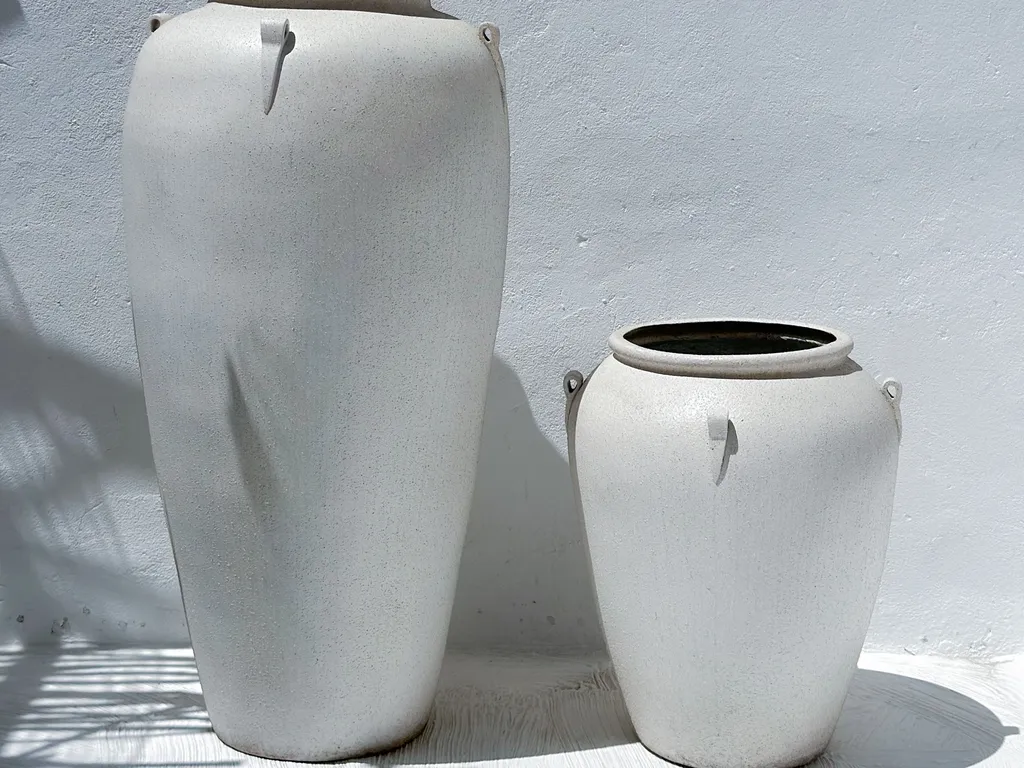
The collected feeling of a modern organic room comes from editing, not accumulating. The rule is fewer and larger: one oversized hand-thrown vase instead of five small ones, a single carved bowl on the shelf, a stack of handmade plates whose rims are not quite level. Imperfection is the credential — a slightly uneven glaze, a thumbprint in the clay, an asymmetric silhouette tells the eye a person made this, and the room relaxes around it.
Apply the same edit to every surface: a tabletop holds one group, not a spread; a shelf keeps breathing room around each object, with a third of it left empty. When everything on display is large, natural and clearly chosen, the collection reads as calm. When it is small, numerous and matched, it reads as stock — however natural the materials are.
10. Earth-Tone Accents, in Small Doses
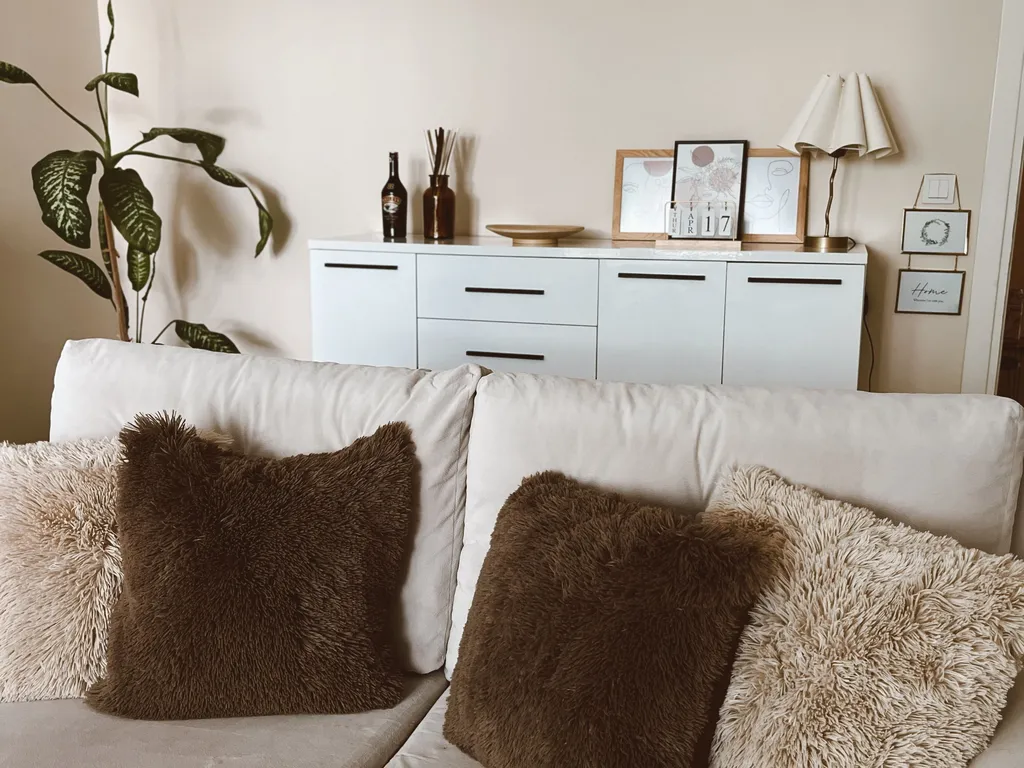
Colour does appear in modern organic rooms — it just arrives in earth tones and in small, movable doses. Clay and terracotta, olive and sage, rust, ochre, and the deep brown-black of walnut or charcoal: these are the accent register, carried by cushions, a throw, a vase, one upholstered chair. Roughly a tenth of the room’s visible colour is the working share — enough to warm the neutrals, never enough to argue with them.
Because accents live in small pieces, they are the style’s seasonal dial. Swap terracotta for olive in spring, deepen to rust in autumn, and the base never changes. Repeat each accent at least twice in the room — cushion and vase, throw and artwork — so it reads chosen. And hold the palette’s one hard line: no bright primaries, no neon, no cold grey-blue. Earth tones only, and the calm holds.
Frequently Asked Questions About Modern Organic Style
What is modern organic style in interior design?
It is modern design — clean lines, uncluttered layouts — softened with nature: natural materials like wood, stone and linen, curved forms, warm earth-tone neutrals and living plants. The modern framework keeps it calm; the organic elements keep it warm.
What colours define the modern organic palette?
Warm white, ivory, oatmeal, sand, taupe and mushroom as the base; clay, terracotta, olive, sage and rust as accents; walnut brown or charcoal for depth. Cool whites, bright primaries and cold greys sit outside the palette.
How is modern organic different from Scandinavian style?
They share pale wood and simplicity, but Scandinavian rooms lean cooler, whiter and more minimal. Modern organic is warmer and more tactile — deeper wood tones, stone and clay, more curve and texture, and earthier accents.
Can I get the look in a rental?
Yes — the style lives mostly in movable layers: furniture, textiles, lamps, plants and pottery. The only fixed elements are wall finishes, and limewash-look paint or warm white paint is usually the most a rental needs, with permission.
What furniture shapes should I look for?
Curved and low: sofas with rolled or rounded backs, round or kidney-shaped tables, barrel chairs, softened corners everywhere. One curved anchor piece per room sets the geometry; the rest can be simpler.
Which materials matter most?
Wood first — oak and walnut with the grain showing — then stone (travertine, limestone), then the woven and soft fibres: rattan, linen, wool, bouclé, jute and unglazed clay. Repeat each material at least twice per room.
Is bouclé essential to the style?
Not essential, but characteristic — its looped texture is the quickest way to make a plain chair feel organic. Washed linen, chunky wool or a woven cane panel achieves the same tactile effect if bouclé is not for you.
How do I stop an all-neutral room looking bland?
Vary texture and material, not colour: grain against plaster, bouclé against stone, jute underfoot. Add one large plant and a deeper wood tone for contrast. Bland rooms are usually low-texture rooms, not low-colour ones.
Does modern organic work in small rooms?
Very well — the palette is light, the furniture low, and the editing rule (fewer, larger pieces) suits small spaces better than collections of small decor. Choose one tree-form plant rather than many small pots.
What should I buy first on a budget?
In order: warm-white or limewash paint for the base, one natural-fibre rug, a large plant in a clay pot, and a linen or wool throw. Those four change the room’s material story for the least money; furniture can follow.
Conclusion
Modern organic style is a discipline of warmth: a warm neutral base, natural materials layered instead of colours, curved low furniture, grain and texture doing the decorative work, plants at architectural scale, and earth tones kept to a tenth. Build in that order and edit ruthlessly at the end, and a room stops feeling decorated — it starts feeling grown. Calm, warm and collected is not a purchase; it is what remains when everything cold, shiny and unnecessary has been taken away.