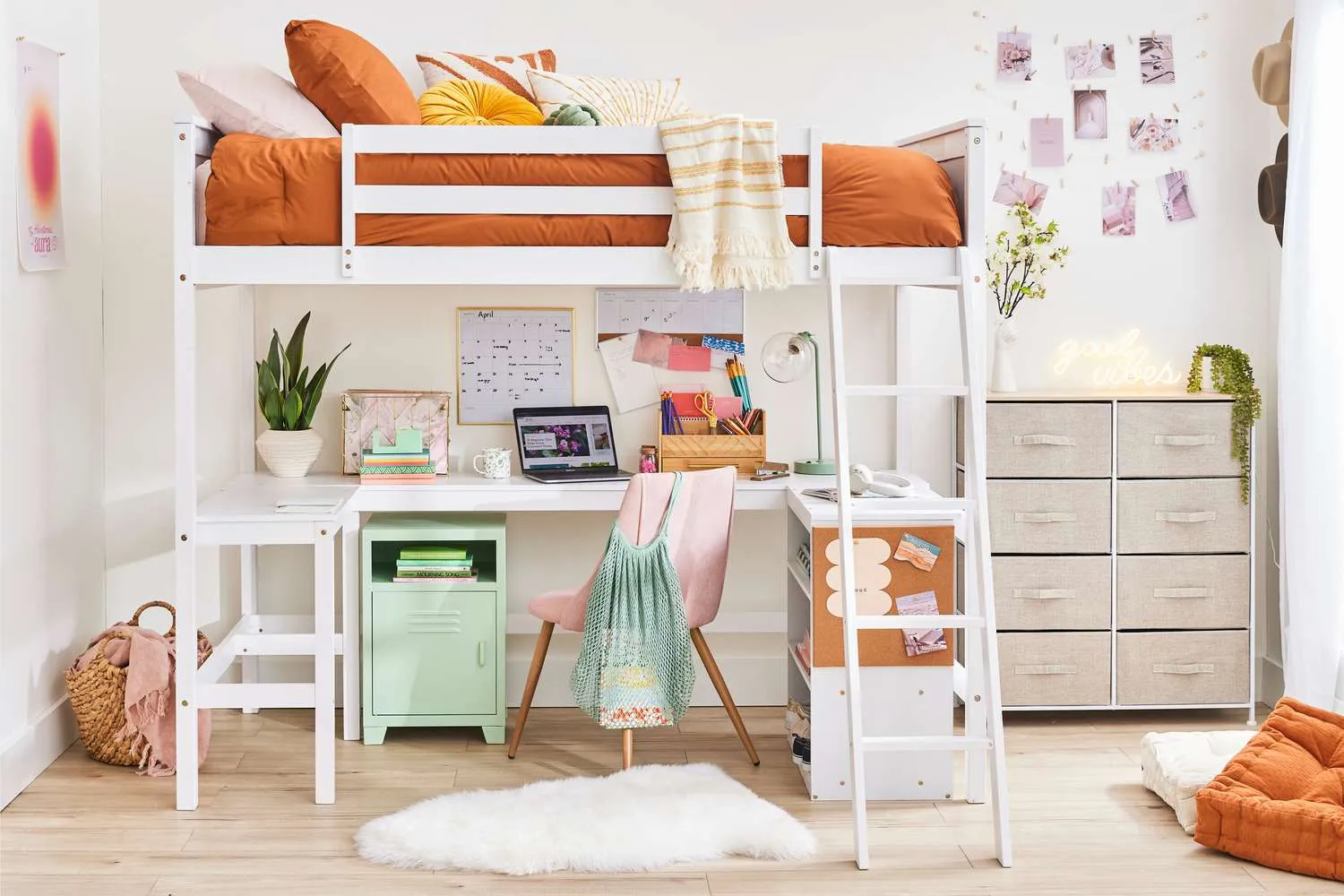

What Is a Feng Shui Bedroom?
A Feng Shui bedroom is a bedroom that is arranged to create peace, balance, and comfort. Feng Shui is an ancient Chinese practice that focuses on how the placement of furniture, colors, and decorations can affect the feeling of a room. The goal is to create a space where energy flows naturally, making you feel calm and relaxed. Your bedroom is one of the most important rooms in your home because it is where your body rests and recovers. A well-designed Feng Shui bedroom is clean, comfortable, and free from unnecessary clutter. It uses soft colors, natural light, and simple furniture to create a peaceful atmosphere. Many of these ideas are practical and easy to follow, even if you do not know much about Feng Shui. You do not need to buy expensive furniture or completely redesign your room. Small changes can make a big difference. If you enjoy creating relaxing spaces, explore our home design ideas for more inspiration.
Tips for a Feng Shui Bedroom | Sleep Deeply
Good sleep is important for your physical and mental health. When your bedroom feels calm and organized, it becomes easier to relax before bedtime. A messy room, bright lights, loud colors, or too many electronics can make it harder to fall asleep. Feng Shui encourages simple habits that support healthy sleep and reduce stress. These ideas also make your bedroom look cleaner and more beautiful. Whether your bedroom is large or small, you can use Feng Shui principles to create a comfortable place where you can rest every night. The following tips are simple, affordable, and based on both traditional Feng Shui ideas and modern bedroom design practices.
Tip 1: Place Your Bed in the Right Position

Your bed is the most important piece of furniture in your bedroom. In Feng Shui, it should be placed where you can easily see the bedroom door without being directly in front of it. This position is often called the command position because it helps you feel safe and comfortable while resting. A solid wall behind the bed provides support and makes the room feel more balanced. Try not to place your bed under a window because outside noise, sunlight, and drafts may disturb your sleep. If your bedroom layout is small, simply choose the best position that allows easy movement around the bed. Make sure there is enough space on both sides so the room feels open instead of crowded.
A good bed position also improves the overall look of your bedroom. Keep the space around your bed clean and avoid placing boxes, bags, or clutter underneath if possible. Add matching bedside tables or lamps to create balance on both sides of the bed. A simple layout makes your room feel peaceful and welcoming. When you walk into the room, your bed should naturally become the main focus. This simple change helps create a relaxing environment where your body feels ready to rest after a busy day.
Tip 2: Keep Your Bedroom Clean and Clutter-Free
A clean bedroom is one of the easiest ways to improve your sleep. Feng Shui teaches that clutter blocks the natural flow of positive energy. Clothes on the floor, overflowing shelves, and piles of unused items can make your room feel stressful. Start by removing things you no longer use. Organize your wardrobe, store extra blankets neatly, and keep your bedside table tidy. A clean bedroom is easier to maintain and creates a calm atmosphere every day. Even spending a few minutes cleaning each morning can make your room look fresh and inviting.
Keeping your bedroom organized also helps your mind relax. When everything has its own place, you are less likely to feel overwhelmed. Use storage baskets, drawers, or boxes to keep small items out of sight. Avoid filling every corner with decorations or furniture. Empty space is important because it makes the room feel larger and more comfortable. Wash your bedding regularly, dust furniture, and vacuum the floor to keep the room healthy. A clean bedroom not only looks beautiful but also creates a peaceful space where you can sleep more deeply. A clutter-free bedroom works well with smart home organization tips that make daily cleaning easier.
Tip 3: Choose Soft and Relaxing Colors

The colors in your bedroom affect how you feel. Feng Shui recommends soft, natural colors because they create a calm and peaceful atmosphere. Shades such as white, cream, beige, light gray, soft green, and pale blue are popular choices. These colors remind us of nature and help the mind relax after a busy day. You do not have to repaint your walls if you do not want to. You can add these colors through your bedding, curtains, pillows, rugs, or artwork. Soft colors also reflect natural light, making the room feel brighter and more open.
Avoid using too many bright or bold colors like neon red or strong orange because they can make the room feel energetic instead of relaxing. Warm lighting also works well with soft colors. Open your curtains during the day to let in natural sunlight, and use warm lamps in the evening instead of harsh white lights. Add simple artwork with peaceful landscapes or flowers to make the room feel even more relaxing. A balanced color scheme creates a comfortable space that supports better sleep and helps you wake up feeling refreshed. If you Creating a healthy sleep environment can improve your sleep quality and help you wake up feeling refreshed.
Tip 4: Use a Strong and Comfortable Headboard

A strong headboard is an important part of a Feng Shui bedroom. It gives your bed good support and helps create a feeling of safety and stability while you sleep. A solid wood or upholstered headboard is usually the best choice because it feels sturdy and comfortable. Place the headboard against a solid wall if possible. This makes your bed feel secure and gives the room a balanced look. Try to avoid placing your bed under a window because outside noise, light, and drafts can interrupt your sleep. If your bed does not have a headboard, adding one is a simple upgrade that can improve both comfort and style. Choose a design with smooth edges and a simple shape instead of one with sharp corners or large gaps.
Your bed should be the most relaxing place in your home. Keep your mattress in good condition and use comfortable pillows that support your neck. Wash your bed sheets regularly so your bed always feels clean and fresh. Avoid filling the bed with too many decorative pillows because they can make the space look crowded. Keep the area around your bed tidy and free from unnecessary items. A simple bedside table with a lamp, a book, or a small plant is enough. These small changes help create a peaceful bedroom where you can relax, sleep deeply, and wake up feeling refreshed every morning.
Tip 5: Remove Electronics Before Bedtime

Many people keep a television, laptop, tablet, or phone in their bedroom. While these devices are useful, they can make it harder to relax before bed. Feng Shui recommends making your bedroom a place for rest instead of work or entertainment. Bright screens, notifications, and electronic sounds can keep your brain active when it should be winding down. If possible, move your work desk and television to another room. Charge your phone on a bedside table instead of keeping it in your bed. Turning off unnecessary devices before bedtime creates a quieter and more peaceful space.
Create a relaxing bedtime routine that does not include screens. Instead of checking social media, spend a few minutes reading a book, listening to soft music, stretching gently, or practicing deep breathing. Use warm bedside lamps instead of bright ceiling lights to help your body prepare for sleep. If you use your phone as an alarm, switch it to Do Not Disturb mode so messages and calls do not wake you during the night. A bedroom with fewer electronic distractions helps your mind slow down naturally. This simple habit can improve sleep quality, reduce stress, and help you wake up with more energy.
Tip 6: Let Fresh Air and Natural Light In

Fresh air and natural sunlight can completely change the feeling of your bedroom. Feng Shui teaches that clean air and natural light help positive energy move through the room. Open your windows every morning for a few minutes to let fresh air inside. This removes stale air and makes the room feel cleaner and healthier. During the day, open your curtains or blinds to allow sunlight to brighten the space. Natural light makes your bedroom feel warm, cheerful, and welcoming. If privacy is important, choose light-colored curtains that let sunlight in while still giving you privacy.
Adding a few natural elements can also make your bedroom feel more peaceful. A small indoor plant, fresh flowers, or wooden furniture can bring a touch of nature into the room. Keep your windows clean so more sunlight can enter, and dust your furniture regularly to maintain a fresh environment. If your bedroom does not get much sunlight, use warm LED bulbs that create a soft, relaxing glow instead of bright white lights. Good lighting, fresh air, and a clean room work together to create a calm space where you can relax after a long day. These simple habits not only improve the appearance of your bedroom but also support better sleep and overall well-being. Building healthy sleep habits along with a peaceful bedroom can improve your overall well-being.
Tip 7: Choose the Right Bedroom Decorations

Your bedroom should feel calm and peaceful, so choose decorations that help you relax. Feng Shui recommends keeping the room simple instead of filling it with too many items. Pick artwork that shows nature, flowers, mountains, peaceful beaches, or soft landscapes. These pictures create a relaxing mood and make the room feel more comfortable. Family photos or happy memories are also good choices if they make you smile. Avoid decorations that show sadness, violence, or busy scenes because they can create a stressful feeling. Use only a few decorations that you truly love instead of covering every wall or shelf.
The materials you choose also matter. Natural wood, cotton, linen, bamboo, and soft fabrics help create a warm and comfortable space. Add a soft rug, cozy blankets, or light curtains to make your bedroom feel inviting. Avoid sharp-edged furniture if possible, and choose rounded shapes for a softer look. Keep shelves neat and do not overcrowd them with small decorations. A simple bedroom is easier to clean and helps your mind relax. When every item has a purpose, your bedroom feels balanced, beautiful, and ready for a good night’s sleep. Looking for more inspiration? Check out our cozy home decor ideas to make every room feel warm and inviting.
Tip 8: Use Soft Lighting for a Relaxing Mood

Lighting plays a big role in how your bedroom feels. Bright white lights can make the room feel like an office instead of a place to rest. Feng Shui recommends using soft, warm lighting that creates a peaceful atmosphere. During the day, let natural sunlight fill the room by opening your curtains. In the evening, use bedside lamps, wall lights, or warm LED bulbs instead of bright ceiling lights. Soft lighting helps your body understand that it is time to relax and prepare for sleep.
You can also create different lighting levels for different activities. Use a brighter light when cleaning or getting dressed, and switch to a warm lamp before bedtime. If possible, use dimmable lights so you can easily adjust the brightness. Candles can also create a calming mood, but always use them safely and never leave them unattended. Keep lampshades clean so they provide soft and even light. A bedroom with gentle lighting feels warm, peaceful, and welcoming. This simple change can reduce stress, improve your bedtime routine, and help you fall asleep more easily.
Tip 9: Keep Balance on Both Sides of the Bed
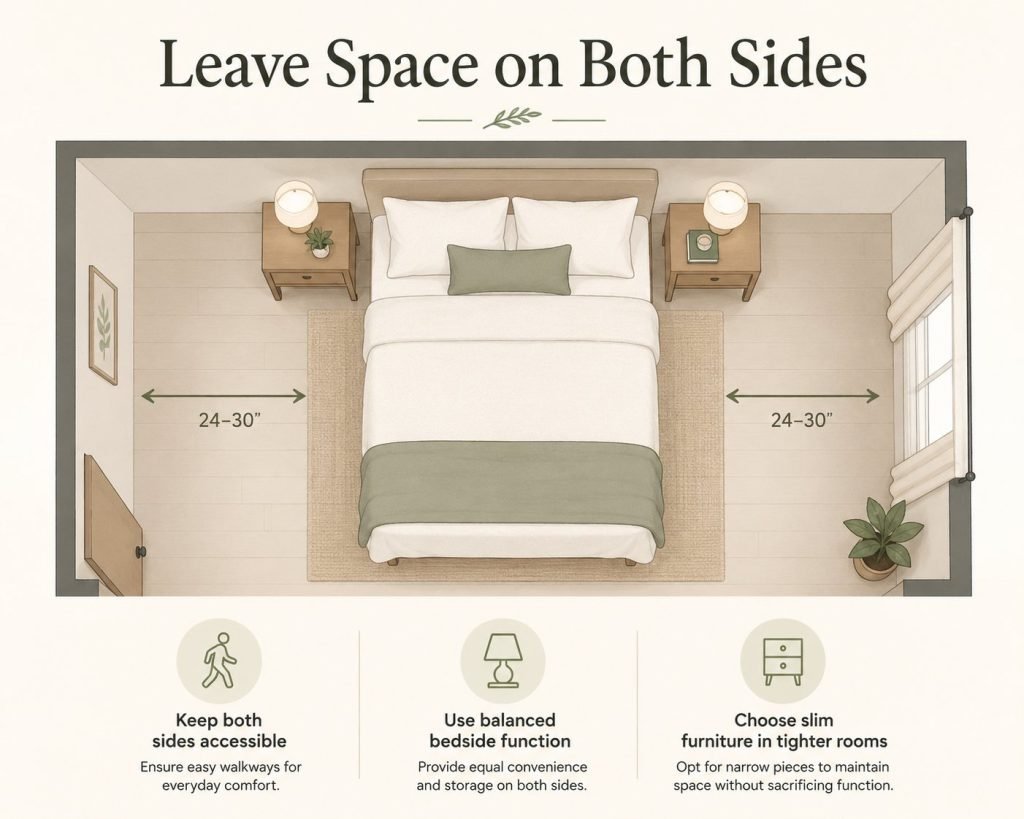
Balance is an important idea in Feng Shui. If your bedroom has enough space, try to keep both sides of the bed similar. Place a bedside table and a lamp on each side of the bed. This creates a balanced and organized look. It also makes the room more practical because both people can easily reach a lamp, book, or glass of water. Even if only one person sleeps in the bed, equal space on both sides makes the room feel open and comfortable.
Avoid pushing one side of the bed tightly against a wall unless your room is very small. Keeping space on both sides allows better movement and makes cleaning easier. Choose bedside tables that are the same height and style to create a balanced appearance. Keep both tables neat with only a few useful items. Do not overload one side with books, chargers, or decorations while leaving the other side empty. A balanced bedroom feels peaceful and welcoming. It also creates a sense of harmony that supports restful sleep.
Tip 10: Create a Peaceful Bedtime Routine

A relaxing bedroom is important, but your daily habits also affect your sleep. Feng Shui encourages creating a peaceful bedtime routine that helps your mind and body slow down. Try to go to bed and wake up at the same time every day. Before sleeping, spend a few minutes reading a book, stretching gently, praying, meditating, or taking deep breaths. These calming activities help reduce stress and prepare your body for rest. Avoid eating heavy meals or drinking too much caffeine late in the evening because they may make it harder to fall asleep.
Keep your bedroom quiet, clean, and cool at night. Turn off unnecessary lights and electronic devices before going to bed. If outside noise is a problem, use soft background sounds or a fan to create a peaceful environment. Wash your bedding regularly so your bed always feels fresh and comfortable. Make your bedroom a place where you look forward to relaxing every evening. Small daily habits, combined with simple Feng Shui ideas, can improve your sleep quality and help you wake up feeling refreshed, healthy, and ready for the day.
Frequently Asked Questions (FAQs)
1. What is the main purpose of a Feng Shui bedroom?
The main purpose of a Feng Shui bedroom is to create a calm, balanced, and relaxing space where you can sleep well. Feng Shui focuses on the placement of furniture, the use of soft colors, natural light, and a clutter-free environment. These simple changes help reduce stress and make your bedroom feel peaceful. A well-organized bedroom can improve your sleep quality and help you wake up feeling refreshed.
2. Where should I place my bed in a Feng Shui bedroom?
The best place for your bed is where you can see the bedroom door without being directly in line with it. This is called the command position in Feng Shui. Place the headboard against a solid wall for support and try to avoid putting the bed under a window. If your room is small, simply choose the position that feels comfortable and allows easy movement around the bed.
3. What colors are best for a Feng Shui bedroom?
Soft and natural colors work best in a Feng Shui bedroom. Popular choices include white, cream, beige, light gray, pale blue, and soft green. These colors create a peaceful atmosphere and help your mind relax before bedtime. Avoid using too many bright or bold colors because they can make the room feel busy instead of calm.
4. Should I remove electronics from my bedroom?
Yes. Feng Shui recommends keeping electronics to a minimum in the bedroom. Televisions, laptops, and smartphones can distract your mind and make it harder to fall asleep. If possible, remove unnecessary devices or turn them off before bedtime. A quiet bedroom without electronic distractions supports better sleep and helps you relax.
5. Can Feng Shui really help me sleep better?
Feng Shui is not a medical treatment, but many of its ideas support healthy sleep habits. Keeping your bedroom clean, reducing clutter, using soft lighting, improving air quality, and creating a relaxing bedtime routine are all practical changes that can make your bedroom more comfortable. These habits may help you fall asleep faster and enjoy a more restful night’s sleep.
Conclusion
A Feng Shui bedroom is more than just a beautiful room. It is a peaceful space designed to help you relax, reduce stress, and enjoy better sleep. You do not need expensive furniture or a complete makeover to create a calming bedroom. Simple changes like placing your bed in a good position, keeping the room clean, choosing soft colors, using warm lighting, and letting in fresh air can make a big difference.
Remember that good sleep comes from both your environment and your daily habits. A clutter-free bedroom, comfortable bedding, and a regular bedtime routine work together to create a healthy place for rest. Start with one or two Feng Shui tips today, then add more as you go. Over time, these small improvements can transform your bedroom into a relaxing retreat where you can sleep deeply, wake up refreshed, and feel ready to enjoy each new day. By creating a balanced and peaceful space, you are also investing in your overall health, happiness, and well-being.