
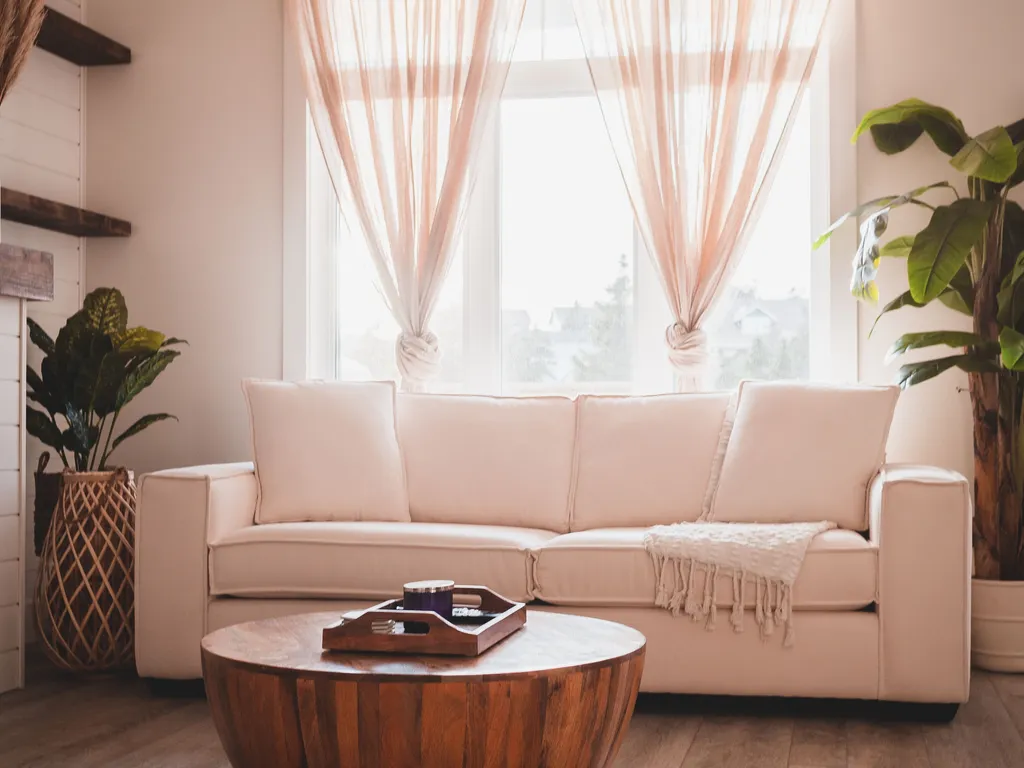
Japandi is what happens when two design cultures that never met turn out to agree on almost everything. Japanese interiors bring restraint, low lines and a respect for imperfection; Scandinavian interiors bring light, warmth and furniture built for long winters. Fused, they produce rooms that are minimal without being cold — rooms where every object earns its place and the empty space between objects does quiet work of its own.
Quick answer: Japandi-inspired rooms ideas mix Japanese calm with Scandinavian warmth through low wooden furniture, warm white walls, natural linen and wool, and plenty of empty space. The style works best when you keep only pieces you love, use soft layered light, and let one handmade object or single plant carry each room.
That fusion is why Japandi suits ordinary homes, not just show homes. It asks for fewer, better things, and it forgives the pieces you already own if they are wooden, woven or handmade. Ten ideas follow, ordered the way the style itself is built: philosophy first, then palette, furniture, materials and light.
In this guide: Japandi at a Glance · Two Philosophies, One Room: Wabi-Sabi Meets Hygge · The Muted Palette: Warm Whites, Stone and Clay · Low, Grounded Furniture · Natural Materials, Honest and Unfinished · Negative Space: The Art of Leaving Room · Texture Does the Warming: Linen, Wool and Cotton · Soft Light in Layers, Never a Glare · Handmade and Imperfect on Purpose · One Plant, Treated as Sculpture · The Bedroom Test: Japandi Where It Matters Most · Frequently Asked Questions About Japandi-Inspired Rooms · Conclusion
Japandi at a Glance
| Element | The Japanese half | The Scandinavian half |
|---|---|---|
| Philosophy | Wabi-sabi: beauty in imperfection | Hygge: warmth and contentment |
| Palette | Stone, clay, charcoal, deep earth | Warm white, beige, pale wood |
| Furniture line | Low, grounded, close to the floor | Simple, functional, comfortable |
| Materials | Bamboo, paper, handmade ceramic | Oak, wool, linen, rattan |
| Space | Negative space is a feature | Light is a material |
1. Two Philosophies, One Room: Wabi-Sabi Meets Hygge
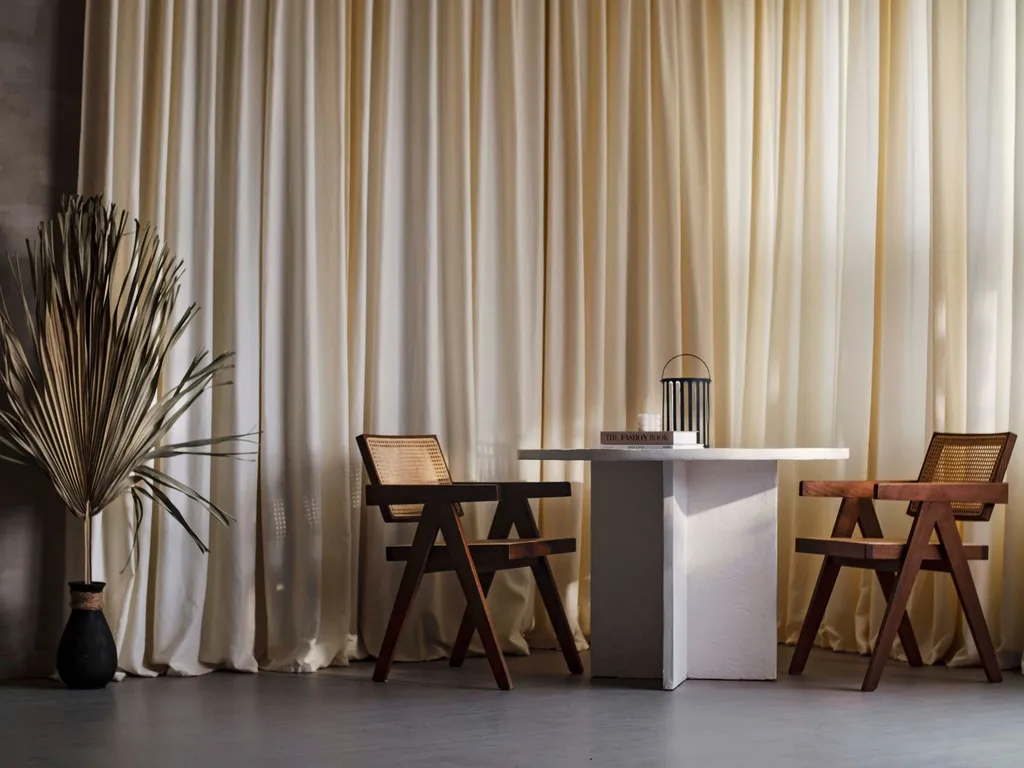 Every Japandi room starts as an argument between two ideas that turn out to be allies. Wabi-sabi, the Japanese acceptance that things are beautiful because they are imperfect and temporary, stops you chasing a flawless room. Hygge, the Scandinavian art of warmth and contentment, stops the restraint from turning austere. Hold both at once and the decisions make themselves: the handmade bowl stays because its glaze is uneven, and the wool throw stays because the corner would be cold without it. For the wider map, our roundup of the types of interior design styles shows where Japandi sits among its neighbours.
The practical test is a single question for anything entering the room: does it calm, or does it warm? An object that does neither is decoration, and Japandi is quietly ruthless with decoration. Style Curator’s complete guide to Japandi style makes the same point: you do not warm a Japandi room by adding more décor, but by choosing fewer pieces with quiet texture. Begin with one corner — a chair, a cushion, a teapot — and let the philosophy prove itself at small scale first.
2. The Muted Palette: Warm Whites, Stone and Clay
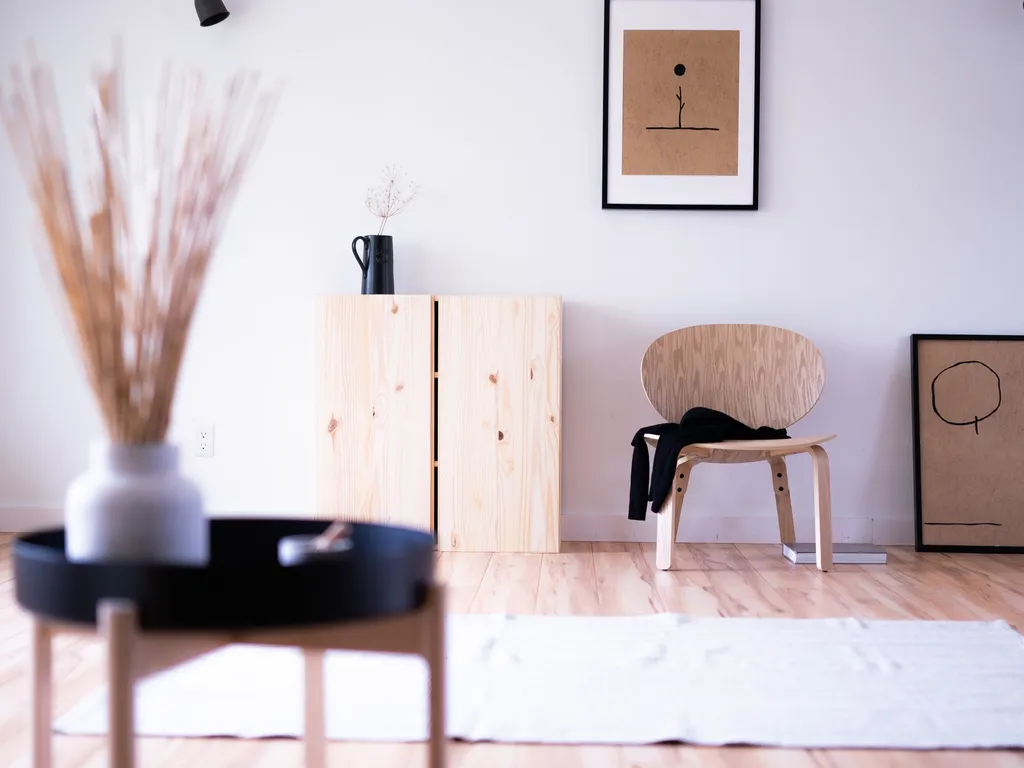 Japandi colour is a negotiation between Scandinavian light and Japanese depth. The base comes from the north: warm whites, oatmeal, soft beige — colours that keep a room bright through a grey afternoon. The weight comes from Japan: stone grey, mushroom, clay and a little charcoal, used the way a frame is used, to give the pale layers something to rest against. Stark black-and-white contrast is deliberately avoided; every tone here is found in soil, bark, river stone or unbleached cloth.
Work it as a ratio rather than a list. Roughly two-thirds of the room sits in the pale family — walls, large textiles, the biggest furniture. Most of the rest is mid-tone wood and stone. The darkest notes appear in the smallest doses: a vase, a frame, one cushion. Because all the tones are low-contrast neighbours, the eye never hits a jolt, and the room reads as one continuous, quiet surface — which is why the palette survives small rooms and north-facing light alike.
3. Low, Grounded Furniture
 The fastest way to make a room feel Japanese is to lower it. Traditional Japanese living happens close to the floor — sitting, eating, resting — and Japandi furniture keeps that grounded line: platform sofas, low coffee tables, lounge chairs that recline rather than perch, beds on low frames. Scandinavian design meets it halfway with simple, honest construction: slim legs, plain joinery, nothing carved or fussy. The effect is a room whose furniture occupies the bottom third and leaves the top two-thirds to air and light.
You do not need to replace everything. Swap the tallest pieces first — a high bookcase for a long, low one, a chunky coffee table for a lower, lighter one — and keep seat heights roughly consistent. Floor cushions beside a low sofa are the budget version, with a bonus: a room furnished low feels larger, because the eye travels over the furniture to the walls instead of stopping at each tall obstacle.
4. Natural Materials, Honest and Unfinished
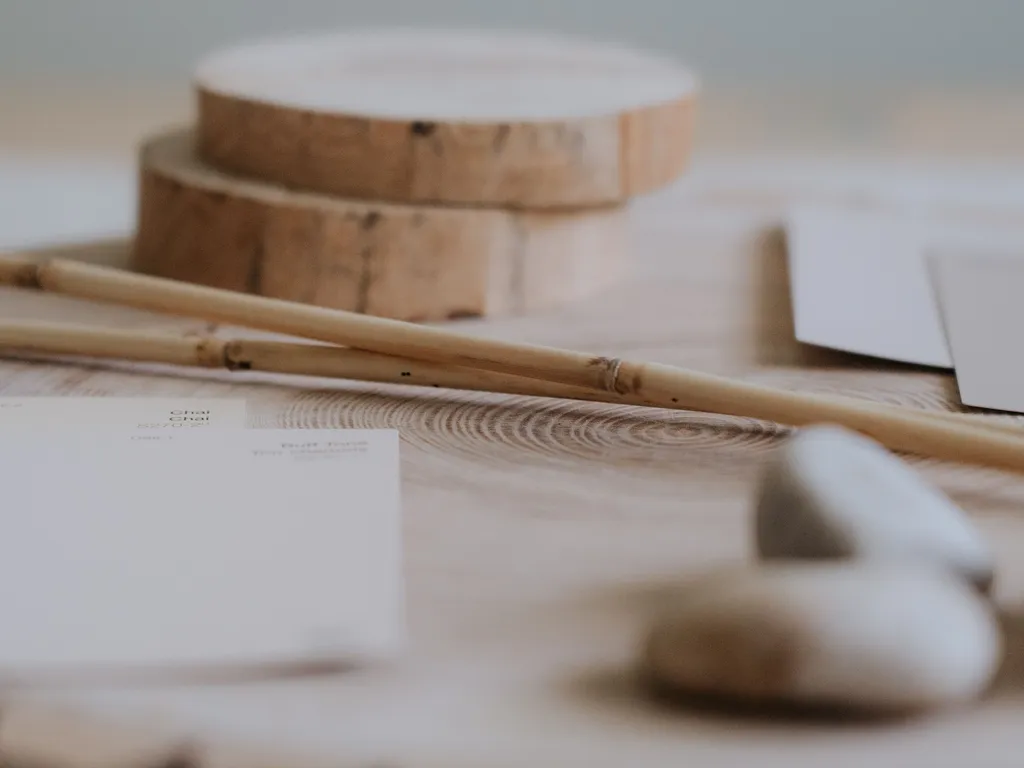 Japandi materials are chosen by touch as much as by eye: light oak and ash with the grain left visible, bamboo, rattan and cane, rough stone, raw linen, matte-glazed ceramic. Nothing is lacquered to a mirror shine and nothing pretends to be something else — the wood is not stained to imitate walnut, the stone is not polished to imitate marble. That honesty is wabi-sabi showing in the materials themselves: a knot in the oak is not a flaw to hide but the record of a tree.
Japandi uses one wood family per room and lets the grain show, the same rule behind our modern organic style ideas. Pick your wood — light oak suits most rooms — then let the other materials orbit it: rattan for lightness, stone for weight, linen for softness, ceramic for the handmade note. Two or three materials repeated calmly beat six materials competing.
5. Negative Space: The Art of Leaving Room
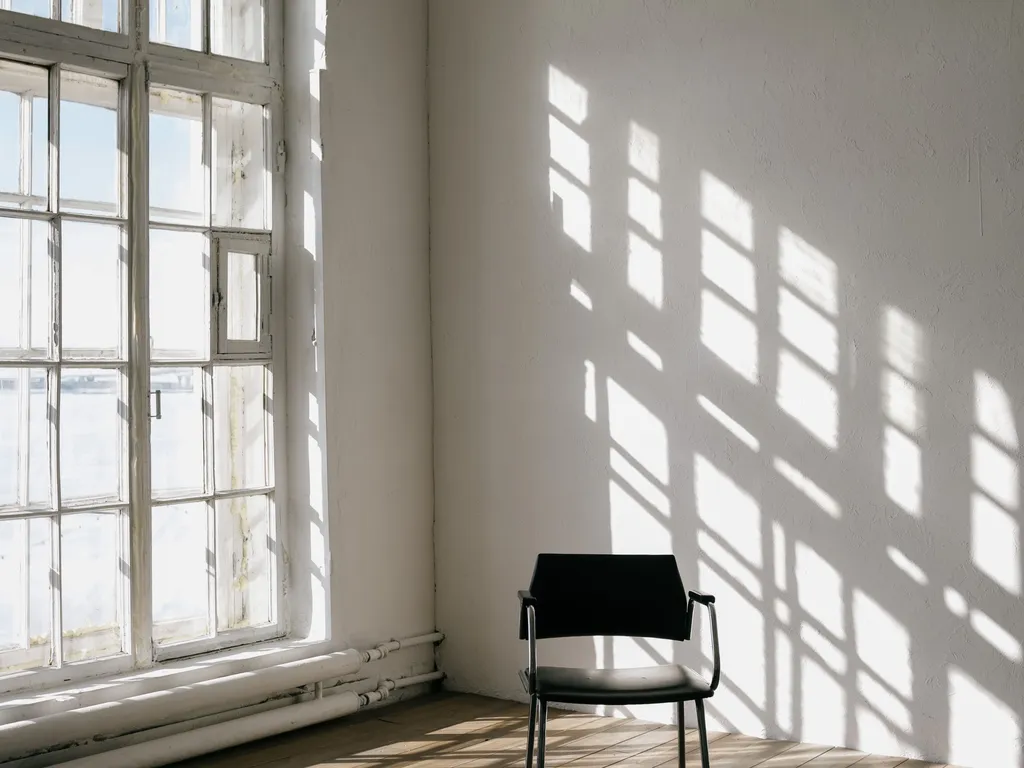 In Japanese design, the empty part of a room is not leftover — it is composed, the way silence is composed into music. Japandi treats negative space as a material in its own right: the bare stretch of wall above a low sideboard, the clear surface around a single vase, the floor you can actually see. Roughly a third of a room staying empty is a useful target — and the cheapest element in the style, since it is achieved by removal rather than purchase.
The method is a ruthless edit, then a holding pattern. Clear every surface completely, then return only what is used daily or loved specifically — one object per surface is a good starting tyranny. The same emptiness is a small-room strategy: the sight-line tricks in our visual tricks for small rooms ideas work because the eye reads unbroken, uncluttered surfaces as more space. Closed, low cabinets swallow the everyday clutter so the visible room can stay composed.
6. Texture Does the Warming: Linen, Wool and Cotton
 A muted palette and an edited room run a real risk: sterility. Japandi’s answer is not colour or clutter but texture, and almost all of it arrives as cloth. Rumpled natural linen on the sofa and bed, a chunky wool throw, woven cotton blankets, a jute or wool rug underfoot — each layer is a slightly different roughness, and the eye reads that variety as warmth even in a room of near-identical tones. This is hygge doing its half of the work, in fibre form.
Layer by weight and season. The base layer is upholstery and curtains, kept plain and pale. The middle layer — cushions and a folded blanket — carries the weave: visible, nubby, unmistakably natural. The top layer is the one you touch most, the throw over the chair arm, and it should be the softest thing in the room. Keep every layer inside the §2 palette family and they harmonise on their own; texture, not pattern, does the decorating.
7. Soft Light in Layers, Never a Glare
 Both parent cultures live with difficult light — Japan’s soft, screened daylight and Scandinavia’s long dark winters — so Japandi lighting is gentle by design. Bare bulbs and hard downlights are banished. In their place: paper pendant shades that turn light into a glow, fabric and bamboo shades, and several small sources at different heights instead of one bright centre. The paper lantern forms of Japanese design are not a cliché here; they are the correct technology, diffusing light the way cloud diffuses sun.
Build it in three layers — something overhead and soft, something at task height, something low that glows rather than beams — and keep every bulb warm, around 2700K. Our small room lighting ideas set out that layering logic in detail, and it transfers to Japandi rooms unchanged; only the fixtures get quieter. By day, protect the same softness with sheer linen curtains instead of blackout drapes, so daylight enters filtered.
8. Handmade and Imperfect on Purpose
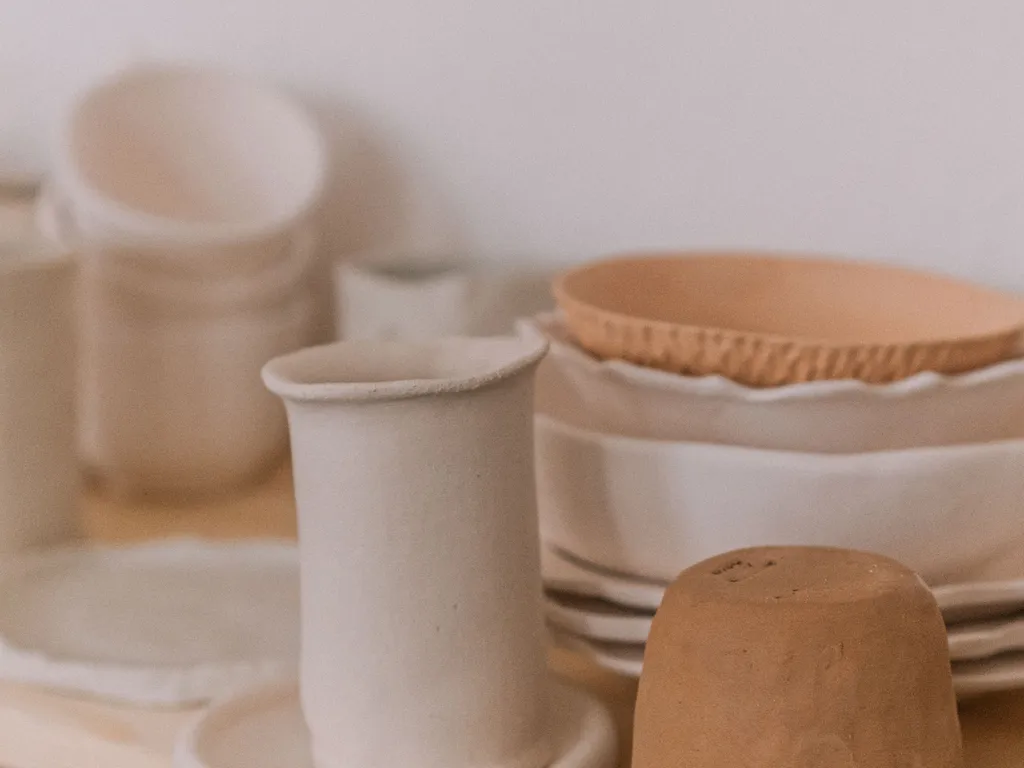 Somewhere in every Japandi room there should be an object that could only have been made by a person: a stoneware bowl whose rim is not quite round, a teapot with an uneven glaze, a stool with a visible repair. These pieces carry the style’s deepest idea — that use and age add value rather than subtracting it. A chipped handmade bowl, mended and kept, says more than a shelf of flawless factory glassware ever could.
Buy slowly and locally where you can: one potter’s bowl outlasts six anonymous ones, in meaning as much as in strength. Group handmade pieces in small, odd-numbered clusters — three vessels on a shelf, two on the table — and give each cluster the negative space of §5 around it, so the handwork is actually seen. Let imperfection set the maintenance standard too: linen may wrinkle, oak may darken, and nothing needs to look new to look right.
9. One Plant, Treated as Sculpture
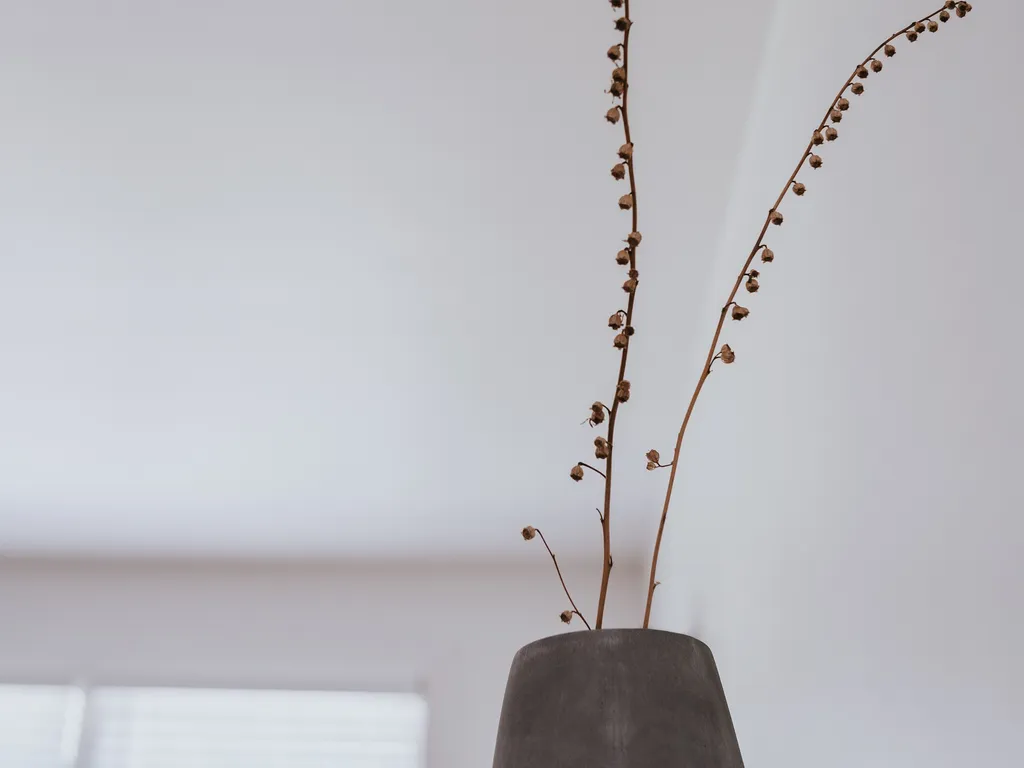 Greenery in a Japandi room follows the same edit as everything else: one plant, chosen like a sculpture, beats a windowsill of small pots. The tradition behind this is ikebana, flower arranging as composition — a single branch in a tall vase, arranged for its line as much as its leaves. A tall olive branch in a heavy stone vase gives a living room height, movement and a colour — muted green — that the §2 palette already knows how to hold.
Choose plants with structure over volume: a bonsai-form tree, a single sculptural branch, one broad-leafed plant in a clay pot. The container matters as much as the plant — handmade ceramic, stone or terracotta, never glossy plastic. Place it where its silhouette shows against a plain wall or window light, and resist the second plant until the first looks inevitable.
10. The Bedroom Test: Japandi Where It Matters Most
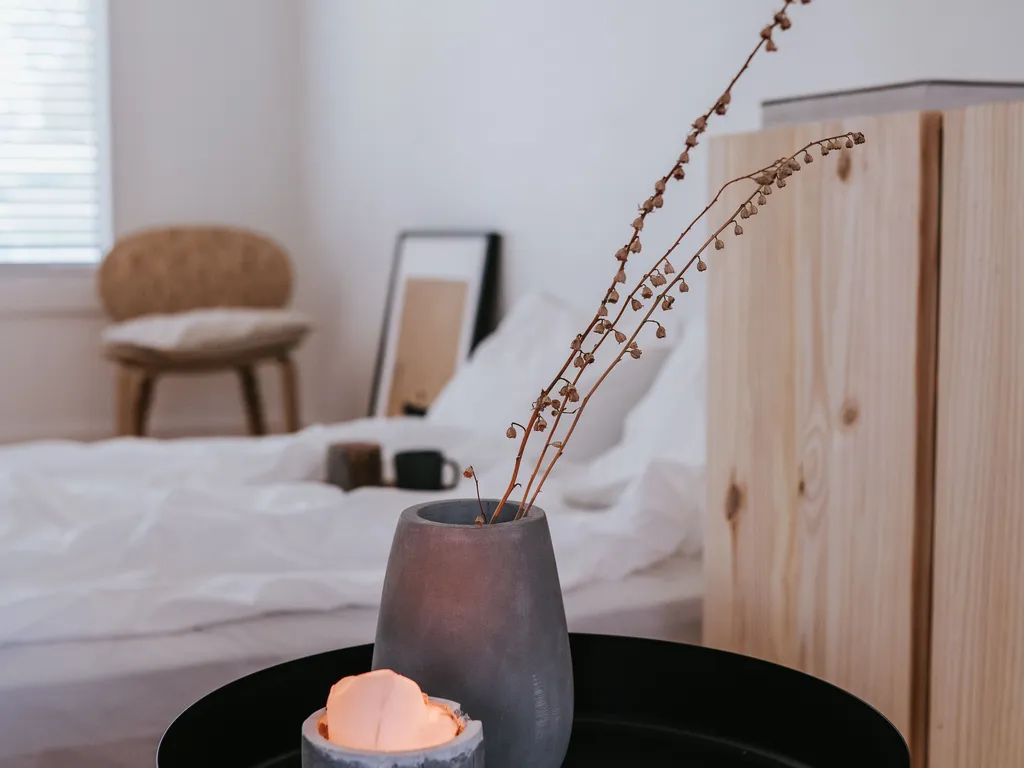 If the philosophy holds anywhere, it must hold in the bedroom — the room whose only job is rest. The Japandi bedroom is the whole style distilled: a low platform bed in light oak, linen bedding in warm white and beige left softly rumpled, a bench at the foot, one paper light overhead, a single branch in a vase on the nightstand. Nothing glows, beeps or demands attention. SampleBoard’s Japandi style guide emphasises exactly this room-by-room discipline: low-profile furniture, uncluttered surfaces and muted tones carried consistently, so the calm survives the doorway.
Run the same distillation elsewhere once the bedroom convinces you. A bathroom goes Japandi with a stone tray, one wooden stool and towels in the palette family; a kitchen, with open oak shelving edited to the ceramics of §8. The order matters less than the consistency — palette, wood and light agreeing from room to room is what turns five decorated rooms into one calm home. Start where you sleep; the rest of the house will follow.
Frequently Asked Questions About Japandi-Inspired Rooms
What is Japandi style, in one sentence?
A fusion of Japanese wabi-sabi restraint and Scandinavian hygge warmth: low natural furniture, a muted palette, handmade texture and generous empty space.
What colours define a Japandi palette?
Warm whites, oatmeal and soft beige as the base; stone grey, mushroom and clay in the middle; charcoal and deep brown in small accents. Nothing stark, nothing high-contrast.
How is Japandi different from ordinary minimalism?
Minimalism removes; Japandi warms what remains. Natural texture, handmade imperfection and soft layered light keep the edited room feeling lived-in rather than emptied.
Do I need low furniture for Japandi to work?
It is the single biggest lever. Lowering the main pieces — sofa, table, bed — grounds the room and frees the upper walls to light and air. Start with the tallest piece you own.
Which wood should I choose?
Light oak or ash suits most rooms; warm walnut works in larger, brighter ones. The rule is consistency: one wood family per room, repeated across the main pieces.
Can Japandi work in a small room?
Especially well. Low furniture, a pale base and disciplined negative space are small-room strategies in themselves; the style was practically designed for compact, calm living.
How many plants does a Japandi room need?
One, treated as sculpture — a branch arrangement, a bonsai-form tree or a single broad-leafed plant in a handmade pot. Add a second only when the first looks inevitable.
Is Japandi expensive to achieve?
It can be one of the cheapest styles, because its main ingredient is removal. Spend on fewer, better pieces — one handmade bowl, one good throw — rather than on volume.
Can renters do Japandi without renovating?
Yes. The palette travels in textiles and rugs, the furniture line lowers with cushions and low tables, and paper-shade lamps plug in anywhere. Nothing structural is required.
Where should I start?
With the edit: clear one room’s surfaces, lower its tallest piece, and add one handmade object and one soft light. Then the bedroom, where the calm pays you back nightly.
Conclusion
Japandi is not a shopping list; it is an agreement between two philosophies that a room should be calm and warm at once. Lower the furniture, mute the palette, let wood and cloth and clay show their honest surfaces, guard the empty space, and light everything softly. Do those things in one room and the room changes character. Do them in every room, and the whole home starts to feel like the pause between two breaths.