
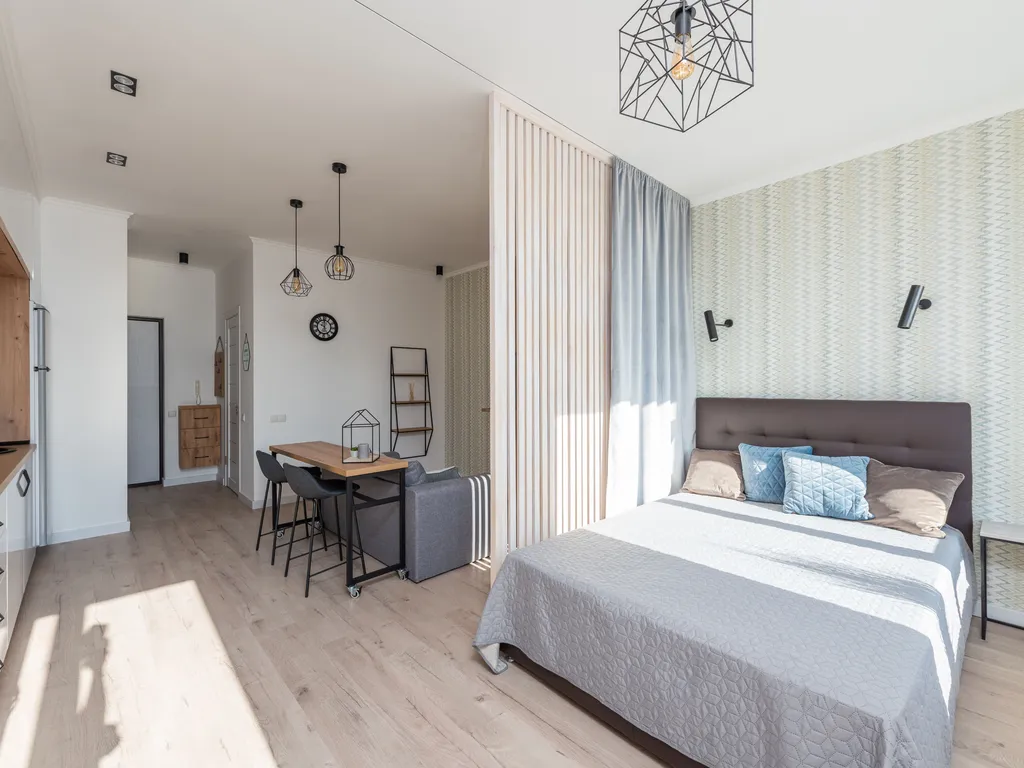
A rented room has one rule written into the lease: the walls are not yours. No screws, no anchors, no track screwed into the ceiling — yet the room still has to hold a bed, a desk, a sofa and a life, all inside one open rectangle. The answer is a divider that stands on its own feet, grips by pressure, hangs from something removable, or is simply a piece of furniture turned sideways.
Quick answer: Renter-friendly space dividers ideas work best when the divider stands on its own, grips by pressure, or hangs from something removable — no drilling and no damage. A tension-rod curtain gives the strongest divide across a studio, a folding screen is the simplest, and a bookshelf turned sideways adds storage while it divides. Every option comes down in one afternoon.
Ten dividers follow, every one reversible in an afternoon with nothing to fill, sand or explain to a landlord. Each is judged on three tests: does it need a hole in anything, does it block light the room cannot spare, and can one person move it alone?
In this guide: The Ten Dividers at a Glance · Tension-Rod Curtains: A Wall Made of Linen · The Open-Back Bookshelf: Storage That Stands in the Middle · The Folding Screen: The Divider That Folds Away · Tension Poles: Poles That Grip Floor and Ceiling · The Rolling Rack: A Divider on Wheels · The Plant Divider: The Green Boundary · Float the Sofa, Add a Console: The Sofa Draws the Line · Low Cube Storage: Low Enough to Keep the Light · Hanging Panels on Removable Hooks: Panels That Float From Hooks · Layer Two Light Dividers: Two Dividers, One Room · Frequently Asked Questions About Renter-Friendly Space Dividers · Conclusion
The Ten Dividers at a Glance
| Divider | How it stays up | Best for |
|---|---|---|
| Tension-rod curtains | Spring pressure between walls | A full fabric wall across a studio |
| Open-back bookshelf | Its own weight, perpendicular | Dividing plus storage |
| Folding screen | Hinged panels, freestanding | A sleep corner or dressing nook |
| Tension poles | Floor-to-ceiling pressure | Wide openings with no side walls |
| Rolling rack | Wheels and its own frame | A divide that moves daily |
| Plant divider | Pots on the floor or a bench | A soft, light-friendly edge |
| Floated sofa + console | Furniture placement alone | Living vs dining in one room |
| Low cube storage | Its own weight, kept low | A boundary that keeps the light |
| Hanging panels | Removable adhesive hooks | A corner screened from above |
| Layered pair | Two light dividers combined | Three zones in one room |
1. Tension-Rod Curtains: A Wall Made of Linen

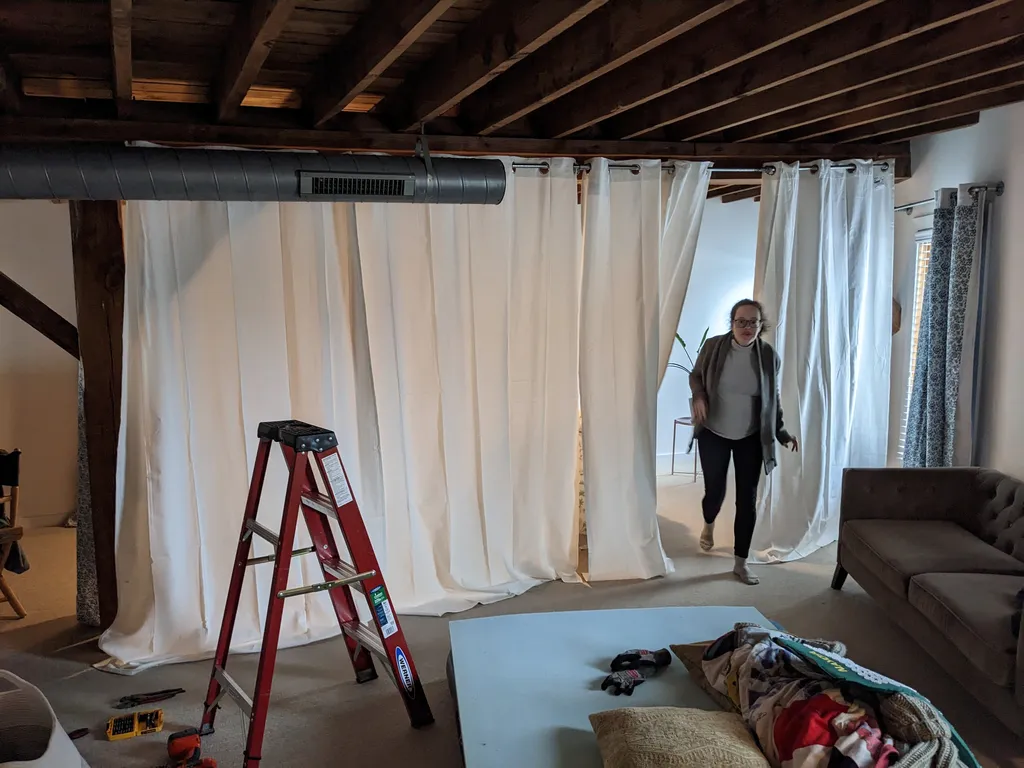
The strongest divide a renter can build is a curtain on a heavy-duty tension rod: a spring-loaded pole that wedges between two walls and holds by pressure alone. Span the room at its narrowest point, hang full-length panels, and the studio gains a fabric wall that slides open in the morning. Placement is the whole game — our studio apartment zoning ideas map out where a sleep zone, living zone and work zone should sit in one room; the rod simply draws the line the plan already made.
Buy the rod rated for the span, not the cheapest on the shelf: openings up to about 3.5 metres need a steel rod of 25 mm or more, and panels should total well under its load rating — lightweight linen, not blackout velvet. Trendir’s roundup of one-room rental divides makes the same point: a dark rod and ceiling-height fabric read as architecture, not a dorm-room workaround. Wipe the contact points clean first, extend the rod slightly past the opening, and let the spring do the holding.
2. The Open-Back Bookshelf: Storage That Stands in the Middle
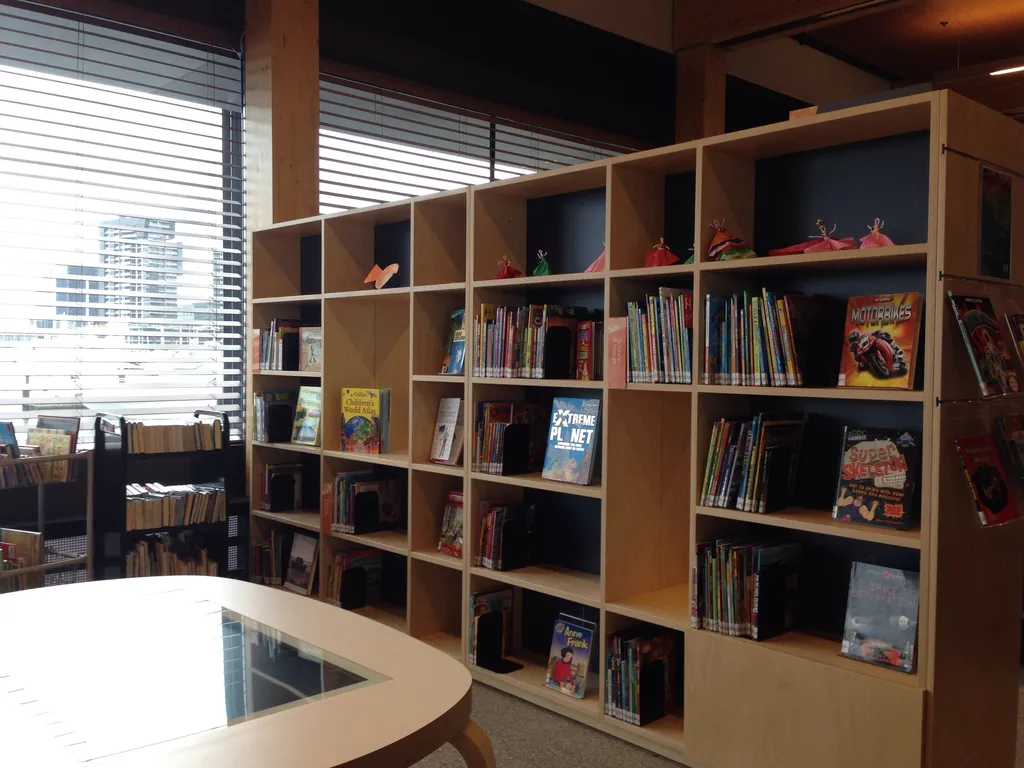
Turn a bookcase ninety degrees, end to the wall and length reaching into the room, and furniture becomes a partition. Choose an open-back unit and light passes between the shelves, so neither side feels walled in; closed-back gives more privacy but eats the daylight. A unit around 140–180 cm tall divides without looming, and because both faces are visible, it earns its footprint twice — books and display toward the living side, baskets and boxes toward the bed.
Make the shelf impossible to tip. A tall shelf standing in open floor must not rock: heavy items on the bottom two shelves, nothing heavy at the top, and a firm push test before you trust it. The styling discipline that keeps a divider shelf looking deliberate is the same one in our vertical storage styling ideas — weight low, breathing room at the top, one repeated colour across both faces.
3. The Folding Screen: The Divider That Folds Away

The oldest divider is still the most rental-perfect: a three- or four-panel folding screen needs no installation, stands in a shallow zigzag, and folds flat against a wall or under a bed when guests come. Woven cane, rattan or rice-paper panels filter light instead of blocking it, so a screen can carve a sleep corner or a dressing nook out of a shared room without darkening either side of it.
A screen is also the gentlest way to give a bedroom a boundary it does not structurally have — screening the bed from the door, or a desk from the pillow. The no-drill, no-damage rules it follows are the same ones collected in our renter-friendly bedroom updates ideas: everything freestanding, everything removable. Size it honestly — a screen hides a seated person and a made bed; it will not hide a mess at standing eye level, and it was never meant to.
4. Tension Poles: Poles That Grip Floor and Ceiling
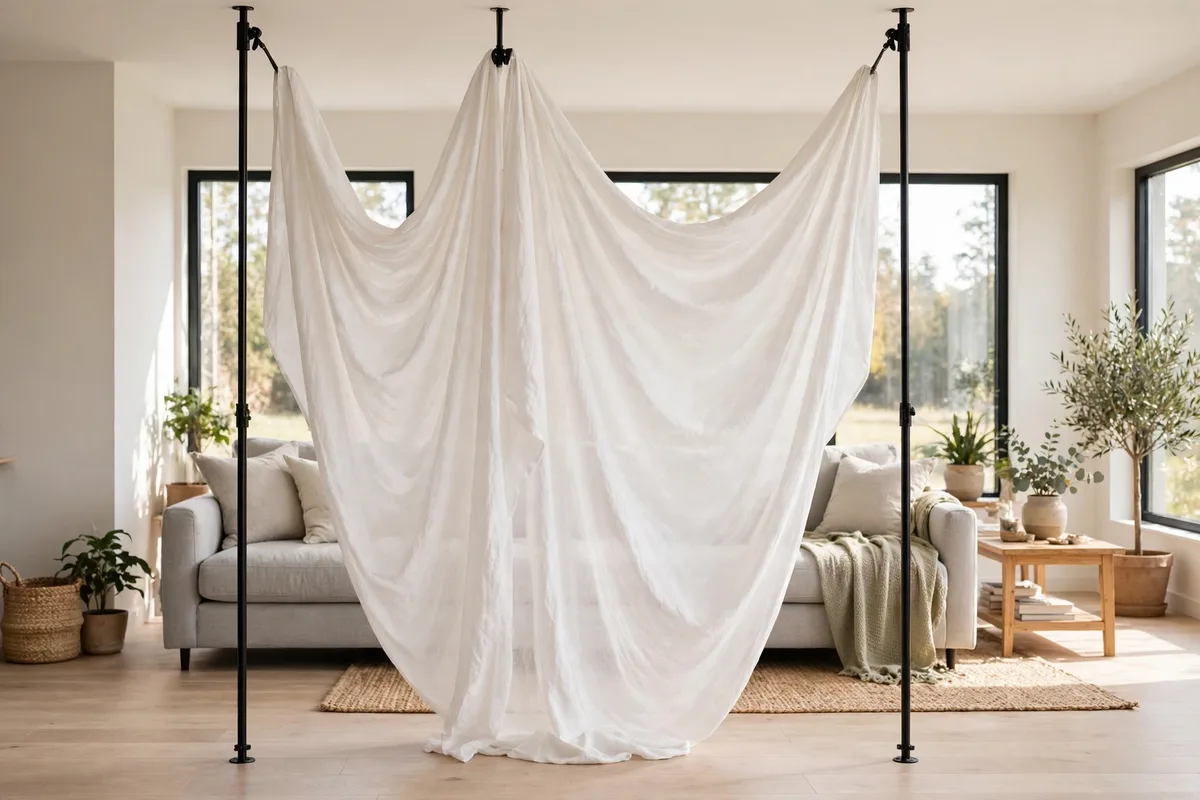
Where a tension rod needs two facing walls, tension poles need only a floor and a ceiling. Each pole compresses between the two surfaces on a spring or screw-tension foot, and two or three in a row become a frame: drape fabric over it, clip panels to it, or choose a pole system with small shelves and hooks built in. It suits wide, awkward openings — the L-shaped studio, the open plan with no pinch point.
Poles stay renter-safe only if you pad the contact points and respect the load limit. First, padding: the contact discs sit on felt or rubber pads so pressure leaves no ring on the ceiling paint. Second, load honesty — a tension pole holds drapery and light shelving, not a television or a bookcase. Hang the fabric, then live with it a day before adding anything heavier; a pole that is going to slip does so early, at low cost.
5. The Rolling Rack: A Divider on Wheels

A rolling garment rack is the best divider when the boundary has to move daily. Rolled between the bed and the desk it is a wall of clothes — storage the room needed anyway. Rolled aside, the room is one room again. Hang the clothes densely and the rack blocks sight lines completely; drape a throw over the rail instead and it works empty, as pure screen.
A rolling rack works best in front of a zone that has to appear and disappear, like a fold-away work corner. A work corner built from the pieces in our fold-away work zone ideas folds shut at six o’clock; the rack rolls in front of it and the office is not just closed but invisible. Choose a rack with four castors and a low shelf — the shelf takes shoes or boxes and lowers the centre of gravity, so it will not tip when a sleeve catches it.
6. The Plant Divider: The Green Boundary
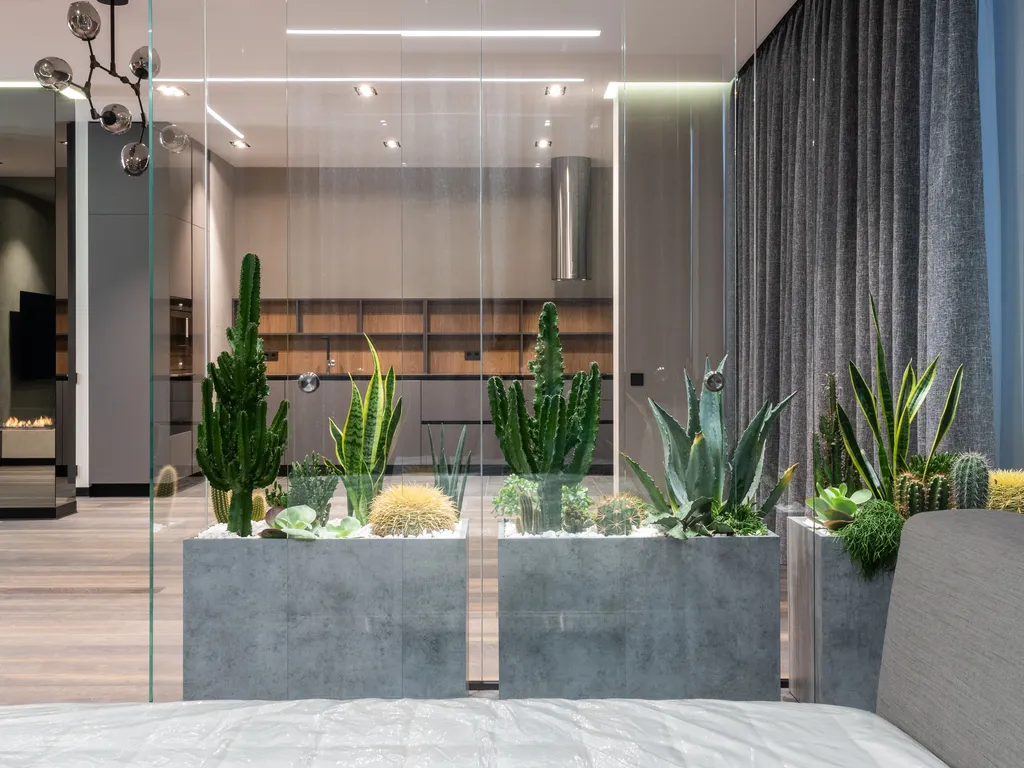
Tall plants are the best divider when a boundary only has to mark a zone, not block a view. A row of tall plants — a fiddle-leaf, a snake plant, a monstera on a stand — draws a line the eye respects while light and air pass straight through. Line the pots along a low bench and the row gains the straightness a boundary needs; scattered pots are a collection, aligned pots are a wall.
Plants divide best where the zones are friendly: desk from sofa, dining from living, reading chair from everything. They give no privacy and no help with noise, and they ask for the room’s best light, which may not be where the boundary wants to go. Solve that with the bench — a movable plant line can migrate a metre toward the window without losing its job.
7. Float the Sofa, Add a Console: The Sofa Draws the Line
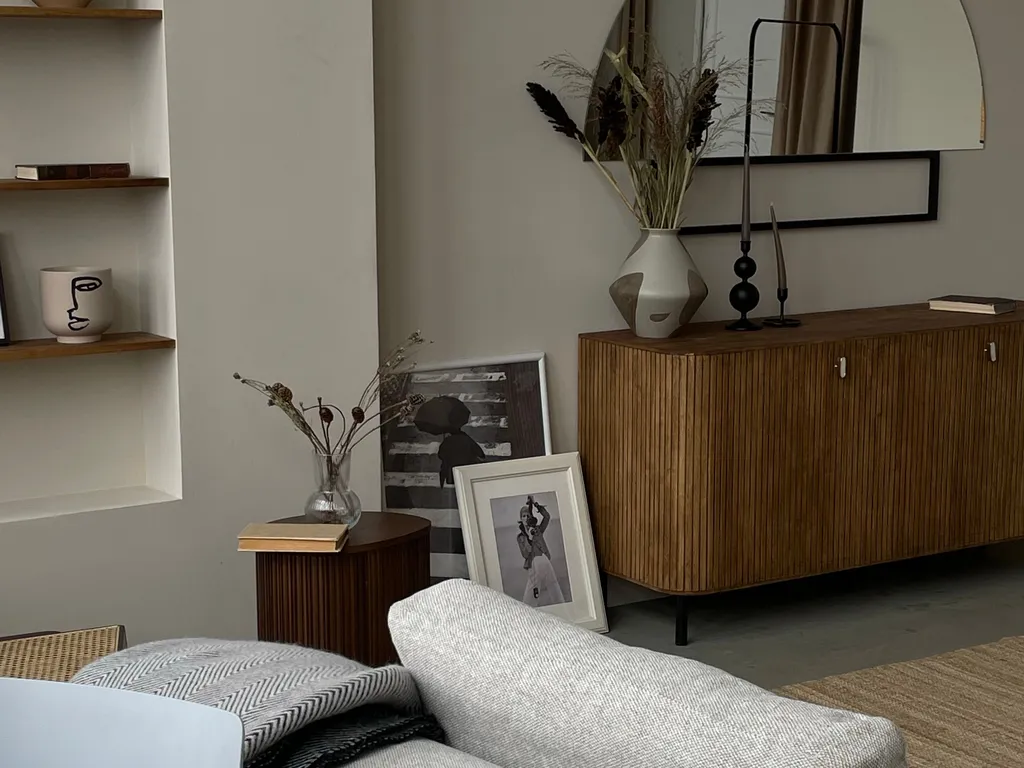
The cheapest divider is a sofa that has left the wall. Float it across the room with its back to the dining or sleep zone and the seating area gains an edge with nothing added. A slim console table — 30 cm deep or less — parked behind the sofa finishes the move: it gives the sofa’s back a purpose, holds lamps that light the boundary, and makes the arrangement read as designed.
This is the standard answer for the living-dining split, and Osmoz’s no-drill guide to splitting living and dining spaces treats the floated sofa and its console as the foundation move before any divider is bought. Keep a walkway of at least 75–90 cm behind or beside the arrangement; a divide you have to squeeze past feels like an obstacle course, not two rooms.
8. Low Cube Storage: Low Enough to Keep the Light
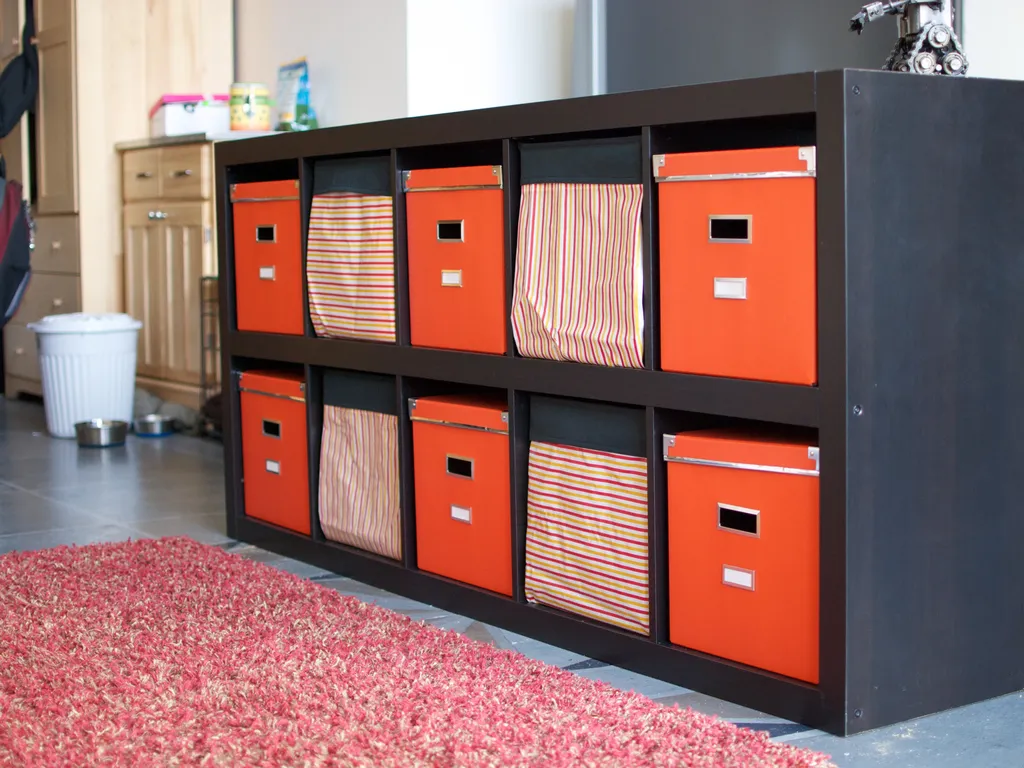
A low cube unit is the best divider when you want a boundary that keeps the light instead of blocking it. A low cube unit — two cubes high, around 80 cm — set perpendicular to the wall separates a living area from a dining corner while daylight travels over the top into both. From a seated position the boundary is total; standing, the room still reads as one space. That half-privacy is right between zones nobody needs to hide.
Cubes earn their floor space twice over: fabric baskets on the dining side hold table linen and chargers, open cubes on the living side hold books and the remote. Keep the top nearly empty — one plant, one lamp at most. A cluttered top turns the divider back into furniture; a clear top keeps it reading as architecture.
9. Hanging Panels on Removable Hooks: Panels That Float From Hooks
Light panels can hang from the ceiling on removable adhesive hooks — no rod, no span, no holes. Large adhesive ceiling hooks — the removable-strip kind rated for a few kilograms — can carry light panels where a rod cannot span: macramé hangings, woven tapestries, sheer fabric drops, even a row of hanging plants. Hung in a line they screen a corner from above, swaying slightly, unmistakably temporary — and charming for it.
Respect the rating. Adhesive hooks are for panels measured in hundreds of grams, not kilograms, on smooth, clean ceiling paint — never textured, freshly painted or damp surfaces, where the strip either fails or takes paint with it. Test one hook at full panel weight for 48 hours before hanging the row. At move-out, the strips pull away clean and the ceiling tells no story.
10. Layer Two Light Dividers: Two Dividers, One Room

Layer two light dividers when one room has to hold three zones. The trick is to layer two light dividers rather than force one heavy one: a curtain on a rod closes the sleep zone at night, an open shelf or a low cube run separates the work corner by day, and a rug under each zone tells the eye where one territory ends. Each layer stays light and removable; together they organise a whole home.
Before buying any of it, run the renter’s three-question test. Can it all come down in one afternoon? Does any part touch a wall with more than pressure, weight or a removable strip? Can one person carry every piece out alone? Three yeses and the scheme is deposit-safe. Photograph the walls and ceiling contact points before anything goes up, and the move-out deposit conversation becomes very short.
Frequently Asked Questions About Renter-Friendly Space Dividers
What is the most renter-friendly divider of all?
The folding screen (§3). It needs no installation, no pressure points and no hooks — it simply stands. The tension-rod curtain (§1) gives a far stronger divide for almost as little commitment.
Will a tension rod damage the walls?
Not when it is fitted correctly: clean contact points, rubber end caps, and a rod extended just past the opening so the spring holds without being forced. It leaves the wall as it found it.
How do I divide a room with no narrow point for a rod?
Use tension poles (§4), which grip floor and ceiling and can stand anywhere, or a perpendicular bookshelf or cube run (§2, §8), which needs only one wall to start from.
Can a divider block noise as well as sight?
Only slightly. Heavy fabric absorbs a little sound, but no freestanding divider seals a room acoustically. Dividers manage sight lines, light and territory — for noise, rugs and soft furnishings do more.
How tall should a divider be?
Match it to the job: 140–180 cm hides a bed and a seated person; 80 cm of cube storage separates zones you still want to see over. Full ceiling height is rarely needed outside a sleep zone.
Are adhesive ceiling hooks safe for hanging panels?
For light panels only, within the strip’s rating, on smooth sound paint. Test one hook at full weight for 48 hours first, and never hang anything heavy over a bed or walkway.
What divider works best in a studio?
The layered pair (§10): a curtain for the sleep zone, a shelf or cube run for the work corner, and rugs to mark the territories. One divider alone rarely survives studio life.
How do I stop a freestanding shelf divider wobbling?
Weight low, nothing heavy above the middle shelves, and the unit’s end flush to the wall where possible. If it rocks on an uneven floor, level it with felt pads under one foot — not with anything fixed.
Can I divide a room I am not allowed to hang anything in?
Yes — everything in §§2, 3, 5, 6, 7 and 8 stands on the floor. Screens, shelves, racks, plants and floated furniture need no rod, pole or hook.
Will my landlord object to a divider?
A divider that drills nothing, stains nothing and comes down in an afternoon is furniture, and furniture needs no permission. If your lease bans even removable strips, stay with the floor-standing options and photograph the room before and after.
Conclusion
A rental room divides the moment you stop asking the walls for help. Pressure, weight, hinges and wheels do the work instead: a curtain where a wall would go, a shelf turned sideways, a screen that folds flat on moving day. Choose the divider by the job — privacy, storage, light or territory — keep every contact point clean and reversible, and the room becomes two rooms while the deposit stays where it belongs: coming back to you.