

A rental bedroom comes with two landlords: the one on the lease, and the beige box itself — magnolia walls, a ceiling light from a catalogue, flooring chosen by someone who will never sleep on it. The renter’s dilemma is real: change nothing and live in someone else’s room, or change things and gamble the deposit. The way out is a simple test applied to every update — does it reverse in an afternoon, leaving the room exactly as it was handed over?
Ten updates that pass that test, ordered by impact: walls first, textiles in the middle, and a move-out system at the end that protects the money.
In this guide: The Reversibility Test at a Glance · 1. Peel-and-Stick Wallpaper: One Wall, Total Change · 2. Hang Art With Strips, Not Nails · 3. A Headboard That Bolts to the Bed, Not the Wall · 4. Plug-In Light: Sconces, Lamps and Smart Bulbs · 5. Curtains Without a Single Screw · 6. The Rug That Swallows the Rental Floor · 7. Let Textiles Do the Colour Work · 8. Storage That Arrives Flat and Leaves With You · 9. Lean, Don’t Hang: The Mirror Trick · 10. The Move-Out Reversal: Your Deposit System · Frequently Asked Questions About Renter-Friendly Bedroom Updates · Conclusion
Strict lease, no adhesives? Lean, tension and layer: the leaning mirror and art (Section 9), the frame-bolted headboard (Section 3), tension-rod curtains (Section 5), the rug (Section 6), plug-in light (Section 4) and textiles (Section 7) — nothing in this route sticks to anything. Small budget, one weekend? Buy in this order: the rug, bedding accents, one lamp per side, then the accent wall. Sleep is the problem? Blackout from the curtains (Section 5), warm dim light from smart bulbs (Section 4), and the sleep paragraph in Section 7 — one route, three sections.
The Reversibility Test at a Glance
| Update | How it reverses | Deposit risk | Install time | Reversal time |
|---|---|---|---|---|
| Peel-and-stick wallpaper | Peels off in strips | Low — test a hidden patch first | About two hours | 30–60 minutes back |
| Adhesive-strip gallery wall | Tabs pull straight down | Very low within weight ratings | An afternoon | About 10 minutes back |
| Freestanding headboard | Bolts to the bed frame only | None | An hour | Minutes back |
| Plug-in lighting + smart bulbs | Unplugs; original bulbs back in | None | Half an hour | About 15 minutes back |
| Tension-rod curtains | Twists out, no fixings | None | Half an hour | About 10 minutes back |
| Large rug + layered textiles | Rolls and folds away | None | An hour | Part of the 20-minute roll-up |
| Layered textiles | Folds away | None | Minutes | Minutes back |
| Flat-pack storage | Leaves with you | None | An afternoon to build | Leaves with you |
| Leaning mirror and art | Lifts away | None | Minutes | Lifts away |
| Move-out reversal system | It IS the reversal | None | It IS the reversal | The whole room in under two hours |
The Permission Tiers: What Needs Asking
| Tier | What belongs here |
|---|---|
| Do freely | The rug and layered textiles; leaning mirrors and art; plug-in lamps and smart bulbs; tension-rod curtains; freestanding storage — nothing in this tier touches the building |
| Swap, store, restore | The strip-hung gallery wall (reversible, but adhesive-bearing); any swapped originals — bulbs, hardware — kept in the labelled box or bag the sections describe |
| Ask in writing first | Peel-and-stick wallpaper where the lease restricts adhesives; anything hard-wired (this guide’s plug-in doctrine exists to keep you out of this tier) |
1. Peel-and-Stick Wallpaper: One Wall, Total Change
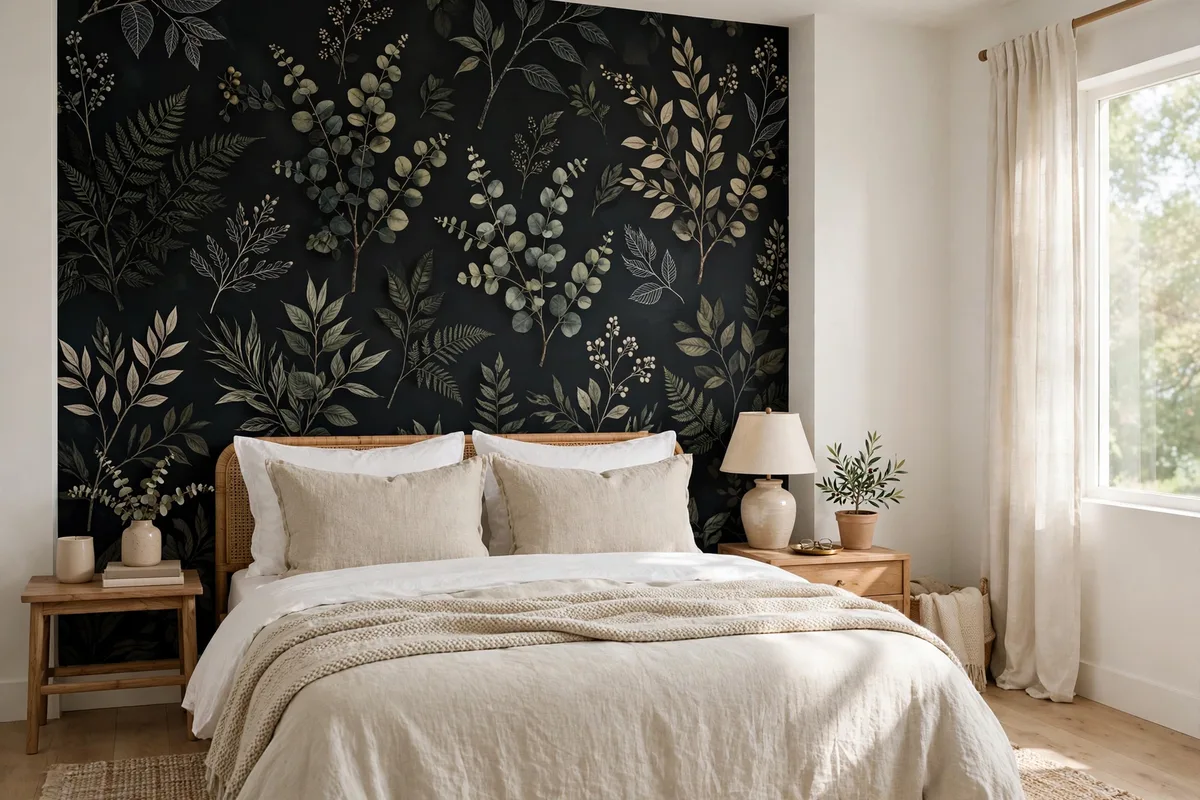
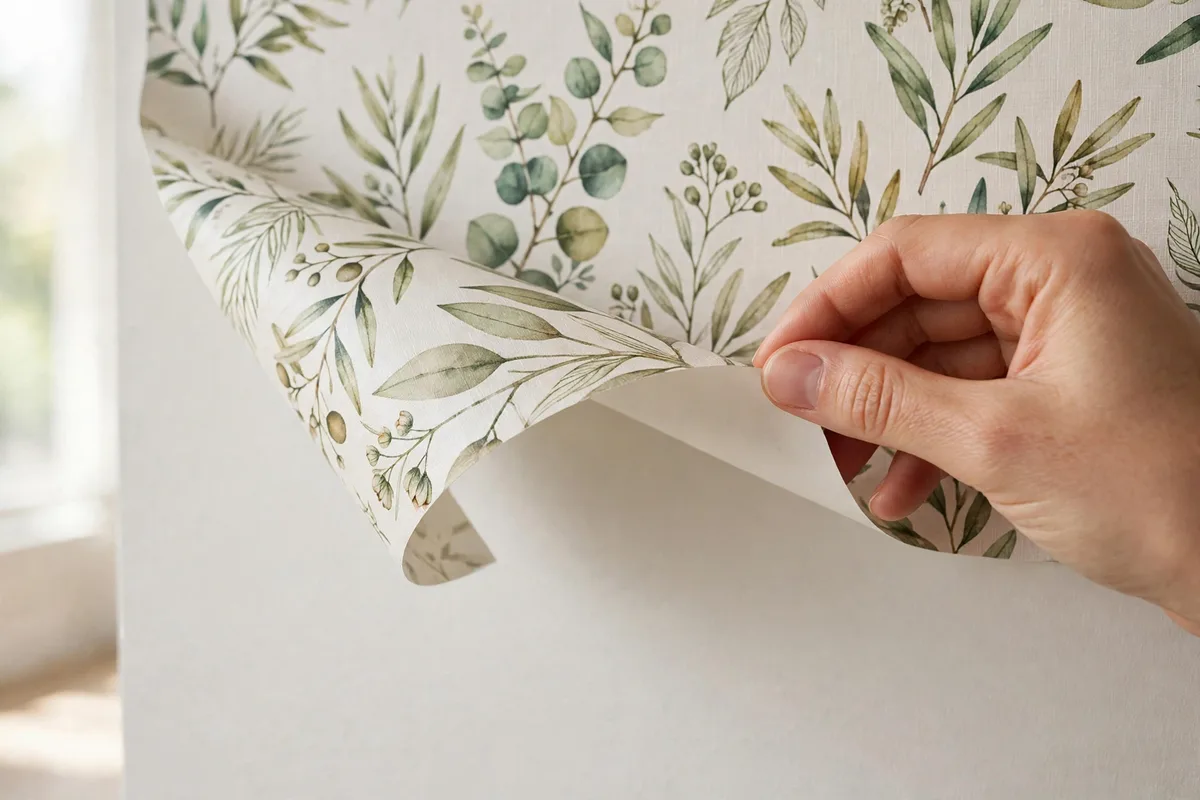
The single highest-impact, lowest-risk change available to a renter, as Bonita Rooms’ renter-friendly bedroom guide puts it: one wall of peel-and-stick wallpaper behind the bed turns the room’s blankest surface into its design anchor. Budget roughly two hours and the price of a nice dinner out for a standard accent wall — and the landlord will never know it was there.
Do it safely: choose paper explicitly labelled removable or repositionable, and test a small hidden patch (behind the bed’s headboard line) for a week before committing the wall — paints and wall conditions vary, and the test is free. In the bedroom, one patterned wall plus calm solids everywhere else reads intentional; paper all four walls and the room shrinks around you.
2. Hang Art With Strips, Not Nails
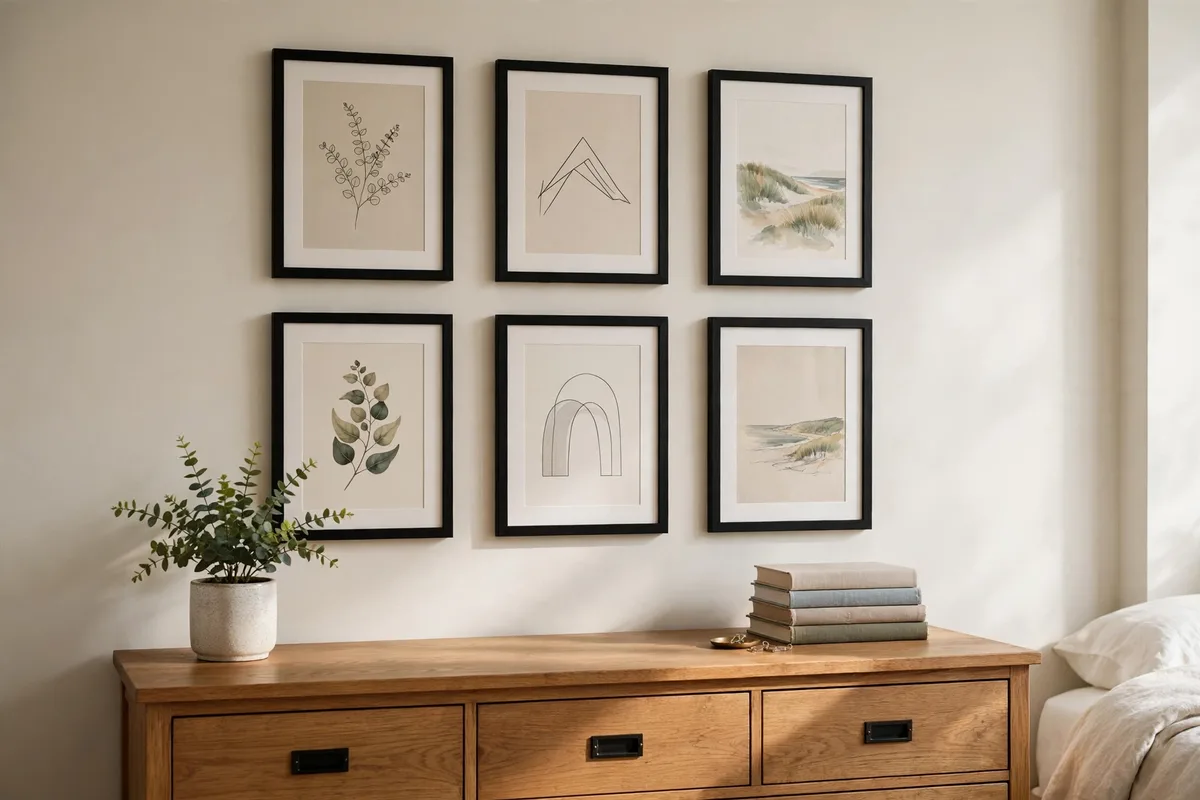
Modern picture-hanging strips have quietly ended the nail era for renters: paired strips hold serious weight — the largest sizes are rated up to about 16 lb — and release when you pull the tab straight down, slowly, exactly as the instructions say. Clean the wall spot with isopropyl alcohol first and let the adhesive cure before hanging; both steps are in the fine print and both decide whether the frame stays up for a year or a week.
Compose like a designer, not a gambler: arrange the gallery on the floor first, photograph it, then transfer it to the wall in that order. One frame finish throughout (all black, all natural wood) makes even charity-shop art look collected — and when you move, the whole wall comes down in ten minutes without a single hole to fill.
3. A Headboard That Bolts to the Bed, Not the Wall
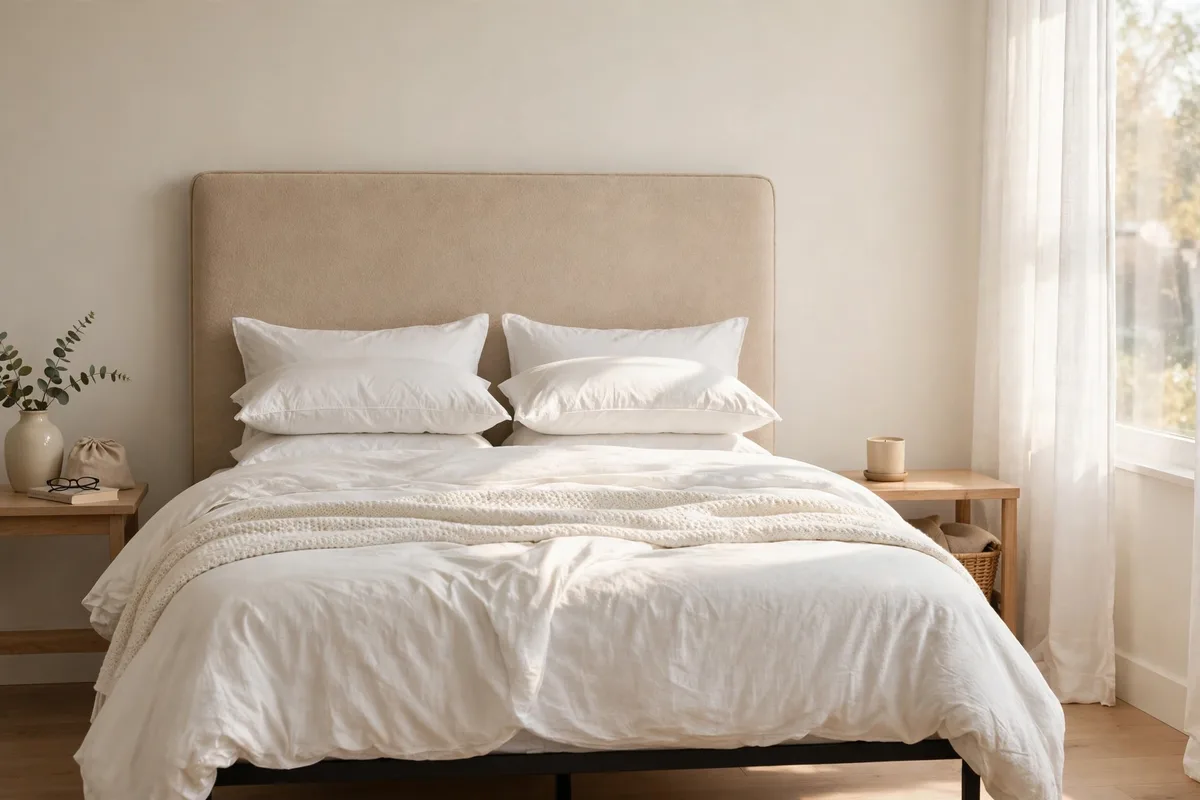
A rental bed usually arrives as a mattress on a divan or a bare frame pushed against the wall — the single biggest reason the room reads “temporary.” A freestanding or frame-bolted headboard fixes the silhouette without touching the wall: it attaches to the bed’s own brackets, travels with you, and instantly gives the bed the finished outline of a chosen piece of furniture.
Choose by the same rules as any headboard — visible height above the pillows, a fabric you can live with for years — the styles and heights in our upholstered headboard ideas all come in freestanding versions. No wall willing to be papered (§1)? The headboard alone carries the bed wall.
4. Plug-In Light: Sconces, Lamps and Smart Bulbs
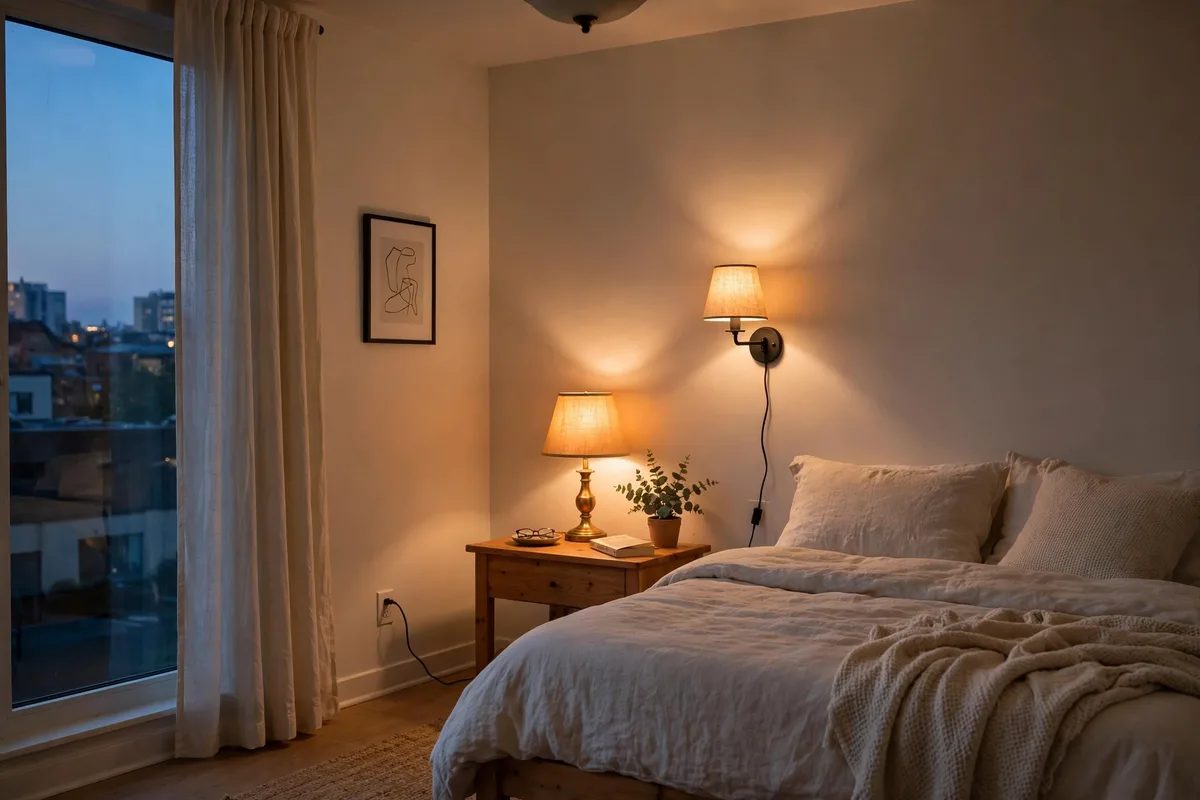
Rental lighting is the room’s second landlord: one cold ceiling fixture, switched from the door. The renter-safe fix is entirely plug-in — bedside lamps or plug-in sconces mounted on heavy-duty removable strips, cords tidied down the wall in paintable adhesive cord covers, and smart bulbs screwed into the existing fixtures so the landlord’s fittings stay untouched while the light turns warm (2700K) and dimmable from your phone. Room checklists like The Spruce Home’s renter-safe decorating guide put exactly this — lamps both sides, smart bulbs at 2700K — on the bedroom essentials list.
Keep the original bulbs in a labelled box in a drawer. On moving day they go back in, and the ceiling light returns to being the landlord’s problem.
5. Curtains Without a Single Screw
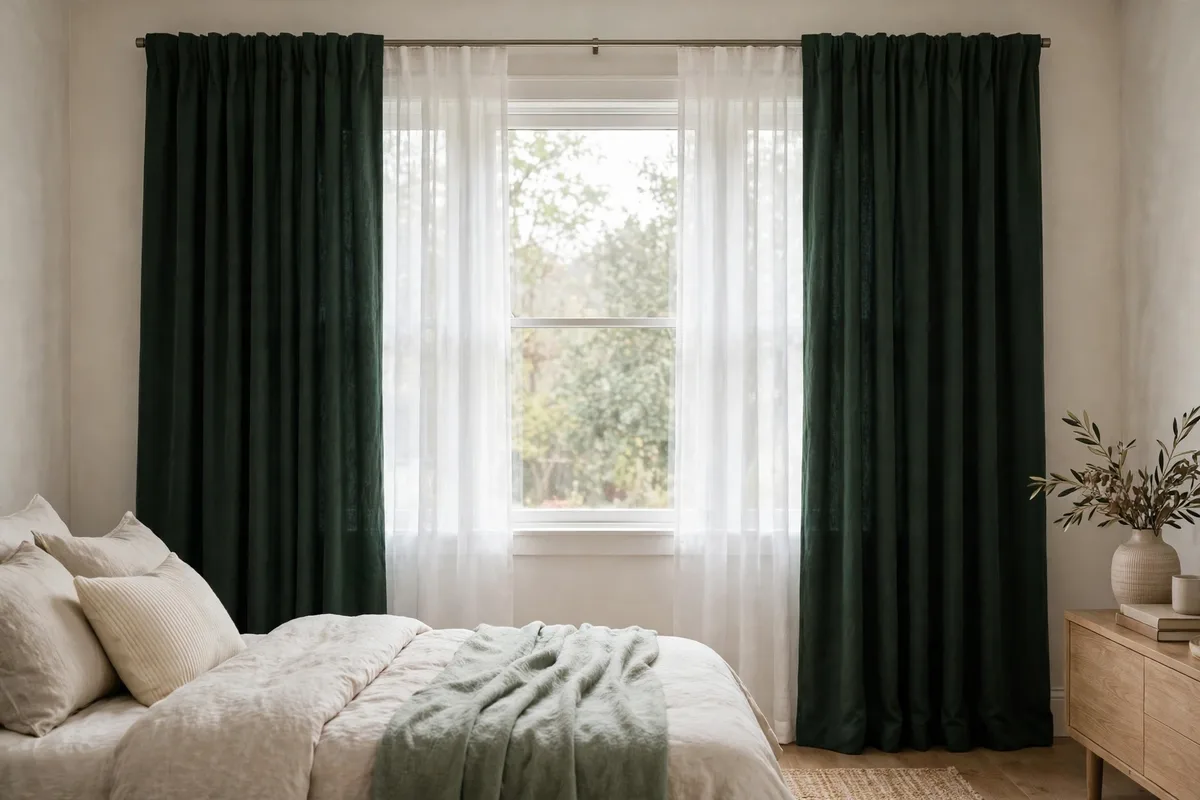
Window treatments transform sleep and privacy, and they are fully reversible: a spring tension rod inside the window frame carries sheers for daytime and, on a second rod or the same one, blackout panels for night — no brackets, no drilling near the frame. Where the frame is too shallow, adhesive-mount or clamp brackets exist for the same job.
Two renter specifics matter: weight (tension rods hold light-to-medium curtains happily; heavy velvet blackouts may want the clamp route), and length — measure to pool just at the sill or floor so the rod’s grip isn’t fighting gravity all night. The blackout layer is the piece guests of your future spare room will thank you for learning here.
6. The Rug That Swallows the Rental Floor
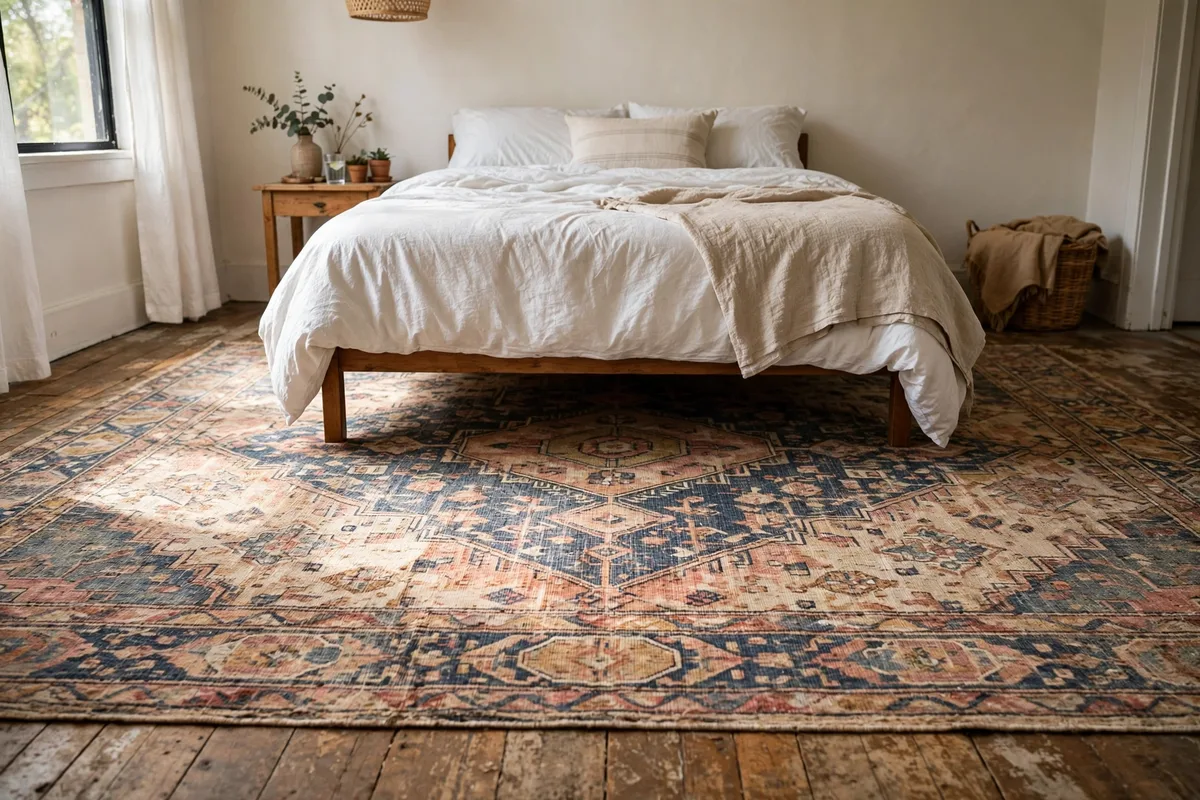
Rental floors are the surface you can least change and most see. A large rug is the legal workaround: laid under the bed and extending 18–24 inches on both sides and at the foot, it replaces the floor your feet meet every morning, muffles the room’s echo, and defines the sleeping zone more strongly than any wall colour could.
Buy it as a keeper, in a quiet pattern that hides rental-life marks and will sit inside your long-term palette — the rug logic from the neutral-base system applies: a low-contrast design with threads of your accent colours lends them to every season. It rolls up on moving day and unrolls in the next home; few purchases follow a renter as faithfully.
7. Let Textiles Do the Colour Work
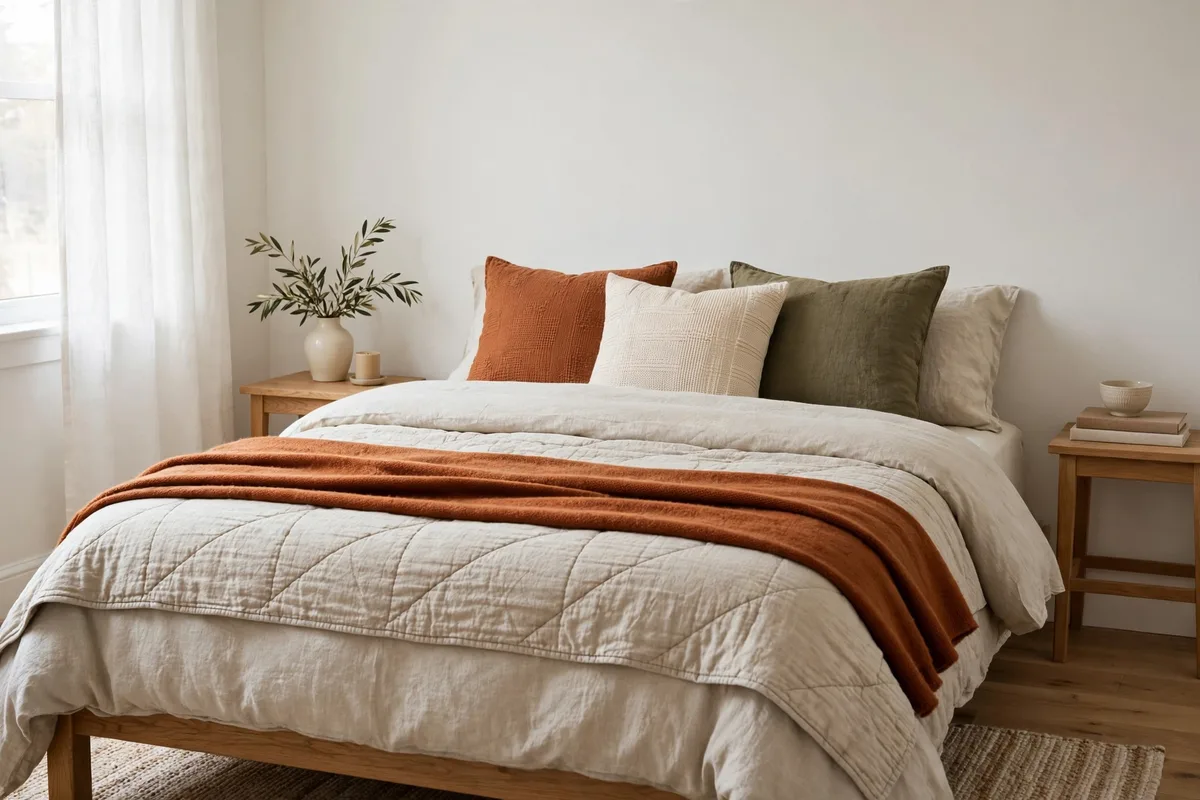
What paint does in an owned home, textiles must do in a rental: carry the colour. The bed is the biggest textile surface in the room, so dress it deliberately — the full sequence in our layered bedding ideas (sheet band, quilt stripe, folded duvet, descending pillows, throw) with the colour concentrated in the two smallest, cheapest pieces: the throw and the front cushion.
The renter’s advantage hides here: colour you can fold is colour you can change with the season, the mood, or the next home’s light — and it never has to be painted back to magnolia at the end of a lease. Keep the big pieces (duvet cover, quilt) in calm neutrals and let the accents rotate.
The sleep layer: A mattress topper and pillows chosen for the sleeper are the only updates in this guide that improve the room’s actual function every single night — and they are also the easiest citizens here: zero permission, nothing attached, and they travel at move-out like the keeper rug in Section 6. A rental bedroom is slept in more than it is looked at; this layer is where the room earns it.
8. Storage That Arrives Flat and Leaves With You
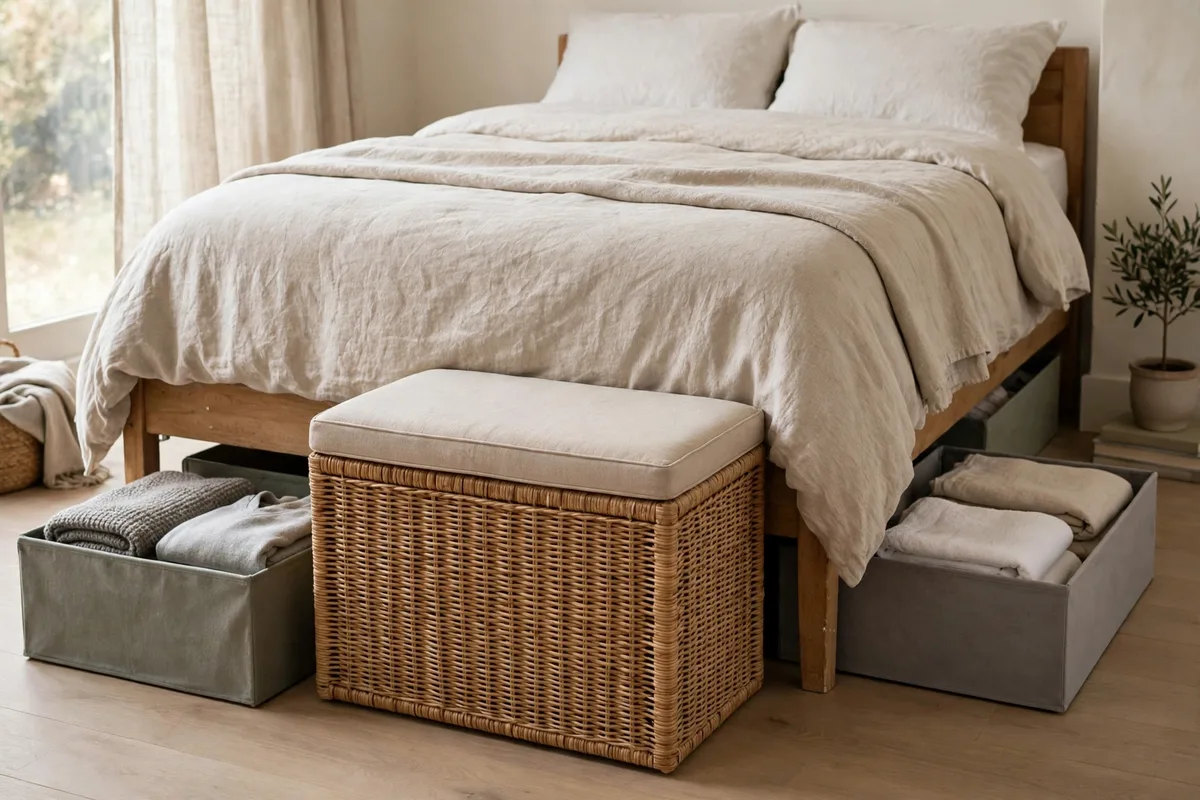
Rentals rarely come with enough storage, and built-ins are out of the question — so storage must be furniture: low boxes that slide under the bed for out-of-season clothes, a lidded ottoman or trunk at the foot that doubles as a bench, over-door hooks and organisers that hang from the door itself, and a leaning ladder shelf that needs no fixings at all.
The deposit detail from renter guides: if you swap any hardware (a knob, a pull) for a prettier one, keep the originals in a labelled bag in a drawer. Move-out day then takes minutes per room, and nothing original goes missing — the most common small deduction there is.
9. Lean, Don’t Hang: The Mirror Trick
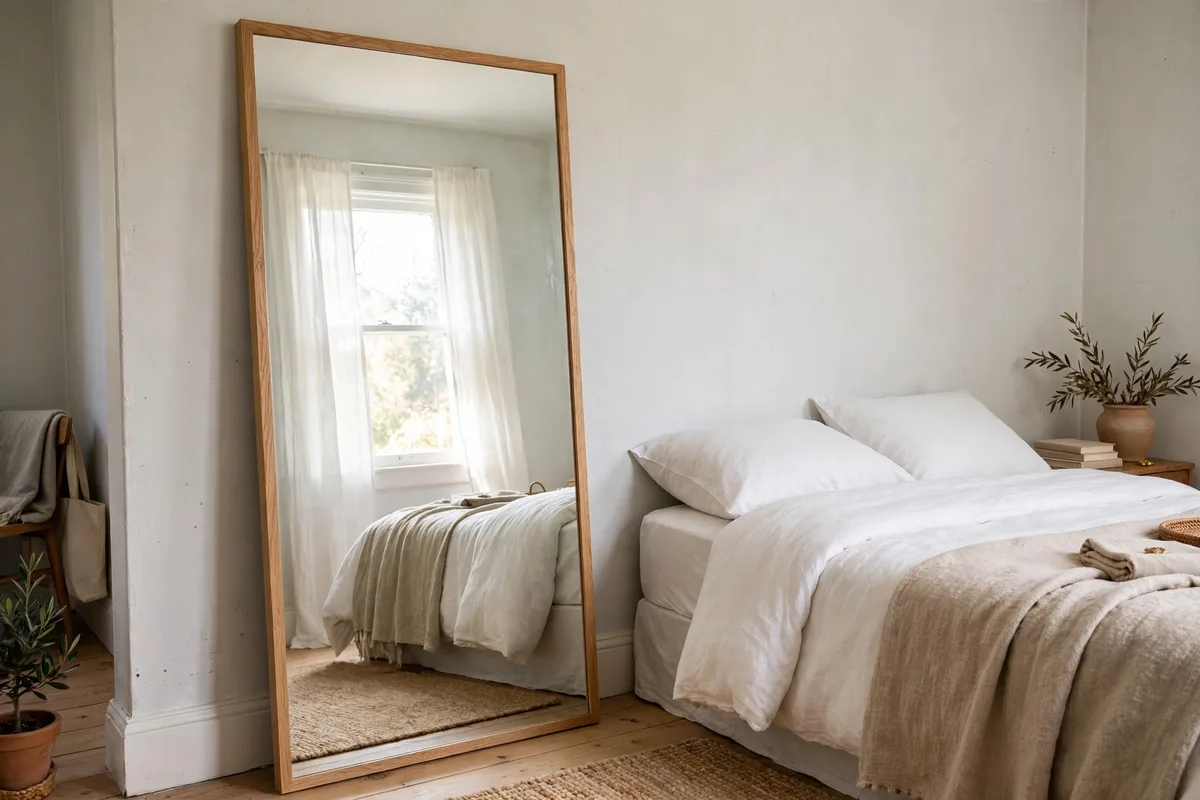
For anything big — a full-length mirror, an oversized print — leaning beats hanging: no fixings at all, a relaxed gallery look, and a mirror that leans where it can throw window light back into the room’s dark half, which in a small rental bedroom is effectively a second window. Renter checklists recommend leaning for anything over about 10 lb, where strip ratings get optimistic. The two numbers are one system: 16 lb is the largest strip pairs’ rated maximum under perfect preparation (Section 2); 10 lb is this guide’s working line — above it, lean, because a rating assumes a wall and a cure you may not have.
Place it with intent: opposite or adjacent to the window for the light bounce, near the wardrobe zone for dressing, and — if small children visit — with a removable anchor strap at the top for safety. The space logic is the same one behind our small bedroom design ideas: in a compact room, reflections are square footage you don’t pay rent on.
10. The Move-Out Reversal: Your Deposit System
Every update above was chosen to reverse — this final one is the system that proves it: on moving-in day, photograph every wall, floor corner and fixture before you change anything, and keep the photos with your lease. They are your evidence and your checklist: the room must return to photo condition, nothing more, nothing less.
Then choose the updates themselves the way the year-round neutral base philosophy chooses furniture — pieces that earn a place in the next home too: the keeper rug, the freestanding headboard, the ottoman, the lamps. A rental decorated this way costs no deposit and wastes no money, because nothing in it was bought for a room you’ll leave. Reverse in an afternoon, roll everything into the next place, and let the landlord keep the magnolia. The same test runs the bathroom — our renter-friendly bathroom guide applies it to tile, steam and showerheads.
Frequently Asked Questions About Renter-Friendly Bedroom Updates
Will peel-and-stick wallpaper damage the paint when I remove it?
Proper removable wallpaper is designed to release cleanly, but wall conditions vary — that is why the hidden-patch test matters: apply a small piece somewhere invisible for a week, then peel. If it lifts cleanly, proceed; if it pulls paint, choose a different wall strategy (textiles and leaning art) for that room.
How much weight can adhesive strips really hold?
The largest picture-hanging strip pairs are rated around 16 lb; smaller sizes run 4–8 lb. Stay well inside the rating, clean the spot with isopropyl alcohol first, press firmly, and let the adhesive cure the full time on the packet before hanging. On removal, pull the tab straight down slowly — never outward.
Can I hang curtains in a rental without drilling?
Yes: tension rods inside the window frame carry sheers and most blackout curtains; adhesive or clamp-on brackets handle heavier panels. The limits are curtain weight and frame depth — measure both before buying, and keep heavy velvet for the clamp route.
What if my lease bans adhesives entirely?
Then lean, layer and tension: leaning mirrors and art, a freestanding headboard, tension-rod curtains, a big rug, plug-in lamps and textile colour all require no adhesive at all. Most of this article survives a strict lease — only the wallpaper and strip-hung gallery need negotiating or skipping.
Should I ask my landlord before peel-and-stick wallpaper?
A short written heads-up is cheap insurance: name the product, note that it is removable, and offer your move-in photos. Many landlords say yes to a documented reversible update, and a written yes ends any deposit argument later.
How do I make a rental bedroom darker for sleep?
Blackout curtains on a tension rod (or over sheers for a layered look), a door draft stopper for the light stripe underneath, and smart bulbs set warm and dim in the evening. All three reverse in minutes and none touches the landlord’s fittings.
What should I buy first on a small budget?
In order: the rug (biggest surface), the bedding accents (the room’s colour), one lamp per side (kills the ceiling-light problem), then the accent wall if the lease allows. Storage furniture and the headboard come next — they are the keepers that follow you home to home.
Are smart bulbs worth it in a rental?
Yes — they are the only way to change a rental’s light colour and dimming without touching a single fitting. Warm 2700K for the bedroom, and keep the landlord’s original bulbs labelled in a drawer so move-out is a two-minute swap back.
How do I keep a leaning mirror safe?
Lean it at a slight angle on a non-slip mat or rug edge, keep its top within reach of a removable anchor strap if children or pets visit, and never lean anything heavy where a door swings into it. Leaning is renter-safe; placement is safety.
What’s the fastest full reversal on moving day?
Work the list backwards: strips’ tabs pulled and art down (10 minutes), wallpaper peeled (30–60 for one wall), curtains and rods out (10), textiles and rug rolled (20), original bulbs and hardware back (15), then compare against your move-in photos room by room. Most rental bedrooms reverse in under two hours.
Can I make a rental bedroom sleep better without changing anything permanent?
Yes — sleep is the most reversible upgrade in the room. Blackout from tension-rod curtains (Section 5), warm dim light from smart bulbs you unscrew at move-out (Section 4), and a topper and pillows chosen for you (Section 7). None of it touches the building, all of it travels, and it improves the one thing the room is actually for.
Conclusion
A rental bedroom does not have to look rented. Test every change for reversibility, spend on the pieces that travel with you — rug, headboard, lamps, storage — and let textiles and one brave wall carry the personality. Photograph everything on the way in, keep the landlord’s bits in labelled bags, and the room gives you back two things when you leave: your deposit, and a bedroom’s worth of furniture that already feels like yours.


Pingback: 10 Renter-Friendly Bathroom Updates Ideas (No Drilling, No Damage)