
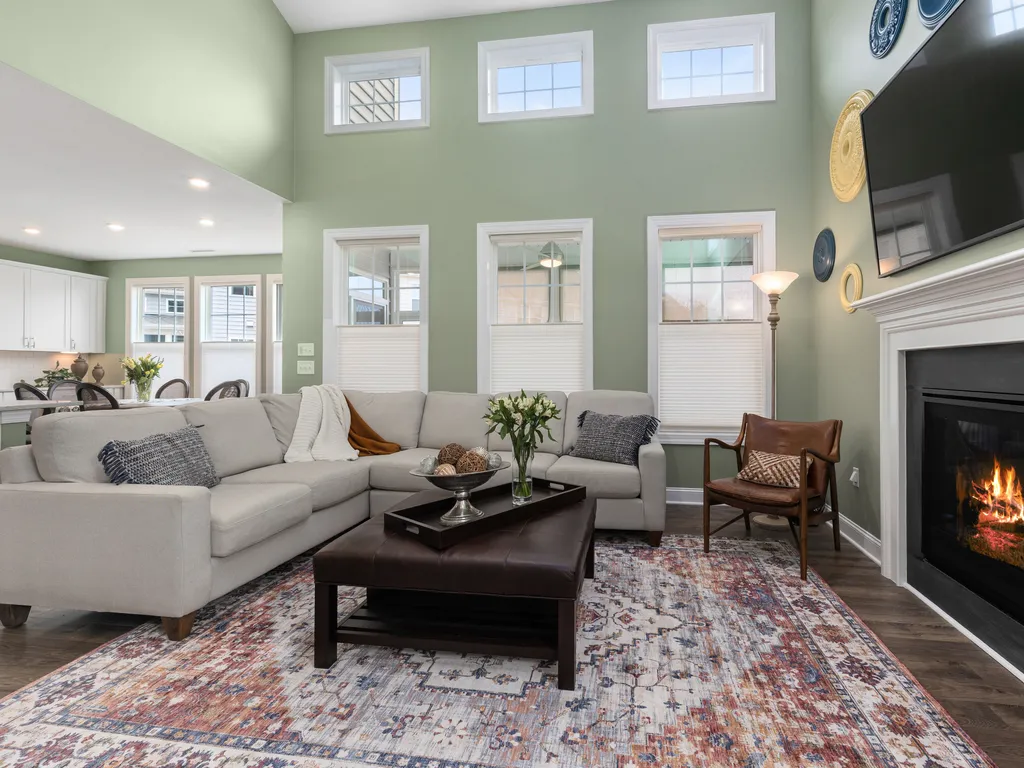
Sage green is the colour people reach for when they want calm — and the colour they sometimes abandon when a test patch dries greyer and colder than the leaf they imagined. The paint is rarely the problem. Sage is a muted grey-green with a split personality: pair it with icy whites, chrome and cool grey textiles, and it turns chilly. Pair it with warm cream, natural wood and a little clay or brass, and the same sage becomes the softest, warmest neutral in the house.
Quick answer: Sage green room palette ideas work best when you pair sage with warm whites, cream and natural wood, then add terracotta, blush and one deep note like navy. Use aged brass, keep chrome out, and test swatches in the room’s own light. A paint and textile refresh costs $150 to $400.
That is what a palette is for. Sage on its own is just a paint chip; sage plus the right partners is a room. The ten ideas below build the palette piece by piece — the base, the wood, the warm accents, the one deep note, the metals — and finish with the two things that decide whether any of it works: your light, and a proper test patch.
In this guide: The Warm Sage Palette at a Glance · Warm Whites and Cream: The Base That Keeps Sage Warm · Natural Wood and Woven Texture: Warmth You Can Touch · Terracotta, Clay and Rust: Earthy Heat · Blush Pink and Dusty Rose: The Soft Contrast · Navy Blue: Depth Without the Chill · Charcoal and Matte Black: Small Doses, Strong Bones · Brass, Aged Gold and Warm Metals · Pick Your Sage by Light: Undertones, LRV and Test Pots · The Sage Bedroom: Linen, Cream and Low Light · Sage Cabinets and Spa Bathrooms: Kitchens and Bathrooms · Frequently Asked Questions About Sage Green Palettes · Conclusion
The Warm Sage Palette at a Glance
| Palette piece | The warm choice | Why it works |
|---|---|---|
| Base | Warm white, cream, soft beige | Stops sage reading grey or cold |
| Wood | Oak, walnut, rattan, woven fibres | Natural warmth sage was designed for |
| Earthy accent | Terracotta, clay, rust | Sage’s opposite on the wheel, gently used |
| Soft accent | Blush pink, dusty rose | Romance without sweetness |
| Deep note | Navy, charcoal, a little black | Grounds the pale tones at ~10 percent |
| Metal | Aged brass, brushed gold, bronze | Warm glow instead of chrome’s chill |
| Light rule | Warmer sage in north light, test first | Undertone decides the result |
| Bedroom | Sage walls, cream linen, pale wood | Calm that stays cosy after dark |
| Kitchen & bath | Sage cabinets and tile, brass hardware | Spa calm with practical surfaces |
1. Warm Whites and Cream: The Base That Keeps Sage Warm
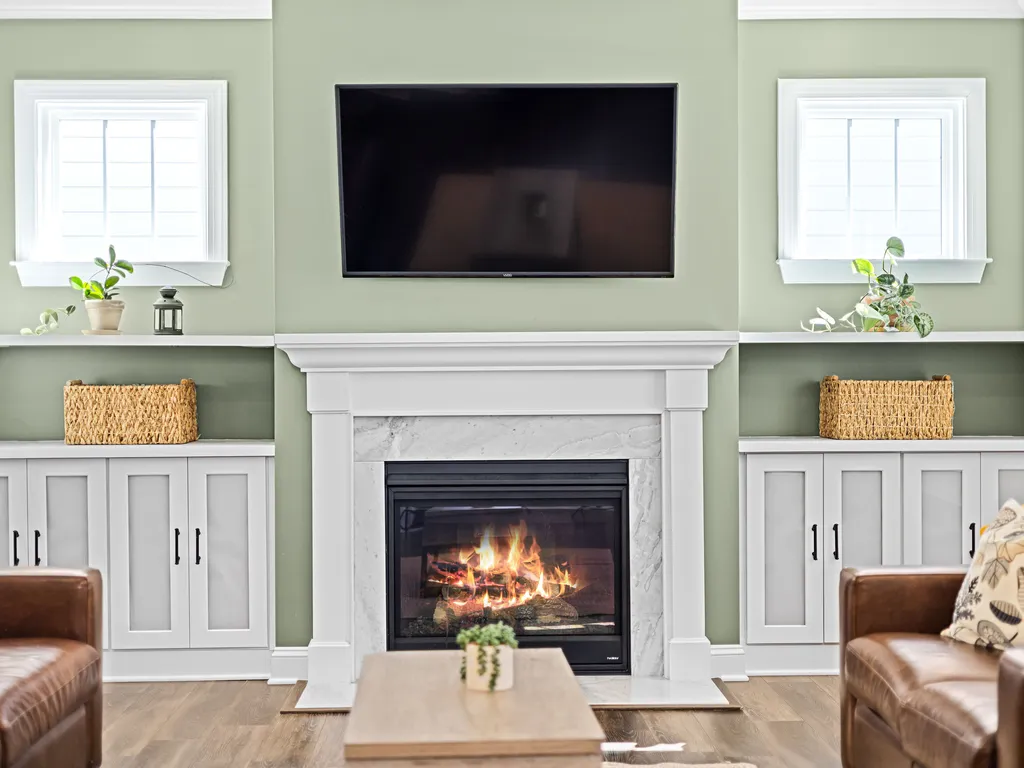
Every sage palette stands or falls on its white. A blue-based brilliant white makes sage look greener but colder, the way a hospital corridor is green; a warm, creamy white pulls sage toward its yellow undertone and the room relaxes. Use the warm white everywhere the sage is not: trim, ceiling, the largest upholstery, bedding. Cream and soft ivory textiles — a sofa, curtains, a wool throw — do the same job at touching distance.
The layering rule from our small apartment color palette ideas applies exactly here: one base, one support, one accent, repeated in every view of the room. With sage, the base is warm white, the support is sage itself, and everything after this section is the accent layer. Get the base wrong and no accent saves it.
2. Natural Wood and Woven Texture: Warmth You Can Touch
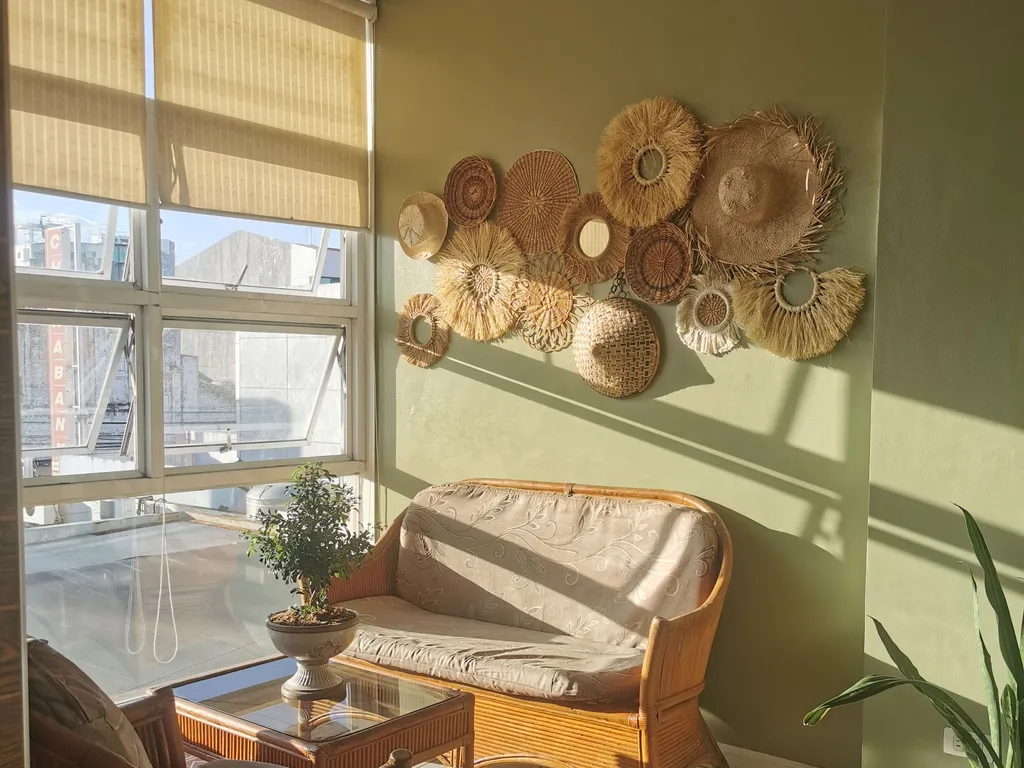
Sage was named after a plant, and it looks most itself next to other things that grew. Light oak and warm walnut bring the yellow-brown warmth sage needs; rattan, cane, jute and seagrass add it in texture form. A pale oak floor or table, a rattan chair, a woven basket holding the throws — each one is a small heater, and together they make the palette feel gathered from a garden rather than mixed in a lab.
Keep the wood tones in the warm family and repeat one of them at least twice per room, so the eye reads it as the palette’s second colour rather than an accident. Avoid grey-washed and ebony-stained wood beside sage: both pull the grey in the green forward, and the room drifts back toward cold. If your existing furniture is dark, a pale jute rug and cream cushions between it and the sage wall will mediate.
3. Terracotta, Clay and Rust: Earthy Heat
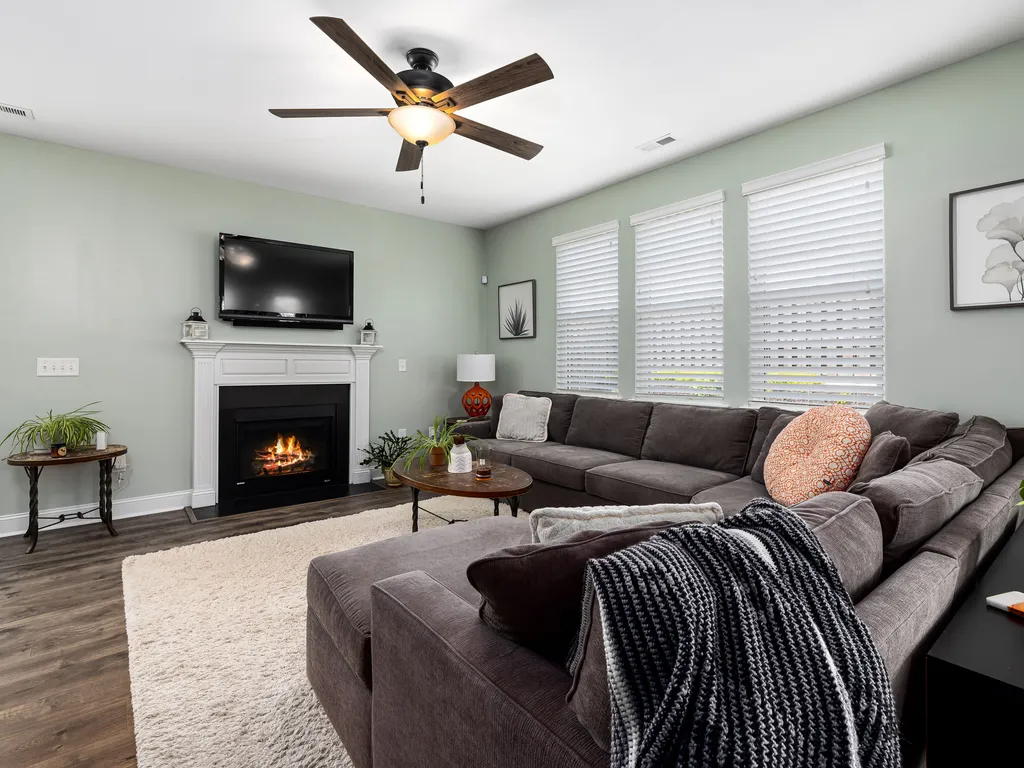
Green and clay-orange sit opposite each other on the colour wheel, which is why terracotta against sage crackles with quiet energy — each makes the other look richer. This is the warmest accent the palette owns. Use it the way you would use a spice: terracotta pots, a rust cushion or two, a handmade clay vase, a brick-toned throw across the foot of a sofa. Small doses, earthy materials, nothing glossy.
The pairing belongs to the same earthy family as the palettes in our autumn color palette ideas — sage simply takes the autumn scheme and cools it down for year-round use. Watch the balance in a small room: terracotta is visually hot, so one or two pieces per view is plenty. If the room starts to feel like a Mediterranean restaurant, remove half the clay and add cream; the theme goes, the warmth stays.
4. Blush Pink and Dusty Rose: The Soft Contrast
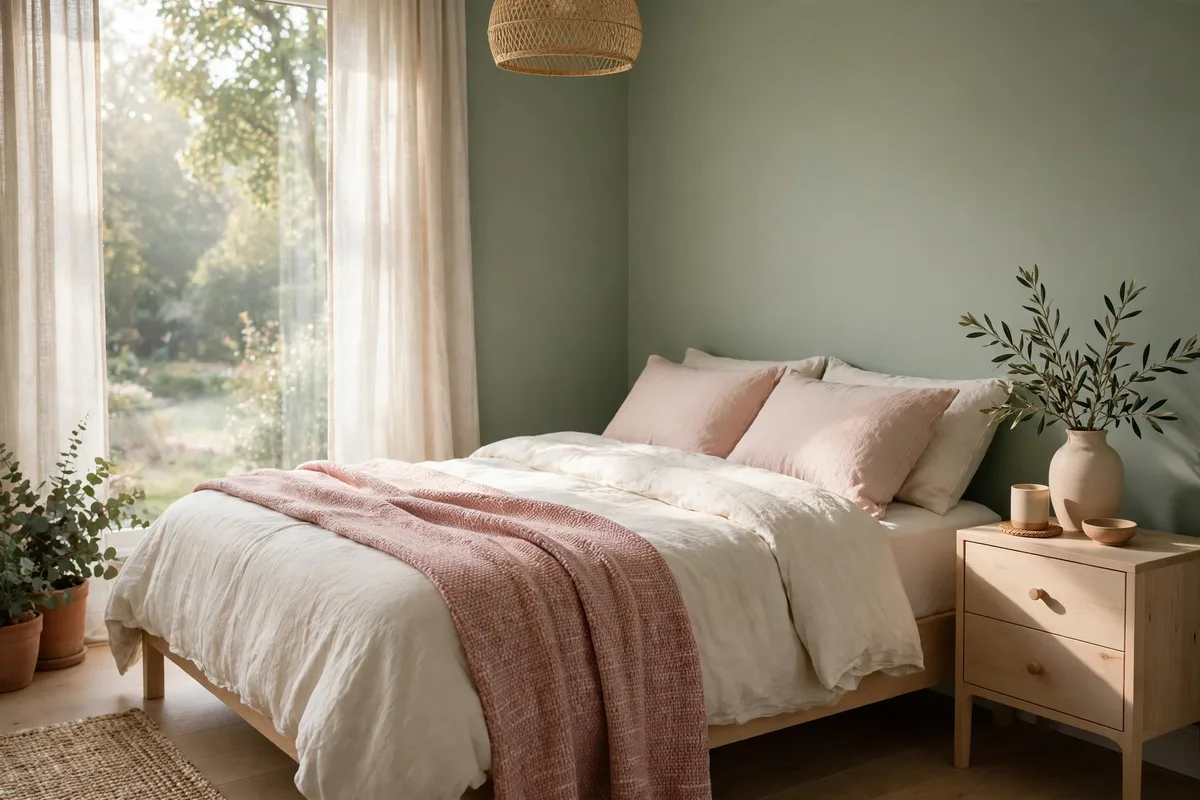
Pink is sage’s oldest friend: flower and leaf. The trick is choosing the right pink. Bubblegum and fuchsia fight the muted green and lose; blush, dusty rose and plaster pink — pinks with grey and brown in them — settle beside sage like petals. The combination reads soft and grown-up in bedrooms, and surprisingly fresh in a living room when the pink is kept to cushions, a throw and one piece of art.
Hold the pink to the textile layer, where it can be changed with the seasons, and let a warm metal or natural wood piece sit between the two colours, so the contrast stays gentle. If you prefer the palette without sweetness, swap the pink for its earthier cousin — a faded terracotta-rose — and the same furniture arrangement works unchanged.
5. Navy Blue: Depth Without the Chill
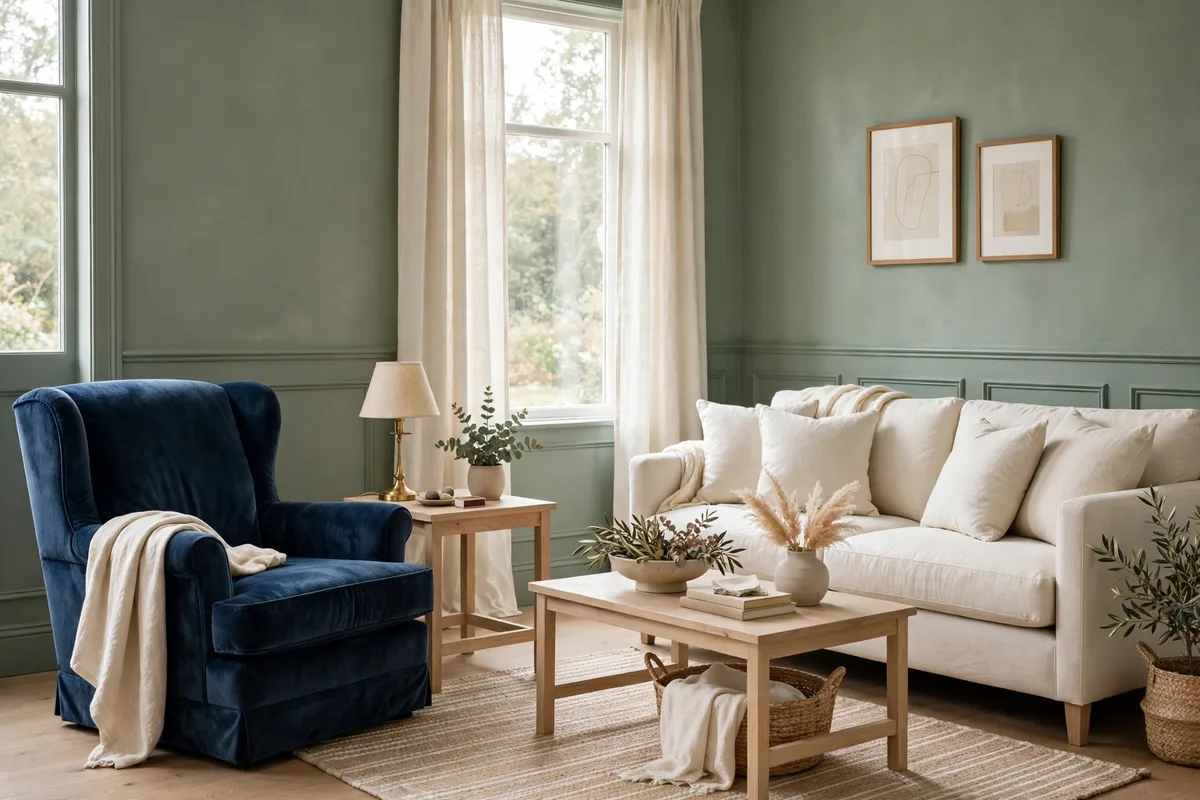
A pale palette needs one deep note or it floats away. Navy is sage’s classic choice: a single navy armchair, a pair of inky cushions, a navy throw gives the room its anchor, and the blue-green kinship between the two colours keeps the contrast harmonious rather than loud. Roughly ten percent of the room in navy is the working dose — enough to ground, never enough to darken.
This is the same deep-sea pairing that runs through our coastal interior style ideas, where greyed blues and soft greens share a shoreline. The coastal lesson applies indoors: keep the navy matte and slightly greyed, in wool, linen or velvet, and let cream sit between the navy and the sage wherever they meet. A navy sofa against a sage wall, broken by cream cushions, is the palette’s most reliable photograph.
6. Charcoal and Matte Black: Small Doses, Strong Bones
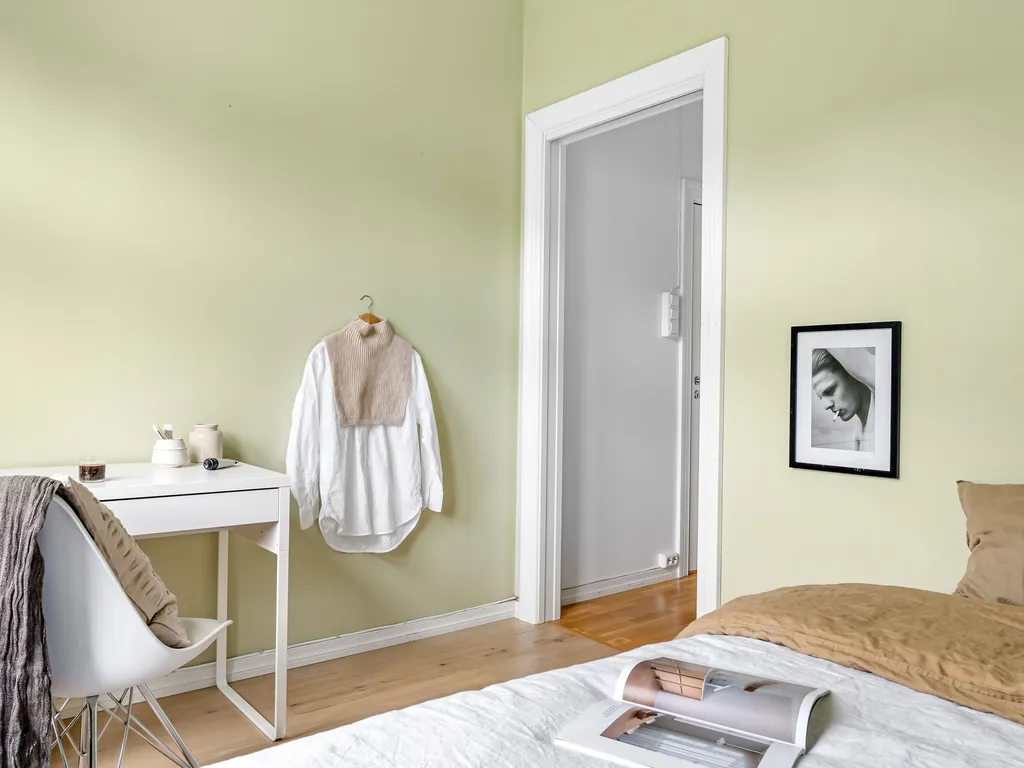
Where navy deepens, charcoal sharpens. A black picture frame, a charcoal chair fabric, iron lamp bases and window hardware give a sage room its outline — the lines that stop all that softness from blurring. Used as punctuation, black is the difference between a palette and a watercolour. Used as a main colour, it drags sage’s grey forward and the chill returns, so keep it to frames, legs, lamps and one upholstered piece at most.
Choose soft, matte versions: charcoal rather than jet, blackened iron rather than gloss lacquer, and repeat the black note in at least three small places so it reads as a decision. A single black object in a pale sage room looks like a mistake; the same object with two quiet companions looks like design.
7. Brass, Aged Gold and Warm Metals
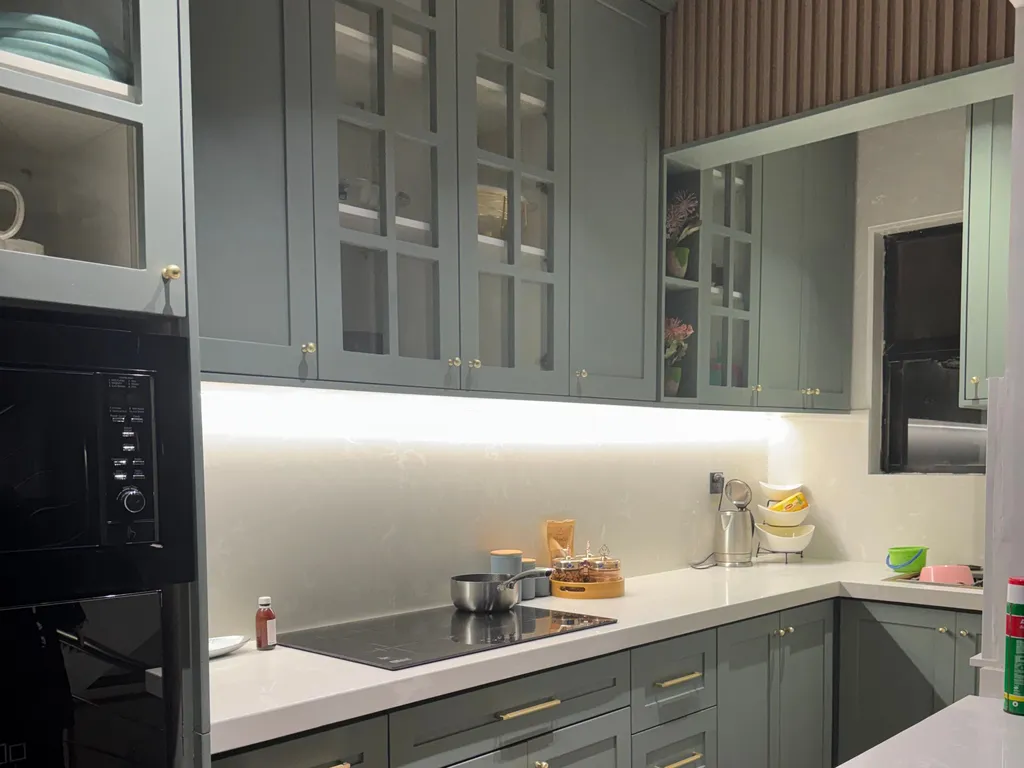
Metal is where a sage palette quietly decides its temperature. Chrome and polished nickel are cool metals; beside sage they amplify the grey and the room feels finished but cold. Aged brass, brushed gold and bronze do the opposite — their yellow warmth plays against the green the way lamplight plays against leaves. Cabinet handles, lamp bases, picture frames, a brass rail or mirror: small surfaces, everywhere the hand and eye land.
Keep the finish unlacquered or brushed rather than mirror-bright, and hold the whole house to one warm metal family so a sage kitchen and a sage bedroom feel related. If your existing hardware is chrome, you do not need to replace it all at once — start with the lamp bases and frames, and let the fixtures follow when they are next changed.
8. Pick Your Sage by Light: Undertones, LRV and Test Pots
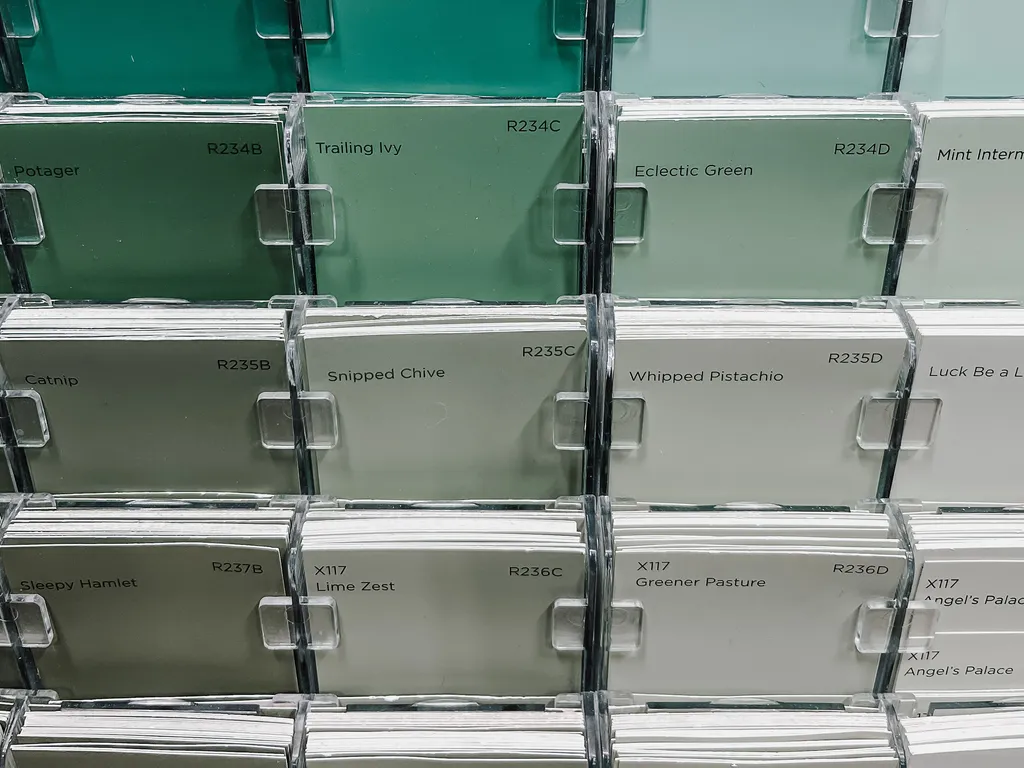
There is no single sage. Every brand’s version leans warm (yellow undertone), cool (blue undertone) or neutral (grey), and each leans harder in some lights than others. North-facing rooms receive cool, blue-grey light all day, which pushes a cool sage toward slate — choose a warm-leaning sage there. Sun-drenched south-facing rooms can take the cooler, greyer sages and stay balanced. Kylie M Interiors’ guide to the best sage green paint colors works through the popular shades by undertone and light reflectance: the popular mid-tone sages sit around LRV 30–50, deep enough to read as colour, light enough to stay calm.
So test properly. Paint large swatches on two different walls, live with them through a full day and an evening of lamplight, and check them against your sofa, floor and curtains, not against the paint-shop card. The sage that survives your light is your sage.
9. The Sage Bedroom: Linen, Cream and Low Light
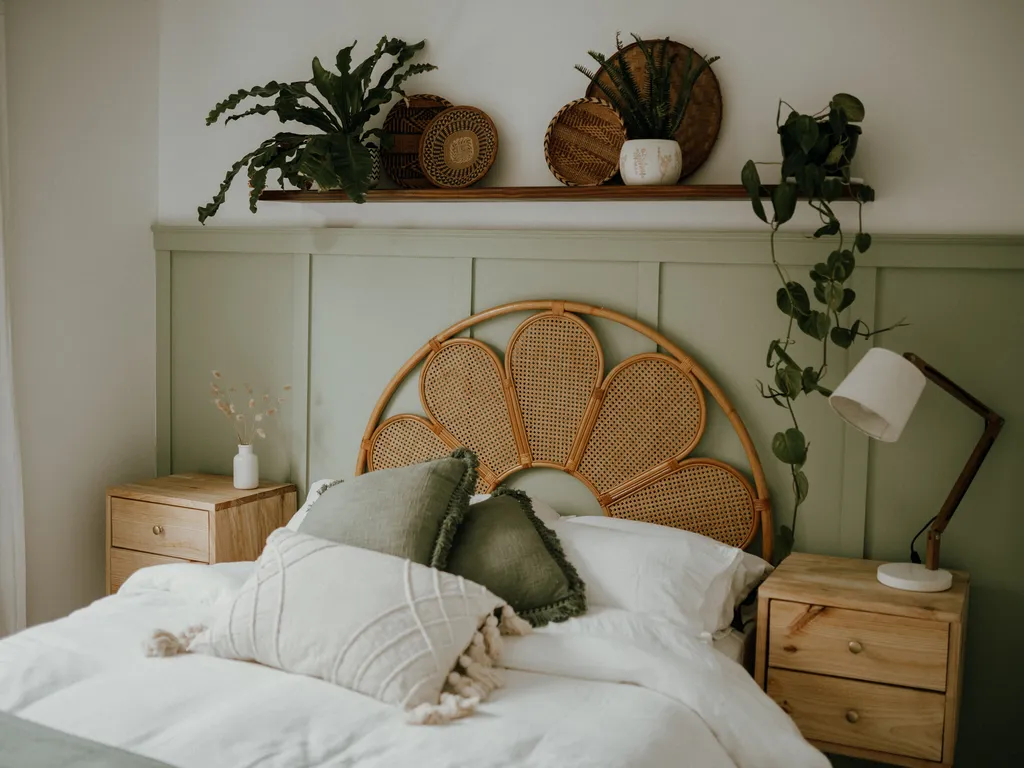
The bedroom is where the whole palette earns its keep. Sage walls or a sage headboard wall behind a bed dressed in cream and natural linen — bedding is the room’s largest warm surface, so the cream base from §1 does its most important work here. Add pale oak or rattan at the nightstands, a jute or wool rug underfoot, and keep the accent to one: blush for softness, navy for depth, terracotta for earth. The room should feel like a garden at dusk, not a paint chart.
Choose the shade for the light the room actually gets at night. Room-by-room guides such as Minimal and Modern’s sage green paint colors for every room suggest the softer, greyer sages for bedrooms, where low warm lamplight forgives them; a brighter sage can turn restless after dark. Warm-white bulbs, never daylight ones, complete the trick — sage under warm evening light is the calmest version of itself.
10. Sage Cabinets and Spa Bathrooms: Kitchens and Bathrooms
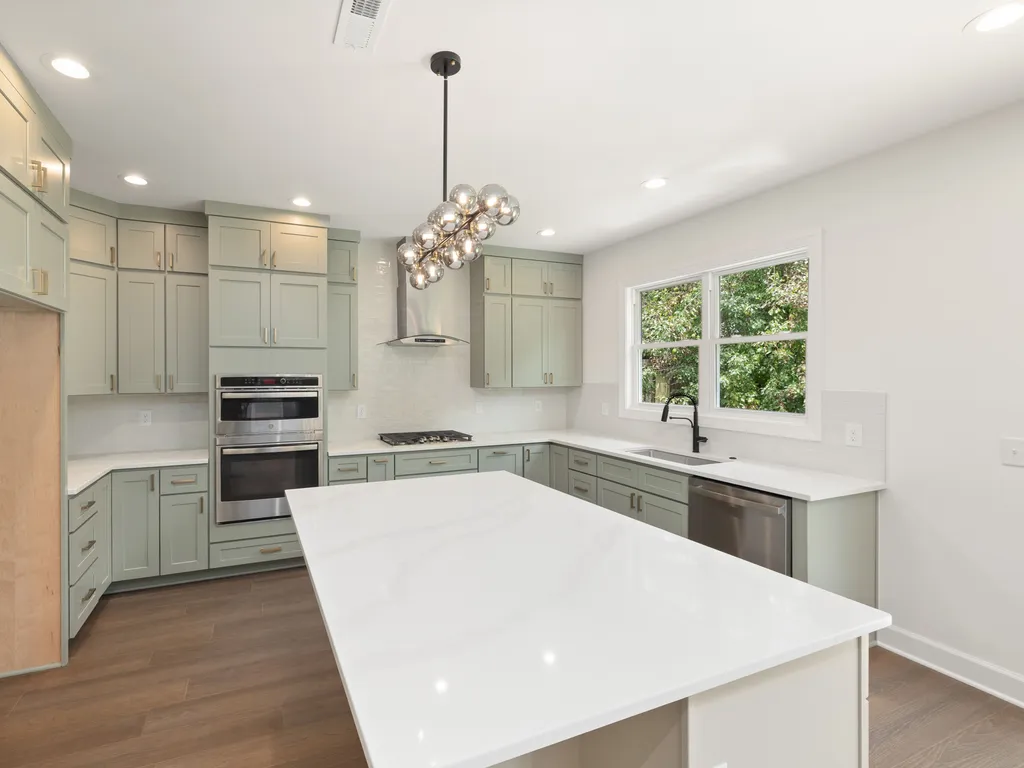
Sage’s biggest modern role is cabinetry. Sage kitchen cabinets with a warm white wall, pale stone worktop, aged brass handles and a wood stool or shelf give you the whole palette in one room — and cabinets are a safer place for colour than walls if you are cautious, because the warm doors sit between long stretches of neutral. In a small kitchen, keep uppers light or open-shelved and let the sage live on the lowers, which grounds the room without closing it in.
In the bathroom, sage tile or a sage vanity does the same work with a spa accent: warm white towels, a wooden stool or tray, brass taps. The approach is the bathroom cousin of our spa-style bathroom palette ideas — calm colour, natural material, nothing shiny-cold. Keep grout and towels warm white rather than stark, and the smallest room in the house becomes the one that feels most considered.
Frequently Asked Questions About Sage Green Palettes
Is sage green a warm or a cool colour?
Both, depending on the version. Warm sages lean yellow, cool sages lean blue, and neutral sages lean grey. The undertone of your specific paint — and the light in your room — decides which one you actually live with.
What colours go best with sage green?
Warm white and cream first, then natural wood, terracotta, blush pink, navy and brass. Those partners supply the warmth sage lacks on its own and keep it reading green rather than grey.
How do I stop sage green looking cold or grey?
Warm the company it keeps: creamy whites instead of brilliant white, warm wood instead of grey-washed, brass instead of chrome, warm-white bulbs, and a warm-leaning sage in north-facing rooms.
Which sage green paint colours are the most popular?
Sherwin-Williams Evergreen Fog and Clary Sage, and Benjamin Moore October Mist and Saybrook Sage, recur — two brands even chose sages as their 2022 colours of the year. Sample all of them; popularity is not undertone.
Does sage green work in a small room?
Very well. A mid-tone sage has enough depth to feel intentional without darkening the room, and with cream textiles and light wood it makes small rooms feel calm rather than cramped.
What wood tones suit sage green?
Light oak, warm walnut, pine and rattan all flatter it. Avoid grey-washed and very dark stained wood, which pull sage’s grey forward and chill the palette.
Can sage green work in a north-facing room?
Yes, with a warm-leaning sage. North light is cool and blue-grey, so a yellow-undertone sage, cream textiles and warm bulbs keep the room balanced instead of slate-like.
What colour curtains and bedding suit sage walls?
Warm white, cream and natural linen are the safe, calming choices. For contrast, dusty blush or a soft terracotta in one layer — a throw or cushions — adds warmth without a theme.
Is sage green a passing trend?
It surged when two major brands named sages their 2022 colours of the year, but the colour itself is a muted, nature-based neutral with a long history in country and cottage interiors. Used as a palette base, it outlasts trend cycles.
Can I use sage green if I rent and cannot paint?
Yes — run the palette in reverse. Sage bedding, cushions, a sage throw or rug and sage ceramics against your existing warm white walls give the same calm, and everything leaves with you.
Conclusion
Sage green was never a cold colour; it is a colour that borrows its temperature from whatever stands next to it. Give it warm white, honest wood, a little clay or blush, one deep note of navy, and brass where the light lands — then choose the exact shade under your own light. Do those things and sage stops being a risk and becomes what it promised to be on the leaf: the calmest warm room in the house.
What a Sage Green Room Costs: Typical Price Ranges
A sage green room can stay cheap if you paint and swap textiles, or it can climb fast once you change cabinets and light fixtures. The table below gives typical US price ranges for the most common buys, so you can set a budget before you shop. Prices move with brand, size and where you live, but the ranges below are a fair guide for a standard 12 by 14 foot room.
| Item | Typical price range | Notes |
|---|---|---|
| Interior wall paint, 1 gallon | $35 to $75 | Covers about 350 square feet per coat |
| Paint sample pots, 3 colours | $15 to $45 | Test on two walls before you buy gallons |
| Painting supplies: rollers, tape, trays, drop cloths | $40 to $90 | Buy good tape; cheap tape lets paint bleed |
| Professional painting, one room | $600 to $1,400 | Higher for tall ceilings or patched walls |
| Linen or cotton curtains, one pair | $60 to $220 | Cream and warm white cost the same as sage |
| Throw pillows, set of 2 | $30 to $90 | Blush, cream or navy in a sage room |
| Throw blanket, wool or cotton | $40 to $120 | One warm layer is enough |
| Brass lamp or light fixture | $80 to $350 | Aged brass and brushed gold sit in this range |
| Brass cabinet pulls, set of 10 | $45 to $140 | Measure the hole spacing before you order |
| Oak side table or stool | $90 to $300 | Light oak keeps sage warm |
| Wool or cotton rug, 8 by 10 feet | $200 to $800 | Cream with a sage or clay pattern works well |
| Terracotta pots and planters, set of 3 | $35 to $110 | Use real plants for a soft green echo |
A paint-only refresh often lands between $150 and $400 if you do the work yourself. A full room with new curtains, a rug, lighting and a few wood pieces often lands between $900 and $2,500. Painting kitchen cabinets in sage costs far more: $1,500 to $4,500 for a pro job on a small to mid-size kitchen, or $300 to $800 in paint and supplies if you do it yourself and take your time.
Measurements That Keep a Sage Palette Balanced
Good sage rooms follow simple numbers. Use them as a check before you buy, not as a strict rule for every corner.
- The 60-30-10 split: about 60 percent warm white, cream or pale wood, about 30 percent sage, and about 10 percent deep navy, charcoal or black. In a 12 by 14 foot room, that means sage on one wall or on cabinets, not on every wall.
- Paint coverage: one gallon covers about 350 square feet for one coat. A 12 by 14 foot room with 8 foot ceilings has about 416 square feet of wall, so plan on 2 gallons for two coats, plus a quart for touch-ups.
- Test swatches: paint each test colour in a square at least 24 by 24 inches, on two walls that get different light. Live with it for 3 full days and look at it in morning, noon and evening light.
- Curtain length: hang the rod 4 to 6 inches above the window frame and 3 to 6 inches past each side. Curtains should reach the floor or sit 1 inch above it, not stop halfway down the wall.
- Rug size: in a living room, a rug should sit at least 6 inches under the front legs of the sofa and chairs. For a 3-seat sofa, an 8 by 10 foot rug is the usual fit; a 5 by 8 foot rug leaves the chairs floating off the edge.
- Art and mirror height: hang the centre of a picture or mirror 57 to 60 inches from the floor. Above a sofa, leave 6 to 8 inches between the top of the sofa and the bottom of the frame.
- Light: aim for 2700K to 3000K warm white bulbs in a sage room. Cool 4000K bulbs can push sage toward grey.
- Wood repeat: repeat the same wood tone at least twice in the room, for example an oak table and an oak frame, so the warm wood reads as a plan, not a single odd piece.
Step-by-Step Planning for a Sage Green Room
- Pick the room and its light. Note which way the windows face and when the room gets direct sun. North-facing rooms need a warm-leaning sage; south-facing rooms can take a cooler sage.
- Choose the sage first, then the white. Pick 3 sage samples and 2 warm whites. Paint the large swatches described above and narrow it to one of each by day 3.
- Set the 60-30-10 plan on paper. Write down what will be white, what will be sage, and what will be the deep 10 percent. If the deep colour creeps past 15 percent, pull it back to pillows, frames or one chair.
- Sort the wood and metal. Choose one wood tone and one warm metal and use them through the room. Do not mix chrome, brass and black iron in the same small space.
- Order the big pieces first. Rug, curtains and any painted furniture come before small decor. Their sizes and tones set the limits for everything else.
- Paint in the right order. Patch and sand, prime bare spots, cut in the edges, then roll the walls in 4 foot sections. Give each coat at least 4 hours to dry in normal indoor air.
- Add textiles last. Bring in pillows, throws and bedding after the paint dries. Step back and check the room from the door: sage should read as calm, not flat.
Mistakes to Avoid
- Testing paint on a tiny card: a 2 inch chip tells you nothing. Paint a big square or you will guess wrong.
- Pairing sage with brilliant white: blue-based white makes sage look cold and grey. Use warm white or cream.
- Using chrome with sage: cool chrome fights the warm, plant-based feel. Pick aged brass or brushed gold.
- Painting every wall sage: four sage walls can feel heavy and dull. One sage wall, or sage cabinets, plus warm neutrals, works better.
- Buying the rug too small: a small rug shrinks the room. Measure the seating area first and buy the rug to fit it.
- Skipping the light check: the same sage can look soft in the morning and grey at night. Check it under the bulbs you will actually use.
More Questions About Sage Green Rooms
How much sage green paint do I need for a bedroom?
For a 12 by 14 foot bedroom with 8 foot ceilings, plan on 2 gallons for two coats on the walls, plus 1 gallon of ceiling paint if the ceiling needs it. If you paint only one accent wall, 1 gallon is usually enough for two coats.
What white goes with sage green walls?
A warm white with a cream or yellow base, such as Benjamin Moore White Dove or Sherwin-Williams Alabaster. Hold the white card next to the sage card in the room’s own light; if the white looks blue next to the sage, pick a warmer white.
Can I use sage green in a kitchen with white cabinets?
Yes. Sage works best as the wall colour or as a tile back splash when the cabinets stay white. Add brass pulls and a pale wood stool or open shelf to keep the mix warm.
Does sage green go with grey furniture?
It can, but only with warm grey. Cool, blue-grey sofas can make sage look muddy. A warm greige sofa, cream cushions and oak wood help the two tones sit together.
How do I make a sage room feel warm in winter?
Add wool or chunky cotton throws, warm 2700K bulbs, terracotta or clay pots, and one deep navy or charcoal piece. Keep the metal warm brass, not chrome, and let the wood tones show.
Is sage green good for a rental?
Yes, if you cannot paint. Use sage bedding, curtains, a rug and cushions against warm white walls. Those pieces move with you, cost less than paint, and give you the same palette without touching the walls.