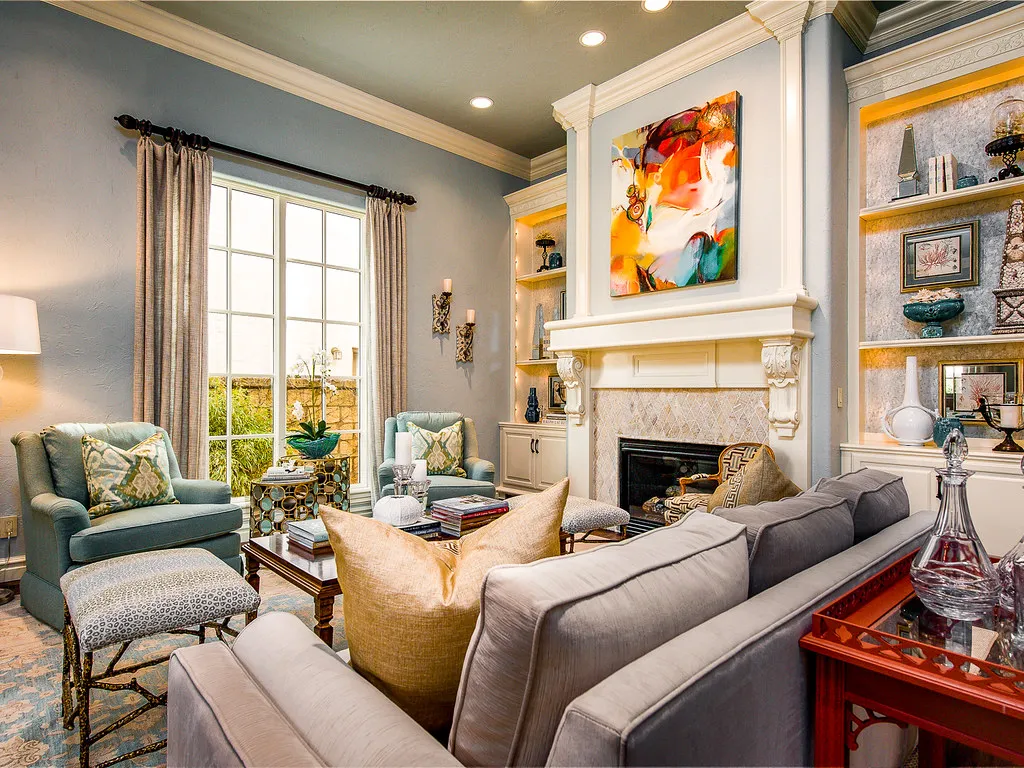
Most mantels that look “off” are not badly styled — they are badly sized. The mirror is a few inches too narrow, the candlesticks are all the same height as the vase, the garland stops six inches short on each side, and nothing you rearrange will fix it, because the problem is arithmetic, not taste. Get the numbers right first and almost any objects you already own will suddenly look deliberate.
This guide is the measuring tape version of mantel styling. It covers one thing only: size. You will find the anchor width worked out in inches for five common mantel widths, the correct gap between a mirror and the shelf, three height bands for everything that stands on the shelf, spacing rules, garland length and drop math, a complete scale table for small, standard, and large mantels, and the clearances you need when a TV hangs above the shelf. For the full styling process behind these numbers — choosing a style, layering, and seasonal changes — follow the companion
fireplace mantel styling styles guide once your measurements are settled.
The sizes that matter, up front: Anchor width: roughly two-thirds to three-quarters of the shelf width (40 to 45 inches on a 60-inch shelf). Hang gap: about 4 to 6 inches above the shelf, leaving at least 12 inches to the ceiling. Shelf depth: usually 8 to 12 inches, with object bases up to about 5 inches on an 8-inch shelf, 7 inches on a 10-inch shelf, and 9 inches on a 12-inch shelf; keep flammable decorations at least 3 feet from the opening of a working fireplace when a fire is lit. TV: roughly 4 to 6 inches above the shelf for a decorative or electric fireplace, with shelf decor below the screen’s bottom edge (low-band pieces only, roughly 3 to 4 inches tall, with a 5-inch gap). Garland: add about 12 to 24 inches of drop at each end, with each swag dropping about 8 to 12 inches below the shelf edge.
In this guide: Measure Your Mantel First: The Five Numbers That Decide Everything · Size the Anchor: Mirror and Art Width as a Fraction of Mantel Width · Set the Height Above the Shelf: Gaps, Leaning, and Ceiling Clearance · Use Three Height Bands for Everything on the Shelf · Space Pieces So the Shelf Breathes: Gaps and Grouping Distances · Scale the Whole Formula for Small, Standard, and Large Mantels · Get Garland Length and Drop Right · Respect Shelf Depth and Heat Clearances Underneath the Style · Clearances and Decor Heights When a TV Hangs Above the Mantel · Fix the Five Most Common Sizing Mistakes · Frequently Asked Questions About Fireplace Mantel Sizing · Conclusion
1. Measure Your Mantel First: The Five Numbers That Decide Everything
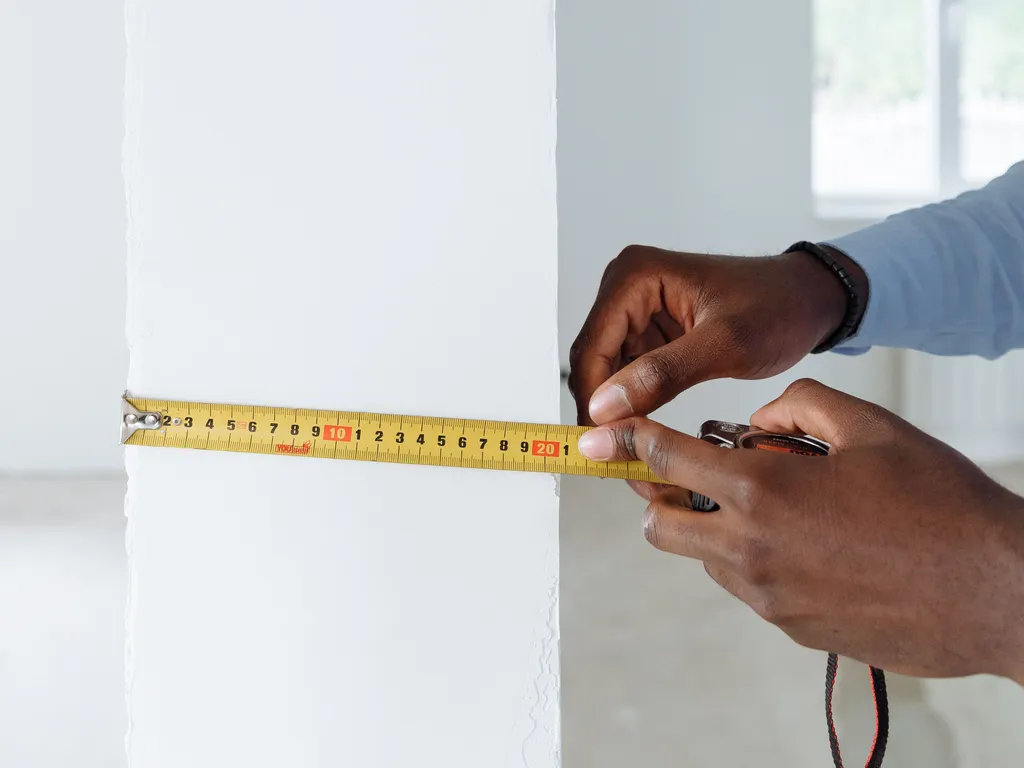
Before you buy, hang, or move a single object, take five measurements and write them down. Every rule in this article is a fraction or a range based on these numbers, so five minutes with a tape measure now saves you from guessing for the rest of the project. Measure in inches, and measure the shelf itself, not the whole surround.
The five measurements
- Shelf width: The full left-to-right length of the mantel shelf. Common sizes run from about 48 inches on a compact fireplace to 72 inches or more on a large one. This is the master number — anchor width, garland length, and spacing all start here.
- Shelf depth: Front to back, usually 8 to 12 inches. Depth decides how wide an object base can be and whether pieces can lean safely.
- Shelf height: Floor to the top of the shelf, commonly around 48 to 54 inches. You need it for garland drop calculations and for judging TV viewing height.
- Wall height above the shelf: From the shelf top to the ceiling. This caps how tall your mirror or artwork can be.
- Firebox opening width: The width of the opening below. Your anchor should never be narrower than this, or the whole composition looks top-light and unstable.
A worked example
Say your shelf measures 60 inches wide, 10 inches deep, and 54 inches high, with 42 inches of wall above it to an 8-foot ceiling, and a 36-inch firebox opening. Keep those five numbers in front of you: 60, 10, 54, 42, 36. The sections below turn each one into decisions — a 40 to 45 inch anchor, objects no deeper than about 7 inches, and a tallest shelf piece of roughly 18 to 24 inches.
2. Size the Anchor: Mirror and Art Width as a Fraction of Mantel Width
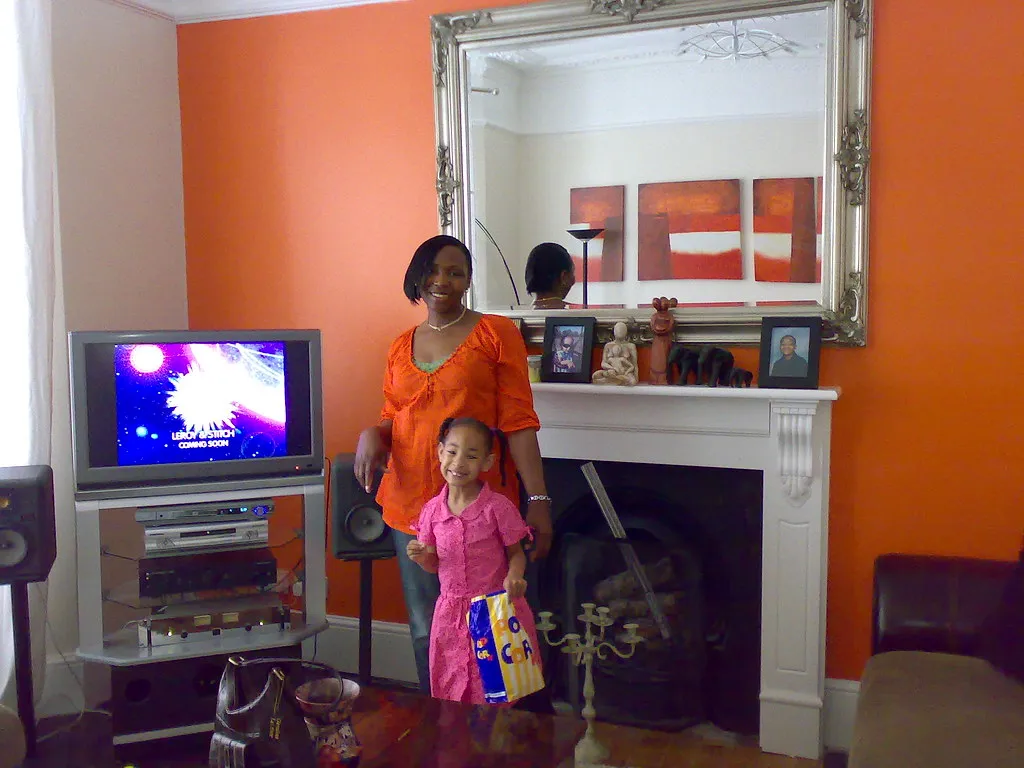
The anchor — the mirror, artwork, or large piece centred above the shelf — follows the most quoted rule in mantel styling: it should span roughly two-thirds to three-quarters of the shelf width. Below half the shelf width it looks lost; wider than the shelf itself it overwhelms the fireplace and makes the surround look like a stand for the frame. The fraction is easy to quote and annoying to calculate at the shop, so here it is done for you.
| Shelf width | Anchor at two-thirds | Anchor at three-quarters | Sensible buying range |
|---|---|---|---|
| 48 inches | 32 inches | 36 inches | 32 to 36 inches wide |
| 54 inches | 36 inches | 40 inches | 36 to 40 inches wide |
| 60 inches | 40 inches | 45 inches | 40 to 45 inches wide |
| 66 inches | 44 inches | 49 inches | 44 to 50 inches wide |
| 72 inches | 48 inches | 54 inches | 48 to 54 inches wide |
Height matters as much as width
Width is only half the anchor decision. For height, leave at least 12 inches of clear wall between the top of the anchor and the ceiling or crown moulding, and let the anchor’s height suit the wall above the shelf. On a standard wall with about 36 to 42 inches above the shelf, an anchor roughly 28 to 36 inches tall fills the space without crowding it. With a tall ceiling and 48 inches or more of wall, you can go taller — a vertical or arched piece of 36 to 44 inches. With a low ceiling or a high shelf that leaves under 30 inches of wall, choose a wide, low horizontal piece of about 20 to 26 inches tall instead of forcing a tall frame into a short gap.
Round and arched mirrors
For a round mirror, treat the diameter as the width and apply the same table: a 60-inch shelf wants a mirror about 40 to 45 inches across at most, and 36 inches is a safer, very common choice that still reads generously. Never let a round mirror’s diameter exceed the firebox opening width by a large margin on a small mantel — the circle will dominate the whole wall.
3. Set the Height Above the Shelf: Gaps, Leaning, and Ceiling Clearance
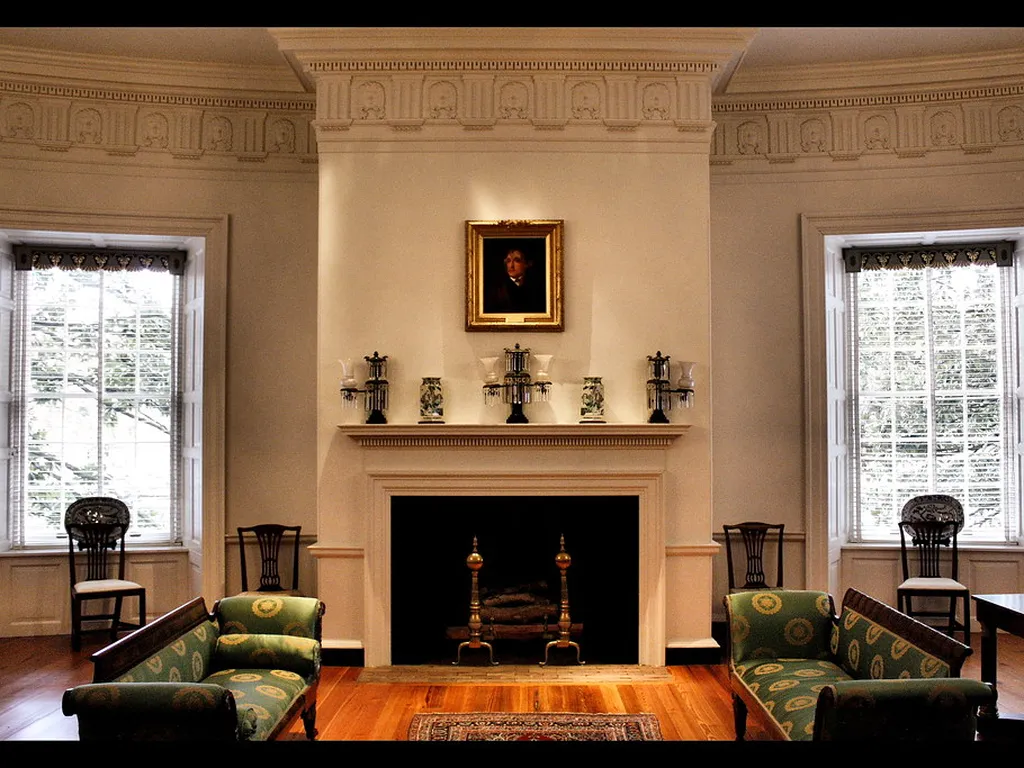
A correctly sized anchor can still fail if it floats at the wrong height. Hang a mirror or artwork so its bottom edge sits about 4 to 6 inches above the shelf. That small gap keeps the anchor and the shelf reading as one connected composition. At 8 inches or more, the eye reads two separate things — a picture that happens to be high on the wall, and a shelf below it — and the mantel loses its focal-point power. This 4 to 6 inch range is the same one used across this site’s mantel articles, including the looks in the fireplace mantel styling ideas listicle.
Leaning instead of hanging
Leaning removes the gap question entirely: the frame’s bottom edge rests on the shelf and the top tilts back against the wall. Leaning works best when the anchor is at the larger end of the width range, because the tilt foreshortens it slightly. Keep the lean shallow — the frame’s base should sit no more than about 2 to 3 inches out from the wall on a standard 10 to 12 inch deep shelf — and always secure a heavy mirror with a discreet wall anchor or anti-tip strap, especially in homes with children or pets. On a shallow shelf under 8 inches deep, hang rather than lean: there is not enough depth for a safe tilt plus objects in front.
The ceiling check
Whatever you hang, run this check before drilling: shelf height, plus gap, plus anchor height should leave at least 12 inches to the ceiling. On a 54-inch shelf with a 5-inch gap, a 36-inch anchor tops out at 95 inches — comfortable in a room with a 96-inch (8-foot) ceiling only just, which is exactly why tall anchors belong in rooms with higher ceilings or lower shelves.
4. Use Three Height Bands for Everything on the Shelf
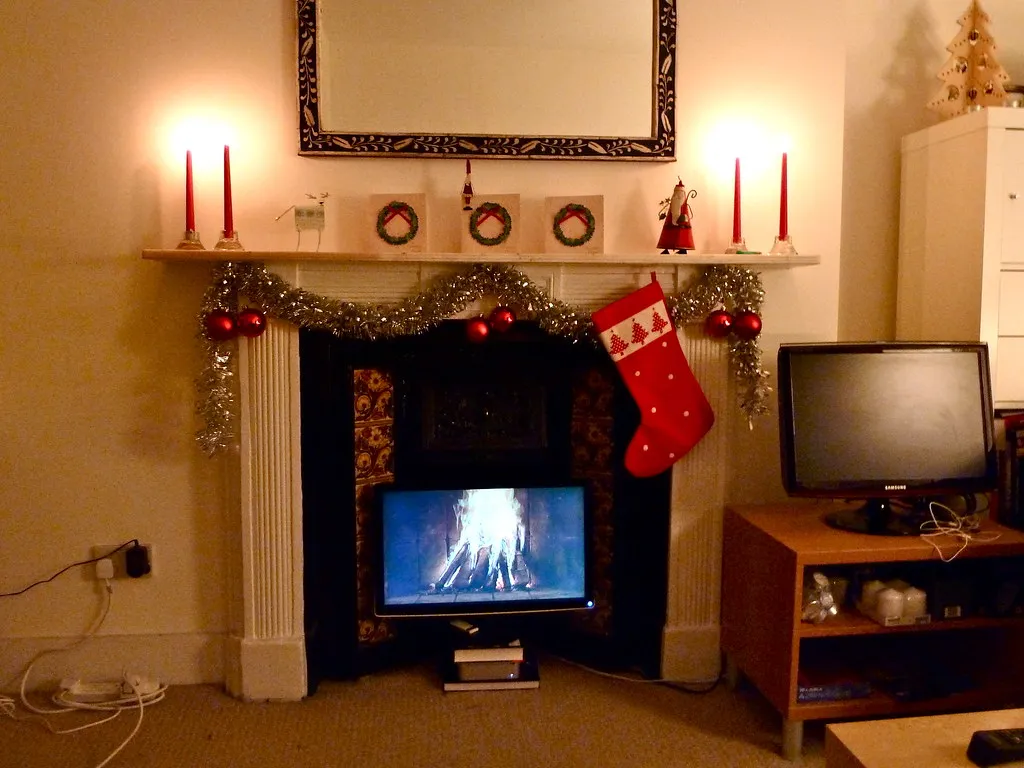
Once the anchor is set, the objects standing on the shelf need their own scale system. The reliable method is three height bands — tall, medium, and low — each roughly half to two-thirds the height of the band above it. On a standard mantel (about 54 inches high, 60 inches wide, anchor around 40 inches wide), the bands look like this.
| Band | Height range | Typical pieces | Role |
|---|---|---|---|
| Tall | 18 to 24 inches | Candlesticks, tall vase with stems, lantern | Echoes the anchor and frames the ends |
| Medium | 10 to 16 inches | Smaller vase, stack of books with an object, medium candle holder | Bridges tall and low, fills the middle ground |
| Low | 3 to 8 inches | Small bowl, short stack of books, small plant, picture frame | Grounds the arrangement along the shelf line |
Scaling the bands to the anchor
The tall band has a ceiling: on a standard mantel, your tallest shelf object should stay around 18 to 24 inches — roughly half the height of a typical anchor, and never so tall that it competes with the anchor’s top edge. Secondary pieces then step down: medium pieces at about half to three-quarters the height of your tall pieces, and low pieces under half the medium height. If everything on your shelf currently sits between 8 and 12 inches, that flat skyline is the problem — you do not need new objects, you need one piece in the tall band and one in the low band.
Depth counts as size too
Height bands fail if the bases do not fit the shelf. Keep every object’s base at least 2 to 3 inches narrower than the shelf depth, so a 10-inch deep shelf takes bases up to about 7 to 8 inches wide, with a small safety margin at the front edge. Tall, narrow-based pieces are the tipping risk: a 22-inch candlestick on a 3-inch base is fine on a 12-inch shelf and precarious on an 8-inch one.
5. Space Pieces So the Shelf Breathes: Gaps and Grouping Distances
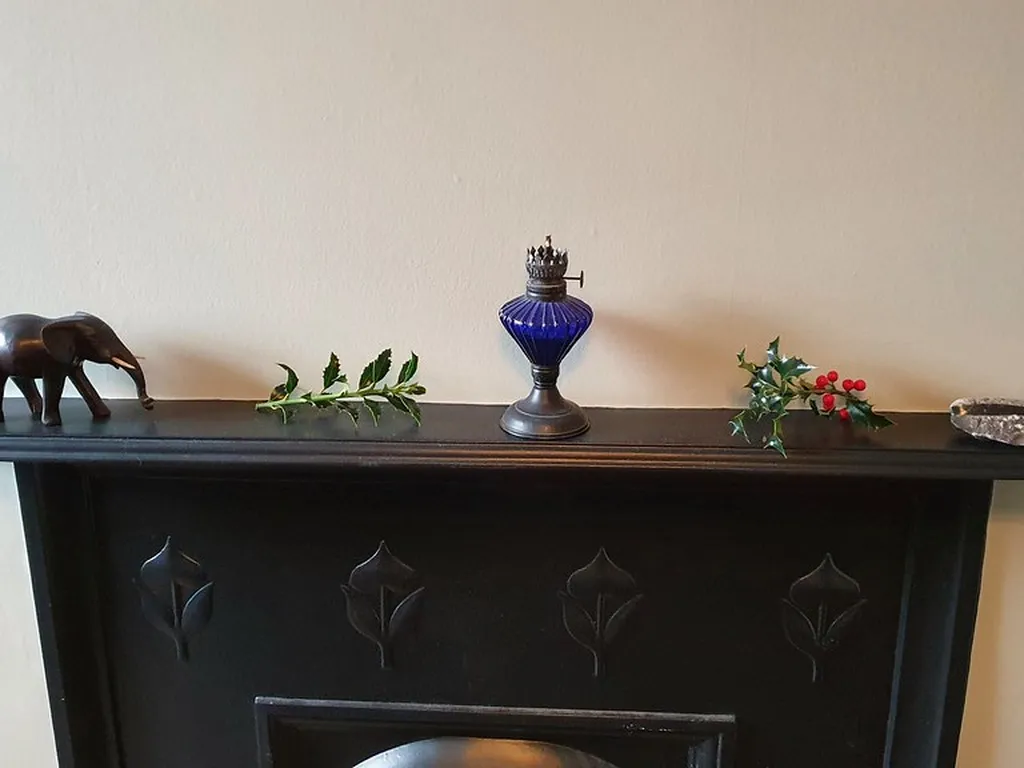
Sizing is not only about the objects — it is about the empty inches between them. A standard 60-inch shelf styled edge to edge looks cluttered at any object size, while the same pieces grouped with deliberate gaps look calm. Work to these spacing rules.
The spacing rules
- End margins: Leave roughly 4 to 6 inches of clear shelf at each end. Objects pushed flush to the ends make the mantel look overfilled and risk knocks.
- Groups, not rows: Arrange objects in two or three groups rather than a spaced-out row. Within a group, pieces should nearly touch — gaps of about 1 to 2 inches, or a slight overlap in front of the anchor, read as one vignette.
- Between groups: Leave a clear breathing gap of roughly 6 to 12 inches between groups. That empty stretch is what separates one idea from the next and keeps the shelf from reading as a shop display.
- Empty total: Aim to leave about a quarter to a third of the shelf length visibly empty once garlands are off. If your arrangement covers every inch, remove one group, not one small item.
A 60-inch shelf, mapped
Here is the arithmetic for a typical symmetrical layout on a 60-inch shelf: 5 inches clear at the left end, a tall candlestick group occupying about 10 inches, a 10-inch breathing gap, a low central group of about 10 inches in front of the anchor, another 10-inch gap, a matching tall group of 10 inches, and 5 inches clear at the right end. Total: 60 inches, three groups, and enough air around each that every piece can be seen properly.
6. Scale the Whole Formula for Small, Standard, and Large Mantels
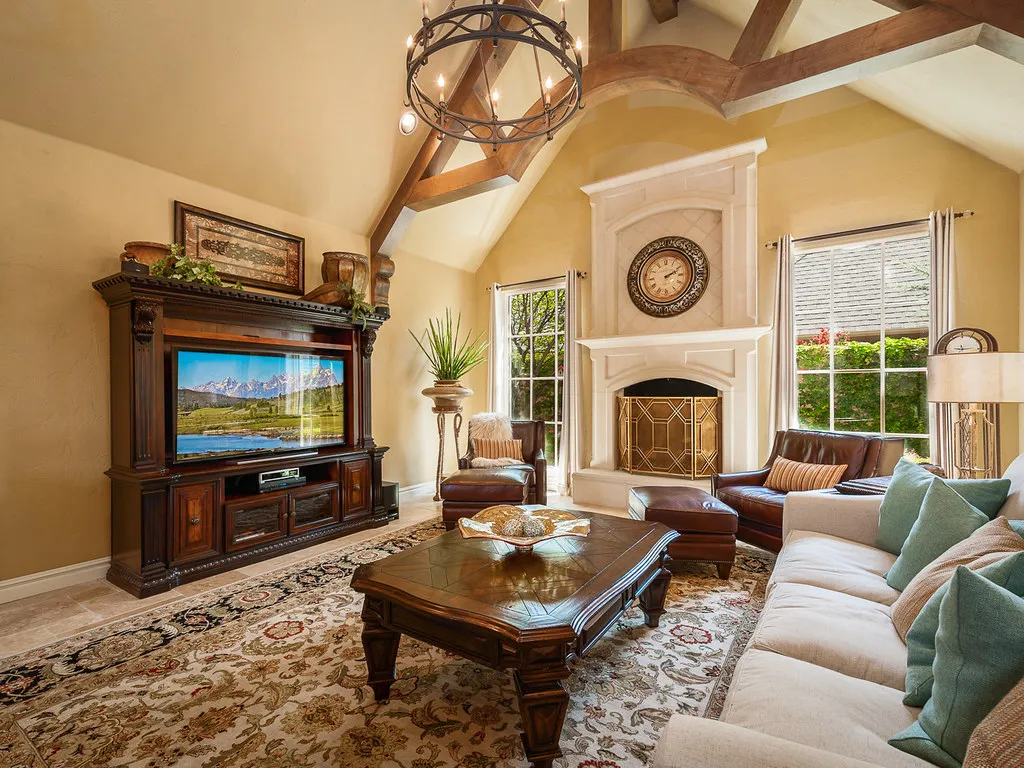
Every rule so far flexes with mantel size, and applying standard-mantel numbers to a small or oversized fireplace is the most common sizing error of all. Use this table as your starting point, then fine-tune with the earlier sections.
| Measurement | Small mantel (under 48 in wide) | Standard mantel (48 to 60 in) | Large mantel (over 60 in) |
|---|---|---|---|
| Anchor width | 30 to 36 inches | 36 to 45 inches | 44 to 54 inches |
| Anchor hang gap | 3 to 5 inches | 4 to 6 inches | 4 to 6 inches |
| Tall band | 14 to 18 inches | 18 to 24 inches | 22 to 30 inches |
| Medium band | 8 to 12 inches | 10 to 16 inches | 14 to 20 inches |
| Low band | 2 to 6 inches | 3 to 8 inches | 4 to 10 inches |
| Number of groups | 1 to 2 | 2 to 3 | 3, or 2 oversized |
| Garland length | Shelf width + 12 to 24 in | Shelf width + 24 to 36 in | Shelf width + 36 to 48 in |
Small mantels: fewer, not smaller
The instinct on a small mantel is to shrink everything, which produces a row of tiny objects that disappear. Instead, keep the anchor near the top of its range, use just one or two groups, and let single pieces be confident: one 16-inch vase reads far better than three 8-inch ones. Small mantels also punish depth, so favour pieces with bases under 5 inches on an 8-inch shelf.
Large mantels: bigger pieces, not more pieces
A 72-inch shelf swallows standard-size decor. Scale the pieces up — tall band up to about 30 inches, anchor toward 48 to 54 inches wide — before you add more of them. If you do add a third group, keep the breathing gaps at the wider end of the range (10 to 12 inches) so the composition still reads as groups rather than a crowd.
7. Get Garland Length and Drop Right
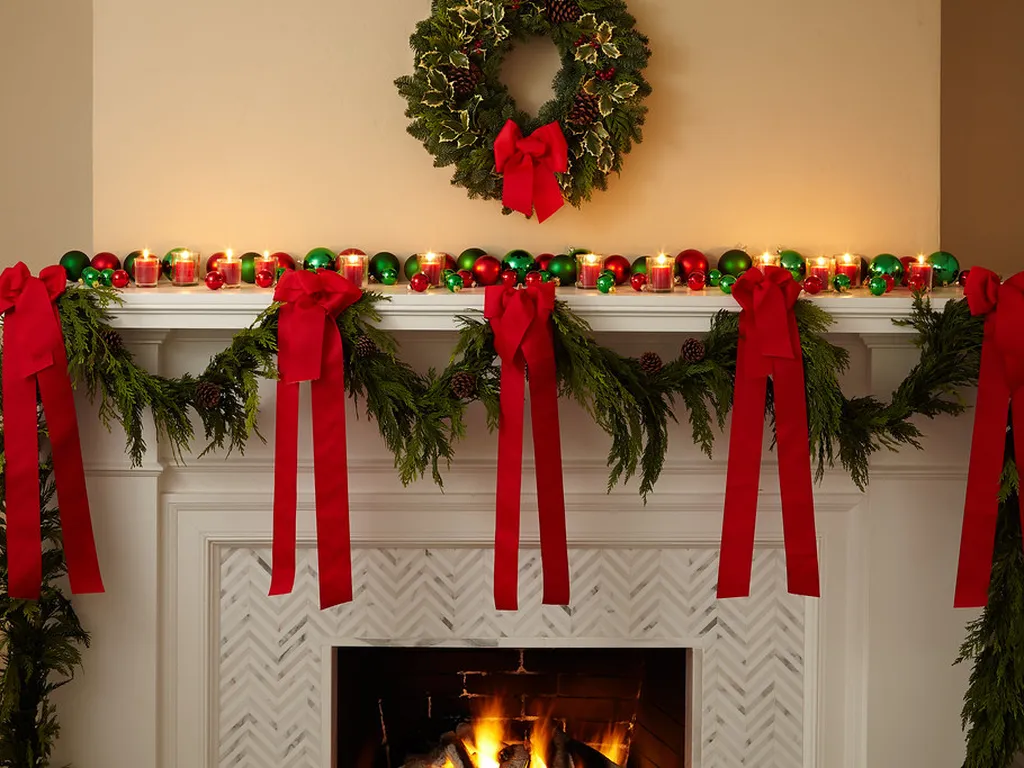
Garlands fail on length more than on looks. A garland that exactly matches the shelf width lies flat and taut with nothing to drape; one bought far too long pools awkwardly. Buy by formula instead: garland length equals shelf width plus the drape you want.
Length by styling method
- Flat along the shelf: Garland length about equal to shelf width, plus roughly 6 inches of ease so it can weave slightly around objects. A 60-inch shelf needs about a 6-foot garland used loosely, with the excess tucked into the weave.
- Draped with end drops: Add about 12 to 24 inches of drop at each end. For a 60-inch shelf with an 18-inch drop each side, buy roughly 60 + 18 + 18 = 96 inches, an 8-foot garland.
- Cascading to the floor: Length equals shelf width plus twice the shelf height. A 60-inch shelf at 54 inches high needs about 60 + 108 = 168 inches, roughly 14 feet, usually two garlands joined at the centre.
Swag depth and stocking spacing
If you swag the garland along the front of the shelf, keep each swag’s drop to about 8 to 12 inches below the shelf edge — deeper swags start to cover the firebox opening and, on a working fireplace, creep toward the heat zone. For stockings, space hooks roughly 6 to 8 inches apart and hang stockings so their tops sit just below the shelf, keeping fabric well clear of the opening. On a working fireplace, treat all garland numbers as shelf-only styling: keep greenery on top of the shelf, never draped over the firebox, and remove dried material before lighting a fire.
8. Respect Shelf Depth and Heat Clearances Underneath the Style
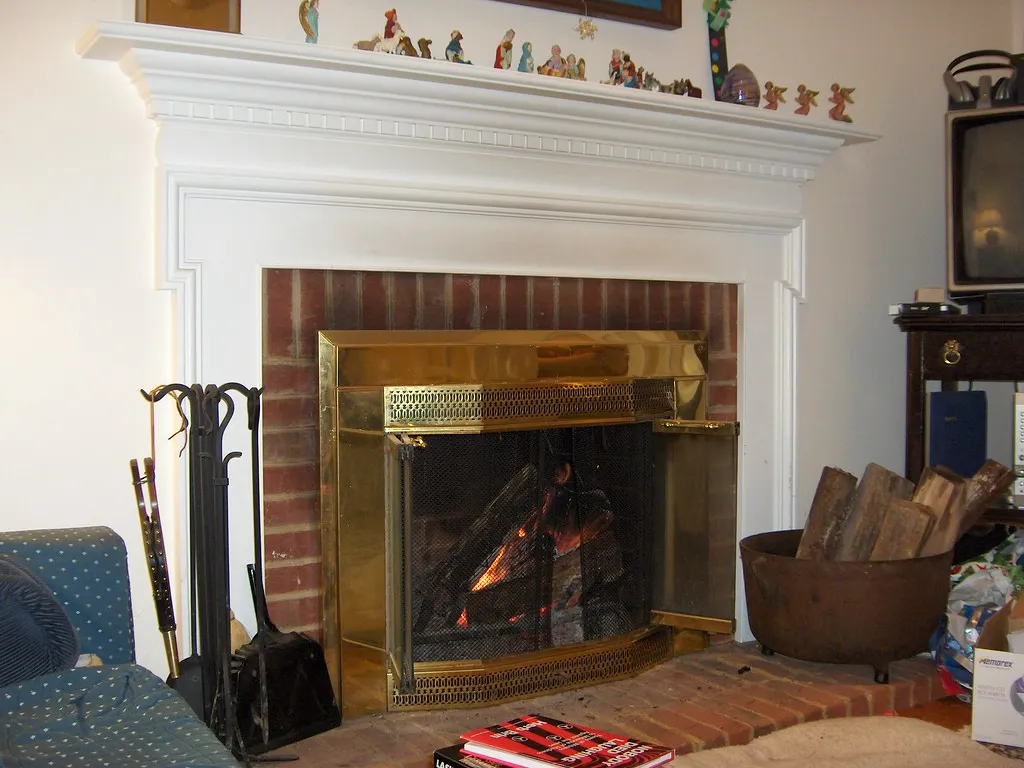
Two sets of numbers protect both your decor and your home: what the shelf depth can physically hold, and how far decor must stay from heat. Check both before the styling, not after.
Depth limits
- 8-inch shelf (shallow): Object bases up to about 5 inches; hang the anchor rather than leaning it; garlands sit along the front half only.
- 10-inch shelf (standard): Bases up to about 7 inches; a shallow lean is fine; room for one front-to-back layer, such as a small frame in front of the anchor.
- 12-inch shelf (deep): Bases up to about 9 inches; two layers work comfortably; lanterns and larger vases become practical.
Heat and safety clearances
Combustible decor — dried garlands, paper, fabric stockings — should stay well clear of the firebox opening; a widely used guideline is to keep flammable decorations at least 3 feet from the opening of a working fireplace when a fire is lit, and many stylists simply remove dried arrangements entirely during a burn. Keep candle flames away from garland and leaning frames, choose flameless candles above fireplaces you actually use, and always follow your fireplace manufacturer’s own clearance instructions where they differ, since those override any styling rule in this article.
9. Clearances and Decor Heights When a TV Hangs Above the Mantel
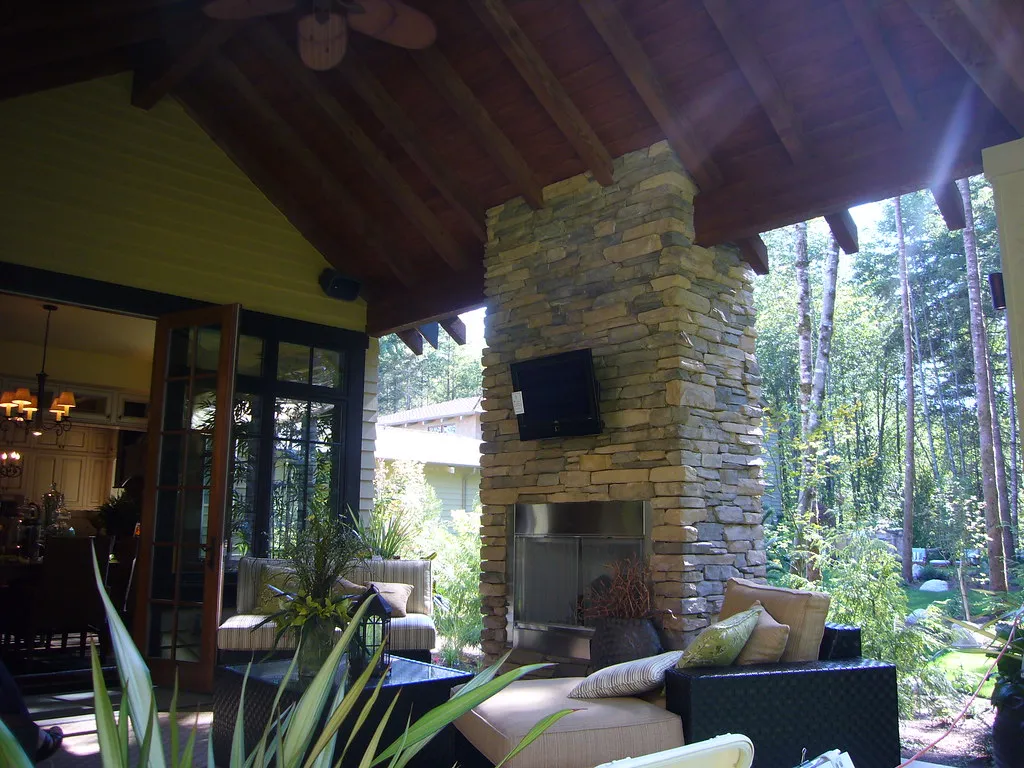
A TV replaces the anchor, and it brings its own numbers. The screen should follow a similar width logic — roughly two-thirds to three-quarters of the shelf width looks balanced — but its height above the shelf and the heat rising from the firebox matter more than its looks.
The TV numbers
- Screen bottom gap: Mount the screen so its bottom edge sits roughly 4 to 6 inches above the shelf when the fireplace is decorative or electric, mirroring the artwork gap. For a working wood or gas fireplace, follow the TV and fireplace manufacturers’ heat clearances first — many require considerably more, and a mantel shelf itself acts as a heat shield only within the limits both manuals state.
- Decor height ceiling: Everything on the shelf must stay below the screen’s bottom edge with room to spare. With a 5-inch gap, that means low-band pieces only — roughly 3 to 4 inches tall — or decor pushed to the far ends beyond the screen’s width, where medium pieces can stand.
- Viewing height check: Add shelf height, gap, and half the screen height: that is your screen centre. On a 54-inch shelf with a 5-inch gap and a 28-inch tall screen, the centre lands near 73 inches — well above seated eye level — which is why deep rooms and reclined seating suit over-mantel TVs best.
Styling the ends only
With a screen in place, style the shelf ends as two low, matched groups and leave the centre bare. Keep remotes, soundbar remotes, and consoles off the shelf entirely if you can; a soundbar, if used, should be narrower than the screen and sit with at least an inch of clearance at each end.
10. Fix the Five Most Common Sizing Mistakes
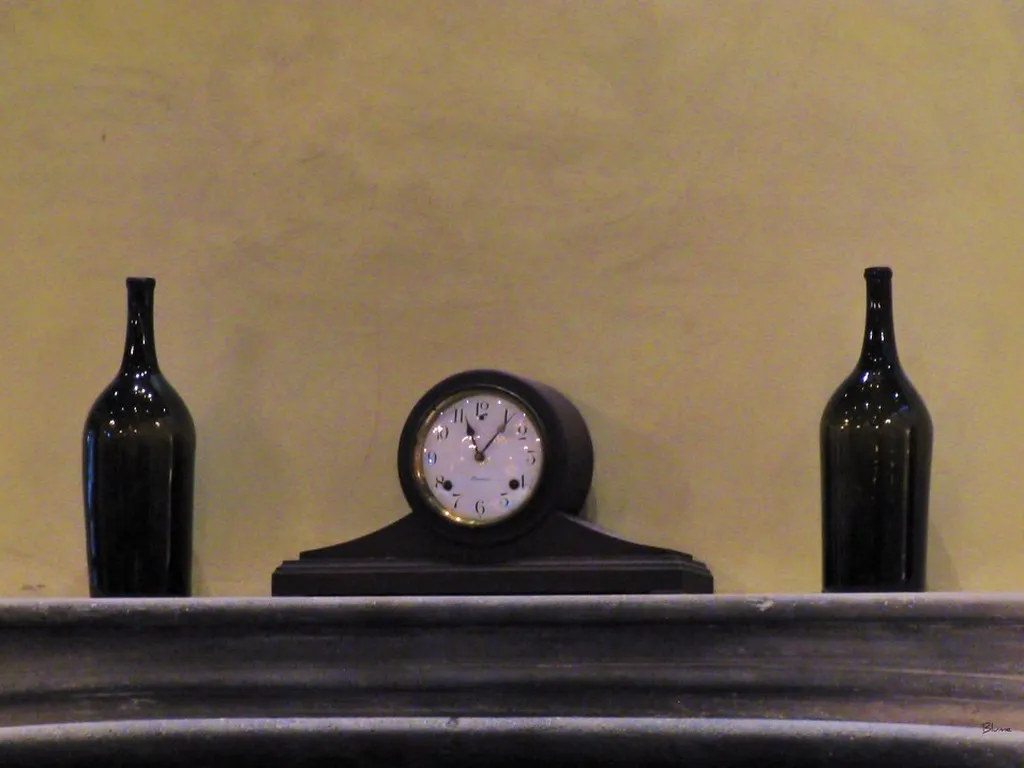
Most mantel problems are one of five measurement errors. Each has a numbered fix, and none of them requires starting over.
The five fixes
- Anchor too small: A 24-inch frame over a 60-inch shelf covers only 40 percent of the width. Fix: move up to the 40 to 45 inch range, or group the small frame with two companions so the combined width reaches two-thirds of the shelf.
- Mirror hung too high: A gap of 10 inches or more disconnects the mirror from the mantel. Fix: rehang at 4 to 6 inches above the shelf, or lean the mirror so the gap disappears.
- Everything one height: Six objects all between 8 and 12 inches create a flat skyline. Fix: introduce one tall-band piece at 18 to 24 inches and one low piece under 6 inches; keep the rest as the medium band.
- Garland too short: A 6-foot garland stretched taut across a 60-inch shelf with drops wanted at both ends is about 2 feet short. Fix: size up using the width-plus-drop formula in section 7, or restyle it flat along the shelf where the length works.
- Shelf overfilled: Groups touching end to end with no breathing gaps. Fix: restore the 4 to 6 inch end margins and at least one 6 to 12 inch gap between groups — usually by removing one whole group.
The tape-measure audit
Finish with a two-minute audit: anchor width against the table in section 2, hang gap against section 3, tallest object against the height bands in section 4, and garland against the formula in section 7. Four checks, four numbers — if all four pass, the mantel is correctly sized, and any remaining dissatisfaction is about style, which is the fun problem to have.
Frequently Asked Questions About Fireplace Mantel Sizing
How wide should a mirror be above a 60-inch mantel?
Aim for about 40 to 45 inches wide — two-thirds to three-quarters of the shelf width. At 36 inches a mirror still works but reads modest; below about 32 inches it starts to look undersized over a standard firebox. A round mirror’s diameter counts as its width for this rule.
How high above the mantel should you hang a mirror or artwork?
Hang it so the bottom edge sits about 4 to 6 inches above the shelf. Less than that can look crowded once shelf decor stands in front of it, and more than about 8 inches disconnects the piece from the mantel so the two read as separate items.
How tall should candlesticks and vases on a mantel be?
On a standard mantel, put your tallest pieces in the 18 to 24 inch band, medium pieces at 10 to 16 inches, and low pieces at 3 to 8 inches. On a small mantel scale the tall band down to about 14 to 18 inches; on a large mantel it can rise to roughly 22 to 30 inches.
What size garland do I need for my mantel?
For a flat lay, buy about the shelf width plus a few inches of ease. For drops at both ends, add the drop length twice — a 60-inch shelf with 18-inch drops needs about 96 inches (8 feet). For a floor cascade, the length is the shelf width plus twice the shelf height.
How much empty space should a styled mantel have?
Leave about a quarter to a third of the shelf length visibly empty, including roughly 4 to 6 inches clear at each end and a 6 to 12 inch breathing gap between object groups. Empty space is part of the sizing system, not a sign the mantel is unfinished.
Can decor be wider than the mantel shelf depth?
No — keep every object’s base at least 2 to 3 inches narrower than the shelf depth. On a 10-inch shelf that means bases up to about 7 to 8 inches. Anything wider risks overhang, wobbling, and pieces being brushed off the front edge.
What size art works above a small mantel?
For a shelf under 48 inches wide, choose an anchor about 30 to 36 inches wide — still roughly two-thirds to three-quarters of the shelf. Resist going smaller to “match” the small fireplace; an undersized anchor is the mistake that makes small mantels look sparse.
How far should a TV be above a mantel shelf?
For decorative or electric fireplaces, a gap of about 4 to 6 inches between shelf and screen bottom mirrors the artwork rule. For working wood or gas fireplaces, heat clearances from both manufacturers take priority and often require more distance, so check both manuals before mounting.
How deep should a garland swag hang?
Keep each swag dropping about 8 to 12 inches below the shelf edge. Deeper swags begin to cover the firebox opening, look heavy on standard mantels, and sit closer to heat on a working fireplace. Shallower swags of around 6 inches suit small mantels.
Should mantel decor be symmetrical in size?
The sizes should balance, not necessarily match. A tall group on one side can be balanced by a wider, lower group on the other if their overall heights and footprints feel equal in visual weight. What matters is that both sides respect the same height bands and end margins, whichever arrangement you choose.
Conclusion
Mantel styling stops being guesswork the moment you treat it as measurement. Five numbers from a tape measure set the anchor width at two-thirds to three-quarters of the shelf, the hang gap at 4 to 6 inches, the shelf objects into tall, medium, and low height bands, the spacing into clear ends and breathing gaps, and the garland to a simple width-plus-drop formula. Scale those numbers down for a small mantel and up for a large one, respect shelf depth and heat clearances, and give a TV the extra clearance it demands. Do the arithmetic once, write it down, and every future restyle — seasonal or otherwise — becomes a quick arrangement job instead of a fresh puzzle.