
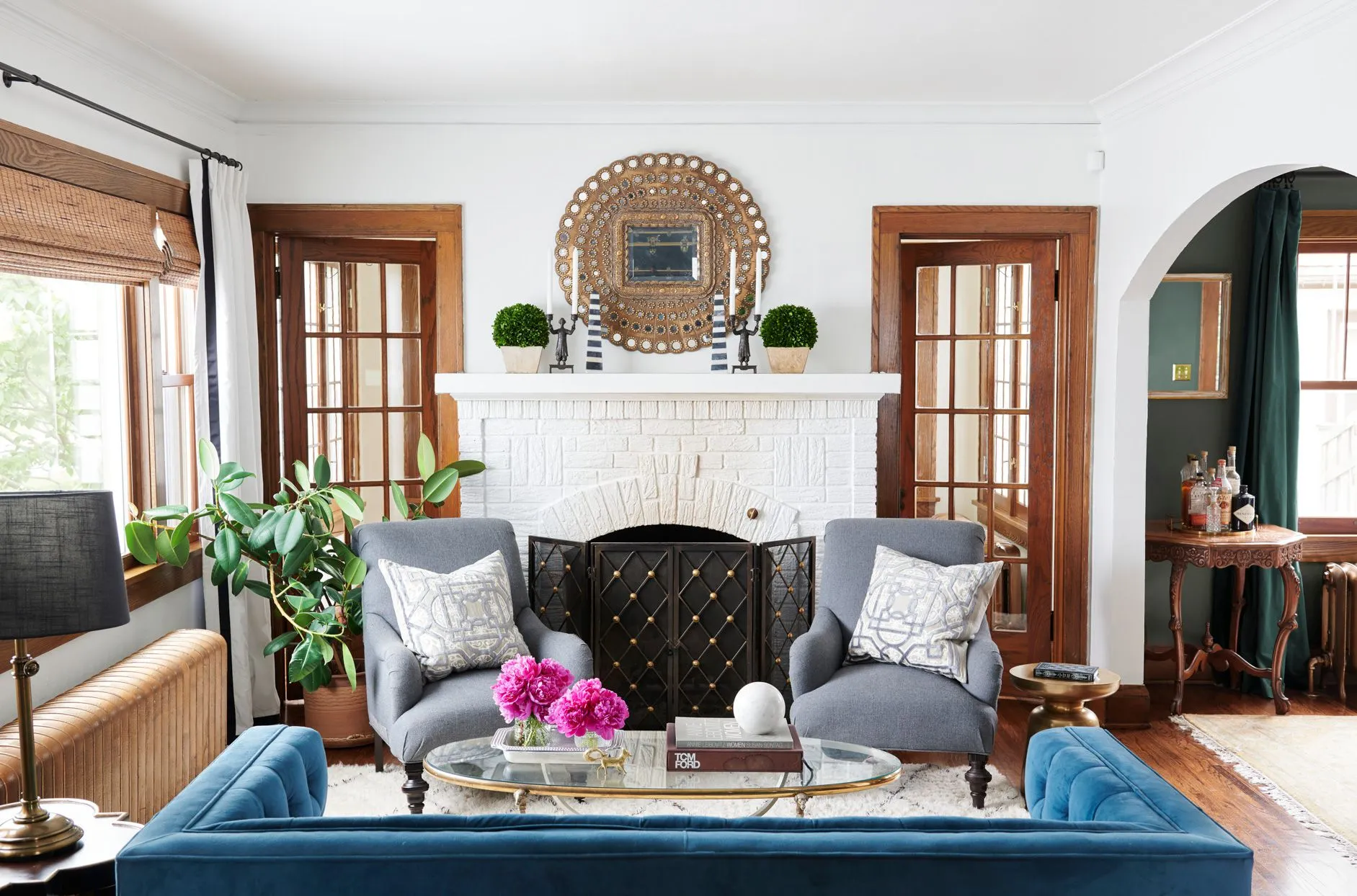
A small living room does not have to feel uncomfortable, crowded, or difficult to decorate. The right seating arrangement can make a compact room feel useful, welcoming, and much larger than it really is. The key is not simply choosing the smallest sofa you can find. You need to think about the room’s shape, walking paths, doorways, windows, storage needs, and the number of people who normally use the space. A good small living room layout should allow people to sit comfortably while still leaving enough open space to move around.
Quick answer: The best seating ideas for small living rooms are a compact sofa or loveseat, one or two light chairs, and flexible pieces like an ottoman or poufs, because they seat four or five people without blocking the walkways. Measure first, keep main paths 30 to 36 inches wide, and add movable seats for guests instead of one more large sofa.
Interior designers often focus on scale and proportion when working with small rooms. Architectural Digest notes that every piece of furniture in a small space should have a clear purpose, while carefully selected textures, reflective surfaces, and furniture proportions can help the room feel more open. Before buying anything, measure the room and mark important features such as doors, windows, radiators, outlets, and television locations. Then decide whether your main goal is watching television, entertaining guests, reading, relaxing, or using the room for several purposes.
The following 10 seating ideas for small living rooms can help you create a practical and attractive space without filling every available inch. Some ideas work especially well in apartments, while others are useful for narrow living rooms, studio apartments, family rooms, and awkward layouts.
Top 10 Best Seating Ideas for Small Living Rooms
1. Choose a Compact Sofa With a Slim Profile

A compact sofa is one of the easiest seating solutions for a small living room. However, compact does not mean uncomfortable or extremely tiny. Look for a sofa with a relatively shallow depth, slim arms, a simple frame, and a seat size that matches the number of people who actually use the room. A two-seat sofa or compact three-seat sofa can often provide more useful seating than several small chairs because it creates one clean visual shape instead of several separate pieces. Tight-back sofas can also be useful because they may take up less depth than very deep, loose-cushion designs.
Before buying a sofa, measure both the room and the route into the room. A sofa that technically fits against a wall may still be difficult to bring through a doorway, hallway, staircase, or elevator. Also check the sofa’s total depth, arm width, back height, and leg design. Furniture with visible legs can leave more of the floor visible, which may help the room appear more open. Architectural Digest recently highlighted how furniture raised slightly above the floor can maintain a clearer sightline and make a compact room feel less visually blocked. Choose upholstery that fits your lifestyle rather than selecting a fabric only because it looks attractive in a photograph. For busy households, easy-care materials may be more practical, while a quiet neutral sofa can give you more freedom with pillows, throws, artwork, and rugs.
Best for: Apartments, narrow living rooms, couples, and small family rooms.
Small living room keyword ideas: compact sofa, small sofa for apartment, small living room couch, slim sofa, space-saving sofa.
2. Use a Small Sectional to Create More Seating

A sectional can seem like the wrong choice for a small living room, but the right compact sectional can actually use space efficiently. Instead of placing a sofa and separate chair in different parts of the room, an L-shaped sectional can combine several seats into one connected piece. This can create a natural conversation area while leaving the rest of the room available for circulation, storage, or another small piece of furniture. The important part is choosing a sectional that is proportionate to the room rather than simply buying the smallest sectional available.
When selecting a sectional, pay close attention to its orientation. Decide whether the chaise should be on the left or right side based on your doors, windows, television, and walking path. Measure the full width and depth, including the chaise, and use painter’s tape on the floor to outline its footprint before ordering. Recent small-space furniture guidance from Architectural Digest points out that modular and appropriately scaled sectionals can be particularly useful because they provide flexible seating without requiring many separate pieces. Avoid extremely deep sectionals if your room is narrow. A low-profile design with relatively slim arms can provide generous seating while keeping the visual weight under control.
Best for: Families, movie nights, open-plan apartments, and people who prefer lounging.
A sectional also works well when the room has an awkward corner that would otherwise be difficult to use. Rather than leaving that corner empty, an L-shaped piece can turn it into a useful seating zone. Keep the coffee table appropriately sized and leave a comfortable passage around the seating area. The goal is not to fill the room with furniture; it is to make one well-planned seating zone perform several jobs.
3. Add One or Two Lightweight Accent Chairs
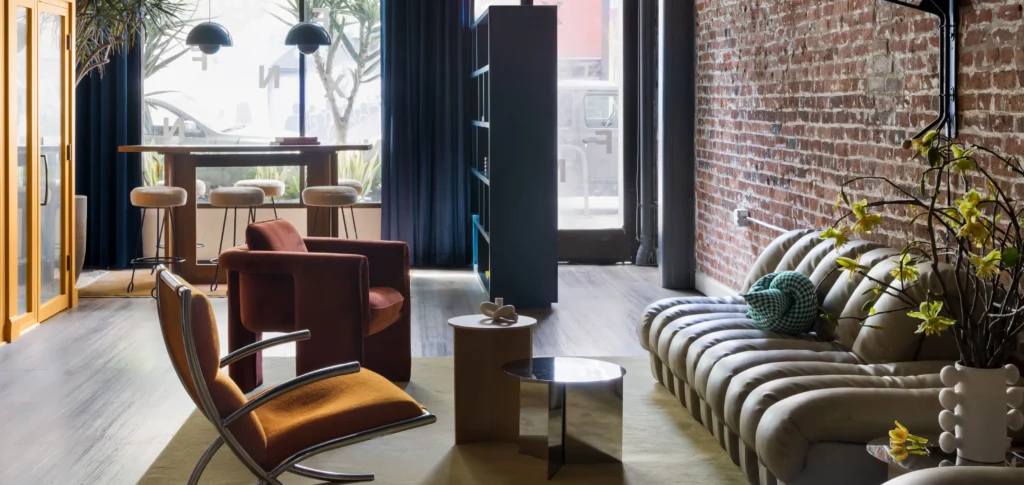
Accent chairs are useful when you want extra seating without adding another large sofa. In a small living room, choose chairs that are visually light and easy to move. Chairs with narrow frames, open arms, exposed legs, or compact proportions can provide a seat without creating the heavy appearance associated with oversized club chairs. Two matching chairs can create symmetry, while two different but complementary chairs can make the room feel more relaxed and collected.
Placement matters just as much as the chair itself. Position the chairs so they help create a conversation area rather than simply lining the walls. If your sofa faces the television, angle one or two chairs slightly toward the sofa so the room can work for conversation as well as viewing. If the room has a window with good natural light, one chair can create a small reading corner. For a narrow room, avoid blocking the main walking route. A chair that is beautiful but constantly has to be moved to open a door is not a successful seating solution.
A useful strategy is to select chairs with a smaller footprint but a comfortable seat. Measure the chair’s overall width and depth, not just the seat. Also consider the swing of nearby doors, drawers, and cabinets. If you regularly need flexible seating, lightweight chairs are especially helpful because you can move them when guests arrive and return them to their normal positions afterward.
Best for: Extra guest seating, reading corners, couples, and flexible living rooms.
Related: How to Decorate a Studio Apartment – A Complete Small-Space Guide
4. Choose a Storage Bench or Ottoman With Hidden Storage

A storage bench can perform several jobs in a small living room. It can provide a place to sit, act as a coffee table, store blankets, books, games, and seasonal items, and serve as a visual anchor at the end of a sofa or against a wall. Because the storage is hidden, the room can stay tidy without needing another cabinet or bookshelf. Ottomans with removable lids offer similar flexibility.
When choosing a storage bench, think about its size and placement. A bench placed under a window can create a small reading nook. A bench placed at the end of a sectional can give children or guests an extra seat. A large ottoman can replace a coffee table and provide a softer surface that is safer in a small room with children. Measure the bench carefully. A storage bench that is too wide can block a walking route, while one that is too small may not hold the items you want to store.
Best for: Storage, family rooms, children’s toys, blankets, and multi-use furniture.
5. Use a Loveseat for Two People

A loveseat is a practical choice when a full-size sofa overwhelms your living room. A loveseat provides comfortable seating for two people without occupying the same width as a three-seat sofa. It can also be paired with an accent chair or a small ottoman to create a complete seating area for three or four people. In a very small room, a loveseat can be the main seating piece, leaving space for side tables, lighting, and storage.
Look for a loveseat with clean lines and a design that leaves some of the floor visible. A low back and slim arms can help the room feel more open. If you often entertain, consider choosing a loveseat that is easy to pair with additional seating rather than a model that dominates the room. A loveseat also makes it easier to create a balanced layout when the television is on a narrow wall or when the room has multiple doors.
Best for: Small apartments, couples, narrow rooms, and studio apartments.
6. Add an Ottoman as Flexible Seating

An ottoman can be one of the most flexible seating ideas for a small living room. It can act as a footrest when you are relaxing, an extra seat when guests arrive, a side table when a tray is placed on top, and a storage solution when it has a removable lid. A lightweight ottoman is easy to move and can be stored in a corner or under a console table when not in use. This makes it ideal for rooms that need to change function throughout the day.
Choose an ottoman with a size that fits your seating arrangement. An ottoman that is too large can block movement and make the room feel cluttered. A pair of small ottomans may be more useful than one very large ottoman because they can be moved independently. If you want the ottoman to double as a table, choose a firm top rather than a soft, deeply cushioned design. A tray can help stabilize items, but a flat top will be more stable overall.
Best for: Flexible seating, guest seating, footrests, and multi-use living rooms.
7. Create Built-In Seating Along a Wall or Window

Built-in seating can turn an unused wall, corner, or window area into a useful part of the living room. A bench built into a wall can provide seating without taking up as much floor space as a separate sofa or chair. It can also include storage underneath, which helps keep blankets, books, or games close at hand. This approach is particularly useful in homes where a wall or alcove would otherwise remain empty.
Before choosing built-in seating, measure the area carefully and think about how it will be used. A window seat can be comfortable for reading, but it may be too narrow for long periods of sitting unless the cushion is thick and supportive. A bench built along a dining wall can double as living room seating during gatherings. If you are renting, a freestanding bench that fits neatly against the wall can provide a similar effect without permanent changes.
Best for: Window seats, alcoves, long narrow rooms, and homes with limited storage.
8. Use Stools and Poufs for Extra Seating

Stools and poufs are excellent when you need occasional seating but do not want permanent chairs taking up valuable floor space. They are usually lightweight, easy to move, and can be stored under a table, in a corner, or in a nearby closet. Poufs can also function as footrests when you are relaxing and as small side tables when a tray is placed on top. For apartments and small living rooms, this kind of movable seating can make the room feel flexible rather than fixed.
When choosing stools and poufs, consider the room’s colour palette and materials. A pouf in a fabric that matches the rug or cushions can tie the room together without introducing a large new visual element. If you have children, look for durable, easy-to-clean materials. Poufs with firm filling are generally more comfortable as seating than very soft models that sink when you sit on them. Stools with a stable base are also a good option if you want seating that can be tucked neatly away.
Best for: Guests, flexible seating, apartments, and small family rooms.
9. Use Window Seating to Make the Most of Natural Light

Seating near a window turns the room’s best natural light into a useful reading or relaxing spot. Instead of automatically placing all seating toward the television, consider creating a comfortable seating area around natural light. A small chair, compact loveseat, or built-in bench near the window can become a reading area or quiet place to relax.
A window seat also helps the room feel more open because it uses a space that might otherwise be wasted. If the window is large, a low bench can sit underneath it without blocking the light. Add cushions and a small side table to make the area functional. If you are working with a rental, a freestanding bench or a pair of chairs placed near the window can achieve a similar effect. The goal is to take advantage of daylight and the view rather than pushing all seating into the darkest part of the room.
Best for: Reading corners, apartments with large windows, and rooms with limited floor space.
10. Float the Sofa Away From the Wall

Floating the sofa a few inches off the wall can create a clearer seating zone and better flow in some small living rooms. That is not always the best solution. In some layouts, pulling the sofa slightly away from the wall can create a more intentional seating zone and improve the flow of the room. The exact arrangement depends on the room’s dimensions, doors, windows, and furniture.
A floated sofa can also help define the living area in an open-plan apartment. When a room is connected to a kitchen or dining area, a sofa placed a short distance from the wall can mark the boundary between zones. Use a rug to anchor the seating area and keep the walking route behind the sofa clear. If your room is very narrow, this approach may not work because there may not be enough space behind the sofa. In that case, placing the sofa against the wall and using chairs to create the conversation area may be more practical.
Best for: Open-plan living rooms, apartments, and rooms that need a clear seating zone.
How Do You Choose the Right Seating for a Small Living Room?
Start by measuring the room before looking at furniture. Measure the length and width, note the positions of doors, windows, outlets, and the television, and sketch a simple layout. Leave comfortable walking routes around seating: main paths should be around 30 to 36 inches wide, and smaller routes can be 24 to 30 inches wide. These measurements are only approximate, and the actual space needed may vary depending on the room’s layout and the furniture you choose.
Once you know the measurements, decide how many seats you need regularly. A small living room often works well with seating for three to five people. More seats than that can make the room feel crowded, while fewer seats may not be enough for your household or guests. Consider whether you need flexible seating for guests or whether one main seating arrangement is enough. Think about storage needs, too. If you need a place for blankets, games, or children’s toys, furniture with built-in storage can be particularly useful.
Finally, test the furniture if possible. Sit on the sofa and chairs, check the seat depth and height, and imagine how the furniture will look in your room. A piece that looks good in a showroom may feel too large or too small in your living room. If you are ordering online, check the dimensions carefully and look for return policies that allow you to make changes if the furniture does not fit as expected.
What Is the Best Seating Arrangement for a Small Living Room?
For a very small room, start with one primary seating piece. This might be a compact sofa or a loveseat. Place it against the longest wall or facing the main focal point, such as the television or window. Add one or two chairs at an angle to create a conversation area. Keep the coffee table or ottoman appropriately sized so that there is still room to walk around it.
For a narrow room, use furniture that follows the room’s length. A sofa placed along the long wall and a chair or bench on the opposite side can create a balanced layout. Avoid placing large furniture across the width of the room because it can make the space feel even narrower. In an open-plan room, use a rug or a floated sofa to define the living area.
For a room with multiple uses, choose furniture that can move. Lightweight chairs, ottomans, and poufs can be rearranged when the room’s function changes. A storage bench can provide seating during a gathering and storage when guests leave. The best arrangement is one that leaves the room feeling open, allows easy movement, and provides enough seating for the people who use it most.
How Can I Make a Small Living Room Look Bigger With Seating?
One effective approach is to maintain visible floor space. Furniture with exposed legs, open bases, or slim profiles can make the room feel less crowded. Choose a sofa and chairs that are appropriately sized for the room rather than selecting the largest pieces that will fit. A large rug in a light colour can also help define the seating area while making the room feel more spacious.
Colour and material choices matter as well. Light-coloured upholstery, glass or acrylic tables, and mirrors can reflect light and create a sense of openness. Avoid heavy, dark furniture that visually fills the room. Instead, use a mix of textures and materials to add interest without adding visual weight. Keep the seating arrangement simple and avoid placing too many pieces in one area.
Finally, pay attention to lighting. A well-lit room often feels larger than a dark one. Use a combination of natural light, overhead lighting, and lamps to create a bright and inviting atmosphere. If your room has limited natural light, consider using lighter colours on the walls and furniture to help reflect the available light.
What Seating Works Best in a Narrow Living Room?
A narrow living room benefits from furniture that respects the room’s width. A compact sofa or loveseat placed along the long wall is often the best starting point. Avoid furniture that is too deep, as it can make the room feel even narrower. Chairs with slim profiles and ottomans that can be moved easily are also useful.
Keep the walking path clear and avoid blocking it with furniture. A long, narrow rug can help define the seating area without making the room feel wider than it is. If the room has a window at one end, consider placing a chair or bench near it to take advantage of the natural light. A narrow room can still feel comfortable and functional if the furniture is chosen carefully and the layout is kept simple.
What Seating Should You Avoid in a Small Living Room?
Avoid furniture that is oversized for the room. Large sectionals with deep seats, bulky recliners, and oversized armchairs can overwhelm a small living room and make it feel cramped. Avoid furniture with heavy, solid bases that hide the floor, as this can make the room feel smaller. Also avoid placing too many pieces of furniture in the room. A small living room does not need a sofa, two chairs, a loveseat, and a bench all at once.
Avoid furniture that blocks the main walking routes or makes it difficult to open doors and drawers. Also avoid choosing furniture based solely on appearance without considering its size and function. A beautiful chair that does not fit the room or is uncomfortable to sit on is not a good choice. Finally, avoid using too many different styles or colours in a small room, as this can make the space feel chaotic rather than cohesive.
Small Living Room Seating Ideas at a Glance
| Seating Idea | Best For | Key Benefit |
| Compact Sofa | Apartments, small rooms | Slim profile saves floor space |
| Small Sectional | Families, movie nights | More seating in one piece |
| Accent Chairs | Extra guest seating | Lightweight and easy to move |
| Storage Bench | Storage needs | Hidden storage and seating |
| Loveseat | Couples, narrow rooms | Seats two without a large footprint |
| Ottoman | Flexible seating | Footrest, seat, or table |
| Built-In Seating | Alcoves, window seats | Uses space efficiently |
| Stools and Poufs | Occasional seating | Easy to store and move |
| Window Seating | Reading corners | Uses natural light |
| Floated Sofa | Open-plan rooms | Defines the seating zone |
Small Living Room Seating Mistakes to Avoid
One common mistake is buying furniture before measuring. A sofa that looks compact in a showroom may be too large for your living room. Another mistake is choosing furniture that is too deep or too wide for the room. This can make the room feel cramped and leave little space for movement. A third mistake is placing all furniture against the walls. This can make the room feel like a corridor rather than a comfortable living space. Instead, try to create a conversation area with furniture arranged around a central point.
Another mistake is using too many different styles or colours. A small room benefits from a cohesive colour palette and a limited number of furniture styles. Too much variety can make the room feel chaotic. Finally, avoid blocking natural light with large furniture. A sofa placed in front of a window can make the room feel darker and smaller.
How to Make Small Living Room Seating Feel Comfortable
Comfortable small-room seating starts with seat depth, cushion firmness, back support and arm height, not looks alone. Check the sofa’s seat depth, cushion firmness, back support, and arm height. If several people of different heights will use the room, avoid choosing a sofa that is comfortable only for one person.
Add cushions and throws to make the seating area feel inviting. Choose cushions that are comfortable and easy to move. A throw blanket can add warmth and texture to the room. Lighting also plays a role in comfort. Use lamps and overhead lighting to create a warm and inviting atmosphere. Finally, consider the room’s temperature and ventilation. A comfortable room is one that is not too hot or too cold and has good air circulation.
Frequently Asked Questions
What seating is best for a very small living room?
A compact sofa with appropriate depth, slim arms, and a proportionate overall width is often a practical choice. It can provide seating for two or three people without taking up the same space as a large sofa or sectional. Adding one lightweight chair or an ottoman can increase seating capacity without making the room feel crowded. For very small rooms, a loveseat and a chair may work better than a large sofa alone.
Can a sectional work in a small living room?
Yes. A properly sized sectional can provide several seats while using the corner of the room efficiently. The key is to measure the sectional carefully and ensure it does not block walking routes or make the room feel too full. A compact L-shaped sectional with a low profile is often the best option for a small living room. Modular sectionals can also be rearranged to suit different layouts.
Are accent chairs a good idea in a small living room?
Not necessarily. In general, one or two accent chairs can work well, especially if they are lightweight and easy to move. However, too many chairs can make the room feel crowded. Choose chairs with slim profiles and place them so they support conversation rather than simply filling empty space. If the room is very narrow, one chair may be enough.
How many seats do I need in a small living room?
Usually, one or two compact chairs are enough for a small living room, plus a sofa or loveseat. A small living room typically works well with seating for three to five people. If you frequently have guests, flexible seating such as ottomans, poufs, and stools can provide extra seats without permanently taking up floor space. Think about how many people normally use the room rather than how many people you might occasionally host.
How do I arrange furniture in a small living room?
Start with the largest seating piece, usually the sofa or loveseat. Place it against the longest wall or facing the main focal point. Add one or two chairs at an angle to create a conversation area. Keep the walking routes clear and ensure there is enough space to move around the furniture. Use a rug to define the seating zone and anchor the arrangement.
What is the best sofa size for a small living room?
Furniture with appropriate proportions is usually the best choice. For a small living room, a sofa between 72 and 84 inches wide is often suitable, but the exact size depends on the room’s dimensions. A two-seat sofa is typically around 60 to 72 inches wide, while a compact three-seat sofa is often 72 to 84 inches wide. Measure your room and choose a sofa that leaves comfortable walking space around it.
Should I use a coffee table in a small living room?
Yes, if the sofa is correctly proportioned and the room has enough space. A coffee table can provide a useful surface for drinks, books, and decorative items. However, if the room is very small, an ottoman or a small side table may be a better choice. Choose a table that is proportionate to the seating area and leaves enough space to walk around it. A glass or light-coloured table can help the room feel more open.
What is the best way to add seating without making the room feel crowded?
A shallow sofa or loveseat is often a good starting point. It provides seating without taking up too much floor space. Lightweight chairs, ottomans, and poufs can add extra seating when needed without permanently filling the room. Built-in seating along a wall or window can also provide seating without adding visual weight. Avoid oversized furniture and keep the colour palette light and cohesive.
Can I use a sectional and chairs in a small living room?
Use lightweight, movable seating if you need flexibility. A compact sectional with one chair can work well in a small living room if the pieces are appropriately sized. However, a large sectional plus several chairs can quickly make the room feel crowded. Choose either a sectional with one chair or a sofa with two chairs, rather than trying to fit all seating options into one small room.
What should I do if my living room is awkwardly shaped?
Consider a small chair, corner bench, or a compact loveseat that fits the shape of the room. An awkward corner can be used for a reading chair or a built-in bench. A narrow wall can hold a loveseat or a bench, while a wide wall can accommodate a sofa. Use furniture that follows the room’s shape rather than fighting against it. A rug can also help define the seating area and make the layout feel more intentional.
Final Thoughts
The best seating ideas for small living rooms are not about squeezing as much furniture as possible into a limited area. Instead, they focus on choosing pieces that fit the room’s dimensions, support the way you live, and leave enough open space for comfortable movement. A compact sofa, a loveseat, or a small sectional can provide the main seating, while chairs, ottomans, poufs, and built-in seating can add flexibility.
Measure your room carefully, think about how many seats you need, and select furniture that serves more than one purpose when possible. With thoughtful planning, even a very small living room can feel comfortable, welcoming, and well-organized. The key is to choose seating that works for your space rather than trying to copy a layout designed for a much larger room.
Seating Ideas for Small Living Rooms: Costs, Sizes, and a Step-by-Step Plan
The seating ideas for small living rooms above cover the main options. This section adds the numbers and the order to follow. Use it to shortlist two or three pieces, check the sizes against your room, and buy in the right sequence so the main seat lands first.
What seating costs in a small living room
Prices below are typical ranges for new, ready-made pieces. Budget lines run lower; solid wood, performance fabric, and custom sizes run higher.
| Piece | Typical price range | Seats | Best when |
|---|---|---|---|
| Compact two-seat sofa | $400 – $1,200 | 2 | Main seat in a room under 150 square feet |
| Compact three-seat sofa | $600 – $1,800 | 3 | Main seat with room for guests |
| Small L-shaped sectional | $900 – $2,500 | 4 – 5 | Corner layout, families, movie nights |
| Loveseat | $350 – $1,000 | 2 | Narrow room, couples, studio flats |
| Accent chair | $150 – $600 each | 1 | Extra seat, reading corner |
| Storage ottoman | $80 – $350 | 1 | Footrest, extra seat, hidden storage |
| Storage bench | $150 – $500 | 1 – 2 | Window wall, hallway end, toy storage |
| Pouf or stool | $40 – $180 each | 1 | Occasional guest seat, easy to store |
| Built-in bench | $300 – $1,500 fitted | 2 – 3 | Alcove or window wall, owners only |
Seat sizes that fit a small living room
Use these sizes as a first filter. Measure your room first, then check each piece against the list before you order.
- Compact two-seat sofa: 60 – 72 inches wide, 34 – 38 inches deep, seat height 17 – 19 inches.
- Compact three-seat sofa: 72 – 84 inches wide, 36 – 40 inches deep.
- Small sectional: total width 84 – 108 inches, chaise depth 60 – 66 inches.
- Loveseat: 48 – 60 inches wide, 34 – 38 inches deep.
- Accent chair: 26 – 32 inches wide, 30 – 36 inches deep.
- Ottoman: 16 – 24 inches square, or 36 – 48 inches long for a bench style.
- Walkways: main paths 30 – 36 inches, side gaps 24 – 30 inches, sofa to coffee table 14 – 18 inches.
Step-by-step plan
- Measure the room, doors, and the delivery route. Mark the main walking path with painter’s tape.
- Pick the main seat first: a compact sofa, loveseat, or small sectional that leaves 30 – 36 inch walkways.
- Add one flexible piece: an ottoman, pouf, or light chair that moves when guests arrive.
- Place a rug 6 – 12 inches wider than the seating group on each side, with front legs on the rug.
- Check the TV height: the centre of the screen should sit near seated eye level, about 42 inches from the floor.
- Live with the layout for a week before adding a second chair, a bench, or a coffee table.
Mistakes that waste money
- Buying the sofa before measuring the door, hallway, and lift. Returns on large sofas are slow and costly.
- Choosing a deep 42 inch sectional for a room under 11 feet wide. It leaves no walkway.
- Pairing a large sectional with two armchairs and a bench. The room ends up with no open floor.
- Picking a dark, heavy coffee table that blocks the sightline across a small room.
- Skipping the rug. Without one, the seating group floats and the room looks unfinished.
More Questions About Seating Ideas for Small Living Rooms
What size sofa fits a 10 x 12 foot living room?
A 72 – 78 inch compact sofa or a 60 inch loveseat fits a 10 x 12 foot room. Keep 30 – 36 inches clear for the main walkway and leave at least 14 inches between the sofa and the coffee table. A sectional over 96 inches wide will crowd this size of room.
Is a sectional or a sofa and chairs better for a small room?
A sectional suits a corner layout and seats four or five people in one piece. A sofa with one or two light chairs suits a narrow room and is easier to move. Choose the sectional when the corner is free and the room is square; choose the sofa and chairs when the room is long or has several doors.
How much should I spend on small living room seating?
Plan $800 – $2,000 for a main sofa or sectional plus one flexible piece. A loveseat with an ottoman often costs $500 – $1,300 in total. Spend the most on the seat you use every day and less on poufs, stools, and accent chairs.
What seat depth is comfortable in a small living room?
A seat depth of 20 – 22 inches suits most adults and keeps the sofa shallow enough for a small room. Depths over 24 inches feel lounge-like but push the sofa too far into the room. Test the depth in person when you can.
Can I put a sofa in front of a window?
Yes, if the sofa back sits below the window sill and leaves the glass partly visible. A low-back loveseat or a bench works best. Avoid tall backs that block light and make the room look smaller.
How do I seat five people in a small living room?
Use a compact three-seat sofa for three people, one accent chair, and one ottoman or pouf for the fifth seat. Keep the extra pieces light so they can move to a corner when guests leave. Avoid adding a second sofa.
How do I keep small living room seating from looking cluttered?
Use two or three pieces in matching tones, leave 30 inches of open floor on at least one side, and store poufs and stools under a console or in a corner. Rotate the cushions every month to keep the wear even.