
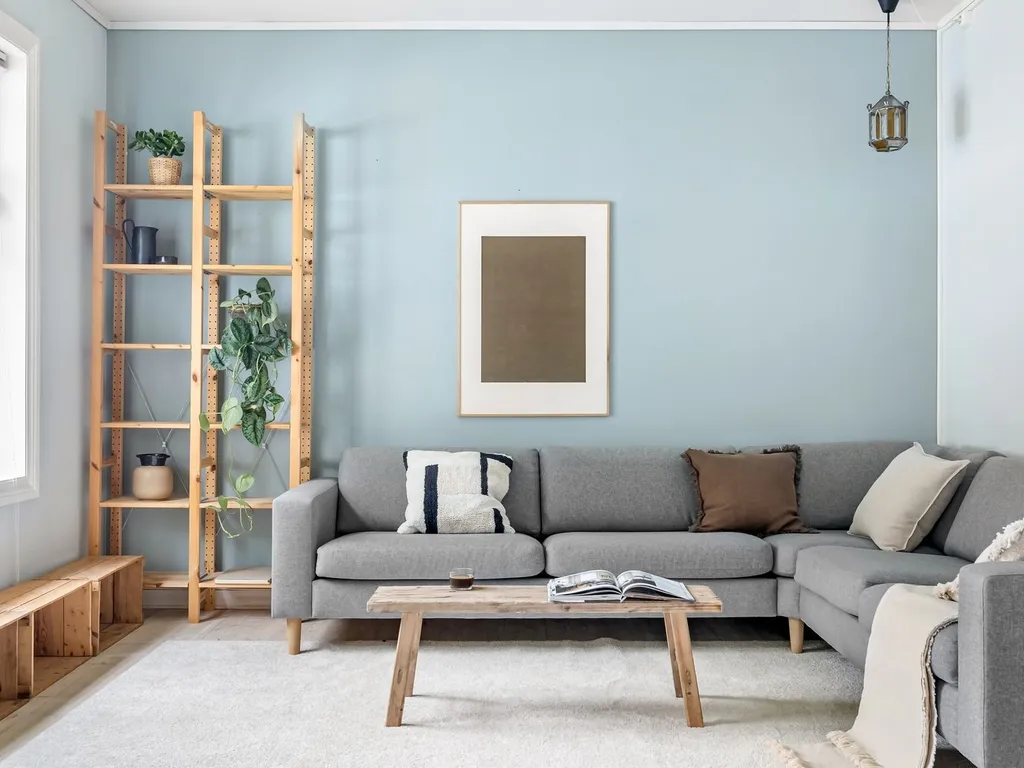
Scandinavian style was shaped by a climate before it was shaped by taste. In Denmark, Sweden and Norway, winter daylight is a rationed resource, so homes evolved to catch every lumen of it: pale walls, pale wood, bare windows, uncluttered rooms — and then, against that brightness, a deliberate counterweight of wool, candlelight and warmth that the Danes call hygge. The result is a style that looks minimal from the doorway and feels anything but minimal once you sit down in it.
Quick answer: Scandinavian interior style ideas work best when you keep about 80 percent of the room pale, use one light wood, and layer wool, linen and candles for warmth. Add black lines sparingly, keep windows bare, and use 3 to 5 warm lamps. A paint and textile refresh costs $300 to $800.
That double nature is why the style travels so well. In our roundup of the types of interior design styles, Scandinavian sits among the most imitated looks anywhere, yet it is less a look than a system: light first, honest materials second, comfort always. Ten ideas follow, in the order the system itself is built — palette, wood, furniture, light, and the cosy layer that finishes it.
In this guide: Scandinavian Style at a Glance · Start With a Pale, Light-First Palette · Honest Light Wood, Used Generously · Clean-Lined Furniture That Earns Its Place · Chase Daylight, Then Layer the Lamplight · Hygge: The Cosy Layer Is Not Optional · Texture in Layers: Wool, Linen and Sheepskin · Uncluttered, But Never Empty · Bring Nature Indoors, One Green Thing at a Time · Quiet Contrast: Black Lines and Muted Colour · The Scandinavian Bedroom: Sleep in the Lightest Room · Frequently Asked Questions About Scandinavian Interior Style · Conclusion
Scandinavian Style at a Glance
| Element | The Scandinavian way | Why it works |
|---|---|---|
| Palette | White, warm grey, soft beige, muted accents | Reflects scarce daylight deeper into the room |
| Wood | Pale oak, ash, birch and pine, grain visible | Warmth without visual weight |
| Furniture | Clean lines, tapered legs, built to be used | Function keeps rooms open and uncluttered |
| Light | Bare or sheer windows, several warm lamps | Daylight by day, pools of glow by night |
| Texture | Wool, linen, sheepskin, woven cotton | Softness stops the pale palette feeling cold |
| Decor | Few pieces, each chosen, nothing filler | Calm surfaces, personal rather than styled |
1. Start With a Pale, Light-First Palette
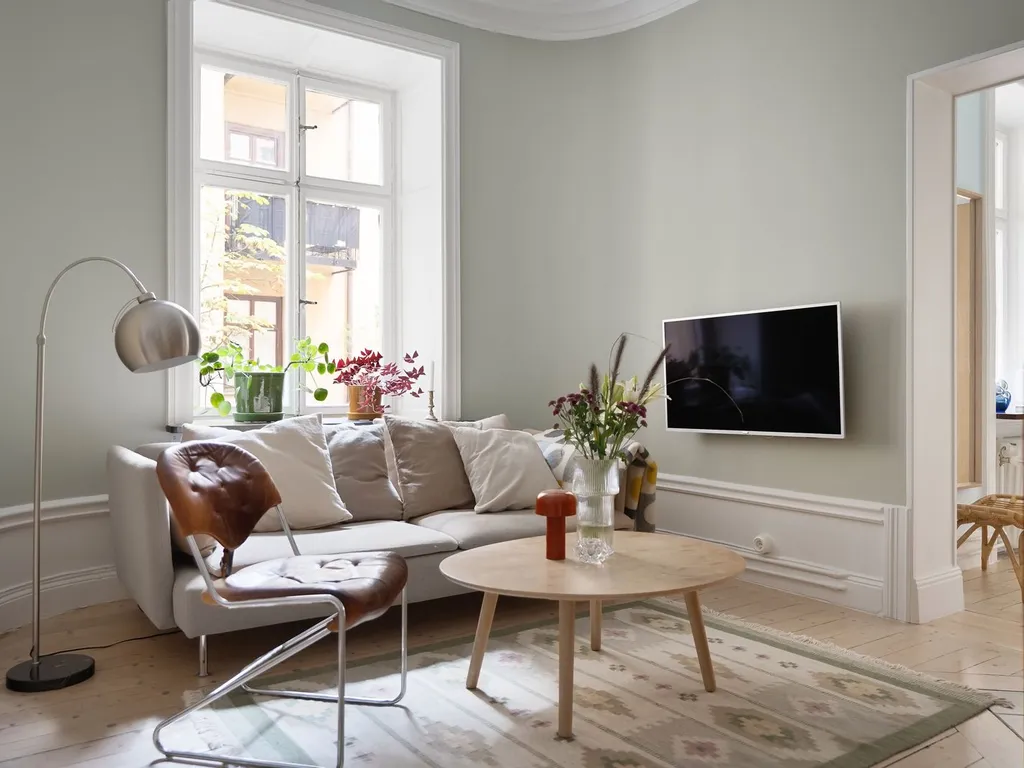
Every Scandinavian room begins with the same calculation: how much light can the surfaces return to the room? Walls go white or the softest warm grey, floors stay pale, and the largest furniture pieces — sofa, rug, curtains — sit in the same light family, so daylight bounces instead of dying in dark corners. It is not a fear of colour; it is respect for a resource. In northern homes the palette is quite literally a lighting strategy wearing paint.
Work it as a base with accents, not a ban on colour. Roughly eighty percent of the room stays pale; the rest is where muted colour lives — dusty blue, sage, blush, clay — on cushions, a throw, one chair or a piece of art. Keep every tone slightly greyed and soft. A Scandinavian palette never shouts; it hums, and the room feels calmer for it.
2. Honest Light Wood, Used Generously
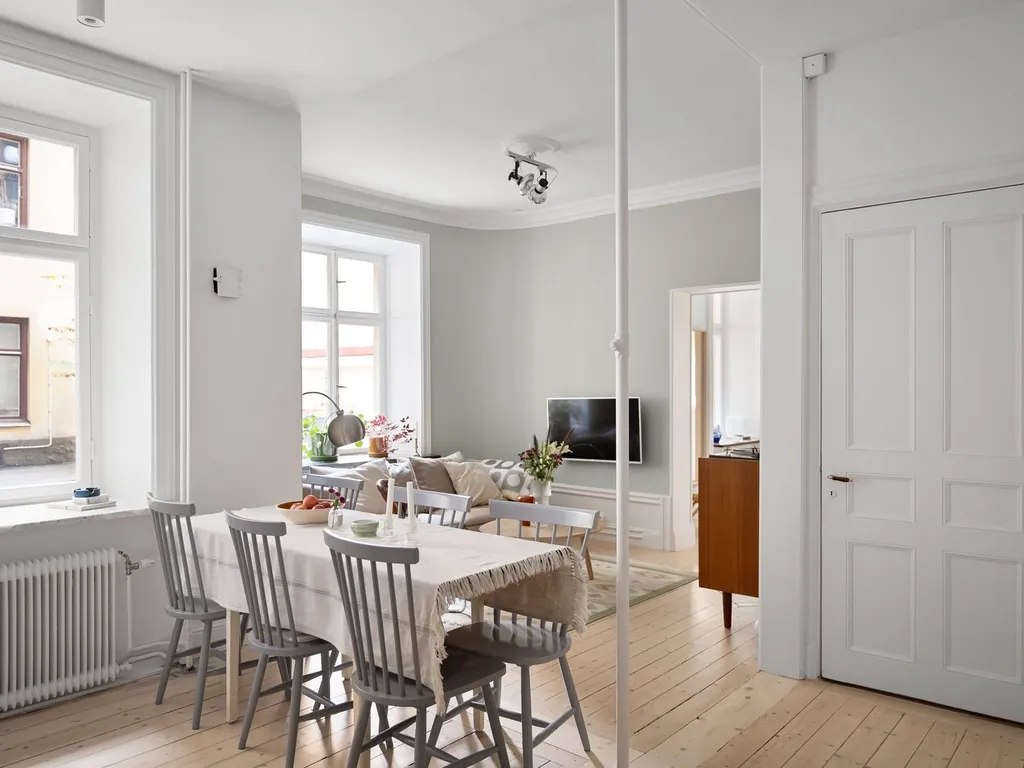
If the palette is the style’s light strategy, wood is its warmth strategy. Scandinavian interiors run on pale timber — oak, ash, birch, pine — left in natural, matte finishes so the grain stays visible and the colour stays honeyed rather than orange. Wood appears where dark furniture would swallow light: floors, table tops, chair frames, open shelving, the legs of everything. It warms a white room the way sunlight does, without adding a single dark surface.
The discipline is consistency. Choose one main wood tone and let it lead, with one supporting tone at most; a room of five competing wood colours loses the calm the style is built on. The same let-the-grain-show honesty drives our modern organic style ideas — Scandinavian design simply applies it brighter and lighter, favouring pale species and slimmer profiles, so the wood reads as daylight made solid.
3. Clean-Lined Furniture That Earns Its Place
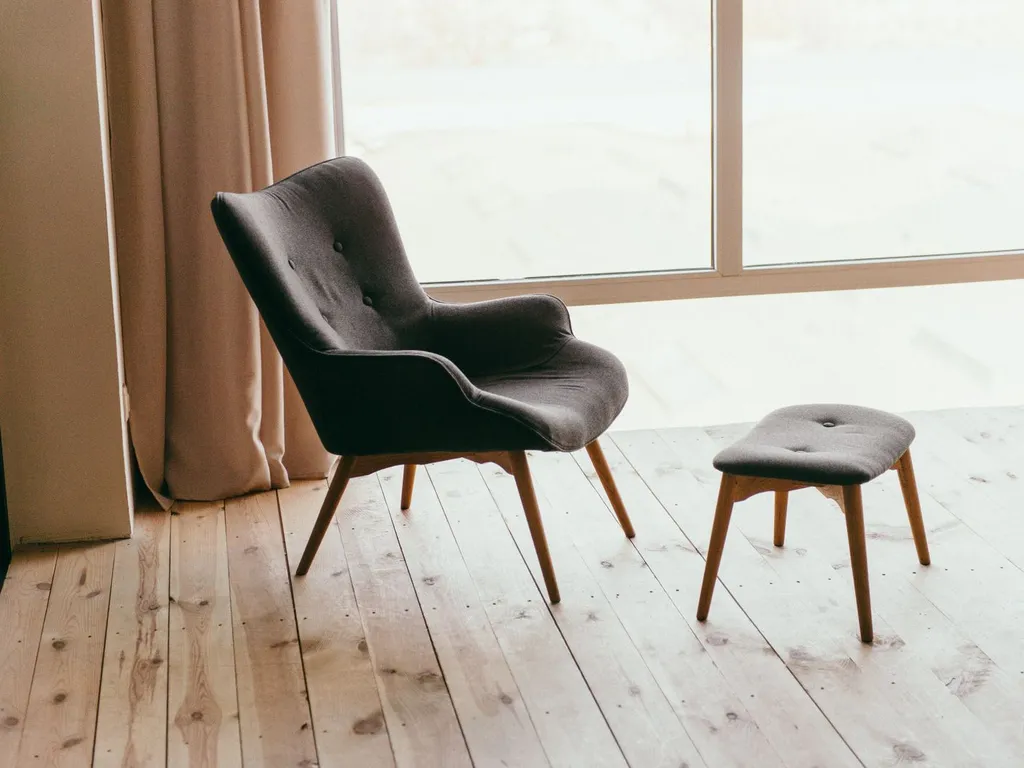
Scandinavian furniture is famous because it was designed for real apartments, not showrooms: a sofa with a slim frame and tapered legs that let light and air pass underneath, chairs sculpted from bent wood, tables that extend, nest or fold because rooms were small. Ornament is nearly absent — the beauty sits in proportion, joinery and the comfort of the seat itself. If a piece does not work hard, it does not stay.
HomeG’s guide to contemporary Scandinavian design describes how the modern version keeps those functional bones while softening the forms — rounder silhouettes, bouclé and richer texture layered over the same clean frames. Shop by that logic: fewer pieces, each well made, each with a job. A room furnished this way can be rearranged in an afternoon and cleaned in minutes.
4. Chase Daylight, Then Layer the Lamplight

Window treatments tell you everything about this style: heavy drapes are almost unknown. Windows are left bare or dressed in sheer linen that filters glare while letting the day pour in, and furniture is placed to keep the light path clear — nothing tall against the window wall, a mirror opposite to push daylight deeper. In a style born under a winter sun that barely clears the horizon, blocking a window would be a small act of vandalism.
When the day ends — early, for half the year — lamplight takes over in layers rather than from a single ceiling source: a soft pendant overhead, a floor lamp at reading height, a small lamp glowing low in a corner, candles where the eye lands. The layering logic is the same one set out in our small room lighting ideas: several warm sources at different heights make a room feel bigger and kinder than one bright centre. Keep every bulb warm, around 2700K, and the pale room stays golden after dark instead of turning blue.
5. Hygge: The Cosy Layer Is Not Optional

Strip the textiles and candles out of a Scandinavian room and you do not get minimalism — you get a waiting room. Hygge, the Danish practice of cosiness and contentment, is the style’s second half: the wool throw folded over the chair arm, the sheepskin on the seat, cushions you are meant to sink into, candlelight on ordinary weeknights. It is not decoration added to the design; it is the reason the design exists — the warmth that makes long winters genuinely good.
CasaSnug’s ultimate guide to Scandinavian interior design puts comfort alongside function and light as a core principle of the style — everything considered, yet comfortable enough for everyday life. Build hygge where life actually happens: one properly cosy corner per room, with a chair, a throw, a soft light and a surface for a hot drink. The rest of the room can stay spare; the corner is where the style proves itself nightly.
6. Texture in Layers: Wool, Linen and Sheepskin
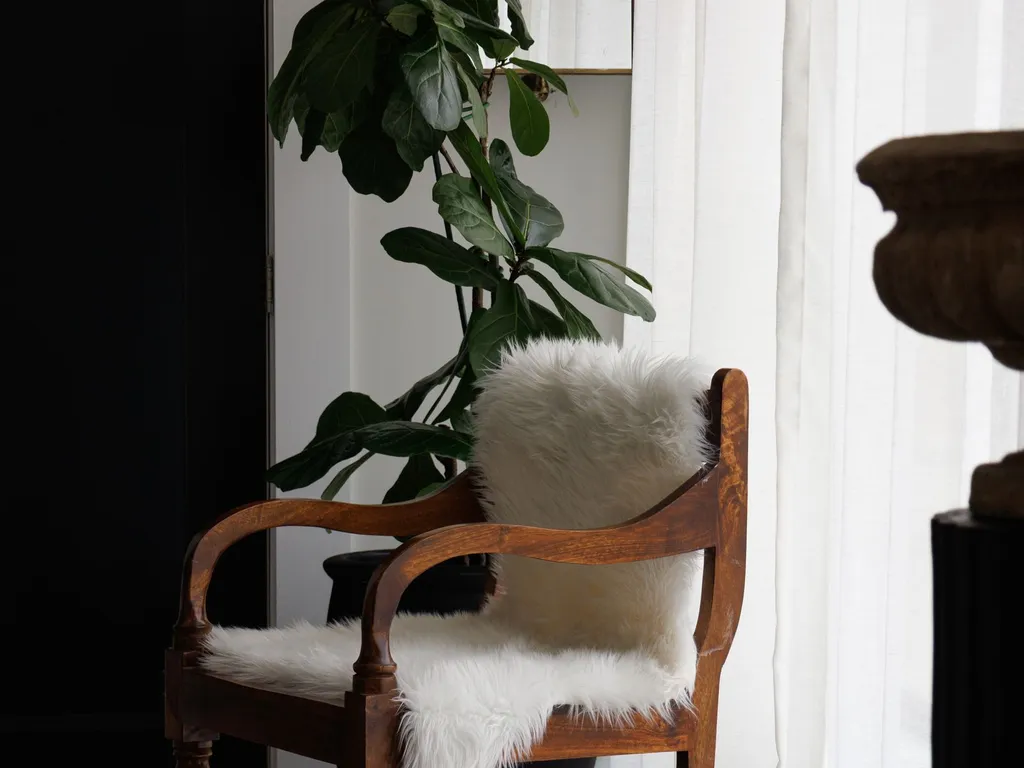
A pale, uncluttered room survives on texture the way a plain meal survives on seasoning. Scandinavian layering is almost entirely textile: a flatweave or wool rug underfoot, linen upholstery with its natural slub, a chunky knit throw, sheepskin over a chair or bench, and woven cotton. Each layer is a different roughness at a different scale, and together they give the eye — and the hand — plenty to do in a room with almost no pattern or colour contrast.
Layer by touch, heaviest at the floor and softest where skin lands. Keep the palette tight while the textures multiply: five natural materials in whites, greys and beiges will read as rich, where five colours in one material would read as noise. And let textiles do the seasonal work — linen and cotton for summer, wool and sheepskin swapped in for winter — so the room changes with the light outside instead of fighting it.
7. Uncluttered, But Never Empty
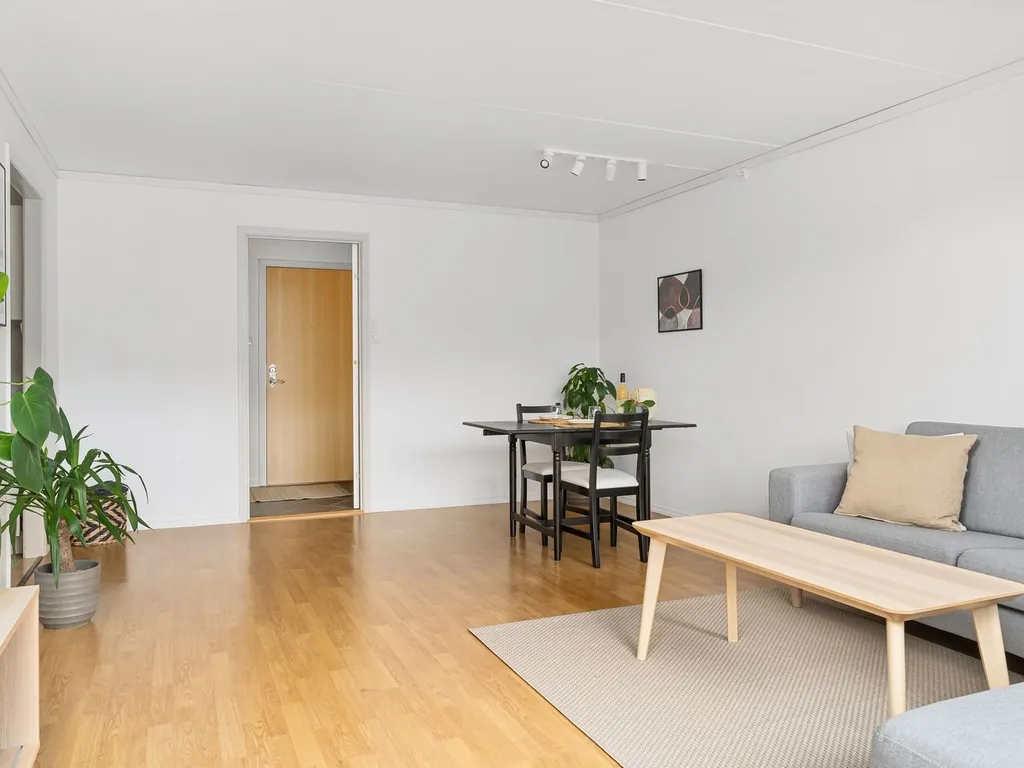
Scandinavian restraint is often misread as emptiness, but walk into a real Nordic home and the surfaces are not bare — they are edited. A sideboard holds a vase, a stack of books and nothing else; a shelf shows ceramics the owner actually uses; art is hung with air around it. The rule is not “own little” but “let each thing be seen.” Clutter is what happens when objects compete; calm is what happens when they take turns.
The method is storage plus honesty: closed cabinets and baskets absorb the everyday mess, and what remains on display earns its place by being used or loved. The same edited-surface discipline shapes the style’s close cousin in our Japandi-inspired rooms ideas, where Scandinavian warmth is one of the two parent philosophies. Start with one surface, clear it completely, and return a third of what was there. The room will feel larger before you have bought anything at all.
8. Bring Nature Indoors, One Green Thing at a Time

When winter keeps you indoors for months, the outdoors gets invited in. Plants are the Scandinavian room’s living accent: a tall leafy plant softening a corner, herbs and small pots along the sill, a branch in a vase when nothing else is growing. Green is the one colour the pale palette never rations, because against white walls and pale wood it reads as landscape rather than decoration — a window substitute for the dark months.
Keep the containers in the material family — white ceramic, terracotta, woven baskets, plain glass — and group plants where the light already is rather than scattering them into dark corners. One generous plant usually beats four small ones: scale gives the calm the style wants, and a single silhouette against a white wall does the same work as a piece of art.
9. Quiet Contrast: Black Lines and Muted Colour

A room of only pale tones eventually blurs, and Scandinavian design knows it — which is why its rooms are drawn with a fine black line. A black floor lamp, black picture frames, a black metal side table: these thin dark notes give the white a boundary and the eye somewhere to rest, like ink lines in a watercolour. The contrast is graphic but the dose is homeopathic — a few percent of the room, never a feature wall of it.
Muted colour works the same way. One sage or dusty-blue armchair, cushions in clay or blush, a single patterned textile kept in the palette’s soft register — colour used as punctuation, not as the sentence. Change these small notes and the room changes season without a single repaint, which is why Scandinavian homes look current for a decade: the expensive bones never move, and the cheap accents do all the updating.
10. The Scandinavian Bedroom: Sleep in the Lightest Room
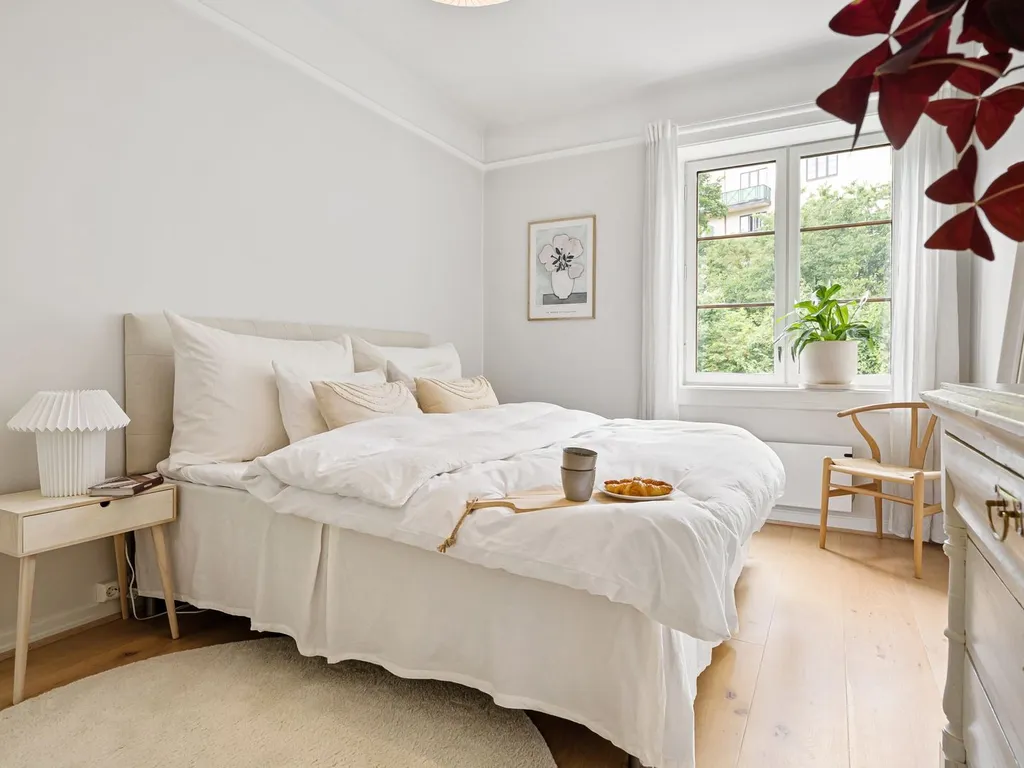
The bedroom is where the whole system pays off at once. A pale wood or white frame, bedding in washed white and natural linen left softly unmade, a wool throw across the foot, one warm lamp on a plain wooden nightstand — nothing in the room raises its voice, and nothing needs to. Sheer curtains wake you with the daylight the style worships; blackout is available behind them for the white nights of midsummer, when the problem becomes too much light.
Hold the bedroom to the strictest edit in the house: clothes inside closed storage, surfaces clear but for a book and a carafe, colour limited to one muted note repeated twice. It is the room where hygge and minimalism stop being ideas and become a physical sensation — cool pale light, warm heavy textiles, silence in the decor. Get the bedroom right and the style explains itself.
Frequently Asked Questions About Scandinavian Interior Style
What defines Scandinavian interior style?
A light, pale palette, honest natural materials — especially light wood — clean-lined functional furniture, uncluttered surfaces and a deliberate layer of cosiness. It is minimalism with the warmth left in.
What is hygge, and why does it matter here?
Hygge is the Danish practice of cosiness and contentment: soft textiles, warm lamplight, candles, and rooms arranged for comfort and company. It is the counterweight that stops the pale, spare Scandinavian look from feeling cold.
Which woods are most Scandinavian?
Pale species in natural matte finishes: oak, ash, birch and pine. The grain stays visible, the tone stays light, and one wood family leads per room so the effect stays calm.
Is Scandinavian style the same as minimalism?
No. Minimalism is primarily about reduction; Scandinavian design is about reduction plus warmth, nature and everyday function. A Scandinavian room can be very spare and still feel soft, personal and lived-in.
What is the difference between Scandinavian and Japandi?
Japandi blends Scandinavian warmth with Japanese restraint and wabi-sabi imperfection, using lower furniture, deeper earthy tones and even stricter editing. Scandinavian alone is brighter, lighter in its wood and cosier in its textiles.
Which colours work in a Scandinavian palette?
White, warm grey and soft beige as the base, with muted dusty blue, sage, blush or clay as small accents and thin black notes for contrast. Everything stays soft and slightly greyed.
Can Scandinavian style work in a small or dark room?
It was designed for exactly that. Pale surfaces return light, legs lift furniture off the floor, mirrors double windows, and edited surfaces stop small rooms feeling smaller. Layer warm lamplight instead.
How do I add Scandinavian style on a budget?
Start with what is free: declutter surfaces, rearrange to clear the window light, and paint walls a warm white. Then add pale textiles — a linen-look throw, cushions, a flatweave rug — before replacing any furniture.
Do Scandinavian rooms use pattern?
Sparingly: a simple stripe, a small geometric or a folk-inspired print on one textile at a time, kept inside the muted palette. Texture does most of the decorating; pattern is an occasional accent.
Is Scandinavian style going out of fashion?
It has outlasted several trend cycles because it is a system for light and comfort rather than a decorative theme. Update it the Nordic way — swap the small accents seasonally and keep the pale, wooden bones unchanged.
Conclusion
Scandinavian style is a climate’s answer: catch the light with pale surfaces and honest wood, furnish with pieces that earn their place, edit the surfaces hard — then soften everything with wool, linen and candlelight until the spare room feels like the warmest one you own. Light first, calm always, and never a thing without a reason to be there.
What a Scandinavian Room Costs: Typical Price Ranges
Scandinavian style can be cheap to start, because paint and decluttering cost little, but pale wood furniture is the big spend. The table below gives typical US price ranges for a standard 12 by 14 foot living room.
| Item | Typical price range | Notes |
|---|---|---|
| White or warm grey wall paint, 1 gallon | $35 to $75 | Covers about 350 square feet per coat |
| Pale oak coffee table | $150 to $500 | Look for solid wood, not a printed finish |
| Light grey fabric sofa, 3-seat | $600 to $1,800 | Tapered wood legs are the classic look |
| Pale oak dining table, seats 6 | $400 to $1,200 | An extendable table suits small homes |
| Sheepskin throw, real or faux | $40 to $180 | Real sheepskin lasts longer and feels warmer |
| Wool throw blanket | $50 to $150 | One per seating spot is enough |
| Linen cushions, set of 2 | $35 to $90 | Muted sage, clay or dusty blue |
| Wool rug, 8 by 10 feet, pale | $250 to $900 | Flat weave is easier to clean |
| Sheer linen curtains, one pair | $60 to $200 | Hang them high and let them reach the floor |
| Paper or fabric pendant lamp | $60 to $300 | Warm bulb, 2700K |
| Table lamps, pair | $80 to $250 | Two small lamps beat one bright ceiling light |
| Candles and holders, set | $20 to $70 | Real candles for the evening, not scented blocks |
| Black-framed art, 24 by 36 inches | $50 to $200 | One frame with a thin black line |
A paint, declutter and textiles refresh often lands between $300 and $800. A full room with a new sofa, dining table, rug and lighting often lands between $1,800 and $4,500. Pale oak flooring, if you replace it, costs $8 to $15 per square foot fitted, or $1,344 to $2,520 for a 168 square foot room.
Measurements That Keep a Scandinavian Room Balanced
- The pale split: keep about 80 percent of the room pale — white, warm grey, pale wood and soft beige — and about 20 percent muted colour and black. In a 12 by 14 foot room, that means pale walls and sofa, one muted chair or cushions, and thin black lines only.
- Paint coverage: one gallon covers about 350 square feet per coat. A room with 416 square feet of wall needs 2 gallons for two coats.
- Furniture legs: pick sofas and chairs with legs 4 to 6 inches high. Legs lift the furniture, show the floor and make a small room feel larger.
- Rug size: an 8 by 10 foot rug fits a 3-seat sofa with at least 6 inches under the front legs. Leave 12 to 18 inches of bare floor between the rug edge and the wall.
- Art height: hang the centre of a picture 57 to 60 inches from the floor, and leave 6 to 8 inches between a sofa back and the frame above it.
- Lamp layers: use 3 to 5 light sources in a living room: one pendant or floor lamp, two table lamps and a candle group. Keep each bulb at 2700K for a warm glow.
- Curtain fit: hang sheer curtains 4 to 6 inches above the window and 3 to 6 inches past each side, reaching the floor. Heavy, full-length drapes block the light this style needs.
- Clear space: leave at least 30 inches of clear walkway between furniture pieces, and keep at least one surface in the room fully clear.
Step-by-Step Planning for a Scandinavian Room
- Clear the light first. Move tall furniture away from windows, take down heavy curtains and clean the glass. Do this before you buy anything — light is free and it sets the whole look.
- Pick the pale base. Choose one white or warm grey for the walls and one pale wood tone for the furniture. Test the paint on two walls and look at it at 9 a.m. and at 7 p.m.
- Choose one wood, plus a second if you must. Pale oak should lead. If you add a second wood, keep it close in tone — ash or birch — not dark walnut.
- Buy the big wood pieces first. Table, sofa frame, storage. Their tones set the limits for smaller buys.
- Layer the cosy pieces. Add wool, linen and sheepskin after the furniture is in place. Start with the rug, then the throws, then the cushions, so the layers build from the floor up.
- Add the black lines last. One black frame, black lamp bases or thin black handles. Step back: if the black jumps out, you have too much.
- Do a clutter check. Put everything that has no home into closed storage. If a surface still looks full, remove one item from it and live with the room for a week.
Mistakes to Avoid
- Using cool, blue-based white: it can make a pale room feel cold. Pick a warm white with a cream base.
- Mixing three wood tones: pale oak, dark walnut and red-brown pine in one room look busy. Keep to one main wood.
- Buying dark, heavy furniture: a dark, bulky sofa fights the light, airy feel. Choose clean lines and visible legs.
- Forgetting the cosy layer: pale walls with no wool, linen or candles feel bare, not calm. Add texture before you add more decor.
- Using one bright ceiling light only: a single overhead light flattens the room. Use several low, warm lamps instead.
- Overdoing the black: black is a thin line in this style, not a block of colour. Keep it to frames, handles and lamp bases.
More Questions About Scandinavian Interior Style
How much does a Scandinavian living room cost?
A refresh with paint, a rug, throws and lamps often costs $300 to $800. A full room with a new sofa, table, rug and lighting often costs $1,800 to $4,500, plus $1,300 to $2,500 if you replace the floor.
What white paint is best for Scandinavian style?
A warm white with a cream base, such as Benjamin Moore White Dove or Sherwin-Williams Alabaster. Test it next to your wood: if the white looks blue next to the oak, pick a warmer white.
Can Scandinavian style work in a dark room?
Yes — it was made for dark winters. Keep the walls pale, use mirrors to bounce light, add 3 to 5 warm lamps at 2700K, and keep furniture low and light in tone.
Is Scandinavian the same as minimalism?
No. Minimalism cuts back for its own sake. Scandinavian design cuts back to leave room for light, wood and cosy textiles, so the room feels warm, not empty.
What is the best wood for Scandinavian rooms?
Pale oak, ash, birch and pine in a natural matte finish, with the grain showing. Oak is the most used because it is hard-wearing and its tone stays pale.
How do I add colour without breaking the look?
Use one muted colour at a time — sage, dusty blue, clay or blush — on cushions, a throw or one chair. Keep it to about 20 percent of the room and repeat it twice, not ten times.