
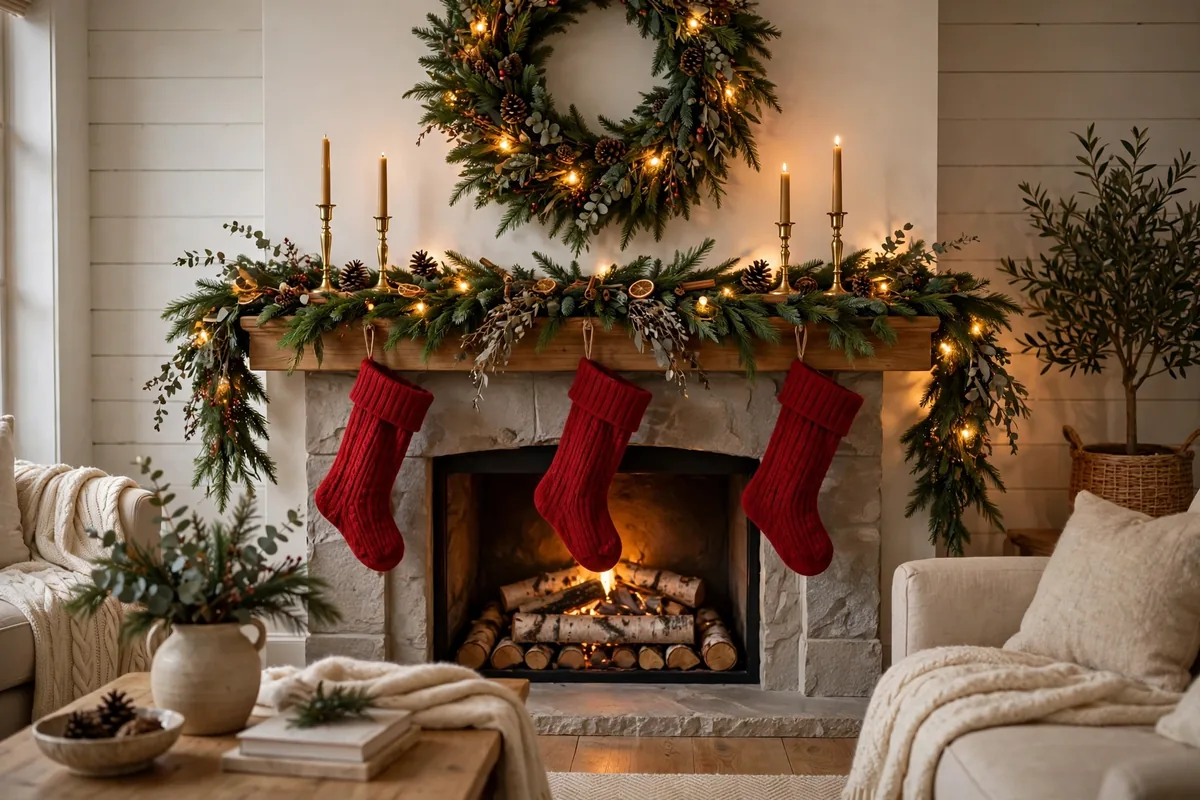
A Christmas mantel fails in one of two ways: everything lined up in a row like soldiers, or everything piled on until nothing stands out. The arrangements that look effortless in photos are built the same way every time — in layers, from the back of the mantel shelf to the front, with the largest pieces placed first and the smallest woven in last. Once you know the order, you can build any style: classic red and green, calm and neutral, or modern and asymmetric.
This guide gives you the layer system first, then ten complete arrangements built on it. If your mantel needs help the other eleven months of the year too, start with our year-round fireplace mantel styling ideas — Christmas is simply that same composition wearing its best clothes.
In this guide: The Mantel Layers at a Glance · 1. Start With a Clear, Measured Mantel · 2. Anchor Everything With the Garland · 3. Build Height at the Back · 4. Add Candlelight — the Safe Way · 5. Cluster Trees and Figures in Threes · 6. Hang the Stockings Like You Mean It · 7. Weave In Ornaments, Ribbon and Texture · 8. The Asymmetric Arrangement for Modern Rooms · 9. The Neutral Woodland Arrangement · 10. The Classic Red-and-Green Arrangement, Edited · Frequently Asked Questions About Christmas Mantel Arrangements · Conclusion
The Mantel Layers at a Glance
| Layer | What Goes There | Rule |
|---|---|---|
| 1. Backdrop | Mirror, wreath or artwork above the mantel | One focal piece, centred or deliberately off-centre |
| 2. Height | Candlesticks, tall trees, lanterns | Tallest at the ends or one end only |
| 3. Garland | Greenery along the shelf, draped or straight | Secure it first; everything else tucks into it |
| 4. Mid layer | Ornaments, figures, small trees, bowls | Groups of three, varied heights |
| 5. Light | Flameless candles, string lights in the garland | Light at three heights, never near flames’ reach |
| 6. Front edge | Stockings on holders or hooks | Even spacing; remove before lighting a fire |
1. Start With a Clear, Measured Mantel
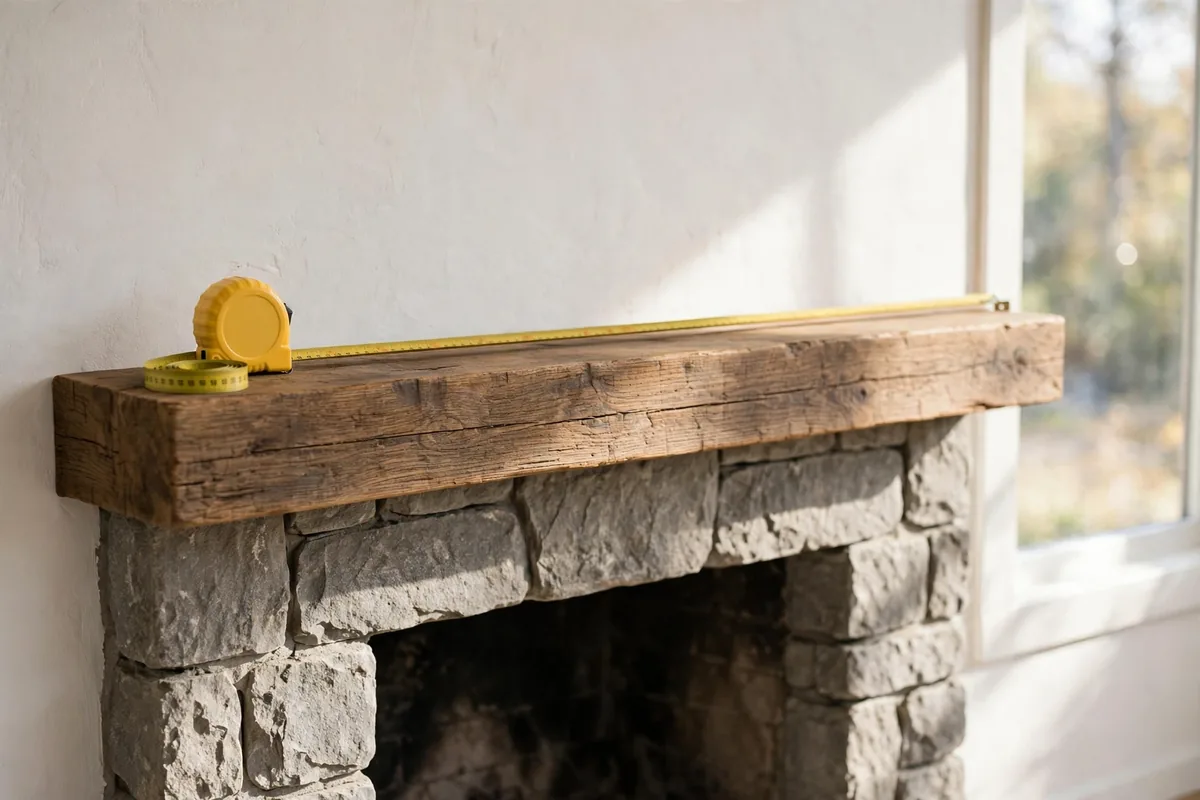
Take everything off, wipe the shelf down, and measure two numbers: the shelf’s length and its depth. Depth decides what fits — most mantel shelves are 20–30 cm deep, which means wide bowls and deep lanterns compete for the same space the garland needs. Knowing your numbers stops the classic mistake of buying a beautiful arrangement that physically cannot stand up.
Decide your composition before placing a single object: symmetrical (matching ends, centred backdrop) or asymmetrical (weight gathered to one side). Both work; drifting between the two halfway through is what makes mantels look accidental. The seasonal rotation thinking in our decorating home for Christmas ideas helps here — your Christmas backdrop often already exists above the mantel all year.
2. Anchor Everything With the Garland
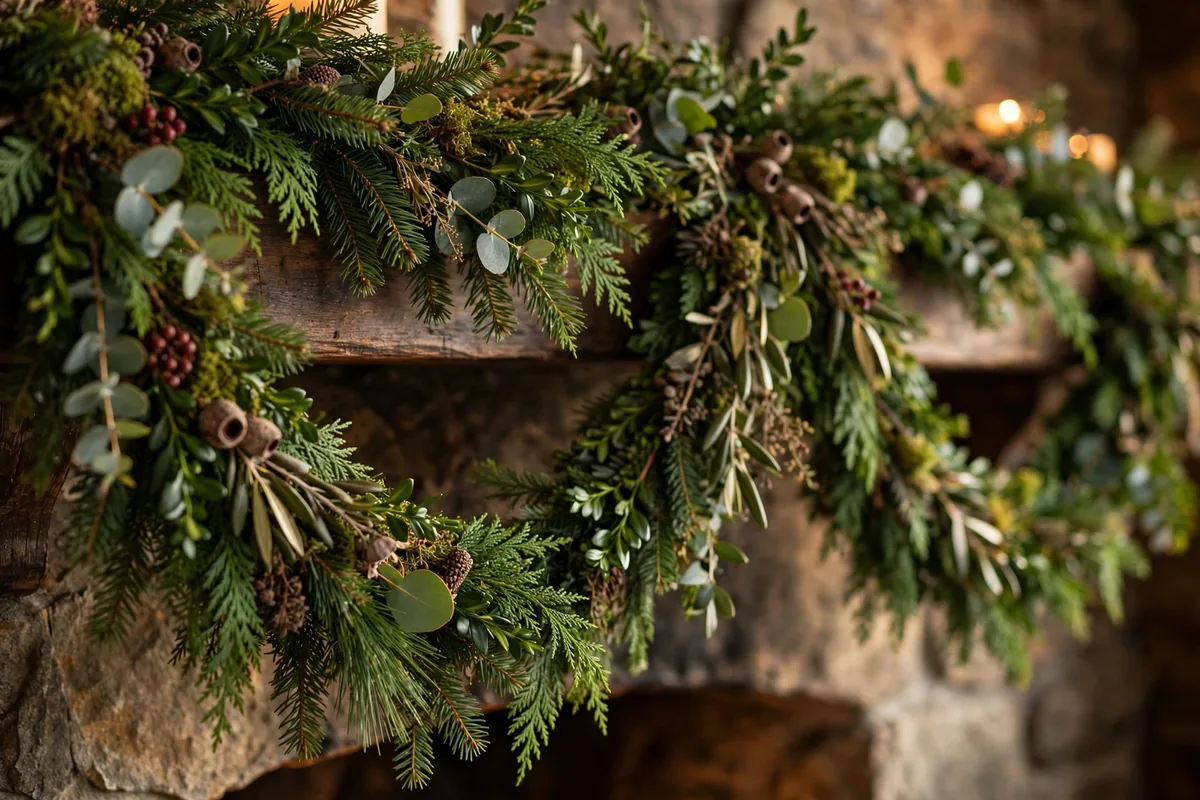
The garland is the arrangement’s foundation, so it goes on first and gets secured properly — small removable hooks or wire at both ends and the middle, so a curious cat or a brushed sleeve cannot pull the whole display down. Choose your line: a straight, tailored run along the shelf for a formal look, or swags that dip between anchor points for a traditional one. One deep central swag with raised ends is the most forgiving shape for beginners.
Fluff a faux garland branch by branch before it goes up; flat, compressed greenery is the number-one reason home mantels look thinner than the photos. Mix in a few real cuttings if you can — the scent and the slight irregularity make even an inexpensive base garland look generous.
How much garland: Buy by ratio, not by guess. A straight run takes the mantel’s length plus about a third again; swags take roughly one and a half to two times the length. Buy longer rather than shorter — the excess pools gracefully at the ends, and a short garland cannot be stretched.
3. Build Height at the Back
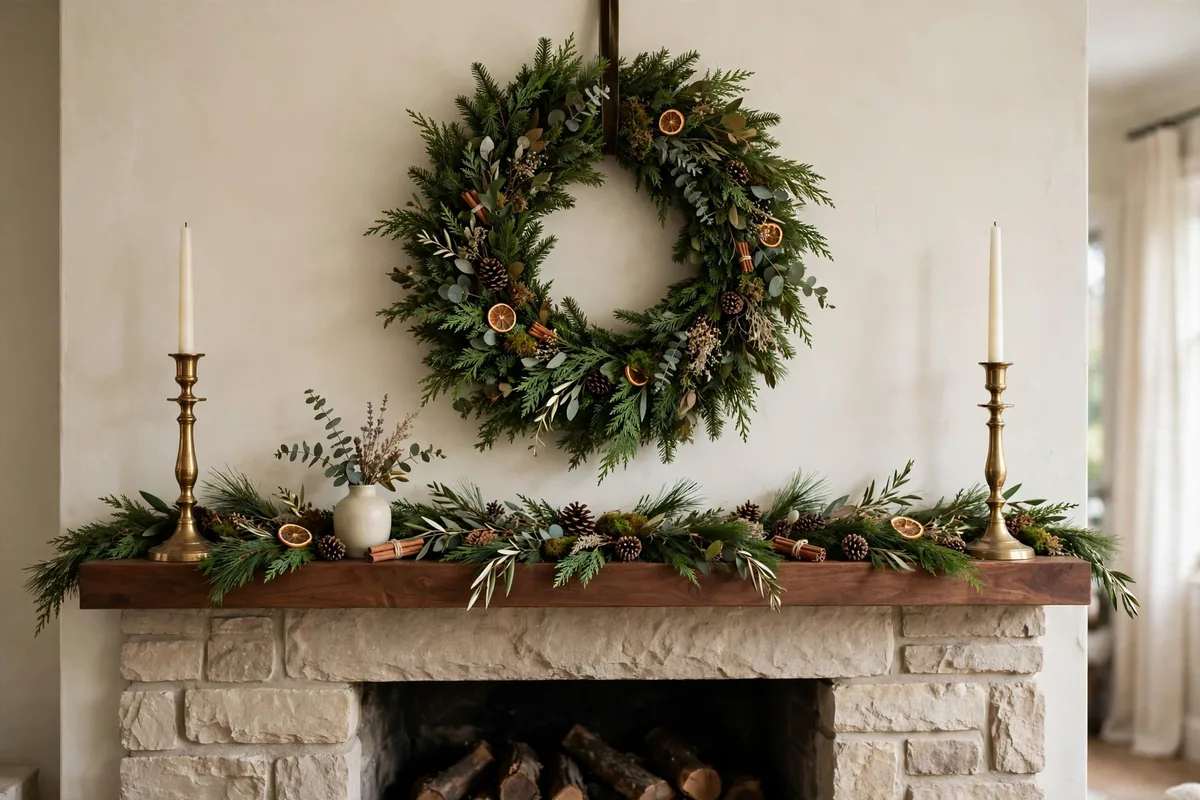
Height is what separates a mantel display from a row of objects on a shelf. Hang or lean one backdrop piece — a wreath over a mirror is the classic double — and place your tallest shelf items at the back: candlesticks, taper holders, bottle-brush or ceramic trees, a lantern. In a symmetrical arrangement the tall pieces bookend the ends; in an asymmetrical one they cluster at the heavier side.
Work to a simple height rhythm: tall at the ends or one end, medium in the middle distances, low at the front edge. If everything you own is the same height, manufacture difference — stand a small tree on a stack of books or an upturned pot hidden inside the garland.
4. Add Candlelight — the Safe Way
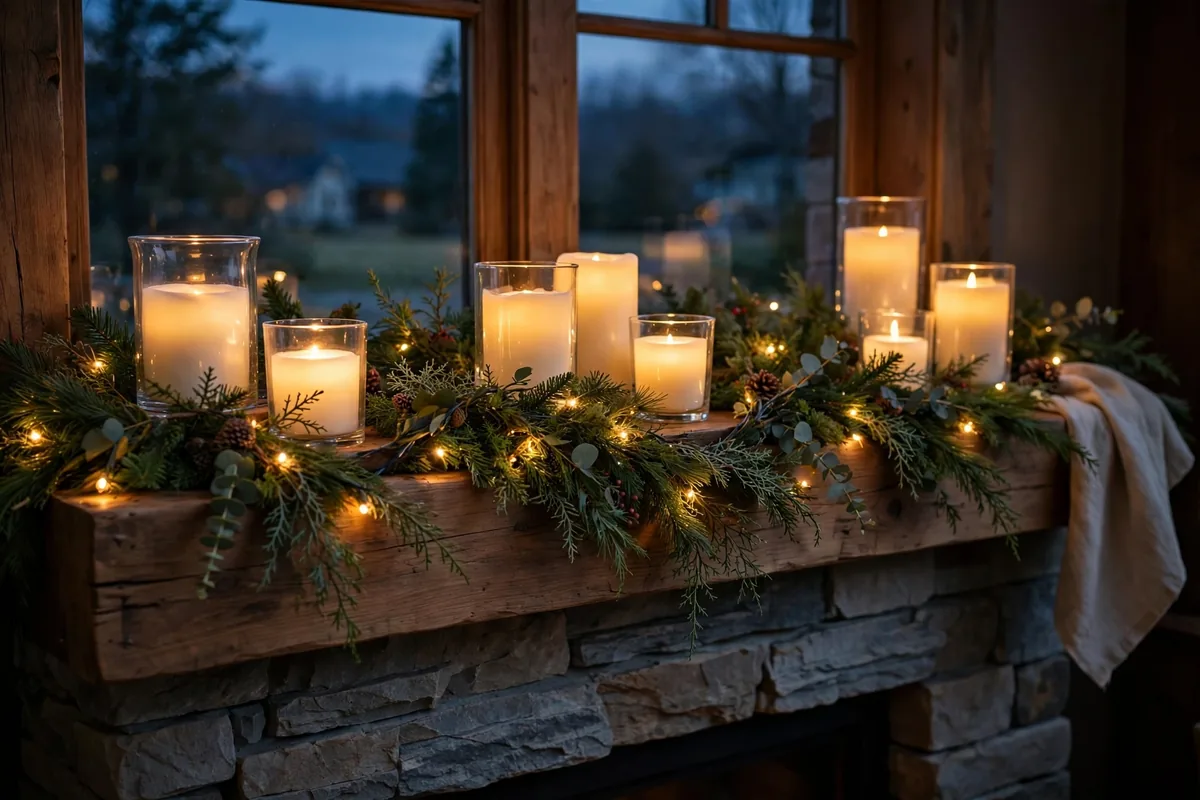
Light is the layer that makes people say a mantel feels magical, and it works at three heights: string lights woven through the garland, candle glow on the shelf, and the fire or a lantern arrangement in the firebox below. Flameless candles with a realistic flicker do the shelf work best, because a mantel is the worst possible place for real flames — it is crowded with exactly the dried, flammable materials candles should never sit beside.
The fire-safety guidance is specific about this. The U.S. National Park Service’s holiday safety guide, drawing on NFPA advice, recommends keeping burning candles at least 12 inches from anything that can burn, using sturdy non-flammable holders, and considering battery-operated candles instead — on a mantel, that “instead” is the sensible default, with real flames reserved for the firebox where they belong.
5. Cluster Trees and Figures in Threes
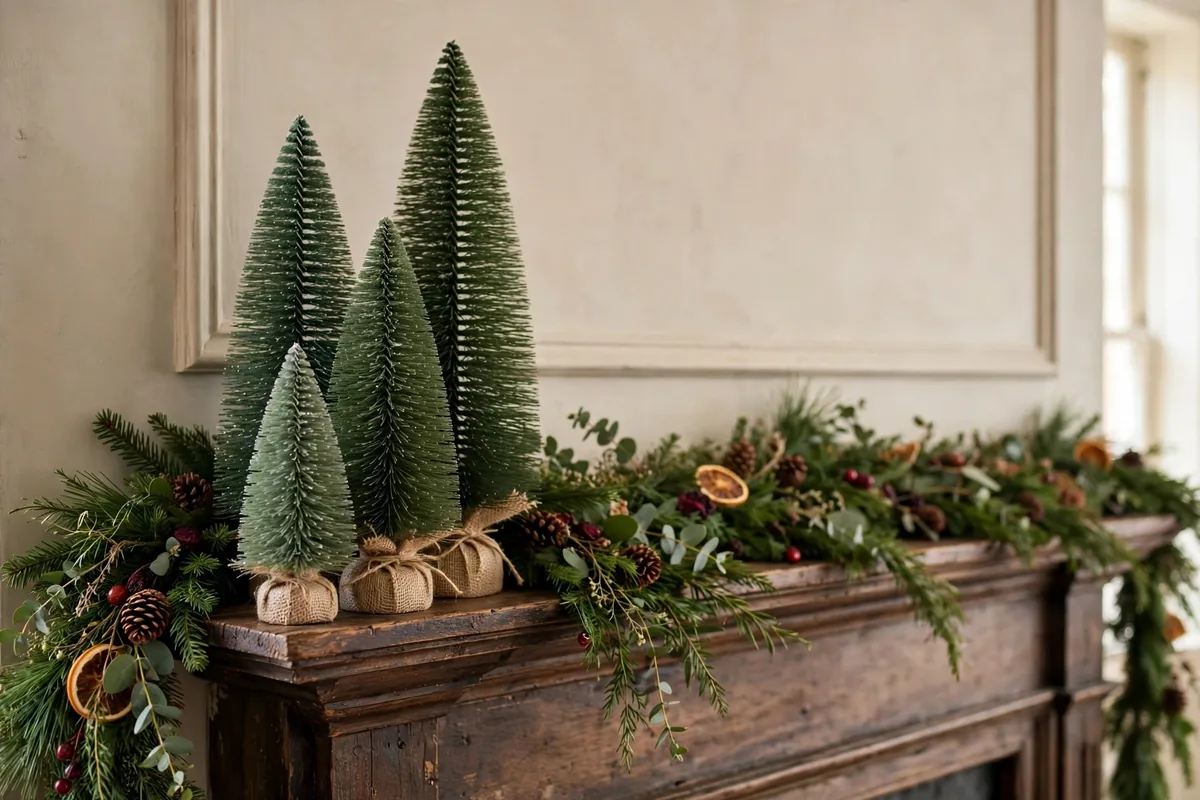
The mid layer is where personality lives: miniature trees, ceramic houses, reindeer, nutcrackers, a bowl of ornaments. Place them in clusters of three with varied heights — tall, medium, small — rather than spacing singles evenly along the shelf. A cluster reads as one deliberate group; a row of singles reads as a queue.
Two clusters are usually enough: one at each end for symmetry, or one strong cluster balanced by the stockings’ visual weight in an asymmetric design. Leave genuine empty space between clusters. That breathing room is what makes the groups look curated instead of crowded.
6. Hang the Stockings Like You Mean It

Stockings are the front layer, and they carry more visual weight than people expect — four or five hanging shapes will dominate everything behind them if they are much darker or brighter than the arrangement. Keep them in the arrangement’s palette, space them evenly, and hang them at the same height from weighted holders or fixed hooks rather than the garland itself, which sags unevenly under filled stockings.
One safety habit matters more than any styling tip: take stockings down — or use a firescreen and keep them well clear — before lighting a real fire beneath them, and never leave a fire burning with decorations dangling into the heat above the firebox. HGTV’s living room Christmas decor ideas show plenty of styled mantels where the fireplace is decorative only; a working fireplace asks for this extra step.
7. Weave In Ornaments, Ribbon and Texture

With the structure standing, weave in the sparkle: a handful of baubles in your accent colour tucked deep into the garland where they catch light, a ribbon run loosely through the greenery or tied in one bow at the centre or corner, and one textural contrast — pinecones in a glossy arrangement, velvet ribbon in a rustic one, mercury glass in a matte one.
Restraint is the skill here. Add ornaments in odd-numbered clusters, step back across the room, and stop one handful earlier than feels finished — the string lights will add the rest of the glitter when the room darkens. This woven, uncluttered finish is also what keeps a fuller arrangement compatible with a simpler mantel elsewhere in the house.
8. The Asymmetric Arrangement for Modern Rooms
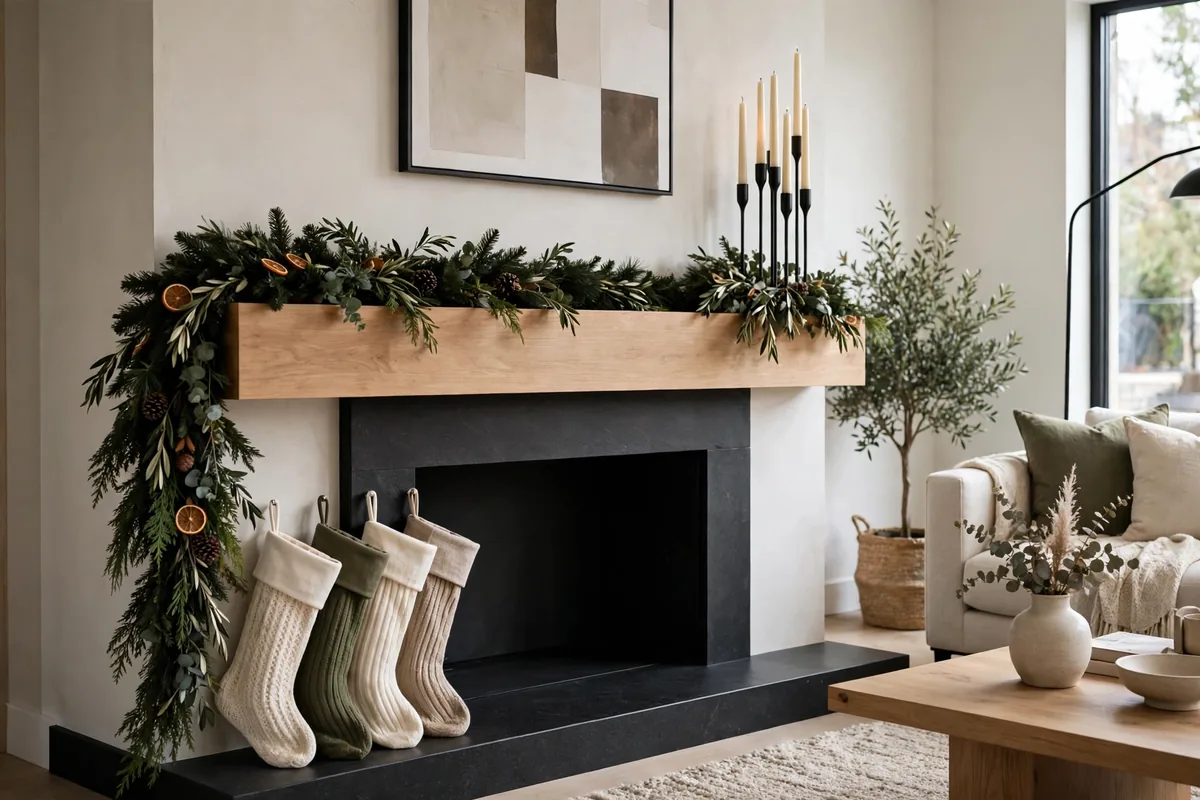
For a modern room, break the mirror image: drape the garland so it pools lower on one side, gather the tall pieces and clusters at that same heavier side, and let the other end hold just the stockings and a single low object. The arrangement balances by weight, not by matching — a large visual mass on the left answered by open space and vertical stocking lines on the right.
Asymmetry forgives mismatched collections better than symmetry does, because nothing needs a twin. It also suits mantels with a television above them, where a centred wreath would fight the screen: keep the display low, wide and weighted to one side instead.
9. The Neutral Woodland Arrangement
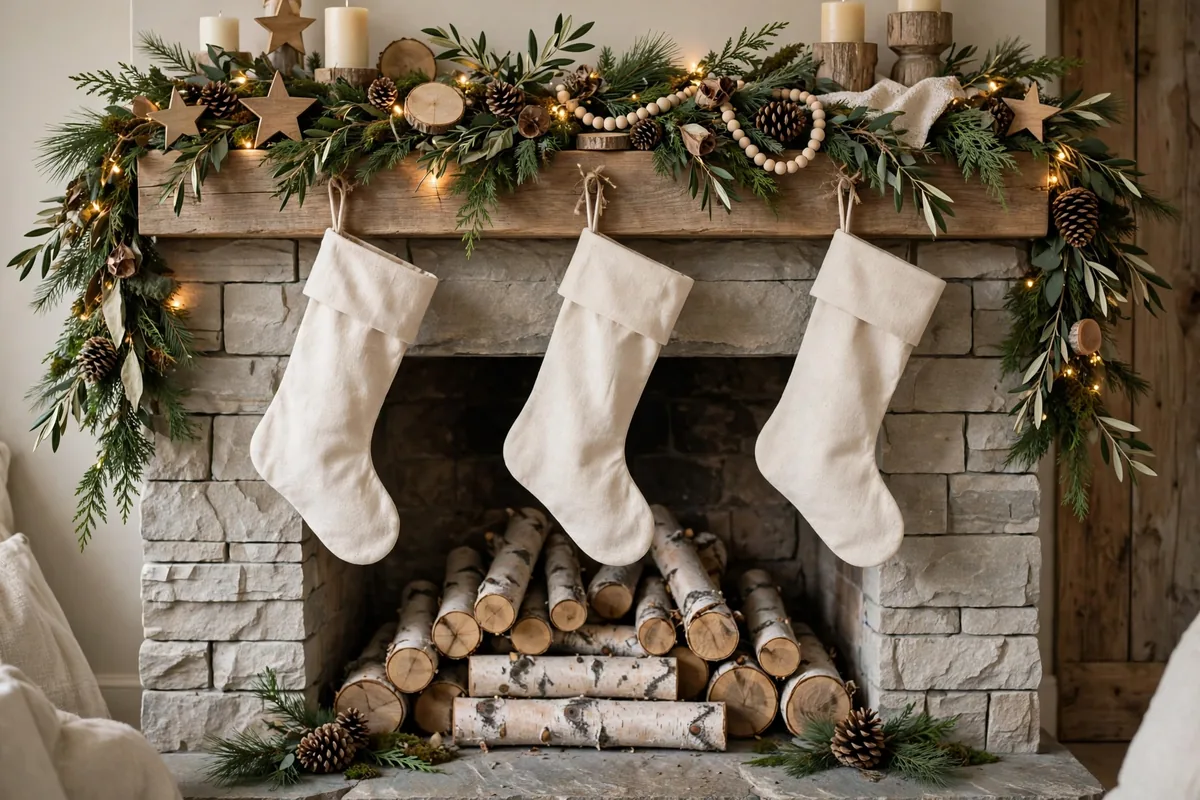
Build this one from the forest floor up: a greenery garland loosened with bare twigs and pinecones, wooden and rattan accents instead of shiny ones, cream or linen stockings, and warm-white lights only. A pair of antler or pinecone candle holders and a small stack of birch logs in the firebox complete the story.
The woodland scheme is the easiest to live with for the whole season because nothing in it shouts a date — it reads “winter” from late November to January. It is also the natural partner to the approach in our subtle Halloween living room ideas: same calm palette, same preference for texture over colour.
10. The Classic Red-and-Green Arrangement, Edited

The traditional arrangement still earns its place — it just needs editing. Keep the formula tight: green garland, red stockings, gold or brass for the metal, white lights, and one red accent repeated three times (bow, bauble cluster, berries) rather than ten different red objects competing. Symmetry suits this style; matching candlesticks at both ends give it its formal bones.
When it is built, sit in the room’s main chair — ideally the cozy reading corner seat with the best view — and remove the single object your eye keeps catching on. Classic schemes tip into clutter one item at a time, and that one removal is usually the difference. Then carry the same red accent through to the tree, so mantel and tree read as one room.
Frequently Asked Questions About Christmas Mantel Arrangements
What order should I decorate a Christmas mantel in?
One clarification first: the layers are listed back-to-front — where each sits on the shelf. The working order is the order of this guide’s sections: the garland is anchored first (Section 2), then the height is built behind and through it (Section 3). Backdrop first (wreath, mirror or art), then height at the back, then the garland secured in place, then clusters of trees and figures, then lights and candles, and stockings last on the front edge. Working back-to-front stops you disturbing finished sections.
How much garland do I need for a mantel?
For a straight run, the mantel’s length plus about a third extra for fullness. For swags, allow roughly one and a half to two times the mantel length, because each dip consumes length. Buy longer than you think — excess can pool at one end, but a short garland cannot be stretched.
How do I secure a garland without damaging the mantel?
Use removable adhesive hooks rated for the garland’s weight at both ends and the middle, or wire the garland to small hooks hidden at the back of the shelf. Avoid nails in wood and tape on painted surfaces, which peels in the heat above a fireplace.
Can I hang stockings if I use my fireplace?
Yes, with habits: use fixed holders rather than the garland, keep stockings clear of the firebox opening, and take them down or screen the fire before lighting it. Never leave a burning fire unattended with decorations hanging above it.
Are real candles safe on a Christmas mantel?
They are the riskiest choice there, because garlands and dried decorations are flammable and candles must sit at least 12 inches from anything that can burn. Flameless candles give the same glow with none of the clearance problem and are the recommended option for mantels.
How do I decorate a mantel with a TV above it?
Keep everything low and wide, skip the centred wreath, and lean asymmetric: garland along the shelf, clusters at the ends, nothing tall enough to crowd the screen’s lower edge. Check the arrangement from the sofa, not from standing height.
What if I don’t have a fireplace?
Use the same layer system on a sideboard, a console table, a wide shelf or the top of a piano — backdrop, height, greenery, clusters, light, and stockings hung from the edge. The composition is what reads as “mantel”, not the firebox.
How many objects should be on a Christmas mantel?
Beyond garland and stockings, most mantels carry two clusters of three objects, a pair of tall pieces, and one backdrop — roughly ten to fourteen items total. If you cannot see the shelf surface anywhere, there is too much on it.
When should the Christmas mantel go up and come down?
Late November to the first week of December is typical, with takedown in the first week of January. Neutral woodland arrangements can stretch longer at both ends because they read as winter rather than Christmas Day specifically.
How do I make a cheap garland look expensive?
Fluff every branch outward, weave in a second texture (real cuttings, eucalyptus, pinecones or ribbon), tuck baubles deep inside rather than on the surface, and add warm-white string lights. Fullness and layers, not price, are what the eye reads as expensive.
Conclusion
Every good Christmas mantel is the same quiet structure — backdrop, height, garland, clusters, light, stockings — dressed in one chosen style. Build it in that order, keep one palette, edit out one object at the end, and the fireplace becomes the room’s calm centre instead of its most cluttered shelf.


Pingback: 10 Small Christmas Tree Styling Ideas That Make a Big Impression
Pingback: Valentine's Table Ideas: Romantic, Not Cheesy (For Two & More)
Pingback: Mantel Decor Materials: 10 Compared Side by Side