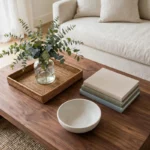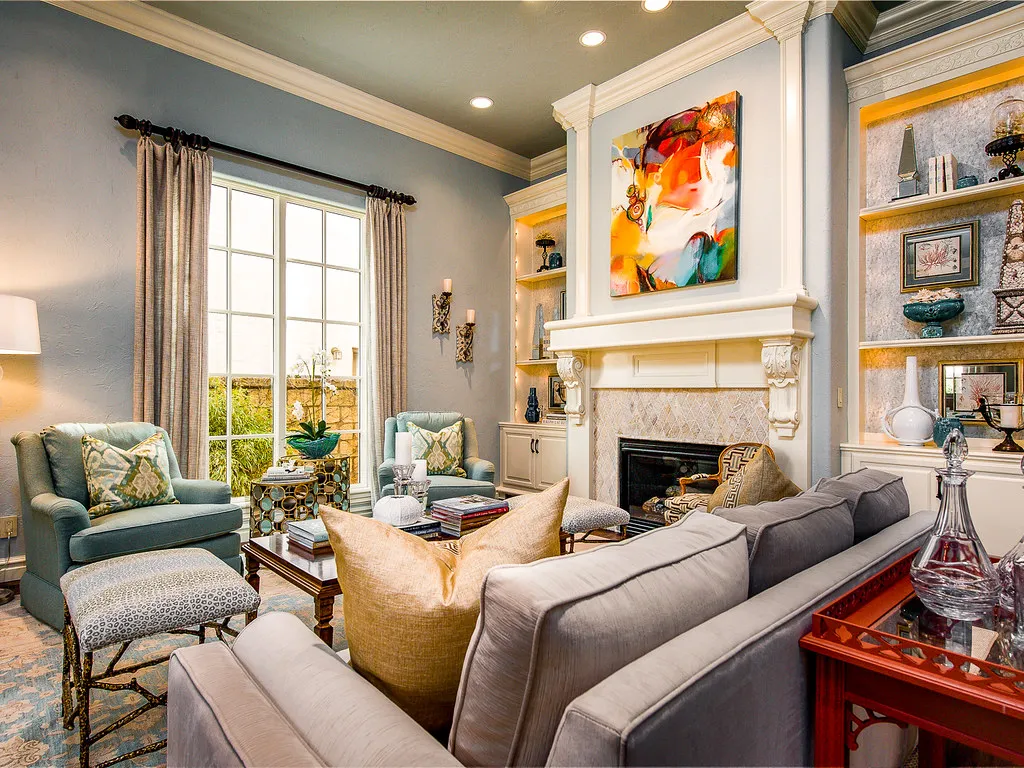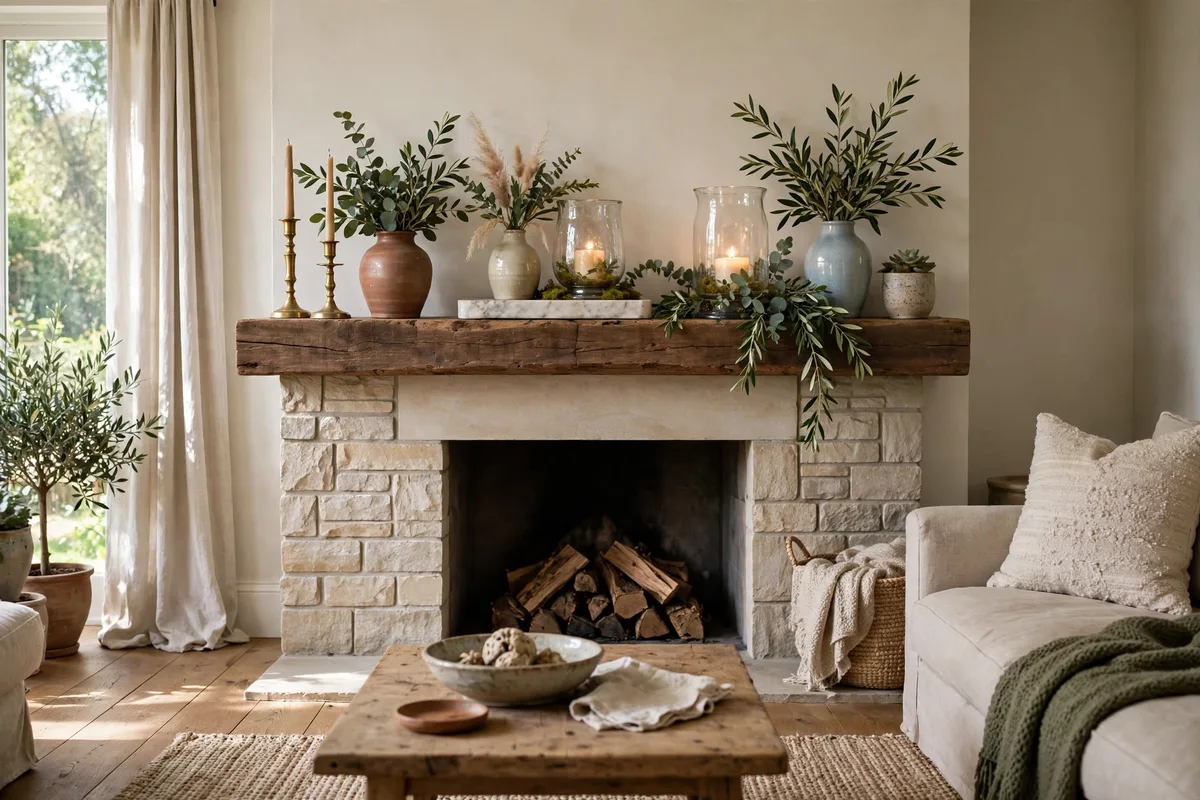
Two mantels can hold exactly the same objects — candlesticks, a vase, a mirror, books — and look completely different. It is what they are made of. Brass glows where black iron broods, matte ceramic calms a shelf that polished marble makes formal, and a woven basket softens a stone surround in a way no glass vase ever will. Material is the quiet decision underneath every admired mantel.
This article compares mantel decor materials only: wood, metals, ceramic, stone and marble, glass, mirror, rattan and woven fibres, greenery, and candles and wax. For each one: its look, durability, heat behaviour near a working fireplace, weight, cleaning, cost feel, and which styles it suits. For the styling process itself — choosing a look, layering and arranging — see the companion fireplace mantel styling styles guide; here, the materials do all the talking.
In this guide: Start With Material, Not Objects: The Master Comparison · Wood: Warmth, Grain and Honest Ageing · Brass, Iron, Copper and Steel: The Metals Compared · Ceramic and Stoneware: Handmade Texture, Glazed or Matte · Stone and Marble: Cool Weight and Veined Drama · Glass and Mirror Finishes: Clarity, Colour and Reflection · Rattan, Wicker and Woven Fibres: The Soft Structure · Greenery and Faux Botanicals: The Living Material · Candles and Wax: The Glowing Material · Mixing Materials Without Clashing: Formulas That Work · Frequently Asked Questions About Mantel Decor Materials · Conclusion
1. Start With Material, Not Objects: The Master Comparison
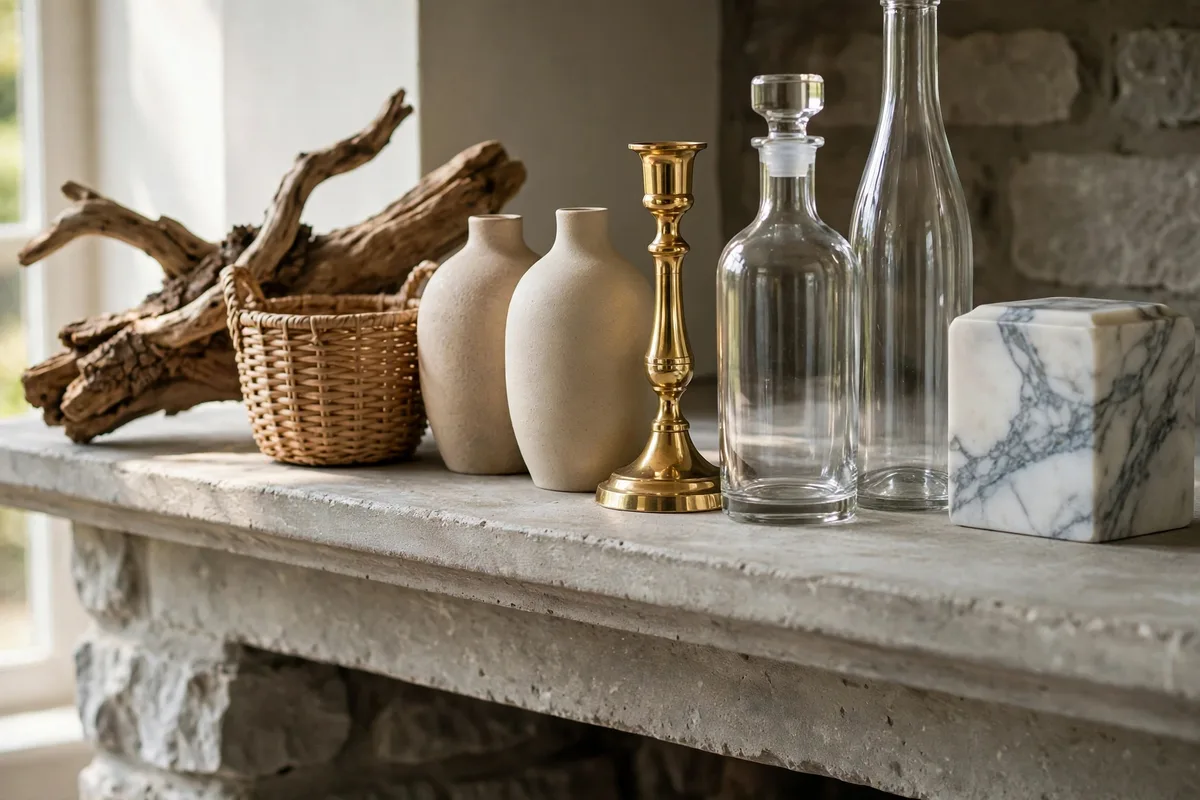
Here is the whole field on one table. Read across a row to choose a hero piece, and read down the heat safety column first if your fireplace actually burns.
| Material | Look | Durability | Heat safety | Weight | Upkeep | Best for |
|---|---|---|---|---|---|---|
| Wood | Warm, grained | Good; dents add character | Combustible — shelf only, away from the opening; follow clearance guidance | Light to medium | Dust; occasional oil | Rustic, farmhouse, traditional, Scandinavian |
| Brass | Warm glow, patina | Excellent; lasts decades | Non-combustible; conducts heat, handles get warm | Medium to heavy | Polish or leave patina | Traditional, classic, glam, vintage |
| Iron and steel | Matte, architectural | Excellent; can rust if damp | Non-combustible; gets hot to the touch | Heavy | Wipe dry; touch up rust | Industrial, modern, minimalist |
| Ceramic | Matte or glazed, handmade | Good; chips if knocked | Non-combustible and heat tolerant on the shelf | Medium | Wipe clean | Organic modern, boho, cottage, Mediterranean |
| Stone and marble | Cool, veined | Hard surface; marble stains and etches | Non-combustible, very heat tolerant | Very heavy | Wipe soot; seal marble; no acidic cleaners | Formal, traditional, modern luxe, minimalist |
| Glass | Clear, coloured | Fragile; chips and breaks | Non-combustible; avoid sudden temperature shocks | Light to medium | Glass cleaner; shows soot quickly | Coastal, modern, light and airy schemes |
| Mirror finishes | Reflective | Glass-based; silvering ages at edges | Non-combustible face; keep backing away from direct heat | Medium to heavy | Cleaner on the cloth, never sprayed on | Glam, traditional, small or dark rooms |
| Rattan and woven fibres | Soft, textured | Fair; frays and fades | Combustible, dry — shelf only, well away from flames | Very light | Shake, dust, keep dry | Coastal, boho, Scandinavian, cottage |
| Greenery and faux botanicals | Living colour | Fresh is short-lived; quality faux lasts years | Fresh wilts in heat; dried is flammable — never drape toward the opening | Very light | Dust faux; refresh fresh often | Every style, as the softening layer |
| Candles and wax | Glow, scent | Consumable; wax melts and drips | Open flame — prefer flameless near a working fireplace; never leave unattended | Light | Trim wicks; catch drips on trays | Every style, as the light layer |
How to use this table
Pick one anchor material, one supporting material and one soft material: a marble tray, brass candlesticks and a trailing faux stem already make a complete story. Most flat mantels repeat one shiny material five times instead of creating that contrast.
Working fireplace? The shortlist the table above implies: safe on the shelf — ceramic, stone and marble, solid metals, and glass in normal positions. Shelf-top only, and well away from the opening — wood, woven fibres and dried stems. And for glow above a fire you actually light, flameless is the default.
2. Wood: Warmth, Grain and Honest Ageing
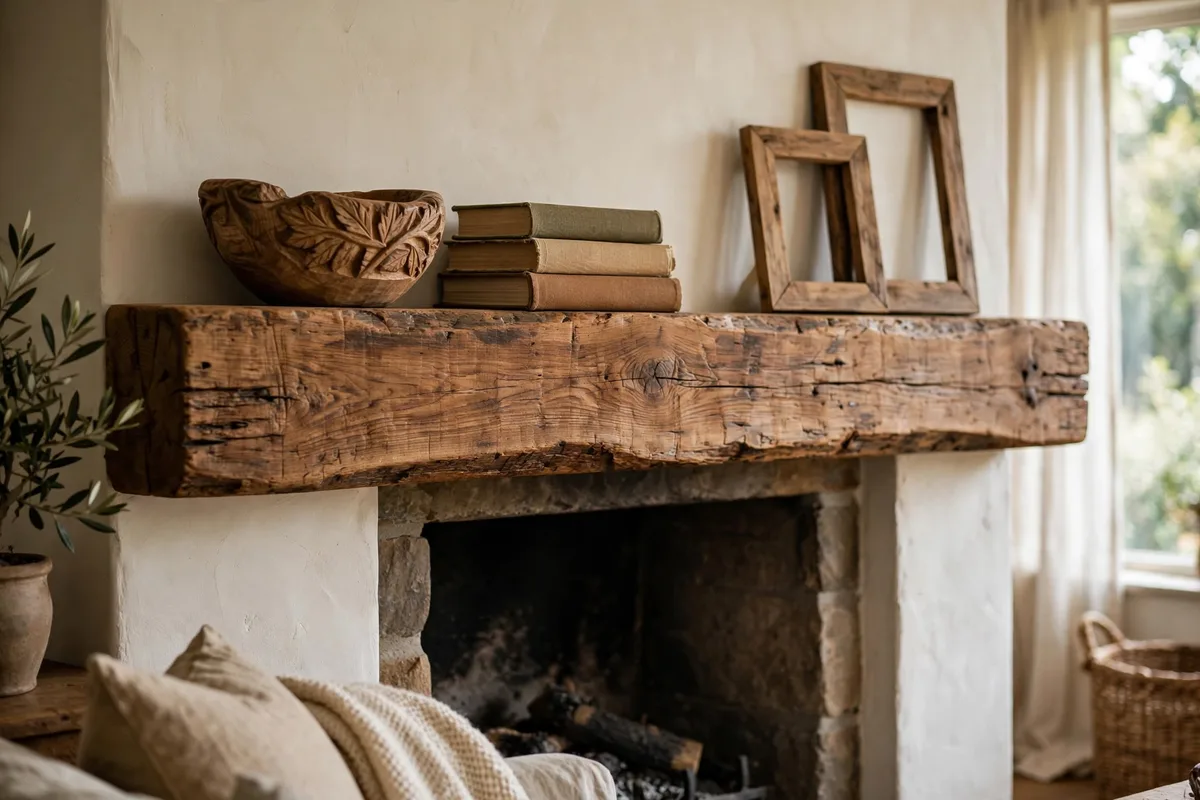
Wood is the warmth layer of the mantel world: carved bowls, frames, boxes, bead garlands and trays that stop a stone or painted surround feeling cold. Its grain means no two pieces match, which is why wood makes arrangements feel collected rather than bought in one trip.
Look, durability and weight
Oak, walnut, mango wood and reclaimed timber each bring a different tone, from pale Scandinavian to dark and library-like. Wood is forgiving: dents read as patina, and a feed of oil revives most pieces.
Heat safety and cleaning
Wood is combustible, and that fact should organise where it sits. Decorative wood belongs on top of the shelf, never leaning against the firebox opening, never draped or hung where it can swing toward flames, and always with the clearances your fireplace manufacturer and local code require. Cleaning is simple: dust with a dry cloth, keep it dry, and expect the colour to deepen slowly in a sunny room.
Cost feel and best styles
Wood spans the widest price range of any material here — thrifted frames and bowls at one end, hand-carved artisan pieces at the other. It suits rustic, farmhouse, traditional, Scandinavian and organic modern mantels.
3. Brass, Iron, Copper and Steel: The Metals Compared
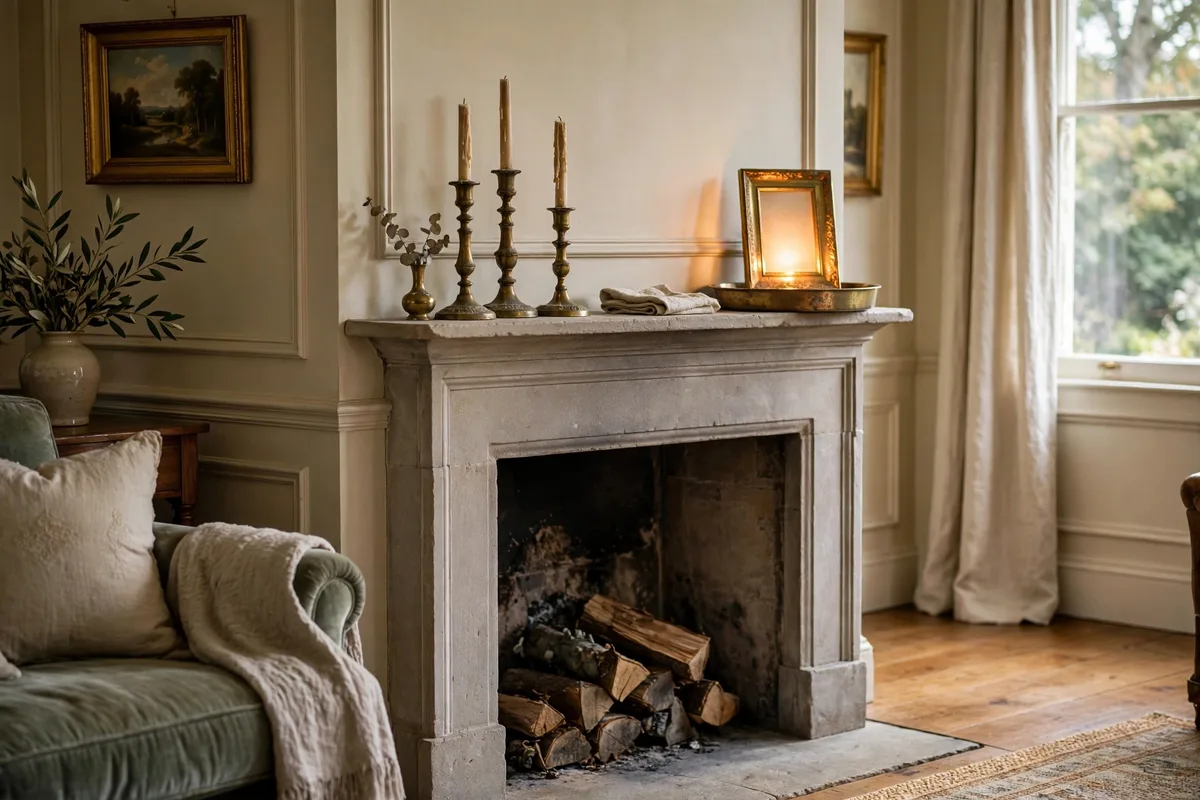
Brass is the classic mantel metal. Candlesticks, trays, frames and small boxes in brass catch firelight with a warm glow no painted finish imitates for long, and solid brass ages gracefully — patina if left alone, a bright formal shine if polished.
Look, durability and weight
Unlacquered brass changes slowly with touch and air, which vintage and traditional schemes love; lacquered brass holds its shine and suits a crisper, more formal room. Solid pieces feel reassuringly heavy in the hand and stay where you put them, which matters on a mantel in a busy household. Imitation brass is much lighter and its finish wears at the edges, so check the weight before you buy.
Heat safety and cleaning
Brass is non-combustible and at home on the shelf; it conducts heat, so candlesticks near a roaring fire feel warm to the touch. Soot is its main enemy — wipe pieces regularly with a soft cloth so the film does not dull the finish.
Cost feel and best styles
Solid brass sits in the middle-to-upper price range and holds its value in secondhand markets, which is why thrifted brass candlesticks are the decorator’s favourite bargain. It suits traditional, classic, glam, vintage and transitional mantels, and pairs especially well with marble, dark wood and deep green botanicals.
Beyond brass, matte black iron, steel, aged copper and pewter finishes set cooler or more rustic temperatures for the arrangement — and mixing them carelessly is how a mantel looks accidental instead of collected.
Iron and steel: the architectural metals
Black iron candlesticks, lanterns and frames bring line and contrast. They are extremely durable and non-combustible, and matte finishes hide soot better than polished metal. Iron is heavy, which keeps tall candlesticks stable, but unprotected iron can rust in damp rooms, so wipe it dry and check the bases. Stainless steel leans cooler and modern, but shows fingerprints and needs a quick buff.
Copper and mixed finishes
Copper sits between brass and iron: warm but pinker and more rustic, and beautiful against brick and dark wood. When mixing metals, let one finish dominate — roughly two-thirds of the pieces — repeat the minority finish at least twice, and keep undertones consistent, using black iron as the bridge.
All solid metals are non-combustible on the shelf, though they conduct warmth. Prices run from inexpensive iron to premium solid copper; weight is again the honest quality test.
4. Ceramic and Stoneware: Handmade Texture, Glazed or Matte
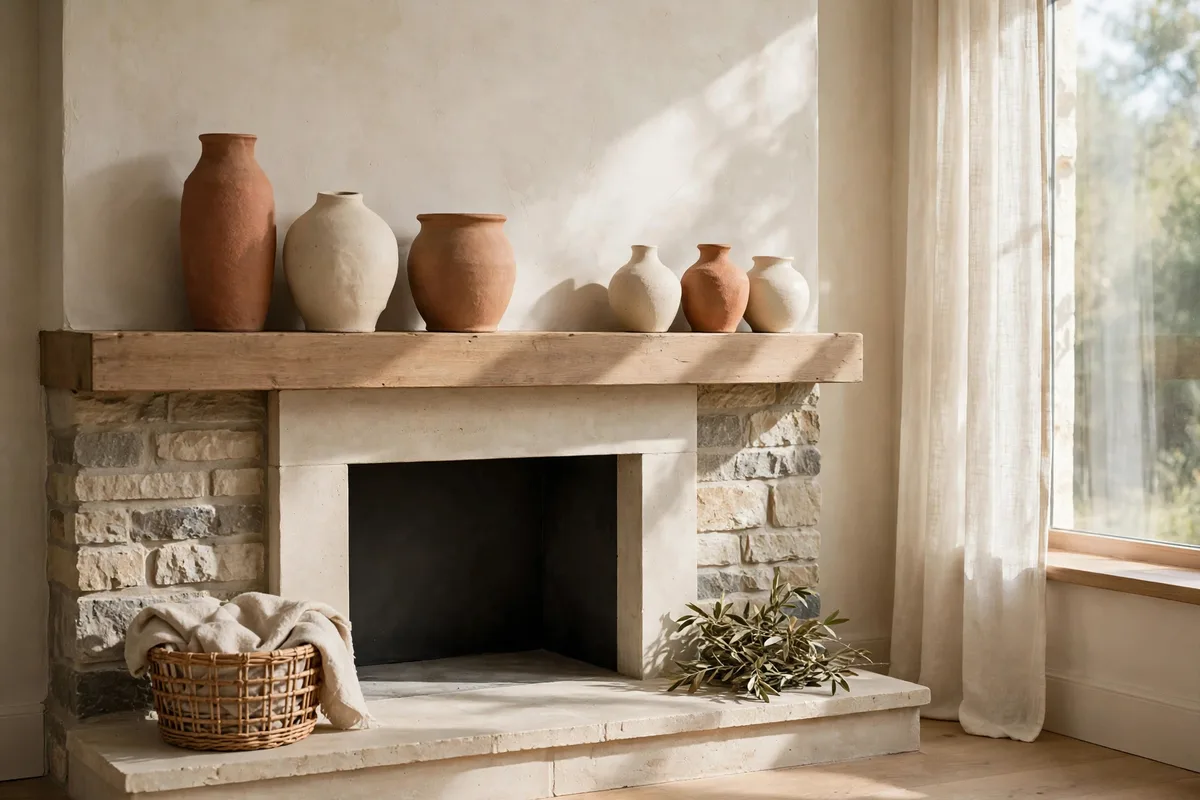
Ceramic is the texture hero of the modern mantel. Vases, vessels and bowls in stoneware, earthenware and porcelain bring a handmade softness that balances hard surrounds, and their glazes — chalky matte to deep glossy green — carry colour onto the shelf.
Look and durability
Matte stoneware feels earthy and contemporary; glossy glazes feel cleaner and more traditional; crackle glazes hide dust gracefully. Ceramic’s weakness is impact, not time: it lasts generations on a shelf but chips if knocked onto a stone hearth. Keep taller vessels toward the back of the shelf, and add museum putty under prized pieces in homes with cats.
Heat safety, weight and cleaning
Ceramic is fired clay — non-combustible and comfortably heat tolerant in normal mantel positions, which makes it one of the safest decorative materials near a working fireplace. It has a useful medium weight: heavier and more stable than glass, lighter than stone. Cleaning is easy — a damp cloth lifts dust and light soot — though unglazed surfaces can hold soot in their pores, so wipe matte pieces a little more often above a wood fire.
Cost feel and best styles
Ceramic runs from inexpensive mass-produced vases to signed studio pottery, and the middle of that range offers the best mantel value anywhere in this article. It suits organic modern, boho, cottage, Mediterranean and minimalist mantels.
5. Stone and Marble: Cool Weight and Veined Drama

Stone brings the mantel its sense of permanence. Marble trays, bookends, boxes and honed stone vessels cool down a warm arrangement, and their veining does the work pattern does elsewhere — every piece a one-off drawn by geology, not a factory.
Look, durability and the staining honest truth
Polished marble reads formal and luminous; honed marble and travertine read softer and more contemporary; rough-cut stone reads rustic. The surface itself is extremely hard-wearing, but marble and other soft stones are porous: candle wax, coloured liquids and even standing water can stain, and acidic substances etch the polish. Treat a marble tray as a beautiful surface that needs coasters and prompt wiping, not as an indestructible one. Granite and quartzite are tougher, less absorbent alternatives.
Heat safety, weight and cleaning
Stone is non-combustible and the most heat-tolerant material here, which is why it has surrounded fireboxes for centuries. Its real constraint is weight: a marble tray is seriously heavy — excellent for stability, but check it against a slender or floating shelf first. Wipe soot away promptly with a damp cloth and mild, non-acidic cleaner; never use vinegar-based sprays on marble.
Cost feel and best styles
Stone sits at the premium end, though small pieces — a single tray, one bookend pair — deliver the look without a surround-sized budget. It suits formal traditional, modern luxe, minimalist and neoclassical mantels, and partners naturally with brass.
6. Glass and Mirror Finishes: Clarity, Colour and Reflection
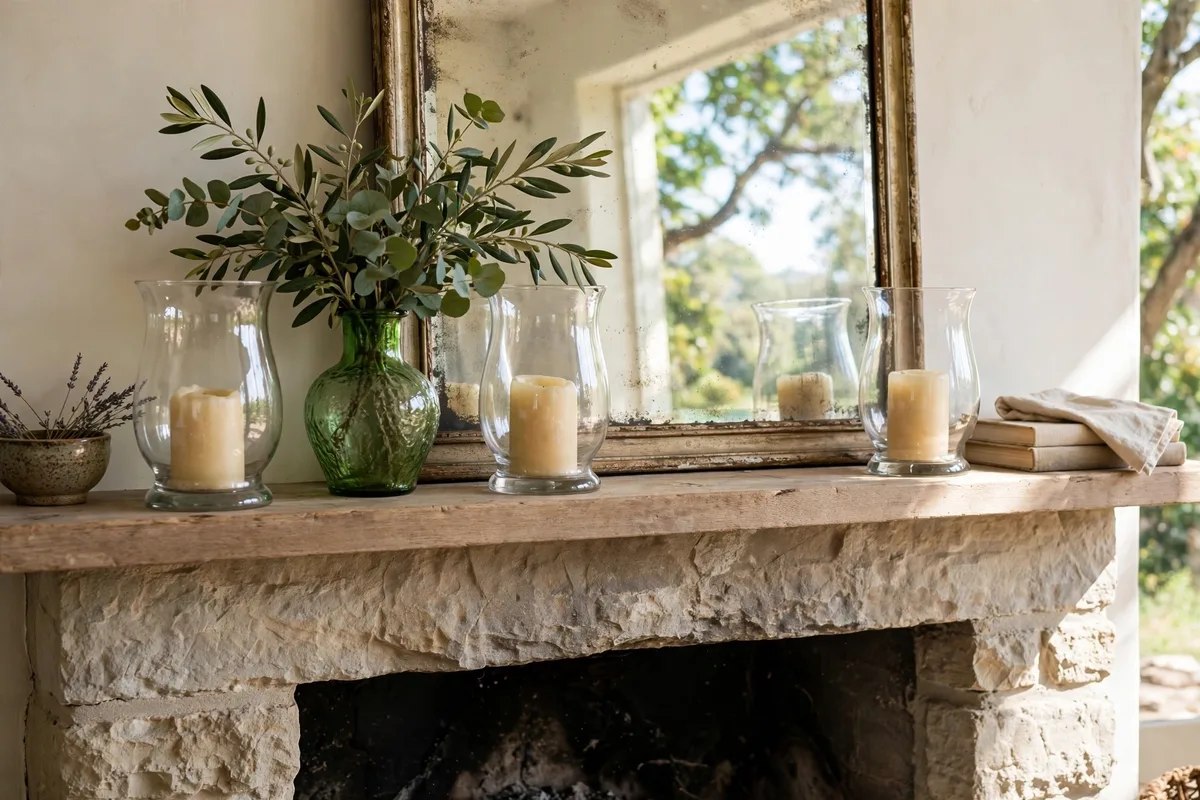
Glass is the lightest touch on the mantel. Hurricanes, cloches, vases, bottles and glass boxes add shine and colour without visual bulk — the material of choice when a shelf already has heavy pieces and needs air.
Look and durability
Clear glass feels clean and coastal; amber, smoke and green glass feel moodier and more collected; seeded and hand-blown glass adds a gentle wobble that suits cottage and vintage schemes. Glass’s limits are obvious and worth respecting: it chips at rims, breaks if it falls, and shows every fingerprint. Place glass where hands rarely reach, and give thick-walled hurricanes the central roles.
Heat safety, weight and cleaning
Glass is non-combustible but dislikes sudden temperature change, so keep it in normal shelf positions, away from a hot flue. Its light weight hurts stability, so group it with something heavier. Soot shows immediately, though a rinse and a lint-free cloth restore it completely.
Cost feel and best styles
Glass is generally inexpensive, with hand-blown and antique bottles at the top of its range. It suits coastal, modern, Scandinavian and airy traditional mantels, and swapping green bottles for amber changes the shelf with the season.
A mirror is both an object and a light source: it doubles candle and firelight glow and gives dark or small rooms a sense of space. Its finish — bright, antiqued or smoked — decides whether the effect feels crisp, romantic or moody.
The three finishes compared
- Bright silvered mirror: clearest reflection, most formal feel; suits traditional, glam and neoclassical mantels.
- Antiqued mirror: foxed silvering that softens reflection into a glow; suits vintage, cottage and collected schemes, and forgives smudges.
- Smoked and bronze mirror: darker, warmer reflection; suits contemporary and moody schemes beside brass and dark wood.
Durability, heat and cleaning
A mirror is glass over a delicate metallic backing. The face is non-combustible in normal shelf positions, but silvering can darken at the edges with heat and humidity, and cleaner running behind the glass accelerates it — spray your cloth, never the mirror. Larger mirrors are heavy and deserve secure fixing; gilt frames suit glamour, wood warmth, thin black metal modern restraint.
Mirrors range from affordable to statement pricing, driven by size and frame. Use one as the anchor when the room needs light more than art.
7. Rattan, Wicker and Woven Fibres: The Soft Structure
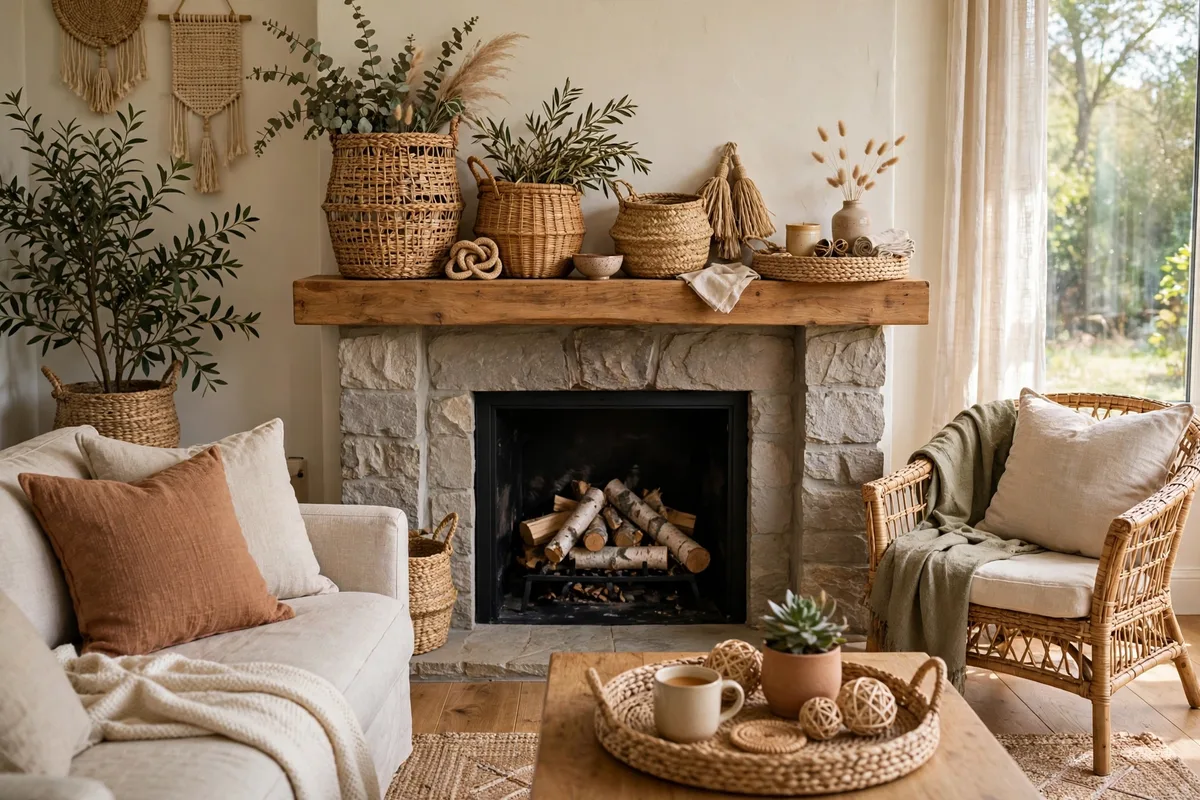
Woven materials — rattan, wicker, seagrass, jute and cane — bring the mantel its softness. Baskets, trays and woven frames break up a shelf of hard, shiny objects, and their handmade irregularity makes a formal fireplace feel lived in rather than staged.
Look, durability and weight
Natural fibres read relaxed and textural in every finish from pale seagrass to dark stained rattan. They are the lightest material in this article, which makes them effortless to move and store, and the least durable: strands fray, weave loosens, and strong sun fades the colour. On a mantel that trade-off is usually worth it, and a woven tray also protects the shelf surface.
Heat safety and cleaning
Dry fibres are combustible, and this section carries the article’s clearest placement rule: woven pieces live on top of the shelf only, set back from the edge, never hung down the fireplace face, never used as a garland base draped toward the opening, and kept well clear whenever a fire is lit, following your fireplace’s clearance guidance. Dust with a dry brush, keep them dry, and expect warm fireplace air to make old fibres brittle over time.
Cost feel and best styles
Woven decor is inexpensive to mid-range and widely available secondhand. It suits coastal, boho, Scandinavian, cottage and relaxed farmhouse mantels, and it is the fastest softener for brick and stone surrounds that feel hard or echoing.
8. Greenery and Faux Botanicals: The Living Material
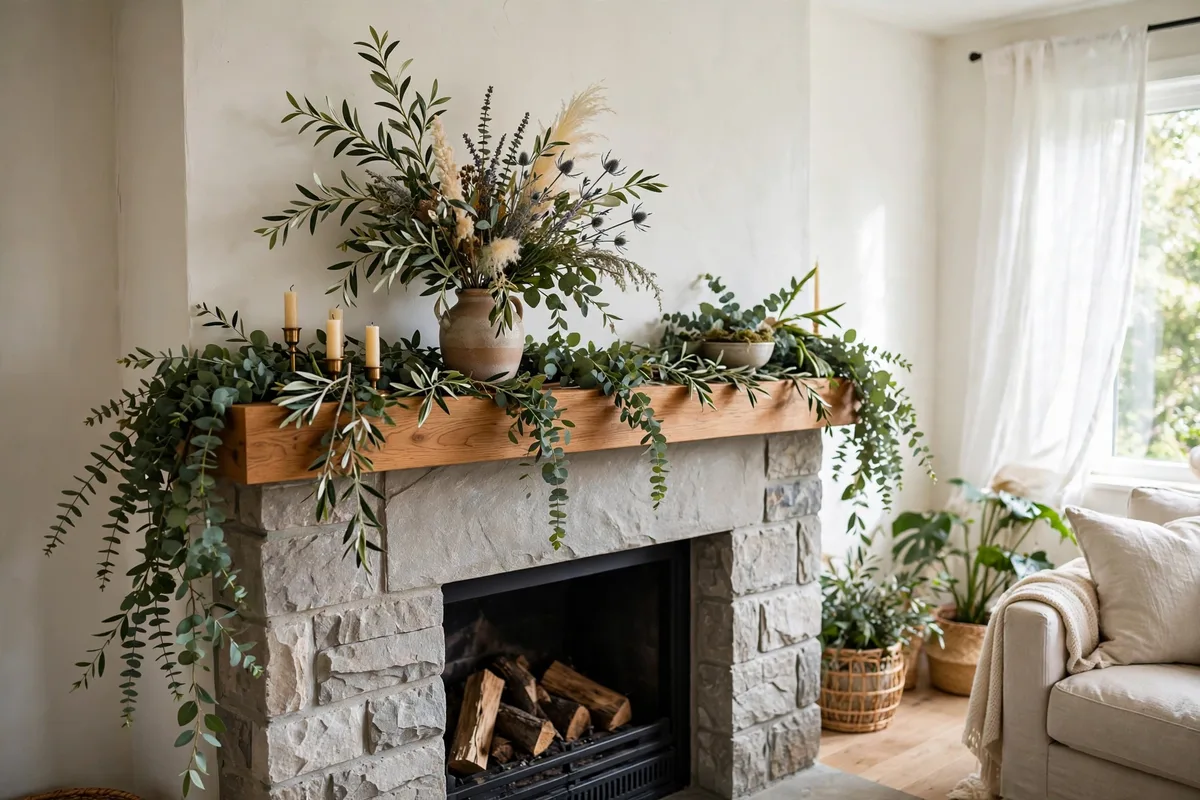
Two material families finish almost every mantel. Greenery — fresh, dried or faux botanical — supplies living shape and colour. Candles and wax supply glow. Neither behaves like the hard materials above, so each needs its own honest safety note before the mixing rules that tie the whole shelf together.
Greenery and faux botanicals as a material
Fresh stems wilt quickly in the warm, dry air above a working fireplace; dried stems last but are flammable and must stay on the shelf, away from the opening. Good faux botanicals are the pragmatic choice — stable and reusable — though they need a gentle wipe to clear dust and soot. Either way, greenery’s job is contrast: soft against stone, organic against metal.
9. Candles and Wax: The Glowing Material
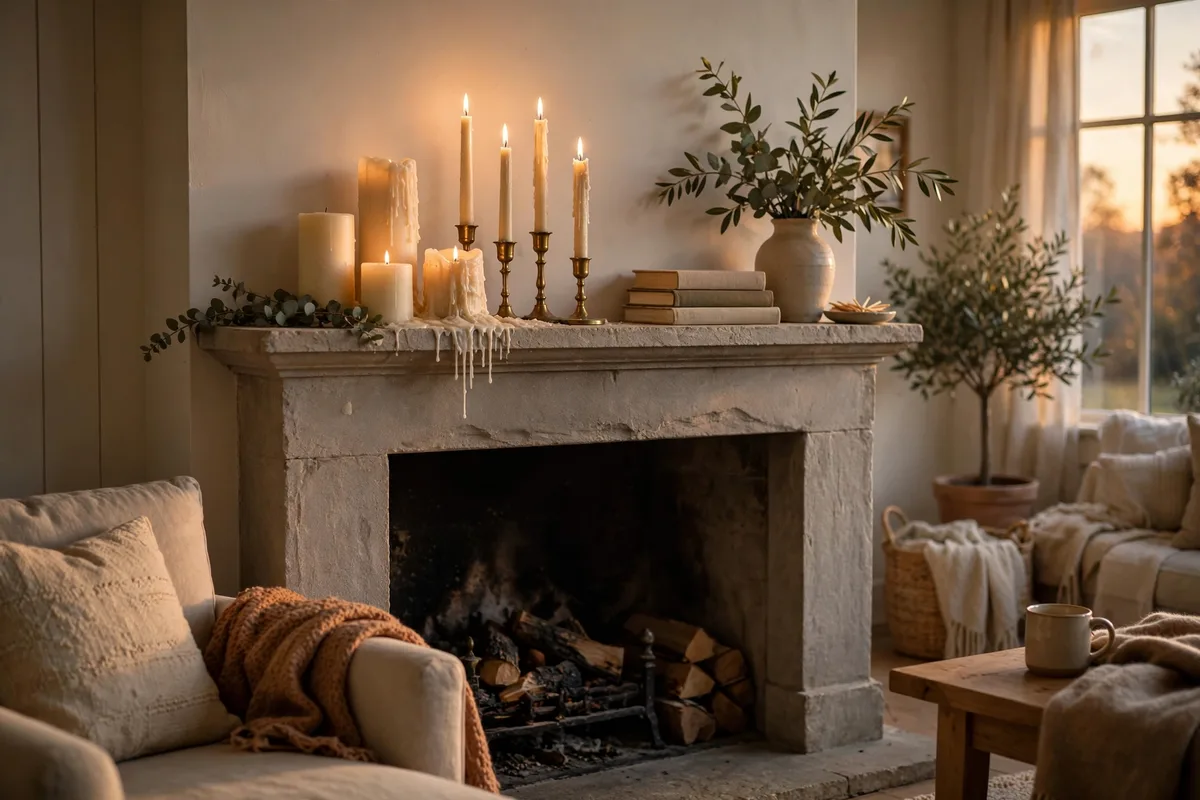
Candles, wax and flameless alternatives
Wax melts, drips and perfumes the room, and a real flame demands respect: candles belong in stable holders on trays, away from greenery and fibres, and never left unattended. Above a frequently used fireplace, quality flameless candles give the same flicker with none of the risk. Beeswax pillars bring a honey tone; white tapers suit every scheme here. These materials at their highest-stakes season — greenery, candles and heat in one arrangement — are our christmas mantel arrangement ideas.
10. Mixing Materials Without Clashing: Formulas That Work
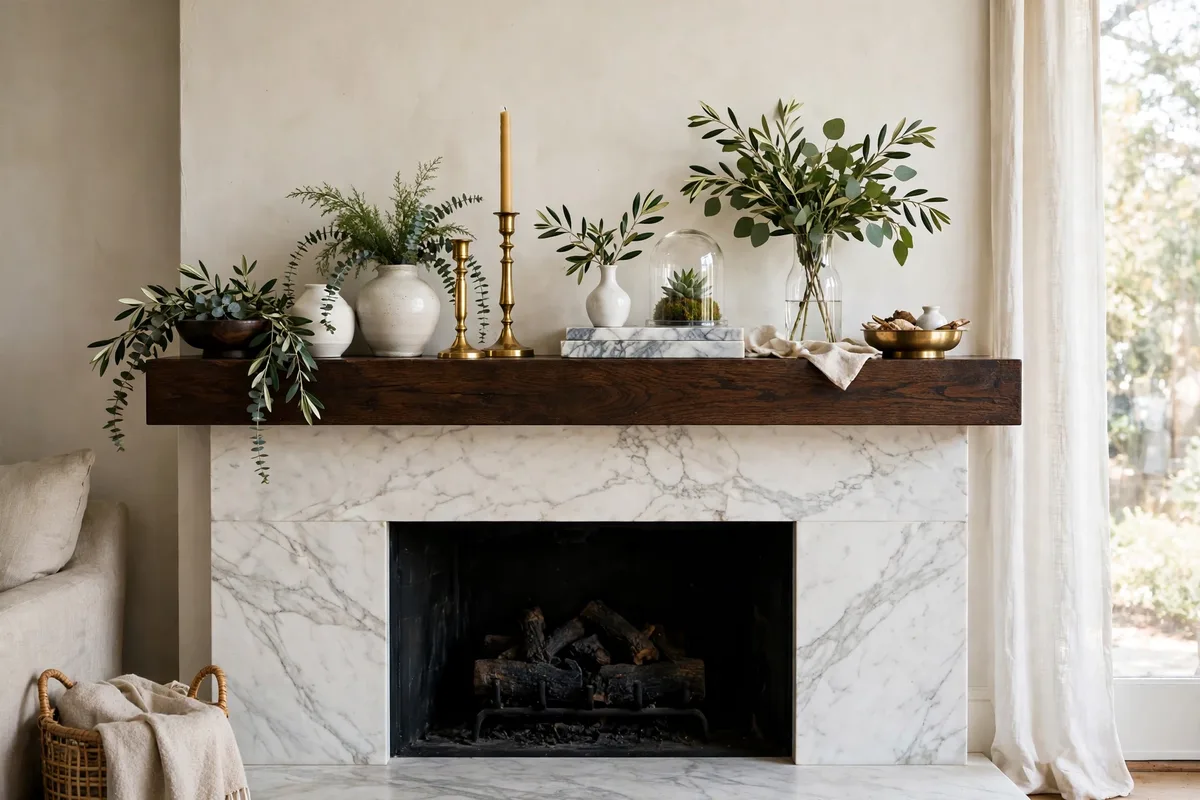
Mixing materials without clashing: three working formulas
- Classic warmth: marble tray + brass candlesticks + greenery — cool, warm and living.
- Organic modern: matte ceramic + pale wood bowl + one glass hurricane — texture works, colour stays quiet.
- Relaxed coastal: woven tray + white ceramic + green glass — soft, matte and transparent.
Whatever formula you start from, hold to two rules: repeat each material at least twice so nothing looks stranded, and include at least one matte, one shiny and one soft material. For complete styled examples of these combinations in finished rooms, browse the fireplace mantel styling ideas listicle after you have chosen your materials here.
Frequently Asked Questions About Mantel Decor Materials
What is the safest mantel decor material near a working fireplace?
Safest on the shelf are the non-combustible materials: ceramic, stone and marble, solid metals such as brass and iron, and glass in normal shelf positions. Keep combustible decor — wood, woven fibres, dried stems, paper, fabric — on top of the shelf only, well away from the opening, and follow your fireplace manufacturer’s instructions and local clearance codes.
Can I put wooden decor on a mantel above a real fire?
Yes, with placement discipline. Wooden bowls, frames and trays are fine on top of the shelf. Nothing wooden should hang down the fireplace face, lean against the opening or drape toward the fire — keep bead garlands along the back of the shelf.
Does brass need polishing, or can I leave the patina?
Both are legitimate. Lacquered brass holds a bright shine with just dusting; unlacquered brass deepens into a soft patina many people prefer. Polish only when you want the formal look back, and wipe soot off regularly either way.
Is marble a practical material for mantel trays and objects?
Marble is heat tolerant but porous: candle wax and coloured liquids stain it, and acidic cleaners etch it. Use trays under candles, wipe spills promptly, clean with mild non-acidic products, or choose granite for the stone look with less maintenance.
How do I stop ceramic vases from chipping on the mantel?
Place taller vessels toward the back of the shelf, keep heavy pieces where they cannot be knocked into the ceramic, and add museum putty under valuable pieces in homes with cats or children.
Are faux botanicals better than fresh greenery on a mantel?
For a working fireplace, usually yes. Fresh stems wilt within days in the warm, dry air and dried stems become a flammability concern, while good faux stems hold their shape for years. Dust faux stems with a gentle wipe or rinse to keep them convincing.
Can I mix brass, black iron and chrome on one mantel?
Yes, if one finish clearly dominates and each minority finish appears at least twice. The easier discipline is temperature: warm metals (brass, copper) together, or cool metals (chrome, steel) together, with matte black iron as a neutral bridge.
Why does my mantel look flat even with nice objects on it?
Flatness is usually a materials problem. If everything is shiny, everything is matte, or everything is the same ceramic, the eye finds no contrast. Add the missing category — something soft, something reflective, or something warm like wood or brass.
Are real candles safe on a mantel?
Real candles need stable holders, a drip tray, distance from greenery and woven fibres, and should never be left burning unattended. Above a fireplace you light often, flameless candles are the safer default and still give the evening flicker.
Which mantel materials are best on a budget?
Ceramic, glass and woven fibres: a mid-range ceramic vase, thrifted glass bottles and a woven tray build a complete material mix for very little. Add one investment piece — solid brass candlesticks are the classic — and everything around it looks more expensive.
Conclusion
Materials are how a small shelf does its outsized job well. Choose one anchor with presence, one supporting material for shine or warmth, and one soft layer to keep it human. Check the heat column before the look column if your fireplace works, respect weight on slender shelves, and let honest materials age honestly — brass into patina, wood into character.
Start with what you already own, sort it by material rather than by object, and the gaps will name themselves: missing matte texture means ceramic, missing warmth means wood, missing light means mirror or glass. Buy the material, not just the thing.