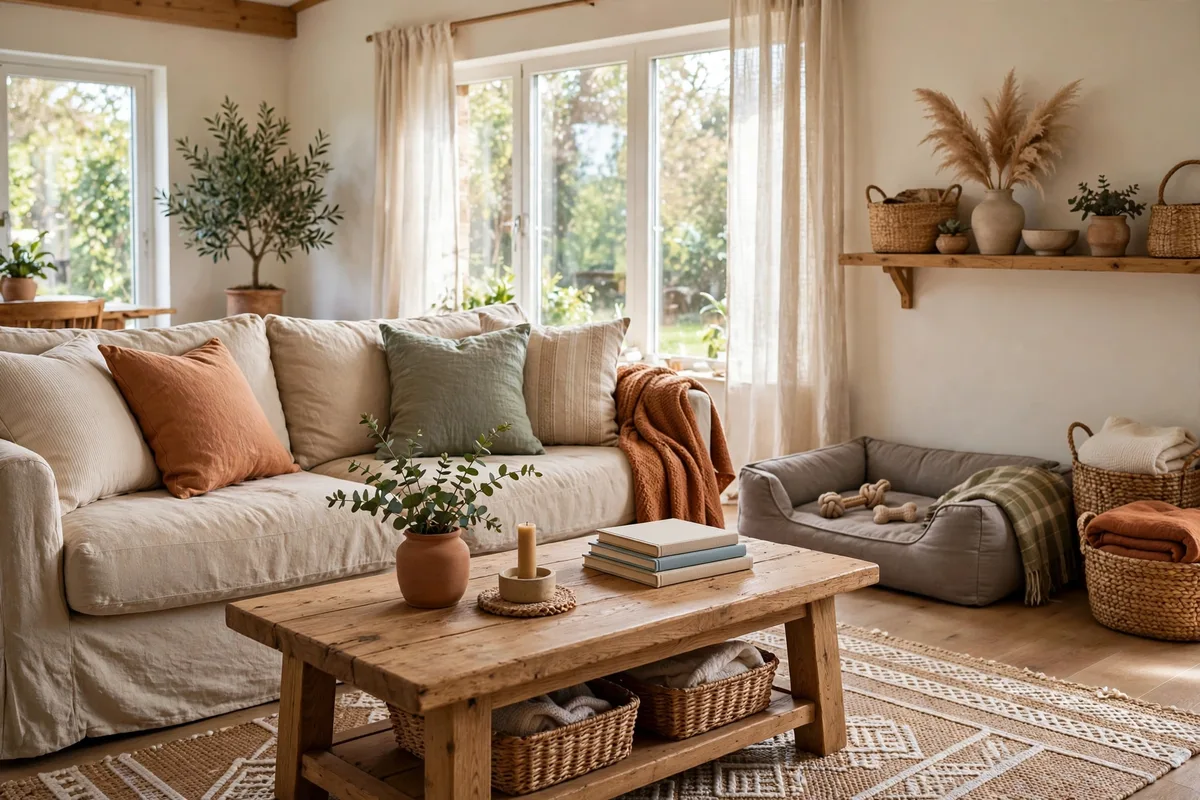
Most families do not choose the wrong living room style. They choose a style that was designed for a different life. A pale, precise scheme that looks beautiful in a photograph becomes exhausting with a toddler, a muddy dog, and homework spread across the coffee table, while a room built only for survival can end up feeling like a waiting room nobody actually enjoys sitting in. The style itself is rarely the problem. The match between the style and your family is.
This guide compares eight family-friendly living room style directions side by side, judged on the same five things every time: the look, the family stage it suits best, its durability strengths, its honest weaknesses, and its budget feel. If you want the underlying principles first, start with our broader family-friendly living room styles guide, then come back here to make the actual decision. By the end, you should be able to name one lead style for your room, and know exactly what you are trading away to get it.
In this guide: How to Compare Family Living Room Styles Before You Choose · Relaxed Modern: Clean Lines That Forgive Daily Life · Scandinavian Practical: Light, Simple and Easy to Reset · Transitional Classic: The Middle Ground Families Grow Into · Farmhouse Durable: Warm, Sturdy and Pattern-Friendly · Coastal Easy-Care: Bright, Breezy and Washable by Design · Mid-Century Low-Profile: Compact, Grounded and Teen-Friendly · Contemporary Performance-Fabric: Polished Looks Built to Be Cleaned · Eclectic Forgiving: Mixed, Personal and Hard to Ruin · Choose by Your Family: Match the Style to Your Stage
What makes a living room family friendly? Four things: surfaces that wash, edges that forgive, storage that closes, and pieces that can be repaired or replaced without tears. Every style in this guide is simply a different way of buying those four — the comparison tells you which way suits your family’s stage.
1. How to Compare Family Living Room Styles Before You Choose
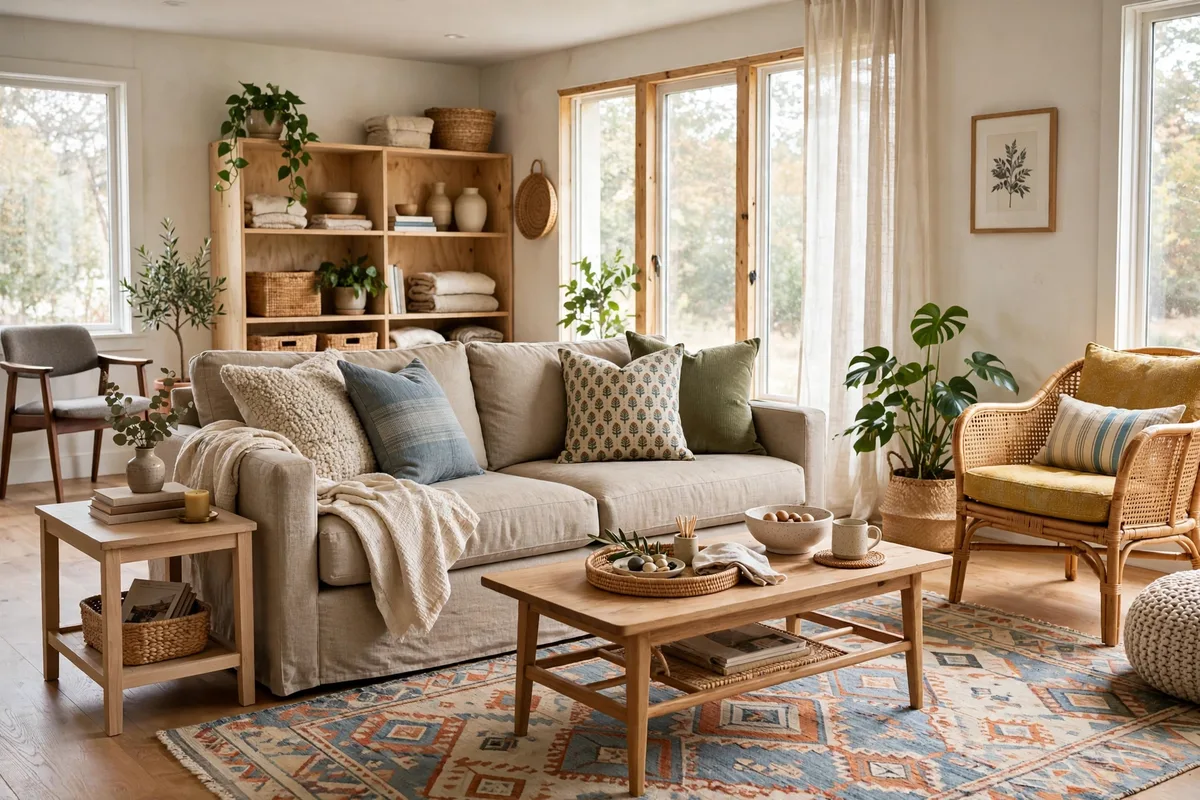
Style names are marketing shorthand, not guarantees. Two rooms can both call themselves Scandinavian and behave completely differently, because what decides family life is not the label but the materials, colours, silhouettes, and maintenance each style encourages. So compare styles by what they ask of you day to day. A style that depends on pale, dry-clean fabrics and fragile display pieces asks for constant vigilance. A style built on pattern, washable covers, and sturdy wood asks for almost none. That difference, not the mood board, is what you will live with.
Use the table below as the map for the whole guide. Each style gets a full section afterwards, but this overview already shows the pattern: every direction is strong for one kind of family and quietly wrong for another.
| Style | The look in one line | Best family stage | Budget feel |
|---|---|---|---|
| Relaxed modern | Clean lines, warm neutrals, low fuss | School-age children and teens | Mid-range, fewer pieces |
| Scandinavian practical | Light wood, white and soft colour, calm order | Toddlers in small homes, tidy families | Low to mid, widely available |
| Transitional classic | Tailored, balanced, neither old nor new | Multi-generational households | Mid to high, built to last |
| Farmhouse durable | Warm wood, pattern, sturdy and welcoming | Toddlers, pets, big gatherings | Low to mid, thrift-friendly |
| Coastal easy-care | Bright, breezy, washable and relaxed | Pets, beach and summer living, teens | Low to mid, cover-based |
| Mid-century low-profile | Low, grounded, warm wood and colour | Teens, small rooms, design lovers | Mid, vintage varies widely |
| Contemporary performance-fabric | Sleek, polished, engineered textiles | Style-first parents, older children | High, fabric is the spend |
| Eclectic forgiving | Mixed, layered, personal and collected | Every stage, growing families | Low, second-hand friendly |
The five questions to ask of any style
- Can it be washed? Covers, cushions, and rugs you can clean at home forgive more than any other feature.
- Does pattern hide daily life? Mid-tone colour and small pattern conceal crumbs, paw prints, and wear between cleans.
- Can it be repaired or replaced cheaply? Styles built on common, available pieces recover from damage without drama.
- Will it suit your family in five years? Toddlers become teens quickly; a flexible base outlasts a themed one.
- Does the seating suit the oldest and youngest? Seat height and depth matter as much as fabric in a shared room.
The Practical Layer: A Surface-by-Surface Kid-Proofing Checklist
| Surface | The family-proof choice | Why |
|---|---|---|
| Walls | Washable paint sheen (eggshell or satin) at least at child height | Scuffs and crayon wipe off instead of repainting |
| Sofa | Slipcovers or performance fabric, mid-tone or patterned | Mid-tones hide the ordinary day; covers go in the wash |
| Coffee table | Round, or an upholstered ottoman instead | No sharp corner at toddler head height |
| Floor | Washable rug or carpet tiles | Spills leave with the rug, not into the floor |
| Storage | Enclosed and low — doors, lids, baskets with tops | Toys disappear in seconds; nothing teeters on open shelves |
| Decor | Unbreakable at child height; precious pieces above it | The room stays styled without a no-touch zone |
| Lighting & cords | Lamps placed out of pull-reach, cords routed along walls | Nothing topples or trails where small hands explore |
The Safety Block (Do These Whatever Your Style)
Anchor tall bookcases, storage units and the television to the wall — toppling furniture is a quiet, preventable risk in any room a toddler climbs in. Keep blind cords out of reach with cleats or cordless blinds. Treat corner protectors on hard tables as a bridge measure, not a solution: the lasting fix is choosing round or upholstered pieces at child height, as the checklist above sets out.
2. Relaxed Modern: Clean Lines That Forgive Daily Life
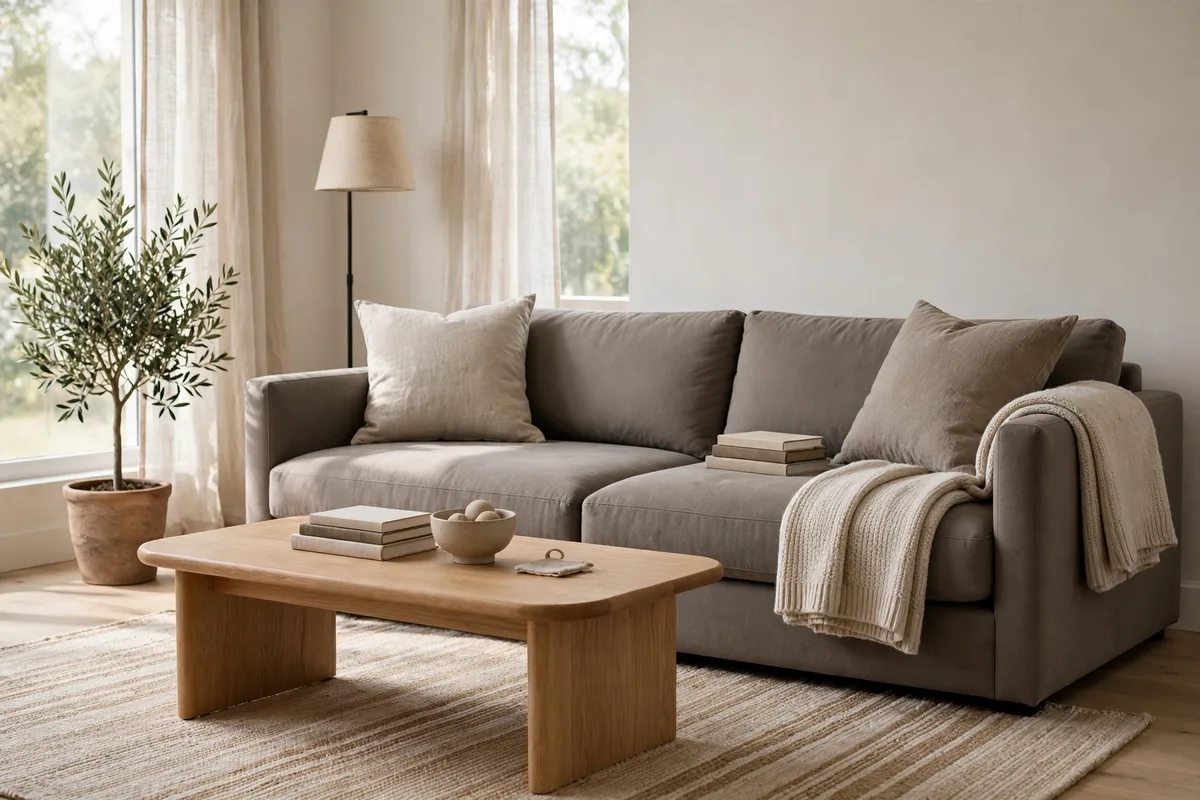
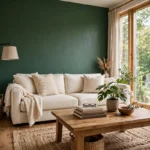
Relaxed modern takes the calm of modern design and softens it for real homes. Think clean-lined sofas in warm grey, oatmeal, or soft taupe, simple wood tables, a flatweave rug, and very little ornament. Nothing is sharp, precious, or overly arranged, and the palette sits deliberately in the forgiving middle: too light shows everything, too dark shows every crumb and hair, but warm mid-tones hide an ordinary day remarkably well. It is the style most families picture when they say they want a room that looks grown-up without feeling fragile.
Its weakness is discipline. With so few pieces, each one shows, so the room drifts quickly when toys, chargers, and paperwork have no closed storage to land in. It also needs texture to avoid feeling flat: one woven throw, one leather or wood accent, and one plant do more here than another cushion.
Family verdict
- Best family stage: School-age children and teenagers, and parents who want the room to double as a calm adult space in the evening.
- Durability strengths: Mid-tone upholstery, uncluttered surfaces that are quick to clear, and simple shapes that do not date or chip decoratively.
- Weaknesses: Minimal storage by instinct, pale versions stain visibly, and too little pattern means wear shows honestly.
- Budget feel: Mid-range. You buy fewer things, but the sofa and rug carry the room, so those two purchases matter most.
3. Scandinavian Practical: Light, Simple and Easy to Reset
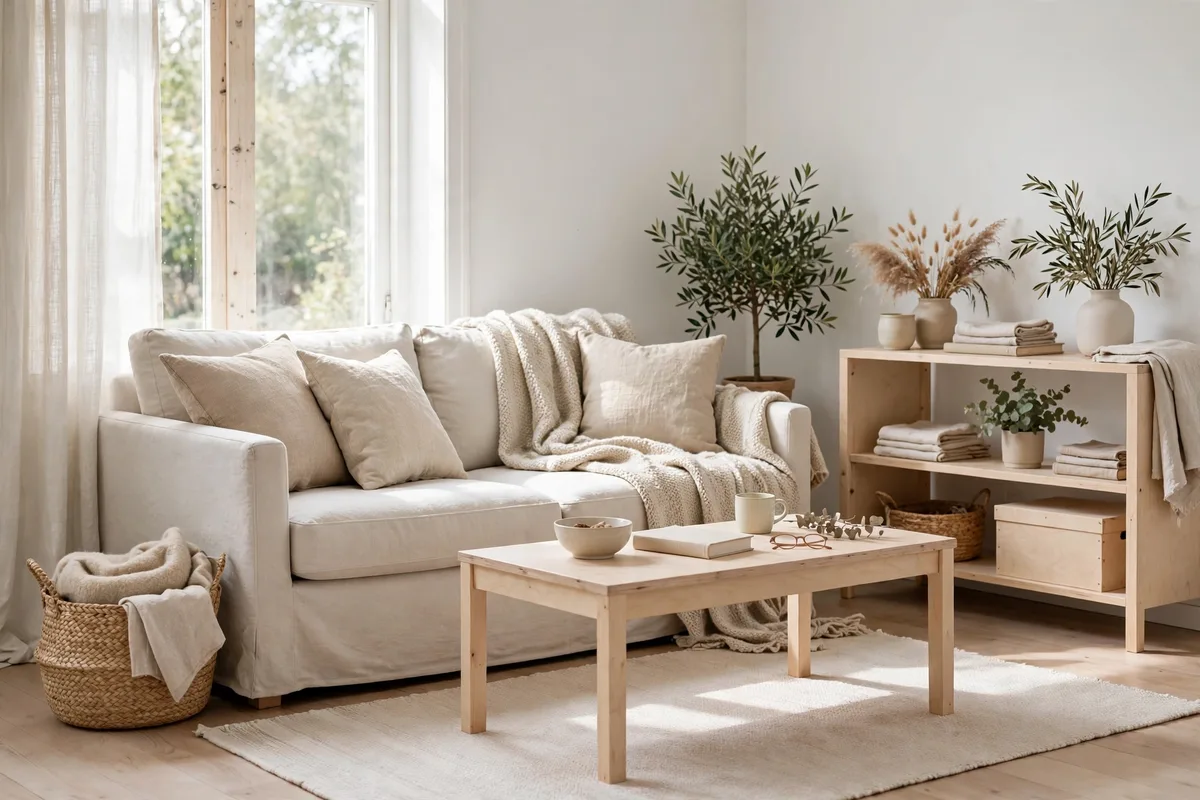
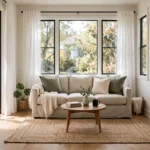
Scandinavian style is built on light, function, and restraint: white or pale walls, light wood, simple furniture raised on legs, and a small number of useful objects, softened with wool, linen, and warm lighting. For families, its hidden strength is speed. A room with few, lightweight pieces and clear floor space can be reset in minutes, toys gather easily, and small rooms feel bigger and calmer than they have any right to. It also suits renters, because the look lives in furniture and textiles rather than in fixed changes.
The trade-off is colour. The classic pale palette is the least forgiving finish a toddler can meet, and the style only works for young families in its warmer, practical form: washable covers, mid-tone cushions, patterned or washable rugs, and wood allowed to show life rather than kept pristine. Keep the simplicity, negotiate the whiteness.
Family verdict
- Best family stage: Toddlers and young children in smaller homes, and naturally tidy families who own less.
- Durability strengths: Lightweight, movable furniture, washable textiles, clear floors that are easy to clean, and pieces that are cheap to replace.
- Weaknesses: Pale fabrics and rugs mark quickly, minimal storage fills fast, and the look can feel cold without enough textile warmth.
- Budget feel: Low to mid-range. Flat-pack and high-street versions are everywhere, though real wool and solid wood cost more.
4. Transitional Classic: The Middle Ground Families Grow Into
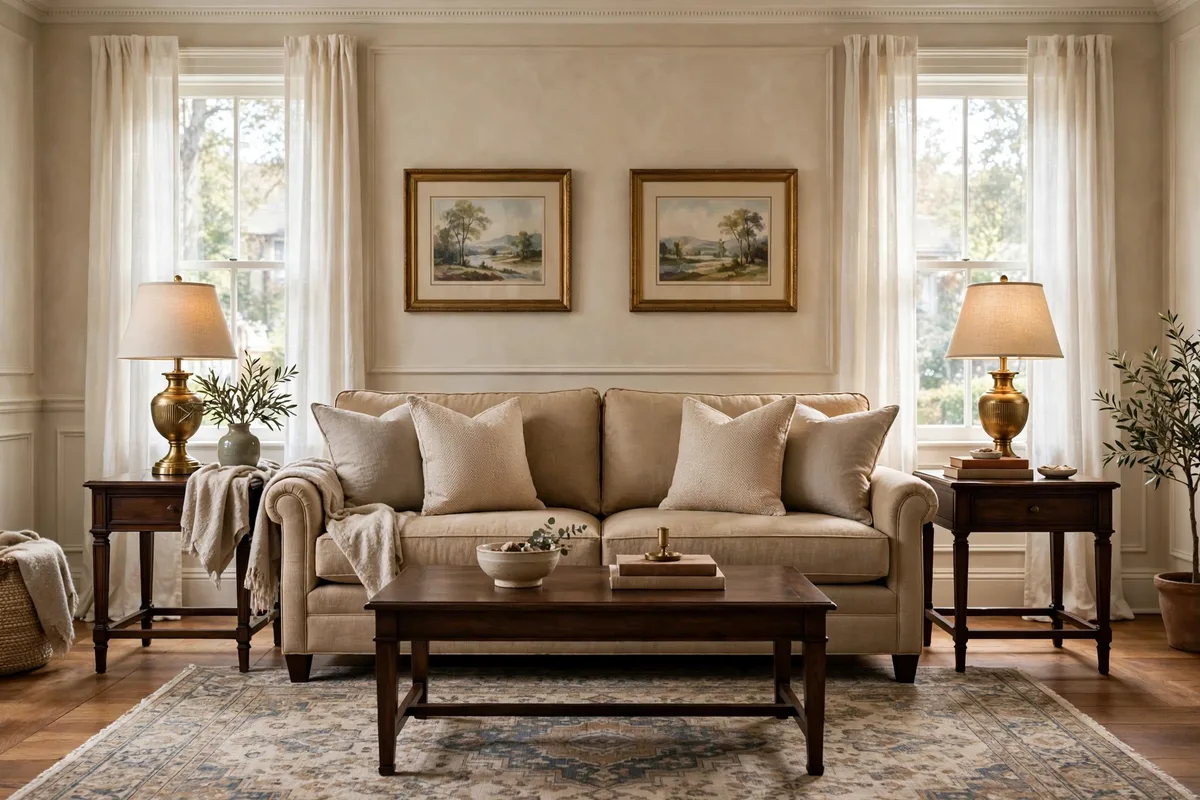
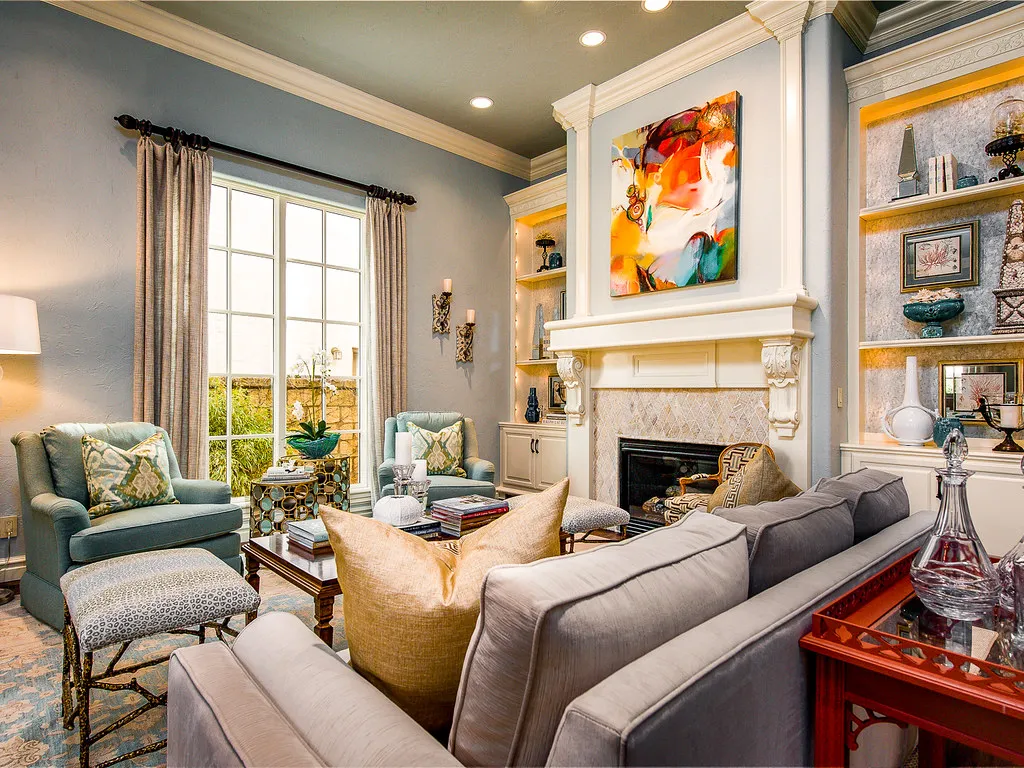
Transitional style sits deliberately between traditional and modern: tailored sofas with gentle curves, balanced layouts, wood in medium tones, quiet patterns, and decor that aims to look settled rather than fashionable. For family life, that middle position is its superpower. It flatters houses of almost any age, welcomes both grandparents and teenagers without either group feeling the room was designed against them, and it ages so slowly that a well-chosen transitional sofa can survive several childhoods without looking tired or themed.
It is also the easiest style to make dull. Safe can slide into beige, and the tailored look relies on decent upholstery and proportion rather than on cheap shortcuts, so budget versions often look like a furniture showroom set. Keep one element with character: a patterned rug, a coloured chair, or art with a story.
Family verdict
- Best family stage: Multi-generational households, and families settling into a long-term home.
- Durability strengths: Timeless shapes that never need re-doing, quality frames, balanced layouts that suit every age, and patterns that hide wear politely.
- Weaknesses: Can feel bland without a confident accent, good upholstery costs more, and formal symmetry fights very informal layouts.
- Budget feel: Mid to high. It rewards buying once and buying well, and punishes buying twice.
5. Farmhouse Durable: Warm, Sturdy and Pattern-Friendly

Farmhouse style was practical before it was fashionable. Sturdy wood tables that improve with knocks, slipcovered seating, plaid, stripe, and small floral patterns, woven baskets, and a general expectation that the room will be used hard and loved anyway. Pattern is its armour: a checked cushion or a busy vintage-style rug hides crumbs, pet hair, and the evidence of craft projects better than any plain fabric, and distressed or matte finishes mean a new scratch simply joins the old ones instead of announcing itself.
Its risks are theme and weight. Pushed too far with signs, props, and matching rustic everything, it can feel like a stage set, and heavy solid pieces are hard to move for cleaning or rearranging. Modern farmhouse fixes both: keep the sturdy bones and washable covers, drop the decoration that serves no purpose.
Family verdict
- Best family stage: Toddlers, dogs, and households that host often and feed people in this room.
- Durability strengths: Distressed finishes hide damage, patterns camouflage daily mess, slipcovers wash, and solid wood repairs well.
- Weaknesses: Heavy furniture is hard to move, over-theming dates quickly, and pale farmhouse paint shows scuffs at floor level.
- Budget feel: Low to mid-range. Second-hand wood, thrifted textiles, and handmade pieces suit it perfectly.
6. Coastal Easy-Care: Bright, Breezy and Washable by Design
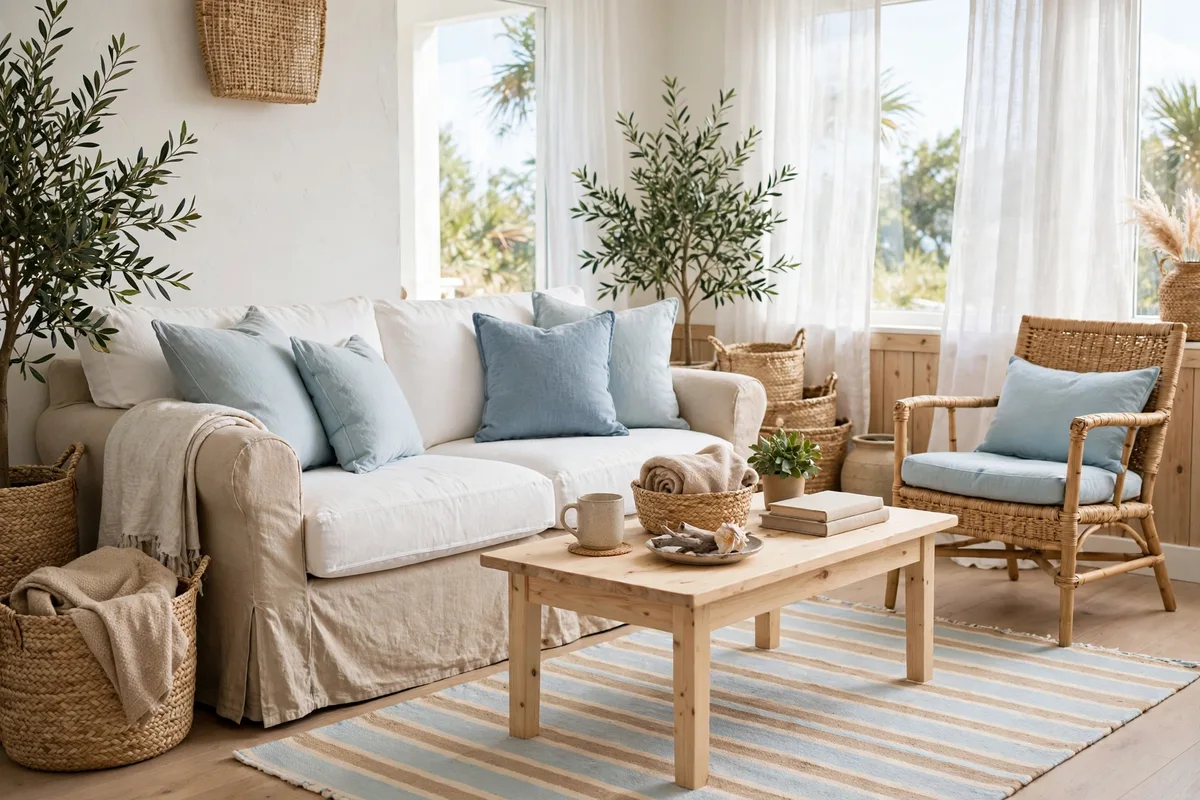
Coastal style earns its family reputation through one habit: washability. White and sandy slipcovers that go in the machine, cotton and linen-look fabrics, washable striped rugs, rattan and pale wood, and a bright blue-and-white palette borrowed from the beach. It assumes sand, wet towels, and ice lollies exist, and plans for them. Few styles forgive a spill so gracefully, because the whole look is built on covers coming off, being washed, and going back on slightly rumpled, which the style reads as charm rather than damage.
The weakness hides inside that signature white. Covers wash well, but they still need washing often, and households with dark-haired dogs or muddy winters will live at the machine. Choose sandy, striped, or denim-blue covers over pure white and coastal becomes far more realistic while keeping the same airy feel.
Family verdict
- Best family stage: Pet households, warm climates, and families with teenagers who live in the room all summer.
- Durability strengths: Machine-washable covers, hard-wearing cotton weaves, light colours that bleach clean, and relaxed finishes that welcome rumples.
- Weaknesses: White versions need constant laundry, themed shell-and-rope decor dates, and light rugs show mud in wet climates.
- Budget feel: Low to mid-range. Covers refresh a sofa cheaply, and the palette is available at every price.
7. Mid-Century Low-Profile: Compact, Grounded and Teen-Friendly
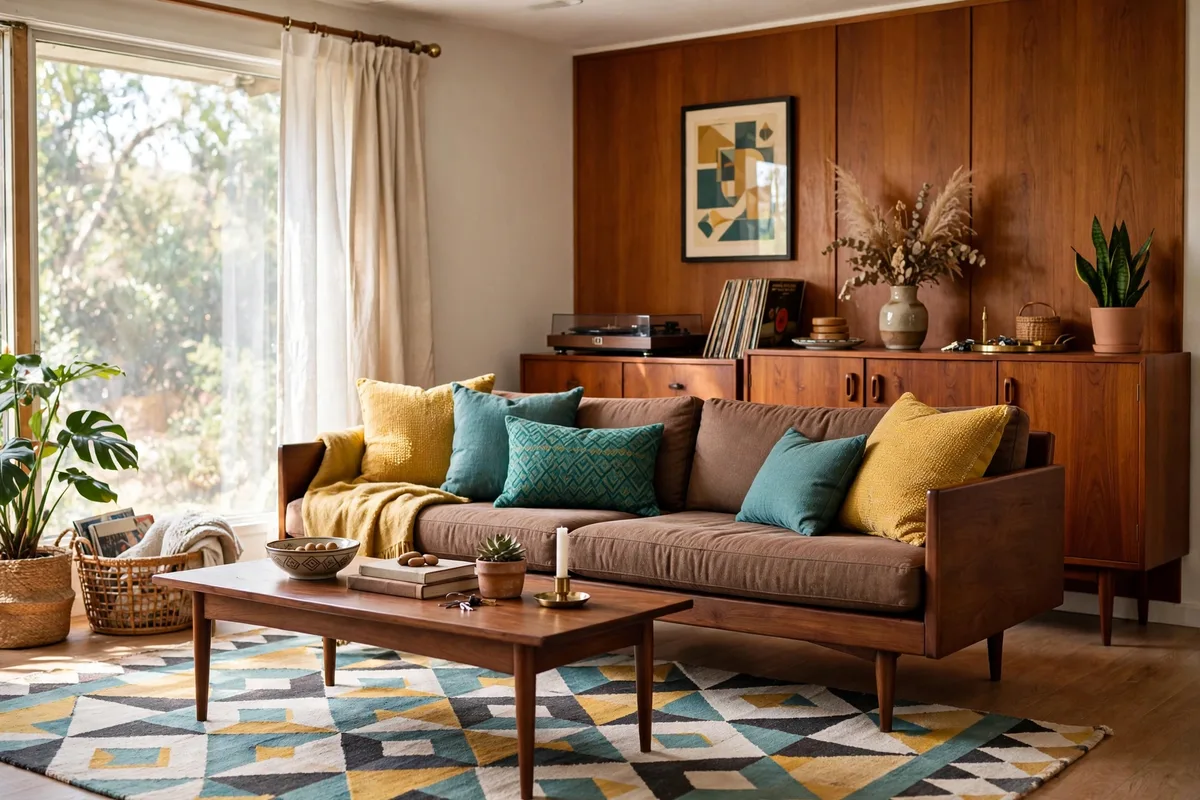
Mid-century style brings low, grounded furniture, warm walnut and teak tones, tapered legs, and confident colour in mustard, teal, olive, and burnt orange. For families it offers two real advantages. Low-profile seating keeps sightlines open and suits smaller rooms and media-focused living, and its compact, well-made vintage pieces often outlast newer equivalents. Teenagers tend to rate it highest of all eight styles: it feels designed and adult without feeling like their grandparents’ parlour.
For younger children and older adults, the same low profile is the problem. Toddlers climb furniture that sits at their perfect height, and grandparents struggle to rise from deep, low seats. Glass and sharp-cornered vintage pieces also need honest checking. Choose rounded forms, pair one low sofa with higher supportive chairs, and it adapts.
Family verdict
- Best family stage: Teenagers, design-loving parents, and smaller living rooms.
- Durability strengths: Dense vintage wood, low centre of gravity, compact footprints, and jewel tones that disguise marks well.
- Weaknesses: Low seats challenge older knees, authentic pieces can be fragile or costly, and sharp vintage corners suit toddlers badly.
- Budget feel: Mid-range and unpredictable. Vintage finds can be bargains or collector prices; reproductions smooth the cost.
8. Contemporary Performance-Fabric: Polished Looks Built to Be Cleaned
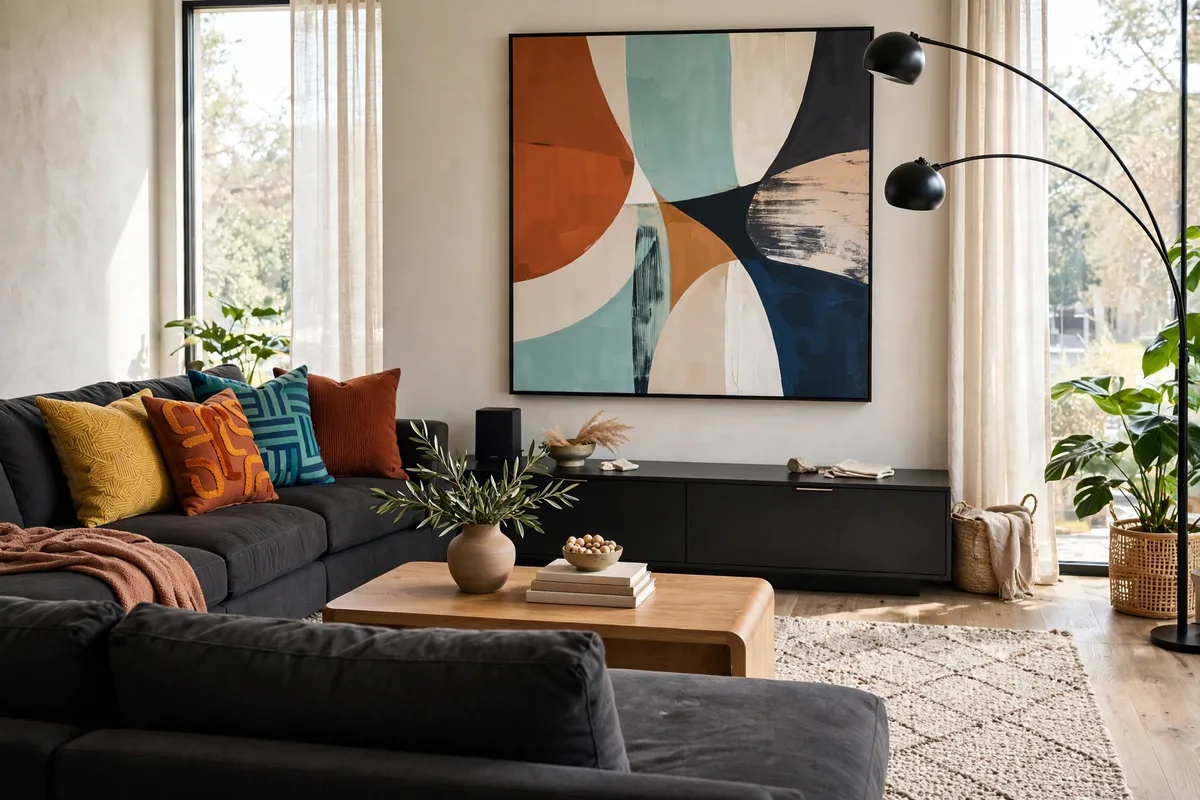
Contemporary style is the polished one: sleek sectionals, smooth surfaces, strong contrast, statement lighting, and a curated, current feel. Its family version survives because of materials science rather than camouflage. Performance fabrics engineered to resist stains and release them with water, wipeable surfaces, and closed storage let a room look sharp even with children in it, provided the budget supports the fabrics doing the heavy lifting. This is the style for parents who refuse to postpone good design until the children grow up.
That promise has conditions. Performance fabric is not magic: seams, cushions in pale colours, and glossy surfaces still show fingerprints, pet hair, and scratches, and cheap imitations of the look fail fastest of all eight styles here. It also dates quickest, because contemporary means current.
Family verdict
- Best family stage: Style-first parents, older children, and households that entertain adults regularly.
- Durability strengths: Engineered stain-resistant upholstery, wipeable hard surfaces, closed storage, and confident dark options that hide wear.
- Weaknesses: Highest cost per seat, glossy finishes show every mark, trends date it, and budget lookalikes wear poorly.
- Budget feel: High. The fabric and the storage are the spend; economising on either removes the point of the style.
9. Eclectic Forgiving: Mixed, Personal and Hard to Ruin
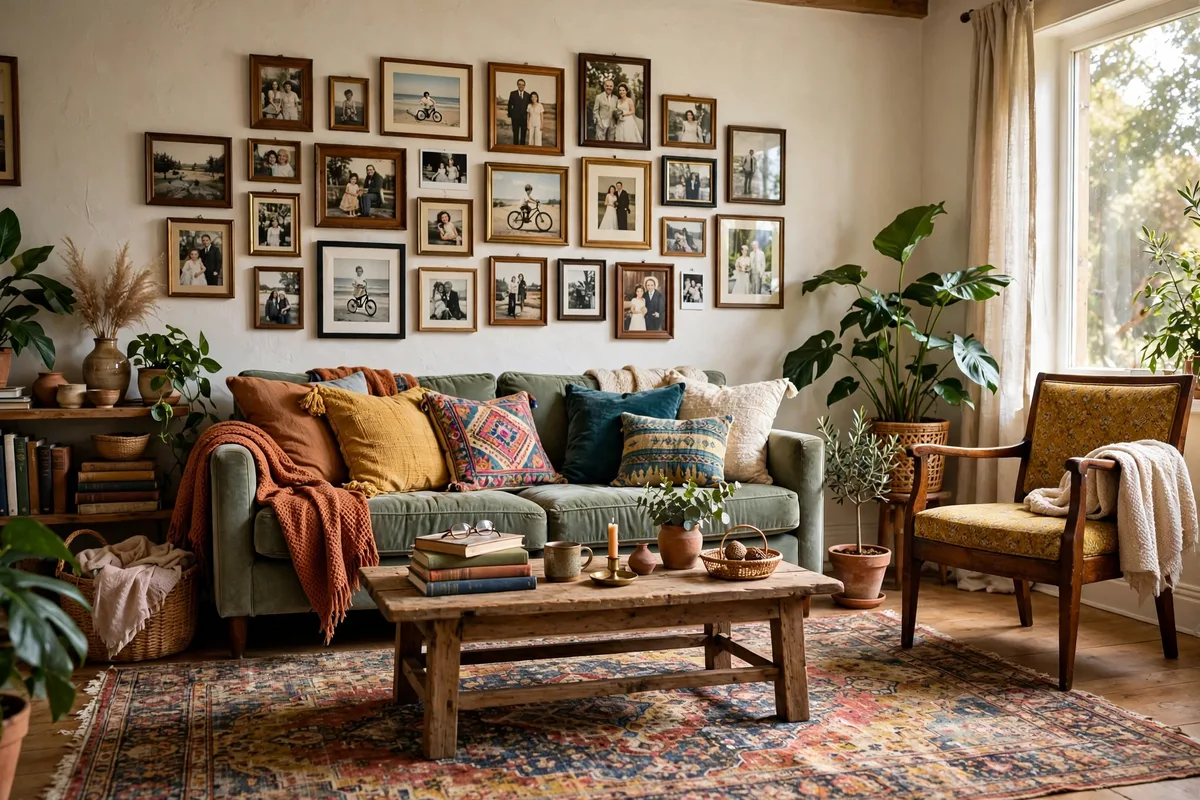
Eclectic style mixes pieces, patterns, colours, and eras on purpose, and that makes it the most forgiving direction of all. A room that never matched cannot be ruined by one replacement chair, a child’s chosen cushion, a holiday souvenir, or a hand-me-down rug. It grows the way families actually grow: one piece at a time, each with a reason. Layered pattern hides wear, varied seating suits varied bodies and guests, and nothing needs protecting from real life because real life is the decoration.
Freedom is also its failure mode. Without any discipline, eclectic slides into cluttered, and guests can read it as mess rather than character. Give it two rules: one repeated colour that ties the room together, and one clear surface that always stays empty. Inside those lines, almost anything your family loves is allowed to stay.
Family verdict
- Best family stage: Every stage, especially growing families whose needs and tastes keep changing.
- Durability strengths: Nothing needs to match, pattern hides wear, pieces replace individually, and personal objects are features, not risks.
- Weaknesses: Easily becomes cluttered, hard to describe when shopping, and resale or restyling later takes editing.
- Budget feel: Low. Second-hand, inherited, and one-at-a-time buying are not compromises here; they are the method.
10. Choose by Your Family: Match the Style to Your Stage
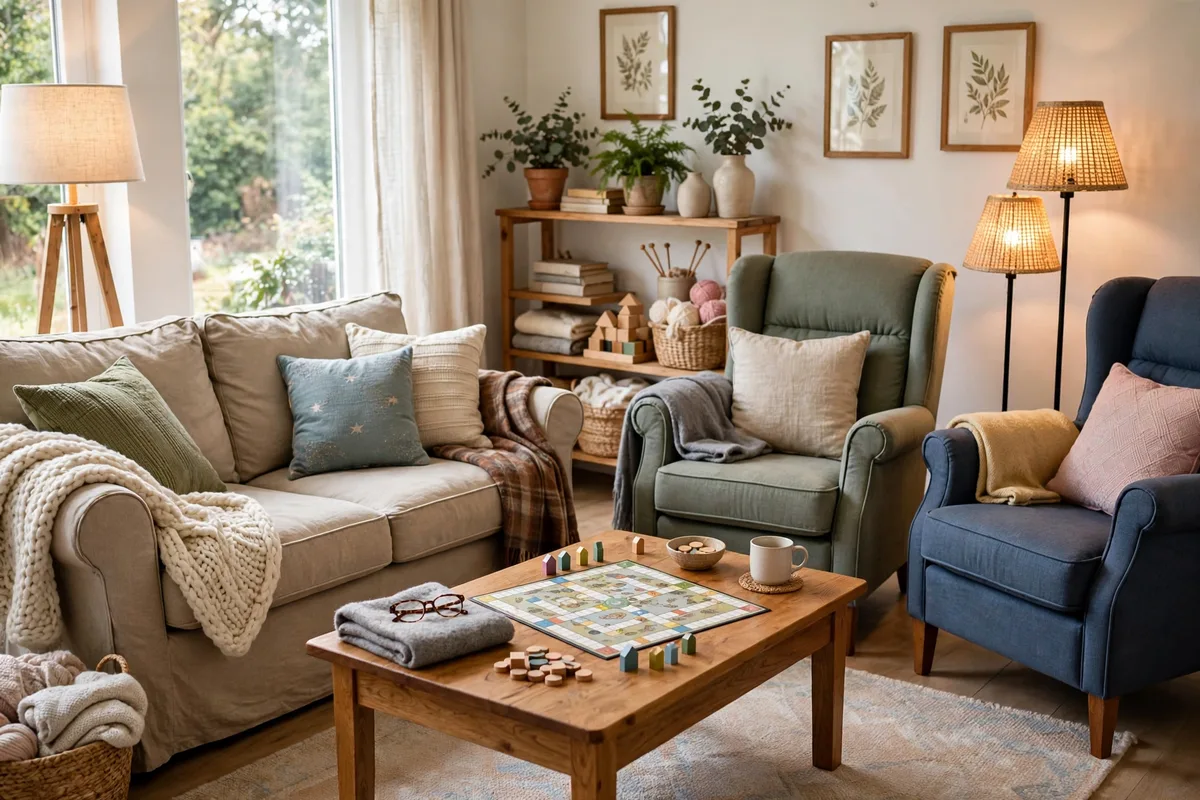
By now a pattern should be clear: the right style is the one whose strengths cover your family’s current pressures and whose weaknesses land where you can tolerate them. Use the table to shortcut the decision, then read the short notes below it. If you want room-by-room inspiration once your style is chosen, these family-friendly living room ideas show the directions working in real spaces.
| Your family situation | Start with | Borrow from | Avoid leading with |
|---|---|---|---|
| Toddlers and a dog | Farmhouse durable | Coastal washable covers | Pale Scandinavian, glossy contemporary |
| Busy school-age children | Relaxed modern | Eclectic pattern and storage | Formal-leaning transitional |
| Teenagers who live in the room | Mid-century low-profile | Contemporary media comfort | Themed farmhouse or coastal |
| Grandparents visit or live with you | Transitional classic | Relaxed modern supportive seating | Low-profile mid-century alone |
| Tight budget, renting | Eclectic forgiving | Scandinavian simplicity | Performance-fabric contemporary |
| Design matters, budget allows | Contemporary performance-fabric | Transitional timeless shapes | Distressed, heavily themed looks |
When to blend, and the one decision that matters most
Most real family rooms end up as a lead style plus one borrowed strength: farmhouse bones with coastal covers, Scandinavian calm with eclectic pattern, transitional shapes with performance fabric. Blending is not indecision when the lead style is clear. Choose the lead by your hardest daily pressure, whether that is laundry, mud, hosting, knees, or budget, and borrow only to patch its known weakness. Then make the single decision every style depends on: buy the best washable, repairable version of the main seat you can afford. Styles can evolve with cushions and colour. The sofa your family lands on every day is the style, in practice.
Already Chosen Your Style? The 30-Minute Toddler Pass
Step 1 — Edges (5 minutes): walk the room at toddler eye level and note every hard corner at that height. Pad it, move it, or swap in the ottoman.
Step 2 — Anchors (10 minutes): check every tall piece and the TV. Anything that rocks when pushed gets anchored to the wall today, not eventually.
Step 3 — Cords (5 minutes): gather trailing cords behind furniture, fix blind cords up on cleats, and move chargers out of the play zone.
Step 4 — Storage swap (5 minutes): one enclosed basket or lidded box lands beside the sofa. If toys can vanish in under a minute, the room resets daily instead of weekly.
Step 5 — The washable layer (5 minutes): throw a washable cover or throw over the seat that takes the most traffic, and move one precious object above child height. Done — the style is unchanged; its survival odds are not.
Frequently Asked Questions About Family-Friendly Living Room Styles
What is the most family-friendly living room style overall?
For most households, farmhouse durable and eclectic forgiving cope best with mixed ages, pets, and mess, because pattern, washable covers, and replaceable pieces forgive daily life. Relaxed modern is the strongest choice when you also want a calmer, more grown-up look.
Which style is best with toddlers?
Farmhouse and practical Scandinavian work best, in their washable forms. Farmhouse hides marks with pattern and sturdy finishes, while Scandinavian keeps few, light pieces that are easy to clean around and quick to reset after play.
Which style works best with dogs and cats?
Coastal easy-care and farmhouse lead for pets. Washable slipcovers, hard-wearing cotton weaves, and patterned rugs handle hair, mud, and accidents without drama. Mid-tone colours help most; pure white and very dark fabrics both show hair quickly.
Is Scandinavian style practical with young children?
Yes, in its practical form rather than its palest form. Keep the light wood, simple shapes, and clear floors, but choose washable covers, warmer mid-tone textiles, and a patterned or washable rug instead of white upholstery and pale pile.
What is the cheapest family-friendly style to create?
Eclectic forgiving is cheapest, because second-hand, inherited, and one-at-a-time pieces are the method rather than a compromise. Farmhouse follows closely, since sturdy used wood and thrifted textiles suit it perfectly.
Can you mix two family-friendly styles in one room?
Yes, and most family rooms should. Pick one clear lead style for the large pieces, then borrow one strength from another, such as coastal washable covers on a farmhouse sofa. Problems start only when no style leads and everything competes equally.
Which style is best for teenagers?
Mid-century low-profile and relaxed modern rate highest with teenagers. Both feel designed and adult, suit media and gaming setups, and avoid the themed or cosy looks teenagers tend to call childish. Contemporary performance-fabric also works where budgets allow.
What style suits a multi-generational living room?
Transitional classic suits multi-generational rooms best. Its balanced layout, supportive seat heights, and timeless look welcome grandparents and children equally. Add relaxed modern supportive chairs if anyone struggles with deep or low seating.
Is farmhouse style too themed for a modern home?
Only when it is decorated rather than built. Sturdy wood, slipcovers, pattern, and baskets work in almost any home. It becomes themed when signs, props, and matching rustic accessories are added that serve no practical purpose.
How do you change styles as your children grow without replacing everything?
Keep the largest pieces neutral and well-made, then change the style layer: cushions, throws, rug, art, and colour. A farmhouse toddler room becomes relaxed modern for teens mostly through textiles and editing, not new furniture.
How do I make my living room toddler-proof without changing its style?
Run the 30-minute toddler pass in this guide: pad or swap hard corners at child height, anchor tall furniture and the TV, lift cords and blind cords out of reach, add one enclosed toy box, and put a washable layer over the hardest-working seat. Style lives in colours, shapes and materials — none of those change; only the room’s weakest points get reinforced.
Conclusion
There is no single best family-friendly living room style, only a best match. Relaxed modern calms busy school-age homes, Scandinavian keeps small rooms light and resettable, transitional welcomes every generation, farmhouse and coastal forgive toddlers and pets, mid-century delights teenagers, contemporary performance-fabric protects a polished look at a price, and eclectic forgives almost everything while a family grows. Compare them by washability, pattern, repairability, seating, and budget rather than by photographs, choose the lead style whose weaknesses you can live with, and let everything else evolve around it. A room chosen that way does not fight your family. It fits them, this year and the next one.