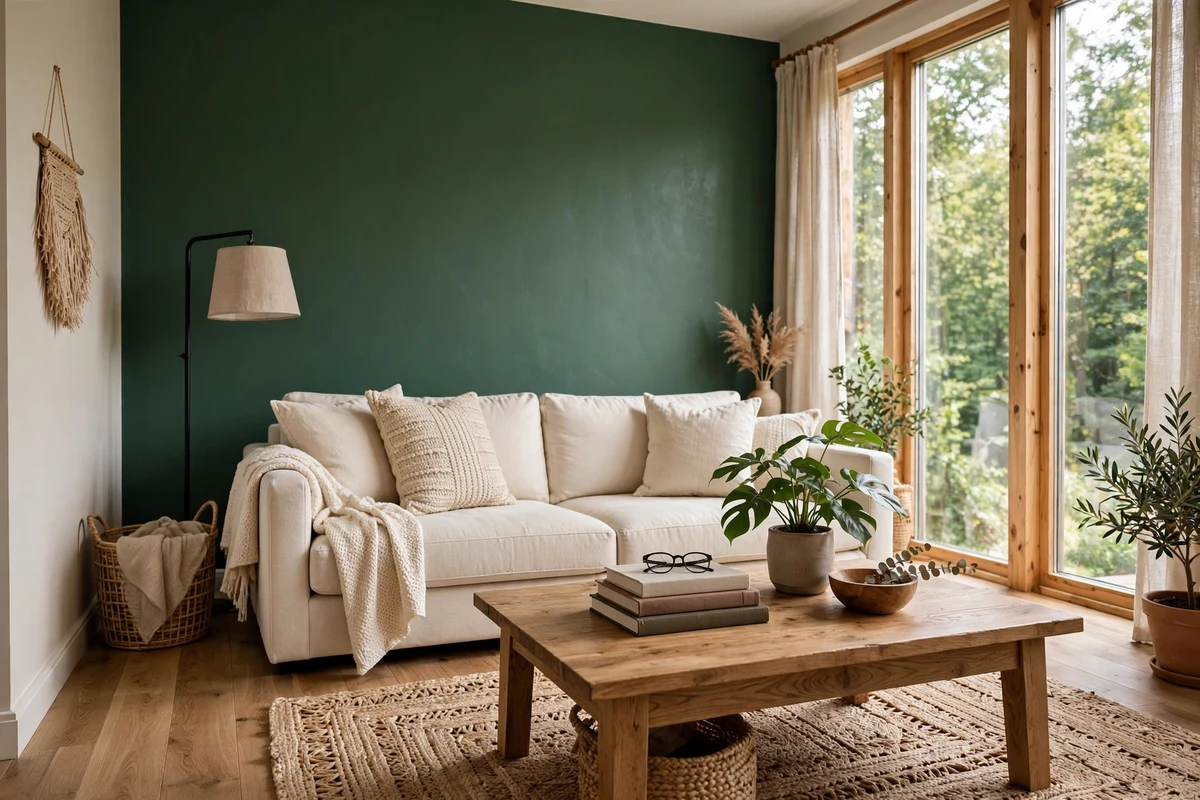
Choosing a living room accent wall style goes wrong in a predictable way: people fall for a photograph first and ask questions later. The deep green wall that looked calm online turns flat in a north-facing room, the wood slats fight the oak floor, or the bold wallpaper overwhelms a sofa that was never going to move. The style itself is rarely the problem. The order of decisions is. When you decide what the wall has to do, which wall it should be, and how it must live with your light and furniture before you pick a finish, the right style usually becomes obvious.
This guide reverses the usual process. Instead of starting with colours and patterns, you will start with the job, read the room honestly, choose the wall, and only then compare the main style families — paint, wallpaper, wood, stone and texture, gallery and shelving — against your budget, your effort level, and whether you rent or own. If you want to see finished looks while you decide, our living room accent wall ideas guide walks through complete examples; here, the focus stays on making the choice itself.
In this guide: Start by Deciding What Job the Accent Wall Must Do · Read Your Room First: Light, Size and Architecture · Pick Which Wall Deserves the Accent · Choose Paint When You Want Colour With the Least Commitment · Choose Wallpaper When Pattern or Story Matters Most · Choose Wood Slats and Panelling When You Want Warmth and Structure · Choose Stone, Brick and Limewash Texture When You Want Depth Without Pattern · Choose Gallery and Shelving When You Want a Wall You Can Change · Match the Style to Your Furniture, Budget and Effort Level · Test Before You Commit and Run the Final Decision Checklist
Which wall? The short answer: The wall your eye lands on first when you enter — most often the wall behind the sofa or the fireplace wall. It needs clean stopping points (a corner, a doorway, a change of plane) where the treatment can end convincingly. Section 3 scores every candidate properly; start there if you are torn between two.
What Each Style Family Actually Looks Like
| Family | The finished effect | Suits you if |
|---|---|---|
| Paint | A flat field of deeper or contrasting colour; the room’s mood shifts, its texture does not | You want the fastest, cheapest, most reversible change |
| Wallpaper | Pattern, scale or a scenic story across the whole wall | Your furniture is plain and the wall must carry the interest |
| Wood slats & panelling | Shadow lines, rhythm and warmth; the wall gains architecture | The room feels flat or cold and the layout is settled |
| Stone, brick & limewash | Cloudy, light-catching depth in a single calm colour family | Your furniture is colourful and the wall must support, not compete |
| Gallery wall | A collected field of frames that reads as one focal point | Your job is display, and you want to change it over time |
| Shelving | Furniture as accent: storage, books and objects in one composition | The wall is long, and you need the accent to earn its keep |
Shortlist two families from this table, then look at them finished before you decide: our living room accent wall ideas guide walks through complete examples of each. Come back here to run your favourite through the job test, the room read and the three-day sample test below.
1. Start by Deciding What Job the Accent Wall Must Do
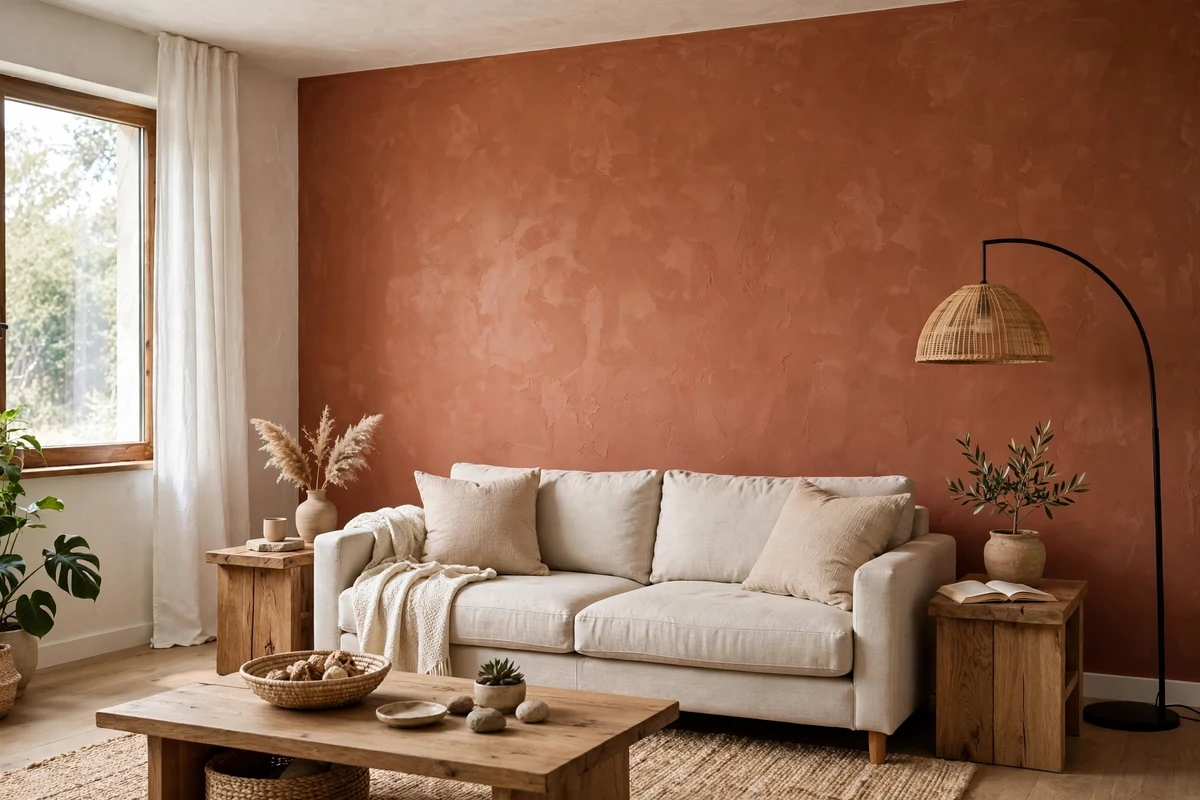
An accent wall is a tool, and every tool has a job. Before you look at a single swatch, name the one problem this wall is meant to solve in your living room. That single sentence will eliminate most styles immediately and make the rest easy to rank. A wall chosen to create a focal point needs contrast. A wall chosen to warm a cold, grey room needs texture or a warm tone more than it needs drama. A wall chosen to define a seating zone in an open-plan space needs enough visual weight to hold the furniture grouping together.
The five jobs an accent wall can do
- Create a focal point: Right for a plain box of a room with no fireplace, view, or feature to look at. Needs the strongest contrast of any job.
- Zone an open-plan space: Right when the sofa floats and the living area drifts into dining or kitchen space. The wall acts as a backdrop that says where living happens.
- Warm up or calm down the mood: Right when the room feels cold, echoey, or restless. Texture and mid-tone colour do more here than bold colour does.
- Disguise a flaw: Right for an uneven wall, an awkward bulkhead, or a wall of mismatched repairs. Texture, panelling, and busy-but-tonal finishes hide; flat bold paint highlights.
- Display what you love: Right when you own art, photographs, or a collection with nowhere to go. The wall becomes a gallery or shelving backdrop rather than a colour statement.
Pick one primary job and, at most, one secondary job. If you try to make one wall do all five, you will end up with a busy wall that does none of them well.
2. Read Your Room First: Light, Size and Architecture
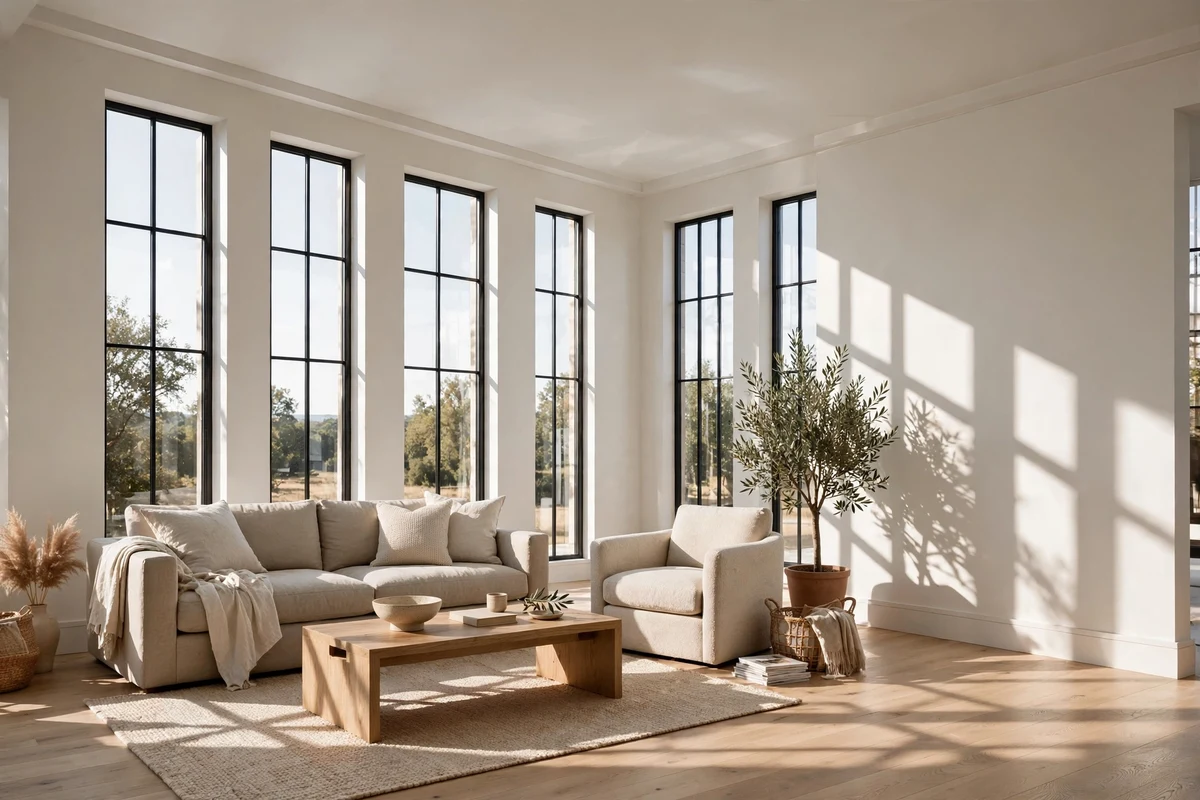
The same style can look generous in one living room and gloomy in another, and the difference is almost always the room, not the finish. Spend one day actually observing your space before you choose anything. Note which walls receive direct sun, which sit in shade all day, and how the light changes between morning and evening. A wall opposite your main window receives the most even light and shows colour and texture most truthfully. A wall beside a window gets raking light that exaggerates texture — wonderful for limewash or slats, unforgiving for a wall with bumps and patches.
How size and light steer the choice
Room size changes what a style can get away with. In a small living room, one strong wall works best when the other three stay light and calm; a dark or heavily textured end wall can add depth, but the same treatment on a long side wall can make the room feel narrower. In a large room, the opposite problem appears: a single painted wall can look lost, so larger rooms often need texture, panelling, or a built treatment with enough physical presence to register from across the space.
Architecture is the third part of the read. Fireplaces, alcoves, sloped ceilings, picture rails, and built-in niches are instructions from the room itself. A wall that already has a feature usually wants a supporting treatment, not a competing one. A completely plain wall, by contrast, can carry the boldest style you are considering because nothing else is asking for attention.
3. Pick Which Wall Deserves the Accent
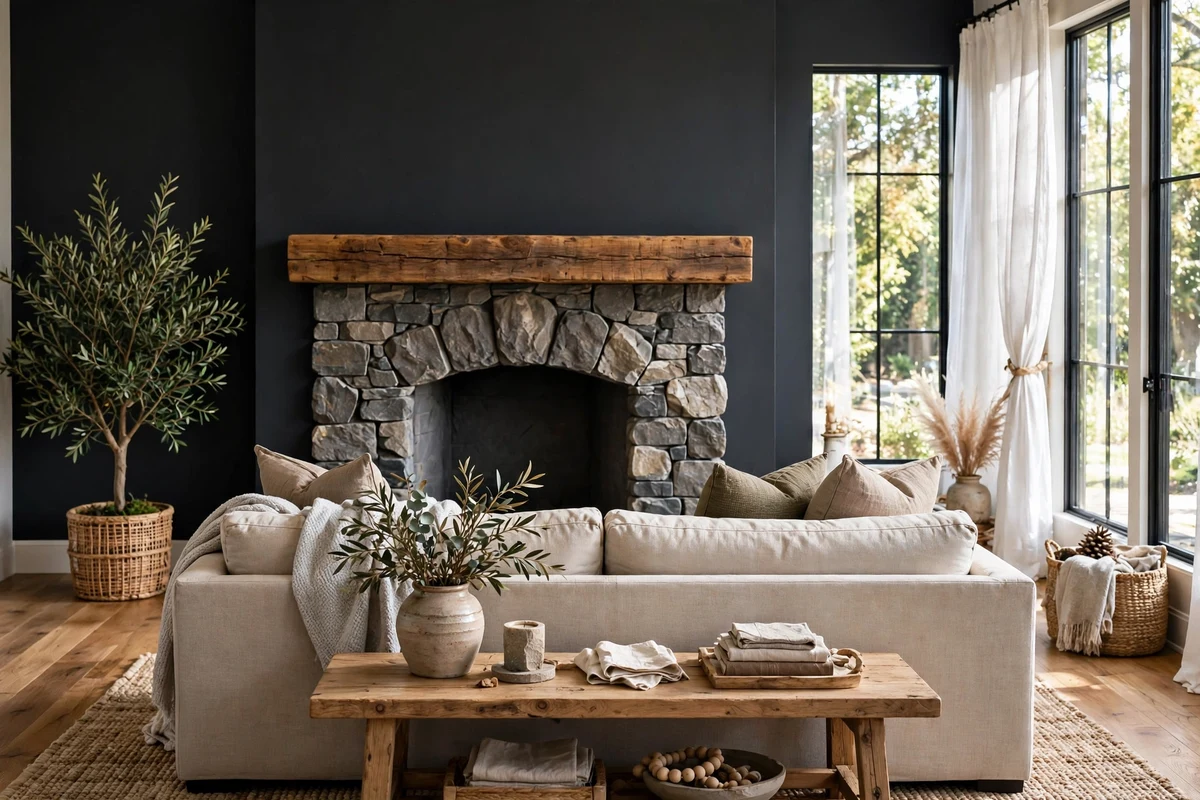
With the job named and the room read, choosing the wall becomes a shortlist exercise rather than a guess. Walk to the doorway you use most and notice where your eye lands first: that wall is the natural candidate, because an accent works hardest where people already look. Then test the other candidates against it. The wall behind the sofa anchors the seating you use every day. The fireplace wall already owns the room’s attention, so an accent there should deepen a focal point rather than invent one.
| Candidate wall | Choose it when | Avoid it when |
|---|---|---|
| Wall opposite the entrance | You want the accent to be the first thing seen | It is mostly windows or a doorway wall |
| Wall behind the sofa | Seating is the room’s main activity and the wall is long and plain | Tall cabinets or shelving already cover most of it |
| Fireplace wall | The fireplace is the clear focal point and the surround looks unfinished | The mantel styling is already busy and bold |
| Short end wall of a long room | You want to pull the room’s proportions back toward square | The wall runs on into another room with no stopping point |
| Wall opposite the main window | You want colour and texture shown at their most accurate | The wall holds the television and glare is already a problem |
The stopping-point test
Whatever wall you favour, check where it starts and ends. A good accent wall has clean edges: a corner, a doorway, or a change of plane where the treatment can stop convincingly. If the wall flows into the dining area or turns a corner with no natural break, either choose a different wall or choose a style, such as shelving or a gallery arrangement, that can end deliberately partway along its length.
4. Choose Paint When You Want Colour With the Least Commitment
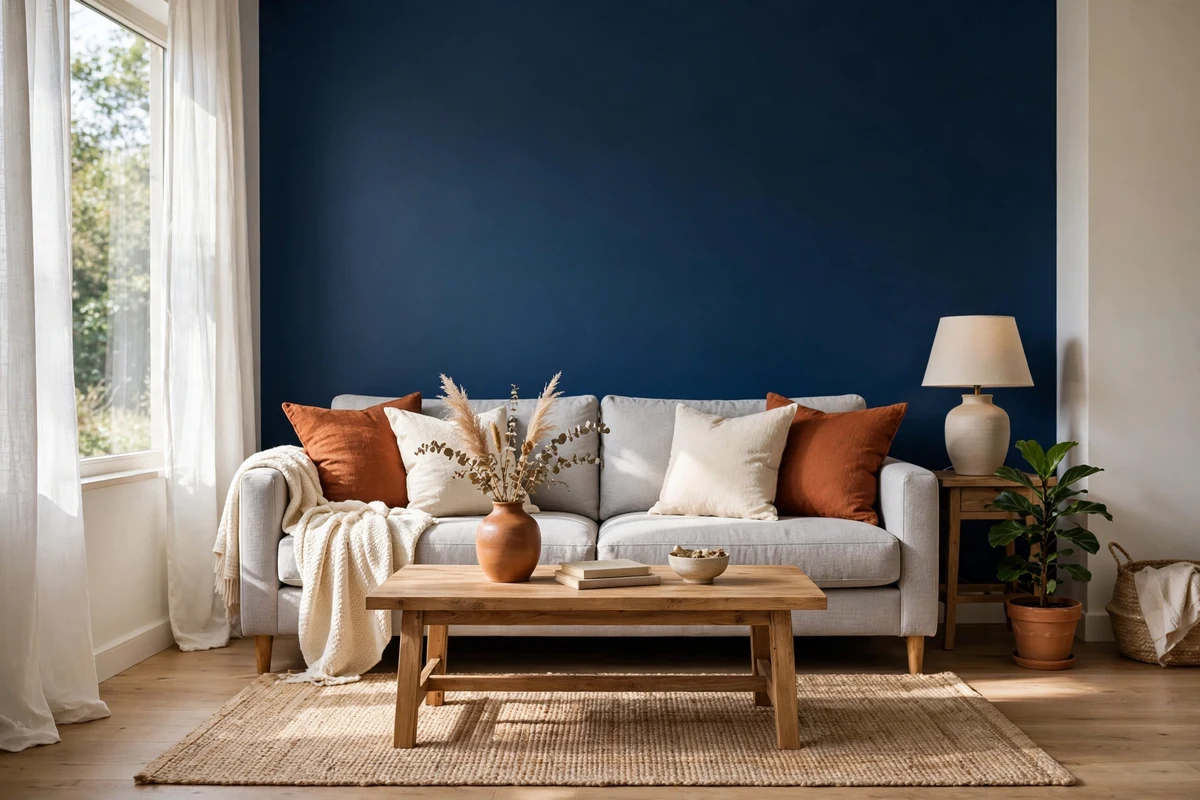
Paint is the default accent style for good reason: it is the cheapest way to change a wall, the fastest to reverse, and the easiest to adjust if the first colour is wrong. Choose paint when your job is a focal point or a mood shift, when your room’s architecture is already interesting, or when you expect to redecorate within a few years and do not want today’s decision to become tomorrow’s removal project. A painted accent works by contrast, so the colour needs a clear step away from the other walls — a shade that is only slightly deeper usually reads as a mistake rather than a decision.
Making paint the right choice, not the lazy one
- Go tonal for calm: Pick a deeper version of a colour already in the room — the sofa fabric, the rug, or the curtains — for an accent that feels designed rather than applied.
- Go contrasting for energy: Choose a colour opposite your main furniture tone, then repeat it in two or three small accessories so the wall does not float alone.
- Mind the finish: Flat and matte finishes hide minor wall flaws and keep dark colours rich; eggshell adds slight sheen and easier cleaning for busy family rooms.
Paint’s weakness is that it adds colour without adding texture. If your room’s problem is that it feels flat, cold, or echoey rather than colourless, paint alone will under-deliver, and one of the textured families below will serve you better.
5. Choose Wallpaper When Pattern or Story Matters Most
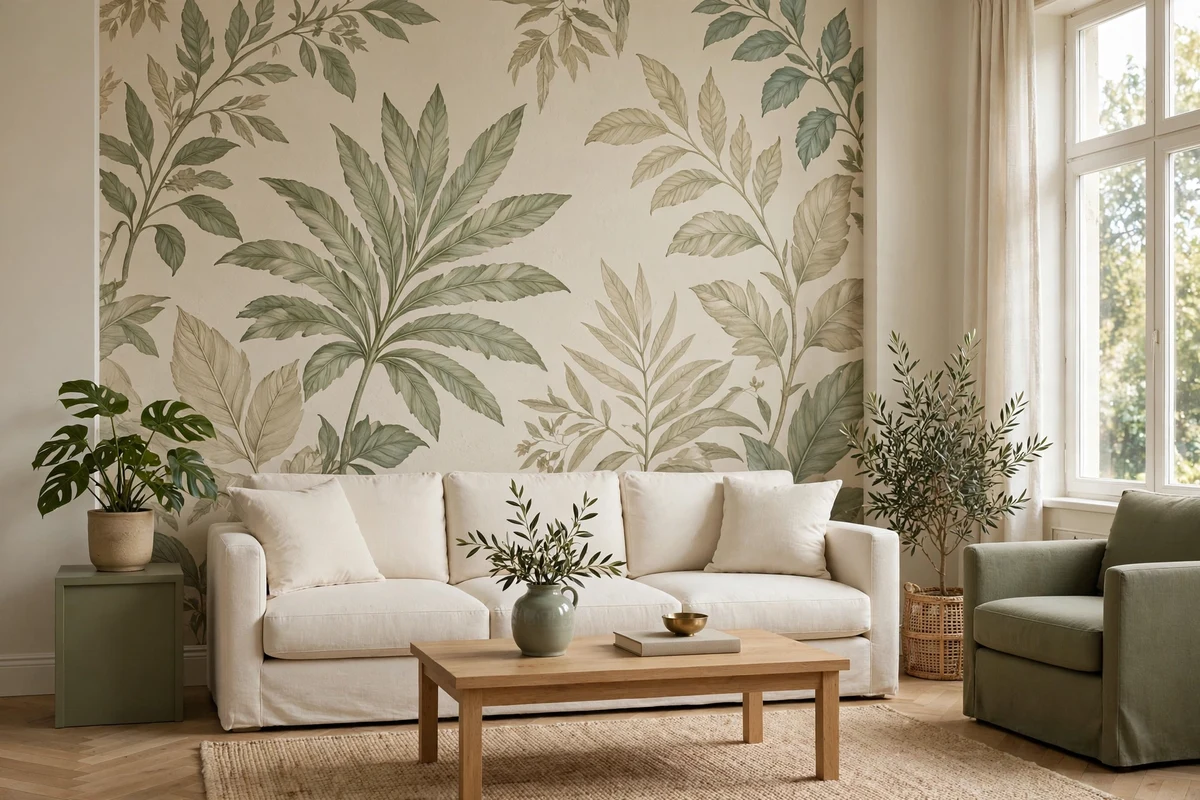
Wallpaper does what paint cannot: it brings pattern, scale, and a finished, layered look in a single treatment. Choose wallpaper when your job is a focal point in a plain room, when your furniture is mostly solid-coloured and can support pattern behind it, or when you want the wall to carry a theme — botanical, geometric, grasscloth texture, or a scenic mural — that the rest of the room quietly echoes. Pattern scale is the key decision. Large-scale prints need a long, unbroken wall and viewing distance; small, dense patterns read almost as texture and suit shorter walls and cosier rooms.
Choosing between wallpaper types
- Traditional paste wallpaper: The widest choice of designs and the most durable finish, but the hardest to remove. Best for owners planning to keep the look for years.
- Peel-and-stick wallpaper: Removable and repositionable, with a growing range of convincing prints and textures. Best for renters and for anyone testing whether they can live with pattern.
- Textured and woven-look wallpaper: Grasscloth and grasscloth-effect designs add warmth and depth without a printed pattern, and pair well with both modern and traditional furniture.
Wallpaper’s weakness is commitment and cost per roll compared with paint, plus pattern-matching waste on walls with many interruptions. If the wall you chose in section three is broken up by doors and windows, wallpaper loses much of its impact and paint or panelling will reward you more.
6. Choose Wood Slats and Panelling When You Want Warmth and Structure
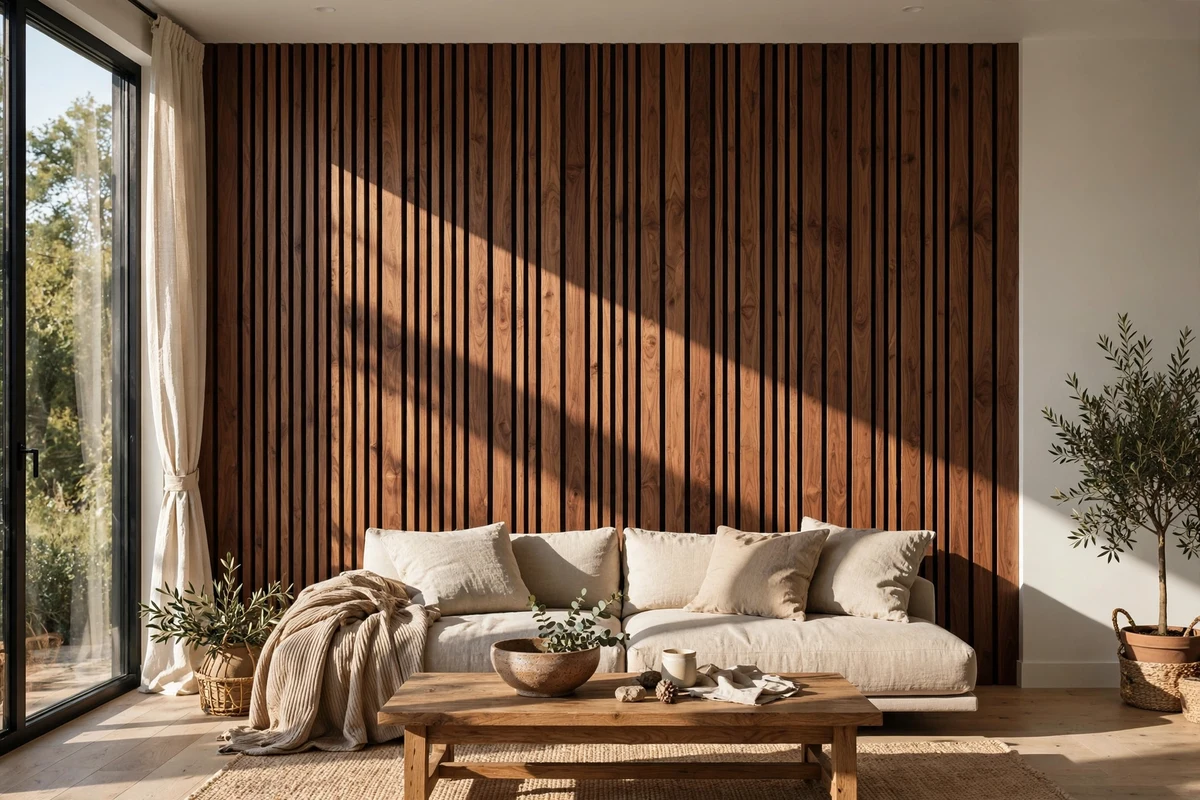
Wood changes an accent wall from a colour decision into an architectural one. Vertical slats add height and a calm rhythm, board-and-batten and picture-frame moulding add structure to flat new-build walls, and full panelling adds the warmth that paint and paper cannot imitate. Choose wood when your job is warming a cold room, zoning an open-plan space, or giving a plain wall permanent presence. Wood also suits media walls particularly well, because slats and panels give a television something intentional to sit within instead of a blank expanse around it.
Matching the wood style to your room
- Slat walls: Best for modern and Scandinavian-leaning rooms. The shadow gaps add depth even in a pale finish, and slats can help a wall of doors or a lopsided wall look deliberate.
- Board-and-batten or shaker-style panelling: Best for traditional, transitional, and farmhouse rooms, and for disguising uneven walls, because the grid gives the eye a pattern to follow instead of the flaws.
- Painted moulding panels in the wall colour: The quiet option. The wall keeps one colour, but the raised framework adds shadow lines and formality — ideal when you want structure without contrast.
Wood’s trade-offs are cost, installation effort, and permanence. It is the hardest family to reverse, so it belongs on the wall you are most certain about, in a room whose layout is settled. Renters should look at the removable panel options in section nine instead.
7. Choose Stone, Brick and Limewash Texture When You Want Depth Without Pattern
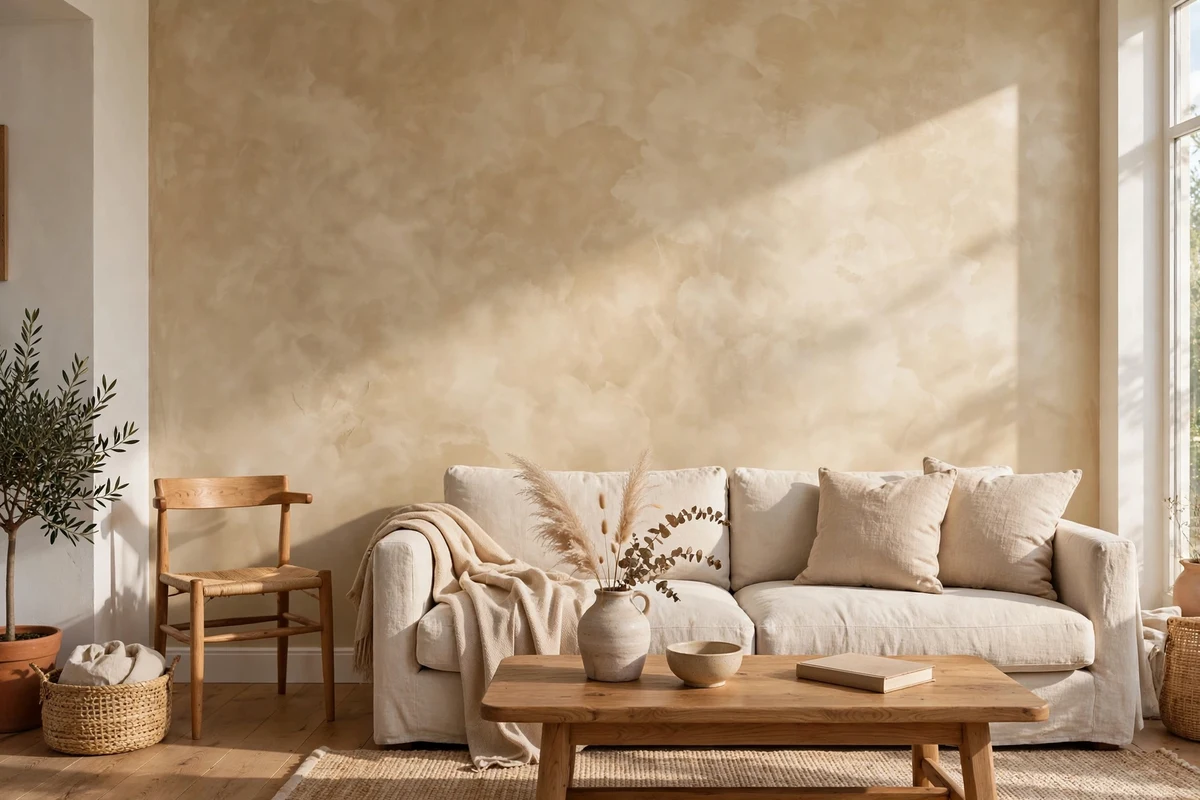
Some rooms do not need more colour or more pattern; they need surface. Stone, brick, and plaster-effect finishes give an accent wall depth that changes with the light through the day, which is why they suit the warming and mood jobs from section one so well. Real stone and brick suit fireplace walls and rooms with the ceiling height to carry their weight. Stone and brick veneer panels deliver a similar read at lower cost and thickness, and are the realistic route for most living rooms.
Where texture beats colour
Limewash and other soft plaster-effect paints sit at the gentle end of this family. Their cloudy, brushed movement adds interest to a wall while staying a single, calm colour, which makes limewash an excellent choice when your furniture is colourful or patterned and the wall must support rather than compete. It is also forgiving on imperfect walls, because the mottled finish disguises minor unevenness that flat paint would expose.
Choose this family when your room gets good raking or side light, since texture needs angled light to show itself; in a dim room with light falling flat on the wall, texture can disappear and read as plain. Choose it, too, when you want the accent to feel permanent and grown-up rather than decorative. Its weakness is reversal: veneer and plaster effects are projects to remove, so test the mood with paint first if you are unsure.
8. Choose Gallery and Shelving When You Want a Wall You Can Change
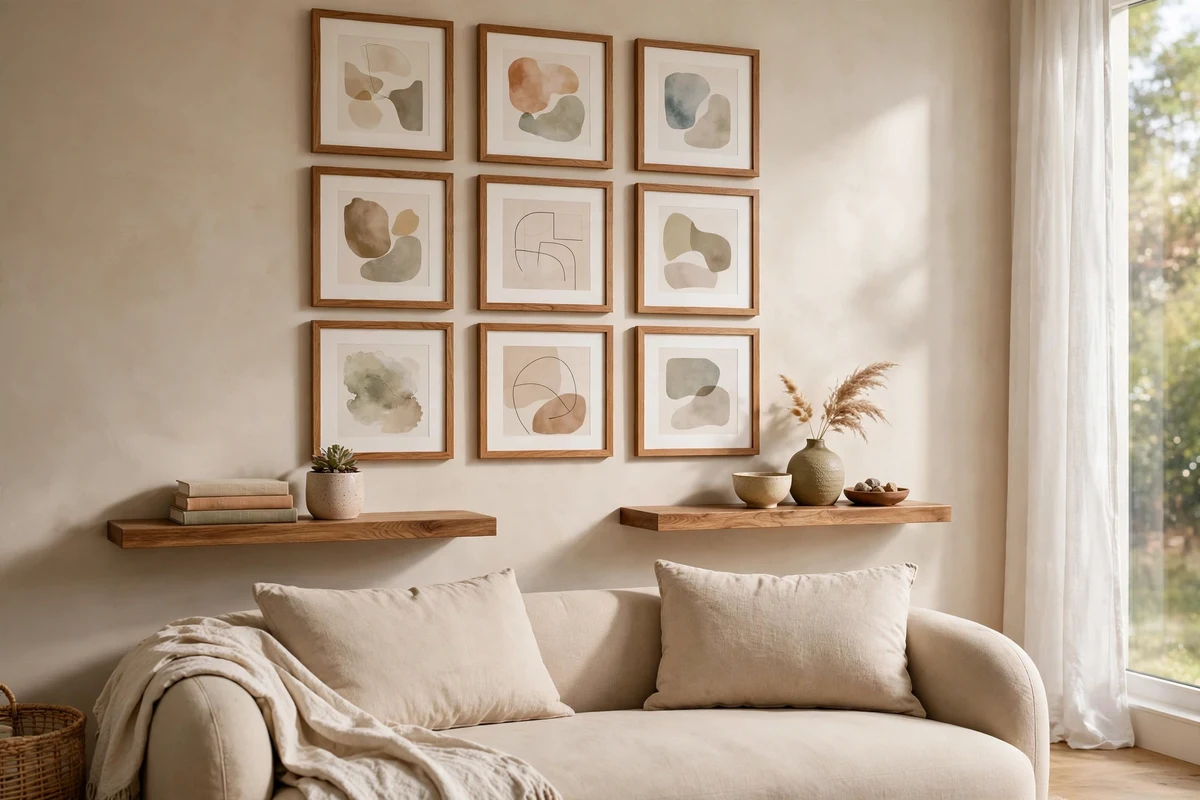
Not every accent wall is a finish. A gallery wall or a shelved wall creates the same focal pull as paint or panelling, but its content can evolve — frames come down, objects rotate, and the wall grows with your life instead of freezing on installation day. Choose this family when your job is display, when you cannot or do not want to alter the wall surface itself, or when you love several styles and would rather commit to an arrangement than to a material.
Gallery or shelving — which fits your wall?
- Gallery wall: Best on the wall behind or opposite the sofa, where art is seen at conversational distance. It needs one unifying thread — frame finish, a shared colour in the images, or a strict grid — to read as one accent rather than scattered decoration.
- Floating shelves or picture ledges: Best when you want display plus function, or when you change your mind often. Ledges let you swap art without new holes, and shelves can hold books, plants, and ceramics alongside frames.
- Built-in or tall shelving: The most architectural version, effectively furniture as accent. It suits long walls, adds storage, and anchors a seating zone, but it is an owner’s project with an owner’s budget.
If you would like to browse finished arrangements before you settle on this route, these living room accent wall ideas show how gallery and shelved walls sit alongside painted and panelled ones. This family’s weakness is visual noise: without discipline it becomes clutter, so plan the layout on the floor or with paper templates before the first hole is drilled.
9. Match the Style to Your Furniture, Budget and Effort Level
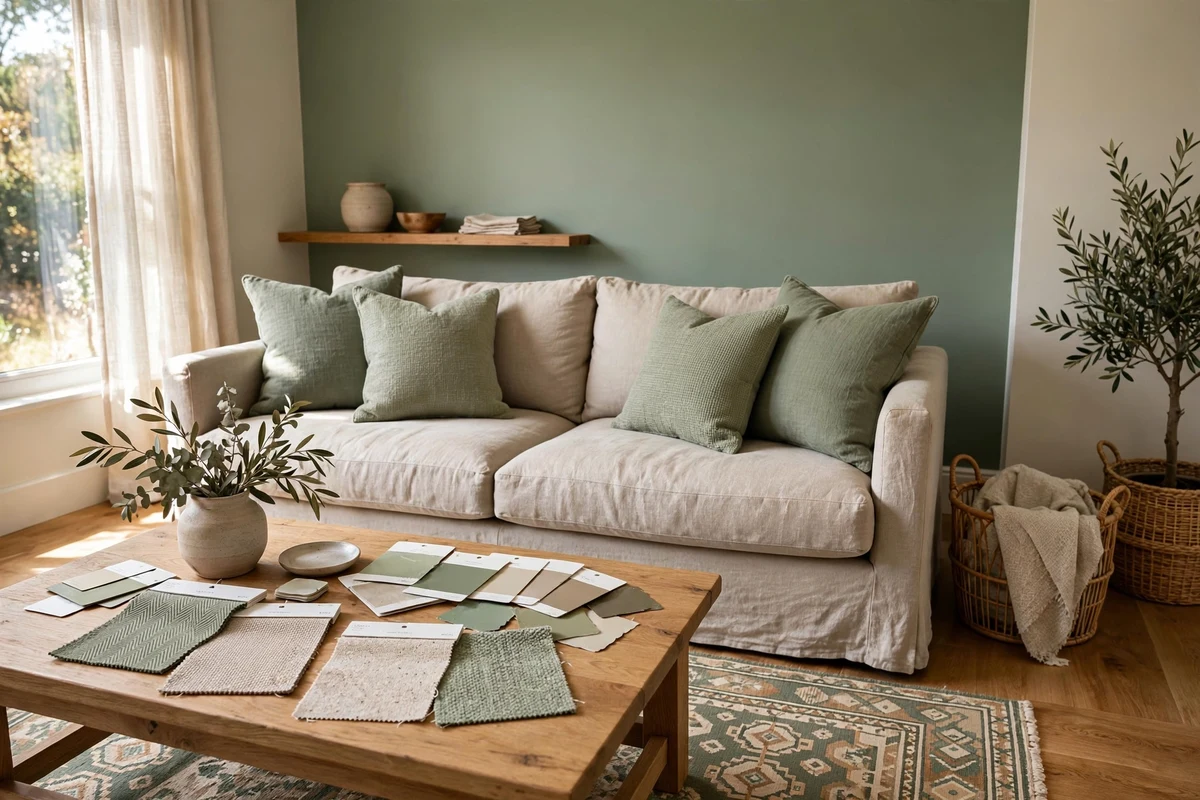
By now you should have a job, a wall, and a favourite style family. This section is the reality check that stops the favourite from clashing with the room you actually own. Start with furniture. Stand back and list the three biggest visual facts in the room: the sofa’s colour and fabric, the floor’s tone, and the dominant wood or metal finish. Your accent wall must agree with at least two of the three. A cool grey slat wall fights a warm oak floor and a rust sofa; a warm limewash or a tonal green paint would agree with both and still deliver contrast.
| Style family | Typical cost level | Effort and time | Reversibility | Renter-friendly route |
|---|---|---|---|---|
| Paint | Lowest | One weekend, basic tools | Easiest — repaint | Repaint only where the lease allows; otherwise use the gallery route |
| Peel-and-stick wallpaper | Low to mid | One weekend, patience for matching | Removable | Yes — designed to come away cleanly |
| Traditional wallpaper | Mid | A long weekend or a professional | Hard to remove | No — use peel-and-stick instead |
| Limewash / plaster-effect paint | Low to mid | One weekend, specialist brushwork | Repaintable | Only where painting is permitted |
| Gallery / ledges / shelves | Low to mid, scales with content | An afternoon to a weekend | Holes to fill only | Yes — ledges and lean-to arrangements minimise fixings |
| Wood slats / panelling | Mid to high | A weekend to several days, cutting and fixing | Difficult to reverse | Removable panel systems only, with landlord agreement |
| Stone / brick veneer | Highest | Several days or a professional | Most permanent | No — choose texture-look wallpaper instead |
Reading the table honestly
Budget tiers only help if you count the whole project: materials, tools, samples, and the cost of undoing it when you move or tire of it. Effort matters the same way. A style you love but dread installing will sit half-finished, while a slightly less exciting style completed properly will look better in the room. Choose the highest tier you can finish well, not the highest tier you can start.
What is being chosen most right now: In current magazine and retailer round-ups, the finishes that keep recurring are limewash and soft plaster effects, slat walls built around media units, and heritage-style murals — texture and story over flat bold colour. Treat that as a starting shortlist, not a rule: the three-day test in this guide outranks any trend list, including this one.
10. Test Before You Commit and Run the Final Decision Checklist
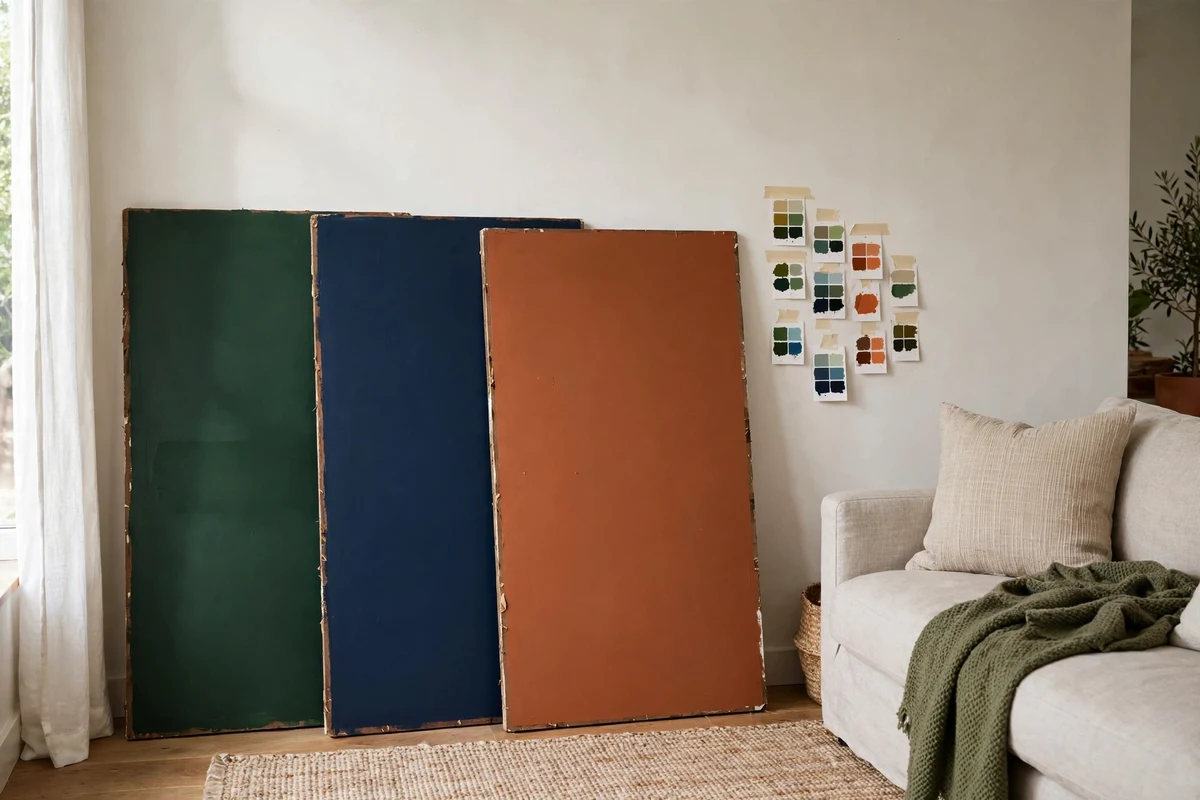
Testing is where good accent wall decisions are actually made, because no screen or swatch card survives contact with your room’s light. Buy or borrow large samples: paint on big boards rather than small patches, order the largest wallpaper sample available, and get a single slat, panel, or veneer offcut if you are considering a built treatment. Large samples matter because pattern scale, wood grain, and texture only read truthfully at size.
The three-day test
Move each sample around the candidate walls and live with the shortlist for at least three days. Check it in morning light, in flat midday light, and under your lamps in the evening, because accent colours routinely shift a full shade between those conditions. View it from the doorway and from your usual seat, beside the sofa fabric and the floor, not held up in isolation. Photograph each option: a phone photo flattens the room into shapes and tones and makes a clashing undertone or an overpowering pattern immediately obvious.
Final decision checklist
- The job is named in one sentence, and this style does that job better than the alternatives.
- The wall passed the stopping-point test and is visible from the seats that matter.
- The style agrees with at least two of: sofa colour, floor tone, dominant wood or metal finish.
- The full cost, including samples, tools, and eventual removal, fits the budget tier you chose.
- The effort level matches the time you genuinely have, and the finish is one you can complete well.
- If you rent, the treatment is removable or your landlord has agreed to it in writing.
- A large sample has lived in the room for three days and still looks right morning and evening.
If every box is ticked, commit fully: half-hearted versions of a strong style — a timid shade, a partial slat run, a gallery that stops early — are what make accent walls look accidental. If one box fails, the checklist has done its work; return to the section it points to and change that one decision, not the whole plan.
Frequently Asked Questions About Choosing a Living Room Accent Wall Style
Which wall should be the accent wall in a living room?
Start with the wall your eye lands on when you enter, which is usually the wall opposite the entrance. The wall behind the sofa and the fireplace wall are the other strong candidates. Whichever you choose, it needs clean stopping points at its edges and should be visible from your main seating.
Should an accent wall be darker or lighter than the other walls?
Darker is the more common and usually the safer choice, because the contrast is clear enough to read as a deliberate decision. A lighter accent can work in a room with already dark walls, but keep a clear step of difference between the accent and the surrounding walls, or the effect disappears.
How do I choose an accent wall colour that matches my sofa?
Pull the colour from the room rather than inventing one. Use a deeper, muted version of a tone in your sofa fabric, rug, or curtains for a calm result, or choose a contrasting colour and repeat it in two or three small accessories. Always test a large sample beside the sofa itself, in your own light.
Is paint or wallpaper better for an accent wall?
Paint is better when you want colour at the lowest cost, the easiest reversal, or an accent in a room that already has pattern in its furniture. Wallpaper is better when you want pattern, scale, or a woven texture that paint cannot provide, and when your chosen wall is long and unbroken enough for the design to show properly.
What accent wall styles work best in a small living room?
A single painted end wall, a tonal limewash finish, or a disciplined gallery wall all work well, because each adds depth without eating floor space. Avoid heavy, dark treatments on a long side wall, which can narrow the room, and keep the other three walls light so the accent has calm surroundings to stand out against.
What are the best renter-friendly accent wall options?
Peel-and-stick wallpaper, picture ledges and leaning gallery arrangements, removable panel systems, and a large-scale piece of art or a textile hanging are the strongest renter routes. Each creates a genuine focal point without permanent alteration, and each can leave with you when you move.
Can I have an accent wall if my living room is open plan?
Yes, and open-plan rooms often benefit most, because an accent wall gives the living zone a backdrop and a boundary. Choose the wall behind the main seating, use a style with enough visual weight to hold the furniture grouping, and make sure the treatment stops cleanly where the next zone begins.
How much does a living room accent wall typically cost?
Costs vary too widely by material, wall size, and region to quote a single figure honestly. As a ranking rather than a price list: paint is the lowest-cost family, peel-and-stick wallpaper and gallery walls sit in the low-to-middle range, traditional wallpaper and limewash sit in the middle, and wood panelling and stone or brick veneer are the highest-cost families, especially with professional installation.
Do accent walls need to match the rest of the house?
No. An accent wall belongs to its room, and it only needs to agree with that room’s furniture, floor, and light. Keeping a loose thread — a repeated wood tone, metal finish, or colour family — between adjoining open spaces helps the transition, but each separate room can make its own decision.
How do I test an accent wall style before committing?
Use the largest samples you can get, move them between your candidate walls, and live with the shortlist for at least three days. Check each sample in morning, midday, and evening lamplight, view it from the doorway and your usual seat, and photograph it beside your sofa and floor. The option that still looks right in every condition is the one to install.
What is the best accent treatment behind a TV?
Calm and low-contrast wins: a matte, mid-to-deep tone or a textured treatment like slats or panelling that gives the screen an intentional frame. Avoid bold pattern and glossy finishes behind a television — pattern competes with the picture and gloss throws reflections. If the TV wall is also your accent candidate, test it with the screen on, at the hour you usually watch.
Conclusion
How to choose a living room accent wall style is not really a question about walls; it is a question about order. Name the job first, read your light, size, and architecture, pick the wall with clean edges and real visibility, and only then compare paint, wallpaper, wood, stone and texture, and gallery or shelving against your furniture, your budget, and your effort level. Test large samples in the room for several days, run the checklist honestly, and commit to the winner without diluting it. Follow that order and the accent wall stops being a gamble on a photograph you liked — it becomes the wall your room was asking for all along.