
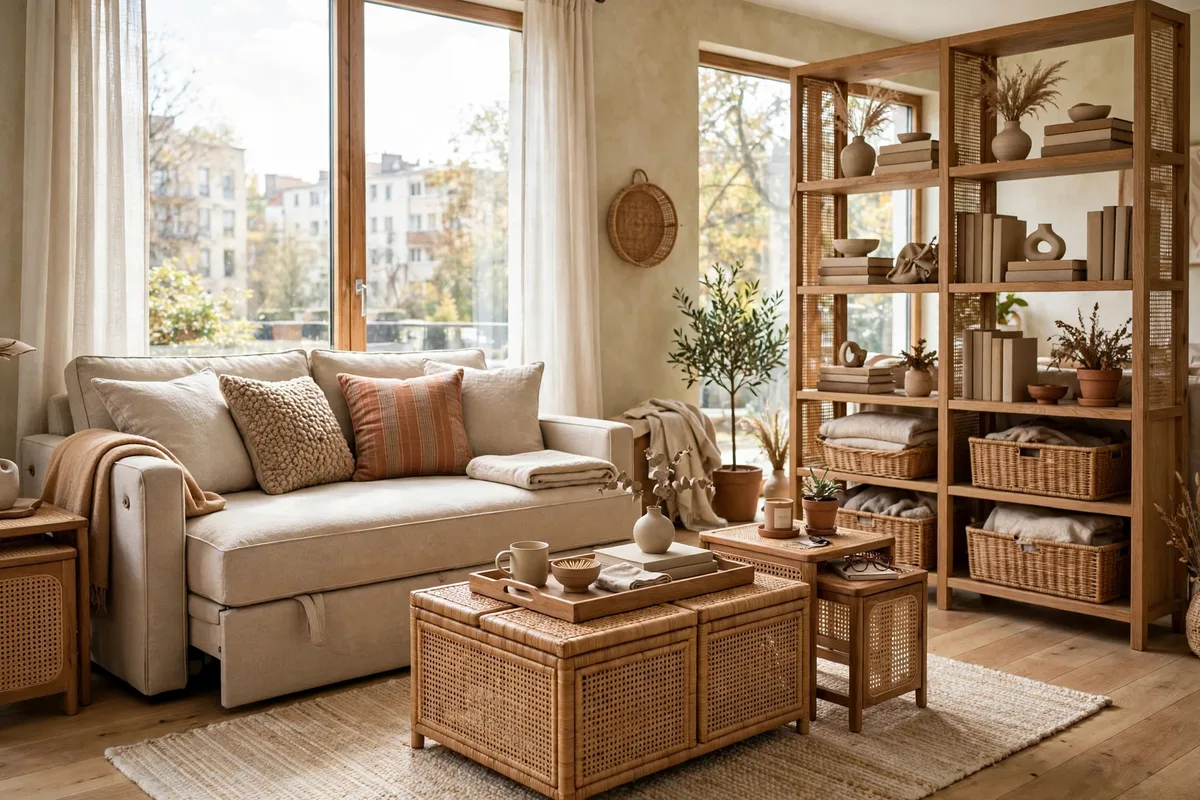
Multifunctional furniture is sold on a promise: one footprint, two jobs. The promise is real — but only when the second job actually works. A sofa bed with a mattress like a cracker is a sofa with a secret, not a guest bed; a table that extends after a wrestling match gets extended twice and never again. The honest test of every piece in this article is not what it is on the showroom floor, but what its second function is like on the fiftieth use.
Ten ideas, judged by their second jobs: the buying rules first, then the proven pieces one by one — sofa beds, wall beds, ottomans, tables, benches, desks, nesting tables and dividers — and a failure list so you can spot the pretenders before they take your floor space.
The Second-Job Test at a Glance
| Piece | Second job | Watch-out |
|---|---|---|
| Sofa bed | Guest bed | Thin mattress; bar-in-the-back frame |
| Wall bed | A whole room back | Mattress thickness cap; wall anchoring |
| Storage ottoman | Seating + hidden storage | Lid must be tray-flat and hinge-safe |
| Extendable table | Seats six from a four-top | Where the leaf lives; leg position |
| Fold-down desk | An office that closes | Hinge rating; where the chair parks |
1. Judge Every Piece by Its Second Job
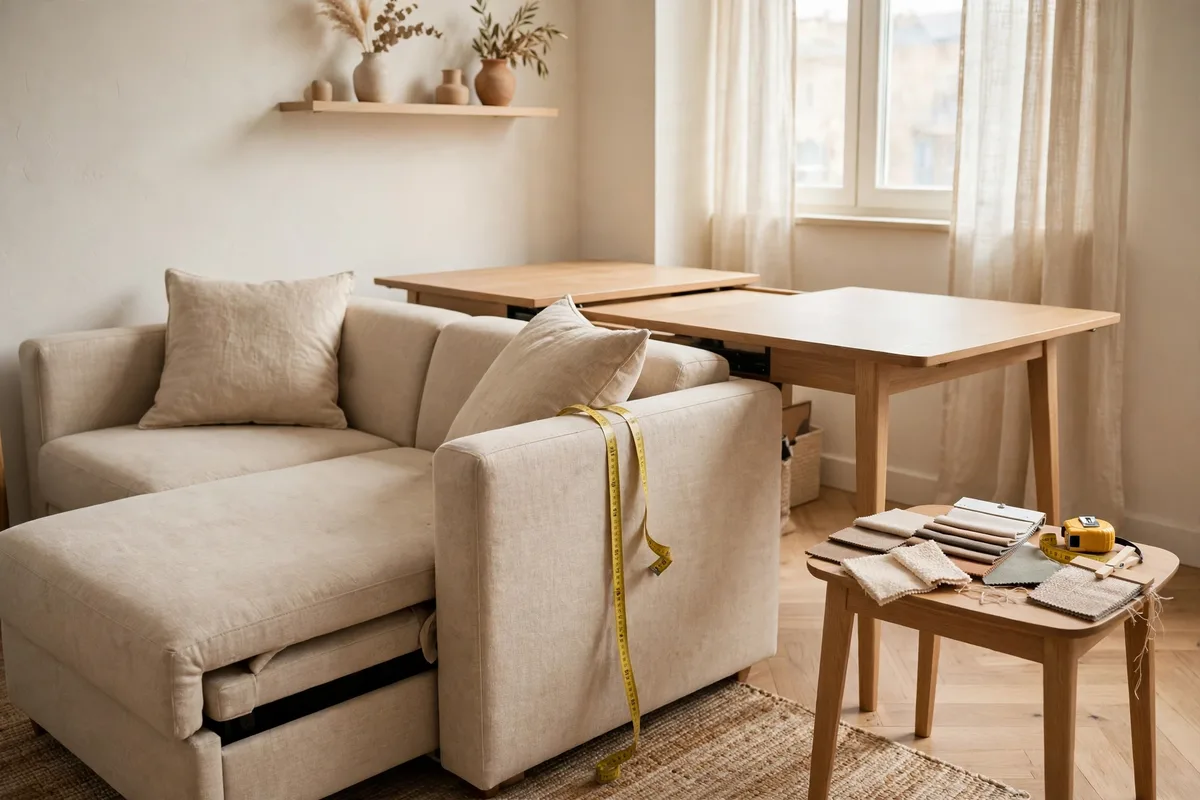
Three buying rules sort the genuine double-workers from the gimmicks. First, measure the second function in use, not the first at rest: the sofa bed’s open length against your wall, the table’s extended size against the room, the wall bed’s swing against the doorway. Second, mechanism quality is the product — hinges, pistons, runners and latches are what you are really buying, and they should feel boring: smooth, quiet, repeatable. Futonland’s convertible furniture guide makes the same point in its comparison table: type by type, the mechanism and mattress quality are what vary.
Third, the one-motion rule: if converting the piece takes more than one person, tools, or moving other furniture first, the conversion will quietly stop happening — and you will own a single-function piece at a double-function price. Test the conversion in the shop, twice. The second time tells you the truth the first time hides.
2. Sofa Beds That Actually Sleep Well
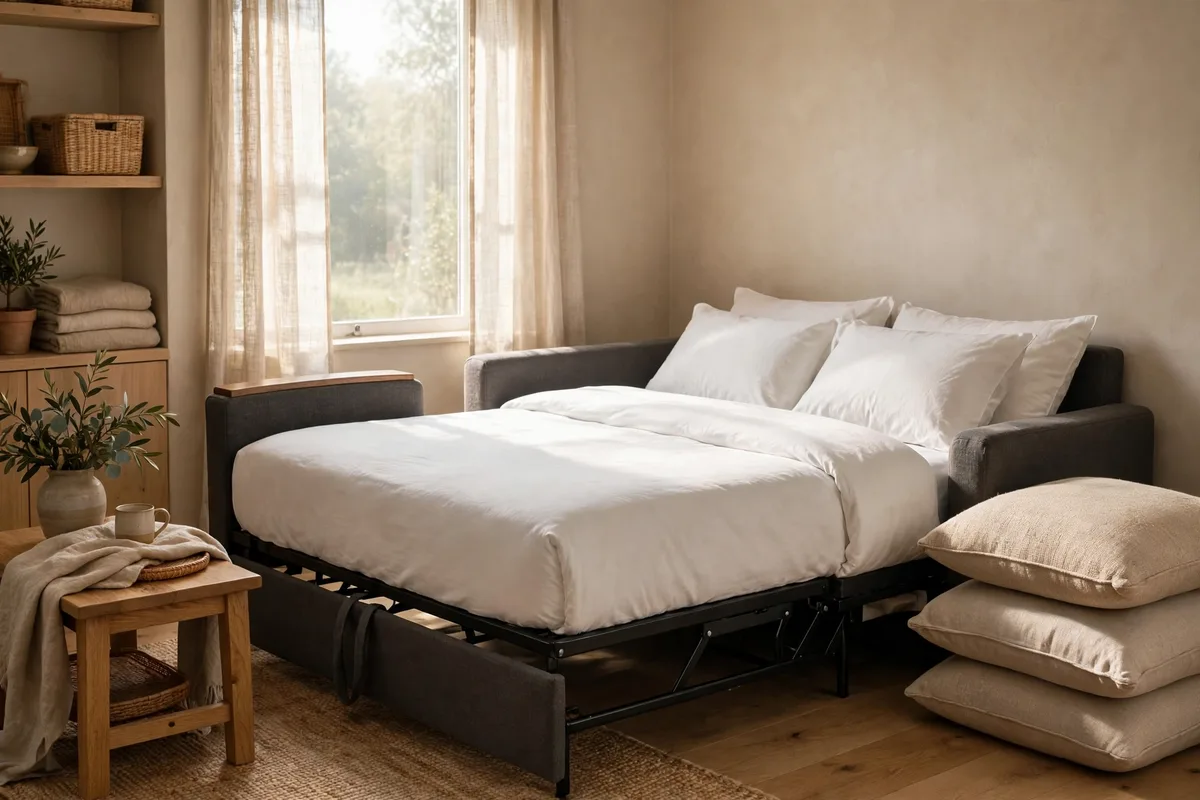
The sofa bed is the oldest double-worker and the most lied about. The sleep quality lives in two numbers: mattress thickness and mechanism type. Look for a mattress of roughly 4–6 inches in high-density foam or a hybrid build — thin enough to fold, thick enough that a guest’s hip never finds the frame — and a platform or quality pull-out mechanism with no crossbar under the sleeper’s back. The bar is the original sin of sofa beds; modern designs have engineered it away.
Then be honest about frequency. Guests most weekends? The sofa bed earns its premium, and a chaise with storage for the bedding completes the system — the full hosting logic is in our guest bedroom setup ideas. Guests twice a year? A good sofa plus an excellent air bed or folding guest bed usually sleeps better and sits better every other day of the year.
3. Wall Beds: The Room That Changes Shift
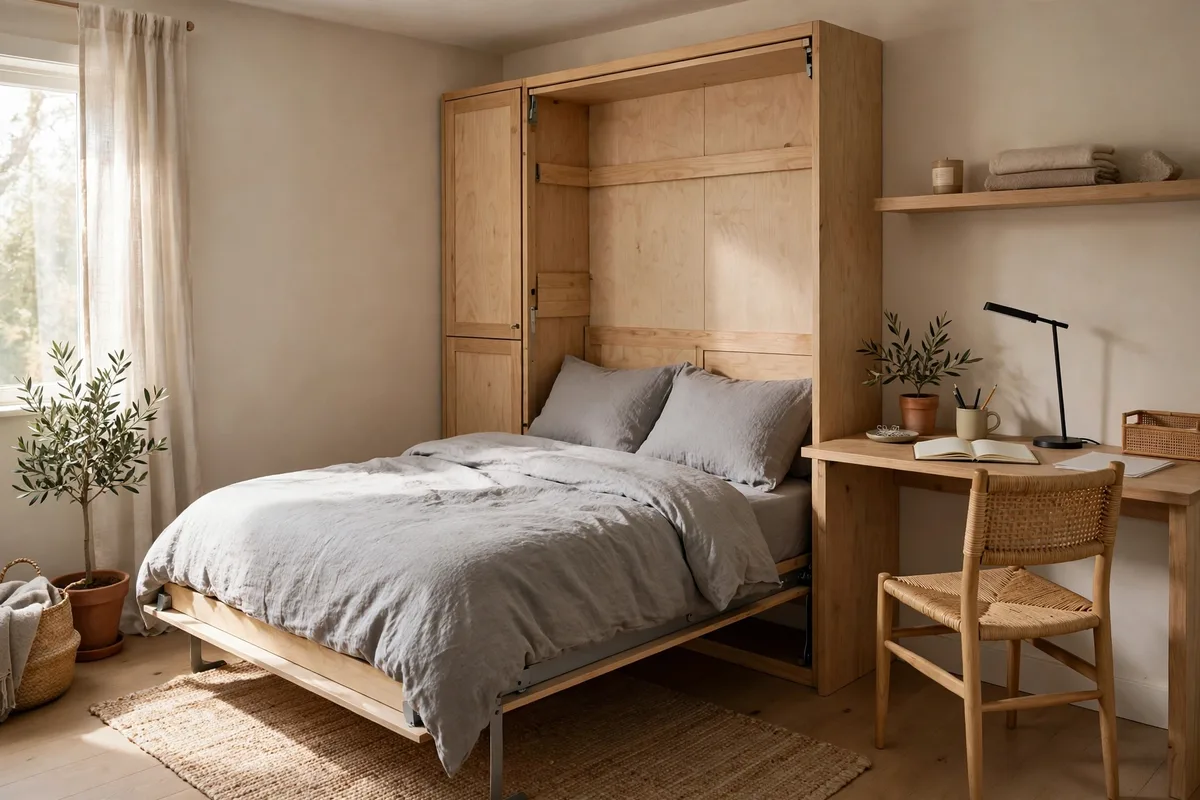
The wall bed is the maximalist of the family: its second job is not a function, it is an entire room. Folded up, a studio or spare room works as an office or living space; folded down, it is a real bed with a real mattress — the one convertible that asks for no sleep compromise at all. In small bedrooms it is the difference between a room that is a bed with walking space around it and a room with a life, which is why it keeps appearing in small bedroom design ideas.
Its disciplines are mechanical. The mattress must respect the cabinet’s thickness cap — Wilding Wallbeds’ mattress guide puts the usual ceiling at 12 inches and stresses measuring the true centre thickness, pillow-top included — and the cabinet must anchor into studs, not plasterboard. Choose the mechanism (adjustable springs or pistons) to match your mattress weight, and the daily lift becomes a one-hand, ten-second job.
4. Storage Ottomans: Three Jobs in One Cube
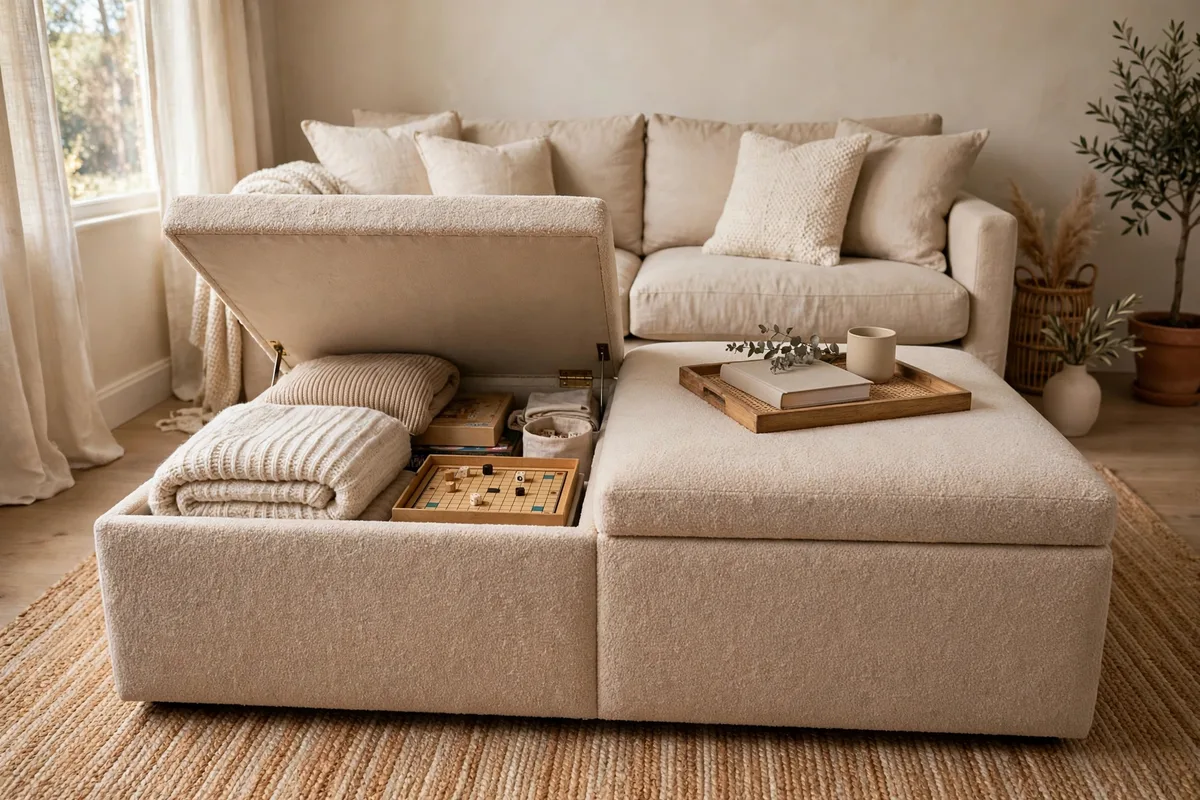
If the wall bed is the maximalist, the storage ottoman is the diplomat: footrest, extra seat, coffee-table surface and a lidded bin for blankets, games and remotes, all in a footprint the size of a cushion. It is the best first multifunctional buy in any small home because none of its jobs requires conversion — you never have to decide to use it; it is already working in three modes while you sit down.
Buying details decide which ottoman you get. A flat, firm lid takes a tray and turns the piece into a true coffee table; a tufted, domed lid refuses trays and limits it to feet. Hinges should be safety or soft-close (a slamming lid teaches the whole household to stop opening it), and the interior should be finished, not raw board — the things stored inside are the things you touch daily.
5. Extendable Dining Tables: Small Daily, Big on Sundays
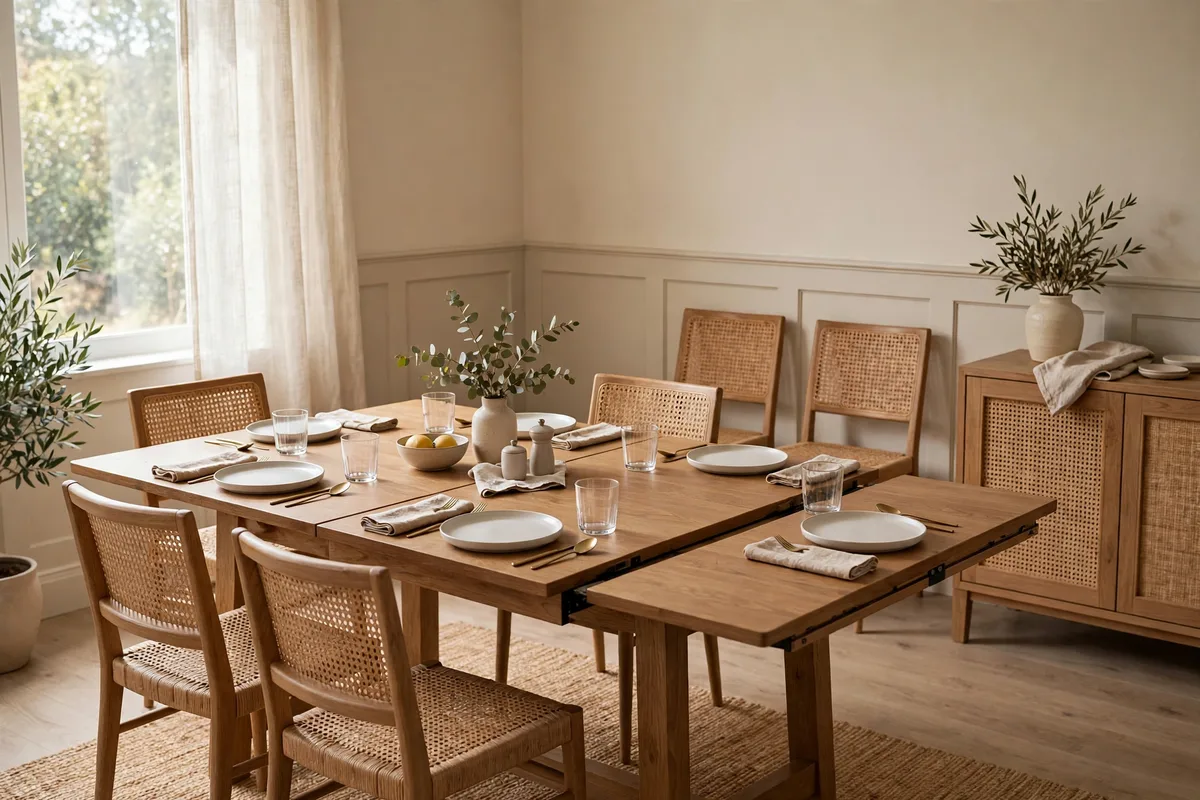
The extendable table’s two jobs are different sizes of the same evening: four on a Tuesday, eight at a holiday. Judge it on the numbers in both states — a closed length around 35–47 inches keeps a small dining area walkable, an open length of 63 inches or more seats six without elbow diplomacy — and allow roughly 24 inches of table edge per person when you count places, not the brochure’s optimistic arithmetic.
Two mechanisms dominate: the butterfly leaf that folds away inside the table (nothing to store, one-person conversion) and the separate leaf that lives in a cupboard (cheaper, and the classic lost-leaf story waiting to happen). Check leg position in the open state — legs that migrate into a guest’s knees undo the whole point — and where the extra chairs live on the 350 days a year they are not at the table.
6. Storage Benches: The Entryway’s Quiet System
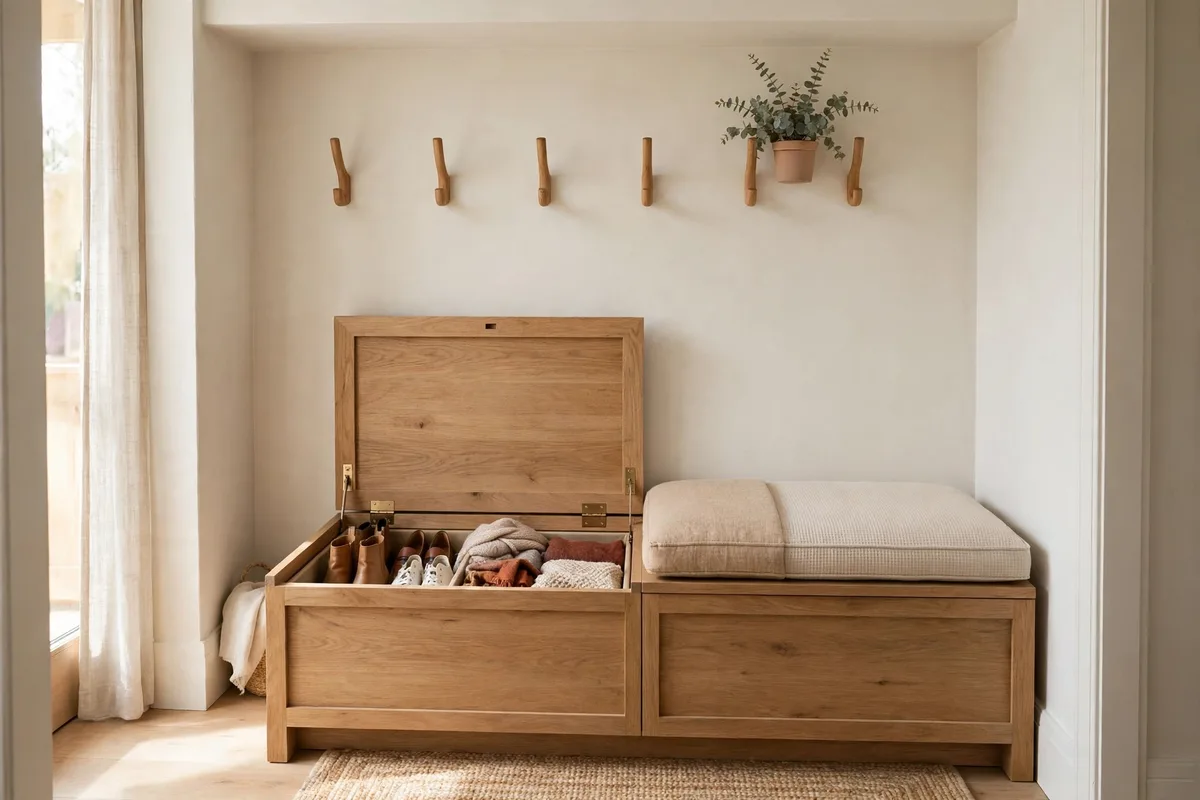
The storage bench solves the entryway’s three problems in one footprint: somewhere to sit while shoes go on, somewhere the shoes go, and somewhere the hats, scarves and dog leads disappear to. Its second job is really a system — the bench only works because the sitting makes the storing happen at the exact spot where the clutter is generated, instead of three steps and one good intention away.
Specifications that matter: seat height around 17–19 inches (chair height, so lacing shoes is comfortable, not a perch), a lid or drawers a child can open safely, and ventilation or an open slatted base if shoes live inside — a sealed box of worn shoes announces itself. At the foot of a bed the same piece changes cargo to blankets and off-season clothes, and its sitting job becomes the morning dressing perch.
7. Convertible Desks: An Office That Closes
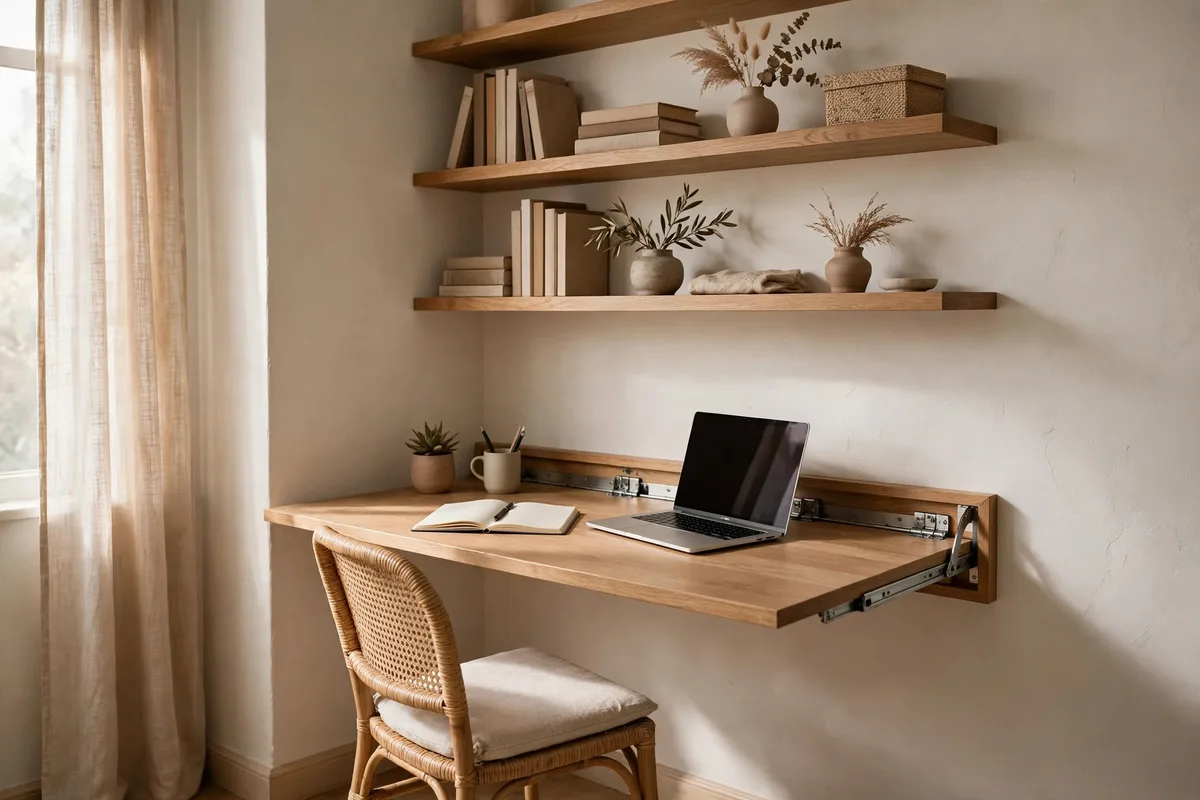
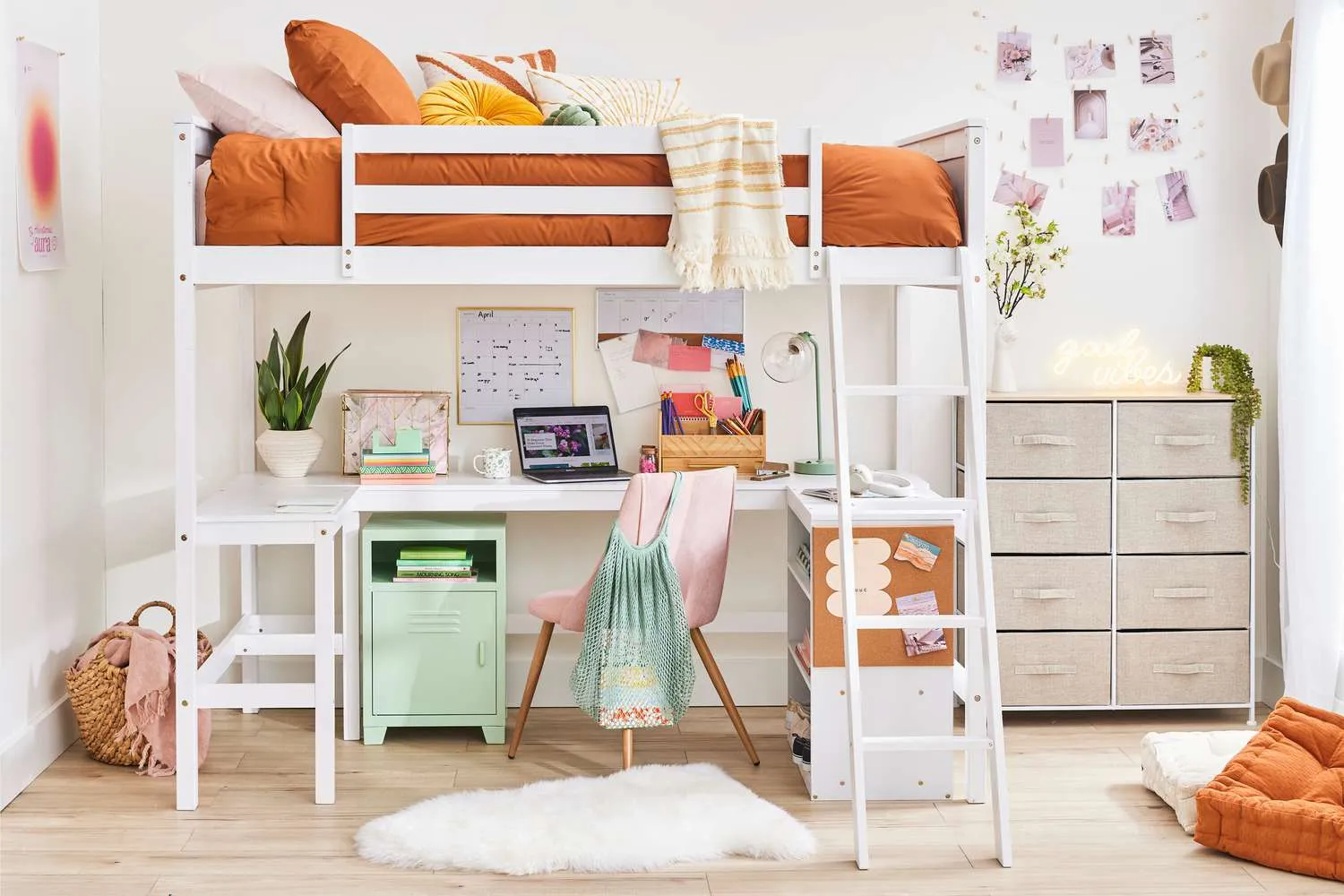
The convertible desk family — wall-mounted fold-downs, secretary cabinets, console tables that expand into workstations — sells one precious thing: the end of the working day, physically closed. Its second job is disappearance. The fold-down is the purest version: a full desk surface for eight hours, a flat panel on the wall for sixteen, in rooms that could never spare a permanent desk’s footprint. It is the grown-up evolution of the trick every student learns from best dorm room ideas.
Judge it by the hinge rating and the chair plan. The desktop should be rated for real loads (laptop, arms, leaning) with brackets or legs that lock, not friction-fit optimism; and the chair must have a home — tucked under, folded flat, or doubling as the dining chair — or the closed desk leaves an open problem standing in the middle of the room.
8. Nesting Tables: Surfaces on Demand
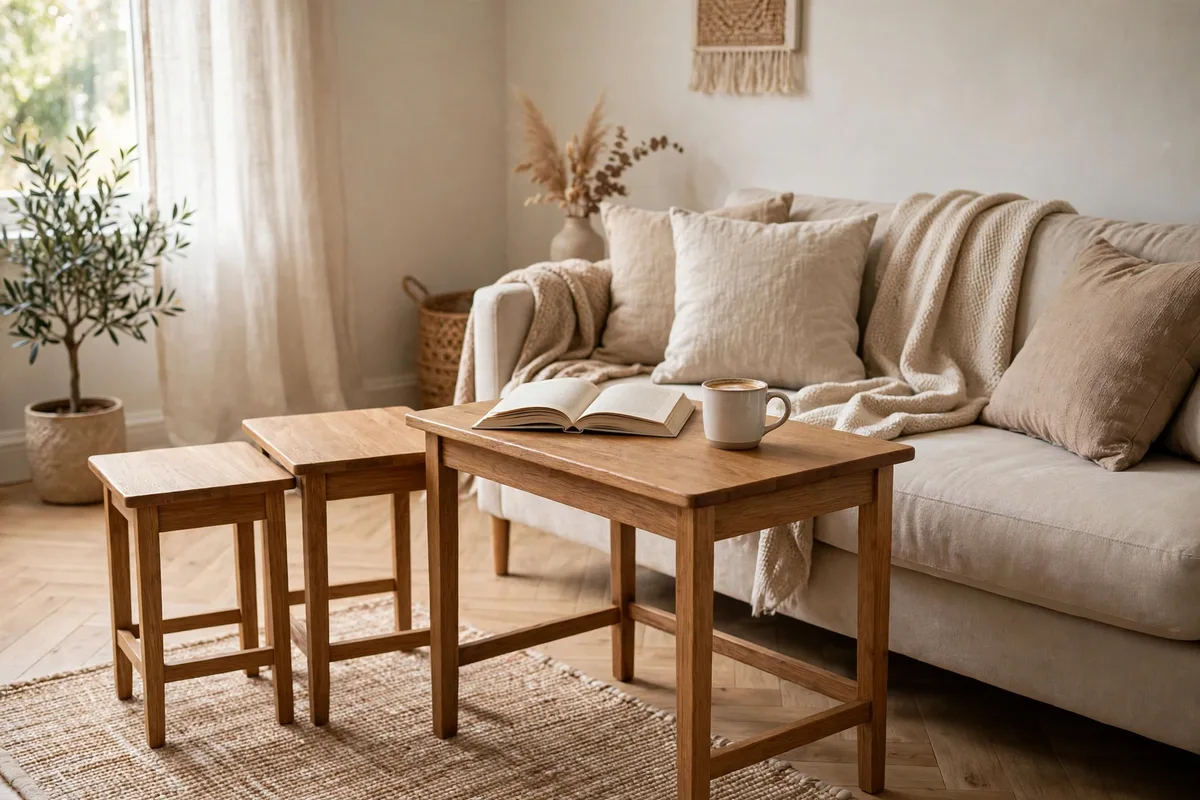
Nesting tables are the modest masters of the occasional: one table’s footprint on ordinary days, three surfaces the moment guests arrive with drinks, plates and nowhere to put them. Their second job is pure elasticity — no mechanism, no conversion ritual, just graduated tables that slide apart. In a small living room they replace both the side table and the serving stands you do not have room to store.
Buy them as a set that truly nests (all three sliding fully together, not two of three), with tops large enough for a plate and a glass — a surface too small to hold a meal is a sculpture. Weight matters in reverse here: light enough to move one-handed with a drink in the other, heavy enough not to skate across the floor when a knee brushes them.
9. Storage Room Dividers: Walls That Hold Things
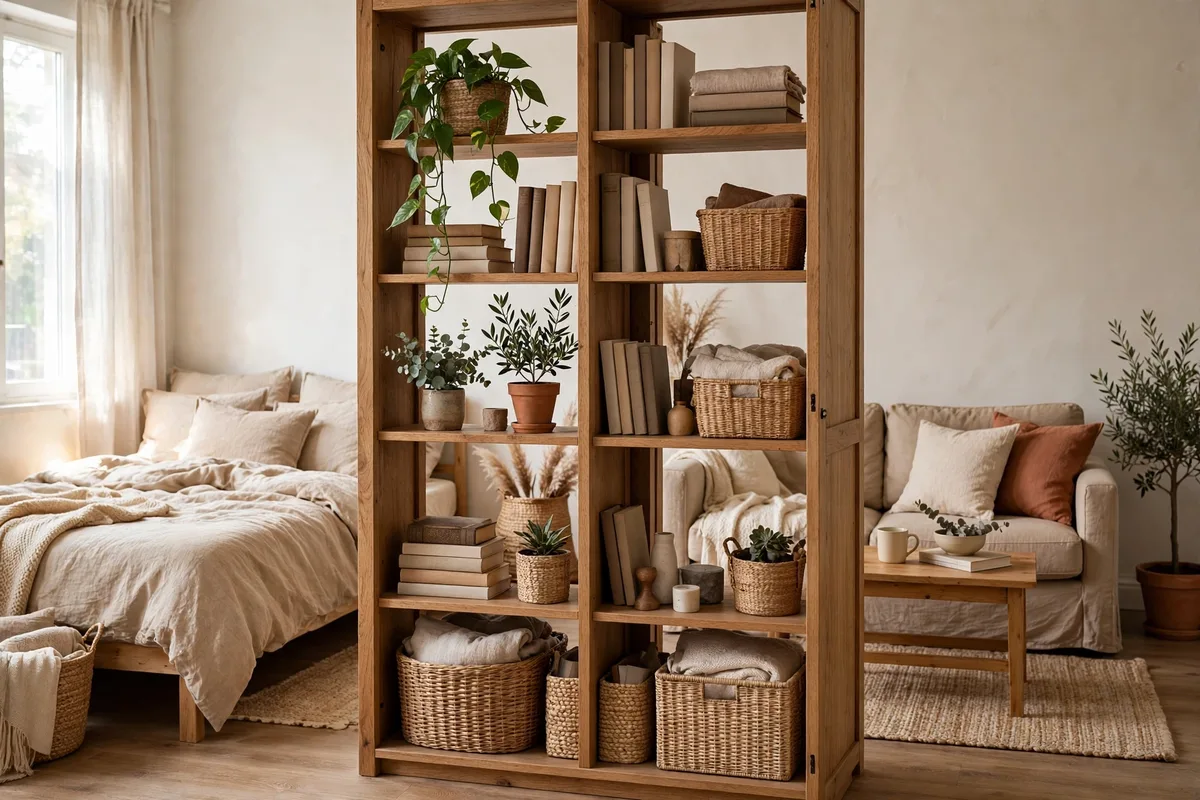
An open bookcase divider does the studio’s hardest double job: it draws the line between sleeping and living while storing the books, baskets and plants both zones need — a wall that pays rent. Open-backed shelves beat solid panels in small spaces because light and sightlines pass through, so the room reads as one generous space with zones rather than two cramped ones. It is the furniture expression of the thinking in our studio apartment zoning ideas: divide by function, not by wall.
Stability is the non-negotiable: a loaded bookcase is top-heavy, so wide bases, even loading (heavy baskets low), and anchoring where children or earthquakes are factors. Style it from both sides — a divider has two fronts, and the bed side deserves the same care as the sofa side, with a few closed baskets wherever visual quiet matters more than display.
10. The Failure List: Second Jobs Nobody Can Use

Learn the failure patterns and you will stop buying them. The chair bed whose mattress is a fold-creased pad: it sleeps nobody twice. The coffee table that converts to a dining table via a mechanism so stiff it needs two people and a free afternoon: it converts once, for the photograph. The storage piece whose storage is unreachable — under a mattress, behind a mechanism, inside a seat you must first unload — holds things exactly until the day you need them.
The common thread is friction: every failed double-worker asks for effort, time or help at the exact moment of use, and human beings route around friction within a fortnight. Before buying any multifunctional piece, run the fiftieth-use test — picture the conversion on a tired Tuesday, in the dark, alone. If the picture makes you sigh, the honest single-function version is the better furniture.
Frequently Asked Questions About Multifunctional Furniture
What is the most useful multifunctional furniture piece?
The storage ottoman, for most homes: seat, footrest, table surface and storage with zero conversion effort. After that, the piece whose second job matches your most frequent pinch point — guests, work or dining.
Are sofa beds comfortable enough for every night?
The good ones are close: a 4–6 inch quality foam or hybrid mattress on a platform mechanism sleeps like a modest real bed. Thin fold-out mattresses with a crossbar are guest-weekend furniture, not nightly furniture.
How thick can a wall bed mattress be?
Usually up to about 10–12 inches, set by the cabinet depth — measure the mattress at its centre including any pillow top, and match its weight to the mechanism’s rating so the lift stays one-handed.
What size extendable table should I buy?
Closed, small enough to walk around (roughly 35–47 inches); open, about 24 inches of edge per person you plan to seat. A butterfly leaf that stores inside the table is the lowest-friction mechanism.
Is multifunctional furniture worth the extra cost?
When the second function replaces a whole piece or a whole room, yes — a wall bed can be cheaper than a spare room. When the second job is a gimmick you will use twice, the single-function version is better value.
How do I test a convertible piece before buying?
Convert it in the shop twice, alone, and time the second attempt. Check the mechanism’s feel, the converted size against your room measurements, and where the displaced cushions, leaves or chair are supposed to live.
Can multifunctional furniture work in a rental?
Mostly yes — ottomans, nesting tables, extendable tables and sofa beds need no fixing. Wall beds and fold-down desks anchor into studs, so they need landlord permission and hole-filling at move-out.
What is the difference between a sofa bed and a futon?
A sofa bed hides a folding mattress inside a framed sofa; a futon flattens its own cushion into the bed. Futons convert faster and cost less; good sofa beds sit and sleep more like the real things.
How much weight can a fold-down desk hold?
It varies by bracket and wall fixing — check the rated load and anchor into studs. A properly fixed fold-down handles a laptop setup easily; leaning on it like a workbench is beyond most domestic models.
Does multifunctional furniture date quickly?
The classic types — wall beds, extendable tables, storage benches — are centuries old and style-proof in simple shapes. Novelty hybrids with electronics and many moving parts date fastest and are hardest to repair.
Conclusion
Buy the second job, not the first impression: measure the piece converted, test the mechanism twice, demand a one-motion change, and picture the fiftieth use on a tired Tuesday. Pieces that pass that test — the good sofa bed, the wall bed, the tireless ottoman — do not just save space in a small home. They give you rooms, surfaces and storage you simply do not have, twice over, in the same square feet.



Pingback: 10 Small Dining Nook Ideas (Cosy Corners That Seat Four)