

A guest room fails in small, silent ways: a bed made with the household’s retired pillows, a nightstand with nowhere to plug in a phone, a suitcase living on the floor because every drawer is full of the host’s overflow. None of it is unkind — it is just un-thought-through. The fix is to copy hotel logistics rather than hotel looks: prepare the room from the guest’s side of the bed, so they never have to ask for anything.
Ten setup ideas, in the order a guest actually encounters them — bed first, welcome last, and a host test at the end that catches everything.
In this guide: The Guest Room at a Glance · 1. Start With the Bed: Layers Guests Can Adjust · 2. Two Pillows Per Sleeper — One Firm, One Soft · 3. The Nightstand Kit: Water, Light, Charging, Wi-Fi · 4. Give Luggage a Landing Spot · 5. Clear a Drawer and Free Some Hangers · 6. Light in Layers — and Real Darkness on Demand · 7. Temperature the Guest Controls · 8. Towels and Toiletries, Already in the Room · 9. The Welcome Layer: Note, Snacks, Local Knowledge · 10. The Host Test: Sleep There Yourself · No Spare Room? The Same Setup, Borrowed Space · Frequently Asked Questions About Setting Up a Guest Bedroom · Conclusion
The Guest Room at a Glance
| Zone | Guest-ready means | The classic miss |
|---|---|---|
| The bed | Fresh layers the guest can add or shed | Retired pillows and one heavy duvet |
| The nightstand | Water, lamp, charging, Wi-Fi, a tray | No free outlet within reach |
| Storage | One empty drawer, hangers, luggage spot | Every surface and drawer occupied |
| Light & dark | Layered lamps + real blackout | One ceiling light, sheer curtains |
| Comfort kit | Towels, toiletries, spare blanket in-room | Guests hunting cupboards at midnight |
| Luggage | a designated landing spot that is not the bed or the floor | the suitcase living on the floor |
| Temperature | a blanket within reach and a fan the guest controls | the host’s temperature, imposed on the guest |
| The host test | the room slept in by its host this year | every fault discovered by a guest instead |
The Host’s Timeline: When Each Layer Happens
A week out: order or replace anything the room has run out of — bulbs, batteries, the spare blanket washed. The day before: wash and remake the bed with its layered set (Section 1); run the midday blackout test (Section 6); clear the drawer and free the hangers (Section 5). The hour before: check the nightstand kit — water, lamp, charging, the Wi-Fi card (Section 3); lay the towels and toiletries in the room (Section 8); set the fan where the guest can reach it (Section 7). On arrival evening: the bedside lamp left on and the welcome layer out (Section 9). Between guests: remake immediately, restock the kit — and once or twice a year, sleep there yourself (Section 10).
1. Start With the Bed: Layers Guests Can Adjust

The bed is the stay. Build it the way the layered bedding method builds any good bed — fitted sheet, flat sheet folded back, a quilt, a duvet the guest can push down — then add the guest-specific move: a folded spare blanket at the foot, so warmth is adjustable at 2 a.m. without waking the house. Layers are autonomy; one thick duvet is a take-it-or-leave-it.
And retire nothing into this room. Guest-room guides are blunt: bedding that was retired for being flat, lumpy or tired does not become acceptable because a guest sleeps on it — fresh basics beat expired luxury every time. Wash everything that touched the last guest, protector included, and remake the bed straight away so the room is always ready, not waiting.
For guests who won’t share: This guide refuses one assumption — that your guests share a bed. Siblings, friends and older relatives often sleep better apart, and the answer is arrangement, not apology: twin beds, a trundle, or a sofa bed genuinely made up with these same layers. The one rule that travels with the extra bed: each sleeping spot gets its own reach of the nightstand kit (Section 3). The welcome is per person, not per room.
2. Two Pillows Per Sleeper — One Firm, One Soft

Nobody sleeps like your household. The rule from Or & Zon’s guest room guide is two pillows per sleeper in different lofts — one medium, one low — which between them cover side, back and stomach sleepers. It reads as generosity and functions as insurance: the wrong pillow is the single most common reason a guest sleeps badly in a kind house.
Skip the tall decorative stack. Guests dismantle it nightly and stack it on the floor or the one chair — two honest sleeping pillows, plumped, plus at most one accent cushion is the grown-up arrangement.
3. The Nightstand Kit: Water, Light, Charging, Wi-Fi
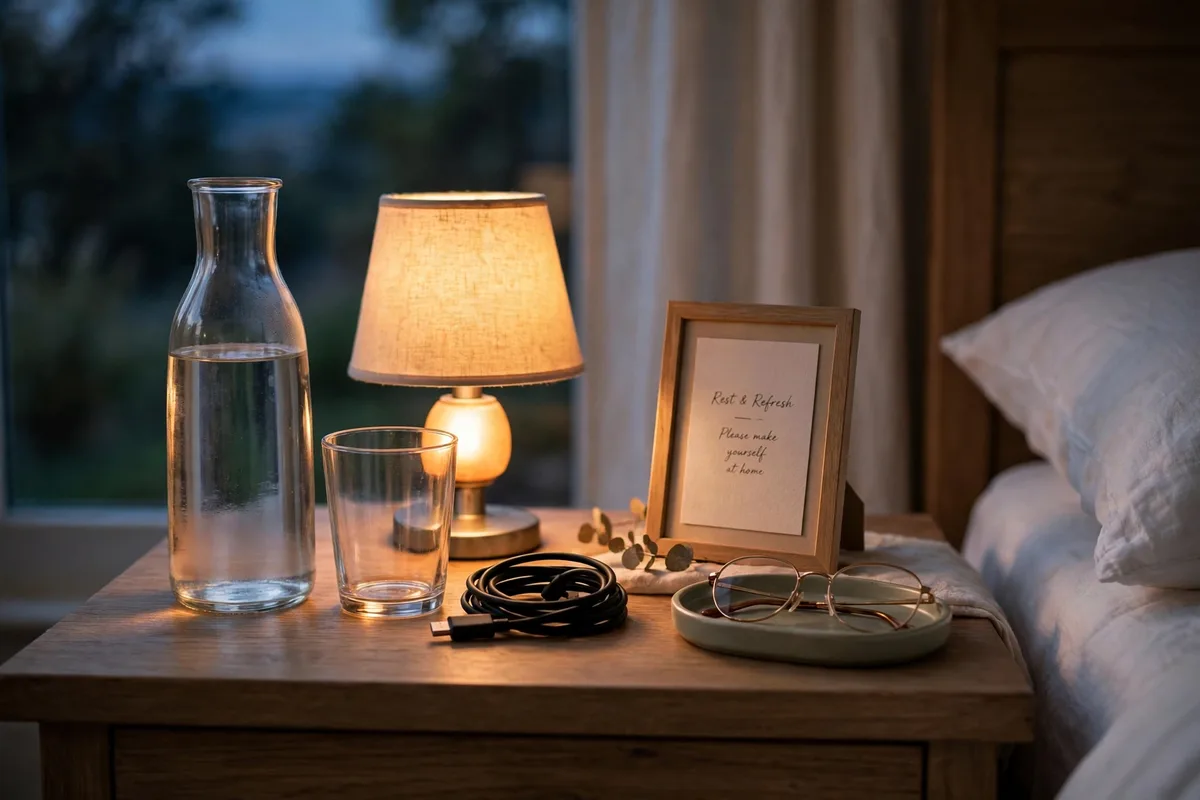
Everything a guest needs between lights-out and morning belongs within arm’s reach: a carafe or bottle of water with a glass, a lamp that can be switched off from the bed, charging that actually reaches (a cable or small multi-port hub on the nightstand, not an outlet behind furniture), and the Wi-Fi password — in a small frame or on a card, so it never has to be asked for. Host checklists like Z Gallerie’s guest-ready checklist put exactly this quartet at the top of the bedside column.
Add the small tray. Keys, glasses, jewellery and a watch land somewhere at night; a tray says where, and quietly keeps the nightstand from becoming a scatter of small valuables.
4. Give Luggage a Landing Spot
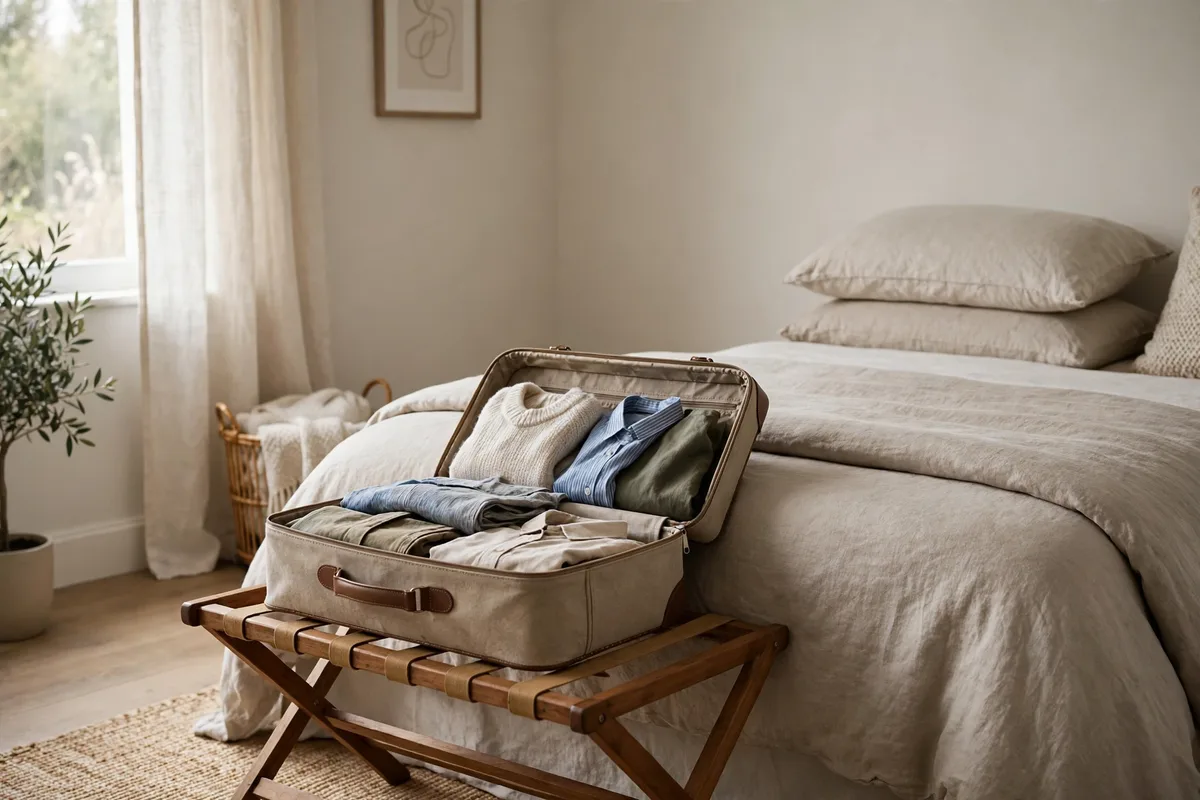
A suitcase on the floor means a guest living bent over for the whole stay; a suitcase on the bed means grit on the bedding. The hotel answer is a luggage rack — inexpensive, folding flat into a closet between visits — or a bench or sturdy chair at the foot of the bed kept clear for exactly this job. Position it where the case opens fully without blocking the door swing or the path to the bathroom.
No room for either? Clear the top of the dresser and say so when you show the room in. A designated surface, named out loud, is most of the comfort.
5. Clear a Drawer and Free Some Hangers
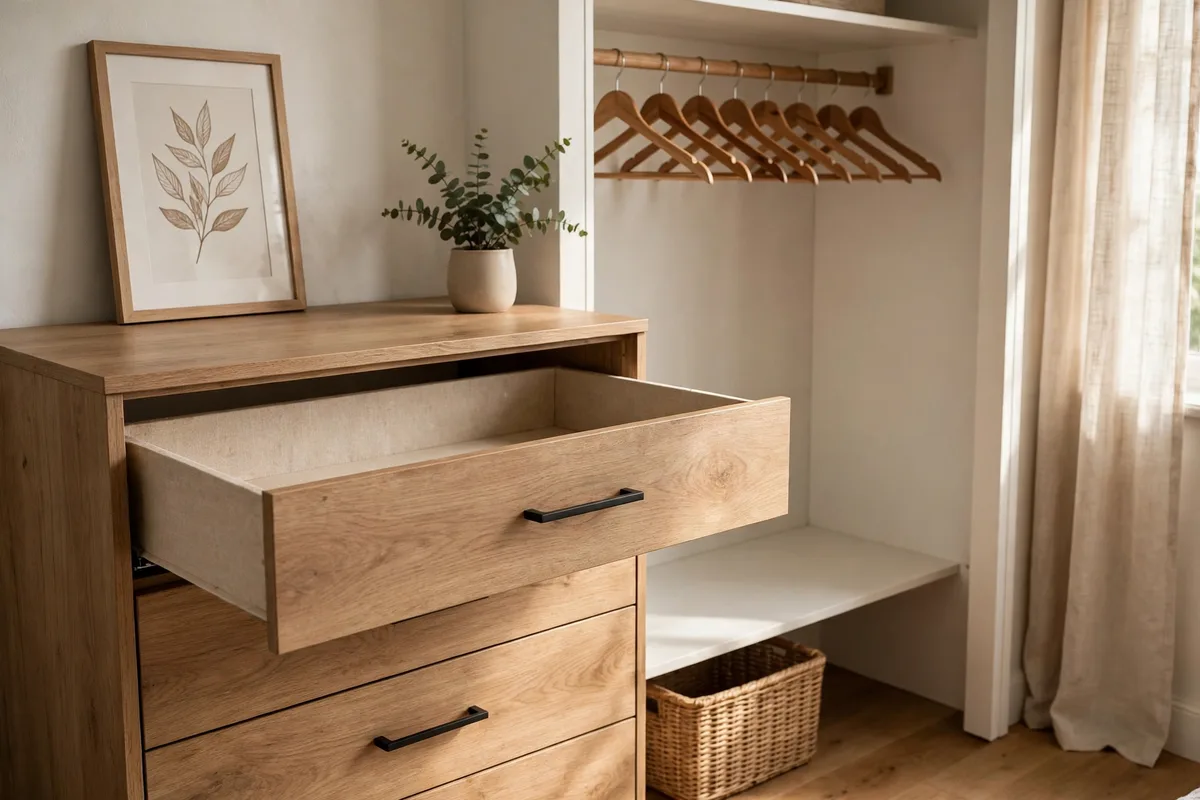
One empty drawer communicates “this space is yours” more clearly than any welcome note. Clear one drawer fully (not half — half reads as your storage with a guest tax), add a short run of empty hangers in the wardrobe, and leave a couple of hooks free on the door. Guests staying more than a night unpack; guests who cannot unpack live out of a case and feel like it.
This is also the moment to evict the room’s second life. If the guest room doubles as an office or storage, the handover has to be visible: desk cleared, boxes shut away, your overflow out of the drawers. The guest should never have to move your life aside to set down theirs.
6. Light in Layers — and Real Darkness on Demand

A guest navigating an unfamiliar room at 3 a.m. needs light that works in layers: a warm bedside lamp (the main event), the ceiling light for packing and finding things, and ideally a low night-light or motion light on the route to the bathroom. One harsh overhead alone is the classic spare-room failure. The reading-light half of the scheme follows the same placement logic as our cozy reading corner ideas — light at shoulder height, aimed at the page, never in the eyes.
The other half is darkness. Blackout curtains or a blackout blind behind the sheers let a guest sleep past dawn, recover from travel, and have genuine privacy — light control is consistently the first thing guest guides say hotels get right. Test the closed curtains at midday; if the room merely dims, add the blackout layer.
7. Temperature the Guest Controls
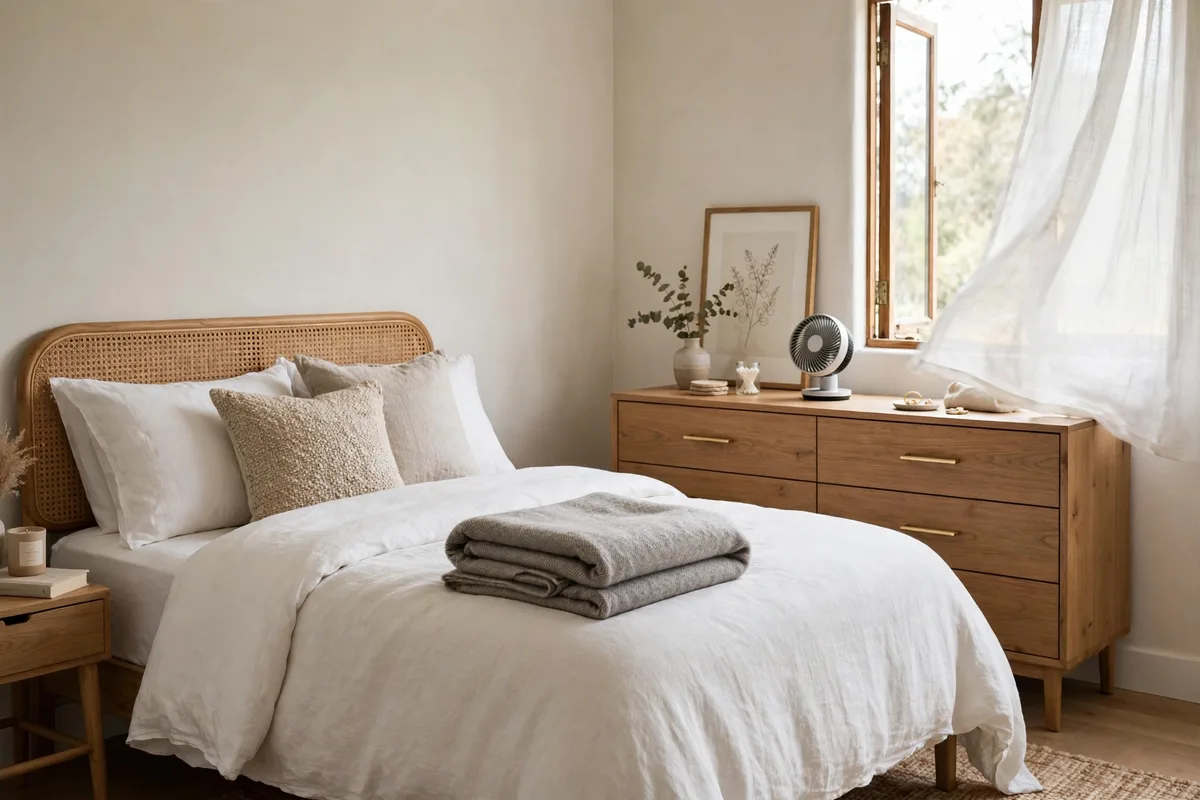
Households run at the host’s temperature; guests sleep at theirs. The setup that covers both directions costs little: the spare blanket from §1 within reach for the cold sleeper, a small quiet fan in the room for the warm one (it doubles as white noise against an unfamiliar house’s sounds), and a window that actually opens, with the guest told so.
The textile logic is the same one that runs the rest of the house’s cold-season comfort in our winter cozy textiles ideas — layers offered, never imposed. If your guest room is the cold room of the house, say it and add the blanket before they arrive, not after the first chilly night.
8. Towels and Toiletries, Already in the Room
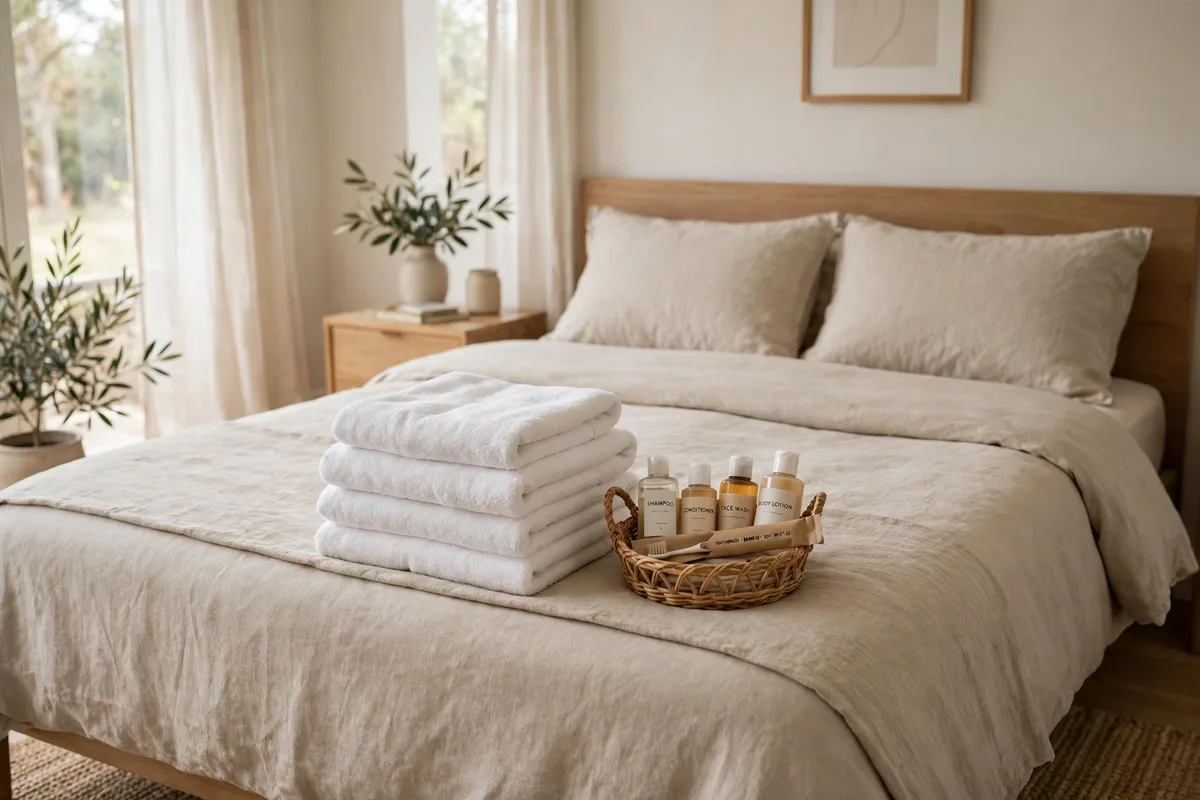
Never make a guest hunt a linen cupboard in a towel. Lay the towels in the room — bath towel, hand towel, washcloth per guest, folded at the foot of the bed or on the dresser — where they read as provision, not inventory. Beside them, a small basket of the forgotten things: travel shampoo and conditioner, a wrapped spare toothbrush, toothpaste, lotion, cotton pads. It is the hotel amenity tray, domesticated, and it prevents every awkward request at once.
Longer stays get one sentence at check-in: where fresh towels and spare bedding live, and an offer to refresh mid-stay. Guests will rarely take you up on it; being told is the comfort. The bathroom half of the same welcome — the basket, the towels, the night-walk test — lives in our guest bathroom guide.
9. The Welcome Layer: Note, Snacks, Local Knowledge
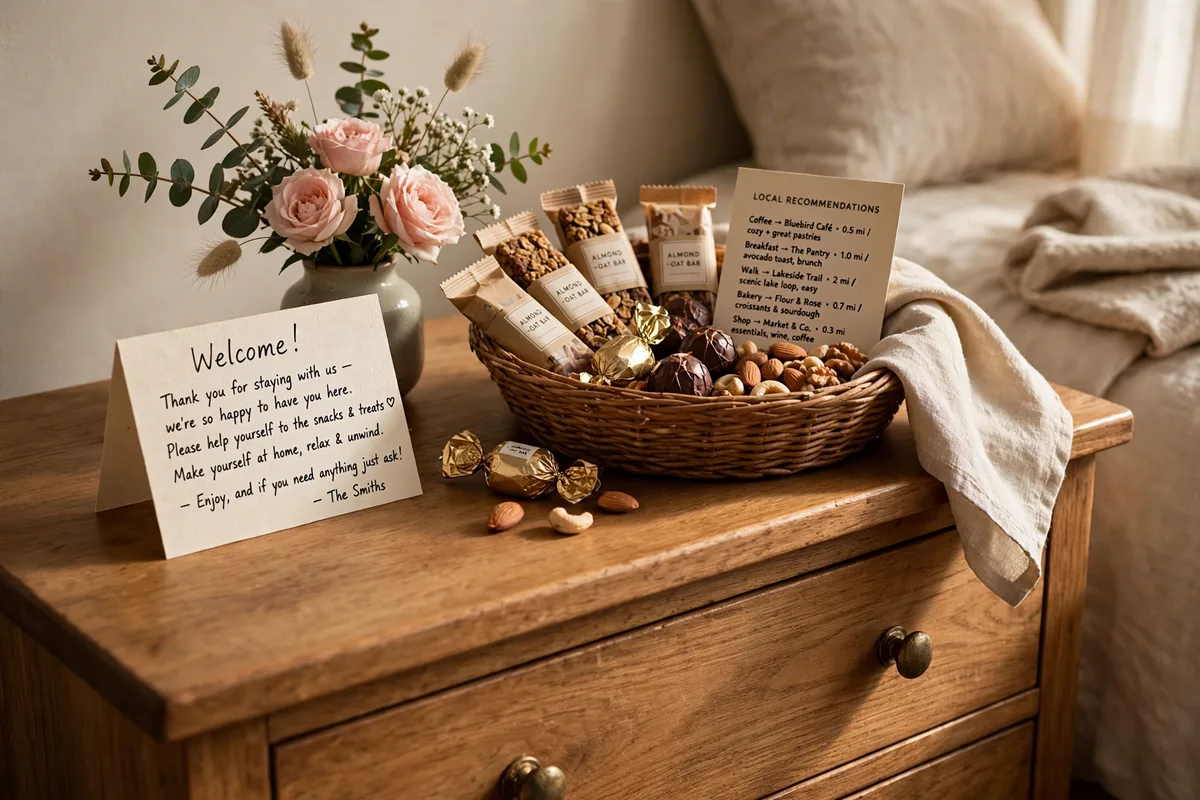
The last layer is the one guests photograph. A short handwritten note — welcome, the Wi-Fi again, breakfast timing, anything quirky about the house (the shower’s hot-cold patience, the coffee machine’s trick) — turns logistics into hospitality. Add a small snack basket (bars, nuts, something chocolate) because guests do not control your mealtimes and dislike asking, and fresh flowers or a small plant because they say the room was prepared for a person, not a booking.
For out-of-town guests, one local recommendation card earns its place: your coffee spot, the walk you would take, the place to eat on their free evening. It costs four minutes and anchors their whole trip. Add a short stack of reading to the nightstand tray while you are at it — a magazine, a slim book — chosen for this guest where you know their taste; the welcome layer is hospitality with a memory.
10. The Host Test: Sleep There Yourself

Once or twice a year, sleep in your own guest room. Every guide’s final step exists because hosts discover things no checklist catches: the lamp bulb too dim to read by, the blind that rattles, the mattress dip, the streetlight stripe across the pillow, the route to the bathroom that crosses the creaking board. One night in the room is a full audit.
Small guest rooms pass the test the same way — the space-saving discipline in our small bedroom design ideas applies with one addition: in a small guest room, clear surfaces matter double, because the guest’s belongings have nowhere else to go. Fix what your test night finds, and the next review your room gets will be a thank-you.
No Spare Room? The Same Setup, Borrowed Space
Everything in this guide survives the loss of the room itself. The sofa bed or air bed gets made with the real layered set from Section 1 — never the retired bedding; the nightstand kit assembles on a tray table or a cleared chair; one drawer or one lidded box empties for the guest’s things; the blackout is improvised with what the borrowed room has. The guest in borrowed space needs the logistics MORE, not less — they have no door to close on the household, so the system has to close around them instead.
Frequently Asked Questions About Setting Up a Guest Bedroom
What do overnight guests appreciate most?
Autonomy: darkness they control, warmth they can adjust, water and charging within reach, and the Wi-Fi password without asking. Across guest feedback the pattern is “I didn’t need to ask for anything” — the setup above is built to produce exactly that.
How many pillows should a guest bed have?
Two per sleeper, in different lofts (one medium, one low), which between them suit side, back and stomach sleepers. Skip tall decorative stacks — guests dismantle them every night and they end up on the floor.
What is a realistic budget for setting up a guest room?
Guest-room guides agree the sleep layer is where the money goes first — pillows, a topper if the mattress needs help, fresh bedding, blackout — and that is what guests actually notice.Beyond it, spend on logistics (luggage rack, charging, towels) before décor.
Should I use my old bedding in the guest room?
No. Retired pillows and duvets were retired because they stopped working; guests inherit the flatness and the allergen load. Fresh basic bedding honestly outperforms expired premium bedding, and everything gets washed after every stay anyway.
How do I set up a guest room in a small space?
Keep both sides of the bed reachable if you can, protect three clear surfaces (suitcase, pocket contents, toiletries), use a behind-the-door mirror, and clear the room’s day job — desk and storage — completely out of sight. Small rooms succeed on clear surfaces, not furniture.
What if my guest room is also my office?
Signal the handover: desktop fully cleared and your supplies boxed away, drawers emptied for the guest, screen dark. The desk then doubles as the guest’s dressing or writing table. A room that still looks like your office makes a guest feel like an interruption.
What belongs on a guest nightstand?
Water with a glass, a lamp reachable from the bed, charging (a cable or multi-port hub), the Wi-Fi password on a card or in a frame, a small tray for glasses and jewellery, and tissues. Everything else is decoration.
Do guests really need towels in the bedroom?
Yes — a full set per guest, folded in the room. It removes the linen-cupboard hunt entirely and reads as provision rather than stock. Add a small toiletries basket (spare toothbrush, travel shampoo, lotion) and you have covered the forgotten-things list too.
How often should guest bedding be washed?
After every stay: sheets, pillowcases, duvet cover, towels — and the mattress protector. Then remake the bed immediately so the room stands ready; a stripped bed reads as a chore pending, a made one as a welcome.
What is the fastest way to refresh a guest room before a last-minute visit?
Fresh sheets and the bed made properly, towels folded at the foot, one drawer emptied, the nightstand kit checked (water, lamp, charger), and the bedside lamp left on for an evening arrival. Fifteen focused minutes covers everything a guest will actually notice.
What if my guests don’t want to share a bed?
Set the room for two sleepers, not one couple: twin beds, a trundle, or a sofa bed made up with the same layered bedding as the main bed — never the retired set. Then duplicate the reach, not the room: each sleeping spot gets its own water, light and charging from the nightstand kit (Section 3). Guests who sleep apart by preference are not a problem to solve; they are a layout to respect.
Conclusion
A great guest room is not a decorated room; it is a prepared one — a bed guests can tune to their own sleep, a nightstand that answers questions before they are asked, space that is visibly theirs, and a host who has slept in it and fixed what they found. Set it up once from the guest’s side of the bed, keep the refresh routine short, and every visitor after that gets the five-star version of your house.



Pingback: 10 Guest Bathroom Accents Ideas for a Warm, Hotel-Level Welcome
Pingback: 10 Multifunctional Furniture Ideas for Small Homes