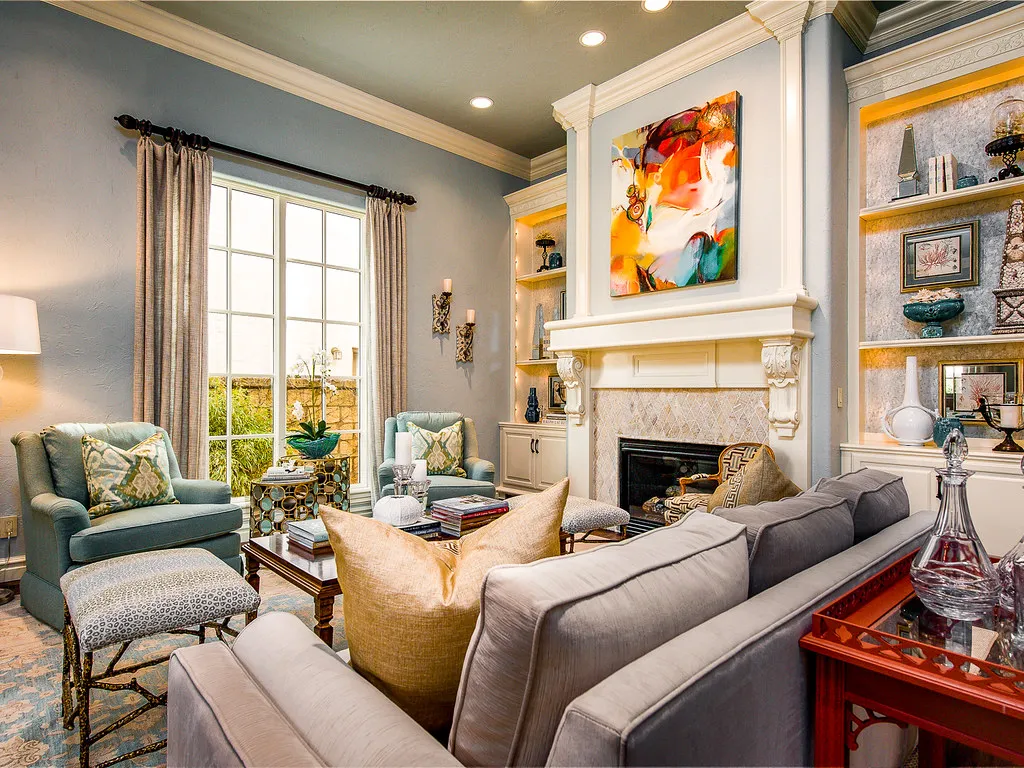
The winter mantel is all weight: dense garland, deep colours, candle clusters, stockings and shine. Spring asks for the opposite edit — the same shelf, breathing. Fewer pieces, more air between them, living greenery instead of glitter, and colour that arrives the way it does outside: in stems and branches first, accents second.
Work through the steps in order and the change feels dramatic without a single major purchase — most of what you need is a cleared shelf, something green, something blooming, and the discipline to stop while it still looks light.
In this guide: Clear the Winter Layers First · Anchor It With Greenery · Set the Backdrop: Mirror, Art or Wreath · Bring In the Flowers That Say Spring · Layer Heights With Books, Boxes and Candlesticks · Add Easter Touches Without Going Full Bunny · Pick a Palette: Pastel, Green-and-White, or Bold Botanical · Restyle the Fireside for a Fireplace Out of Season · Style Narrow and Small Mantels With the Rule of Three · Keep It Alive All Season
The 2-Hour Spring Mantel Reset
Clear everything off and clean the shelf (15 minutes, Section 1). Set the backdrop — mirror, light art or wreath (10 minutes, Section 3). Drape the greenery or set potted herbs at both ends (15 minutes, Section 2). Group the flowers — one variety per vessel, clustered at one end (20 minutes, Section 4). Build three heights with books and candlesticks (15 minutes, Section 5). Add the accents last, themed pieces under a third (10 minutes, Section 6) — then stop, photograph it, and remove one thing. That pause-and-remove is what makes it spring.
Three budgets, one mantel: Free: garden cuttings and blossom branches in vessels you own, on a cleared shelf. One bunch: a single supermarket bunch of tulips or daffodils split across two or three small vases, plus the free version’s branches. One piece: spend only on the backdrop — a mirror or light artwork — and let everything else be the free version. All three read as intentional; the difference is one purchase, not the effect.
The Spring Mantel Layers at a Glance
| Layer | Spring Choice | Rule |
|---|---|---|
| Backdrop | Mirror, light art, or a spring wreath above | One focal piece only, centred or deliberately off-centre |
| Greenery | Eucalyptus garland, potted herbs, blossom branches | Something living or lifelike in every arrangement |
| Flowers | Tulips, daffodils, hyacinths in low groupings | One or two varieties, never a mixed bouquet explosion |
| Height | Books, boxes, candlesticks as risers | Three height zones: tall, mid, low |
| Accents | Eggs, nests, birds — sparingly | Themed pieces under a third of the display |
1. Clear the Winter Layers First
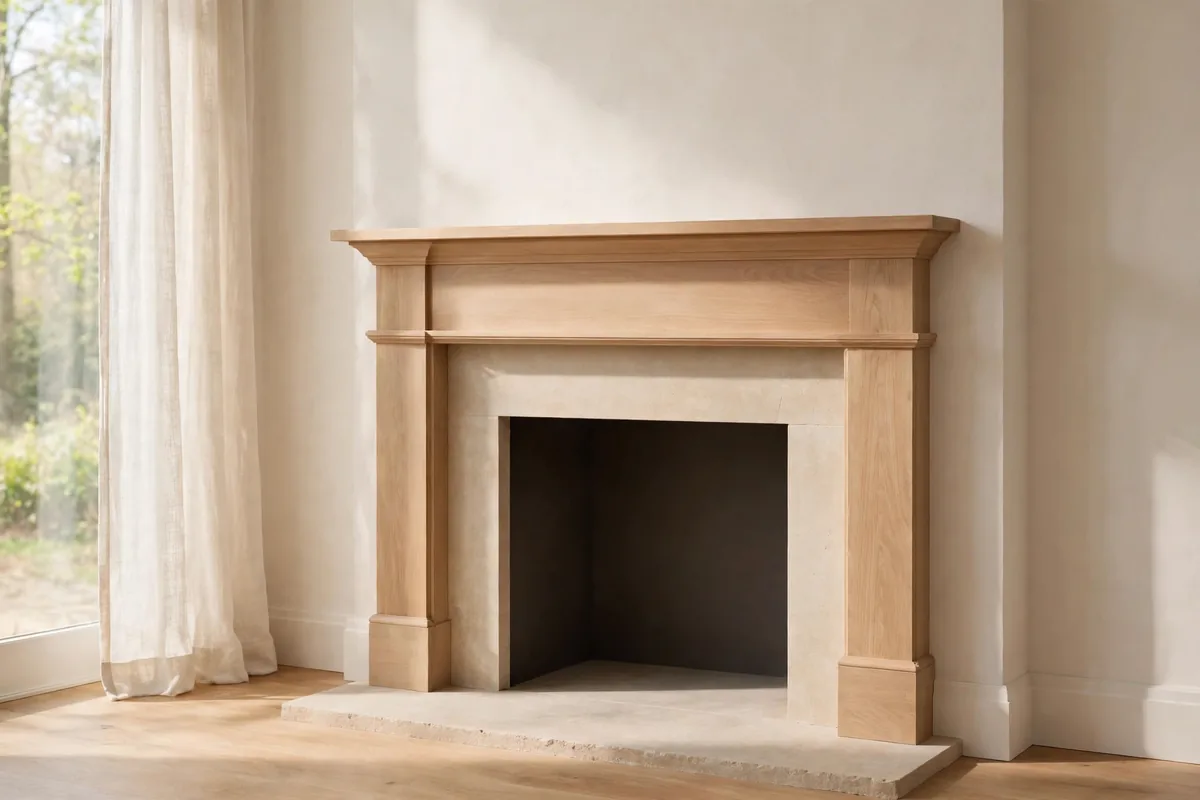
Take everything off — garland, candles, the lot — then clean the shelf and look at the empty mantel for a full minute. Spring styling fails when it is winter styling plus tulips: the density is the problem, not the palette. An empty shelf also tells you what the room actually needs — often less than you think.
Decide what earns its place back. A mirror or artwork usually stays; the candlesticks may return in reduced numbers; the heavy garland and dark accents go to their storage box. The year-round principles in our fireplace mantel styling ideas start from this same clean slate — spring is simply its lightest application.
2. Anchor It With Greenery
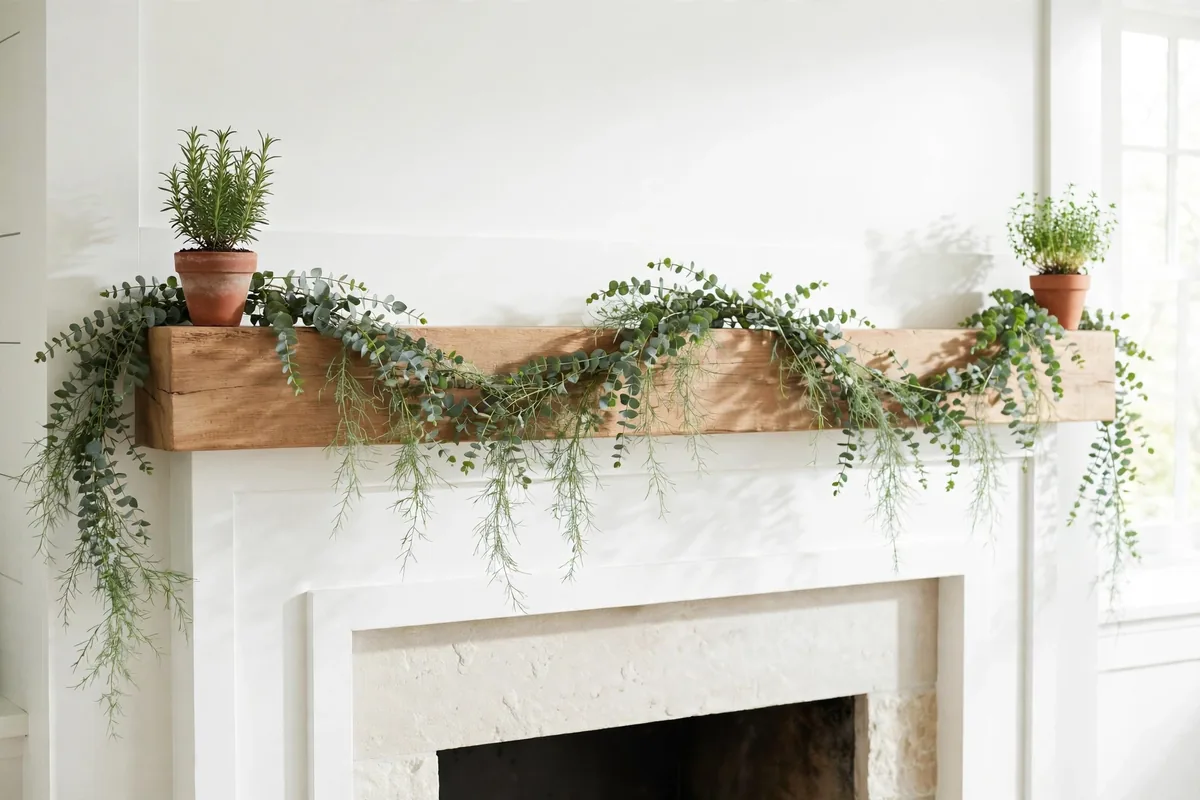
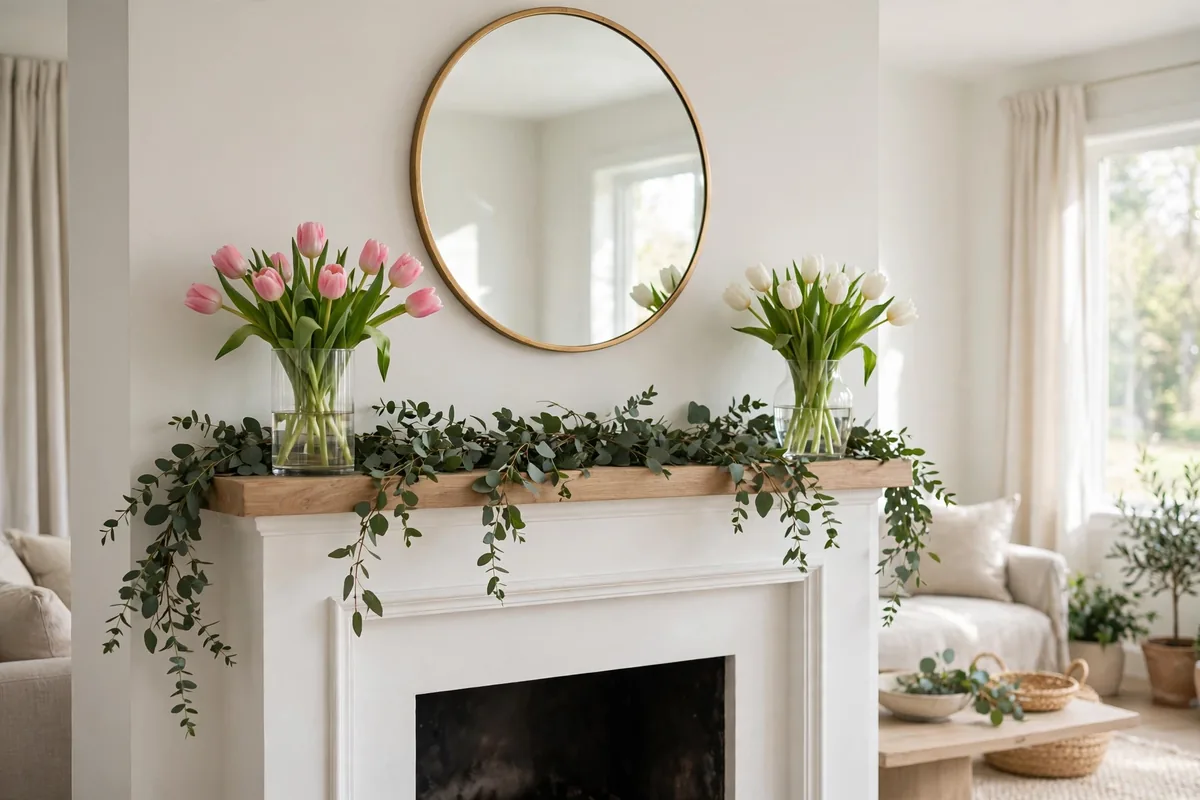
Greenery is the spring mantel’s structure. Drape a loose eucalyptus or olive garland along the shelf — looser and thinner than December’s, with space showing between the leaves — or skip the garland and use potted herbs and small topiary in terracotta at either end. Green first, flowers second: the eye reads “spring” from the foliage before it notices a single bloom.
If your garland is your year-round base piece, this is its easiest season — the swap system in our reusable seasonal decorations ideas runs this exact garland through all four seasons with only the tuck-ins changing; spring’s tuck-ins are blossom sprigs and pastel ribbon.
3. Set the Backdrop: Mirror, Art or Wreath
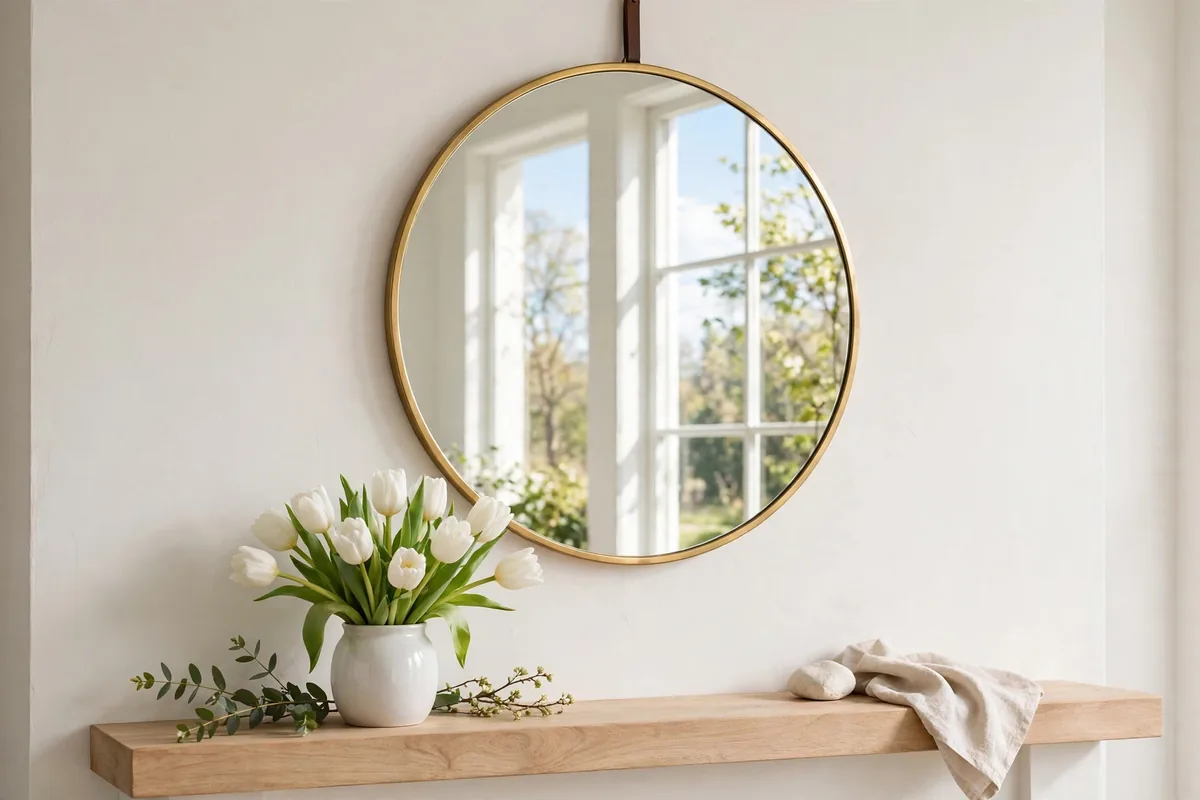
The piece above the mantel sets the season’s brightness. A mirror is the spring favourite because it throws daylight back into the room and doubles every stem you place in front of it. Light botanical art works the same way; a floral or greenery wreath hung on the wall above — instead of over the shelf — keeps the shelf itself free for arrangements.
Choose one backdrop and commit. Mirror plus wreath plus art is the winter instinct (layer everything) creeping back; spring reads as one confident piece with air around it.
4. Bring In the Flowers That Say Spring
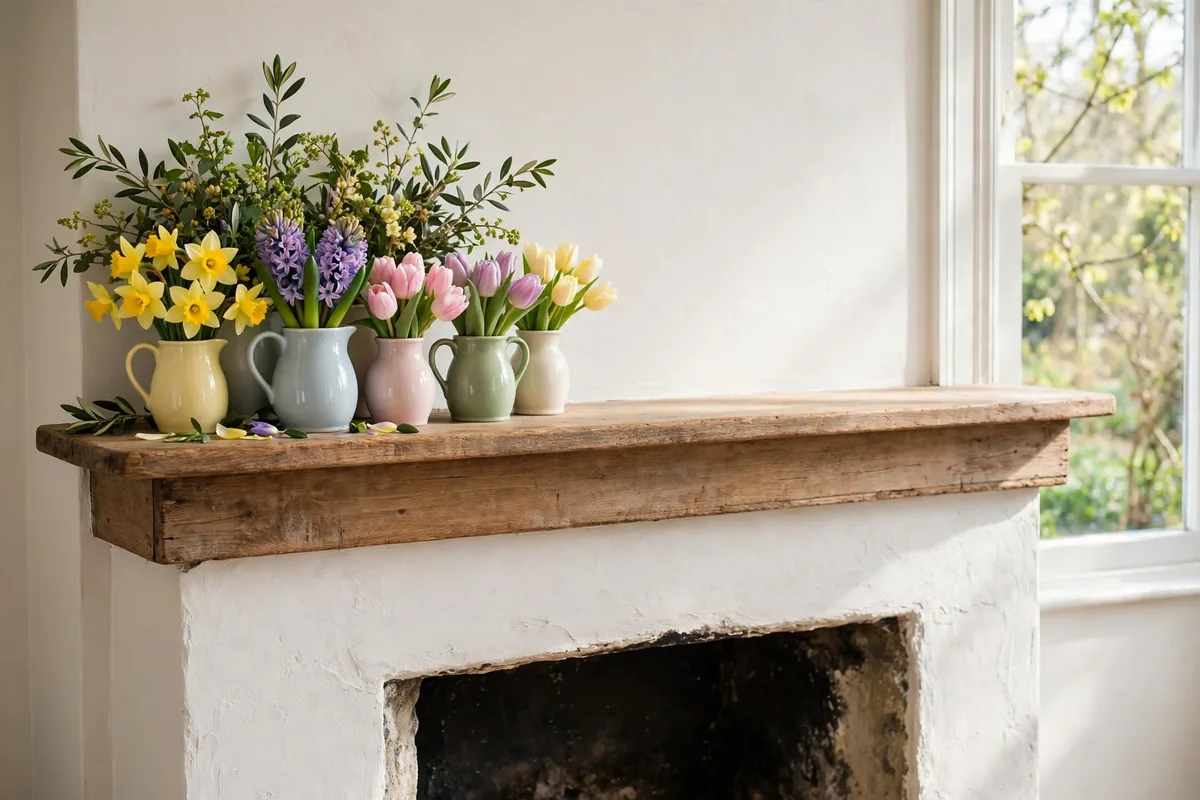
Tulips, daffodils, hyacinths, ranunculus, and blossom branches — cherry, forsythia, pussy willow — are the season’s vocabulary. Group one variety per vessel and cluster two or three vessels at one end of the mantel rather than marching them in a row. A single tall branch arrangement can carry a whole narrow mantel by itself.
Seasonal-bloom advice agrees across stylists: the Simply Southern Cottage spring mantel tips lead with exactly these flowers — tulips, daffodils and hyacinths in a simple vase or pitcher — or verdant greenery such as eucalyptus for a more organic read. Simple vessels are the point: a jug or plain glass vase, never the ornate winter urn.
5. Layer Heights With Books, Boxes and Candlesticks
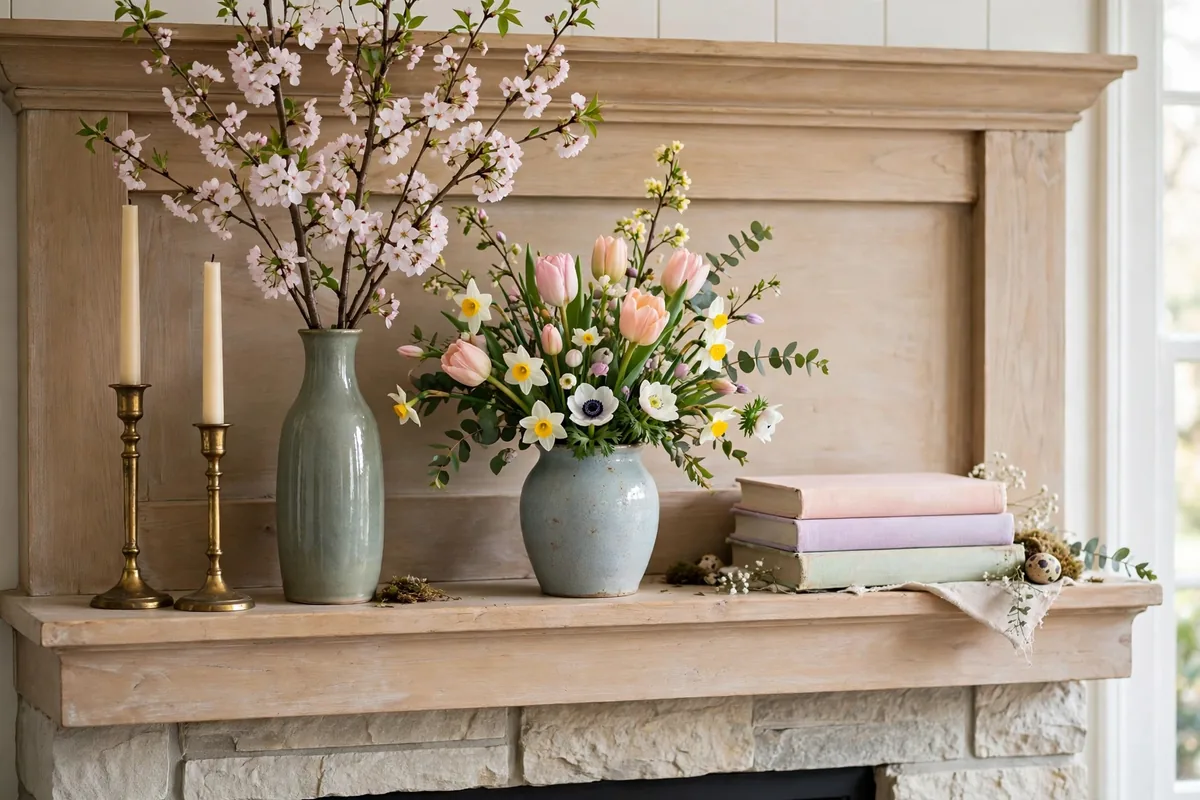
A flat row of same-height objects is the beginner mantel. Build three zones instead: tall (branches, candlesticks), mid (vases, a small framed print), low (a nest, a bowl, a stack of two books lying flat). Risers do the quiet work — pastel or linen-bound books under a vase lift flowers into the tall zone without another tall object.
Styling-principle guides make the same point by style: Wineful Living’s spring mantel principles build each look — classic, minimal, earthy, romantic — from one backdrop, deliberate symmetry or asymmetry, and varied heights, with generous negative space in the minimal version. If in doubt, remove one object: spring mantels almost always improve.
6. Add Easter Touches Without Going Full Bunny

For the Easter weeks, the mantel needs a nod, not a takeover: a small nest with speckled eggs tucked into the garland, a bowl of pastel eggs at the low zone, one ceramic bunny at most — ideally in the same cream or stone finish as your year-round pieces. When Easter passes, the nods leave and the spring mantel remains, unchanged in structure.
Keep the themed share under a third of the display. The broader room schemes in our Easter decorating ideas follow the same ratio — the holiday reads clearly while the room stays calm enough to live with for a month.
7. Pick a Palette: Pastel, Green-and-White, or Bold Botanical
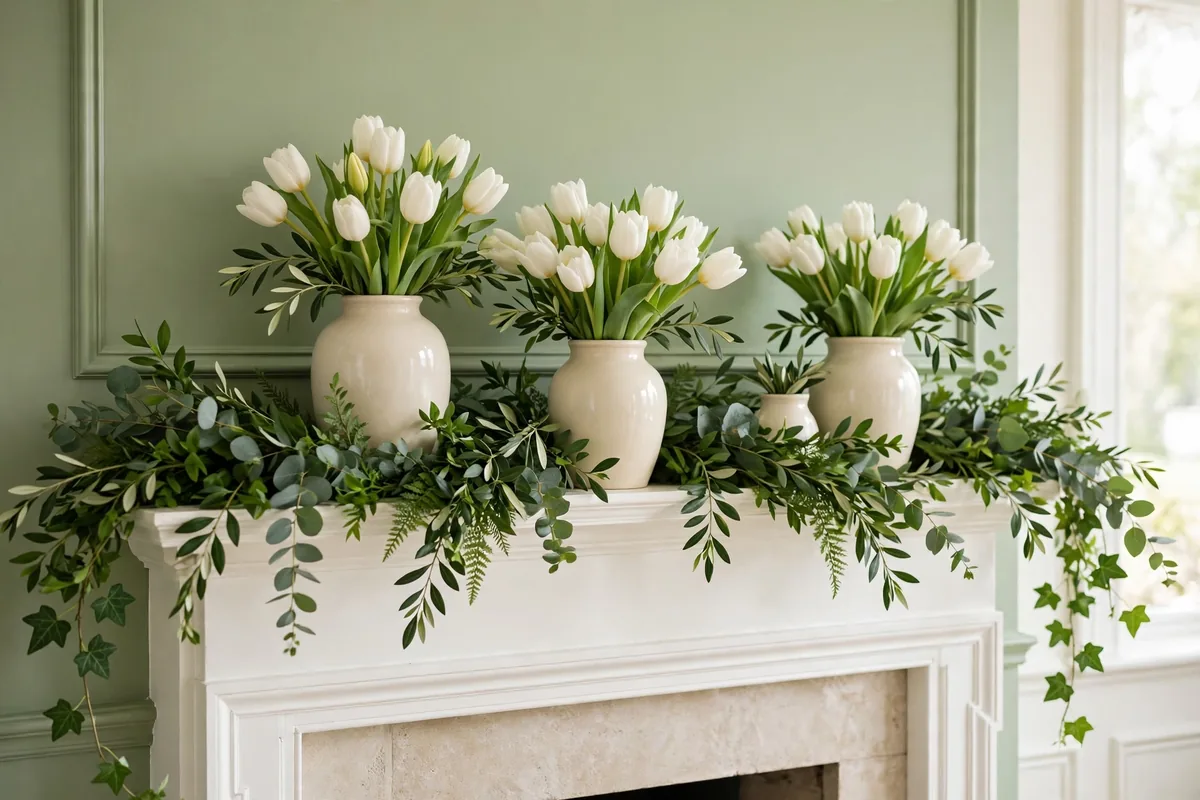
Three palettes cover nearly every home. Soft pastel — blush, butter, pale blue with cream — is the classic spring read and suits traditional rooms. Green-and-white — foliage, white tulips, cream ceramics — is the freshest and the most forgiving, and it never clashes with the room beyond the mantel. Bold botanical — saturated tulips, branches, a single strong art print — suits modern rooms that want the mantel as the season’s one loud note.
Whichever you choose, let the flowers carry the colour and keep vessels and textiles inside the palette’s neutrals. Two colour families plus green is the ceiling; three is a garden centre.
Three Mantels to Copy Exactly
The Classic Spring Mantel
Backdrop: a mirror or light botanical print, centred. Greenery: a loose eucalyptus garland with space between the leaves. Flowers: tulips in a simple jug at one end, daffodils in a low bowl at the other. Heights: two candlesticks at mid height, a stack of two pastel books under the jug. Accent: one nest of speckled eggs tucked into the garland — nothing more.
The Minimal Green-and-White Mantel
Backdrop: one pale artwork or an empty wall — the emptiness is the backdrop. Greenery: three potted herbs in terracotta, spaced apart. Flowers: white tulips only, one vessel. Heights: a single tall branch in a narrow vase as the only tall piece. Accent: none. Five to seven pieces total, wall visible between every grouping.
The Romantic Pastel Mantel
Backdrop: a floral wreath hung on the wall above the shelf. Greenery: a soft garland with blossom sprigs tucked in. Flowers: hyacinths and ranunculus in blush and cream, grouped in low vessels at one end. Heights: candlesticks in pairs, one stack of linen-bound books. Accent: one ceramic bunny in a cream finish for the Easter weeks — removed when they pass.
8. Restyle the Fireside for a Fireplace Out of Season
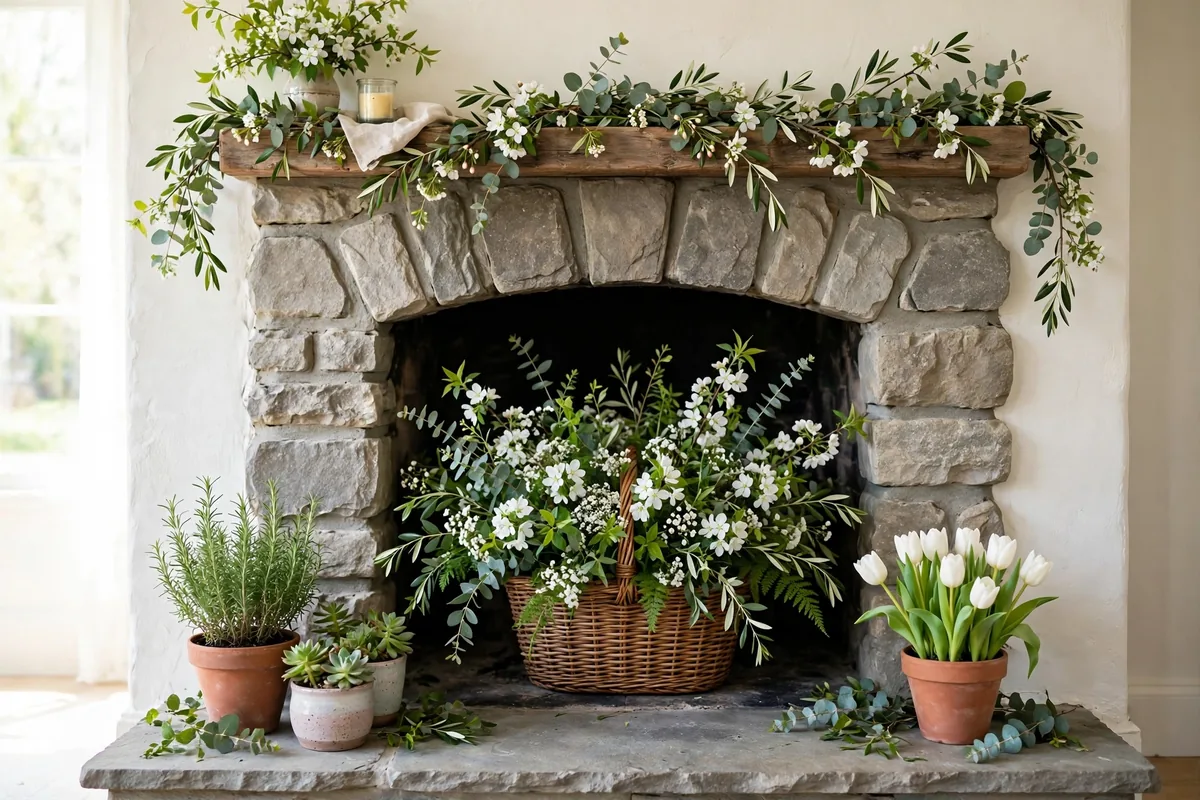
An unused black firebox drags a spring mantel down. Fill the opening with the season instead: a basket of greenery or flowers, a stack of pale birch logs tied with ribbon, a lantern with a flameless candle, or a screen of potted plants on the hearth. The hearth itself takes a woven basket of blankets in light colours, or nothing at all — bare and clean is a spring look too.
Chimney and flue housekeeping belongs to this moment: if the fireplace worked all winter, spring is when it is swept and inspected, before the basket of blooms moves in for the season.
9. Style Narrow and Small Mantels With the Rule of Three
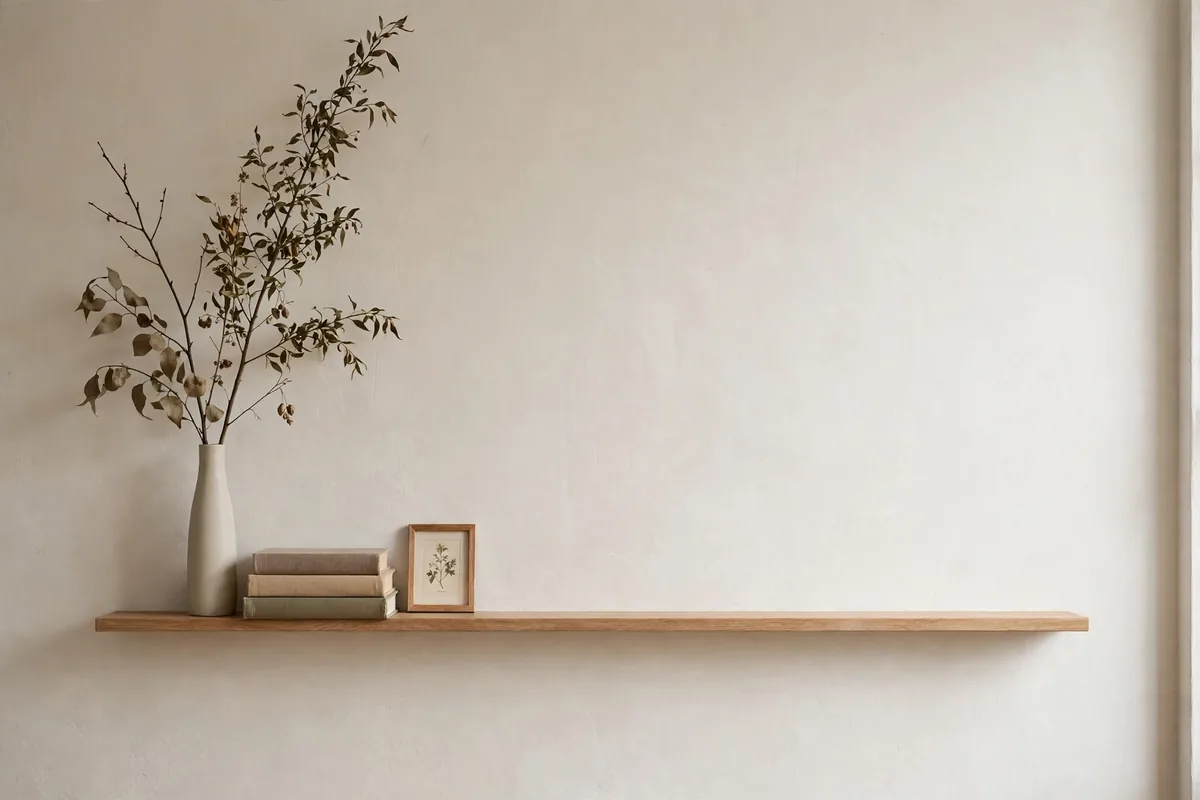
A slim shelf holds three things well or eight things badly. Use the rule of three: one tall piece (a branch in a vase), one mid piece (a small framed print or candle pair), one low piece (a nest, bowl or book stack) — grouped slightly off-centre, with the rest of the shelf left empty. The emptiness is not a gap; it is what makes the group look designed.
Shallow shelves also rule out wide vessels. Bud vases, narrow bottles and candlesticks were made for them — a line of single stems in bud vases is the small mantel’s signature spring look.
10. Keep It Alive All Season
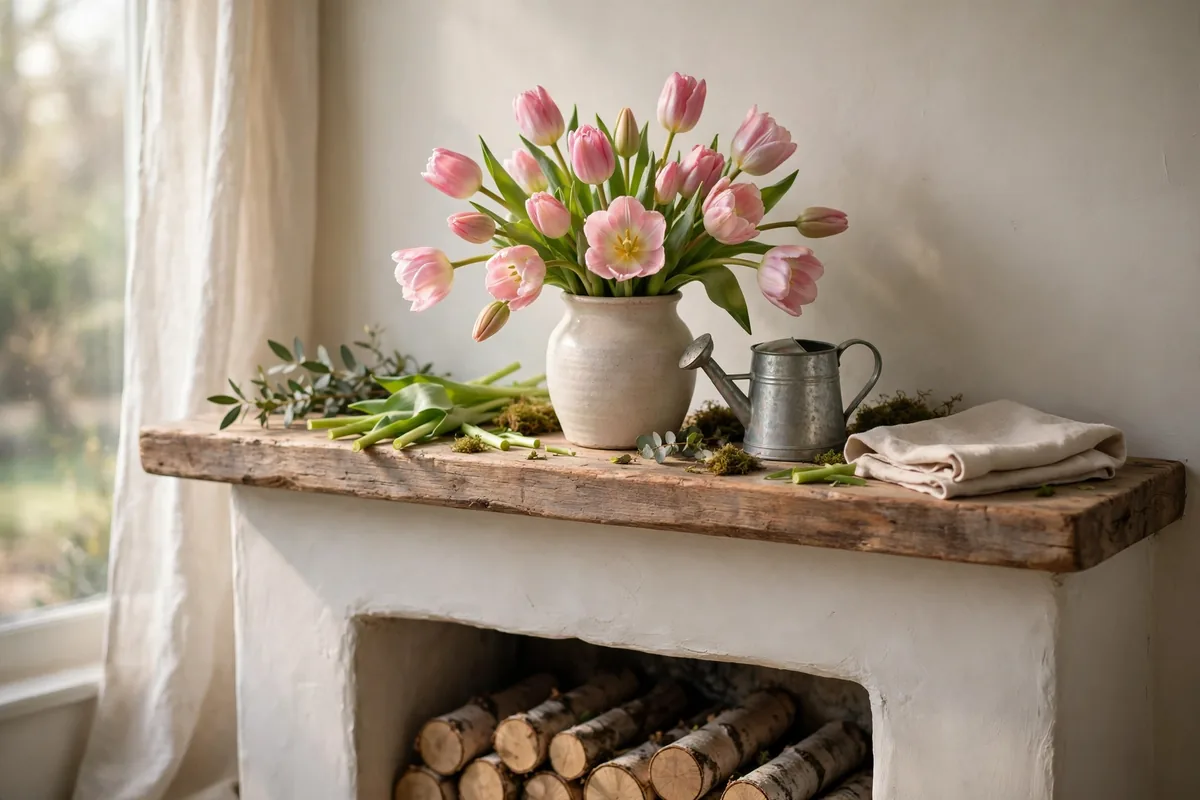
A spring mantel is a living display, and it stays beautiful on a small routine: change vase water every two days, trim tulip stems as they grow (they keep growing in the vase — let some arch, it is their charm), rotate in supermarket stems as earlier ones fade, and move potted bulbs to the garden when they finish. Faux stems in the garland base mean the structure never collapses between fresh flower runs.
Plan the exit as you style: when summer comes, this mantel’s greenery and vessels roll straight into the next season — the same rotational thinking that took this shelf from its Christmas mantel arrangement to spring without starting over.
How Long Spring Flowers Last
| Flower | Vase life | The trick that extends it |
|---|---|---|
| Daffodils | About a week | Keep them in their own vase for the first day — their sap shortens other flowers’ lives — then mix freely |
| Hyacinths | About a week | Leave the small piece of bulb base on the stem; it helps them drink |
| Tulips | 5–7 days | Top up with cold water; they keep growing and arching in the vase — let them |
| Blossom branches | 1–2 weeks | Crush or split the woody stem ends so they can take up water |
| Potted bulbs | Several weeks | Water lightly, and plant them out in the garden when flowering ends |
Frequently Asked Questions About Spring Mantels
When should I switch my mantel from winter to spring?
Early March suits most homes, or whenever the room starts getting real daylight again. If Easter is early, style the spring mantel then and add the Easter accents for just those weeks.
What flowers last longest on a mantel?
Of the spring flowers, daffodils and hyacinths give roughly a week in a vase, tulips five to seven days (and keep growing, which many people love), and blossom branches one to two weeks. Potted bulbs last longest of all — weeks — and can be planted out afterwards.
Can I style a spring mantel with only faux flowers?
Yes, if you mix textures — faux greenery as the base with one or two high-quality faux flower stems, or faux arrangements refreshed by a single real bunch at the centre. All-faux works best in the green-and-white palette, where foliage does most of the talking.
How do I style a mantel above a TV or in a room without a fireplace?
The same principles apply to a shelf, console or sideboard: backdrop, greenery, one flower grouping, three heights, restraint. A mantel is just the most common stage — the styling grammar is portable.
What do I put in the fireplace opening in spring?
A basket of greenery or flowers, pale birch logs, a lantern with a flameless candle, or a row of potted plants on the hearth. Anything light and living-looking beats the empty black box.
How many objects should a spring mantel have?
Roughly five to nine pieces including vessels and candles — noticeably fewer than a winter display. If you cannot see wall or shelf between groupings, there are too many.
Which colours should I avoid for spring?
Nothing is banned, but the deep winter family — burgundy, forest green, heavy gold, black — works against the light brief. If your room’s fixed colours are dark, lean on the green-and-white palette, which brightens without arguing.
Do I need a garland for a spring mantel?
No. Potted herbs, topiary, or a line of bud vases can do the greenery job on their own. A garland is simply the easiest way to get continuous green across a wide shelf.
How do I make a spring mantel safe around a working fireplace?
If the fire is still in use, keep all foliage, paper and fabric well back from the opening and off the hearth’s heat zone, use flameless candles on the shelf, and never let garland drape where heat or sparks can reach it. When in doubt, treat the mantel as decor-only until the fireplace’s season truly ends.
What is the cheapest spring mantel refresh?
Cut branches from the garden — forsythia, blossom, even plain green branches — in your tallest vase, plus a supermarket bunch of tulips or daffodils at the other end, on a cleared shelf. Under the cost of a coffee out, and it outperforms most bought displays.
In what order should I style a spring mantel?
Backdrop first, then greenery, then flowers, then heights, accents last: clear the shelf, set the mirror or art, drape the garland, group the flowers at one end, build three heights with books and candlesticks, and only then add themed pieces — keeping them under a third of the display. The full sequence takes about two hours (see the reset checklist at the top of this guide).
Conclusion
A spring mantel is an edit, not a haul: clear the shelf, anchor it with greenery, set one bright backdrop, group the season’s flowers at three heights, and stop early. Do that and the room’s focal point exhales — lighter, greener, and unmistakably awake for the season.