

Most seasonal decorating works like this: buy a box of themed plastic, display it for five weeks, store it for forty-seven, repeat with a different theme. The alternative is quieter and far cheaper over time — a small collection of well-made neutral pieces that stay out all year, restyled each season with a few inexpensive accents. Nothing here asks you to stop celebrating seasons. It asks you to celebrate them with swaps, not shopping trips.
The system has two parts: a permanent base (wreath, garland, candles, vessels, textiles in neutral finishes) and a tiny seasonal layer (ribbon, picks, pillow covers, bowl fillers) that changes four to six times a year and stores in two boxes.
In this guide: Build a Neutral Base That Never Gets Packed Away · Choose One Core Wreath and Restyle It · Run One Garland and Change What Tucks Into It · Swap the Textiles, Not the Furniture · Keep Candles and Holders Working All Year · Use Ornaments and Vessels Beyond December · Let Faux Pumpkins and Botanicals Repeat Every Autumn · Store It Like You Mean to Reuse It · Buy Once, Buy Better: Where to Spend and Where to Save · Make the Swap a Ritual, Not a Chore
The Starter Kit, Counted
| Piece | How many | Why that number |
|---|---|---|
| Plain greenery wreath | 1 | One door or wall hook, restyled four times a year |
| Eucalyptus or mixed garland | 1 (2 if you dress a table too) | Mantel length; a second only if a dining table needs its own |
| Glass hurricanes | 2 | A pair frames a mantel or centres a table; singles look lost |
| Flameless candles | 4–6 | Enough for two hurricanes plus a tray, with spares on timers |
| Pillow inserts | 4 | Two large, two lumbar — the count your sofa already uses daily |
| Seasonal pillow covers | 4 sets | One per season; they fold into a single drawer |
| Wooden tray or dough bowl | 1 | The landing zone for every bowl-filler swap |
| Neutral table runner | 1 | The table’s permanent base layer |
| Plain baubles, 2 metal finishes | 12–24 | Bowl filler, tray scatter and December’s tree, in one set |
| Storage boxes | 2 | One for warm seasons, one for cold — the whole accent layer |
One Base Piece, Four Seasons at a Glance
| Base Piece | Spring | Summer | Autumn | Winter / Holidays |
|---|---|---|---|---|
| Plain greenery wreath | Tuck in tulips + pastel ribbon | Add shells or citrus picks | Wire in mini pumpkins + plaid bow | Red berries + velvet bow |
| Eucalyptus garland | Weave fresh-look florals | String paper or shell garland over it | Add dried oranges + cinnamon | Add fairy lights + pinecones |
| Glass hurricanes | Fill base with moss | Fill base with sand + shells | Fill base with acorns | Fill base with faux snow + cranberries |
| Neutral pillow set | Floral or gingham cover | Stripe or coastal cover | Plaid or rust cover | Velvet or knit cover |
| Wooden tray / dough bowl | Eggs + greenery | Lemons + linen | Gourds + leaves | Ornaments + candles |
1. Build a Neutral Base That Never Gets Packed Away
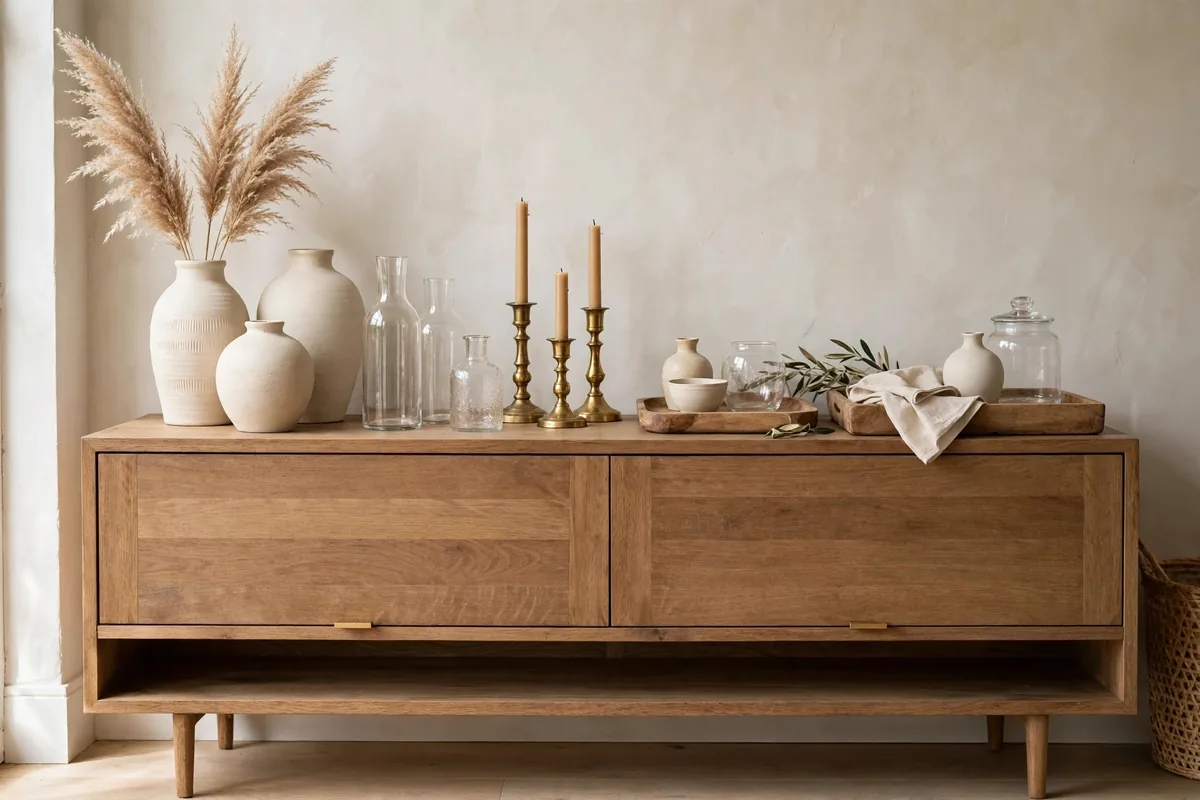
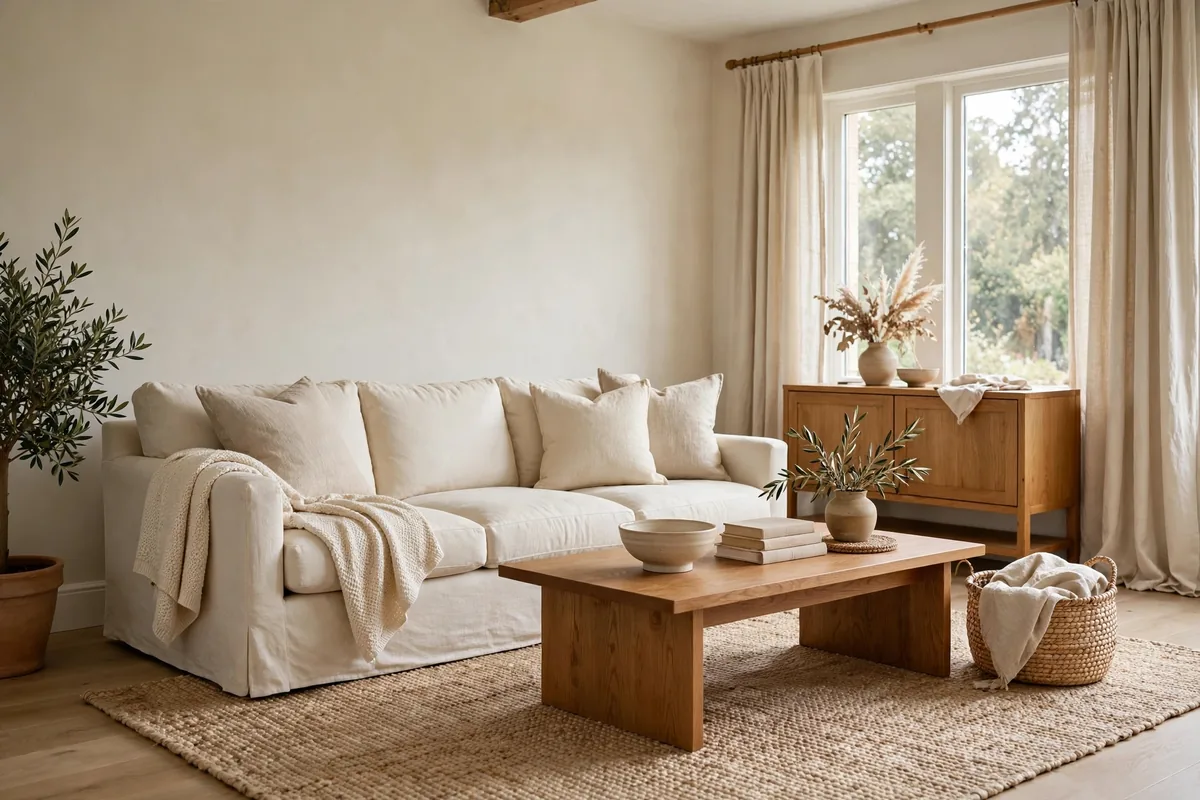
Start with pieces that belong to no season: cream and white ceramics, clear glass, natural wood, woven baskets, brass and black metal. These live on your mantel, shelves and table permanently — they are the room’s furniture-level decor, and seasons happen to them rather than replacing them.
The economics are the argument. Mississippi State University Extension’s guide to a greener holiday season, citing the U.S. EPA, notes household waste rises by more than 25 percent between Thanksgiving and New Year — and its first decorating advice is to reuse decorations for multiple years and store reusable pieces carefully so they last. A neutral base is that advice turned into a shopping list: fewer, better things, used constantly.
2. Choose One Core Wreath and Restyle It

Buy one good plain greenery wreath — no glued-on theme, no glitter, nothing permanently attached. Every restyle is reversible: floral picks pushed between the branches, a bow wired to the bottom, mini pumpkins or ornaments on florist wire. Ten minutes changes the season; nothing is damaged; the wreath returns to plain when you pull the picks out.
Keep the picks and bows in labelled bags inside the wreath’s own storage box, and one wreath quietly does the work of five. The same logic applies at the window — a plain wreath is the backbone of the displays in our holiday window display ideas, restyled rather than replaced.
3. Run One Garland and Change What Tucks Into It

A realistic eucalyptus or mixed-greenery garland is seasonless. Draped once across the mantel or table, it accepts whatever the season offers: spring florals woven through, dried oranges and cinnamon sticks for autumn, fairy lights and pinecones for winter, a shell or paper chain for summer. The garland never moves; only the tuck-ins do.
Choose a garland with wired stems if you can — it holds its shape year after year and grips the additions without clips. Fluff it back into shape each swap; two minutes of reshaping is what separates “reused” from “tired”.
4. Swap the Textiles, Not the Furniture

Pillow covers, throws and table runners are the highest-impact, lowest-storage seasonal swap in the house. One set of good cushion inserts wears four covers a year: floral or gingham for spring, stripes for summer, plaid for autumn, velvet or chunky knit for winter. Covers fold flat into a single drawer — the whole year’s colour changes in less space than one themed ornament box.
The table follows the same rule: one quality neutral runner as the base, seasonal napkins and a centrepiece swap above it. The layered-linen method in our Valentine’s table ideas was designed exactly this way — the blush layer changes, the cream base stays.
5. Keep Candles and Holders Working All Year
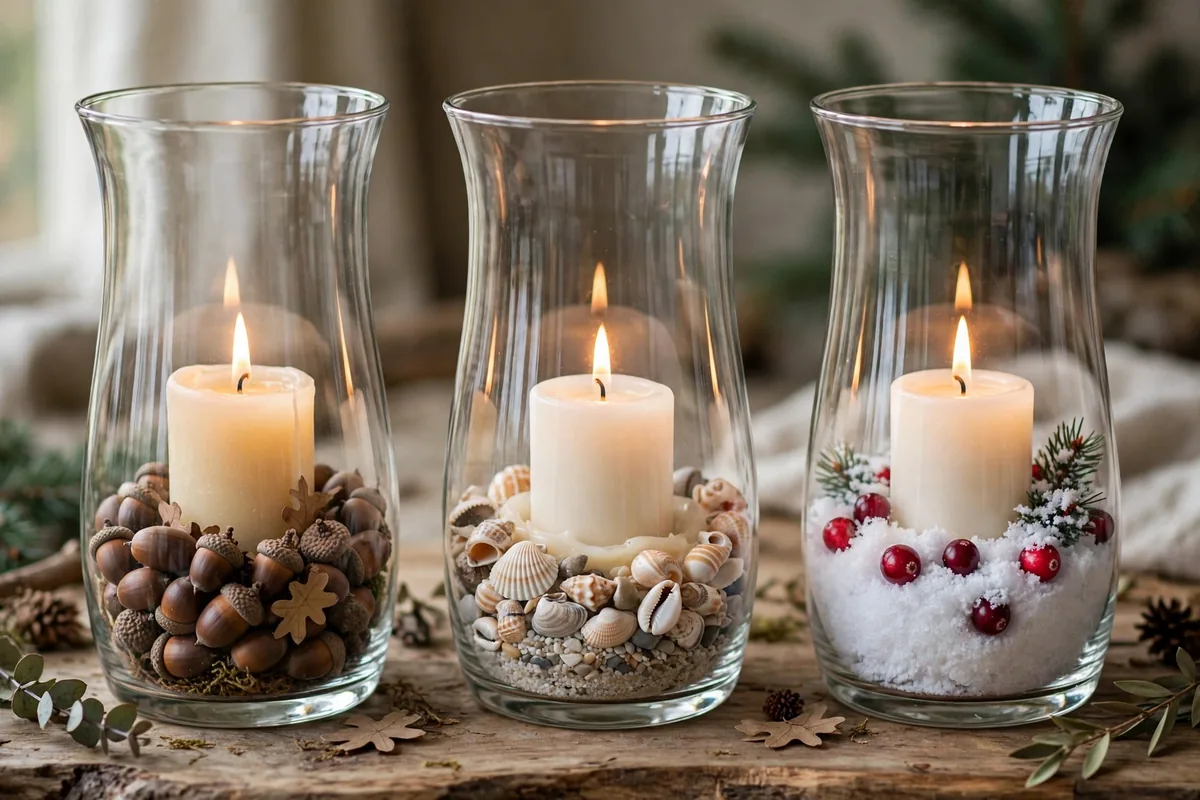
Flameless candles and plain holders in glass, brass or black metal never date. What changes is the staging: a hurricane’s base filled with moss in spring, sand and shells in summer, acorns in autumn, faux snow and cranberries in winter. The candle is permanent; the two inches around it carry the season.
Where you do use string lights in a display, Kansas State Research and Extension’s holiday waste-reduction tips give the pairing this guide recommends everywhere: LED lights on a timer, and last year’s decorations reused before anything new is bought. Timers also protect the pieces — nothing is handled daily, so nothing gets dropped.
6. Use Ornaments and Vessels Beyond December

Plain metallic and glass ornaments — gold, silver, mercury glass, clear — are not really Christmas objects; they are bowl fillers, tray scatter and sparkle for any dark month. A bowl of them anchors a January table, fills a hurricane with candles at a dinner party, and returns to the tree in December without a single new purchase.
Buy ornaments the way you buy the base: neutral first, themed last. A small set of plain baubles in two metal finishes will out-work a large set of character ornaments every month of the year.
7. Let Faux Pumpkins and Botanicals Repeat Every Autumn
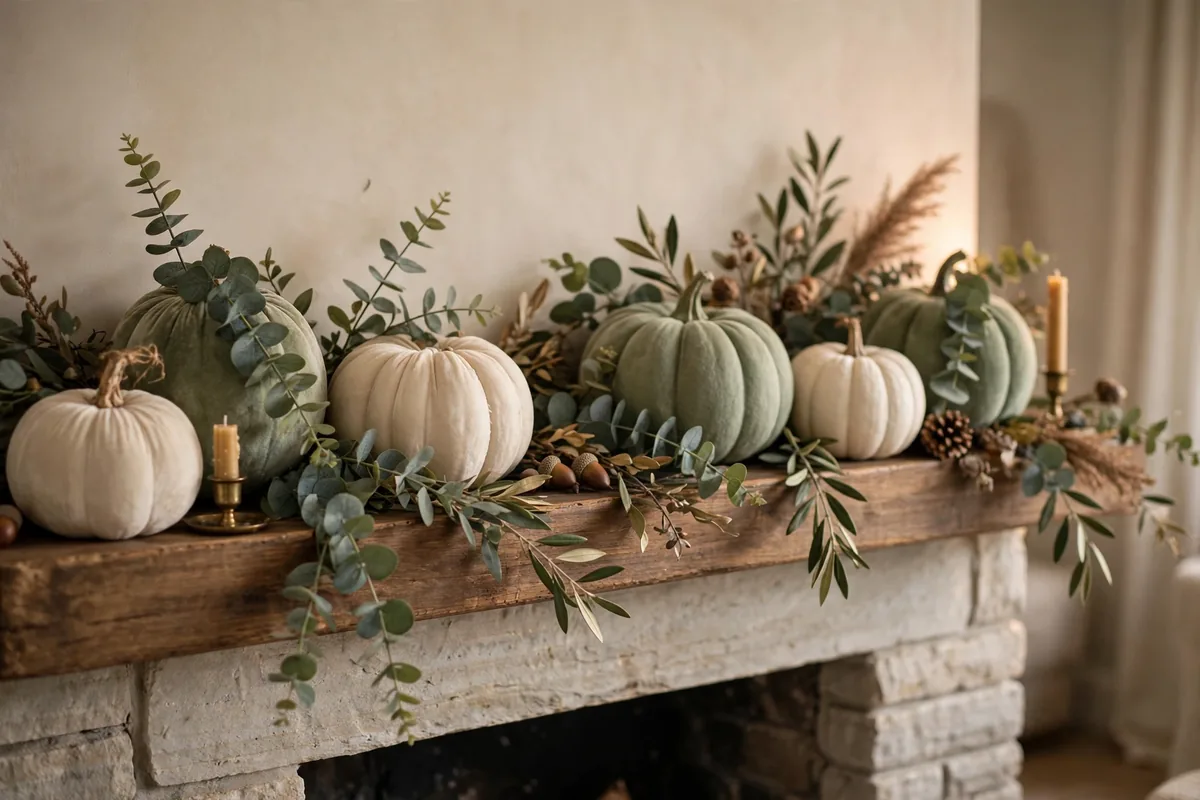
Autumn is where reusables pay back fastest. A set of good faux pumpkins in cream, sage and terracotta decorates the porch, mantel and table from September to November, then sleeps in its box for nine months and does it again — for a decade. The unpainted, uncarved approach is the same one behind our no-carve pumpkin styling ideas: nothing rots, nothing is thrown away the first week of November.
Apply the “would I display this five years running?” test before buying any seasonal statement piece. Trend-led shapes fail the test; natural forms — pumpkins, leaves, branches, wheat — pass it every time.
8. Store It Like You Mean to Reuse It
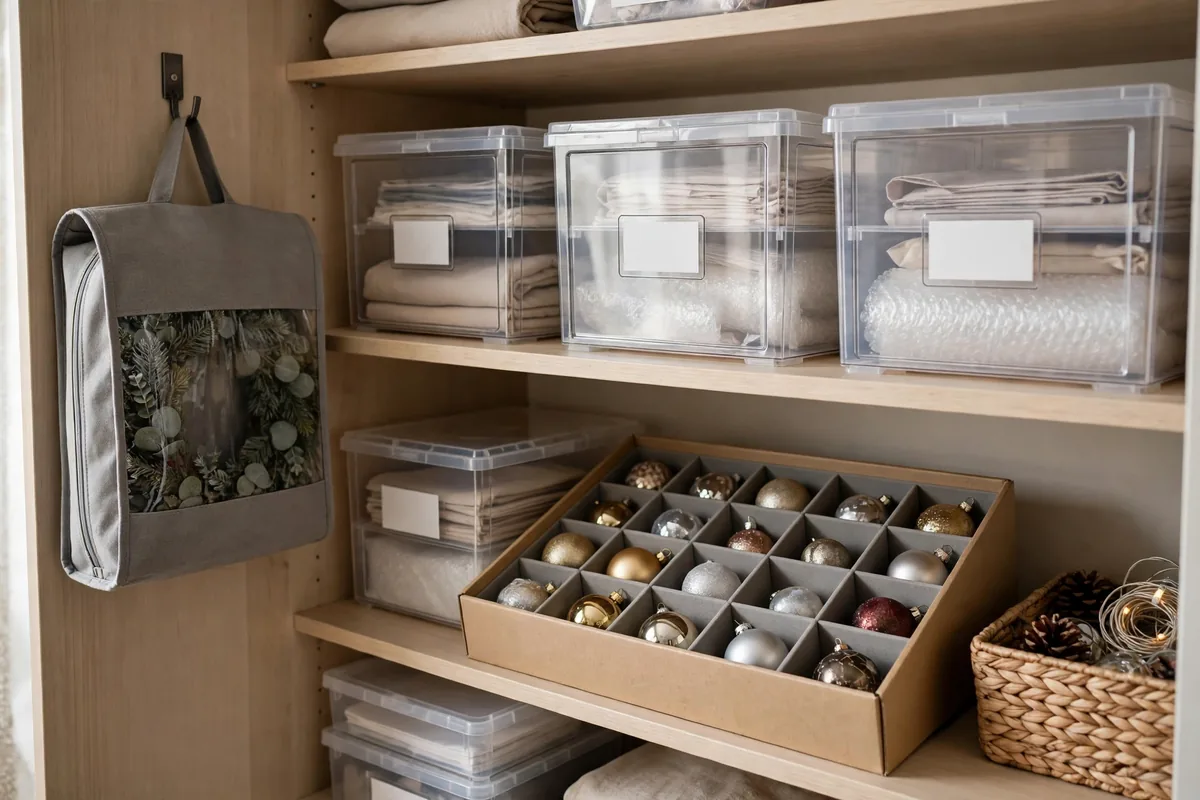
Reusability is decided in storage, not in the shop. Wreaths hang in bags or on a hook, never crushed under boxes; ornaments sit in dividers; garlands coil loosely in a large box; each season’s small accents — picks, bows, covers, fillers — share one labelled box per season. Two boxes total: warm seasons, cold seasons.
Photograph each styled display before you take it down and tape the photo inside the box lid. Next year the restyle takes minutes because past-you left instructions. This is the habit that turns “we own reusable decor” into “we actually reuse it”.
9. Buy Once, Buy Better: Where to Spend and Where to Save

Spend on the base pieces you touch every day — the wreath, garland, hurricanes, inserts, storage — because quality is what makes year five look like year one. Save on the seasonal layer: ribbon, picks, paper goods, pillow covers in the sale, and natural fillers gathered free (pinecones, acorns, branches, dried oranges you slice yourself).
Post-season sales are the reusable decorator’s season: buy next year’s quality base at clearance in January and July, when the pieces nobody themes — plain greenery, glass, brass — are discounted precisely because they carry no holiday branding.
Count the uses, not the price: A garland swapped four times a year for ten years gives forty displays. A themed centrepiece used once a year gives ten, then usually a charity bag. You do not need anyone’s price list to see which purchase wins — count a piece’s uses per year, multiply by the years it will last, and buy the things with the biggest numbers.
Buying secondhand? The base is unusually thrift-friendly. Buy secondhand without worry: clear glass, brass and black metal, ceramics, wooden trays and plain wreath bases — all clean up perfectly and carry no hygiene question. Buy new instead: pillow inserts and textiles (you cannot verify their history) and flameless candles (battery contacts and timers age). That split keeps the system’s cost down without importing anyone else’s wear.
10. Make the Swap a Ritual, Not a Chore
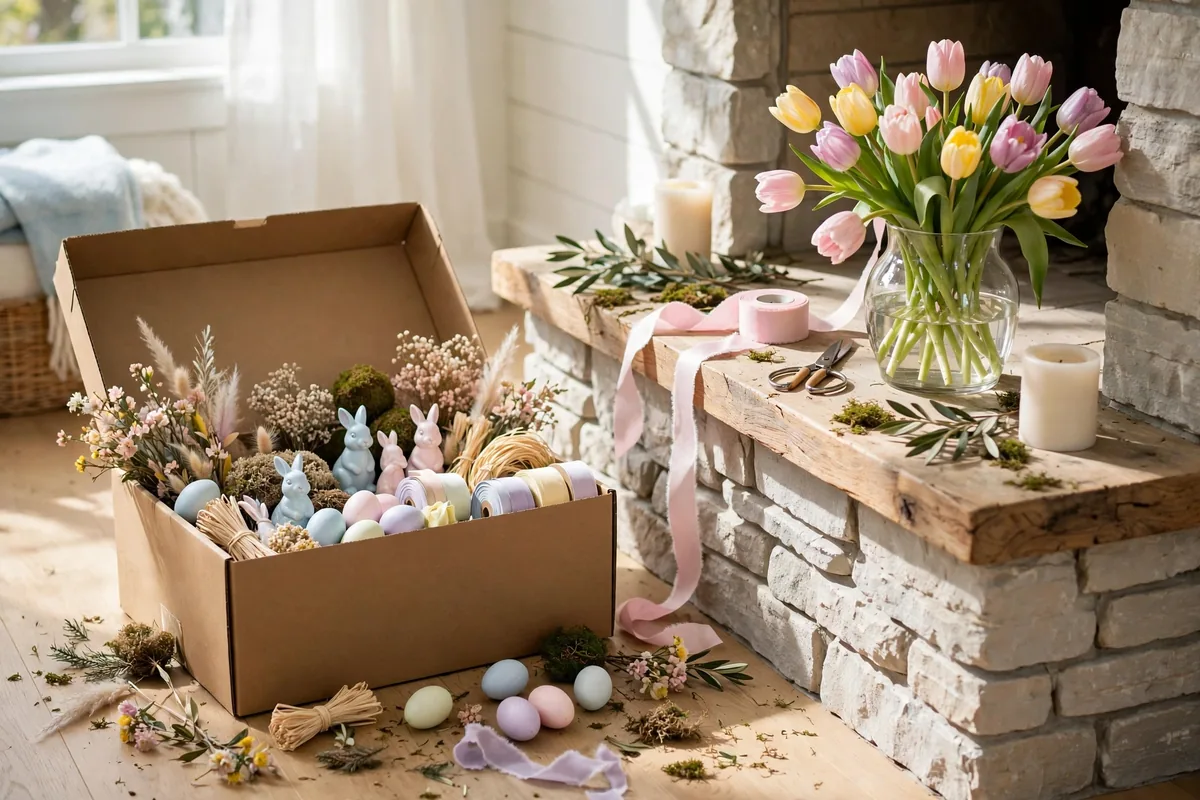
Fix four swap dates to the calendar — early March, late May, early September, late November — and keep each swap under an hour: old accents out, box away, new accents in, one photo for the box lid. Because the base never moves, a “redecorate” is a coffee-length job, and the house feels new four times a year.
Bring the whole-house seasonal schemes in gradually: a reusable base in the living room first, windows and porch next, following the whole-home approach in our decorating home for Christmas ideas — planned as one composition rather than a pile of separate purchases.
Four minutes of maintenance at every swap: Fluff the garland back into shape, wash pillow covers before they go into the drawer (stored dirty, they stain), take the batteries out of flameless candles and timers that will sit unused, and coil light strings around a piece of card. Reusables do not wear out from use — they wear out from storage, and this tiny routine is the difference.
Frequently Asked Questions About Reusable Seasonal Decorations
How many base pieces do I actually need to start?
Seven cover almost everything: one plain wreath, one garland, two glass hurricanes, a wooden tray or dough bowl, a set of pillow inserts, and one neutral table runner. Add vessels and baskets as you find good ones — slowly is the point.
Won’t the house look the same all year?
No — colour and texture do the seasonal talking. The base stays neutral precisely so a plaid throw, a bowl of lemons or red berries changes the room’s whole temperature against it. Guests notice the swap layer, not the constant beneath.
Is faux greenery really better than fresh each year?
For the permanent base, yes: one realistic garland used for a decade beats ten fresh ones composted each January, in cost and in waste. Keep fresh elements in the accent layer — a bunch of real tulips, cut branches — where they are enjoyed and composted properly.
How do I store a wreath without crushing it?
Hang it: a wreath storage bag on a closet or garage hook, or a dedicated wall hook in the storage area. If it must be boxed, use a box its own size with nothing stacked on top, and fluff the stems back into shape when it comes out.
What wears out first, and how do I extend its life?
Ribbon fades and textiles pill first — both are cheap accent-layer items by design. The base lasts when it is stored dry, out of sunlight, and handled at swaps only. Flameless candles need battery changes, not replacement.
I’m in a small home. Where does it all go?
That’s the system’s advantage: the base is on display, not in storage, and the accent layer for a whole year fits in two medium boxes — under a bed, on a closet shelf, or in a storage ottoman that is itself part of the base.
When is the cheapest time to buy reusable decor?
Immediately after the season it serves: January for winter greenery and ornaments, July for summer textiles, and the week after any holiday for its quality basics. Plain, unthemed pieces are discounted hardest because they don’t sell as gifts.
Can I mix reusable basics with a few trendy pieces?
Yes — that’s the healthiest ratio: roughly 80 percent permanent base, 20 percent seasonal accents, and within the accents, one small trendy item a year is affordable fun. When it dates, it leaves without taking the room’s structure with it.
How do I restyle a wreath without damaging it?
Use picks and florist wire only — never glue, never wrap wire tightly around stems. Push picks between branches, wire bows to the wreath’s frame wire at the back, and remove everything by reversing the process at the swap.
Does reusable decor work for holidays like Easter and Halloween too?
Completely: the wreath takes eggs or bats on picks, the bowl takes pastel eggs or mini pumpkins, the hurricanes take spring moss or autumn acorns. Holiday identity lives in the small, cheap, storable layer — which is where it belongs.
How many of each base piece should I buy to start?
Fewer than you think — see the counted starter kit at the top of this guide: one wreath, one garland, two hurricanes, four to six flameless candles, four pillow inserts with four sets of covers, one tray, one runner, and a small set of plain baubles in two finishes. Everything stores in two boxes, and you add pieces slowly, only when a swap exposes a real gap.
Taking the System Beyond the Living Room
| Room | Its base piece | What swaps |
|---|---|---|
| Entryway | A tray or bowl on the console + the wreath on the door | Fillers and a ribbon colour per season |
| Bedroom | Neutral bedding + one throw | Throw and cushion covers in the season’s palette |
| Bathroom | A small tray, one vase, plain towels | A stem or sprig in the vase; hand-towel colour |
| Kitchen | A wooden board or crock that lives on the counter | Branches, citrus, herbs or gourds stood in the crock |
Conclusion
Reusable seasonal decorating is a base, a box and a habit: neutral pieces that never leave the room, a small accent layer that changes with the calendar, and storage that protects both. Build it once and every season becomes a swap instead of a shopping trip — cheaper, calmer, and better looking every year it matures.





Pingback: 10 Fall Entryway Styling Ideas That Make Coming Home Feel Good
Pingback: 10 Seasonal Dining Table Ideas From Spring to Christmas
Pingback: 10 Year-Round Neutral Base Ideas for Effortless Seasonal Decor
Pingback: Spring Mantel Styling Ideas: 10 Fresh Looks & 3 to Copy