
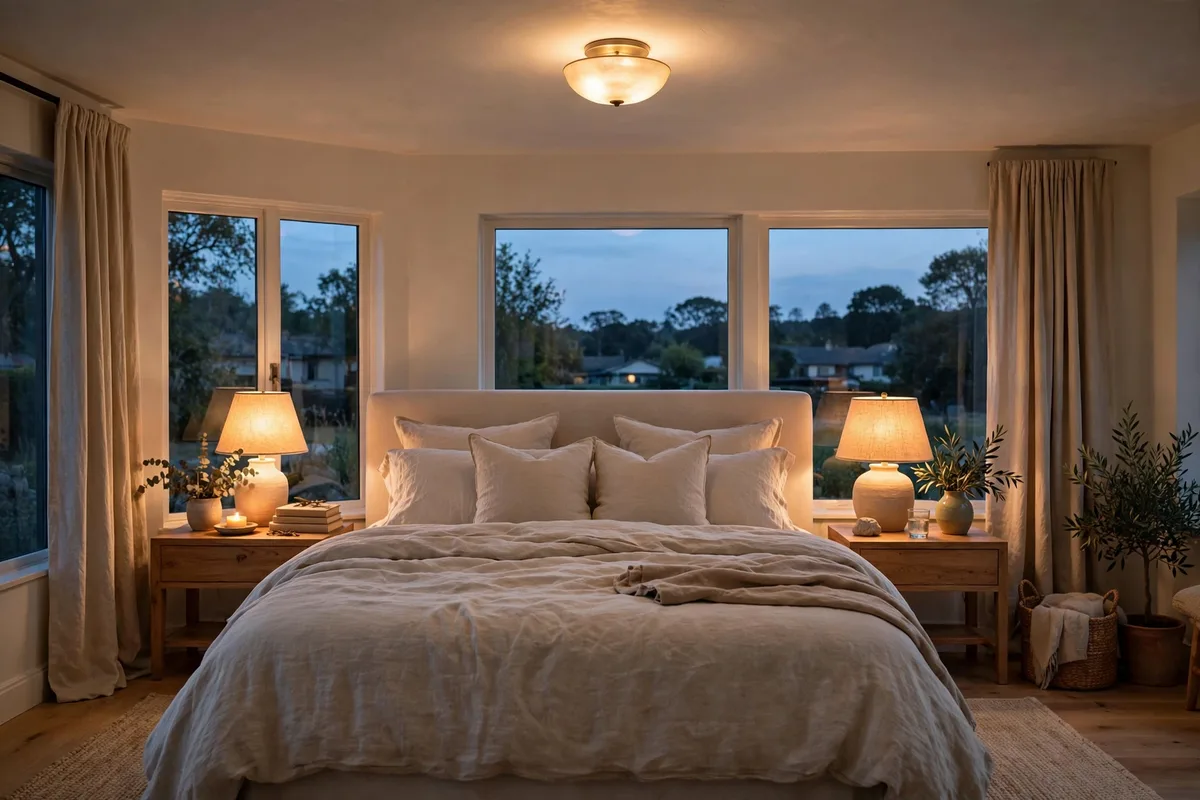
Most bedrooms fail at lighting for one reason: a single ceiling light is asked to do three jobs at once — light the room in the morning, focus on a book at night, and feel calm in between. It cannot do any of them well. The fix is layering: each job gets its own light, height, and control.
This bedroom lighting layers styles guide works through that fix as ten layer-and-style combinations, from soft ambient ceiling light and bedside task lamps to sconces, pendant drops, accent glow, and three complete looks — warm minimalist, hotel-luxe, and boho rattan. Every idea is judged on the same levers: what it is, bulb temperature and brightness, room size and ceiling height, watch-outs. If your bedroom doubles as a reading spot, these cozy reading corner ideas show what one good lamp does for a corner.
In this guide: Soft Ambient Ceiling Light, Done Warm: The Base Layer · Bedside Task Lamps: The Reading Layer · Wall Sconces for Small Rooms: Task Light Without the Table · Pendant Drops Instead of Table Lamps: Vertical Task Light · Accent Lighting for Art and Headboard: The Depth Layer · Warm Minimalist Style: Few Fixtures, Every Layer Present · Hotel-Luxe Layered Style: Symmetry, Cove Glow and Drama · Boho Rattan and Warm Glow Style: Texture First, Light Second · Smart and Dimmable Control: The Layer That Ties It Together · Blackout Versus Glow: Planning Light for Sleep, Zone by Zone
1. Soft Ambient Ceiling Light, Done Warm: The Base Layer
What it is
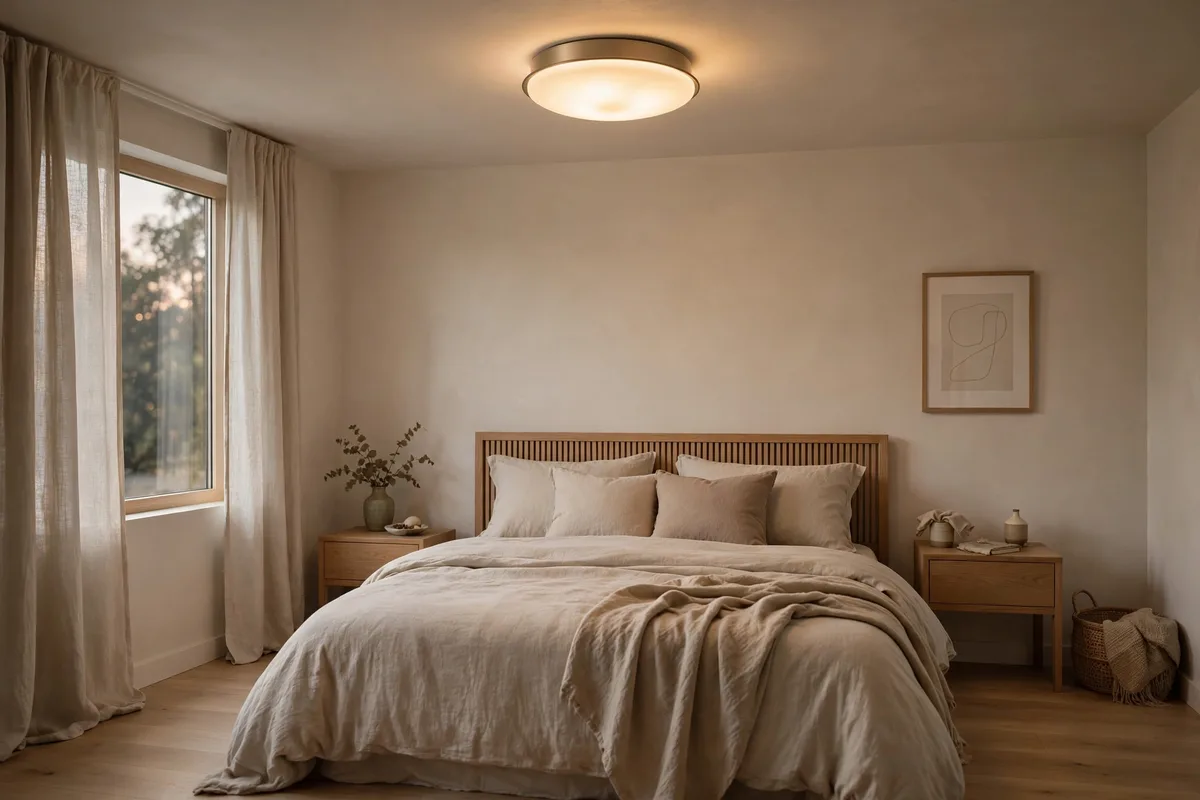
Ambient light is the base layer: the general, even illumination you switch on to get dressed or make the bed. Done warm, it comes from a diffused ceiling fixture — flush mount, soft drum shade, or frosted recessed lights — spreading light across ceiling and walls instead of one harsh pool downward.
Bulb temperature and brightness
Stay at 2700K, on a dimmer without exception. As a rule of thumb, ambient light should carry roughly half the room’s total light — for a typical double bedroom, around 1,600–2,400 lumens at full brightness, dimmed down in the evening.
Best room size and ceiling height
A flush or semi-flush mount suits any room size and is the safe choice for ceilings around 8 feet. Ceilings of roughly 9 feet and up can carry a shallow pendant or small chandelier instead. In large rooms, spread the layer across two points, not one oversized fixture.
Watch-outs
The classic failure is a cool-white bulb, 4000K or above, which makes warm layers look dirty and works against sleep. Bare bulbs glare when you are lying in bed looking up. And ambient light alone leaves the bedside in shadow — it is a base, not the whole plan.
2. Bedside Task Lamps: The Reading Layer
What it is
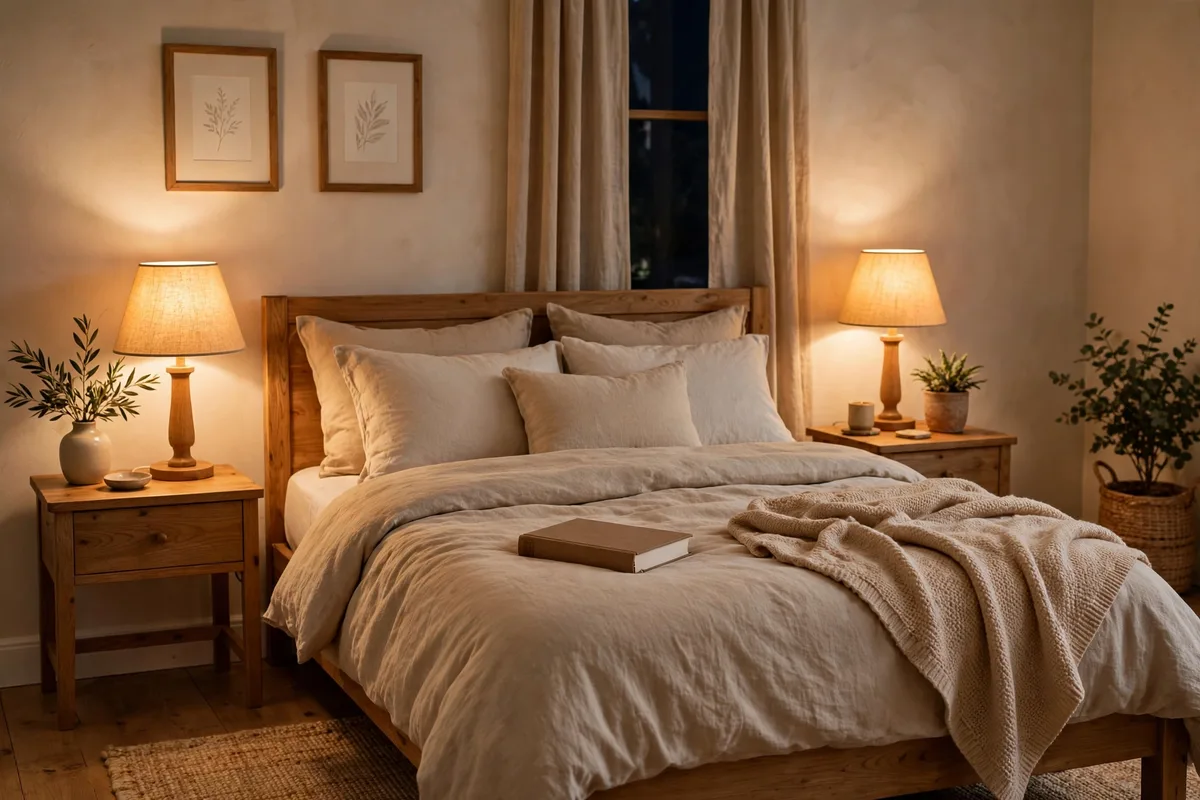
Task light is the focused layer, and its home is the bedside. A pair of table lamps with fabric or frosted shades puts a controlled pool of light where a book sits, while the rest of the room stays dim. Each side switches separately, so one partner can read while the other sleeps.
Bulb temperature and brightness
Keep bedside bulbs at 2700K to match the ambient layer; mismatched temperatures in one sightline are instantly noticeable. For reading, a bulb around 450–800 lumens behind a diffusing shade is a comfortable rule of thumb — bright on the page, soft on the eyes. The shade’s bottom edge should sit roughly at chin height in bed, hiding the bulb.
Best room size and ceiling height
Table lamps suit medium and large bedrooms where nightstands can hold a lamp base plus everyday items. Ceiling height barely matters, making this the most forgiving layer of all. In compact rooms, deliver this layer with Sections 3 and 4 instead.
Watch-outs
Lamps that are too short force you to hunch toward the light; clear glass shades glare at pillow height. Skip novelty coloured bulbs — they undermine the calm this layer creates.
3. Wall Sconces for Small Rooms: Task Light Without the Table

What it is
In a small bedroom, nightstand surface is too precious to spend on a lamp. Wall sconces move the task layer onto the wall: shaded or swing-arm sconces flanking the headboard deliver the same reading light as table lamps, leaving the surface free. Plug-in versions suit renters; hardwired versions disappear.
Bulb temperature and brightness
Use 2700K bulbs in the 450–600 lumen range, behind a shade that hides the bulb from the pillow. Swing-arm sconces earn their keep because the head aims at the page and folds back afterwards. Put each sconce on its own switch within arm’s reach of the pillow.
Best room size and ceiling height
This is the definitive small-room solution, ideal where nightstands are under roughly 18 inches wide. As a rule of thumb, mount sconces around 48–60 inches from the floor, adjusted to your headboard. Ceiling height is irrelevant, so sconces are also safe in low-ceiling rooms.
Watch-outs
Placement is permanent in a way a lamp is not: fix the bed’s position first, then mark sconce positions while lying in the bed. Plug-in cords need a tidy route. And check shade depth — shallow sconces spilling light upward are accent lights pretending to be task lights.
If a sconce needs new wiring rather than a plug, treat it as a job for a qualified electrician — Electrical Safety First publishes guidance on finding one and on why DIY mains work is a false economy.
4. Pendant Drops Instead of Table Lamps: Vertical Task Light

What it is
Pendant drops hang the bedside layer from the ceiling: a small pendant each side of the bed, dropped to roughly lamp height. The effect is part task light, part sculpture — vertical lines make the bed wall look designed, and the nightstand stays completely clear.
Bulb temperature and brightness
A pendant shade concentrates light downward, so a modest 2700K bulb around 400–600 lumens feels brighter here than in a table lamp. Frosted globes, opal glass, and fabric or rattan shades soften the pool; clear glass with a visible filament glares at pillow height unless dimmed low. Dimmers are close to mandatory.
Best room size and ceiling height
Pendants need height: around 8 feet is the practical minimum, and 9 feet or more lets the drop clear the headboard elegantly. Hang the shade’s bottom where a table lamp’s shade would sit — commonly around 48–55 inches from the floor — clear of head-swing space.
Watch-outs
This is the least forgiving layer to position: drops hung too low get knocked, too high stop being task light. Sloped ceilings complicate symmetry, and pendants usually mean ceiling wiring. Decide the bed’s exact position before installation — a pendant on the wrong line cannot be nudged six inches left.
5. Accent Lighting for Art and Headboard: The Depth Layer
What it is
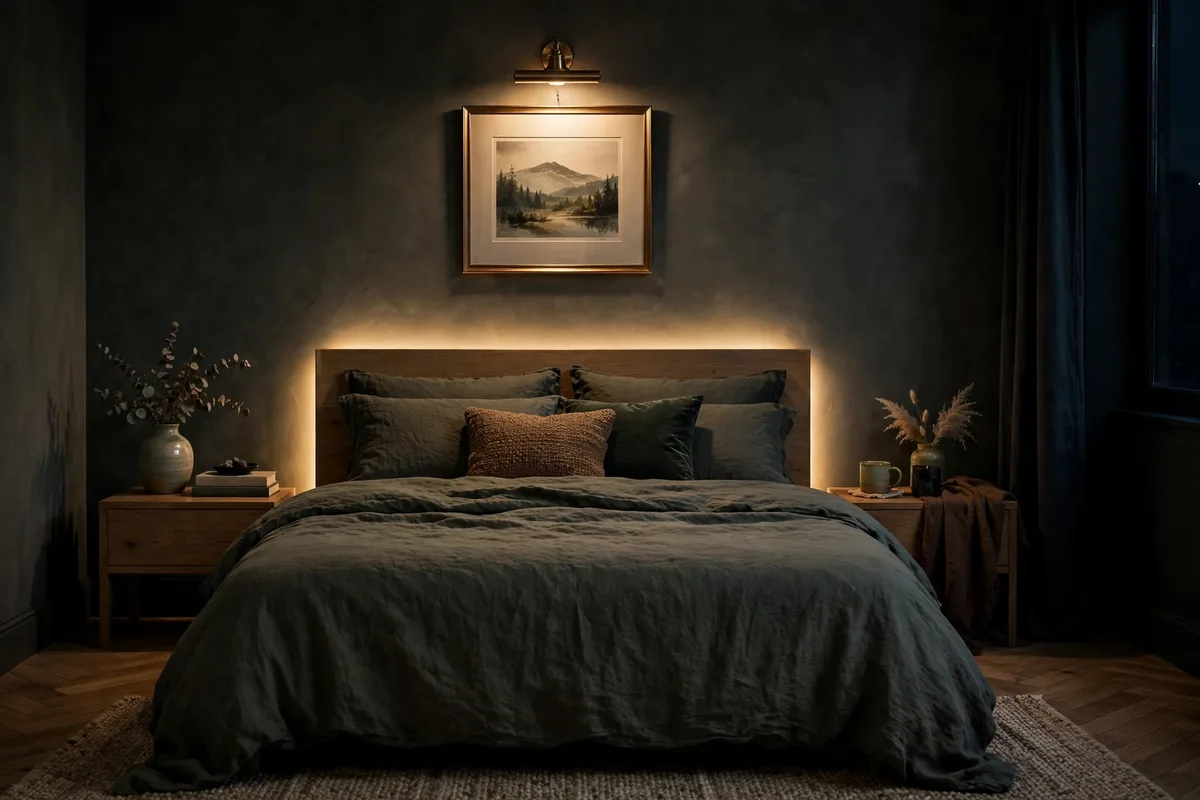
Accent light is the layer you feel rather than use. A picture light washing a framed print, a warm LED strip hidden behind the headboard so the bed floats in a halo, or a low uplight behind a plant — each gives the room depth after dark, so walls do not collapse into blackness.
Bulb temperature and brightness
Accent light should be the warmest, dimmest layer: 2200K–2700K, run low. An accent source should read as a glow, never a beam — if you can see the strip or diode itself, it is mounted wrong or too bright. Headboard strips should bounce light off the wall; picture lights should wash artwork evenly.
Best room size and ceiling height
Accent layering suits every room size, and it is disproportionately valuable in small rooms, where a glowing headboard wall makes the room feel deeper. In large bedrooms it rescues far corners without raising overall brightness. Ceiling height matters only for cove-style accent, which needs a pelmet or tray ceiling to hide the source — most accent needs none.
Watch-outs
More is not better: three accent moments in one bedroom is generous, five is a showroom. Keep accent temperatures consistent — a cool strip will fight every warm lamp beside it. Give accent its own switch; wired to the main light, it will never be on when it looks best: alone, late, and low.
6. Warm Minimalist Style: Few Fixtures, Every Layer Present
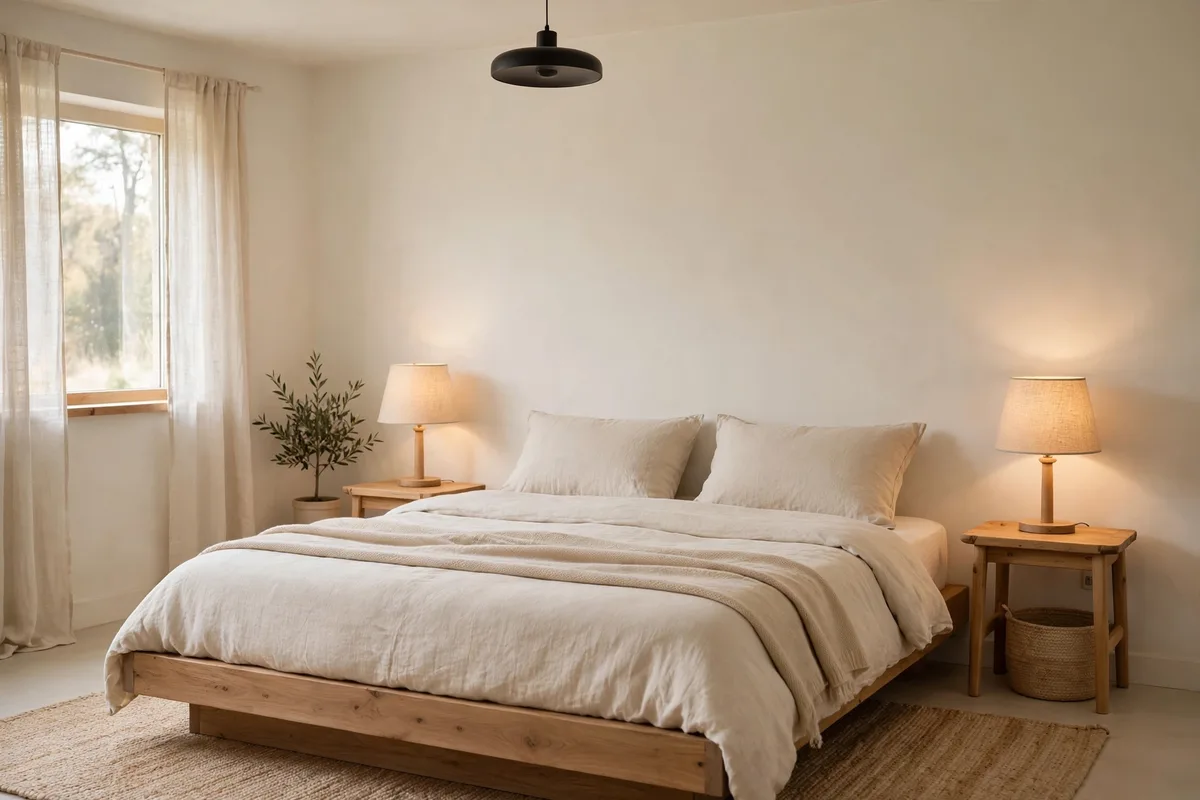
What it is
Warm minimalism expresses the same three layers, stripped to essentials: one soft ambient source, two identical bedside lights, and a single accent glow — nothing else. Warmth comes from temperature discipline and materials, not quantity: pale walls, natural wood, linen shades, every bulb at 2700K or warmer.
Bulb temperature and brightness
Consistency is the whole style: 2700K everywhere, with accent allowed to drop to 2200K. Brightness stays modest and dimmable, because minimalist fixtures are usually exposed or lightly shaded — a bare globe at full brightness breaks the mood instantly. Choose fewer, better bulbs with smooth, flicker-free dimming, since this style lives at low levels.
Best room size and ceiling height
Minimalist layering flatters small and medium bedrooms most, where restraint reads as spaciousness, and it works at any ceiling height because fixtures stay flush, wall-mounted, or slim. In very large rooms it can feel under-dressed; scale the few fixtures up rather than adding more.
Watch-outs
Minimalism exposes every shortcut: one mismatched bulb temperature, one visible cord, one flickering dimmer, and the spell breaks. It offers nowhere to hide a missing layer — skip the accent glow and the room reads flat, not minimal.
7. Hotel-Luxe Layered Style: Symmetry, Cove Glow and Drama
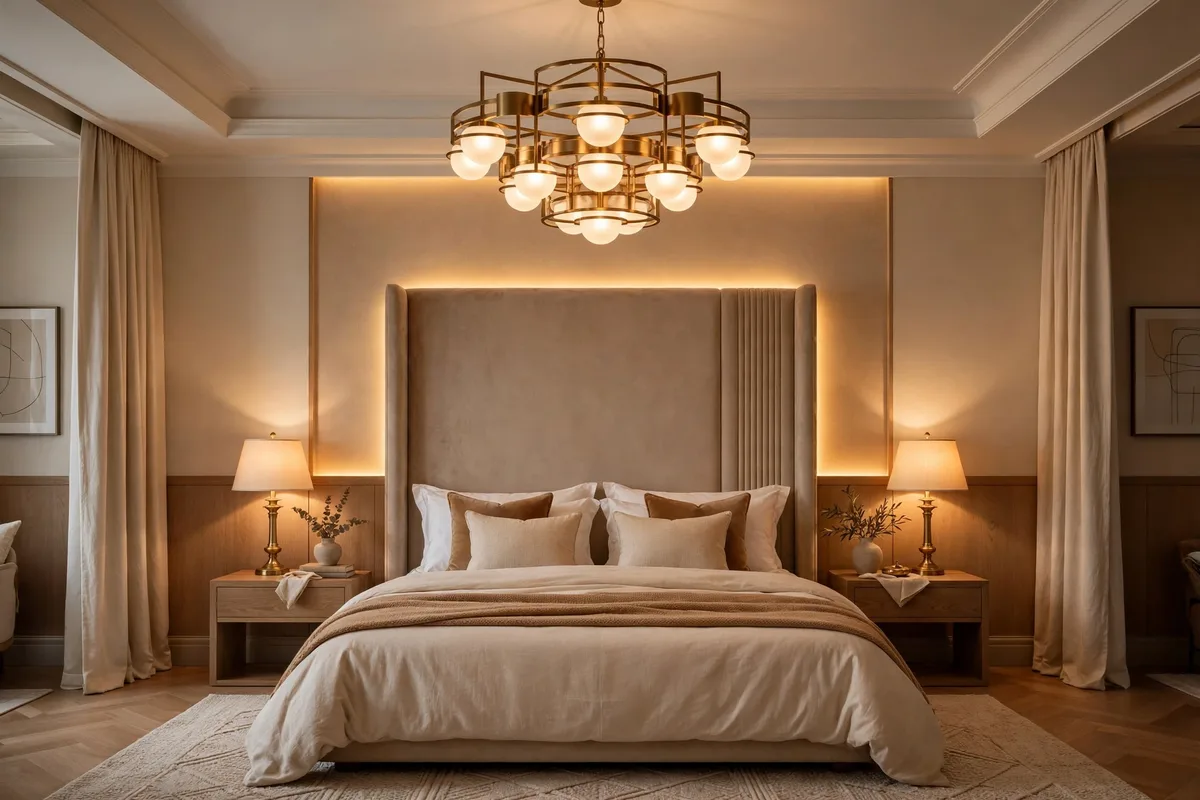
What it is
The hotel-luxe look is layering performed with confidence: a statement ambient fixture, symmetrical bedside lighting, a cove or headboard glow behind the bed, and accent light on curtains or art — all dimmable, all warm. What sells it is the choreography: every layer present, every layer controlled.
Bulb temperature and brightness
Hold the whole room at 2700K, dropping accent and cove light toward 2200K–2400K for the evening scene. This style runs brighter at full power than the others, so total output can sit at the higher end of the bedroom range, with dimmers creating the mood.
Best room size and ceiling height
Luxe layering wants room to perform: medium-to-large bedrooms, and ceilings of 9 feet or more if a chandelier or statement pendant is the centrepiece. On standard 8-foot ceilings, swap the chandelier for a low-profile semi-flush piece and let cove and bedside layers carry the drama.
Watch-outs
This is the most expensive, least forgiving style to install: coves, pairs, and statement fixtures mean more wiring points and more hard-to-reverse decisions. It also dates fastest — dramatic fixtures follow fashion in a way plain layers do not. Keep the bones neutral and let one fixture be the drama, so a refresh changes one piece, not the wiring.
8. Boho Rattan and Warm Glow Style: Texture First, Light Second
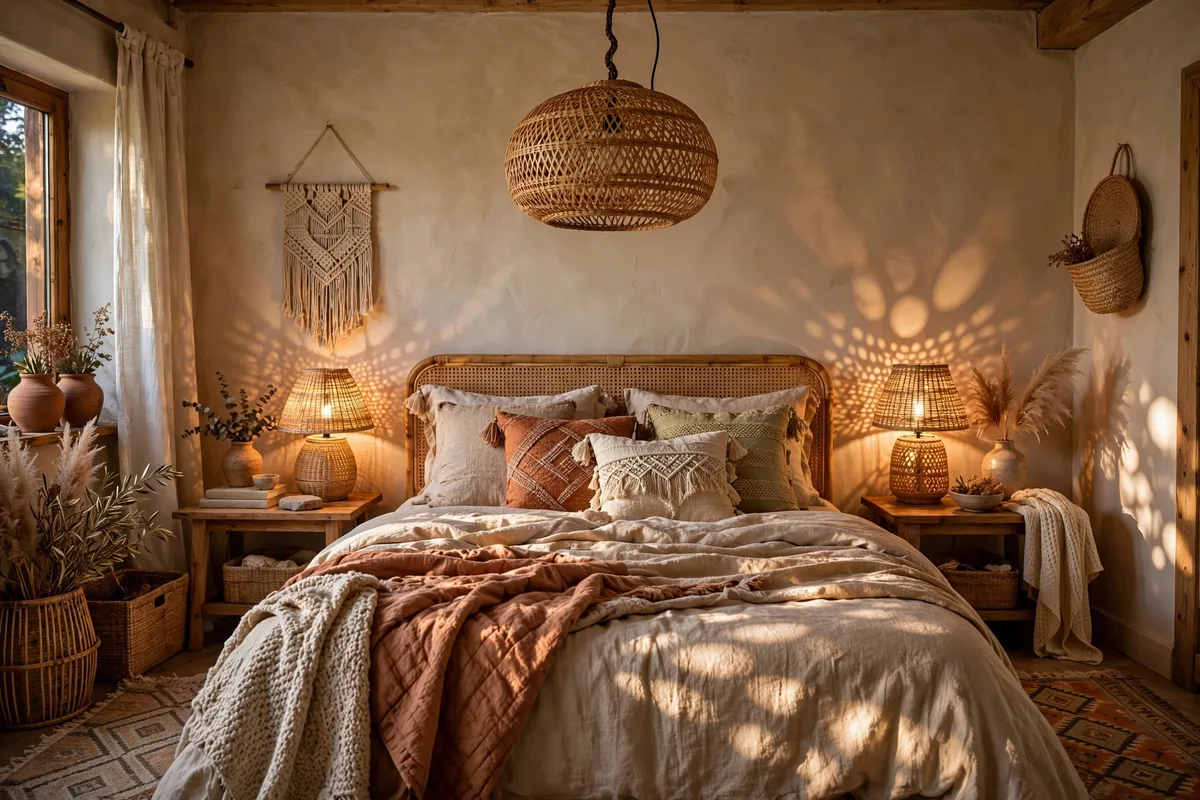
What it is
Boho lighting treats fixtures as texture: a woven rattan or bamboo pendant as the ambient centrepiece, bedside lamps with linen or woven shades, and a scatter of low, warm accent light. The layers match every other style here; the light is simply filtered through natural materials, arriving dappled and slightly golden.
Bulb temperature and brightness
Woven shades eat light, so this style needs more output for the same effect: ambient bulbs toward the brighter end of the bedroom range, still at 2700K, with task bulbs around 600–800 lumens behind their shades. Never raise temperature to compensate — a cool bulb behind rattan looks grey.
Best room size and ceiling height
Boho layering suits small-to-medium bedrooms beautifully, because low, warm, scattered light makes compact rooms feel cocooning rather than cramped. A woven pendant is fine on 8-foot ceilings if wide and shallow, and better at 9 feet for deeper basket shapes.
Watch-outs
Natural shades are dust traps and can dry out near heat, so keep bulbs LED and cool-running, and check the shade’s rating. The scattered-accent habit drifts into clutter — fairy lights, a dresser lamp, a candle cluster, and a lantern is one source too many. Test the reading layer honestly: if you cannot read at the pillow, it needs a brighter lamp.
9. Smart and Dimmable Control: The Layer That Ties It Together
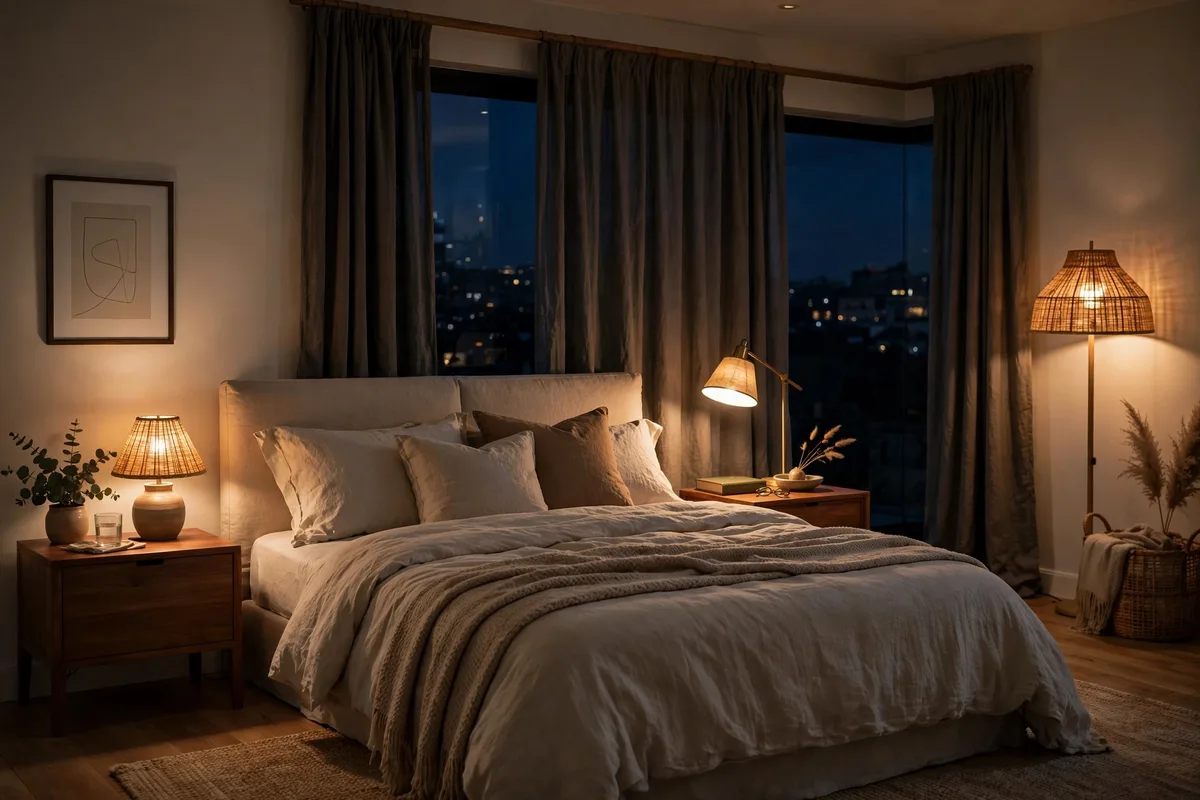
What it is
Control is not a fourth light source; it is what turns three layers into one system. Dimmers on ambient and accent layers, separate switches for each bedside, and — if you want it — smart bulbs or plugs grouping the room into scenes: bright for dressing, lamps only for reading, accent only for winding down.
Bulb temperature and brightness
Scenes work when temperature stays consistent: every bulb in the same warm family, 2700K or below, so scenes change brightness without changing colour. Tunable bulbs that shift toward 2200K as they dim mimic candlelight and suit bedrooms well. Test dimming at the lowest setting first — cheap pairings flicker or hum in exactly that range.
Best room size and ceiling height
Every room size benefits, and small rooms benefit most, because control multiplies the few fixtures they can fit. Renters can achieve nearly everything with smart bulbs and plug-in lamps — no wiring changes at all. Larger rooms justify hardwired dimmers and keypads instead.
Watch-outs
Keep a dumb way out: every smart layer should still work from a physical switch a guest can find in the dark. Never put bedside task light and ambient light on the same dimmer — separate control is the entire point.
10. Blackout Versus Glow: Planning Light for Sleep, Zone by Zone
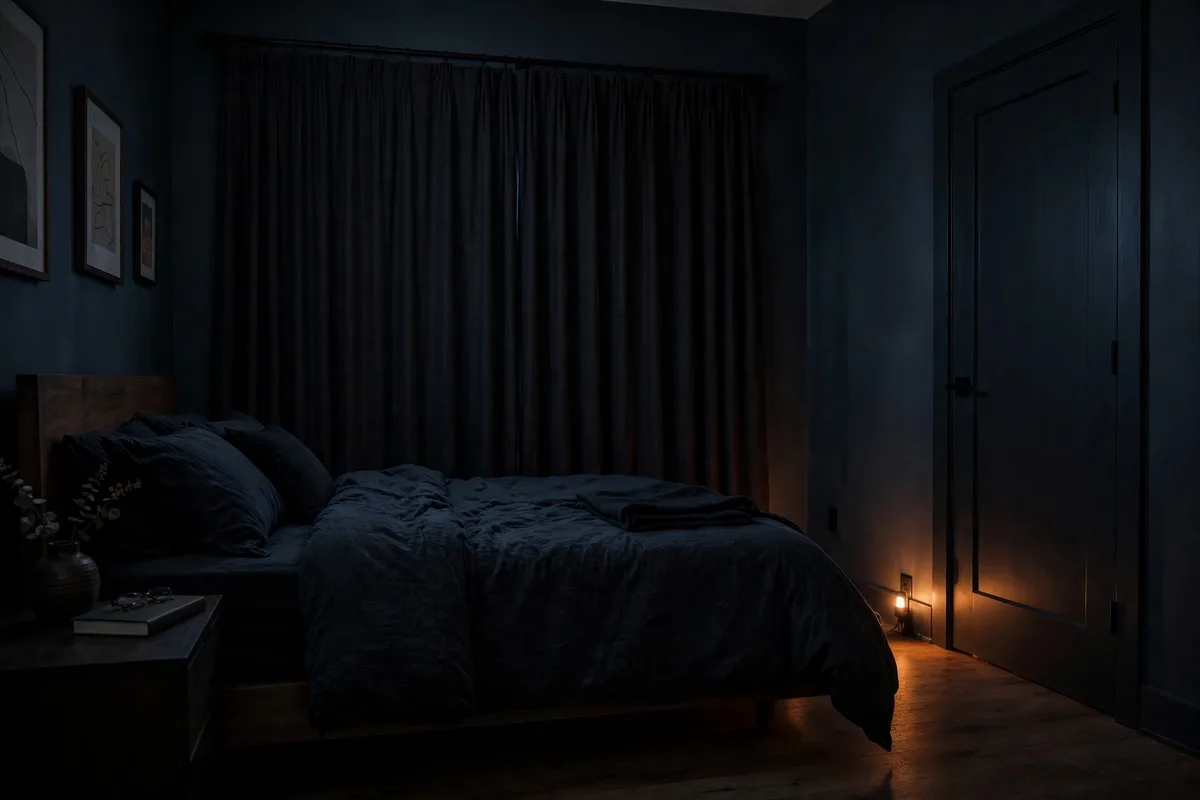
What it is
The last decision is subtraction. Good sleep wants darkness: blackout curtains, no standby lights at eye level, no blade of hallway light under the door. But total darkness has a cost — a 2 a.m. trip across the room is how ankles meet bed frames. The answer is a planned night layer: one very low, very warm source near the floor, marking the path.
Bulb temperature and brightness
For the night layer, go warmer and dimmer than anywhere else in the home: 2200K or amber, at the lowest output that still outlines the floor — a plug-in night light or dimmed strip under the bed frame, switched by motion or a tap. In the last hour before sleep, run the other layers down in sequence: lamps, then accent, then night light only.
Best room size and ceiling height
Every bedroom needs the blackout half of this balance; the glow half scales with the room. In small rooms, one night light near the door covers the path. In large suites, plan two low points — bedside floor level and bathroom doorway. Ceiling height is irrelevant; this layer lives below knee height.
Watch-outs
Full blackout can make waking harder — a small curtain gap or a sunrise-style wake scene solves it. Never let the night layer be a phone torch or a cool bathroom light at full brightness; one blast undoes the darkness the evening built. Check for stealth glow too: charger LEDs and standby dots count as light leaks.
The layer-by-zone planning table
Use this table to plan your own room, zone by zone.
| Zone | Layer | Fixture | Bulb temp |
|---|---|---|---|
| Whole room | Ambient | Diffused flush mount, drum shade, or soft recessed lights on a dimmer | 2700K |
| Bedside, each side | Task | Table lamp, swing-arm sconce, or pendant drop, separately switched | 2700K |
| Dressing / vanity | Task | Sconces or a lamp flanking the mirror at face height | 2700K–3000K |
| Wardrobe / drawers | Task | Small lamp or strip inside or above the wardrobe | 2700K |
| Headboard wall | Accent | Hidden LED strip behind the headboard, bounced off the wall | 2200K–2700K |
| Artwork / feature | Accent | Picture light or a single aimed spot, on its own switch | 2700K |
| Reading corner | Task + accent | Floor or wall lamp with a warm shade, separately switched | 2700K |
| Night path to door / bathroom | Night | Low plug-in night light or under-bed strip, motion or tap switched | 2200K or amber |
Frequently Asked Questions About Bedroom Lighting
How many light sources does a bedroom actually need?
Most bedrooms work well with four to six sources: one ambient fixture, two bedside lights, one accent source, and optionally a dressing light and a night light. The count matters less than the layering — three sources on separate controls outperform six that switch on together.
What colour temperature is best for bedroom lighting?
Warm light, with 2700K as the standard for ambient and task layers, is the reliable default. Accent and night layers can go warmer still, toward 2200K–2400K, especially in the last hour before sleep. Avoid 4000K and above anywhere in the room: cool-white light reads as clinical.
Should all my bedroom lights be on one dimmer?
No — separate control is what makes layering useful. Put ambient on its own dimmer, keep each bedside light independently switched, and give accent its own switch or scene. That lets you run lamps only for reading, accent only for winding down, and everything bright only for cleaning or dressing.
How high should bedside pendants and sconces hang?
Aim for the light source to sit where a table lamp’s shade would: roughly 48–60 inches from the floor for sconces, with a pendant’s shade bottom in a similar band, clear of your head when sitting up. Mark the spot while lying in bed, and confirm the light lands on your book, not your face.
Can I layer bedroom lighting if I rent?
Yes — almost the entire system has a renter-friendly version. Plug-in sconces and swag pendants avoid wiring, smart bulbs add dimming and scenes to any fixture, LED strips stick behind headboards. Only hardwired cove or recessed work usually needs an owner.
What is the difference between ambient, task, and accent lighting in a bedroom?
Ambient light is the general base — the ceiling layer you dress by. Task light is focused light for a job: reading, makeup at a vanity, finding clothes. Accent light is decorative depth: a headboard glow or picture light. A bedroom feels finished when all three exist independently.
How bright should bedside reading light be?
Bright on the page, soft on the room. A shaded bulb around 450–800 lumens at 2700K is a comfortable rule of thumb, positioned so the shade hides the bulb and the pool falls onto the book. If you are squinting, fix position before power — move the light closer to page height.
How do I light a bedroom where one partner reads and the other sleeps?
Give each side of the bed its own task light: a shaded lamp, adjustable sconce, or directional pendant, each switched at the pillow. Aim your light down at your page, keep the shade between the bulb and your partner’s side, and use the lowest comfortable brightness.
Is a chandelier a good choice for a bedroom?
In the right room, yes: a chandelier works as an ambient statement in a larger bedroom with a ceiling around 9 feet or higher, on a dimmer. In standard-height or small rooms it crowds the space — and it solves nothing alone, because bedside and accent layers are still required.
How do I make bedroom lighting more sleep-friendly?
Work on warmth, level, and sequence. Keep every bulb at 2700K or warmer, cut cool light out, and dim in stages across the last hour before sleep: ambient off first, then task, leaving only low accent or a warm night light. Block leaks with blackout curtains and cover standby LEDs.
What lighting is best for a child’s bedroom?
The same three layers, made safer and softer: warm dimmable ambient light at 2700K for play and dressing, a shaded bedside or wall light for stories, and a very low, warm night light (2200K or amber) for the path to the door. Choose cool-running LED bulbs, keep cords and hot shades out of reach, and avoid exposed bulbs at pillow height.
Conclusion
A well-lit bedroom is not a brighter bedroom; it is one where each kind of light has its own job, place, and switch. Build the warm ambient base, give the bedside a real task layer — lamps, sconces, or pendants — and add one or two accent glows for depth. Then express those layers in your style, and let dimmers tie them together.
Plan it zone by zone with the table above, keep every bulb warm, and end the day by dimming down through the layers toward darkness. The room stops fighting your sleep and starts preparing you for it.

Pingback: Bathroom Lighting Layers: The Complete Numbers Guide