
Disclosure: As an Amazon Associate I earn from qualifying purchases. This article contains affiliate links. If you purchase through these links, we may earn a commission at no additional cost to you.
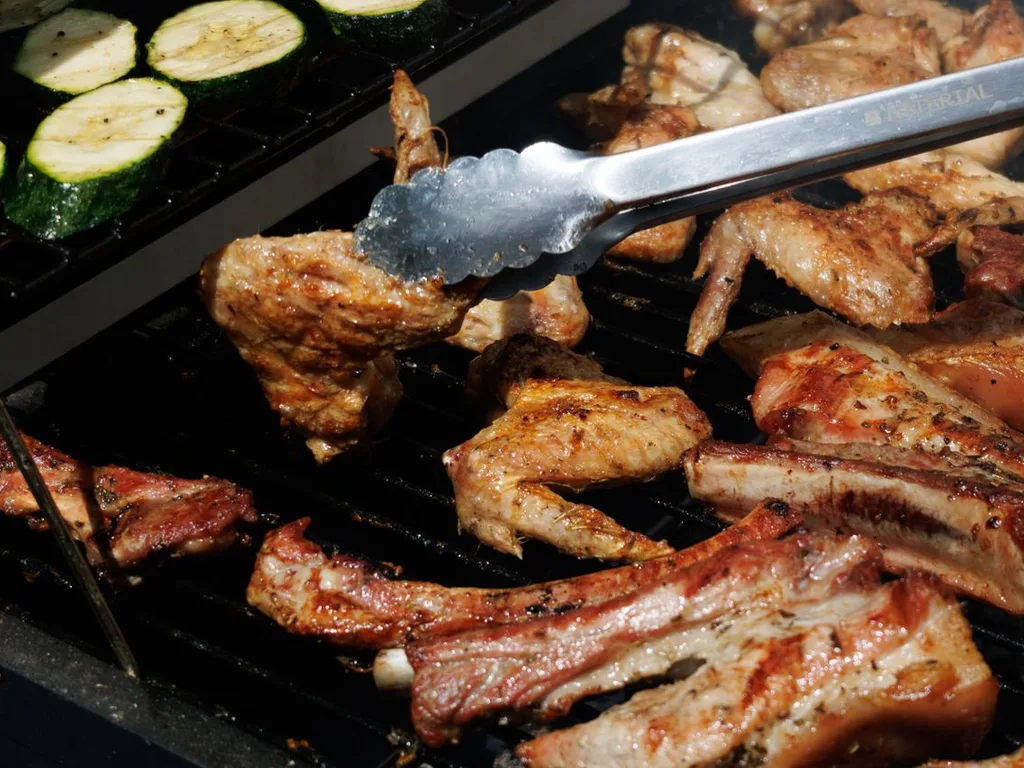
Chicken is the one thing on the grill nobody should be guessing about. Cut it open to check and the juices run out onto the coals; leave it “a few more minutes to be safe” and you serve dry meat with a clear conscience. The best instant read meat thermometer for grilling chicken ends the guessing entirely: push a thin probe into the thickest part of the thigh, read the number in seconds, and pull the chicken at exactly 165°F — the USDA safe temperature for poultry.
This review looks at the instant-read type as a category: how fast a good one reads, how accuracy is actually specified on a listing, and the small design details — folding probes, backlit screens, magnets on the back — that decide whether a thermometer lives in your apron pocket or in a drawer you never open during a cook. If you grill chicken even twice a month, this is the cheapest upgrade in the whole cookout.
Quick Verdict
A good instant-read thermometer has four things: a reading in about 2–4 seconds, accuracy around ±1°F, a folding stainless steel probe roughly 4–5 inches long, and a display you can read in bright sun and in the dark. Everything else — bottle openers, hanging loops, extra color options — is decoration. For grilling chicken specifically, speed matters most, because a slow thermometer keeps the grill lid open and your hand over the heat while you wait.
Buy this type if you grill, roast, or air fry chicken, steak, pork, or burgers and currently judge doneness by color, poke, or hope. Skip it if you mostly smoke large cuts low and slow — a leave-in probe thermometer that stays in the meat with a cable or wireless receiver suits that job better, and the comparison is covered below.
Important: Always probe the thickest part of the meat and keep the tip away from bone. Bone conducts heat and reads hotter than the meat around it — a reading taken against a thigh bone can tell you the chicken is done when it is not.
What to Look For Before You Buy
Read speed. Listings quote anything from 1 to 8 seconds. In practice, 2–4 seconds is the useful range: fast enough that the lid stays open briefly and your hand is not hovering over the grates. Anything slower starts to feel like the old dial thermometers this type replaced.
Accuracy and range. Look for an accuracy statement around ±1°F (±0.5°C) across the cooking range, and a total range wide enough for other jobs — roughly -58°F to 572°F covers everything from a refrigerator check to a kitchen thermometer for candy and oil duty in a pinch. Accuracy is the spec to prioritize over range; nobody deep-fries at 570°F, but everybody cooks chicken near 165°F.
Probe design. A folding probe stores safely in a drawer and turns the unit on and off as it opens and closes on many models. The probe tip should be thin and stepped down at the end — a thin tip slides into chicken without tearing it open and finds the thermal center faster. Stainless steel, around 4–5 inches, is the standard to look for.
Display. Large digits, a backlight, and ideally a rotating or reversible display if you read left-handed or from odd angles over a grill. At dusk — when a lot of grilling happens — a non-backlit screen is a real limitation, not a minor one.
Water resistance. A thermometer that can be rinsed under the tap gets cleaned properly; one that cannot gets wiped and forgotten. Look for an IP rating on the listing (IP65/IP66/IP67 style) rather than the word “waterproof” alone, and never put a non-rated unit in the dishwasher.
Storage details. A magnet on the back parks it on the fridge or grill side shelf; a hanging hole works on a hook. Small things, but a thermometer you can grab without thinking is the one that actually gets used on a Tuesday.
Battery and build. Most models run on a single coin cell or AAA battery, often included. Check whether the battery compartment needs a screwdriver — a small annoyance that matters when the cell dies the night of a cookout — and whether the body is rated to tolerate the ambient heat around a grill without the display fogging or the case softening. The probe handles the heat; the plastic body should never rest on a hot grill shelf or hang inside a closed lid.
A Closer Look at This Type of Thermometer
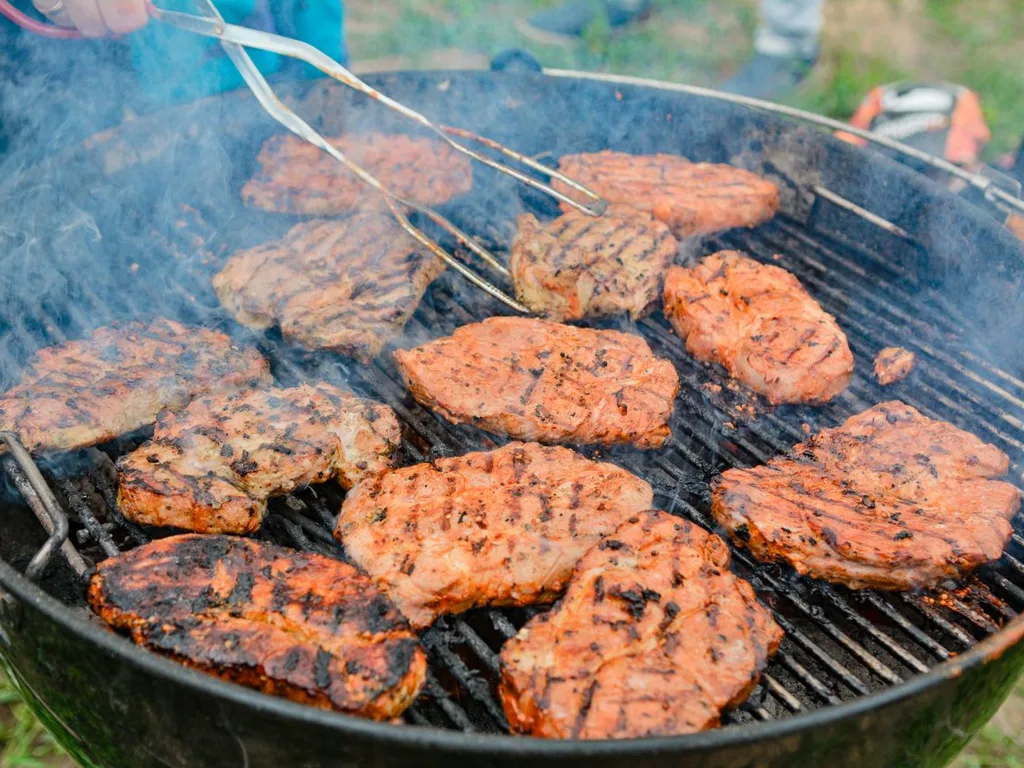
An instant-read thermometer is built around a thermocouple or a fast thermistor at the probe tip — the sensor technology is why it reads in seconds instead of the 20–30 seconds of an old dial model. For chicken, that speed changes your whole routine: instead of one anxious check at the end, you temp early, temp often, and move pieces around the grill based on numbers. Breasts come off at a different time than thighs, and the small piece over the hot spot stops being the sacrificial one.
It also changes what happens off the grill. The same tool verifies a roast in the oven, checks reheated leftovers reach a safe temperature, and confirms the air fryer chicken that looks golden outside is actually cooked through at the center. One tool, every protein, every cooking method — that is why this category outsells fancier single-purpose gadgets.
| Food | USDA Safe Minimum Temperature | Rest Time |
|---|---|---|
| Chicken and all poultry | 165°F (74°C) | 3 minutes |
| Ground beef, pork, lamb | 160°F (71°C) | None required |
| Beef, pork, lamb steaks and roasts | 145°F (63°C) | 3 minutes |
| Fish and shellfish | 145°F (63°C) | None required |
| Leftovers and casseroles | 165°F (74°C) | None required |
Key Features Explained
Why Seconds Matter Over a Hot Grill
Every check with the lid up costs grill temperature and adds flare-up risk from dripping fat hitting open air. A 3-second reading keeps the interruption small, and it keeps your hand — holding a thermometer that puts your fingers a few inches from the probe tip — out of the heat sooner. When you temp six pieces of chicken, the difference between 3 seconds and 8 seconds each is the difference between a routine and a chore.
Calibration and the Ice-Water Test
Some models have a calibration button; all models can be checked the simple way. A cup of crushed ice topped with a little water settles at 32°F. If the probe reads within a degree or two, you can trust it at 165°F too. It is a thirty-second test worth doing when the thermometer is new and again after it has been dropped — drops are what quietly knock sensors off true.
Instant-Read vs Leave-In Probe: Two Different Tools
An instant-read is a spot-check tool: in, read, out. A leave-in probe thermometer stays in the meat during the whole cook and reports to a base or phone, which suits a meat thermometer for smoking briskets and pork shoulders over hours. Confusing the two is the most common buying mistake in this category. Most serious grill owners end up with both; if you are buying one first and you cook chicken, steak, and burgers, the instant-read is the right first purchase.
Pros and Cons
Pros
- Takes the safety guesswork out of chicken — the highest-stakes item on most grills.
- Fast enough to check every piece, not just the biggest one.
- Works across grill, oven, stove, and air fryer; one tool for every protein.
- Folding probe stores in a drawer or apron pocket with nothing sharp exposed.
Cons
- It is a spot-check tool only — it cannot monitor a long smoke for you.
- Batteries (usually a coin cell or AAA) eventually need replacing, sometimes mid-cook.
- Very cheap models trade accuracy for price, and ±3–4°F error is too much near 165°F.
- Not dishwasher safe in most cases; the probe and body need a quick hand wash.
Who Should Buy It — and Who Should Skip It
Buy an instant-read thermometer if chicken is a regular at your table in any form — grilled, roasted, or fried on the stove (where a splatter screen handles the mess and the thermometer handles the safety). It is also the right buy for anyone feeding kids, grandparents, or guests, where “probably done” is not an acceptable standard.
Skip it if you genuinely only cook low-and-slow barbecue — put the money toward a leave-in probe with a wireless receiver instead. And skip the absolute cheapest listings entirely: in this category, accuracy is the product, and a thermometer that might be off by four degrees is worse than none because it gives false confidence. Browse more tested kitchen picks from the homepage.
Helpful Tips for Daily Use
Temp the thickest part, from the side. On a chicken breast, slide the probe in sideways so the tip lands in the center of the thickest section. On thighs, aim for the meaty part next to — not touching — the bone.
Expect carryover. Chicken keeps rising a few degrees after it leaves the heat. Pulling pieces right at 165°F in the thickest spot, then resting them tented for a few minutes, gives you safe and juicy rather than safe and dry.
Sanitize between raw and cooked checks. A probe that touched raw chicken at minute five should be wiped and sanitized before it touches cooked chicken at minute twenty. Hot soapy water or an alcohol wipe does it; this habit matters more than any feature on the box.
Store it where you cook. Magnet it to the fridge door nearest the grill path, or keep it in the utensil crock. A thermometer in a back drawer loses to guessing every single time.
Mind the probe near bone and grates. A tip resting on a hot grate or a bone reads the grate or the bone, not the meat. If a number looks strangely high instantly, reposition and read again.
Frequently Asked Questions
What temperature should grilled chicken be when it is done?
Chicken is safe at 165°F (74°C) in the thickest part, per USDA guidance, followed by a short rest. Check breasts, thighs, and wings separately — they finish at different times on the same grill. Dark meat stays juicy a little past 165°F, but never serve any piece below it.
Where exactly do I insert the thermometer in chicken?
Insert the probe into the center of the thickest part of the meat, at least half an inch deep, without touching bone, gristle, or the grill grate. For a whole chicken, that means the inner thigh where it meets the body, plus a check in the breast.
How long does an instant read thermometer take to read?
A good one settles in about 2–4 seconds. Listings quote the sensor’s response under ideal conditions, so reading the thickest, coldest spot of a thick breast may take a moment longer. If a model needs 8–10 seconds, it will slow down every check over a hot grill.
Can I leave an instant read thermometer in the meat while it cooks?
No. Instant-read thermometers are not built for oven or grill heat on the body and display; leaving one in will damage it. For monitoring during the cook, use a leave-in probe thermometer designed for that job, and keep the instant-read for final checks.
How do I know if my meat thermometer is still accurate?
Use the ice-water test: fill a glass with crushed ice, add just enough water to fill the gaps, stir, and insert the probe without touching the glass. It should read 32°F within a degree or two. Repeat after any drop, and replace or recalibrate if it drifts.
Is an instant read thermometer worth it for steak?
Yes, especially for thick cuts. Color and the hand-poke test are unreliable across different steaks, while a reading tells you exactly where you are against your target — 145°F with a rest is the USDA minimum for steaks, and many cooks pull earlier for rarer results at their own discretion.
Final Thought
Of every tool in this kitchen series, this is the one tied directly to serving food that is safe — and it happens to make chicken juicier at the same time, because you stop overcooking it out of caution. Look for the fast reading, the ±1°F accuracy, the folding probe, and a backlit display on the listing, and you will have bought the right thing. Everything beyond those four checks is a bonus.
Disclosure: As an Amazon Associate I earn from qualifying purchases.