Disclosure: As an Amazon Associate I earn from qualifying purchases. This article contains affiliate links. If you purchase through these links, we may earn a commission at no additional cost to you.
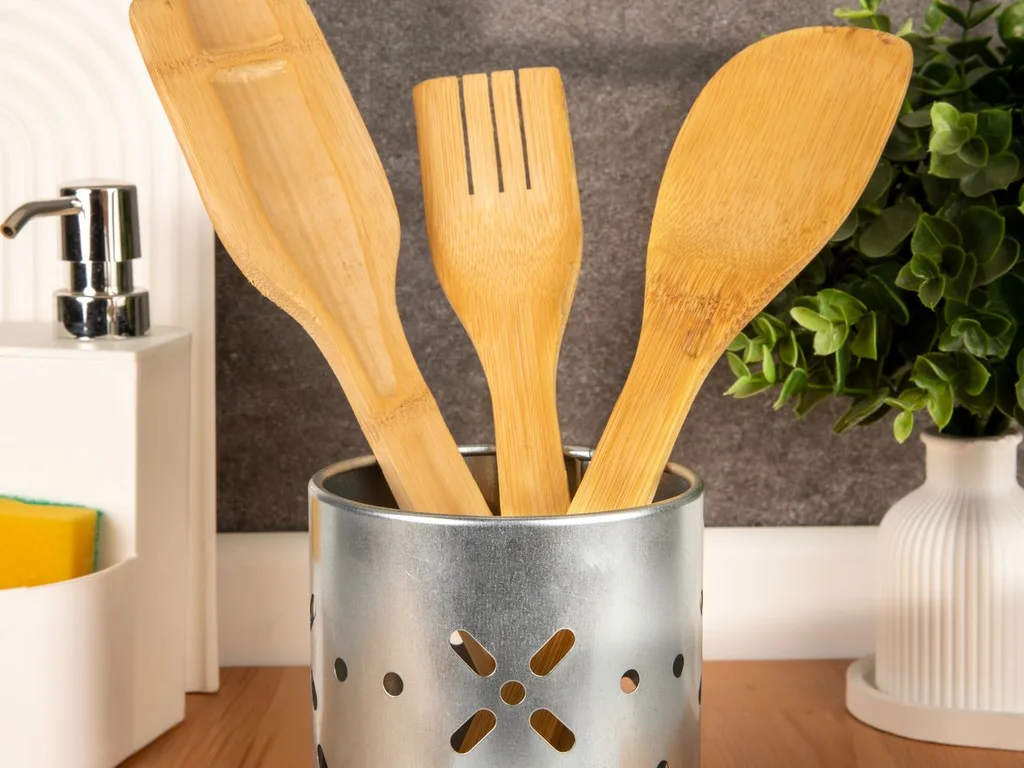
Choosing the best large kitchen utensil holder countertop crock ceramic sounds like a two-minute decision — until the first tall spatula tips a too-light holder forward, or a too-narrow crock turns twelve everyday tools into a tangled bouquet you wrestle with at the worst moment of cooking. A proper large stoneware crock, typically 6 to 7 inches tall with a diameter around 5 to 6 inches, swallows a full working set of spoons, turners, whisks and tongs and stands steady on the counter beside the stove for years.
This buying guide explains the measurements and construction details that separate a crock you keep for a decade from one you replace by spring: diameter, height, weight, glaze quality and base design. It is written for cooks who actually use their utensils daily and want them upright, visible and reachable — the same practical standard we apply across our kitchen guides at Ideas Home Accessories.
Quick Verdict
For most kitchens, the right buy is a heavy stoneware crock at least 5 inches across inside and about 6 to 7 inches tall, holding 10 to 14 standard utensils without crowding. Weight is a feature here, not a flaw: a substantial ceramic body resists tipping when you pull a utensil out at an angle mid-recipe. Look for a fully glazed interior for easy washing, a smooth or padded base that will not scratch the counter, and a rim thick enough to survive years of utensil knocks. Choose a divided or extra-wide model only if your collection passes about fifteen tools; beyond that, two medium crocks usually work better than one giant one.
Important: Measure your tallest utensil and the vertical space where the crock will live before ordering. Tall spatulas and whisks in a crock under low wall cabinets can exceed the clearance — the classic spot beside the stove works only if the tallest tool still clears the cabinet underside when you pull it straight up.
What to Look For Before You Buy
Diameter decides capacity more than height
Capacity in this category is really about the inside diameter. Around 4 inches fits a minimal set of six to eight slim utensils. The 5 to 6 inch “large” class holds a realistic working set — spoons, turners, a ladle, tongs, a whisk — with enough separation to grab one cleanly. Listings that shout “large” but hide diameter in the fine print are the ones to read twice; compare the stated utensil count against the diameter, not the marketing word.
Height and the two-thirds rule
A crock works best when the utensil’s handle length inside it is at least a third of the tool’s total length, so the center of gravity stays low. Most everyday utensils run 11 to 14 inches; a crock 6 to 7 inches tall supports them well. Very tall, top-heavy tools — long whisks, balloon beaters — may still lean; that is normal and harmless as long as the loaded crock does not rock when nudged.
Weight and base stability
Stoneware’s natural heft is the entire argument for ceramic in this category. A heavier crock shrugs off the sideways pull of removing tongs one-handed. Check for a broad, flat base relative to the body, and a non-scratch finish or silicone pad underneath so sliding it across granite or quartz does not grind grit into the surface. Narrow-based, top-flared designs are the tipping risk, however handsome they photograph.
Glaze and cleaning
A fully glazed interior wipes or rinses clean when sauce splashes dry inside; unglazed interiors stain and hold odors. Most ceramic crocks are dishwasher safe, though hand washing is kinder to hand-applied glazes over years of use. Avoid crazed or pinholed glaze descriptions in reviews — those fine cracks trap grime right where food tools rest.
Ceramic vs stainless steel vs silicone holders
Stainless steel holders are lighter and unbreakable but slide and tip more easily, and they show water spots beside the sink. Silicone and plastic are kind to counters but flex under a full load. Ceramic wins on stability, appearance and the solid feel of daily use; its single weakness is that it can chip or break if knocked onto a hard floor, which is a handling issue, not a cooking one.
How to Choose the Right One
Work through your own kitchen in this order and the right size chooses itself. First, gather every utensil you reach for weekly and count them honestly — most households land between ten and fifteen once the garlic press, peeler and thermometer join the obvious spoons and spatulas. Second, measure the tallest of them. Third, measure your counter spot, including the pull-up clearance under cabinets. Then match those three numbers to the table below.
| Your situation | Inside diameter | Height | Holds roughly | Notes |
|---|---|---|---|---|
| Minimal set, small kitchen | About 4 inches | 5–6 inches | 6–8 utensils | Fine for slim tools; whisks may lean |
| Standard family cooking | 5–6 inches | 6–7 inches | 10–14 utensils | The large class this guide focuses on |
| Big collection / keen cook | 6+ inches or divided insert | 6–7 inches | 15+ utensils | Consider two medium crocks instead |
| Tall tools (14 in+ spatulas) | 5–6 inches | 7 inches | 10–12 utensils | Check under-cabinet pull-up clearance |
Round, oval or square — the footprint question
Round crocks are the standard for a reason: no corners, so utensils settle evenly and nothing jams into a tight angle. Oval crocks earn their keep against a backsplash, where their flat back sits flush to the wall and their narrower depth steals less of the counter’s working front edge — often the smartest “large” shape in a galley kitchen. Square holders look sharp in modern kitchens but waste their corners and are the hardest to clean inside. Whichever shape you choose, compare the footprint measurement, not just the diameter claim: an oval 7 by 5 inches can hold nearly what a round 6 inch crock holds while sitting noticeably slimmer on the counter.
One crock or two?
Past about fifteen utensils, a single crock — however wide — slows you down, because every grab becomes a shuffle. Two medium crocks, one for stove-side tools in use and one for prep tools near the board, keep both zones fast. It also spreads weight, so each crock is easier to lift to the sink for washing.
Open crock vs crock with a divider
Divided inserts keep whisks from tangling with tongs and protect silicone heads from being bent under heavier tools. The cost is cleaning around the divider and a slightly lower true capacity. If your set is mostly similar long-handled tools, open is simpler; if it mixes delicate and heavy pieces, the divider earns its place.
Pros and Cons
Pros
- Heavy stoneware body stays put when utensils are pulled out one-handed mid-cooking.
- Glazed interior washes clean and does not hold odors from garlic or onion tools.
- Keeps a full working set visible and reachable beside the stove — no drawer digging.
- Ceramic looks at home on the counter permanently, unlike purely functional plastic holders.
Cons
- Can chip or break if knocked to a hard floor; rims take knocks from metal utensils over the years.
- Occupies permanent counter space, which the smallest kitchens may not spare.
- A genuinely large crock is heavy to carry to the sink when full.
- Tall, top-heavy tools can still lean in shorter models.
Who Should Buy It — and Who Should Skip It
Buy it if your utensils currently overflow a drawer or a too-small holder, you cook most days, and you want the working set beside the stove. It suits the same stove-side zone as a splatter screen for frying pans and your everyday oils — the tools of active cooking, grouped where the heat is.
Skip it if your counter is so small that a 6 inch footprint genuinely blocks prep, or if you prefer a completely clear counter and have a deep utensil drawer that already works. Minimalists with five tools total do not need the large class at all — a medium crock or a drawer tray will serve them better.
Helpful Tips for Daily Use
Load it by frequency. The five tools you use daily go at the front, handles angled toward you. Occasional tools — the masher, the skimmer — live at the back. A crock arranged this way gives back seconds on every meal, which is the entire point of countertop storage.
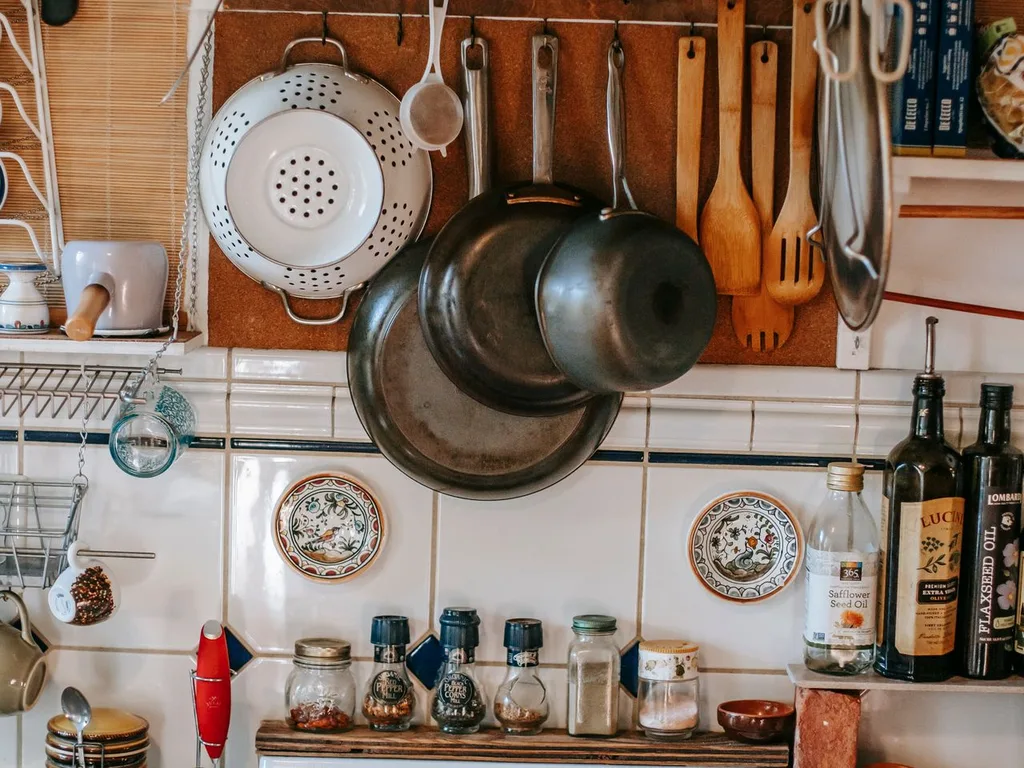
Keep stove-side company tidy. The crock zone works best as a small, complete station: utensils, a salt and pepper grinder set, and cooking oil within one step of the burners, everything else elsewhere. Crowding this zone is how crocks get knocked in the first place.
Wash the crock on a schedule, not a crisis. Drips and splashes accumulate inside any holder. An empty, wash and dry once a month keeps the glazed interior like new and stops the gritty build-up at the base that can scratch counters when the crock slides.
Rotate the contents every few months. Utensils settle into habits — the same spoon always lands in front — and the tools at the back quietly gather dust and splash residue. When you do the monthly wash, reload the crock in a different order. You will rediscover tools you forgot you owned, and you will notice the chipped or worn pieces that should be replaced before they fail mid-recipe.
Protect the counter beneath. If your model has an unglazed ceramic foot, add a thin cork or felt pad. It prevents the faint ring marks that raw stoneware feet can leave on lighter counters over time, and it silences the small clink each time the crock is set back down.
Frequently Asked Questions
How many utensils fit in a large ceramic crock?
A large crock — roughly 5 to 6 inches in inside diameter and 6 to 7 inches tall — comfortably holds 10 to 14 standard utensils: spoons, spatulas, turners, a ladle, tongs and a whisk, with room to pull one out cleanly. Slim tools pack tighter; bulky mashers and wide turners reduce the real count, which is why diameter matters more than any stated capacity.
What size utensil holder do I need for tall spatulas?
For spatulas and spoons in the 12 to 14 inch range, choose a crock about 7 inches tall so a good length of handle sits inside and the tool’s weight stays low. Equally important is your placement: check that you can lift the tallest utensil straight up and out without hitting the underside of wall cabinets above the counter.
Ceramic vs stainless steel utensil holder — which is better?
Ceramic is heavier and more stable, resists tipping, and its glazed interior is the easiest to keep odor-free. Stainless steel is lighter, unbreakable and suits very modern kitchens, but it slides more easily and shows water spots. For a holder that lives beside the stove and gets yanked at daily, ceramic’s weight usually wins; for a sink-side or rental setup, steel is the pragmatic choice.
Can a ceramic utensil crock go in the dishwasher?
Most glazed stoneware crocks are dishwasher safe, and an occasional cycle is the easiest deep clean. For a crock you want to keep pristine for years, hand washing with warm soapy water is gentler on the glaze and rim. Either way, dry it fully before reloading utensils so no moisture sits trapped at the base.
Will a heavy ceramic crock scratch my countertop?
A crock with a smooth glazed base or a fitted pad will not. The risk comes from unglazed stoneware feet with trapped grit beneath them. Add a cork or felt pad under any rough-footed crock, lift rather than drag it across stone counters, and wipe the spot underneath during your monthly wash — with those habits, ceramic is safe on granite, quartz and laminate alike.
Where should a utensil crock sit on the counter?
Beside the stove, on your dominant-hand side, close enough to reach without a step but far enough that it is not in the direct line of pan splatter all day. Keep it out of the sink splash zone to reduce washing, and avoid the very front counter edge where a full, heavy crock can be knocked by passing hips and grocery bags.
Final Thought
The best large kitchen utensil holder is a quiet piece of infrastructure: wide enough for your real collection, tall enough for your longest spatula, heavy enough to ignore a one-handed grab. Count your utensils, measure your tallest tool and your cabinet clearance, and judge the linked ceramic crock against the table above. Matched properly, it is a once-a-decade purchase that makes the busiest square foot of your kitchen calmer every single day.
Disclosure: As an Amazon Associate I earn from qualifying purchases.