Disclosure: As an Amazon Associate I earn from qualifying purchases. This article contains affiliate links. If you purchase through these links, we may earn a commission at no additional cost to you.
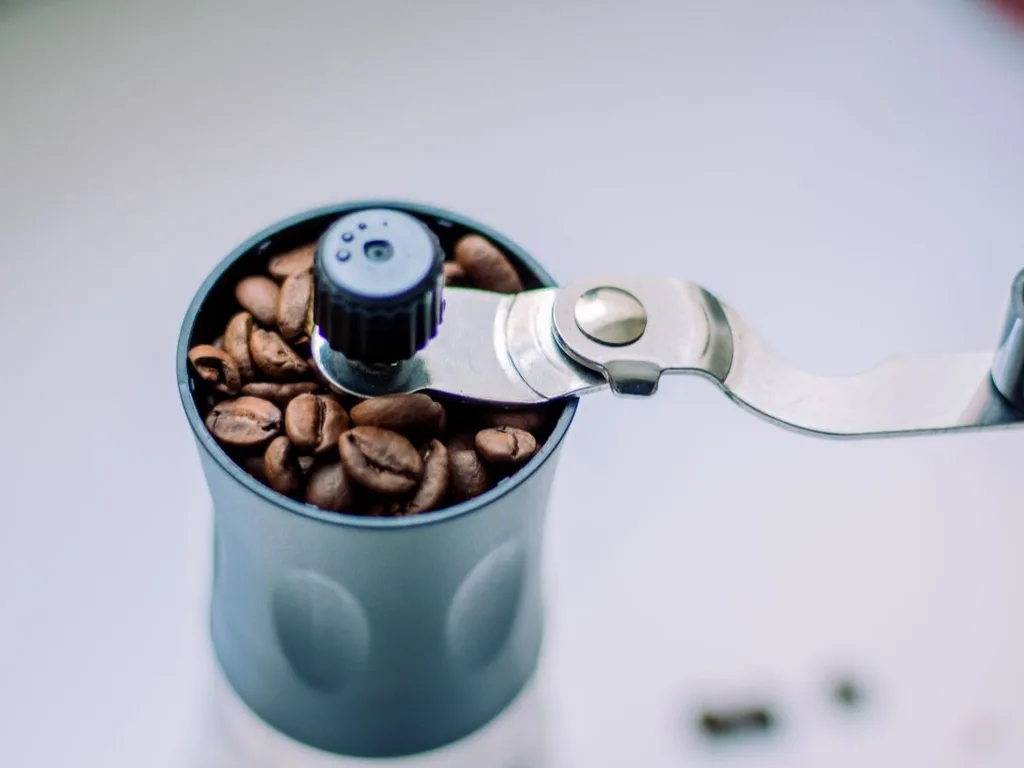
The best manual coffee grinder for travel and camping solves a problem every coffee lover meets away from home: pre-ground coffee goes stale within days, hotel room coffee is a gamble, and an electric grinder is too bulky and too loud to pack. A hand burr grinder is barely bigger than a water bottle, weighs well under a pound in most travel designs, needs no power, and grinds fresh beans in about a minute — quietly enough to use in a tent, a van or an early-morning kitchen without waking the house.
This guide walks through how to choose one and exactly how to use it, step by step. You will learn the burr materials that matter, the capacity and grind settings to check for your brew method — pour over, French press, moka pot or cold brew — and the mistakes that make hand grinding feel slow and uneven when it should feel simple. For the home side of your coffee setup, our other guides are linked from our homepage.
Quick Verdict
For most travelers, the right manual grinder has a stainless steel conical burr, a capacity of about 20 to 30 grams of beans, and a stepped or click-based grind adjustment you can set by feel. Stainless burrs grind faster and more evenly than ceramic at travel sizes, and 25 grams covers two generous mugs or one strong French press. Choose a slim body that slides into a bottle pocket and a grounds cup that seals or threads on, so coffee does not perfume your entire bag. Skip the cheapest decorative grinders with loose, wobbling handles — burr wobble is what makes grounds uneven and the cup taste muddy.
Important: Never run a burr grinder under water unless the manufacturer explicitly says the burr set can be washed. Trapped moisture rusts steel burrs and swells bearings — a dry brush and a knock-out over the bin keep a travel grinder clean for years.
What to Look For Before You Buy
Burr material: stainless steel vs ceramic
Most quality hand grinders use either stainless steel or ceramic conical burrs. Stainless steel burrs are sharper from the factory, grind noticeably faster per turn, and suit the full range from coarse French press to fine moka pot. Ceramic burrs resist rust completely and can be rinsed, but they grind slower and can chip if a small stone hides in the beans. For travel and camping — where beans, time and patience are all limited — stainless steel is the practical default.
Capacity matched to your brew
Capacity is listed in grams of whole beans. Around 20 grams brews one large mug; 25 to 30 grams covers two cups or a travel French press. Grinding in two batches because the hopper is tiny gets old quickly on a cold morning at a campsite, so match the grinder to the largest brew you make regularly, not the smallest.
Grind adjustment you can repeat
Look for numbered clicks or a clearly stepped dial under the burr. Repeatability is what lets you note “14 clicks for pour over” and hit the same setting after cleaning or after a friend borrows it. Stepless designs can work but drift; for travel, a stepped system with a wide range — fine enough for moka, coarse enough for cold brew — is the easier tool to live with.
Body, grip and grounds cup
A textured or knurled metal body grips well with cold or damp hands. The handle knob should spin freely on its axle; a knob that drags doubles your effort. Check how the grounds cup attaches: threaded cups stay on while grinding over uneven ground; friction-fit cups can pop off mid-grind, which is exactly as annoying as it sounds at 6 a.m. in a tent.
How to Use a Manual Coffee Grinder, Step by Step
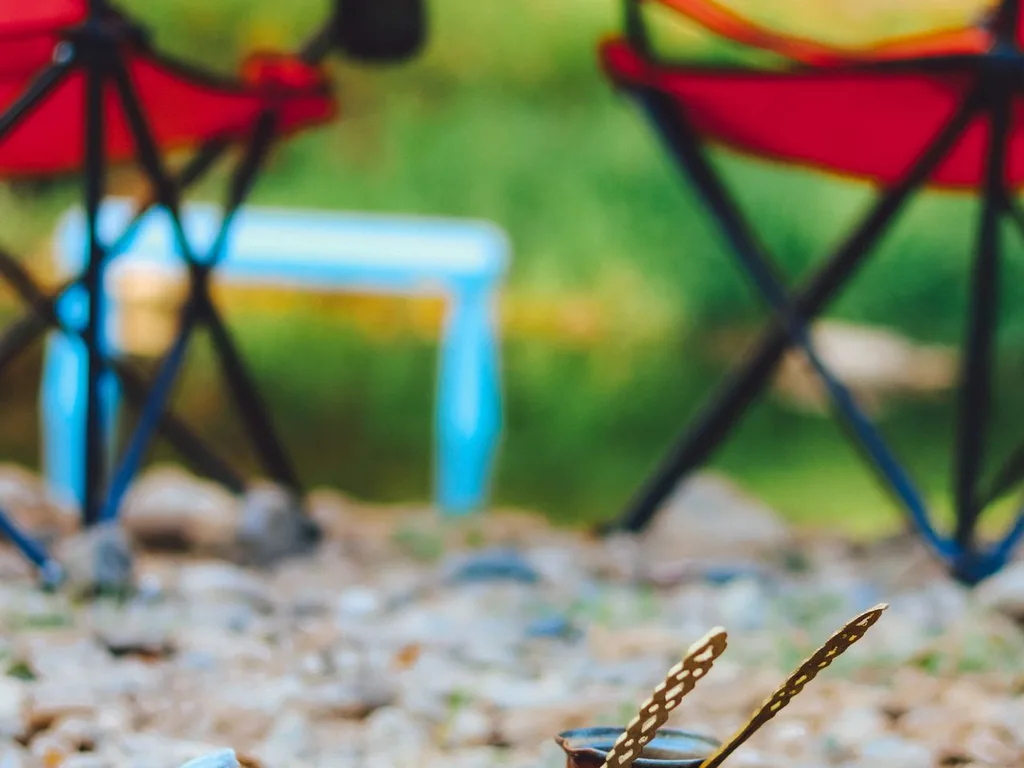
- Weigh or measure your beans. Use about 1 gram of coffee per 15 to 17 grams of water as a starting ratio — roughly 20 grams for a 12 ounce mug. A small travel scale helps, but a heaped tablespoon is about 7 grams, so three level tablespoons land close. Consistency matters more than precision when you travel.
- Set your grind size before adding beans. Turn the adjustment to your noted setting: fine-medium for moka pot, medium for pour over and drip, coarse for French press and cold brew. It is far easier to adjust an empty grinder.
- Load the beans and refit the handle. Pour beans into the top chamber, seat the handle and lid firmly, and check the grounds cup is fully attached before the first turn.
- Hold the body steady and turn at an even pace. Grip the body low, keep the grinder vertical, and turn the handle smoothly — about one to two turns per second. Jerky speed changes create uneven particle sizes. Expect roughly 30 to 60 seconds for a medium grind at travel doses.
- Feel for the finish. Resistance drops sharply when the last beans pass through the burrs. Give two or three extra turns, then tap the body lightly to settle grounds into the cup.
- Brew immediately. Fresh grounds are the whole point of carrying a grinder. Pour over drinkers will appreciate the control of an electric gooseneck kettle for pour over at home — and on the road, any kettle poured slowly in circles gets you most of the way there.
- Empty and brush out. Knock the grounds cup out fully, brush the burr area with the small brush most grinders include, and store the grinder dry. Yesterday’s stale fines are tomorrow’s off flavor.
Mistakes to Avoid
Grinding far finer than your brew method needs
Fine settings take much longer by hand and clog French presses and cold brew filters. If your arm is tired, the grind is probably too fine for the brewer. Coarsen by a few clicks; extraction lost on paper is usually unnoticeable next to the effort saved.
Overfilling the hopper
Beans packed above the burr chamber feed unevenly and force the handle. Fill to the stated capacity or below. Two calm batches beat one forced batch for evenness — and for your temper on a cold morning.
Leaving grounds in the grinder between trips
Coffee oils go rancid. A grinder stored with old grounds inside will season your next fresh beans with stale flavor. Brush it out after every trip, and before a trip, grind and discard a small spoonful of beans to clear any lingering taste.
Pairing great grinding with stale beans
The grinder cannot rescue old beans. Travel with beans you would happily drink at home, in a sealed bag away from heat, and your portable setup will outperform most café stops on the road. At home, the same beans ground coarse make an easy batch in a cold brew coffee maker pitcher — a reminder that one good grinder serves hot and cold routines alike.
Pros and Cons
Pros
- Fresh-ground flavor anywhere, with no power, cords or noise.
- Slim, light format that packs into a bottle pocket or camp kitchen bin.
- Stainless burr models handle pour over, French press, moka and cold brew settings.
- Simple mechanics with little to break; a quality hand grinder lasts for years.
Cons
- Grinding for a group is slow — four large French presses will test anyone’s patience.
- True espresso-fine grinding is hard work on most travel models and uneven on the cheapest ones.
- Small capacities mean batch grinding for bigger brews.
- Adjustment dials hidden under the burr take a trip or two to learn by feel.
Who Should Buy It — and Who Should Skip It
Buy it if you travel or camp regularly, care about how your coffee tastes, and brew one or two cups at a time. It is also the right home grinder for early risers in shared homes, and a smart backup that keeps coffee possible during power outages and cabin weekends.
Skip it if your daily routine is espresso from a pressurized machine and nothing else, or if you regularly brew for five or more people — an electric burr grinder at home does that work in seconds. Occasional travelers who are happy with café coffee on trips will not use one enough to justify packing it.
Helpful Tips for Daily Use
Write your settings down. A note in your phone — pour over, French press, moka, cold brew click counts — turns every brew into a repeatable routine instead of a guessing game. Settings drift after cleaning; the note gets you back in seconds.
Build a small travel coffee kit. Grinder, a zip bag of beans, a collapsible dripper or small French press, and a mug in one pouch. Add a handheld milk frother for lattes and a hotel room can produce something close to your home cup. The kit also keeps coffee dust contained in your luggage.
Grind while the water heats. Sixty seconds of grinding disappears inside the time a kettle or camp stove needs anyway. It is the easiest sequencing trick in the routine and the reason hand grinding rarely feels slow in real mornings.
Protect the burrs in transit. Keep the handle attached or stored alongside, not loose against the burr housing, and never pack the grinder where it can be crushed under heavy gear. A small pouch or sock around it prevents both damage and rattling.
| Brew method | Grind setting | Typical dose | Grinding effort |
|---|---|---|---|
| Pour over / drip | Medium | 20–25 g | Easy — about a minute |
| French press | Coarse | 25–30 g | Easiest — fast, low resistance |
| Moka pot | Fine-medium | 15–20 g | Moderate — slower turns |
| Cold brew | Extra coarse | 30 g (batch limit) | Easy, may need two batches |
| Espresso | Very fine | 18 g | Hard on most travel models |
Frequently Asked Questions
How long does it take to grind coffee by hand?
For a typical 20 to 25 gram dose at a medium setting, expect about 30 to 60 seconds of steady turning with a stainless burr grinder. Coarse French press grinds are faster; fine settings can take twice as long. Ceramic burr models are generally slower. The minute passes quickly when it overlaps with heating your water.
Can a manual grinder make espresso?
Some higher-end hand grinders can reach espresso fineness, but it is slow, physically demanding work, and consistency at that setting separates good travel models from cheap ones. If espresso is your main method, be honest about that before buying; for pour over, French press, moka pot and cold brew — the realistic travel methods — a good manual grinder performs very well.
Stainless steel or ceramic burrs for camping?
Stainless steel is the better camping choice for most people: it grinds faster, handles the occasional knock, and covers a wider grind range. Ceramic’s advantage is that it cannot rust and can be rinsed clean, which suits humid or seaside trips — balanced against slower grinding and the small risk of chipping if a stone hides in the beans.
How much coffee fits in a travel hand grinder?
Most travel models hold 20 to 30 grams of whole beans — enough for one large mug up to a two-cup French press per load. If your camp crew drinks more, either grind in batches while water heats or step up to a larger-capacity model, accepting a slightly bigger packed size in exchange.
How do I clean a manual coffee grinder while traveling?
Empty the grounds cup, knock the body gently over a bin, and brush the burr area with the included brush or a dry cloth. That is enough for weeks of travel. Save any deeper cleaning for home, and avoid water on steel burrs unless the manufacturer allows it — dry storage in your kit keeps rust away.
Can I take a hand coffee grinder on a plane?
Yes. A manual grinder has no battery, no motor and no blade in the kitchen-knife sense — the burrs are enclosed grinding rings — so it travels in carry-on or checked luggage without the restrictions that apply to many electronics. Pack beans in a sealed bag, and expect the grinder to occasionally draw a bag check because of its dense metal shape.
Final Thought
The best manual coffee grinder for travel and camping is the one that disappears into your bag and reappears as the best cup of the trip. Judge the linked option by its burr material, its click settings and whether its capacity matches your real brew size. Get those three right and the step-by-step above becomes a quiet one-minute ritual — at a campsite, in a rental kitchen, or at home while everyone else is still asleep.
Disclosure: As an Amazon Associate I earn from qualifying purchases.