
Disclosure: As an Amazon Associate I earn from qualifying purchases. This article contains affiliate links. If you purchase through these links, we may earn a commission at no additional cost to you.
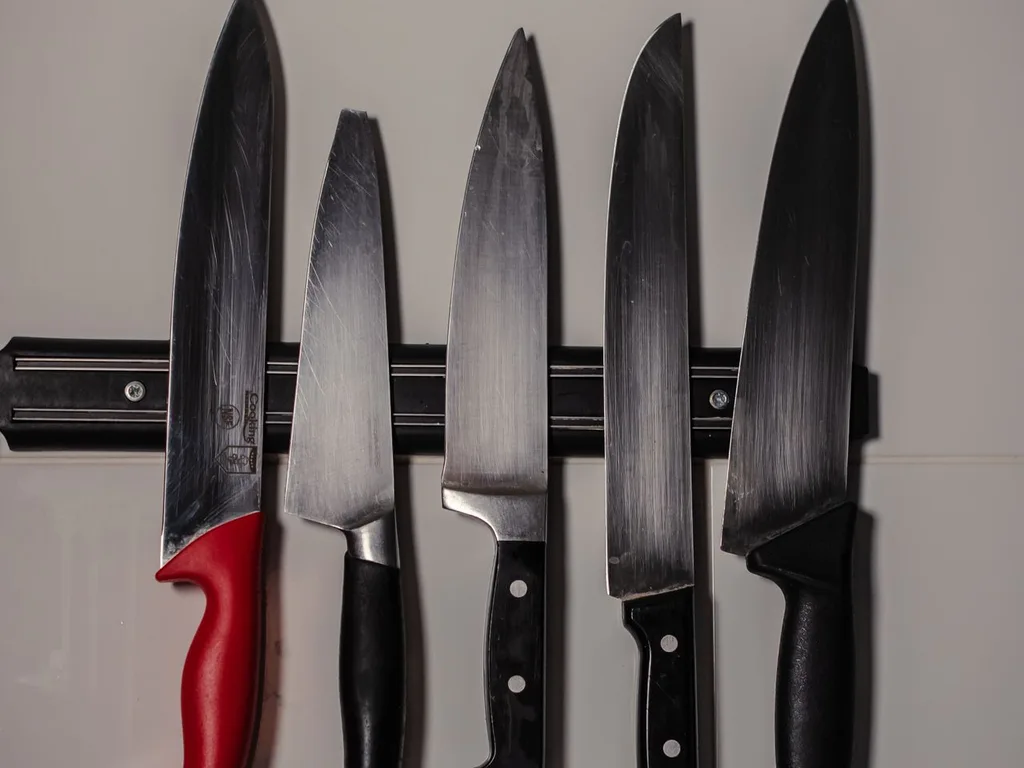
The best magnetic knife strip for wall space saving does something a knife block never can: it moves your entire knife collection off the counter and onto a strip of wall that was doing nothing. A typical countertop block claims roughly 30 to 40 square inches of work surface forever; a magnetic knife bar claims none. Your chef’s knife, santoku, bread knife and shears hang in a visible row, blades dry in open air, and the prep counter underneath stays completely clear.
This review looks closely at the wall-mounted magnetic knife strip as a product type — the magnet layout, lengths from 12 to 24 inches, mounting hardware and materials like stainless steel, walnut and bamboo — so you can judge the linked option against the criteria that decide whether a strip holds heavy knives securely for years or disappoints within a month. For more compact-kitchen ideas, start from our homepage and work through the small-space guides.
Quick Verdict
A continuous-rail magnetic knife strip in the 16 to 18 inch range is the right buy for most households: long enough for five to seven everyday knives, short enough to fit the wall gap beside a stove or above a prep counter. A good one has magnets running the full length with no dead spots, a smooth front surface that will not scratch blade edges, and mounting hardware rated for drywall or stud installation. Choose a wood-covered strip if you want the gentlest contact for high-carbon or Japanese blades; choose stainless steel for the easiest wipe-clean surface in a busy family kitchen. Skip the shortest 10 to 12 inch novelty strips unless your collection is three knives or fewer — they fill up immediately.
Important: Mount the strip into wall studs whenever possible, or use the heavy-duty anchors supplied for drywall. A strip holding several pounds of steel is only as safe as its screws — and always mount it out of the reach of small children.
What to Look For Before You Buy
Magnet layout: continuous rail beats spaced magnets
The single biggest quality difference in this category is invisible. Better strips use a continuous magnetic rail, so a knife holds anywhere along the bar. Budget strips hide a few separate magnet discs behind the cover, leaving dead zones where blades slide or refuse to hold. On any listing, look for wording about a full-length or continuous magnet and check buyer questions about heavy knives slipping. A cleaver or a thick German chef’s knife is the honest test of magnet strength.
Length: measure your collection, then add room
Strips commonly come in 12, 16, 18 and 24 inch lengths. Count your knives and allow roughly 2 to 2.5 inches of width per knife including handles that angle outward. Five everyday knives usually need at least 16 inches. Crowded knives knock against each other every time you grab one, which chips edges and slows you down. If you are between sizes, go longer — empty inches cost nothing, cramped inches cost blade edges.
Materials: stainless, wood and bamboo covers
Bare 304 stainless steel strips wipe clean in seconds and suit modern kitchens, but blades make direct metal-to-metal contact. Wood-covered strips — walnut, acacia and bamboo are common — hide the magnet behind a thin timber face that is kinder to polished blades and traditional in look. Bamboo is light and affordable; dense hardwoods feel more substantial. None is “best” in the abstract: match the material to your knives and your kitchen’s cleaning habits.
Knife compatibility
Magnetic strips hold steel blades — stainless and carbon steel both. They do not hold ceramic knives, which contain no metal, and they struggle with very small paring knives on weak rails. Heavily tapered or thick-spined knives need a strong rail and a flat mounting surface; a strip mounted on uneven tile can leave one end of a long blade unsupported. Keep blade guards for any knives you plan to take off the wall for travel or drawer storage later.
Mounting hardware and wall type
A complete kit includes screws, wall anchors and ideally a paper mounting template. Tile and backsplash mounting is possible with the right drill bit, but most home cooks mount on painted drywall beside the backsplash instead. Some strips offer adhesive mounting; treat that as a light-duty option for a few small knives only, not for a full set of heavy blades above a counter where people work.
A Closer Look at This Type of Knife Strip
The wall-mounted magnetic knife bar is a simple object done well or done badly. In its best form it is a slim bar, usually between 1.5 and 2 inches tall, with a perfectly flat front face. Knives sit flat against it, edges facing up or down according to your habit, tips clear of the wall. Because blades hang exposed to air, they dry fully after washing — a quiet hygiene advantage over block slots, which trap moisture and crumbs in slots you cannot clean.
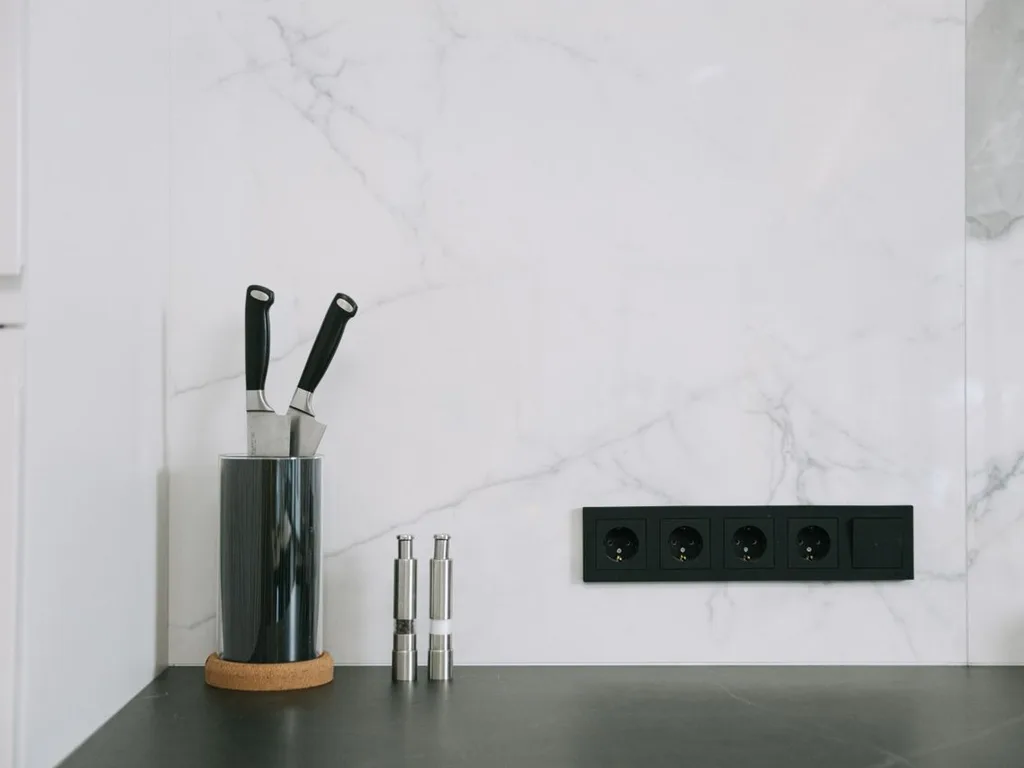
Compared with the other storage options, the strip’s case is mostly arithmetic. A knife block occupies counter permanently. In-drawer trays work but hide your tools and need a deep, wide drawer many small kitchens do not have — the same kitchens that benefit from a compact vegetable chopper instead of a bulky food processor. The strip asks only for a rectangle of wall. That is why, of all knife storage for small kitchens, it is the one that gives back more than it takes.
Key Features Explained
Holding strength you can judge from a listing
Listings rarely state pull force in pounds, so judge by construction: continuous rail, a reputable description of neodymium magnets, and a stated knife capacity that sounds believable. A strip claiming to hold a dozen heavy knives on a 12 inch bar is marketing; five to seven on a 16 to 18 inch bar is realistic. Meat cleavers and heavy bone choppers are the edge case — many owners keep one cleaver in a drawer and everything else on the wall.
Blade-friendly front surface
Edges chip when they strike hard, uneven surfaces. A smooth wood face or a finely finished stainless face with no raised screw heads is what you want. The correct habit also matters: place the spine of the blade against the strip first, then roll the edge gently into place, and lift straight off rather than dragging the edge sideways across the bar.
Keeping the set sharp
A strip protects edges far better than loose drawer storage, where blades knock together daily. It pairs naturally with regular honing and occasional sharpening — if your knives have already dulled from drawer life, our guide to choosing a knife sharpener for dull kitchen knives covers the beginner-friendly options that restore an edge before the set goes up on the wall.
Pros and Cons
Pros
- Frees the entire footprint of a knife block — real counter space returned in small kitchens.
- Blades dry in open air and stay visible, so you grab the right knife instantly.
- No slots to trap moisture and crumbs; the bar wipes clean in seconds.
- Works for shears, steel honing rods and other magnetic steel tools, not just knives.
Cons
- Requires drilling and a suitable wall area; renters may need landlord permission.
- Ceramic knives and non-magnetic items cannot be stored on it.
- Cheap strips with spaced magnets have dead spots and let heavy knives slide.
- Exposed blades are not suitable within reach of young children.
Who Should Buy It — and Who Should Skip It
Buy it if your counter is crowded, your knives currently live loose in a drawer, or you are planning a small-kitchen refresh where every square inch of workspace matters. Home cooks with five to eight steel knives and a free stretch of wall near the prep zone get the full benefit for the least effort of any storage upgrade in this category.
Skip it if you have no drill-safe wall space, your collection is mostly ceramic knives, or toddlers can reach your counters — a locked drawer insert or a block kept at the back of a deep counter is the safer answer for that stage of family life. Also skip it if you own one or two knives only; a simple blade guard in a drawer costs less and solves the same problem.
Helpful Tips for Daily Use
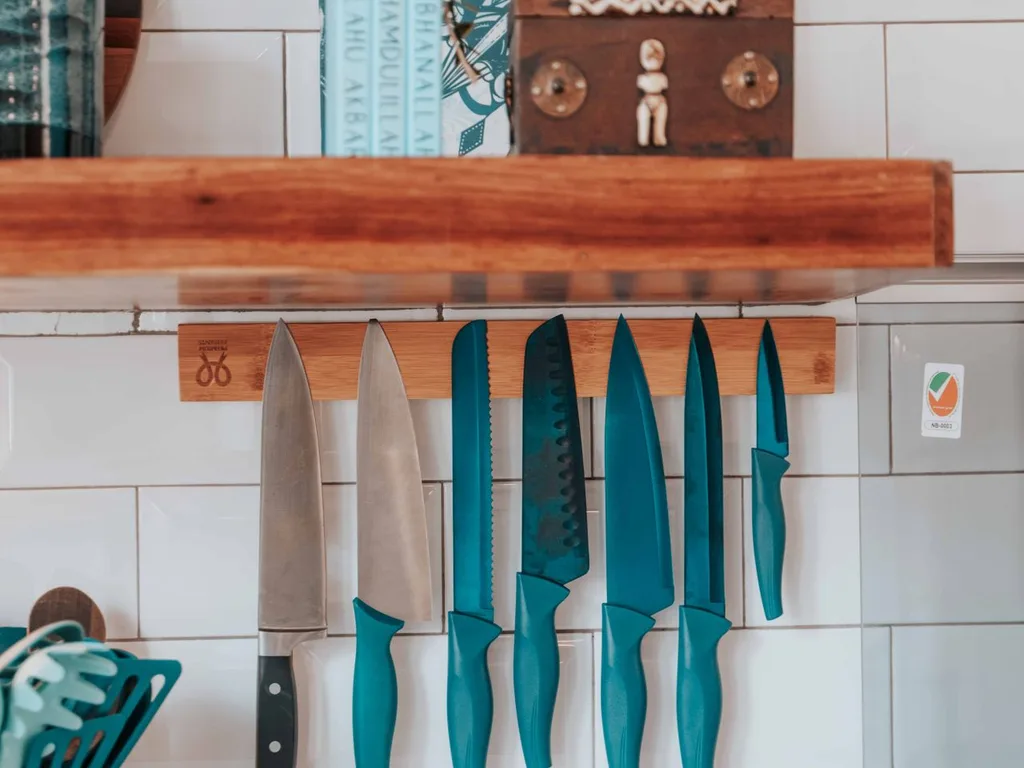
Mount at the right height. The bar should sit high enough that blade tips clear the counter backsplash gap, but low enough that you never reach upward and pull a knife down toward your face. For most adults, the strip centered around eye-to-chin height above the counter works; test with painter’s tape and your longest knife before drilling.
Arrange heavy to light. Put the heaviest knives — chef’s knife, cleaver — nearest the mounting screws where support is strongest, and lighter utility and paring knives toward the ends. Leave a finger’s width between handles so grabbing one never knocks its neighbor.
Wash, dry, then hang. A knife put away wet can spot even stainless steel over time, and water on the blade reduces grip on the magnet. A quick towel dry becomes automatic within a week of wall storage — one of its hidden advantages over a block, where wet blades go straight into dark slots.
Keep the strip itself clean. Wipe stainless models with a damp cloth; oil wooden covers occasionally with food-safe mineral oil if they look dry. Metal dust from sharpening can cling to the magnet face — a pass with a lint roller or tape removes it before it can scratch a blade.
| Storage method | Counter space used | Blade protection | Cleaning | Best for |
|---|---|---|---|---|
| Magnetic wall strip | None | Very good — no contact between blades | Wipe the bar | Small kitchens, visible access |
| Countertop block | About 30–40 sq in, permanently | Good if slots fit well | Slots cannot be cleaned inside | Homes with counter space to spare |
| In-drawer tray | None, but uses a full drawer | Good — separated slots | Tray lifts out to wash | Child safety, no wall space |
| Loose in drawer | None | Poor — edges knock and dull | — | Not recommended |
Frequently Asked Questions
Will a magnetic knife strip damage my knives?
No, not when it is used correctly. Magnets do not dull or magnetize a blade in any way that affects cutting. Damage comes from technique: dragging an edge sideways across the bar or letting blades strike each other. Place the spine first, roll the edge gently into position, and lift knives straight off, and a strip is one of the kindest storage methods available.
How many knives fit on an 18 inch strip?
As a working rule, allow 2 to 2.5 inches per knife, so an 18 inch strip comfortably holds six or seven everyday knives. Handles that angle outward need a little more room. If your count lands exactly at the limit, choose the next length up — a strip that is slightly under-filled is faster and safer to use than one packed edge to edge.
Can I mount a knife strip on tile or drywall?
Drywall is the common choice: use the supplied anchors or, better, drive screws into studs. Tile can be drilled with a carbide or diamond bit at slow speed with masking tape to stop the bit wandering, but most people prefer the painted wall just beside the backsplash. Adhesive-only mounting suits a few light knives, not a full heavy set.
Do magnetic strips work with ceramic knives?
No. Ceramic blades contain no metal, so the magnet has nothing to hold. The same applies to plastic and wooden utensils. Keep ceramic knives in their sheaths in a drawer, and use the strip for your stainless and carbon steel knives, kitchen shears and other steel tools.
Is a magnetic strip safer than a knife block for kids?
Neither is safe within a child’s reach. A strip mounted high on a wall, well above counter height, keeps blades out of reach more reliably than a block a child can pull items from at counter level — but in homes with toddlers, the most cautious choice is a lockable drawer or a block kept far back on a deep counter until children are older.
Wood or stainless steel — which strip should I choose?
Choose wood-covered if you value a gentler surface for polished or carbon steel blades and a warmer look. Choose stainless steel if you want the fastest wipe-clean surface and a modern finish. Both hold equally well when the magnet rail underneath is continuous; the cover material is about blade care and cleaning style, not holding power.
Final Thought
A magnetic knife strip is one of the few kitchen upgrades that pays you back every day in visible counter space. Judge the linked option by the things that matter — a continuous magnet rail, a length that fits your collection with room to spare, hardware you can anchor properly, and a face that treats your edges kindly — and it will quietly organize the busiest corner of your kitchen for years. Measure your wall gap, count your knives, and order the length that fits both.
Disclosure: As an Amazon Associate I earn from qualifying purchases.