
Disclosure: As an Amazon Associate I earn from qualifying purchases. This article contains affiliate links. If you purchase through these links, we may earn a commission at no additional cost to you.
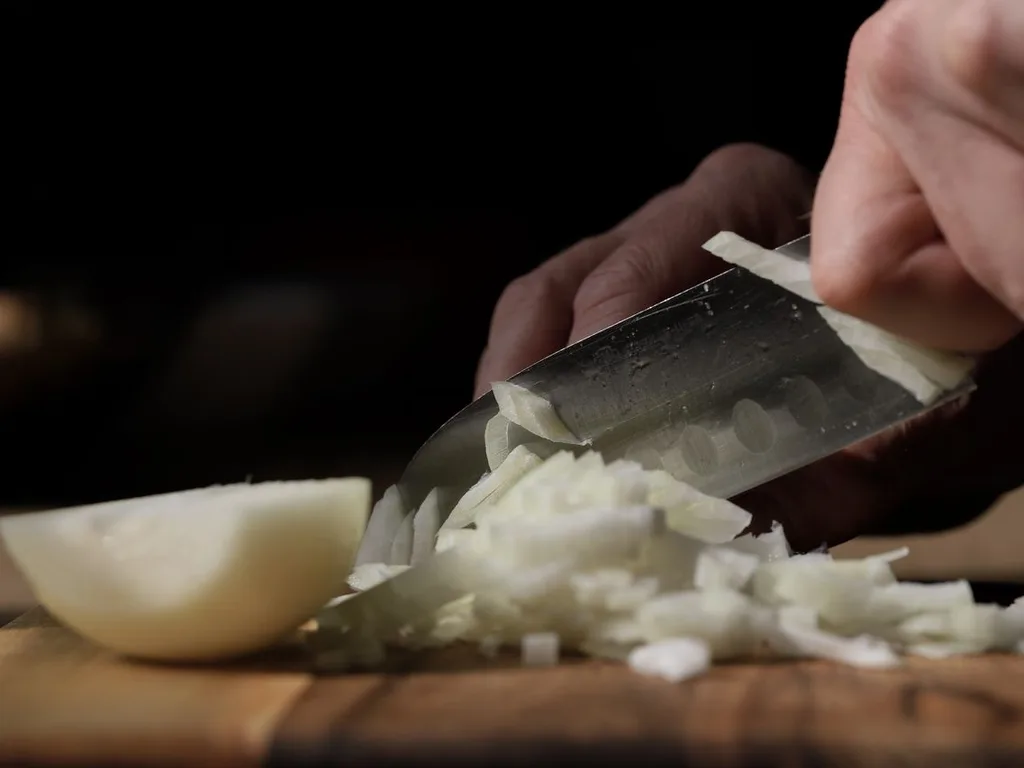
Onions make you cry because cutting them slowly, cell by cell, releases the gas that does it — and the longer you stand there slicing, the worse it gets. The best vegetable chopper for onions without crying fast attacks the problem with time and distance: halve the onion, place it on a blade grid, press the lid once, and the whole thing is diced inside a closed container in seconds, with the gas mostly trapped under the lid instead of in your face.
A 5-in-1 chopper adds interchangeable blades for dicing, slicing, and julienne work, which makes it a meal prep tool rather than a one-trick onion gadget. This buying guide explains the six checks that separate a chopper you will use weekly from one that cracks, clogs, and migrates to the back of a cabinet — including the honest cases where a sharp knife still wins.
Quick Verdict
Look for a chopper with stainless steel blade grids in at least two dice sizes, a container of roughly 4–5 cups (about 1–1.2 liters), a lid that presses with a wide, flat palm area, non-slip feet, and parts that genuinely come apart for washing. That combination dices an onion in a few presses, handles peppers, cucumbers, and potatoes with the same motion, and survives cleanup without a fight.
Buy this type if you cook with onions several times a week, do Sunday meal prep, or have anyone in the house whose eyes water badly at the cutting board. Skip it if you mostly cook for one with half an onion at a time — the wash-up will cost more time than the chopping saves, and a sharp knife remains the faster tool at that scale.
Important: The blade grids are genuinely sharp and stay sharp after washing. Always use the cleaning brush or a sponge on a handle — never your fingertips — to clear stuck pieces from the grid, and store blades where children cannot reach into the box.
What to Look For Before You Buy
Blade grids and materials. The dice size is the personality of the tool. A large grid (roughly 12–14 mm) suits chunky soups, salsas, and roasted vegetables; a small grid (around 6–7 mm) gives the fine dice you want for salads, fried rice, and pico de gallo. Blades should be stainless steel; the pusher plate above them should have matching teeth that push food fully through the grid — shallow teeth leave a mashed layer stuck on top.
Container capacity. A vegetable chopper with container storage means the dice fall straight into the box instead of scattering across a board. Around 4–5 cups holds two to three onions’ worth of dice, which covers most recipes without stopping to empty it. Check that the container has measurement marks if you portion for meal prep, and a lid if you want to store the prep in the same box.
The press mechanism. You will push this lid hundreds of times. A wide hinge, a flat palm area, and a body that does not flex under pressure make the difference between one firm press per piece and a wrestling match with a whole potato. Listings that show the chopper handling hard vegetables like carrots and potatoes are telling you something real about build strength.
Stability. Non-slip feet or a rubber base ring keep the chopper planted during the press. A chopper that skates across a wet counter mid-press is both annoying and unsafe. This is a small line on the listing and a big deal in the kitchen.
Cleaning design. Read this part of any listing twice. The best designs pop the pusher plate apart so the little squares between the teeth can be rinsed clean; most include a small cleaning brush or pick for the grid. Dishwasher-safe parts help, but handwashing the blades keeps them sharper for longer — dishwashers dull edges and rattle plastic.
What the “5-in-1” actually includes. Count useful functions, not marketing ones. A typical honest set: two dice grids, a slicer, a julienne or grater insert, and the storage container with lid. Inserts you will never use are not value; the two dice sizes and the slicer carry 95 percent of real cooking.
Storage of the tool itself. The better sets stack their blades inside the container, so the whole kit stores as one box roughly the size of a lunch container. Sets whose inserts live loose will scatter across a drawer and lose pieces. Check the listing photos for the stored state, not just the exploded view of every attachment — and measure the box against your cabinet shelf if space is tight, because a chopper stored at the back of a deep cupboard is functionally a chopper you do not own.
Chopper, Food Processor, or Knife?
The obvious rival is the food processor, and for very large batches it wins — a processor dices six onions while you are still loading the chopper twice. But a processor also purees the bottom layer while the top is still chunky unless you pulse carefully, and washing its bowl, lid, and blade takes longer than the chopper’s entire routine. The knife wins for small amounts, soft produce, and anyone who enjoys the skill. The hand chopper owns the middle ground — one to four onions, peppers, and cucumbers, evenly cut, washed up in a minute — which happens to be where most weeknight cooking actually lives.
How to Choose the Right One
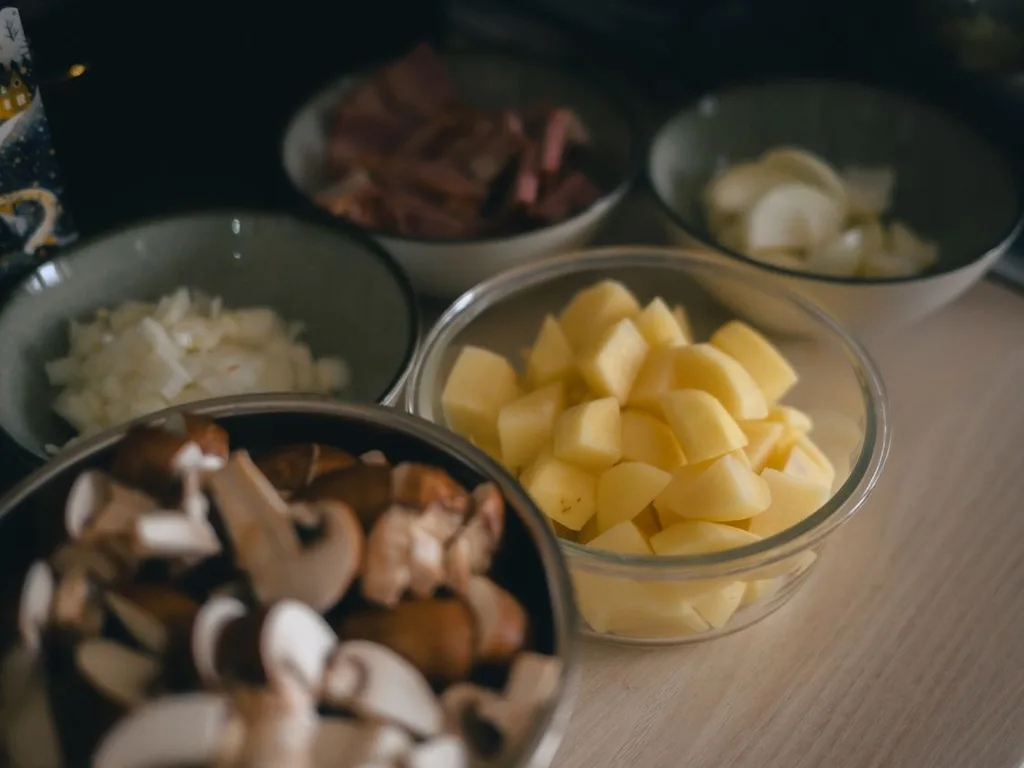
Match the chopper to your cooking pattern first, and to your cupboard second. This decision table covers the households that ask about this gadget most.
| Your Cooking Pattern | Choose | Why |
|---|---|---|
| Onions and peppers most nights, family meals | 5-in-1 with both dice grids, 4–5 cup container | Fine dice for sauces, large dice for roasting, one wash-up |
| Weekly meal prep in batches | Largest container you can store, storage lid included | Prep goes straight from chopper to fridge in the same box |
| Mostly salads and salsas | Small dice grid plus slicer insert | Even pieces dress and season evenly; a veggie dicer for salads shines here |
| Cooking for one or two, small amounts | Compact chopper or skip — use a sharp knife | Washing the tool costs more time than chopping half an onion by hand |
| Hard vegetables often (potatoes, carrots, squash) | Sturdiest press frame; check listing demos | Weak hinges flex and crack on dense vegetables |
| Thin, even slices for gratins and chips | A mandoline slicer instead | Chopper slicer inserts are decent; a mandoline is the specialist |
Pros and Cons
Pros
- Dices an onion in seconds with the gas mostly sealed under the lid — far fewer tears.
- Uniform pieces cook evenly, which quietly improves soups, stir-fries, and roasted trays.
- One press motion is safer for tired hands and less knife-confident cooks than fast knife work.
- The container catches everything, so prep moves from counter to pan to fridge in one box.
Cons
- Washing has more parts than a knife and board — the pusher teeth need a brush-out.
- Soft, ripe tomatoes can crush rather than dice on a large grid; firmer produce works best.
- It is a single-purpose footprint in the cabinet, however well it earns it.
- Very hard, large vegetables still need halving or quartering to fit the grid first.
Who Should Buy It — and Who Should Skip It
Buy a 5-in-1 vegetable chopper if onions are a near-daily ingredient in your cooking, if meal prep Sunday is a real event in your kitchen, or if watery eyes genuinely slow your cooking down. Families get the most from it: the same tool that dices the onion also handles peppers for fajitas, cucumbers for salad, and potatoes for soup — and a garlic press beside it covers the other tear-adjacent prep job.
Skip it if you cook small amounts for one, love your knife skills and find chopping meditative, or have almost no cabinet space — a gadget that must be excavated gets used twice. Honest kitchens beat fully equipped ones. For more small-gadget guidance, start from the homepage.
Helpful Tips for Daily Use
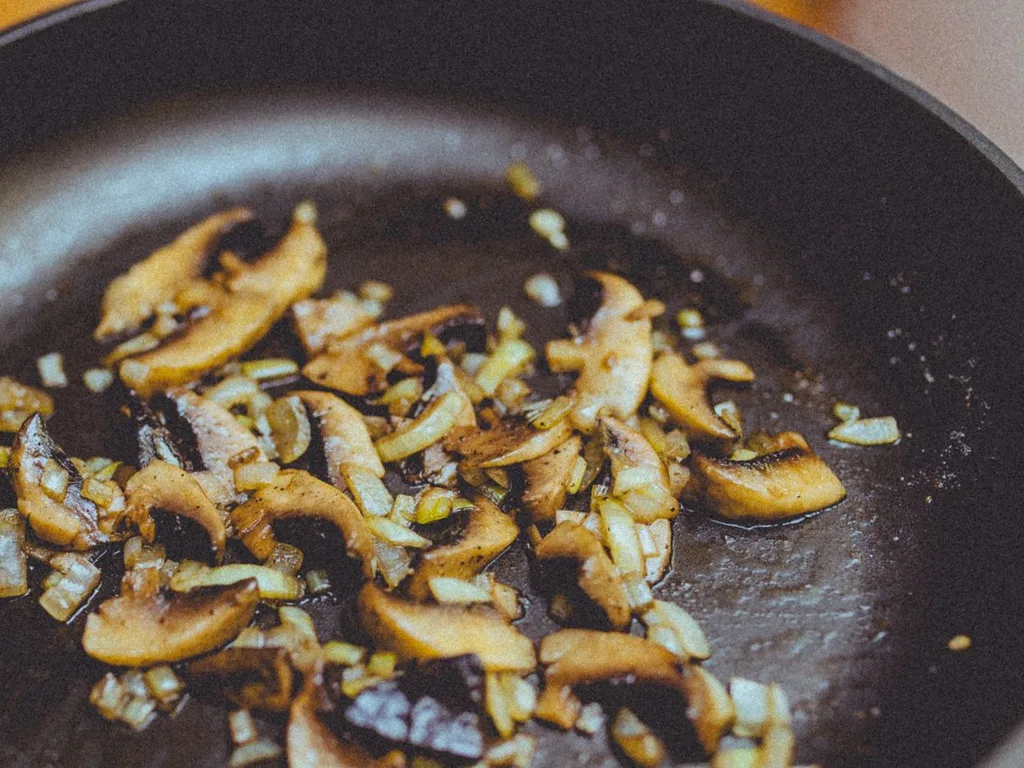
Cut pieces to grid size first. Halve the onion and place it cut-side down on the grid. Pieces that match the grid press cleanly in one motion; oversized pieces make you force the lid, which is how hinges get stressed.
Press with your palm, firmly and once. A confident single press gives cleaner dice than three hesitant ones, which mash the layer against the grid instead of pushing it through.
Work in a sensible order. Chop the mildest ingredients first and onions last, and one rinse at the end handles everything. For meal prep, dice into the container, snap the lid on, and the box goes straight into the fridge.
Use the brush while it is still wet. Thirty seconds with the cleaning brush under the tap, right after use, clears the grid completely. Onion left to dry in the pusher teeth is the only genuinely annoying clean this tool ever asks of you.
Keep tomatoes on the firmer side. A chopper for tomatoes and cucumbers works beautifully with firm, just-ripe produce. Save the very soft tomatoes for a knife or for sauces where their shape does not matter.
Freeze the extra dice. When onions are cheap or a recipe leaves you with more diced onion than the week needs, freeze the surplus flat in a bag. Frozen diced onion goes straight into soups, sauces, and fried rice with no thawing and no fresh tears, which turns one chopping session into several faster dinners — the meal prep logic that makes this tool pay for its shelf space.
Frequently Asked Questions
Does a vegetable chopper really stop onion tears?
It reduces them dramatically rather than eliminating them entirely. The onion is cut in one or two presses inside a closed container, so far less gas reaches your eyes and you spend seconds on the job instead of minutes at the board. Peeling and halving still happen in the open, so a faint sting is possible — but the watery-eyes part of onion prep is largely gone.
What size dice does a 5-in-1 vegetable chopper make?
Most sets include two interchangeable grids: a large dice around 12–14 mm for chunky soups, roasts, and salsas, and a small dice around 6–7 mm for salads, fried rice, and fine sauces. Check the listing for the exact grid sizes, because the small grid is the one many cheap sets leave out.
Can a vegetable chopper handle potatoes and carrots?
Yes, if the frame and hinge are sturdy — which is exactly what to verify on the listing. Cut hard vegetables into grid-sized pieces first and press with your palm in one firm motion. If a listing only ever shows soft produce, treat that as information about its limits.
Is a vegetable chopper easy to clean?
Easier than its reputation, if you rinse it immediately. The grid and pusher plate come apart on good designs, and the included brush clears the teeth in seconds. Most parts are listed as dishwasher safe, though handwashing keeps the blades sharper. Dried-on onion in the pusher teeth is the only stubborn case — avoid it by rinsing right away.
Is a vegetable chopper better than a knife?
For volume and uniformity, yes; for small amounts and soft produce, no. A chopper dices two onions evenly in under a minute with less tearing, but washing it for half an onion is a poor trade. Most home cooks end up using both — the chopper on prep-heavy days, the knife for a single garnish.
What vegetables should I not put in a chopper?
Very soft, overripe produce (it crushes instead of dicing), anything larger than the grid without cutting it down first, and fibrous items like raw ginger or celery strings, which tangle in the grid. Herbs, leafy greens, and cheese are knife or scissors jobs, not chopper jobs.
Final Thought
The vegetable chopper earns its cabinet space the third time you dice onions for a weeknight dinner without crying over the board — and keeps earning it every meal prep after that. Choose it by the grids, the container, and the cleaning design rather than the count of attachments, and it will be one of the few small gadgets that survives every kitchen clear-out. Check the dice sizes and capacity on the listing, and dinner prep gets faster from the first onion.
Disclosure: As an Amazon Associate I earn from qualifying purchases.






Pingback: Best Garlic Press Stainless Steel Easy to Clean: 4 Styles
Pingback: Best Collapsible Colander for Small Kitchen Storage Guide
Pingback: Best Magnetic Knife Strip for Wall Space Saving — Full Guide