
Disclosure: As an Amazon Associate I earn from qualifying purchases. This article contains affiliate links. If you purchase through these links, we may earn a commission at no additional cost to you.
The best weighted blanket for hot sleepers in summer breathable form solves a frustrating trade-off: many people sleep more deeply under gentle, even pressure, then abandon their weighted blanket the first warm night because the classic versions are built like winter duvets — plush minky fleece outside, dense synthetic fill inside, and no airflow anywhere. A summer-ready design keeps the weight but changes everything around it: breathable cotton, bamboo viscose, or lyocell fabric, fine glass microbeads instead of chunky plastic pellets, and small quilted pockets that spread the weight without adding insulating bulk.
This review walks through that breathable style of weighted blanket in detail: how to choose the right weight for your body, which sizes actually work on a shared bed, what the fill and stitching should look like on a good listing, and where the honest limits are. If you love the settled, cocooned feeling of a weighted blanket but run hot, this is the version designed for you.
Quick Verdict
For a hot sleeper, the right pick is a breathable weighted blanket in a natural, airy fabric — cotton percale, bamboo viscose, or lyocell — filled with glass microbeads in small stitched pockets, sized for one sleeper rather than stretched across a whole bed. Choose a total weight around 10 percent of your body weight, and treat a removable, washable duvet cover as close to essential: it protects the blanket, and a light summer cover keeps the whole setup cooler than a built-in plush shell.
Skip fleece and minky models entirely for summer, however good their reviews look in January. Skip oversized king blankets meant to cover two people if you sleep alone or your partner runs hotter than you — one shared weighted blanket almost never suits two bodies. And keep expectations honest: breathable means it traps far less heat than a winter weighted blanket, not that it actively cools. Paired with light sheets and a fan or air conditioning, though, it is the difference between using your weighted blanket twelve months a year and storing it until October.
Important: Weighted blankets are for adults and older teens who can move the blanket off themselves freely. They are not safe for infants, toddlers, or anyone who cannot lift the weight off their own body, and the weight rule matters: around 10 percent of the sleeper’s body weight, never a heavy blanket borrowed from a much larger partner. When in doubt — especially with breathing, circulation, or sleep disorders — ask a clinician before use.
What to Look For Before You Buy
Weight: follow the 10 percent guide
The standard guidance is a blanket totaling roughly 10 percent of your body weight, give or take a pound or two. The weight chart table further down converts that into the common sizes sold — 12, 15, 20, and 25 pounds. Lighter is the safer error for hot sleepers: an overly heavy blanket presses you into the mattress, restricts the small movements that release heat, and feels harder, not cozier. If you are between sizes, choose the lighter one for summer use.
Fabric: natural and breathable beats plush
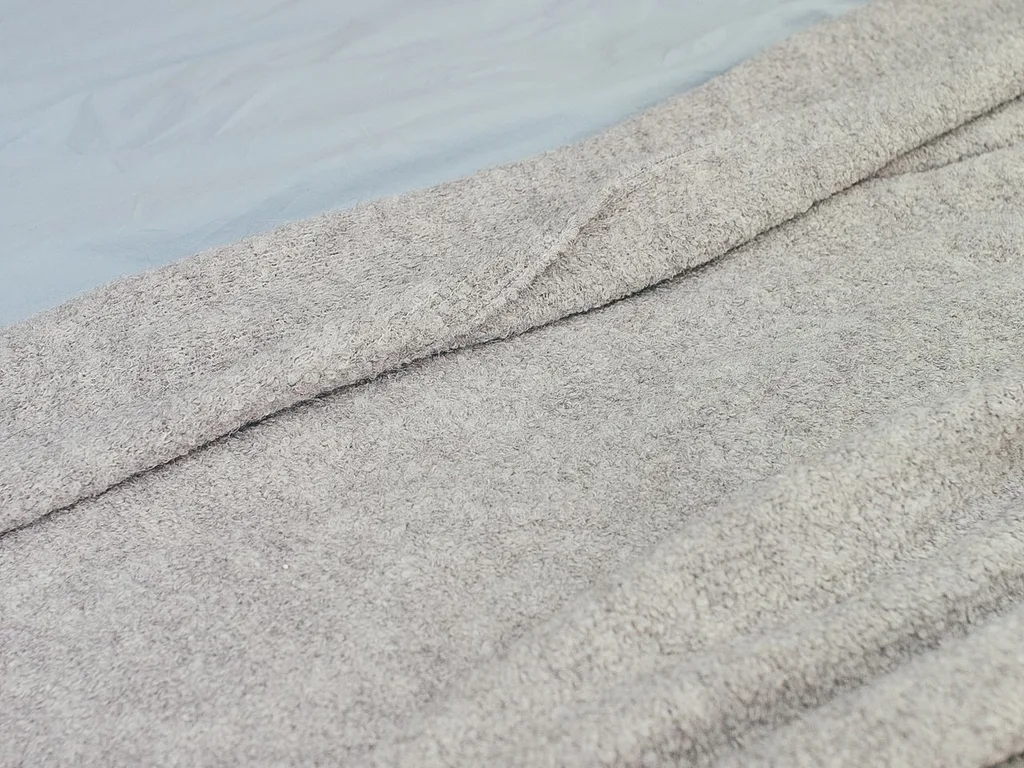
This is the whole ballgame for summer. Cotton percale breathes and feels crisp; bamboo viscose and lyocell (often sold as Tencel-style fabric) feel smooth and pull moisture away from skin; microfiber and minky fleece trap heat by design. A good hot-sleeper listing states the fabric plainly. Bonus points for a two-sided design — one breathable summer side — or a blanket sold without a plush cover so you can add your own light weighted blanket duvet cover in cotton or linen.
Fill and stitching: glass beads, small pockets
Glass microbeads are the premium fill for a reason: they are denser than plastic poly pellets, so the same weight fits in a thinner, less bulky blanket, and they distribute as a smooth, quiet layer instead of a lumpy one. Whatever the fill, look for small quilted pockets — squares roughly 4 to 6 inches — with reinforced double stitching, because small pockets stop the fill migrating into one corner and leaving the rest of the blanket as a warm, weightless sheet.
Size: buy for the sleeper, not the mattress
Weighted blankets work best sized to the person, slightly narrower than the mattress so the weight rests on your body rather than sliding off the edges and dragging. A throw size (around 48 by 72 inches) suits most single sleepers; twin and queen sizes exist for people who want full coverage or share. A blanket that hangs over both sides of the bed puts much of its weight on the mattress, not on you — and overhang is a common reason people conclude, wrongly, that weighted blankets “don’t work.”
A Closer Look at This Type of Weighted Blanket
A breathable summer weighted blanket is really three products engineered into one: a weight system, a fabric shell, and a pocket grid that marries them. Understanding how they interact helps you read any listing like a product designer instead of a hopeful shopper.
The weight system comes first. Glass microbeads, sometimes blended with a small amount of polyester fiber to soften their feel, give the blanket its deep-touch pressure — the even, distributed weight across the body that many sleepers find settling. Because glass is dense, a 15 lb weighted blanket in glass beads can be noticeably thinner than the same weight in plastic pellets, and thin is cool: less trapped air, less insulation, faster heat escape.
The shell is where summer models separate themselves. Traditional weighted blankets wrap the weight in fleece or minky — fabrics chosen for a cozy showroom feel, which is another way of saying they insulate. A hot-sleeper design uses a plain-weave cotton or bamboo-derived shell that lets air pass and moisture evaporate. It feels more like a heavy quilt than a plush throw, and that is exactly the point. The pocket grid, finally, is quality control you can see in listing photos: small, evenly filled squares with tight stitching. Large pockets or long channel stitching let fill pool at the bottom edge, which is the most common construction failure in cheap models.
Key Features Explained
Removable duvet cover compatibility
Look for internal ties or loops — usually 8 to 12 attachment points — that anchor the blanket inside a duvet cover so it does not bunch into a ball. A cover extends the blanket’s life, because covers wash easily and weighted blankets themselves often exceed home laundry limits (many household machines struggle above roughly 15 to 20 pounds of wet load; check your machine’s manual). For summer, choose the cover in cotton, linen, or bamboo — never fleece.
Even-pressure feel, without the oven effect
The settled feeling people describe comes from pressure spread evenly, not from total heaviness. Small-pocket quilting is what keeps that pressure even from shoulders to feet; when you evaluate listing photos, zoom in on the pocket size and whether every pocket looks filled to the same level. Uneven fill shows up at night as one heavy corner and three weightless edges.
Care and washing reality
Most weighted blankets are spot-clean or gentle-machine-wash items depending on weight and construction, and many owners simply rely on the washable cover. If a listing promises carefree weekly machine washing for a 25-pound blanket, read the fine print twice. Plan on a commercial machine or careful spot cleaning plus a cover you can launder as often as your sheets.
| Sleeper Body Weight | Suggested Blanket Weight | Common Size | Summer Note |
|---|---|---|---|
| 100–130 lb | 12 lb | Throw / twin | Light end suits warm rooms best |
| 130–170 lb | 15 lb | Throw / twin | The most common single-sleeper choice |
| 170–220 lb | 20 lb | Twin / queen | Choose breathable fabric — weight plus heat is the complaint zone |
| 220 lb and up | 25 lb | Queen | Consider the lighter option if you run very hot |
| Two sleepers | One blanket each | Two throws | Separate blankets beat one shared size for both weight and temperature |
Pros and Cons
Pros
- Keeps the calming, even pressure of a weighted blanket usable through summer instead of storing it away.
- Glass microbead fill packs the weight into a thinner, less insulating blanket than plastic pellets.
- Natural cotton, bamboo, or lyocell shells breathe and handle moisture far better than fleece or minky.
- Removable-cover designs solve the washing problem that heavy blankets create.
- Sized for one sleeper, the pressure lands on your body rather than sliding off the mattress edges.
Cons
- Breathable does not mean cooling — in an un-air-conditioned heatwave, any weighted blanket may still feel warm.
- Glass bead models usually cost more than plastic-pellet versions.
- Washing the blanket itself is limited by weight; you are committing to the cover system.
- Not suitable for young children or anyone who cannot remove the blanket independently.
- Some sleepers simply dislike weight on their chest or feet — no fabric change fixes a preference against pressure.
Who Should Buy It — and Who Should Skip It
Buy the breathable summer style if you already know you sleep well under weight — a heavy quilt, a partner’s leg, a hotel duvet pile — but your current weighted blanket turns into a heating pad by midnight. It also suits restless sleepers who kick off ordinary covers: the weight stays put instead of sliding to the floor. Pair it with cooling sheets for night sweats and a cooling pillow for hot sleepers, and the whole bed works toward the same goal.
Skip it if you have never liked any weight while sleeping — try sleeping under the heaviest quilt you own for a few nights first, because a breathable fabric cannot change how pressure itself feels. Skip it for children under three entirely, and for any child who cannot move the blanket alone. If your only problem is heat with no interest in pressure, a plain cooling blanket for hot sleepers is the simpler, cheaper answer. And skip the shared king size if you and your partner differ in body weight or temperature — two individual blankets outperform one compromise almost every time.
Helpful Tips for Summer Use
Start lighter than the chart’s maximum and give it a week. Many hot sleepers settle happily one size below the 10 percent figure in summer, then return to their full weight in winter. Keep the bedroom itself cool — a weighted blanket over your torso with your feet uncovered is a legitimate, time-honored compromise, since feet radiate a lot of heat.
Wash the duvet cover with your sheets every week or two; wash or spot-clean the blanket itself only as the care label allows, and dry it flat or with full support so wet weight does not stress the pocket stitching. Store it folded or rolled in a breathable bag, not compressed in a vacuum bag, which can stress seams over a season. Rotate the blanket head-to-foot every few weeks so the fill and stitching wear evenly. Browse the rest of the bedroom sleep guides from the homepage if you are rebuilding your whole summer setup.
Frequently Asked Questions
Will a breathable weighted blanket still feel hot in summer?
It will feel noticeably less hot than a fleece or minky weighted blanket, because cotton, bamboo, and lyocell shells let air and moisture pass instead of insulating. It will not feel cold: the weight itself limits airflow against your body. In a cooled bedroom most hot sleepers use one comfortably all summer; in a heatwave with no air conditioning, even a breathable model may be too much on the worst nights.
How heavy should my weighted blanket be?
Start with about 10 percent of your body weight — a 150-pound sleeper usually lands on the common 15 lb weighted blanket. If you are between sizes, or you run hot and are buying for summer, choose the lighter option. The blanket should feel like a firm, even hug you can shift under easily, never like something you have to fight to move or lift off.
Are glass beads better than plastic pellets?
For hot sleepers, generally yes. Glass microbeads are denser, so the blanket reaches its target weight in a thinner layer with less insulating bulk, and the weight distributes more smoothly and quietly. Plastic poly pellets are cheaper and perfectly functional, but the blanket tends to feel lumpier and warmer. Whichever fill you choose, small quilted pockets and strong stitching matter more than the fill alone.
Can I use a weighted blanket if I share a bed?
You can, but two individual blankets usually work better than one large shared blanket. Partners rarely match on ideal weight or temperature, and a shared blanket sized for the bed wastes much of its weight hanging over the edges. Buy a throw size for your side, weighted to your body. If you do buy a shared queen or king size, weight it to the lighter partner.
How do I wash a weighted blanket?
Most owners wash the removable duvet cover regularly and spot-clean the blanket itself. Some blankets up to about 15 to 20 pounds can go in a sufficiently large machine on a gentle cycle — check both the blanket’s care label and your washer’s capacity first, since a waterlogged weighted blanket is far heavier than its dry weight. Air-dry or tumble on low with the weight supported, and never wring it out.
Who should not use a weighted blanket?
Weighted blankets are not for infants or toddlers, and not for any child or adult who cannot lift the blanket off their own body without help. People with breathing difficulties, certain circulation issues, or sleep apnea should check with their clinician first. When the blanket is matched to the sleeper’s body weight and can be moved freely, most healthy adults use one without any concern.
Final Thought
A weighted blanket you abandon in June is wasted money, so for hot sleepers the breathable version is not a luxury variant — it is the correct product. Look for a natural, airy shell in cotton, bamboo, or lyocell, glass microbead fill in small stitched pockets, a weight near 10 percent of your body weight (lighter if you are unsure), and a washable cover with enough ties to hold everything in place. Check the listing against those points, keep your sheets and room on the cool side too, and the settled, weighted sleep you like in winter can survive the summer.
Disclosure: As an Amazon Associate I earn from qualifying purchases.




Pingback: Best Sunrise Alarm Clock for Heavy Sleepers Bedroom
Pingback: Best Heated Blanket With Auto Shut Off Queen: 7 Checks Before You Buy