
Disclosure: As an Amazon Associate I earn from qualifying purchases. This article contains affiliate links. If you purchase through these links, we may earn a commission at no additional cost to you.
Waking at 2 a.m. damp, kicking the duvet off, then cold twenty minutes later is a bedding problem before it is anything else. The sheet is the layer against your skin for eight hours, and the wrong one — a slick microfiber or a dense sateen — traps the warm, moist air your body keeps producing. The best cooling sheets for night sweats queen size are not magic fabrics; they are breathable, moisture-moving sheets in cotton percale, linen or bamboo-derived viscose, woven to let air pass and cut in a true queen size with pockets deep enough to stay on a modern mattress.
This guide compares those fabrics honestly, explains what “cooling” can and cannot mean on a listing, and then walks through the setup and washing steps that decide how cool the sheets actually feel — because the best fabric, washed wrong and paired with a heavy duvet, will still sleep hot.
Quick Verdict
For most people who wake sweaty, cotton percale is the safest first upgrade: a crisp, matte weave that breathes well, washes hard and stays affordable, without the slipperiness some sleepers dislike in bamboo viscose. Choose bamboo-derived viscose or lyocell if you want a smoother, cooler-to-the-touch feel and gentler drape, and linen if you run hottest and can accept a textured feel and higher care. Whatever the fabric, three checks matter more than the headline: a stated pocket depth that matches your mattress, a weave named on the listing (percale over sateen for airflow), and care instructions you will actually follow. A “cooling” label without a named fabric is marketing, not information.
Important: Sheets manage bedding heat; they do not treat night sweats. Night sweats that are new, persistent or drenching — especially with fever, weight loss or new medication — can have medical causes and should be discussed with a doctor. This guide covers the bedding side only.
What to Look For Before You Buy
Fabric: what “cooling” actually comes from
A sheet feels cool for three reasons: it lets air move through the weave, it absorbs and releases moisture instead of leaving it on your skin, and its surface feels cool at first touch. Cotton percale does the first two well and is the benchmark breathable sheet. Linen does them best of all — its fibres absorb a lot of moisture before feeling damp — with a rougher texture. Bamboo-derived viscose and lyocell are smooth, drape closely and feel cool initially, and manage moisture well. Polyester microfiber does none of these well: it is cheap, smooth and wrinkle-resistant, and it is the fabric most hot sleepers are trying to escape. If a listing hides the fibre content behind a brand name for the fabric, treat that as your answer and move on.
Weave: percale beats sateen for airflow
Weave changes the same cotton into two different sheets. Percale is a plain, one-over-one-under weave — matte, crisp, and airy. Sateen weaves more threads across the surface, making the sheet smoother, slightly shinier and warmer. For night sweats, percale is the deliberate choice in cotton; in viscose lines, look for plain weaves described as breathable rather than “sateen-finish” versions of the same fabric.
Size and pocket depth: the fit checks
A US queen mattress is 60 by 80 inches, and the fitted sheet must match that exactly, plus depth. Modern queen mattresses — especially with a topper — commonly run 12 to 16 inches deep, and many cooling sheet sets now offer pockets in the 14-to-18-inch range. A pocket shallower than your mattress will creep off corners on night two regardless of fabric quality, and a popped corner is a sweaty, bunched sheet under your back. Elastic all the way around the fitted sheet, not just at the corners, is the other fit detail worth its line in the listing.
What is in the set, and GSM or thread count honesty
Confirm the piece count (fitted, flat, and how many pillowcases — queen sets vary) and be sceptical of extreme thread-count claims, which are routinely inflated by multi-ply yarn counting. For viscose and lyocell, a weight description (GSM) is more informative than a thread count. Certifications such as OEKO-TEX Standard 100 on the fabric are a reasonable baseline that the sheet has been tested for common harmful substances — useful for something against your skin all night, though not a cooling claim.
| Fabric | How it cools | Feel | Care notes | Best for |
|---|---|---|---|---|
| Cotton percale | Breathable plain weave; absorbs moisture | Crisp, matte, hotel-like | Easy washing; softens over time | Most hot sleepers; first upgrade |
| Bamboo viscose / lyocell | Cool touch; smooth moisture handling | Smooth, draping, silky | Cool wash; avoid high heat and softener | |
| Linen | Highest airflow and moisture capacity | Textured, relaxed | Wrinkles freely; durable for years | The hottest sleepers; warm climates |
| Microfiber (polyester) | Little airflow; holds warm moist air | Smooth, light, static-prone | Very easy care | Cold sleepers and guest beds — not night sweats |
How to Set Up Cooling Sheets for a Cooler Night, Step by Step
- Wash before first use, on a cool cycle. New sheets carry finishing treatments that reduce absorbency. One cool wash with a small amount of detergent opens the fibres up so cotton, linen or viscose can do the moisture work you bought them for.
- Skip the fabric softener and dryer sheets. Softeners coat fibres with a waxy layer that blocks absorption — the opposite of what moisture wicking sheets need. This single habit change revives many sheet sets people thought had stopped working.
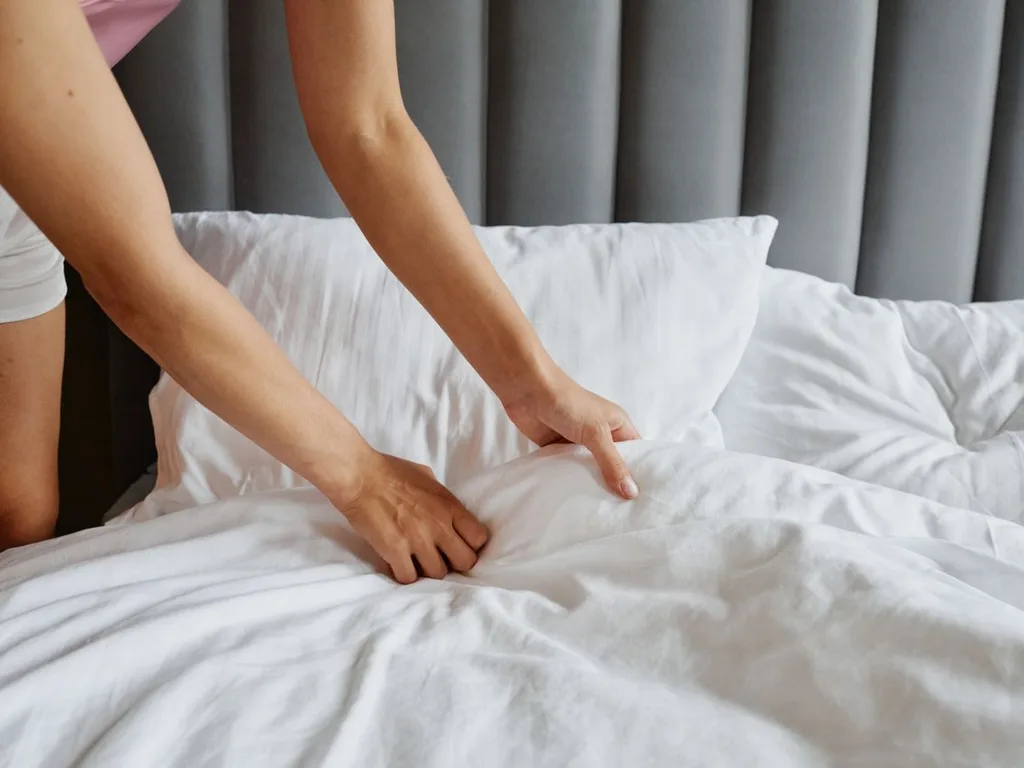
- Fit the sheet properly. Work corner to corner, pulling the fitted sheet fully under the mattress so the deep pocket is doing its job and the sleep surface is taut. A loose, wrinkled fitted sheet bunches heat-trapping folds under your body.
- Check what is underneath and on top. A plastic-feeling waterproof protector or a heavy duvet will override breathable sheets. If you need protection, choose a quiet, breathable waterproof mattress protector, and swap a winter duvet insert for a light cooling blanket for hot sleepers in the same bed.
- Set the room up once. A comfortable bedroom temperature, a fan moving air across (not at) the bed, and sheets slightly cool to the touch at bedtime do more than any single product. Then give the new setup a full week before judging — your body notices bedding changes over days, not hours.
Mistakes to Avoid
The first is buying by thread count: beyond a sensible range it predicts warmth and marketing spend better than quality. The second is the softener habit above, which quietly suffocates breathable fabrics within a few washes. Third, drying viscose or lyocell on high heat shrinks and weakens it — cool or line drying keeps the fit you measured. Fourth, expecting sheets to compensate for a hot room and a winter-weight duvet: bedding works as a system. Finally, buying one set. Night sweats mean more frequent washing, and a second set in rotation is the difference between clean breathable sheets nightly and the old microfiber set creeping back onto the bed on laundry day.
Pros and Cons
Pros
- The sheet is the highest-contact layer you own, so the right fabric change is felt all night, every night.
- Breathable natural and cellulosic fabrics manage moisture instead of leaving it on the skin.
- A correctly sized deep pocket set ends the 2 a.m. corner-popping that ruins sleep on thick mattresses.
- Care habits (no softener, cool wash) protect the investment and revive older sets too.
Cons
- “Cooling” is unregulated wording; the fabric and weave, not the label, decide the result.
- Linen and quality viscose cost more than microfiber, and viscose needs gentler washing.
- Sheets alone cannot fix a hot room, a heavy duvet or medically caused night sweats.
- Cool-touch surfaces warm up through the night; the lasting benefit is breathability, not chill.
Who Should Buy It — and Who Should Skip It
Buy cooling sheets if you regularly wake damp, if your current set is microfiber or sateen, or if your queen mattress is deep enough that standard pockets will not stay on. They are the first purchase to make in a hot-sleeper bedding overhaul, ahead of pillows and blankets. Complete the system with a breathable cooling pillow once the sheets are sorted. Skip the premium end if you only sleep hot a few nights a year — honest cotton percale at a mid-range specification will cover that — and skip fabric shopping altogether in favour of a medical check if your night sweats are new, drenching or paired with other symptoms.
Helpful Tips for Daily Use
Wash cooling sheets weekly in warm weather — sweat and skin oils load the fibres and reduce both airflow and absorbency — and wash them separately from towels, whose lint clogs the weave and whose rough fibres pill smoother fabrics. Button or zip any duvet cover closed before washing, and shake sheets out before drying so they dry evenly. If you use a duvet in summer, a light duvet cover set on a summer-weight insert keeps the layers consistent; the flattest, coolest arrangement for very hot sleepers is often just the flat sheet as the top layer.
Store the spare set folded in the bedroom rather than a distant linen closet if you want the rotation to actually happen at 11 p.m. And treat the first week as data: note whether you still wake hot, and whether the dampness is better or worse. That pattern tells you whether the next fix is the duvet weight, the room temperature or a conversation with your doctor — far better than buying a second set on hope. More hot-sleeper bedding ideas sit in the bedroom section of the Ideas Home Accessories homepage.
Important: Measure your mattress depth, including any topper, before ordering, and match it to the listing’s pocket depth with an inch to spare. The best cooling sheets for night sweats queen size still fail if the fitted sheet rides off the corner — fit is a feature, not a detail.
Frequently Asked Questions
What is the best sheet material for night sweats?
Breathable fabrics that move moisture: cotton percale for a crisp feel, linen for maximum airflow, and bamboo-derived viscose or lyocell for a smooth, cool-touch surface. All three outperform polyester microfiber, which traps warm, moist air against the skin. The best choice depends on the feel you prefer and the care you will keep up — percale is the easiest to live with, linen the coolest, viscose the smoothest.
Do cooling sheets really work, or is it marketing?
Both exist. Sheets genuinely help when the “cooling” comes from a breathable fabric and an airy weave, because airflow and moisture absorption are real, physical effects you can feel. The marketing version is an unnamed fabric with a cooling label, or a cool-touch finish that fades after a few washes. Judge every listing by its fibre content and weave — if those two lines are missing, the cooling claim has nothing behind it.
What size cooling sheets fit a queen mattress with a topper?
A standard queen fitted sheet matches a 60 by 80 inch mattress, but the pocket depth must cover the mattress plus the topper. Measure the full depth at the corner and choose a listing whose stated pocket depth equals or slightly exceeds it — deep pocket cooling sheets commonly range up to about 18 inches. Elastic around the whole hem, not only the corners, keeps a deep fitted sheet seated through the night.
How often should you wash cooling sheets if you sweat at night?
Weekly is a sensible rhythm for night sweats, and sooner if the sheets feel or smell loaded — sweat and oils reduce the fibres’ ability to absorb moisture, which is the sheets’ main job. Wash in cool or warm water with a modest amount of detergent, skip fabric softener and dryer sheets, and dry on low. Owning two sets makes the weekly wash realistic instead of aspirational.
Are bamboo sheets better than cotton for hot sleepers?
Neither is simply better; they feel different. Bamboo viscose is smoother, drapes closer and feels cooler the moment you get into bed, and it handles moisture well. Cotton percale is crisper, airier in structure, cheaper and more tolerant of washing. Hot sleepers who like a silky surface usually pick viscose; those who prefer a dry, crisp, hotel-style sheet usually pick percale. Both are real upgrades on microfiber.
Why do my cooling sheets stop working after a few washes?
The usual cause is fabric softener or dryer-sheet residue coating the fibres, which blocks the moisture absorption the sheets depend on. Too much detergent does a milder version of the same thing. A rinse cycle with no products, followed by product-free washing, restores most sets. High dryer heat can also damage viscose fibres over time, shrinking the fit and roughening the surface.
Final Thought
The best cooling sheets for night sweats queen size come down to a named breathable fabric, an airy weave, and pockets deep enough to stay put — plus washing habits that do not quietly undo all three. Start with cotton percale if you want the dependable all-rounder, or viscose or linen if feel or maximum airflow leads your decision. Check the fibre content and pocket depth on the listing against your mattress, set the bed up with the five steps above, and give it a week of honest nights before you judge it.
Disclosure: As an Amazon Associate I earn from qualifying purchases.




Pingback: Best Cooling Pillow for Hot Sleepers With Neck Pain
Pingback: Best Weighted Blanket for Hot Sleepers Summer Breathable
Pingback: Best Silk Pillowcase for Frizzy Hair and Skin
Pingback: Best Body Pillow for Pregnant Women Sleeping Side
Pingback: Best White Noise Machine for Babies and Light Sleepers
Pingback: Best Duvet Cover Set Microfiber Soft Wrinkle Free: vs Cotton Guide
Pingback: Best Bed Sheet Organizer for Linen Closet Storage