
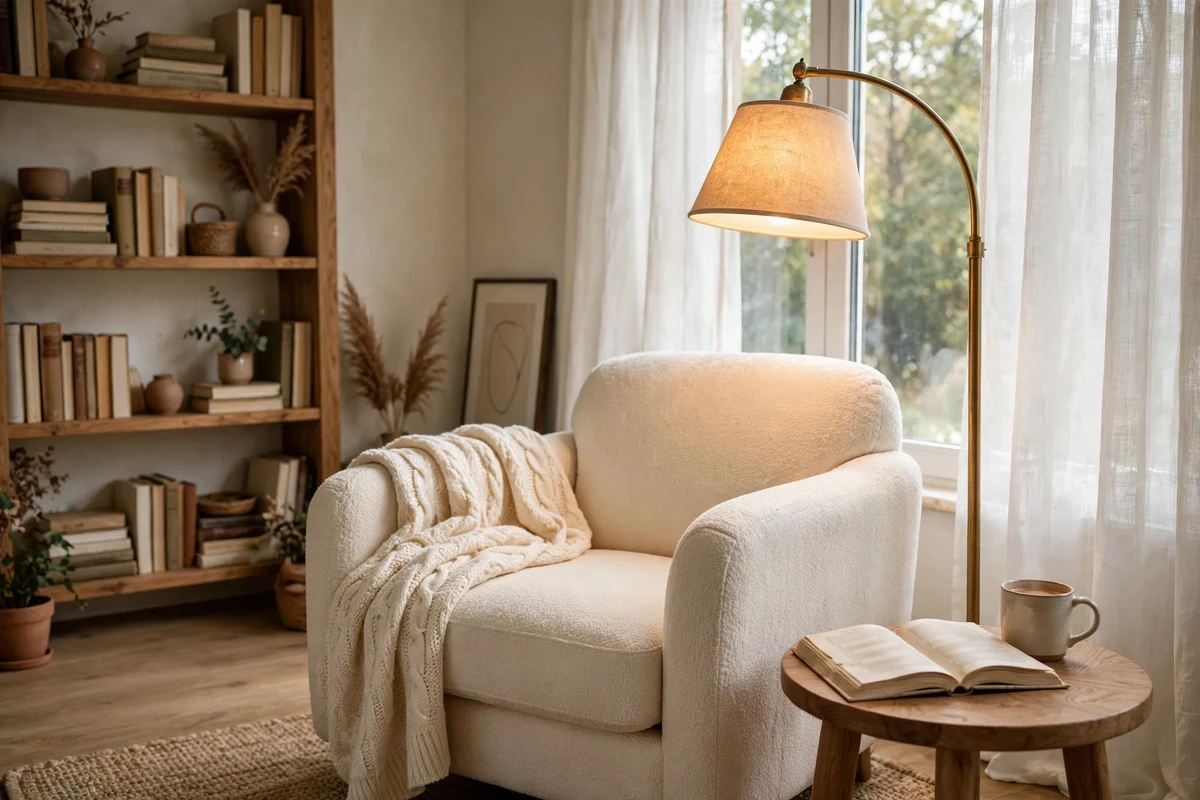
Almost every home has one: a reading corner that looked wonderful on the day it was arranged and has barely been sat in since. The chair slowly becomes a place to drop laundry, the lamp migrates to another room, and the books you meant to read there end up beside the bed instead. The corner did not fail because it lacked style. It failed because one or two small, practical mistakes made sitting there slightly uncomfortable, slightly awkward, or slightly annoying — and reading is an activity people abandon the moment it stops feeling effortless.
The good news is that reading-corner mistakes are unusually fixable. A reading corner is just a seat, a light, a surface, and a few soft layers, so nearly every error below can be corrected in an afternoon, often with things you already own. This article walks through the ten mistakes that quietly ruin cozy reading corner styles of every kind — from classic armchair corners to window nooks and floor lounges — explaining why each one fails and exactly how to fix it.
In this guide: Choosing the Wrong Chair Scale for Your Body and Corner · Relying on Harsh Overhead Lighting Alone · Skipping a Side Table Within Easy Reach · Ignoring Foot Support and Seat Height · Placing the Corner in a Busy, Exposed Walkway · Over-Styling With Too Many Pillows and Decor · Choosing the Wrong Blanket and Pillow Fabrics · Having No Control Over Glare and Daylight · Forgetting Sound, Privacy and Interruption Control · Copying a Photo Style That Does Not Fit Your Reading Habits
Corner not built yet? Start with our cozy reading corner design guide for the layout, then come back here before you buy anything. Corner built, beautiful — and never sat in? You are in the right place: audit it below, in sixty seconds.
The 60-Second Corner Audit
| What you notice | Likely mistake | First fix |
|---|---|---|
| Your feet dangle, or your back aches by page twenty | Mistake 4 — no foot support | Add a footstool just below seat height |
| Your own shadow falls across the page | Mistake 2 — overhead light only | Put a lamp beside and slightly behind your shoulder |
| You have to move pillows before you can sit down | Mistake 6 — over-styled | Edit to one lumbar pillow, one extra at most, one throw |
| Mug on the floor, glasses on the cushion | Mistake 3 — no side table | Any small stable surface at chair-arm height |
| The page glares for half the day | Mistake 8 — uncontrolled daylight | Angle the chair sideways to the window; add a sheer |
| Everyone walks past — or through — your corner | Mistake 5 — busy walkway | Angle the chair’s back to the traffic; add a rug or bookcase edge |
| The throw slides off or cooks you | Mistake 7 — wrong fabrics | A grippy cotton or wool-blend throw; one light, one heavy by season |
| You can hear every word of the television | Mistake 9 — no sound control | Soft layers nearby, chair turned away, one household off-duty rule |
Sit in the corner with a real book and note the first three annoyances. Those three rows are your fix list — in order.
All Ten Mistakes, One-Line Fixes
| Mistake | The one-line fix |
|---|---|
| 1. Wrong chair scale | Test chairs with a real book for 20–30 minutes before committing |
| 2. Overhead light alone | Give the corner its own warm lamp over the shoulder |
| 3. No side table | One small surface at arm height, within reach |
| 4. No foot support | Feet flat or raised; footstool just below seat height |
| 5. Busy, exposed spot | Move it to the room’s edge, or build shelter with angle and a rug |
| 6. Too many pillows and decor | One lumbar pillow, one extra, one throw — pass the 30-second sit-down test |
| 7. Wrong fabrics | Grip, breathability, washable covers; swap throws by season |
| 8. Glare and daylight | Chair sideways to the window; sheers for harsh hours |
| 9. Sound and interruptions | Soft surfaces, turned-away chair, one household rule |
| 10. Copying a photo, not your habit | List how you actually read, then choose furniture from the list |
The Numbers in This Guide
| Check | The number |
|---|---|
| Chair test | 20–30 minutes, with a real book |
| Bulb warmth | 2700K–3000K, warm white |
| Footstool height | Just below seat height |
| Sit-down test | Standing to reading in under 30 seconds |
| Pillow count | 1 lumbar + at most 1 extra |
1. Choosing the Wrong Chair Scale for Your Body and Corner
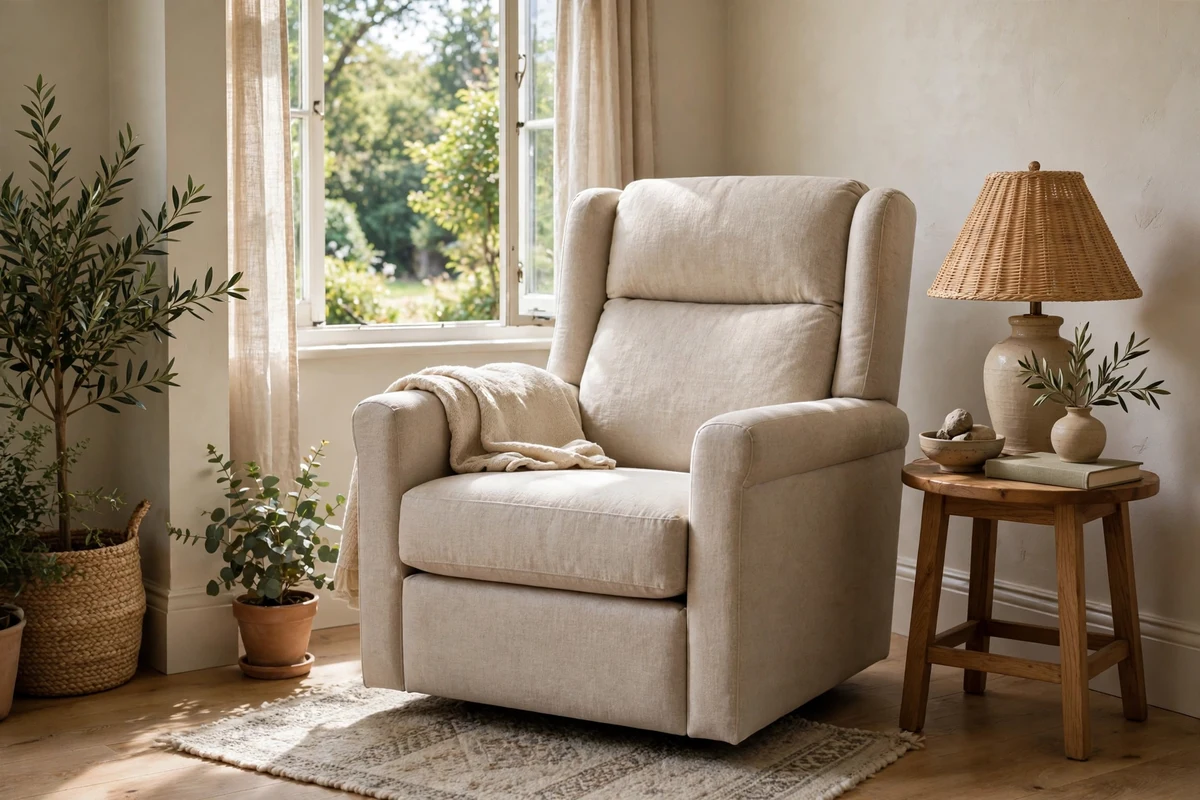
The most common reading-corner mistake is also the most expensive: a chair chosen by photograph instead of by body — too petite, a slim armless accent chair that leaves your shoulders unsupported, or too generous, a deep lounger wedged so tightly into the corner that no lamp or table fits beside it.
Why it fails
Reading is a long, still activity. A chair that is fine for a five-minute perch becomes punishing at minute forty: a seat that is too deep forces you to slouch or perch on the edge, a seat that is too shallow gives your legs no support, and a low back leaves your neck holding up your head. Scale matters to the room as well: an overscaled chair swallows the corner and blocks light, while an underscaled one reads as temporary, so the corner never feels like a real place.
The fix
Test any chair with a real book for at least twenty to thirty minutes before committing to it, ideally in the shop or during a return window at home. Your feet should rest flat or on a support, your lower back should touch the backrest without a cushion stuffed behind you as a rescue, and the arms — if it has them — should sit at a height where your elbows rest without shrugging. Measure the corner first, and leave breathing room on at least one side for a lamp and surface. If you already own the wrong-scale chair, rescue it honestly: a firm seat pad raises a low seat, a lumbar cushion effectively shortens a too-deep seat, and swapping it with a better-fitting chair from another room costs nothing.
2. Relying on Harsh Overhead Lighting Alone
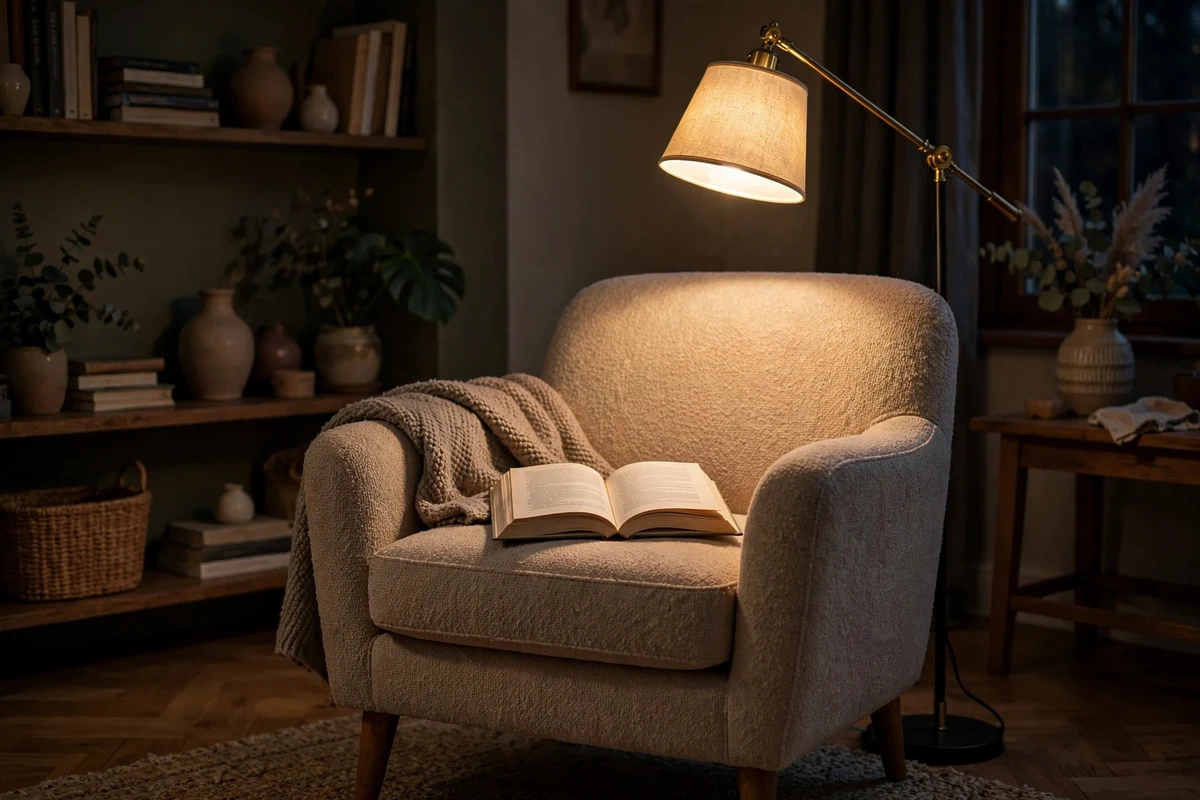
A reading corner lit only by the room’s ceiling light is a corner designed for everything except reading: overhead light fills a whole room evenly, which is precisely the wrong job, and cool bright ceiling bulbs make the corner feel clinical on the evenings when most reading happens.
Why it fails
When light comes from directly above and behind you, your own head and shoulders cast a shadow across the page; from a bare bulb in front of you, you get glare instead. Either way your eyes work harder and sessions quietly get shorter. A single overhead source also gives the corner no identity of its own — no pooled, inviting glow that makes a person choose the chair.
The fix
Give the corner its own dedicated reading light and treat the ceiling light as background only. A floor lamp, table lamp, or plug-in sconce with an adjustable head is the workhorse: position it beside and slightly behind your shoulder so light falls onto the page, not into your eyes. Choose a warm white bulb, roughly 2700K to 3000K, dimmable if possible. This single change fixes more abandoned corners than any other on this list.
3. Skipping a Side Table Within Easy Reach
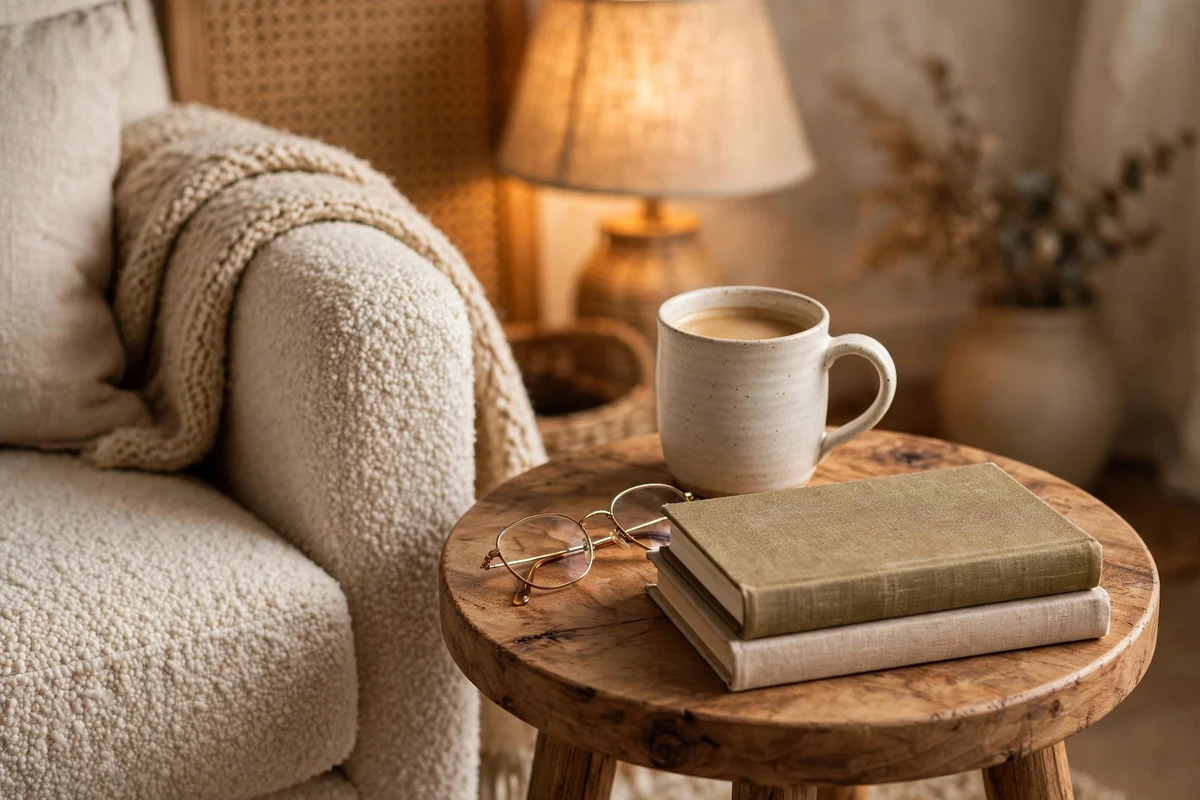
It sounds minor, but a corner with nowhere to set anything down unravels fast: the mug ends up on the floor, the spare book slides off the chair arm, and glasses and bookmarks colonise the seat cushion beside you.
Why it fails
Reading is full of small transactions — sipping a drink, swapping books, putting glasses on and off, jotting a note. If each one requires standing up or balancing objects on upholstery, the corner stops feeling restful and starts feeling like hard work. The missing table is also why so many corners look unfinished in real life even when they photograph well: the everyday objects of reading have no home, so they spread.
The fix
Add one small, stable surface at roughly chair-arm height, close enough to reach without leaning. A compact round side table is ideal, but a C-table that slides over the chair arm, a sturdy stool, or a wall shelf beside the seat all work in tight corners. Keep it deliberately small — room for a mug, your current book, and glasses is enough — because an oversized table becomes a dumping ground.
4. Ignoring Foot Support and Seat Height
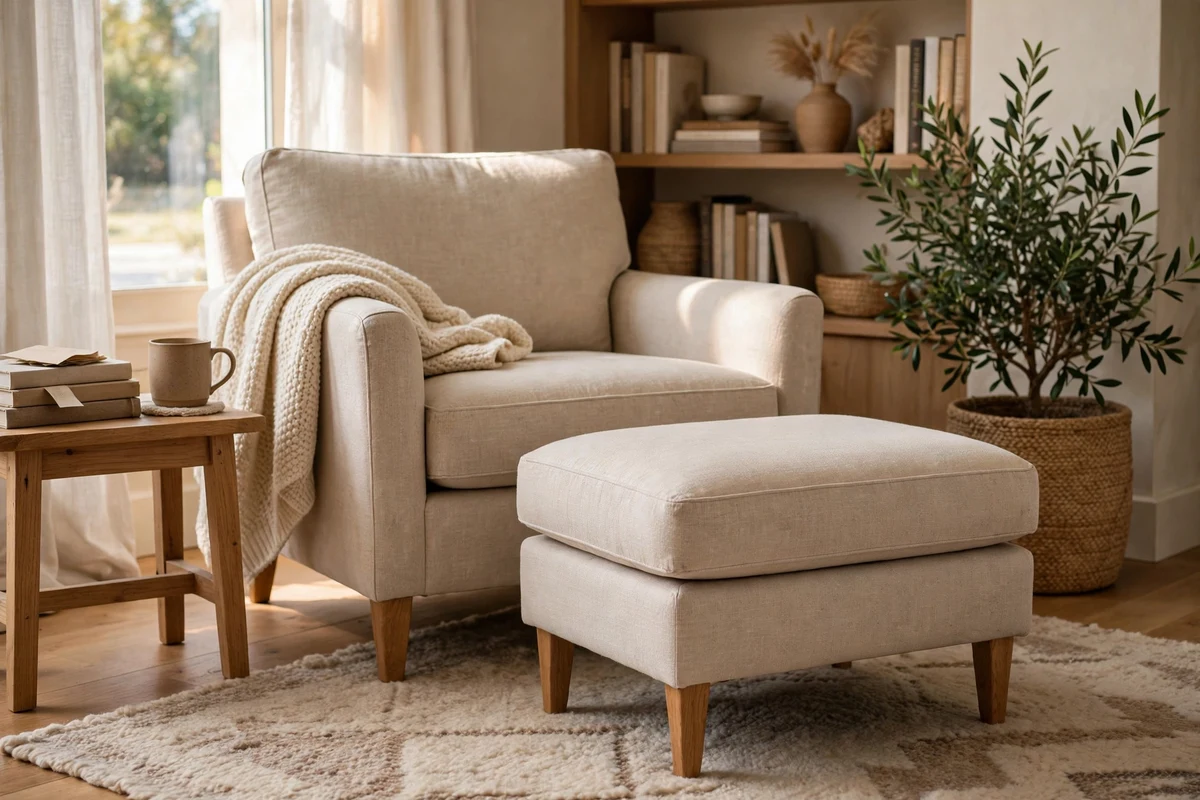
People obsess over the chair and forget the feet — yet unsupported feet end reading sessions fast, leaving you fidgeting, shifting, and eventually getting up.
Why it fails
Seat height decides what happens to your whole lower body. On a seat that is too high — including benches where a thick cushion has quietly added extra height — your feet dangle and pressure builds under your thighs. On a seat that is too low, your knees rise above your hips, your pelvis rolls back, and your lower back rounds into a slump that aches. Window seats and floor cushions fail here most often: they look inviting and lounge-like, but without foot support or a back angle that works, they suit ten minutes, not a chapter.
The fix
Aim for a seated position where your feet rest flat with knees at roughly a right angle, or better, slightly raised. A footstool or ottoman is the classic fix and it transforms even a mediocre chair, because raising your feet changes your spine angle and lets you settle for far longer. Match the footstool height to just below the seat height, and in small corners choose one that doubles as storage or as an occasional extra seat. For a too-high bench, a footstool is not optional decoration — it is the correction. For a too-low seat, a firm folded blanket or wedge cushion under you raises the front edge and restores a workable angle.
5. Placing the Corner in a Busy, Exposed Walkway
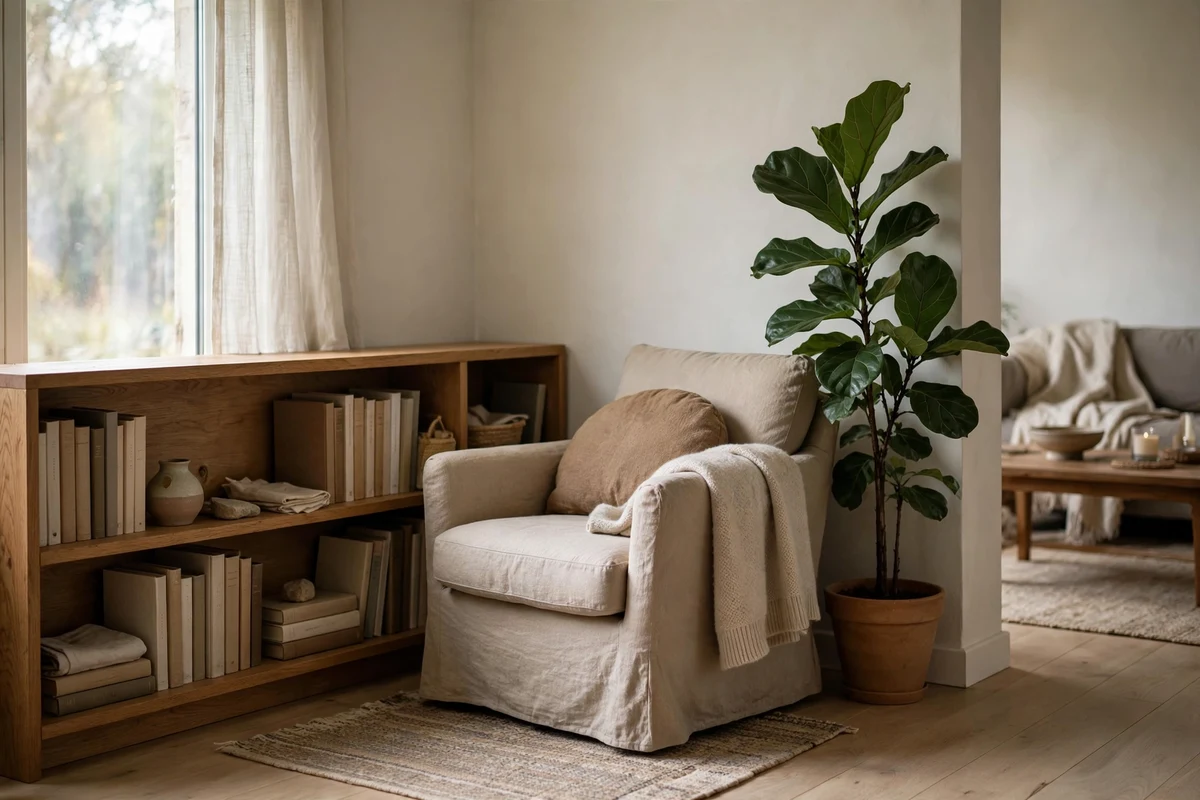
A reading corner needs shelter, and the mistake is placing it where life flows straight past it: beside the front door, on the route between kitchen and sofa, or facing the television across an open-plan room.
Why it fails
Every passer-by breaks your concentration, and readers instinctively avoid seats where they feel watched or in the way. A chair facing the TV competes with the most distracting object in the house, and a corner on a through-route gets bumped, borrowed as a bag drop, and gradually absorbed back into household traffic until it is no longer a place at all.
The fix
Move the corner to the edge of the room’s activity, not the middle of its routes, keeping comfortable walking clearance. If you cannot move it, build the shelter in: angle the chair so its back is partly toward the traffic, anchor it on a small rug, and add a boundary — a bookcase side, tall plant, screen, or the lamp itself — between seat and walkway. Turn the chair toward a window or art rather than the television. For a complete walkthrough of arranging the corner once the location is right, see this cozy reading corner design guide, which covers layout in step-by-step detail.
6. Over-Styling With Too Many Pillows and Decor
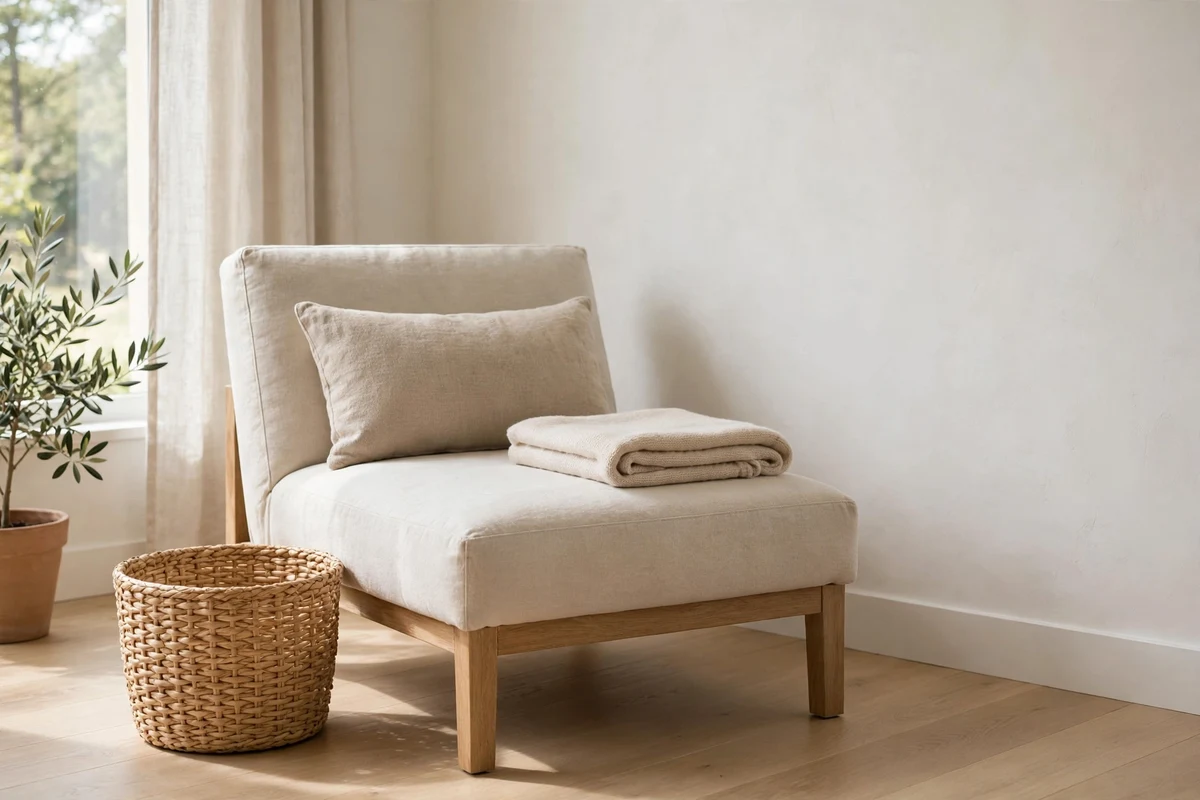
Somewhere between a styled photograph and a usable chair, many corners drown — five pillows, two blankets, a tray, candles, a plant and decorative books later, sitting down requires an excavation project first.
Why it fails
Every object you must move before you can sit is a small tax on using the corner, and taxes add up: the corner that takes two minutes to deconstruct gets used on weekends only, then not at all. Excess pillows also steal the seat itself, pushing you forward into a perch, and too many competing pieces erase the calm that makes a corner feel restful — the eye reads storage, not sanctuary.
The fix
Edit down to what earns its place: one lumbar pillow that supports your back, at most one extra soft pillow, and one throw. Everything else needs a job — holding books, giving light, or holding a drink — or a home elsewhere. Give the overflow a single basket beside the chair so extra textiles and your reading extras live contained, not displayed. Then apply the sit-down test: if you cannot go from standing to reading in under thirty seconds without relocating objects, keep editing. A corner with visible empty seat is an invitation; a full one is a display.
7. Choosing the Wrong Blanket and Pillow Fabrics

Textiles make a corner feel cozy, but the wrong ones sabotage it: silky throws slide off your lap, heavy blankets turn a long session into a sauna, and scratchy decorative pillow covers feel awful against your neck.
Why it fails
Reading comfort is skin-deep: you are in contact with these fabrics, nearly motionless, for long stretches, so small irritations magnify. A throw with no grip migrates constantly, a too-warm blanket makes you choose between comfort and finishing the chapter, and a pillow chosen only for its cover provides shape instead of support, pushing you forward rather than holding you.
The fix
Choose fabrics by touch and by season. A cotton, wool-blend, or softly textured knit throw has enough grip to stay put and enough breathability for long sits; keep a lighter cotton throw for warm months and a heavier one for winter rather than forcing one blanket to do both. Make at least one pillow functional — a firmer lumbar pillow in a washable cover — and let any purely decorative pillow be the one you can toss aside without guilt. Favour removable, washable covers throughout: a corner you are afraid to spill tea in is a corner you will not fully relax in.
8. Having No Control Over Glare and Daylight
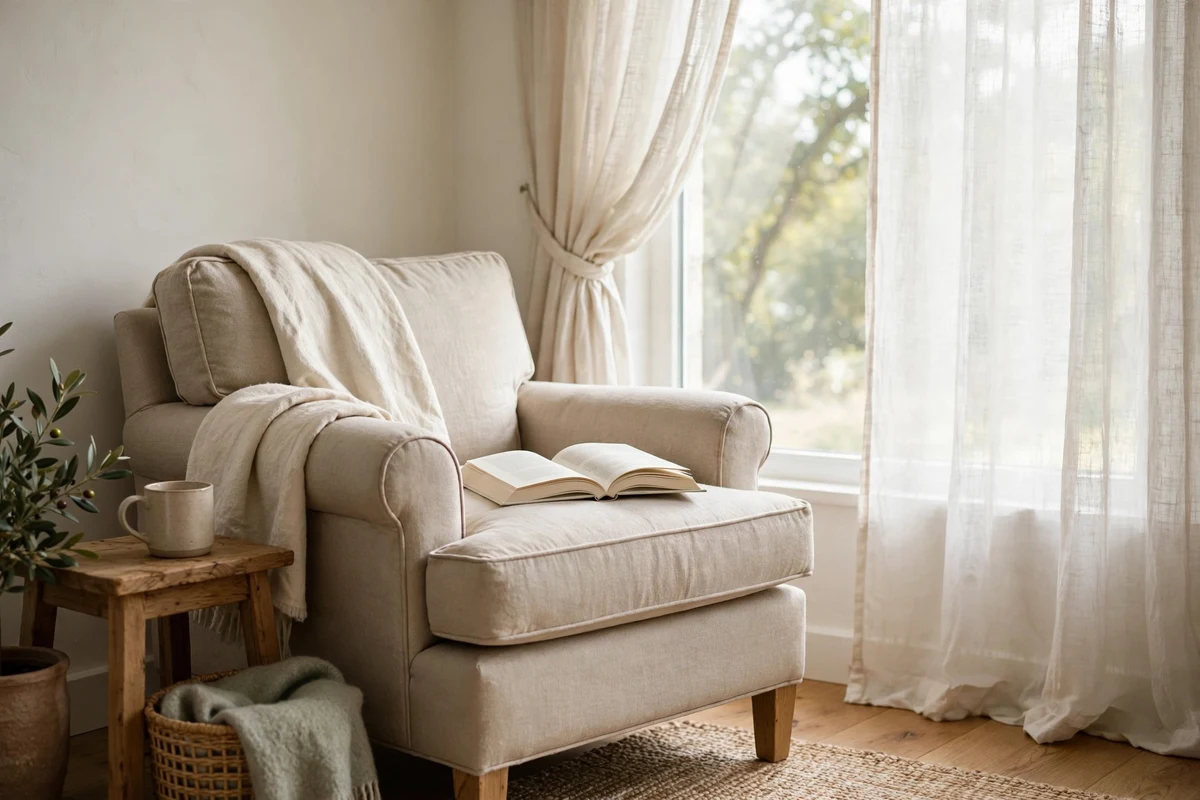
The window corner is the most loved style and the most commonly botched: push the chair squarely in front of the glass and for half the day the page is a mirror, the sun is in your eyes, and in winter the seat is the coldest in the house.
Why it fails
Daylight is wonderful reading light only when it is controlled. Direct sun on a page creates harsh contrast and glare that tires eyes quickly, and light bouncing off glossy or e-reader screens is worse. Facing the window head-on puts that glare straight in your sightline, while sitting with the window directly behind you throws your own shadow over the book. Add drafts and heat gain, and the corner’s usable hours shrink to a narrow slice of the day.
The fix
Angle the chair sideways to the window so daylight falls over your shoulder onto the page — this one rotation solves most glare problems for free. Add a control layer: sheer curtains to diffuse harsh midday sun, or a shade you can drop partway when the light turns fierce. Keep your evening lamp in the corner permanently rather than treating daylight as the whole lighting plan. If the spot is drafty, a heavier throw stored at the chair and a rug underfoot extend the corner’s season far more cheaply than moving it. To browse window and other layouts that handle light well, these cozy reading corner ideas show ten styles in real rooms.
9. Forgetting Sound, Privacy and Interruption Control
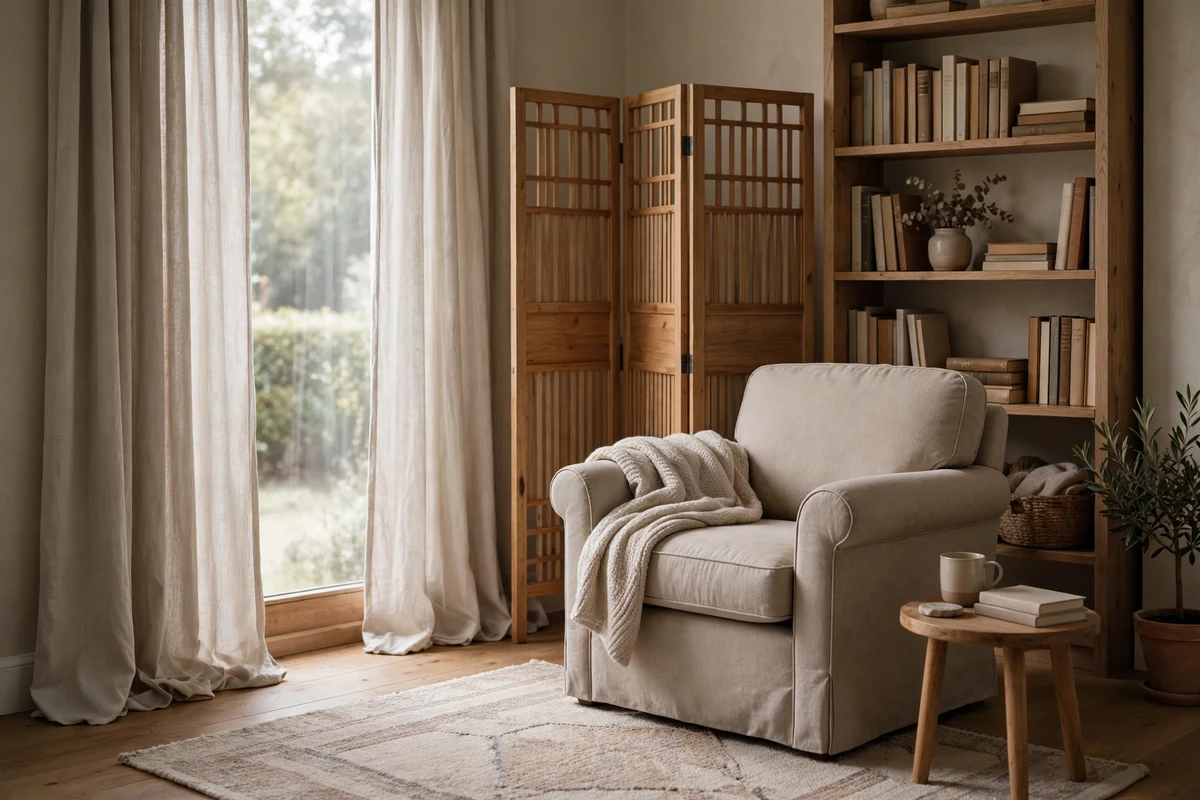
A corner can pass every visual test and still fail on sound, asking you to concentrate beside the television or under a busy stairwell — and most people simply stop asking.
Why it fails
Reading depends on sustained attention, and unpredictable noise is the enemy of attention: dialogue, notifications, and footsteps pull you out of the text in a way steady background hum does not. Privacy matters too. A corner in full view of the household invites interruption — you are visibly available, so you get asked questions, handed tasks, and drawn into conversations that a closed door would have prevented.
The fix
Soften the corner acoustically and signal its boundary. Soft materials genuinely help: a rug under the chair, curtains nearby, upholstered furniture, and a cushion-filled corner all absorb the sharp sounds that carry. Turn the chair partly away from the room’s activity so your posture says “occupied,” and consider a small screen, bookcase, or tall plant as a visual full stop. Then add one household rule that costs nothing: when someone is in the reading chair with a book open, they are off duty except for real needs. Readers who share a home with serious noise can keep simple headphones at the chair for the worst hours — a practical accessory, not a design failure.
10. Copying a Photo Style That Does Not Fit Your Reading Habits
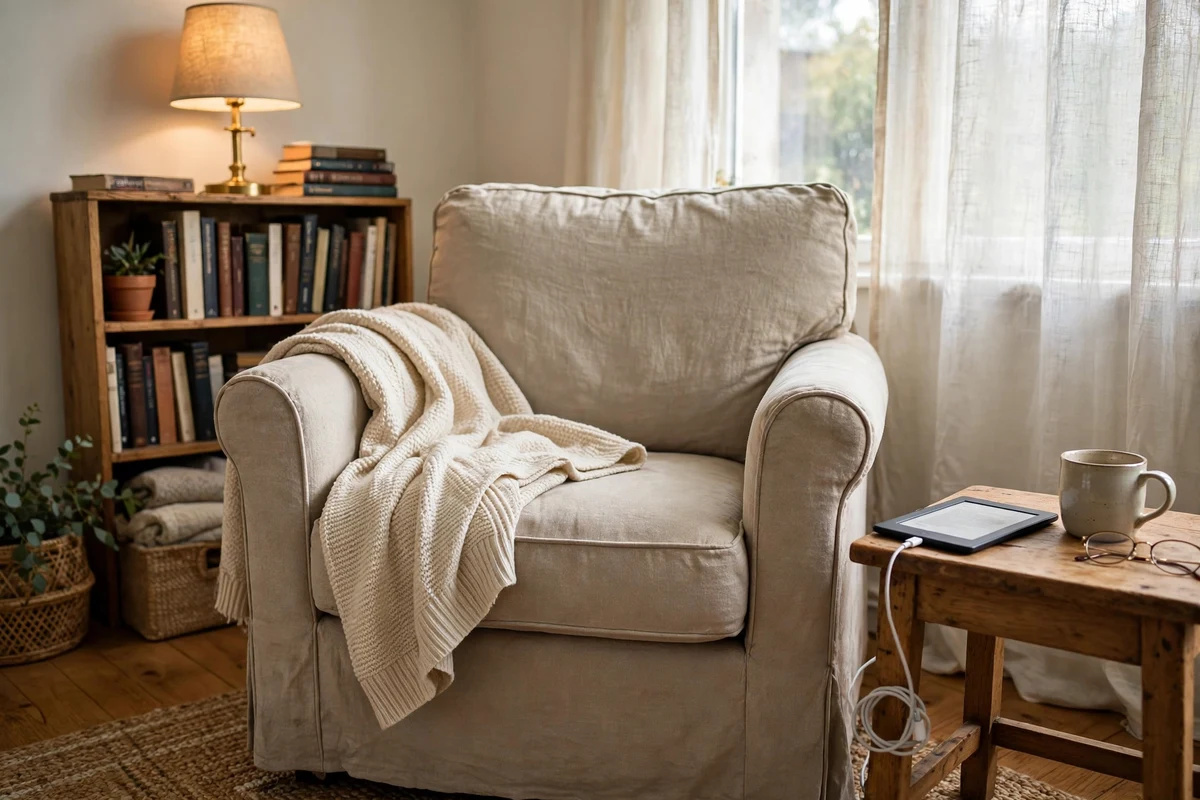
The final mistake causes several of the others: copying a photograph of someone else’s reading life, when you read heavy hardcovers for two hours, or on an e-reader that needs charging, or with a child climbing in beside you.
Why it fails
A photographed corner is styled for a moment, not a habit. It hides the unglamorous requirements of your actual reading: the outlet the lamp and charger need, the surface a big book demands, the washable fabrics a pet-owning household needs, the upright support a back that aches after an hour requires. When the corner serves the photograph instead of the habit, every session involves small workarounds, and the perfect-looking chair becomes the household’s most beautiful storage unit.
The fix
Design backwards from your real sessions. List how you actually read — posture, session length, format, drink, company, time of day — and let that list choose the furniture: a wider chair if you curl up or share it, a firmer upright seat for long nonfiction, an outlet within reach if you read on a device, washable textiles if pets join you. Borrow the photograph’s colours and mood freely, but never its compromises, and live in the corner for a week before buying anything else.
Frequently Asked Questions About Cozy Reading Corner Mistakes
What is the biggest mistake people make with a reading corner?
Choosing the chair by looks instead of comfort and scale. A chair that is too small, too deep, or unsupportive makes every session slightly uncomfortable, so the corner quietly stops being used. Test seating with a real book for at least twenty minutes, and fix lighting at the same time — those two mistakes account for most abandoned corners.
Why does my reading corner look good but never get used?
Usually because a practical piece is missing: a dedicated reading light, a side table within reach, or foot support. Corners fail on function, not style. Sit in yours with a book and note the first three annoyances — glare, nowhere to put your mug, dangling feet — and fix those before changing anything decorative.
Is overhead lighting really that bad for reading?
On its own, yes. Ceiling light casts your own shadow over the page or creates glare, and it gives the corner no identity of its own. Keep it as background light if you like, but add a floor lamp, table lamp, or sconce beside the chair with a warm bulb so light falls directly onto the page from over your shoulder.
How do I stop glare in a window reading corner?
Turn the chair sideways to the window so light comes over your shoulder instead of into your eyes or from directly behind you. Add sheer curtains or an adjustable shade to soften harsh midday sun, and keep a lamp in the corner for evenings and dull days so the seat works at all hours.
How many pillows should a reading chair have?
One functional lumbar pillow, plus at most one extra soft pillow, is enough for most readers. More than that steals seat depth and forces you to clear the chair before sitting, which discourages use. If you love the layered look, store spare pillows in a basket beside the chair rather than on it.
What can I do if my only corner is in a busy part of the room?
Build shelter instead of moving. Angle the chair so its back is partly toward the traffic, define the zone with a small rug, and place a bookcase, plant, or screen between the seat and the walkway. Turn the chair away from the television, and keep enough clearance that nobody has to squeeze past you.
Does a reading corner need a footstool?
Not always, but it fixes one of the most common hidden problems. If your seat is even slightly high, or your feet do not rest flat, a footstool or ottoman changes your whole sitting angle and noticeably extends comfortable sessions. Choose one just below seat height; storage versions earn their footprint in small corners.
What blanket is best for a reading corner?
A breathable throw with some texture and grip — cotton, a wool blend, or a soft knit — stays on your lap instead of sliding to the floor. Keep two weights if you read year-round: a light cotton throw for summer and a heavier one for winter. Washable covers and fabrics matter, because a corner you protect from spills never fully relaxes you.
How do I reduce noise in a reading corner?
Add soft materials that absorb sound: a rug under the chair, curtains, upholstery, and cushions all help. Position the chair away from the television and the busiest routes, partly turned from the room. For genuinely noisy households, keep simple headphones at the chair for peak hours rather than abandoning the corner.
Can I fix a bad reading corner without buying new furniture?
Almost always. Angle the chair to fix glare and exposure, move a lamp from another room, add a stool or stack of books as a temporary side table, shorten a too-deep seat with a lumbar cushion, and edit the pillows down to two. Live with those free fixes for a week; you will learn exactly which single purchase, if any, is actually worth making.
Fix Them in This Order: Free, Cheap, Then Buy
Free first (one afternoon): angle the chair away from glare and traffic, borrow a lamp from another room and put it over your shoulder, edit the pillows down, press a stool into service as the side table. Live with the corner for a week of real reading.
Cheap second (small money, big effect): a firmer lumbar cushion, a footstool, a sheer curtain panel, a basket for the overflow. These fix the comfort mistakes, which are the ones that actually empty corners.
Buy last (one considered purchase): the right chair — only now, because a week of fixed lighting, support and layout has taught you exactly what ‘right’ means for your body and your habits. Most corners never need this step.
Conclusion
A cozy reading corner rarely fails for one dramatic reason. It fails by accumulation: a chair slightly wrong for your body, light that fights the page, feet with nowhere to rest, a mug with nowhere to go, and a spot slightly too exposed to relax in. That is why the fix is rarely a new style — it is a short, honest audit. Test the chair the way you actually sit, give the corner its own warm light, add a small surface and foot support, control the glare and the noise, edit the styling back to what serves you, and let your own reading habits — not a photograph — make the final decisions. Do that, and the corner stops being decor and becomes the seat you choose, book in hand, without thinking twice.




Pingback: Cozy Reading Corner Styles: 7 Compared on Five Levers