
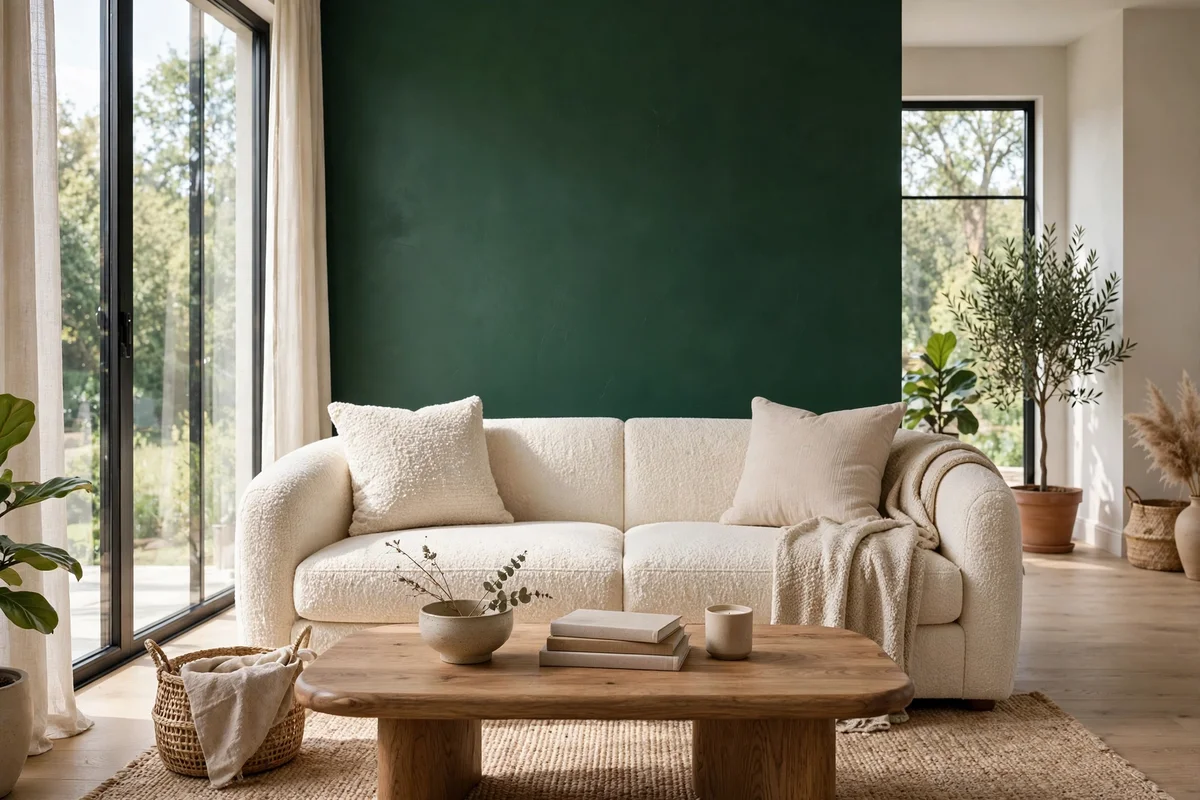
A living room without a focal point can feel pleasant but unfinished — the furniture is arranged, the lighting works, and yet the room lacks that one place your eyes are drawn to. An accent wall solves exactly that. Instead of decorating every wall equally, you choose one wall and give it special treatment: color, texture, pattern, or built-up architectural detail. That single wall anchors the whole room, makes your sofa area feel deliberate, and sets the tone for everything around it. Pick the wall that already draws attention — behind the sofa, the fireplace wall, or the wall the TV sits on — rather than a wall chopped up by doors and windows. If you are still deciding, our living room accent wall ideas guide works through the choice in order — the wall, the material, then the colour — before you commit to a treatment here.
The best part is how flexible the idea is. An accent wall can cost as little as a gallon of paint and an afternoon, or it can be a weekend carpentry project with wood, plaster, or molding. It works in grand living rooms and in tiny apartments — and several options come off cleanly when you move out. Below are ten living room accent wall ideas with real, copyable examples, from bold paint to textured finishes to full media and fireplace walls, plus answers to the questions people ask most before they start.
The working tools in this guide: the cost, effort and rental-friendliness table up top; the paint finish comparison in §1; the 57-inch gallery-wall hanging centre; and the rule that at least a third of each floating shelf stays empty.
| Approach | Typical cost | Effort | Rental-friendly? |
|---|---|---|---|
| Paint (solid or geometric) | Low | One afternoon | With landlord permission |
| Peel-and-stick wallpaper | Low to moderate | A few hours | Yes |
| Limewash or textured plaster | Moderate | Half a weekend | No |
| Wood slats | Moderate | Half a weekend | No |
| Board and batten | Moderate | One weekend | No |
| Gallery wall | Low | An afternoon | Yes, with removable hooks |
| Media/TV wall | Low to high | An afternoon to a weekend | Partly |
In this guide: The Deep, Moody Painted Accent Wall · The Vertical Wood Slat Accent Wall · The Limewash and Textured Plaster Finish · The Board and Batten Accent Wall · The Geometric Color-Block Design · The Peel-and-Stick Wallpaper Feature · The Curated Gallery Wall · The Media and TV Accent Wall · The Fireplace Feature Wall · The Floating Shelf Display Wall · Frequently Asked Questions About Living Room Accent Walls · Conclusion
1. The Deep, Moody Painted Accent Wall
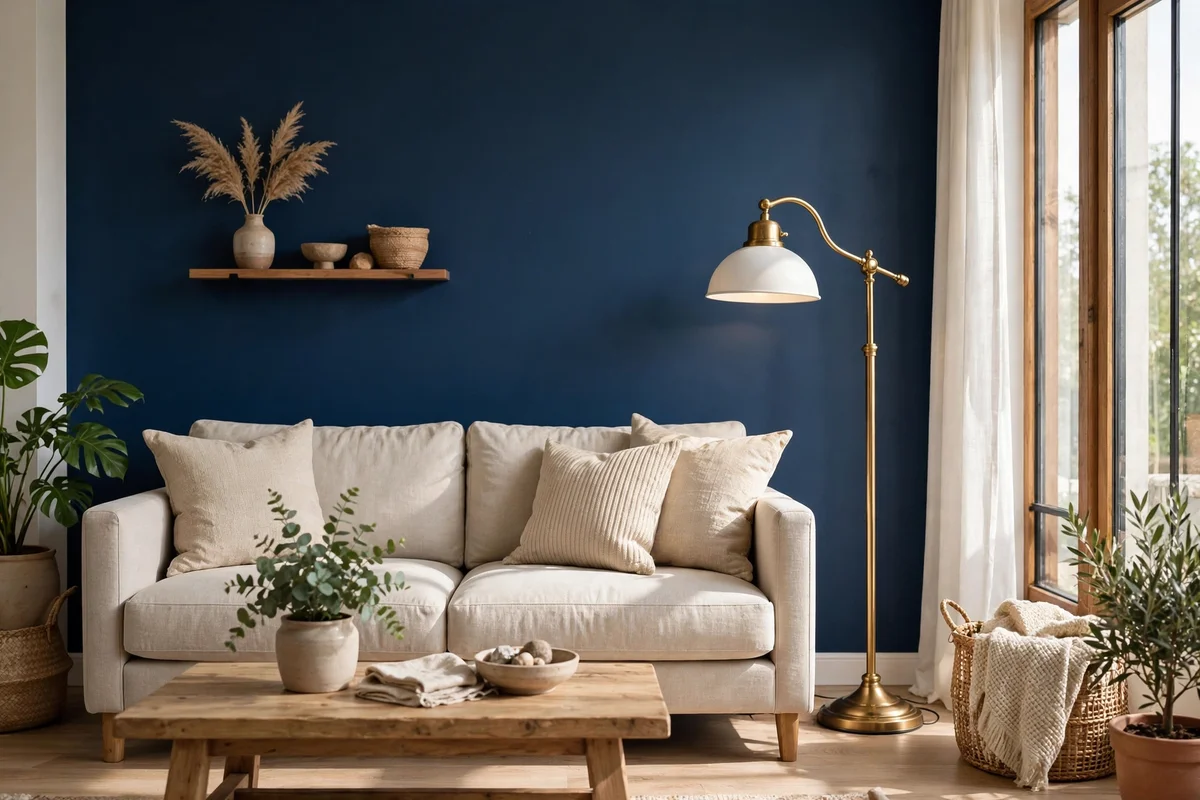
The simplest accent wall — and still one of the most powerful — is a single wall painted in a deep, saturated color while the rest of the room stays light. Forest green, navy blue, charcoal, espresso brown, or a rich terracotta all create instant depth. The trick is choosing the right wall: pick the one your sofa faces or sits against, so the color frames your seating instead of looming behind your head at dinner.
Go a few shades deeper than feels safe on the swatch card, because paint always reads lighter on a full wall. Matte or flat finishes look richest on accent walls, while eggshell is a practical compromise if the wall sees a lot of traffic. Repeat one small accent of the same tone elsewhere, like a throw pillow or a vase, so the wall feels connected to the room. Choosing between named looks rather than colours? Our guide to how to choose living room accent wall styles compares the styles themselves.
Making it work with your light
- Test a large swatch and watch it morning and evening before committing.
- North-facing rooms suit warmer darks (olive, espresso, aubergine); south-facing rooms can carry cooler ones (navy, slate, forest).
- If the wall gets strong sun, matte paint softens glare; a slight sheen can make darks look inky and flat.
Paint finishes for accent walls
| Finish | Look | Best for |
|---|---|---|
| Matte/flat | Velvety, deep, hides imperfections | Low-traffic focal walls |
| Eggshell | Soft glow, easy to wipe | Family living rooms |
2. The Vertical Wood Slat Accent Wall
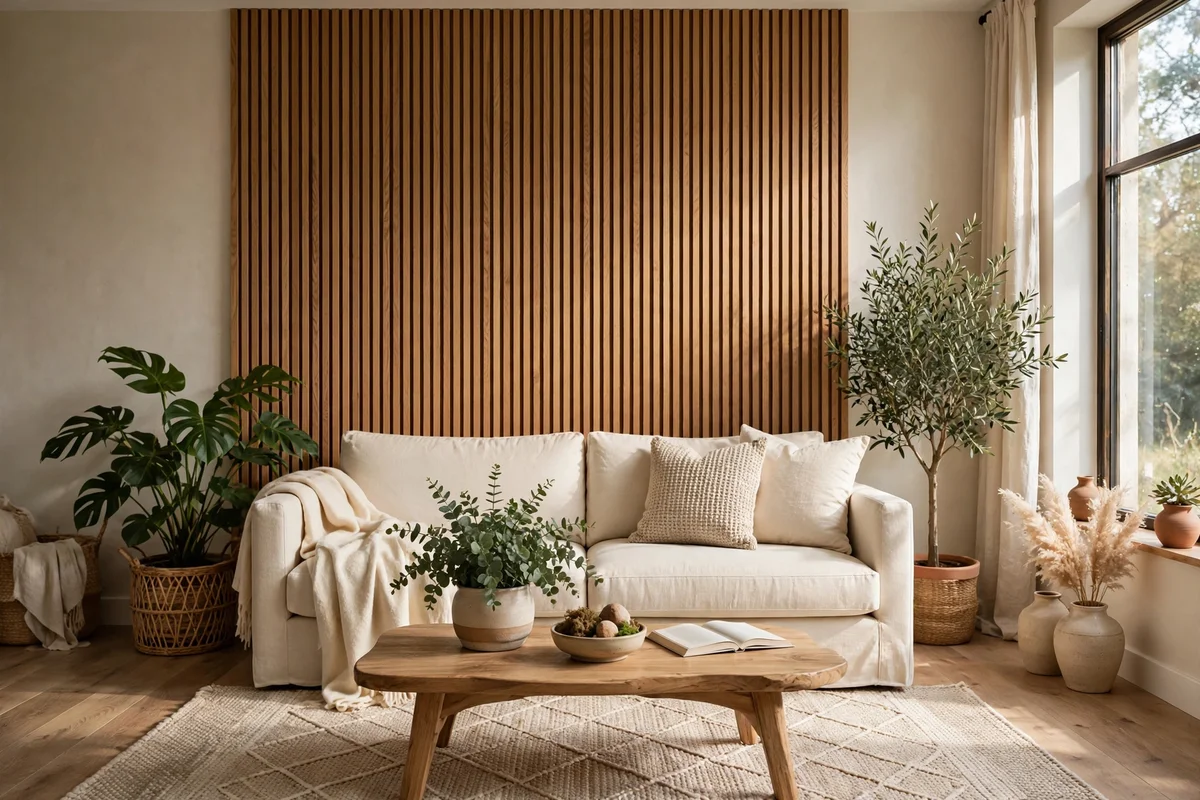
Few treatments say “finished” like a floor-to-ceiling wall of vertical wood slats. Slim battens of oak, walnut, or painted pine, spaced evenly across the wall, add rhythm, warmth, and shadow lines that flat paint can never deliver. Vertical slats also make ceilings feel taller, which is why they show up in so many living rooms with standard eight-foot ceilings — they draw the eye straight up.
You can buy ready-made slat panels on a felt or plywood backing for a near-DIY installation, or build the wall from individual battens for a fully custom look. The panel systems are thinner and faster to install; individual battens give you deeper shadow lines and let you run the slats around a corner or across a doorway. Either way, paint or stain the wall behind them a dark tone first so the gaps between slats read as intentional shadow, not leftover wall. Designers have been returning to slat walls in everything from midcentury to Japandi rooms — The Spruce’s roundup of wood slat wall ideas shows just how many ways the same material can read.
Planning a slat wall
- Budget one full day for a single wall, two if you are mitering around outlets and windows.
- Stained slats bring warmth; slats painted the same color as the wall bring subtle texture instead of contrast.
3. The Limewash and Textured Plaster Finish
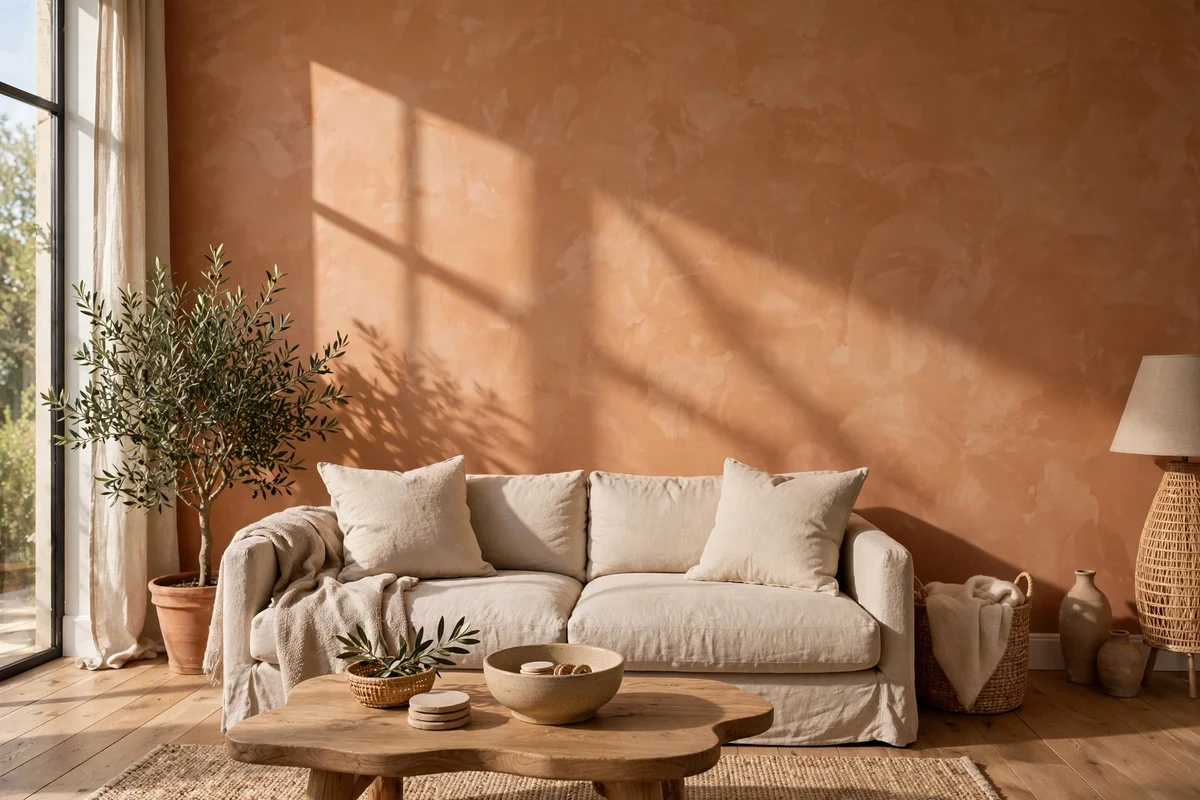
If flat paint feels too flat but you do not want to hang anything, a limewash or mineral plaster finish gives a wall the soft, cloudy movement of an old European interior. The technique builds up thin, translucent layers of tinted lime paint with a block brush, and the result is a surface that shifts gently as light moves across it — no two square feet look exactly alike.
This finish works beautifully in living rooms because it adds interest without pattern, so it never fights your rug, curtains, or upholstery. One honest note: limewash is porous and marks easily, so keep it off the wall behind the sofa where bags and elbows will rub, or seal it with a dead-flat sealer.
Getting the finish right
- Work in small sections and keep a wet edge — limewash dries fast and lap lines show.
- Two to three coats build the cloudy depth; one coat will look patchy in a bad way.
- Choose muted, earthy tones (clay, warm gray, sage, sand) — neon brights look wrong in limewash.
4. The Board and Batten Accent Wall
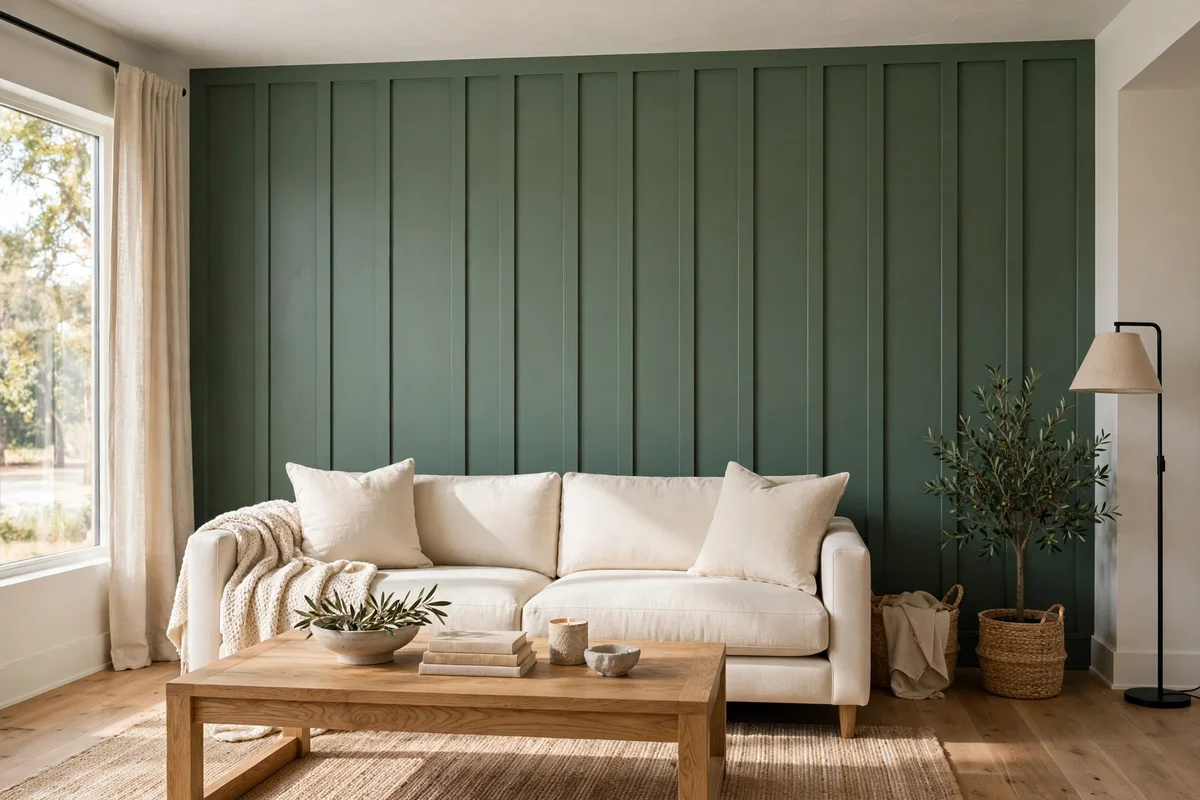
Board and batten — wide vertical boards topped with a ledge, or thin battens over a flat wall — is the accent wall for people who like architecture more than color. A full-height board and batten wall painted in one strong color gives a living room the paneled, built-in feeling of a much older house, and it photographs beautifully because the lines catch light and shadow all day long.
The classic move is a half-wall with a chair rail, painted wall color above and a contrasting tone below. The bolder move is full-height batten over the entire wall, painted one saturated color from floor to crown. Full-height reads modern; half-height reads traditional. Either way, use real trim lumber or MDF strips rather than hollow plastic molding — the edges are crisper and paint sits better. This is a measured, caulked, weekend project, so mock the layout on the wall with painter’s tape first. Unevenly spaced battens are the one mistake that makes the whole wall look off.
Common board and batten mistakes
- Skipping the tape mock-up, then discovering the battens land awkwardly around the outlet.
- Painting before caulking — fill every nail hole and seam, then paint the whole wall.
5. The Geometric Color-Block Design
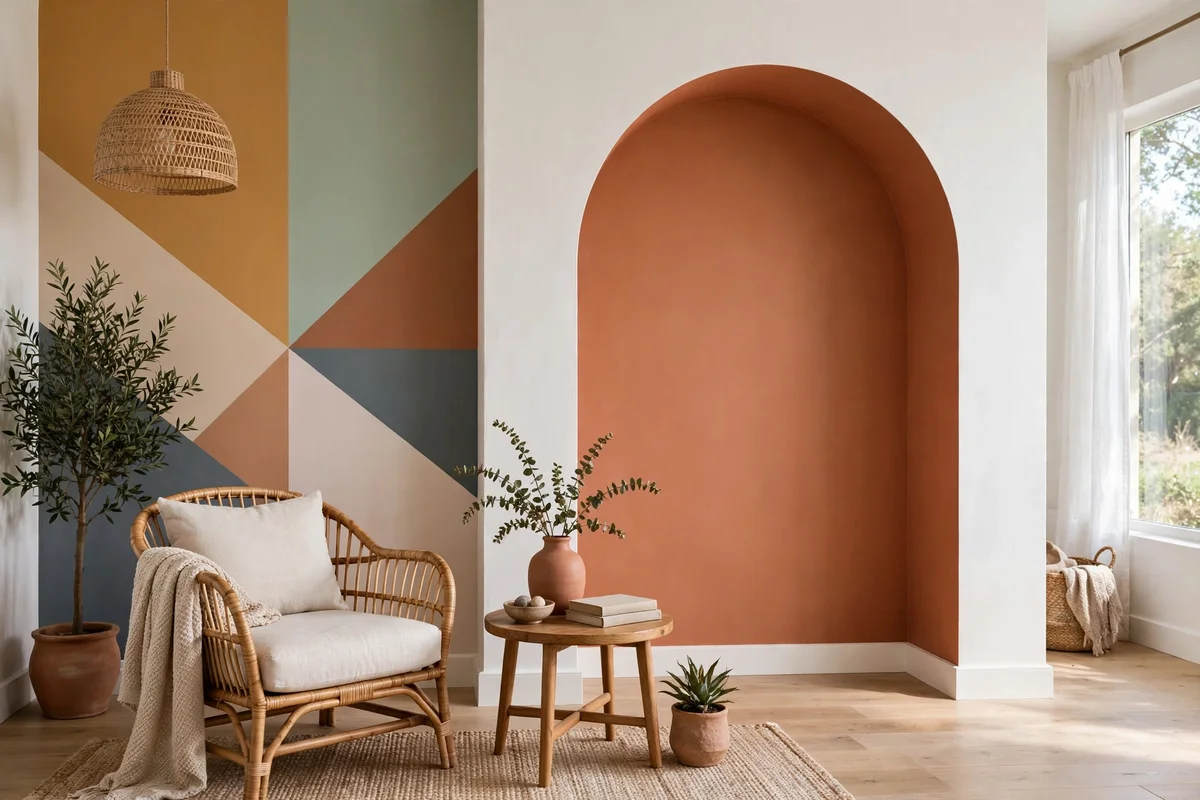
When a single solid color feels too quiet, a geometric design built from two or three paint colors and painter’s tape turns one wall into art you never have to hang. Arches are the friendliest shape — a large painted arch behind a console or armchair creates a headboard-like backdrop for a reading corner. Bold blocks, oversized circles, vertical stripes, and diagonal color fields all work, and the cost is barely more than a standard paint job.
The secret to crisp results is patience with the tape: seal the tape edge with a thin coat of the base color before you roll the accent color over it, and the line will come out razor-sharp. Limit the palette to three colors at most, and make sure one of them appears somewhere else in the room — a cushion, a piece of art, the rug — so the geometry feels intentional rather than random. Arches, stripes, and blocks in warm earth tones suit boho and modern rooms; monochrome black-and-white geometry suits minimal and graphic spaces.
Shapes and where they shine
- Arch: behind a reading chair or console; creates a niche feeling without carpentry.
- Vertical stripes: make standard ceilings feel taller; keep stripes wide and calm.
6. The Peel-and-Stick Wallpaper Feature
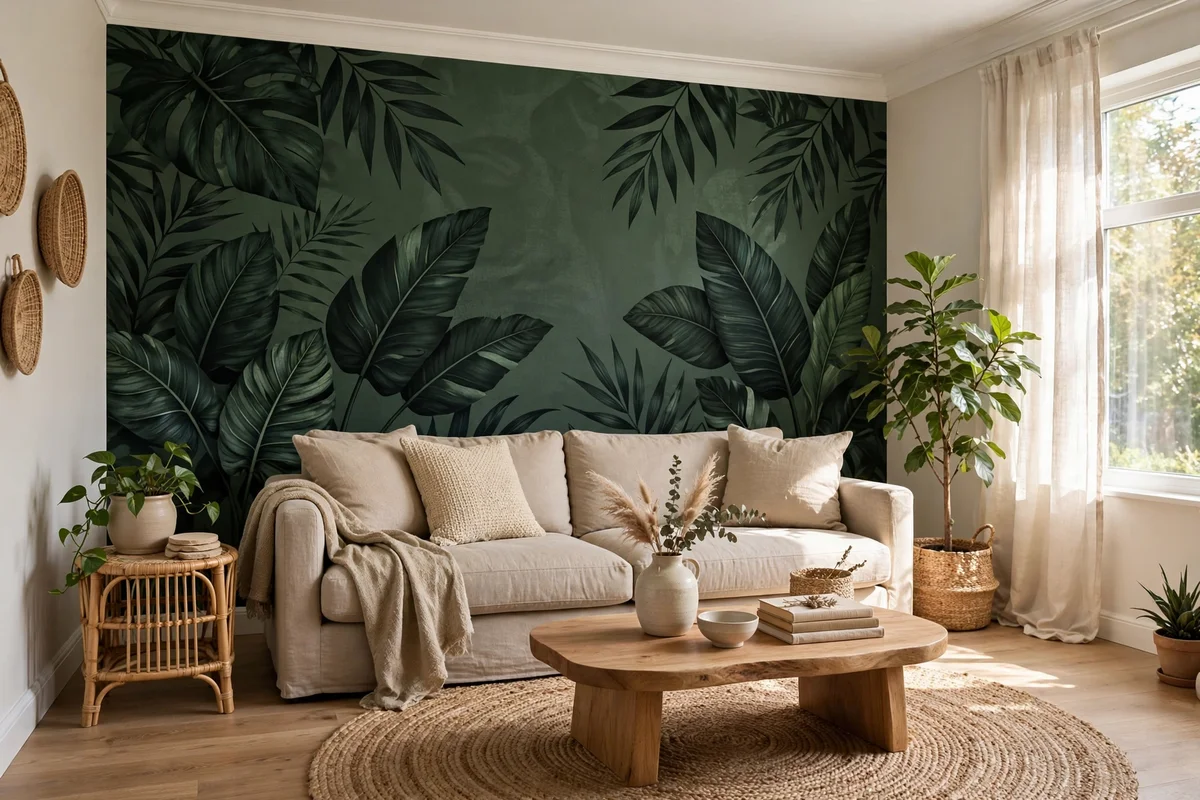
Renters and commitment-phobes, this one is for you. Peel-and-stick wallpaper has grown up: the modern versions print sharp, lay flat without paste, and — crucially — peel off cleanly when your lease ends. A single wall in a bold botanical, a graphic stripe, a moody mural, or a textured grasscloth look can do everything paint does, plus pattern, in about the same afternoon.
Choose the wall with the fewest doors and windows to keep the hanging simple, and order a little extra — patterned paper needs matching at the seams, and running out mid-wall is a real frustration. Smooth the paper with a felt tool, not your hands, to avoid bubbles. And if the pattern is loud, keep the rest of the wall bare: a busy wallpaper with a gallery wall on top is one of the classic small living room decor mistakes that makes a room feel crowded rather than curated.
Rental-friendly wall checklist
- Confirm your lease allows adhesive products, and test a hidden spot first.
- Photograph the wall before you hang, so move-out comparisons are easy.
- Remove slowly at a low angle with gentle heat from a hair dryer.
7. The Curated Gallery Wall
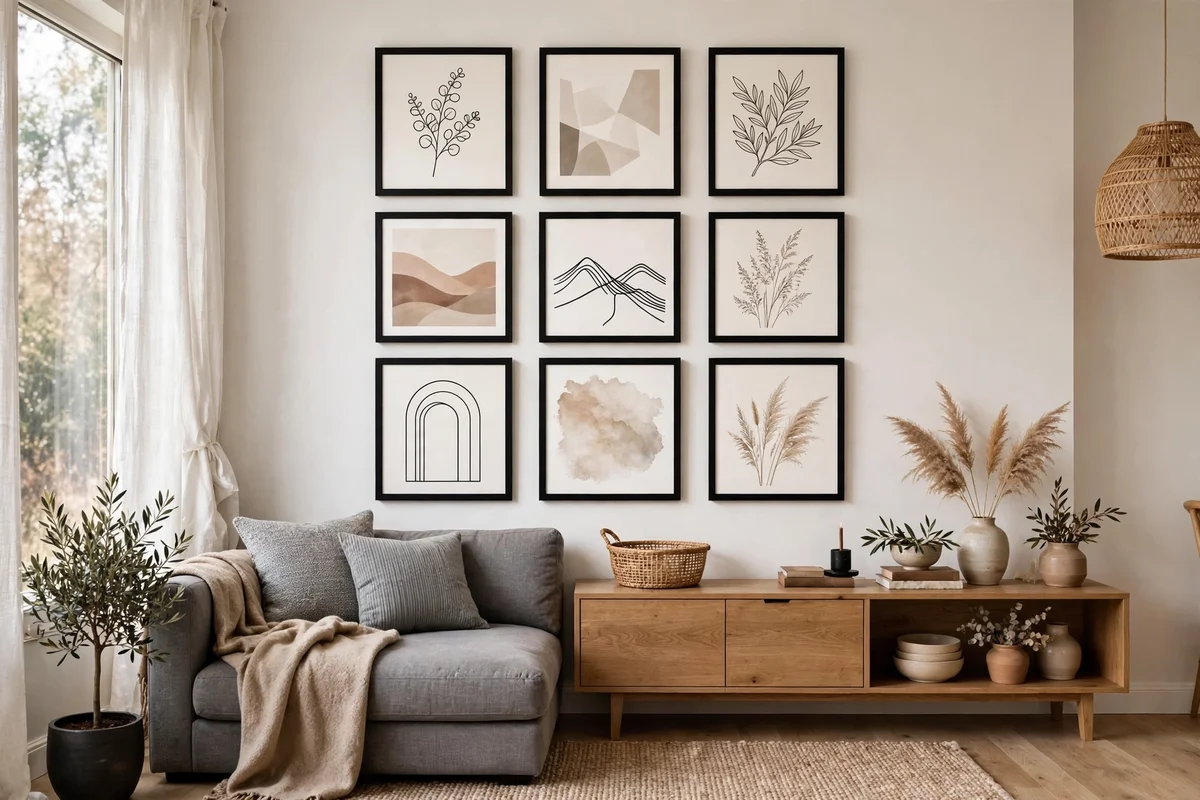
A gallery wall is the accent wall made from what you already own and love. Grouped art, photographs, mirrors, and small objects turn a blank wall into the room’s memory center — and unlike paint, it is endlessly rearrangeable. The key word is curated: a gallery wall works when the frames share a common thread (all black, all wood, all white mats) even if the art inside varies wildly.
Start by laying the arrangement on the floor and living with it for a day before you hang anything. Build outward from the largest piece, keeping two to three inches between frames, and hang the center of the arrangement at eye level — around 57 inches from the floor. Mix sizes but anchor the composition with one large piece; a wall of only small frames reads scattered. For renters, removable picture-hanging strips hold most frames cleanly. A gallery wall behind a sofa is a classic pairing, and it is one of the simplest ways to make small living room seating feel intentional because the art gives the whole arrangement a center.
Gallery layouts that work
- Grid: equal frames, equal spacing — calm, formal, easy to hang straight.
- Salon: mixed sizes radiating from a large center piece — collected and relaxed.
8. The Media and TV Accent Wall
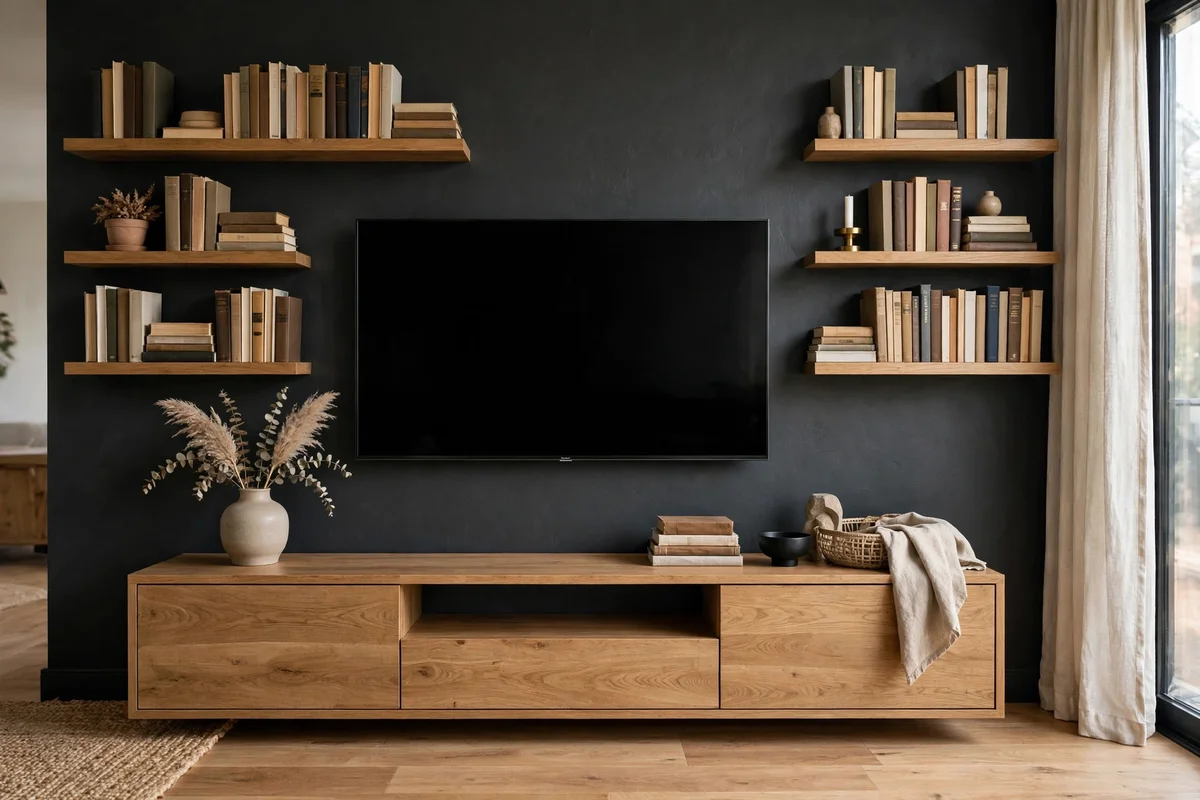
The TV wall is the accent wall every living room already has but most never treat properly. Instead of a black rectangle floating on a blank wall, build the wall around the screen: mount the TV on a dark painted panel or wood slat section, flank it with floating shelves or low cabinets, and let the cables disappear behind the panel. The screen stops being an eyesore and starts being part of a designed composition.
You do not need built-in cabinetry to pull this off. A low, long console under the TV grounds it; two floating shelves on either side balance the composition; and a single paint color behind the whole arrangement ties it together. If the screen is the focal point, paint the panel behind it dark — a black screen against a dark wall practically disappears when it is off, which makes the room feel calmer.
Media wall rules
- Mount the TV so the center of the screen sits at seated eye level, not higher.
- Hide every cable: in-wall rated cord channels or a hollow panel behind the mount.
- Balance, don’t mirror — symmetrical shelves flanking a TV can feel like a shrine.
9. The Fireplace Feature Wall
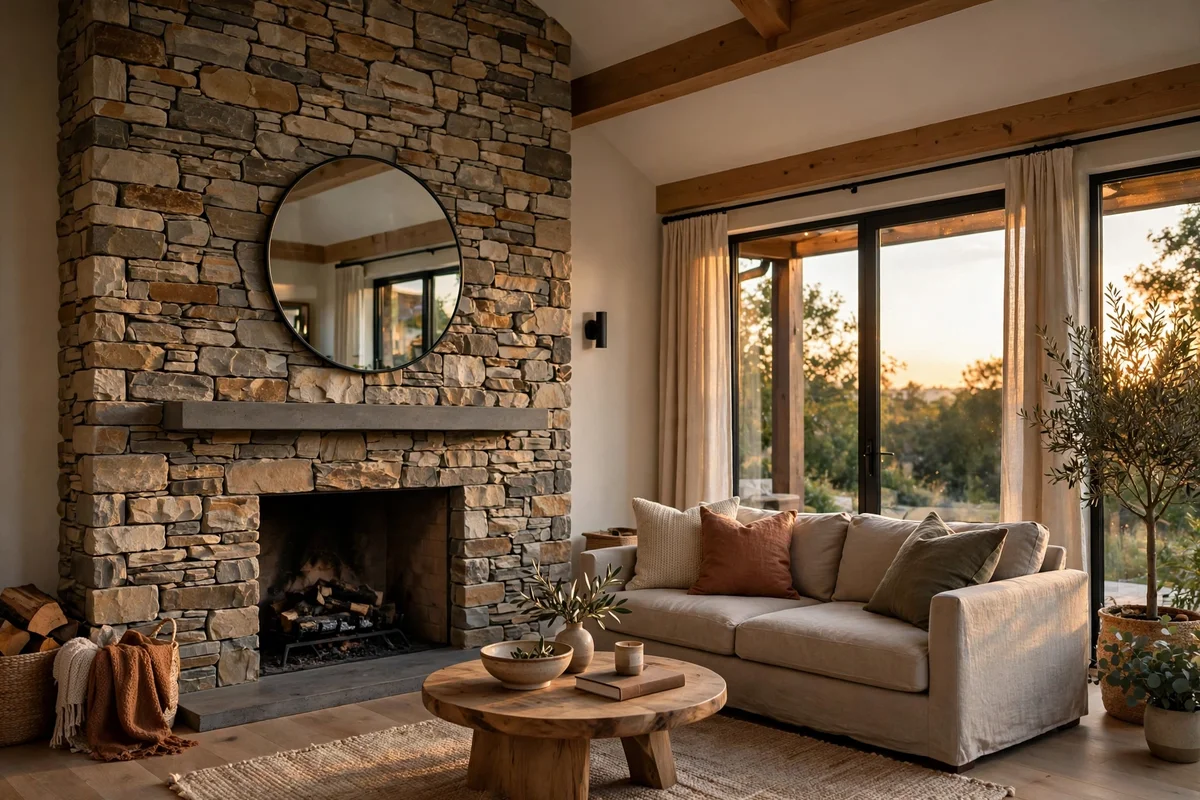
A fireplace is a natural focal point, so dressing the wall it sits on turns a default feature into a designed one. Floor-to-ceiling stone veneer, limewashed brick, or large-format tile give the fireplace wall the weight it deserves, and the vertical emphasis makes even modest rooms feel grander.
Not every fireplace wall needs stone. A painted brick fireplace in a deep matte tone, flanked by wood slats or board and batten, gets most of the impact for a fraction of the cost. Whatever the material, treat the full wall as one composition: the surround, the mantel (or shelf), the art or mirror above, and the styling on the hearth all need to speak to each other. A well-built fireplace wall is one of the most designer-approved ways to make a living room feel timeless, because it anchors the seating arrangement with genuine architecture rather than decoration.
Fireplace wall upgrades by budget
- Paint only: limewash or deep matte paint over the existing brick — a weekend, minimal cost.
- Tile or veneer: take one material floor to ceiling for a full architectural statement.
- Styling: a large mirror or single oversized artwork above the mantel beats a cluster of small items.
10. The Floating Shelf Display Wall
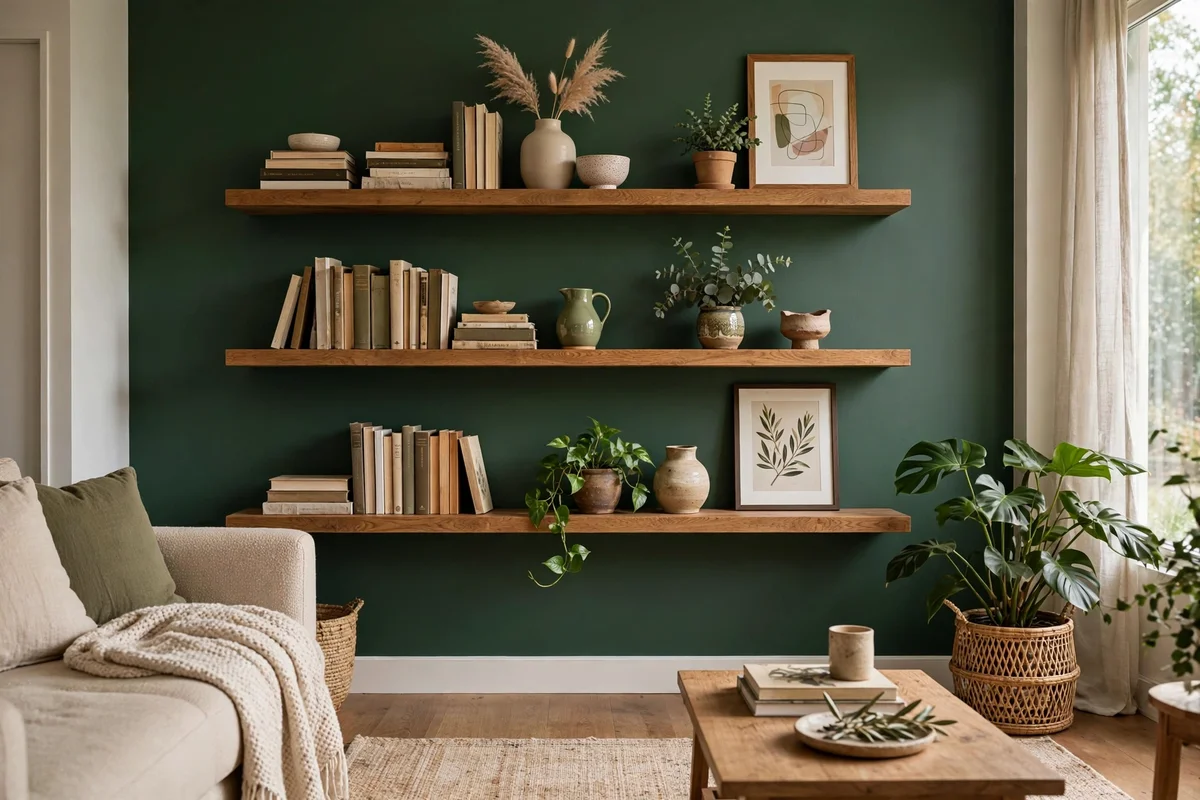
Floating shelves turn an accent wall into a working wall — storage, display, and focal point in one. Three to five long, chunky shelves in oak, walnut, or painted to match the wall give you room for books, ceramics, trailing plants, and framed prints, and because everything is changeable, the wall never goes stale. It is the accent wall for people whose taste evolves by the season.
The design matters more than the objects. Keep shelf spacing generous — crowding shelves vertically makes the wall feel like a bookcase, not a feature. Style each shelf with a mix of heights and leave genuine negative space between groupings; the wall color showing through is part of the composition. Anchor the shelves with proper wall fasteners into studs — a loaded shelf that tilts is the fastest way to ruin the effect.
Styling floating shelves
- Group in odd numbers: three objects per shelf reads natural; two or four can feel staged.
- Mix heights: a tall vase, a medium stack of books, a small bowl.
- Leave at least a third of each shelf empty — negative space is the design.
Frequently Asked Questions About Living Room Accent Walls
Which wall should be the accent wall in a living room?
Choose the wall that already wants attention: the one behind the sofa, the fireplace wall, or the wall the TV sits on. The accent wall should anchor your seating arrangement and be visible from the main entry view into the room. Avoid walls chopped up by many doors and windows, which dilute the effect.
Does an accent wall make a small living room look smaller?
Not if you choose well. A deep color on the far wall can actually make a small room feel deeper and more intimate. The risk is picking a busy pattern or a dark color on a wall the room already leans on visually. Keep the other walls light, and the accent wall will add depth rather than bulk.
What is the most popular accent wall color right now?
Deep greens, navy blues, warm charcoals, and earthy terracottas remain the most repeated choices in living rooms, because they sit comfortably with wood tones and neutral upholstery. Muted, nature-adjacent tones tend to age better than vivid brights, which can feel dated quickly.
Is wallpaper or paint better for an accent wall?
Paint is cheaper, faster, and easier to change. Wallpaper — especially peel-and-stick — gives you pattern and texture paint cannot, and it is the better choice for renters. If you love the pattern and own the home, traditional pasted wallpaper lasts longer and looks sharper than the peel-and-stick versions.
How much does a living room accent wall cost?
A painted accent wall can cost as little as a gallon of paint plus basic supplies. Peel-and-stick wallpaper costs more depending on the wall size. Wood slat, board and batten, and stone veneer walls cost more and take a weekend or professional help. Your budget should decide the approach, not the other way around.
Are accent walls still in style?
Yes — designers still use them constantly, because the underlying principle (one focal wall) is a classic, not a fad. What changes is the treatment: flat single-color walls have given way to texture, slats, plaster finishes, and architectural paneling. The idea endures; the execution evolves.
Can I have an accent wall in a rental?
Absolutely. Peel-and-stick wallpaper, large-scale art or a mural canvas, a gallery wall on removable hooks, and even a freestanding slat panel leaned against the wall all come down cleanly. Always test adhesives in a hidden spot and photograph the wall before you start.
Should the accent wall be behind the TV or the sofa?
Either works, and many rooms have both on the same wall since sofas usually face the TV. If the sofa and TV are on opposite walls, choose the one that reads as the room’s natural focal point — usually the fireplace wall, or the wall you see first when entering.
What paint finish is best for an accent wall?
Matte or flat gives the richest, most velvety look and hides wall imperfections. Eggshell is the practical pick for busy family rooms because it wipes clean. Reserve satin or semi-gloss for trim and millwork on the accent wall, not the wall itself.
Do I need to repaint the other walls when I add an accent wall?
No. A well-chosen accent color works with the existing wall color — that is the point of choosing one wall. If the contrast feels jarring, the issue is usually the accent color itself, not the other walls. Test swatches in your actual light before repainting anything.
Conclusion
An accent wall is one of the highest-impact, lowest-regret projects you can take on in a living room. It asks you to make exactly one decision — which wall, and what treatment — and in return it gives the whole room a focal point, the seating area a backdrop, and your decor a place to belong. Whether you spend an afternoon with a roller or a weekend with wood slats, the principle is the same: commit to one wall, do it well, and let the rest of the room stay calm.
Copy one of these ten examples outright or combine two — a dark painted wall with floating shelves, a slat wall behind the TV, a gallery wall over a limewash base — because the best accent walls are the ones that look like they were always part of the room. A single wall, done with intention, will make the entire living room feel designed. Once the wall and colour are picked, our living room accent wall decor ideas tips cover the finishing moves that make the wall read as finished. Working on a bedroom wall instead? The same approach is worked through in our bedroom accent wall decor ideas guide.


Pingback: 12 Bedroom Accent Wall Decor Ideas Guide for a Restful Focal Wall
Pingback: Living Room Accent Wall: How to Choose the Right Wall & Style