
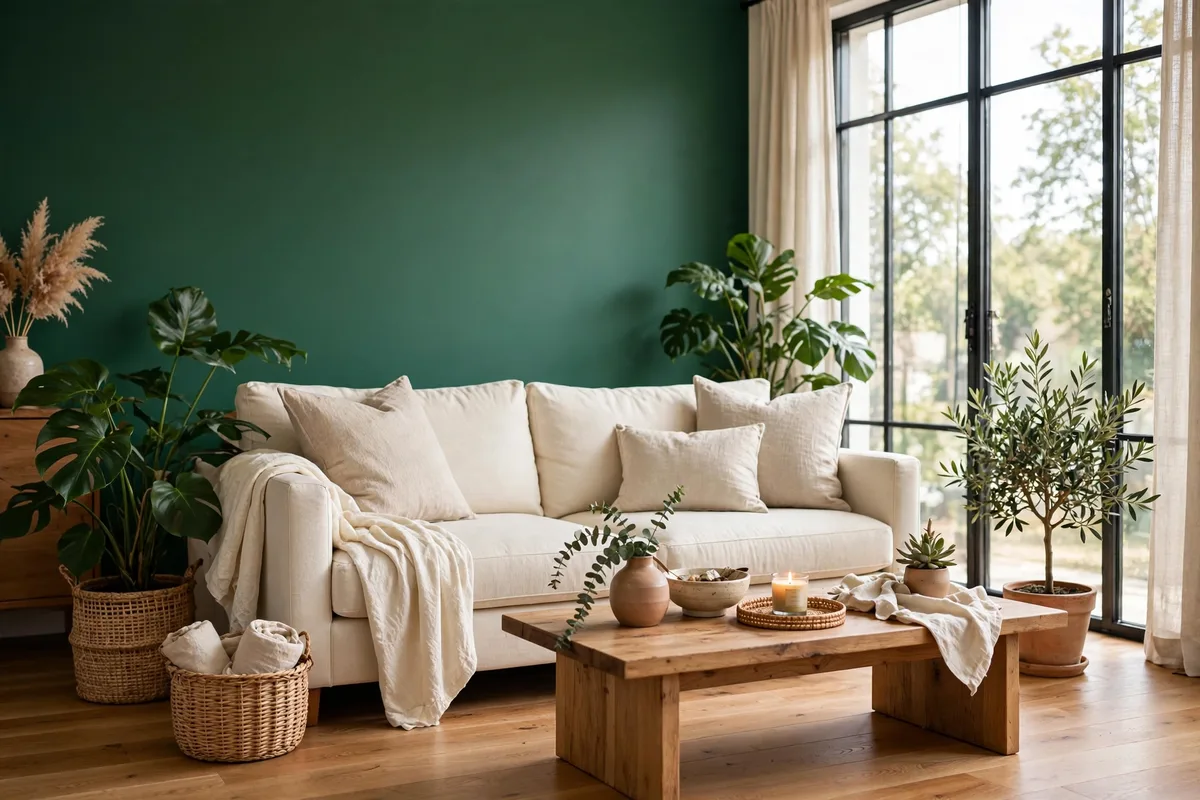
An accent wall sounds simple — pick a wall, pick a finish, and the room feels finished. In practice, many accent walls fight the furniture, disappear under evening light, or add pattern where the room needed calm. This guide slows the decision down: start with the wall itself, then choose a material, then a color and finish that suit your light, budget, and how long you plan to stay. If you want visual inspiration alongside this guidance, browse the companion collection of living room accent wall ideas — then come back here to make the choice properly.
1. Start With the Right Wall: How to Choose Which Wall to Accent
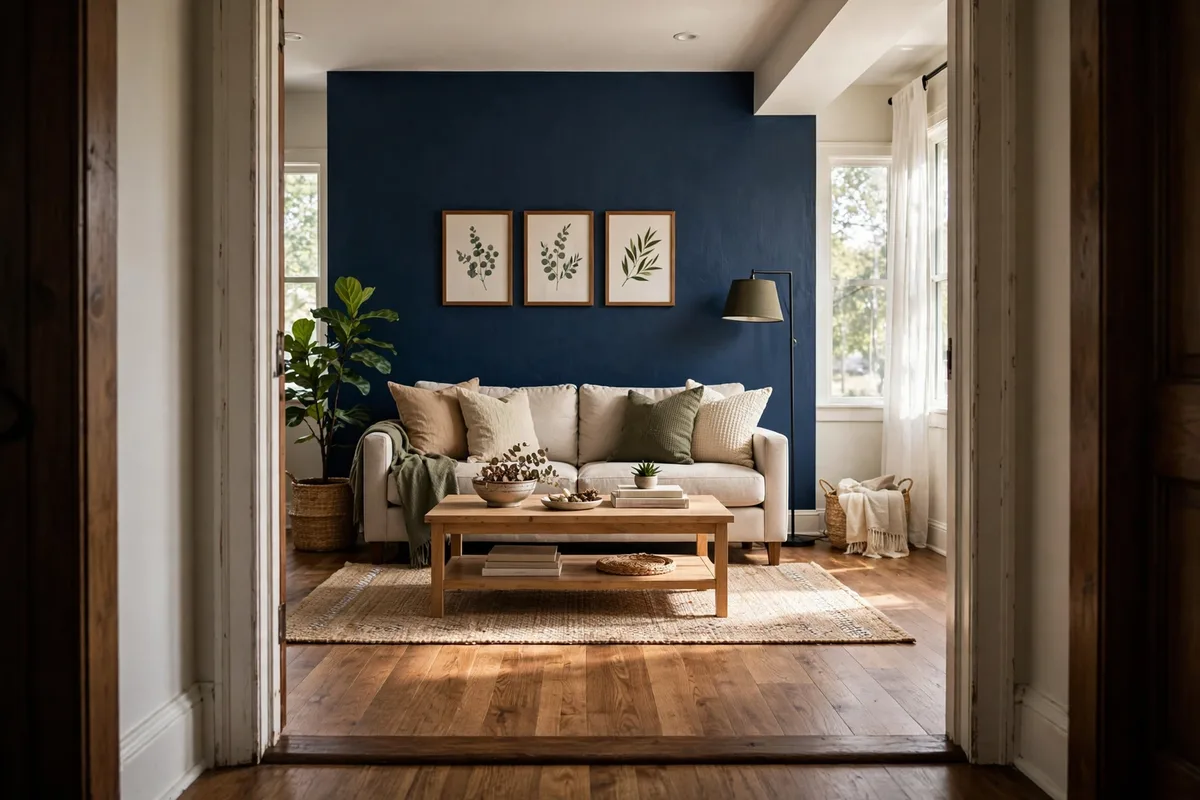
The best accent wall is rarely chosen because it is empty. It is chosen because the room already looks at it. Stand in the doorway and notice where your eye lands first. In most living rooms that is the wall behind the sofa, the wall with the fireplace, or the wall opposite the main entrance.
What makes a wall a good candidate
- A solid, mostly uninterrupted surface. Walls broken up by several doors, windows, and radiators rarely hold a bold treatment well. The finish gets chopped into fragments and loses its impact.
- A clear job in the layout. The wall should back something important — seating, a media unit, a fireplace, or a reading corner — so the accent reinforces how the room is used.
- Enough width to breathe. A narrow sliver of wall painted dark can read as a shadow or a mistake. Short end walls are the exception: in a long, narrow room, accenting the far short wall can visually pull it closer and make the proportions feel less stretched.
Avoid accenting the wall you mostly sit against if seating faces a blank wall opposite — you will spend evenings looking away from your focal point. If no wall is an obvious candidate, large art may serve you better than forcing a finish onto the wrong surface.
2. Paint, Wallpaper or Paneling? A Simple Decision Framework

Once the wall is chosen, the material decision becomes much easier. Ask three questions in order: How long do I want this to last? How much texture does the room need? And how reversible does it need to be? Your answers point to one family of finishes almost every time.
Match the material to the job
- Choose paint when you want color, speed, and the freedom to change your mind. Paint is the lowest-cost, lowest-commitment option and suits nearly every wall, including slightly imperfect ones if you choose a low-sheen finish.
- Choose wallpaper when the room needs pattern or a finish paint cannot copy — grasscloth texture, a botanical print, a subtle stripe, or a mural effect. Traditional wallpaper is a longer commitment; peel-and-stick versions trade some durability for reversibility.
- Choose paneling when the room feels flat and needs architecture, not just color. Board and batten, picture-frame molding, fluted panels, and wood slats add shadow lines and depth that remain interesting even in a neutral color.
A common error is choosing the material from a photo without checking what problem it solved in that room. Decide what your wall lacks — color, pattern, or texture — and buy only that one thing.
3. How to Pick a Color That Actually Works: The 60-30-10 Rule
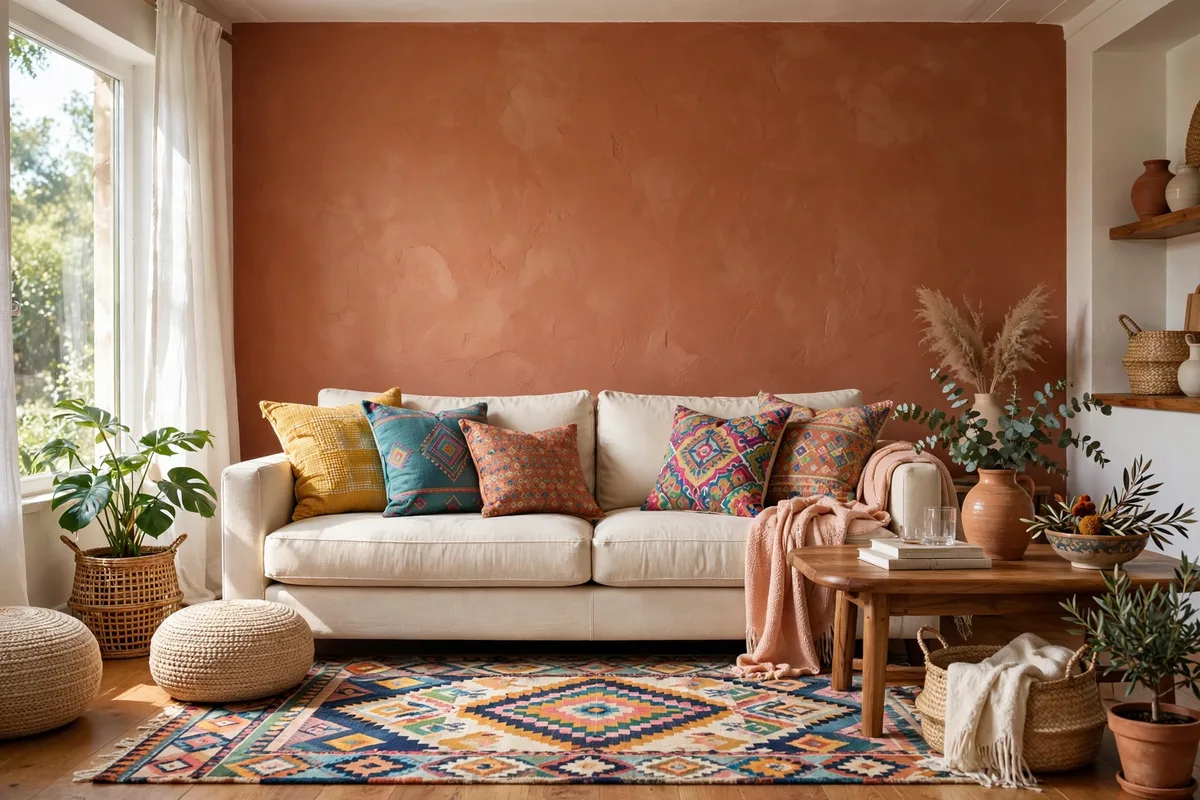
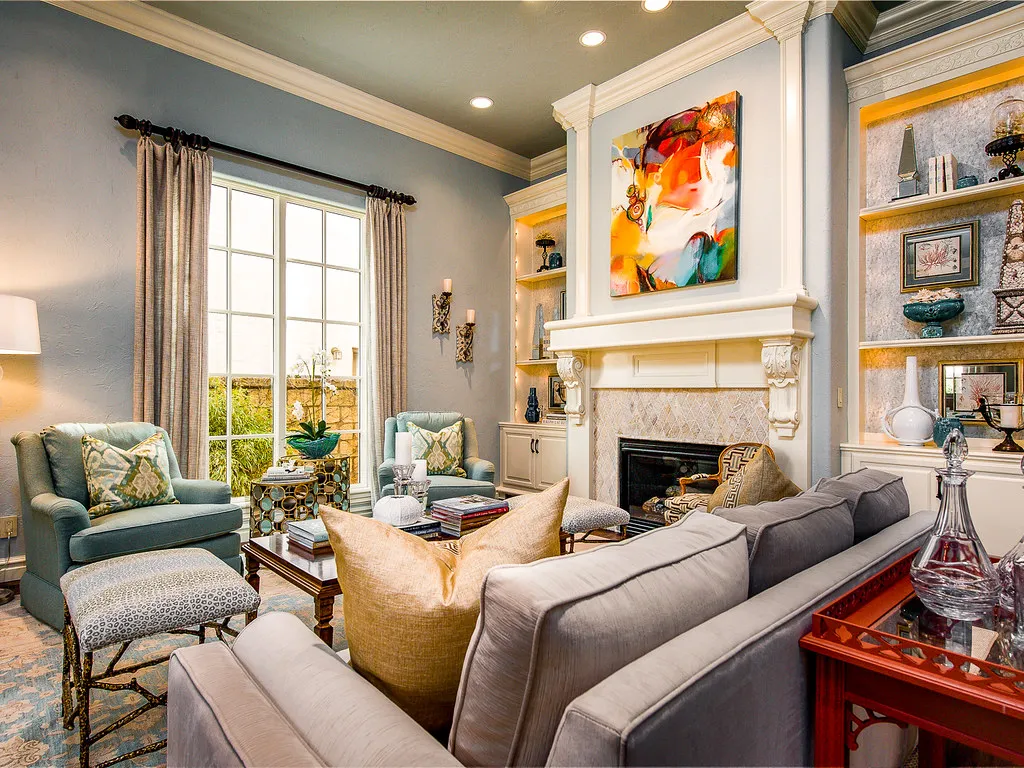
Color is where accent walls most often go wrong, because the color was chosen in isolation. A reliable starting point is the 60-30-10 approach: roughly 60 percent is the quiet backdrop (remaining walls, large upholstery, flooring), 30 percent a secondary layer (curtains, rug, armchairs), and 10 percent the sharp accent in small doses (cushions, art, objects). Your accent wall sits between the first two layers — bolder than the backdrop, but in the same family.
A practical way to shortlist colors
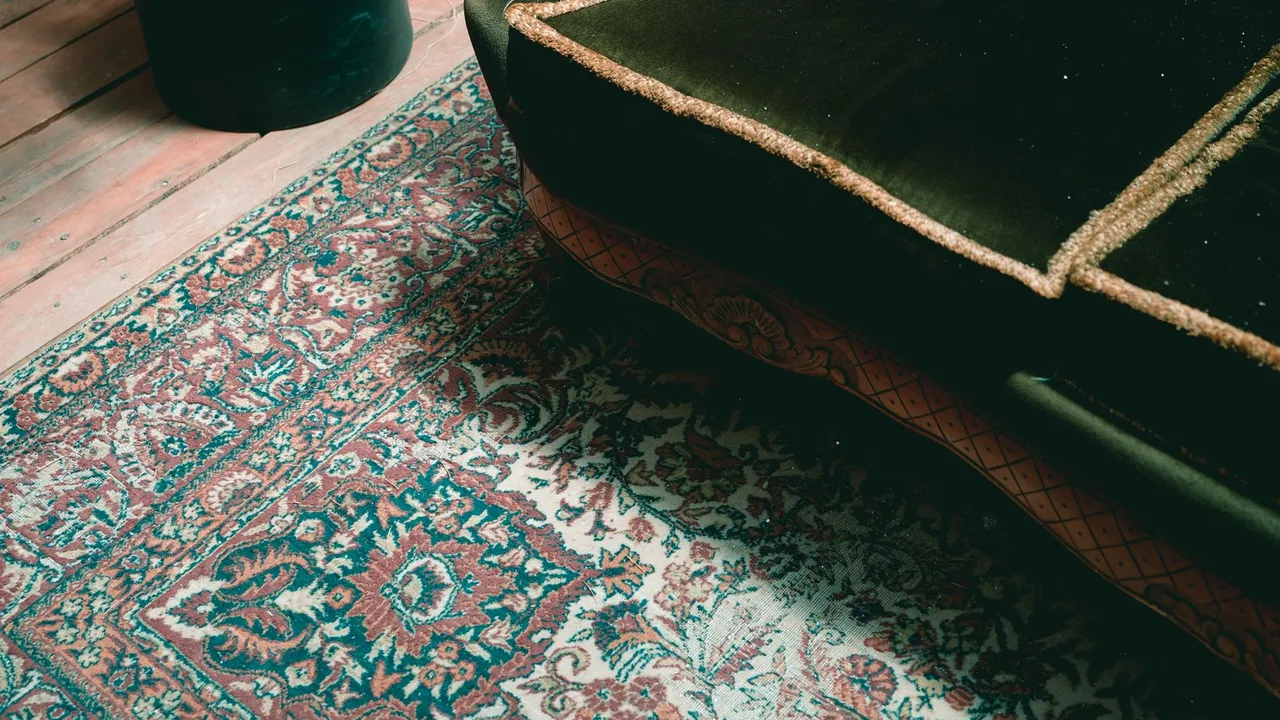
- Pull from something that is staying. Take a tone from your rug, sofa fabric, or artwork and deepen or soften it for the wall. Cohesion comes from repetition, not from matching exactly.
- Decide the contrast level on purpose. A wall two to three shades deeper than the other walls gives a calm, tonal effect. A contrasting hue — deep green against warm white, navy against pale gray — gives drama but needs the 10 percent layer to echo it elsewhere, or it will feel stranded.
- Respect the room’s temperature. Warm rooms (south- or west-facing light, warm wood floors) usually carry warm accents comfortably. Cooler rooms often need a slightly warmer version of the color you first pictured, or the result can feel chilly.
In a compact space, keep the accent deep but the surrounding palette light and limited — the same discipline that helps when you decorate a studio apartment: one strong move, everything else quiet.
4. Undertones, Light and Testing: Why Colors Look Different at Home
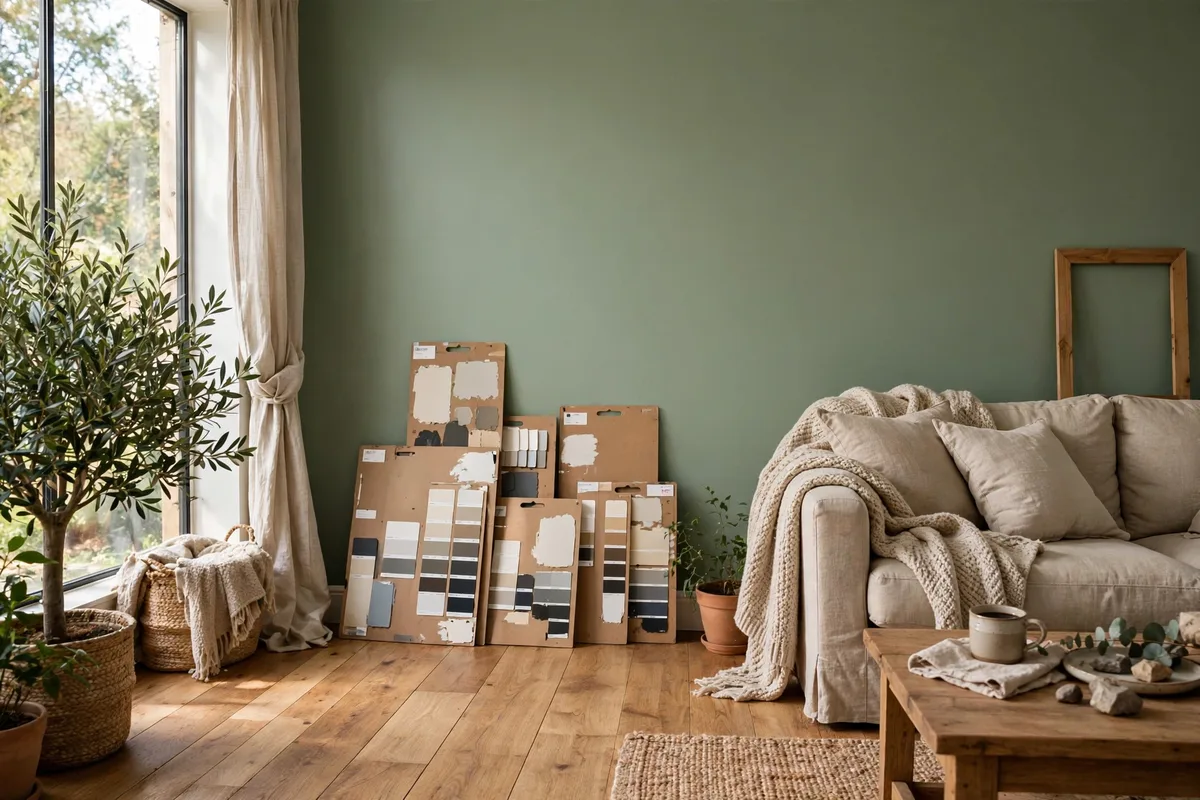
Every color has an undertone — the subtle warm or cool note beneath it. Undertones are why two greens can clash and why a store swatch feels wrong by your sofa. Compare candidates against what is not changing: flooring, sofa fabric, and wood tones.
Test like you mean it
- Paint large samples — on boards you can move, not tiny chips — and live with them for at least a full day.
- Check each sample in morning light, afternoon light, and under your evening lamps. North-facing rooms cool colors down; warm bulbs push them warmer.
- Hold the sample next to the sofa and the floor, not just against the existing wall color. Clashes appear at the junctions.
- For wallpaper, order the largest sample available and tape it up whole. Pattern scale is impossible to judge from a small swatch.
Skipping testing is the most expensive shortcut here. A sample costs very little; repainting a full wall costs a weekend.
5. Finishes and Sheens: Matte, Eggshell, Satin and When to Use Each
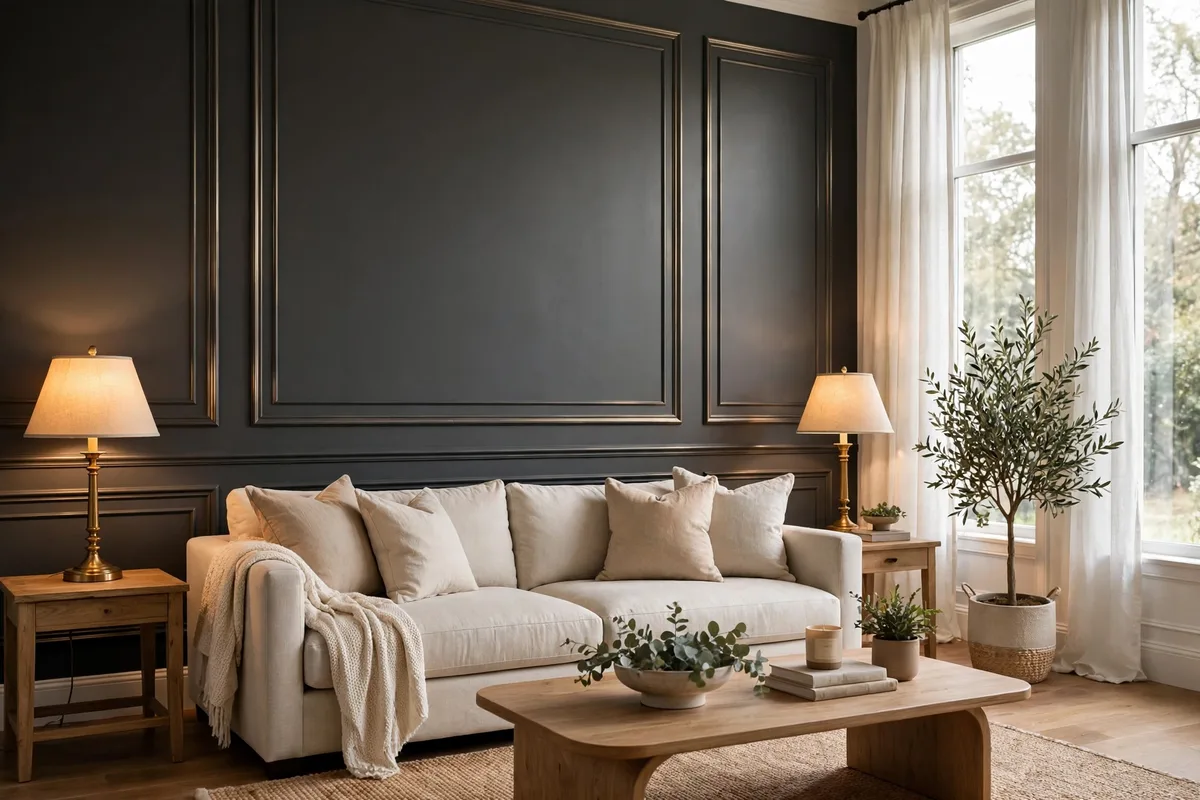
Sheen controls two things at once: how much light the wall reflects, and how forgiving it is about bumps, scuffs, and cleaning. The same color can look flat and sophisticated in matte, or noticeably glossier and slightly lighter in satin, simply because of how it catches the light. Choose sheen by wall condition and lifestyle, not by habit.
A quick guide to common sheens
| Sheen | Look | Best for | Watch out for |
|---|---|---|---|
| Matte / flat | Soft, low-reflection, hides flaws | Uneven walls, calm and moody schemes | Marks more easily, harder to wipe clean |
| Eggshell | Gentle low glow | Most living room accent walls | Still shows major wall defects |
| Satin | Noticeable sheen, more durable | Busy family rooms, walls near seating | Highlights bumps and roller marks |
| Semi-gloss | Shiny and hard-wearing | Trim, molding, and paneled details | Too reflective for large flat walls |
As a default, matte or eggshell suits most accent walls: color reads richer and shadows stay soft. Reserve higher sheens for trim or molding, where sheen contrast defines the architecture without a second color. With young children or pets, step up one sheen level for cleanability.
6. Texture Without Color: Paneling, Slats and Limewash Explained
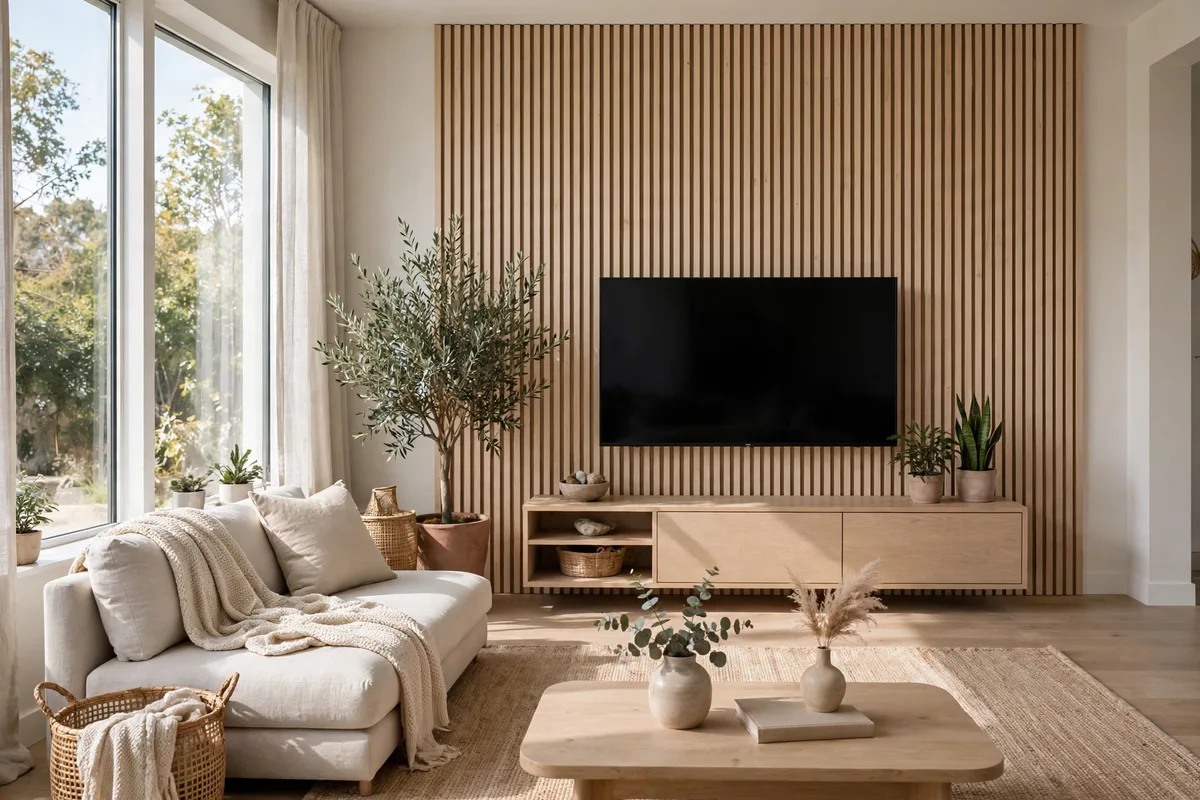
Not every accent wall needs a new color. Texture alone — in the same color as the other walls, or one shade deeper — can give a room its missing architectural feeling, especially if you love your current palette or the room already has plenty of pattern.
The main texture options
- Picture-frame molding and board and batten add classic shadow lines and suit traditional, transitional, and farmhouse rooms. Painted in one color, the effect is subtle in daylight and dramatic under lamplight.
- Vertical wood slats and fluted panels add warmth and rhythm, draw the eye upward, and work well behind a TV or sofa in modern and Scandinavian-style rooms. Keep surrounding decor simple so the lines stay the statement.
- Limewash and textured plaster finishes create soft, cloudy movement within a single color. They pair naturally with linen, wood, and stone, and they forgive minor wall imperfections better than flat paint.
Texture has one hidden cost: commitment. Paint can be repainted in an afternoon; paneling must be removed and made good. Choose timeless profiles over highly geometric patterns if the wall will stay for years.
7. Renter-Friendly Accent Walls That Come Down Cleanly
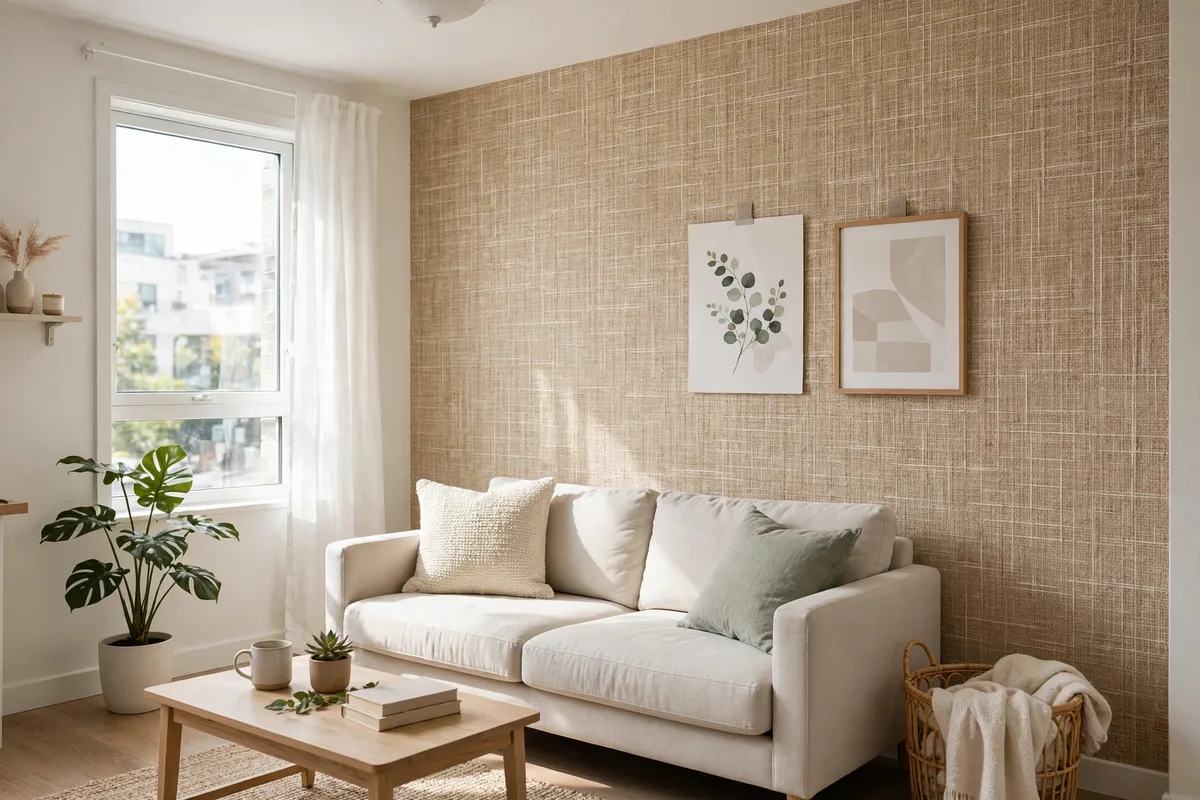
Renting limits your methods, not your options. The goal shifts from permanence to impact per hour — and, crucially, to how the wall comes back to its original state. Judge every renter-friendly option by how it removes, not just how it looks going up.
Options that respect your deposit
- Peel-and-stick wallpaper offers the biggest transformation, including faux grasscloth, brick, and botanical designs. Test a small piece in a hidden corner for a full day first; clean release depends on the existing paint being sound, satin or gloss, and fully cured.
- Large-scale art, a tapestry, or a gallery arrangement on removable hooks creates a focal wall with no surface change at all, and moves with you.
- A painted effect you are allowed to reverse is only renter-friendly if you have written permission and the original color recorded. Painting twice — once on, once off — quietly doubles the true cost.
Avoid peel-and-stick on heavily textured walls, where edges tend to lift. In small rentals, pair the accent wall with smart seating — these seating ideas for small living rooms show how much layout matters alongside the wall.
8. Cost and Effort Comparison: What Each Option Really Involves
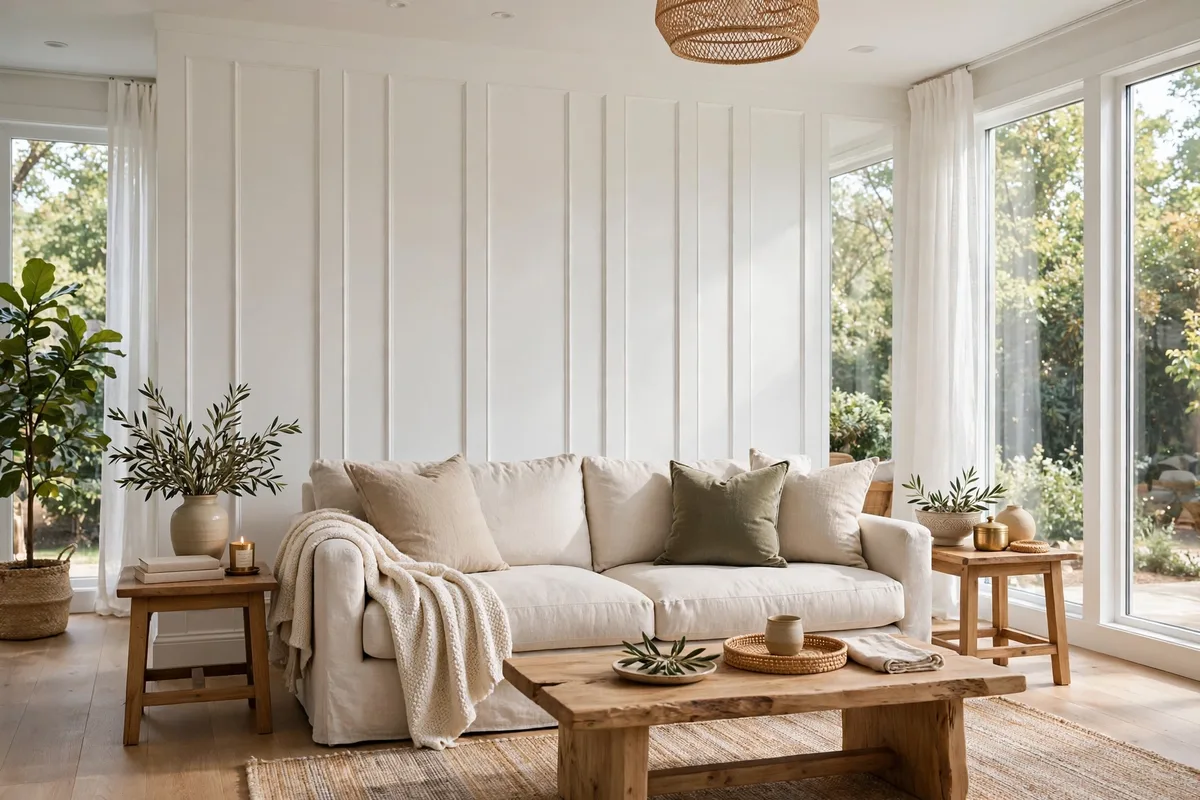
Headline prices mislead because they ignore preparation, tools, and reversal. The table below compares typical relative cost, effort, and lifespan for one standard accent wall. Use it to compare categories honestly rather than to budget to the dollar — your wall size, region, and product choice will move every figure.
| Option | Relative cost | Effort and time | Durability | Reversibility |
|---|---|---|---|---|
| Paint | Low | Low — usually a day including coats | Moderate — touch-ups over time | Repaint only |
| Peel-and-stick wallpaper | Low to moderate | Low to moderate — an afternoon to a day | Moderate — edges can lift | High if test patch releases cleanly |
| Traditional wallpaper | Moderate to high | Moderate to high — careful pattern matching | High — a long-lasting finish | Low — stripping takes work |
| Board and batten / molding | Moderate | Moderate — a weekend with measuring and cutting | High | Low — holes and filler to make good |
| Wood slat panels | Moderate to high | Moderate — faster with ready-made panels | High | Low to moderate |
| Limewash / plaster finish | Low to moderate | Moderate — technique-sensitive | Moderate to high | Repaint or refinish |
Paint is cheapest per weekend; the durable option you never redo is often cheapest per year. Redecorating within two years? Favor paint or removable wallpaper. Staying a decade? Paneling’s higher first cost spreads out well.
9. Step-by-Step: Planning and Installing Your Accent Wall
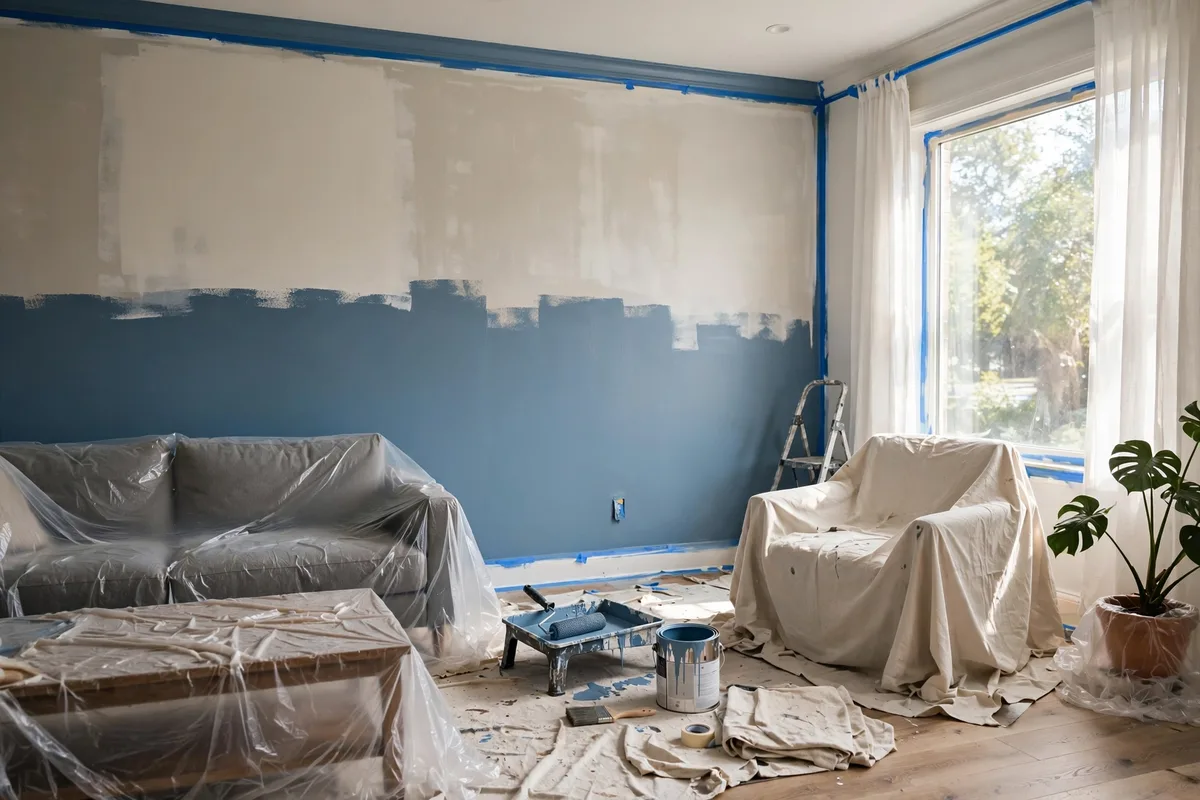
Whatever material you chose, the sequence is the same. Most disappointments trace back to a skipped early step, not poor finishing.
The sequence that works
- Confirm the wall and measure it. Width, height, sockets, vents, and any slope in the ceiling. Sketch panel spacing or wallpaper drops on paper first.
- Finalize color and finish with large samples in the room’s real light, against the sofa and floor, for at least a day.
- Prepare the surface. Clean, fill, and sand. Wash greasy patches, especially behind seating. Good preparation is invisible in the final photo and obvious in its absence.
- Mask and protect. Tape trim and adjoining walls, cover the floor and nearby furniture, and decide in advance where the treatment stops at corners and the ceiling line.
- Apply in the right order. For paint: tinted primer under deep colors, then two coats. For paneling: fix, fill, caulk, then paint. For wallpaper: start from the most visible corner and work away from it.
- Live with it bare for a day before rehanging art or shelves. The wall needs to settle into the room — and you need to see it in full daylight once before styling decisions lock in.
Keep leftover paint or wallpaper, labeled with the product name, for effortless future touch-ups.
10. Styling, Lighting and Mistakes to Avoid
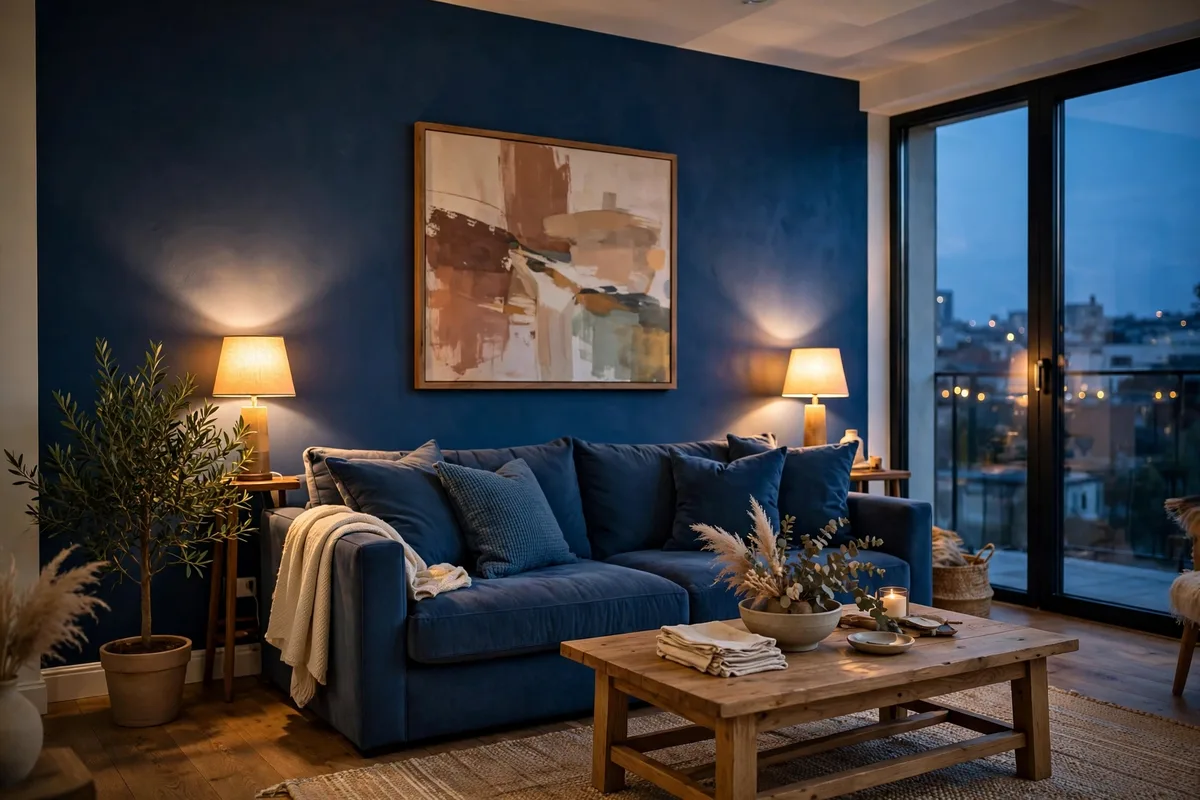
A finished wall still has to earn its place. Styling and lighting decide whether it reads as a confident focal point or just a colored rectangle. Everything in front of it should support it — never compete with it.
Style and light the wall properly
- Repeat the accent in small doses. Two or three touches — cushions, a throw, a frame, a book cover — in the wall’s color family tie the room together. This is the 10 percent layer doing its job.
- Add grazing or layered light. A lamp or picture light that washes the wall reveals texture and keeps dark colors rich after sunset. A single central ceiling light leaves most accent walls looking flat at night.
- Leave breathing room. One large piece of art beats a cluster of small frames on a bold wall. If the wall has pattern or slats, it may need nothing hung on it at all.
The mistakes that undo good work
- Accenting two competing walls, so neither becomes the focal point.
- Choosing the color from a phone screen instead of a physical sample in the room.
- Ignoring the trim decision — stark white baseboards against a deep wall can look unfinished; painting trim to match, sometimes called color drenching, is a deliberate alternative.
- Hanging busy art or a patterned gallery over busy wallpaper.
- Forgetting outlets and switch plates, which suddenly look glaring on a dark wall; paintable or dark covers fix this cheaply.
Frequently Asked Questions About Living Room Accent Walls
Which wall should be the accent wall in a living room?
Choose the wall the room already focuses on — usually behind the sofa, with the fireplace, or opposite the entrance. Prefer a solid wall with few doors and windows, wide enough to hold furniture in front of it. If seating faces away from your chosen wall all evening, pick the wall the seating faces instead.
Should an accent wall be darker or lighter than the other walls?
Darker is more common because depth creates focus, but it is not a rule. A lighter or same-color textured wall works well in rooms that already have mid-tone or darker walls. What matters is clear contrast — aim for at least two to three shades of difference if you are staying within one color family.
Can you have two accent walls in one living room?
You can paint or finish two walls the same way, but only one will truly read as the accent. Two competing treatments usually cancel each other out and make the room feel unsettled. If an L-shaped or open-plan space genuinely has two zones, give each zone its own quieter focal point rather than two bold walls.
Will a dark accent wall make a small living room feel smaller?
Not necessarily. A deep color on the far wall can recede visually and add a sense of depth, especially when the other walls, ceiling, and large textiles stay light. What shrinks small rooms is clutter, heavy furniture against the wall, and poor lighting — balanced dark accents are rarely the problem on their own.
What is the best finish for an accent wall paint?
Matte or eggshell suits most living rooms. Matte hides wall imperfections and makes deep colors look rich and soft, while eggshell adds slight durability and wipes clean more easily. Choose satin only for very busy family rooms, and save semi-gloss for trim and molding where its shine defines the detail.
How do I match an accent wall color to my sofa and rug?
Pull a tone that already exists in the room and adjust it. Take a color from the rug pattern, cushions, or artwork, then go deeper or softer for the wall rather than matching it exactly. Check large samples directly against the sofa fabric and flooring in daylight and lamplight before buying.
Is peel-and-stick wallpaper really safe for rental walls?
It can be, but safety depends on the wall underneath. It releases most cleanly from sound, smooth paint with a satin or gloss finish. Always test a small hidden patch for a full day first, avoid heavily textured or freshly painted walls, and keep the product instructions — removal technique matters as much as the product itself.
How much does a living room accent wall typically cost?
Paint is the lowest-cost route, needing little more than a gallon of paint and basic supplies for one wall. Peel-and-stick wallpaper costs more upfront, traditional wallpaper and paneling cost more again, and ready-made wood slat panels sit at the higher end. Include preparation, tools, and any reversal or repainting in your comparison.
Can an accent wall work behind a TV?
Yes, and dark, low-pattern finishes are usually best there. Deep matte colors help the black screen blend in when the TV is off and reduce visual distraction while watching. Avoid busy geometric wallpaper directly behind a screen, and plan cable management before installing paneling so wires are hidden from the start.
How do I fix an accent wall color that turned out wrong?
Live with it through one full day and night of light first — many colors settle. If it is still wrong, identify whether the problem is depth or undertone. Too dark or light usually needs a shade shift; a color that clashes with flooring or fabric needs an undertone shift, warmer or cooler, not just a lighter version.
Conclusion
A successful living room accent wall is a decision made in the right order: wall first, material second, color third, finish and styling last. When each step answers the step before it — the wall the room already looks at, the material that matches how long you will stay, the color borrowed from things you own, tested in your own light — the result stops being a gamble and starts looking inevitable. Start with one wall, one clear job, and a large sample you have lived with for a day. Browse the ideas, trust the testing, and let everything else in the room stay a little quieter so your one strong wall can do its work.


Pingback: How to Choose Living Room Accent Wall Styles: Decide With Confidence
Pingback: Living Room Accent Wall Ideas & Examples