
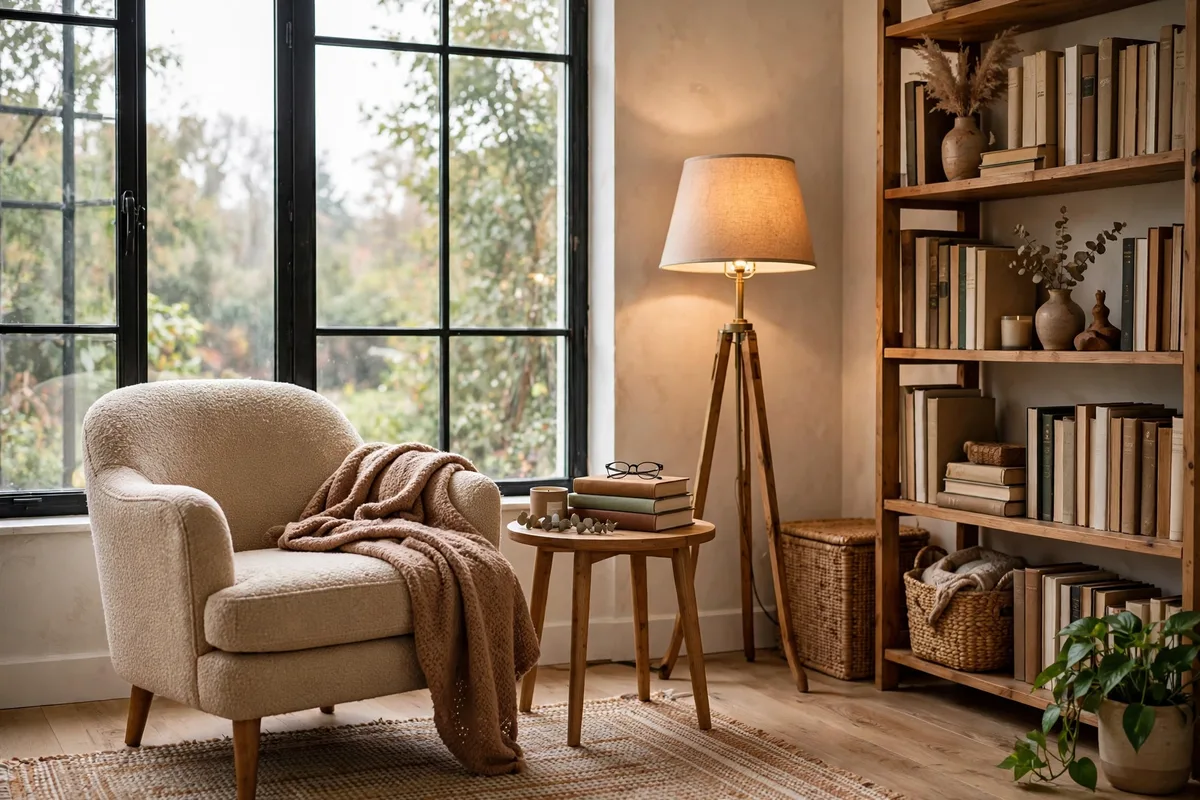
A reading corner fails for practical reasons, not pretty ones. The chair looks lovely but aches after twenty minutes. The lamp glows warmly but throws shadow across the page. The corner is charming in daylight and unusable after dark. This guide fixes those decisions in the right order: spot first, chair second, light third, then size, storage, textiles, and budget. You do not need a spare room or a matching furniture set. You need a seat that supports your body, light that lands on the book, and everything you need within arm’s reach so you actually stay. Work through each section as a checklist, measure before you buy, and test the setup at the time of day you really read. For visual inspiration, browse our cozy reading corner ideas listicle, then come back here to make the choices that keep a corner comfortable for an hour, not just photogenic.
1. Choose the Right Spot Before You Buy Anything
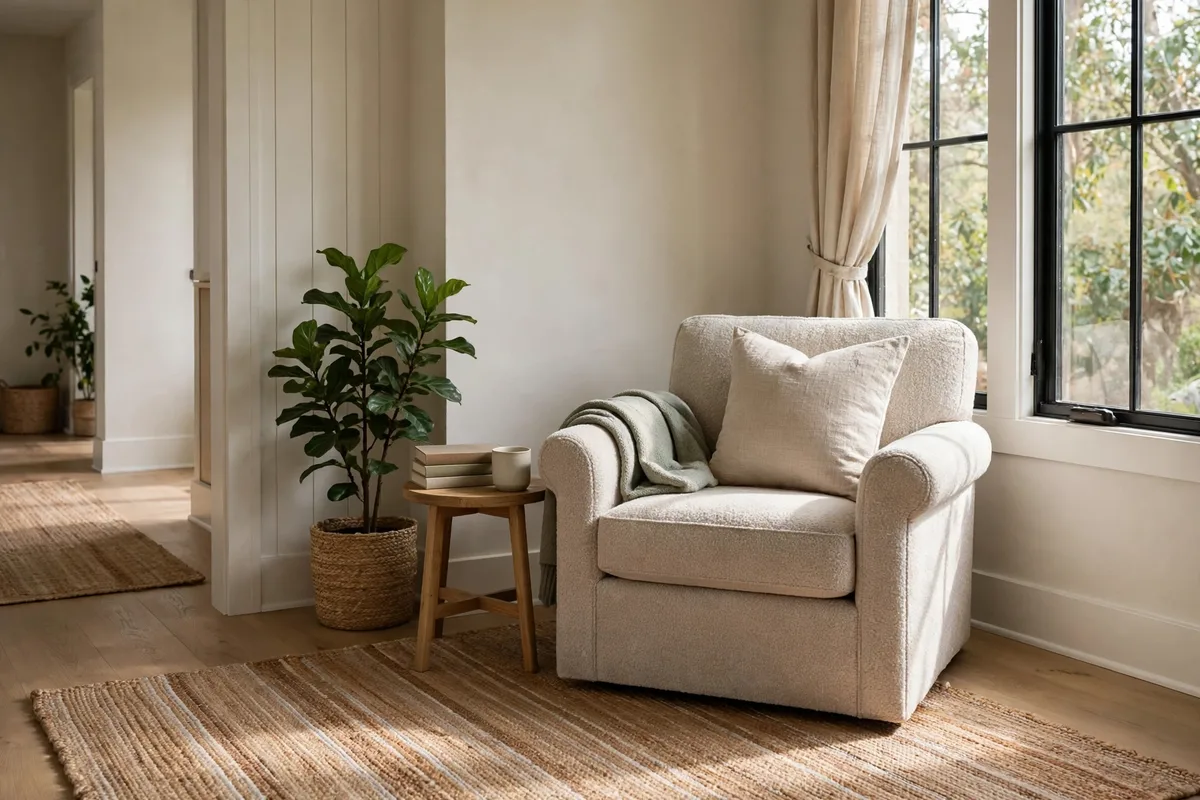
The best spot is quiet, reasonably light, and slightly apart from through-traffic — not necessarily the emptiest corner. Walk your home in the evening, when you are most likely to read, and notice where noise, television glare, and foot traffic fall away. A living room corner away from the main walkway, a bedroom alcove, the end of a wide landing, or space beside a window often works better than a dramatic spot in the middle of activity.
Check the Practical Basics First
- Power: Is there an outlet close enough for a lamp or e-reader charger without trailing a cord across a walkway?
- Climate: Avoid direct radiator heat, cold drafts from doors, and harsh afternoon sun that fades books and overheats the seat.
- Separation: Even a rug edge, a plant, or the side of a bookcase can signal that this zone is different from the rest of the room.
- Traffic: If people constantly pass in front of the chair, you will keep looking up. Angle the chair slightly into the room rather than pushing it flat into the corner.
Test the candidate spot with a kitchen chair for one real reading session before committing. If you feel exposed, chilly, or distracted there, furniture will not fix it.
2. Pick a Chair That Fits Your Body, Not Just the Corner
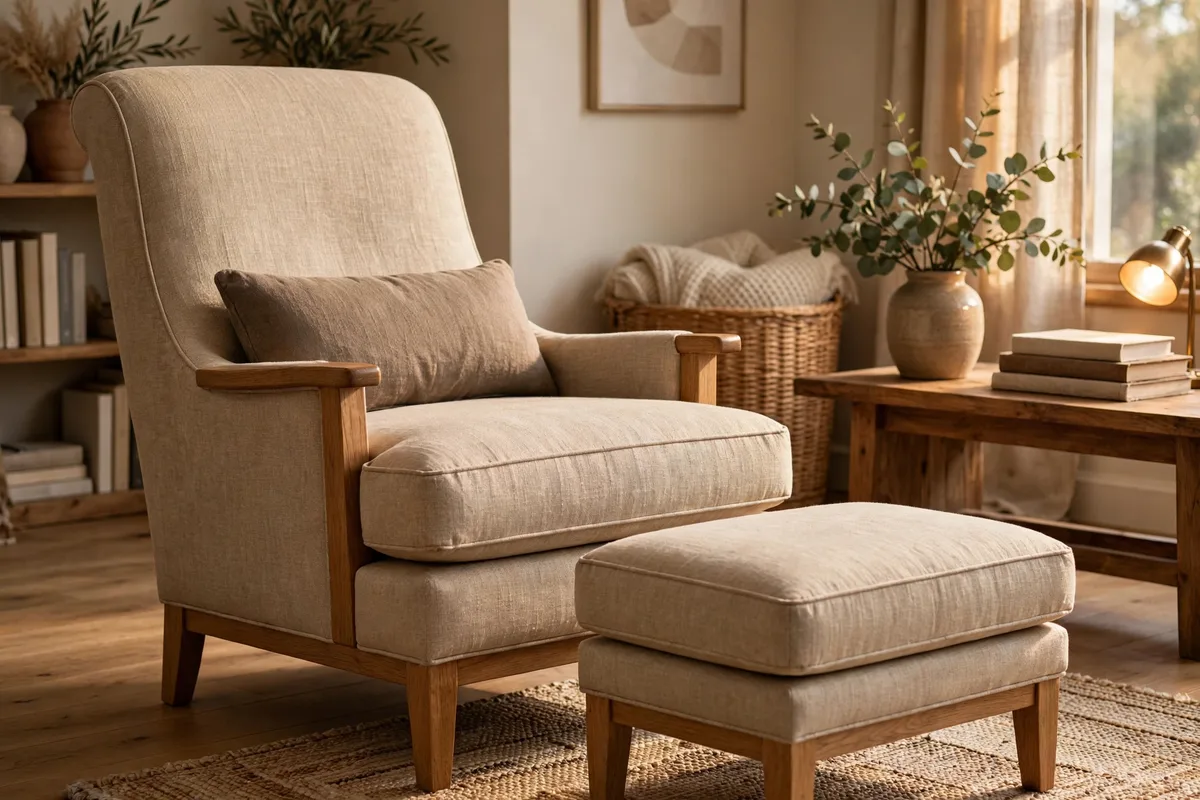
The chair is the whole investment. Everything else can be swapped cheaply, but an unsupportive chair quietly kills the habit. Judge a chair by how it feels after thirty minutes, not thirty seconds in a showroom. Your feet should rest flat or on a footrest, your lower back should stay supported when you lean back, and your shoulders should drop rather than hunch toward the book.
Dimensions That Guide the Decision
| Measurement | Comfortable Range | Why It Matters |
|---|---|---|
| Seat height | 16–19 inches | Feet flat, knees not pushed up or dangling |
| Seat depth | 19–22 inches | Supports thighs without pressing behind the knees |
| Seat width | 22–26 inches inside arms | Room to shift position and tuck a leg up |
| Back height | 28 inches or higher | Supports shoulders and, ideally, your head |
| Arm height | 7–9 inches above seat | Elbows rest without lifting your shoulders |
If you like curling up sideways, prioritise depth and width over a tall back. If you read upright with a book in both hands, prioritise back and arm support. Add a small lumbar cushion rather than buying an oversized chair — it fills the gap between the chair back and the curve of your spine. Test with the shoes and cushion you will actually use, because both change the effective seat height.
3. Get Lighting Temperature and Lamp Placement Right
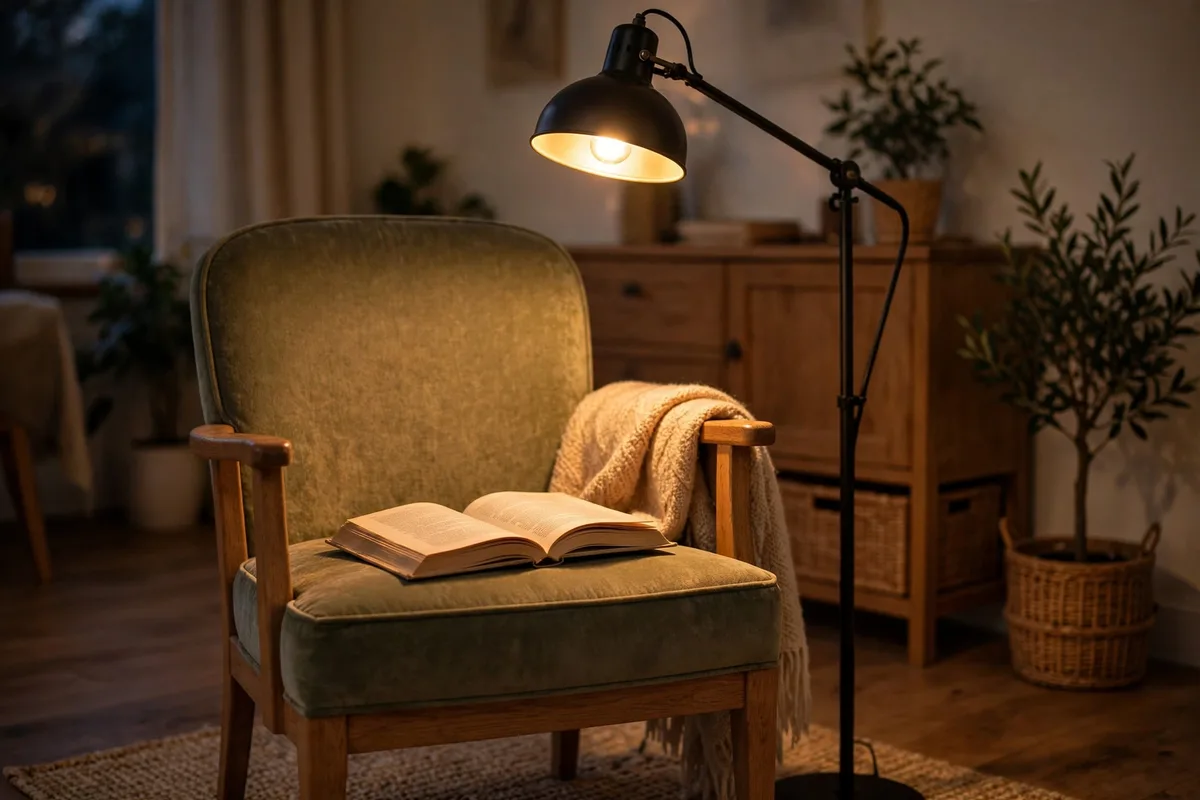
Lighting is the most common reason a good chair goes unused at night. Overhead ceiling light is flat and tiring, and daylight alone abandons the corner at sunset. You need one dedicated task light aimed at the page, supported by softer ambient light from the room so the contrast is not harsh.
Temperature, Brightness, and Position
| Choice | Good Starting Point | Avoid |
|---|---|---|
| Colour temperature | 2700K–3000K warm white | Cool daylight bulbs that feel clinical in the evening |
| Lamp type | Adjustable floor lamp, swing-arm sconce, or table lamp | Fixed decorative lamp you cannot aim |
| Shade height | Bottom of shade around seated eye level | Exposed bulb visible when you sit down |
| Placement | Beside and slightly behind your shoulder | Directly in front of you, causing glare on the page |
Place the lamp on the side opposite your page-turning hand where possible, so your hand and book do not cast a shadow across the text. Angle the head down onto the book, sit, and actually read a full page. If you squint, see a bright spot on glossy paper, or can see the bare bulb, move the lamp — do not simply buy a brighter bulb. A dimmer, or a bulb you can dim, helps because the right level at noon is wrong at ten in the evening. In a tight corner, a plug-in wall sconce gives the same control without using floor space.
4. Size the Nook Honestly for Small Spaces
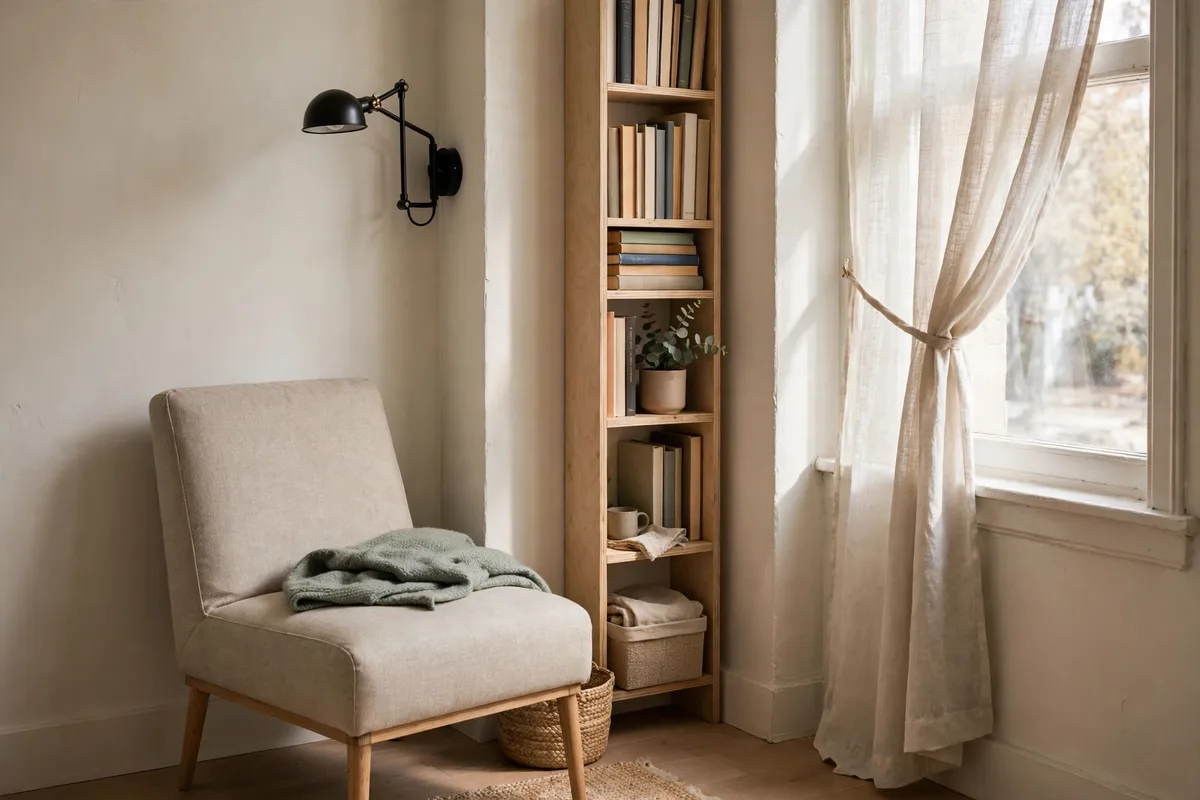
A functional nook can fit in surprisingly little floor space, but only if you measure the chair’s full footprint — including the space to sit down, stretch your legs, and stand up again. A useful minimum is roughly a 3-by-3-foot zone for a compact chair and a wall light, rising to about 3-by-5 feet if you want a footrest and side table as well.
Small-Space Layout Rules
- Choose an armless or slim-arm slipper chair when width is tight; it saves inches without giving up a proper back.
- Swap a floor lamp for a wall-mounted or clamp light, and a side table for a C-table that slides over the chair base.
- Use vertical space for books — a narrow tower shelf or wall shelves — instead of a wide bookcase eating the floor.
- Keep clear walking space in front of the chair. If you have to squeeze sideways to sit down, the nook will feel like storage, not a retreat.
In a studio or very compact living room, let the nook share duty honestly: a chair that also serves guests, with the throw and book basket marking it as your reading spot the rest of the time. Our guide to how to decorate a studio apartment covers that kind of double-duty zoning in more depth.
5. Add a Side Surface and Foot Support Within Reach
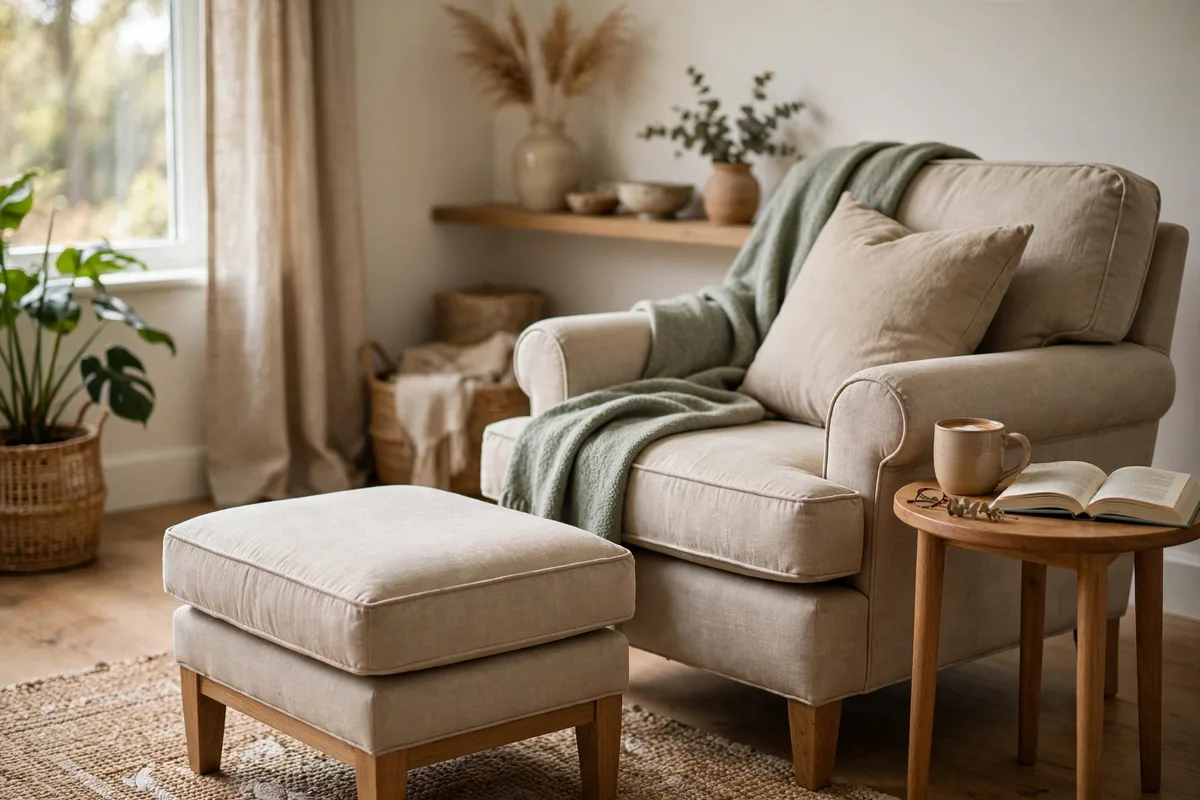
Once you sit down, getting up for a drink, your glasses, or the next book breaks the spell. A small surface within easy arm’s reach is not decoration — it is what turns a chair into a self-contained spot. It only needs to hold a mug, a book, and one small extra. Fourteen to eighteen inches across is usually enough.
Choosing the Right Surface
- Side table: Pick a top roughly level with the chair arm, within an inch or two, so you set a mug down without lifting your shoulder.
- C-table: Best in tight spaces; the base tucks under the chair and the top floats over your lap or beside it.
- Stool or stack of crates: Doubles as occasional extra seating and, with a tray on top, a stable drink surface.
- Wall shelf: Works when floor space is zero, as long as it sits on your dominant-hand side at seated reach.
Foot support matters too. A low ottoman or pouf lets you change leg position during a long chapter and stops fidgeting. If space is short, a storage ottoman hides the throw inside when guests arrive.
6. Keep Books Within Arm’s Reach Without Creating Clutter

A reading corner without books nearby is just a chair, but a corner buried in piles quickly feels messy and stressful. Aim for a small, current collection in the nook itself: what you are reading now, the next two or three titles, and a few favourites you return to. The rest of your library can live elsewhere in the home.
Storage That Fits the Footprint
- A narrow bookcase or tower shelf beside the chair for the main in-nook collection
- One or two wall shelves above seated head height for overflow and display copies
- A basket on the floor for library books, magazines, and an e-reader with its cable corralled
- A storage ottoman or lidded box for bookmarks, glasses, and chargers, so surfaces stay clear
Edit the nook monthly. Return, donate, or re-shelve finished titles, and keep only one active stack on the side table. If you read digitally, give the device a fixed home — a small tray or the basket — so the charging cable does not become a trip hazard.
7. Layer Textiles for Warmth, Sound, and Definition
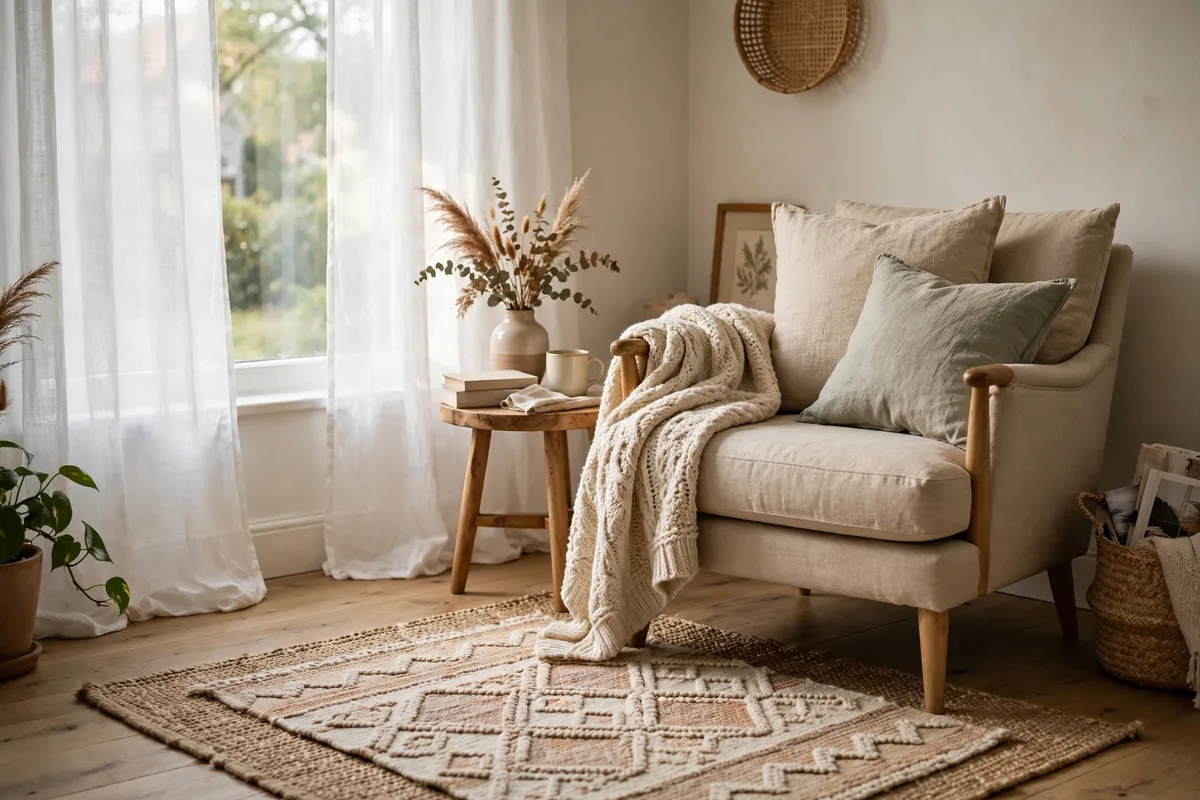
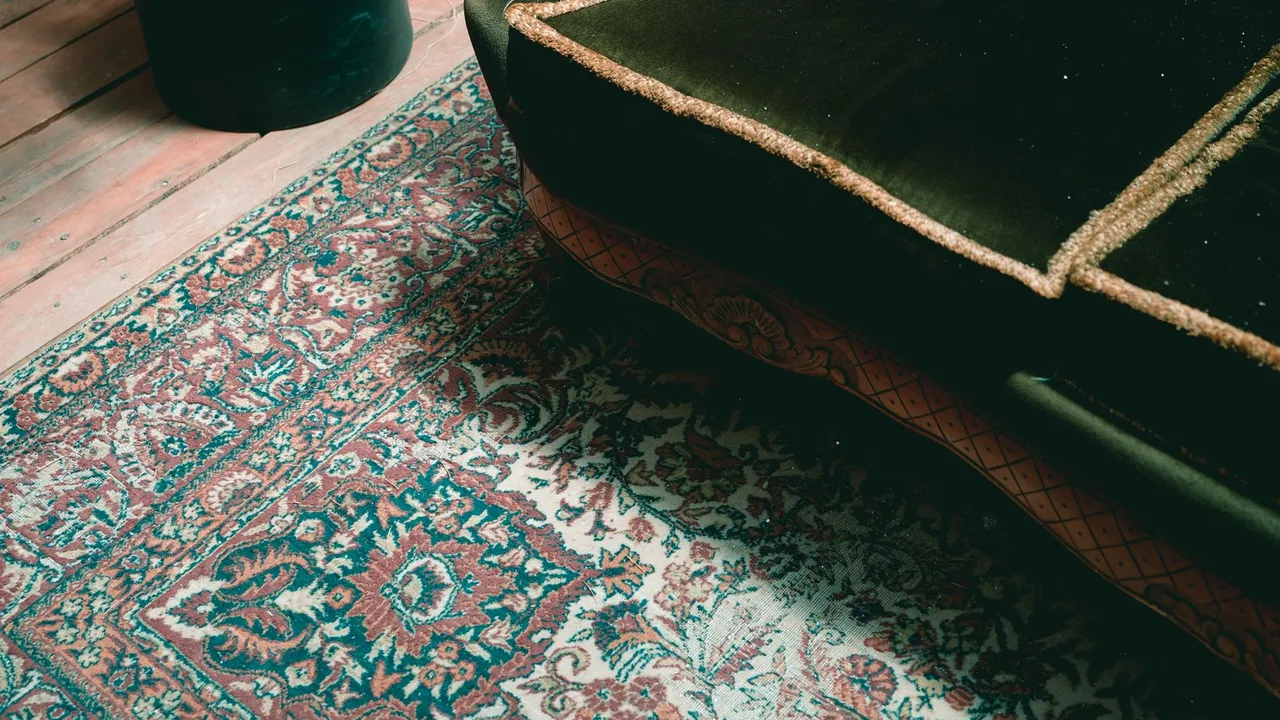
Textiles do three jobs at once: they make hard surfaces comfortable, they soften sound so the corner feels quieter, and they draw a visible boundary around the nook. Start with a rug under the chair. It anchors the arrangement, warms the floor, and tells everyone — including you — that this patch of room has a purpose.
Layer in This Order
- Rug: Large enough for the chair’s front legs and your feet, in a low, stable pile you will not trip on when standing up in low light.
- Throw: One medium-weight throw within reach, stored folded over the chair arm or in the basket — not buried under cushions.
- Cushions: One lumbar cushion for support first; decorative cushions second, and only as many as you can keep without moving a pile to sit down.
- Window softening: A sheer or light curtain near a window seat cuts glare while keeping daylight usable.
Mix textures rather than matching everything exactly — a knit throw against a smooth cotton cushion, for example — but repeat one colour from the wider room so the nook feels connected rather than random. If you are also weighing seating for the rest of a compact room, our roundup of best seating ideas for small living rooms is a useful companion.
8. Plan the Corner by Budget Tier
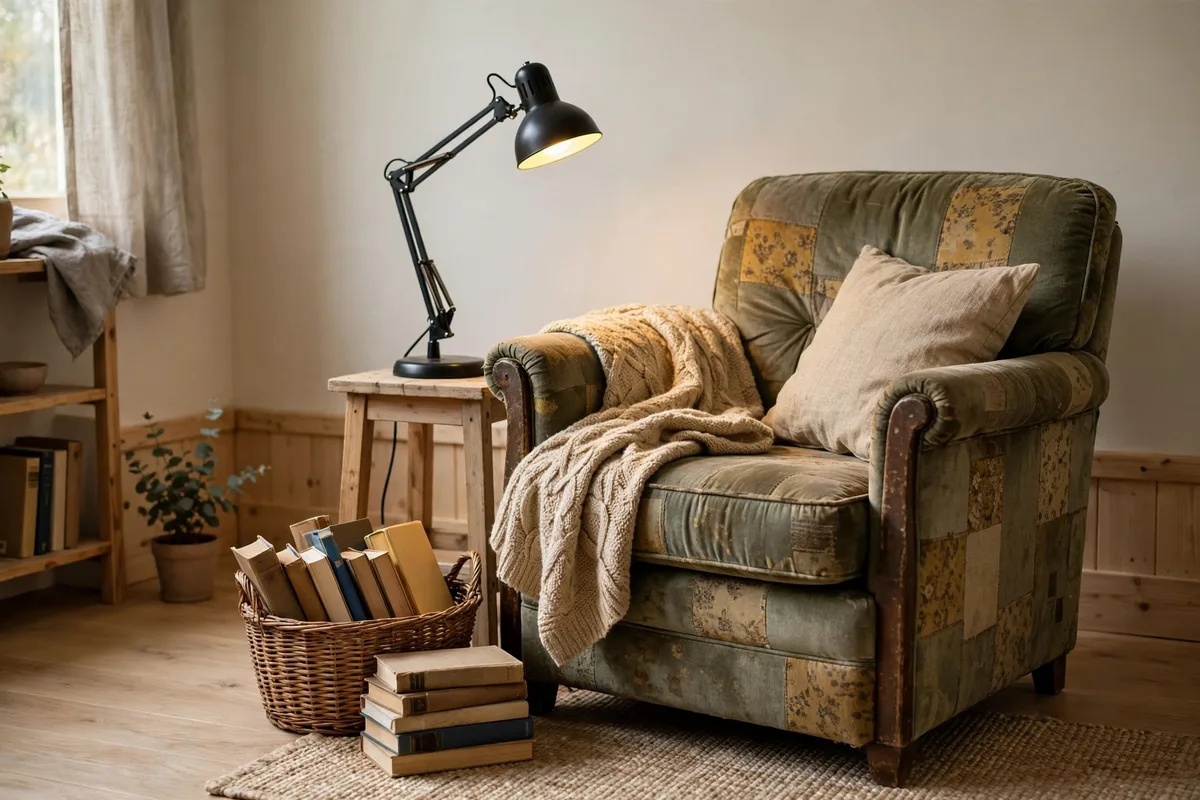
A good nook is built in priority order — chair comfort and light first, decoration last — which means a small budget spent in the right sequence beats a large one spent on accessories. Use the tiers below as a spending order, not a shopping list to complete in one weekend.
What Each Tier Should Buy First
| Tier | Spend First On | Practical Approach |
|---|---|---|
| Starter | Light and comfort fixes | Use a chair you own, add a lumbar cushion, a second-hand adjustable lamp, one throw, and a basket |
| Mid-range | The chair itself | Invest in a properly supportive armchair and a dimmable lamp; keep a simple side table and rug |
| Investment | Fit and finish | A chair chosen for long sessions, a quality swing-arm light, a storage ottoman, and shelving fitted to the corner |
At every tier, shop your own home first: a hallway side table, a spare-room lamp, and a guest-bed throw often complete the starter version for nothing. Buy the lamp before the artwork. If a purchase does not improve sitting, seeing the page, or reaching what you need, it can wait.
9. Avoid the Common Comfort Mistakes
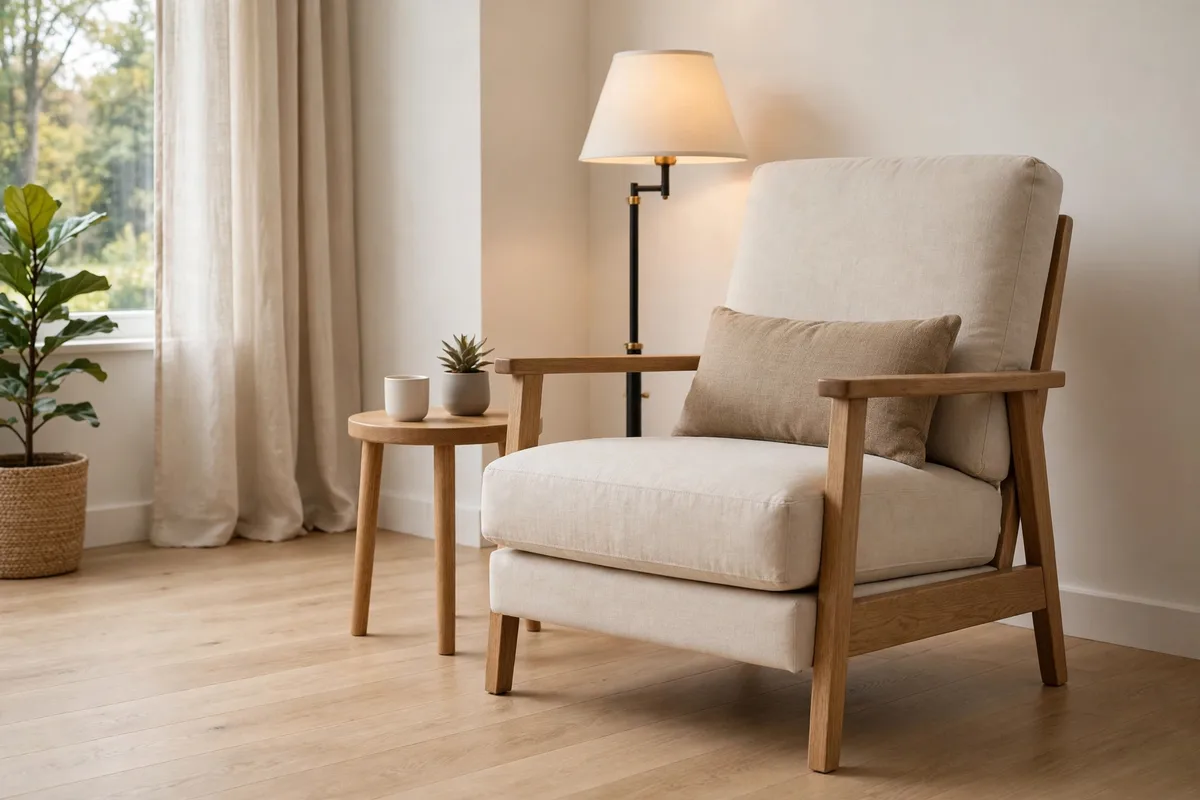
Most disappointing nooks share the same handful of errors, and nearly all of them are fixable without starting again. Run through this list once your corner is assembled and again after a week of use, when the novelty has worn off and the real irritations show up.
The Mistakes That Matter Most
- Style over support: A sculptural chair that hurts after twenty minutes will not be used, however good it looks.
- Only overhead light: Add a dedicated, aimable task light; ceiling light alone creates glare and fatigue.
- Lamp in front of you: Light facing you or reflecting off the page is tiring. Move it beside and slightly behind your shoulder.
- No surface: Reading glasses, a drink, and the book itself end up on the floor. Add even a tiny shelf or stool.
- Too many cushions: If you must excavate the chair to sit in it, remove half. Support should come from one well-placed lumbar cushion.
- Ignoring the outlet: A beautiful spot with no power means no lamp and a dead e-reader. Check before you arrange.
- Filling a walkway: A nook that blocks movement annoys the whole household and will be dismantled. Protect clear passage first.
Treat the first version as a draft. Note what makes you get up, and fix that one thing next.
10. Set Up Your Reading Corner Step by Step
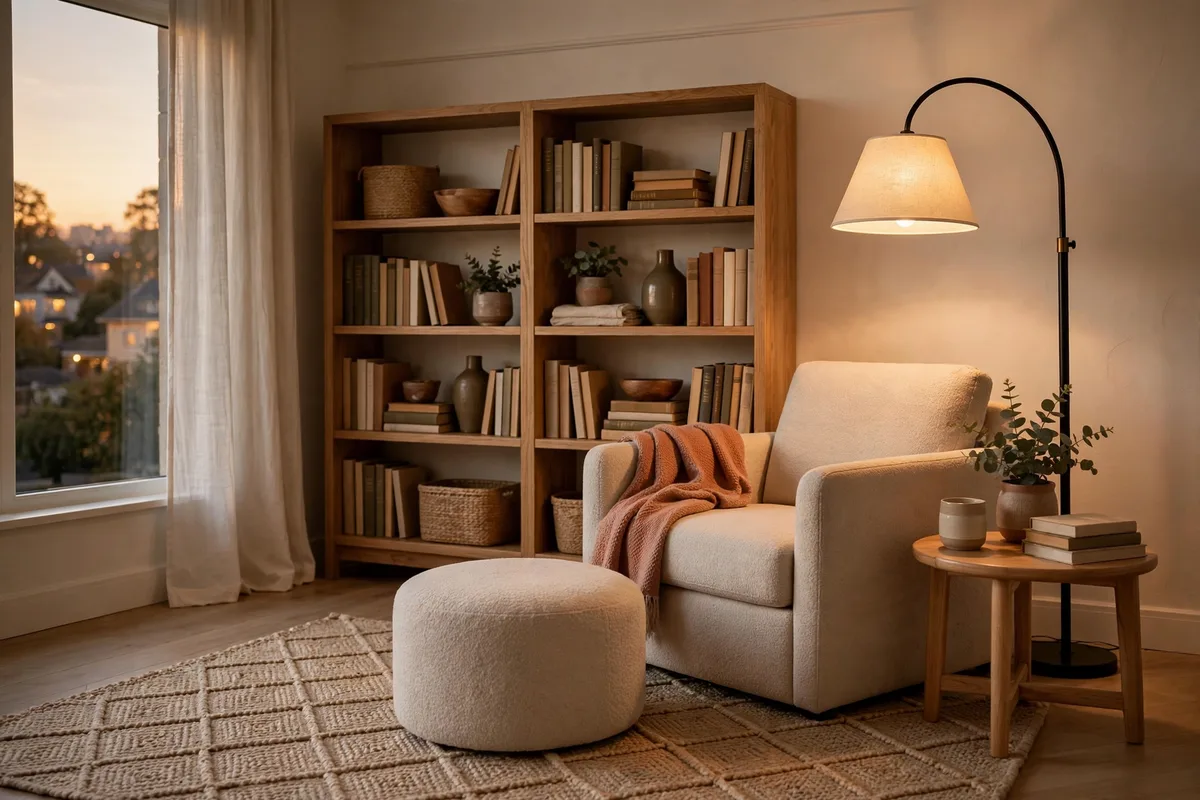
With the decisions above made, assembly is straightforward and can be done in a single session. Work in this order so each layer supports the next, and keep a tape measure, your current book, and a drink beside you as you go — they are the real testing tools.
The Setup Sequence
- Claim and clear the spot. Empty the corner completely, clean it, and lay the rug to mark the boundary.
- Place the chair. Angle it slightly toward the room, sit in it, and check the view, light, and walking clearance around it.
- Position the lamp. Set it beside and slightly behind your shoulder, switch it on, and read a full page, adjusting until there is no glare or hand shadow.
- Add the surface and footrest. Place the side table on your dominant-hand side at arm height, and the ottoman where your feet naturally land.
- Bring in the books. Add the current read, the next few titles, and the basket or shelf that holds them.
- Layer textiles last. Lumbar cushion, throw, and any window softening — then remove anything you had to move aside to sit down.
- Run the one-hour test. Read for a real session. Note any ache, squint, or repeated getting-up, and adjust that single element before declaring it finished.
Frequently Asked Questions About Cozy Reading Corners
How much space do I really need for a reading corner?
A compact chair, a wall light, and a small shelf can work in roughly a 3-by-3-foot corner. If you want a footrest and a side table as well, plan closer to 3-by-5 feet. Measure the chair’s full width and depth, then add clearance to sit down and stand up comfortably without squeezing past furniture.
What is the best chair height and depth for reading?
For most adults, a seat height of about 16 to 19 inches lets feet rest flat, and a seat depth of about 19 to 22 inches supports the thighs without pressing behind the knees. Add a lumbar cushion if the back feels too deep. Always test a chair for at least twenty minutes, because brief showroom sits hide most problems.
What colour temperature is best for a reading lamp?
Warm white, around 2700K to 3000K, is the most comfortable starting point for evening reading. It feels cozy and is easier on the eyes than cool daylight bulbs in a living room. Whatever temperature you choose, aimable and dimmable matters more — the ability to direct and soften the light prevents glare and shadow on the page.
Where should I place the lamp in a reading corner?
Place it beside the chair and slightly behind your shoulder, with the bottom of the shade around seated eye level, angled down onto the book. Put it on the side opposite your page-turning hand where possible to reduce hand shadows. Avoid placing a lamp directly in front of you, which causes glare.
Can I create a reading corner in a rental home?
Yes. Use freestanding furniture, a plug-in floor lamp or wall sconce that needs no wiring, and a C-table instead of fixed shelving. A rug and throw define the zone without any changes to walls or floors. Wall shelves can be replaced by a narrow freestanding tower or a basket, so nothing needs patching when you move.
Do I need a window for a good reading corner?
No. Natural light is pleasant for daytime reading, but a dedicated adjustable lamp matters more because it works at any hour. An interior corner with good task lighting is often quieter and less drafty than a window spot. If you do sit by a window, add a sheer to soften harsh afternoon glare.
How do I make a reading corner on a small budget?
Start with a chair you already own, then spend first on light and a lumbar cushion — the two things that decide whether you use the corner. Shop second-hand for an adjustable lamp, add one throw and a basket for books, and borrow a side table from another room. Upgrade the chair later, once you know the spot works.
What should I keep next to my reading chair?
Keep only what a single session needs: your current book, the next title or two, reading glasses, a drink surface, and a throw within reach. A small basket or lidded box can hold bookmarks and a charger. If the side table needs clearing before you can set a mug down, too much has accumulated there.
How can I make a reading corner feel separate in an open-plan room?
Define it with layers rather than walls: a rug under the chair, dedicated lighting that pools in the corner, and one repeated colour from the main room in the throw or cushion. Angling the chair slightly away from the main seating, or placing a tall plant or narrow bookcase at its edge, strengthens the sense of a distinct, quieter zone.
Why does my reading corner look good but never get used?
Usually one functional element is missing: the chair is uncomfortable over time, the light is wrong after dark, or there is nowhere to put a drink and book. Sit there for a full hour with a real book and note the exact moment you fidget, squint, or get up. Fixing that single cause normally turns a decorative corner into a daily habit.
Conclusion
A cozy reading corner is a small, deliberate system, not a styling project. The spot must be quiet and powered, the chair must fit your body for a full hour, the light must fall warmly on the page from beside your shoulder, and books, a drink, and foot support must sit within reach. Get those decisions right, in that order, and even a 3-foot corner becomes the place you head for with a book. Start with what you own, test it over a week of real reading, and upgrade the one element that bothers you most. Comfort first, decoration last — that is what turns a pretty corner into a daily ritual.



Pingback: Cozy Reading Corner Mistakes: 10 Errors to Avoid and Fix
Pingback: Guide to Cozy Reading Corner Inspiration: 7 Styles Compared
Pingback: Cozy Reading Corner Ideas for Small & Large Spaces