
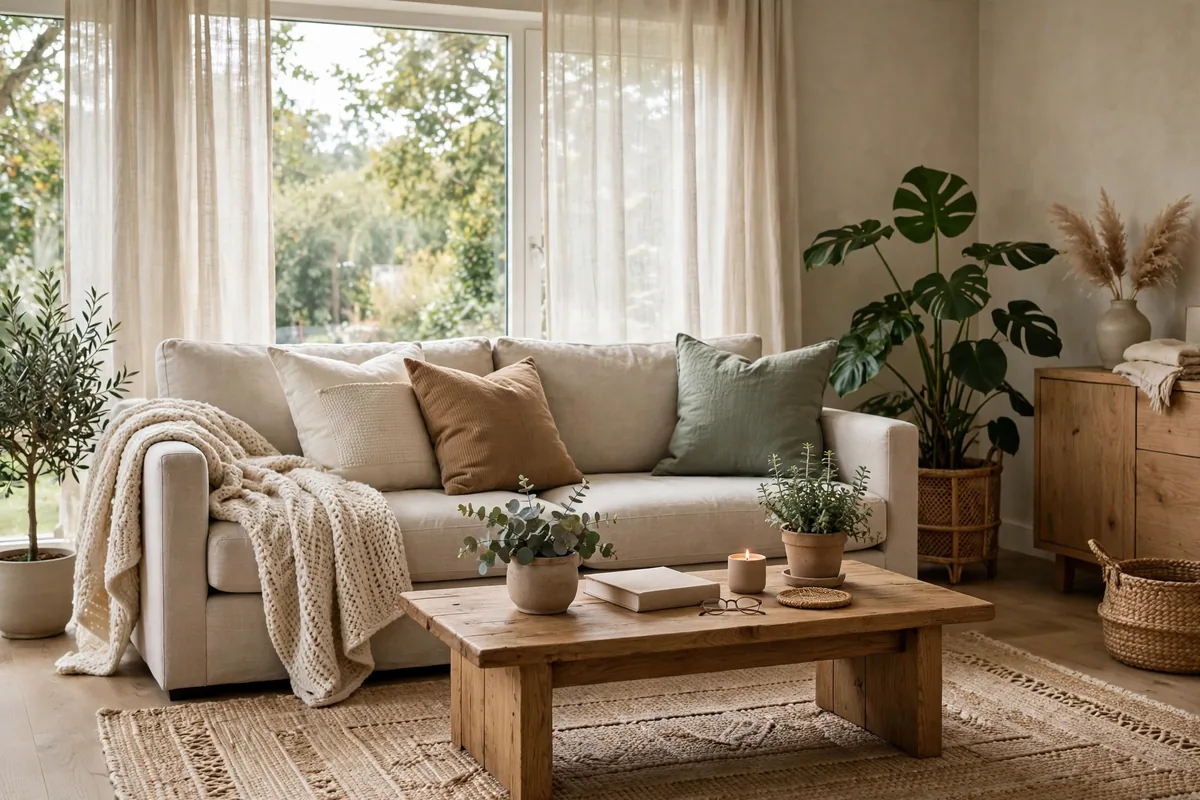
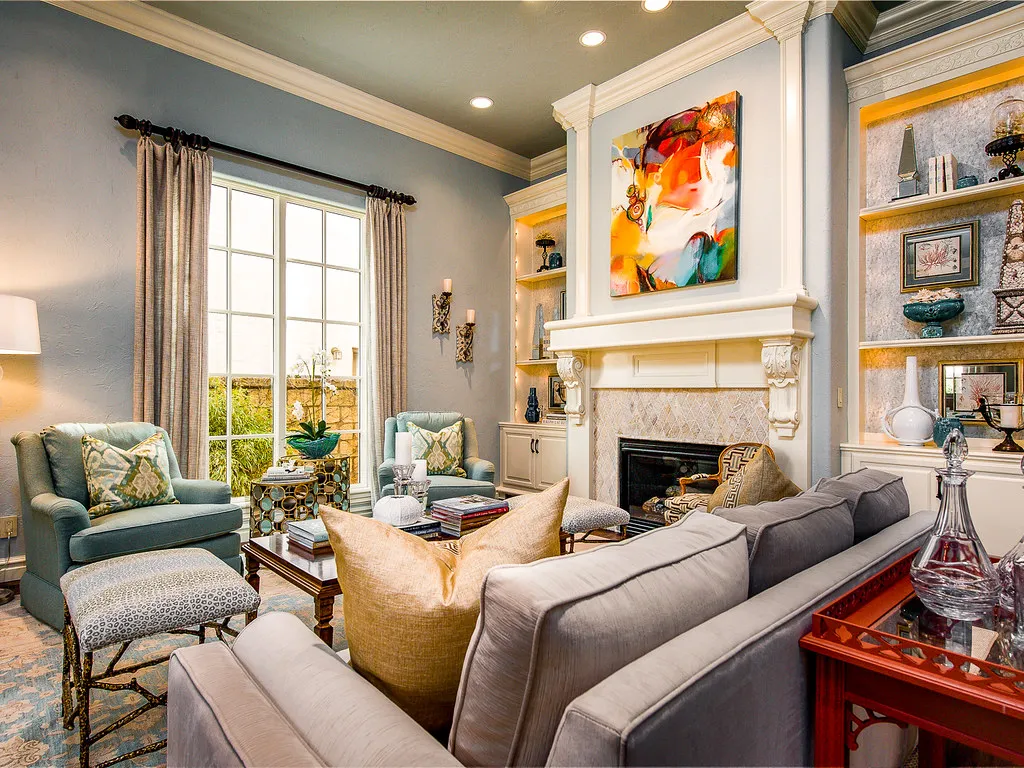
A neutral sofa in beige, cream, oatmeal, or soft gray is one of the most flexible pieces you can own, yet it is also the easiest to leave looking unfinished. Without layers around it, even a beautiful sofa can read flat against the wall, especially in a room with pale walls, a plain rug, and overhead light alone. The good news is that you rarely need new furniture to fix it. Pillows placed with purpose, contrasting textures, a rug that is actually big enough, and warm, layered light can completely change how the same sofa feels.
This guide walks through the order professionals use: start on the sofa itself, then work outward to color, the floor, the walls, and the tables beside it. You will find a pillow formula by sofa size, palette pairings matched to undertones, and simple seasonal swaps. For more visual starting points, browse these neutral sofa styling ideas alongside the steps below.
1. Start With the Right Throw Pillow Formula
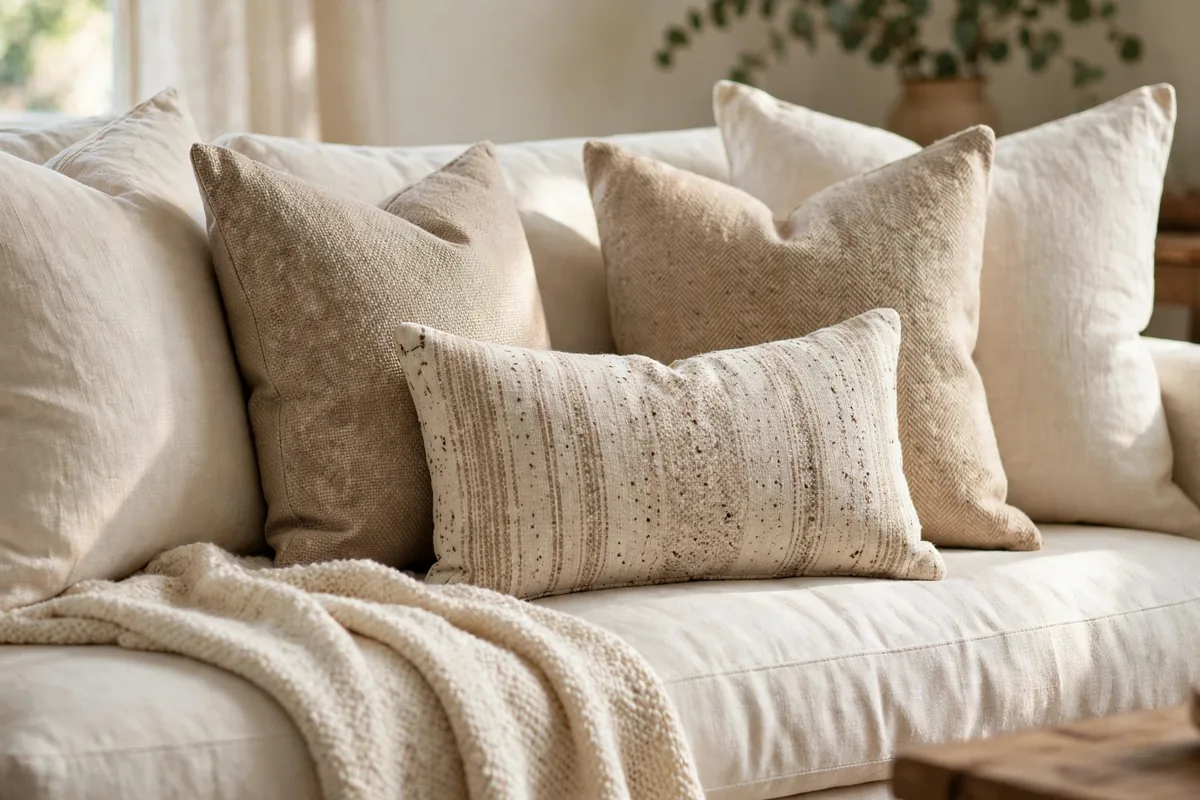
Pillows do the heaviest lifting on a neutral sofa, but random cushions rarely work. Begin with structure, not shopping. Place your largest pillows at the outer corners, step down to a medium size in front of them, then finish with one smaller lumbar or round pillow near the center. That descending arrangement creates height at the back and keeps the front edge open, so the sofa still looks inviting to sit on rather than staged and crowded.
A simple formula by sofa size
| Sofa type | Pillow count | Suggested mix |
|---|---|---|
| Loveseat or 2-seater | 3 | 2 large squares + 1 lumbar |
| Standard 3-seater | 5 | 2 large + 2 medium + 1 lumbar |
| Large sofa or sectional | 5-7 | 3 large + 2 medium + 1-2 lumbar or round |
Mix shapes as carefully as colors. All squares in a straight row looks like a showroom. One lumbar breaks the horizontal line, adds support for reading, and gives patterned fabric a smaller, safer place to appear. If you own a sectional, treat the corner as its own moment with one larger pillow, and keep the chaise end lighter so the shape of the furniture stays visible.
2. Layer Texture Before You Add Color
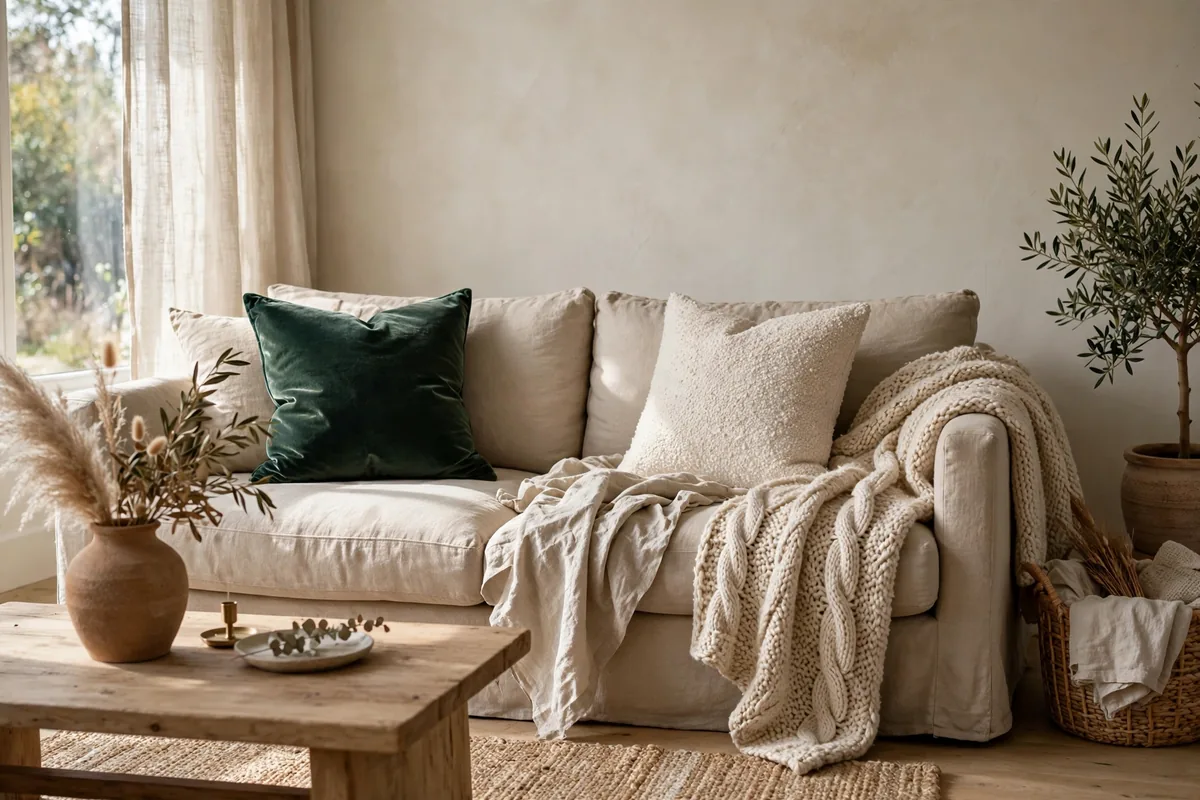
When every surface is smooth, a neutral room loses depth no matter how well the colors match. Texture is what creates shadow and interest within a quiet palette, so build it before you introduce any strong accent. Aim for three to four clearly different finishes across the sofa and the pieces touching it, and let each one catch light in its own way.
Textures that work well together
- Matte and woven: linen, cotton weave, and washed canvas for pillow covers and curtains
- Soft and lofty: velvet, boucle, or a chunky knit for one pillow or throw
- Natural and tactile: jute, rattan, seagrass, and raw wood on rugs, baskets, and tables
- Smooth contrast: leather, stone, ceramic, or black metal in one or two small pieces
Avoid stacking too many fuzzy fabrics at once, which can look messy rather than cozy. One plush element against two matte ones reads intentional. If everything feels the same, swap one pillow cover for a nubby weave or subtle stripe. That change often does more than adding a new color, and keeps a tonal scheme from feeling bland.
3. Choose a Color Palette That Suits Your Sofa’s Undertone
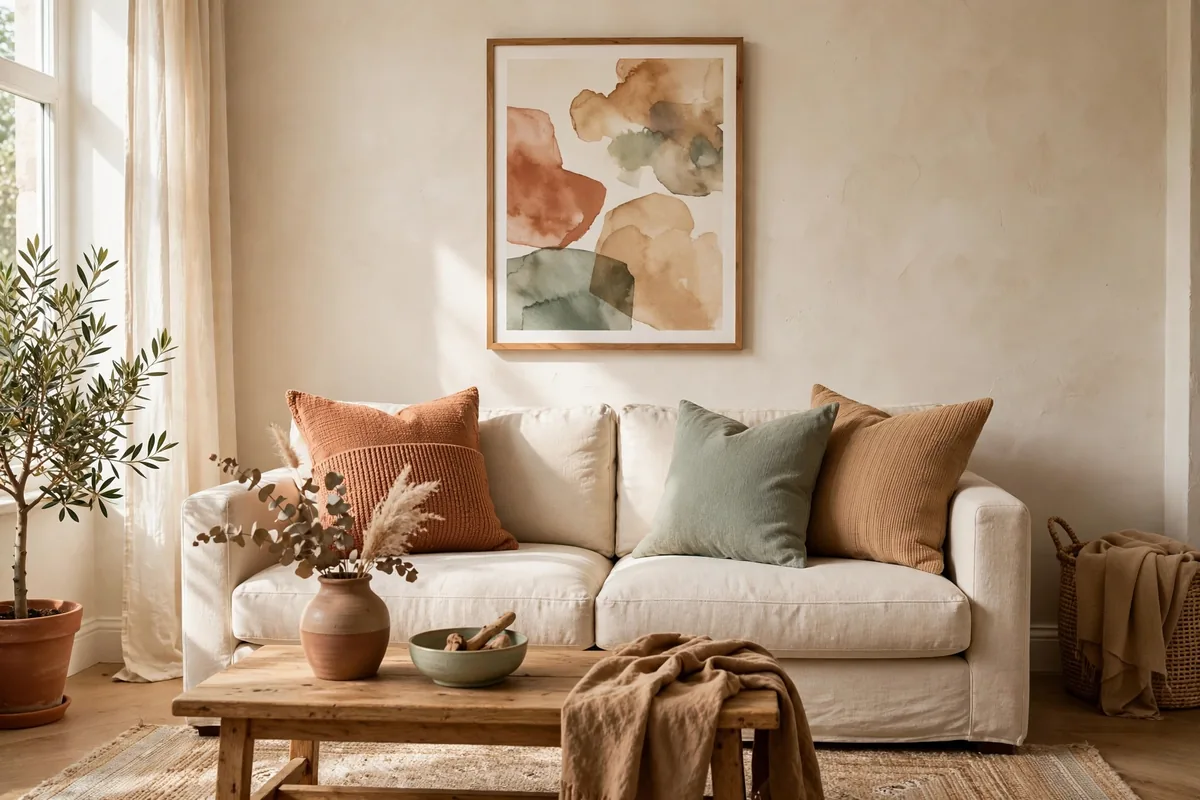
Not all neutrals behave the same. A cream sofa usually carries a warm, yellow-leaning undertone, while many gray sofas lean cool and slightly blue. Beige and greige sit in between. Hold a pure white pillowcase against your sofa in daylight: if the sofa looks yellow beside it, it is warm; if it looks blue-gray, it is cool. That quick check prevents the most common mistake, pairing warm beige with icy gray accessories that make both look off.
Neutral palette pairings to try
| Sofa base | Harmonious partners | Accent for contrast |
|---|---|---|
| Warm cream or beige | Camel, warm white, walnut, sage | Terracotta, rust, or deep teal |
| Cool light gray | White, charcoal, pale oak, dusty blue | Mustard, burgundy, or warm brass |
| Greige or taupe | Cream, espresso, olive, clay | Black, navy, or forest green |
Once the palette is set, distribute it with a loose 60-30-10 balance: roughly sixty percent quiet neutrals across walls and upholstery, thirty percent in mid-tone wood, rugs, and curtains, and ten percent in your accent, repeated at least twice. Repeating an accent in a pillow and again in artwork or a vase is what makes a pop of color look planned. For rooms built around lasting pieces, these designer-approved features for a timeless living room show how a restrained palette holds up over time.
4. Drape Throws and Blankets With Intention
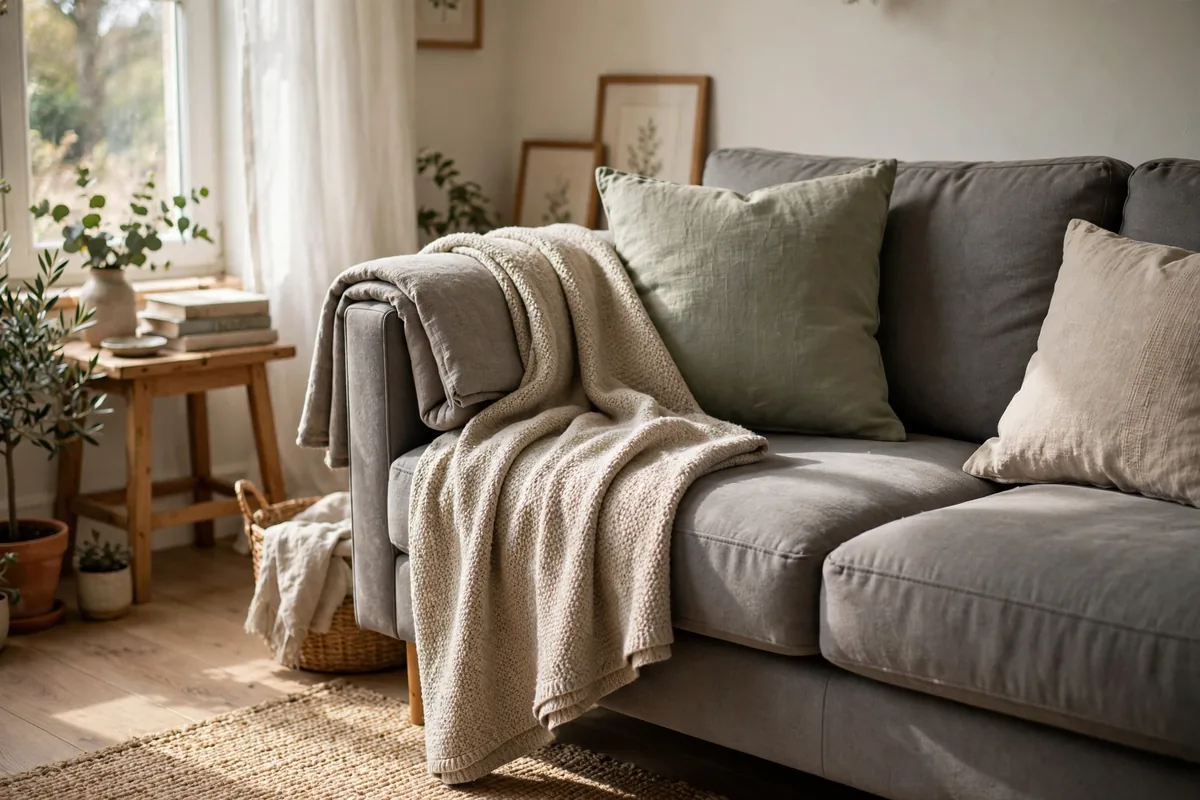
A throw should look relaxed but placed, not dropped after a movie night. The most reliable method is the arm drape: fold the throw lengthwise into thirds, lay it over one arm so about a third cascades onto the seat, then anchor it with a corner pillow overlapping its top edge. For a cleaner, tailored look on a three-seater, fold it into a long rectangle and run it along the back cushions, letting the ends fall evenly. Both methods take under a minute to reset each morning.
Choosing and rotating throws
- Match weight to season: breathable cotton or linen in warm months, wool or a dense knit when it turns cold
- Pick a throw that adds a texture the sofa lacks, such as a ribbed knit on smooth linen upholstery
- Keep the throw within your palette, either tonal for calm or in your single accent color for energy
- Fold and store off-season throws clean, out of direct sun, so whites and creams do not yellow unevenly
One throw is almost always enough. Two competing throws tangle visually and crowd the seat. If you love a second blanket, keep it folded in a basket beside the sofa, where it reads as texture for the room rather than clutter on it.
5. Ground the Seating Area With the Right Rug
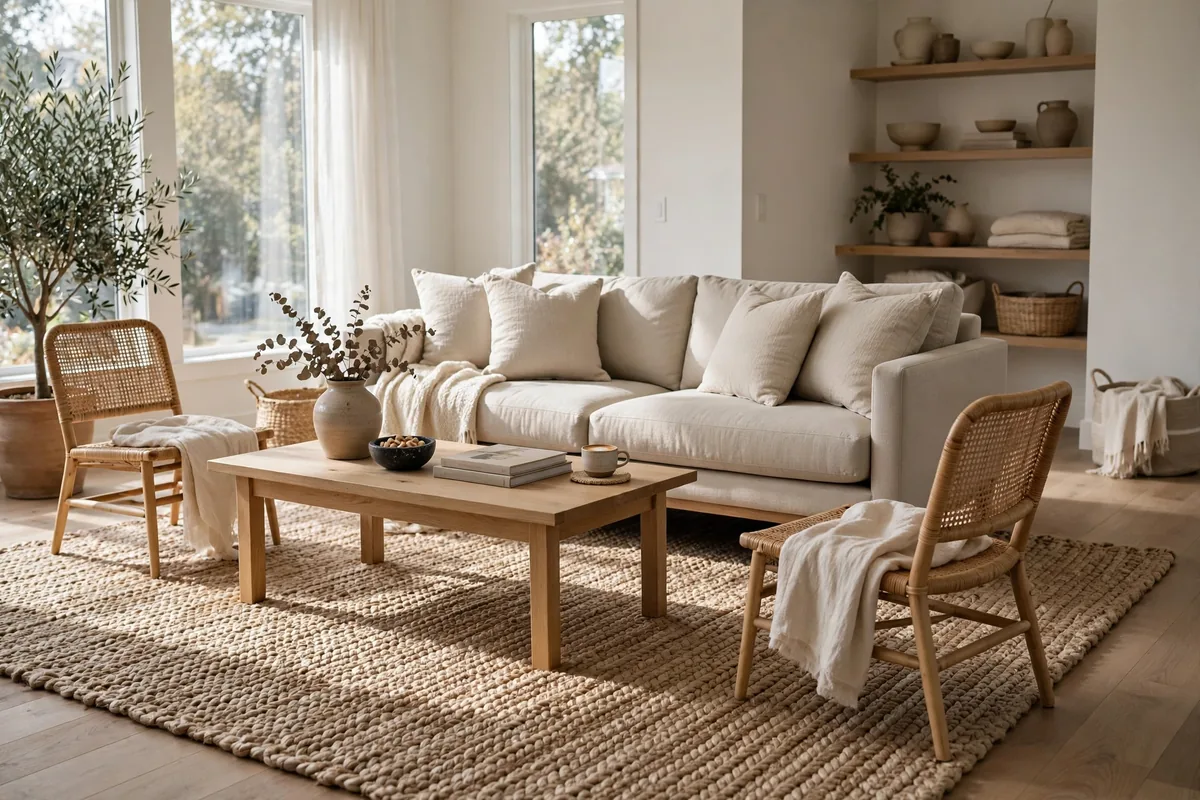
Without a rug of the right size, a neutral sofa appears to float, and the whole seating area feels temporary. Size comes before pattern or color. At minimum, the front legs of the sofa and both side chairs should sit on the rug. In a larger room, placing all the main pieces fully on the rug looks even more settled. Leave a border of visible floor around the edges so the room still breathes.
Rug choices for neutral sofas
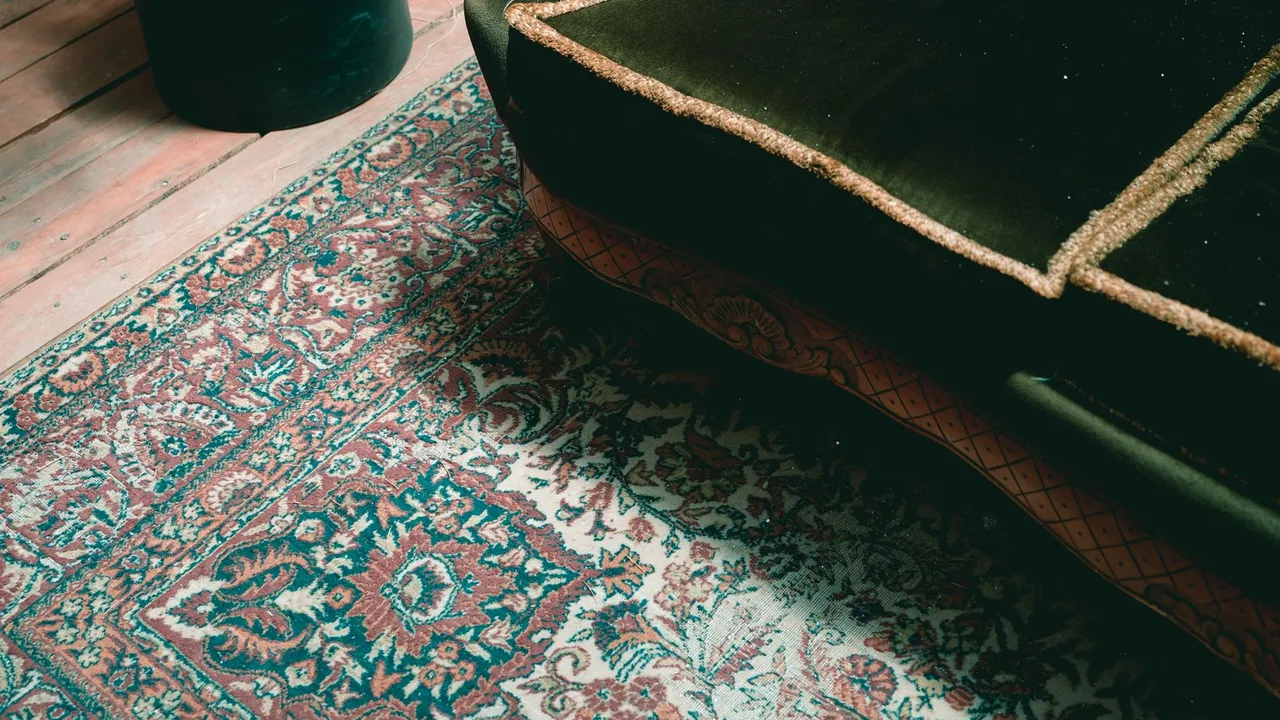
For a calm tonal scheme, choose a rug one or two shades deeper than the sofa, with visible weave or a faded vintage-style pattern for character. If the sofa fabric is plain, the rug can carry the room’s main pattern, provided its colors echo your pillows. If your pillows are already patterned, keep the rug quieter, in a textured solid or a fine stripe.
Pair pile to lifestyle honestly. Low-pile wool or a flat weave handles pets and children best and is easier to vacuum. Higher pile feels luxurious but shows footprints and crumbs. In a compact space, a lighter rug also helps the layout feel open, alongside the small living room layout ideas for tighter floor plans.
6. Pair Wall Color and Artwork With a Neutral Base
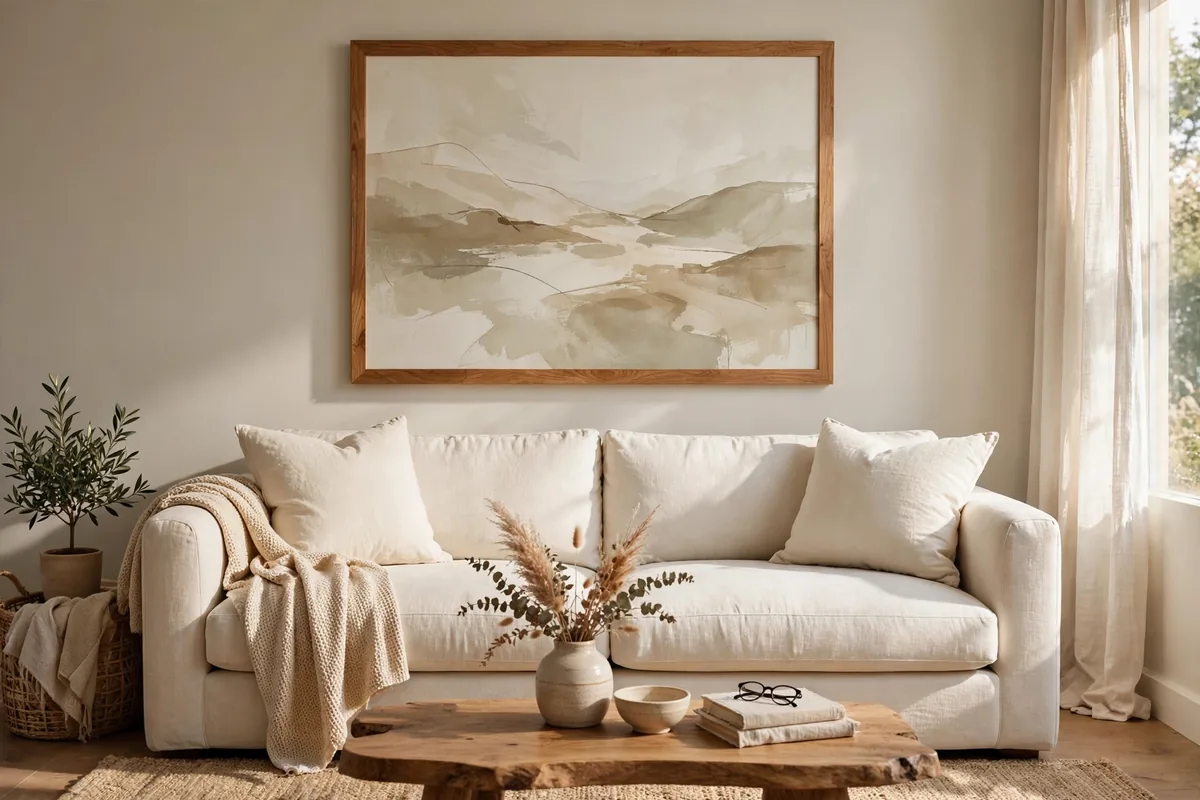
The wall behind a neutral sofa decides whether the sofa stands out gently or disappears. Warm white walls keep a cream or beige sofa bright, but add one deeper element, such as walnut frames or a charcoal line in the artwork, so the arrangement has definition. Greige or soft taupe walls deepen a tonal scheme beautifully behind a lighter sofa, while sage or muted blue-gray walls give warm beige a fresh, cool counterpoint without overwhelming it.
Hanging art above the sofa
- Choose one large piece or a grouped gallery that spans about two-thirds of the sofa’s width
- Hang the bottom of the frame roughly a hand’s width above the sofa back, not high near the ceiling
- Echo one color from your pillows or throw inside the artwork to tie the wall to the seat
- Mix frame finishes sparingly, for example warm wood with thin black, rather than many competing metals
Leave breathing room at both ends of the grouping. Art that is wider than the sofa looks top-heavy, and tiny frames scattered across a wide wall make a generous sofa look lost. If painting is not an option, a large textile hanging, a pair of oversized prints, or a mirror that reflects window light can give the wall the same finished weight.
7. Light the Sofa Area in Warm, Layered Levels
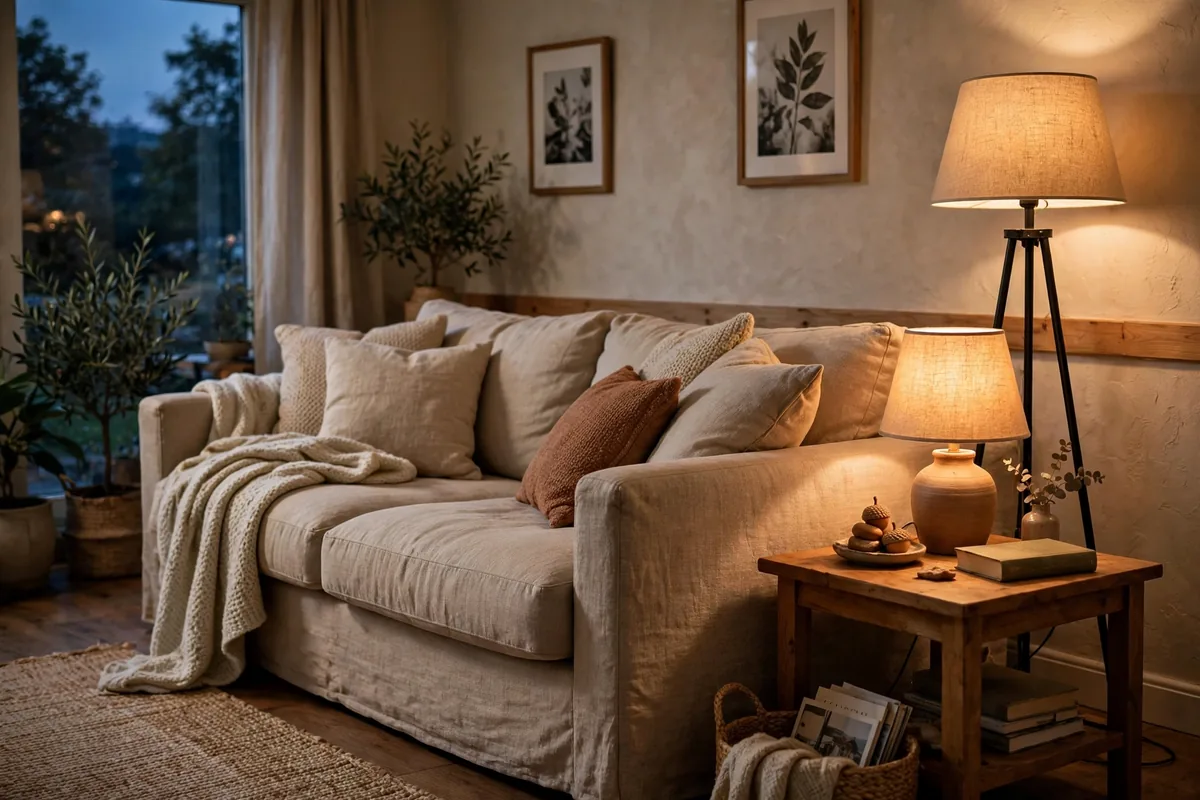
Lighting is the step most neutral rooms skip, and it is why beige can turn gray and gray can turn cold after dark. A single ceiling light flattens texture and casts shadows straight down onto the seat. Instead, build light at three heights: a floor lamp arcing or standing beside one end of the sofa, a table lamp on a side table at the other end, and a softer ambient source such as a shaded ceiling fixture or wall sconces.
Getting the light right
Choose warm bulbs for living areas and check them at night before judging your sofa color. Bulbs that are too cool will drag warm upholstery toward muddy gray, while overly yellow bulbs can make gray fabric look dingy. Place a lamp so its shade sits near eye level when you are seated, which gives comfortable reading light without glare across the room.
Dimmers, or lamps on separate switches, let the same area shift from bright family use to a calm evening setting. Lamplight rakes across boucle, knit, and woven fabrics at an angle, revealing the texture you layered earlier. If the sofa area still feels flat in the evening, fix the lighting before buying anything else.
8. Style the Coffee Table and Side Tables Around the Sofa
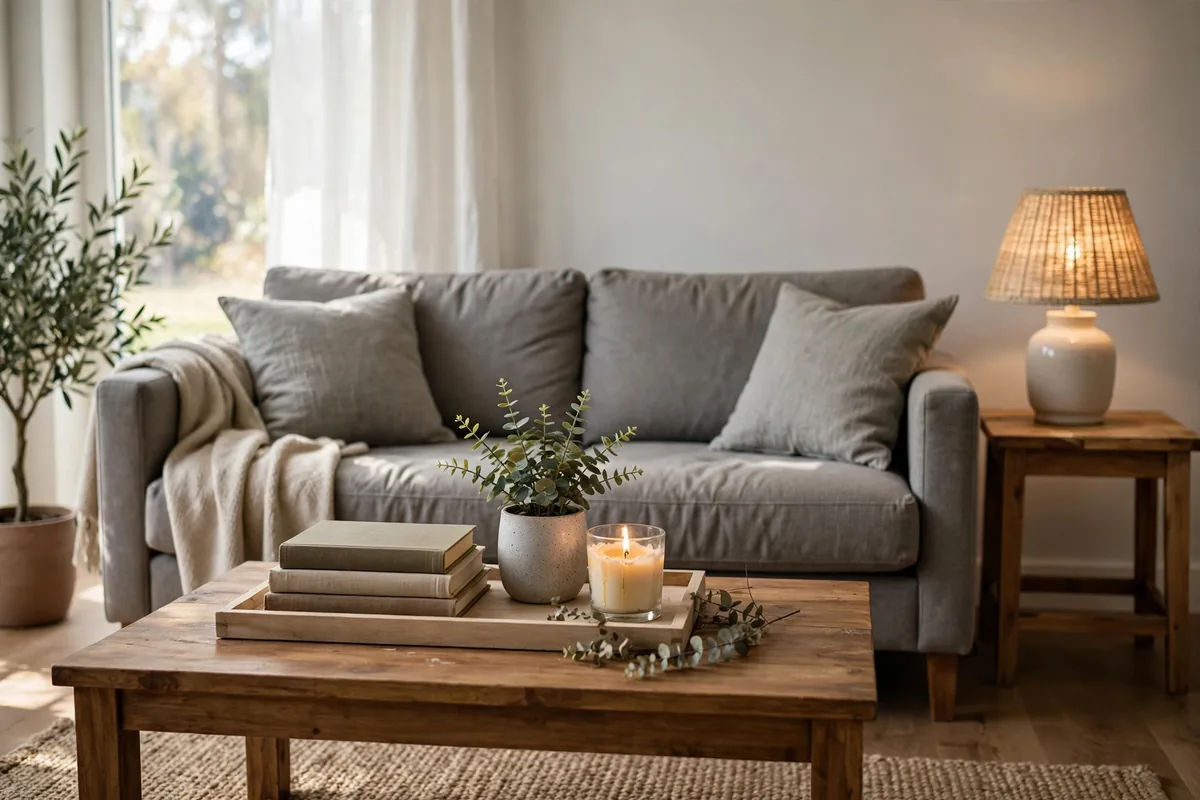
The tables around a neutral sofa carry contrast that the upholstery cannot. A warm wood coffee table grounds cream and gray sofas alike, stone or marble reads polished and cool, and black metal adds the sharp outline a soft scheme often needs. Keep proportions in check: the coffee table should reach roughly two-thirds of the sofa’s length, sit close enough to set down a drink comfortably, and stay a little lower than the seat.
A simple coffee table formula
- Start with a tray to corral smaller items and protect the surface
- Add one stack of two or three books for height and a personal note
- Finish with one living or sculptural element, such as a small plant, a ceramic bowl, or a candle
- Leave clear space for cups, remotes, and feet, because a table you cannot use is not styled, it is blocked
On side tables, repeat one material from the coffee table so the pieces feel related, then stop. A lamp, a coaster, and one small object is plenty. Symmetry on both ends looks tidy in photos but can feel rigid in real rooms, so vary the objects while keeping their overall heights balanced.
9. Add Plants, Natural Materials and Personal Accents
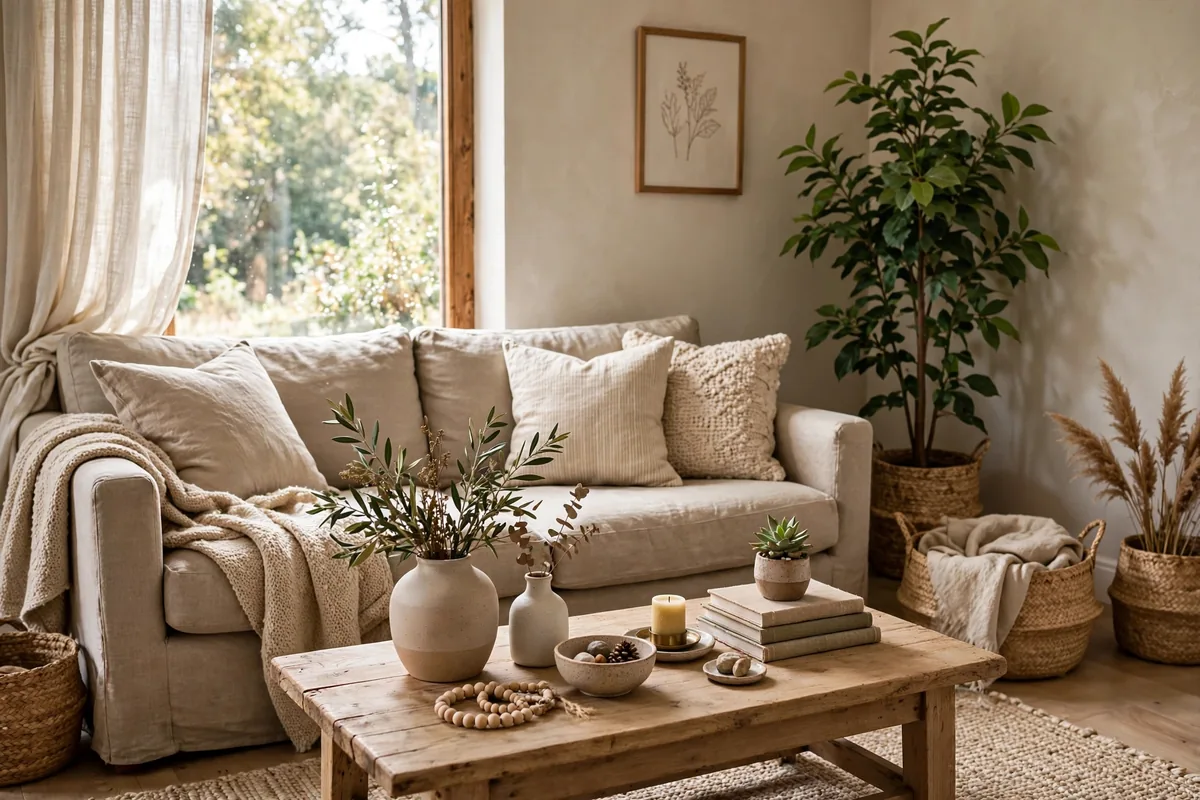
A neutral sofa styled only from a single store can look polished and still feel anonymous. Plants and personal objects are what make the arrangement yours. Greenery is especially effective against beige, cream, and gray because its color is vivid yet natural, and its irregular shape softens all the straight lines of sofas and tables. One tall plant in an empty corner adds height; a smaller trailing plant on a shelf or side table adds movement at eye level.
Accents that add life without clutter
- Woven baskets for spare throws, magazines, or firewood beside the sofa
- Ceramics, travel finds, or handmade pieces in your palette rather than generic filler decor
- Books you actually read, stacked on the table or a low shelf nearby
- One patterned textile, such as a striped or block-printed pillow, to break up solid neutrals
Edit ruthlessly. Group small objects in threes, give each group empty space around it, and remove anything that does not add color, texture, or meaning. If you are short on floor space, hang a plant or place it on a narrow console behind the sofa instead of squeezing a pot into the walkway. The goal is a room that looks collected over time, not decorated in a single afternoon.
10. Refresh Seasonally and Keep a Neutral Sofa Looking Clean
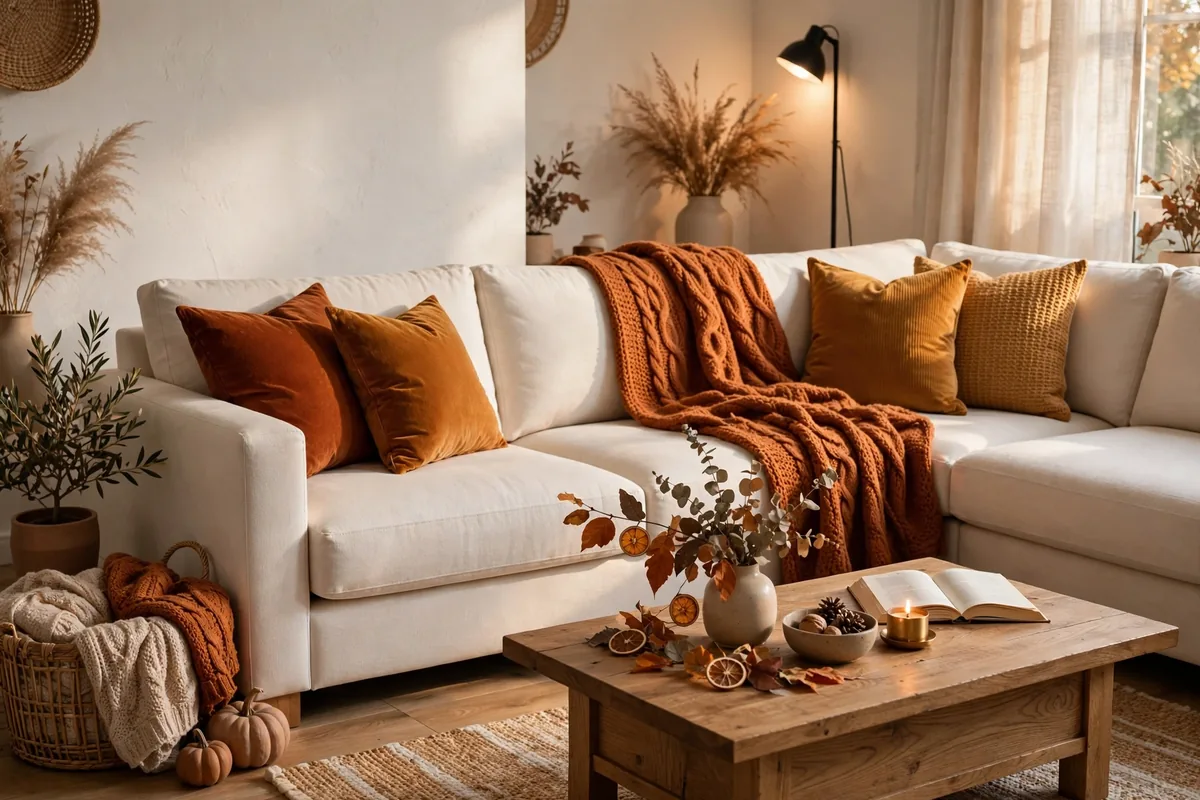
The greatest advantage of a neutral sofa is how cheaply it changes with the year. You do not redecorate; you rotate a small kit of covers, throws, and accents. In spring, lighten the layers with sage, dusty blue, or soft botanical prints and a cotton throw. In summer, strip back to linen textures and one airy accent. Autumn welcomes rust, amber, and deeper wood tones, while winter suits richer velvet pillows, a heavier throw, and warmer lamplight in the evening.
Care habits that protect light upholstery
- Vacuum upholstery weekly with an upholstery attachment, including under the cushions where grit wears fabric
- Rotate and flip seat and back cushions regularly so fading and wear stay even
- Blot spills immediately with a clean cloth; rubbing pushes liquid deeper into the weave
- Keep pillow inserts and swap only the covers for seasonal changes, which saves storage space
- Check the maker’s care label before using any cleaner, and test products on a hidden area first
Store your off-season set together, clean and fully dry, in one labeled box or basket. When everything has a place, a seasonal refresh takes twenty minutes, and your neutral sofa keeps earning its place as the calm, adaptable center of the room year after year.
Frequently Asked Questions About Neutral Sofa Styling
How many pillows should I put on a neutral sofa?
For most three-seat sofas, five pillows work well: two large at the corners, two medium in front, and one lumbar in the center. Loveseats usually need three, while sectionals can take five to seven. Always leave enough clear seat space that guests do not have to move pillows before sitting down.
What colors go best with a beige sofa?
Beige pairs reliably with warm white, camel, walnut brown, sage, and olive for a calm look. For contrast, try terracotta, rust, navy, or deep teal in pillows, art, or a throw. Keep one accent dominant and repeat it twice in the room so the color feels intentional rather than random.
How do I stop a neutral sofa from looking boring?
Add contrast through texture before color. Combine three or four finishes such as linen, velvet, boucle, and wood, then introduce one pattern and one deeper tone somewhere in the arrangement. Warm layered lighting also helps enormously, revealing texture in the evening that a single overhead light completely flattens out.
What rug color works with a gray sofa?
A rug one or two shades lighter or deeper than the gray sofa usually works best, especially in warm cream, soft taupe, or a faded pattern with warm threads running through it. Pure cool gray on cool gray can feel chilly, so weave in warmth through the rug, wood, or brass accents nearby.
Should my curtains match my neutral sofa?
Curtains do not need to match the sofa exactly, and an exact match can look flat. Choose curtains one shade lighter or deeper, or in a related neutral with visible texture such as linen weave. Echoing a pillow color in the curtains is another easy way to connect the window wall with the seating area.
How do I style a neutral sofa in a small living room?
Keep the palette tight: the sofa neutral, one support tone in wood or a rug, and one accent color only. Choose furniture with exposed legs, a low-pile light rug, and three pillows instead of five. Mirrors and warm white walls help the space feel open without adding visual clutter around the sofa.
Can I mix warm and cool neutrals in one room?
Yes, and most successful neutral rooms do exactly that. The key is choosing one temperature as dominant and using the other as support. For example, let a warm beige sofa and wood tables lead, then add cool gray only in smaller pieces like a pillow, a frame, or a stone accessory.
What throw blanket size is best for a sofa?
A standard throw around fifty by sixty inches drapes well over an arm and covers a lap comfortably without pooling on the floor. For a deep sectional or for two people sharing, a larger throw gives better coverage. Fold it in thirds lengthwise for the neatest drape over the arm or back.
How do I style a neutral sectional differently from a regular sofa?
Treat the corner as the anchor with your largest, most textured pillow, keep the middle seats lighter, and place just one lumbar on the chaise. Avoid lining every seat with identical pillows, which exaggerates the sectional’s size. A large rug under the whole arrangement and one throw on the chaise end balance its footprint.
How often should I change my sofa styling?
A light refresh each season is plenty for most homes: swap pillow covers, change the throw, and rotate one or two table accents. The sofa, rug, and main furniture stay the same. If the room still feels tired after that, adjust the lighting or artwork before buying more accessories.
Conclusion
Styling a neutral sofa is less about finding one perfect accessory and more about building layers in the right order. Start with a pillow arrangement that has structure, add texture before bold color, and choose a palette that respects whether your sofa leans warm or cool. Then work outward: a rug that truly grounds the seats, artwork hung at the right height, warm light at more than one level, and tables styled with room left to actually use them.
The encouraging part is how reversible all of it is. Pillow covers, throws, and small accents can change with the seasons while the sofa stays a calm, lasting base. Work through one section at a time, live with each change for a few days, and edit what does not earn its place. Styled that way, a neutral sofa never looks like a compromise. It looks like a deliberate foundation, comfortable, personal, and ready for whatever your home becomes next.



Pingback: Size Neutral Sofa Styling Inspiration: Pillow, Rug and Art Dimensions