
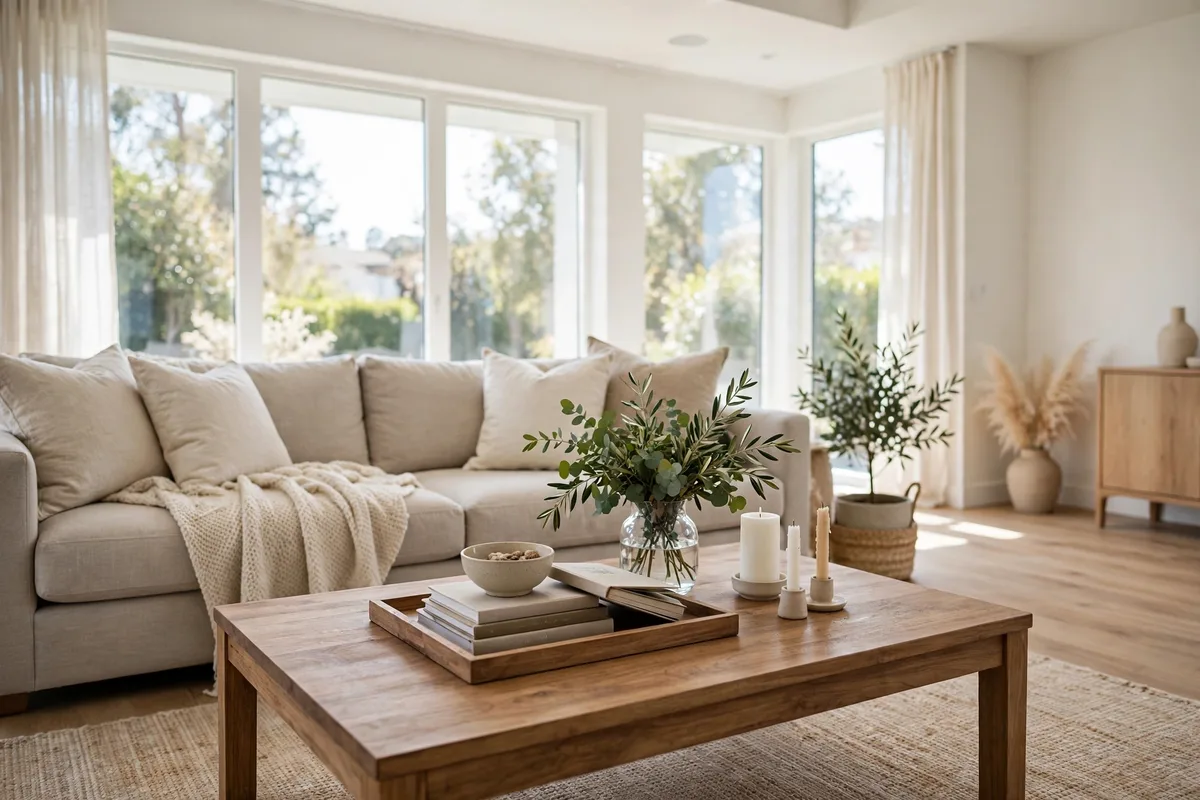
A coffee table sits in the middle of everything, which is why it can make a living room feel pulled together or quietly unfinished. It holds drinks and remotes, but it is also the first surface guests see up close. The good news is that styling it well is not about buying a matching set or copying a showroom. It is about a few repeatable decisions: one clear anchor, balanced heights, honest materials, and enough empty space to actually live on the table.
This guide walks you through the complete process, from clearing the surface to the final edit, with formulas for every table shape and size. Whether your table is a large rectangle in a busy family room or a small round piece in an apartment, you will learn how to build an arrangement that looks considered from every seat, photographs beautifully, and still works on an ordinary Tuesday evening.
1. Start With an Anchor Piece
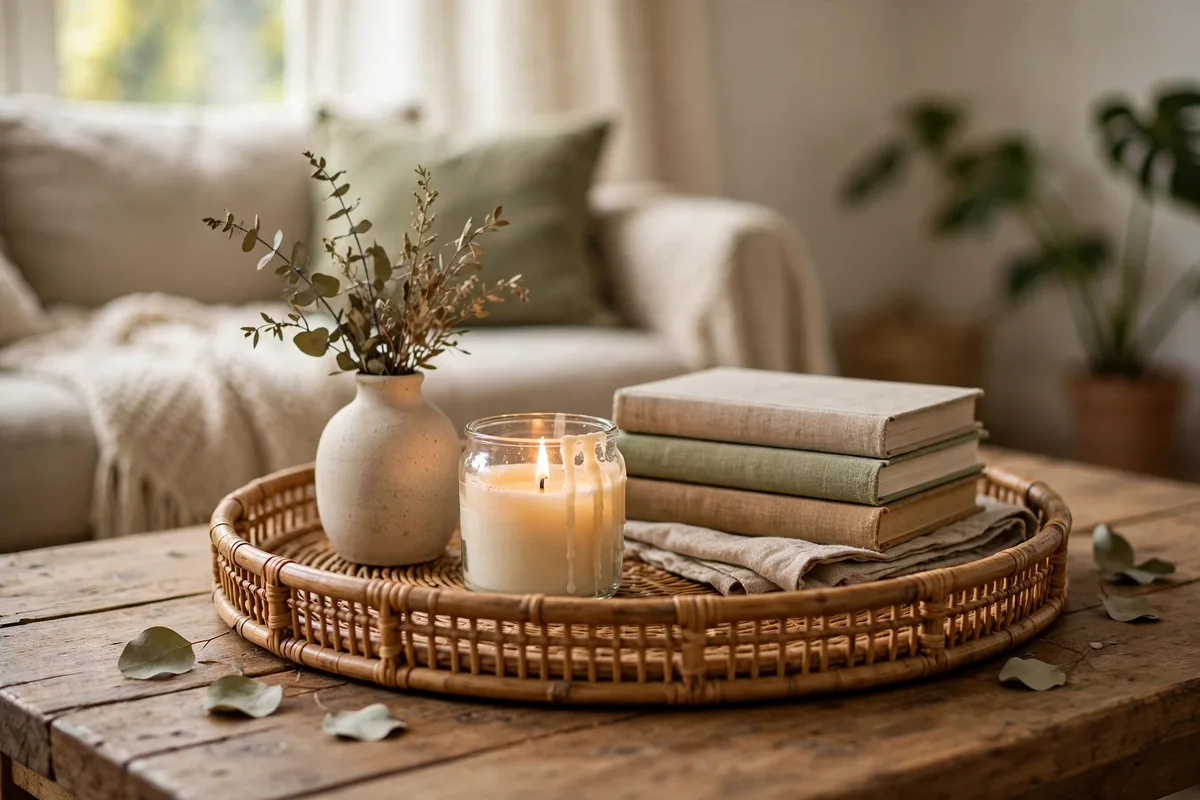
Every polished arrangement starts with one piece that does the organising. An anchor gives smaller objects a home, stops them drifting across the surface, and instantly makes the whole table read as one idea instead of several unrelated items. For most homes, that anchor is a tray, a low basket, or a single large book. Choose it first, before you reach for candles or ornaments, because its size and material will quietly set the scale for everything that follows.
Choosing the right anchor
- Tray: Best for everyday control. Pick wood for warmth, stone or marble for weight, rattan for texture, or metal for a little shine. It should cover roughly one quarter to one third of the tabletop.
- Low basket or shallow bowl: Ideal if you prefer a softer, relaxed look and want to hold magazines, remotes, or a folded throw.
- Oversized book or board: Works brilliantly on small tables where a tray would feel bulky.
Place the anchor slightly off centre on rectangular tables, and centred or just off centre on round tables. Then build only one main grouping on or around it. If you are gathering inspiration first, browse these coffee table decor ideas to see how different anchors change the mood of the same table.
2. Match Your Layout to Your Table Shape and Size
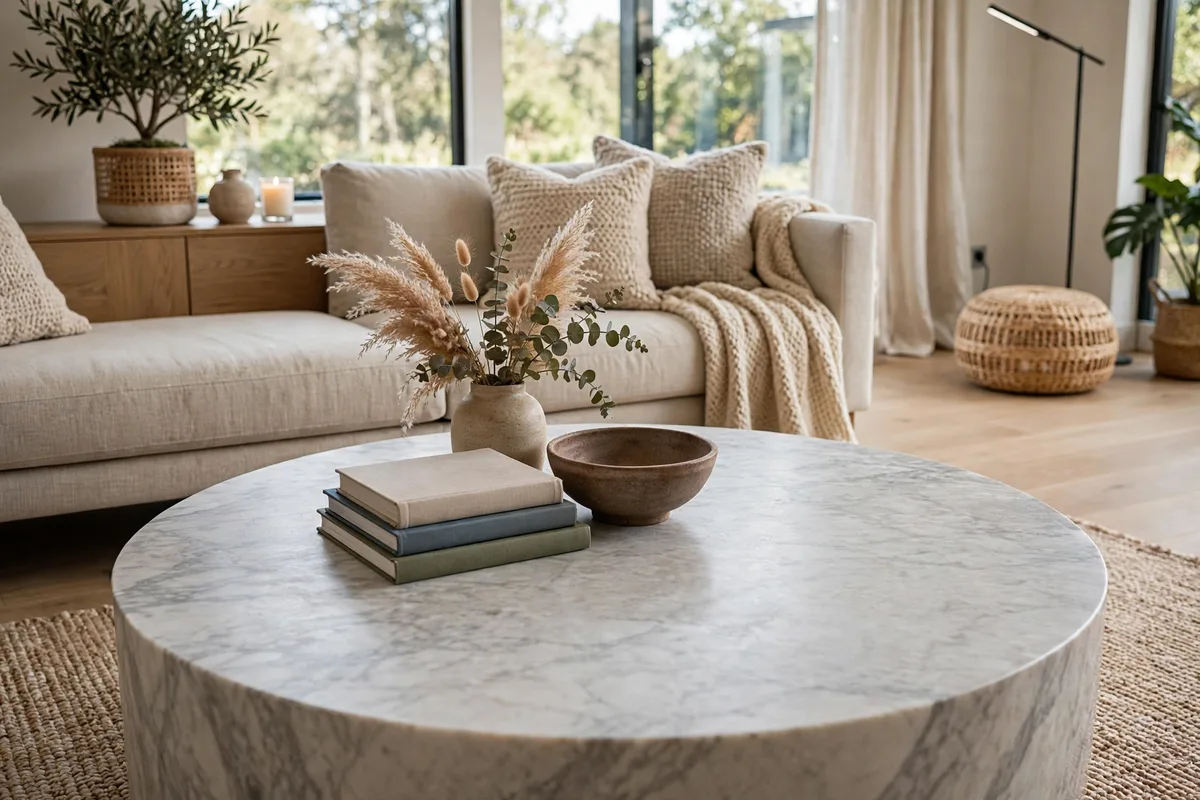
A styled table often looks wrong not because of the objects, but because the layout fights the shape underneath them. A long table needs zones, a round table needs a cluster, and a square table needs quadrants. Once the layout suits the footprint, even simple flowers and library books look intentional.
| Table shape | Best layout | Anchor placement | Ideal number of groupings |
|---|---|---|---|
| Rectangular | Rule of thirds along the length | Tray in the centre third | 2 to 3 zones |
| Round | One central cluster or offset cluster with a crescent left open | Round tray near the centre | 1 main cluster |
| Square | Four-square grid | Tray in one quadrant | 3 styled quadrants, 1 left open |
| Oval | Stretched cluster along the long axis | Oval or rectangular tray off centre | 1 to 2 groupings |
| Small or nesting | Single stack plus one accent | Books act as the anchor | 1 grouping only |
Sizing rules that prevent mistakes
Keep decor in proportion: tiny objects disappear on a large table, while one oversized vase can crowd a compact one. Measure your tabletop, keep the anchor to about a third of its area, and always leave a clear landing strip near the sofa edge for mugs and plates.
3. Build Height With a Simple Triangle
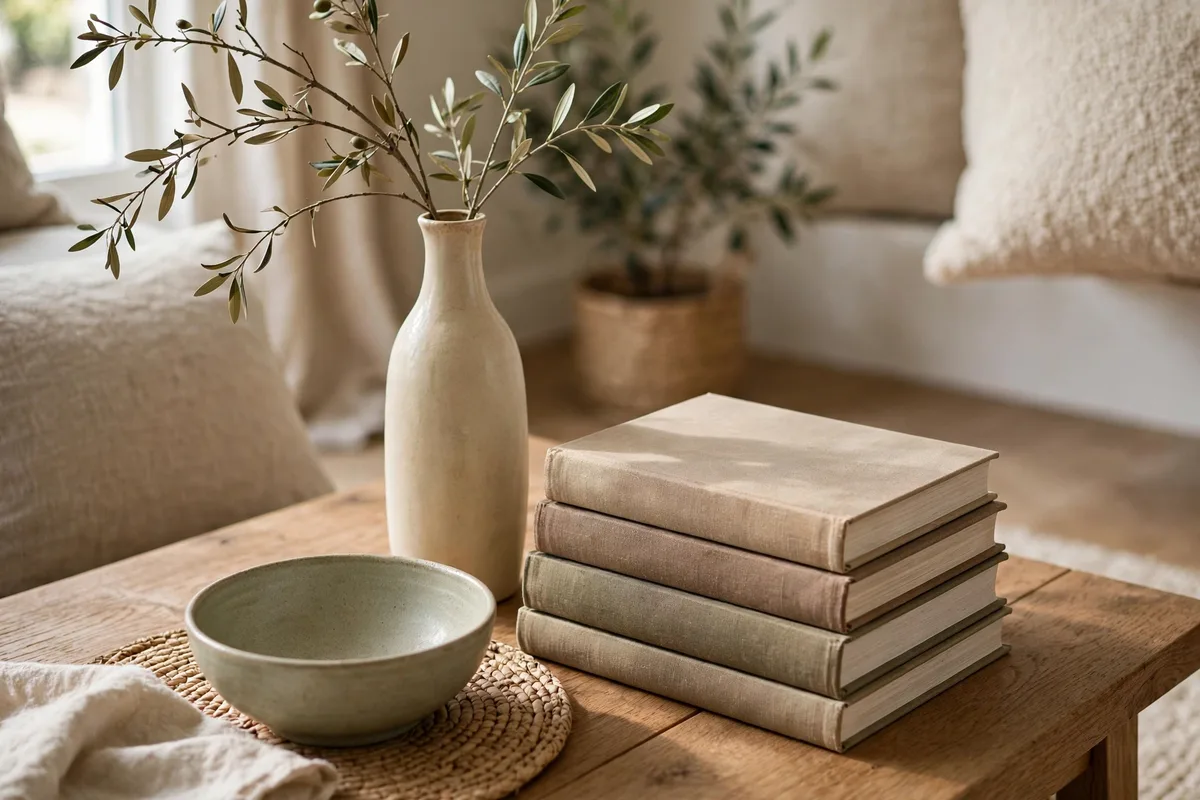
Flat arrangements feel dull because the eye has nowhere to travel. Designers solve this with a loose triangle: one tall piece, one medium piece, and one low piece grouped close together. That rising and falling line creates depth without needing lots of objects. You simply need a clear difference between the three levels so the grouping feels layered rather than lined up.
| Level | Target height | Reliable choices | Job in the arrangement |
|---|---|---|---|
| Tall | About 12 to 18 inches including stems | Vase with branches, tall candlestick, small sculptural lamp | Lifts the eye and adds energy |
| Medium | About 6 to 10 inches | Stack of books, lidded box, medium candle, small plant | Bridges tall and low, adds body |
| Low | About 1 to 4 inches | Bowl, tray, coasters, bead strand, low dish | Grounds the grouping and spreads weight |
How to arrange the triangle
- Put the tall piece at the back of the cluster, away from the main seating if it might block sightlines to the television.
- Angle the medium piece slightly toward the tall piece so they feel connected.
- Let the low piece overlap the front edge of the grouping. That small overlap is what makes separate items read as one vignette.
Check from where people sit. If the tall piece blocks conversation or the screen, swap tall stems for a shorter, wider vase and rebuild height with books.
4. Stack Books Like a Stylist, Not a Bookshelf

Books are the hardest-working styling tool you own. A short stack adds height, introduces colour, creates a flat stage for a small object, and tells visitors what you care about, all at once. The trick is to treat books as building blocks rather than storage. Two or three large-format books are almost always enough for one stack. More than that starts to look like a side table in a bookshop and steals surface you need for daily life.
Building a stack that looks deliberate
- Choose by size first, subject second. Pick books of similar width so the edges line up cleanly, then make sure the subjects genuinely interest you: travel, gardens, architecture, food, photography, or design all work well.
- Mind the spines and covers. Neutral linen or muted covers calm a busy room. One colourful cover can become the accent colour for the whole table.
- Stagger, do not perfect. Offset each book by a small amount or turn the top book a few degrees. Perfectly squared stacks can look stiff.
- Top only one stack. Finish a single stack with a small object, reading glasses, or a candle. Leave a second stack plain so the table breathes.
Rotate books from your shelves every few months. It costs nothing and keeps the arrangement feeling collected.
5. Add Something Living for Softness and Movement
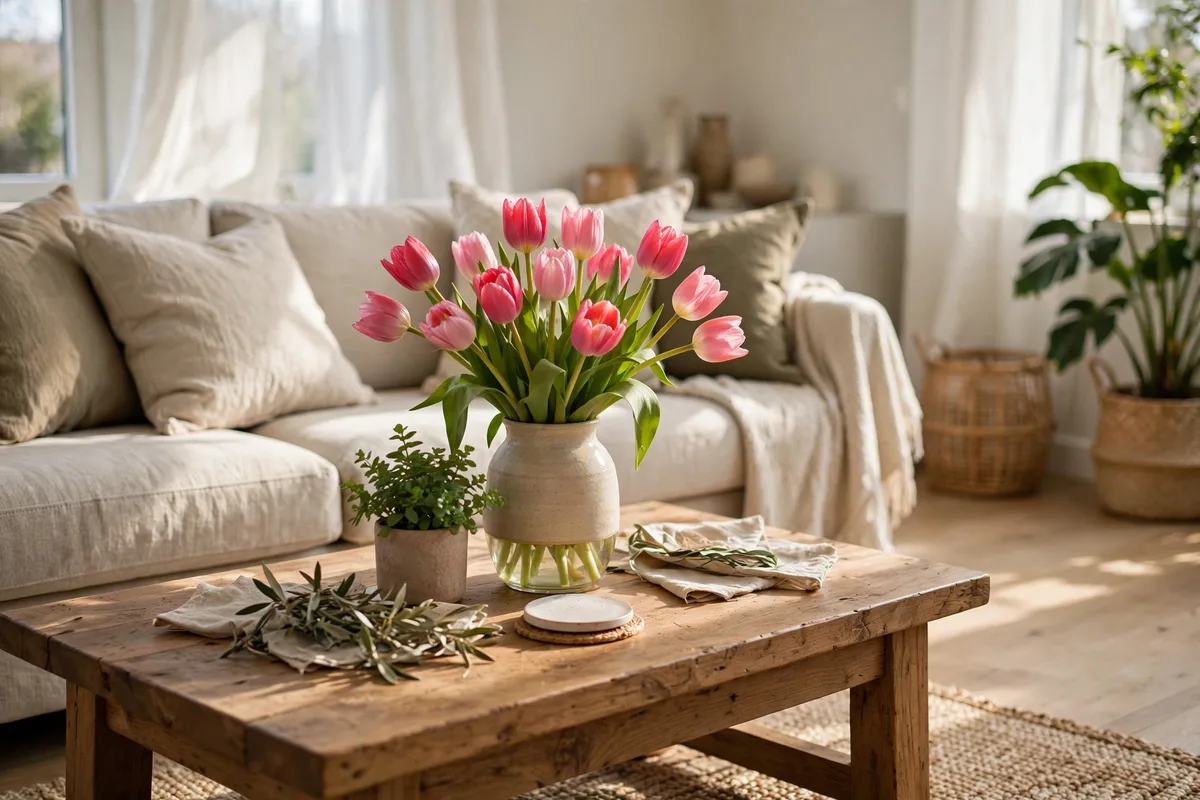
Every hard surface in a living room, wood, glass, stone, and metal, benefits from something that grows, droops, or moves a little. A living element softens straight lines, fills awkward gaps between objects, and stops a careful arrangement from feeling staged. It does not need to be a large bouquet. A single stem in a bud vase, a small potted herb, or a few branches gathered in a tall vessel can do the same job with far less maintenance and expense.
Reliable living options for every light level
- Bright rooms: A small olive, fern, or potted herb thrives and rewards you with changing growth.
- Low-light rooms: Use a sturdy pothos cutting in water, preserved eucalyptus, or good-quality faux stems mixed with a couple of real leaves for believability.
- Busy households: Choose a low, wide succulent or a moss-filled bowl that will not topple or shed petals into drinks.
- Seasonal pleasure: Tulips in spring, garden roses or hydrangeas in summer, dahlias in autumn, and evergreen clippings in winter keep the table connected to the year.
Keep foliage clear of candle flames, and use a watertight vessel or liner so rings never damage the table. Replace water every few days and trim stems at an angle. Small, consistent care keeps this layer looking fresh.
6. Layer Texture and Colour Without Clutter
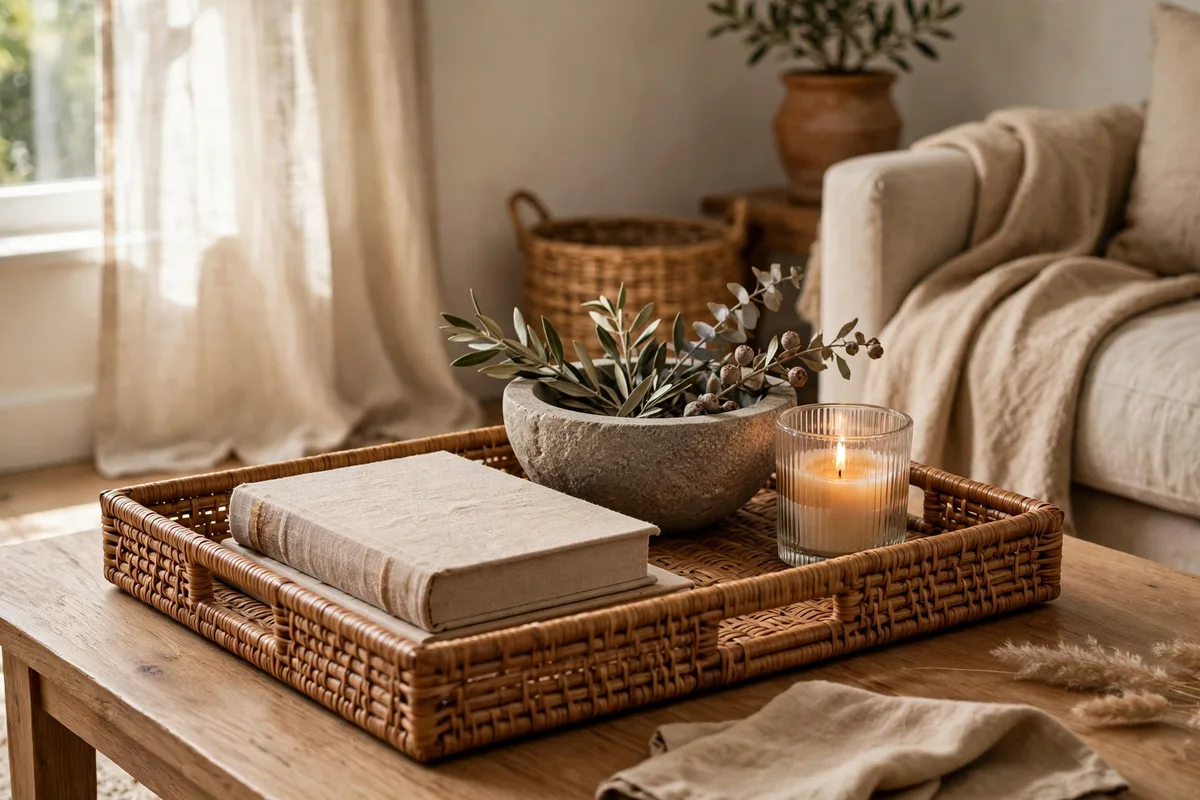
A table styled in only one material, all glass, all polished metal, or all smooth ceramic, tends to look flat even when the objects are beautiful. Interest comes from contrast: rough beside smooth, matte beside glossy, woven beside solid. Aim for three to four textures across the whole table, repeated at least twice so nothing feels like an accident. A wooden tray, a linen-bound book, a stone bowl, and a glass candle holder already give you a rich mix without adding a single extra item.
A simple colour method
Build colour from the room you already have rather than inventing a new palette for one surface. This approach also supports the designer-approved features of a timeless living room, where restraint ages better than trends.
- Base, about sixty percent: The tray and books in your room’s dominant neutral.
- Support, about thirty percent: One secondary tone borrowed from cushions, the rug, or curtains.
- Accent, about ten percent: A single stronger note, perhaps flowers, a cover, or a painted box.
Repeat your metal finish in two places, for example a brass candle holder and a small brass object on the books. That echo ties the grouping together more effectively than matching every accessory exactly.
7. Make It Personal With One Storytelling Piece
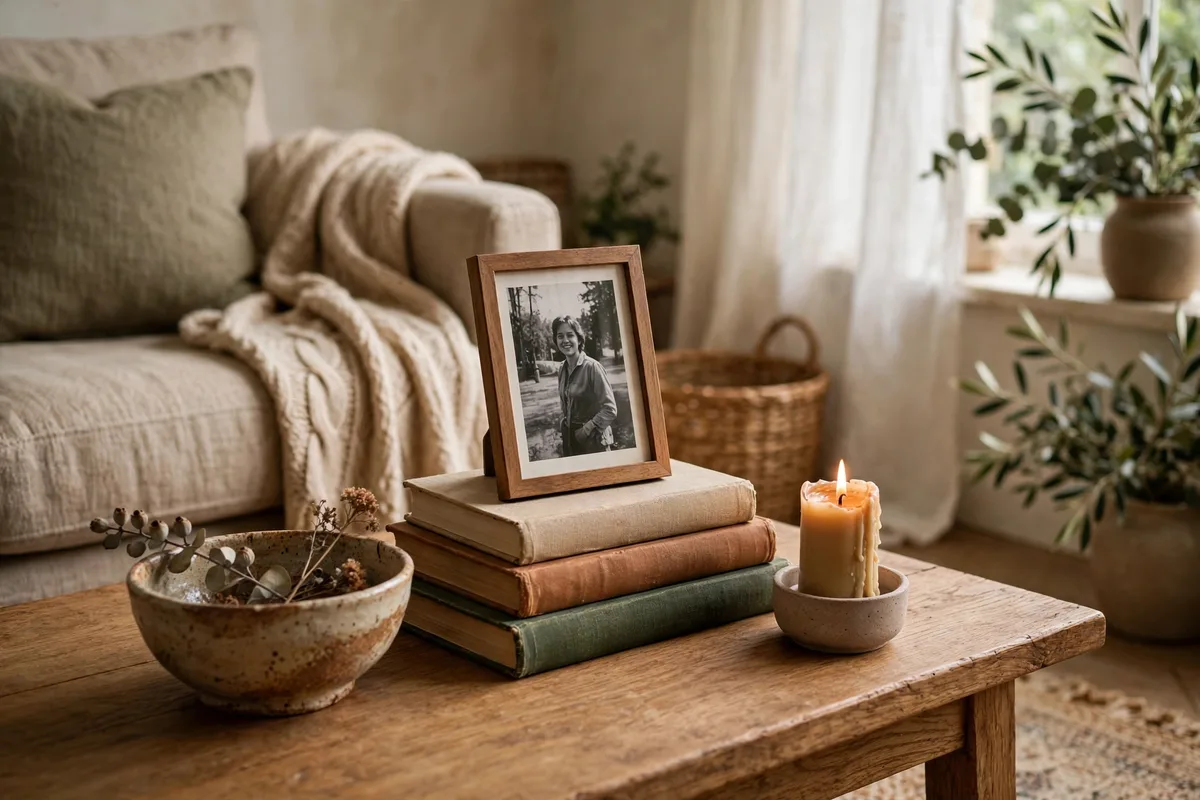
Without something personal, a well-styled table can look like a hotel lobby: pleasant, correct, and instantly forgettable. One storytelling piece fixes that. It might be a shell or stone from a favourite trip, a small framed photograph, a handmade bowl, a vintage game, or an object inherited from family. Personal does not mean precious or cluttered. It means a guest could point to one thing on your table and you would have something real to say about it.
Choosing and placing your piece
- Pick meaning over value. The best conversation pieces are rarely the most expensive items in the room.
- Give it a stage. Rest it on the book stack or inside the tray so it reads as the highlight of a grouping, not a stray item left behind.
- Limit it to one, or at most two. A table covered in mementos becomes a display cabinet. One strong piece earns attention precisely because it is not competing.
- Keep it touchable. If an object is too fragile to be picked up and admired, it belongs on a shelf, not in the centre of daily life.
Swap this piece occasionally. Bringing out a holiday ornament, a new travel find, or a child’s small creation for a few weeks keeps the table feeling alive and truly yours.
8. Keep It Functional for Drinks, Remotes and Guests
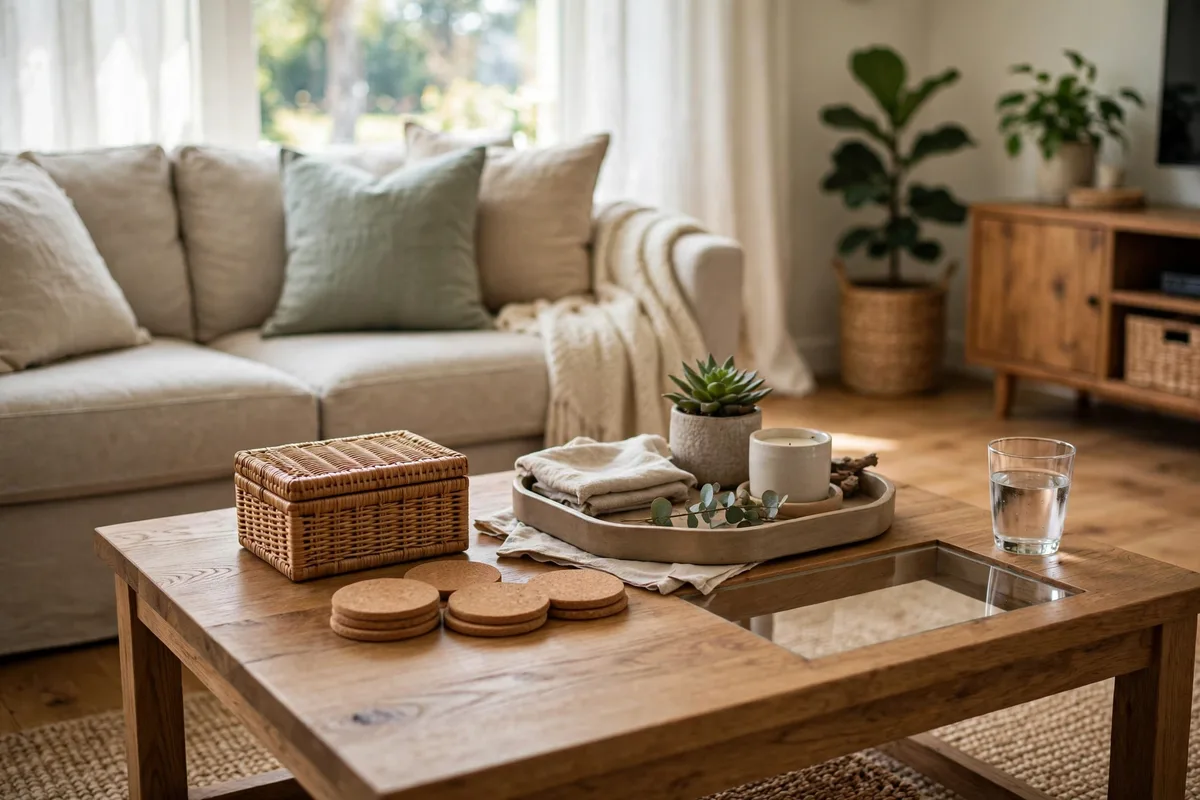
A coffee table that cannot hold a coffee has failed at its main job, no matter how good it looks in a photograph. Function is not the enemy of style, it is the test of it. Plan for real life while you style: leave roughly a third to two fifths of the surface completely clear, keep coasters within easy reach of every seat, and give remotes and chargers a proper home inside a lidded box or decorative book-style storage rather than letting them sprawl beside your arrangement.
Practical systems that still look good
- The lift-away test: Everything in your main grouping should sit on the tray or a book stack so you can clear the whole table in under a minute for games, puzzles, or a serving board.
- Lower shelf discipline: If your table has a second level, style it sparingly with a basket, a neat magazine stack, or a folded throw. Treat it as storage with standards, not a hiding place.
- Household-proof choices: With children or pets, favour rounded bowls, unbreakable materials, flameless candles, and heavy trays that slide rather than tip.
- Hosting mode: For gatherings, slide your groupings to one end, add a drinks tray, and let the cleared space become the buffet. Good styling should flex, not collapse, when friends arrive.
9. Refresh With the Seasons Without Starting Over

The smartest coffee tables are built on a permanent base that rarely changes, with a small seasonal layer that does. Your tray, books, bowl, and box can stay in place all year. What changes are the stems, the candle scent, the accent colour, and perhaps the storytelling piece. That single swap takes ten minutes, costs very little, and makes the whole living room feel current, which is exactly why designers refresh surfaces far more often than they replace furniture.
A year of easy seasonal swaps
- Spring: Pale tulips or blossom branches, a lighter linen book cover on top, and a citrus or fresh floral candle.
- Summer: A bowl of lemons or shells, loose garden greenery, and woven or rattan textures moved to the front.
- Autumn: Dahlias or dried grasses, warmer amber glass, a plaid or wool throw folded on the lower shelf, and a woodsy candle.
- Winter: Evergreen clippings, pinecones in the bowl, taper candles for longer evenings, and one metallic accent for glow.
Photograph each version you love on your phone before you change it. After a year you will own a small library of proven arrangements for your exact table, ready to repeat instead of reinvent. In compact rooms, these light seasonal touches work especially well alongside smart small living room layout ideas that protect precious floor and surface space.
10. Edit, Photograph and Fix What Feels Off
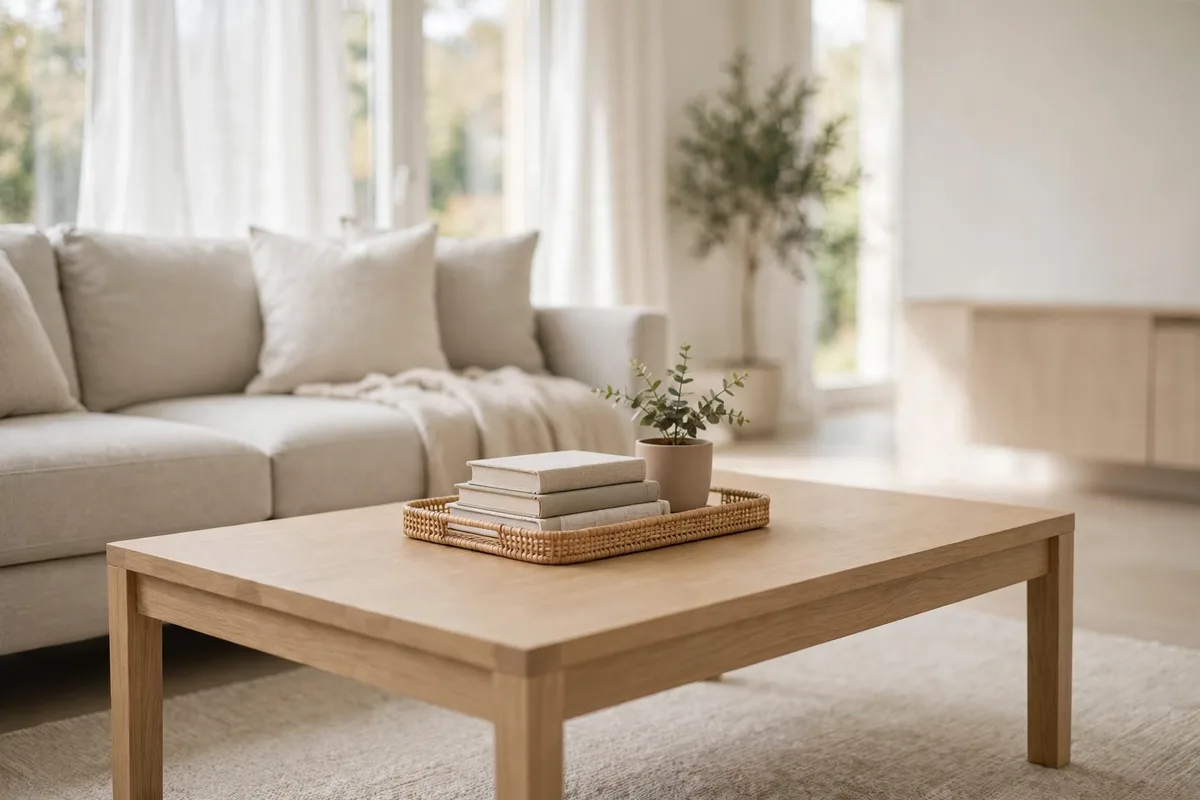
The final step is the one most people skip, and it separates a styled table from a decorated one. When you think you are finished, remove one item. Then sit in each seat and take a phone photograph from the doorway and the sofa. A photo flattens the arrangement into shapes and colours, making problems obvious: a cluster drifting to one side, everything the same height, or too many small pieces competing.
Troubleshooting the five most common problems
- Looks cluttered: Remove two small items and group what remains tightly on the tray. Empty space is the fix, not more storage.
- Looks flat and boring: Add one taller stem or raise the medium piece on an extra book. Check your triangle from section three.
- Looks scattered: Your anchor is too small or missing. Gather the grouping closer until pieces almost touch.
- Looks cold or showroom-like: Add wood, woven texture, or a personal piece, and swap one perfect object for something handmade or worn.
- Looks good but never stays that way: Your system is too complicated for daily life. Simplify to tray, books, and one living element, and give every everyday item a lidded home.
Live with the result for a full day before buying anything new. Most tables need editing and rearranging of pieces you already own, not another purchase.
Frequently Asked Questions About Coffee Table Decor
How many items should you put on a coffee table?
Aim for three to five pieces in total, counting a tray or a stack of books as one piece. That count includes something tall, something low, and something living. Always leave about a third of the surface empty so the table stays usable for drinks, books, and everyday life.
What is the best size tray for a coffee table?
Choose a tray that covers roughly one quarter to one third of your tabletop. On a round table, a tray about one third of the diameter works well. It should be large enough to hold your main grouping, yet small enough to lift comfortably when you need the full surface.
How tall should coffee table decor be?
Include one taller piece around twelve to eighteen inches high including stems, balanced by medium and low items. Keep the tallest piece below seated eye level so it never blocks conversation or the television. If sightlines are tight, build height gradually with books instead of using one very tall object.
Should a coffee table tray match the table shape?
Matching shapes looks calm and orderly, so a rectangular tray suits a rectangular table and a round tray echoes a round table. Contrast can also work beautifully, especially a round tray softening a square table. Either way, keep proportions consistent and let the tray’s material complement, rather than copy, the table.
What do you put on a small coffee table?
Use one compact grouping only: a small stack of two books, a bud vase or candle on top, and a tiny tray or bowl for essentials. Skip large trays and tall arrangements. Choosing clear glass, light colours, and reflective accents helps the surface feel open rather than crowded in a small room.
How do you style a coffee table with a lower shelf?
Keep the lower shelf deliberately simple so it supports rather than competes with the top. Use one woven basket, a neat stack of magazines or books, or a folded throw. Avoid filling every corner. A calm lower level adds useful storage and visual weight, especially beneath glass-topped tables where everything remains visible.
Can you style a coffee table without a tray?
Yes. A stack of large books, a low board, or a shallow basket can anchor a grouping just as effectively. The anchor’s job is to gather items into one clear zone. Without any anchor, pieces tend to drift and look scattered, so choose at least one grounding base for your arrangement.
What is the rule of three in coffee table styling?
The rule of three means grouping items in odd numbers, especially threes, because they feel more natural and dynamic than even groupings. A common version combines a tall vase, a medium stack of books, and a low bowl. You can extend the idea to groups of five on larger tables, keeping heights varied throughout.
How often should you restyle your coffee table?
Do a light seasonal refresh by changing stems, a candle, and one accent colour, which takes only a few minutes. Restyle more fully when your cushions, rug, or room colours change, or when the table stops working for daily life. There is no fixed schedule; edit whenever the arrangement feels tired or cluttered.
How do you keep a styled coffee table tidy with kids and pets?
Choose sturdy, rounded, and unbreakable pieces, keep everything on one lift-away tray, and store remotes and small toys in a lidded box. Use flameless candles and low, stable plants or bowls. Most importantly, keep the arrangement simple enough to reset in a minute, because a realistic system is the one that survives.
Conclusion
Styling a coffee table like a pro is a process, not a purchase. Start with an anchor, fit the layout to your table’s shape, build a triangle of heights, and layer books, living greenery, texture, colour, and one personal piece that means something to you. Protect clear space for real life, swap a small seasonal layer instead of starting over, and finish with an honest edit guided by a photograph. Follow those steps in order and your table will stop being a landing strip for clutter and become what it should be: the calm, welcoming centre of the room where people gather, set down a drink, and feel at home.



Pingback: Layout Coffee Table Decor Inspiration: Grids, Triangles and Layers