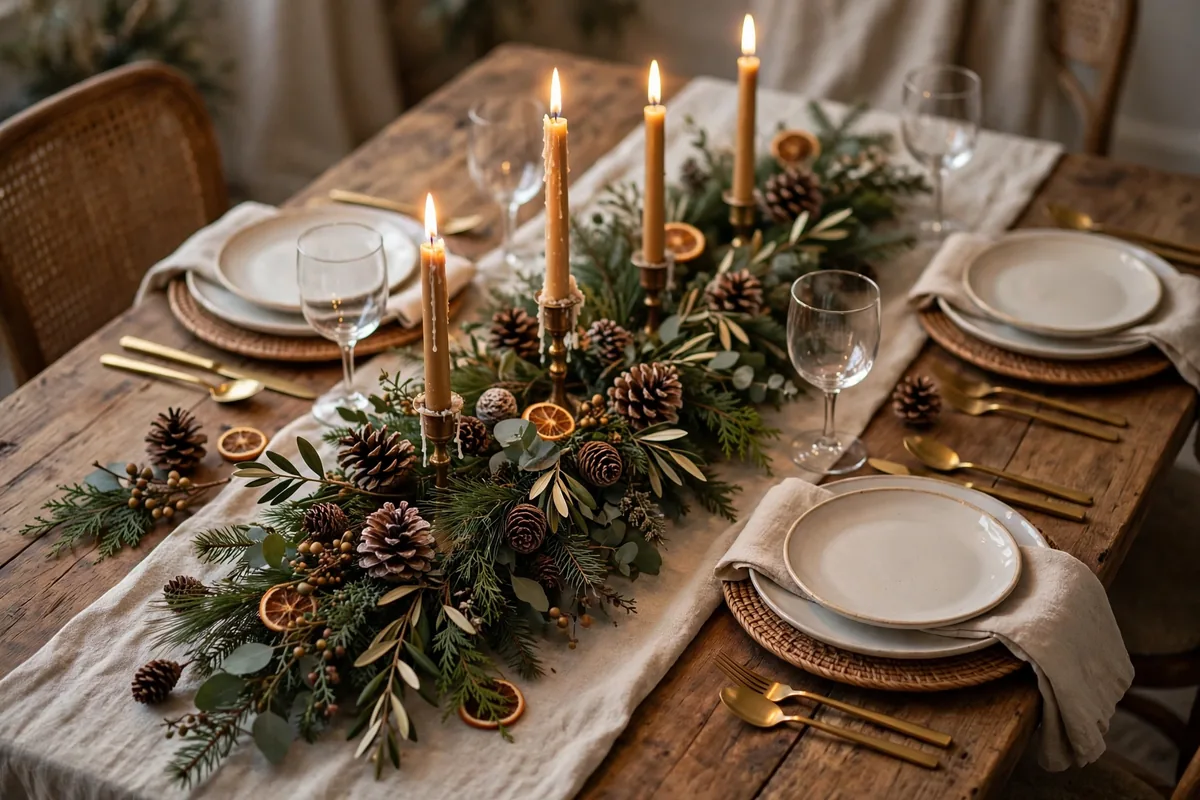
Most dining tables live two lives: bare and ignored for everyday meals, then panic-dressed twice a year for guests. The better model is a table with a permanent, neutral foundation that takes a twenty-minute seasonal layer — a runner swap, a centerpiece change, one accent colour — so the room feels current all year and hosting never starts from zero.
Build the base once, then work through the year’s five table moods: spring, summer, fall, the holiday table, and the calm white winter that follows it.
In this guide: The Seasonal Table at a Glance · 1. Build the Year-Round Base First · 2. Layer the Textiles by Season · 3. Spring: Tulips, Branches and Glass · 4. Summer: Citrus, Herbs and an Easy Table · 5. Fall: Pumpkins, Amber Glass and Warm Wood · 6. The Holiday Table: Evergreen and Candlelight · 7. Winter Whites: The Calm Table After the Holidays · 8. One Focal Point, Never Five · 9. Place Settings That Adapt With a Fold · 10. The Twenty-Minute Seasonal Swap · Frequently Asked Questions About Seasonal Dining Tables · Conclusion
The Seasonal Table at a Glance
| Season | Linens | Centerpiece | Accent + Glow |
|---|---|---|---|
| Spring | White or pale linen, green napkins | Tulips or branches in glass | Fresh green; daylight, white candles |
| Summer | Natural weave, striped or citrus napkins | A bowl of citrus or garden herbs | Woven texture; votives for long evenings |
| Fall | Warm plaid or rust runner | Mini pumpkins, dried stems | Amber glass; pillar candles |
| Holiday | Deep green or red, gold-rim napkins | Evergreen garland + pinecones | Metallic touches; tapers + fairy lights |
| Winter whites | White and cream layers | White candles, wood, ceramic | Silver or clear glass; calm candlelight |
1. Build the Year-Round Base First
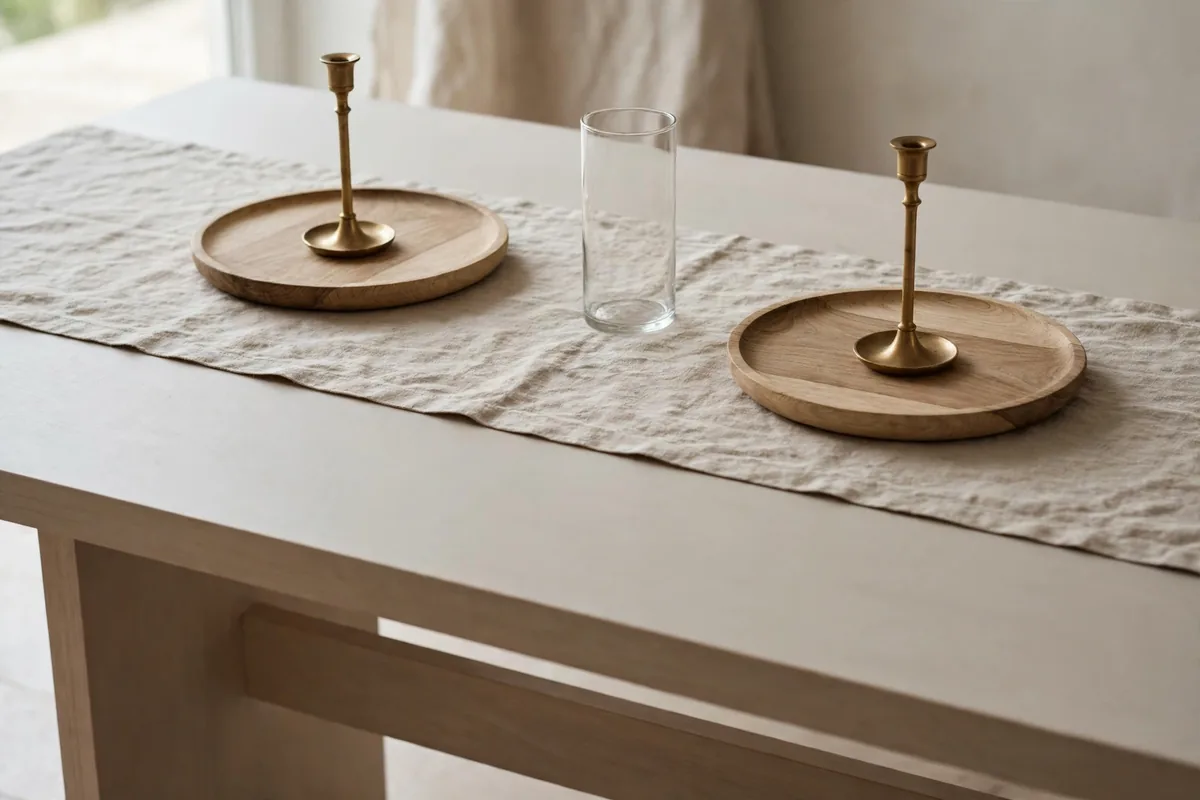
Every season stands on the same four pieces: a neutral runner or cloth (natural linen, undyed cotton), chargers or placemats that suit your table’s wood, plain candlesticks in one metal, and a single good vase or bowl. These never get packed away. The timeless-tablescape method from Highland Home Design is built on exactly this anchor — runner down the middle, one vase whose contents change, candles for glow.
It is the tabletop version of the base-and-swap system in our reusable seasonal decorations ideas: because the base is neutral, every seasonal layer reads clearly, and because it is always in place, even Tuesday dinner lands on a table that looks considered. The arithmetic is the house’s own: this table is the year-round neutral base performed on one surface — fix the base, rotate the season.
2. Layer the Textiles by Season
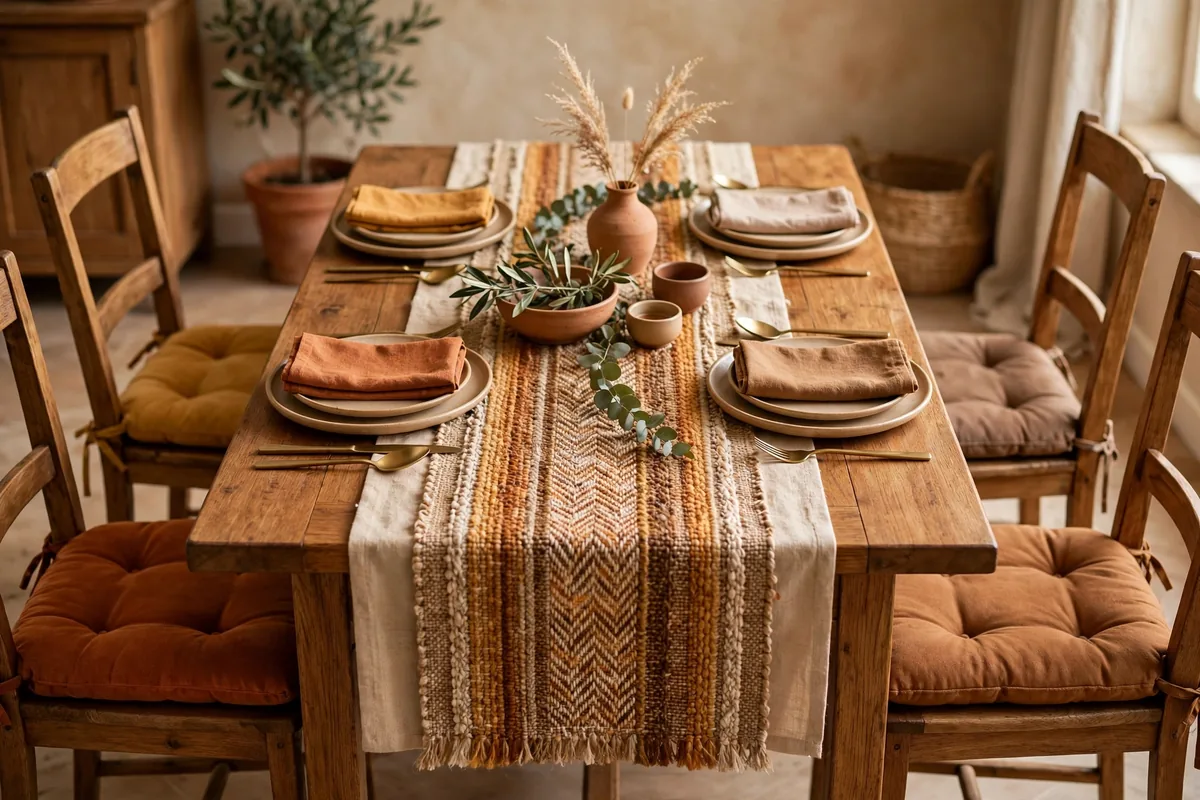
Above the base, textiles carry the season: the runner’s colour and weight, the napkins, and — the piece most people forget — seat pads on the chairs. Spring wants pale linen and green; summer, natural weaves and stripes; fall, plaid and rust; winter, the deep and heavy set. Two runner-and-napkin sets per half of the year is plenty if the textures differ honestly.
The weights and weaves follow the same logic as the house-wide layering in our winter cozy textiles ideas — light and breathable in the warm months, insulating and tactile in the cold ones — so the table never fights the room around it.
3. Spring: Tulips, Branches and Glass
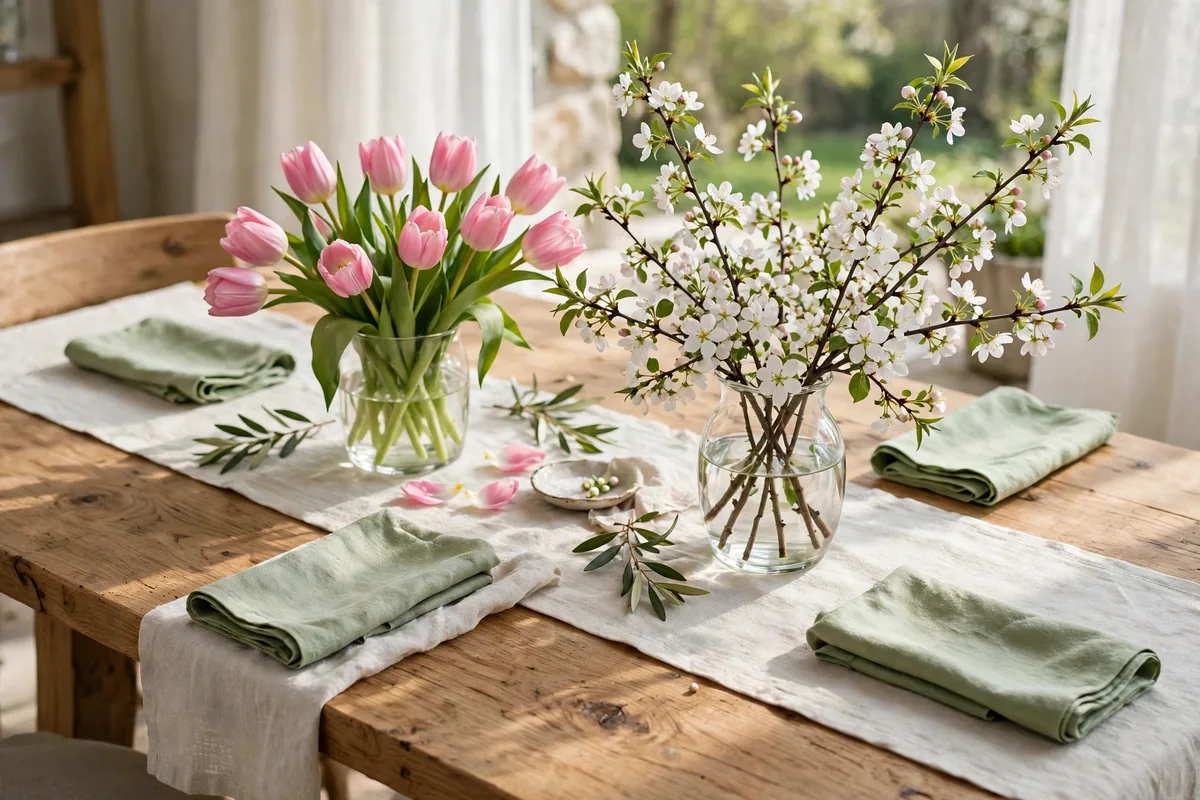
Spring’s centerpiece is height and freshness: tulips, daffodils or blossom branches in clear glass so the stems show — the season is about growth, and glass lets the table stay light. Table-setting guides such as Tableco’s seasonal centerpiece tips put a bouquet in a glass vase at the top of the spring list for the same reason: nothing about it is heavy, stored-feeling or wintry.
Keep the rest pale and simple: white or stone plates on the base chargers, green or botanical napkins, and water glasses that catch the returning light. If you mark Easter, this table takes pastel eggs in the centerpiece bowl for a fortnight without changing anything else.
4. Summer: Citrus, Herbs and an Easy Table
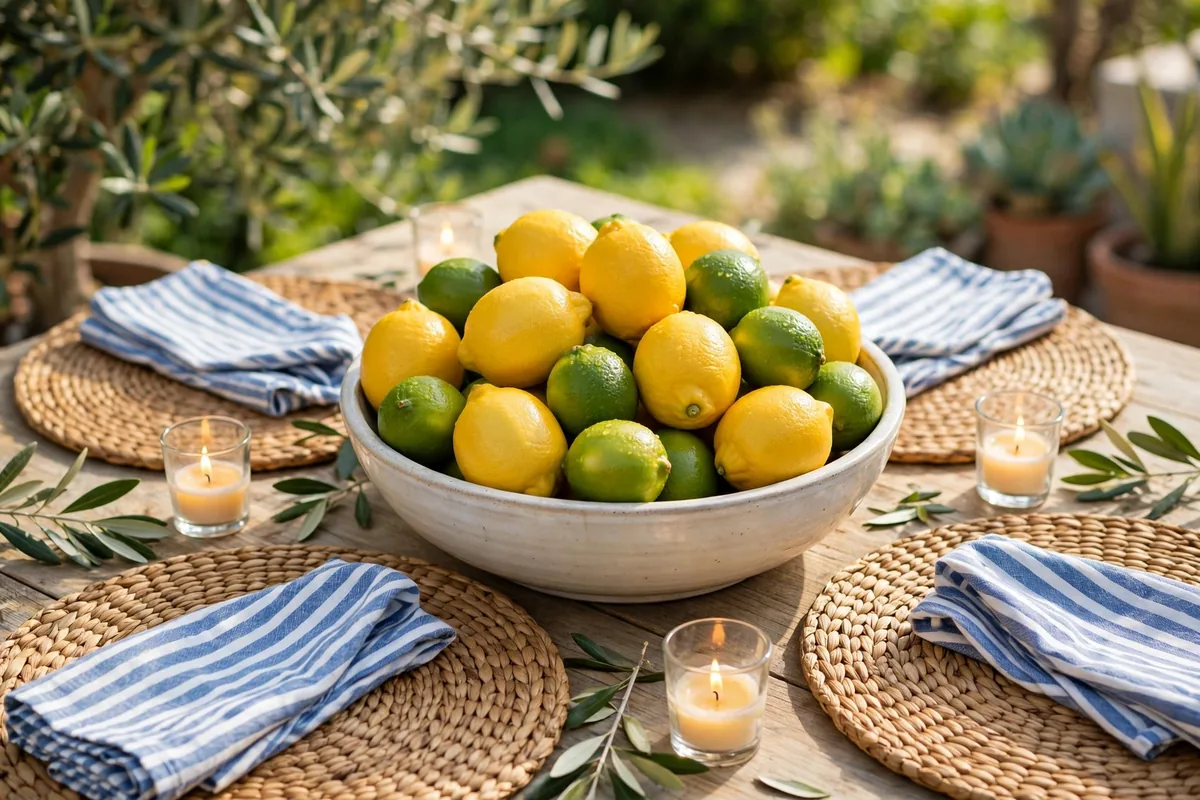
Summer’s centerpiece should be edible, low and unbothered by heat: a bowl of lemons and limes, a terracotta row of herb pots, or tomatoes on the vine when the garden provides. Woven placemats replace formality, napkins go striped or citrus-toned, and the candlesticks take votives for evenings that run late and outdoors-adjacent.
The guiding rule is ease — nothing on a summer table should need arranging, watering twice a day, or an explanation. If guests move it aside for a serving platter, it has failed; summer centerpieces live at the table’s edges of attention, not its centre of operations.
5. Fall: Pumpkins, Amber Glass and Warm Wood

Autumn is the table’s richest season: mini pumpkins and gourds scattered along the runner, dried stems or wheat in the base vase, amber glassware and pillar candles doing the glow. Wooden chargers and the plaid runner ground it; the palette is the harvest one — rust, ochre, cream, warm brown.
Build it once in early October and it carries through Thanksgiving with nothing but a candle refresh — swapping the Halloween-fortnight pieces (a black candle, a silhouette) out on November 1st, exactly like the porch and entryway overlays elsewhere in the house. This table performs the autumn palette at table scale — the full colour system behind it lives in our autumn color palette guide.
6. The Holiday Table: Evergreen and Candlelight
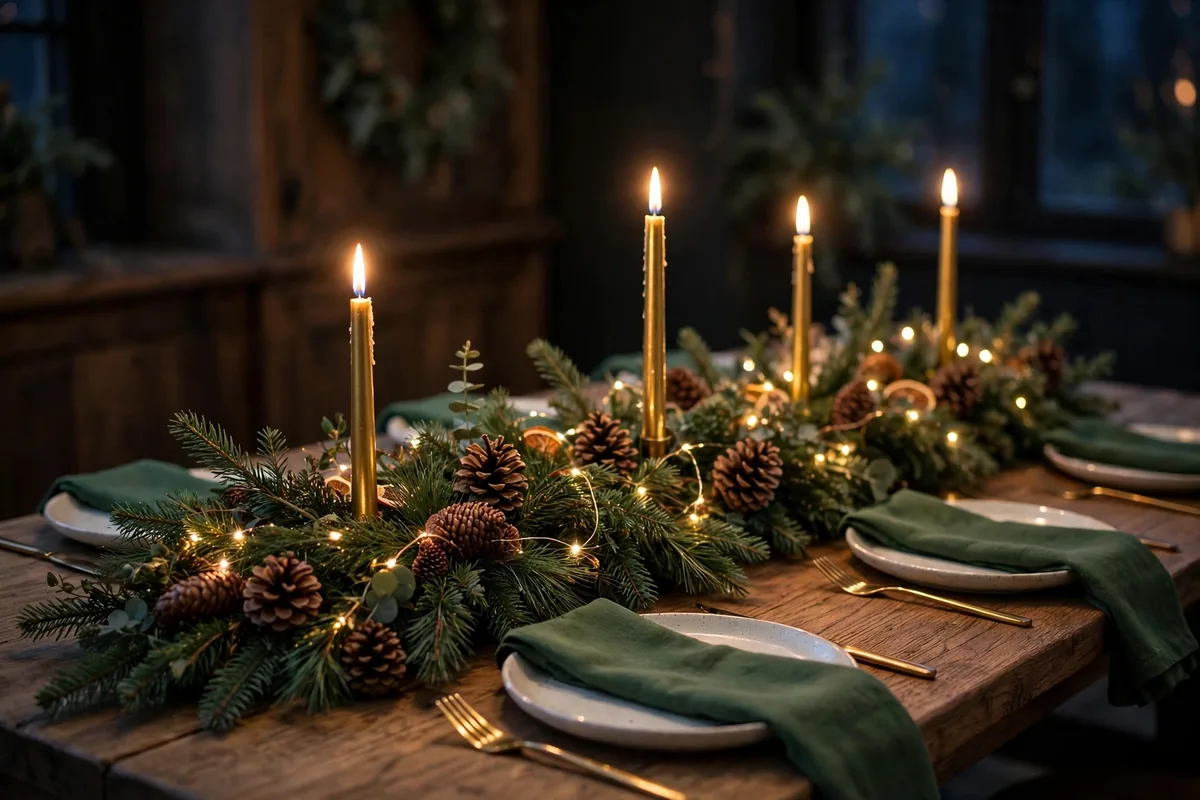
December’s table is the one formal performance of the year: an evergreen garland or a low arrangement of branches and pinecones down the centre, taper candles in the base candlesticks (height lives in the candles, never in the centerpiece, so sightlines stay open), gold or red napkins, and the best glassware. Fairy lights woven through the garland give the glow a second layer.
Keep open flames supervised and away from the garland’s dry edges — flameless tapers now look convincing and are the safer default for a long meal. For the rest of the house’s holiday layer, our guide to decorating home for Christmas ideas covers the rooms this table sits between.
7. Winter Whites: The Calm Table After the Holidays
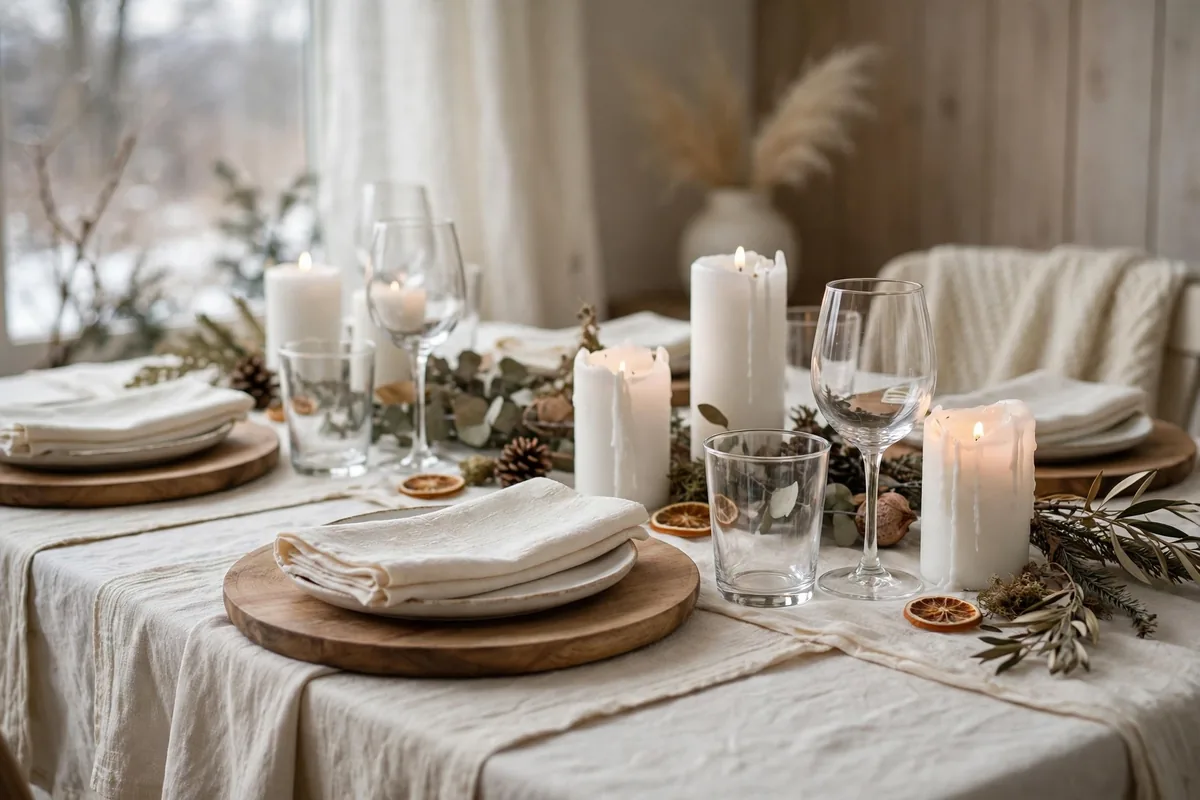
January’s table is the reset nobody plans and everybody needs: the holiday layer packed away, and in its place white and cream — the pale runner back on, white candles in clear glass, natural wood and ceramic, maybe one bowl of pinecones kept from December. Seasonal styling guides call this the post-holiday winter look, and its restraint is the point.
It also bridges beautifully into early spring: the first forced branches or a pot of bulbs on this white base is your spring table (§3) arriving a few weeks early.
8. One Focal Point, Never Five
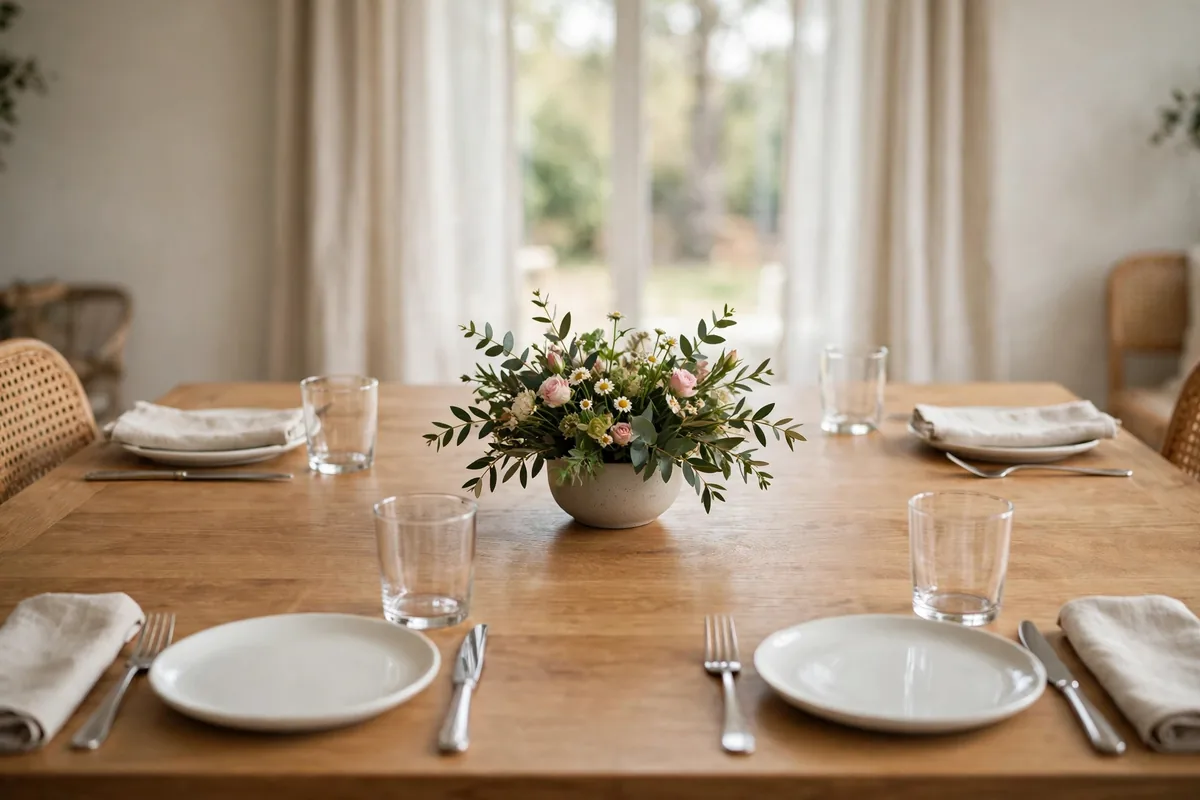
Whatever the season, the table gets one focal point — the centerpiece — and everything else supports it. The working rules: keep the arrangement low (below chin height seated) or genuinely tall and narrow (branches in a vase), with nothing in the eye-line band between; leave real space for serving dishes in the design, not as an afterthought; and step back and view the table seated, not standing — tables are experienced from a chair.
When a table feels “too much,” it is almost never the centerpiece’s fault: it is the five competing extras around it. Remove pieces until one thing is clearly the point.
9. Place Settings That Adapt With a Fold
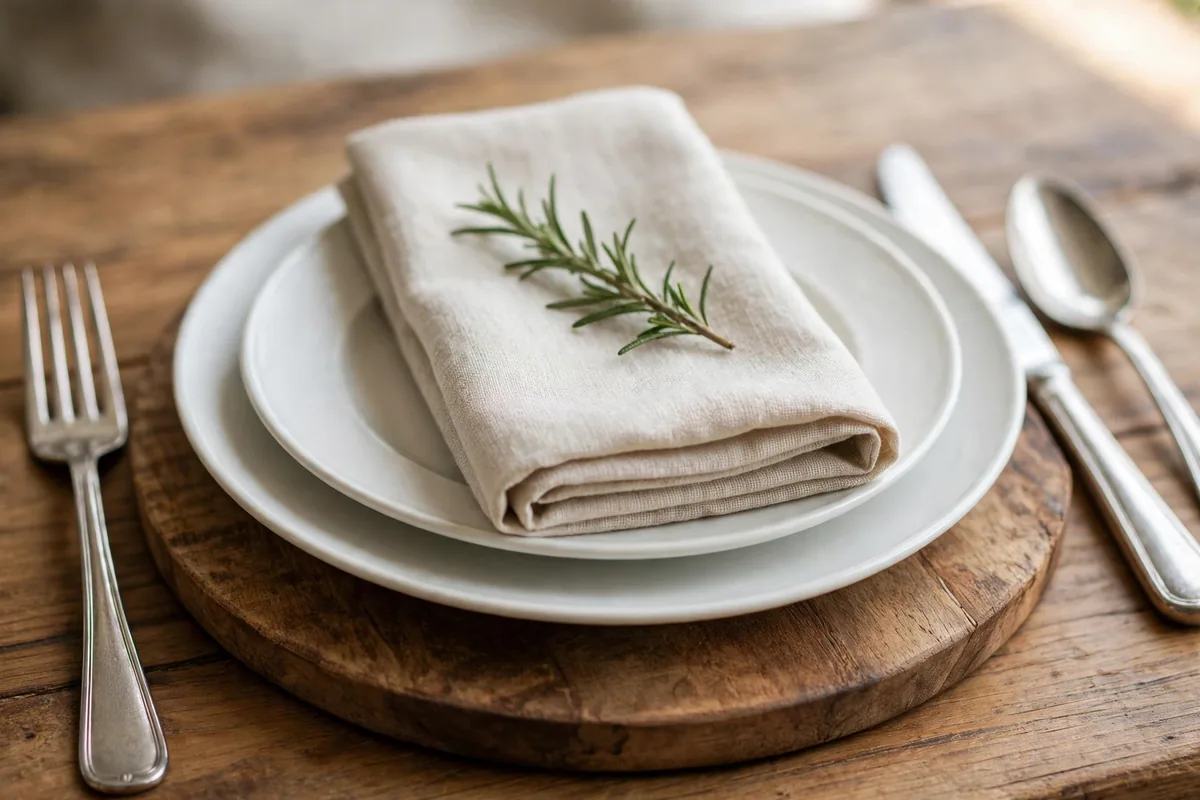
The place setting adapts through the smallest moves: the napkin’s colour and fold (flat and pale in spring, a pocket fold holding cutlery in summer, a knot in fall, a fold with a sprig of evergreen or rosemary at the holidays), and one small seasonal object on the plate — a blossom, a citrus slice, a mini pumpkin, a name card at Christmas. The charger-and-plate stack itself never changes.
Mind the light/dark balance the stylists insist on: pale plates disappear on a pale cloth, dark chargers vanish on dark wood — contrast at each setting is what makes the table read as set, not just covered.
The hosting layer: A hosted dinner adds one object per setting to this section’s rotation — the place card, which is the on-plate object grown up: where spring sets a blossom and fall a mini pumpkin, a named guest gets their name, handwritten, at their place. Add one favour-scale gesture — the herb sprig this section’s holiday fold already tucks in — and the setting is personal, not just seasonal. And on hosting night the system’s last rule leaves the table entirely: serving dishes land on a sideboard or side table, never in Section 8’s eye-line band — the serving space, extended from the table’s plan to the room’s.
10. The Twenty-Minute Seasonal Swap
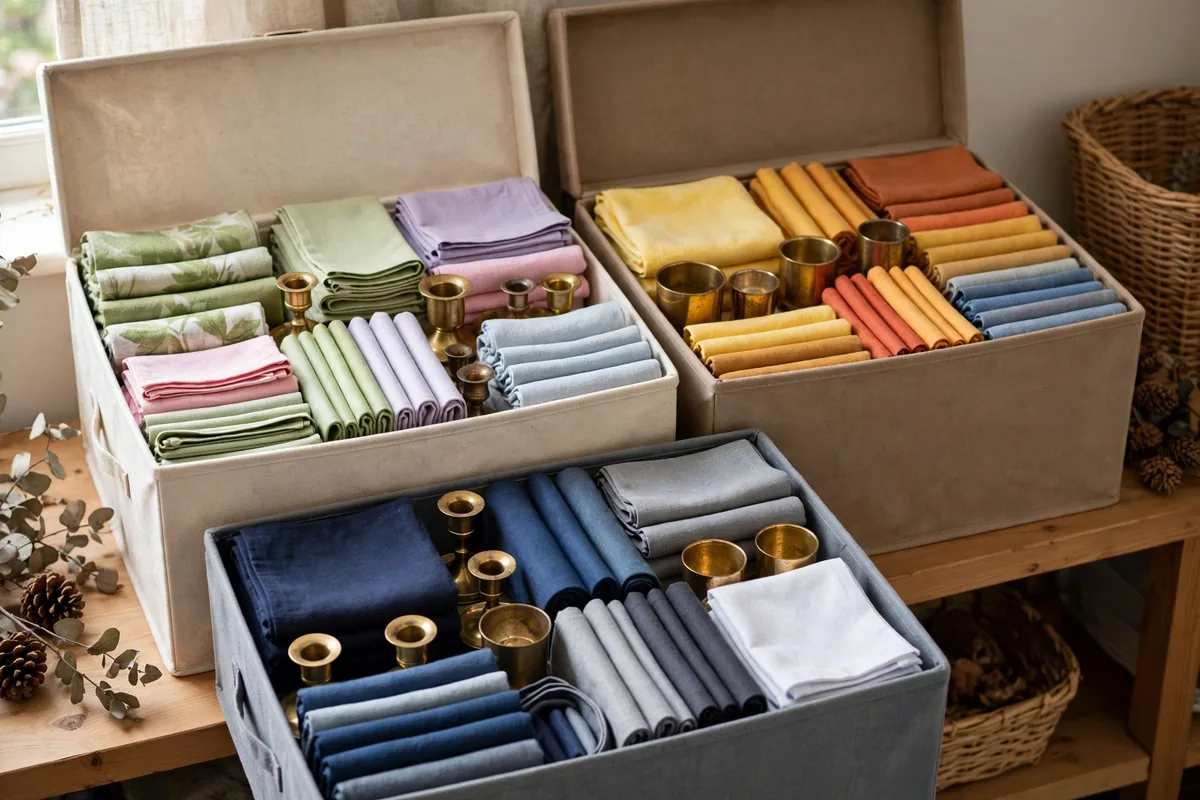
The system survives because the swap is small and stored together: one box (or one per season pair) holding the runners, napkin sets, the season’s centerpiece pieces and any special glassware. Twenty minutes, five times a year: runner off and on, vase contents changed, accents scattered, candles refreshed. Everyday meals in between eat off the base setting, which is why it always looks intentional.
Occasions layer on top of the season, not instead of it — a romantic dinner in February is the winter-white table plus candles and the touches in our valentine’s table ideas, not a whole new scheme. Season first, occasion second: that order is what makes the whole thing effortless.
Frequently Asked Questions About Seasonal Dining Tables
How do I decorate a dining table that is used every day?
Keep the base (runner, chargers, candlesticks, one vase) as the everyday look and make the centerpiece narrow and movable — a tray holding the vase and candles lifts off in one motion when the table is needed for homework, work or a big serving spread.
What centerpiece works for all seasons?
The one-vase system: a single good vase or bowl whose contents change — branches and tulips in spring, citrus or herbs in summer, dried stems in fall, evergreen in December, white candles beside it in January. The vessel is permanent; only the filling is seasonal.
How tall should a centerpiece be?
Below seated chin height (roughly under 30 cm of arrangement) or tall-and-narrow like branches in a vase, so guests see each other either under or past it. Nothing should occupy the eye-line band across the table.
How many runner and napkin sets do I need?
Two per half-year is the practical kit: a light set (pale linen, green or striped napkins) for spring/summer and a deep set (plaid or rust runner, warm napkins) for fall/winter, plus one festive napkin set for December if you host then.
Can I use real candles on a table with a garland?
With distance, stable holders and supervision — but flameless tapers are the recommended default near evergreen and dried arrangements, especially for long meals and tables with children. They also survive being packed away without wax damage.
What do I do with a very small dining table?
Scale the system down, don’t abandon it: a narrow runner, one small vase, two candlesticks, and centerpieces that double as the meal (the citrus bowl). Small tables look best with the fewest pieces — the one-focal-point rule matters most here.
How do I make a rental-friendly seasonal table?
Everything in this system is surface-level: linens, vessels, candles and scattered accents. Nothing attaches, paints or installs — which is precisely why the base-and-swap method suits renters.
When should each seasonal table go on?
Roughly: spring in March, summer in June, fall at the start of October, the holiday table in early December, and winter whites from January until spring. Let your climate lead — the table should match the weather outside the window.
How do I stop the table looking cluttered?
One focal point, serving space designed in, and the step-back test from a seated position. If you can’t name the table’s single point in one word (tulips, pumpkins, garland), remove pieces until you can.
What’s the cheapest way to start?
A neutral runner, two candlesticks from a charity shop or sale, and one vase — then let the seasons themselves supply the centerpieces (garden branches, citrus, pinecones, evergreen offcuts) for almost nothing all year.
How do I set a seasonal table for guests?
Start from the season’s own setting in this guide, then add the hosting layer: a handwritten place card where the on-plate object would sit, one favour-scale gesture per guest (an herb sprig, a blossom), and the food served from a sideboard so the eye-line stays clear. The base, the season and the swap do not change for guests — only the welcome gets personal.
Conclusion
A dining table that changes with the year is not five tables’ worth of stuff — it is one calm, neutral base, a small box of seasonal layers, and twenty minutes, five times a year. Build the base, let each season make exactly one statement, and the hardest-working surface in the house will always look like you meant it.