
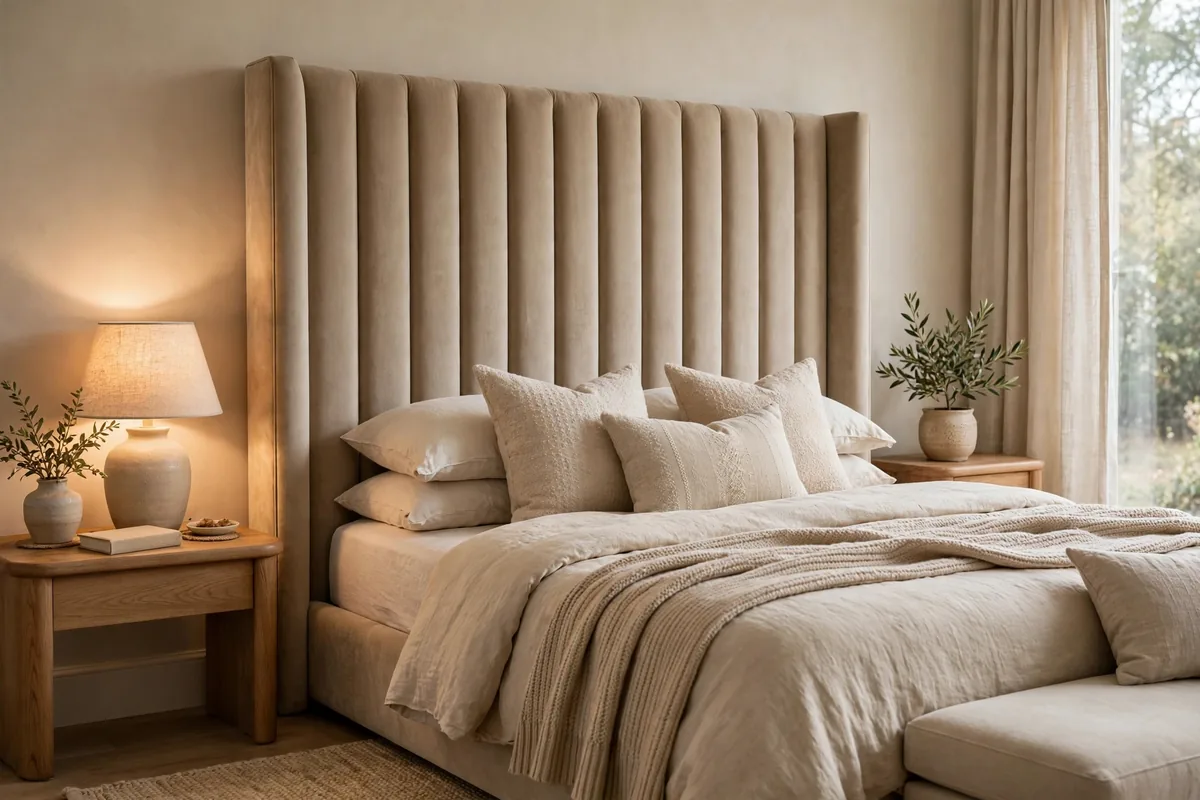
A bare wall behind a bed is a missed opportunity the size of the bed itself. An upholstered headboard is the one furniture change that alters how a bedroom feels in three ways at once: it gives the bed a finished silhouette, it gives you a padded wall to lean against with a book, and it soaks up the room’s hard echoes — literally softening the space. Here is how to choose among the styles, heights and fabrics without buying the wrong one beautifully.
The order that saves regret: height first, silhouette second, fabric third, styling last.
In this guide: The Styles at a Glance · 1. Why Upholstered Beats Bare (and Beats Wood, for Most) · 2. Get the Height Right Before Anything Else · How It Attaches: Three Mounting Routes · 3. Channel-Tufted: The Modern Line · 4. Button-Tufted: The Boutique Classic · 5. Wingback: The Cocoon · 6. Arched, Curved and Scalloped: The Soft Silhouette · 7. Panelled and Plain: The Quiet Modern · 8. Oversized and Wall-to-Wall: The Hotel Move · 9. Fabric Honesty: Velvet, Linen, Bouclé, Performance · 10. Style It: Pillows, Lamps and the Space Around · Frequently Asked Questions About Upholstered Headboards · Conclusion
The Styles at a Glance
| Style | Best for | Watch out |
|---|---|---|
| Channel-tufted | Modern rooms; low ceilings (vertical) | Horizontal channels widen — measure first |
| Button-tufted | Classic and boutique-hotel looks | Buttons collect dust; velvet needs brushing |
| Wingback | Larger rooms; readers who sit up | Eats visual space in small rooms |
| Arched / scalloped | Angular rooms needing softness | Trend-led — choose if you truly love curves |
| Panelled / plain | Minimalist and Scandi rooms | Too plain without textured bedding |
| Oversized / wall panels | Hotel drama; wide walls | Commits the wall — renters check fixings |
Sizing, in one line: The board showing above your stacked pillows should run about 35–50 cm — that visible band is the height decision. Width starts at the mattress width as the minimum; an oversized board extends about 20–50 cm beyond the mattress on each side. Both rules are this guide’s own, stated in full in Section 2 and the FAQs — they are repeated here because they are the two numbers a buyer actually types into a listing filter.
1. Why Upholstered Beats Bare (and Beats Wood, for Most)
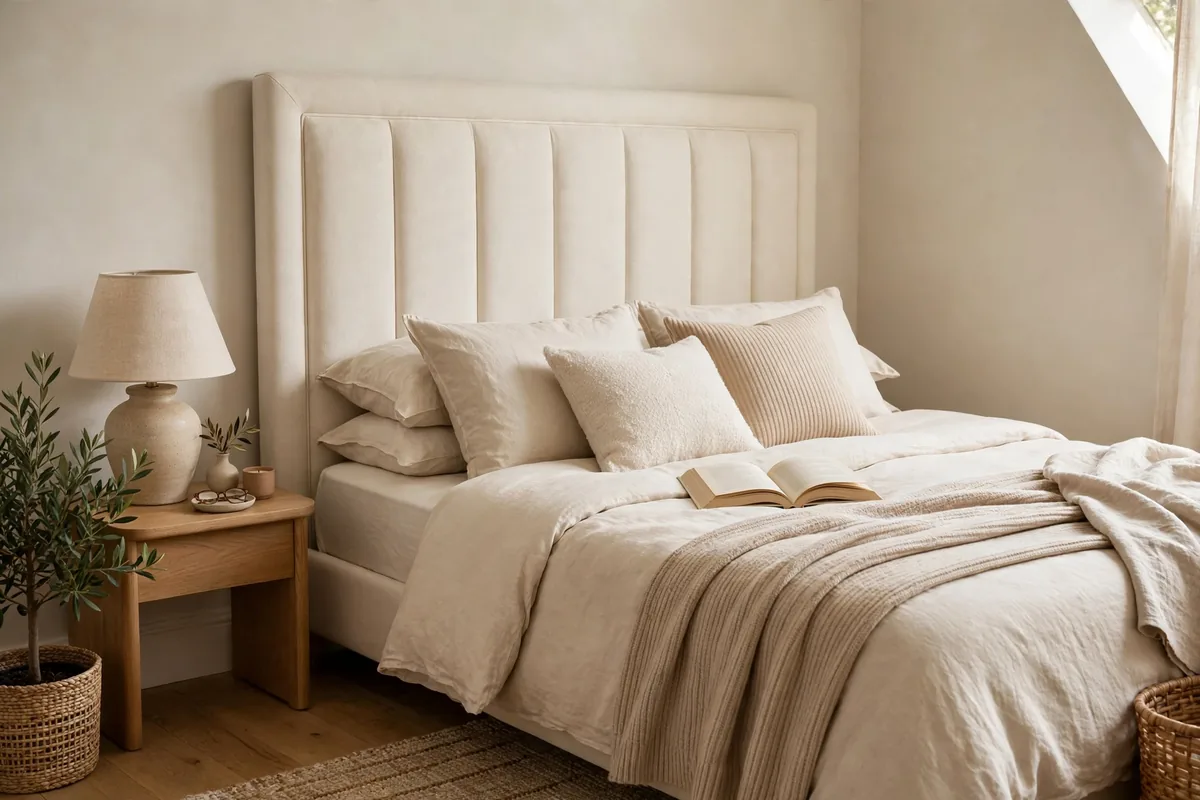
The case is comfort first: foam padding under fabric turns the head of the bed into the back of a sofa — reading, laptop mornings and breakfast trays stop being negotiations with a cold wall or a hard wooden rail. Style guides add the visual half: an upholstered headboard instantly makes a bedroom look more luxurious and finished, because it completes the bed’s outline the way a frame completes a picture.
There is an acoustic bonus nobody advertises: a large padded panel is the biggest soft surface most bedrooms own, and it noticeably damps the room’s echo — bedrooms with upholstered headboards simply sound calmer.
2. Get the Height Right Before Anything Else
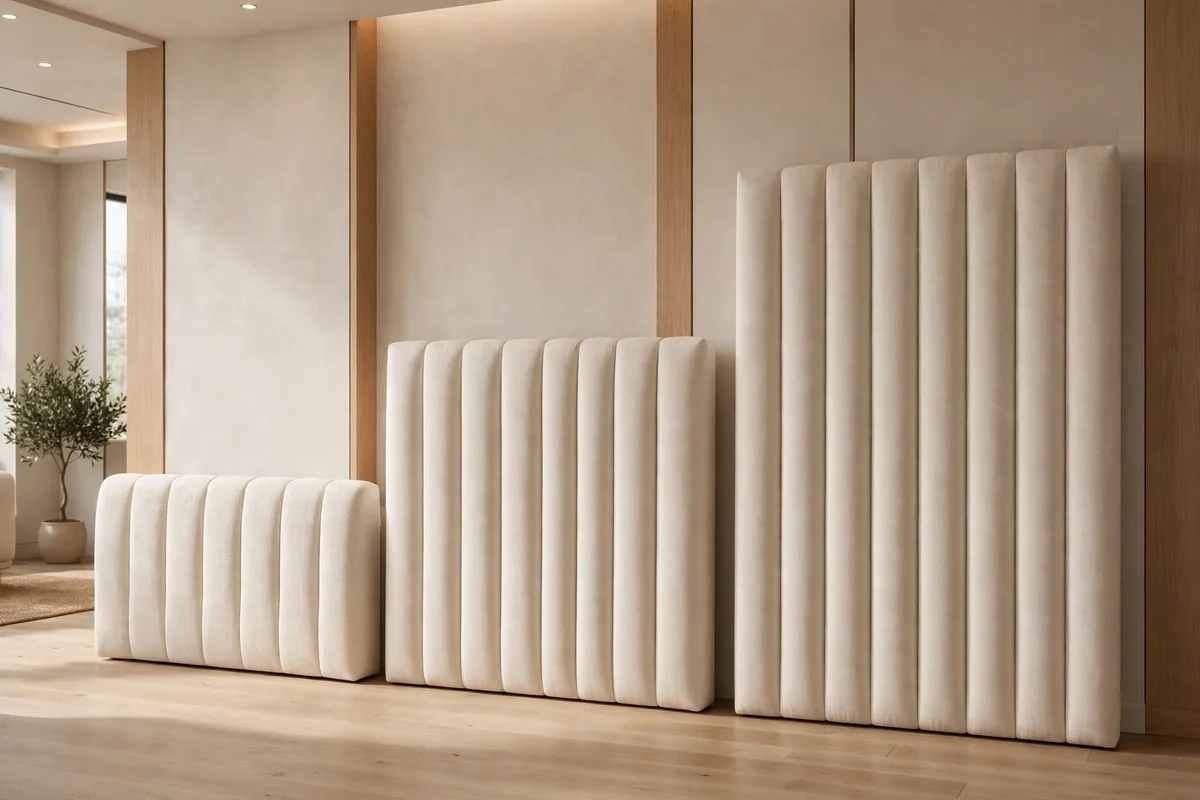
The biggest buying mistake, per Funkybedz’s 2026 headboard style guide, is choosing on looks without considering height. Their breakdown: low headboards suit modern minimalist rooms and sloped ceilings, keeping things airy; medium is the Goldilocks height — luxurious without overpowering a small room; tall is the drama option, a grand focal point where the ceiling allows it.
Work by visibility: with pillows stacked, at least a generous hand’s-width of headboard should show above them — roughly 35–50 cm of visible board is what makes it read as a headboard rather than a rumour. Tape the outline on the wall at pillow height before ordering; five minutes of painter’s tape has saved more returns than any review section.
The total-height bridge: Listings ask for a total height, and this guide’s rule is a visible band — the bridge between them is your own bed’s arithmetic. Total height = the height of your mattress top, plus your pillow stack as the bed is actually made, plus the 35–50 cm of board you want showing. Measure the first two where you sleep; the tape outline above then checks the total before any money moves.
How It Attaches: Three Mounting Routes
Bolted to the bed frame is the default: the board moves with the bed, asks nothing of the wall, and is the renter-safe route (the renter-friendly bedroom guide runs it as a full system). Freestanding and floor-standing boards suit the oversized styles — no fixings at all, paid for in floor depth behind the bed. Wall-mounted is the committed route: panels and tall boards hang on the wall itself, which is a lease check and a drill, not a whim. One caution travels across all three: on an adjustable base, a frame-bolted board must clear the base’s movement — where the base articulates hard, freestanding or wall-mounted usually behaves better.
3. Channel-Tufted: The Modern Line
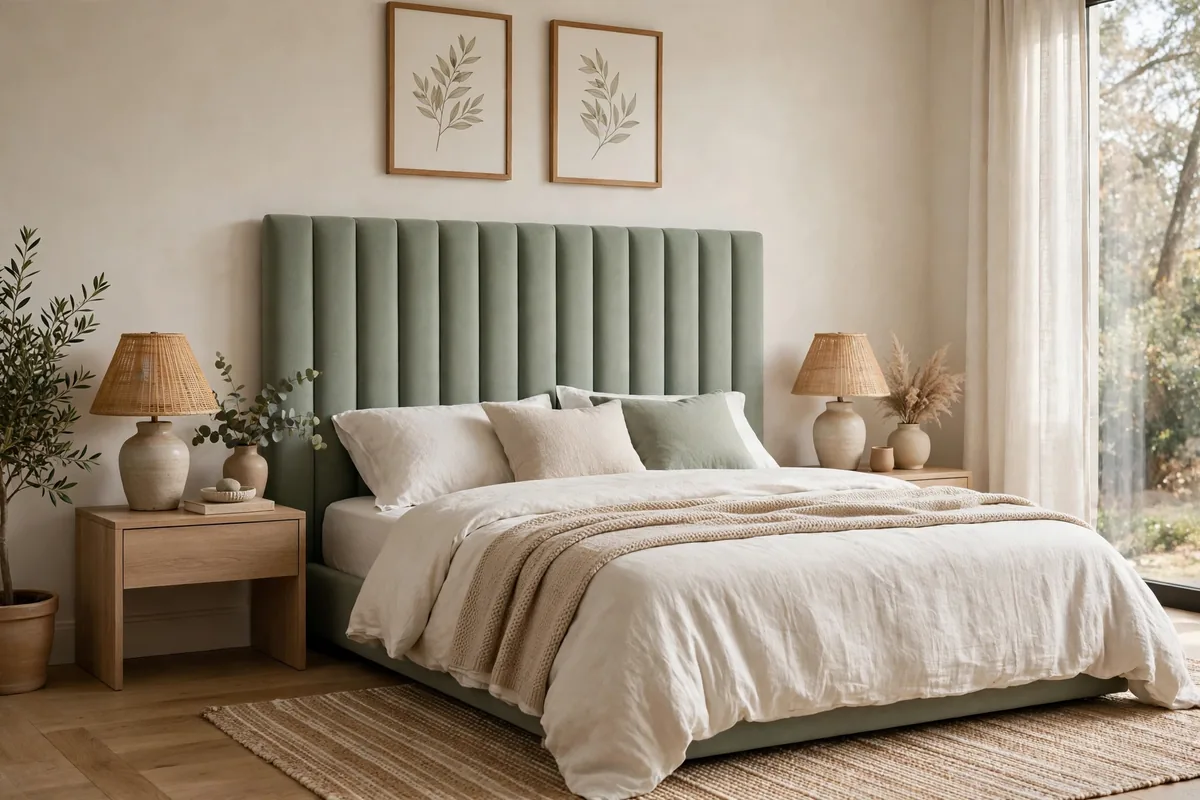
Channel tufting replaces buttons with padded vertical or horizontal ribs — the contemporary option that style guides call very on-trend for 2026, adding texture and sophistication without period fuss. Vertical channels draw the eye up (a genuine gift to low ceilings); horizontal channels stretch the bed wider and suit long, low rooms.
It is also the most forgiving modern style to live with: no buttons to trap dust, a smooth lean, and a silhouette that sits as happily in a minimalist room as a mid-century one. In moody shades — charcoal, forest, navy — it turns dramatic; in beige or white it stays airy.
4. Button-Tufted: The Boutique Classic
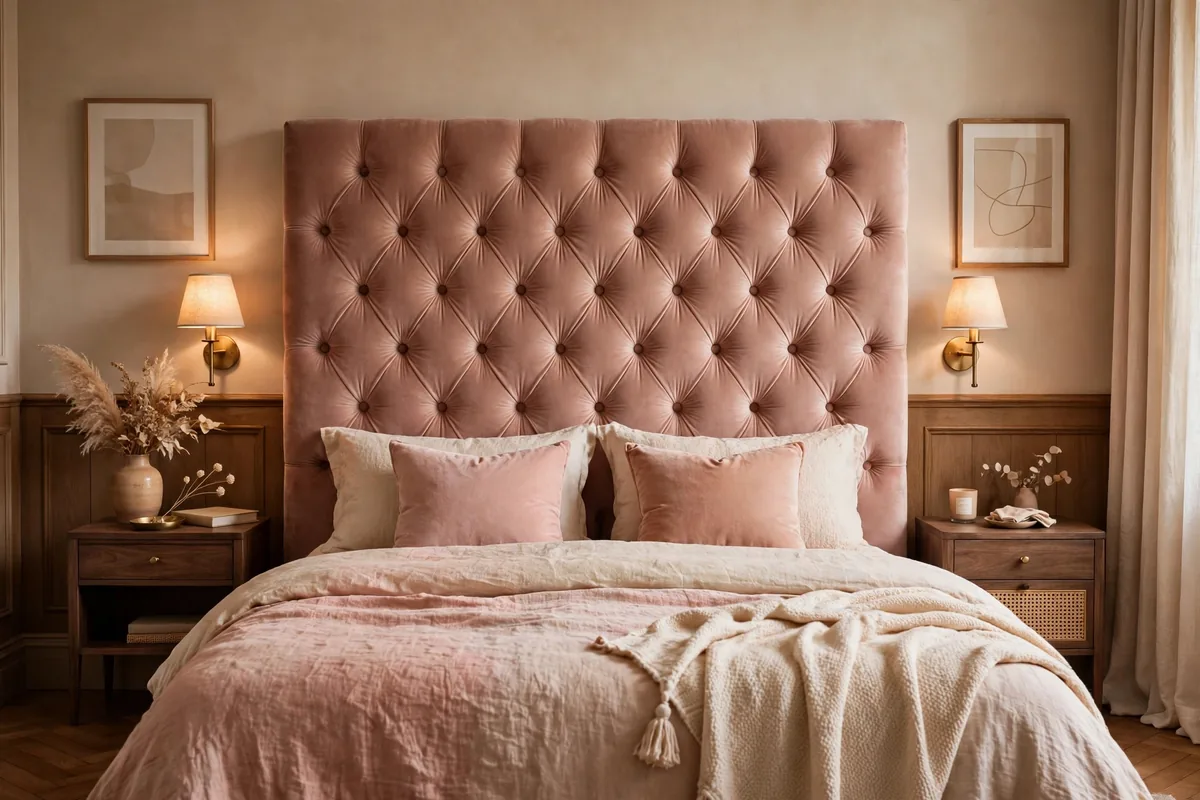
Deep-set buttons in a diamond pattern are the headboard everyone pictures from boutique hotels: plush, shadowed, unmistakably upholstered. The guides note it is lovely in velvet, whose pile plays with light across the tufting’s folds — and forgiving, because small wrinkles blend into the texture instead of announcing themselves.
Choose it when the bedroom leans classic, romantic or hotel; skip it in ultra-minimal rooms where its ornament argues with everything else. Dust settles in the tufts — a soft brush attachment monthly keeps it honest.
5. Wingback: The Cocoon
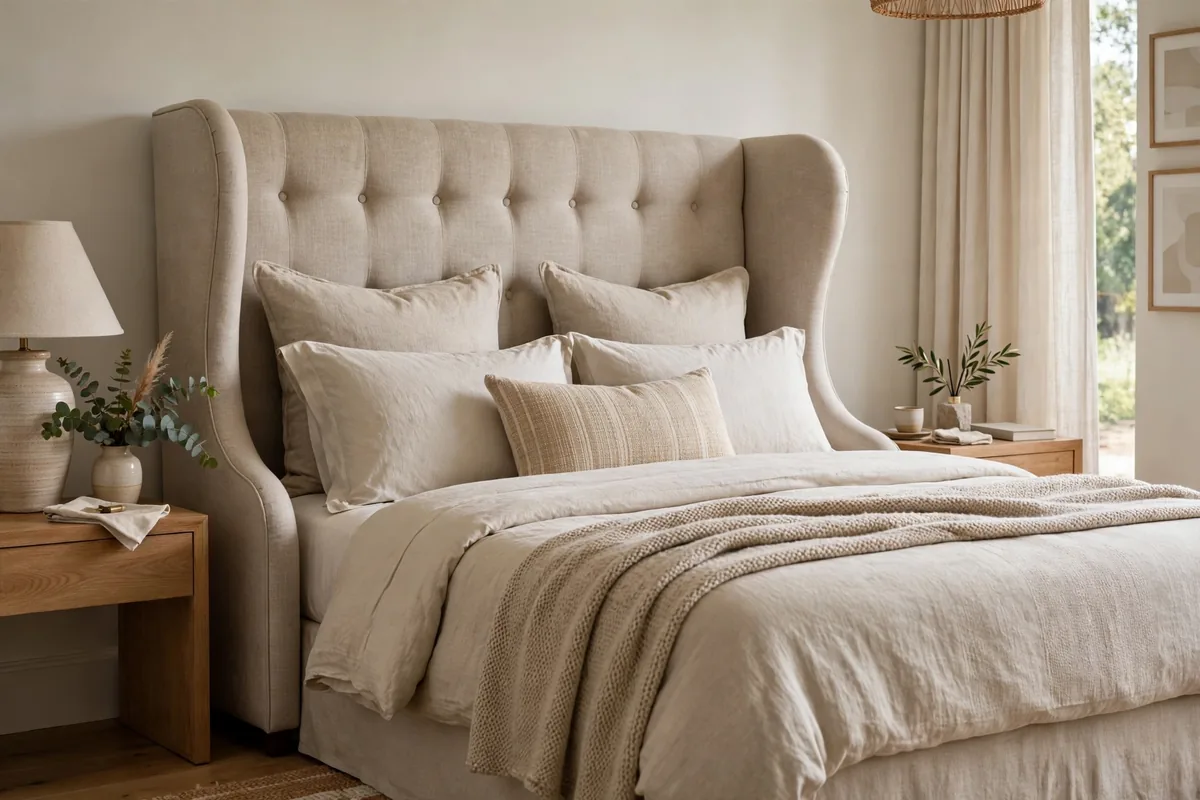
Wingback headboards add side panels that wrap the head of the bed like the wings of an armchair — a cocoon that style writers place in bigger rooms where the board has space to shine. The wings are functional luxury for people who sit up in bed: they block drafts at the pillow line and give the bed a genuine sense of enclosure.
Paired with layered bedding, a neutral linen or velvet wingback is the fastest route to the five-star-retreat feeling at home — the combination idea galleries return to again and again. In a small room, though, the wings eat visual width; measure generously and see §9’s restraint.
6. Arched, Curved and Scalloped: The Soft Silhouette
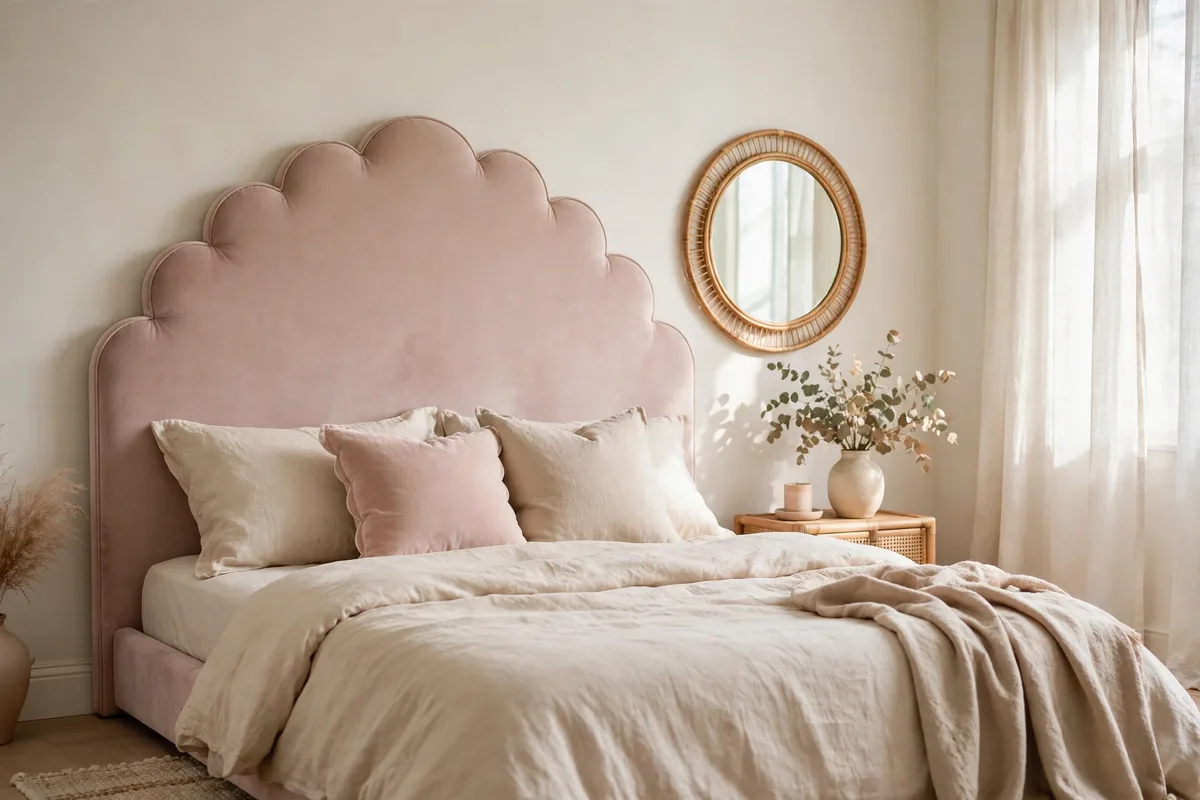
Bedrooms are boxes — straight walls, rectangular wardrobes, square windows — and the curved headboard is the counterweight: arches, half-moons and scalloped edges soften angular rooms and read almost like artwork above the bed. The guides call soft curves a defining look of the moment, with scalloped velvet the playful-sophisticated peak.
Echo the curve once elsewhere (a round mirror, a curved lamp) and the shape becomes a theme instead of an accident. Blush, lavender and white are the gallery colours, in velvet or linen — feminine-leaning, yes, but in oatmeal linen the same silhouette reads calm rather than sweet.
7. Panelled and Plain: The Quiet Modern
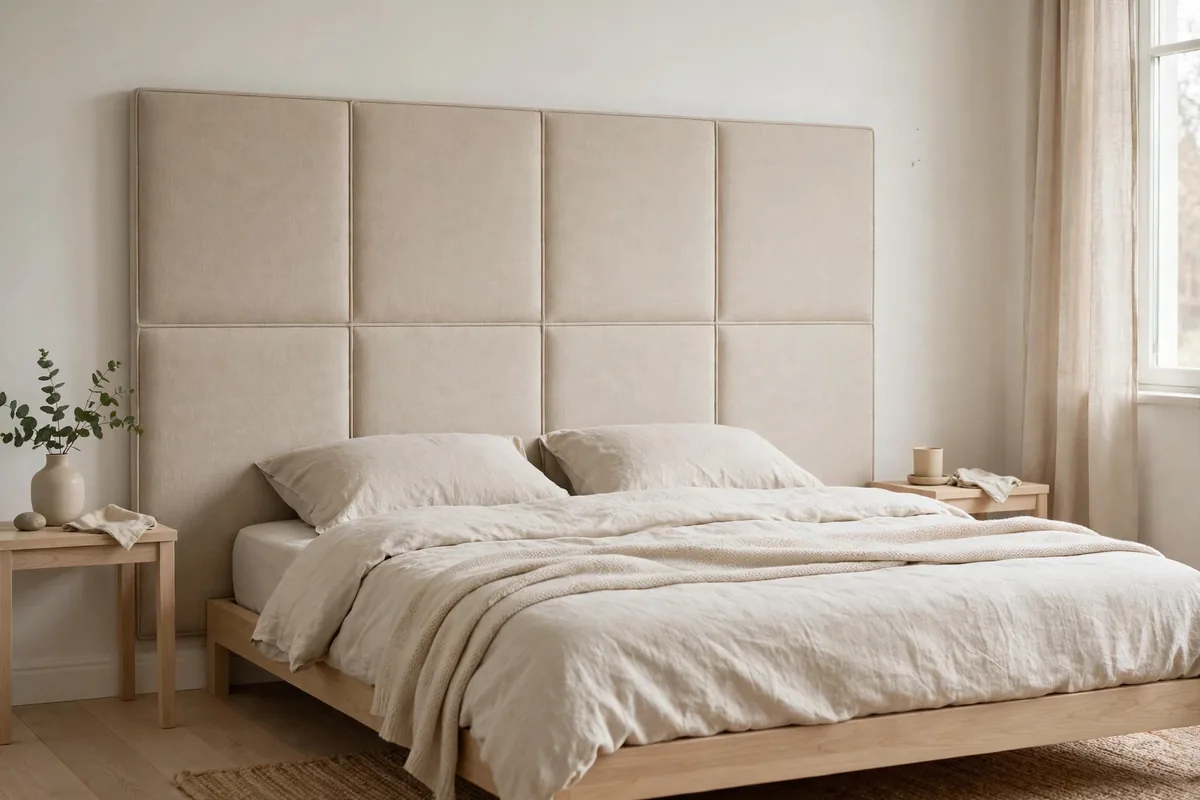
For minimalist and Scandinavian rooms, the answer is subtraction: flat panels with clean seams, or one plain padded board in a natural fabric. No tufting, no wings — structure without decoration. It is the headboard that lets bedding and art do the talking, which is why it anchors most calm, layered bedrooms in photographs.
Its one demand: texture must arrive from somewhere. Pair a plain panelled board with the woven quilts and knits of a properly layered bed, or the whole head wall falls flat. Plain is a discipline, not an absence.
Pattern and trim: Every style in this guide has been imagined in solid fabric, and pattern is the legitimate exception: small prints, checks and geometrics turn the board into the room’s artwork — which inverts Section 10’s rule knowingly, so the bed itself then dresses in solids. And where a plain board risks reading blank, trim is the finish that tailors it: nailhead edging or contrast piping gives the panelled board its line, the board-level texture Section 7 has been asking for.
8. Oversized and Wall-to-Wall: The Hotel Move
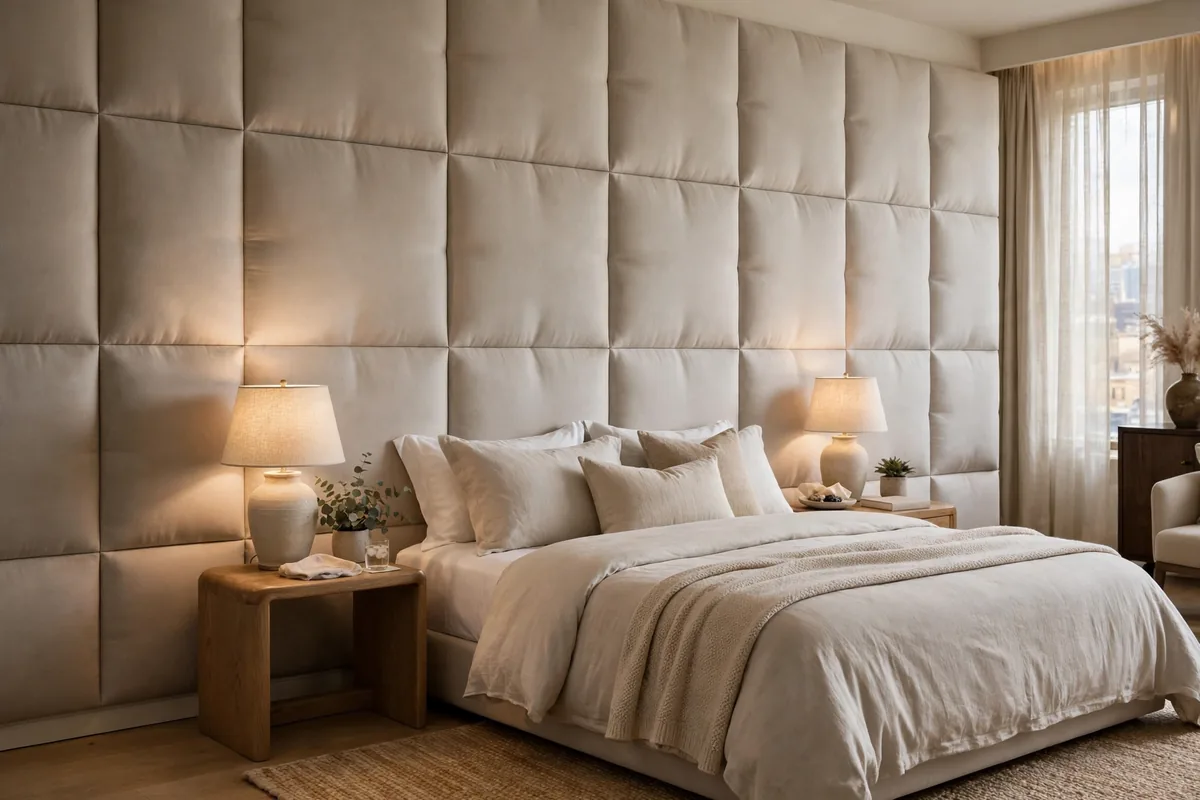
The boldest option ignores the bed’s edges entirely: an oversized board or a run of upholstered wall panels extending beyond the mattress on both sides — sometimes floor to ceiling. The Prime Furnish’s upholstered headboard ideas credit it with instant grandeur and the true hotel-suite feeling, especially in a soft neutral fabric with simple bedding and elegant bedside lamps in front of it.
It also solves a real problem: in wide rooms the bed can look adrift, and a wall-wide board gathers bedside tables into one composed unit. The cautions are commitment (fixings, cost) and proportion — on a narrow wall it consumes the room. Renters: choose the freestanding oversized board, not wall-fixed panels.
9. Fabric Honesty: Velvet, Linen, Bouclé, Performance
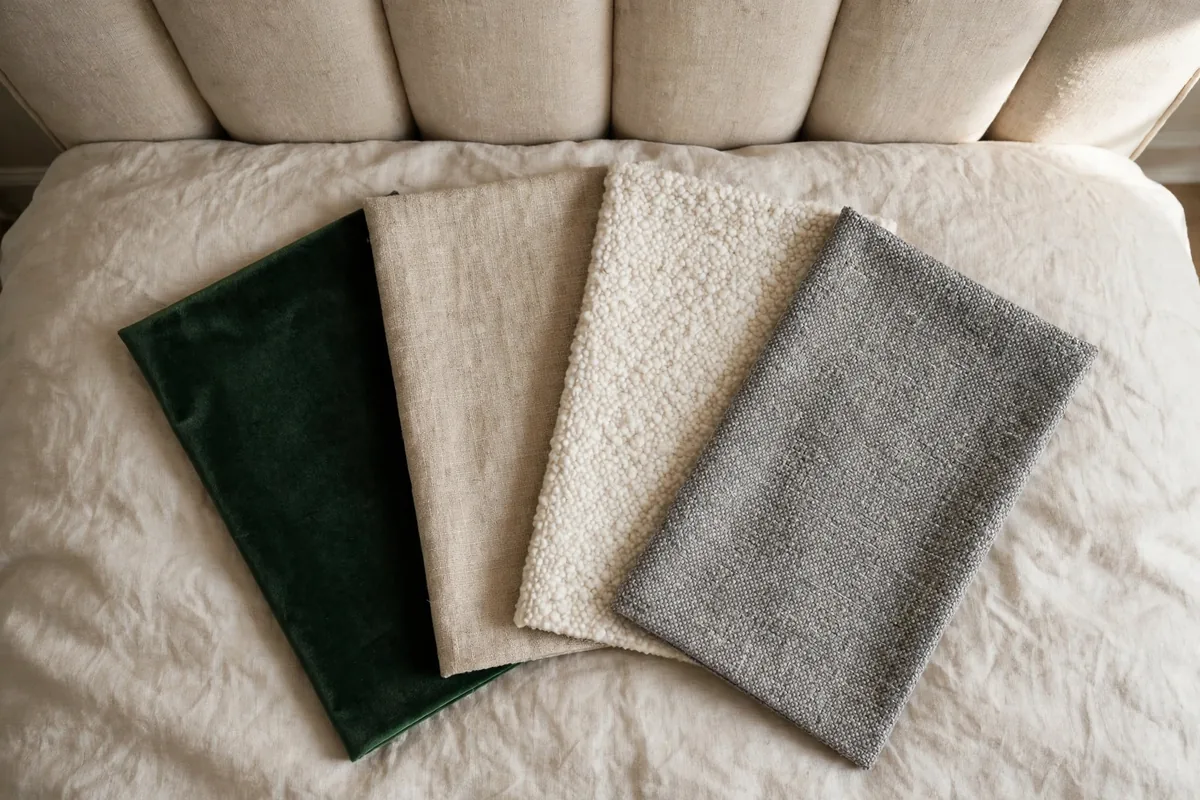
Choose fabric by your actual life. Velvet: richest light-play and a forgiving texture, but it brushes one way, shows pressure marks and asks for a monthly brush. Linen: the calm, breathable classic that wrinkles with character and suits the year-round neutral base palette perfectly. Bouclé: of-the-moment nubby warmth that hides a multitude of sins — and traps crumbs like a magnet. Performance/microfibre weaves: the honest pick for pets, children and hair-product households — wipeable beats precious.
Two practical checks: a removable, washable cover (or a slipcovered board) doubles a headboard’s practical life, and pale fabrics behind dark hair or dyed pillows can pick up transfer — a washable pillow sham barrier solves it. In small bedrooms, fabric discipline matters doubly; our small bedroom design ideas keep the same rule room-wide.
Leather and faux leather: The wipe-clean branch of the family. Real leather shrugs off dust and hair, forms a patina instead of a stain history, and leans cool at first touch before it warms — the premium route, priced like it. Faux leather is the budget wipeable version; the widely reported caution is that it can feel plasticky against skin and may peel at stress points over years, so judge it as a shorter-life fabric, not a leather substitute at a discount.
10. Style It: Pillows, Lamps and the Space Around
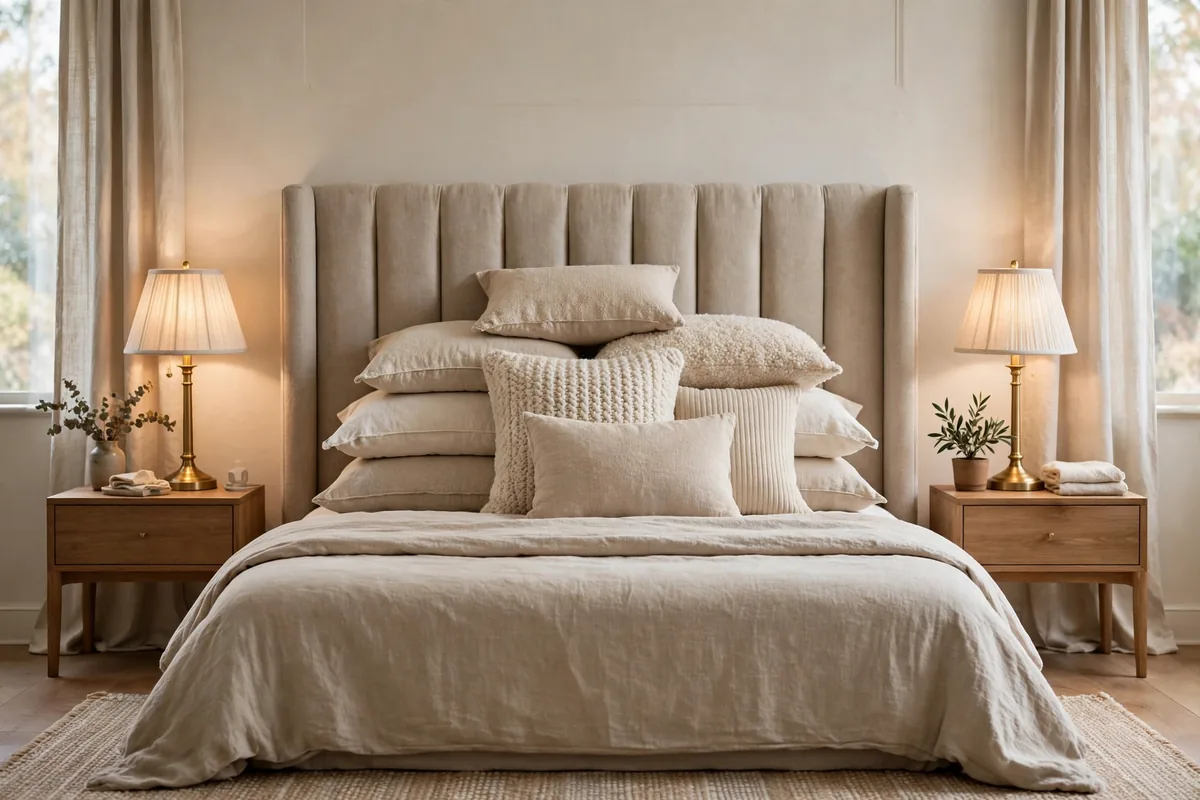
The headboard is the backdrop; the pillows are the foreground. Stack them per the layered-bed architecture — Euros against the board (they show its height honestly), sleepers next, one accent last — and leave that hand’s-width of board visible above. Solid bedding against a patterned or tufted board; patterned bedding is allowed against a plain one; never compete on both layers.
Flanking matters more than anything above: two matching lamps (or wall sconces just outside a wingback’s wings) give the symmetry that makes a headboard read intentional, while art above a tall or oversized board usually crowds — the board is the art. A seasonal refresh later needs nothing here but new cushion covers, as our spring bedroom refresh ideas show.
Making one instead: Two of these styles are the ones readers most often build rather than buy — the plain panel and the channel board — from plywood, foam, fabric and a staple gun. A buying guide need not become a build guide, but one discipline transfers whole: the tape test in Section 2 matters even more when you are cutting the board yourself, because a bought board can be returned and a cut one cannot.
Frequently Asked Questions About Upholstered Headboards
How tall should an upholstered headboard be?
Tall enough to show above your stacked pillows — aim for roughly 35–50 cm of visible board. Low suits minimalist rooms and sloped ceilings, medium is the versatile default, and tall makes a statement where ceiling height allows. Tape the outline on the wall before ordering.
How wide should a headboard be?
At minimum the mattress width; a few centimetres wider each side looks deliberate. Oversized designs deliberately extend 20–50 cm beyond the bed per side — or to the bedside tables — for the hotel effect. Never narrower than the mattress: it reads as a mistake.
Which fabric is easiest to live with?
Performance weaves and microfibre for pets, kids and low maintenance; linen for breathable calm with characterful wrinkles; velvet for richness if you will brush it monthly. A removable washable cover improves every option.
Do upholstered headboards collect dust and allergens?
They collect some surface dust like any soft furnishing; weekly hoovering with an upholstery attachment and a monthly brush (for tufted and velvet) keeps it negligible. Allergy households do best with smooth, tight weaves and washable covers rather than deep tufting.
Can I use an upholstered headboard in a small bedroom?
Yes — choose low or medium height, plain or channel styling, and a pale neutral fabric; it adds softness without visual weight. Wingbacks and oversized boards are the two styles to avoid where width is scarce.
Are upholstered headboards good for reading in bed?
They are the best option for it — that padded backrest is their founding purpose. Wingbacks add draft protection at the sides; channel and plain panels give the smoothest lean. Pair with a proper reading light at shoulder height.
How do I clean an upholstered headboard?
Hoover weekly with the upholstery tool, blot spills immediately (never rub), use fabric-appropriate cleaners for marks, and brush velvet with the pile. Steam cleaning suits most tight weaves; check the maker’s label for linen and bouclé.
Can renters have an upholstered headboard?
Yes — freestanding and bed-frame-mounted boards need no wall fixings, and some panel systems hang from removable hooks. Avoid wall-fixed oversized panels unless your lease allows screws; the freestanding oversized board gives most of the same effect.
What colour headboard is most versatile?
Oatmeal, warm grey, stone and cream lead — they sit inside the neutral base and let bedding carry colour and season. If you crave colour, deep forest, navy or rust velvet are the durable choices; they behave like neutrals against most bedding.
Should pillows match the headboard?
Coordinate, don’t match: pick up the headboard’s tone in one pillow layer and contrast in another (texture or a shade deeper/lighter). Exact fabric matches read as a showroom set; tonal families read as a designed room.
Can I make an upholstered headboard myself?
Yes — the plain panel and the channel-tufted board are the two realistic home builds (plywood, foam, fabric, staple gun). Run Section 2’s tape test on the wall first and cut to the outline you have lived with for a day; a bought board can go back, a cut board cannot. Start with the panel: it forgives beginner upholstery in a way tufting does not.
Conclusion
Choose the height by your wall and pillows, the silhouette by your room’s temperament — channel for modern calm, button-tufted for boutique classic, wingback for the cocoon, curves for softness, panels for quiet, oversized for drama — and the fabric by the life you actually live. Get those three decisions right and the headboard stops being furniture and becomes what it should be: the bedroom’s anchor, backrest and best-looking wall, all in one padded panel.


Pingback: 10 Renter-Friendly Bedroom Updates Ideas That Leave No Trace