Disclosure: As an Amazon Associate I earn from qualifying purchases. This article contains affiliate links. If you purchase through these links, we may earn a commission at no additional cost to you.
The best egg cooker for hard boiled eggs dorm kitchen setups have to solve a very specific problem: most dorms ban hot plates and open-coil burners, shared kitchenettes are a walk down the hall, and a pot of boiling water is exactly the kind of thing a busy student forgets on a stove. A compact rapid egg cooker steams up to six or seven eggs at a time in a measured splash of water, buzzes when they are done, and shuts off — no burner, no watching, no grey-green yolks from a forgotten timer.
This comparison puts the electric egg cooker against the classic stovetop method honestly, because the stovetop is free and genuinely good in a normal kitchen. The question is narrower: in a dorm room or a tiny kitchenette, which method gives you consistent, easy-peel eggs with the least risk and fuss? We cover both sides for the readers of Ideas Home Accessories who are setting up a first small kitchen.
Quick Verdict
For a dorm room, the electric cooker wins on the three things that matter there: it is usually permitted where hot plates are not (check your housing rules — some halls restrict all cooking appliances), it needs no supervision, and its measured-water steam method is the most repeatable route to easy-peel hard boiled eggs a beginner can buy. In a full home kitchen with a stove you already own, the stovetop costs nothing and scales to bigger batches. The cooker’s real product is not eggs; it is consistency without attention.
Important: Dorm rules come first. Many colleges allow enclosed steam cookers but ban exposed heating elements — and a minority ban in-room cooking entirely. Confirm your residence handbook before ordering, and never use any cooker on carpet, bedding or a cluttered desk. A stable, clear, heat-safe surface is non-negotiable.
What to Look For Before You Buy
Capacity and footprint
Most compact cookers hold 6–7 eggs in a single layer; double-decker models hold up to 14 with a second tray. Footprint is roughly that of a small kettle base — about 6–8 inches across — which suits a dorm desk corner or a microwave cart. If you meal-prep a dozen eggs weekly, the two-tray size saves a second run; if eggs are a breakfast-only habit, the single tray is easier to store.
Water measuring and doneness control
These cookers steam, and doneness is set by water volume, not a timer: the included measuring cup is marked for soft, medium and hard, and the cooker runs until the water is gone. More water, longer steam, firmer yolk. A good listing includes the marked cup and a piercing pin (often stored in the cup’s base) for pricking the shell’s wide end — that pin is what releases the air cell pressure and helps prevent cracking.
Auto shut-off and alert
Look for an automatic shut-off plus an audible buzzer or light when the cycle ends. That is the dorm-critical feature: the cooker cannot boil dry and keep heating unnoticed the way a forgotten pot can. A simple on/off switch with no thermostat is the older design — workable, but the auto-off version is the one to dorm-proof a purchase.
Extras: poaching and omelette trays
Many models include a poaching tray (usually 2 eggs) and a small omelette/frying tray. In a dorm, those trays stretch the cooker into a real breakfast station — poached eggs for ramen, a small omelette without a pan. Check whether the trays are included or sold separately, and whether they are dishwasher safe, because egg residue in a poaching cup is nobody’s favourite sink job.
Electric Egg Cooker vs Stovetop: Which Suits Your Kitchen?
| Factor | Electric egg cooker | Stovetop pot method |
|---|---|---|
| Equipment needed | Cooker only; no burner | Pot with lid plus a stove or hot plate |
| Supervision | None — auto shut-off and buzzer | You are the timer and the safety system |
| Consistency | Measured water gives the same result each run | Varies with egg size, water level, stove power |
| Peel-ability | Steam plus pin-prick tends to peel cleanly | Good with older eggs and an ice bath; less repeatable |
| Batch size | Usually 6–7 (up to 14 in two-tray models) | As many as the pot holds |
| Energy and heat | Low wattage (most models roughly 350–400W), little steam | Full burner; heats a small room noticeably |
| Dorm rules | Often permitted; verify your handbook | Hot plates commonly banned in dorm rooms |
| Cost | One appliance to buy and store | Nothing, if you already own a pot and stove |
The case for the electric cooker
Repeatability is the headline. Because doneness is controlled by a measured amount of water that fully evaporates, the same setting gives the same yolk day after day — firm, yellow, no green ring. The piercing pin and gentle steaming make shells release cleanly far more often than a rolling boil, which knocks eggs together and cracks them. Add the buzzer and auto shut-off, and the method suits a person who starts breakfast, then goes back to an essay. It is also the same small-appliance logic that makes a compact air fryer for small countertops work in a two-person kitchen: one enclosed appliance, one job, no burner politics.
The case for the stovetop
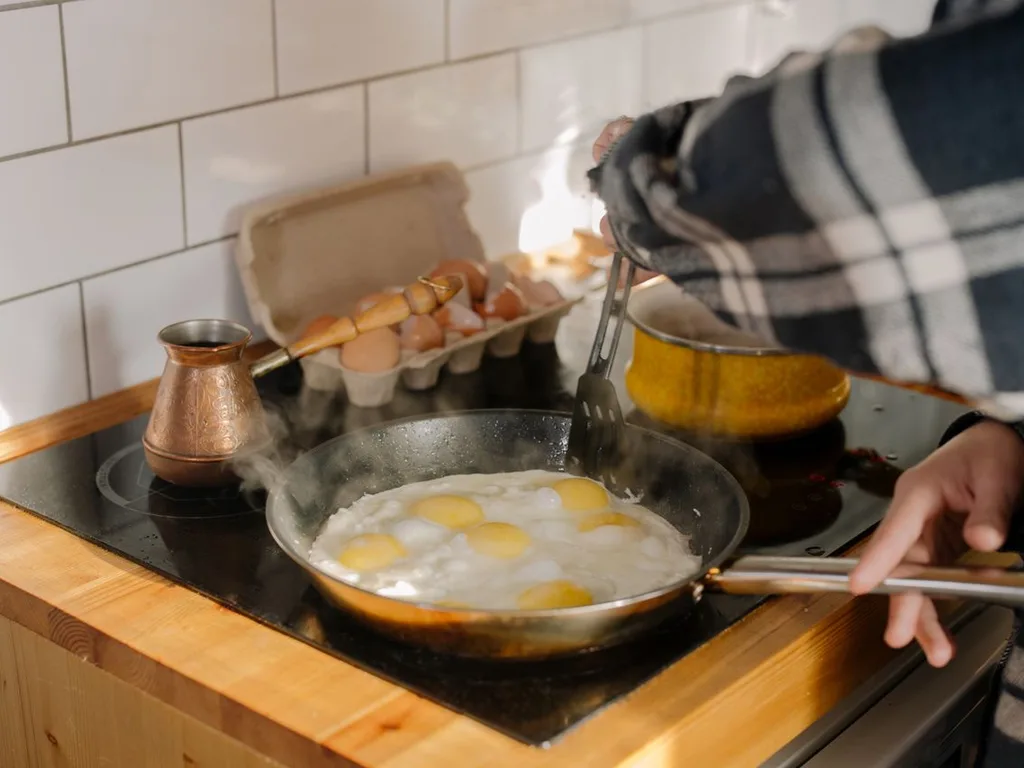
The pot method is free, flexible and scales. A large pot hard-boils eighteen eggs for a family brunch or a week of egg salad for four, and a saucepan you own already occupies no extra storage. With a reliable routine — start in cold water or steam over boiling water, time from the boil, ice bath after — stovetop eggs peel well and taste identical. If you have a real kitchen, a cooker is a convenience, not a necessity, and honest guides should say so.
Where each one fails
The cooker fails at volume and at storage: it is a unitasker in the smallest kitchens, and a lost measuring cup means guesswork until you replace it. The stovetop fails at attention: overboiled eggs get chalky yolks and sulphur smells, underboiled eggs peel in craters, and a forgotten pot is a genuine hazard rather than a quality issue. Your living situation usually settles the argument before taste does.
Pros and Cons
Pros
Consistent soft, medium or hard results from a marked measuring cup. Easy-peel eggs thanks to steaming and the piercing pin. No burner required, low wattage, minimal steam and heat in a small room. Auto shut-off and buzzer make it safe for distracted mornings. Poaching and omelette trays add breakfast range a pot cannot match in a dorm.
Cons
Single-layer capacity is small for families. It is one more appliance to store, descale and eventually replace. Results depend on the original measuring cup — lose it and the markings are hard to replicate exactly. And it does one ingredient: eggs, several ways, but still eggs.
Who Should Buy It — and Who Should Skip It
Buy one if you live in a dorm or studio without stove access, eat eggs most days, meal-prep a week of breakfasts, or share a kitchen where stove time is contested. It also suits office break rooms and RVs for the same enclosed, low-watt reasons. Pair it with the other dorm workhorse we get asked about — an electric gooseneck kettle for pour-over coffee covers drinks; the egg cooker covers protein; breakfast is handled.
Skip it if you have a full kitchen and a pot routine that already works, or you regularly boil more than a dozen eggs at once. Also skip it if your dorm bans all in-room cooking appliances — no breakfast convenience is worth a conduct meeting, and the kitchenette pot will do.
Helpful Tips for Daily Use
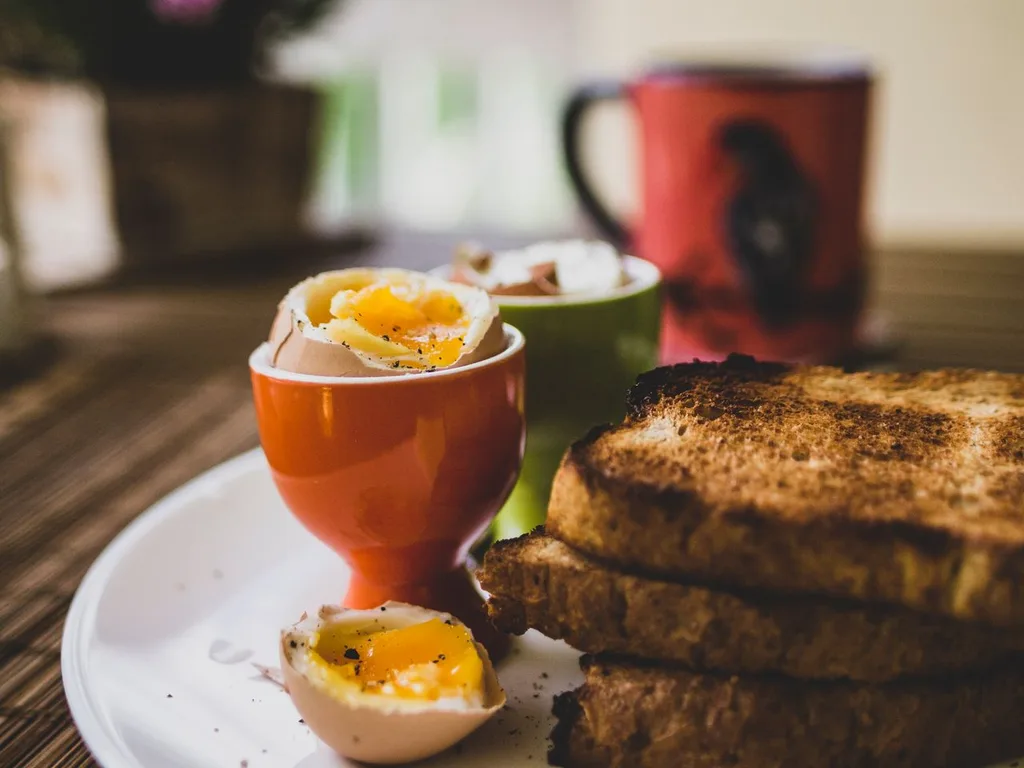
Always pierce the wide end. The pin releases the air pocket so shells do not crack from expanding air, and it helps the finished egg peel in large, satisfying pieces. Place eggs pin-side up in the tray.
Ice bath, even in a dorm. A bowl of cold water — a handful of ice from the hall freezer if you have it — stops the cooking, prevents the green ring around the yolk, and makes shells contract away from the white. Five minutes is enough. The same temperature discipline we recommend for checking doneness with an instant read meat thermometer for grilling chicken applies here: carryover heat keeps cooking eggs after the heat stops.
Peel under water or roll gently. Crack the shell all over on the counter, roll the egg under your palm, then peel starting at the wide end where the air pocket gives you a starting gap. Fresh eggs peel worse than week-old eggs regardless of method — for a big prep batch, buy eggs a few days ahead.
Descale monthly in hard-water areas. A spoonful of white vinegar on the heating plate, run a short cycle with water only, wipe clean. Scale build-up slows steaming and quietly shifts your doneness results.
Store eggs safely. Peeled eggs keep about a day in the fridge in a sealed container; unpeeled hard boiled eggs keep up to a week refrigerated. In a dorm mini-fridge, date the container — your future self will not remember which batch is which.
Important: Steam escapes the lid vent the whole cycle and the lid stays hot after the buzzer. Open the lid away from your face and hands, and let the cooker cool before moving it — the plate underneath is the hottest part and stays that way for several minutes.
Frequently Asked Questions
Why do eggs from an egg cooker peel so easily?
Two reasons: steam cooks more gently than a rolling boil, so the white sets without bonding as tightly to the inner membrane, and the piercing pin vents the air cell so the shell does not clamp down as the egg cools. An ice bath afterwards helps further. Very fresh eggs still peel harder than eggs that are a week old, whatever the method.
Are egg cookers allowed in dorm rooms?
Often yes, because the heating element is enclosed and the unit shuts itself off — but rules vary by college and some ban all cooking appliances in rooms. Check your residence handbook or ask your RA before buying. If in-room cooking is banned entirely, the same cooker is usually welcome in a shared kitchenette.
How long does a rapid egg cooker take for hard boiled eggs?
Most compact models finish a tray of hard boiled eggs in roughly 12 to 17 minutes, depending on egg size, starting temperature and how much water you measured in. The cooker runs until the water evaporates, so the buzzer — not a clock — tells you they are done. Let them sit a minute before the ice bath.
Can an egg cooker make soft boiled and poached eggs too?
Yes. Less water in the measuring cup means a shorter steam and a softer yolk; the marked cup usually has soft and medium lines. Poached eggs use the separate poaching tray, lightly greased, and take a few minutes. Results with poached eggs vary a little more because the tray is small, but for dorm ramen and toast toppings they are reliably good.
Egg cooker vs Instant Pot for hard boiled eggs — which is better?
An electric pressure cooker does excellent eggs (the popular 5-5-5 method) and much else besides, but it is bulky, costs more, and is overkill if eggs are the whole job. A dedicated cooker is smaller, simpler, faster to set up, and easier to store in a dorm. Choose the pressure cooker for a multi-use home kitchen, the egg cooker for eggs specifically.
How do I stop the green ring around the yolk?
The green-grey ring is iron sulphide, caused by overcooking and slow cooling — harmless but unappetising. Cook to the hard line on the measuring cup without adding extra water “for safety,” then move the eggs straight into cold water. That combination almost always keeps yolks clean yellow.
Final Thought
In a full kitchen, a pot is enough. In a dorm kitchen situation — no burner, no time to supervise, breakfast needed daily — an electric egg cooker is one of the few unitaskers that fully earns its footprint: measured water, a buzzer, an auto shut-off, and eggs that peel clean on a Monday morning. Confirm your housing rules, choose the tray size that matches your habit, and keep the measuring cup safe. It is the whole system.
Disclosure: As an Amazon Associate I earn from qualifying purchases.