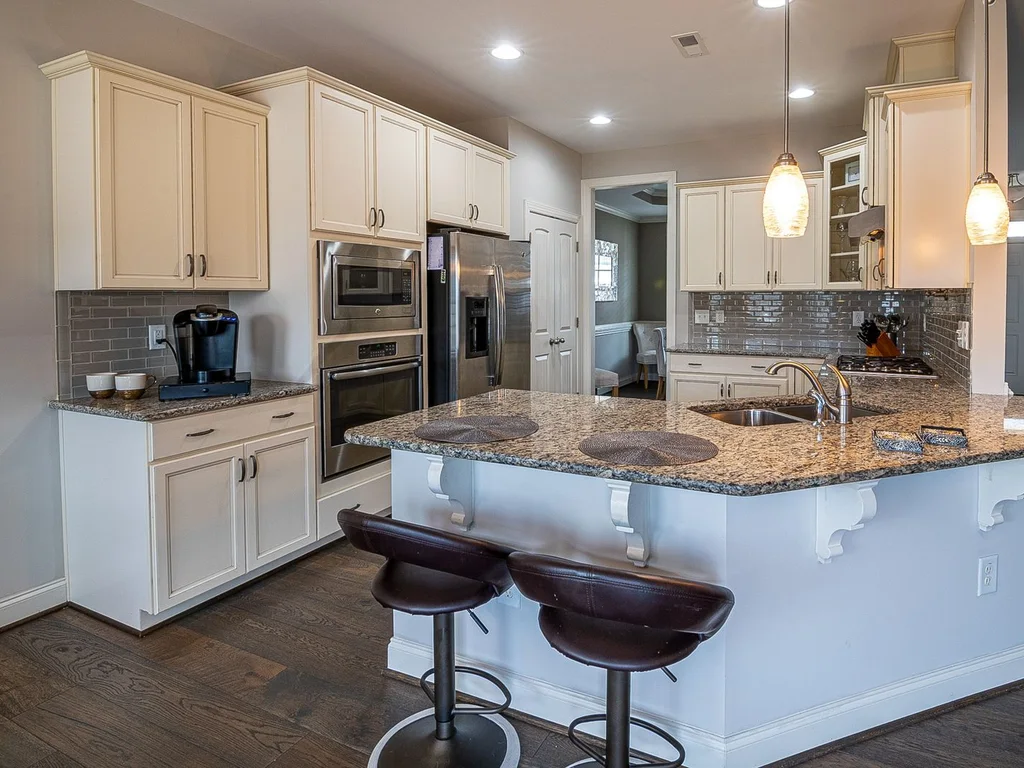
The kitchen is the hardest-working room in the house, but it also deserves to look beautiful. Good kitchen decor is not about filling the room with things — it is about choosing cabinets, colours, lighting and details that make cooking easier and gathering more inviting. This guide brings together 100 kitchen decor ideas, from full cabinet colours to tiny hardware swaps, so you can find inspiration whatever your budget or kitchen size.
If your kitchen is on the smaller side, start with our best small kitchen design ideas for layout tricks that pair perfectly with the styling below, and if you like a softer touch, our greenery bedroom ideas show how plants can warm any room. For timeless kitchen design advice, House Beautiful’s kitchen ideas are a reliable source of inspiration from real homes.
Short on time? These five changes give the biggest transformation for the least money: paint or re-face tired cabinets (Idea 10), change the handles (Idea 91), add under-cabinet LED strips (Idea 22), swap the light shades (Idea 97), and finish with a deep clean and declutter (Idea 100). Everything else in this guide builds on those five.
Renting, working with a tiny kitchen, or spending almost nothing? Skip straight to the budget refreshes (Ideas 91–100) and the small-kitchen section — they were written for exactly that.
In this guide: Kitchen Cabinets and Colours · Countertops and Backsplashes · Kitchen Lighting That Works · Open Shelving and Display · Islands and Breakfast Bars · Small Kitchen Decor · Farmhouse and Rustic Kitchens · Modern and Minimal Kitchens · Dining Nooks and Seating · Budget Kitchen Refreshes
How to Plan a Kitchen Decor Update in 6 Steps
Step 1 — Walk the cooking triangle. Before changing how the kitchen looks, check how it works: the route between sink, hob and fridge should be clear and short. Decor that blocks the triangle will annoy you daily, however beautiful it is.
Step 2 — Choose one palette and repeat it. Pick one cabinet colour, one metal finish, one wood tone and one accent colour. Most kitchens that feel ‘off’ are simply carrying too many competing finishes.
Step 3 — Fix the lighting layers. Task light over worktops first (under-cabinet strips are the cheapest big win), then ambient ceiling light, then accent light. Warm white bulbs around 2700K, on dimmers.
Step 4 — Spend on touchpoints. Handles, the tap, light shades and textiles are what your hands and eyes meet every day; upgrading them changes the room’s feel more than replacing large items that already work.
Step 5 — Style the surfaces, then stop. Open shelves and worktops should hold daily-use items in groups, with breathing space between. If everything is on display, nothing is.
Step 6 — Phase by budget. Weekend one: clean, declutter, paint. Weekend two: handles, tap, lighting. Later: worktops, tiles, appliances. The budget section below (Ideas 91–100) is written in roughly this order.
A Quick Safety Note for Decor Near the Hob
One rule outranks every styling idea in this guide: keep decor away from open flame and heat. Nothing flammable — paper, trailing plants, curtains, wooden utensil jars — within reach of the hob. Keep a clear zone around the cooktop, never hang towels on the oven door while cooking, and follow the manufacturer’s distance guidance for peel-and-stick products near heat. Beautiful kitchens are, first, safe kitchens.
1. Kitchen Cabinets and Colours
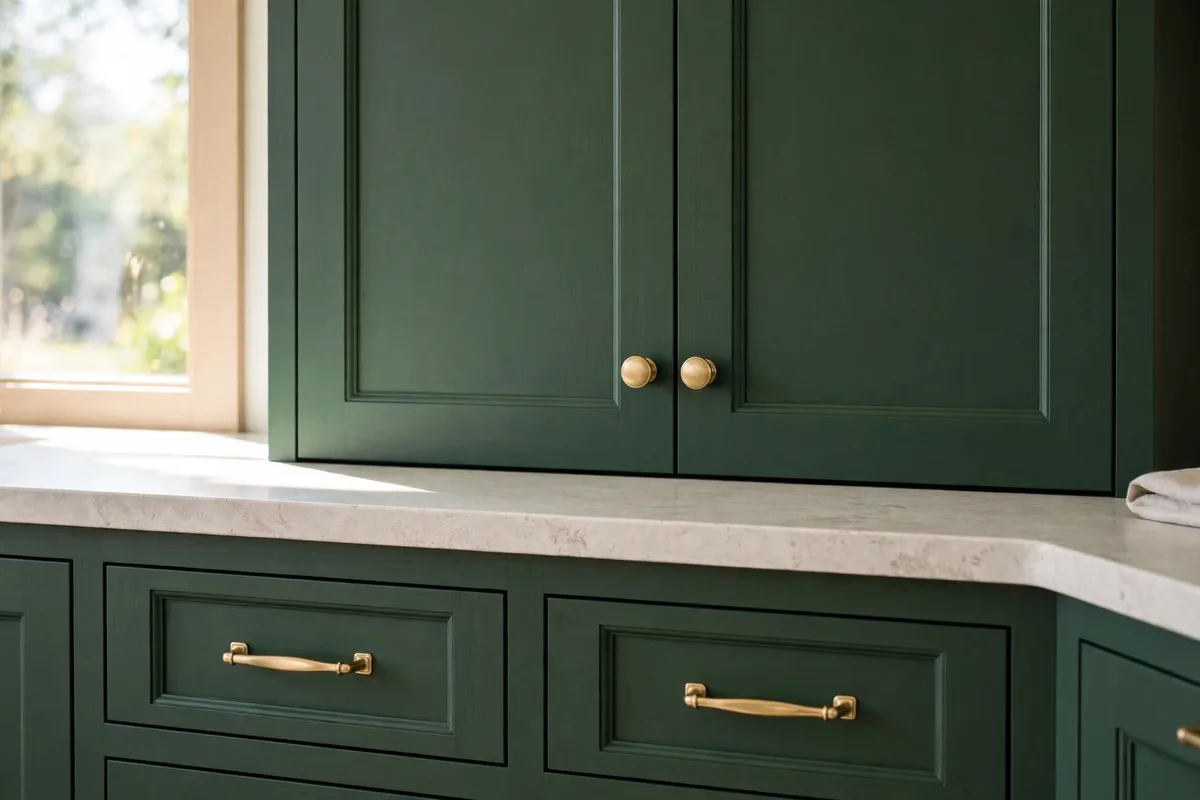
1. Sage Green Cabinets With Brass Handles
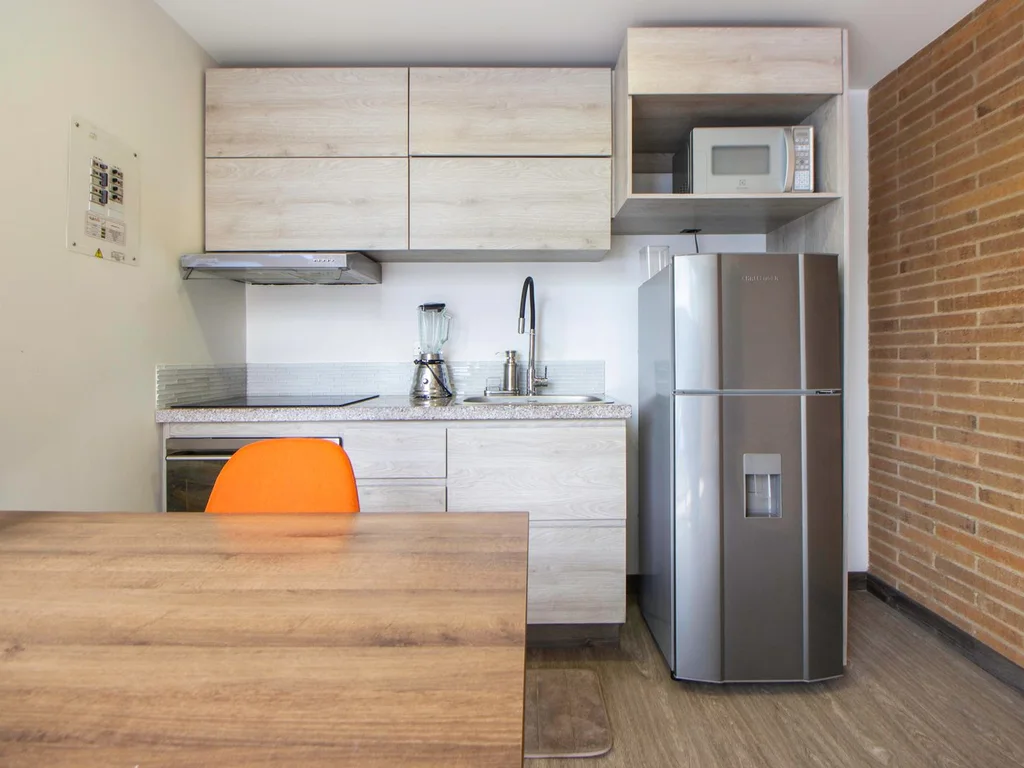
Sage green cabinets feel calm, timeless and surprisingly easy to live with, and brass handles warm them up beautifully. The soft green works with white walls, wooden floors and marble-look worktops alike. Keep the rest of the palette quiet so the cabinets stay the star, and the kitchen will look fresh for years.
2. Classic White Shaker Cabinets
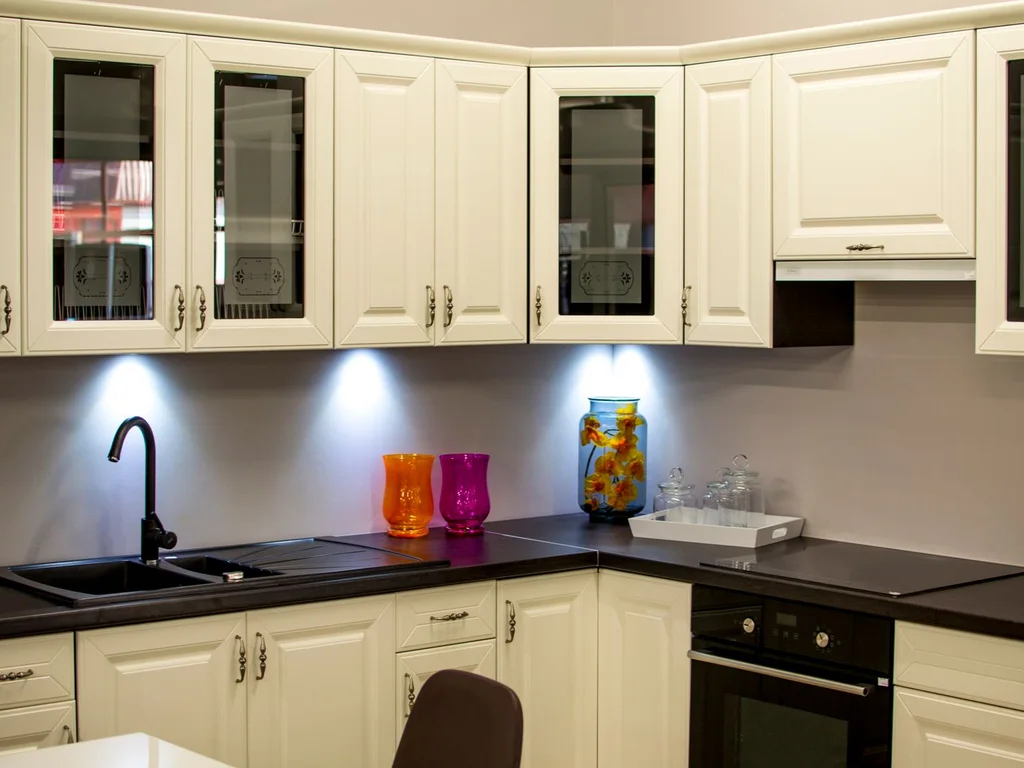
White Shaker cabinets remain popular because they suit almost every home and never date. Their simple framed doors add texture without fuss, and they bounce light around the room. Pair them with a contrasting worktop or dark handles if you want the classic look to feel less plain.
3. Deep Navy Cabinets for Drama
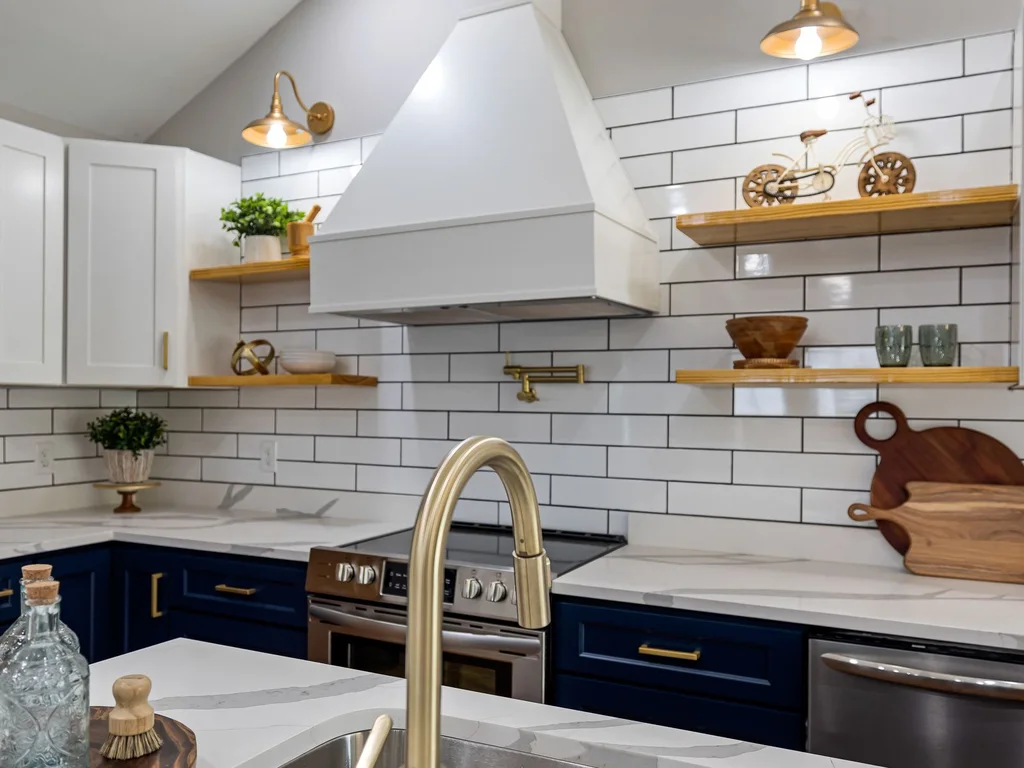
Deep navy brings instant drama and depth to a kitchen, especially on an island or a single run of tall units. It pairs beautifully with brass, marble and warm wood. Use it on lower cabinets and keep uppers light if you worry a dark kitchen might feel too enclosed.
4. Two-Tone Cabinets: Dark Below, Light Above
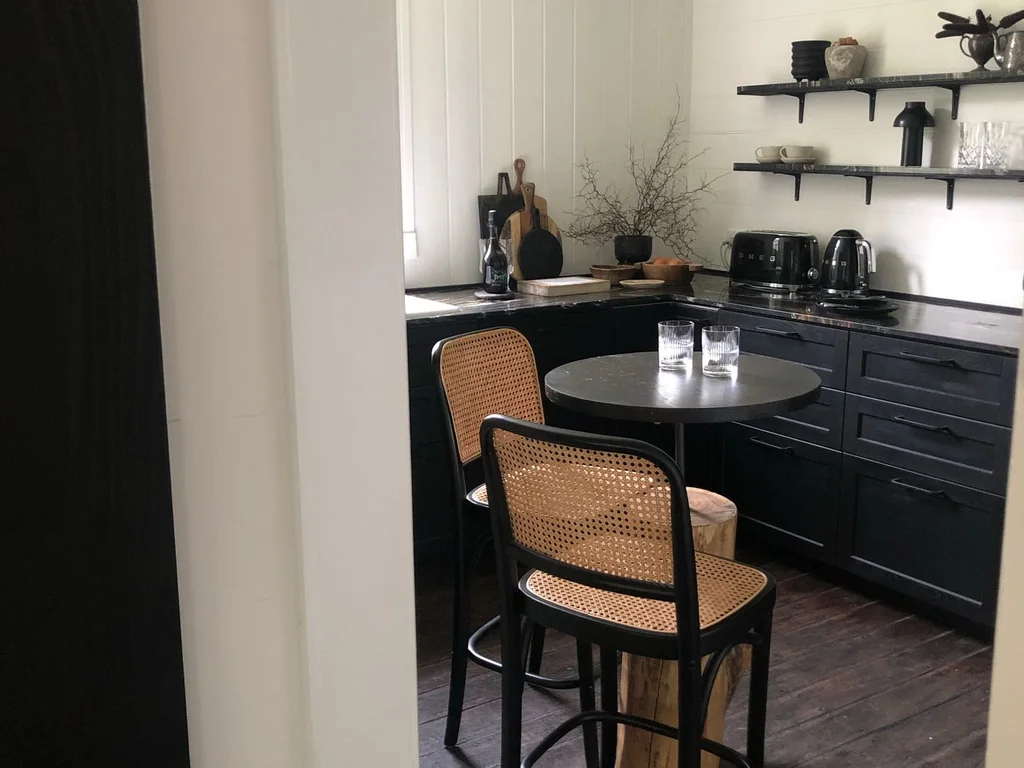
Two-tone cabinets give you the best of both worlds: grounding colour below and airy lightness above. Try navy or forest green bases with white or cream wall units. The split draws the eye up, makes the room feel taller, and lets you enjoy bold colour without committing the whole kitchen to it.
5. Warm Wood Cabinets Left Natural
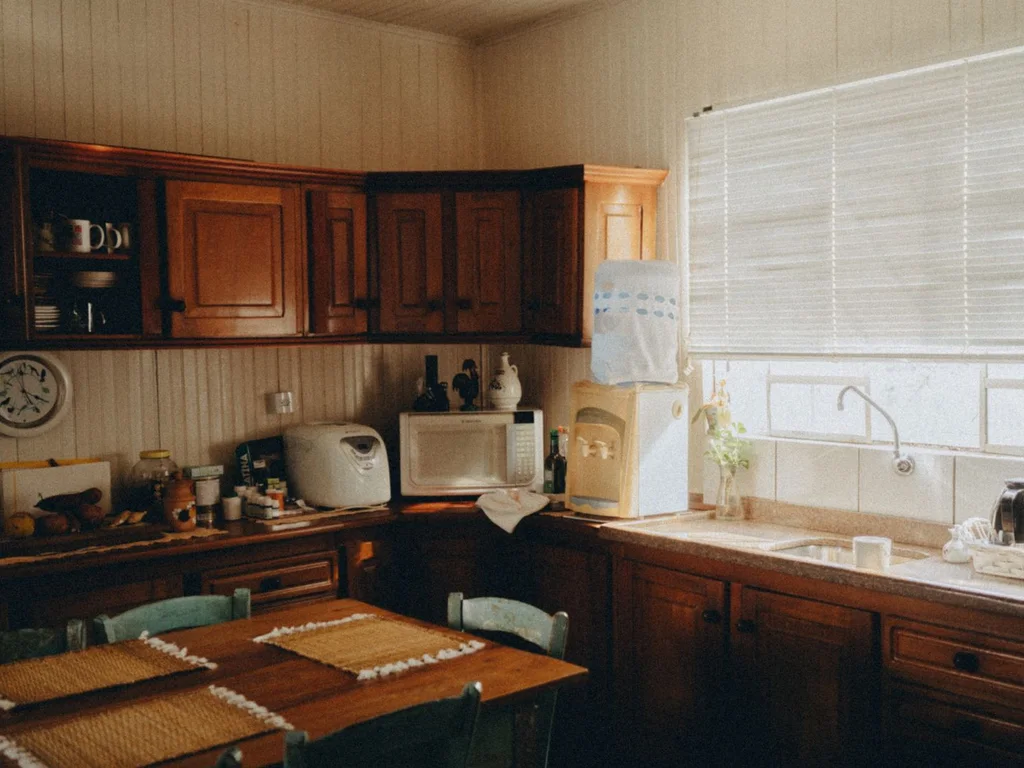
Natural wood cabinets bring warmth and character that painted finishes cannot match. Oak, walnut and ash all age gracefully and suit both rustic and modern kitchens. Seal the wood well near the sink and hob, and let the grain be the decoration — no fussy handles needed.
6. Handleless Cabinets for a Sleek Look
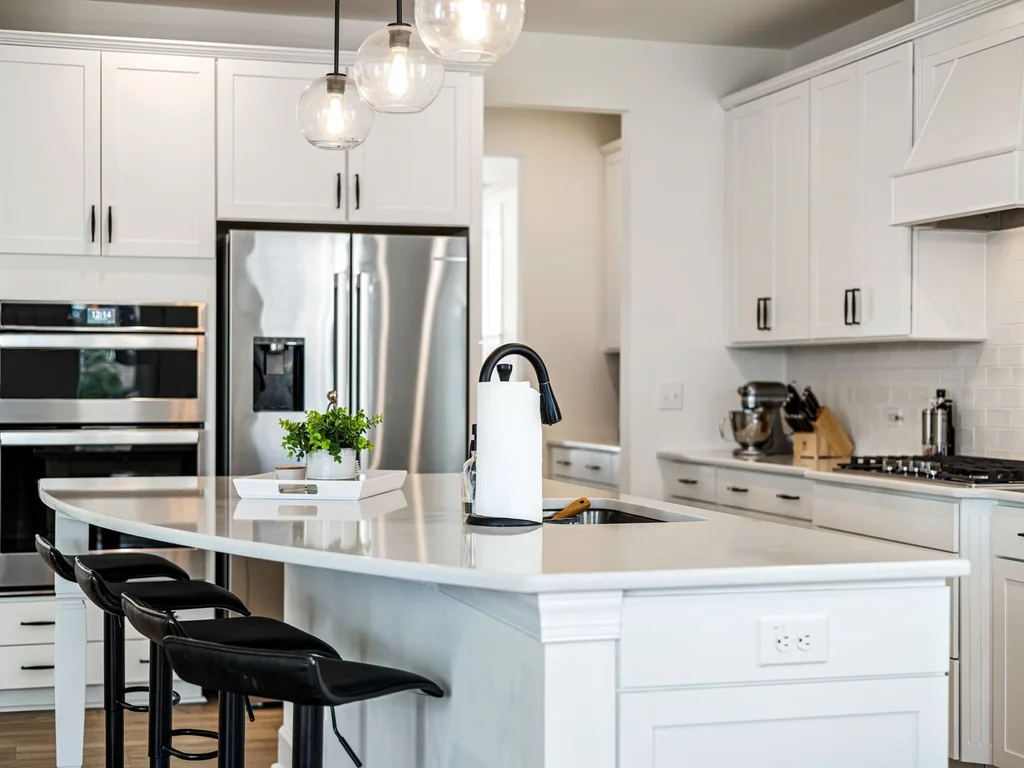
Handleless cabinets create clean, uninterrupted lines that suit modern kitchens perfectly. Push-to-open doors or recessed finger pulls keep the fronts smooth and easy to wipe. They work best in a calm palette, where the lack of hardware lets the materials and proportions do the talking.
7. Glass-Front Cabinets for Display
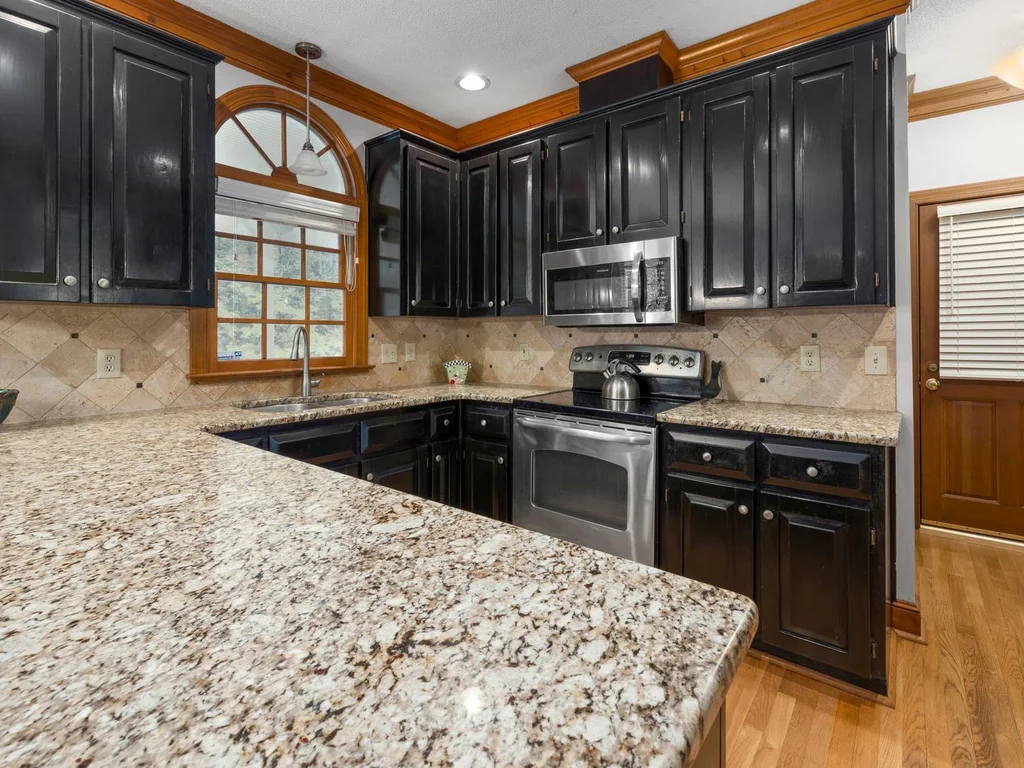
Glass-front cabinets turn everyday dishes into decoration and stop a run of wall units feeling heavy. Use them for your prettiest glasses and plates, keeping the shelves tidy and uncluttered. Frosted or reeded glass is a good compromise if you prefer a softer, less exposed look.
8. Cream Cabinets With a Farmhouse Feel
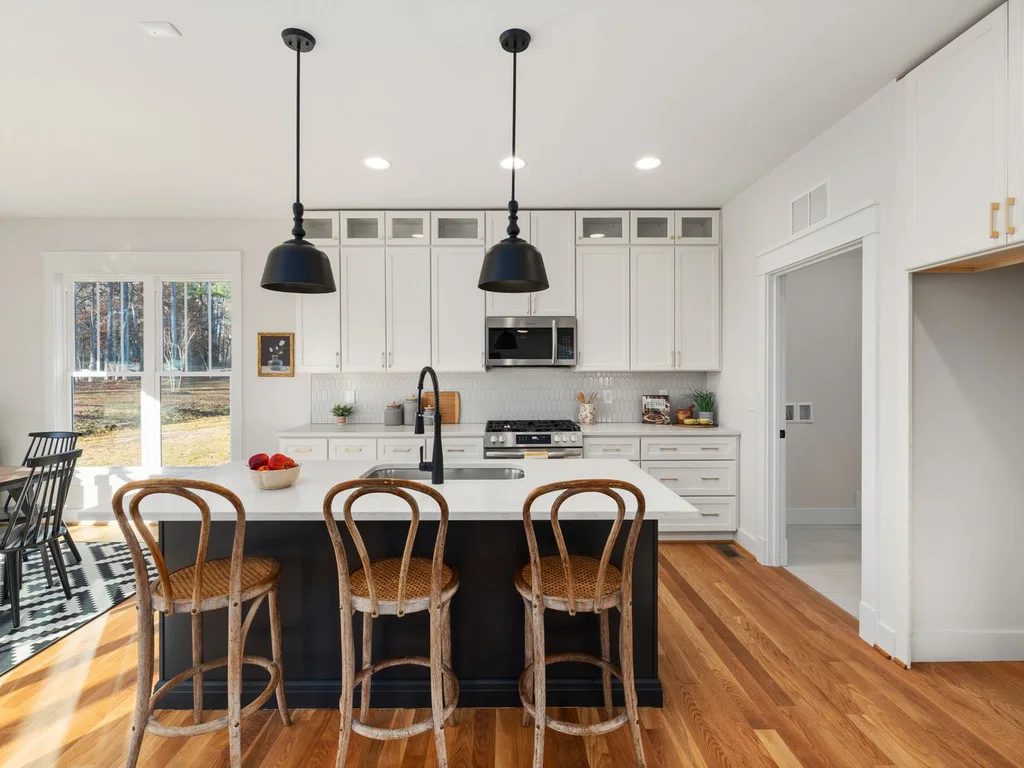
Cream cabinets are warmer than white and instantly give a kitchen a welcoming farmhouse feel. They pair with wooden worktops, ceramic sinks and gingham or linen touches. Cream also hides everyday marks better than pure white, which is a quiet practical win in a busy family kitchen.
9. Black Cabinets With Light Worktops
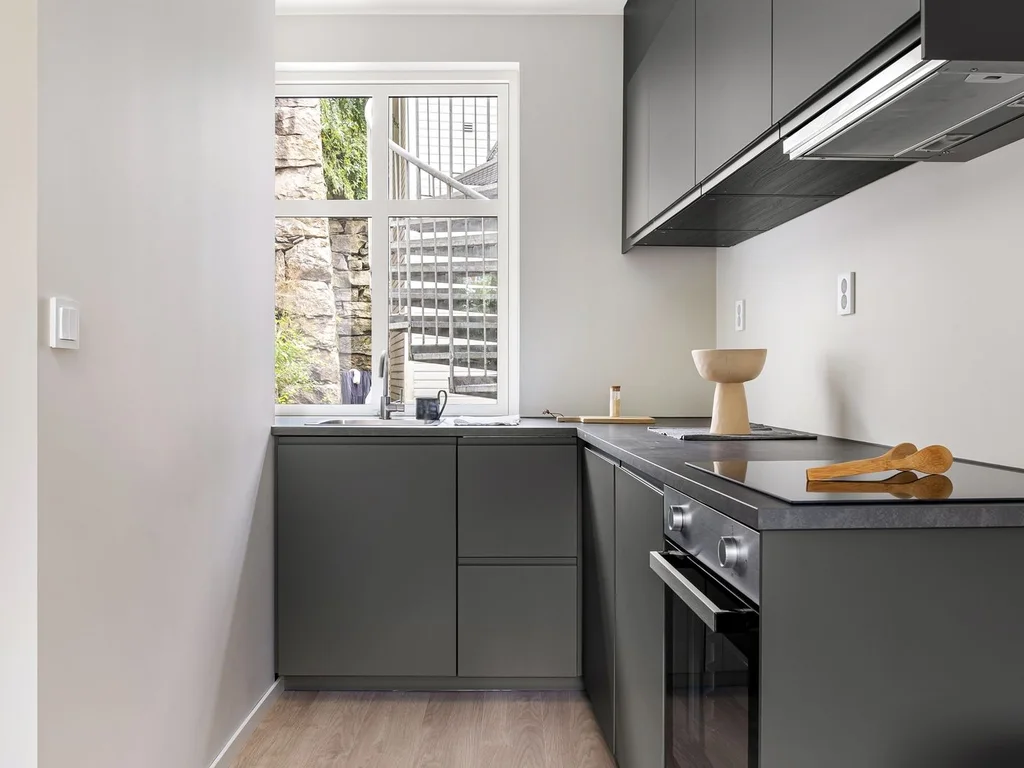
Black cabinets look striking against pale stone or white quartz worktops, and the contrast keeps the room from feeling dark. Add warm lighting under the wall units and a wooden floor or open shelf to soften the look. Black is bold, but with light surfaces it feels sophisticated, not severe.
10. Painted Cabinets as a Budget Refresh
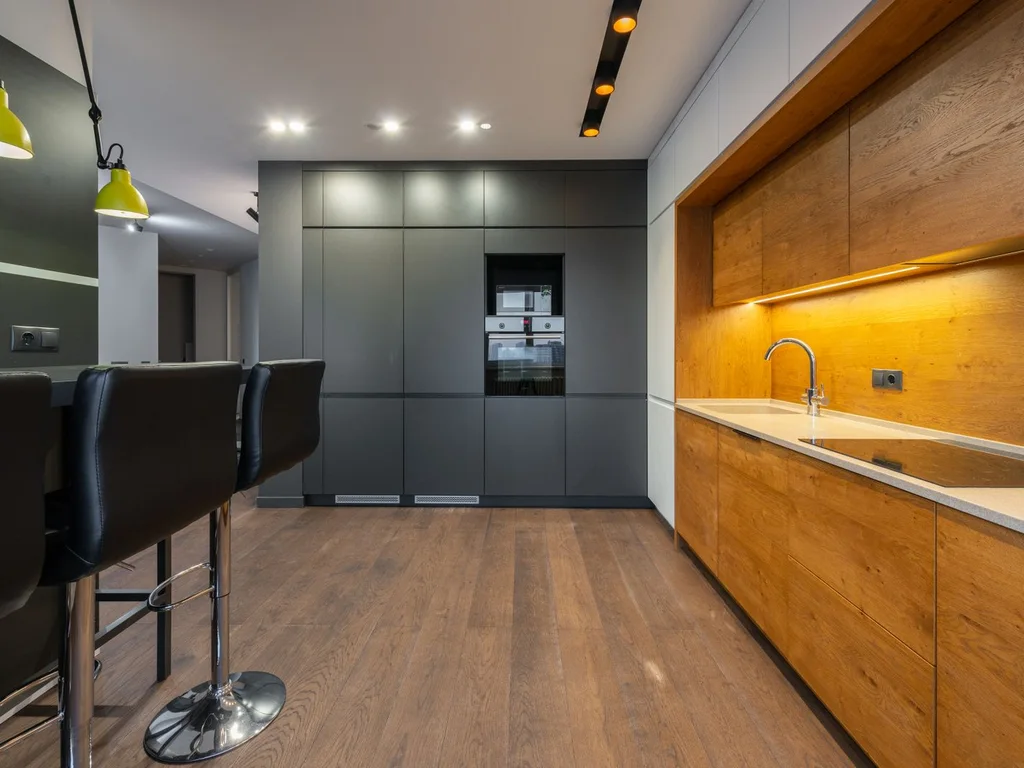
Painting existing cabinets is the fastest way to transform a kitchen without replacing anything. Clean and sand the doors, use a primer made for cabinetry, and finish with a durable satin or eggshell paint. New handles complete the change, and the whole project often costs a fraction of new units.
2. Countertops and Backsplashes
11. White Quartz Worktops for Easy Care
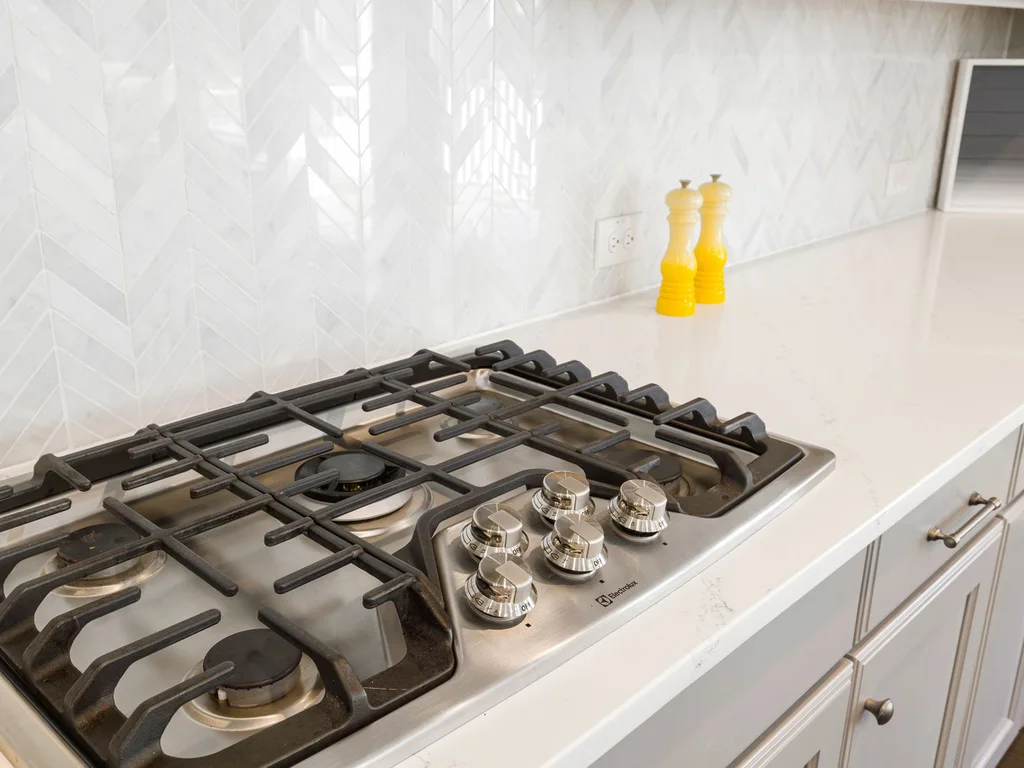
White quartz worktops give the look of marble without the staining and sealing worries. They resist heat, scratches and spills, which makes them ideal for keen cooks. Pair them with any cabinet colour, and keep a wooden board for chopping to protect the surface and your knives.
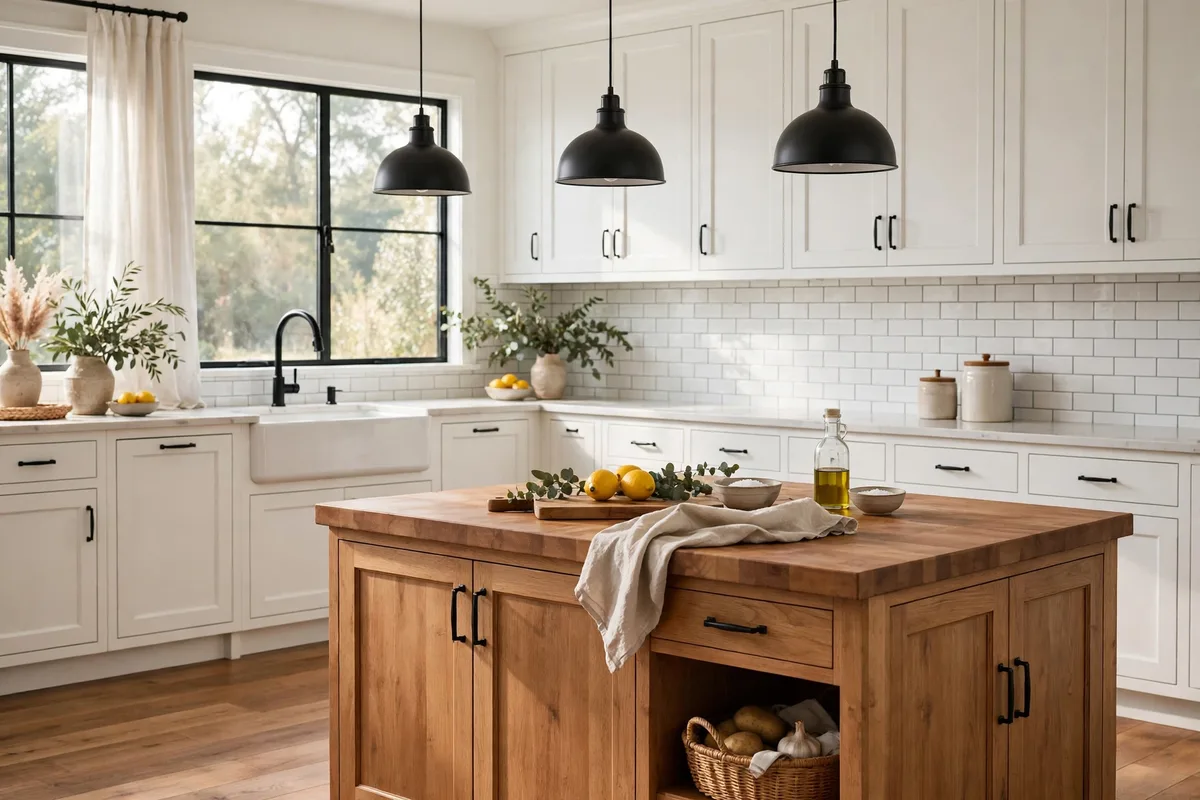
12. Butcher Block Warmth on an Island
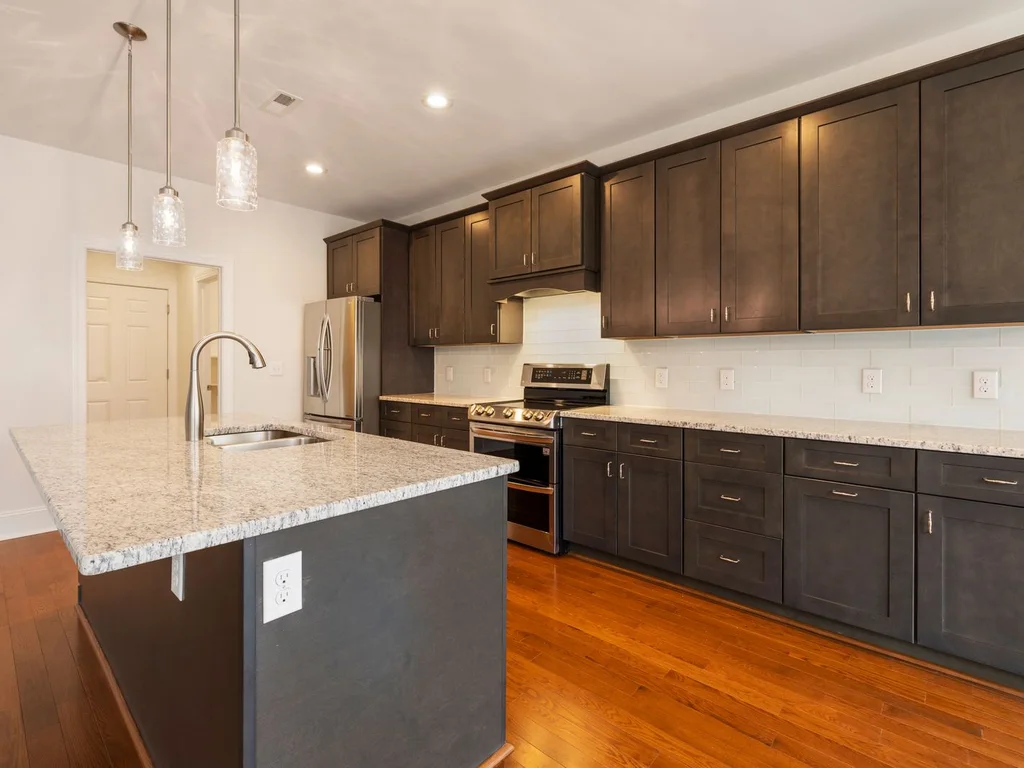
A butcher block top on an island adds warmth and a natural place to prep, serve and gather. Wood is kinder to knives and gentler on dropped glasses than stone. Oil it regularly, sand out marks when they appear, and accept a few patina lines as part of its character.
13. Marble-Look Porcelain for Luxury
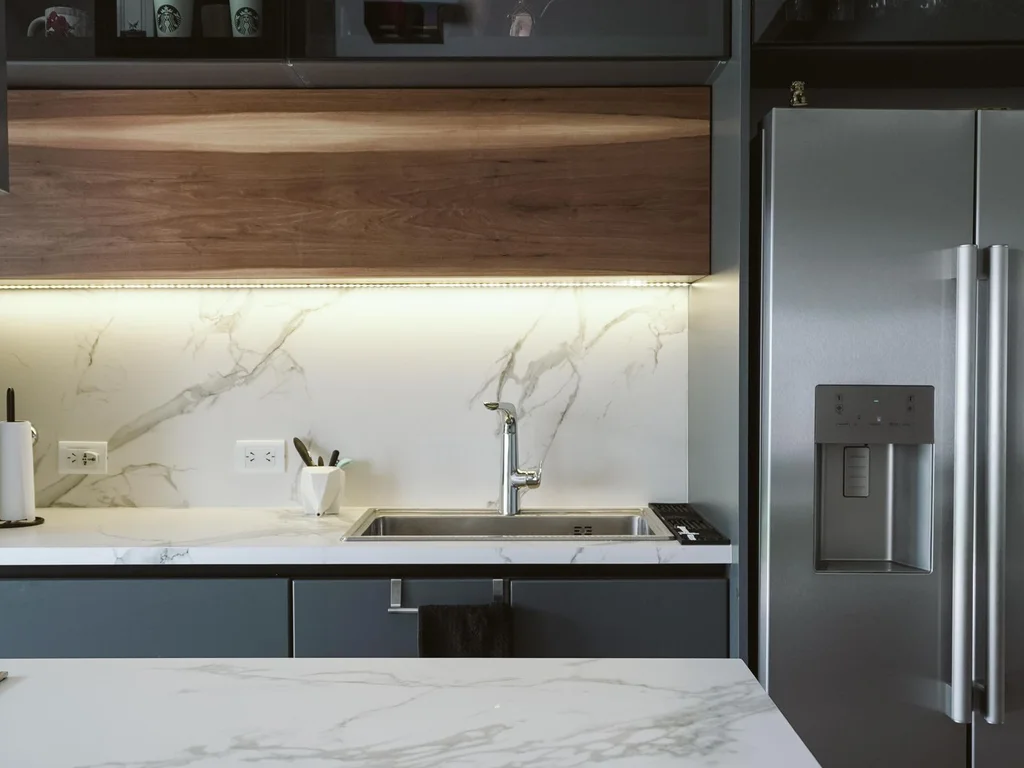
Porcelain slabs printed to look like marble deliver the veined luxury of stone with almost no maintenance. They resist stains, heat and UV light, so they suit sunny kitchens too. Use the same slab for the backsplash and the luxury effect doubles without doubling the design decisions.
14. Classic White Subway Tile Backsplash
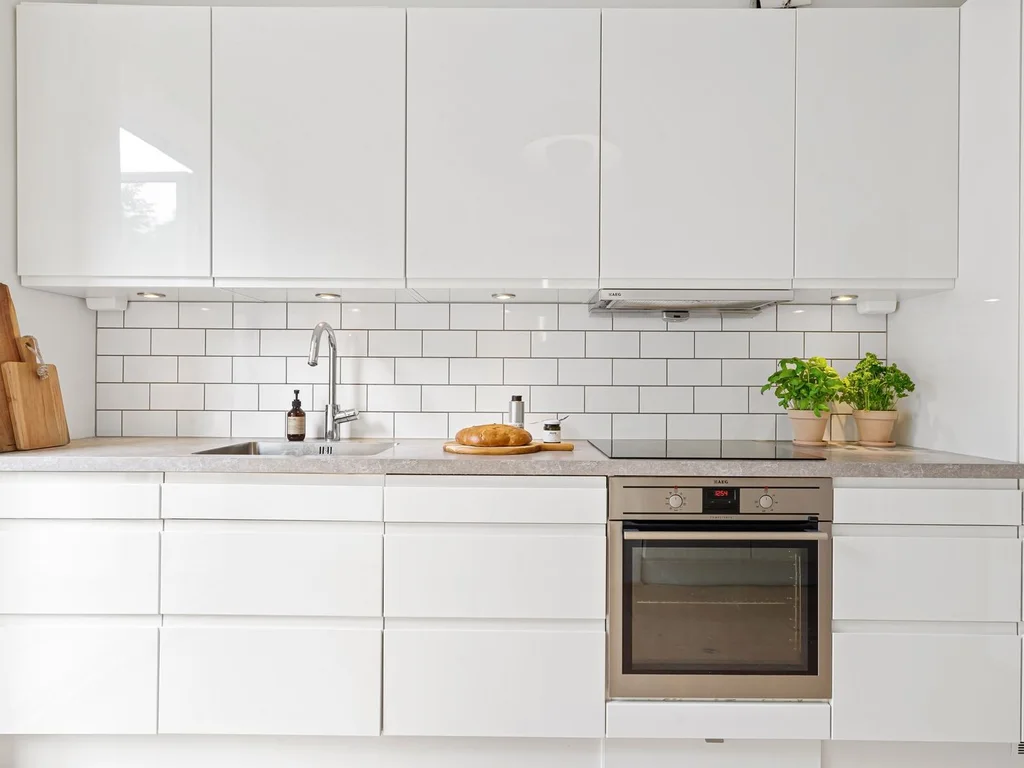
White subway tiles are the default backsplash for a reason: they are affordable, timeless and easy to clean. Lay them in a brick pattern for tradition, or stack them vertically for a modern twist. A contrasting grout adds definition, while matching grout keeps the wall calm and seamless.
15. Bold Patterned Tiles as a Feature Wall
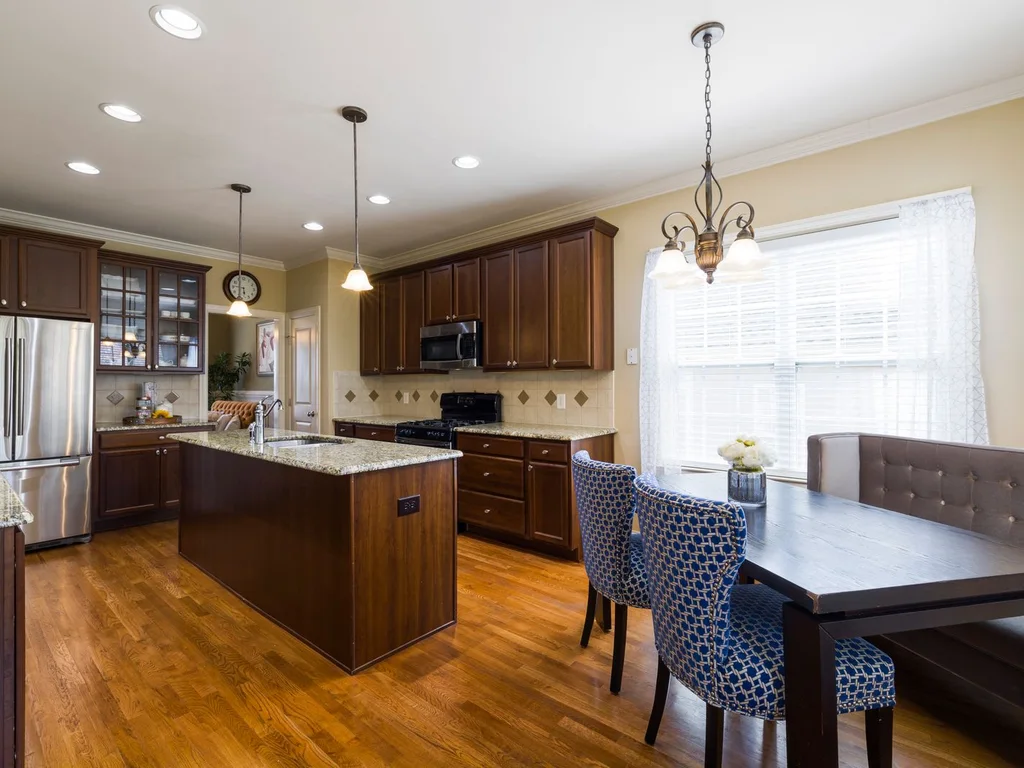
Patterned tiles turn the wall behind the hob into the kitchen’s artwork. Encaustic-look cement or ceramic tiles in blue, green or terracotta add personality instantly. Keep the rest of the kitchen simple so the pattern sings, and seal porous tiles so cooking splashes wipe away easily.
16. A Full-Height Stone Backsplash
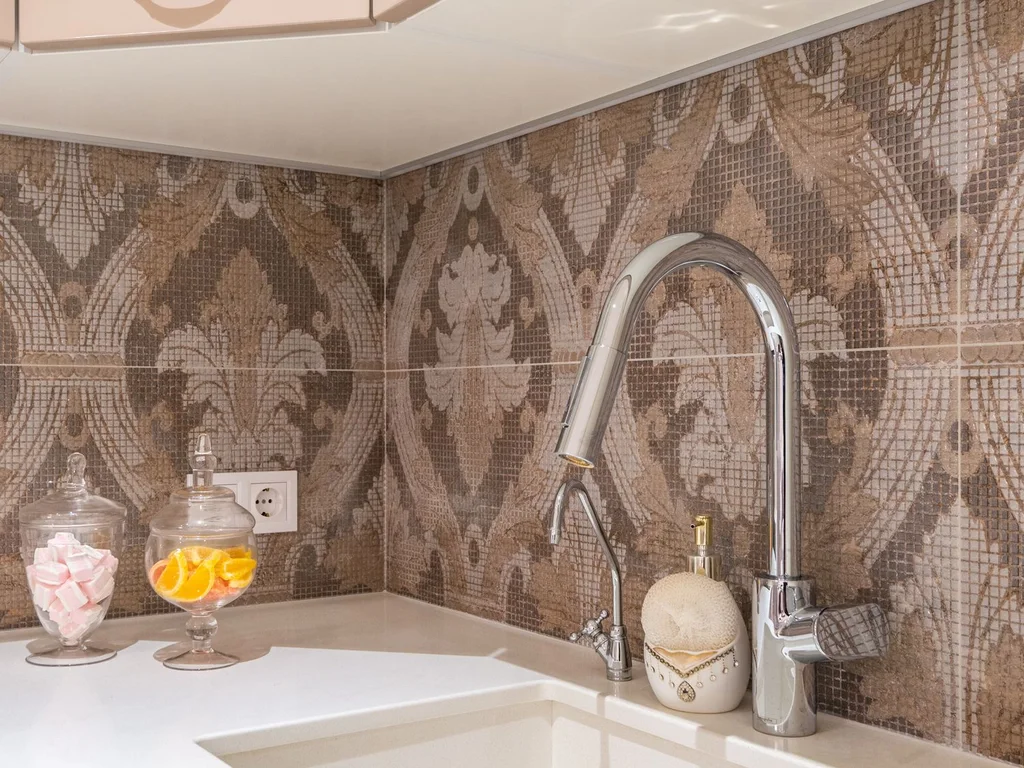
Running your worktop stone all the way up the wall creates a seamless, high-end look with no grout lines to clean. It works best behind the hob and sink, where splashes are worst. Choose a stone with gentle movement so the large surface feels calm rather than busy.
17. Zellige Tiles for Handmade Texture
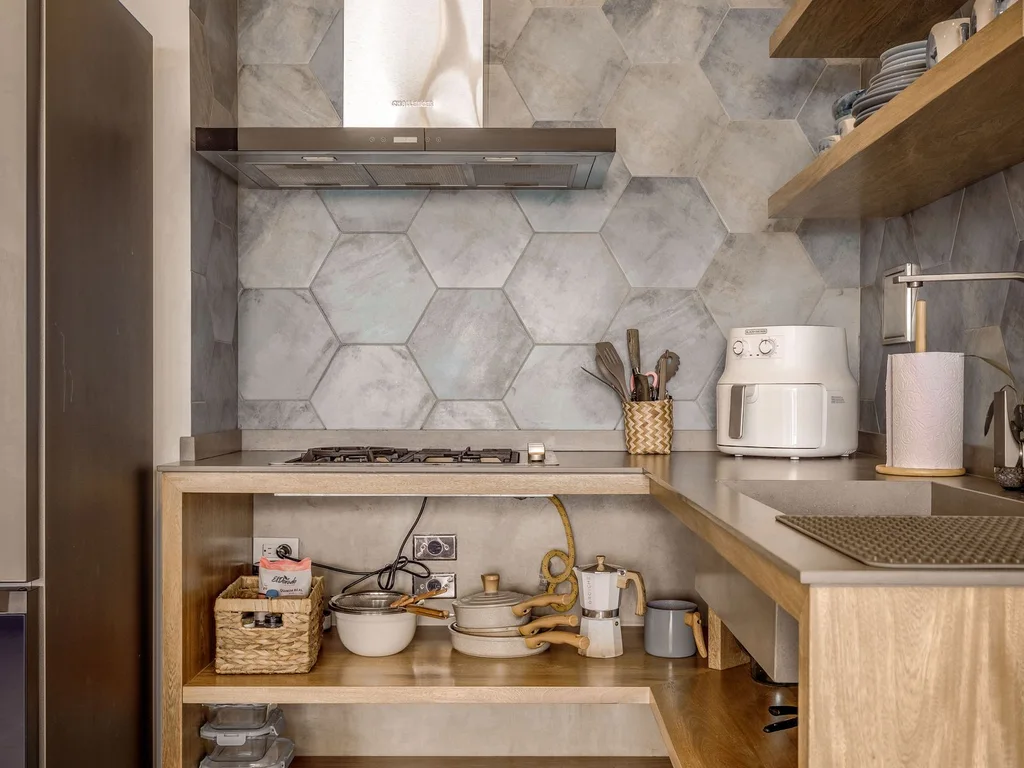
Zellige tiles are handmade, glazed and slightly uneven, which gives the wall a shimmering, crafted texture that machine-made tiles cannot copy. Their soft colour variation suits both modern and rustic kitchens. Use a simple grout colour and let the tile surface be the decoration.
18. A Dark Backsplash Behind Light Cabinets
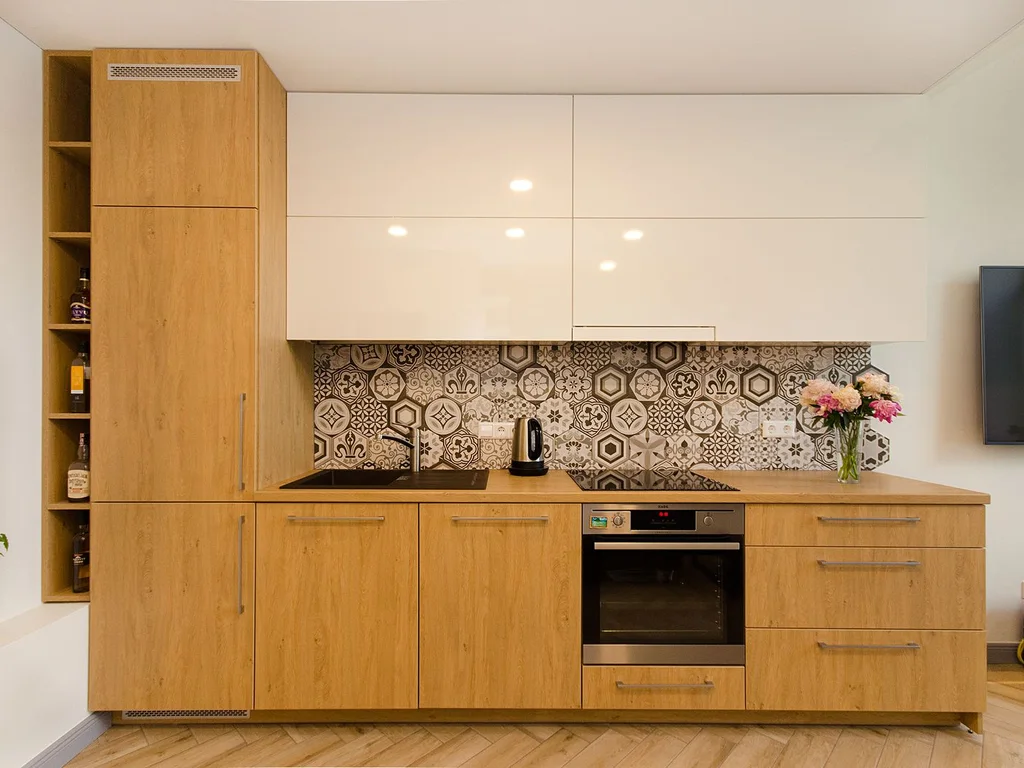
A dark backsplash grounds a pale kitchen and makes white cabinets look crisper. Deep green, charcoal or black tiles add depth without the commitment of dark cabinets. Keep the worktop light so the dark band reads as an accent, not a shadow.
19. Open Shelving Instead of a Backsplash
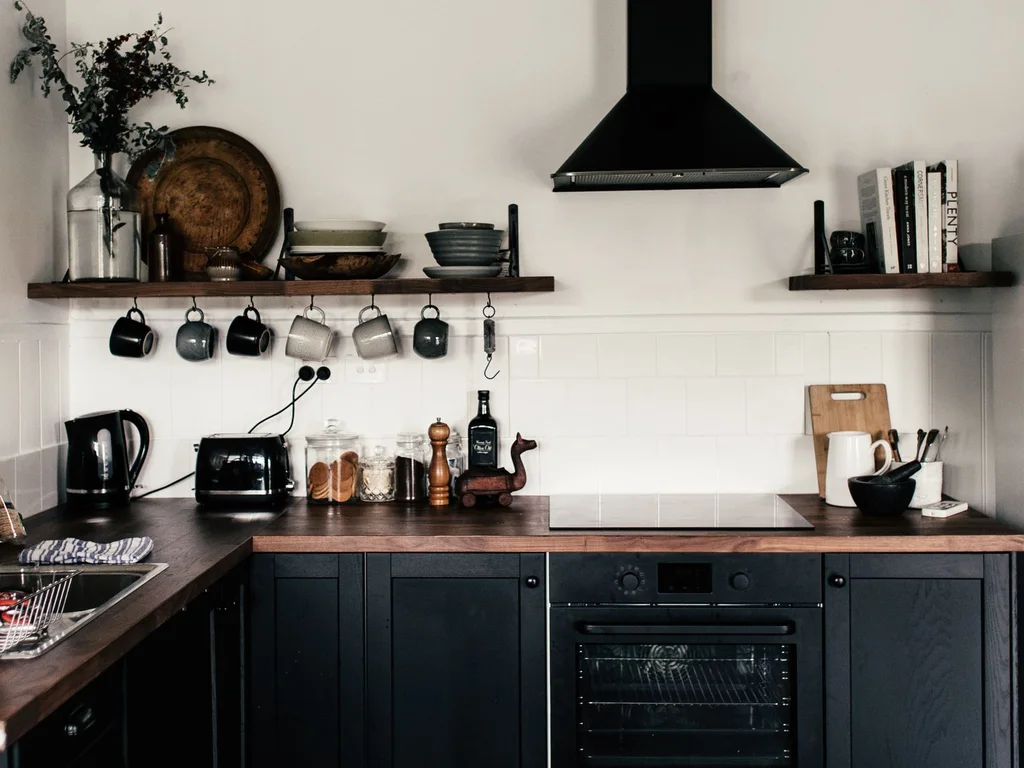
Skipping a tiled backsplash in favour of painted plaster and open shelves gives a relaxed, unfitted feel. It only works if the wall is properly sealed against splashes near the hob, so use a washable paint and a small upstand. The payoff is a kitchen that feels more like a living room.
20. Stainless Steel Backsplash for Cooks
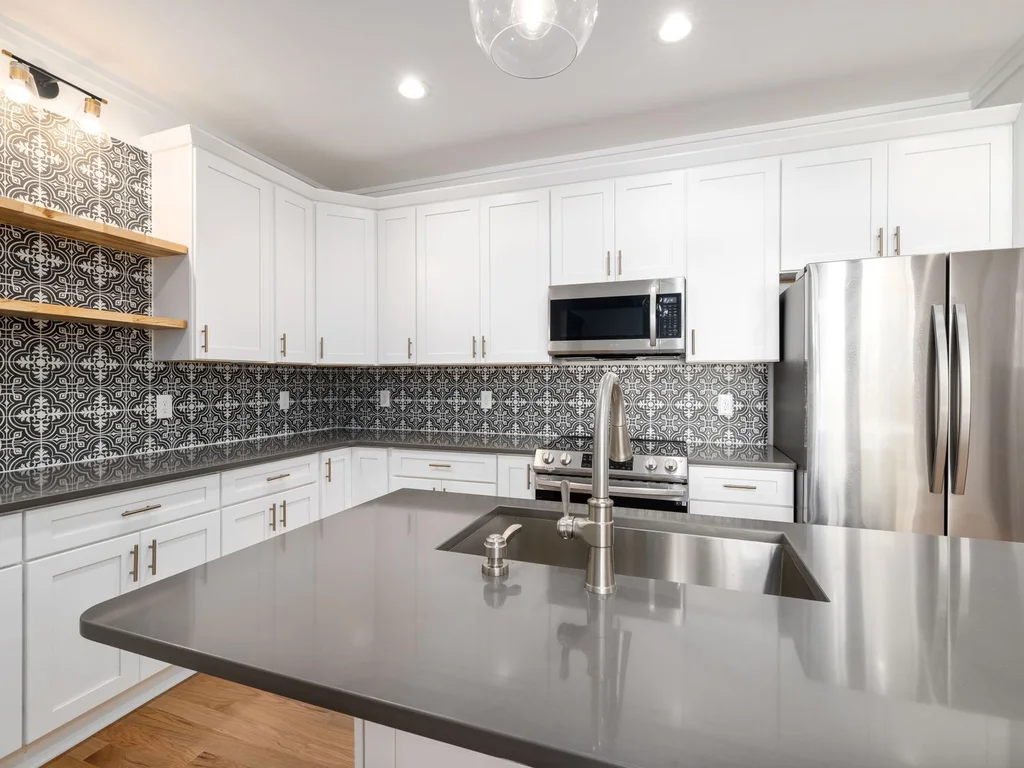
A stainless steel backsplash is the professional cook’s choice: heat-proof, easy to wipe and nearly indestructible. It suits industrial and modern kitchens and reflects light beautifully. Pair it with wooden accents so the room stays warm rather than feeling like a commercial kitchen.
3. Kitchen Lighting That Works
21. Pendant Lights Over the Island
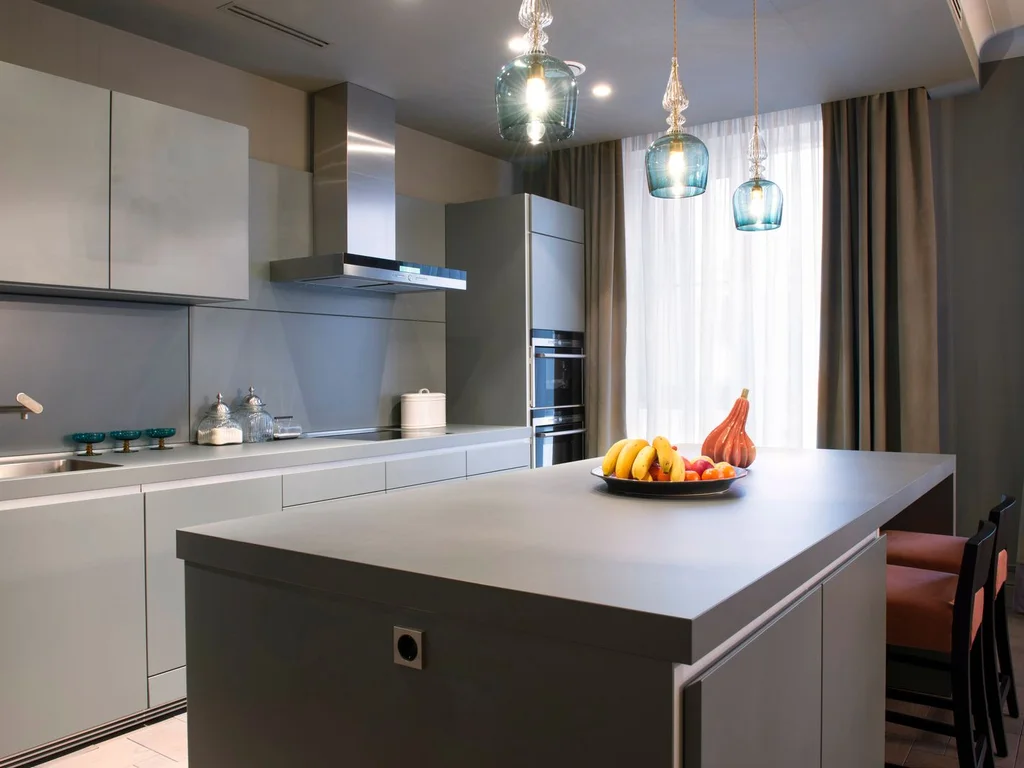
Pendant lights over an island do three jobs at once: they light the work surface, define the island as the room’s centre, and add jewellery to the kitchen. Hang them 75 to 90 centimetres above the worktop, space them evenly, and choose a size that suits the island — too small looks lost, too large blocks conversation.
22. Under-Cabinet LED Strips
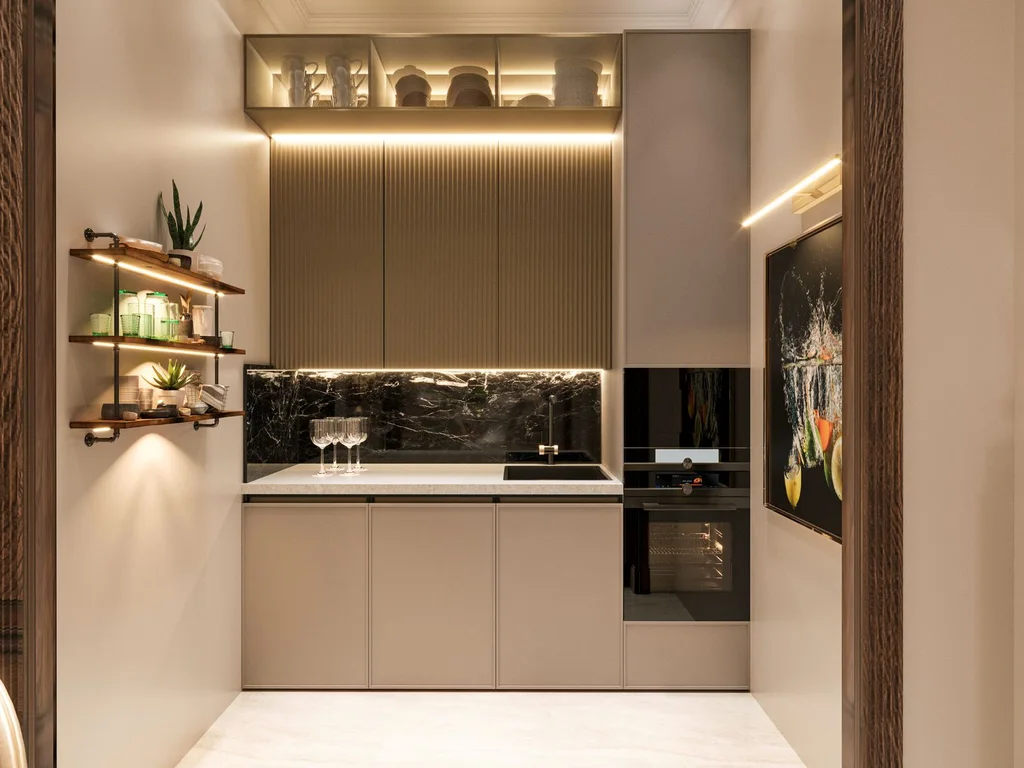
Under-cabinet LED strips are the single most useful kitchen lighting upgrade. They light the worktop without shadows, make evening cooking safer, and give the kitchen a warm glow after dinner. Choose warm white for a cosy feel and a dimmer so the same strips work for prep and for late-night snacks.
23. A Statement Chandelier in the Kitchen
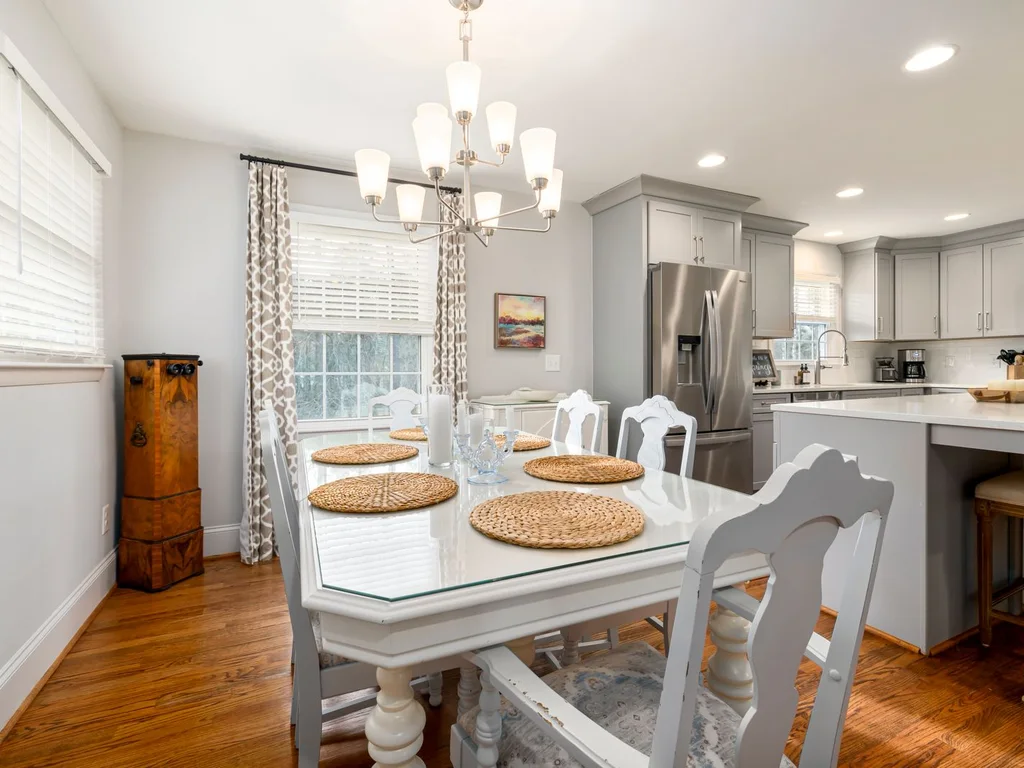
A chandelier over a kitchen table or island adds unexpected glamour to a practical room. Crystal, beaded or wrought-iron styles all work if the scale is right and the drop clears head height. Dim it for dinner and the kitchen instantly shifts from workspace to dining room.
24. Layered Lighting: Task, Ambient and Accent
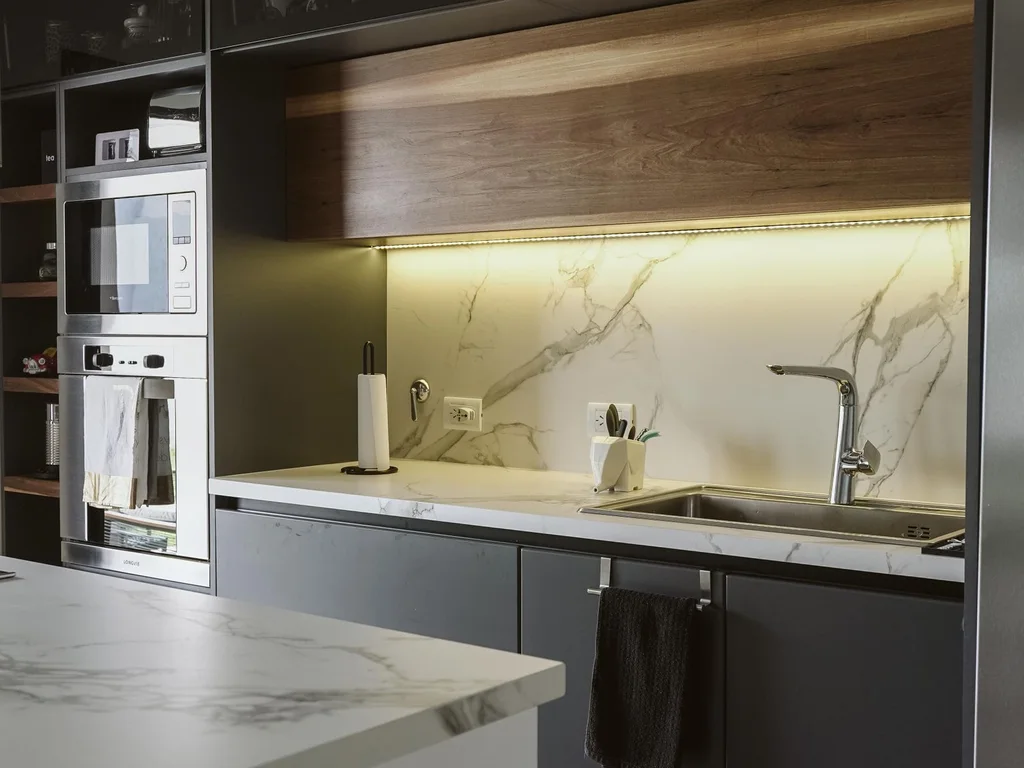
Great kitchen lighting is layered, not single-source. Combine bright task lighting over worktops, soft ambient light from the ceiling, and accent light inside glass cabinets or above shelves. Each layer on its own switch or dimmer lets you set the room for cooking, eating or relaxing in seconds.
25. Recessed Spots for a Clean Ceiling
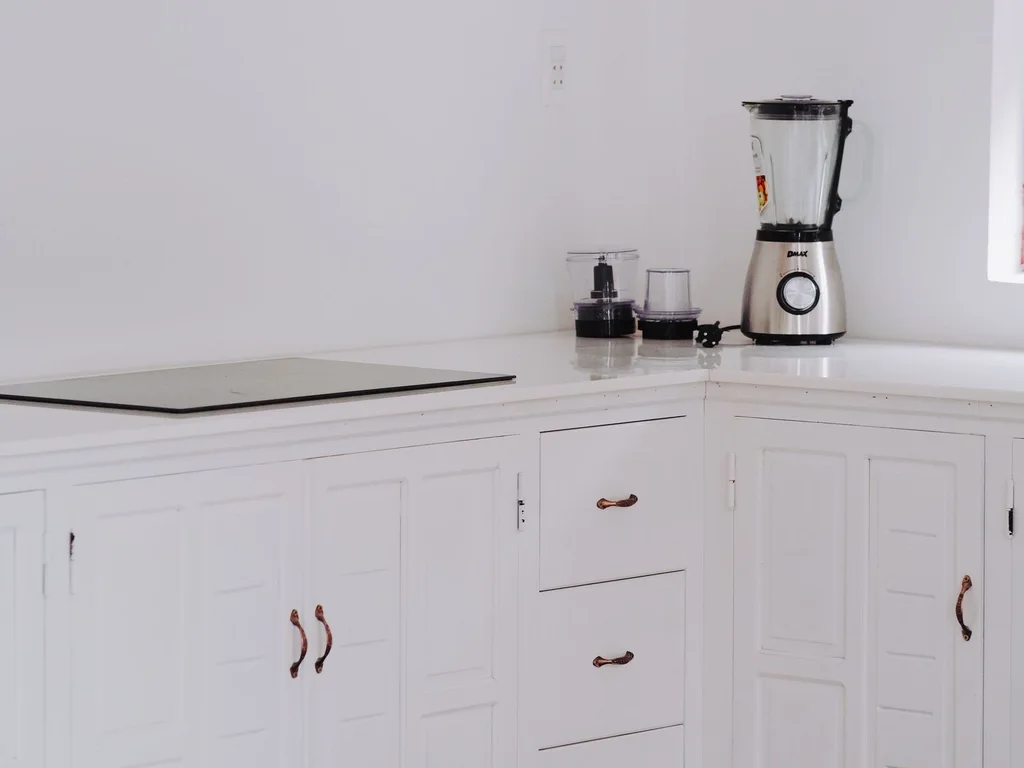
Recessed ceiling spots keep the ceiling clean and spread even light across the whole kitchen. Space them about a metre apart and slightly in front of the worktop edge so they light the surface, not the top of the wall units. Add a dimmer and they work for both bright prep and soft evenings.
26. Warm Bulbs for a Cosy Kitchen
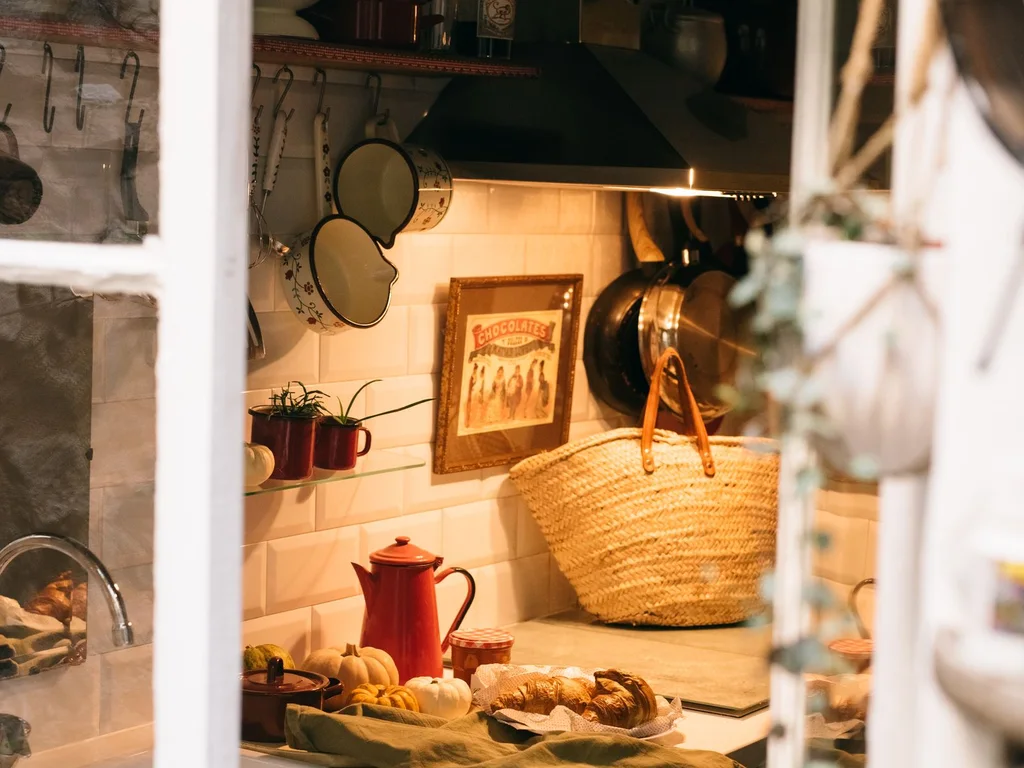
Bulb colour changes a kitchen more than most people expect. Warm white bulbs around 2700K make wood, food and skin tones look inviting, while cool white can feel clinical. Keep task areas bright but warm, and the kitchen will feel like a room you want to linger in, not just cook in.
27. Sconces Beside Open Shelving
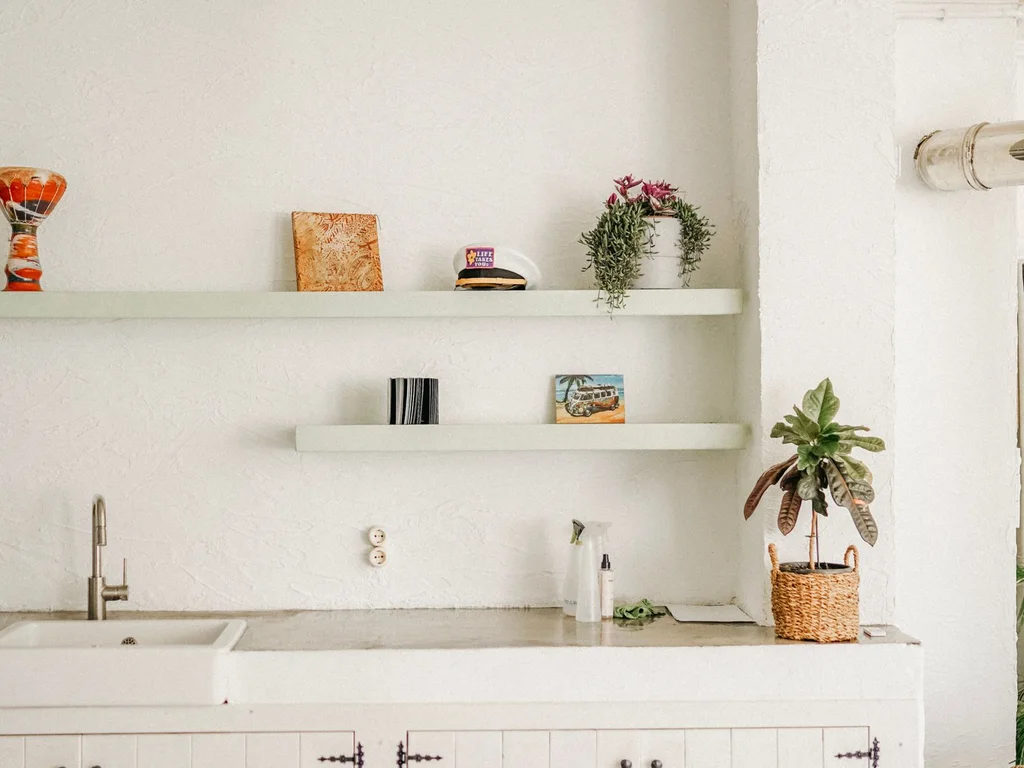
Wall sconces beside open shelves or a window add a soft, decorative layer of light that ceiling spots cannot give. They frame a display beautifully and make a small kitchen feel considered rather than purely functional. Choose shades that direct light up and down for a gentle wash on the wall.
28. A Skylight or Light Tunnel
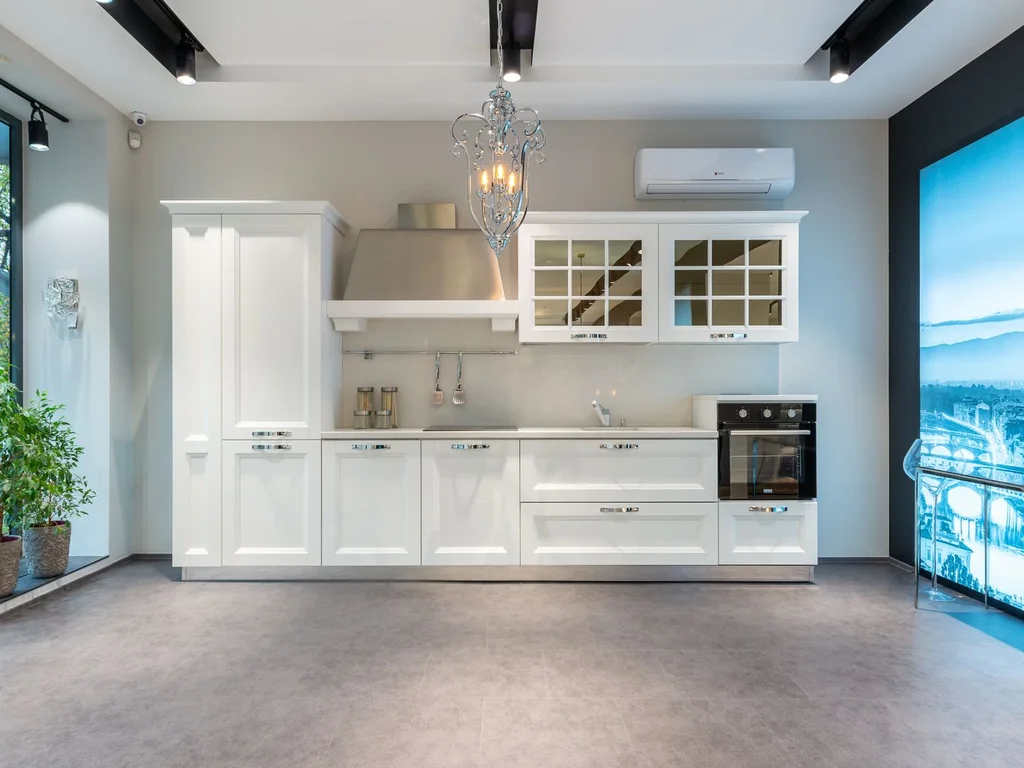
If your kitchen is dark in the middle of the day, a skylight or sun tunnel can transform it without changing the layout. Daylight makes colours truer, food more appetising and the room feel larger. Even a small tunnel over a worktop brings surprising brightness to a windowless corner.
29. Fairy Lights in Glass Cabinets
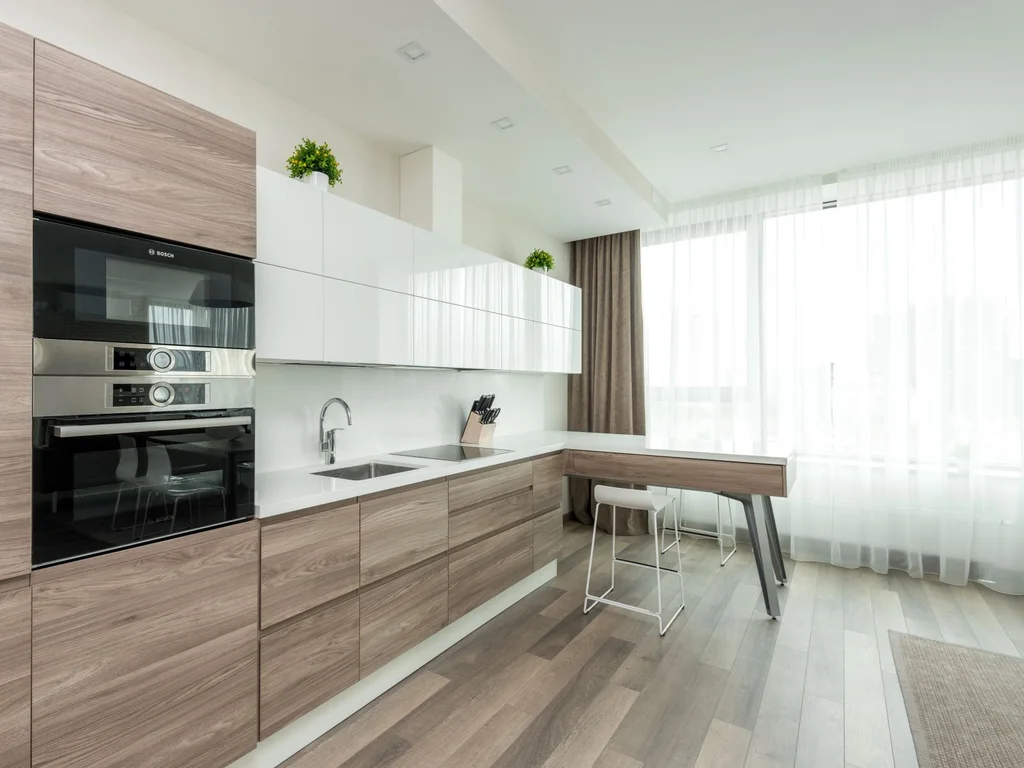
Battery fairy lights inside glass-front cabinets turn your dishes into a glowing display after dark. They cost almost nothing, need no wiring, and make the kitchen feel magical in the evening. Use warm white lights on a timer so the effect appears automatically at dinner time.
30. Dimmers on Every Circuit
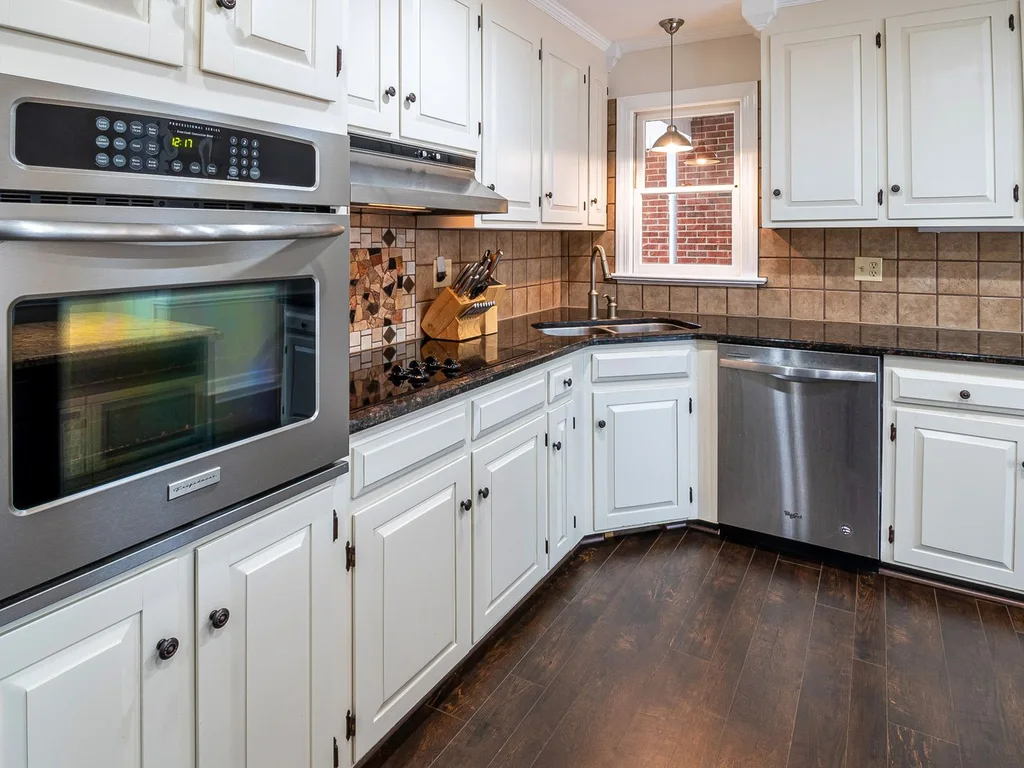
Putting dimmers on every kitchen circuit is a small cost with a large payoff. Full brightness for chopping and cleaning, half light for dinner, and a low glow for midnight water runs — one room, many moods. Check that your bulbs are dimmable before you buy, or the dimmer will buzz and flicker.
4. Open Shelving and Display
31. Wooden Open Shelves for Warmth
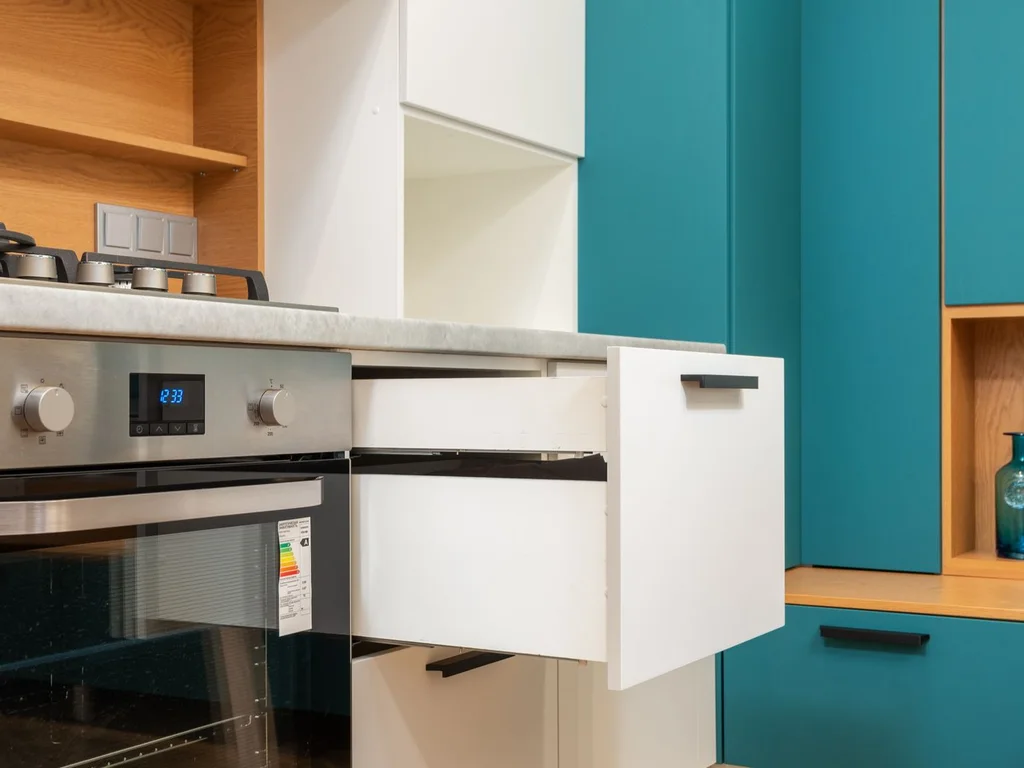
Wooden open shelves warm up a kitchen instantly and break up long runs of wall units. Thick oak or walnut boards on simple brackets suit both rustic and modern rooms. Keep the display to daily dishes and a few plants, and the shelves will look styled rather than cluttered.
32. Everyday Dishes as Display
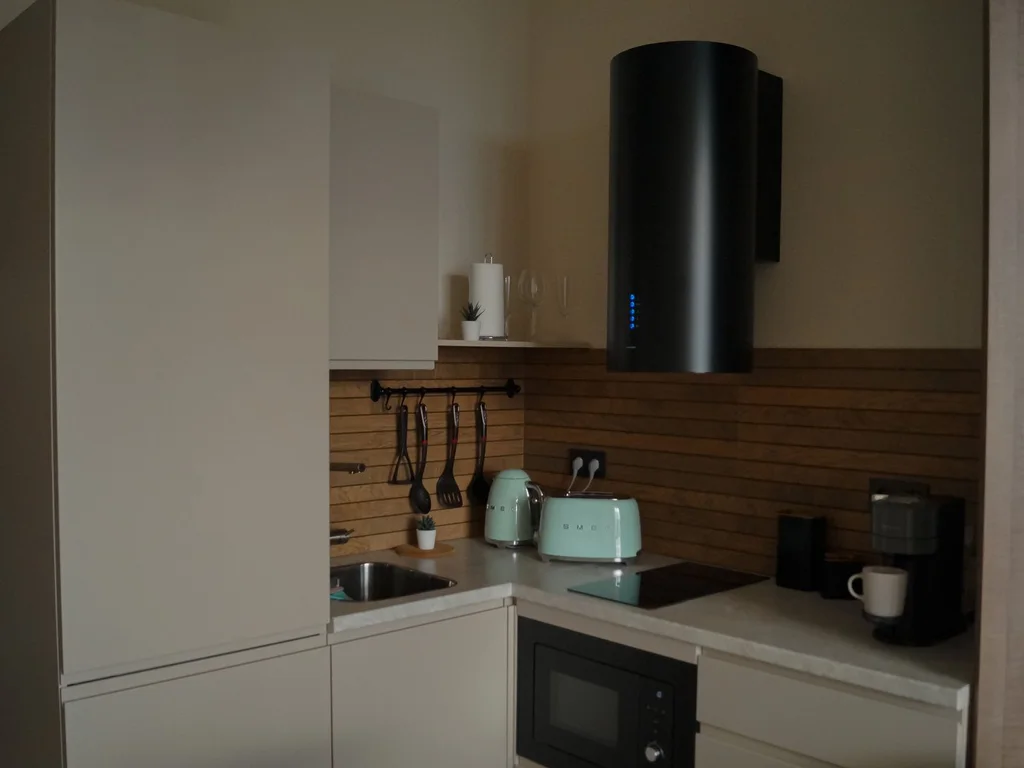
The prettiest open shelves hold things you actually use: white plates, wooden boards, glass jars and favourite mugs. Because everything gets used and washed, nothing gathers dust, and the display changes naturally. Group by colour or material and leave breathing space between stacks.
33. A Plate Rail for Character
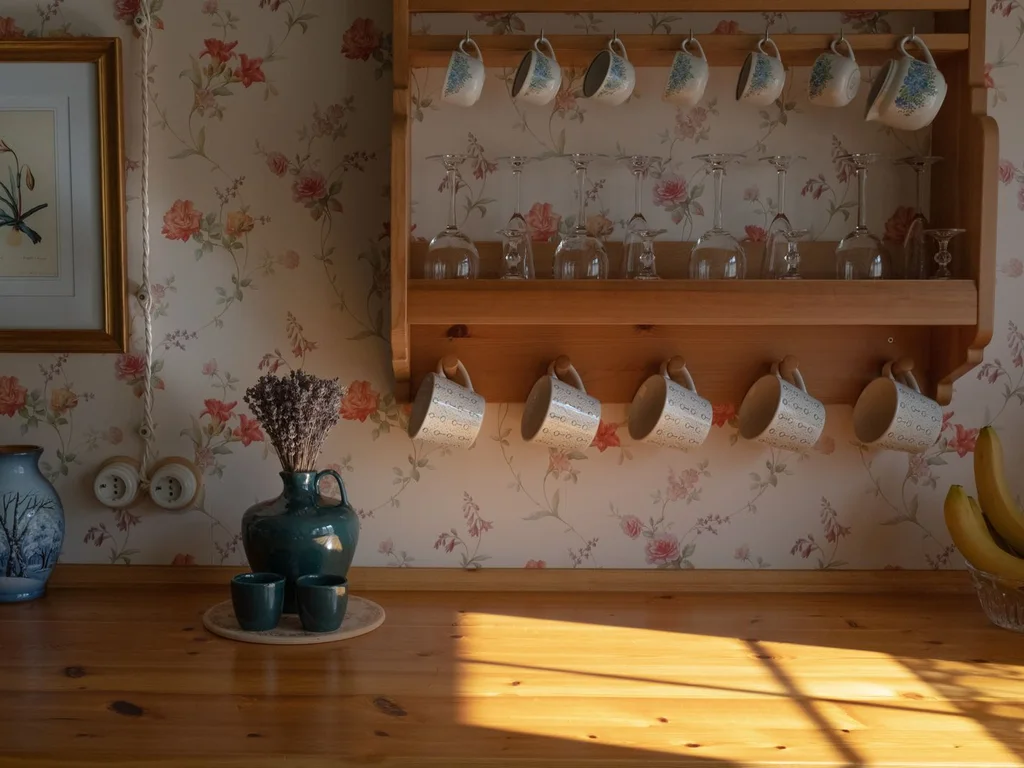
A narrow plate rail along the wall adds cottage character and a place for decorative plates without taking counter space. It suits farmhouse and traditional kitchens especially well. Mix a few patterned plates with plain ones, and keep the rail shallow so it never feels in the way.
34. Shelves Beside the Window
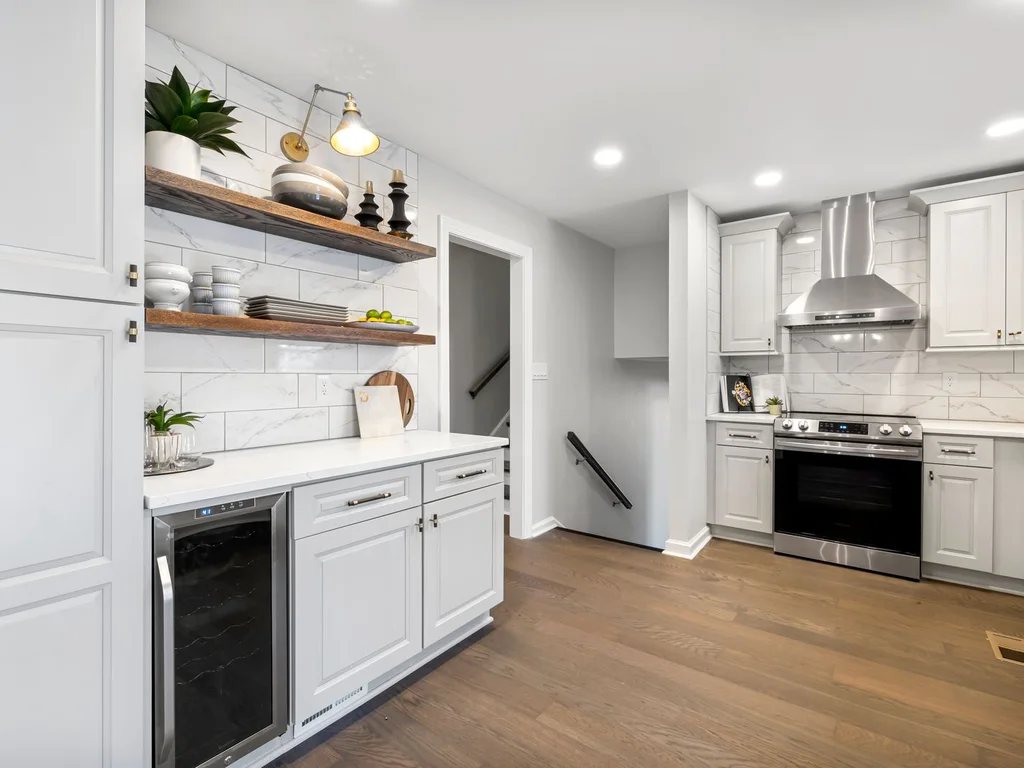
Shelves flanking a kitchen window use dead wall space and frame the view beautifully. Glass jars, small plants and light-coloured dishes catch the daylight and glow. Keep the shelves shallow and the display light so they never block the window itself.
35. A Single Statement Shelf
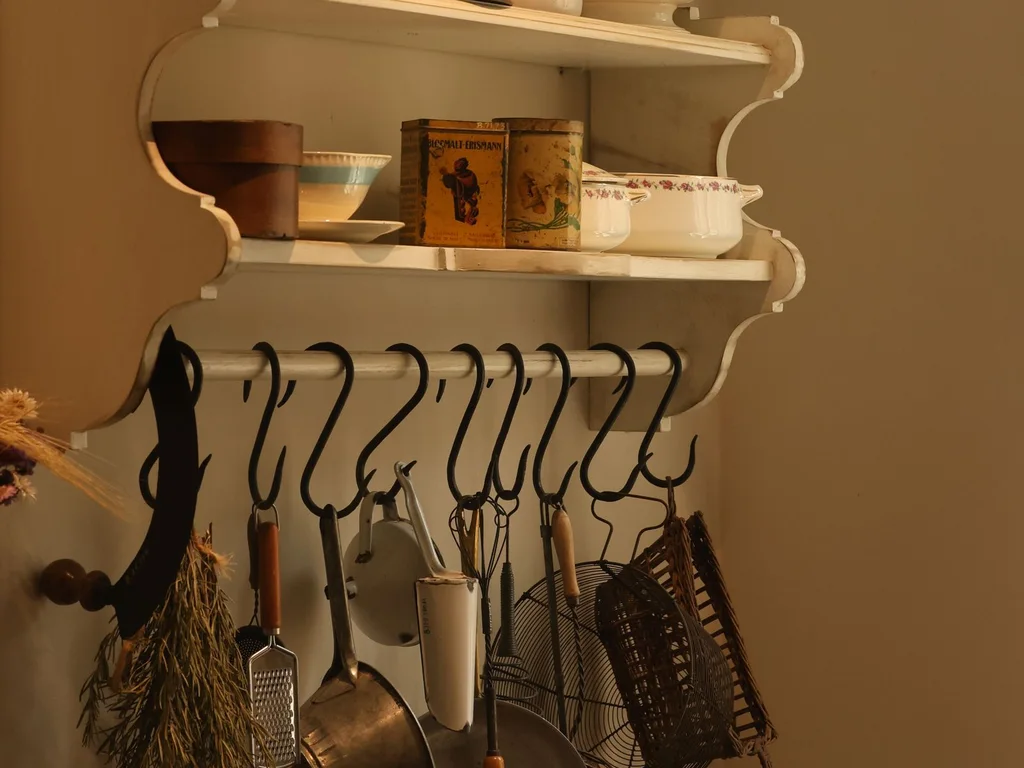
One long, well-styled shelf can do more than a wall of cabinets. Choose a beautiful board, hang it at eye level, and curate it ruthlessly: a few bowls, a plant, a piece of art. The restraint is the point — a single shelf that breathes looks intentional, while a crowded one looks like storage.
36. Metal and Industrial Shelving
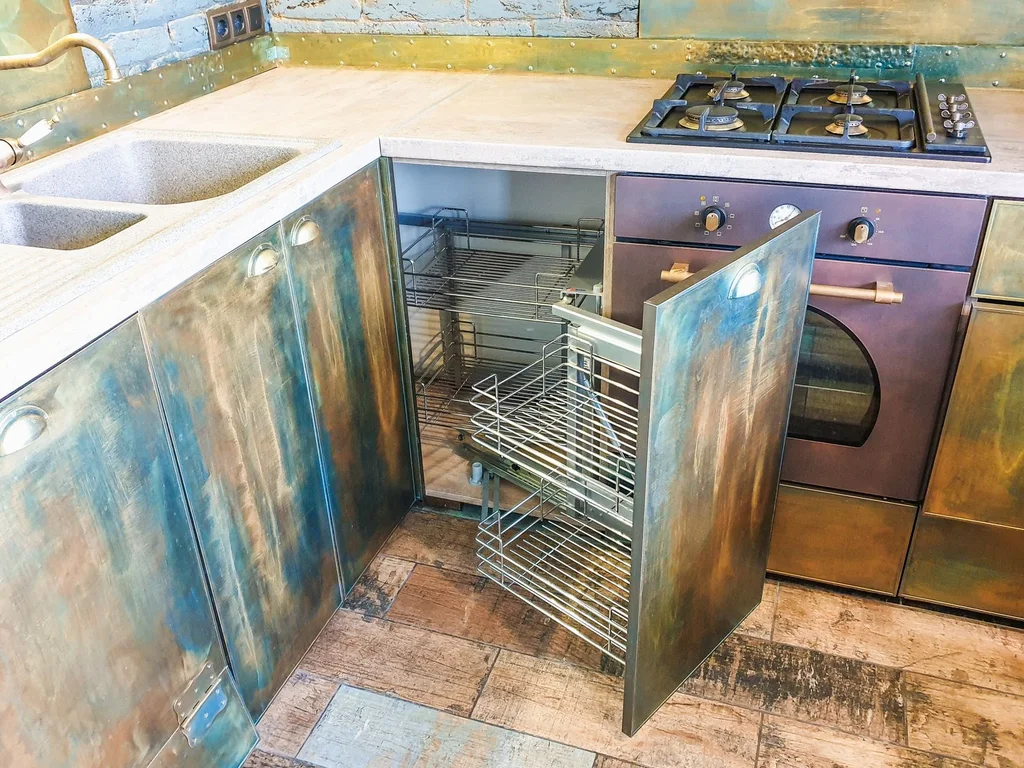
Black metal shelving with wooden boards gives a kitchen an industrial edge that pairs well with brick, concrete and stainless steel. It is sturdy enough for cast iron and heavy crockery, and the open frame keeps the wall feeling light. Use it for cookbooks and pans you reach for daily.
37. Cookbooks on Display
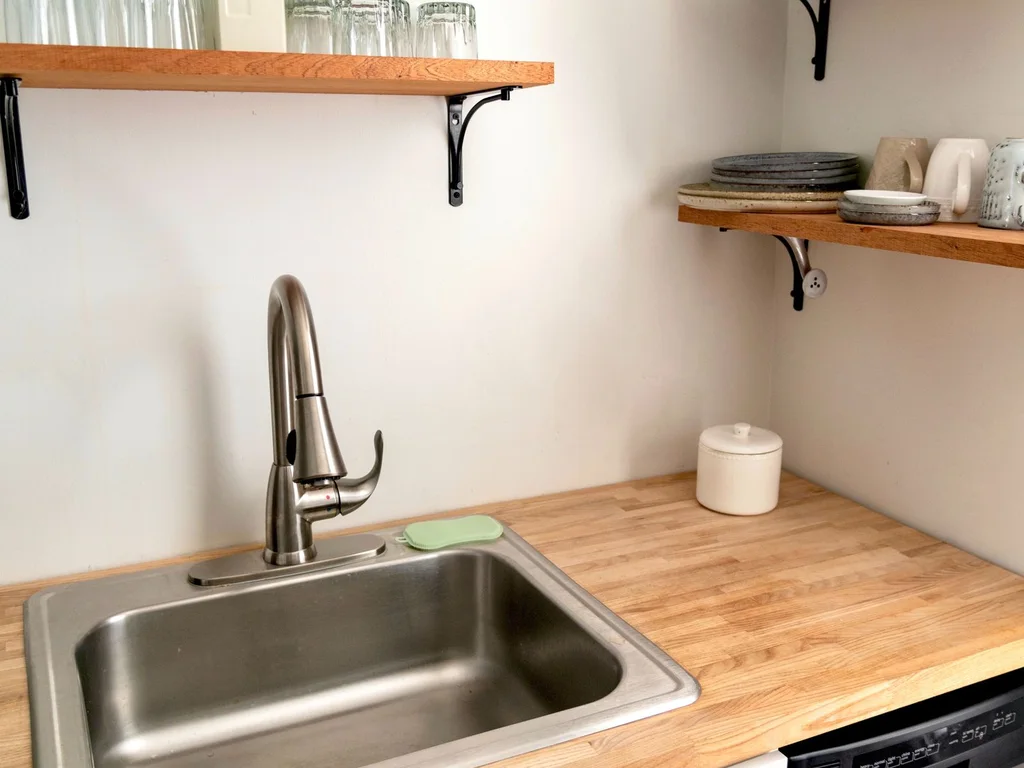
A shelf of cookbooks is both decoration and a working library. Arrange books by size or colour, add a bookend or a small plant, and keep your five most-used books at hand height. Cookbooks add colour, personality and proof that the kitchen is genuinely used and loved.
38. Glass Jars for Pantry Style
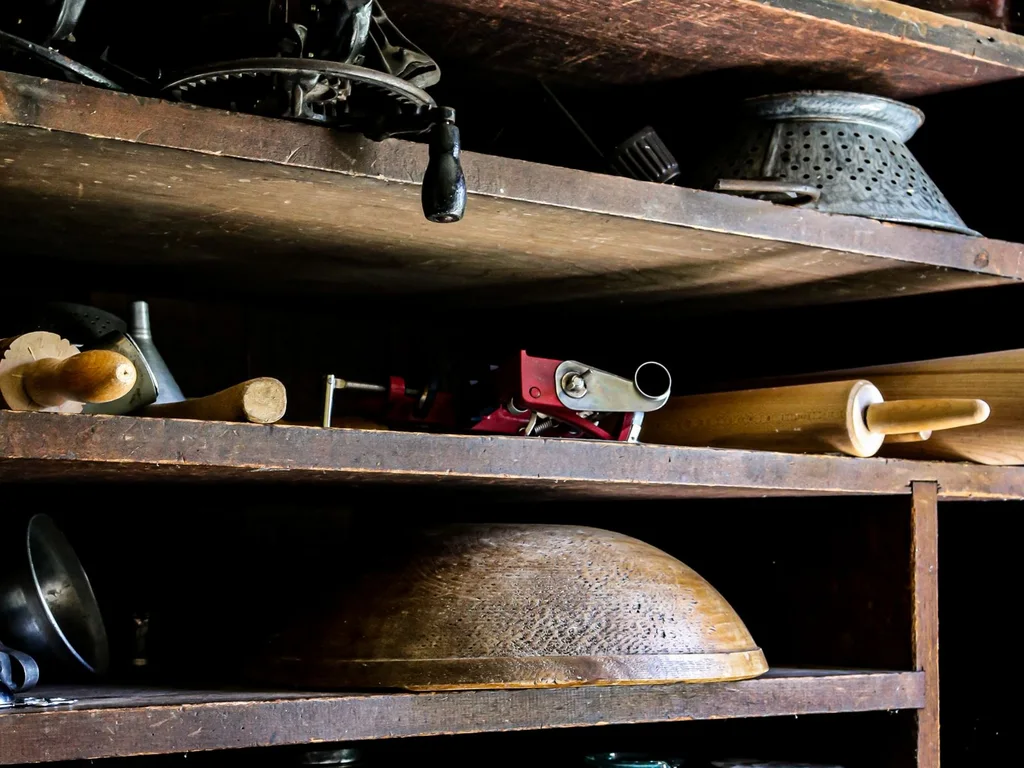
Decanting dry goods into matching glass jars turns pantry staples into a display: pasta, rice, flour and pulses become layers of colour and texture. Label the jars simply, keep them on an open shelf or in a glass cabinet, and refilling becomes a small ritual rather than a chore.
39. Hanging Rails for Utensils
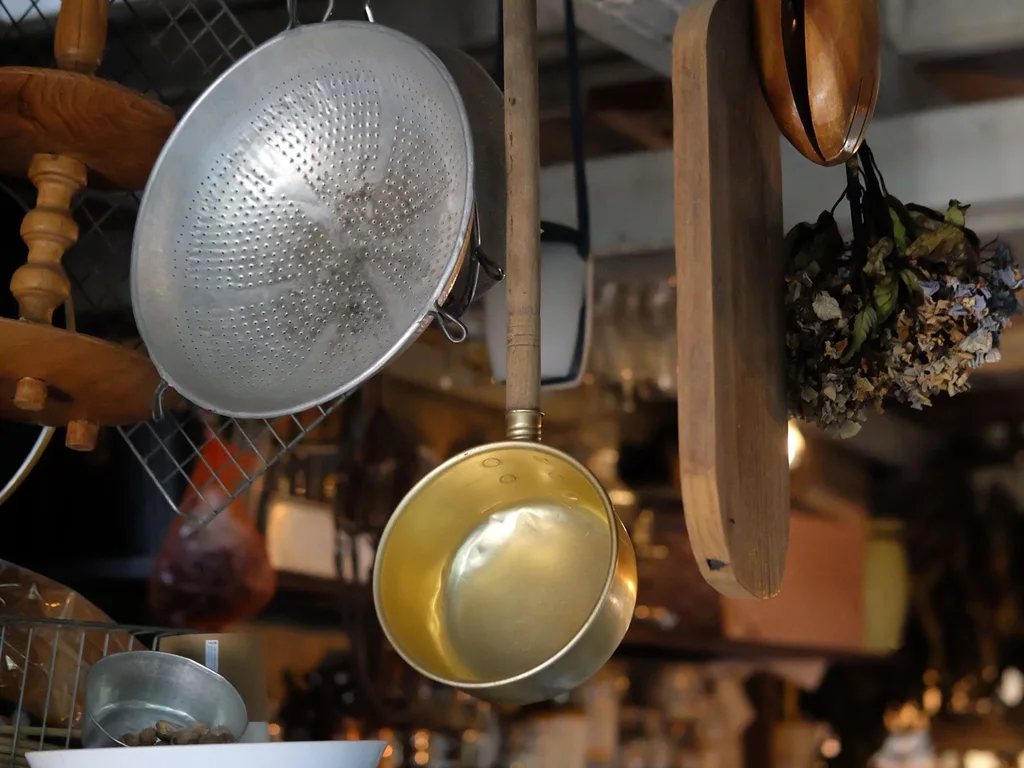
A hanging rail under a shelf or on a backsplash keeps everyday utensils within reach and frees drawer space. Copper pans, wooden spoons and whisks look good enough to display, and cooking becomes faster when tools hang where you work. Keep the rail to favourites, not everything you own.
40. Art in the Kitchen
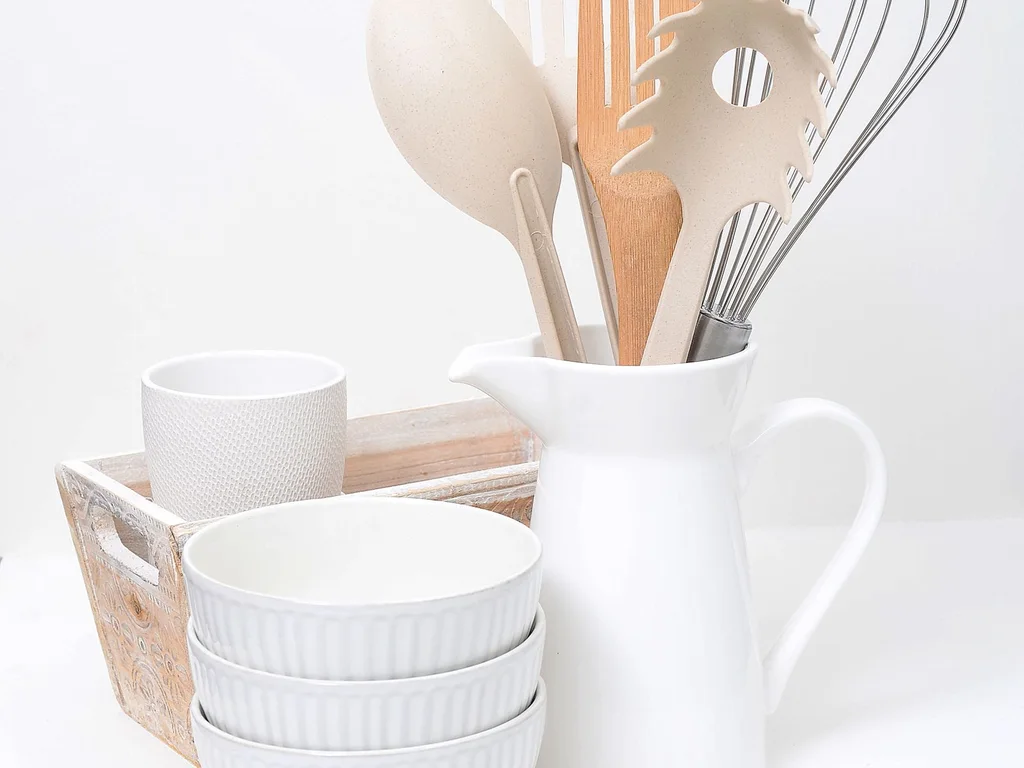
Art belongs in the kitchen too. A framed print, a small painting or a vintage food poster on an empty wall makes the room feel finished and personal. Choose pieces that tolerate humidity, hang them away from direct steam, and the kitchen gains the character of a lived-in room.
5. Islands and Breakfast Bars
41. A Contrasting Island Colour
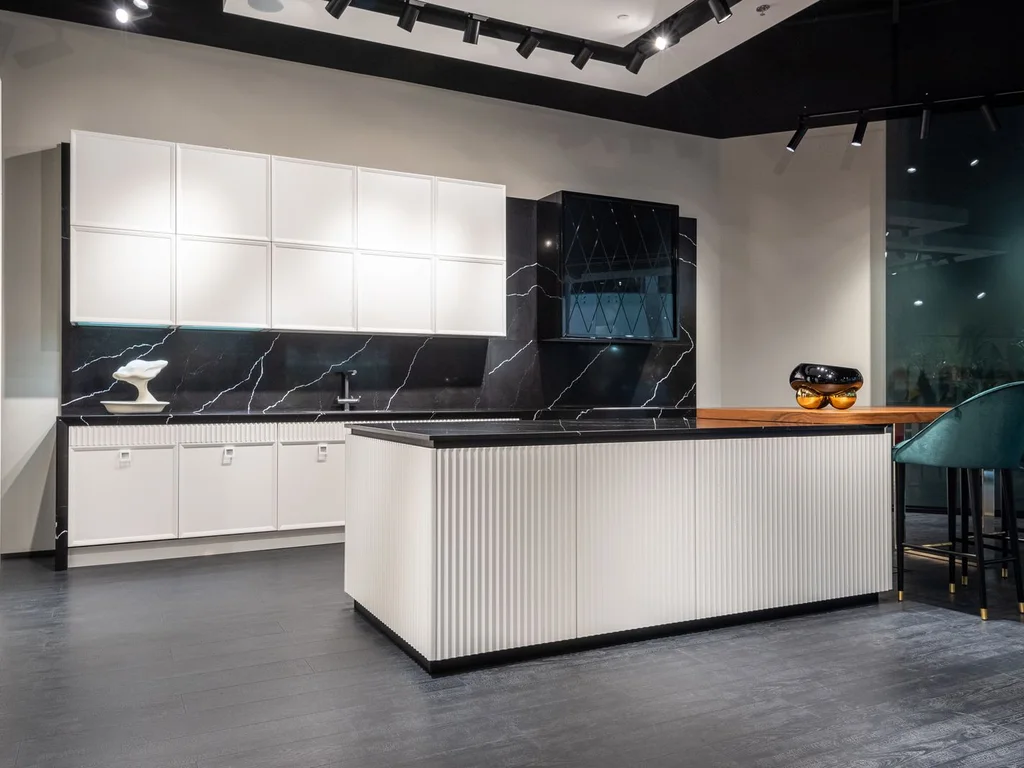
Painting the island a different colour from the rest of the cabinets turns it into a piece of furniture rather than just more units. Navy, green or even a soft pink island against white cabinets creates a focal point that anchors the room. Keep the worktop consistent so the colour change looks deliberate.
42. A Waterfall Island Edge
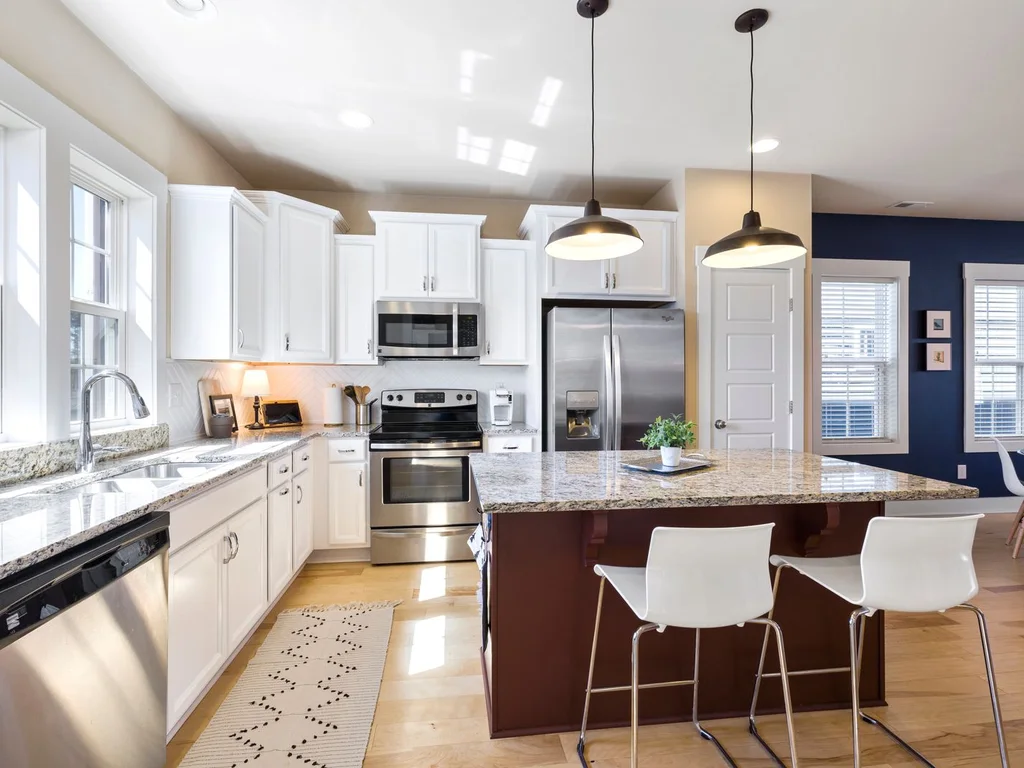
A waterfall edge, where the worktop stone drops down the side of the island to the floor, looks sculptural and luxurious. It protects the island end from knocks and shows off a beautiful stone. It costs more than a standard edge, but the drama it adds is hard to match any other way.
43. Bar Stools That Invite Lingering
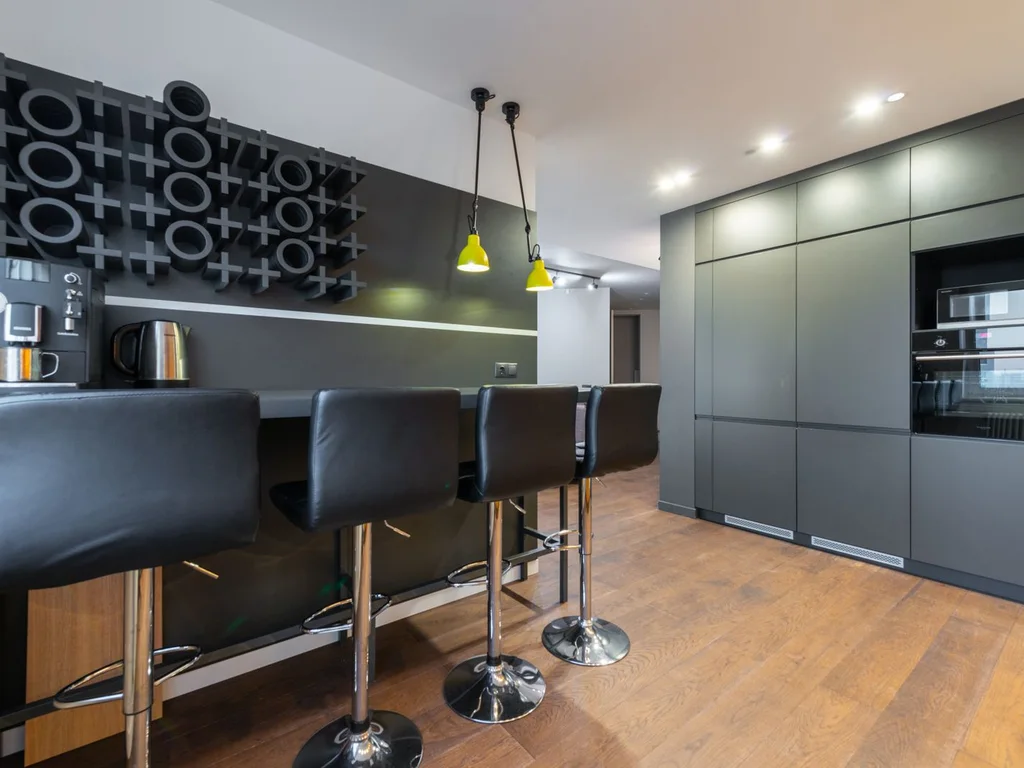
Comfortable bar stools turn an island from a worktop into a gathering place. Choose stools with a back and footrest if people will sit for meals, and allow about 60 centimetres of width per person. Upholstered seats add comfort and colour, while wipeable leather or wood suits families.
44. A Portable Island for Small Kitchens
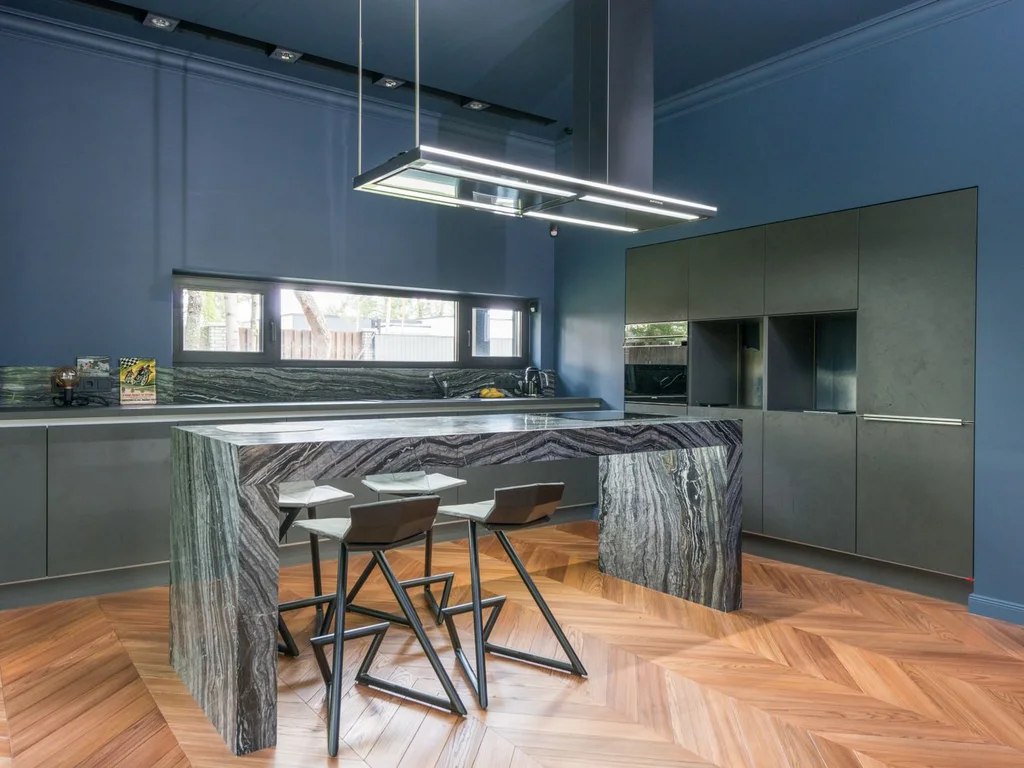
A butcher block on castors or a slim kitchen trolley gives a small kitchen island benefits without fixed plumbing or wiring. Roll it where you need it for prep, tuck it against a wall for dinner, and use the shelf below for bowls and boards. It is the most flexible island you can own.
45. Double Islands for Large Kitchens
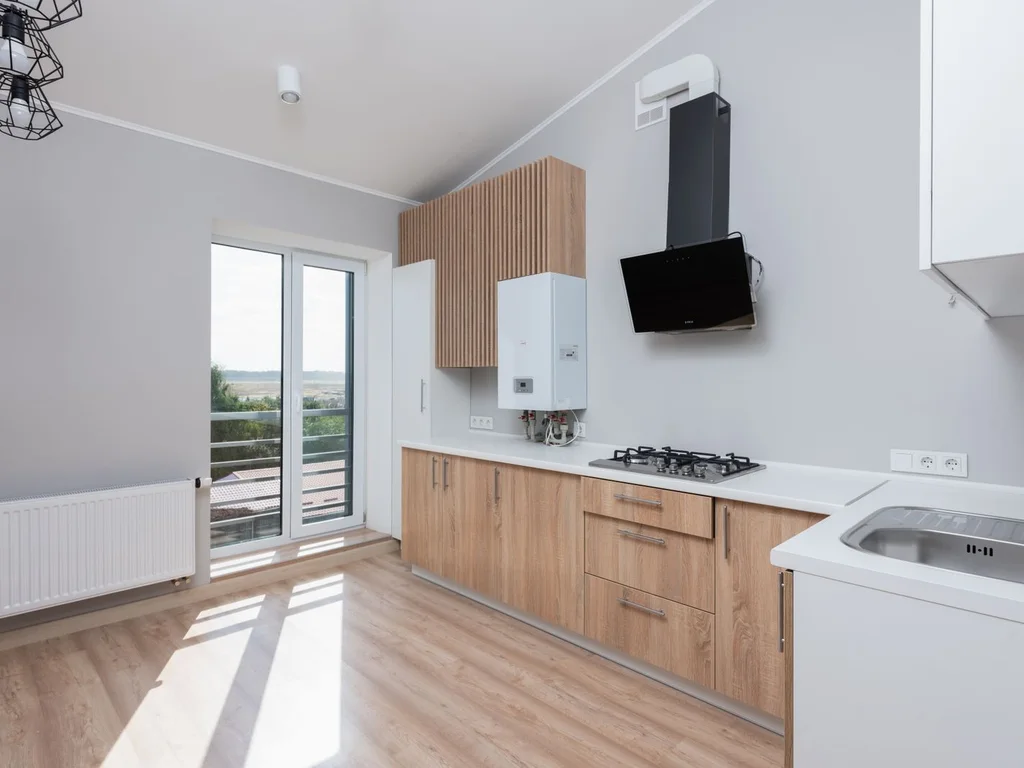
In a very large kitchen, two islands solve the problem of a single island feeling lost: one for prep near the hob, one for seating and serving near the dining area. Keep at least a metre of walkway around each island so the room flows, and link them with matching worktops or colours.
46. An Island With Open Shelving
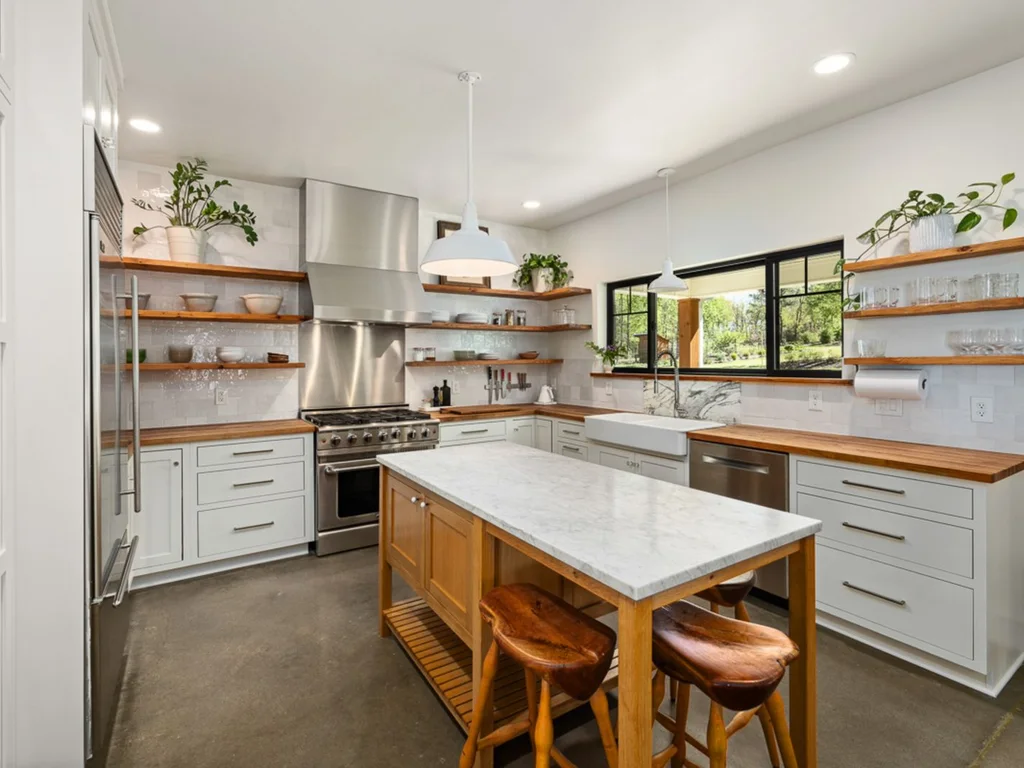
Open shelving on the island ends or sides turns dead space into display and storage for cookbooks, baskets and large bowls. It also lightens the look of a big block of cabinetry. Keep the shelves tidy and low so the island still reads as a clean, solid piece.
47. A Breakfast Bar With a Raised Edge
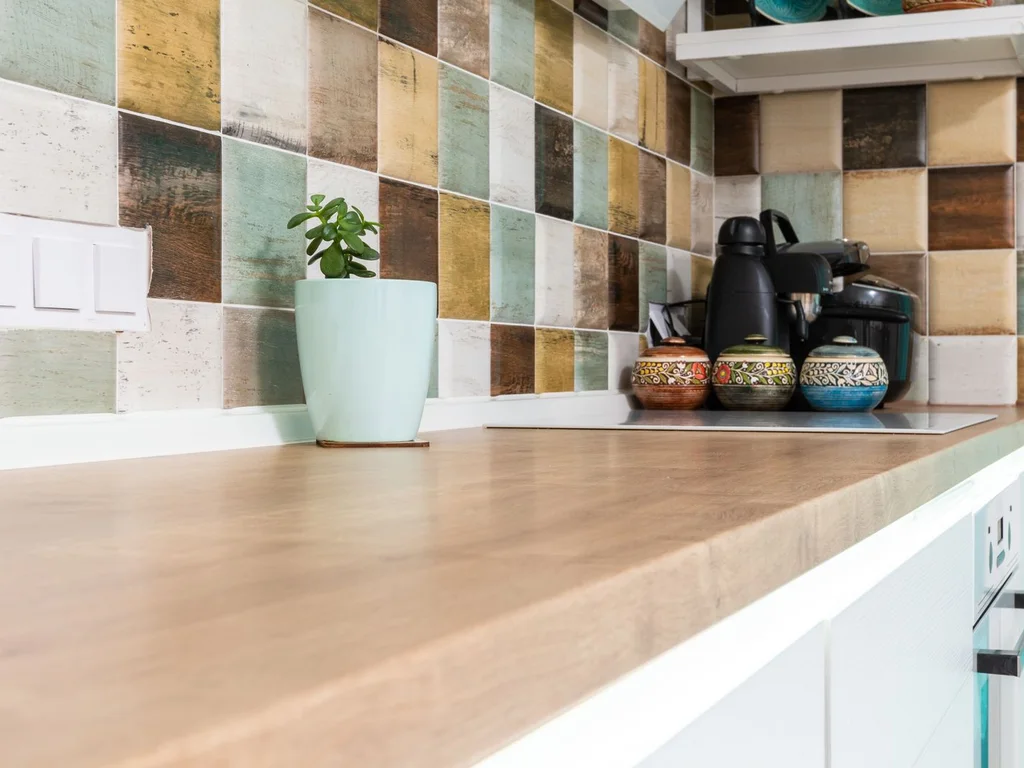
A raised bar edge hides prep mess from the dining side and gives seated guests a comfortable elbow height. It also separates the kitchen visually without a wall. Use a different material for the raised section — wood over stone, for example — to mark the change of zone.
48. Seating on Two Sides of the Island
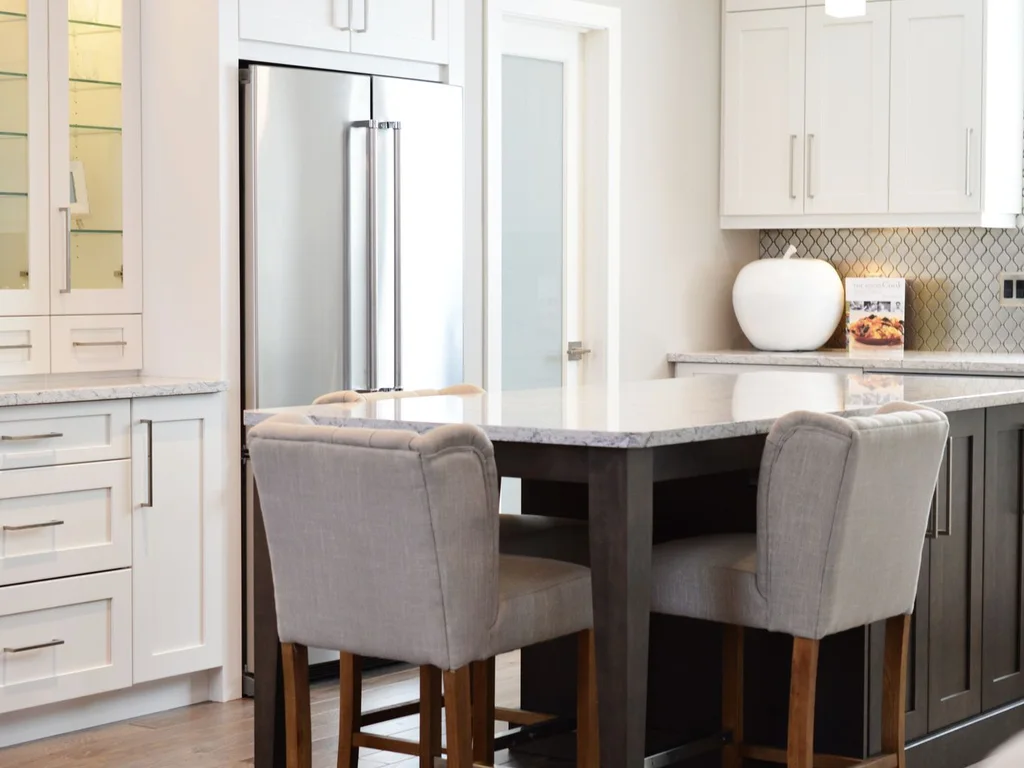
Seating on two sides of an island lets the cook face guests instead of working with their back to the room. It suits open-plan kitchens where the island is the social centre. Leave enough overhang — about 30 centimetres — so knees fit comfortably and plates sit safely.
49. A Curved Island for Softness
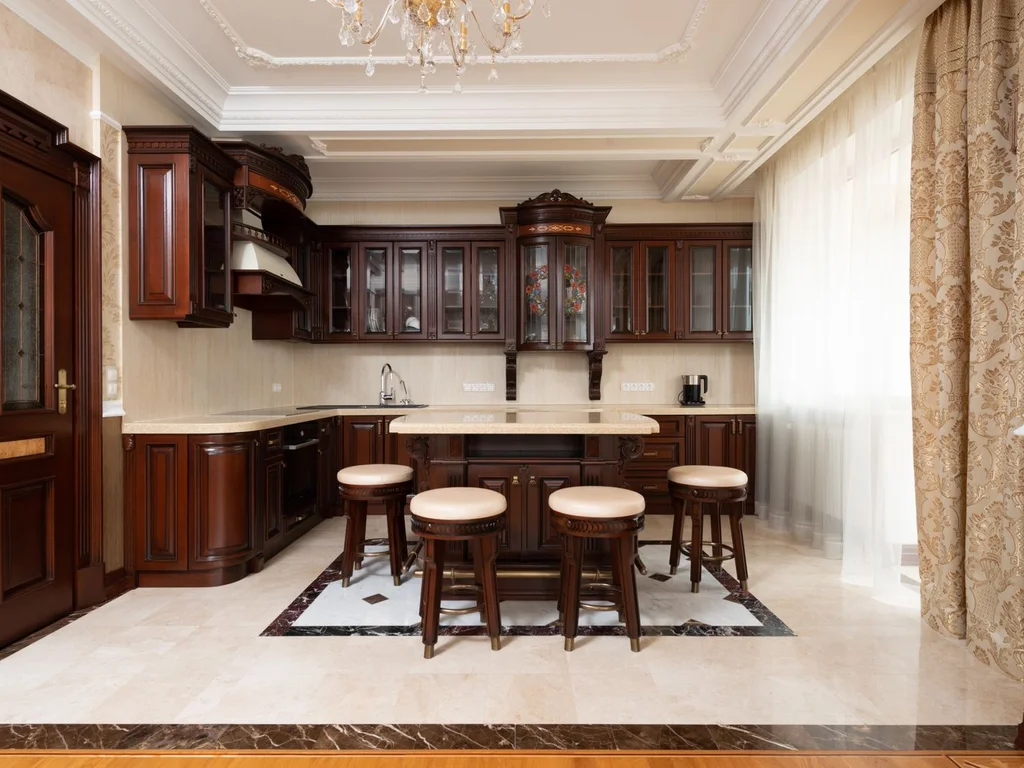
A curved or rounded island softens a kitchen full of straight lines and improves flow in tight spaces, since there are no sharp corners to bump. It suits families with small children and rooms where people constantly circle the island. Pair the curve with round stools for a coherent look.
50. An Island Worktop in a Different Material
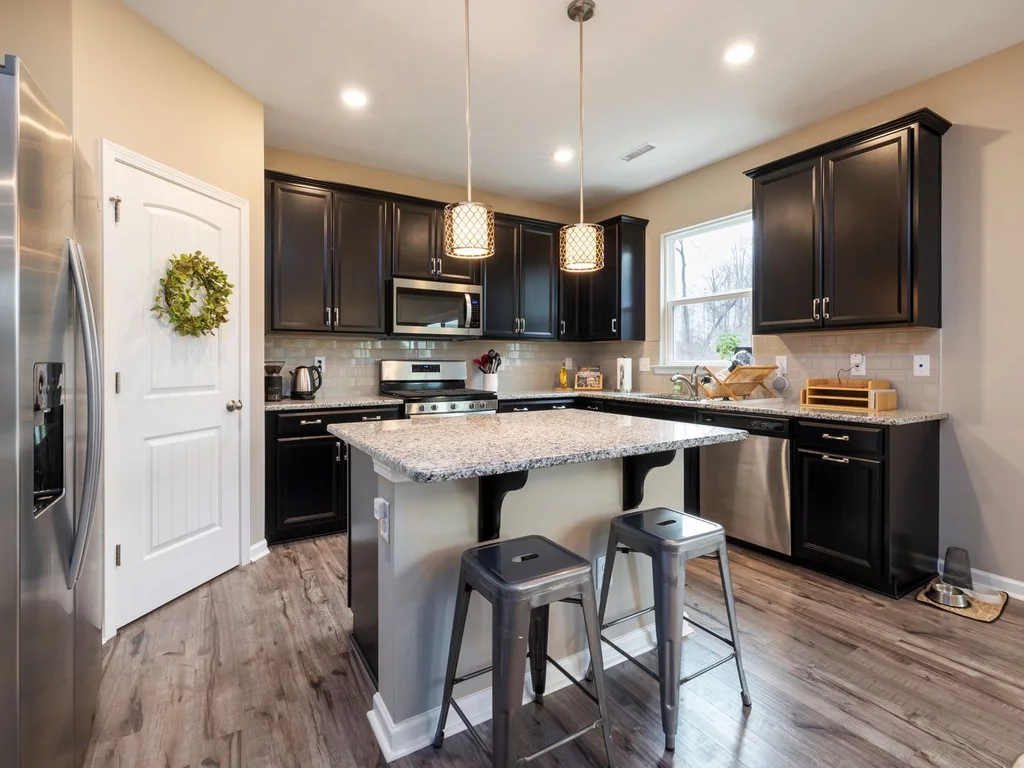
Using a different worktop material on the island — wood against stone, or stone against concrete — marks it as a distinct piece and adds texture to the room. Wood is warm under elbows and hands, while stone stays cool for pastry. The contrast makes both materials look better.
6. Small Kitchen Decor
51. Light Colours to Open a Small Kitchen
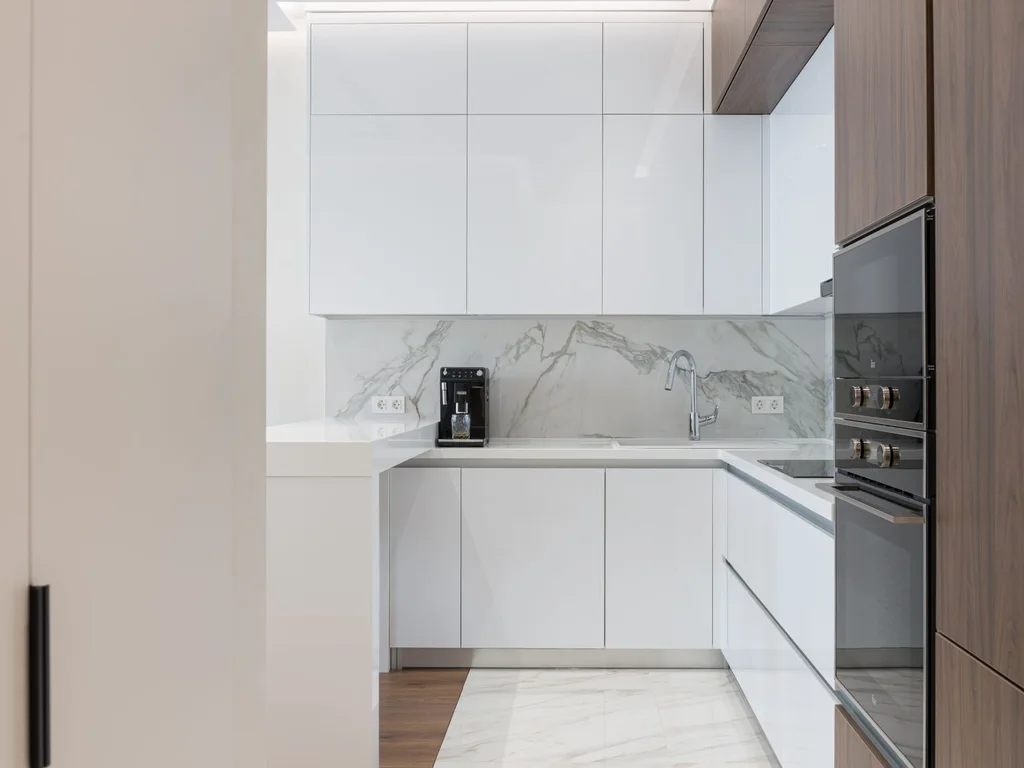
Light colours are the simplest way to make a small kitchen feel bigger. White, pale grey and soft cream cabinets reflect light and blur the room’s edges. Keep floors light too, and the whole space will feel airier without moving a single wall.
52. Mirrored or Glossy Cabinet Fronts
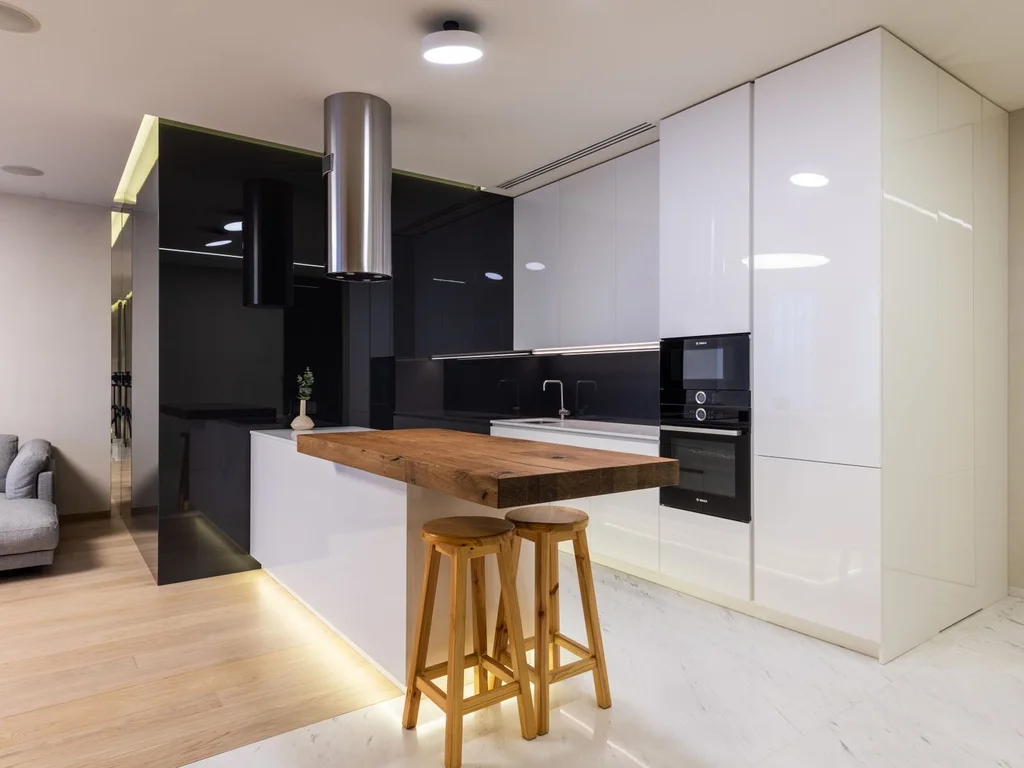
Glossy or mirrored cabinet fronts bounce light and double the sense of space in a tiny kitchen. High-gloss white is easy to wipe and looks modern, while a mirrored splashback reflects the window and the room beyond. Keep handles minimal so the reflective surfaces stay the star.
53. A Fold-Down Table for Tiny Kitchens
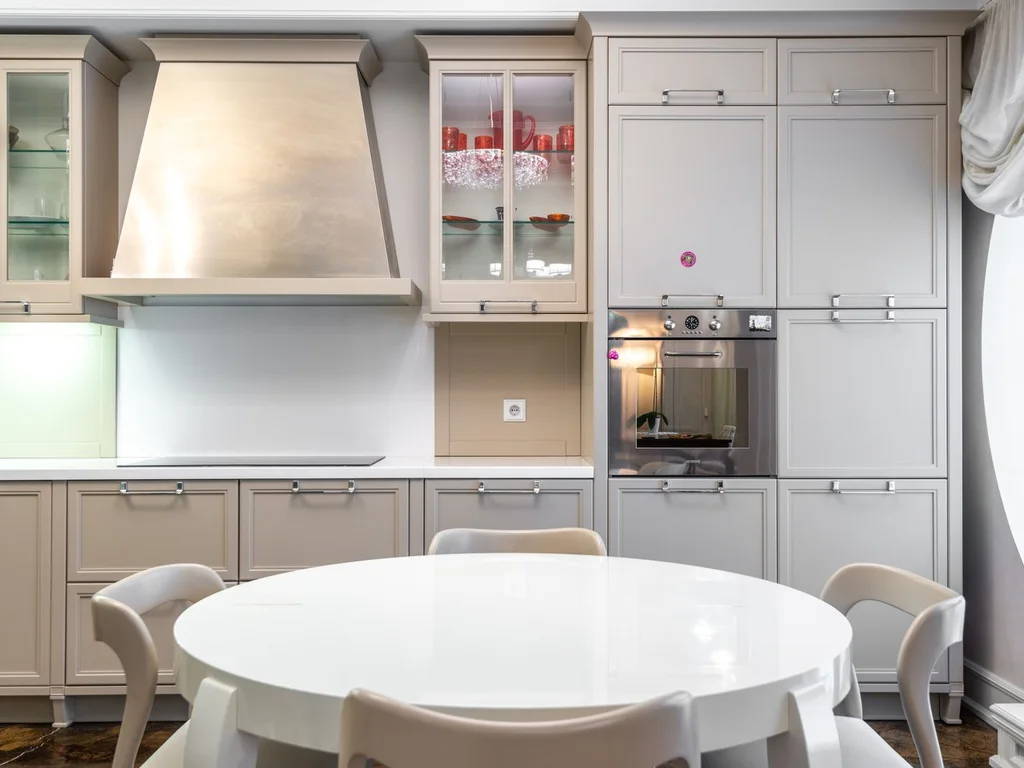
A wall-mounted fold-down table gives a tiny kitchen a dining spot that disappears when not in use. Fold it up for breakfast, down for prep space, and the room stays flexible. Pair it with two folding chairs hung nearby and even the smallest kitchen can seat two comfortably.
54. Vertical Storage to the Ceiling
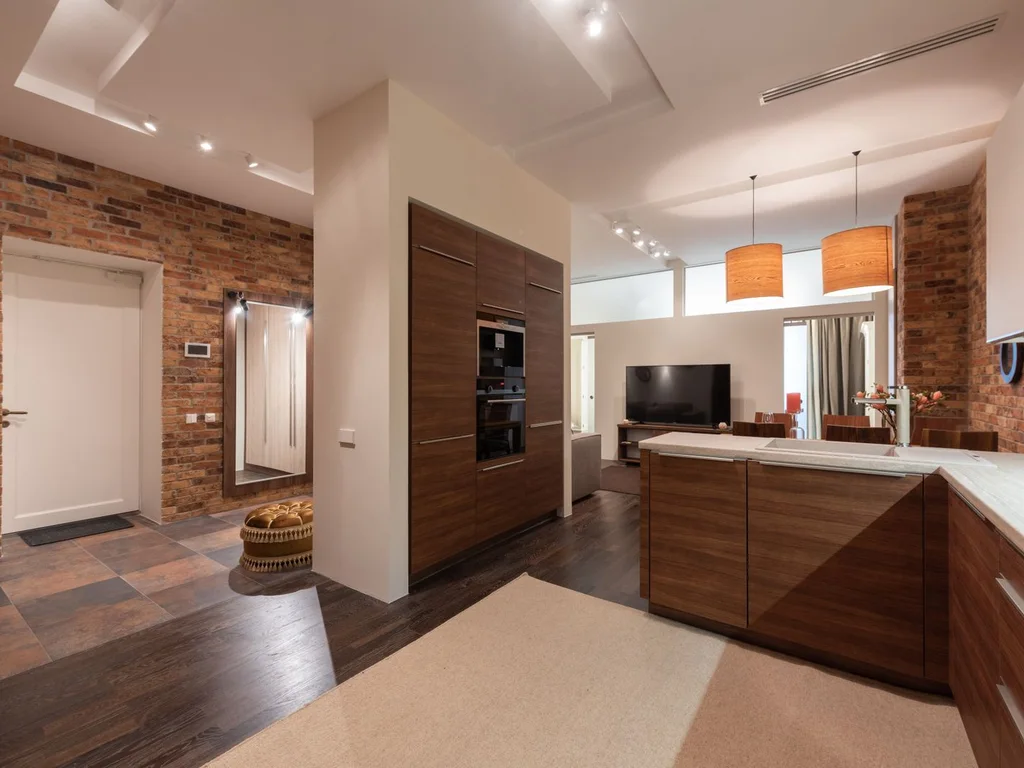
Taking cabinets and shelves to the ceiling uses the most wasted space in a small kitchen. Store rarely used items up high in labelled boxes, and keep daily things at hand height. The tall lines also draw the eye up, making the ceiling feel higher and the room larger.
55. A Single Colour Scheme for Calm
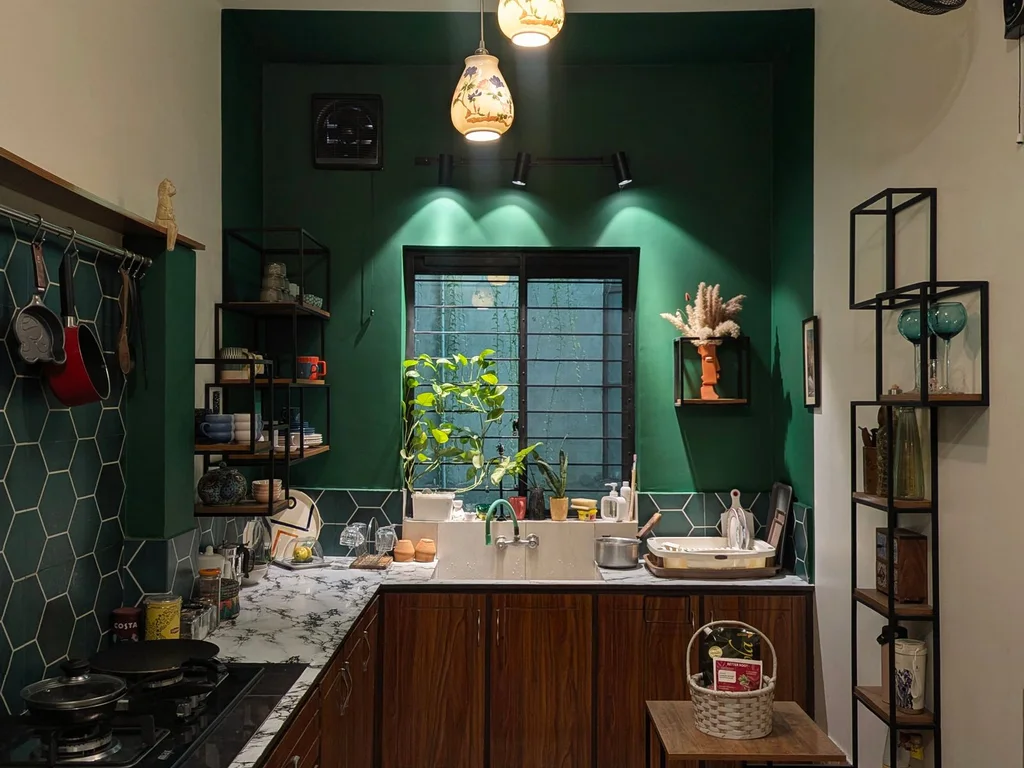
One restrained colour scheme makes a small kitchen feel calm instead of chaotic. Choose a base colour, one accent, and natural wood or white for the rest. When cabinets, walls and worktops share a palette, the eye glides over the room instead of stopping at every competing detail.
56. Clear Containers on Show
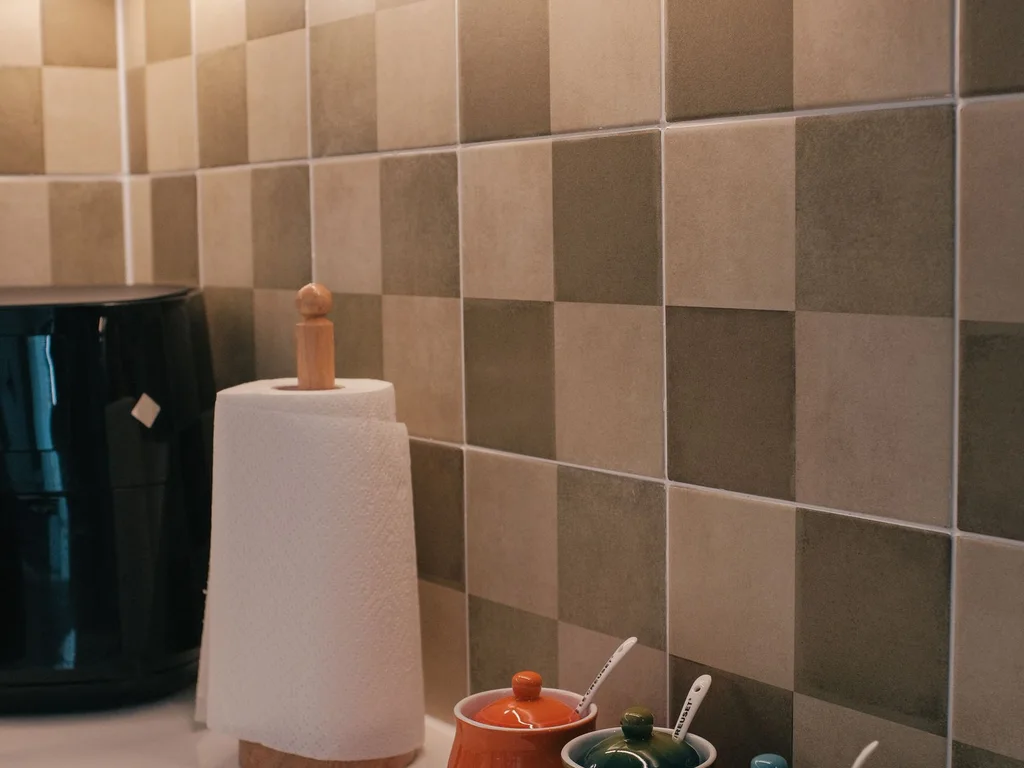
Clear containers on an open shelf keep a small kitchen organised and decorative at once. Seeing exactly what you have prevents duplicate buying and makes cooking faster. Uniform jars look tidy even when full, which is exactly what a small space needs.
57. A Slim Rolling Cart
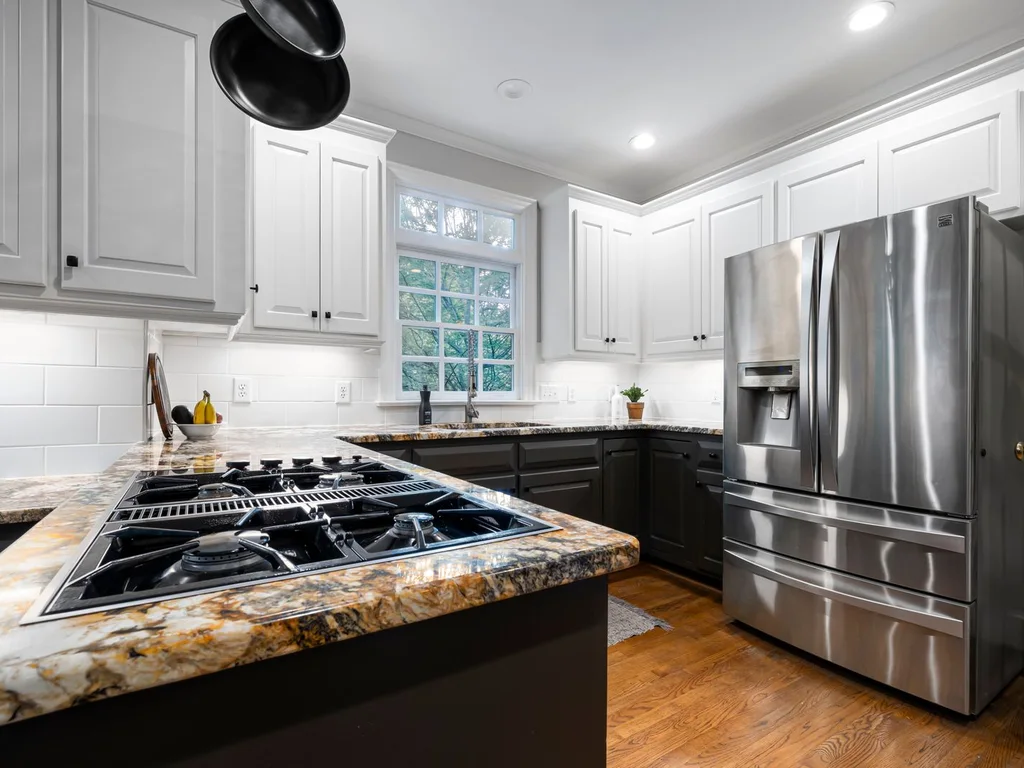
A slim rolling cart slides into the gap beside the fridge or between units and holds oils, spices or cleaning supplies. It turns dead space into storage and rolls out when you need it. Choose a cart that matches your kitchen’s metal finishes so it looks intentional, not improvised.
58. Magnetic Knife Strip on the Wall
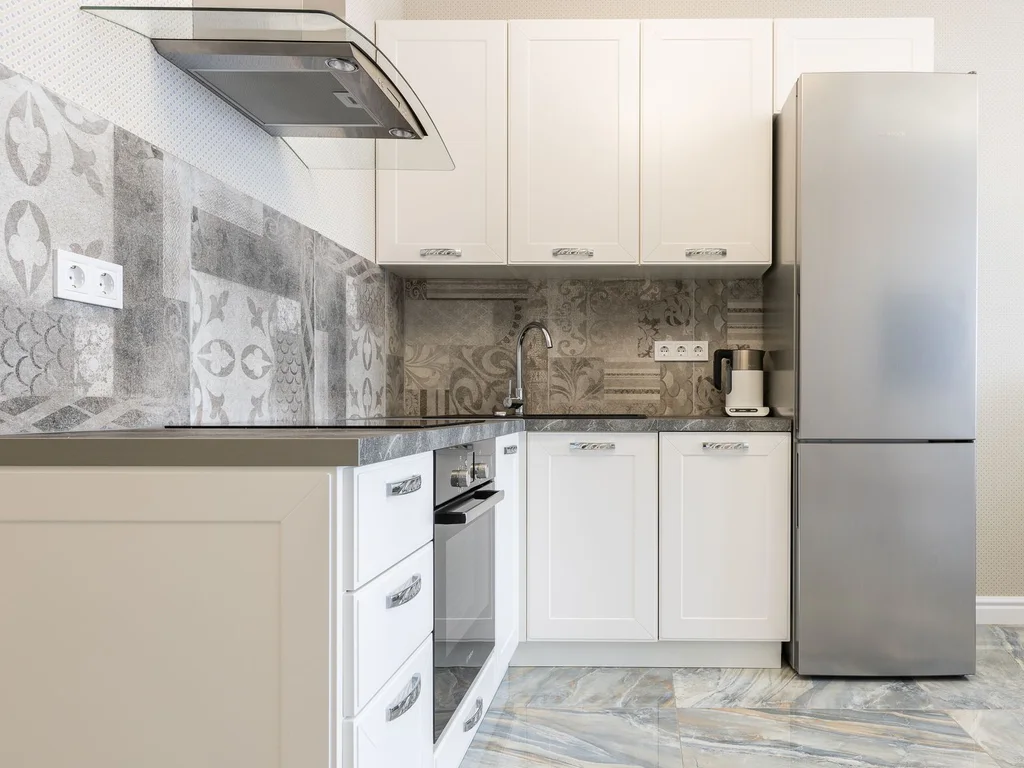
A magnetic knife strip frees a whole drawer and keeps knives visible, sharp and safe. Mount it on a backsplash or a strip of wall near the prep area, away from children’s reach. Wooden strips look warmer than steel and suit traditional kitchens beautifully.
59. Under-Shelf Baskets for Extra Storage
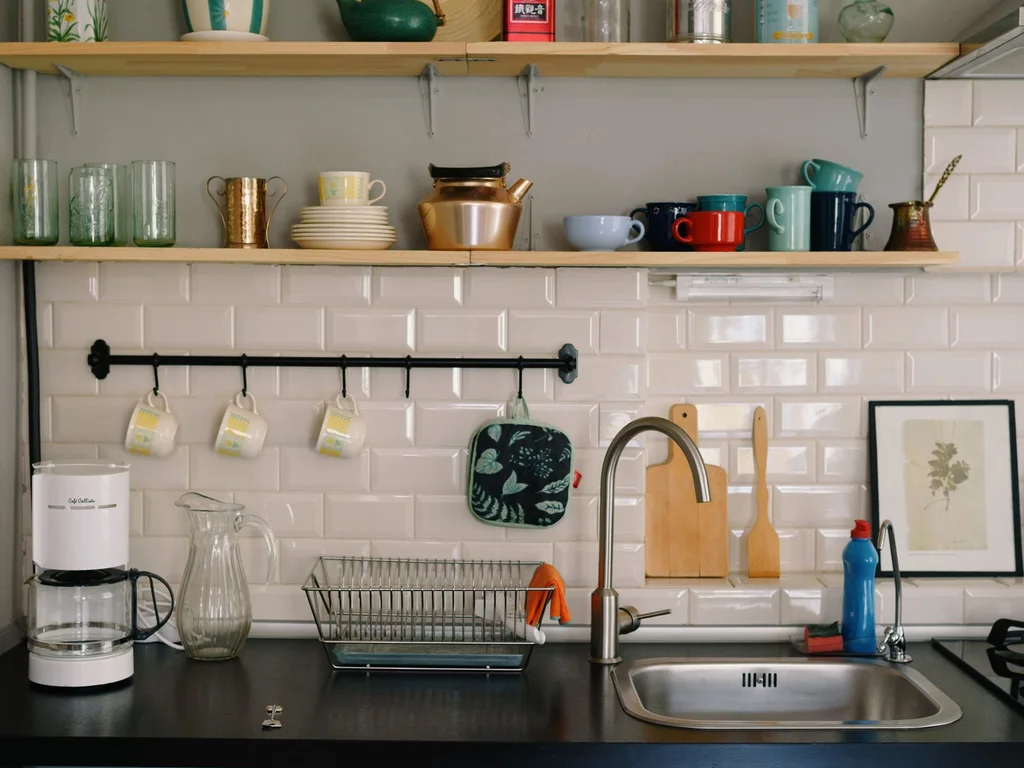
Wire baskets that hook under existing shelves add a whole extra layer of storage without any fitting. Use them for mugs, tea towels or small packets inside cabinets. They cost very little, install in seconds, and make the most of shelves that are too tall for their contents.
60. A Small Kitchen Rug for Warmth
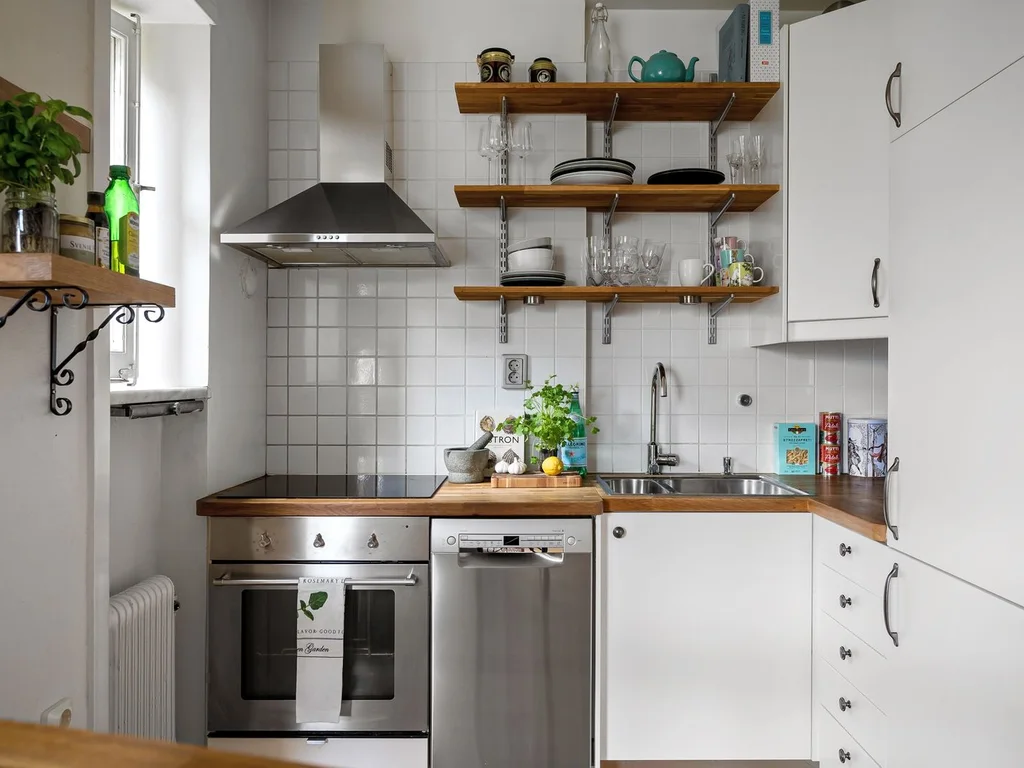
A washable rug in front of the sink softens a small kitchen underfoot and adds colour and pattern to a hard floor. Choose a flat-weave runner that fits the space exactly, and a non-slip backing for safety. It is the easiest decor change you can make in an afternoon.
7. Farmhouse and Rustic Kitchens
61. A Belfast Sink as the Centrepiece
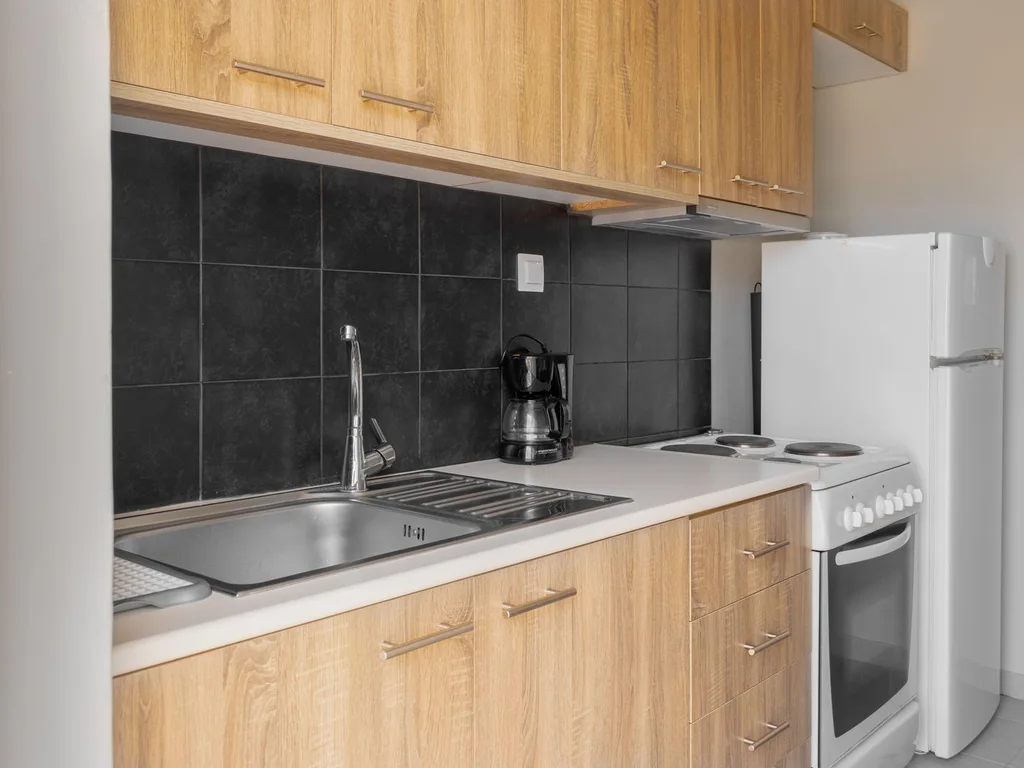
A deep Belfast or farmhouse sink is both beautiful and practical, with room for the largest roasting trays and a timeless ceramic look. Pair it with a traditional bridge tap and wooden worktops for the full farmhouse effect. The apron front becomes the kitchen’s natural focal point.
62. Exposed Wooden Beams
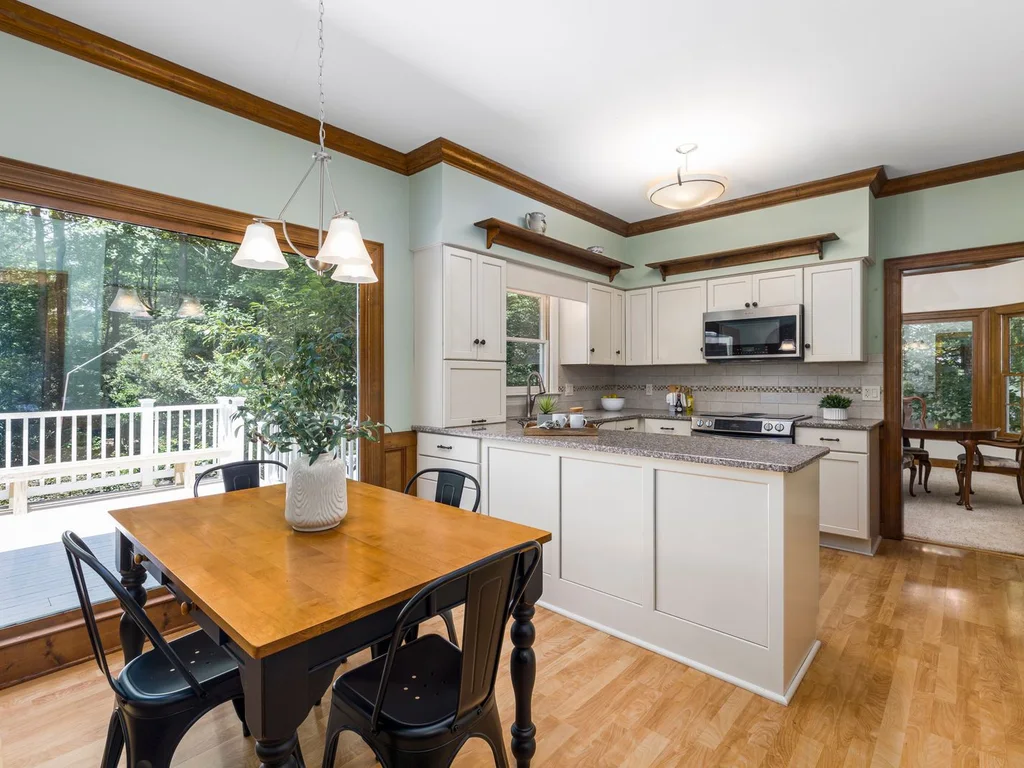
Exposed wooden beams add instant rustic character, whether they are original or good reproductions. Dark beams against white walls create a classic farmhouse contrast, while pale beams suit a lighter Scandinavian farmhouse look. Keep the rest of the ceiling simple so the beams stand out.
63. A Range Cooker as a Focal Point
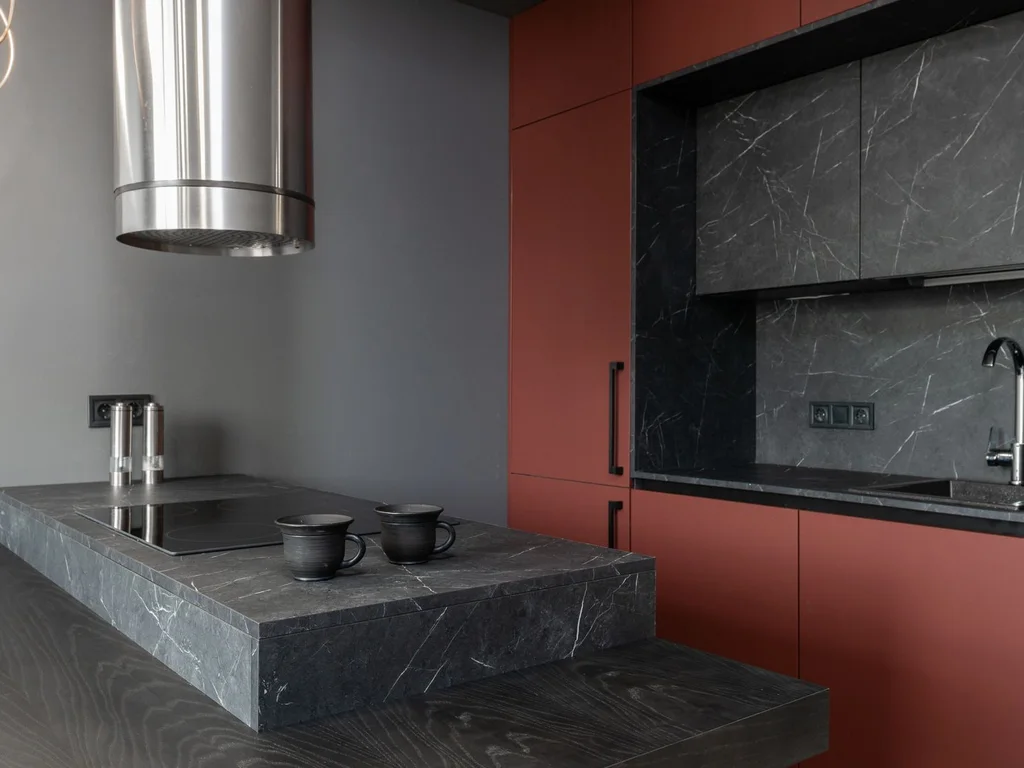
A range cooker anchors a farmhouse kitchen like nothing else, with its wide ovens and classic styling. Build the decor around it: a simple mantel or shelf above, open shelving beside, and warm colours throughout. The cooker becomes both the workhorse and the room’s proud centrepiece.
64. Open Pantry Shelving
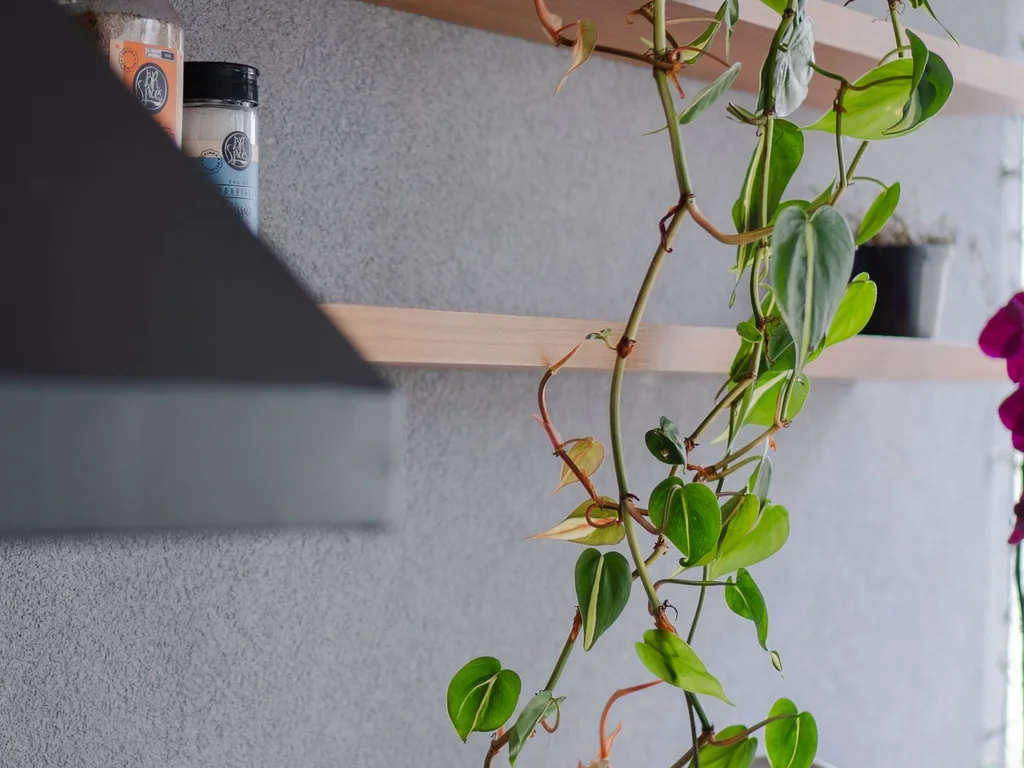
An open pantry wall of wooden shelves, baskets and jars is the farmhouse kitchen’s signature. It displays food beautifully and keeps everything visible and reachable. Use baskets for potatoes and onions, jars for dry goods, and leave one shelf for the cookbooks you actually cook from.
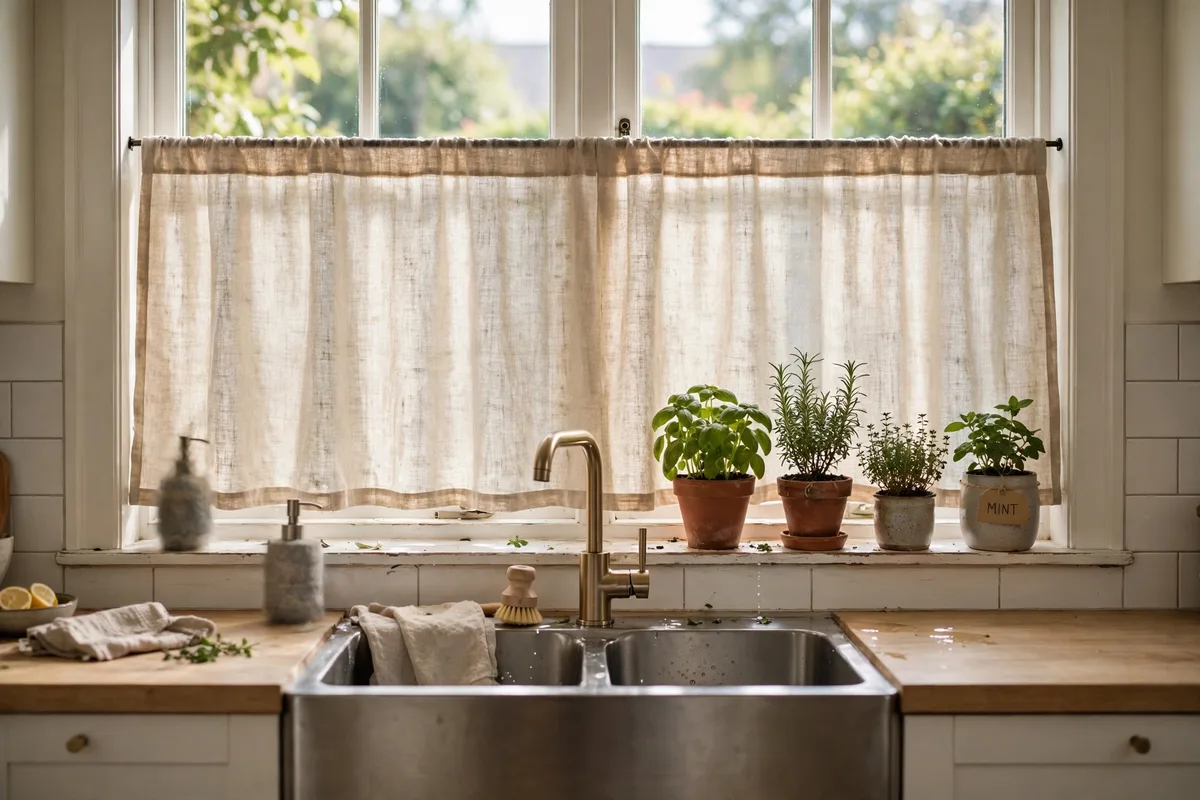
65. Gingham and Linen Textiles
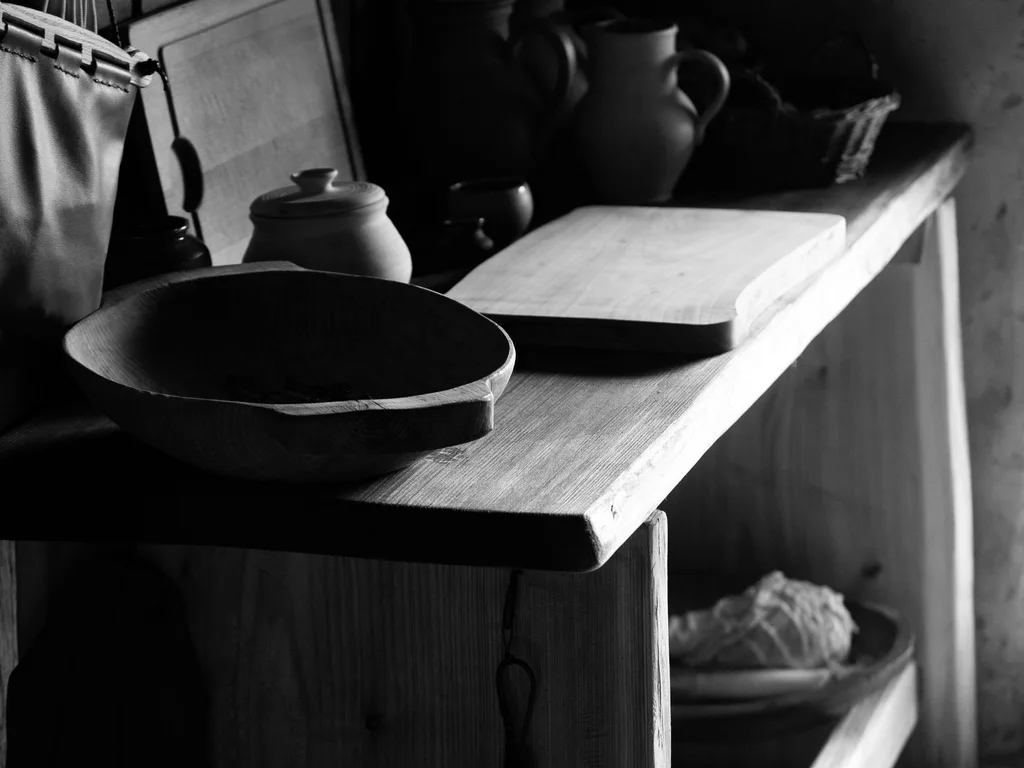
Gingham tea towels, linen curtains and a simple table runner bring farmhouse softness to a hardworking kitchen. Choose one check or stripe and repeat it in small doses rather than covering everything. Natural fabrics age well and wash beautifully, which suits the farmhouse ethos perfectly.
66. A Farmhouse Table for Gathering
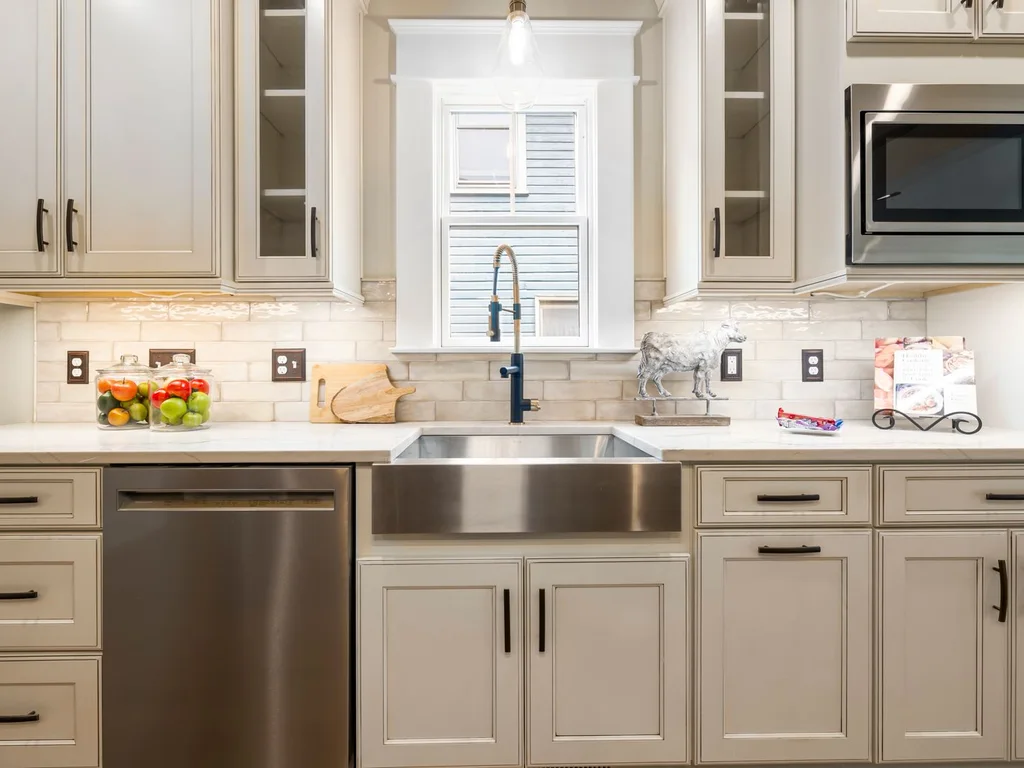
A chunky wooden farmhouse table invites long meals, homework and board games in a way a sleek island cannot. Benches on one side save space and seat extra children easily. Keep the table top clear except for a simple vase or candle, and the room will always feel ready for guests.
67. Vintage Finds and Flea Market Pieces
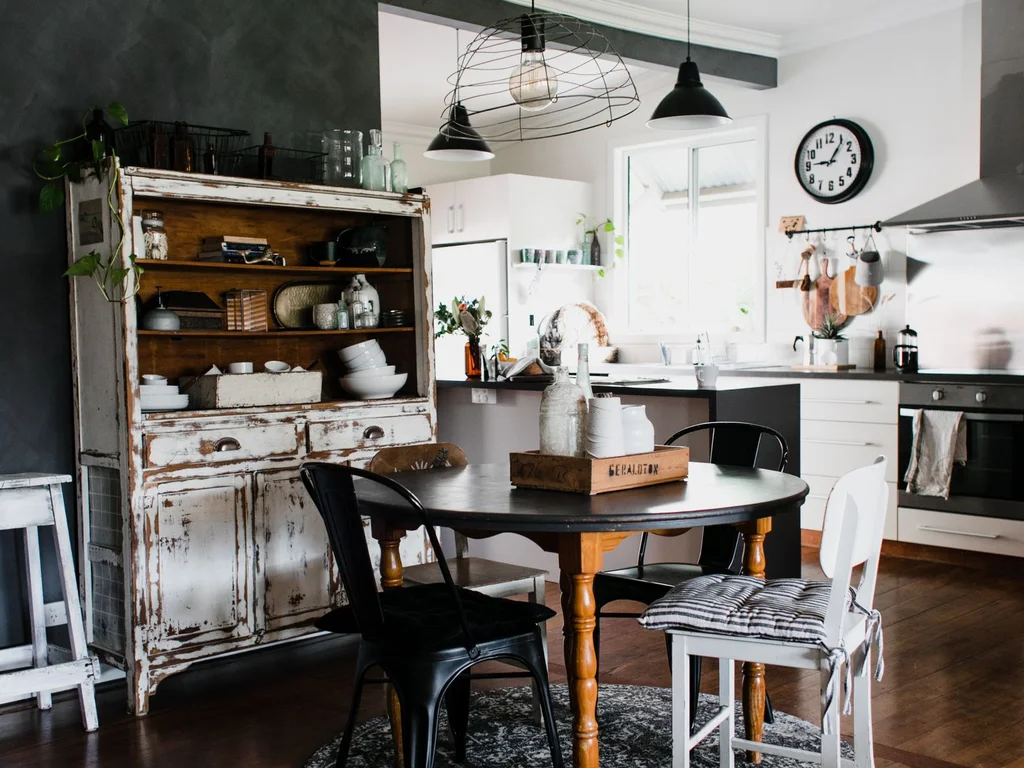
One or two vintage pieces — an old scale, enamel jugs, a battered bread bin — give a farmhouse kitchen soul that new decor cannot fake. Hunt at flea markets and charity shops, and let each piece earn its place. Too many vintage items become clutter; a few well-chosen ones become character.
68. Brick or Stone Feature Wall
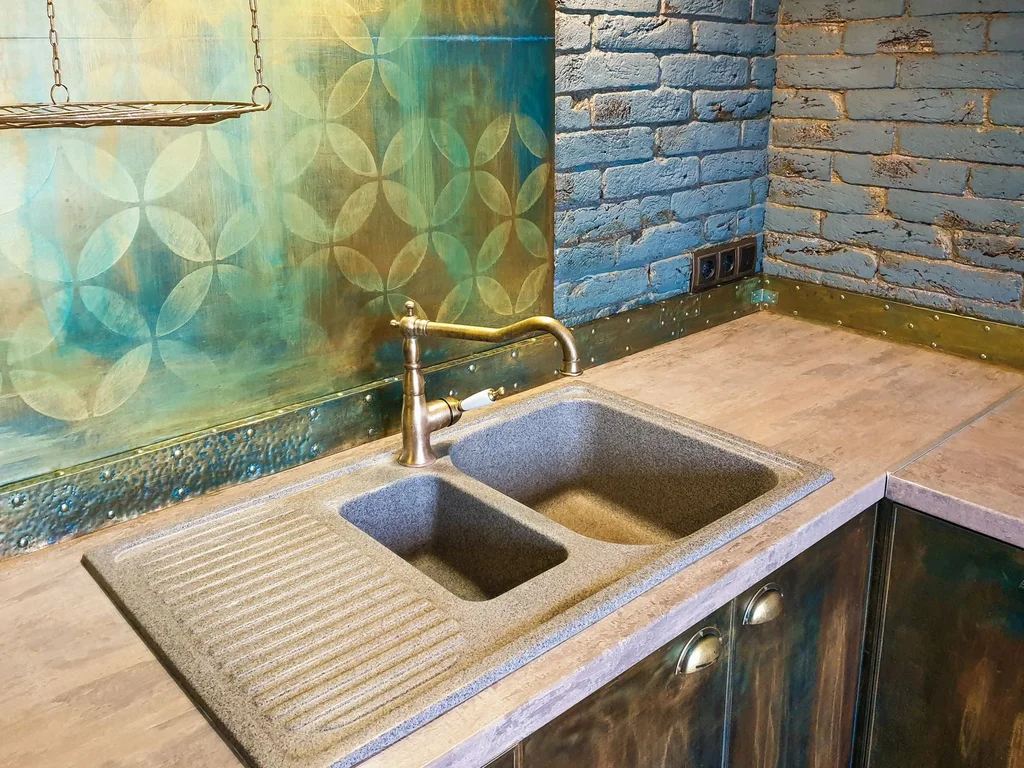
An exposed brick or stone wall adds texture and history to a farmhouse kitchen, even if it is only one wall or a chimney breast. Limewash softens brick while keeping its texture, and stone suits a more rugged rustic look. Pair it with simple cabinets so the wall remains the feature.
69. Copper Pots on Display
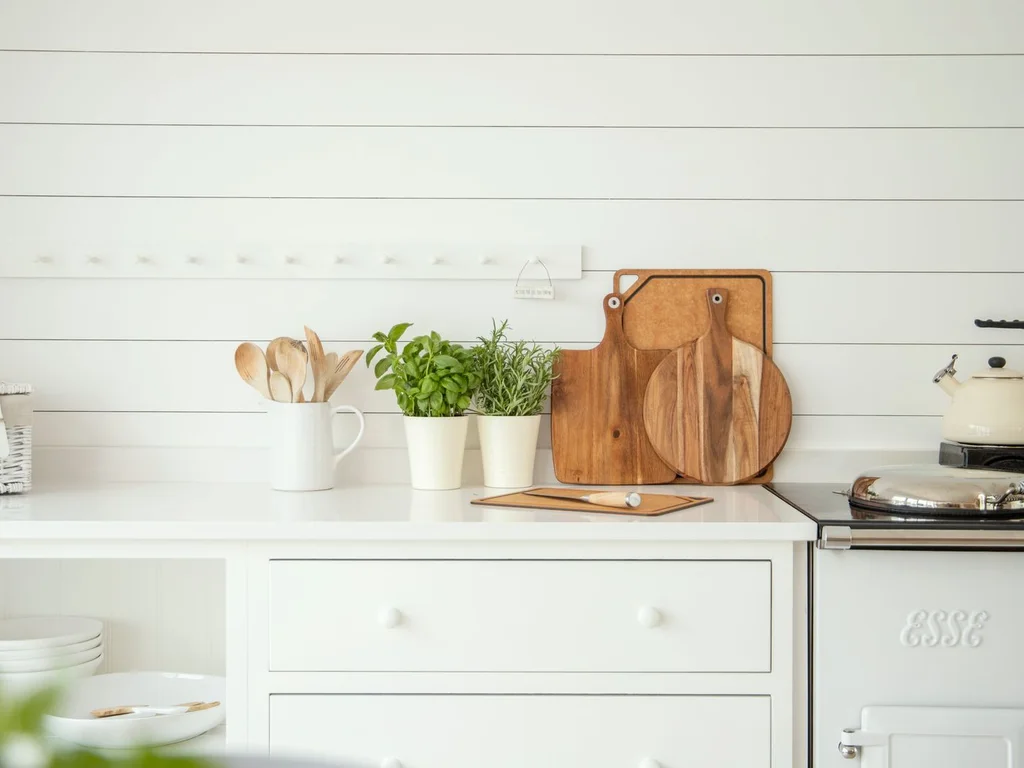
Copper pots hung from a rail or displayed on a shelf bring warmth and a working-kitchen feel to a farmhouse room. Polished copper gleams, while aged copper looks honestly used — both are beautiful. Keep the display to pots you actually cook with, and they will never gather dust.
70. A Dresser for Display and Storage
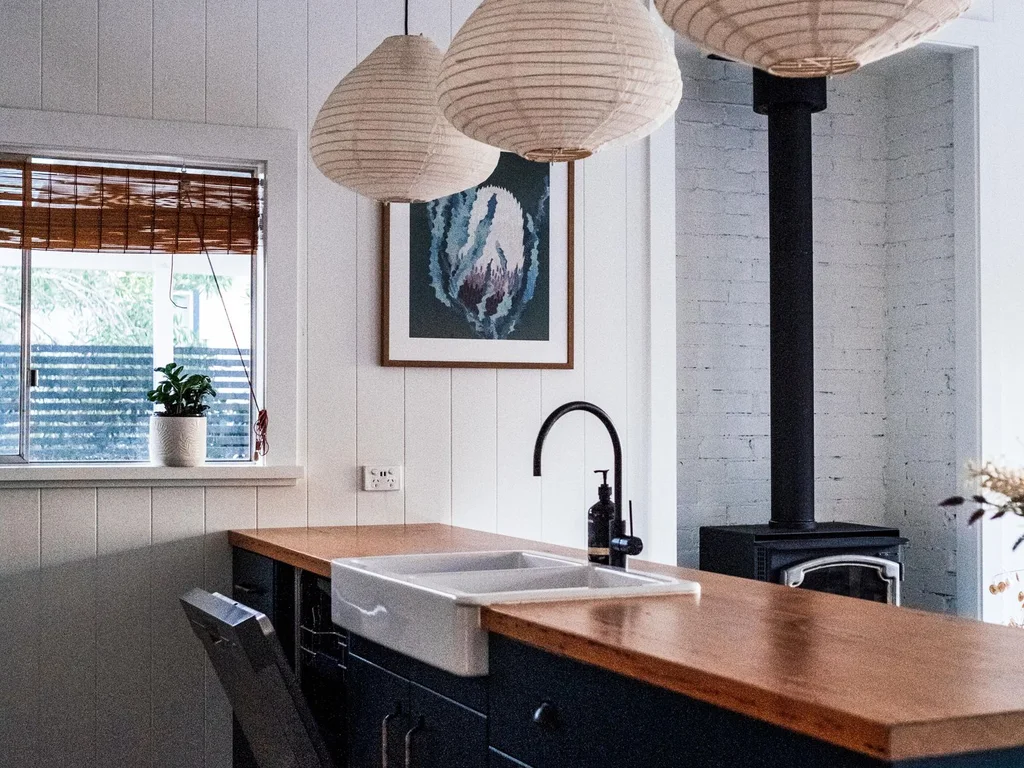
A freestanding dresser is the farmhouse kitchen’s answer to a display cabinet: plates and bowls on open shelves above, drawers and cupboards below. Paint it to match the cabinets or leave it in contrasting wood. It adds furniture character that fitted units alone cannot give.
8. Modern and Minimal Kitchens
71. Flat-Front Cabinets in Matte Grey
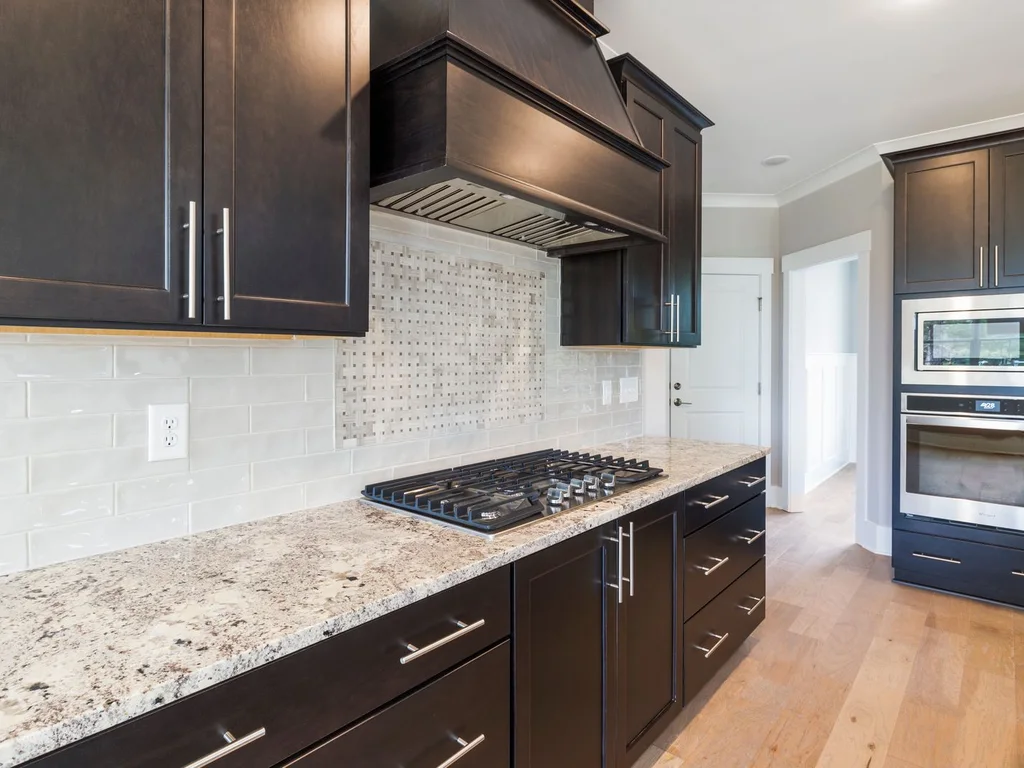
Matte grey flat-front cabinets are the modern kitchen’s quiet luxury: no handles, no frames, just soft colour and clean lines. Grey hides fingerprints better than white and pairs with almost any worktop. Add one warm material, like wood or brass, to stop the room feeling cold.
72. Integrated Appliances for Seamless Lines
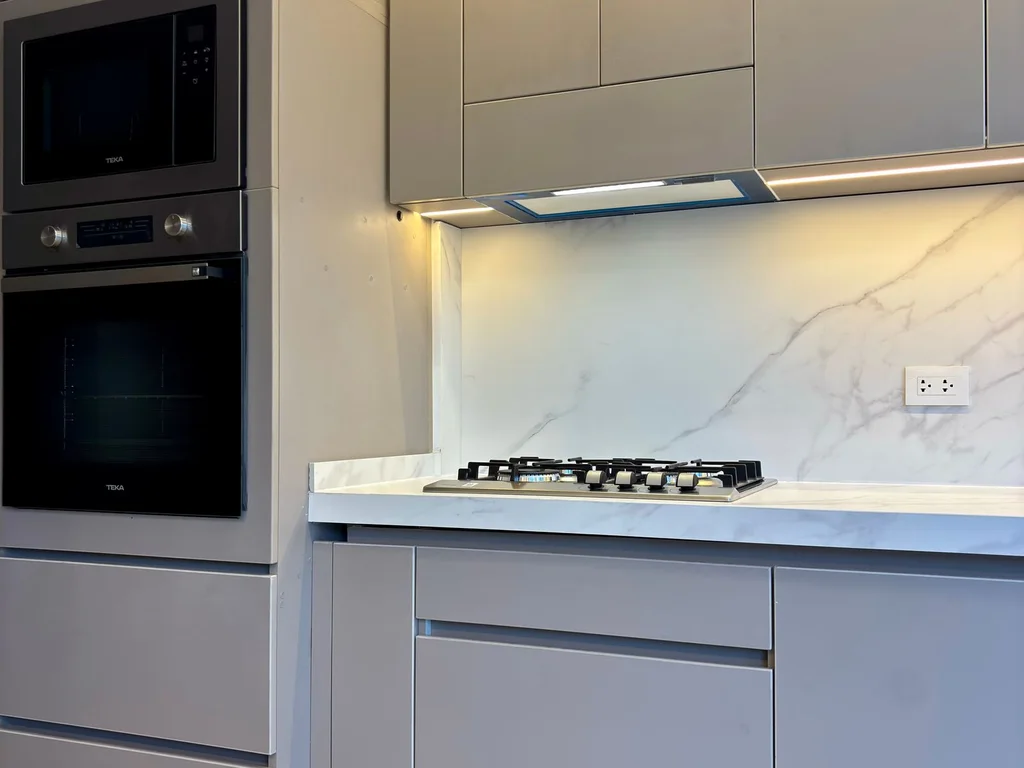
Integrated appliances hidden behind matching cabinet fronts make a kitchen look like furniture rather than a workshop. Fridge, dishwasher and even the oven disappear into the run, leaving only the hob and sink visible. The result is calm, seamless and unmistakably modern.
73. A Concrete Worktop or Island
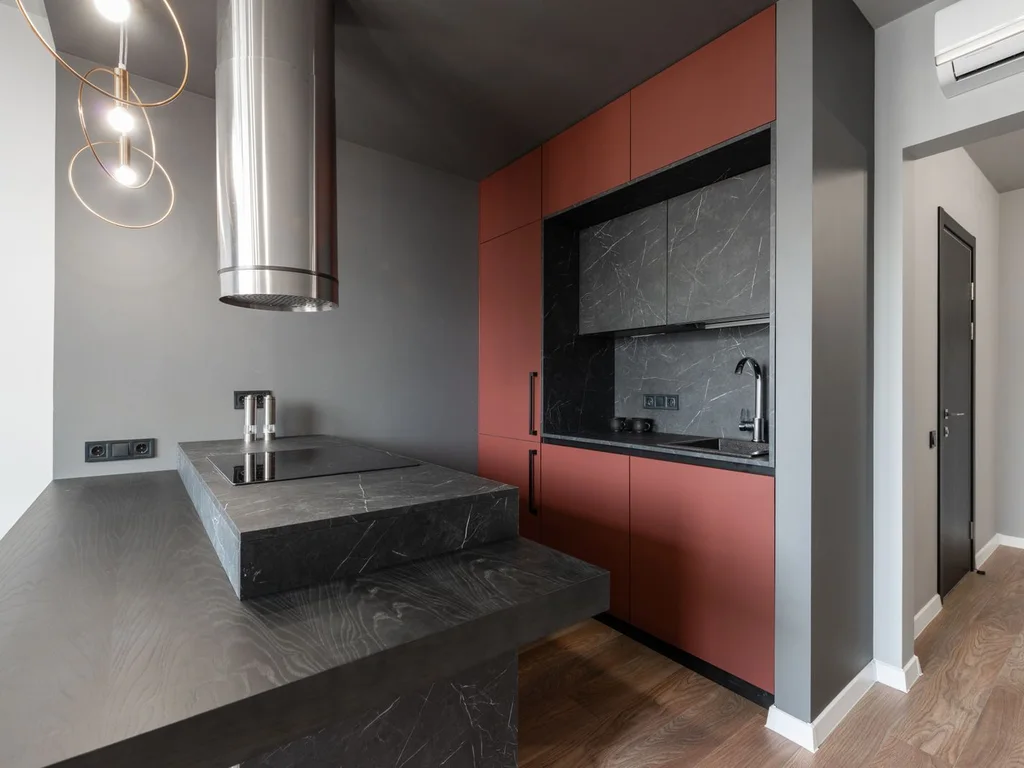
Cast concrete brings an industrial, sculptural quality to a modern kitchen, with a matte texture no other material matches. It can be cast in any shape, including integrated sinks and curves. Seal it well and accept small variations — they are part of concrete’s handmade appeal.
74. Monochrome With One Bold Accent
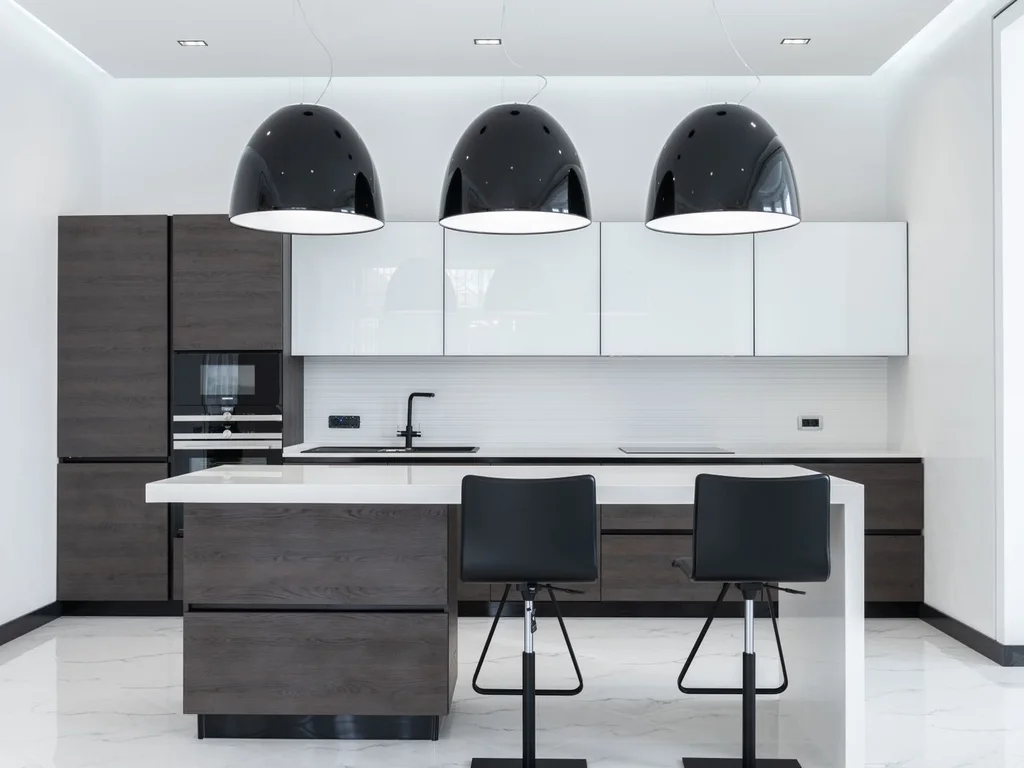
A monochrome kitchen in black, white and grey becomes instantly more interesting with a single bold accent: a red tap, yellow stools, or a cobalt backsplash strip. One accent is enough — it draws the eye and gives the room personality without breaking the calm minimal scheme.
75. Touch-Latch Doors and Drawers
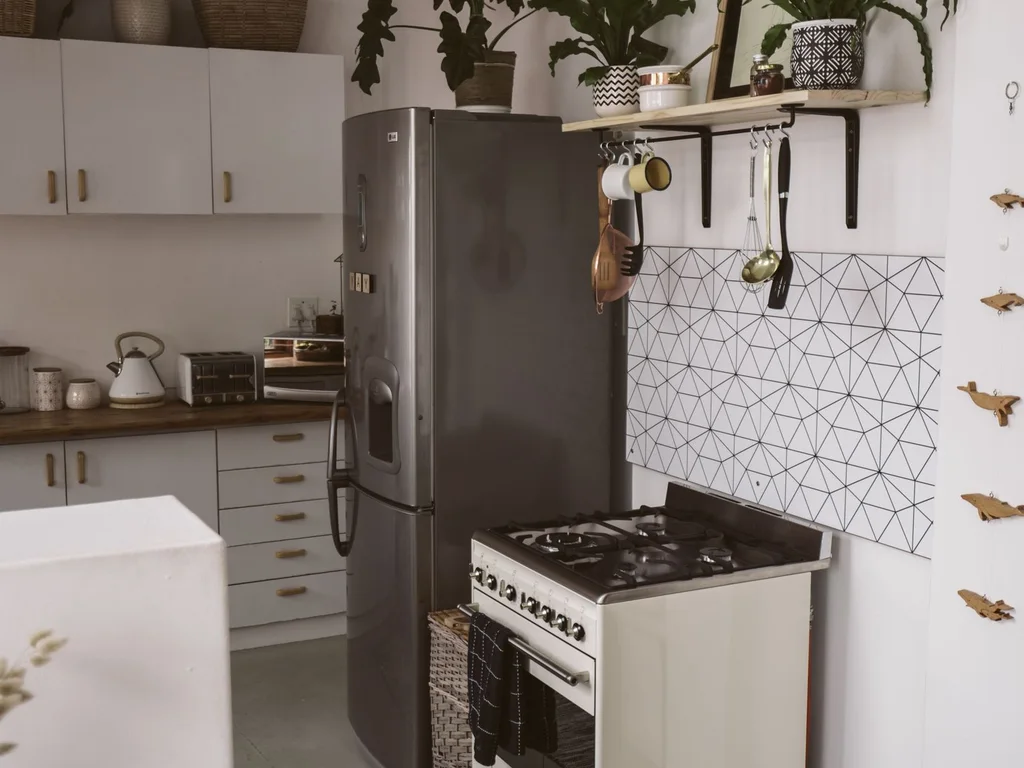
Touch-latch doors and drawers open with a gentle push, keeping cabinet fronts completely smooth. They suit handleless modern kitchens and are surprisingly satisfying to use. Keep a cloth handy for fingerprints on gloss fronts, or choose matte finishes to hide them.
76. A Hidden Pantry Wall
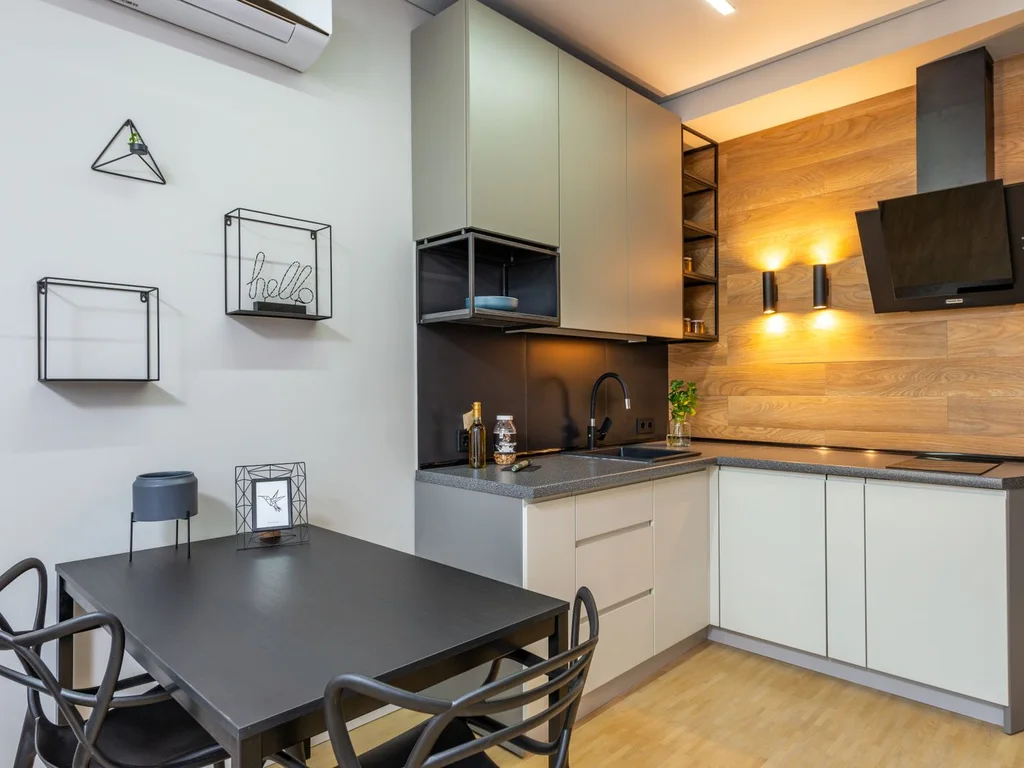
A floor-to-ceiling pantry wall with flat doors hides an enormous amount of storage behind a perfectly plain surface. Inside, shelves, drawers and pull-outs keep everything organised. From the room, the wall reads as architecture, not storage — the essence of minimal kitchen design.
77. Slim Profile Worktops
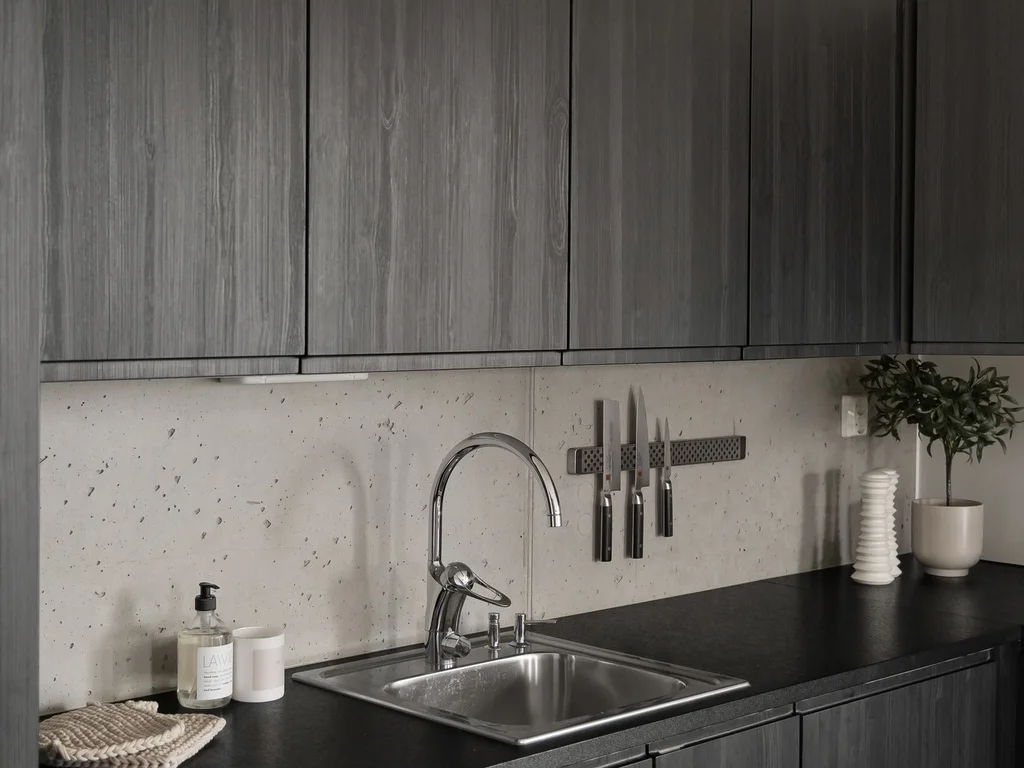
Slim worktops, just 12 millimetres thick, give a modern kitchen a light, precise edge that chunky stone cannot match. Porcelain and compact laminate achieve the look without the weight. Pair slim tops with handleless cabinets and the whole kitchen feels tailored and exact.
78. Black Tapware for Contrast
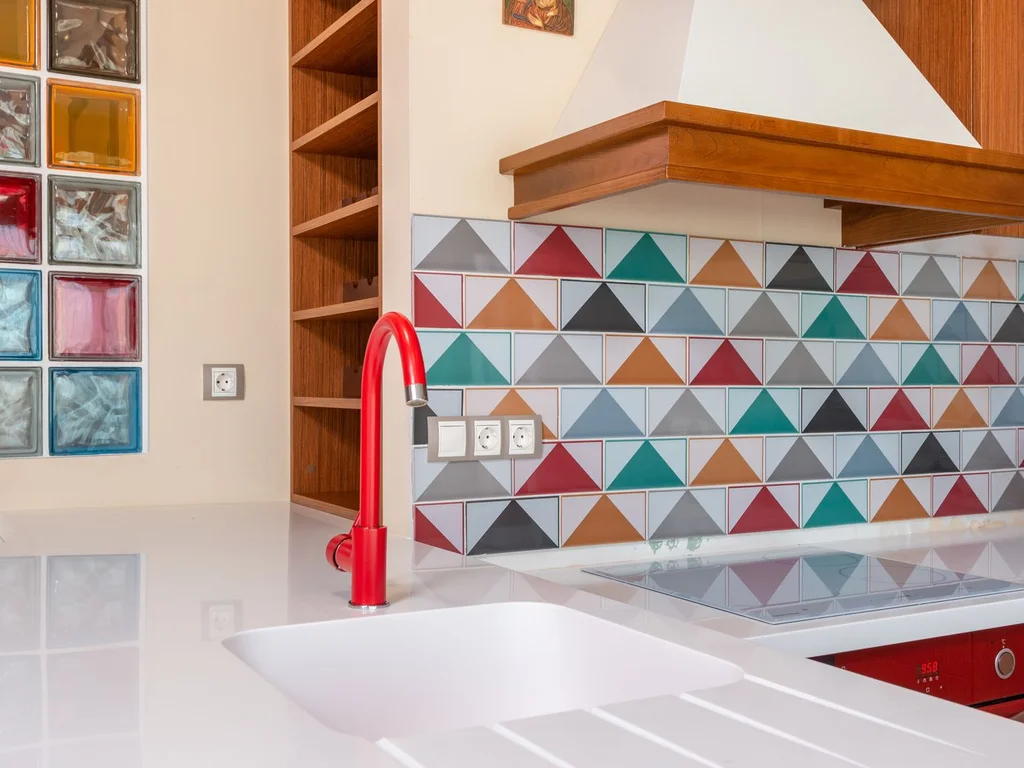
Matte black taps and handles are the jewellery of a modern kitchen, adding graphic contrast against pale cabinets and worktops. They suit monochrome and industrial schemes alike. Choose a quality finish and wipe them after use to keep the matte surface looking new.
79. Glass Splashbacks in a Single Colour
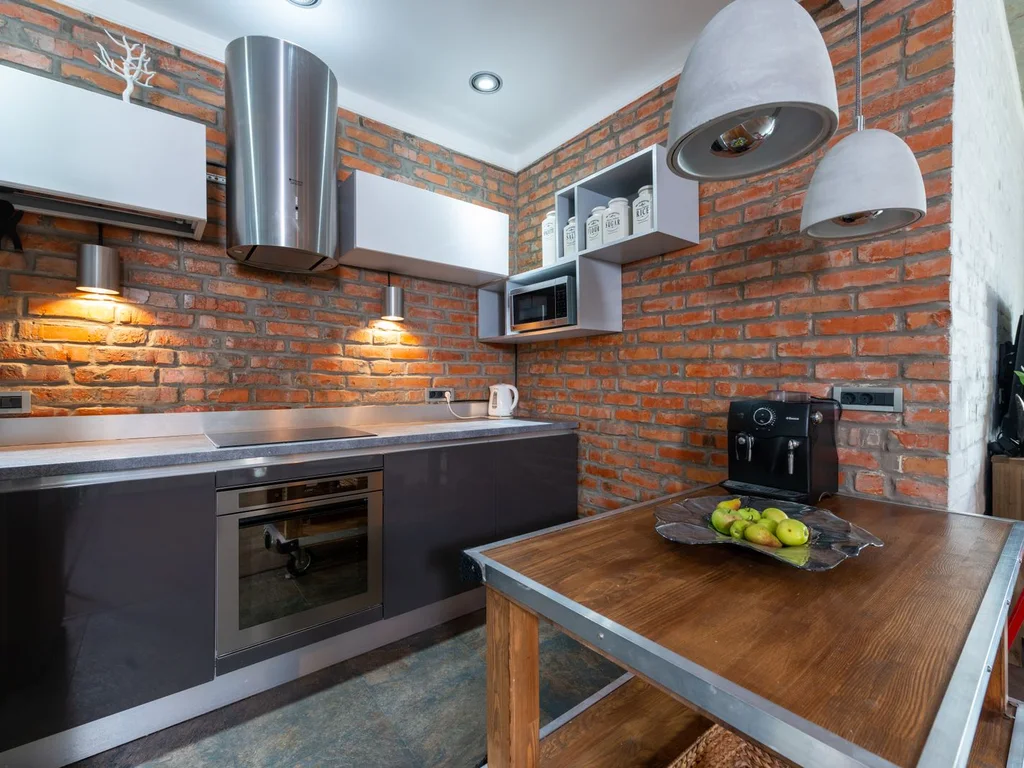
A single-colour glass splashback is seamless, easy to clean and brilliantly reflective. Any colour is possible, from soft sage to deep teal, and the glass depth gives the colour a richness paint cannot match. Keep the rest of the kitchen quiet and let the colour carry the room.
80. Minimal Decor, Maximum Texture
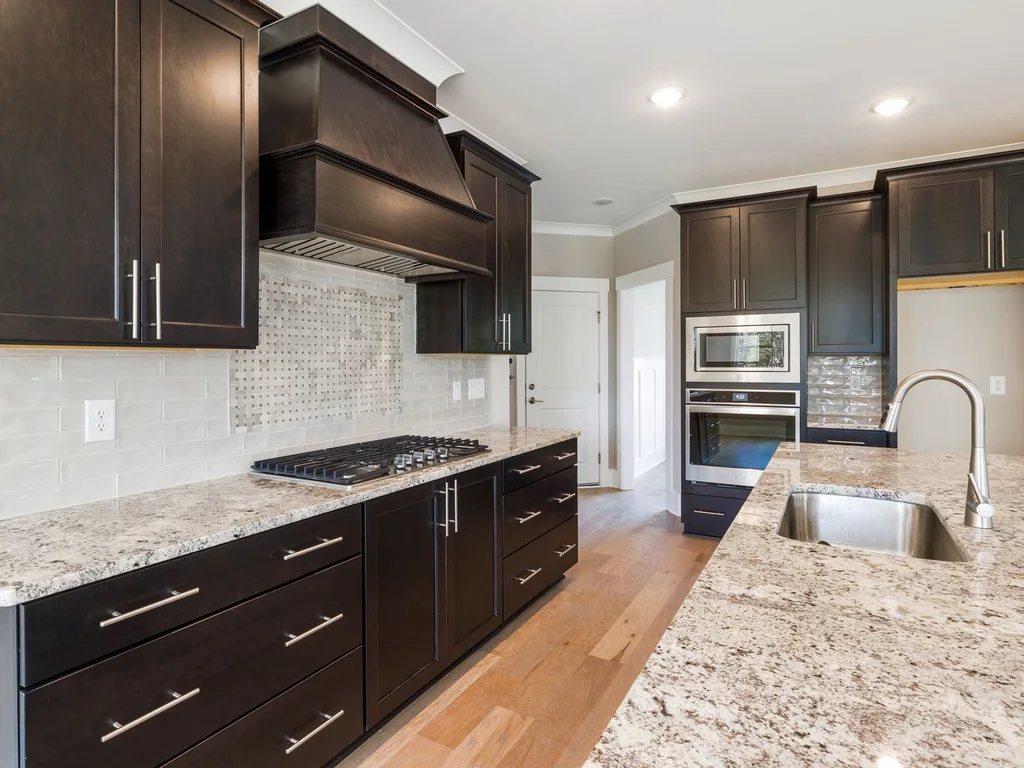
Minimal kitchens stay interesting through texture, not objects: ribbed wood, brushed metal, honed stone and woven baskets. With almost nothing on display, each material must earn its place. Run a hand over the surfaces when choosing — texture you can feel beats decoration you only see.
9. Dining Nooks and Seating
81. A Built-In Banquette
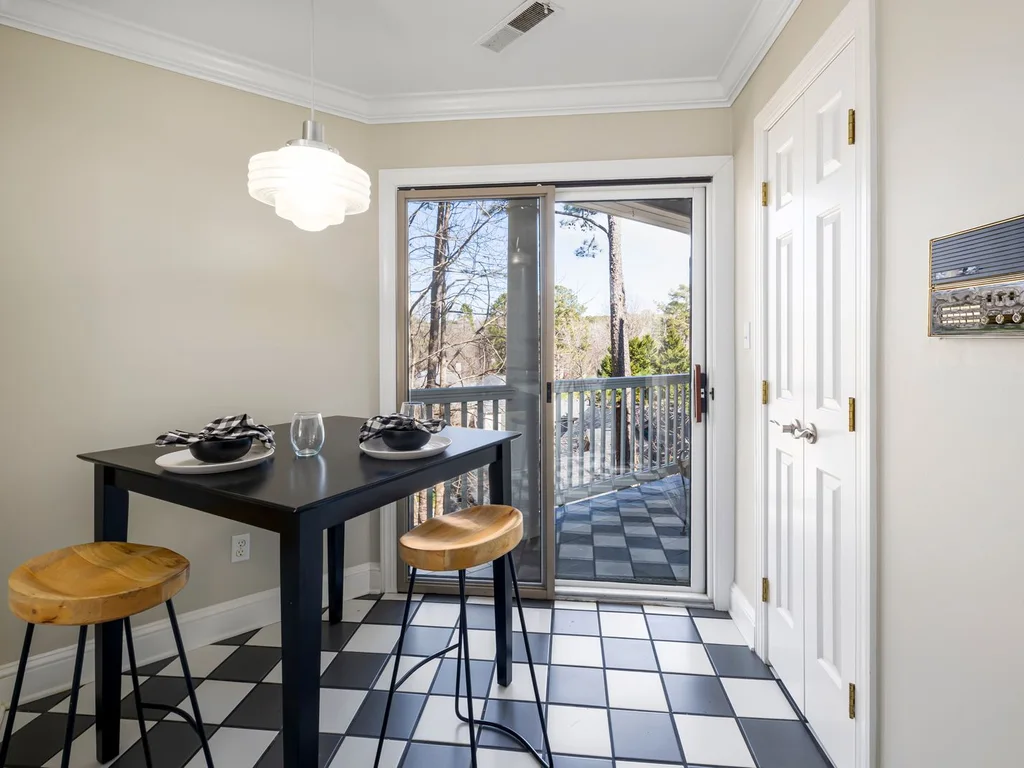
A built-in banquette turns an awkward corner into the cosiest seat in the house. Bench seating uses less floor space than chairs, hides storage underneath, and makes breakfast feel like an occasion. Add cushions in a washable fabric and a small table, and the nook becomes everyone’s favourite spot.
82. A Window Seat for Breakfast
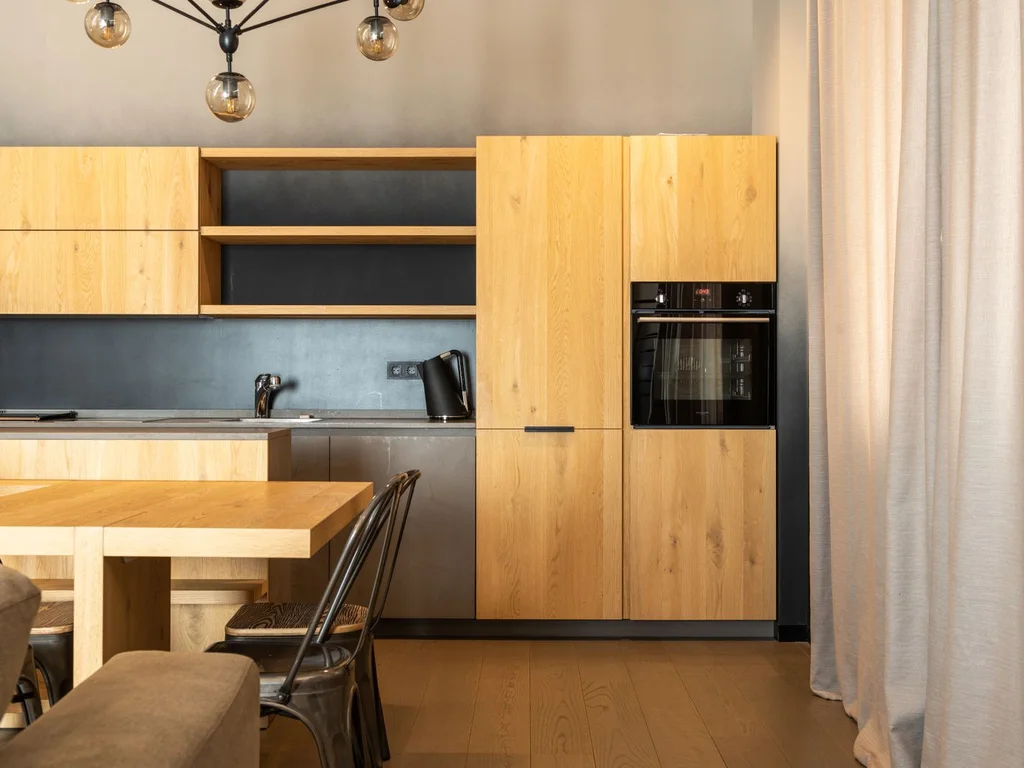
A window seat in the kitchen gives morning coffee a view and a moment of calm before the day starts. Build storage into the base, add a thick cushion and a throw, and even a small window becomes a destination. It is the seat guests will quietly fight over.
83. A Round Table for Small Spaces
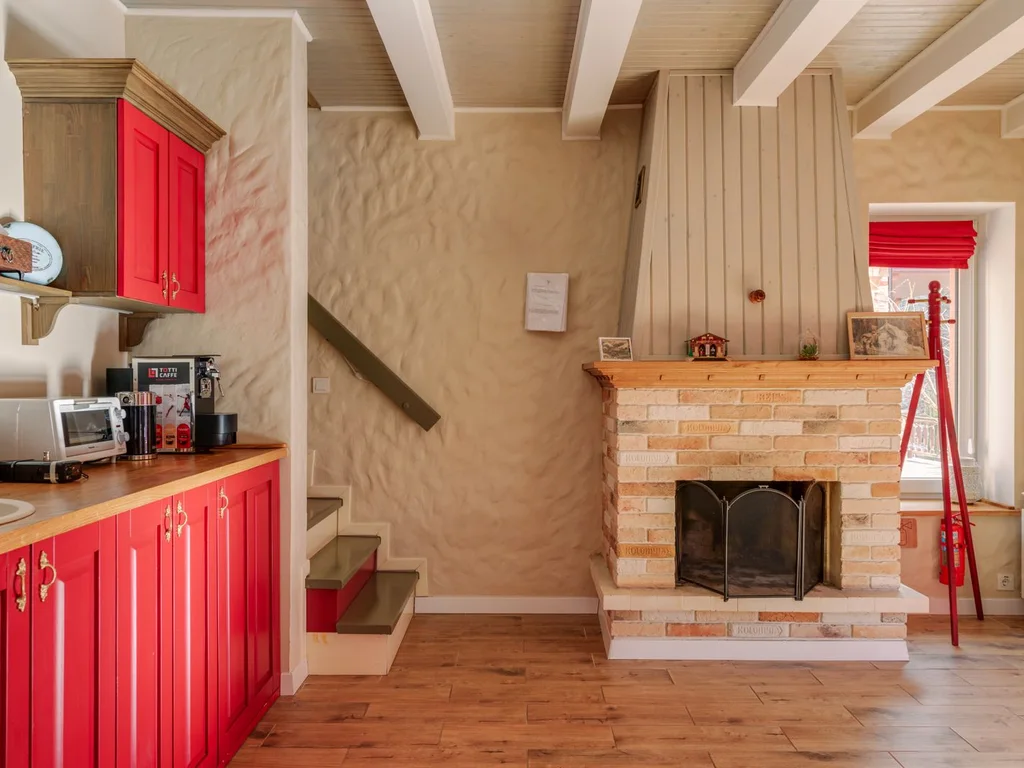
Round tables suit small kitchens because they have no corners to bump and seat more people than a square table of the same size. A pedestal base leaves legroom free all around. Pair a round table with two chairs and a bench, and the nook flexes from two to five with ease.
84. Mix-and-Match Dining Chairs
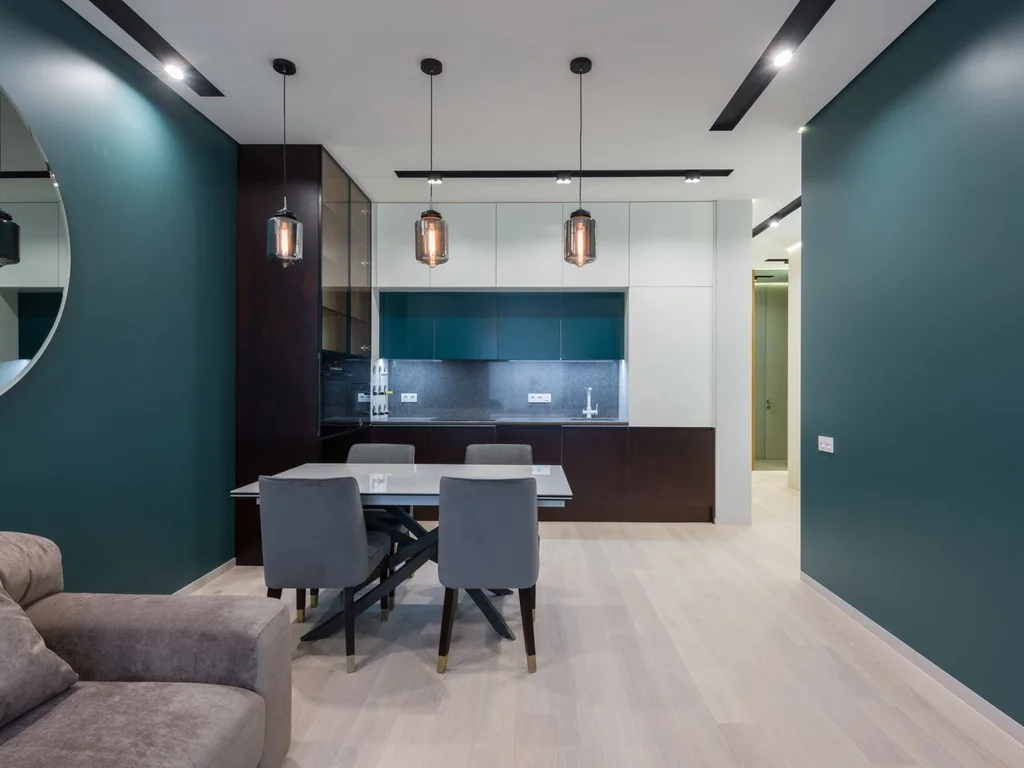
Mixing dining chairs — different styles in one colour, or one style in different colours — makes a kitchen dining area feel collected over time rather than bought in one go. Keep one element consistent, like the wood tone or seat height, so the mix looks curated, not accidental.
85. A Pendant Over the Dining Table
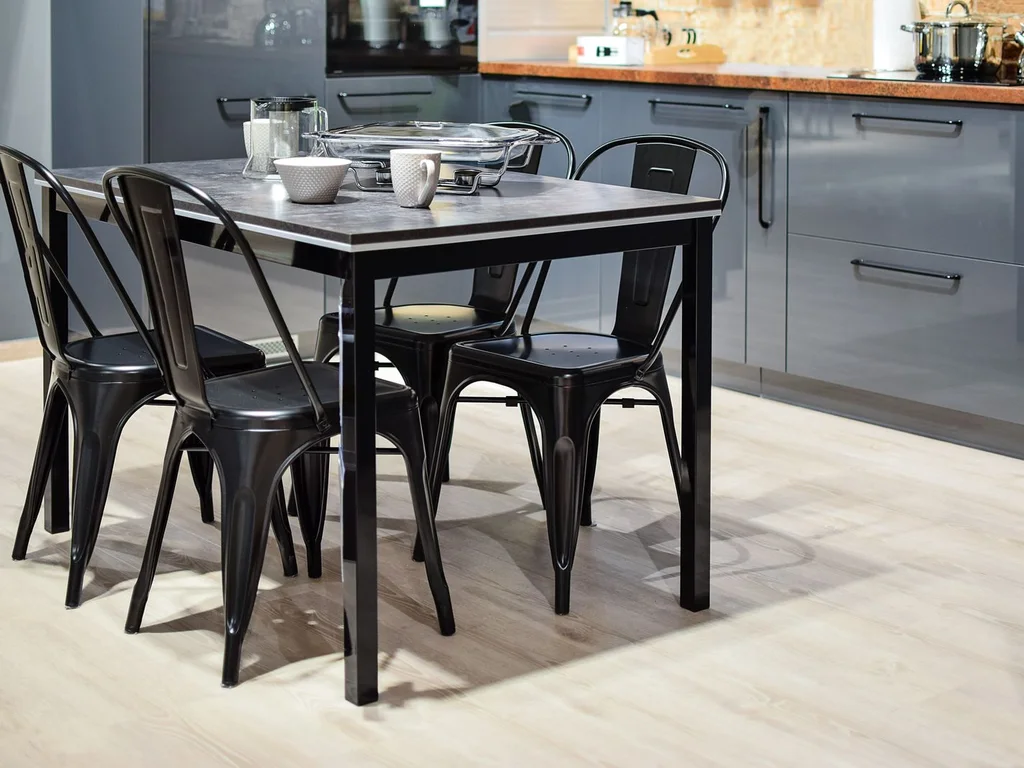
A pendant hung low over the kitchen dining table creates an intimate pool of light that separates dining from cooking. Hang it about 75 centimetres above the table and choose a shade that directs light down. Dim it for dinner and the kitchen nook becomes a restaurant booth.
86. Bench Seating for Families
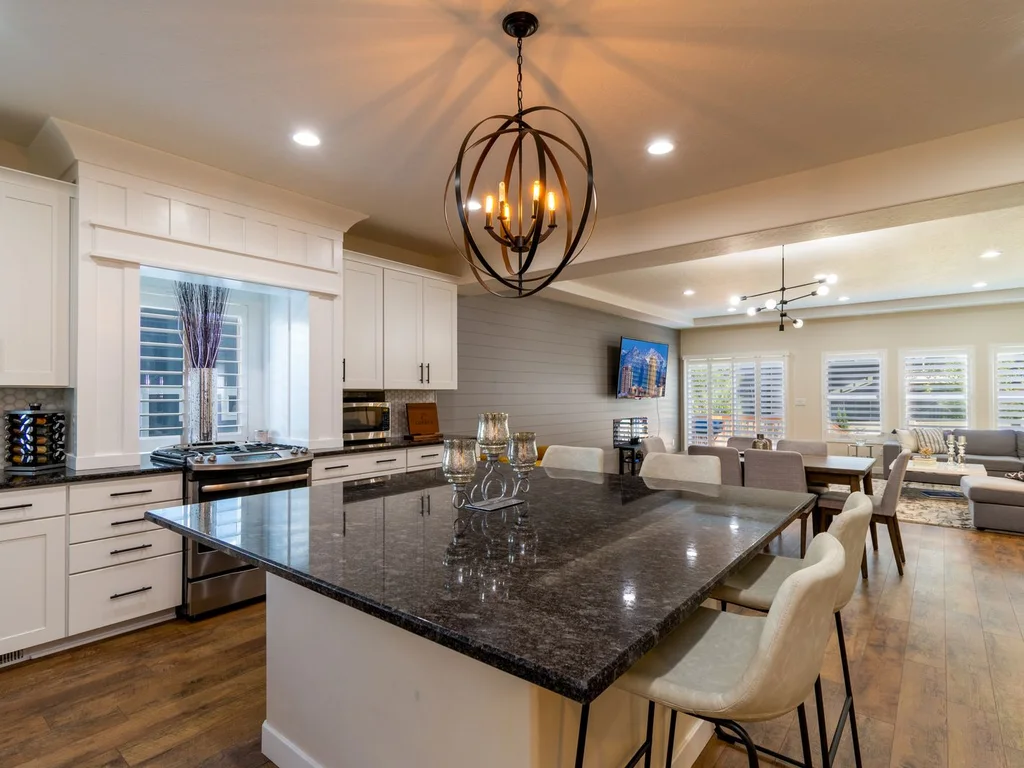
A bench along one side of the table seats children easily, slides away when not needed, and suits the relaxed chaos of family meals. Wooden benches wipe clean, while upholstered ones add comfort for long dinners. Keep the bench backless so it tucks fully under the table.
87. A Chalkboard Wall for Menus and Notes

A chalkboard wall or panel in the dining nook is practical and charming: weekly menus, shopping lists, children’s drawings and dinner-party seating plans all find a home. Use chalkboard paint on one wall section, frame it with trim, and keep good chalk and an eraser nearby.
88. Table Linens for Every Season
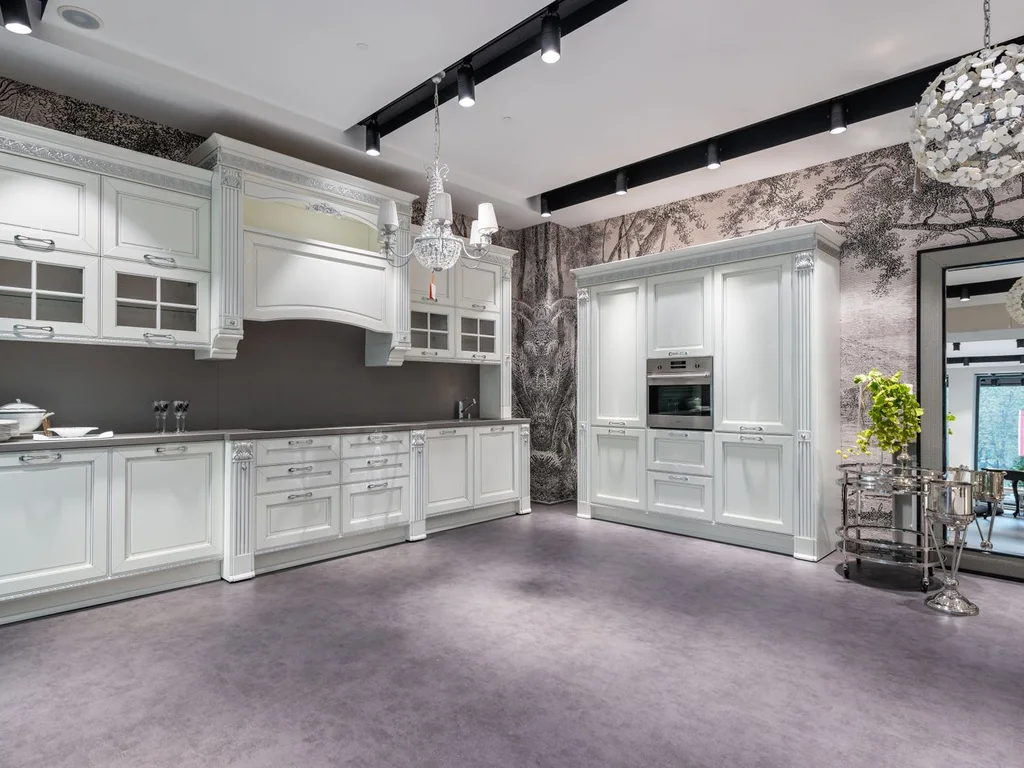
Changing table linens with the seasons is the cheapest way to redecorate a kitchen dining area. Linen in summer, heavier cotton or wool blends in winter, and a simple runner for everyday meals. A few sets, rotated through the year, keep the nook feeling fresh without buying anything large.
89. A Rug Under the Dining Table
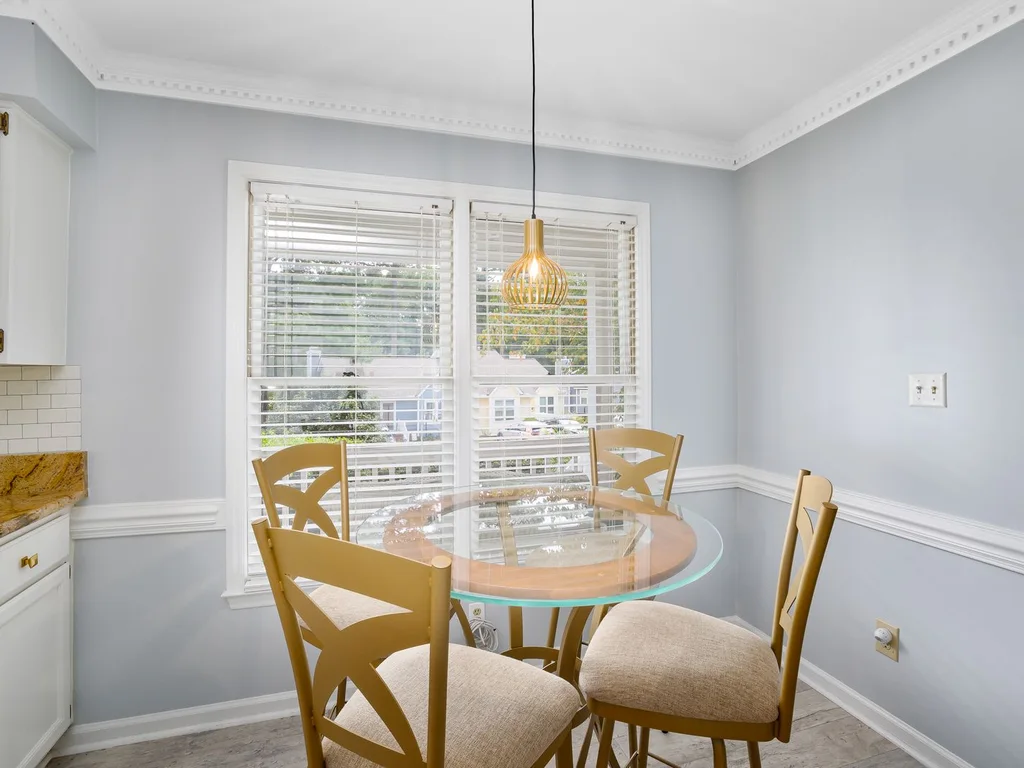
A rug under the kitchen dining table defines the eating zone and softens a hard floor, especially in open-plan rooms. Choose a flat-weave, washable rug large enough that chairs stay on it when pulled out. Pattern hides crumbs between cleans, which is a real advantage in a family kitchen.
90. Candles and Centrepieces
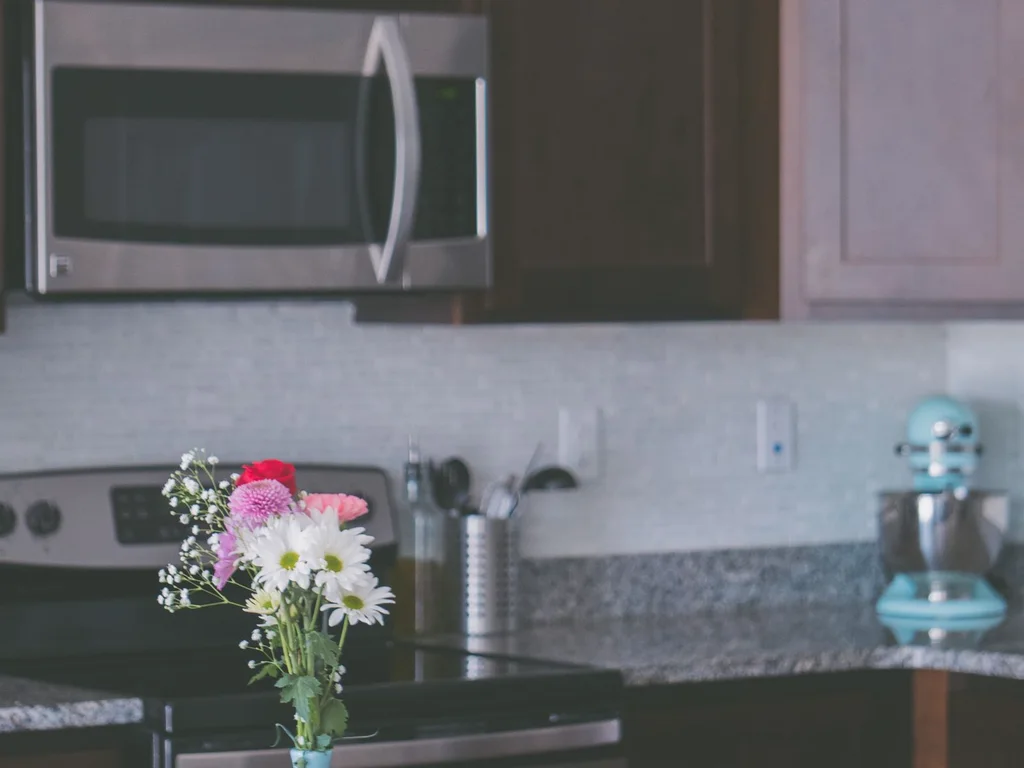
A simple centrepiece — candles in glass holders, a bowl of lemons, a small vase of herbs — makes everyday kitchen meals feel considered. Keep it low so conversation flows over it, and change it with the seasons. The best centrepieces are beautiful, cheap and easy to move for homework or board games.
10. Budget Kitchen Refreshes
91. New Handles, New Kitchen
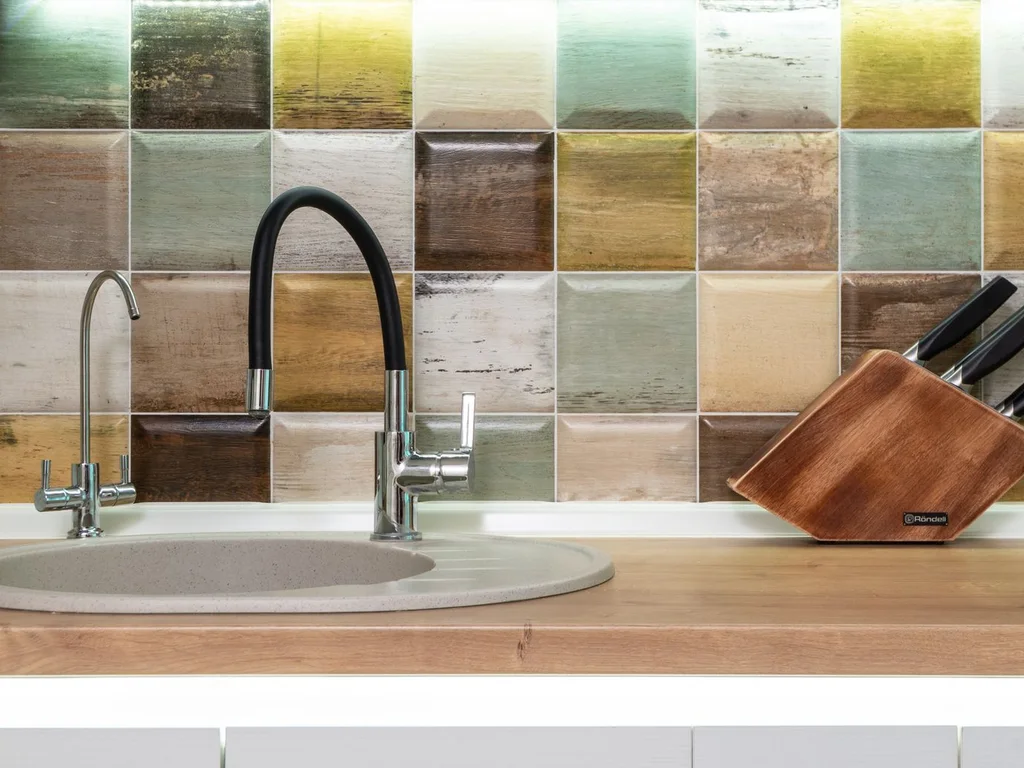
Swapping cabinet handles is the highest-impact, lowest-cost kitchen refresh there is. Brass, matte black or leather pulls can change a kitchen’s whole character in an afternoon. Measure the existing hole spacing first, or choose handles that cover the old holes, and the job stays simple.
92. A Fresh Coat of Wall Paint
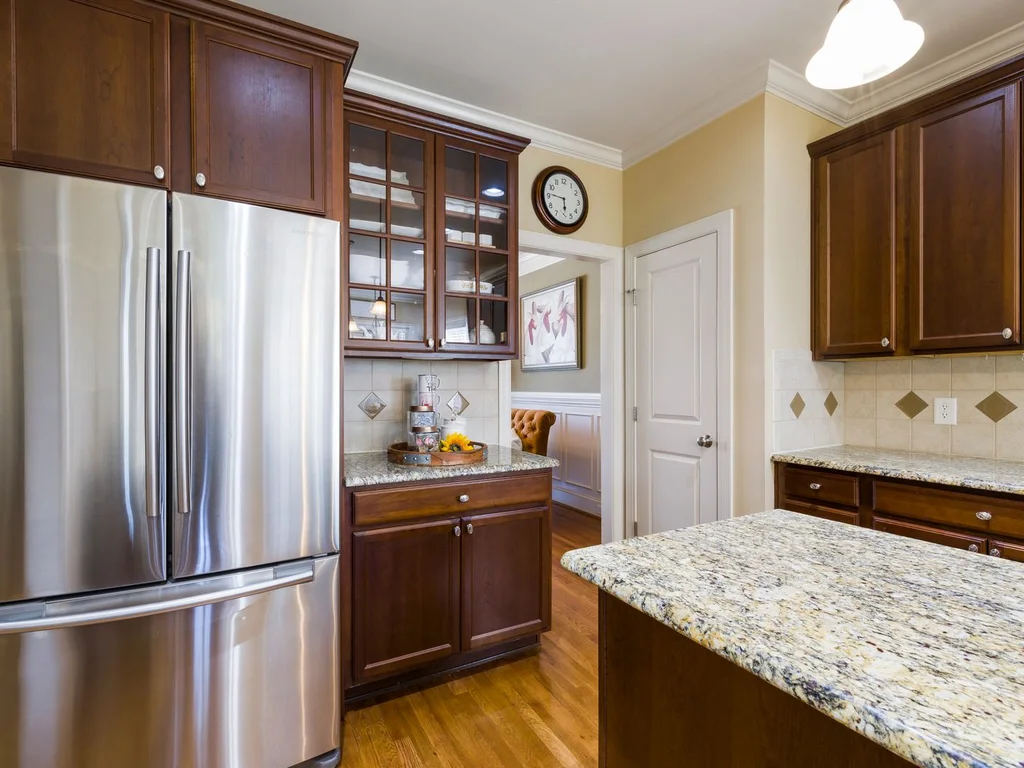
Repainting kitchen walls costs little and changes everything, especially if the old colour dates the room. A warm white, soft sage or pale greige refreshes cabinets and worktops by association. Use a washable kitchen paint so splashes and fingerprints wipe away without a trace.
93. Peel-and-Stick Backsplash Tiles
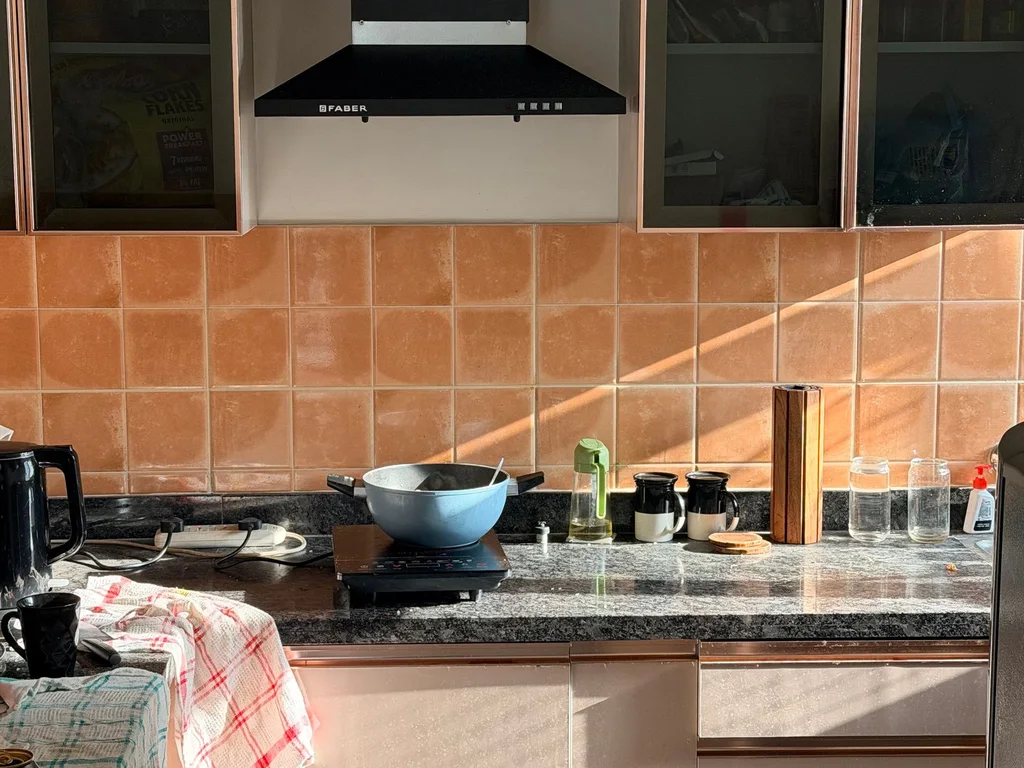
Peel-and-stick tiles give renters and budget renovators a backsplash without grout, dust or commitment. Modern versions look convincingly like subway tile, marble or mosaic. Clean the wall well, measure carefully, and the whole project takes an afternoon and peels off when you move.
94. Open Up One Cabinet
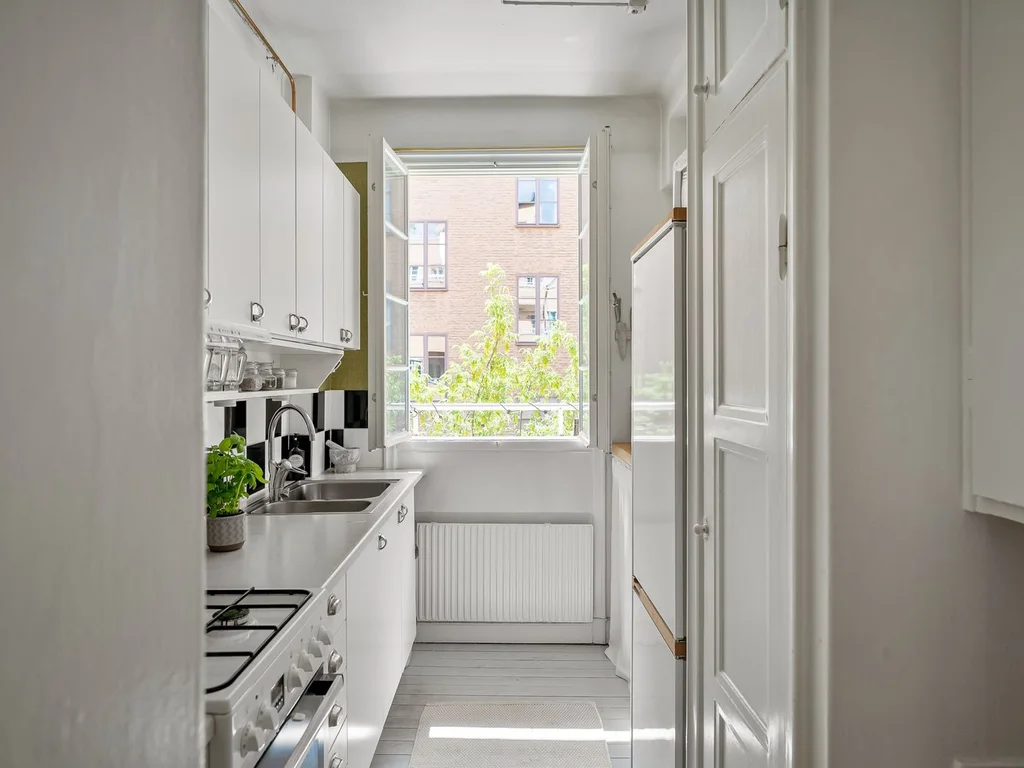
Removing the doors from a single wall cabinet creates instant open shelving for display, at zero cost. Paint the inside a contrasting colour, add a small light, and style it with your prettiest dishes. If you hate it, the doors go back on — but most people never do.
95. A New Tap as Jewellery
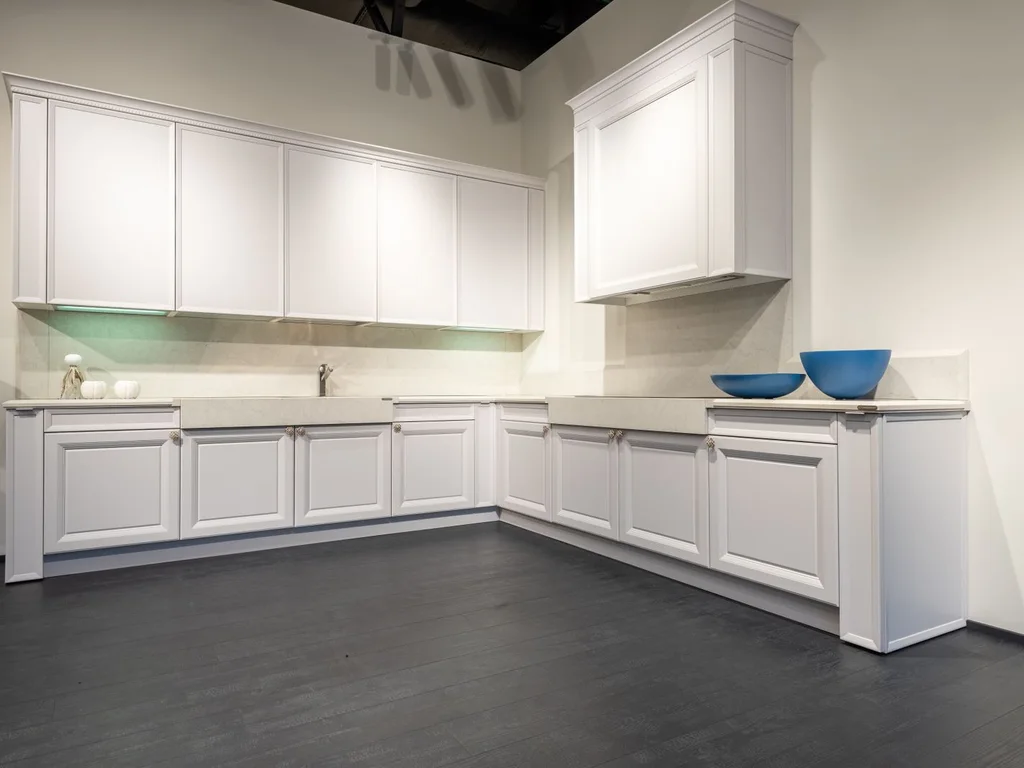
A new kitchen tap works like jewellery for the room: a brushed gold bridge tap, a matte black pull-down, or a classic chrome mixer each changes the sink area’s character completely. It is a plumber’s quick job or a confident DIY project, and the daily pleasure of a beautiful tap is out of proportion to its cost.
96. Contact Paper on Worktops
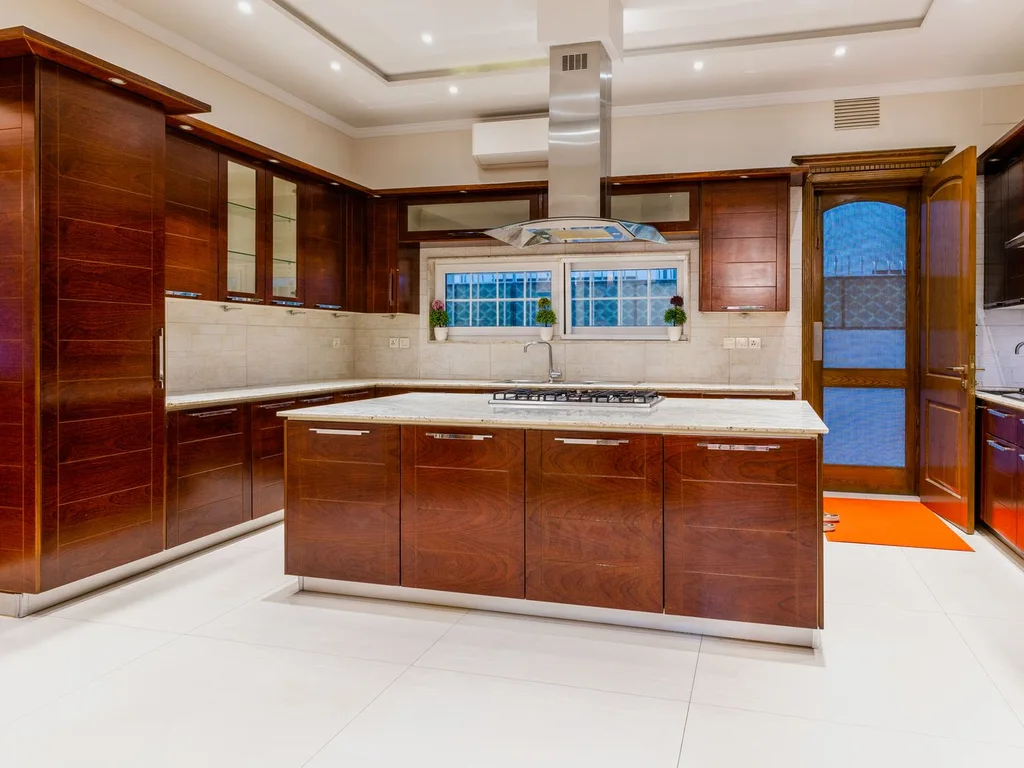
High-quality contact paper in marble, wood or concrete looks can rescue a tired worktop for a fraction of replacement cost. It suits rentals and short-term refreshes best, since it will not last like stone. Apply it slowly with a squeegee, seal the edges, and avoid placing hot pans directly on it.
97. Swap the Light Shades
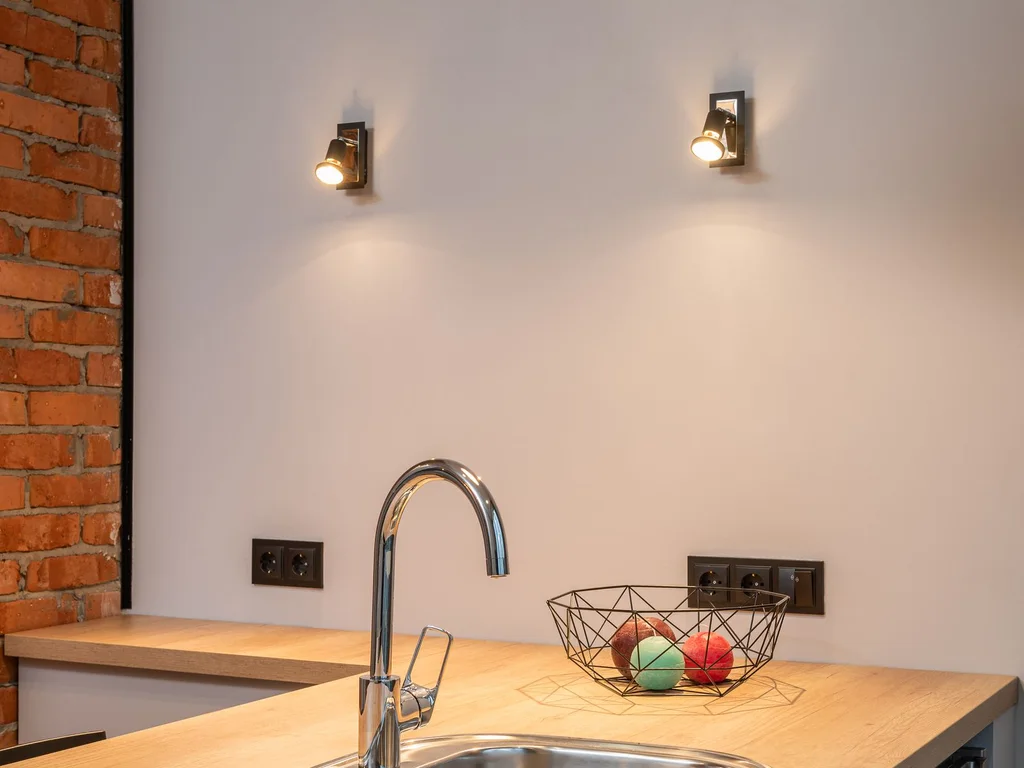
Changing pendant shades or adding new shades to existing fittings refreshes a kitchen’s style without an electrician. Rattan shades warm a modern kitchen, glass globes suit a classic one, and metal domes add industrial edge. Keep the bulb and fitting, change only the shade, and the room feels new.
98. Add a Kitchen Island Cart
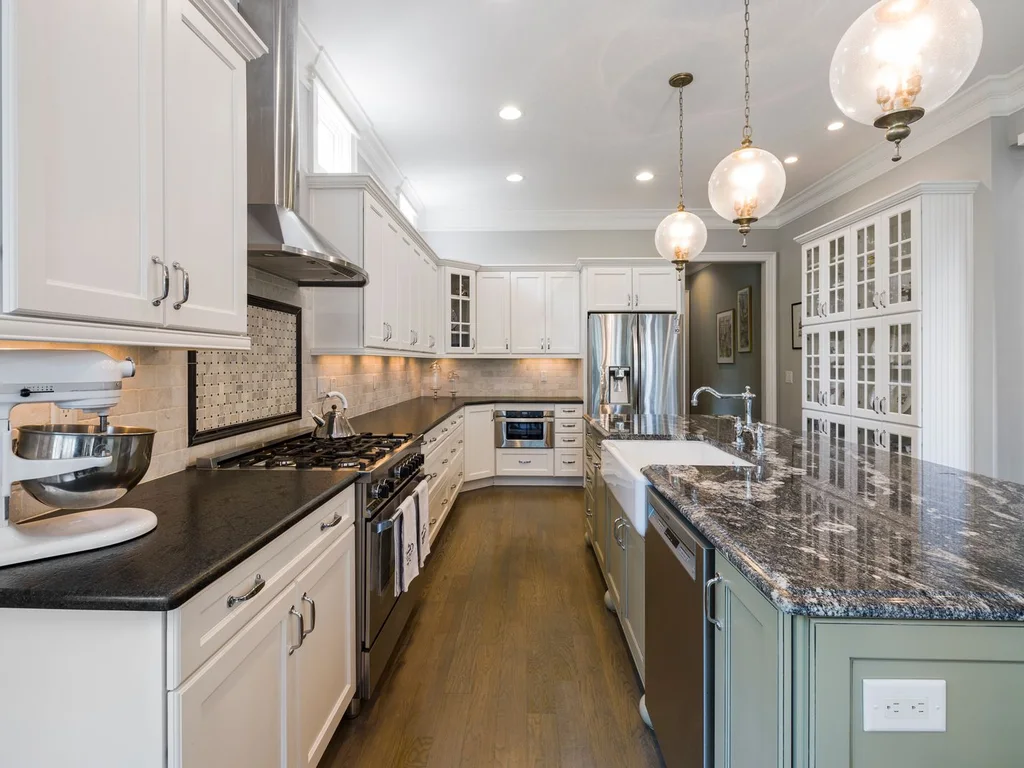
A kitchen cart with a butcher block top adds prep space, storage and serving space for the price of a small appliance. Choose one with locking castors so it stays put while you chop. It is the budget answer to an island, and it moves with you when you change homes.
99. Display Your Best Boards and Bowls
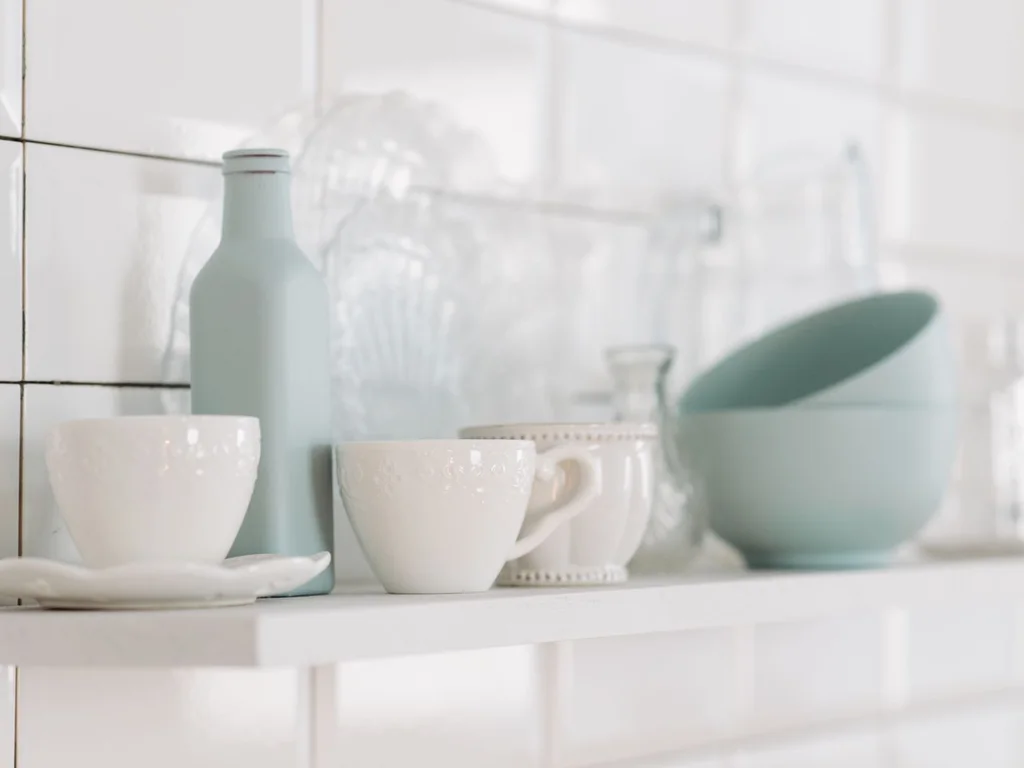
Pulling your best wooden boards, ceramic bowls and copper pans out of cupboards and onto shelves or rails decorates the kitchen for free. The things you already own are often the most beautiful things in the room — they just need to be seen. Edit ruthlessly and display only the pieces you love.
100. A Deep Clean and Declutter
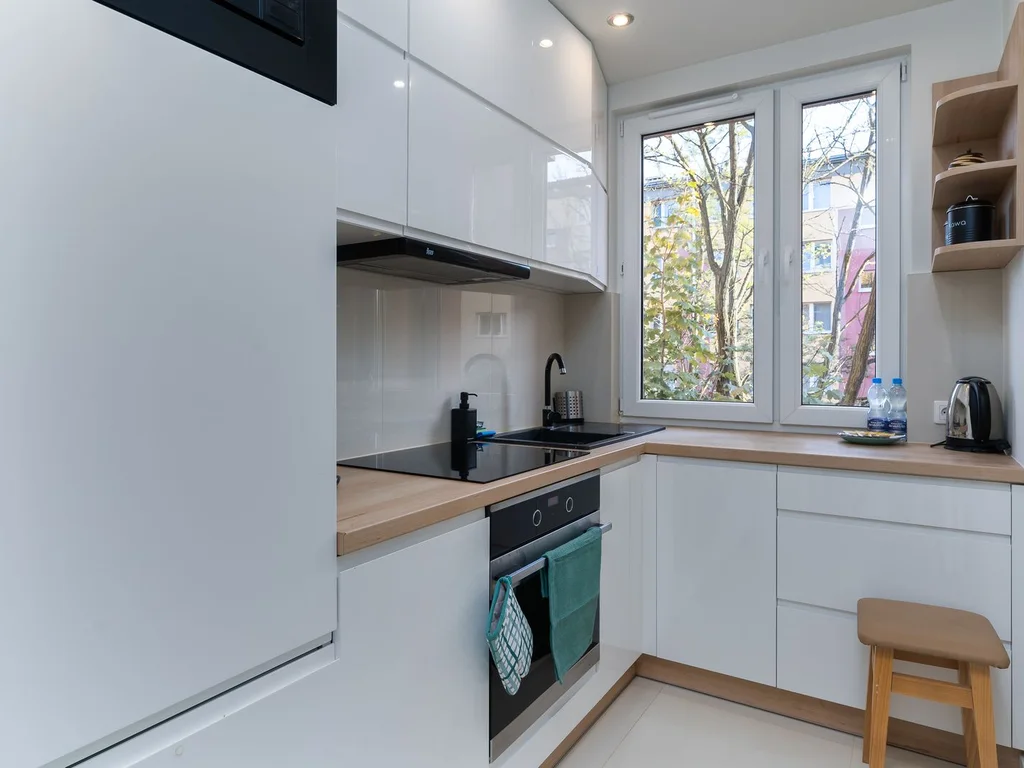
The cheapest kitchen refresh of all is a deep clean and ruthless declutter: empty every cabinet, wipe every surface, and remove anything unused, broken or duplicated. A kitchen with clear worktops, organised drawers and clean grout looks newly decorated — because, in the ways that matter, it is.
Kitchen Decor Mistakes to Avoid
The most common kitchen decor mistake is choosing looks over workflow: beautiful open shelves that gather grease near the hob, a stunning island that blocks the fridge door, or a dark worktop that shows every crumb. Always walk the cooking triangle — sink, hob, fridge — before committing to a layout change. Another frequent error is too many competing finishes: pick one metal, one wood tone and one accent colour, and repeat them. Finally, do not forget lighting and ventilation; the prettiest kitchen fails if it is dim or steamy. A good extractor and layered lighting protect both the decor and the cook.
Frequently Asked Questions
What is the most popular kitchen cabinet colour?
White remains the most popular choice, followed closely by sage green, navy and warm greys. White suits every style and maximises light, while sage and navy add character without dating quickly. The best colour is the one you will still like in ten years, not just this season.
How can I update my kitchen without renovating?
Paint the cabinets or walls, change handles and the tap, add open shelving, swap light shades and refresh textiles. Together these changes cost a fraction of a renovation and can transform the room in a weekend. Start with the change that bothers you most when you walk in.
Are open shelves practical in a kitchen?
Yes, for items you use daily — plates, glasses and mugs stay clean through regular use. Keep open shelves away from the hob where grease settles, and store rarely used items in closed cabinets. One or two open shelves add character without the dust burden of a whole wall.
What worktop is best for a busy family kitchen?
Quartz is the easiest choice: it resists stains, scratches and heat, and needs no sealing. Butcher block is warmer and kinder to knives but needs oiling, while granite is durable but must be sealed. For most families, quartz offers the best balance of beauty and forgiveness.
How do I choose kitchen lighting?
Layer it: bright task lighting over worktops, ambient ceiling light for the room, and accent light for display. Use warm white bulbs around 2700K, put everything on dimmers, and hang pendants 75 to 90 centimetres above islands and tables. Good lighting changes how the whole kitchen feels.
Can a small kitchen look stylish?
Absolutely. Light colours, glossy or mirrored finishes, storage to the ceiling, and one restrained palette make small kitchens feel calm and generous. A fold-down table, a slim cart and clear containers keep the room working hard without looking crowded.
Is a kitchen island worth it?
If you have at least a metre of clear walkway on all sides, yes — an island adds prep space, storage and social seating. In a small kitchen, a portable cart or slim trolley gives most of the benefits without blocking flow. Measure the room honestly before committing to a fixed island.
What is the cheapest way to refresh a kitchen?
A deep clean and declutter costs nothing and often makes the biggest difference. After that, new handles, a fresh coat of wall paint and peel-and-stick backsplash tiles deliver the most visible change for the least money, all achievable in a single weekend.
What is the cheapest kitchen update that actually makes a difference?
After a free deep clean and declutter, the best-value paid change is new cabinet handles — they alter the look of every door and drawer in the room for the price of a takeaway meal, and fitting them needs only a screwdriver. Under-cabinet LED strips come a close second for how dramatically they change evening cooking.
Conclusion
A kitchen you love to cook in is built from hundreds of small choices: the cabinet colour that greets you each morning, the light over the worktop, the stool that invites someone to sit and talk while you chop. Pick the ideas from this guide that fit your room, your budget and the way you actually cook, and start with the one that will make tomorrow’s breakfast better. For more inspiration, explore our kitchen design collection and keep building a kitchen that works as beautifully as it looks.