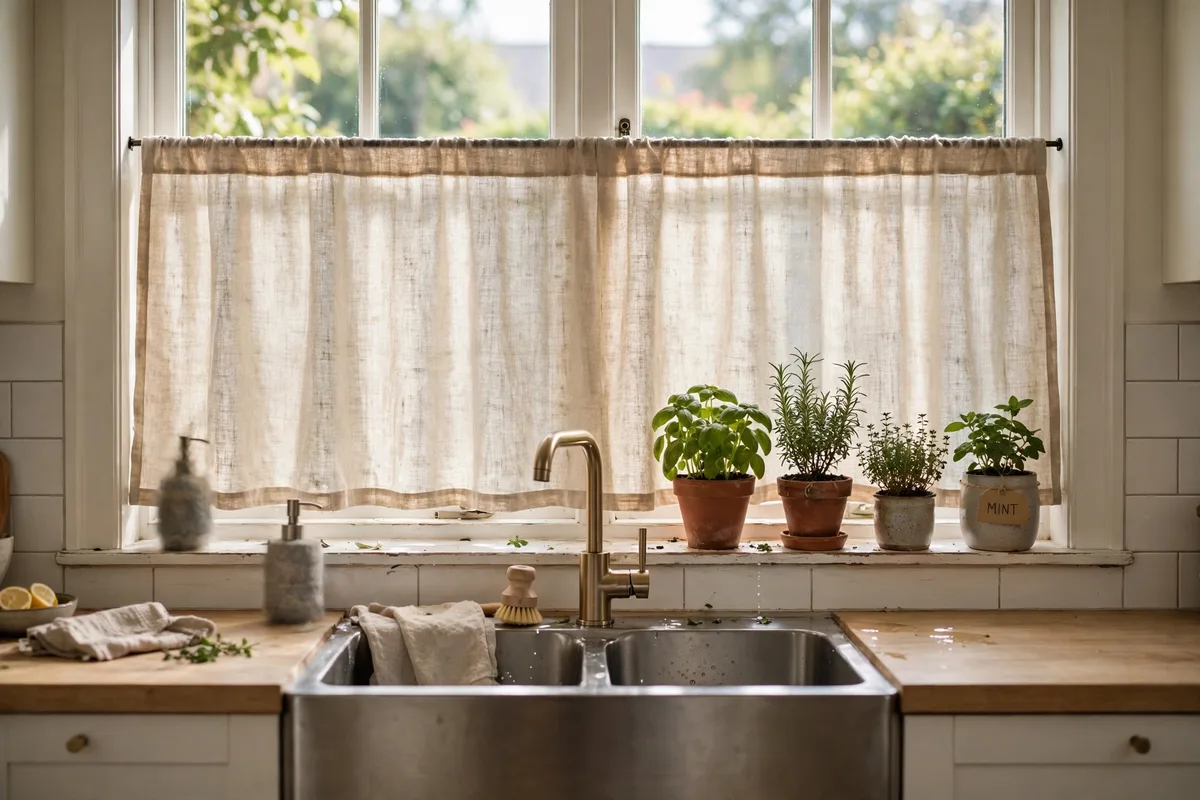
The kitchen window has the hardest job of any window in the house. It sits over water, near heat, in airborne grease, and it is also the room’s main source of daylight and its prettiest view — usually the sink view, at the spot where someone stands longest. Kitchen window styling therefore starts with zoning, not fabric: how close the glass is to the sink and stove decides what can survive there, and only then do the pretty decisions — café curtains, Roman shades, a sill full of herbs — get their turn.
Ten ideas: the zones first, then the treatments one by one, then the sill, the layering, and the safety rules that keep it all working.
The Kitchen Window Zones at a Glance
| Window zone | Winning treatment | Why |
|---|---|---|
| Over the sink | Roller shade or faux-wood blind | Wipes clean; shrugs off steam + splashes |
| Near the stove | Short, hard, or nothing | Heat + grease + flame safety |
| Garden / nook window | Roman shade or café curtain | Fabric softness where it survives |
| Street-facing | Café curtain or top-down shade | Privacy below, daylight above |
| The view window | Bare, or film only | The view IS the styling |
1. Zone the Window Before You Style It
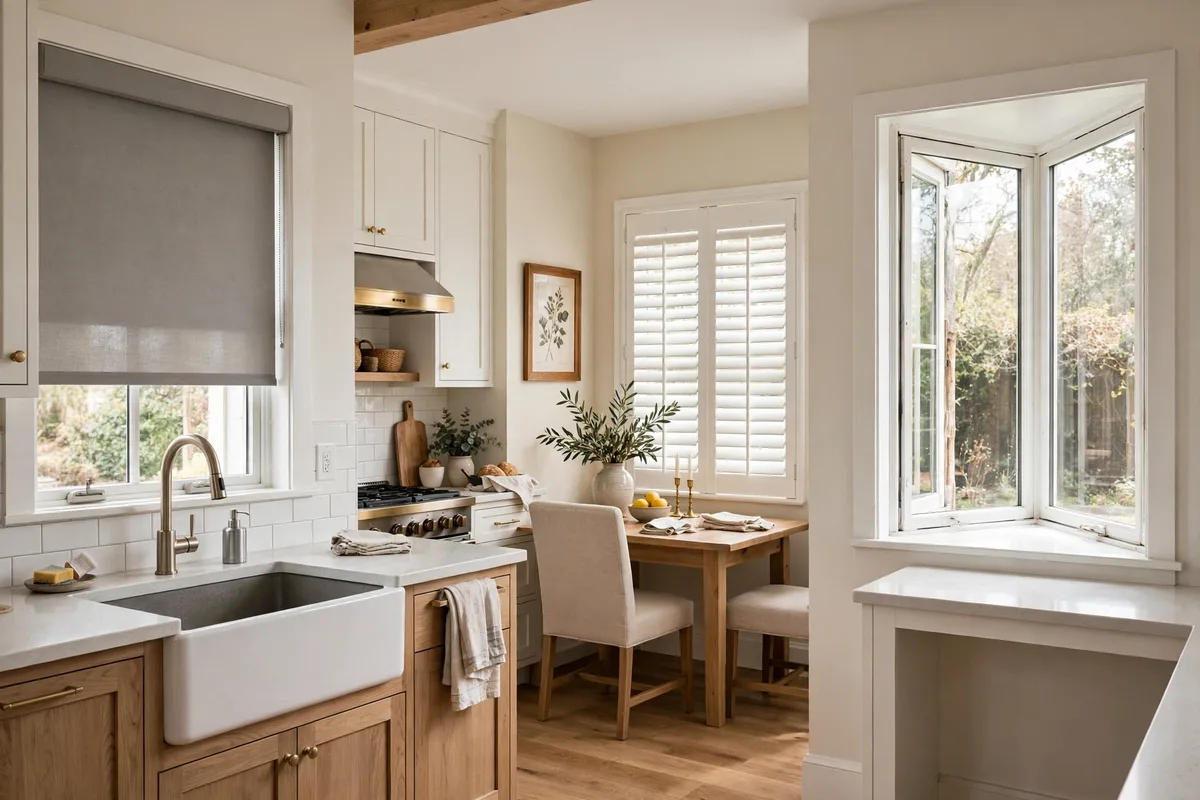
Professional window advice for kitchens starts with one question — how close is the glass to water and heat? Seattle Blinds’ kitchen treatment guide is blunt about it: the sink window takes more direct water exposure than any window in the home, real wood can swell near it, and fabrics hold grease in ways that do not wash out. Distance is destiny: a treatment that thrives at the breakfast-nook window can be ruined in a year over the sink.
So map each kitchen window to its zone first (the table above), using the strictest zone it touches. A window that is both over the sink AND street-facing is a sink window first — privacy must be solved with sink-safe materials, which §3 and §5 do.
2. Over the Sink: Rollers and Faux Wood Win
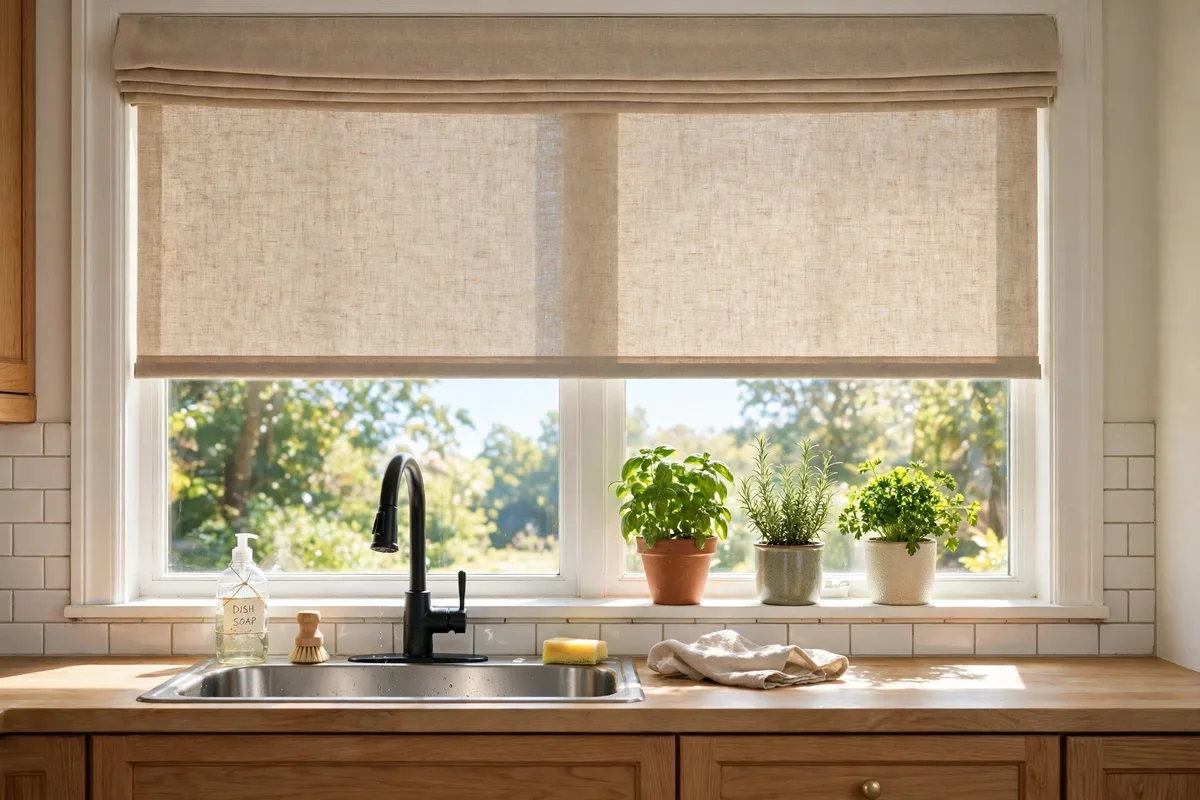
The sink window’s champions are boring on purpose. Artfasad’s window-covering comparison names the roller blind the clear winner above the sink: a flat synthetic sheet that wipes clean with a damp cloth, resists steam and grease, retracts completely for full daylight, and mounts cordless without tangling at the tap. Faux-wood blinds run second — composite slats that tilt for glare control and clean the same way. Both survive the splash zone for years.
The same comparison warns off the tempting choice: fabric Roman shades over the sink trap grease in their fold lines, and spot-cleaning leaves water rings. Save Romans for dry zones (§4). The sink wall is also backsplash territory — the window, the tap and the tile behind the sink are one wet surface system, exactly as the pairing logic in our kitchen backsplash colors ideas treats the stove wall.
3. Café Curtains: Privacy Below, Daylight Above
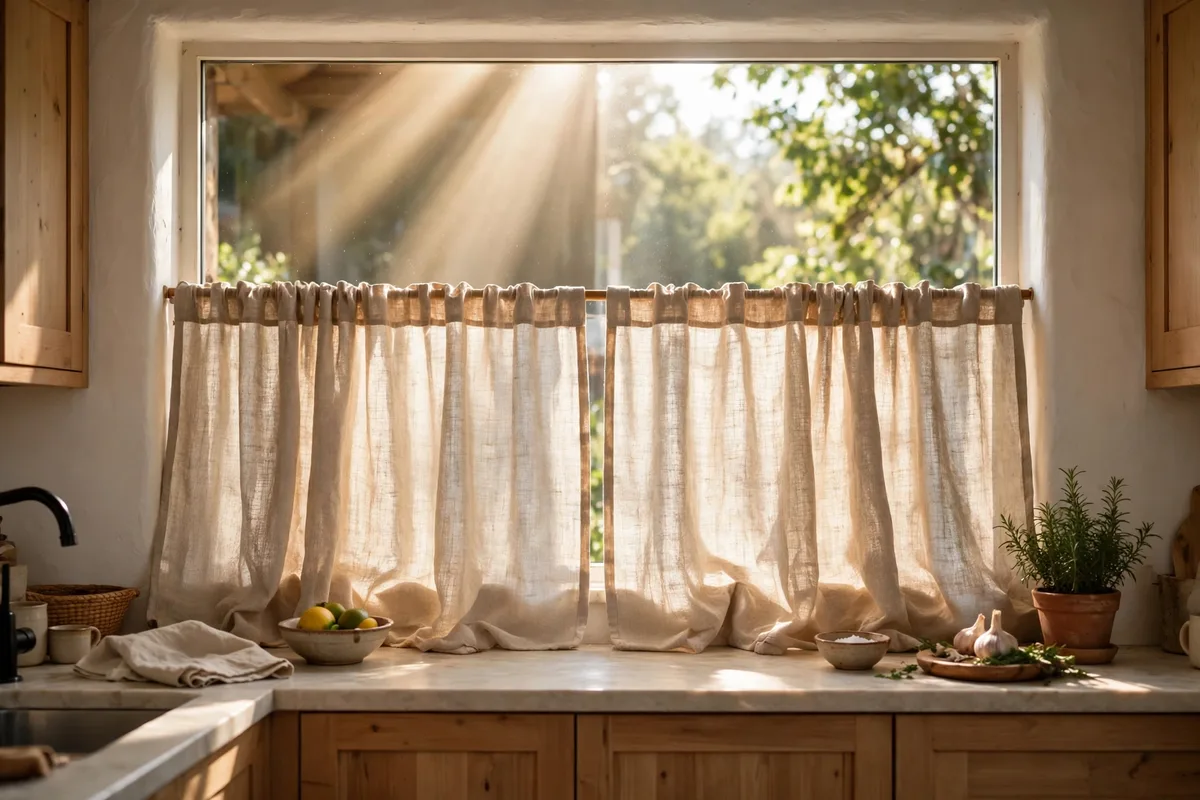
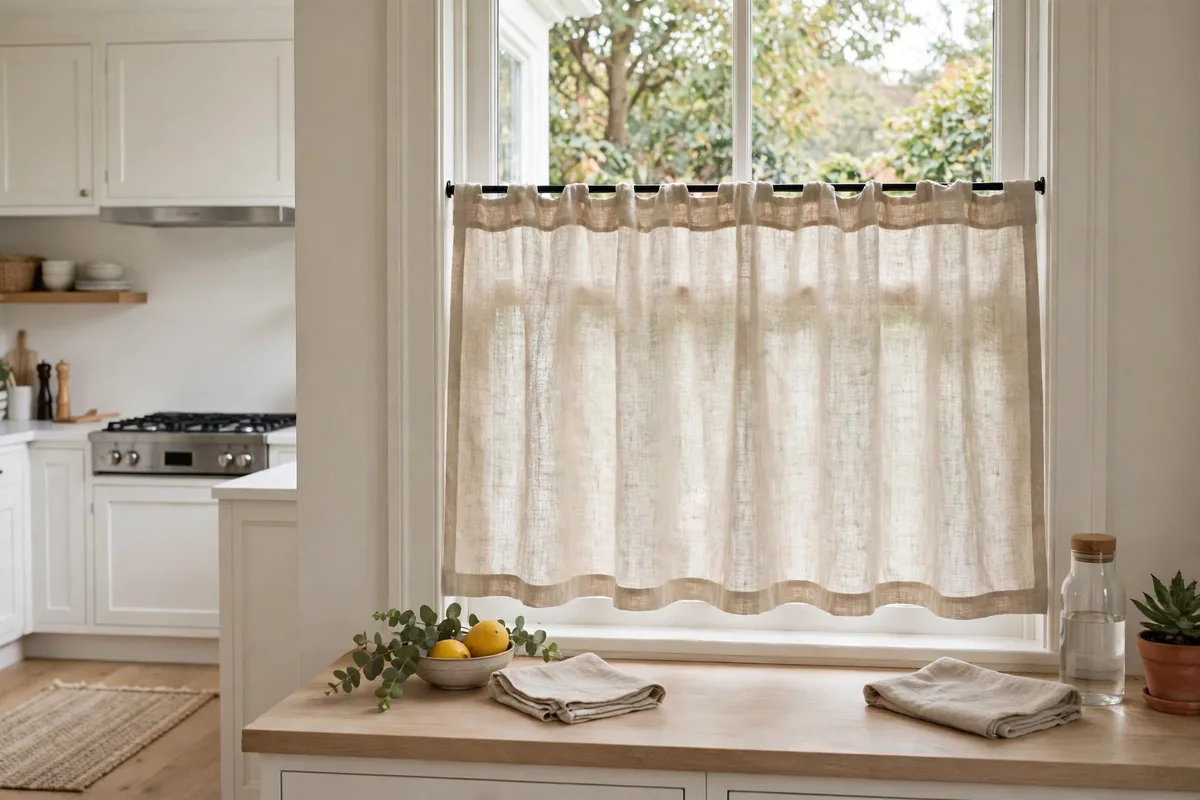
The café curtain — a panel hung at mid-height on a slim rod — is the kitchen’s classic answer to the overlooked window, and its geometry is the genius: it covers the sightline at seated and standing eye level while leaving the top half of the glass open, so the room keeps most of its daylight and its sky. For street-facing and neighbour-facing kitchens it is privacy without the cave effect of a full shade drawn all day.
Kitchen discipline applies: washable fabric only (cotton or linen blends that go in the machine — they will need it), a hem that clears the sill and any splash arc, and a rod mounted so the panel sits inside the frame’s reveal where possible. A small pattern or a coloured hem is the traditional register; plain linen is the modern one.
4. Roman Shades: Fabric, in the Dry Zones
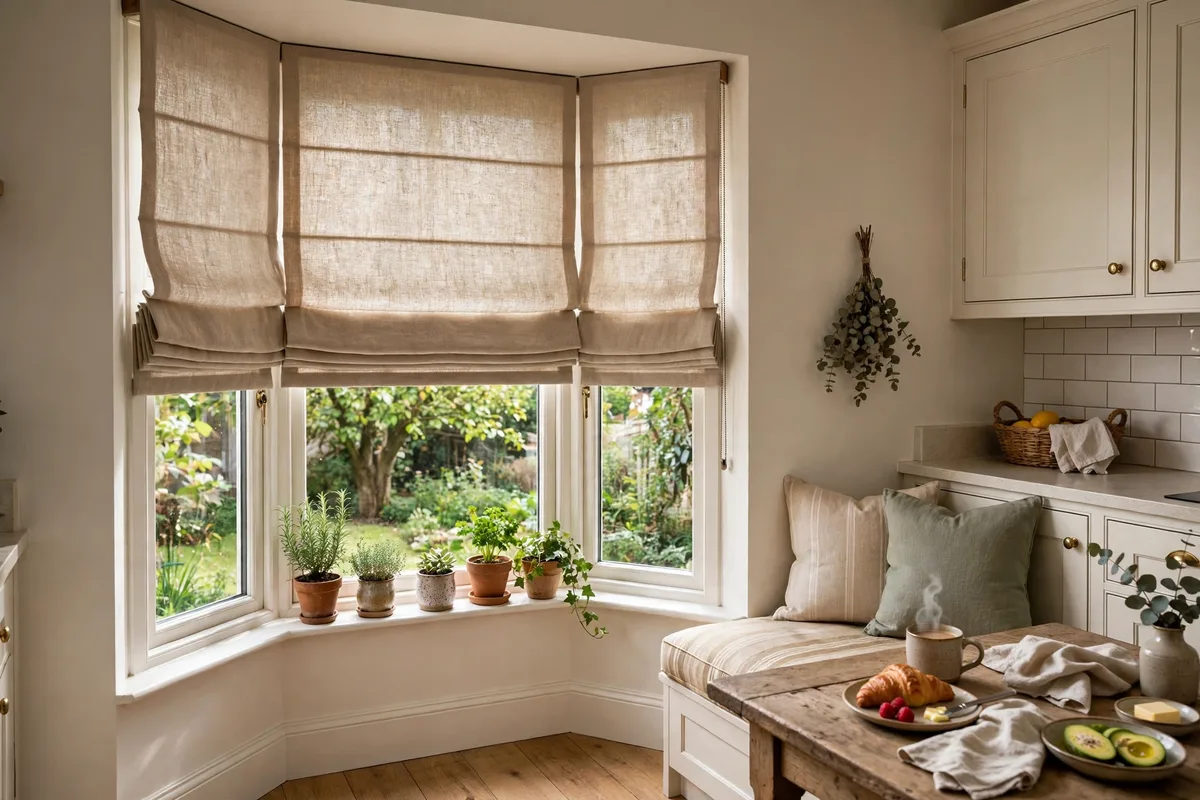
Where a kitchen window sits away from steam and splashes — the garden window, the nook, the door-side pane — the Roman shade is the tailored choice: flat fabric that folds into soft horizontal pleats, bringing pattern and colour in the one place a kitchen can carry them at scale. A lined Roman gives real privacy and glare control; an unlined linen one just filters light into something kinder.
This is also the kitchen’s best pattern opportunity. Cabinets and counters are usually committed neutrals; a Roman in a stripe, a small print or a saturated linen is the room’s one fabric statement, replaceable in an afternoon. Keep the §1 map in hand — the moment a Roman hangs within splash or steam range, it becomes a cleaning project with folds.
5. Shutters and Blinds: Tilt Control for Working Light
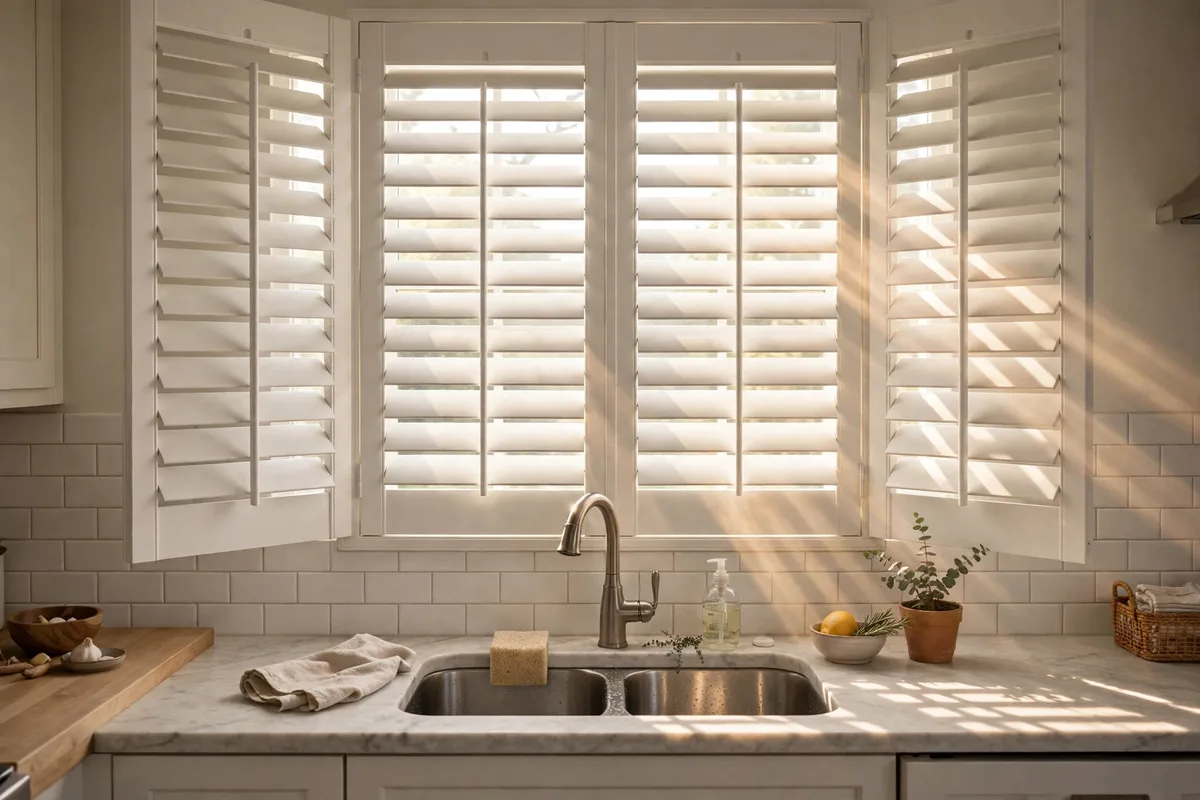
Shutters and Venetian-style blinds offer the one control no fabric can: tilting. Louvres angle the light — up to bounce it off the ceiling, down to kill glare on a screen or a glossy counter — while keeping privacy at any hour. In kitchens, specify the moisture-proof versions (faux wood, polysatin, aluminium) for sink zones; real timber belongs at dry windows only. The look is architectural and permanent, the cleaning a wipe per slat, and in an all-white scheme shutters are the natural partner — the window treatment version of the dosed, structural accents in our white kitchen accents ideas.
Proportion rules: slats wide (2.5 inches and up) for modern rooms and large glass; narrower for cottages and small panes. And measure the tilt arc against the tap — a shutter panel that cannot open because the faucet is in the way is a daily irritation installed in an afternoon.
6. Mount High and Wide: Make the Window Bigger Than It Is
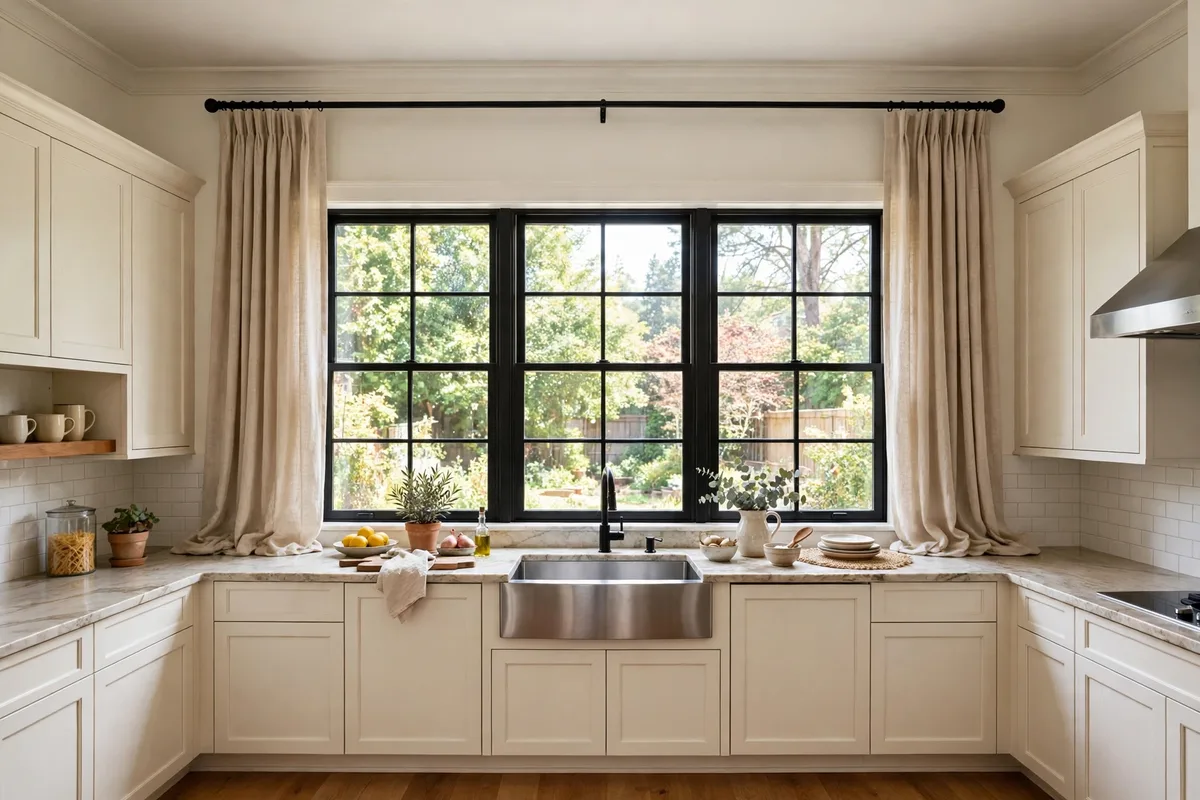
The cheapest enlargement in the kitchen is a tape measure decision: mount the treatment above and outside the frame rather than inside it. Artfasad’s guide leads with this — start with the mount point, not the fabric. A rod or headrail placed several inches above the glass, extending past both sides, lets the fabric stack clear of the glass entirely: the window reads taller, wider, and admits its full daylight when open, instead of the third that inside-mounted fabric permanently steals.
Where cabinets crowd the window and no wall space exists above, the fallback is a low-profile headrail mounted on the frame itself — rollers are slimmest here. Either way, the principle survives: the treatment should frame the window the way a frame flatters a picture — outside the art, never covering it.
7. The Bare Window: When the View Is the Styling
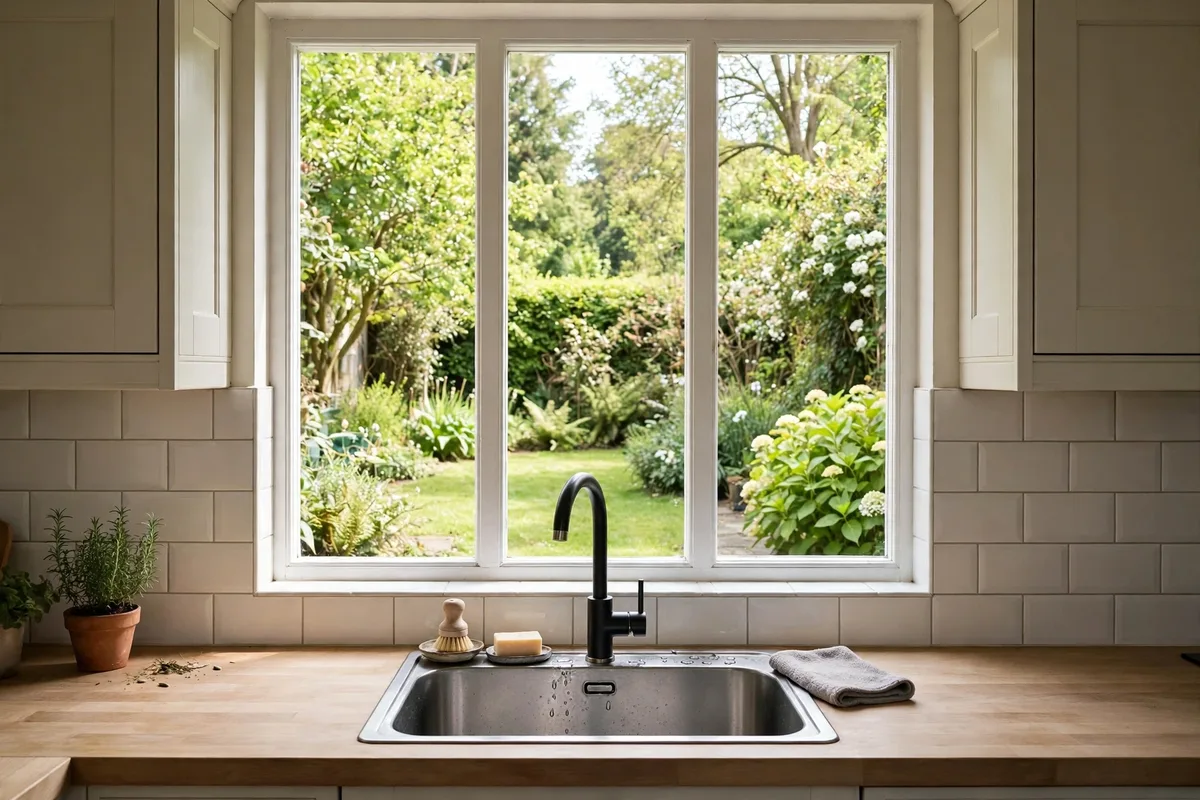
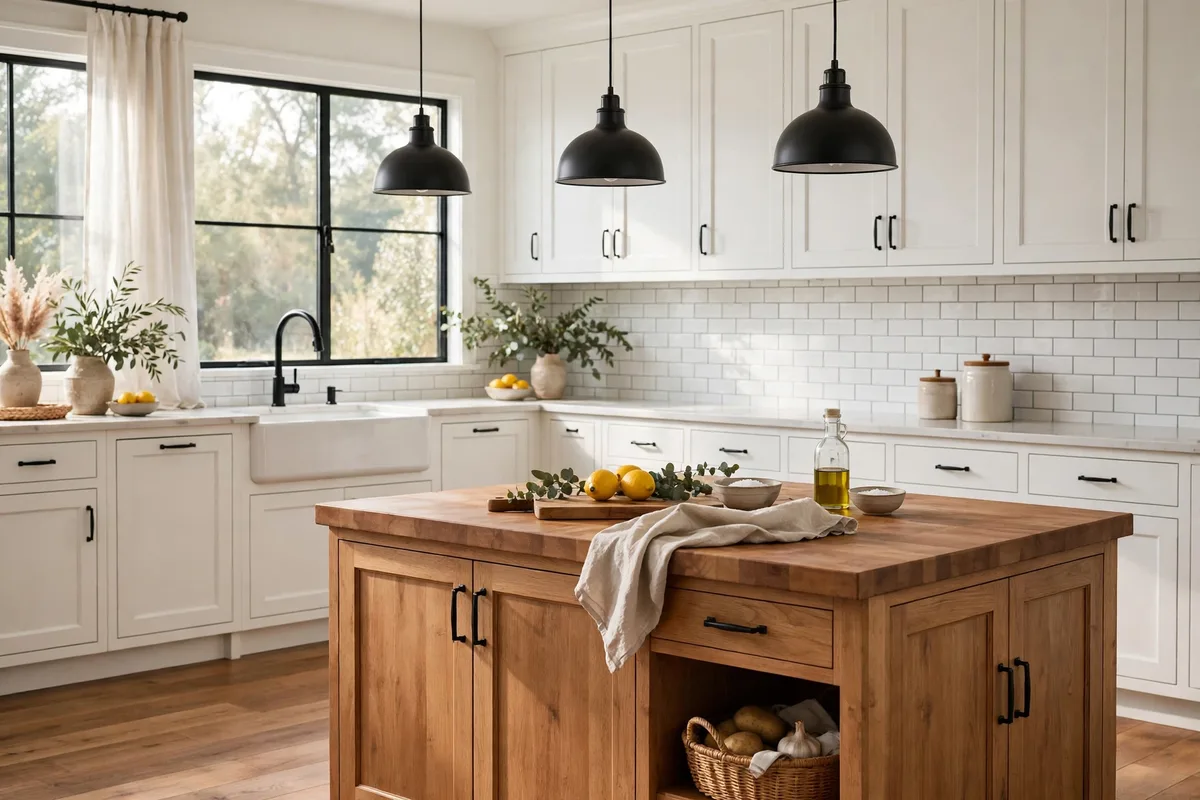
Some kitchen windows should wear nothing. A sink window facing a private garden, a picture window over a view — the correct treatment is the view itself, with privacy supplied by distance, planting, or a fence rather than fabric. Bare glass also maximises the daylight that small kitchens live by; the sight-line logic of our small kitchen visual layout ideas treats an unobstructed bright window as the end-point that stretches a whole room.
If bare needs help, help invisibly: a clear or lightly frosted privacy film on the lower pane only, exterior planting grown to sill height, or a sill garden (§8) doing the screening from inside. What a view window should never get is a permanent half-drawn shade apologising for the outlook it was built for.
8. The Sill Stage: Herbs, and the Three-Object Rule

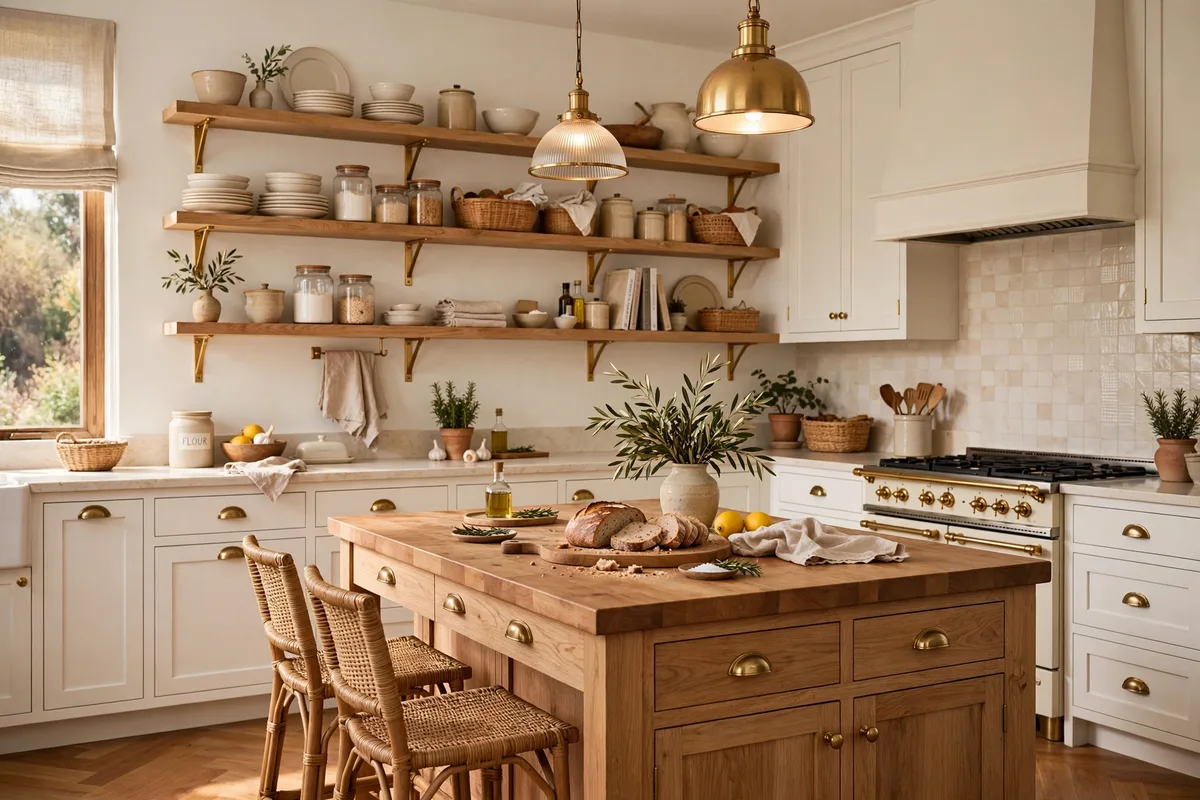
The kitchen sill is the one shelf that styles itself in sunlight, and its best tenant is useful: herbs. Basil, chives, parsley and mint forgive lower light; rosemary and thyme want the strong sun. Terracotta or ceramic pots with drainage trays, rotated weekly so they grow evenly instead of leaning at the glass, wiped of the grease film monthly — a working micro-garden two steps from the chopping board.
If not herbs, apply the narrow-ledge discipline: at most three objects, varied heights, one material family — a jug, a small plant, a jar. The sill’s failure mode is the drift collection (bottles, ornaments, the plant that died in March), and in a room where the window is the focal point, a cluttered sill taxes the whole view. Keep it to a cast, like every shelf system in this series.
9. Layering: Sheer Plus Roller, Winter Plus Glare
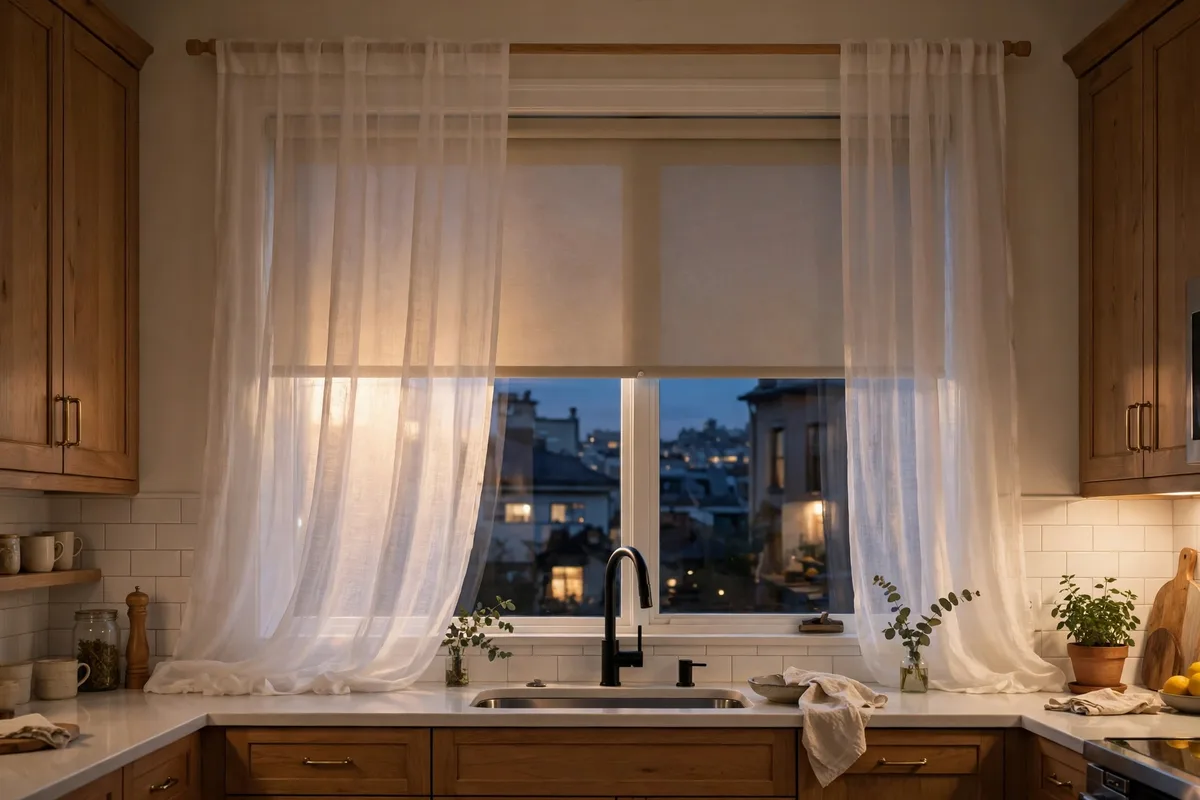
One treatment rarely covers every hour. The layered answer pairs a working layer (the wipe-clean roller, for privacy and glare) with a softening layer (a sheer or a valance, for looks) — each doing the job it is good at, the roller disappearing up when the day is bright. South- and west-facing kitchen windows earn the layer most: midday glare control without losing the morning.
The same window may also be the kitchen’s winter leak-point; the insulation-first layering in our winter window styling ideas — thermal layers, sealed edges, a glowing sill — applies at the kitchen window with the §1 zone rules added. Cold air at the sink is felt more than anywhere in the house, because that is where someone stands still, hands in water.
10. Fabric Discipline and the Safety Rules
The rules that keep kitchen windows safe and cleanable, collected: no long or billowing fabric anywhere near the stove — keep any curtain at least about three feet from burners, and near cooking heat choose short café tiers, blinds, or nothing. Washable is non-negotiable for anything fabric in this room (machine-washable cotton and polyester blends outlast silk and velvet by years of kitchen air). Cordless or cord-secured treatments wherever children reach. And the maintenance rhythm: fabrics washed seasonally, hard treatments wiped monthly, or the grease film becomes the finish.
None of this limits the styling — it defines where each kind is allowed to shine. The kitchen window styled by zone, mounted like a picture frame, planted like a garden and cleaned like a worktop is the one that still looks designed a year after installation day.
Frequently Asked Questions About Kitchen Window Styling
What is the best window treatment above a kitchen sink?
A wipe-clean roller shade in a synthetic fabric, or a faux-wood blind. Both shrug off steam and splashes and clean with a damp cloth. Avoid fabric Roman shades there — grease embeds in the folds and spot-cleaning leaves rings.
Are café curtains still in style for kitchens?
Yes — they are the classic solution for privacy without losing daylight, covering the lower sightline while the top half stays open. In washable linen or cotton, plain or with a small pattern, they suit both farmhouse and modern kitchens.
How do I make a small kitchen window look bigger?
Mount the treatment above and outside the frame so fabric stacks clear of the glass; the window reads taller and wider and admits full light. Inside-mounting permanently covers a third of the glass.
Can I leave a kitchen window bare?
If the outlook is private, bare is often best — the view becomes the styling and daylight is maximised. Add help invisibly if needed: lower-pane privacy film, exterior planting, or a sill herb garden screening from inside.
What plants suit a kitchen windowsill?
Herbs first: basil, chives, parsley and mint for moderate light; rosemary and thyme for strong sun. Use pots with drainage trays, rotate weekly for even growth, and wipe leaves monthly — kitchen grease films them. Snake plants and pothos suit lower-light sills.
Are Roman shades practical in a kitchen?
In the dry zones, yes — garden windows, nooks, panes away from sink and stove. There they bring the kitchen’s best pattern opportunity. Within steam or splash range, their folds trap grease and they become a cleaning burden.
How far should curtains be from the stove?
At least about three feet, and never long or billowing near burners. Near cooking heat, choose short café tiers, hard blinds/shades, or no treatment at all. Cordless designs keep the zone safer still.
What window treatments resist moisture and grease best?
Synthetic roller shades, faux-wood blinds, polysatin shutters and aluminium — all wipe clean and none warps. Real wood risks swelling near sinks, and dry-clean-only fabrics hold grease permanently.
How do I get privacy without losing kitchen daylight?
Cover only the sightline: café curtains, bottom-up or top-down shades, shutters tilted on the lower section, or lower-pane film. Privacy lives at eye level; daylight comes from the top of the window — protect that half.
How often do kitchen window treatments need cleaning?
Fabrics: a wash each season (kitchen air loads them faster than other rooms). Hard treatments: a monthly wipe, including plant leaves on the sill. Build the rhythm in, and nothing in the window zone gets the chance to turn sticky.
Conclusion
Start with the zone map, and the kitchen window stops being a dilemma: rollers and faux wood where the water flies, café curtains where privacy matters, Romans where fabric can survive, shutters where light needs steering, nothing where the view does the work — all of it mounted high and wide, planted at the sill, and cleaned on a rhythm. That is styling that survives the room it hangs in.